BOSTON MAYOR RACE : A TALE OF TWO CITIES

Image

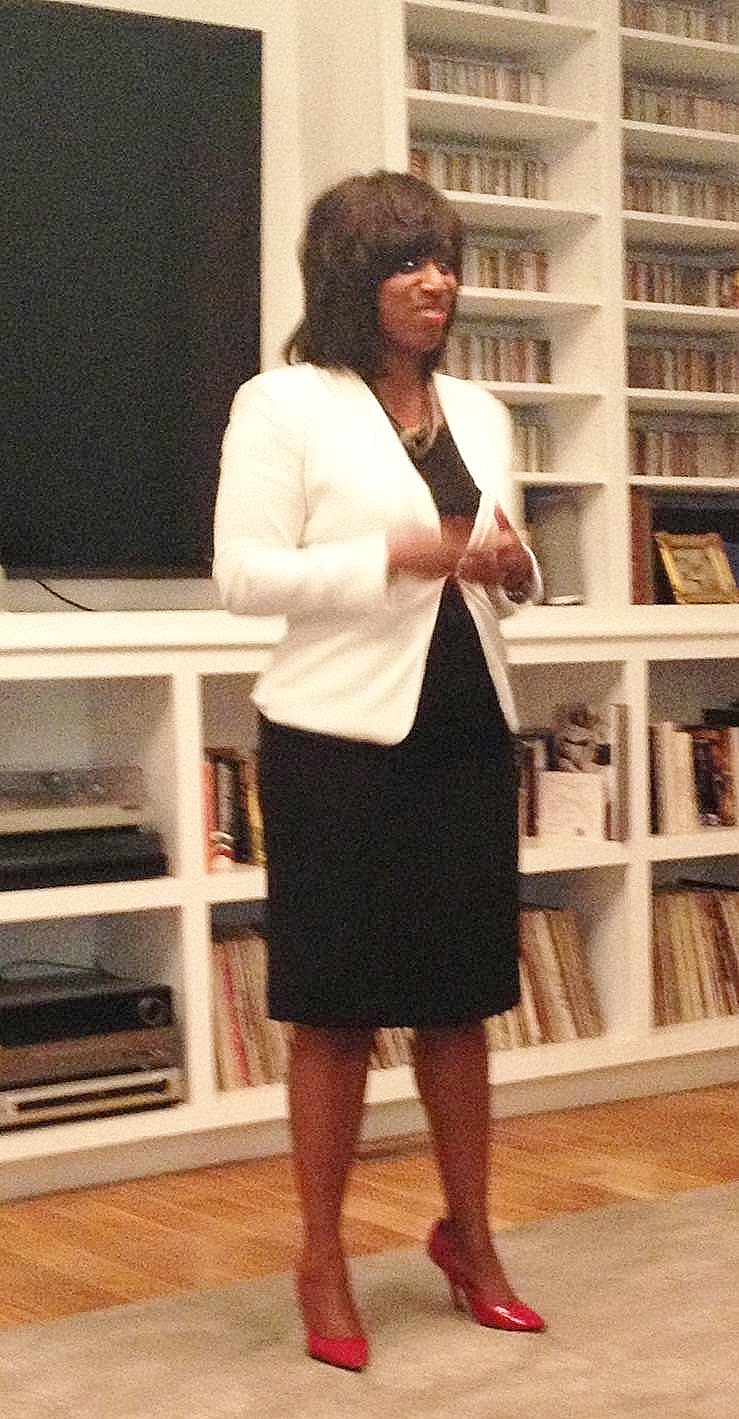
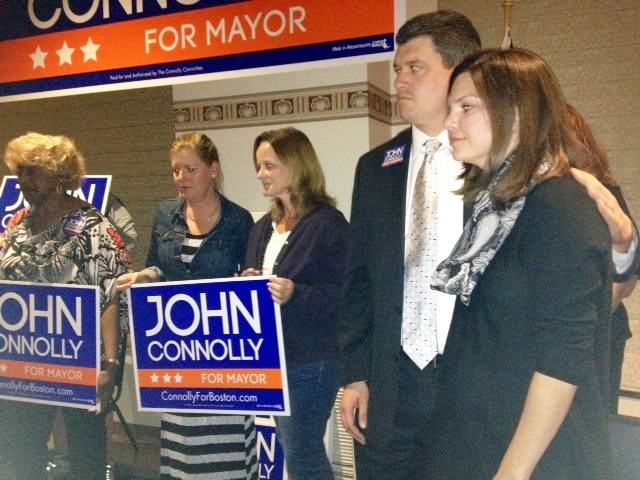
^ John and Meg Connolly — and an array of Boston Public School parents — at last night’s Elks hall rally

—- —- —-

The candidates for Mayor of Boston talk all the time about bringing the city together or about everybody, in whatever neighborhood, wanting the same thing. This is true. Yet campaigns are about differences. Campaigns don’t alleviate those differences, they emphasize them. Thus the differences magnified in the campaigns of this election’s two perceived leaders, Marty Walsh and John Connolly.

At his “Mondays With Marty” events — “community conversations” in the argot of today — Marty Walsh has drawn hundreds of listeners to his message of “best practices” education, improving the Downtown Boston economy, fighting the “heroin epidemic,” and setting up an office of diversity in City Hall so that the City’s departments “reflect what Boston looks like.” Walsh speaks passionately at these Mondays, if a bit quickly, and with a sincerity that touches everyone who hears him. Yet from East Boston to Dudley square in Roxbury and West Roxbury to Charlestown, Walsh’s Mondays seem to draw mostly people age 35 to 50 — the peak working years — who speak of, or look like, harried lives. He’s every bit the union workers’ candidate that he has been labeled as, and though he draws all kinds of work-age people, not only union workers by any means, the tones of voice of those who address questions to him is often gravelly, even anxious, the voices of people who work with their hands or whose work is always hands-on, and as hurried as is Walsh’s speaking.
Image

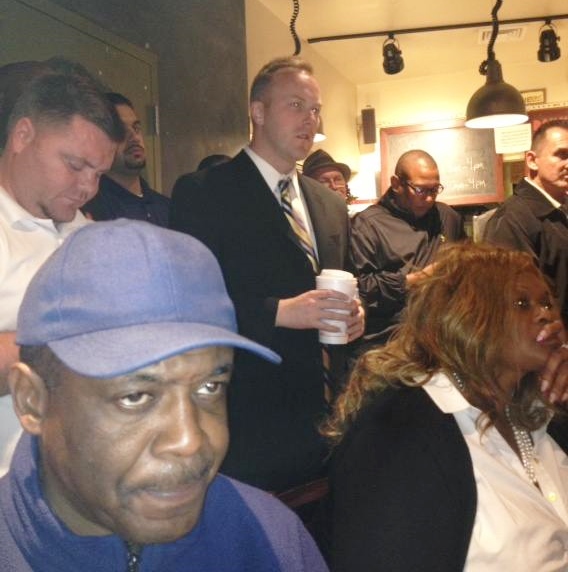
^ urgency : a full house at Marty Walsh’s Haley house “Monday” conversation (Council candidate Jack Kelly center top)

Walsh’s Mondays are front-line work. There’s an air of “now” in them. As much as Walsh speaks of future directions, his “Mondays” listeners want to know what is going to happen on Tuesday morning. The passion in Walsh’s listeners is palpable. You can feel it rumble. That passion arises from the urgency. Tuesday morning is just one night’s worry away. No candidate’s supporters show more angst than Walsh’s.

Is the urgency of Walsh’s supporters a bad thing ? Not at all. But it’s why his plan to sell City hall and begin the revitalization of Government Center as a “24/7 economic usage zone” moves them. His plan is for now, for immediate, doable action. Same with Walsh’s call that, “at my first meeting after I am elected will address the heroin epidemic.” Walsh knows that his voters can’t wait for improvements that may take a long while to bring about, or that may not happen at all. The difficulties that Walsh’s people want addressed will happen first thing Tuesday morning : traffic on Charlestown Neck, folks being priced out of their homes, how’s my son going to get a technology job, the lack of people of color in the higher-up Police department. And even if the last issue in this list seems like a task for another day, it isn’t. It’s something that Walsh’s supporters of color live with every day. (And Walsh does have many, many people of color supporting him and working in his campaign. He is seen as the candidate of burly white guys — and his stand-outs reinforce that perception — but he is much, much more than that.)

Walsh’s most recent “Monday,” at Haley House near Dudley square, drew an overflow crowd, standing room only and then some. Almost all were people of color. It was an event built on urgency and then some; on rescue.
Image

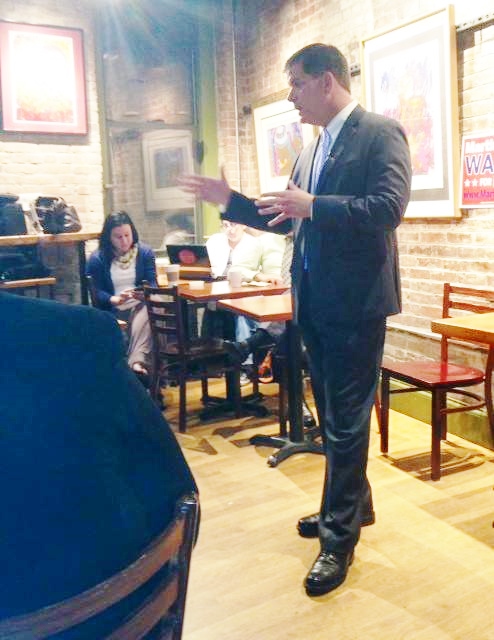
Marty Walsh : politics as rescue — for the folks at Haley House

Walsh spoke quickly. “Unemployment in Dudley is ten percent.,” he began. “This neighborhood lacks home ownership — a high percentage are renters. This neighborhood lacks education. We must make Madison Park High School work…as it hasn’t. Bring back ‘voke tech’ programs; they’re not here today.

“we are not preparing our kids for jobs,” he sprinted. “We have to do better… As mayor we’re going to strengthen our schools…turnaround schools..additional resources for ‘level 3’ schools. we need new school buildings !”

Walsh then jumped right into laying out his plan to sell City Hall and revitalize the Plaza area. And from there to “build work-force housing. Charge the buyer just the cost of construction, sell the buyer the land for one dollar. we have to do better…”

He spoke like a man being chased by demons, by wolves, of all sorts, every kind of clamoring need. “Violent kids ? We can lock them up all day, but it’s not working. We need to give kids a pathway to a job. More opportunities than just construction.”

The event was supposed to last only an hour,. It lasted two. Many questions were asked. Urgent ones. Walsh had sepcific answers to all of them. He has an agenda, and he knows every component of it and all are urgent. No wastage at all, no frills, no waiting.photo (81)
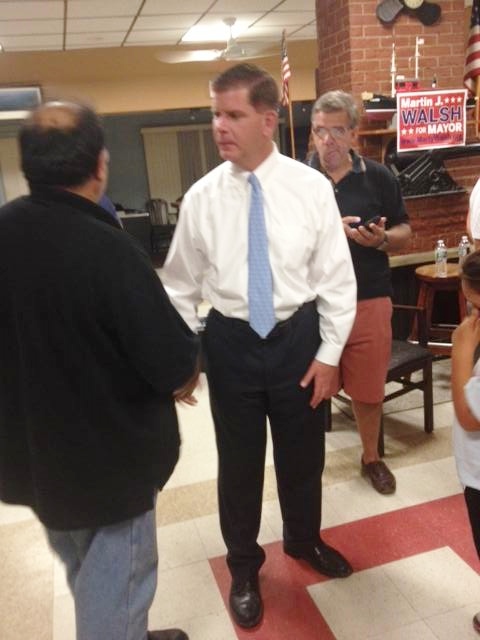
^ The questions and requests don’t stop : Marty Walsh “Monday”-ing in East Boston

And that is what his people are like too.

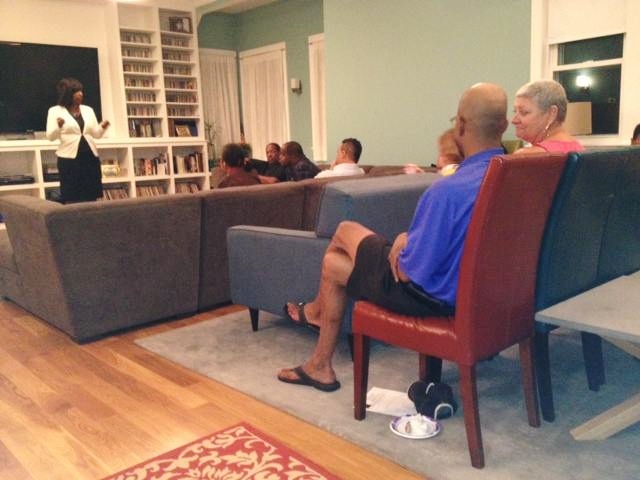
How different a city John Connolly lives in ! Last night we attended his “GOTV” — get out the vote — rally at the Elks Hall in West Roxbury. The room was almost as full as Walsh’s Haley House “Monday’ despite being much bigger.
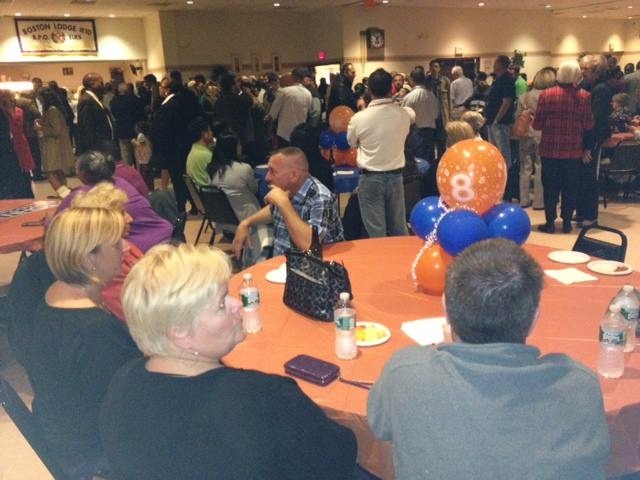
photo (45)

Like Walsh’s supporters, Connolly’s come in all colors — a city once torn by racism seems largely to have moved past that burden, at least among the politically attuned. Immediately evident, however, was that Connolly’s ralliers were of all ages and, so it seemed, of diverse life and economic status. Many men wore suits and ties : they might have come directly from a Back Bay Association meeting. Most looked like shopping mall folkss, but some looked recognizably  like politics junkies. I saw veterans of Kevin White’s and even Ray Flynn’s City hall following ; old Arthur Lewis and Bob Cawley people too (both were State Senators decades ago in Connolly’s home area of Roslindale.) I spoke to retired teachers, young students, mothers with babies and pregnant mothers-to-be. Connolly’s parents looked on — Lynda the retired Chief Judge of Massachusetts District Courts, Mike a former Massachusetts Secretary of State (but, as Connolly said, “to me they’re my parents who made me what I am today”). I’ve known Mike and Lynda for over forty years, and, I suspect, so had many in the room.

The people sounded confident, acted it. Tough s Connolly said, “the next six days you have to work harder than ever,” no one seemed harried. People stood and waited relaxedly for Connolly to arrive — he had attended an earlier, Transportation Issues Forum at Boston Public Library downtown — and when he did arrive, though everyone cheered, it was a relaxed cheer. Excited, but not impatient. Patience is a Connolly virtue.

Connolly has two campaign chairmen : State Rep Ed Coppinger and a radio announcer from 101.3. Coppinger is white, the radio guy Black. Both gave their introduction speeches after which spoke one of several Boston Public school parents on stage — a slender woman with nine children, she proudly announced — and then spoke Connolly’s wife Meg, who is pursuing a doctoral degree in Mental Health. She orated off written remarks. It all seemed very carefully planned, like a televised Victory night. Planning is a Connolly virtue.
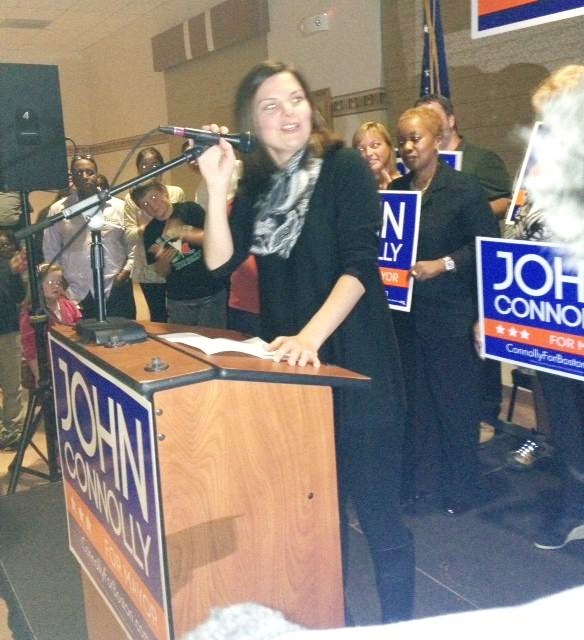
photo (43)

Planning : Meg Connolly introduces her husband John

And then the man himself spoke. “I am energized to meet people in every corner of this City,” he said. “We all want the same thing. we all care and want to have a bright future together.”

Connolly praised Mayor Menino, the man he had moved, back in February, to challenge : “We are a better city for his time in office and the sacrifices he has made.” I think we’ve all heard something like that being said about someone we are showing the door to. But i digress…

And then, finally, Connolly spoke with passion : “we are more and more a city of the very rich and the very poor. The task for the next mayor is to break that equity gap.

“It starts with a great job,” Connolly explained. “A great job makes that difference for a family. And then there’s housing. We have great plans for affordable housing and for expensive condos but we have no plan for middle level housing. We don’t have a pathway from renter to owner. I want a real pathway. A priority from day one.”

The gathered campaigners clapped. They appreciated Connolly’s remarks, agree with them. Appreciation is a Connolly virtue.
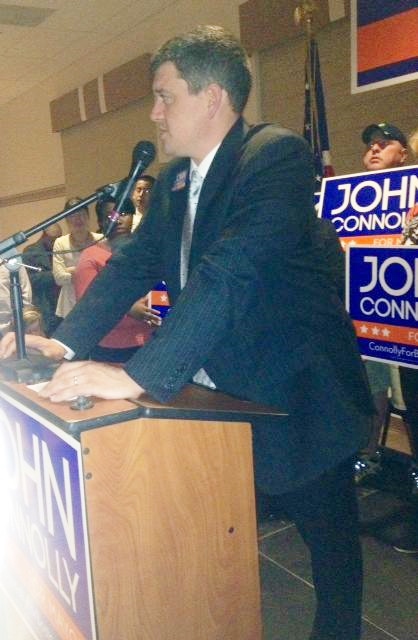
photo (42)

^  “ready one day one” is the theme : John Connolly speaks

Connolly now rose to a higher plane : “Jobs and housing matter because they are directly connected to a safe neighborhood. The neighbors who live in the three neighborhoods where 80 percent of the crime occurs bear the burden of crime. They are OUR neighbors ! (Pause.) We have some children who will hear bullets as a regular part of their childhood. And children who will not.”

It was eloquent, it was true — too true, every word. the room was silent, because everyone present knew that it is sad as well.

The speech was peaking now. “I want a City hall with someone who comes up to you with an i-pad and says, ‘how can i help ?” I want to take everything that I have learned from all of you and give every child a quality education. That is the best way to bond this city together. WE NEED BETTER SCHOOLS !”

If in reading my report you are thinking, “Connolly sounds like Martin Luther King orating ‘I have a dream,'” you grasp my thoughts exactly. Connolly is running a campaign of dreams. Passionate ones, yes, and all good. Political dreams, however, take time to get to, time to accomplish. Connolly’s supporters feel that time is on their side; that they can make use of it and proceed upon it. Nor are they wrong. Because after the Tuesday morning that challenges Walsh’s people like a road hazard challenges a driver, there is Wednesday, and a week, month, year, decade. As for Boston people, so for the City itself.

And so Connolly’s campaign addresses time extended —  seeks, and has garnered, votes from Boston people who live in extended time, a time for setting forth a dream and moving — patiently — toward it.

—- Michael Freedberg / Here and Sphere

FROM JOHN LEE HOOKER TO BRAHMS…AND GIORGIO MORODER TOO : LUCA BACCHETTI @ ARC 09.13.13

Image

Much-appreciated, but seldom Boston-seen DJ Luca Bcchetti, who lives in Barcelona, dropped a 105-minute set at arc Night Club on Friday night. The smaller than usual, but highly committed, crowd got to hear a Bacchetti sound radically different from what he presents in his own tracks. There, he projects a sound twinkly and dinky, high-pitched, with light-footed, often Brazilian beats. At Arc, however, his sound hugged the bottom octaves. The tone was bluesy, the tempo shaggy, the overlays darkly foreboding. The music was sexy and hugged one’s body. It might easily have been a John Lee Hooker performance, were Hooker alive and licking today.

Using a pc program to direct Aerc’s CD players and mixboard, Bacchetti added his own cuts and tool-ins to a set featuring — so far as I could tell — only two of his Beatport Top ten tracks, the Italo-techno “Such a Dreamer’ and his remix of Riva Starr’s “No Man’s Land,” with Carmen Consoli vocalizing gthe atnospheric girl role. The latter track seeks to seduce in the guise of angels, and at Arc it did just that, swirling synth lines and Cinsoli’s lullaby voice breasthing down upon a deep, stomp beat blened with cello-like orcherstration : Hooker meets Brahms.

The mismatched accomodations of blues and classicism continued, as Bacchetti added a cool reverb moog sound redolent of 1970s Giorgio Moroder. Here “Such a Dreamer” took center stage and directed Bacchetti’s program toward ever more intricate mismatches. Tenson aplenty, and there was more, as he broke up the comtinuity of his high-octave sound work, turning the dancers’ attention to it and then, with their ears turned away, slamming the bottom beat into their backside and butt. It is an old DJ move in house music and one that still works.

Cool tones and technical effects dominated the second part of his set. Here Bacchetti sounded more like his track craft than in the first hour, though harsh. If he used his own tracks (and I could not tell), it was in drastically shape-shifted form — sound radically repositioned. All set long he imposed the moment’s instiunmct omn his sound, veering toward the icy razz of ‘acid’ and finally out of seduction’s orbit entirely into a kind of abstract wooziness — intoxication’s after effects perhaps. All of which hallucination he pushed, like a genie, back into its bottle by ending his end in UK Glam, Underworld-ish vocal mode — rock tempo and a full-bodied harmonic as unlike his music of dance gesture as a bottle of cream is unlike a snifter of brandy. The dancers cheered him.

Local DJ Juan D opened entirely in dark bottom, bluesy, walk-rhythm mode, just the right lead in for Bacchetti’s starting point and enough unlike the sound that Bacchetti blasted later to assure that Bacchetti’s journey would be an adventure and not a repeat.

—- Deedee Freedberg / Feelin’ the Music

Image

BOSTON MAYOR RACE : WHAT THE ENDORSEMENTS (SHOULD) MEAN

Image

^ John F. Barros, John R. Connolly, Felix G. Arroyo : good news for all three (and for Rob Consalvo) this morning

—- —- —-

Early this morning, two major endorsements in Boston’s exciting Mayor campaign were given. The Boston Globe endorsed John Barros and John Connolly, with honorable mention to Mike Ross and Bill Walczak; the Boston Teachers Union selected Felix G. Arroyo and Rob Consalvo. They join the Boston Herald, which last week endorsed John Connolly and Dan Conley.

Here and Sphere is not going to make any endorsement before the Primary. The Globe speaks of the 12 candidates, by means of multiple wide-ranging Forums, having forged something like a common agenda. That is true; there is less commonality, however, in the major contenders’ bases of support. We feel that all Boston’s voters matter, and that, as many of the candidates have proven that they authoritatively articulate most if not all the major issues, we cannot pick two of them, but not a different two, and thus leave many bases of support on the sidelines.

In the “Final,” with only two contenders running, bases of support will not stand out so sharply. Each candidate will have to build a coalition of many bases of support. each, likely, will have to win votes as well from the other’s support base. Our endorsement will thus not unjustly raise up some political communities and downgrade others.

We also want to see more of how our potential endorsee manages his or her campaign. Mayor is a managerial job as well as one of policy vision. If a candidate can’t manage his or her campaign smoothly, what confidence do we have that he or she will manage the job of Mayor ? That said, many of the likely Finalists have managed their scheduling and outreach commendably — some better than that. Less of them have shown the degree of issue preparation we expect of an endorsee. A Mayor must be familiar enough with every City department, including Inspectional Services and the Public Health Commission (including its smoking ban section), to know what in each of them needs reforming — and what doesn’t; and how to explain his or her reforms convincingly to Boston’s interested voters, and to the department employees.

This matters a lot. The Boston Teachers Union has, by its endorsement of two candidates — Felix G. Arroyo and Rob Consalvo — both polling well out of the Final but who align closely with the Teachers’ own agenda, given the impression that it is unready to understand that dramatic reform of Boston’s public schools is going to happen. The newspaper endorsements proclaim it. The strong poll showing of John Connolly so far proves it. The Teachers’ Union risks, by its endorsement, being left out of the conversation that has been going on for months now — a conversation which it feels threatened by — and has said so.

Wiser it would have been, in our opinion, had the Union endorsed one favorite (Arroyo would have been our BTU choice) and one of the moderate school reformers, such as John Barros, Mike Ross, or Marty Walsh. Other endorsing Unions have done that. Union solidarity is commendable, and no workers work harder or contribute more importantly to society than teachers. But realism is also a necessary skill in the world of high politics and ;policy. Such realism will also be needed by the next Mayor if he or she is to not face serious conflict with the employees of any City department that he or she insists on reforming.

Our endorsement process begins now. Candidates should know that not only our editor, Mike Freedberg, our chief reporter on this campaign, will be involved in the decision. Our co-founder, Heather Cornell, will be equally involved. Cornell is Boston’s most gifted life-style writer and knows as much as anyone we have met about in-school issues, children’s health — both mental and physical, emotional and social education, drug abuse problems, health care and hospitals, and the gap between education and securing a decent job in the work force of tomorrow. Candidates should be prepared to answer her questions — and Freedberg’s — and, hopefully, may even add to their knowledge of the issues from conversing with us.

—- the editors / Here and Sphere

BOSTON CITY COUNCIL ELECTION : WE ENDORSE — AND SUGGEST

Image

^ Jack Kelly of Charlestown : endorsed

—- —- —-

We have decided to endorse and suggest candidates for Boston’s four at-large council seats before the primary.

Why ? Because the Council race has been pushed aside by the huge Mayor campaign. If we do not turn up the volume on the Council conversation, some very worthy candidates risk not rising above the general silence. So here goes.

We make ONE endorsement at this time : Jack Kelly of Charlestown.

We endorse Jack Kelly because, first, he is as universally trusted a voice for organized labor as we’ve seen in this city’s electoral politics in a very long time. With both Boston’s daily neswspapers taking an explicitly adversarial view of Unions — both public workers and private — a voice for all of labor is vitally needed in the halls of power and at the deciding table.

Second : of all the candidates on our radar, Kelly has run the most city-wide effective campaign. An at-large Councillor must work for, and show, support in most Boston neighborhoods and from a variety of constituencies. Otherwise, why run at Large ? Jack Kelly has done it and proved it with endorsements from nearly every area of the city and with diverse communities of voters.

Third : Kelly has secured these endorsements — and excited voters wherever we go — because he seems genuinely enthusiastic about people politics and by discussing issues extremely well — public health and drug addiction, school reforms, the BRA and more. No wonder Mayor Menino wanted him as a neighborhood co-ordinator (for Charlestown).

Please give Jack Kelly the first of your four at-large Council votes.

As to your other three votes, we offer six names. Five are first-timers listed alphabetically. All merit your serious consideration :

Chris Conroy of Roxbury
Annissa Essaibi-George of Dorchester
Marty Keogh of West Roxbury
Catherine O’Neill of Dorchester
Jeff Ross of the South End

Each brings worthy and distinct qualities well needed on the Council. All share a devotion to progressive or neighborhood, issues. We withhold full endorsement, however, because, as we see it, all of them need to broaden their geographic reach and/or develop support among diverse constituencies. The Primary will tell who has it and who doesn’t. We can’t say it enough : an at-Large Councillor must show that he or she has at-Large strength. It’s a pre-requisite to winning our endorsement.

Our sixth suggestion is an incumbent : Ayanna Pressley. Her, you already know. Her Home Rule petition to give Boston control of its liquor licenses — of which we were skeptical till we heard her explain it — is a must. She should definitely be a powerfully in your consideration when you vote on September 24th.

—- Michael Freedberg / Editor in Chief, Here and Sphere

PROFILING BOSTON CITY COUNCIL CANDIDATES: AYANNA PRESSLEY


Image

In the November 2009 election, Ayanna Pressley became the first woman of color ever elected to the Boston City Council. She was re-elected in 2011, finishing first in 13 wards and in the City as a whole. Her rise from unknown to the top has surprised many; but in the internet age, when candidates can become very known very quickly, and where a fresh face and articulate person can become liked almost as quickly, her rise seems less unique. There will surely be more Ayanna Pressley stories than not in Boston elections to come.

She grew up in Chicago and came here to attend Boston university. Until recently, growing up 1000 miles from Boston, and not being at least the child, or grandchild, of Boston residents, was an all but impossible start for any success at all in Boston elections. But the internet age has modified that; today one can grow up anywhere and have Boston voters feel close friendship to you. Pressley’s success proves it.

Granted that she did have some political experience here in Massachusetts, first as an aide to Congressman Joseph Kennedy II and then in the office of then Senator John Kerry.

We first heard her speak in person at a “community conversation,’ as a candidate house party is now called, at a house named “Ashmonticello” on Dorchester’s Adams Street hard by the Neponset River about a block from Lower Mills. There she answered questions from about 5 people, many of them schools or progressive-issue activists. She stood in front of the gathered, dressed in professional businesswoman style and, in a sweet soprano voice — her meet and greet voice too — gave detailed, evenly delivered responses.

Image

Most of the questions addressed the proposal that has become her hallmark : a Home Rule Petition, to the legislature, to grant Boston control over its own liquor licenses.

Some background : under Massachusetts law, all Cities are state-chartered entities; and as such, they must petition the State if they desire to make changes in the state statutes governing their charter. Boston is thye only city whose liquor licenses require State approval. This was done over 100 years ago, when State and City were grievously at odds politically and ethically.

Pressley explained her petition at the “Ashmonticello” as something needed not just for its own sake but becaue the granting of liquor licenses enables restaurants to succeed; and restaurants, as she pouts it, create “destination neighborhoods.” She wants all of Boston’s major neighborhoods to have destination strength; and, as she adds, successful neighborhood restaurants give rise to successful neighborhood businesses of many other kinds.

Every City Council candidate in this year’s election hashad to state a position on Pressley’s Home Rule petition, the most significant home Rule reform presented seriously in many years. It also provides a specific example of the neighborhood-centered planning thaty she, like so many candidates running in this election, including the mayor candidates, call for as an overdue BRA reform.

Pressley has conducted as city-wide and active a street-level campaign as any Council candidate. We have seen her in Meeting house Hill, on Dochester Avenue, in Jamaica Plain, Roxbury, and downtown. She has endorsement of palnned parenthood and of several Democratic party Ward Committees. After the Primary we will focus in greater length on the focus and outreach of her seeking a third Council term.

—- Michael Freedberg / Here and Sphere

BOSTON MAYOR RACE : MARTY WALSH HITS A HOME RUN

Image

^ Boston’s City Hall : to be sold and razed ? Walsh says “do it !”

—- —- —-

Trapped in a Labor union suit by a week of editorial hits and campaign rivals’ debate points,. Marty Walsh today proposed as significant a single initiative as any other candidate has put forth.

He would sell the current City hall — as intimidating a foreboding palace of cold, cement bureaucracy as any structure I have ever visited — for about 135 million dollars and then develop all of City Hall Plaza for around-the-clock economic growth. “This area must evolve from a 9 to 5 weekday government-dependent culture to a culture economically driven to add value 24/7,” Walsh told the Boston Globe.

Unlike previous efforts to move City hall — Mayor Menino’s plan wanted to build it in the Seaport District — Walsh’s proposal would build the new Hall in the downtown area. The building would be privately built and leased to the city for 20 to 40 years, at a fixed rent; at the end of which term the City would buy it for one dollar ($ 1.00).

Some of Walsh’s rival candidates — but not John Connolly — criticized his proposal, and Rob Consalvo raised the point at today’s Back Bay Association Forum : “how would the city function while the present City hall is bull-dozed ?” asked Consalvo, a bit snidely. Walsh stated the obvious, that City hall would not be sold and razed until the new City hall was built.

I like Walsh’s idea a lot. As he said at the Back Bay Forum, “the next area of the City’s economic growth is Government Center.” His way of getting to it is bold, but the next mayor should be — HAS to be — bold if Boston is to move forward in an ever more complex and technologically fast-paced economy. Walsh’s proposal scopes smaller than John Connolly’s “school transformation,’ but it is a firmer step than anything Connolly proposes. All of Connolly’s school transformation goals have yet to be cast into shape; nor is it easy to envision them shaping up without huge controversy, with the BTU especially. Walsh’s proposal is specific — and achievable quickly.

Image

^ Marty Walsh ; “this area must evolve from a 9-to-5 weekday government-dependent culture to a culture economically driven to add value 24/7 !”

The proposal makes clear just how significant Walsh’s “Construction Boom” candidacy is for the City’s future direction and look. Score a big one here for Marty Walsh.

—- Michael Freedberg / Here and Sphere

BOSTON MAYOR RACE : BIG BUSINESS AND DEVILISH DETAILS @ BACK BAY ASSOCIATION FORUM

Image

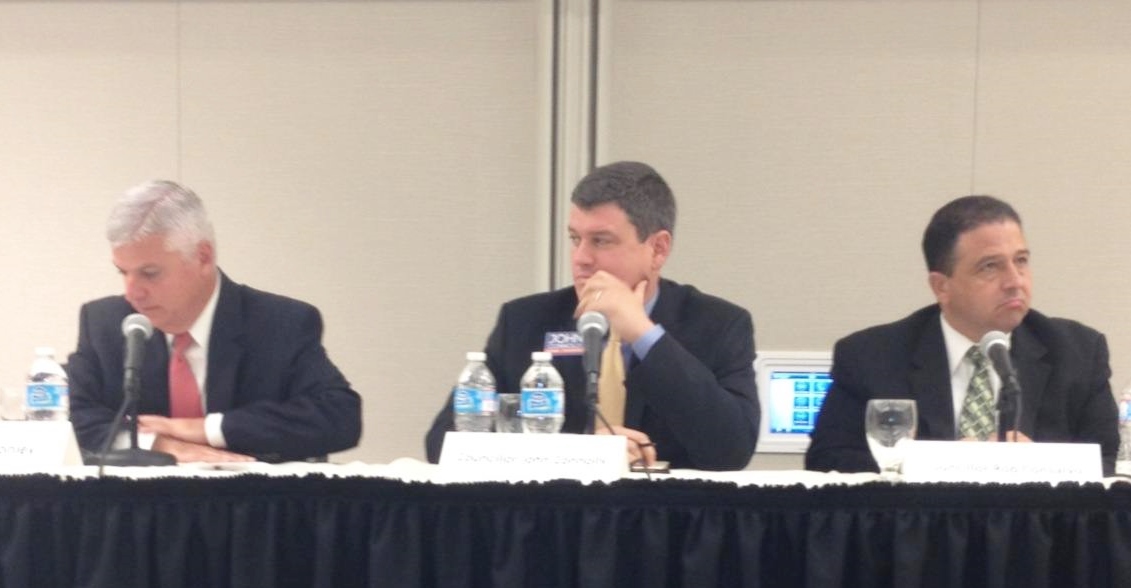
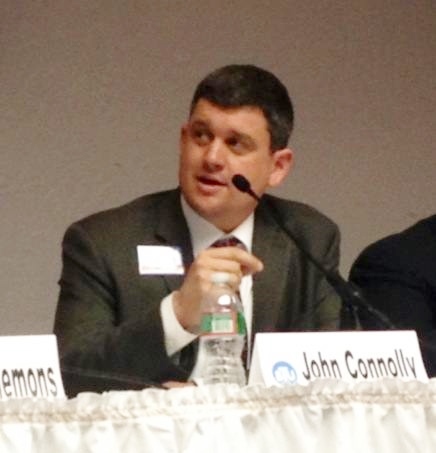
^ Dan Conley, John Connolly, Rob Consalvo at this morning’s Back Bay Association Forum

—- —- —-

This morning the Back bay Neighborhood Association held its Mayor Forum in an appropriate setting : the conference center of Liberty Mutual Insurance Company. Big granite-walled office bureaucracies are the Back Bay’s money machine.

People fear money machines, and no neighborhood association in the City is more feared by the various business seeking to locate, or to develop real estate. Members live in some of the City’s highest income census tracts; achievement and dominance come naturally to the 200 well-dressed Forum attendees. Attentively they regarded the twelve candidates, answering questions put to them by Tom Keane and his co-host, as if they were job-interviewing — grilling — a room full of interns.

The Forum topics featured, unsurprisingly, zoning, permitting, development, the BRA, and late night closing hours — seriously complex issues all — and the banning of plastic bags.

But to the questions. Some were addressed only to some of the candidates, others to all.

To a question, to some, about what to do with the BRA, John Connolly gave the most well thought answer : “Planning should be an independent function. It’s about having real holistic planning — the process should not be for influence peddling. We need to modernize Inspectional services (ISD). (we) need honest conversations about zoning. We need to move beyond outdated zoning laws).”

The City’s permitting process has come under severe attack in most of this campaign’s Forums, for good reason. All the candidates want the process reformed, som radically. Charles Yancey cited “hostile employees’ at ISD’s office due to “inadequate training for the job.” Dan Conley promised “a bottom to top review’ and said that permitting “should be able to be done online.’ He would also “reform the zoning process.” John Barros decried the process a “illogical…unpredictable.”

Clearly ISD is in for a huge shake-up no matter who becomes the next Mayor.

To a question about “90 % of fire alarm calls not being for actual fires,” Rob Consalvo insisted that :we need more public safety, not less.” Marty Walsh, who has the Boston Firemen’s Union endorsement, admitted that the “number of fires are down” but insisted that “I don’t want to be the mayor who closes a firehouse.” Felix Arroyo said “municipal research says that we need to increase fire efficiency” — whatever that meant — and Charlotte Golar-Richie gave a similarly non-committal answer. And then it was Dan Conley’s turn. He did not waste it :

“There is overwhelming evidence that the Fire Department needs a full review and thus a Mayor who will reform the Fire department,” he said, aiming his remarks directly at Marty Walsh, whom polls show him tied with for second place in the Primary.

To which Conley added, “reform… was posed years ago when I was on the Council, but it was put on the shelf. (Stare Rep) Nick Collins has a bill in the legislature to allow fire people to respond as EMTs. it’s a crazy bill, but the firemen don’t have enough work to do, so this is a way to give them some work.”

Conley’s could have been the Forum’s big moment, but he was immediately knocked back by Charles Yancey, who said “If someone is injured within a block of a firehouse and the EMT’s can’t get there first, the Fire Department must save that life !” Mike Ross’s follow-up — “I’m the only Council member who has stood up to the Fire Department” — sounded like a shrug.

All the candidates were then asked a series of “yes or no, do you support” questions. Most of these at various Forums have been no-brainers to which all answered an easy yes or a no. Not so at this Forum. candidates had to think about whether to allow later closing hours, a “traffic congestion tax,” plastic bags, and Segway. Responses were divided.

Last came a round in which one candidate posed a question to one other, until all twelve candidates had either asked or answered. Obviously the intent was to have candidates emphasize their differences, but only two of the questions rose above the minutiae of Council votes little known to average voters.

The first useful question was Rob Consalvo’s to Marty Walsh, who has proposed razing the current City Hall and redeveloping its huge, centrally located plaza : “How will the city function while city hall is bulldozed, as you suggest ?” Walsh’s answer was as good as Conley’s on Fire Department reform : “Bulldoze is not my word,” said Walsh. “it aas the Herald’s. I want to offer City Hall Plaza to developers for proposals. It will give us 135 million dollars and 12 million a year in tax revenue. I want to reconnect Hanover steer and Quincy market…the next growth area in the City is government center !” Walsh’s answer highlighted his support by the city’s construction unions –and his being the Building Boom Candidate.

Image

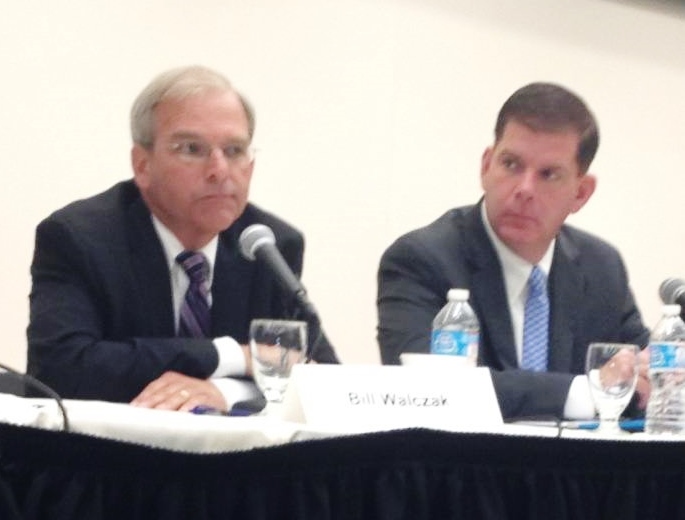
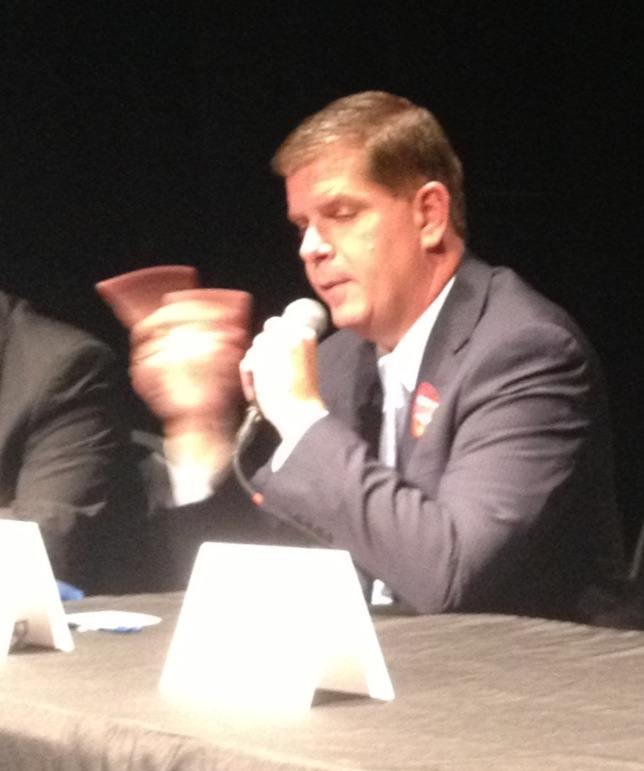
^ Bill Walczak and Marty Walsh : the moralist vs. the building boom candidate

Mike Ross then asked Bill Walczak what he would do for city development if the city had no casino — as Walczak endlessly repeats — but one were then created “seven feet from our door” (in Everett) ? This gave Walczak his opportunity to rail against casinos in general — “I don’t want casinos anywhere” — in the moralistic manner that he truly believes and which gives his candidacy something of the social-issue darkness that has bedeviled a great deal of the national political debate these past five years or so. Who is he — who is anyone ? — to tell people how or where to spend their money ?

Image

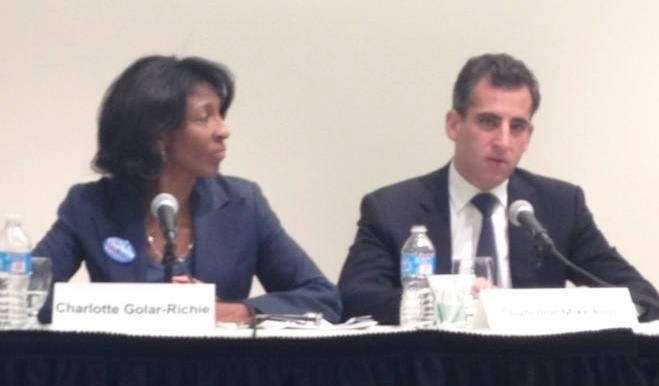
^ Charlotte Golar-Richie and Mike Ross : on Ross’s home ground ? Or maybe not ?

It was difficult to tell which candidates most impressed the association’s members. Unlike the teachers union activists at their Forum, no one cheered or clapped hands. They received the candidates’ often passionate talk as calmly as candidate David Wyatt sits on a stage — though without his facial shrug. Many of the 200 worked laptops ; were they noting points ? Recording testimony as if at a deposition ? Maybe so. And who will they vote for ? This is Mike Ross’s home ground — the Council district that he represents — yet he hardly seemed the crowd favorite — although in the Forum’s humor moments, when he laughed, so did the 200. Maybe that was it. Maybe this Forum was a kind of in-group entertainment, and Mike Ross has its 200 votes in the bank.

If i were he, I wouldn’t count on it.

—- Michael Freedberg / Here and Sphere

BOSTON MAYOR RACE : YES, THE GLOBE POLL MATTERS

Image

^ well ahead : John Connolly

—- —- —-
The University of New Hampshire finally released its poll of the Boston mayor race, and its message has locust-plagued the City’s spin doctors. Just about every candidate purports to believe that the poll is good for him — or her. If only !

It’s hard to believe that none of the twelve candidates is known by more than 68 % of the voters polled. Does that mean that the poll sample has reached well beyond the 100,000 “likely” voters who even the least bullish pundit thinks will turn out ? The poll also doesn’t say how many of its respondents came from which of the city’s 22 wards. We are left to guess what electorate was polled.

Nonetheless, the poll does not drop out of the sky. It accurately reflects, in fact, the money raising that we’ve been reporting — amounts and trends up or down in each candidate’s deposits. It also accords fairly well with what we glean from our observation of the various campaigns. We believe what the poll says. So here are the numbers for the top four :

John Connolly gets 15 % of the vote and is known by 68 % of the voters
Dan Conley gets 10 % and is known by 65 % of the voters
Marty Walsh gets 10 % and is known by 58 % of the voters
Charlotte Golar-Richie gets 10 % and is known by only 50 % of the voters.

Striking facts : (1) Though clearly less well known than Walsh or Conley, Golar-Richie polls equally with them (2) Connolly is measurably ahead of all three, well beyond the poll’s margin of error (3) Walsh has actually lost since the last UNH poll, in which he had 11 %. He has lost 10% of his vote, after a week of being slammed as a union guy — a loss well in line with the political rule that attacks can cost a candidate up to, but not likely more than, said ten percent.

Image

^ Marty Walsh : must prove on Primary day that he’s more than a union guy

Can Walsh recover and secure the second Final spot ? Of course he can. He has lots of money, is running excellent TV ads, and has a superb election day organization working hard and enthusiastically. He doesn’t need many more votes to put him close to Connolly.

Nonetheless, the poll shows that a full 25 % of its voters remain undecided. That’s a lot of undecideds only nine days before voting day. This is where Golar-Richie’s potential looks big. If she can get 10% of the vote with only 50% of voters knowing her, how hard will it be for her to get another 5 % from the 25 % who are undecided ? All she has to do is win the same percentage from them as she has won from the decided.

Image

^ Charlotte Golar-Richie : big potential to move up

Will 15% be enough to secure second spot ? It will not win the top spot. Surely John Connolly will win additional votes from that 25 % undecided. My guess is that he finishes with 21 %. As for the second spot, I will be surprised if whoever gets it wins more than 15 %. It is unlikely that a catch-up candidate will win more undecideds than a candidate who is strong AND perceived to be strong.

I will give Connolly an additional 6 %, Golar-Richie 5 %, Walsh an additional 5 % on the basis of a strong election day pull, and Conley only 4 %, because he polls only equal with Walsh although better known.

The poll shows that the other eight candidates are very much out of the running. Felix Arroyo, John Barros, and Rob Consalvo all win 6 %, Mike Ross 5 %, Bill Walczak 4 %, Charles Yancey 3 %, Charles Clemons 2 %. Arroyo is not known by 34 %, Consalvo by 50 %, Ross by 47 % ; the others poll even less well known. How likely is it that candidates so not-known will garner major vote numbers from the 25 % who remain undecided ? My experience is that the undecideds tend to vote for the most known candidates, not the less well known. Many are undecided because they don’t know any of the candidates, but just as many, likely, are undecided because they know several and like them all.

My guess for these following candidates is that Arroyo wins 7 % but not more. I am truly surprised to see in a poll that though he is better known than Walsh or Golar-Richie, he draws much less of a vote and has a higher unfavorable (21 %) than ANY of the other candidates. Ross wins 7 % — on the strength of substantial funds in his account. Barros wins 7 % (he has surged since the last poll, doubling his vote from 3 %). Consalvo wins 7 % (and maybe less; he has no money). Walczak wins 5 % (he is, after all, against casinos). Which leaves not much for the others.

My guess could be wrong and probably is wrong. But not by much, unless a major story breaks in the next six days or so. Marty Walsh is battling Charlotte Golar-Richie for the second spot on the November ballot. It’s his election day enthusiasm and reach versus her ability to win the same proportion of the undecideds a she has won of those who have chosen. And even then it looks oh so close. Maybe even a recount. It might be a very long night on Primary Day.

—- Michael Freedberg / Here and Sphere
PROFILING THE COUNCIL CANDIDATES : JEFF ROSS

Image

^ Jeff Ross ; has impressed a lot of activists already

—- —- —-

We met at-Large Council candidate Jeff Ross at Club Cafe, where a short while after our interview, he attended an affair for Marty Walsh and was introduced to the gathering.

This is what candidates for Boston’s four at-Large Council seats are doing, as often and as diversely as they can. Even as a veteran worker in Boston political campaigns, Ross must do the same, and as a practiced campaigner, he knows it. He’s also ready with detailed, though usually succinct, answers to the several questions that we ask of Council candidates. Not surprising that he has gained much good press in Boston’s media.

He currently holds office, as the Democratic State Committeeman representing the State Senate seat now held by Sonia Chang-Diaz. (All elected State Committee members are elected by State Senate District at the Presidential Primary every fourth year.) He lives in the South End part of Chang-Diaz’s district — in Ward 9, Precinct 2, for political junkies — and, as he tells us, is “the first LGBT person elected to the State Committee from this district.”

He will also, if elected an at-large Councillor, be (to the best of our knlowledge),the first LGBT person to hold that Boston office.

As he represents one of Massachusetts’s most progressive-voting Senate Districts, he too holds progressive views. But the range of campaigns that he has worked on these past seven years — Ayanna Pressley, Felix G. Arroyo, Gloria Fox, for example — has taken him to old-line politics (Fox) and business-oriented mainstream (Pressley) as well.

“I have lived in Boston for 20 years,” Ross tells me. “I grew up on the West Coast in a working class a family; my Mom worked for minimum wage; often we used an oven to heat our house.

“I was the first in my family to go to college. I was on the waiting list at U(niversity of) Penn(sylvania) but got into Northeastern. So to Boston.”

Ross’s bio answers Here and Sphere’s standard first question, “what about you uniquely qualifies you to be a City Councillor ? Thus we proceeded directly to our other usual questions.

Here and Sphere (HnS): What can you do as a Councillor to advance your concerns for the working wage that some have proposed ?

Ross : “We can propose home rule petitions and testify for them at the State House. I have testified at legislative hearings. I’m ready to do it again.”

HnS : Do you support Ayanna Pressley’s Home Rule petition (to give Boston control over its own liquor licenses) ?

Ross : “I do support it. Some neighborhoods have too many licenses, some too few. The point is to create destination neighborhoods. Many neighborhoods need supermarkets … that are within walking distance for people who go about on foot.”

HnS : Abolish the BRA or reform it ?

Ross : “reform it. Development should be neighborhood-driven. They should include affordable housing.”

HnS : Lift the charter school cap or not ?

Ross : “If we’re going to lift the cap it should be an innovation type of school, a school free of state-mandated curriculum. For the lowest-testing twenty percent of schools I support after-school programs in art, music and woodcraft. These help (a kid) to reconnect. And innovation around sports, because (these kids) need more student interaction.”

HnS : Do you favor an Elected school committee, as some are now proposing ?

Ross : “I do not support an elected school committee. The schools have improved a lot under the appointed committee

HnS : You live in the new Boston, thus we have to ask ; do you favor late night transport and a later closing hour than the current two A.M. ?

Ross : “(of course) there’s the need to extend the cloing hoyfrs in he Downtown area, Financial District, and Waterfront. The concern in other neighborhoods is the noise, though. Late night transport, yes; people who work late in the buildings need a way to get home.”

HnS : Do you agree with something Marty Walsh said, that there’s a heroin epidemic in the city ?

Ross : “There is an uptick in ‘STI’ and (as we know) Molly. And heroin (too). We need public health education in the schools, plus, (better) outreach to families. We need to have these conversations with young people. it gets back to what I said about early evaluations and early intervention as treatment and recovery. I have a family member, same age as me, who died (like that) and who needed that sort of social safety net…”

And so ended the Q and A, and both of us joined the Marty Walsh affair beginning in the next room. Jeff Ross to campaign, we to be the newsie in the room.

—- Michael Freedberg / Here and Sphere

BOSTON MAYOR RACE : JOBS PLANS — AND THE CASINO ISSUE

Image

^ Suffolk Downs Casino : why is this not part of the candidates’ Jobs Plans ?

—- —- —-

The campaign to select Boston’s new Mayor approaches its big first test : Primary day, at which ten of the current 12 candidates will be eliminated. That day arrives on the Tuesday after next.

The campaign still features candidate Forums — especially Monday’s Back Bay Association meet — but almost the entire fight now happens on the street, where voters actually go about. House parties, yard meet and greets, subway T stops in the morning, block parties, fairs, neighborhood events; canvasses in which volunteers actually door-knock — no mere “lit drops” now — to talk to voters; phone banks and more banks; small fund-raisers; television ads; e-mails and smart-phone text messages. It’s an exhausting, physical list.

Meanwhile, two issues previously hidden by the flap over “school transformation” have now come to the fore : jobs plans, and the Casino matter — though the casino is itself two issues : the Suffolk Downs casino to which Boston will be a host community, and Steve Wynn’s Everett casino, for which Boston can only be a “surrounding community.”

The casino issues first :

1.The Suffolk Downs / Caesar’s Entertainment casino —

as probably every Bostonian knows, this proposal will locate on the current Suffolk downs property located half in East Boston and half in Revere. An agreement has been reached, terms of which can be read in this announcement by the Casino’s website http://friendsofsuffolkdowns.com/ . We excerpt the following:

“Creating thousands of jobs for area residents and opportunities for local business took a giant step forward today…Suffolk Downs and Caesars Entertainment have agreed with Mayor Menino and the city on the most comprehensive and furthest-reaching deal of its kind… the agreement with the city will mean millions of dollars poured directly back into the community, $33.4 million in one-time community investments, $45 million in road and transportation improvements and guaranteed local business partnerships, among many other economic and community benefits…will strengthen the local economy.”

Because Boston is a “host” community — one in which the casino is actually located — approval of the project by a vote of Boston’s people is required by the state statute that made casino gambling legal in Massachusetts (and established the ground rules for granting of casino licenses). For a while it was unclear when the vote would take place. The date has now been set. It will be held on the day that the City elects a Mayor : November 5th.

It’s still unclear if that vote will be city-wide or only in East Boston. Opinion is divided. And, as we all know, one Mayor candidate, Bill Walczak, opposes the casino entirely.

In East Boston, opinion is divided, too: on some houses you see the “it’s all about the jobs” lawn signs; on others, you see no signs at all. Will East Boston vote in favor of the Suffolk Downs proposal ? Maybe so. It will bring many jobs to a community that can use them as well as large money for community development. But a “yes” is far from certain.

Image

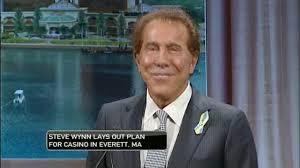
^ Steve Wynn : billion-dollar casino hotel, but for Everett, not Boston

2 .the City of Everett/Steve Wynn proposal —

You have to hand it to Steve Wynn. Rebuffed — along with his then partner Bob Kraft, New England Patriots owner — by the Town of Foxboro, Wynn went quiet for a while only to re-emerge thirty miles north, in Everett on the Mystic River, with a billion-dollar proposal that Mayor Carlo DeMaria endorsed passionately. In a mid-June ballot, Everett voters approved the Steve Wynn casino by a vote of 5,320 to 833.

For Steve Wynn’s Vegas-style hotel and casino resort, Boston is a “surrounding” community only; meaning that Boston’s approval of the proposal is not needed. Still, as the Massachusetts Gaming Commission’s rules state, “A Surrounding Community is a municipality in proximity to a host community that the Commission determines experiences or is likely to experience impacts from the development or operation of a gaming establishment. Under the Gaming Act, gaming applicants are required to submit “signed agreements between the surrounding communities and the applicant setting forth the conditions to have a gaming establishment located in proximity to the surrounding communities and documentation of public outreach to those surrounding communities.”

(For more, follow this link : http://massgaming.com/about/host-surrounding-communities/ )

Image

^ Charlestown : squeezed by railroads then, by highways now.

What’s this all mean to the Boston mayor election ? Plenty. The Everett proposal will significantly impact Charlestown, whose residents oppose it angrily. It will increase traffic at “The Neck,” they say; and they have a point. Charlestown is a small community incommoded, for decades, by by traffic along its landward perimeters.

In addition, though the gaming legislation requires casinos to give “mitigation” (i.e, money) to “surrounding” communities, it’s far less than casinos accord a “host” community.

This high-stakes negotiation involves only the current Mayor, Tom Menino. Candidates to succeed him can have little input. However, the Suffolk Downs promoters may feel a need to accommodate with likely successors. And that is where the casino issue touches the campaign.

Unhappily, the touch has not been felt by all. We still do not know how many of the contenders feel about a city-wide vote versus one restricted to East Boston only. Legally, “Boston” — the entire municipality — is THE “host community.” But as a practical matter, East Boston, though only one section of the legally chartered, Boston municipality, hosts the Suffolk Downs casino in a way that the entire rest of the City does not. East Boston lies on the opposite of the Harbor from every other part of Boston. Geographically it is as singled out as any Boston neighborhood, maybe more so.

Image

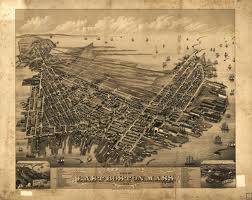
^ East Boston — an island, but not unto itself any more

Still, is it fair to leave up to only one neighborhood a decision which means $ 53 million (the current “mitigation” agreement worked out by the Menino people) to the entire City as well as many, many jobs ? If ALL of Boston is to have a “jobs plan” — itself now becoming a major mayor campaign issue — how can the casino contribution to future Boston jobs not be the purview of all of Boston ? In fact, as the jobs and money matters show, it is NOT true that only East Boston will be impacted by a Suffolk Downs casino.

Image

^ John Connolly : his Jobs plan seems a bit too business/chamber of commerce-oriented, but at least it’s out there.

John Connolly yesterday sent his Jobs plan to supporters by an e-mail “blast.” It’s very much a business-oriented plan, geared to promoting Boston, to businesses nationally, as a place to relocate or to open new offices and plants. It also includes a radical transformation of how Boston’s public schools work. Yet nowhere in Connolly’s plan does he mention the Suffolk Downs Casino as a jobs provider. Instead, he speaks of an “innovation economy,” much as Bill Walczak speaks of “innovation districts.” (This is a rubric sadly reminding me of the late Jack Kemp’s “urban enterprise zones” that he proposed but which never happened.)

(To read Connolly’s entire Jobs plan, go here http://www.connollyforboston.com/boston-jobs-plan )

As for Marty Walsh, he too speaks of putting “best practices” into Boston Public schools as a link to the jobs that will be availble. (Walsh and Connolly don’t agree on much, but they’re alike in never mentioning the casino project as a jobs provider). Meanwhile, Felix G. Arroyo constantly advocates his “pathways out of poverty” proposal for lifting the City’s poorer and poorest children, via greater curriculum diversity, to aspire and believe in a better life; but he doesn’t focus much on technology schooling, nor do his “pathways” mention the jobs that the Suffolk Downs casino will bring, especiallly to Bostonians who are not cuttiung-edge technology proficient.

Yet those casino jobs — thousands of them — stand just over the campaign’s event horizon. It would be helpful to hear the 11 candidates who support a casino discuss them to ALL of Boston’s voters.

—- Michael Freedberg / Here and Sphere