THE GOP DESCENDS TO OBSTACLE STATUS

Image


^ New Hampshire State Senate leader Jeb Bradley (R), point man on blocking 58,000 NH residents from Medicaid insurance coverage.

It is one thing for a political party to disagree with the policies of the party opposite. It is another thing entirely for a political party to offer nothing to voters but obstacles.

News comes this morning that in New Hampshire, a state that borders on Here and Sphere’s home state of Massachusetts, the GOP majority in that state’s legislature is blocking New Hampshire from implementing the Affordable Health Care Act, popularly known as “Obamacare.” Specifically, the GOP legislature is blocking 58,000 currently uninsured New Hampshire residents from joining the 137,000 already receiving Medicaid insurance coverage.

It stuns us that a political party in a democracy, whose prospects depend on the good opinion of voters, would think it had anything to gain by blocking 58,000 uninsured people from obtaining health insurance and thus improving their health. Never mind that to deny people access to proper health care is unconscionable, immoral; does it not make economic sense for people to live healthier lives and thus miss less days of work on account of illness ? Or perhaps become able to work at all ? What conceivable policy objective is gained by blocking this outcome ?

Unhappily, the New Hampshire GOP legislature’s refusal is no unique event. Since September 2008, when the GOP-controlled House tried to block President Bush’s TARP Program — which prevented the collapse of our entire economy — the national GOP, with few exceptions (Chris Christie, Jeb bush, and John McCain especially) has become merely an obstacle. “Block this, stop that.” Stop America from moving ahead. Every act, almost every speech, that the current GOP has made or said defies us : “We will stop you, people, from doing anything to improve your lives.”

NO to sensible gun control legislation. No to pursuong unibversal hrealth care insurance. No to ther food stamp program by which millions of us love. no to women’s pay equity. No to the Treaty on Disabilities. No to President Obama’s nominations to Federal Courts and Federal Agencies. No to immigration reform. No to reforming “stand your ground” laws. No to Voting Rights updates.

No, no, no.

The Federal government ? No to it, too.

Yes only to putting governement into your vagina and into your sex life.

As we said : this is not a policy agenda. This is an obstacle merely. This is contempt, for you and for us.

It has happened in America before, and every time a political party has retreated to obstacle status, it has meant pain and suffering to millions of Americans.

It happened in the 1840s and 1850s, when slavery was the obstacle. It took a Civil War and 750,000 deaths to unblock that one.

It happened in the 1920s, when business tycoons and their political mouths blocked anti-union legislation; and again in the 1930s when a reluctant Supreme Court blocked FDR’s New deal reforms.

It happened from 1880 to the 1960s, when Southern Democrats blocked all attempts to making lynching a Federal ctime and to accord Black Americans the voting rights and other civil rights that we thought that the grievous Civil War had won.

It took almost 85 years of injustice, torture, killing, and intimidation before finally that block was removed.

How long will it take America to remove the many blocks set up by the current GOP ? How many Americans will suffer and even die because ? Only time will tell. Hopefully it will not take almost a century to remove the block THIS time.

Meanwhile, 58,000 New Hampshire residents wait for health care insurance and the healthier, more fruitful life that we all want.

—- Michael Freedberg / Here and Sphere

THE PRESIDENT’S SPEECH ON RACE IN AMERICA

Image

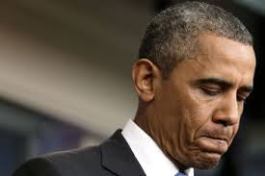
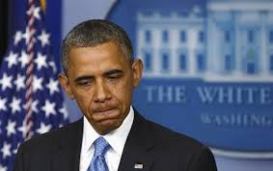
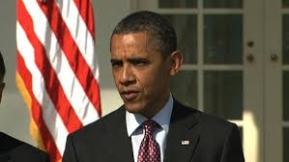
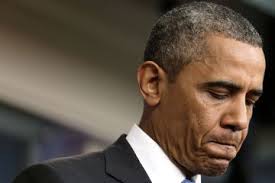
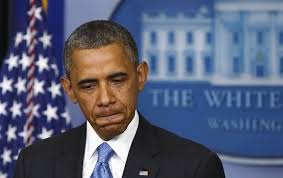
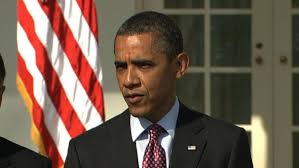
President Obama gave an unscripted, 18 minute speech yesterday, on race relations, race perceptions, and racial injustice in America as they live on today, 50 years after Martin Luther King’s “I Have a Dream” speech. It was a speech that touched us at Here and Sphere to the core; it spoke to our soul and to yours. In it the President laid bare the fear and discouragement that black men feel every day as others make clear their wariness of Black men’s presence.

It is horrific to go about knowing that people fear you; that they assume that your presence is a menace. It collapses one’s soul, wounds one’s dignity, cripples one’s confidence. It makes one angry, bitter, determined — not always in a positive way; and this is very understandable. you would react the same.

The specific occasion for the President’s words was People v. Zimmerman. Not the verdict, not even the evidence and testimony, most of it garbled or amateurishly handled. What occasioned the President speaking was simply that the entire mindset which gave rise to the Zimmerman case should never, ever have taken place. Not the profiling of Trayvon Martin, not Zimmerman’s disregard for police advice, not the tracking of Martin. None of which was justified in any way whatsoever. A young man going about his peaceful business was killed as a result.

People, we must do better. We must rid OURSELVES of the fears that corrode us and injure men of color. The President said it all, eloquently as he has ever spoken of it; his speech should be required reading for every American, young and old. To that end, we reprint it entire, as follows :
Image

THE PRESIDENT: “I wanted to come out here, first of all, to tell you that Jay is prepared for all your questions and is very much looking forward to the session. The second thing is I want to let you know that over the next couple of weeks, there’s going to obviously be a whole range of issues — immigration, economics, et cetera — we’ll try to arrange a fuller press conference to address your questions.

The reason I actually wanted to come out today is not to take questions, but to speak to an issue that obviously has gotten a lot of attention over the course of the last week — the issue of the Trayvon Martin ruling. I gave a preliminary statement right after the ruling on Sunday. But watching the debate over the course of the last week, I thought it might be useful for me to expand on my thoughts a little bit.

First of all, I want to make sure that, once again, I send my thoughts and prayers, as well as Michelle’s, to the family of Trayvon Martin, and to remark on the incredible grace and dignity with which they’ve dealt with the entire situation. I can only imagine what they’re going through, and it’s remarkable how they’ve handled it.

The second thing I want to say is to reiterate what I said on Sunday, which is there’s going to be a lot of arguments about the legal issues in the case — I’ll let all the legal analysts and talking heads address those issues. The judge conducted the trial in a professional manner. The prosecution and the defense made their arguments. The juries were properly instructed that in a case such as this reasonable doubt was relevant, and they rendered a verdict. And once the jury has spoken, that’s how our system works. But I did want to just talk a little bit about context and how people have responded to it and how people are feeling.

You know, when Trayvon Martin was first shot I said that this could have been my son. Another way of saying that is Trayvon Martin could have been me 35 years ago. And when you think about why, in the African American community at least, there’s a lot of pain around what happened here, I think it’s important to recognize that the African American community is looking at this issue through a set of experiences and a history that doesn’t go away.

There are very few African American men in this country who haven’t had the experience of being followed when they were shopping in a department store. That includes me. There are very few African American men who haven’t had the experience of walking across the street and hearing the locks click on the doors of cars. That happens to me — at least before I was a senator. There are very few African Americans who haven’t had the experience of getting on an elevator and a woman clutching her purse nervously and holding her breath until she had a chance to get off. That happens often.

And I don’t want to exaggerate this, but those sets of experiences inform how the African American community interprets what happened one night in Florida. And it’s inescapable for people to bring those experiences to bear. The African American community is also knowledgeable that there is a history of racial disparities in the application of our criminal laws — everything from the death penalty to enforcement of our drug laws. And that ends up having an impact in terms of how people interpret the case.

Now, this isn’t to say that the African American community is naïve about the fact that African American young men are disproportionately involved in the criminal justice system; that they’re disproportionately both victims and perpetrators of violence. It’s not to make excuses for that fact — although black folks do interpret the reasons for that in a historical context. They understand that some of the violence that takes place in poor black neighborhoods around the country is born out of a very violent past in this country, and that the poverty and dysfunction that we see in those communities can be traced to a very difficult history.

And so the fact that sometimes that’s unacknowledged adds to the frustration. And the fact that a lot of African American boys are painted with a broad brush and the excuse is given, well, there are these statistics out there that show that African American boys are more violent — using that as an excuse to then see sons treated differently causes pain.

I think the African American community is also not naïve in understanding that, statistically, somebody like Trayvon Martin was statistically more likely to be shot by a peer than he was by somebody else. So folks understand the challenges that exist for African American boys. But they get frustrated, I think, if they feel that there’s no context for it and that context is being denied. And that all contributes I think to a sense that if a white male teen was involved in the same kind of scenario, that, from top to bottom, both the outcome and the aftermath might have been different.

Now, the question for me at least, and I think for a lot of folks, is where do we take this? How do we learn some lessons from this and move in a positive direction? I think it’s understandable that there have been demonstrations and vigils and protests, and some of that stuff is just going to have to work its way through, as long as it remains nonviolent. If I see any violence, then I will remind folks that that dishonors what happened to Trayvon Martin and his family. But beyond protests or vigils, the question is, are there some concrete things that we might be able to do.

I know that Eric Holder is reviewing what happened down there, but I think it’s important for people to have some clear expectations here. Traditionally, these are issues of state and local government, the criminal code. And law enforcement is traditionally done at the state and local levels, not at the federal levels.

That doesn’t mean, though, that as a nation we can’t do some things that I think would be productive. So let me just give a couple of specifics that I’m still bouncing around with my staff, so we’re not rolling out some five-point plan, but some areas where I think all of us could potentially focus.

Number one, precisely because law enforcement is often determined at the state and local level, I think it would be productive for the Justice Department, governors, mayors to work with law enforcement about training at the state and local levels in order to reduce the kind of mistrust in the system that sometimes currently exists.

When I was in Illinois, I passed racial profiling legislation, and it actually did just two simple things. One, it collected data on traffic stops and the race of the person who was stopped. But the other thing was it resourced us training police departments across the state on how to think about potential racial bias and ways to further professionalize what they were doing.

And initially, the police departments across the state were resistant, but actually they came to recognize that if it was done in a fair, straightforward way that it would allow them to do their jobs better and communities would have more confidence in them and, in turn, be more helpful in applying the law. And obviously, law enforcement has got a very tough job.

So that’s one area where I think there are a lot of resources and best practices that could be brought to bear if state and local governments are receptive. And I think a lot of them would be. And let’s figure out are there ways for us to push out that kind of training.

Along the same lines, I think it would be useful for us to examine some state and local laws to see if it — if they are designed in such a way that they may encourage the kinds of altercations and confrontations and tragedies that we saw in the Florida case, rather than diffuse potential altercations.

I know that there’s been commentary about the fact that the “stand your ground” laws in Florida were not used as a defense in the case. On the other hand, if we’re sending a message as a society in our communities that someone who is armed potentially has the right to use those firearms even if there’s a way for them to exit from a situation, is that really going to be contributing to the kind of peace and security and order that we’d like to see?

And for those who resist that idea that we should think about something like these “stand your ground” laws, I’d just ask people to consider, if Trayvon Martin was of age and armed, could he have stood his ground on that sidewalk? And do we actually think that he would have been justified in shooting Mr. Zimmerman who had followed him in a car because he felt threatened? And if the answer to that question is at least ambiguous, then it seems to me that we might want to examine those kinds of laws.

Number three — and this is a long-term project — we need to spend some time in thinking about how do we bolster and reinforce our African American boys. And this is something that Michelle and I talk a lot about. There are a lot of kids out there who need help who are getting a lot of negative reinforcement. And is there more that we can do to give them the sense that their country cares about them and values them and is willing to invest in them?

I’m not naïve about the prospects of some grand, new federal program. I’m not sure that that’s what we’re talking about here. But I do recognize that as President, I’ve got some convening power, and there are a lot of good programs that are being done across the country on this front. And for us to be able to gather together business leaders and local elected officials and clergy and celebrities and athletes, and figure out how are we doing a better job helping young African American men feel that they’re a full part of this society and that they’ve got pathways and avenues to succeed — I think that would be a pretty good outcome from what was obviously a tragic situation. And we’re going to spend some time working on that and thinking about that.

And then, finally, I think it’s going to be important for all of us to do some soul-searching. There has been talk about should we convene a conversation on race. I haven’t seen that be particularly productive when politicians try to organize conversations. They end up being stilted and politicized, and folks are locked into the positions they already have. On the other hand, in families and churches and workplaces, there’s the possibility that people are a little bit more honest, and at least you ask yourself your own questions about, am I wringing as much bias out of myself as I can? Am I judging people as much as I can, based on not the color of their skin, but the content of their character? That would, I think, be an appropriate exercise in the wake of this tragedy.

And let me just leave you with a final thought that, as difficult and challenging as this whole episode has been for a lot of people, I don’t want us to lose sight that things are getting better. Each successive generation seems to be making progress in changing attitudes when it comes to race. It doesn’t mean we’re in a post-racial society. It doesn’t mean that racism is eliminated. But when I talk to Malia and Sasha, and I listen to their friends and I seem them interact, they’re better than we are — they’re better than we were — on these issues. And that’s true in every community that I’ve visited all across the country.

And so we have to be vigilant and we have to work on these issues. And those of us in authority should be doing everything we can to encourage the better angels of our nature, as opposed to using these episodes to heighten divisions. But we should also have confidence that kids these days, I think, have more sense than we did back then, and certainly more than our parents did or our grandparents did; and that along this long, difficult journey, we’re becoming a more perfect union — not a perfect union, but a more perfect union.

Thank you, guys.”
Image

—- posted by Michael Freedberg / Here and Sphere

CRIME AND ITS FASCINATIONS : SOME THOUGHTS ON THREE MASSACHUSETTS MURDER CASES

Image

PART V : THE TRIAL

Assuming that a high-profile murder case can make it past trial preparation in reasonably useful shape, it finally goes to trial.

So, the question needs be asked: what IS a trial ?

To the gut-reaction public, a trial is an action by which the public’s judgment of the outcome is confirmed. If the public thinks an accused guilty, the trial is supposed to find him gulty. If the public thinks an accused is not guilty, the trial’s job is to find him or her nor guilty.

In the pre-Civil Rights South, trials, of Black people most of all, were exactly what I have said above, except that a finding of not guilty was never an option. To bring an accused to trial was to obtain a guilty verdict. No more, no less. Today we do it differently. We are prepared — so we say — to accord the accused a fair trial, complete with defense lawyers paid from public funds if need be and a jury carefully selected by both sides. Rules of evidence are accepted. The jury is allowed to deliberate for as long as it pleases them. Yet a verdict of guilty is expected, in the end, just as back in the old South.

A trial, however, is not that AT ALL. A trial is a procedure for getting at the truth of the matter, let the chips fall as they may. Impartiality is the guide. A trial has no expected outcome other than that the outcome will be as close to the truth as is feasaible given that human minds and procedures only approximate.

As this is what a trial is, it’s not at all a given that the public agrees that there should be trials of high-profile murder cases. The public says it does, but its actions in high-profile criminal cases say otherwise.

Image

Nonetheless, we have trials, and those whom we entrust with governance in our society are unshakably committed to having trials and ensuring their fairness. Grumble though we might, we at least allow trials to take place without interference. Court TV, no doubt, has helped to give the public an interest in letting trials take place according to the rules. By “rules,’ we mean the presentation of evidence, its cross examination, and attorneys’ summations before and after the presentation of evidence.

Image

Whole libraries of hornbooks have been written on the Law of Evidence. (The best is the classic treatise, Wigmore on Evidence.) We cannot do an extended discussion of Evidence Law here, but suffice to say that it includes all the familiar — but very difficult to apply — “Law and Order” cliches : the rule against Hearsay, the admissibility of death bed speech, forensic findings, surveillance camera footage, witness testimony, confessions, authentication of records, evidence illegally obtained, telephone messages, and the like.

The basic rule of admissibility is this : does the evidence help to get at the truth ? Or is it prejudicial, or irrelevant, or self-interested, or otherwise unhelpful ?

Does it go without saying that conjecture is not evidence ? An expert giving expert testimony is permitted to give an opinion. No one else may do so. Can I add that race prejudice abiout the accused, and such like, are not evidence ?

Unfortunately, those of us who watch a high-profile trial on TV, or read about it in the news, have nothing to offer a trial except opinion, conjecture, or even, for some of us, race prejudice. Because that is all that we have; because we are not even in the courtroom, where presentations play out differently than as filtered by media, and where boredom is the usual sound; because we feel strongly about the ccas — if not, it would not be high profile — we tend to decide the outcome of a trial on grounds that must play no part in that trial ! Ironic, isn’t it ? But none theless toxic to the administration of a trial.

Thus the dilemma that continues present in today’s criminal law : we say we wnat fair and impartial trials, but we do not. We say we want the jury to reach ITS verdict, but in fact we wnat it to reach OUR verdict.

We want these things vehemently, noisily, frigheningly.

Given what we are like in this regard, it’s a wonder that trials — real trials — exist at all. Perhaps it’s the innate skepticism that also resides in our souls, along with the conjectural certainty, that gives trials room to breathe, and flower, and produce — one hopes — their fruit of truth.

—- Michael Freedberg / Here and Sphere
THE ZIMMERMAN VERDICT … THE GEN Y VIEW FROM LOWELL, MA

Image

On a hot humid Saturday night in mid-July, the world (or at least the Social Media world) reacted to the “not guilty” verdict given to George Zimmerman. The reactions (at least on this writer’s Facebook feed) varied from the “First Casey Anthony, now this? (Expletive) Florida,” to the “The Jury made their call. Now it’s time to move on to real issues, like Obama and the NSA.”

Confession: I admit to having posted my Verdict rage, as well, on Facebook. I felt that evidence sufficient to convict Zimmerman of second-degree murder of 17-year old Trayvon Martin was a slam dunk for the Prosecution. Naive of me. I had indeed forgotten that this Florida, home to the Casey Anthony acquittal as well as the year 2000 Florida Recount.
So what did this verdict mean to Millennials — “Generation Y”… “Hipsters” — whatever you may want to call them ? Gen Y has pretty much earned the reputation of being both apathetic and lethargic — mostly by being both apathetic and lethargic. A game of “Candy Crush” and the posting of “Grumpy Cat Memes” appear to enage more Y’ers than the use of Facebook to organize marches against student loan debt and the endless drug war that has imprisoned good people and cost many innocent lives. Most Millennials shy away from discussing sociological and economic issues. It’s complicated, and, after all, nobody wants to alienate others by stating an opinion.

Nonetheless, the Zimmerman Verdict we could not ignore. the finding was too impossible. Tweets and posts roiled our outrage. In several cities, protests broke out the next day in solidarity for Martin. Oakland’s and Los Angeles’ protests even turned violent.

Flash forward now to almost a week later. As I sit here in my favorite Coffee House in Downtown Lowell, Massachusetts, I look around and overhear my peers lingering over their iced drinks talking about the issues of the day. People here in this ordinary American city are still talking about the Zimmerman verdict. Apparently some of us haven’t moved on the next outrage — I’m speaking, of course, about the July issue of Rolling Stone with accused Boston Bomber Dzhokhar Tsarnaev on its cover.

So here’s what we’re saying :

“To me, it seems like a flash in the pan. For my generation, there will be a big discussion about issues like the Zimmerman case. But I’m not sure that it will lead to any real discussion to any changes in the judicial system” — Kofi Edzie, 24, from Lowell.

“The only silver lining here is that it is bringing race back into the discussion, but as a young millennial, I think that we have all of these immediate concerns such as student loan debt for example, that I don’t think that social media is going to inspire any of my peers to make any changes,” Edzie added.

Another coffee adept, who wished to remain anonymous, said that he credits Social Media for bringing Millenials to discussion of race in the 21st century.

“I don’t think that it’s fair to say that things won’t change, but you have to give our generation some credit for at least opening up the dialogue on race. I don’t think that it’s fair to dismiss our generation as ADHD,” opined my unnamed table neighbor.

There were also Generation X’ers at the coffee house, such as Kevin Fahy, who felt somewhat more cynical.

“I don’t think that anything is going to change. I just came back from Ocala, Florida, where my folks live, and a lot of people down there think that Zimmerman did the right thing. Of course, a lot of them are older, upper class retired folks,” said Fahy, 52 and also a Lowellite. Semi-retired from working security for many years, Fahy feels that today’s Millenials fail to utilize their energy to organize for social causes.

“This isn’t the civil rights marches of the sixties. This isn’t Kent State. People aren’t going to get off their asses to do anything, even change the channel on their TV’s,” Fahy tells me.

Fahy may yet be wrong. It’s hard to expect immediate moral commitment from a generation inundated with “Grumpy Cat” memes and living the distraction life on Social Media. That said, Gen Y’s are young yet, very young. They will grow. If there’s any good to be extracted from this depressing tale of a young man walking home after buying some Skittles and Iced Tea, it’s this. Gen Y has not yet spoken. It will. Perhaps.

There’s hope, and plenty of it, for what a generation still finding its way and place will say and do. A generation that may very well rise up and do whatever it takes to advance justice, by any means necessary.

— Dave Morrison / Here and Sphere Guest Contributor

MEEK AT THE MOVIES : ONLY GOD FORGIVES ( Rating ; 2.5 stars )

Image

( photo courtesy aceshowbiz.com )
Nicolas Winding Refn and Ryan Gosling team up for their second bloody go round after finding success and lauds for their 2011 car chase noir “Drive.” The teaming of the pair is a good one, a director with a hyper-stylized eye and a penchant for flourishes of quick bloody violence that would make Sam Peckinpah nod in appreciation; and a laconic actor, enigmatic and bristling, a brooding baby-faced brute if you will, capable of unspeakable savagery.

In “Drive,” the story was rooted in a true anti-hero, who comes to the aid of the hapless family next door. A simple set-up that plyed the darkest recesses of the black and white spectrum. Here though, there’s no true right and just corner, as those who seemingly mete out justice by disemboweling others later prove to be morally ambiguous and as the page turns, perhaps even the face of evil.

Mind you, there’s nothing wrong with moral ambiguity and grey areas, they can texture a film with piquant provocation and soul searching exploration; but when the motivational catalysts and driving tenets become hollow and arbitrary, the visceral connection that the filmmaker desires to forge with the audience gets lost on a sea of senseless violence.

That’s pretty much what happens here. Gosling’s Julian and his brother Billy (Tom Burke) are expats running a boxing gym in Bangkok, one that’s really a front for a drug trafficking ring run by their brassy mother (Kristin Scott Thomas). Right out of the gate, and playing the antithesis to the film’s title, Billy mentions he’s “got a date with the Devil,” runs off and rapes and brutally murders an underage sex worker. The local police chief, Chang (Vithaya Pansringarm) in retaliation allows the father of the girl to bludgeon Billy to death, and then cuts off the father’s arm for allowing his daughter to work in the sex trade.

So goes the film; and as Julian is ultimately enlisted by his mother to exact revenge, “Only God Forgives” settles into a blood feud between the transplanted Americans and Chang. Julian too becomes conflicted when he learns of his brother’s atrocity and there is the strange and titillating overture of sexual tension with Mom. Scott Thomas nearly steals every scene she’s in. Some are fine moments of weary female assertion, others skate dangerously close to “Mommy Dearest” camp. Then comes those moments that pop out of left field , such as when she meets Julian’s girlfriend (a dancer in a strip club) and refers to her as a “cum dumpster.”

It doesn’t matter the context, whenever Scott Thomas is onscreen, the film is alive.

Gosling as Julian here feels like a blanched-out version of his cool driver from “Drive.” Pansringarm’s stoic Chang practically floats through the movie — an arcane ghost. Sized up against the bigger, younger and more physically imposing Billy or Julian, Chang remains calm, poised and in command. His sangfroid is an eerie prelude to death and his lethal capabilities include a samurai saber covertly holstered along the spine of his back. When it comes out, someone bleeds in ample spurts.

Refn — who is Danish and made the devilishly taut prison film “Bronson” (that brought him and Thomas Hardy to a world audience’s attention in 2008) — has made films in LA, the UK and Asia and with timeframes that have spanned as far back as the Vikings (“Valhalla Rising”). At the heart of all of Refn’s work is always the embattled male, outside the bounds of the law and pressed up against a wall. His style too — long telescopic shots of red bathed hallways and dark rooms with jagged slashes of light to expose the emotion on the protagonist’s face, as well as his seamless integration of soundtrack, action and mood — has become signature. Still, the one thing that Refn should keep in mind is that no matter how broadly he trots the globe or how richly choreographed his arterial spray is in some underworld abyss, a story and its characters must have heart and soul.

—- Tom Meek / Meek at the Movies

CRIME AND ITS FASCINATIONS : MEDIA ISSUES — DZHOKHAR TSARNAEV

Image

PART IV : IMPEDIMENTS TO TRIAL PREPARATION — MEDIA ISSUES

Wow. That’s just about all we can say by way of a start to this, the fourth in Here and Sphere’s “Crime and Its Fascinations” op-ed series.

Wow.

No sooner has the typhoon of outrage and gloating over the verdict in People v. Zimmerman begun to coalesce than along comes Rolling Stone magazine with its Dzhokhar Tsarnaev cover, and off we go, chasing the next jet scream in this season’s long and obsessive flight of major criminal airplanes.

We at Here and Sphere like jet flight as much as the next journal, so let’s say it : Rolling Stone is to be congratulated, journalistically, for doing its job : getting and telling a story that people want to know and have every right to know. Telling the story AND featuring it : because yes, it IS a feature story. Dzhokhar Tsarnaevs do not come along every day. How DOES a 19-year old boy — just two years older than Trayvon Martin — go from being a pot-smoking party guy to a dedicated Islamo-terrorist ? Of course we want to try to know. Human life is a mystery: it is a mystery that we all live a part of. Why shouldn’t we want to know as much as we can about one of the most mysterious mysteries of the human mystery ?

And who would dare, or presume, to upbraid us, or the media that serve us, for featuring and reading this story ? What motive arises in the mind of a person who condemns a news medium for doing its job ? We vigorously oppose any such motive.

We at Here and Sphere commit this to you : if we get a story that people want to know, and is not on its face libellous, we will research it, confirm its factual assertions, and publish it.

The larger issue, though, is that media coverage of major criminal trials always arouses controversy, much of which is damaging to justice. Media coverage of criminal cases should be used for information, not for judgment. Judgment is the province of the jury. We can form an opinion, but as recent trials have made clear, our opinion is likely to miss the mark. Often, too, it is the opinions that most miss the mark that make the loudest cry — cries heard all too readily by prosecutors,. who face election and act to convict someone — anyone — rather than to pursue their mission, which is justice, not scapegoating. A major portion of people wrongly convicted are so because media coverage and the furor it arouses in the public intimidate prosecutors.

Media coverage and resulting anger endangers jurors, too. That is why many juries in passion-arousing criminal trials go unnamed and why they deliberate in sequester. The same anger threatens defense lawyers. We say that we accord every accused his or her day in court, including competent defense attorneys. We say it; but when our words are put to the test, we often voice the opposite.

Justice demands that we defend the rights of the most heinous accused all the more strongly. An unjust trial exonerates the accused and shames those who enabled injustice.

But it begins now: the trial of Dzhokhar Tsarnaev, who faces almost certain conviction of a terror crime as ghoulishly casual as it was grievously hurtful to our city’s people, community, and spirit. Do we want to try to understand how he got to here ? You bet we do. Does Tsarnaev merit every facet of the defense rights enshrined in our law and Constitution ? You bet he does. And so does “Whitey” Bulger, whose long and gruesome trial is nearing its mid-point. And so does Aaron Hernandez, soon to go to trial in his own peck of tsouris.

Here and Sphere will see you in Massachusetts Federal court. And see Rolling Stone’s report on the trial as well.

—- Michael Freedberg / Here and Sphere
NEXT : PART V : THE TRIAL

GUEST EDITORIAL : RACISM AND THE MEDIA, IN LIGHT OF THE TRAYVON MARTIN CASE

Image

By Curtis Atchison, house music DJ and track producer

“We’re all blitzed with the same images, propaganda and distorted information wherever we turn. Mainstream media (regardless of ideological leanings) tends to be nothing more than overgeneralized information, watered down for the lowest common denominator to ingest.
“I know when I was growing up, I saw much of the same gripes and complaints people are voicing today. But I did have a mother who was willing to explain things to me the best way she knew how, without trying to make it about “white people” or “black people”. She wanted to make sure things were as objective as possible so I could form my own opinions, but kept me in line to make sure at the very least I wouldn’t physically act out on any discriminations or bigotries I developed. That’s the best she could do, and because of my love for my mother that’s the best I can try to live up to.

“Case in point… right now I’m helping to raise four nieces and nephews in my family. They all know I’m in a committed relationship with another man of a different skin color. My family has opened their arms to him, and out of respect for me they have the kids refer to him as “Uncle” even though we’re not married. They run up to him, give him hugs & kisses and show him love that only another family member could give. But once in a while they do come in with conflicting messages about how life is “supposed to be”. I know they hear many negative things about “white people”. But then they see my partner and the love he bestows and they aren’t able to make the connection between their newly “acquired knowledge” and the man they see in front of them. Even though he’s white, they grew up thinking that he was “Italian” and not “white”.

Same thing on an LGBT level. The kids have no problem jumping into our arms and always want to stay with “the Uncles”. But I know they hear messages from other outside sources about how the LGBT lifestyle is a sin and all that other stuff. And occasionally, those thoughts come into the home whenever they see me kiss my partner. The six year old on rare occasions will go, “Ewww! You two kissed!” But in the next five minutes, he’s asking us when we get married how would they know who the bride is?

IMO, media and outside forces can only do so much to mold minds. If that was your only connection to learning about society, I could see how that could affect you negatively. Beyond that, one needs to be surrounded by loving people who can help them see things through the headlines and the generalizations. OK, now I’m babbling and I have a new mix show to work on…”

CRIME AND ITS FASCINATIONS : SOME THOUGHTS ON THE THREE MURDER PROSECUTIONS NOW UNDER WAY IN MASSACHUSETTS

PART THREE : THE TRIAL AND TRIAL PREPARATION — IMPEDIMENTS

Image

^ Carmen Ortiz, United States Attorney for Massachusetts, already under fire for over-charging Aaron Swartz

Part III in this Here and Sphere series was going to focus on Punishment. But given the obsessive passions afoot with regard to the Zimmerman Case, its presentation, preparation, and verdict, we have changed the plan. Trial preparation and presentation require a strong look from us.

Thanks to TV shows like “Law and Order” especially, most Americans know a lot about what happens in a criminal case long before it goes to trial. “Law and Order” is particularly valuable because its drama includes plenty of mistakes made, bad decisions, incompetent or overreaching lawyers, disagreements about evidence, and such like. On the defense side there is always the problem of what to emphasize and how. Prosecutors face election and find themselves forced to go the route on cases in which their voting public has great interest. The media pounce on criminal cases of great interest; they cannot avoid it, nor should they. This too has consequences for justice, most of them unhappy. “Law and Order” retreats from none of it. The picture this show puts in frame is often stereotyped — but never false.

“Law and Order” succeeds because crime unthinkably violent or unjust arouses great passions. Whence arises the rush to accuse, which almost always brings more injustice.

The rush to accuse and judge has ruined many a life : one thinks of the Duke LaCrosse team fiasco, the Atlanta security guard falsely accused of bombing a fair, the national security scientist wrongly accused of sending anthrax letters, the Tawanna Brawley accusation that a NY County prosecutor had raped her. One could add many, many more such incidents.

False accusation is no minor break in the social fabric. “Thou shalt not bear false witness” is one of Moses’ 10 commandments, the ground rules of Jewish tribal law. No social mistake outranks false accusation as an act of barbarity. Still, false accusation arises from people’s knowledge that grievous crimes do occur; and who can tell, at the outset, whether an accusation is false or true ? That is why we have police detectives and investigators and why we pay them good money. To separate the false accusation from the likely true one.

Public outcry has engendered more incompetent or unwarranted prosecutions than we can count. In the 1980s it was day care centers abusing children : every case brought was eventually reversed or compromised — in Massachusetts, the Amirault Family of Fells acres — after ruining the lives of the accused. In the 1930s – and before that — it was people of color in the South accused of rape. In the 1920s it was Sacco and Vanzetti — right here in Dedham, Massachusetts.Bartolomeo sacco 1

^ Bartolomeo Vanzetti and Nicola Sacco, prosecuted almost certainly wrongfully and executed after seven (7) years of world wide protests.

In 1692 in my home city of Salem, also in Massachusetts, it was men and women accused of witchcraft.  In the South, from the late 1880s until the Second World war, many black men didn’t even get an unfair trial but were simply lynched…

a lynching

^ injustice at its most passionate…

To return to the present, New York City’s Brooklyn prosecutor is now investigating 50 convictions based on what looks like perjured testimony, doctored confessions, and prosecutorial misconduct.

David Ranta

^ David Ranta, freed in NY after serving 22 years for a rape he almost certainly did not commit

A victim is required. No matter who or how. Prosecutors and police staffs work with that as a backdrop. It is not pretty and it is wrong.

Jurors, too, feel the heat. Juries in high-passion criminal cases are sequestered and their names impounded. We do this so that passion people cannot threaten or otherwise intimidate jurors, at trial and after verdict. It is a wonder that, given this pressure, people are willing to serve as jurors at all.

In the time of Henry VIII, jurors gave a verdict unfavorable to the King at their peril. We, today, are the King.

The moral of the story is plain: the public should — must — reserve judgment; prosecutors and police must seek justice, not convictions; and juries must never be afraid to decide a case as THEY see it, not as WE see it.

In the Zimmerman matter, which we have discussed in separate editorials, very little went as it should. Injustice, incompetence — you name it. Now we turn to Massachusetts and our own three murder prosecutions. Hopefully, we will do much better than tyhe Zimmerman prosecutors and police staffs.

The three cases now under way –James “Whitey” Bulger, Dzhokhar Tsarnaev, and Aaron Hernandez — fascinate us. Murder most foul can never be grasped. It is always open and shut ; was it done, or not ? By this person, or someone else ? Murder is simple — and a mystery beyond resolution.But never beyond opinion.

Most of us have already formed an opinion as to the accuseds’ guilt and of appropriate punishment. Because this is Massachusetts, we ought be fairly sure that the prosecutions will be competent and NOT tainted by misconduct, although our history in this regard is not auspicious. We are proof that being politically progressive is no guarantee of being just about justice.

Image

< J. W. Carney, lead defense attorney for James “Whitey”Bulger

The big danger, though, is that all three men’s juries will feel pressured to reach a certain verdict rather than another. To that end, we commend the Bulger prosecution for its methodical presentation and its readiness to provide to the defense such evidence as our law requires it to disclose. We shall see if the Tsarnaev prosecution meets this standard.

Image

< Bristol County District Attorney Sam Sutter, who will prosecute the Aaron Hernandez case.

Stay tuned.

— Michael Freedberg / Here and Sphere
NEXT : PART FOUR — MEDIA ISSUES

BLUES TALK : JOHN TEJADA @ ARC NIGHT CLUB 07.12.13

Image

When this writer arrived at Arc, a new room for Boston house music, at about 12.15 AM, John Tejada was already hard at it. Working his own mix board, rich with shape-shifting knobs and beat-breaking buttons, Tejada put the bluest house music this writer has heard recently into talk and walk shape. Blues is a music of talk and walk — of move and monologue — and in house music there are plenty of move and monologue tracks. Tejada dropped a couple of those — glitch vocal tool ins — but his talk works sounded most prickly and seductive when he made instrumentals do the talking.

Born in Vienna, Austria, to an Austrian, orcherstra-conducting Dad and a Mexican Mom, Tejada, who will be forty years old next year, has been workling his uniquely bluesy sound for almost fifteen years — but rareky in boton. His last vist that we know of happened four yrears ago. The rarity of his performing in Boston assured a full dance floor at Arc, and full it was, and entirely committed to Tejada’s mix work. Guys danced to the front; cameras flashed on all sides; and on and on Tejada moved his music, never coasting, not taking a bathroom break (something no DJ should ever have to do in a two hour set), no acceding to a fan greeting. (Why fans feel they have the OK to interrupt DJs, this writer will never understand. People at a rock or jazz concert wouldn’t think to come up on stage like that.) With Tejada, fans evidently felt they owed him the space not to play “hey good-buddy ! hi-ya !” with. He was able thus to concentrate all attention upon forty or so mix board edit buttons of which he made constant use.

He describes his sound as techno — but of the Detroit, not the German version. Detroit, at Arc, it was ; a sound almost entirely blues based from which ticklish, twisty, wire-thin strands of upper register noise arose, seductive to the body as to one’s ear. His sound had family resemblance to that of Carl Craig : choppy but soulful, airy as well as blues. Tejada, however, dropped a sound much more walk and talk than Craig’s glide and sublime.

Playing his best-liked “Elsewhere,’ “Somewhere,’ and “Here” — the titles felt appropriate to the sonic displacements Tejada made — as well as “Wanna,” “Seven X Seven” and several others similar, Tejada played stomp and tickle, rumble and fumble; and his fans loved every move.

There was, however, less dancing than appreciating. Most of the approximately 225 fans stood to watch Tejada do his mixes and to snap photos of it. This was not a mistake. Tejada played the mix board as if it were a piano. Almost every knob and button made its mark, as Tejada jumped from track to track and shattered, repeated, stuttered, undertoned, fade-knobbed, flatted and sharped his sound. He kept his head down, his hands on the music, making it a throat, lips, and belly of burp, squeak, and irresistibly lush blues walk-offs.

Curiously, Tejada’s set ended not at Arc’s closing time but at 1.25 A.M. he was followed by Matt Mcneil, a local DJ who dropped a plush, loud, embracing sound. Mcneil has the deep house chops needed to take over from a headline master, and he did not lose Tejada’s ground. This writer will be very disappointed if Mcneil does not get invited, and soon, to open at Bijou, Boston’s most important house music venue, and, quickly thereafter, to headline.

— Deedee Freedberg / Feeling the Music

PEOPLE v. ZIMMERMAN : ANALYZING THE VERDICT

Image

The jury that gave its verdict did not spend 16 plus hours deliberating because it wanted to acquit Zimmerman. It spent that time trying to figure out the evidence. What did it mean ? What was really going on ?

Their task was not made easy by the prosecution’s incompetent trial preparation. Key witnesses gave ineffective testimony, even damaging testimony. It is Law School 101 that you never, ever put a witness on the stand for direct examination — cross examination is another matter entirely — without knowing what he or she is going to testify to. In the Zimmerman case, several prosecution witnesses said things that, in trial prep,, should have been shaken out. The coroner couldn’t remember. Martin’s girlfriend changed her testimony. A police witness said that Zimmerman’ s story sounded true. Neighbors who had heard or seen snippets of the altercation went this way and that as to what happened.

Given such a muddle, it’s a wonder that the jury didn’t make its finding in an hour or two.

They did not do that. Instead, they did pretty much what we at Here and Sphere did, in our two editorials : they tried to make sense of the known facts.

These were :

1.Zimmerman defied the advice of the poloice 911 dispatcher to not follow Martin.
2.Zimmerman followed Martion without identifying himself.
3.Zimmerman put Martin in fear, and that fear was reasonable.
4.as Zimmerman continued to follow, without identifying himself –even after Martin asked, “why are you following me?” all Zimmerman said was to ask “what are you doing here ?” — Martin defended himself.
5. Martin gave Zimmerman quite a beating.

Up to this point, there could be no question that Zimmerman had acted recklessly. We at here and Sphere have assumed — as has most of America — that Zimmerman’s reckless conduct, leading to the shooting of Martin, was criminally culpable, as reckless conduct resulting in a death is held to be in most jurisdictions; and that one cannot claim self-defense if things go against you as a result of your own reckless conduct.

But what if the jury, in its lengthy deliberation, put a question at first rather startling  : “Did Martin, otherwise reasonably defending himself, go too far ? Did he himself use excessive force ?”

One who is put in fear to the extent of reasonably defending himself certainly has the lawful right to use force to do so. But only so much force as will deflect the attack. Once the person putting you in fear is giving up, you have a legal duty to stop.

The law puts this limit on defenders because, for very solid public policy reasons, it cannot allow defenders to wreak their own mayhem. We see, in videos and photos, what happens when an attacker is pummeled by defenders — pummeled and even killed. Being attacked makes a person angry. Anger all too readily begets crime. the law wants to prevent that, and it is right to do so.

The Zimmerman jury surely debated whether or not Martin, at first properly defending himself, had gone too far. Once Zimmerman had been knocked to the ground, it was up to Martin to step back; to not continue beating Zimmerman up. It appears from the testimony that he did not step back. And thus Zimmerman’s claim of self defense revived, after being negated by his own, original recklessness. Martin, in going too far, initiated culpable conduct of his own.

This is what the jury must have concluded; because otherwise their verdict makes no sense. and verdicts that take 16 plus hours to reach are not given casually or thoughtlessly.

None of this changes the bigger picture: that Martin was going lawfully about his business; was profiled and hunted down because he was Black; and that Zimmerman acted recklessly and with animus. Had Martin been White, or had Zimmerman not been filled with animus against “punks,” Martin would be alive today, and Zimmerman would not be facing Civil Rights charges. Instead we have had to live through a case that much of America sees — rightly — as the result of Black men being seen not as people but as problems (as said Minister E. G. Warnock of Atlanta, GA.)

Yet if none of our analysis changes the bigger picture, it does explain the verdict and makes sense of how and why it was found.

—- Michael Freedberg / Here and Sphere