PEOPLE v. ZIMMERMAN : A PORTENTOUS FINDING

Image
He is smiling tonight. He killed an entirely innocent 17 year old boy, and he is found not criminally culpable.

George Zimmerman not guilty ? Hard for us at Here and Sphere, who were not in the courtroom, to dispute a jury’s finding. We felt strongly that Zimmerman was criminally culpable, at least to the extent of manslaughter. He initiated the chain of events, he stalked Martin, he deemed Martin a suspect, he put Martin in  fear, he did not identify himself, he allowed Martin to feel that he needed to defend himself.

Reasonable doubt, however, there sure was, about the level of wrong in Zimmerman’s actions, in a case difficult for a jury to grasp the facts of. Faced with a criminal verdict standard of “beyond a reasonable doubt,’ the jury eventually — after two days of thorough deliberation — decided that reasonable doubt existed.

Not doubt that Zimmerman was wrong. Wrong he was. Doubt about HOW wrong. Manslaughter wrong ? Manslaughter requires the conduct leading up to it to be reckless. Not merely negligent, or mistaken, or tortious, but reckless.

We at here and Sphere felt that Zimmerman’s conduct was reckless, given that he disregarded police advice about following Martin. The jury gave Zimmerman the benefit of their doubt about that. Legally, they had ample grounds for doing so. Nor do we question the jury’s diligence or its obvious concern to “get it right.” Still, their finding has consequences for civil peace in Florida.
The not guilty finding makes it clear that, in Florida, a man who follows another, in the dark, unidentified, and putting you in fear, is going to be given the benefit of the doubt if an altercation ensues, and YOU ARE NOT. Thus you had better be very very careful if you find yourself in that position. Very careful and PRAY.

We would have hoped that the jury would consider the above and other public policy consequences of a not guilty finding. It is hard for us to imagine behavior more blameworthy than Zimmerman’s on that night. This entire event could have been prevented if he had simply listened to the police 911 operator.

But no, he HAD to go do what he did. And now we know that a jury, a year later, is not going to second-guess him to a criminal extent.
 In Florida, a stalker with a gun will now know that he has the benefit of the doubt — because doubt, there is — if he does what Zimmerman did — disregard police advice ! — and an altercation ensues.
There is only one way that Florida can resolve the terrible public policy consequences of this finding : pass legislation disallowing association watchpeople from carrying loaded weapons.
Do you think that such a law will pass, in the current national climate about guns everywhere ? We think it extremely unlikely, at least in Florida and in about 30 other of our 50 states..
 What is more likely to happen, in a state like Florida, where concealed carry of loaded guns is common, and where a “stand your ground” defense is permitted, by law, in trials involving shootings, is that many more ordinary people will now arm THEMSELVES, so that if they find themselves in Martin’s position, they can shoot the stalker if they think they have to. Then THEY will have the benefit of the doubt on their side.
 This finding opens the door to anarchy. Guns will be the answer. Guns and shooting, injury and death. That or else a ton of fear. Or both.

It is not a happy day in America. but it hasn’t been a happy day, as far as shocking gun killings are concerned, for many, many, many years in this nation fixated on — obsessed by — insisting on promoting more of — armed vigilantes everywhere.

— Michael Freedberg / Here and Sphere

In Texas, the Fight is Nowhere Near Over for Women’s Rights. In fact it’s now Game On

Image

The current action in the Texas legislature to pass legislation that will shut down most clinics in Texas that provide legal abortions clearly shows that a minority with a radical religious agenda insists on taking away a woman’s legal right to make her own healthcare decisions or to have access to needed medical facilities.

Women around the country are incensed by the callous way in which voices dissenting from this religious radicalism have been quashed, from the truncating of Wendy Davis’ historic filibuster to the confiscation of tampons and mini-pads from women entering the Texas Capital Building.

But the fight is much bigger than Texas—and not as obvious as what is happening in the Texas legislature. The attack on women and women’s rights has gained traction in the US over the last decade thanks to people like Rush Limbaugh, Pete Santilli, Fred Mecklenburg, and a long list of others. Even CNN’s coverage of the Stubenville rape trial was disgustingly weighted to show sympathy for the rapists.

We still make less on the dollar for the same work as men; we still pay more for dry cleaning, cars and car repairs than men; we still do more of the housework even when we are also breadwinners; we still are the most common objects of sexual harassment on the job. And, that is just looking at the US.

In other parts of the world, we are assumed to have no souls and thus are not really human; we have our clitorises brutally removed so we will not enjoy sex and thus be faithful to the men who can be as unfaithful to us as they please; we are kept from education so that we can never threaten the supposed superiority of men; we are tossed out to die by our parents at birth because they want a male heir; we are commodities whose only value is the ability to sexually satisfy men—even when we are only three or four years old.

So yes, what is happening in Texas right now is appalling, but it is just one glimmer in an avalanche of blinding ignorance about and prejudice against women.  As for Texas, the fight has just begun.

— Billie Duncan / guest editorialist and Texas correspondent for Here and Sphere

ROAD NOISE : 3RD EDITION — JULY 15, 2013

Image

WELCOME ! to the 3RD EDITION READERS OF ROAD NOISE —-
WHERE YOUR ROAD/MOTORING INTEREST AND THE AUTO WORLD MEET!

ROAD FEATURE VEHICLE & RACING HISTORY:

YOU MAY VERY WELL BE FAMILIAR WITH OUR FEATURE CAR CALLED THE ‘ACE’. OUR FEATURE QUESTION IS – WHAT BECAME OF ACE CAR AND THE OLDEST BRITISH CAR MANUFACTURER THE AC MOTOR CAR COMPANY WHICH STARTED IN 1901, AND MADE THE ACE CAR IN THE 50’S?

ImageImage

ORIGINAL 1953 6 Cylinder English ACE 1964 FORD POWERED V8 AC COBRA

FIRST, LET’S ACKNOWLEDGE THE ACE AS THE CAR THAT CHANGED WORLD RACING HISTORY IN THE 60’S WHEN AMERICA’s CARROLL SHELBY FIT THE AMERICAN, FORD 260 CID V8 ENGINE INTO THIS SMALL ANGLO SPORTS CAR. THIS COMBINATION TURNED OUT TO BE THE FIRST MOVE TOWARD TRUMPING THE ROMAN RULE OF ENZO FERRARI, WHOSE CARS SO DOMINATED THE RACING SCENE FOR YEARS. FERRARI EVENTUALLY YIELDED TO SHELBY’s ANGLO-AMERICAN CAR, THE SHELBY COBRA, A WINNER THAT BEGAT BOTH THE COBRA DATONA AND THE FORD GT40.

SHELBY’s TAKE-OVER FROM FERRARI WAS QUITE STORY BACK THEN. IT WENT SOMETHING LIKE THIS :

WHILE JUST AHEAD IN RACING POINTS DOMINATION, IN 1964, WITH FERRARI IN THE LEAD, ENZO FERRARI WAS SO PASSIONATE TO NOT LOSE THE CUP AND RACING DOMINATION — ESPECIALLY AGAINST THE FORDS, NOT TO MENTION IT WAS SAID THAT HE TURNED DOWN THE FORD FAMILY’S INTEREST TO BUY HIS FERRARI CAR COMPANY – AND NOT WANTING TO CHANCE A LOSS AGAINST THE AMERICAN FORDS, HE MADE ONE PHONE CALL THAT YEAR TO CANCEL THE LAST RACE OF THE SEASON HELD AT ‘MONZA’ ITALY. IT WAS THE FINAL AND DECIDING RACE, AND, CANCELLING IT WITH THAT ONE PHONE CALL, HE TOOK THE CUP.

YES, IT WAS FOR THE LAST TIME IN HIS UNBROKEN STRING OF RACING DOMINATION. STILL, IMAGINE MAKING A CALL TO THE NFL OR THE BASEBALL LEAGUE TO CANCEL FOR A WIN!

Image

< A FERRARI GTO made for famous race driver STERLING MOSS was sold in 2012 as the world most expensive car in a private transaction, selling for $35 million USD to Craig McCaw father of the US cell phone industry.

IT WAS FURTHER SAID THAT SINCE THE FORD MOTOR COMPANY, SPECIFICALLY THE FORD FAMILY OWNERS, WERE REFUSED IN THEIR OFFER TO BUY OUT FERRARI, THEY ENGINEERED THE FORD GT 40**, A CAR TO RUN AGAINST THE FERRARIS. THE FOLLOWING YEARS FORD DID DOMINATE THE RACING SCENE, AND FERRARI’S ROMAN RULE FOUND ITSELF REPLACED BY THE ANGLE-AMERICAN ONE : A CAR BRITISH BODIED, AND POWERED BY AN AMERICAN FORD ENGINE.

Image

BUT WHAT BECAME OF THE ACE? NO NOT THE AC COBRA BUT THE ORIGINAL ACE AND THE AC COMPANY? WOULD YOU BELIEVE THAT IN THE WORLD OF AUTO MAKERS BUSINESS CHESS GAMES, IT IS NOW LOCATED IN GERMANY ? AND LIVES ON THERE AS THE AC COMPANY AND AC CAR ?

Image

http://www.ac-automotive.com/

AC AUTOMOTIVE COMPANY STRAUBENHARDT, GERMANY..

ImageImage

<THECOBRA TEAM AT LEMANS

** The Ford GT40 was built and designed in England as the MK I, MK II and MK III, in the UNITED STATES as the MK IV. The GT 40 named such because it is 40 inches high won the 24 Hours of LeMans from 1966 to 1969. The car was built with Ford Motor Company backing to unseat Ferraris racing domination.

ROAD ECONOMICS : ROAD NOISE’S QUESTION LAST WEEK WAS “WHEN IS THE CHINESE CAR OFFICIALLY COMING TO THE US ?” AND THE ANSWER WAS, “IN ABOUT 5 YEARS.” OUR QUESTION THIS TIME IS, “WHICH COUNTRY PRODUCES THE MOST CARS?”

YOU GUESSED IT. IT IS CHINA!

HERE IS AN OVERVIEW FROM THE ‘OICA’, INTERNATIONAL ORGANIZATION OF MOTOR VEHICLE MANUFACTURERS ON CARS “ROAMING THE PLANET” :
“1 out of 4 cars produced in the world comes from China. China was the world’s third-largest car market in 2006, as car sales in China soared by nearly 40% to 4.1 million units. Soon thereafter, China took the lead and became the world’s first-largest car market, as low vehicle penetration, rising incomes, greater credit availability and falling car prices lift sales past those of Japan. Furthermore, vehicle penetration in China still stands at only about 40 vehicles per 1,000 people, compared with approximately 700 vehicles per 1,000 people in the mature markets of the G7 countries and here are rankings compiled in 2011 and some interesting figures to ponder on cars roaming the planet.”

Rank   Country Cars produced % of total
world production
1   China 14,485,326 24.0%
2   Japan 7,158,525 11.9%
3   Germany 5,871,918 9.7%
4   South Korea 4,221,617 7.0%
5   India 3,038,332 5.0%
6   U.S.A. 2,966,133 4.9%
7   Brazil 2,534,534 4.2%
8   France 1,931,030 3.2%

ROAD EVENTS & MUSEUMS : AS WE CROSS TO THE FAR SIDE OF THE 4TH OF JULY, SUMMER AUTO EVENTS ARE TAKING PLACE.

WE OF “ROAD NOISE” MET WITH THE FOLKS RUNNING THE WEEKLY CAR SHOW ON TAP EVERY SUNDAY FROM 2pm TO 7pm AT 950 CUMMINGS CENTER, ROUTE 62 IN BEVERLY MASS. IT’S SPONSORED BY AMERICAN BBQ COMPANY, TAKE A RIDE THERE AND PICK UP A FREE COPY OF THE AUTO ENTHUSIASTS’ NEWSPAPER ‘WHIP AND WHEELS“, WHICH CONTAINS A GREAT LISTING OF MASSACHUSETTS AND NEW HAMPSHIRE AUTO EVENTS. WE HOPE THAT YOU WILL MAKE IT TO THIS CAR SHOW SOME SUNDAY AFTERNOON.

Image

KEEP SUMMER GOING … till the next edition and enjoy your summer drive …

—- Charles Barris / “Road Noise”
_______________________________________

MEEK AT THE MOVIES : PACIFIC RIM ( 3 stars )

Image

With Guillermo del Toro’s 3-D visual artistry and the care he’s imbued into every frame of this spectacular homage to the Japanese rubber-suit movies of the ’60s and ‘70s – not to mention a ready and salivating fan-boy base – “Pacific Rim” is a $185 million monster mayhem royale that has a fighting chance of winning at the box office and in the hearts of moviegoers.

Del Toro has always been an intricate craftsman. The signs were evident in his quirky first outing, “Cronos” and best showcased in his Spanish Civil War-era films “Pan’s Labyrinth” and “The Devil’s Backbone.” His ventures into larger, more mainstream projects such as “Mimic” never took flight or, like “Hellboy” and its sequel, never forged an audience the way less articulate hero fare such as “The Avengers” have – truly the audience’s loss. This time, though, the Mexican-born auteur with a penchant for horror and sci-fi seems eager to show prospective converts that he belongs, and he takes his shot in a very big way.

The film begins in the not too distant future as our planet is besieged by giant dinosaur-like blob-sters known as kaiju (Japanese for “strange beast”) who plod, stomp and destroy cities with all the aimless glee that Godzilla and Mothra employed in the destruction of Tokyo. After taking down the first few kaiju with conventional military weapons and high human casualties, a world-uniting program is launched to build massive robots called Jaegers (German for hunters) to battle the beasties in densely settled locales. The benefit of such archaic iron-fist-to-claw combat would seem to be minimizing human toll; but the real and more important matter at hand is the requisite setup for del Toro’s brilliantly choreographed go-bot vs. monster death matches.

There’s a lot behind the premise, such as that the kaiju come from a fissure in the middle of the Pacific — and this is not their first go-round — it’s “Invasion 2.0,” so to speak. The beings driving the kaiju tried this stuff before — millions of year ago with the dinosaurs. Their goal? World domination and all our valuable resources – you know, the kind of thing that drove “Man of Steel,” the aliens in “War of the Worlds” and to a less but far darker extent, the machines in the “Terminator” and “Matrix” series. All these themes of exploitation and genocide, incidentally, point right back at us (looking in the mirror can be ugly) and if it’s not that, it’s that man’s polluting and abusing the environment — or our need for nuclear proliferation — has boomeranged; thus unleashing the transmogrified behemoth sitting on the doorstep : see “Godzilla” or “The Host” (the fantastic Korean import, not the more recent nonsense helmed by the once promising Andrew Niccol).

The Jaegers, which look like Hancock-tower-sized “Iron Man” suits, are driven by pilots tucked away in the skull cavity who mime walking and fighting actions much the same as one does with a Wii; except these pilots wear suits that tap into their neurological systems and forge a “drift” with their co-pilots and machine. It’s pretty much the same kind of neural net mumbo-jumbo that drove “Avatar,” but here, more personal information (memories and secrets) gets sprayed into the virtual cloud, with perverse ramifications.

The tighter the drift, the better capability a Jaeger has to kick kaiju ass, so inanities such as “Drift levels near 100 percent” often spill out of the control center. Word to the wise: If you take that type of high-science/low-logic too seriously, del Toro’s delicately woven spell will be broken. Don’t think, just drift. And if you are able to float, what a drift it can be (best enjoyed in IMAX) when the kaiju and Jaeger meet midsea, in shallow port or Asian cityscape for a titanic smackdown.

There’s a smattering of people who matter too : the downtrodden former pilot trying to get back in a Jaeger after his brother was killed by a kaiju (Charlie Hunnam), the stoic commander hiding a terminal condition (Idris Elba, who anchors the film soulfully) and the over-achieving tactician who wants her shot in action (Rinko Kikuchi, so effective in “Babel” but striking an odd chemistry with Hunnam here). The simple yet overly convoluted plot has the Jaeger program on the verge of obsolescence as the kaiju have become too powerful and mankind has opted to build a “wall of life” to stave off extinction. “World War Z” already illustrated the grim futility of such isolationism.

Comparisons to the “Transformers” series are unavoidable and unfortunate, as Michael Bay’s metal-bashing series was/is driven by glitz, brawn and breasts; whereas del Toro’s vision is of a romantic human saga fueled by connection, choice and idealism. The script — by del Toro himself, with Travis Beacham — sprinkles some well-timed comedy into the action, mostly in the form of Charlie Day and Burn Gorman as bookish science officers. Bright ideas they have, including the forging of a mind meld with a kaiju — later in the film they venture into the black-market for kaiju organs, where they encounter del Toro regular Ron Perlman as a Yakuza don peddling kaiju poop and livers.

“Pacific Rim” runs hard and fast, but as with any sustained crash-bang contest, fatigue is a factor. The dance of CGI metal and rubber is poetic wonderment and seamless, and the characters and story too have breath and life, but at the end of del Toro’s apocalyptic brush, there’s little that resonates beyond the big bashes at sea.

—- Tom Meek / Meek at the Movies

CRIME AND ITS FASCINATIONS : SOME THOUGHTS ON THE THREE MURDER CASES NOW IN MASSACHUSETTS NEWS

PART TWO : DID HE REALLY DO THAT ?

Image

how COULD he do that : Albert deSalvo

On the very morning of my writing Part II of this series comes the news that Albert deSalvo, who in the years 1962 to 1964 scared every woman in Boston as the mysterious “Boston strangler” and was eventually convicted (though only of an unrelated rape) — he died in prison long ago — has been confirmed by DNA evidence to be, in fact, the Strangler. And so revives to us in Massachusetts the memory of one of our state’s most vilified criminals ever. A man who invaded women’s homes, raped them, and then strangled them : it happened to thirteen in all — eleven by the “Strangler” —  though he was convicted not of any of these but of another rape entirely.

The crime amazed us. This wasn’t murder as such. The strangling was only the wrap-up of crimes beyond understanding.

Murder, we all understand. Is there anyone out there — well, HARDLY anyone — who hasn’t at some point in his or her life said, or wanted to say, “I will KILL you” ? We get angry. Anger is the crank that starts most engines of violence. Most of us control the anger, stifle it, move beyond it. Still, the desire to kill is there, dormant, waiting.

Other crimes of violence are harder to understand. Most of us do NOT have the desire to rape, or assault, or commit arson or mayhem. Who says, or wants to say, “I will RAPE you” ? Or “i will burn down your house” ? Not very many of us. Nor do we know someone whom we can imagine raping or burning a house. It’s a puzzle.

Thus the fascination we have with crimes of rape, arson, or mayhem is different from that which we feel for murder. “Did he REALLY do that ? How could he have ? What sort of person IS he ?” These are what we want answers to, what we watch rape, arson, or mayhem trials to find out.

Unhappily, trials seldom give us any objective answers to these questions. What we do get is the evidence — much of it horrific and as beyond imagining as the crime itself — and a picture or pictures of the accused, all of it prejudicial pro OR con. The “perp’ we end up seeing, and judging, is a creation of our perceptions, our own values. This has consequences. The murderer, we are glad to consign to prison for life. the rapist, however, many of us want to torture. He who commits mayhem or assault, we would like to see assaulted or mayhem-ed. The arsonist, not so much; all that he draws is pity and wonder — arson seems a purposeless crime. But it too, like rape and mayhem, we puzzle to grasp. It’s a mystery. And we all love reading mystery stories. Over and over again. the same holds true for rape, arson,and mayhem trials. the accused remains a puzzle even after all has been testified to, shown in pictures, argued over, and decided.

It is so with Albert deSalvo. Though we know the whole public part of his story — and knew it over and over again for decades — we know none of the private story. Why did he do it ? how could he do it ? Probably not even he could have told us. Likely he did not know why. as for how could he ? He just did. Perhaps that was all there was to it. He did it because he could.

COMING NEXT — PART THREE : PUNISHMENT

—- Michael Freedberg / Here and Sphere

CRIME AND ITS FASCINATIONS : THOUGHTS ON THE THREE MURDER CASES NOW IN MASSACHUSETTS NEWS

PART ONE : HAVING YOUR CAKE AND EATING IT, TOO

No fewer than four murder trials now have the American public – indeed, much of the world, fascinated and attentive,. Of those four trials, three are underway or in preparation in Massachusetts alone. (The fourth one, that of George Zimmerman, is a Florida event.) That Massachusetts be the focus of murder crime may surprise many. Our state’s reputation is that of a progressive, educated citizenry who follow highly moral missions and do their duty to everyone. And our reputation is not a mis-impression. We are all that. Educated, highly moral, committed to the well being of all of our neighbors.

Still, in a society as populous and diverse as Massachusetts, there are many, many agendas going on. Not everyone in Massachusetts works the community’s mission. Our three accused murderers, James “Whitey” Bulger, Dzhokhar Tsarnaev, and Aaron Hernandez had their own agendas even as they lived among the rest of us.

Bulger 1Aaron 1Dzhokhar

Nothing in itself is wrong with that. No society would be worth belonging if it were not open to opt-outs. No society gets it entirely right. Still, it takes an act of will for someone to separate frrom the general opinion. Many acts of will are beneficial : inventors, entrepreneurs, political opponents all go against the societal grain to society’s ultimate betterment.

But some dissents are criminal. By “criminal,” I mean acts that society cannot tolerate, that not only dissent from the society’s mission but portend immediate, actual harm to it and to those who live in it. This, of course, is a commonplace. What is not so commonplace is our fascination with criminal dissent. Why does the criminal do it ? Does he realize that he is acting criminally ? Does it just happen somehow  ? Does he like his criminal self ?

These questions motivate our fascination with the crime events now on trial in Massachusetts or soon to be.

We marvel at their diversity as well as their intensity. There is the old line, noir-movie, city gangster, Whitey Bulger. There’s the terrorist, Dzhokhar Tsarnaev, religious and ioung. And there is the sports star gang-banger, Aaron Hernandez. None has the slightest similarity to any of the others; not motive, not background, not the manner of act. They are linked only by being accused of committing murder — in Massachusetts.

Each probably despises the others. Criminal will is often like that. It defends its own will in the same breath that it condemns other wills. The criminal HAS IT BOTH WAYS. He (or she) breaks the social covenant, but also passionately defends it against others who break it. The criminal gets to be a good citizen and a bad one, both.

This fascinates us, and it should. The cliche “having your cake and eating it too” is a commonplace because we all want to do it – but few of us ever do. The criminal gets to actually do it. How can he NOT fascinate us ?

We wonder how the criminal gets to be so free from taboos even while maintaining a  dedicationl to them. At the trial we see some of how he (or she)  did what he did, and of why, but even at trial the question of how did it get to that is rarely answered even partially. Still, that is the question we want – need – to have answered. Because it is rarely answered in a trial, we follow the trial intently seeking in what is testified to an answer to that question.

We fear, and rightly, that the criminal acts as he does because he likes being criminal. He can condemn the criminal acts of others as vigorously as we do and commit other such acts as we do not. He likes having it both ways ? Maybe not. But what if he does ?

Why did Whitey Bulger choose a life of extortion, gambling, violence, ratting, and killing ? Perhaps because he liked it. Perhaps Tsarnaev liked being his older brother’s loyal helpmate. Maybe Aaron Hernandez liked the power and  swagger, the anger and dominance, that violence to his associates engendered. There is nothing freer than to be free of societal taboos. When one sees that one can do anything, it is hard to walk away. Hard for some, anyway. Fortunately, it is not hard for most of us to eschew doing whatever we want. In any case, we can watch the trials of Hernandez, Tsarnaev, and Bulger and imagine ourselves having it both ways : doing what they did and not doing it. Living it and condemning it.

No wonder that criminal trials fascinate us.


“SOME THOUGHTS ON CRIME” IS A CONTINUING ESSAY, POSTED ONE PART AT A TIME. PART TWO– DID HE REALLY DO THAT ?” —  WILL BE POSTED TOMORROW.

— Michael Freedberg / Here and Sphere

WHO WILL BE THE NEXT MASSACHUSETTS GOVERNOR ?

Image

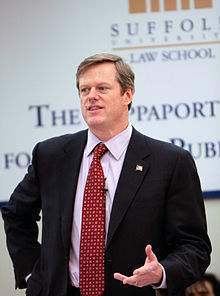
Front runner : the GOP’s Charlie Baker

The election won’t take place until November of NEXT year. Yet already the big political talk state-wide is, “who will be our next Governor ?” As Deval Patrick is not, after two terms, running for re-election, the question matters.

There is no obvious successor. Many fit the role, but none dominates it. For the Democrats, Attorney General Martha Coakley looks most formidable; but State Treasurer Steve Grossman — who announced his candidacy yesterday — rates as supportable as well, and so also, on his resume alone, does Donald S. Berwick, a medical doctor best known as President Obama’s administrator of Medicare and Medicaid services.

Image

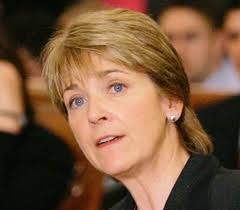
leading Democrat : attorney General Martha Coakley

Image

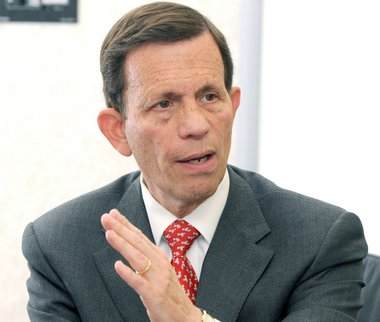
also strong : State Treasurer Steve Grossman

You would suppose that the presence of three such star-quality candidates would preclude the availability of a fourth: but you would be wrong. A second Obama administration official, Juliette Kayyem, is said to be preparing her candidacy. Kayyem appeals to those who believe that intellectual rulers should rule. She worked in the sardonically named “Department of Homeland Security,” lectures at Harvard University and writes op-eds for the Boston Globe. Kayyem is an all-in supporter of the secret surveillance state. Sadly, this is what the Democratic Party, once the courageous tribune of the rights of ordinary people, has just about become in paranoid America, 2013.

Image

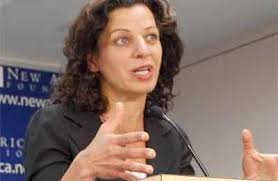
Governor Snoop ? Democrat Juliette Kayyem is thinking about it.

Of course Kayyem might not actually declare. We hope she does not. State government has already become an enemy to many of the basic rights of ordinary people : think the recent and ongoing attack upon people receiving EBT benefits. Ponder the opposition to the Governor’s “transpo” bill and its new taxes, money needed if the state is to maintain, even improve, public transit, by which many ordinary Massachusetts people get to work. The last thing that ordinary Massachusetts citizens need right now is a governor trained in secret snooping.

Of all the Democrats likely to run, Martha Coakley has the best record of advocating for ordinary people. Her long campaign against the mortgage banks and their predatory, deceptive, and downright self-seeking lending and foreclosure practices deserves the congratulations of us all. Yet even Coakley has a tainted past. What Coakley watcher can forget how ruthlessly and unforgivingly she, as Middlesex District attorney, pursued the Fells Acres, day care providing Amirault Family back in the 1980s and for two decades thereafter ?

Despite which, Coakley looks to be the Democrats’ top gun, and that perception is currently well deserved.

Which brings us to the Massachusetts Republican Party. Since the local GOP has provided four of our last five governors — Weld, Cellucci, Swift, Romney — you might expect the GOP nominee to be the favorite to win in 2014. We think so too. Quite unlike the national party’s decline in civic morality and policy intelligence, the Massachusetts GOP features a long bench of A-list candidates, most of them progressive on every civil rights issue and some of them progressive even on economic agendas. Do not be misled by the dullness — except for Dan Winslow — of the GOP’s recent US Senate campaign. For the governorship, our local GOP has plenty to cheer about.

First up is Charlie Baker, an master administrator who ran in 2010 and would probably have won, had his campaign handled more deftly the presence of a strong third candidate. Baker is almost sure to run again.

It is thought that if he does not, former Senator Scott Brown will run. Brown is low-key, personable and still very much liked. He knows Beacon Hill well, having served in the legislature for ten years. The last State Senator to be elected Governor in his own right, the late Paul Cellucci, was an effective leader indeed.

(NOTE : Jane Swift had been a State Senator prior to becoming Lieutenant Governor. She succeeded to the Governorship when Cellucci was appointed Ambassador to Canada.)

Image

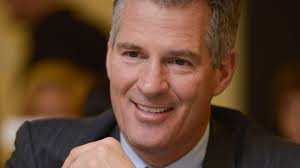
will he run ? Former Senator Scott Brown

Mary Z. Connaughton, who ran for state Auditor in 2010 and lost by one percentage point, might run if neither Baker nor Brown does so. She is an excellent campaigner and would be a superb candidate if she moves away from her retrograde views on social and civil rights issues.

Also possible candidates are Dan Winslow, by far the sharpest — and most under-funded — of the recent US Senate hopefuls, and Rich Tisei, a committed progressive, 16-year State Senator who lost a 2012 race for Congress by only 1,000 votes.

Clearly the Massachusetts GOP offers our citizens what a major political party should : credible candidates who stand for progressive policies beneficial to the many, not just the few. At least one such GOP candidate will run; and given the strength of the Democrats’ Coakley and Grossman — Berwick too — it should be a very intense election, with state infrastructure and education spending the prime issue : issues about which the Massachusetts GOP — so unlike the GOP nationally — offers solutions well in keeping with our state’s regard for civil rights and for the needs of those on or near the economic bottom

Our Governor campaigns always are about solutions and, by election day, so intense. This one already is.

—- Michael Freedberg / Here and Sphere

UPDATE  as of 1:45 P.M. 07/11/13 : yesterday we learned that State Senator Dan Wolf, founder of Cape Air and representing of the Cape Cod and Islands District, has announced for the Democratic Party’s Governor nomination. More details as we get them.

THE LEAVING OF RICK PERRY

Image

The big political story yesterday was that Rick Perry, three term Governor of Texas, will not seek a record fourth term.

Both his supporters and his opponents were thrilled at the news. Tht’s a measure of his political importance. And of the hype.

Rick Perry is not as important as hopes to be, or as he thinks he is. Perry claims that he has left Texas the most competitive economic state of all, the best for business in the 21st century, as he likes to claim. Texas may well be that; but the man who initiated Texas’s modern business prosperity is Lyndon Johnson, not Rick Perry. It was Johnson who, as JFK’s vice-president, successfully lobbied to have NASA headquartered in Houston.(Then Speaker Sam Rayburn, also a Texan, played an important role here too.) You remember NASA; it was the agency that developed a program to put a man on the Moon, and successfully did so. At the time that NASA started in Houston, the city was a growing but still one-industry “oil town.” By 1969 it was the center of America’s most advanced defense/technology enterprise.

From that NASA start, and with the vast development of underwater oil and gas drilling in the Gulf of Mexico, Houston and the Texas Gulf Coast became a major American wealth and jobs hub. Large law firms and international commodities traders located there. Software companies — also drawing upon brains at work at the University of Texas and at Rice University — chose Texas as favored locus. The Texas elite of that period included a governor, John Connally, as well as a future President, George H. W. Bush, and his lawyer friend, James Baker; software pioneer H. Ross Perot; and a Senator, Lloyd Bentsen, who became running mate to a George Bush presidential opponent.

Rick Perry came late onto the scene. He was a very obscure lieutenant governor who became Governor largely by the good will of Texas voters for George W. Bush, who had been elected president two years before.

Perry inherited all of the above — the business strength and the good will. It was easy for him to simply keep on doing what was already working. Whatever drew businesses to Texas, he was for. Whatever might discourage business, he was against. Simple agendas that work are hard to beat. Perry was not beaten.

But then he decided to run for President. Like Romney, he moved to the right — sharply, and much earlier than casual observers of his entry into the 2012 primary race realized — and with effects much more devastating. Romney moved to the right after leaving office. His move affected no one but himself. Perry’s moves, on education funding, executions of prisoners — Texas executes more than the next four death penalty states combined — health care, and “nullification” of Federal laws, including Voting rights laws, made life much harder for Texas’s low income people. 25 % of Texas residents have no health insurance. the same percentage live in poverty. The abortion restriction law that State Senator Wendy Davis filibustered — and became world famous doing so — would impact mostly low income women. Perry also successfully opposed pay equity legislation and rejected hundreds of millions of Federal health insurance dollars.

Perry wants medicare, social security, the income tax, and popular election of senators abolished. These are either anti-social or just loopy views; even though they remain mere noise ,they debase the conversation and lead people away from progressive reform into dead ends of negative rant.

It is hard to see how anyone not a business executive or a negative ranter can want anything to do with Rick Perry ever again. And even business executives might question the advantage of locating ina state that makes life so hard for both the low-wage people whom most businesses count on and for those living in poverty, who lack income to buy what most businesses need to sell. Texas badly needs to change its priorities if it — and its 24,000,000 or so residents — are not to lose ground in the coming decades.

It is said that Perry intends to run again for President. We urge him not to.


WE SHOULD NOT HAVE TO LIVE IN A KAFKA WORLD

Image

^^ Franz Kafka was haunted by the impenetrable bureaucratic, protection state whose surreal impositions he so brilliantly envisioned

——————————————————————————–

You may recall reading the novels and stories of Franz Kafka, a Czech who lived from 1883 to 1924 and who documented the impersonal, labyrinthine, secret world of bureaucratic tyranny in “The Trial” and “The Castle.” We read Kafka, and we had nightmares of his world. It was a maddening world in which the single individual was hemmed in by petty rules about everything, rules issued by no one he could identify or find, and whose minions, when he tried to protest, sent him from one door to the next in a fruitless search for relief or even for an answer to “why ?”

What we did not expect was how peacefully a world like Kafka’s would come into being and how calmly it would sit upon us. But now we know. Because we are living in one. Our Kafka world is called “the surveillance state.” We Americans created it as a result of the jet-plane attacks upon us on September 11, 2001. With legislation ruefully called “The Patriot Act” we have erected around ourselves a bureaucratic shield as impenetrable as possible, a structure of snoop and survey — not to mention the TSA and its body pat downs — intended to make us prophylactically secure against a repeat attack. We named it the “Department of Homeland Security.”

Legislation that placed security above liberty — explicitly said so — proclaims that it’s for our own protection. So said the Kafka “Castle” state as well. So has said almost every Big Brother (thank you, George Orwell in 1984) ever established. Most Castles and 1984’s of course, come into being by violence and are maintained by a terror apparatus. Not so with us. Our surveillance state has come about by legislation and controls us as blithely as the sea is smooth at dawn. Many of us like it that way.

The surveillance state that we put into place here in America always says that it takes every precaution to not violate Constitutional protections; that it respects our privacy, our liberty, our freedoms; that it will “not give up the values we live by.”

This is pure horse manure.

We know now, thanks to the revelations given us by Edward Snowden — and expanded upon by what remains of our free journalism — that the secret FISA court has authorized surveillance of all our communications for many other purposes than hunting terrorists. Our communications — all of them — are now to be commandeered in search of nuclear proliferation, cyber attacks, espionage. And that’s only what we KNOW about. Had Ed Snowden not uncovered the work of this secret court, who knows what authorizations they would have given to the National Security Agency ?

If not for Snowden, we wouldn’t have known that the FISA court even existed, much less been able to read its findings.

Few Americans would deny the CIA, or even the NSA, authority to collect data directly related to the pursuit of terrorists. Since World War II, at least, we are accustomed to having a large intelligence apparatus at work fighting our battles.  But war is war; we are not at war now. Terrorism can hurt us grievously, but it is largely an international police matter. Or you would at least think…

As a secret court, the FISA was not given a brief to fight crime. Yet that is what it has expanded to doing. This brings us to the Fourth Amendment, which sets the ground rules for searches and seizures. The Amendment requires a reasonable basis for the issuance of a search warrant. It has not been repealed — yet.

The ACLU had already sued in Federal Court to block FISA from isuing blanket surveillance authorizations. This week another group has brought suit, directly in the Supreme Court, to obtain a ruling that will limit FISA to surveillances that would pass the Fourth Amemdment test. We support their fight.

One hears the word “security’ a lot lately. “Secure the borders,” say the anti-immigrant people. “Security” is part of the very names of both the National Security Agency and the Department of Homeland Security. we are troubled to hear the word security used so broadly.

We much prefer the word liberty. Unhappily, that word has been all but commandeered by the Tea party and its anarchic, survival of the fittest agenda — a world amoral in the extreme — which, oddly, one finds in Franz Kafka. Amoral liberty, as he well knew, is the only kind that can survive in a surveillance world, secret, impenetrable. It is really no liberty at all. It is a death sentence.

Badly America needs to step back from both its security obsessions and its amoral liberty. We wish all success to those who fight either or both.

—– Michae,l Freedberg / Here and Sphere

BOSTON MAYOR RACE : IF MONEY MAKES A WINNER, THEN THE WINNER IS .

Image

Dan Conley tops the $$$ race (photo courtesy wbur.org)

Money isn’t everything in politics, but it is how everything becomes ….a thing. The thing that money most helps become is a voter base — of committed votes. With twelve (12) candidates on the September 24th Primary ballot, a shockingly small voter base can choose the two Mayoral finalists. As few as 20,000 votes — little more than five percent of all Boston voters — might get a candidate onto the November ballot.  Add the votes going to his or her opponent, and you end up with a mere 45,000 voters choosing the final two. That’s barely 12 percent  of all registered Boston voters.

But it is what it is. Quite a few of the twelve candidates have enough political sock to tally 20,000 votes. So money will make the difference in who actually does it. Money buys campaign literature, campaign advertising, lawn signs, campaign staff. It allows a campaign to make its newspaper, interest group, and union endorsements known — and unless publicized, they don’t count for much. It buys an election-day street-level operation : poll checkers, door knockers, telephone callers, telephone banks, coffee trucks for poll workers, precinct captains, secure phone lines, lists of who needs a ride (with phone numbers and addresses), precinct maps,  ID’d voter lists. Money generates “good morning voter’ doorknob cards that we used to deliver to doors, like newsboys, at 4 AM in the morning. assuming that four or five candidates have a fairly equal ID’d vote, money gives him or her who has it a strong advantage in getting those ID’d voters actually to the polls.

So who has the big bucks ? Now, at the start of July, with less than three months to go ?

Here’s the cash on hand list as of the most recent OCPF report :

Dan Conley — over 1,250,000
John R Connolly — about 675,000
Mike Ross — 500,000
Marty Walsh — about 400,000
Rob Consalvo — about 225,000
Bill Walczak — about 125,000
Felix Arroyo — also about 125,000
John Barros — about 85,000
Charlotte Golar Richie — 50,000
Charles Yancey — about 45,000

The other two candidates, David Wyatt and Charles Clemons, reported no cash on hand.
Image

John R Connolly — strong second in the money campaign (photo : courtesy wbur.org)

The list contains several surprises. We did not expect that Charlotte Golar-Richie, the only woman in the field and boasting of wide support beyond her home Dorchester turf, would figure so low on the list. Nor did we expect Bill Walczak, who has never run for city office, would top two city councillors AND Golar-Richie. And who could have foretold that Dan Conley would have almost double the cash on hand of his nearest competitor, or that he would top the entire list ?

Given that Conley has also put forth the completest policy agenda — and a progressive one at that — and that he will be in office, as Suffolk County District attorney even if he loses, and so should be able to raise money and volunteers aplenty, one has to conclude that he will make the November ballot. In this regard, it was instructive to see Conley’s poll worker operation on US Senate election day, June 25th. In wards 18 and 20, which will likely combine to deliver a full 25 percent of the September vote, he had by far the completest poll worker showing. Conley means business.

So the question remains : who will Conley’s November opponent be ? The money fact gives us scant clues. Though Mike Ross and Bill Walczak have raised much, they lack a definable voter base. As for the others, John Connolly, Rob Consalvo, Marty Walsh, and Felix Arroyo all have defined voter bases and sufficient cash to maximize their base voters’ turnout. Charlotte Golar-Richie should have the same prospect; but her lack of funds, at this late stage, sends a very negative message, both to prospective donors and to voters as yet undecided. With City Councillor Charles Yancey also on the ballot drawing votes from Golar-Richie’s likely base, her prospects look poor.

Image

Marty Walsh : likely to gain (photo courtesy : charlestownbriodge.com)

Two candidates seem poised to benefit most from Golar-Richie’s decline : Marty Walsh, the strongest Dorchester candidate, and Felix Arroyo, who needs to win convincingly among Boston’s voters of color if he is to beat Marty Walsh to the November ballot.

Image

Felix Arroyo : also likely to gain strength

—- Michael Freedberg / Here and Sphere