MAGOV14 : IGNORE THE RHETORIC — THE 5 DEMOCRATS ARE VERY DIFFERENT

Image

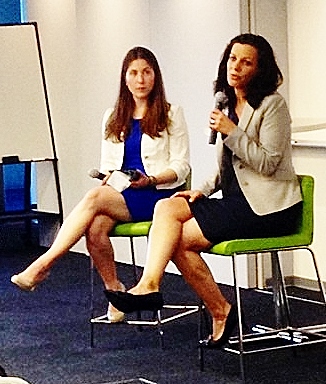
^ confident enough to say what she is about : Juliette Kayyem (on right) at ProgressiveMass Forum

—- —- — —-

There’s a tendency on the part of so-called “conservatives” to dismiss the five Democrats running for governor as “all on the left.” That’s no more the case than to say Charlie Baker is “on the right.”

Fact is, the five Democrats differ immensely, on policy priorities, in political smarts, job resume, issues positions, personal style. Granted that the differences among them were not as evident at campaign’s start many months ago; each has evolved.

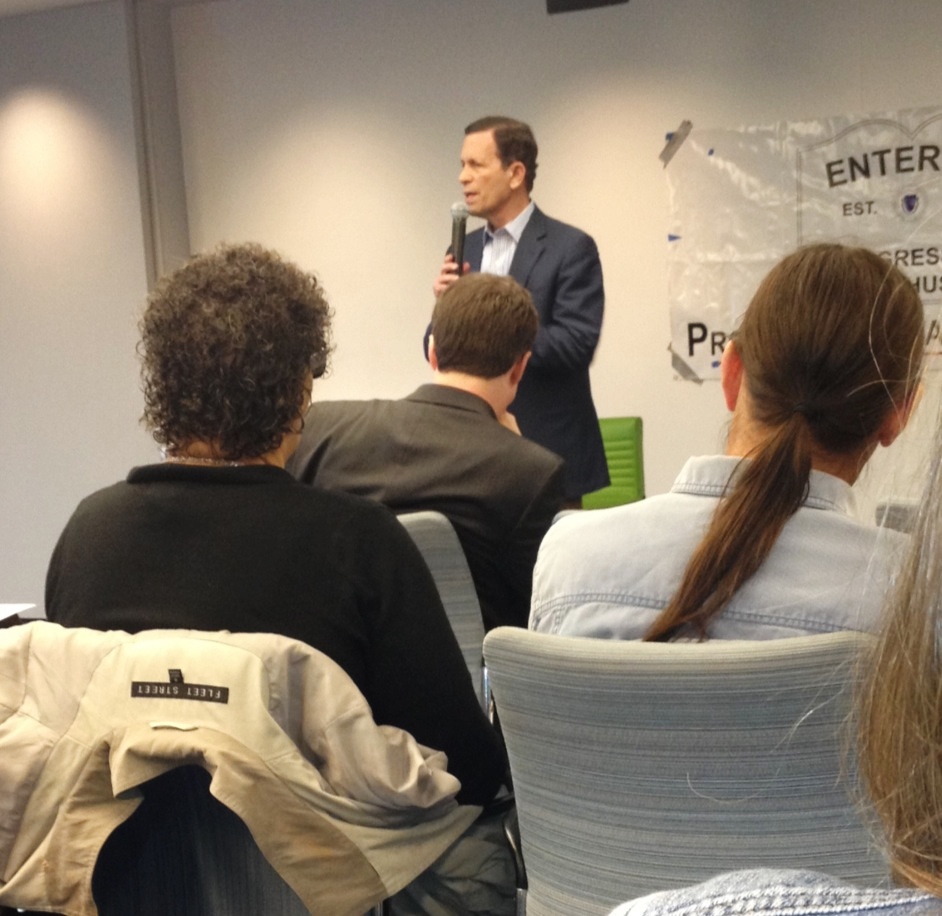
At the ProgressiveMass Forum yesterday, four of the five — joined by independent Evan Falchuk — made clear their evolved candidacies :

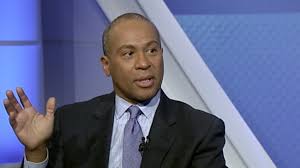
Don Berwick speaks rapid-fire his campaign of advanced position papers without offering any indication of how he plans to get from paper to fact. I’m told it’s all on his website.

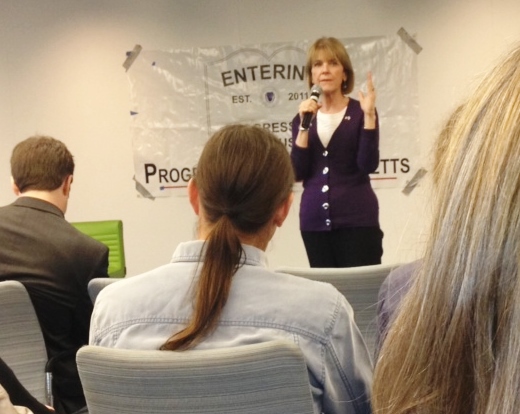
Martha Coakley coolly touts her work as Attorney General, fighting foreclosure abuses, a situation which she sees as still the biggest destabilizer of our State’s economy.

Steve Grossman reminds voters of long age of former governor Mike Dukakis : detailed answers to just about every question thrown at him, earnestly delivered, no issue too arcane to miss his sweeping attention, no progressive ideal new to his long record of model citizenship. At the Forum he even talked about 1968 and the early 1970s, to a room full of people born mostly after 1984.

Juliette Kayyem, a generation younger than her competitors, looks the stylish, even athletic, cocktail party head-turner she is and speaks the realism — how to we get from here to there ? — that her rivals either avoid altogether or deem no big problem. Her big issue is true to type : “better data management.”

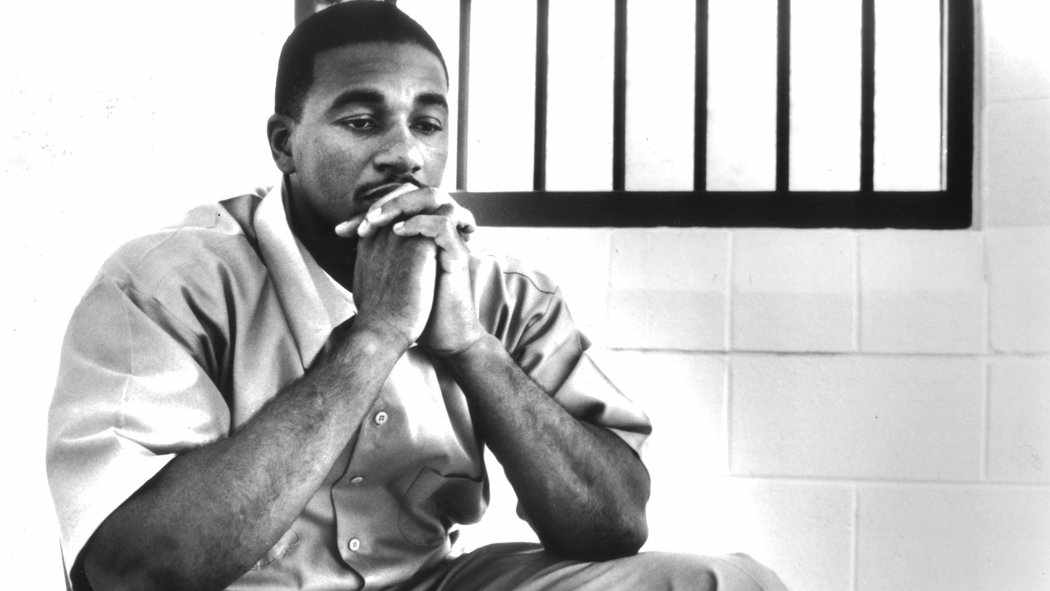
Joe Avellone did not speak at this Forum, but I have seen him frequently of late, and he too has evolved. The self-effaced, former Wellesley selectman now talks of drug abuse, recovery, and re-entry — a huge issue in our state and appropriate for Avellone, who, like Don Berwick, is a doctor.
Image

^ the foreclosure crisis still hurts the state : so said \Martha Coakley yesterday
Image

^ evolving to the Grad Tax ; Steve Grossman

The day also made clear that some of the Democratic hopefuls have devolved. Grossman, for example, started the year as the candidate of job growth and infrastructure spending — reluctant to seek new revenue but not ruling it out. at the ProgressiveMass Forum he sounded less reluctant to ask for new revenue and, surprisingly, stated support for a graduated rate income tax ; an issue that only Berwick had up till then advocated. What other issues surprises might Grossman adduce before Primary day four months from now ?
Image

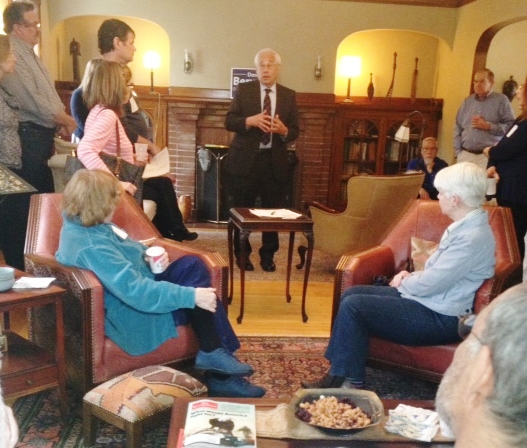
demagoguing in Salem : Dr. Don Berwick on Fairfield Street

As for Don Berwick, his revelation moment occurred before the forum, at a meet and greet in Salem, my home town. there, speaking to about twenty guests (including a friend of my Dad and Uncle), Berwick answered a question about how would he defeat Charlie Baker if he we nominated by tying Baker to the odious Republican party platform — which baker opposes top to bottom — and by calling him “an insurance executive.”

These were unfair attacks, and especially unworthy of a candidate who touts his lifetime of caring about people and attachment to a co-operative citizenship. Berwick knows very well that Baker (and running mate Karyn Polito) strongly support marriage equality and women’s health choice; knows very well that in 2010 Baker’s running mate was openly gay Richard Tisei, first sponsor of the state’s now enacted transgender civil rights law. Berwick also knows very well, he being a doctor, that the insurance firm that Baker was executive of was Harvard Pilgrim Health care, the state’s best provider.

There are plenty of real issues that Baker and Berwick disagree about. It was either campaign inexperience or a real chink in Berwick’s soul for him to play the demagogue as he did. this was devolution.

As I see it, yesterday was Juliette Kayyem’s day. Asked, at the ProgressiveMass Forum, about her work on interrogation policy, as a Homeland security advisor during the Bush presidency, she did not excuse or back off but defended her work as vital to national security in the context of 9/11. She also mentioned that her policy paper mirrored the anti-torture views of John McCain, whom — said she to the room full of Progressives — “is often good on these matters.”

She is right about that, of course. And said so.

That took guts. it took confidence. She must surely be one of the first candidates, if not the first, to mention John McCain in a positive way to a room of progressive Democrats. I always like it when candidates confront a room of skeptics by conceding nothing of who she is or is about.

One final point. On the issue perhaps most important of all, to a potential Governor, there has been no evolution at all. Asked the question “if progressive legislation is blocked by conservative forces in the legislature, what will you do ?” none of the four Democrats at the Forum had a good answer. All evaded the question — or answered a different question. Because to give the real deal would undercut their pretensions. The real governor of Massachusetts is the person whom no one in the entire room mentioned by name : Mr. “conservative forces in the legislature,” Speaker Robert DeLeo. A Democrat.

—- Mike Freedberg / Here and Sphere

TOWARD A PARTICIPATORY ECONOMY

graph of minimum

An economy benefits best when almost everyone participates in it — the greater the participation, the better. The more customers a business has, the greater its revenue. The more money those customers have, the greater still.

This is not rocket science. it’s obvious. If a business can’t sell its products or services to customers because customers can’t afford to buy, that business is going nowhere. Some businesses sell only specialty goods or services that most people don’t need or want : yet these businesses, too, don’t want to see potential customers lacking money to buy.

For some reason, these basic facts of economy don’t seem to register with some businesses, or with their political mouthpieces. During the past decade or so we’ve seen an entire political party work overtime to keep money out of the hands of many, many potential customers. Though every statistic makes clear that consumer spending makes up 2/3 of the entire economy, these folks seem to think that the big economic problem is the nation’s budget deficit, or too much Federal spending, or too much intervention by the “Fed.” Exactly the opposite is needed, but these folks have other agendas

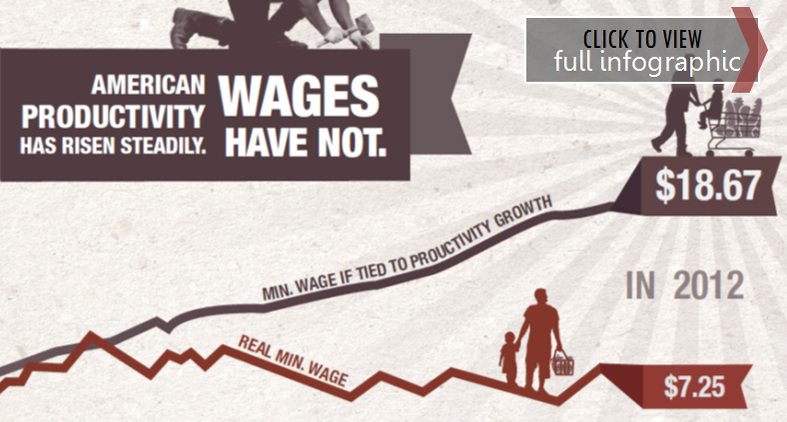
Fortunately, the mistaken-ness of this view has no longer anywhere to hide. We are headed, finally, toward a much more participatory economy than we have seen since 2005. Though the Federal government has been blocked from raising the national minimum wage from $ 7.25 an hour to $ 10.10, many states are raising it, some to an amount far higher than $ 10.10. In Massachusetts the new amount will be $ 11.00. The City of Seattle is preparing a rise to $ 15.00 an hour. Service workers are organizing nationwide to gain a $ 15.l00 an hour wage agreement. Some seek a $ 2 per hour wage. I applaud these moves.

Today, minimum wage workers need taxpayer help, via public assistance, to make ends meet. Public assistance provides low-wage employers with a huge perk. McDonald’s alone sucks $ 1 billion out of taxpayers’ pockets to pay workers what the company refuses to pay. Why should we subsidize this sort of thing ? We shouldn’t, and it looks now as though we won’t have to do so much longer.

Advocacy groups are beginning to focus on how quick-buck traders and maximize-profits money pools force publicly traded companies to cut workers’ wages, or keep them low; to view employees as a “cost item” rather than  what they are : a company’s major asset — and, basically, to squeeze corporate assets out of the corporate treasury and into their trade pockets.

Advocacy groups see these trading moves for what they are : liquidation, not prosperity.

Advocacy groups also are drawing attention to unfair labor practices, outsourcing and layoffs, denial of benefits, opposition to paid maternity leave or sick days, and outright theft of mandated overtime pay laws.

Progressive Democrats are beginning to organize an economic fairness agenda that encompasses all of the above reforms as well as pay equity for women, living wage laws, labor law enforcement, and reforms to the nation’s credit card regulations, bank fees, and bank deposit trading practices.

Just as important, more employers — including publicly traded major corporations — are starting to implement high-wage strategies, understanding that well-paid employees are loyal, motivated, healthier, and more innovative. All of which stimulate an economy.

I welcome all these moves and much more.

minimum wage

At $ 22.00 an hour, workers even in expensive cities like Boston could pay their bills without any taxpayer subsidy — freeing up that tax money to pay for vital public services such as education, transportation, and energy conversion, or even for a tax cut which would put more money in taxpayers’ budgets. At $ 22.00 an hour, workers could even do some discretionary spending that they can’t even contemplate now : buying a new car, a new cell phone, new furnishings for the home or apartment, summer camp for the kids, dining out at a restaurant, a night at the theater. All of which spends money into the economy, into businesses.

We call this state of things “prosperity.”

Prosperity does NOT mean an economy in which a few get rich and everyone else barely makes it. That is an economy of scarcity, not abundance.

The most pressing policy push in America today is to reward all work with sufficient pay to make work worth while, to give workers confidence in their work, to get them spending and free of public assistance. Even $ 22.00 an hour adds up only to $ 880 a week, pre-tax. That’s $ 3440 a month; even that sum is far from enough to pay basic bills if one lives in a city as expensive as Boston; but a two-income family at that level earns $ 6880 a month, and that is enough to pay basic bills even in Boston. Indeed, it’s enough to allow at least. some discretionary spending, even some savings.

At $ 15.00 an hour, a two-income family will earn $ 4800 a month — 35 percent of which, at least, will go to rent alone. A $ 4800 family won’t need public assistance, and, if no bad things befall, will pay basic bills, though with no margin for error. Is there some reason why our society can’t value work — all work — at least this much ?

A minimum wage of $ 15.00 seems local-option only. In smaller or less expensive cities, such a minimum wage might be too high. But I can think of nowhere that the proposed Federal minimum of $ 10.10 is not vitally needed.

It is going to happen.

The only reason that our economy continued to grow robustly after about 1975 was the introduction of credit cards., which offered consumers quick buying power. By 2007, consumer credit card balances comprised 20 percent of America’s entire GDP. (Yes, I said 20 percent.) Trillions of plastic money debt dollars enabled all kinds of businesses to grow enormously. It was fun while it lasted, but it was a false economy, and it has ended. Since 2008 consumers have been paying down credit card debt down fast enough to shave a full one percent off the nation’s GDP : 240 billion dollars a year. No wonder our economy is growing so slowly.

Paying workers the level of wage that I am advocating is a far solider, stabler way of growing the economy than inducing workers to borrow credit card debt. wage money is theirs. it does not have to be paid back. Our economy should never count credit card spending as a growth indicator. Growth comes from wages and income spent by those whose money it is. There can be no worthier national policy than to assure every working person sufficient money of his or her own to go about life a free agent.

—- Mike Freedberg / Here and Sphere
SO FAR SO GOOD :MAYOR WALSH’s ALL OUT FIGHT AGAINSTSUBSTANCE ABUSE

Image

^ it’s personal to him ; Mayor Walsh goes all out against substance abuse in the city

—- —- —-

If there’s one thing that newly installed Mayor Marty Walsh is doing really, really right, it’s his all-out attack on the scourge of substance abuse. A new policy paper issued by Walsh’s office tells the whole story, in this link :

http://next.cityofboston.gov/post/84249639798/improving-addiction-and-recovery-services

It’s hardly a new issue for Walsh. It is personal for him. He himself is a recovered substance abuser, and, at the very first “Mondays With Marty” that I attended, way back in mid-summer of his Mayor campaign, he made a statement that stuck with me : “there is heroin epidemic in Boston .”

I believed him because he had seen it.

We all know that substance abuse threatens to overwhelm communities; to snuff out many, many lives; to disable many more; to make employment difficult and family life all but impossible; and, thus, to over-burden the state’s already overtaxed DCF agency.

Make no mistake : you don’t like how DCF has been doing its job ? Then do something about our State’s substance abuse epidemic. Because until that wave is conquered, DCf will have far more families to intervene with than it can handle on the best of days.

Mayor Walsh has taken several worthy steps, as set forth in the link above, including equipping all first responders with the overdose antidote known as Narcan; holding drug abuse forums in neighborhoods across the city; and sponsoring take-backs of expired medicines. all that is needed now is for the public to know about them. Very few people attended a recent substance abuse forum in Jackson Square that I was at, and the people who did attend seemed more community activists than abusers or family members of abusers.

the people who need to be reached don’t easily come go substance abuse forums…

Still, the push back against substance abuse has started now. To that push I would recommend to Mayor Walsh the following initiatives :

1.make sure that substance abuse info forums are well publicized, on social media and with copious fliers at street level

2.co-ordinate with DCF, so that the families most impacted by substance abuse can receive help from city health workers as well as from DCF people

3.just as Mayor Kevin White hired Youth Workers, to meet with youth in socially vulnerable neighborhoods and support them, hire neighborhood workers specific briefed to intervene in the lives of drug abusers and their families — it being as much a public health problem as a public safety issue

4.co-ordinate all these efforts with the City’s public school staffs.

5.expand, promote, and support city sports programs. it’s my experience that kids involved in sports are less likely to take a bad path

6.because substance abuse isn’t only a youth issue — many abusers are 25 to 40 years old, co-ordinate intervention and outreach initiatives with neighborhood health centers, churches and mosques, community houses, and gyms.

7.Regularly convene meetings of the top staffs of all the institutions and organizations I’ve mentioned, to exchange ideas and to report both progress and failures.

Winning the fight against substance abuse will take many, many years of all-out commitment by many, many organizations as well as concerned citizens. I probably shouldn’t even say ‘winning,’ because the problem is world wide and cannot be extinguished by efforts merely local. But a sustained and ubiquitous local effort can definitely cut the substance abuse epidemic way, way back within one committed city.

—- Mike Freedberg / Here and Sphere

YES : MONEY IS COMING TO ROXBURY

Our Roxbury local affiliate has a report on last night’s Access to capital Forum emcee’d by Councillor Tito Jackson.

hereandsphere's avatarRoxbury Here

photo (74)

^ Access to Capital panel : Ed Merritt, Ron Walker, Teri Williams, Richard Soo Hoo, Rafael Carbonell, Bruce Bickerstaff

—- —- —-

Big changes are afoot in the part of Boston called Roxbury. The 120 million dollar reconstruction of the Ferdinand Building in Dudley Square has reached the leasing stage, with many enterprises competing for street-level retail spaces. Above them will be the 500 employees of Boston’s Public School administration, re-locating from its present Downtown digs.

This by itself i big economic news. 500 well-paid employees will be eating lunch in Dudley Square. Some will do a bit of shopping there. many will stop for coffee before the work day or stay for coffee after it. If the 500 employees spend an average of just $ 10 a day in Dudley, it adds up to $ 25,000 every work week, $ 1,250,000 a year.

Spread over the entire Roxbury community…

View original post 500 more words

FIXING THE DCF : NO EASY TASK. THE BOSTON AREA CASINO : NO EASY PICK

Image

^ why is this woman smiling ? Olga Roche has resigned as DCF’s boss

—- —- —-

The big news this morning in Boston is that DCF Commissioner Olga Roche has resigned.

This was a certainty, once House Speaker DeLeo demanded it. Yesterday he did just that, at a press conference at which he angrily insisted that she go. The deaths of two more children in DCF (Department of families and Children) oversight had nothing to do with DCF budget cuts, said DeLeo.

State Senate President Therese Murray joined DeLeo’s call.

The failures at DCF have become all too tragic and known to all. We at Here and Sphere have called for the entire DCF system to be re-configured and upgraded. DCF’s methods are out of date, its technology 20 years behind the times at least, its staff communication hit or miss, its management slow to act. All of this can be changed, renovated, transformed. Can be and must be. 100 million in DCF budget cuts must be restored. The mandated case load limit for social workers must be enforced.

The resignation of Olga Roche will achieve none of that. Who will now run the agency ? No one with any career prospects would dare to say yes.

Some blame Governor Patrick for the failures of DCF and, in particular, for not firing Olga Roche sooner. I don’t agree with them. Governor Patrick knew well that firing Olga Roche would do nothing to make DCF a more responsive agency. The governor’s best course was, and still is, to set in motion a comprehensive review of DCF practices, recommend big changes, and then implement them.

The media are full of reports that DCF staff missed meetings with parents, misplaced faxes — faxes, in the age of twitter ! — missed communication, sloppy oversight. All true. But let’s remember that the families that DCF monitors are highly dysfunctional : drug abusers, neglecting their children, homes filthy; a mother who usually does not work and probably can’t, who lacks basic skills and isn’t attuned to keeping appointments or making them. It’s terribly difficult to get things done for, with, or by way of people in this state of advanced social crisis. A very high degree of pro-active social work is needed, backed up by very pro-active supervision.

Try doing it sometime.

Olga Roche has left the job even as I write. Her leaving satisfies the political imperatives, but it will, by itself, change absolutely nothing. It may even deceive the public into thinking that it was all Roche’s fault and things will now be much better. This would be a big mistake.

*** UPDATE : today Governor Patrick named Erin Deveney, a veteran manager at the RMV, to be interim head of DCF ***

The other big news concerns the Boston area casino license. Until recently, I felt quite certain that Steve Wynn’s Everett plan would easily beat out Mohegan Sun’s Revere project. Now I’m not so sure. The land upon which Wynn wants to build is owned, it seems, by at least one person with a criminal past, and, as it was once a Monsanto chemical Company facility, is filled with extremely toxic waste. The waste can be cleaned; the criminals, not so easy.

The named criminal, one Lightbody, says that he sold his interest in the Monsanto site long ago; but the Boston Globe reports that one of the present owners refuses to sear an affidavit that no current interest is owned by a person with a criminal record. the same Boston Globe report quotes Lightbody as having ownership of a nearby — and quite infamous — strip club “wrapped up tight.”

It’s all quite seedy, and given the public perception of casinos as havens of criminal money, it cannot be good news for Steve Wynn. Nor is the talk of high-price land purchases by the City of Everett, taxpayer paid.

This the momentum shifts over to Mohegah Sun and the City of Revere. First, the land on which Mohegan sun plans to build is already owned by their Suffolk Downs partner. To my knowledge, it contains no toxic waste. second, the City oF Revere has inked mitigation agreements with many communities (to be fair, so has Steve Wynn), with the prospect of more. The voters of Charlestown and Chelsea strongly support the Revere plan. So, too, does Mayor Walsh, although of late he has bargained for a host-community mitigation agreement rather than the smaller sum due a mere adjoiner. And though Revere’s recent casino vote produced only a 2 to 1 approval, as oppose to the 9 to 1 vote in Everett, Mayor Dan Rizzo has pushed every button available to make Revere’s “Yes” a loud one.

Mayor Carlo deMaria of Everett, no amateur in the pressure push game, has pushed back. Last night the Everett city council voted 10-1 to approve the Mayor’s Lower Broadway urban renewal plan, upon which the Steve Wynn casino projects depend and which includes a $ 35 million purchase of the Monsanto site (then to be resold to Wynn at the same price). Lower Broadway in Everett is a hotch-potch of industrial usages, non-use, blight and ugly. Renewing it to accommodate Wynn’s gleaming-glass, swimming pool and diamond dreams palace would sweep all that blankety-blank away. It’s a strong argument, and last night it won.

For deMaria last night’s vote was a crucial step toward victory. He will need many more, and these will be much, much harder to win. Mohegan sun is definitely in the game. Six months ago, i would not have predicted it.

—- Mike Freedberg / Here and Sphere


MAGOV14 : STRENGTHS OF THE CHARLIE BAKER ARGUMENT

photo (70)

It doesn’t show in the polls, but Charlie Baker’s argument for why he should be the governor is a very strong one. He made that quite clear when he spoke last night to 200 people gathered at a fundraiser in his home town of Swampscott.

He spoke about great schools : “a school in which the principal has autonomy to direct the school is a great school. I saw just such a school in New Bedford. A standard school but with an excellent principal. It’s a level one school — top 20 percent performing. Why can’t we do this everywhere ? We need to leverage the strengths that are already have.”

Giving managerial autonomy to school principals is the core reform that Boston “interim’ superintendent John McDonough has put in place. It’s a reform that almost everybody supports. Baker is the first governor candidate who I have heard address this issue.

He spoke about state owned land. “There’s so much unused state-owned land in boston. Why can’t we develop it ? There are three high cost barriers to development in Boston : permitting, labor, and the land. Mayor Walsh is fixing the permitting. Labor will always be expensive. But why must the state have to make a profit on the land ? Let’s sell it low cost and develop affordable housing. It helps the City’s tax rolls and brings life to land where there was none.”

He spoke about local aid. “We cheat the cities and towns when we withhold local aid. 500 million dollars has been cut. As governor I’ll make sure that all the local aid fund goes to communities, because that’s how you build great communities. And so far I’m the only governor candidate who has made this pledge.”

You will notice what Baker did not say. Nothing about too high taxes, nothing about small government, nothing but cities, city issues, city problems.

Baker also laid down this challenge : “Both Karyn (Polito, his running mate) and I have long experience of local and state government; she in the legislature, me in the executive; and both of us have long experience in private business. No one running can match us. No one brings to this job what we do !”

He’s right. The Democratic candidates for Lieutenant Goverbor, especially, albeit well-meaning citizens, fall way short of Polito’s ten years in the legislature and service as a town selectman. Nor have any of Democratic candidates for governor, not even Don Berwick, anything like the wide-ranging experience that Baker can claim.

The Swampscott audience — all kinds and ages of people, too — loved Baker’s speech.

photo (71)

^ Baker’s running mate, former Shrewsbury State Rep Karyn Polito

So what does Baker’s Swampscott pronouncement say about his chances of election ? It says a lot.

Right now he polls 30 to 32 percent of the vote; his chief potential November opponents poll an average of 37 and 49 per cent. These are daunting numbers; baker will be campaigning uphill all the way to election day. yet if he can stick to his current message, addressing city problems to city voters in a city way — and adding his quite forward ideas on technology transformation of state administration — he has a path to victory.

It may be his only path to victory. It is also exactly what the next governor needs to make his priority, his commitment, his work to accomplish. Because it is in the cities of our state that the future is being talked out, decided, and made.

—- Mike Freedberg / Here and Sphere

INCOME INEQUALITY : SUGGESTIONS FOR CURBING IT

Image

^ the smartest and most realistic economic reformer in the USA today : Robert Reich

—- —- —-

We all know now, thanks to Thomas Pikettty’s Capitalism In the 21st Century, what many political economists have been opining for several years now : that growing disparity of incomes threatens the growth, the effectiveness, the very stability of the economy we live in. Robert Reich blogs almost every day about it and has highly useful suggestions to make. Paul Krugman opines about it — and other economic events and decisions — and almost always gets it right.

We have several suggestions for curbing income inequality; but first, let’s do a little analysis and then read a bit of history :

What French economist Piketty has added to the discussion is to show, at length, that ( 1 ) the fruits of commerce almost always tend to go chiefly to the top and ( 2 ) the process is fundamentally absurd.

By “absurd,” I mean that income equality grows hyperbolically : the more unequal the apportionment, the faster it grows still more unequal, until almost all income goes to hardly anyone but a very few.

This happens because the generation of income is a dynamic process; the momentum of it controls the process. We see this quite clearly in stock markets, where “uptrends” — and “downtrends” — of stock prices tend to increase ever faster the higher they go, as more and more speculators get aboard the trend, until they end in a “spike” top or “spike” bottom. Stock prices are a particularly pure form of hyperbolic money momentum, but the same trend dynamic applies, albeit more gradually, sometimes interrupted, to almost every economic enterprise in which transactions occur.

The disruptive consequences of price trend spikes and of boom and bust economics became quite painfully known to advanced nations a long time ago. from the 1870s to the 1960s, such nations either enacted corrective legislation or underwent revolution; some did both. In the USA we set up the Interstate Commerce Commission to regulate railroad pricing; established anti-trust laws to curb monopoly; set up the Federal Reserve Bank to backstop the nation’s money supply — and, in the 1930s, to impose “margin” requirements (limits on how much leverage a borrowing buyer could take) on stock and bond speculators. We enacted much labor legislation to protect workers seeking to organize and bargain wage and benefit contracts collectively. We gave the Federal Reserve the power to establish national interest rates, to stimulate an economy in recession or slow down an economy going into boom mode. We introduced the graduated income tax and estate taxes, to slow down income accumulation and cut down the power of inherited concentrations of money. We passed the Glass-Steagall Act, forbidding depository banks from using depositors’ money to speculate in securities.

Canada enacted many of the same reforms. western European nations did the same, or imposed stare ownership on many industries along with extremely generous wage rates and high taxation. Some nations tried all-out state economics, centrally owned and state controlled. This model went too far,. innovation was discouraged, experiment feared, diversity prosecuted. The model failed.

The other two models worked well until about 20 to 30 years ago. Then came the internet, and speculation fever, after the collapse of which speculative money, as yet unstated, bought into the mortgage market and, as we know, into the speculative trading of mortgage bonds and other mortgage-backed instruments.

This activity collapsed, but the vast income inequality it generated did not. Publicly traded companies are hounded by speculative money pools that own their stock, to maximize short-term profits, as short term as the rapid fire trades that pressure these firms. Firms found that they could grant enormous stock bonuses to their top executives in turn for maximizing short term profits and thus becoming favored by speculative money pools whose buys boosted these companies’ stock prices — which in turn made the stock option bonuses that much more valuable.

The surest ways to maximize quick-month profits are to skimp on research, pay workers as little as possible, and do stock buybacks. All are favored methods for companies whose stock is traded, to CEO advantage, by speculative money pools.

Hence the absurdity. Money is generated by speculative trading, which makes money for the CEO’s stock options, which in turn assure that he will run the company to the purposes of the speculators. And the speculations’ money, instead of investing in new products, or creating new industry — which is what investment money is best used for — invests basically in itself : money buying money which buys money to sellers who pay money to buy money sold to them.

By this means money is, basically, taken out of the economy entirely to chase its own tail.

Meanwhile, the 99.9 % of people who have to live by a paycheck — or by public assistance or retirement funds, most of it in forms of social security — find hardly any additional money accruing to them. Between jobs outsourced, layoffs, and outright wage theft — and by making workers be “temporary” status, this eliminating their benefits — companies maximize the amount of money they can spin into the speculative tail chase and into CEOs’ stock option increases.

You would suppose that companies’ own stockholders would reject this policy. They would, except that today the huge money pools own as much a 90 % of all the stock of such firms; they control every part of the company’s money usage.

Not all publicly traded companies suffer money masturbation. Some, like Costco, practice an opposite policy : pay workers generously, limit the CEO’s pay enormously. Companies in which the founding family retains a “control block” — like the Pitcairns of PPG Industries, or the Lilly Foundation of Eli Lilly — also resist being masturbated. In these firms, investment in employees and research takes precedence. Firms operating in enterprises requiring high skill — oil and gas, technology, aircraft — also manage to avoid being jerked off. Thus the economy doesn’t completely fold in upon itself — yet.

So : what to do ? All manner of suggestions have been propounded. we have our own :

1.Reform corporate governance laws so that stock can only vote if owned bona fide by individuals, not money pools or other institutions.

2.raise the minimum wage to a living wage level : $ 15.00 an hour, or, better yet, to a stated proportion of the median income for each state.

3.require publicly traded companies, as a condition of admission to a stock exchange, to have at least one third of its board members be representatives of the firm’s employees; require that each board also have on e consumer representative if the firm’s chief business is selling to retail customers

4.Grant the “Fed” power to impose margin requirements on the buying and selling of all traded financial instruments, not just those traded on formal exchanges.

5.make the classification of employees as “temporary” or as “independent contractors” an unfair labor practice, and fund the NLRB to enforce labor laws by earmarking receipts from stock transfer taxes to the NLRB (and SEC) enforcement personnel and expense.

6.Impose a surtax on firms that move their incorporation offshore.

7.give the “Fed” regulatory power over interest rates and fees charged to consumers by credit card grantors, similar to the regulatory power that state utilities commissions have over public utilities’ rates.

8.move universal health care to Medicare single payer administered by Medicare and Medicaid staffs.

9.make student loans a grant in aid, like Pell Grants, renewable each term upon performance.

10.encourage immigration and regularize the status — including path to citizenship — of all who are here already (except those who have significant criminal records)

You will notice that my list does not include the penalty taxes suggested by Robert Reich and which have been proposed in California. That’s because tax costs can all too easily get passed on to consumers — example : cigarette taxes — and thus fail of the effect intended.

The basic principle of my reforms ? simply this : the economy must work for all, with reasonable fairness, or it can’t work at all.

And by the way : remember that I mentioned Canada toward the front of this story ? I had a purpose : that nation did not allow the speculative practices that we set afoot 20 years ago, nor the banking excesses. Canada’s banks remained “boring,’\” and today, our neighbor to the North has the best-paid middle class in the advanced world.

Let the discussion begin.

—- Mike Freedberg / Here and Sphere

CLEMENCY AND PARDONS : RESTORATION AND REUNION

Image

“Yesterday the Federal justice department announced a plan to canvass the entire federal prison … to find inmates who committed low-level crimes and could be released early.”

So said today’s Boston Globe; the announcement wa also liberally tweeted. We are glad to hear of this. We fully approve.

In 1980 the entire Federal prison population totaled 24,363. Today 216,285 people live in federal prisons. Over 2,2000,000 people live imprisoned in America’s federal, state, and local prisons. It’s by far the highest number of any first-world nation.

People live their whole adult lives in American prisons. Prisoners aged 65, 75, even 85 and 90 years old abound in America’s jails. Hardly any other civilized nation keeps people locked up in old age. we do. Why ?

Aged prisoners are expensive to keep; much of their time is spent in hospitals or being medicated (when they’re not simply left untreated, maybe to die).

Finally, after thirty years of wielding the lock and key, the shackles and cells, our federal government — and a few states — are saying ‘enough.” Prison henceforth is to be strictly for the violent felon. That’s how it should be.

The pardon power and the authority to grant clemency have been central to governance since Roman imperial days and before. They are venerable, not novel. Presidents used to use their clemency and pardon powers liberally ; let punishment of crime use the stick and. in some cases, the carrot. But of late, through rear of what happens when a prisoner granted clemency commits a horrendous new crime — one thinks of Willie Horton in 1987, a murderer who, while on furlough, killed again, heinously — politicians have become unwilling to pardon or be clement. President Obama, accused by opponents of being a radical leftist (which he most definitely is not), has pardoned almost no one. The same is true of our own state’s Governor Deval Patrick.

This was, and is, a huge mistake.

Sentencing itself has been revised in recent years. Gone are the draconian penalties attached to drug dealing; drug use has become almost accepted. States and the federal government have seen that drug crimes are more a matter of taste than criminal minds. In this era of stringent government budgeting, the cost of trying and imprisoning drug offenders looks quite unacceptable.

The pardon and clemency now being planned thus arises from financial rather than moral considerations. This we dislike. Clemency and pardon are moral decisions, a hand of friendship, a restorative by which offender and community are re-united. The financial motive at work today does matter; government has an obligation to spend wisely. but the cost savings in clemency and pardon fall far short of the moral benefit of granting them.

we hope that when the federal pardons and clemency now being assessed are finally on the president’s desk gor signing, he will add to his many signings many words of restoration, re-union, and rightfulness.

—- Mike Freedberg / Here and Sphere

IN MASSACHUSETTS, AN UNCONSCIONABLE INJUSTICE

Image

^ some call it homicide : Joshua Messier, a schizophrenic, dies at Bridgewater

—- —- —-

We like to think of our state as a beacon of progressivism. Don Berwick, a candidate for governor, calls us that. Our history justifies the call. Unhappily, we do not always live up to our reputation. What has happened these past years at Bridgewater State Hospital shames it.

The death of Joshua Messier, a young schizophrenic, at Bridgewater, is known to all of us thanks to much recent media attention. Some have called his death at the hands of Bridgewater employees a homicide. Even if not that, the death should never have happened. Frankly, Messier should not have been placed in the Bridgewater we now learn about, a horror in which residents are abused — tortured, as an editorial in today’s Boston Globe makes clear.

It is time to close Bridgewater entirely and to establish residential options for all the people now forcibly kept there.

The injustice reeks all the more because as long ago as the 1960s we thought we had ended the horrible career of Bridgewater. I remember the “Titicut Follies” movie, directed by Frederick Wiseman, that — to quote Wikipedia — “graphically depicted the existence of occupants of Bridgewater, some of them catatonic, holed up in unit cells, and only periodically washed….inmates/patients required to strip naked publicly, force feeding, and indifference and bullying on the part of many of the institution’s staff.”

The movie exploded into public discussion, sensationally; but from it came what we thought was major reform. Cerrtainly the systematic torture of Bridgewater patients was curbed, the worst abuses put an end to.

We were wrong..

As the op-ed by Roderick MacLeish and Stephen Delinsky describes, mentally ill people at Bridgewater are isolated, tied down, denied any diversion at all, restrained perhaps for two days, forced to defecate into a bed pan.

The frustration and anger go deeper still. MacLeish and Delinsky tell us that in 1988 (!) they “negotiated a settlement agreement involving Bridgewater that created a secure, therapeutic hospital setting where men with serious mental illness and no criminal history could be treated in a human way…(but)… in 2003, the hospital was defunded.”

Mitt Romney was our governor when that was done.

Yet Governor Patrick cannot put the blame for recent Bridgewater on Romney. Patrick has been governor since 2006 and has made no move that I am aware of to do anything about Bridgewater abuses. (Indeed, Patrick has continued the defunding of state social services, cutting the budget for Massachusetts DCF by over 100 million since 2009. we live with the tragic consequences of that de-funding even as I write.)

Image

^ much to answer for : Governor Deval Patrick

As I stated at the beginning of this editorial, candidate Don Berwick has much to say about Massachusetts being progressive. He proposes many initiatives that seem quite extreme — some of them unwise. Even if one thinks them worthy, one hears not a word from Berwick, who is a pediatrician and touts his proficiency in health issues, about Bridgewater or the state’s abuses there.

If a man like Berwick does not speak up, who in power will ? Charlie Baker ? Maybe. We shall see.

It is time for Massachusetts to close Bridgewater entirely and thus extinguish forever the culture of abuse that dominates it. House the criminally insane in a new institution established with rigid guidelines for treatment first, custody second. Offer comfortable residential options to mentally ill men with no criminal history, staffed by health care professionals, not prison guards. Appoint an ombudsman to monitor the enterprise. And pay substantial financial compensation to those who have suffered at Bridgewater, in some cases for many years, along with a full, public apology to them and their loved ones.

In Massachusetts, we do usually get it right. But only through constant vigilance do we keep the vehicle of progress moving up the road. It’s time for some serious keeping. Let’s do it.

—- Mike Freedberg / Here and Sphere
BOSTON FIREMEN’S NEW CONTRACT : HOW MUCH WILL IT COST ?

Image

^ beginning to be the mayor for real : Marty Walsh

—- —- —-

April 12th was an auspicious time for the Boston Firemen’s Union and Mayor walsh to announce that they had reached agreement on a new contract. Barely a week earlier, two of Boston’s justly beloved firefighters were kkilled in the basement of a horrifically burning Back Bay building.

We all watched the news of those deaths, Lieutenant Ed Walsh and fireman Mike Kennedy, with sadness — but in gratitude, also, for the heroism of the men who were just doing their job, as heroes like to say. It would only human nature for us to be in a most generous mood toward the members of Boston’s Loacl 718.

Then came the announcement that a contract had been agreed upon. No arbitration, no conflict, no drama, just as Mayor walsh had said that he could do.

However — no terms were announced. I have many friends on the Boston fire fotce, but I’m not about to ask them to leask me those terms. Yet i wish that I could know them. What exactly did Mayor Walsh achieve ? Inquiring minds do want to know. So let this particular inquiring mind work out what I hope is an educated guess :

One clue may rest in the agreement recently made withy the Boston Police Superior Officers Union. It calls for raises that, according to the Boston Globe, will cost the City $ 34 million over a six-year period. The Superior Officers and Detectives Union has 360 members. Local 718 Firemen has many more than that. The Union’s 2010 contract, finalized only after arbitration, ciost the City $ 87 million.

Mayor walsh and Local 718 share a common political interest in reaching agreement, as they have, without oiutraging the City;s budget. The Union doesn’t want to be seen as rolling walsh over, for taht would lead to his being defeated for re-election, and the Union does not want to see an enemy in City hall. So the question is : how big a contract win can the new agreement be and not outrage the City ?

$ 87 million was very controversial in 2010. But the City;s economy was still in recession then. today the City is doing very well.

The City’s patrolmen’s Union won $ 87 million as well; and that award was received even more angrily than the 2010 Firemen’s contract despite a better City economy.

My guess therefore is that the agreement with local 718 will cost less than $ 87 millilon; perhaps significantly so. If i am right, Mayor Walsh will have taken a significant first step toward re-election in 2017.

Not to mention acquiring some wiggle room to be bold on the City’s most difficult issues ; schools reform, public safety, and pathways out of poverty in which far too many Bostonians find themselves stuck.

—- Mike Freedberg / Here and Sphere