BOSTON SCHOOLS, PART 2 : SEEKING A COMPREHENSIVE EDUCATION POLICY

Image

^ we first suggested it, now others are joining us : John McDonough as Boston’s new school superintendent

—- —- —-

Note : what you are about to read is my re-write of a column that I posted to Here and Sphere a few days ago. This is why I’m doing it:

1. In the days since I first wrote, the Boston Globe published a full page editorial addressing the complexity of school reforms now taking shape as state legislation; and Globe columnist Larry Harmon added his opinion that current Boston interim superintendent John McDonough should be given the permanent position. (Two months ago, I posted the same opinion. I was glad to see others taking up my suggestion.)

2.The Globe editorial arose in response to a strong push by public schools advocates that the state’s current limit on charter school numbers not be lifted. As I wrote in my original article,

“It pains me to read news recently that the chief reason why Massachusetts got busy creating charter schools was that 250,000,000 Federal dollars were at stake. I had thought that the creation of charters — schools privately run but publicly funded — was a matter of policy, not purchase. But now we read that bills in the legislature to expand the number of charter schools allowed is stalling, not because the policy has changed but because the Federal dollars aren’t there any more.”

Charter schools cannot be seen as replacing standard public schools. They were never intended as such and aren’t used as such now. Teachers unions and their allies want to push the notion of replacement because they somehow feel that education reform threatens their jobs. Their fears have some basis. In many states there’s been much legislation cutting back on public employees’ bargaining rights; and some corporate interests, backed by right-wing think tanks, want to use charter schools as a wedge to eliminate public, taxpayer-funded schools for all children. That agenda has some presence even in Massachusetts. Some business interests want aggressively to control the education of their potential future employees and are determined to get as complete control of the process, from K to graduation, as they can — and if not, to move operations elsewhere.

My inclination is to let such corporations go, if they choose to. Massachusetts’s pre eminence in higher education, research, and finance assure that we will always have plenty of enterprises who want to stay here, move here, set up shop here and continue here. This, of course, assumes that our education of all children continues to be the most rigorous and productive in the nation. To that end, I suggest the following :

1. charter schools should be encouraged and their numbers increased on a one or two at a time basis, by application to the State Commissioner of Education. Funding for charters must come from a combination of user fees, local aid, and taxes assessed state-wide for the purpose.

2. charter schools should continue to act as experimental places, innovating curriculum, teaching method, teacher hires, and student homework loads. Charters might even in some cases be boarding schools ; why not ? Charters cannot become routinized in anything or they cease to be what they were created to do.

3. budgets for standard public schools must be separately assured and planned without thought of what alternative schools may cost. Rivalry for funds cannot be permitted.

4. what succeeds at charter schools — the so called “best practices” test — should be applied in standard schools where and as feasible, and no standard school should see its routines written in stone, ever. Teachers in unions cannot be permitted to cling to work rules — including short school days — that impede pedagogic improvement. In this regard, John McDonough has shown the way by imposing a teacher recycling system that has already produced pedagogic improvement in the schools where he has put it in place.

5. School principals must be free to choose every member of their teaching staff — and of their school support staff too.

6. all schools must educate for two goals : employment and citizenship. The reasonable needs of reasonable employers must be met; the employers want capable hires, and the children want solid employment. Citizenship is the role that children will play as adults in community; to that end, schools must teach cooperative study and play, emotional education, social knowledge — including the role and risks in sex play — and basic civics including the role and process of democratic politics and government.

7. Testing is the only way that we can find out where education is or isn’t succeeding and how well or not. Tests should be semi-annual — no more frequent. Tests should include essay writing, reading comprehension, spelling, mastery of concepts both spacial and philosophical; mathematics and computation; American and world history; basic sciences; civics; and social knowledge including manners and dealing with emotions.

8. Tests need not be given as rigidly as the MCAS. Each school course can conduct its own course tests which can then be fed into the MCAS process and added into the total test score.

9. Teachers should be given the lead role in compiling such tests.

10. As many schools as possible — charter schools too — should be dual-language. Students whose first language is not English need it, and students whose first language IS English need to learn another language. It’s vital if we are to encourage cultural diversity and free American kids from cultural isolation.

So there you have it. What follows is the rest of my original article, slightly revised:

Mayor Walsh has added 39.6 million dollars to this year’s Boston Public Schools budget. Most of it will go to fund teachers’ pay raises. There will some millions left over. So, what does the phrase “taking resources away” mean now ? Probably just that the increased dollars won’t be coming from Washington. they’ll be raised locally. And that means that some other local aid funded need will have to make do with less.

Such is indeed the talk. In the Governor election going on in Massachusetts right now, all the talk is of local aid : increasing it; releasing 100 million dollars of it already collected but held; increasing it again. Candidates running for the State legislature or Senate all talk of local aid needs. The Department of Children & Families is in crisis; State transportation repairs and service upgrades cry out for attention; drivers’ licences for undocumented immigrants must be done. All these get mentioned ; but the big talk is, local aid, local aid, more local aid. You hear it whether the speaker is a Democrat or a Republican. Local aid now; the other matters can wait.

Charter schools were meant to be an alternative to standard public schools, not simply public schools with a new name. If charter schools do not do the job they were intended to do — significantly improve student achievement — they shouldn’t be funded, whether the Federal money is at hand or not. And if charter schools do do what they were intended as, they should be funded regardless of money from Washington.

Legislation to increase the number of charters being stalled now, those that do exist are kind of on their own, to prove their worth. Charter parents will have to speak out; to organize. Democrats for Education Reform, the local chapter of a nationwide group deployed to power up the alternative schools constituency, will have to get talking.

Did I mention curricula ? The battle is raging already to reject the national education establishment’s “common core” as being too difficult for children to master and too narrowly tested. Myself, having read through the “common core proposal, I find it a trope, a slice of common sense. Every society with schools at all has had a common core curriculum; it’s how that society prepares its children for the jobs it offers. this was as true of Rome in year 300 A.D. as of western Europe in year 1090 A.D. and 1500 A.D., and it was the basis of the New England School Law of 1634. Children must learn a common basic curriculum in order to do the jobs that will need to hire them; and to be good citizens. Is it difficult ? It always was. Life, too, is difficult. Tears come to one’s eyes as well as joy.

Kids can manage. They really can.

As for teacher pay and standard school budgets, in Boston these look paid for — this year. After that, a lot depends on who the next School Superintendent will be. The “search committee” is already on it, but for me, the best choice is John McDonough, the current “interim superintendent,’ who says he doesn’t want to be considered for the permanent job : but whom all sides respect and who can therefore best steer “standard Boston public schools,” troubled schools as well, into the next phase, alongside charters as they are and all manner of experimental school set-ups that innovators may successfully propose — as they surely will, and should.

—- Mike Freedberg / Here and Sphere

BOSTON SCHOOLS : IS FUNDING EVERYTHING, SCHOOL POLICY NOTHING ?

photo (36)

^ stalling on charter schools, ostensibly because the Federal $$$ aren’t coming : St Senator Sonia Chang-Diaz

—- —- —

It pains me to read news recently that the chief reason why Massachusetts got busy creating charter schools was that 250,000,000 Federal dollars was at stake. I had thought that the creation of charters — schools privately run but publicly funded — was a matter of policy, not purchase. But now we read that bills in the legislature to expand the number of charter schools allowed is stalling, not because the policy has changed but because the Federal dollars aren’t there any more.

At the outset of President Obama’s first term, the education bureaucracy was all het up about “race to the top” and such like programs to improve student achievement. Money was gushing, and so were expectations. Now the money is heaving dry, and expectations have taken a skeptical swerve. The talk now is of “taking resources away from standard schoolS,” not of “improving achievement.”

You would think that “Taking resources away from standard schools” is teacher-speak for : the teachers’ union’s next contract won’t have a pay raise equal to raises granted the latest police or Firemen’s union contract. Right now, it doesn’t mean that. Mayor Walsh has added 39.6 million dollars to this year’s Boston Public Schools budget. Most of it will go to fund teachers’ pay raises. There will some millions left over. So, what does the phrase “taking resources away” mean now ? Probably just that the increased dollars won’t be coming from Washington. they’ll be raised locally. And that means that some other local aid funded need will have to make do with less.

Such is indeed the talk. In the Governor election going on in Massachusetts right now, all the talk is of local aid : increasing it; releasing 100 million dollars of it already collected but held; increasing it again. Candidates running for the State legislature or Senate all talk of local aid needs. The Department of Children & Families is in crisis; State transportation repairs and service upgrades cry out for attention; drivers’ licences for undocumented immigrants must be done. All these get mentioned ; but the big talk is, local aid, local aid, more local aid. You hear it whether the speaker is a Democrat or a Republican. Local aid now; the other matters can wait.

But education can’t wait. kids grow up. They graduate from grade to grade. Time delayed cannot be made good. Charter school waiting lists grow bigger, and the once ready Federal money river no longer flows into them. Thus we hear more of the same old arguments that were adduced at the outset for why charter schools shouldn’t be : they winnow their students, eliminating those with discipline problems and unwillingness to adapt; they don’t serve English language learners; they expel kids who don’t shape up academically; they impose rigid discipline.

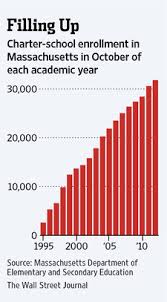
And so they do. Charter schools were meant to be an alternative to standard public schools, not simply public schools with a new name. If charter schools do not do the job they were intended to do — significantly improve student achievement — they shouldn’t be funded, whether the Federal money is at hand or not. And if charter schools do do what they were intended as, they should be funded regardless of money from Washington. Meanwhile, to look at how rapidly enrollment has climbed, it seems that charter schools have been a smashing success :

Image

Legislation to increase the number of charters being stalled now — the chief staller being Boston State senator Sonia Chang-Diaz, who serves on the senate Education Committee — those that do exist are kind of on their own, to prove their worth. Charter parents will have to speak out; to organize. Democrats for Education Reform, the local chapter of a nationwide group deployed to power up the alternative-schools constituency, will have to get talking. My own strong belief is that education in America needed badly to reshape itself enormously, to conform to the new workplace, new jobs, new technology and new communities of competitive collaboration. If schools exist to do anything, it’s to prepare students for the jobs of tomorrow (and for citizenship : but that’s a more traditional matter and doesn’t require an entire re-think). The best way to get schools shaped for that end is to try out many different shapes — school day lengths, curriculum choices, and out-of-school after-work — and see which one or ones meet the challenge. Charters, partnerships, collaborations, and, yes, standard public schools all have a seat at this particular table, and all should be set upon the task.

Did I mention curricula ? The battle is raging already to reject the national education establishment’s “common core” as being too difficult for children to master and too narrowly tested. Myself, having read through the “common core proposal, I find it a trope, a slice of common sense. Every society with schools at all has had a common core curriculum; it’s how that society prepares its children for the jobs it offers. this was as true of Rome in year 300 A.D. as of western Europe in year 1090 A.D. and 1500 A.D., and it was the basis of the New England School Law of 1634. Children must learn a common basic curriculum in order to do the jobs that will need to hire them; and to be good citizens. Is it difficult ? It always was. Life, too, is difficult. Tears come to one’s eyes as well as joy.

Kids can manage. They really can. as for testing, well : every job that a student is given as an employee is a test, believe me. So don’t complain; just do it. And please, don’t use lack of money as an excuse not to.

Time for Liam Kerr, Richard Stutman, Citizens for Public Schools, and Stand For Children to loosen up, set the past behind,and re-imagine the teaching of knowledge to children grasping at it.

As for teacher pay and standard school budgets, in Boston these look paid for — this year. After that, a lot depends on who the next School Superintendent will be. The “search committee” is already on it, but for me, the best choice is John McDonough, the current “interim superintendent,’ who says he doesn’t want to be considered for the permanent job : but whom all sides respect and who can therefore best steer “standard Boston public schools,” troubled schools as well, into the next phase, alongside charters as they are and all manner of experimental school set-ups that innovators may successfully propose — as they surely will, and should.

—- Mike Freedberg / Here and Sphere
HOW CASINO POLITICS DETERMINED THE 2ND SUFFOLK…AND MORE

  • photo (6)
  • ^ got lucky, dodged a missile : Dan Ryan
  • The 2nd Suffolk state Representative race won on Tuesday by Charlestown was the big story of the night — I said so, and I’m sticking to it. But in the politics of casino development there’s an even larger story surrounding that one.
  • As it happened, the 2nd Suffolk race was won by exactly the man who looked a winner of it from day one : Dan Ryan. Yet as strong as his campaign flexed, he dodged a missile when, on the night of Febraury 25th, Revere voted 64 to 36 in favor of the Mohegan Sun / Suffolk Downs project. Consider this :
  • 1.Ryan faced a Charlstown rival, Chris Remmes, who made opposurion to all casinos a pivot of his campaign. Remmes raised plenty of campaign ,oney early and had a power base in the Ward 2 Democratic committee, which he chairs.

    2.Charlestown voters overwhelmingly do not want the Steve Wynn casino project planned for the Everett waterfront. At a hugely attended meeting at charlestown High School they made their opposition very plain.

    3.Dan Ryan favors the Revere casino, as did his Chelsea popponent, Roy avellaneda. Ryan’s large following among Building trades and transport workiers also favor a casino — b ut preferably the Revere choice — as does a key Ryan supporter, Mayor Walsh.

    4.had the Revere casino vote been won by the “no casino” crowd, Ryan would now have been squeezed both ways. Oppose the only remaining casino option — Everett — and his building trades supporters might well have gone with Roy Avellaneda. Support the Everett casino, and Ryan risked losing votes to Chris Remmes, even the election itself.

    Opposition to the Everett casino was indeed THAT strong in most Charlestown homes. Walsh, too, who lost Charlestown badly in last year’s Mayor race, would have found himself again at odds with a community that doesn’t change allegiances easily.

    That was the prospect facing Ryan (and Walsh) as, with fingers crossed, they awaited news of how Revere had voted on the Tuesday night before the 2nd Suffolk special election day. as we all know now, it didn’t happen. Revere voted Yes, Chris Remmes’s campaign lost its reason for beimg, and Ryan (and Walsh) could joyously tout the Revere casino plan, taking away Avellaneda’s hoped-for issue, and pleasing all supporters and offending none on his way to the big victory that he got on March 4th.

    But it might easily have come crashing down.

    Nor is the casino game over in the 2nd Suffolk District.

    In September, when Ryan runs for election to a full term, the Gaming Commission will likley have issued its decision. What if it selects the Steve Wynn, Everett proposal, as seems likely given the plan’s waterfront location and superior brand name ? What position will Ryan take, now as Charlestown’s elected voice ? And then there’s the man most responsible for Ryan’s election : Congressman Mike Capuano. Will he step into the Steve Wynn casino battle and help Ryan deflect possible opposition from C town ? I’m guessing that the two men have talked much about this prospect and what to do if it comes to pass. It wouldn’t surprise me if they wee already moving the Gaming Commission to pick the Revere option. If the Commission does take that route, you can bet six Navy Yard Bistro dinners that Ryan and Capuano were forcefully on it.

    Marty Walsh, too. With Ryan’s election, Walsh got lucky, more or less. A Revere decision by the Gaming Commission would double Walsh’s luck.

    — Mike Freedberg / Here and Sphere

MAGOV-14 : JULIETTE KAYYEM CLAIMS 2ND PLACE

Image

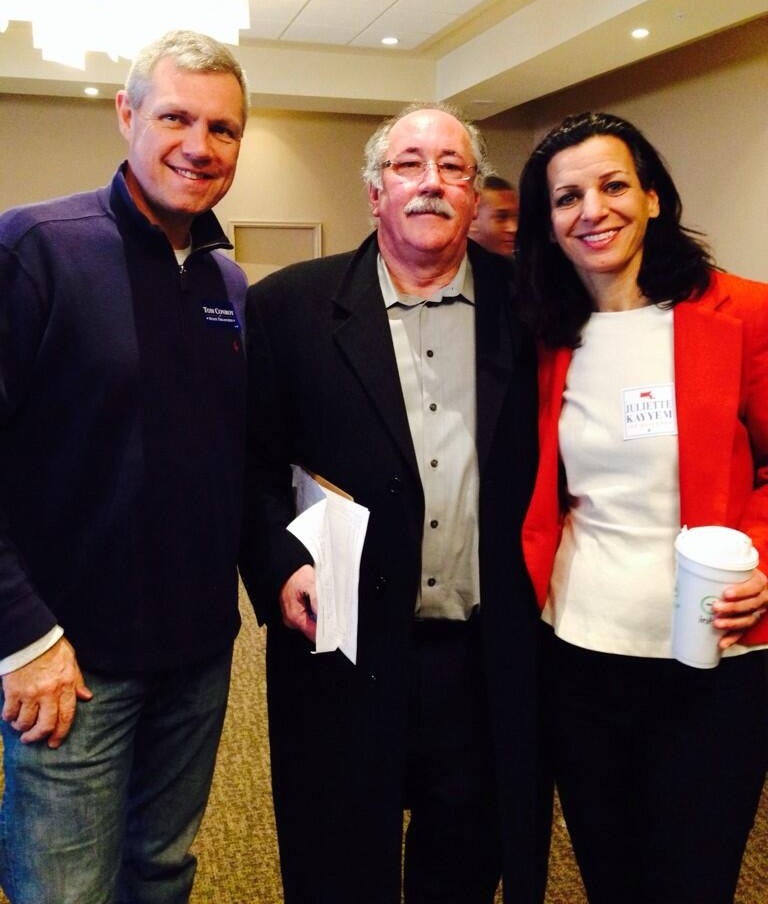
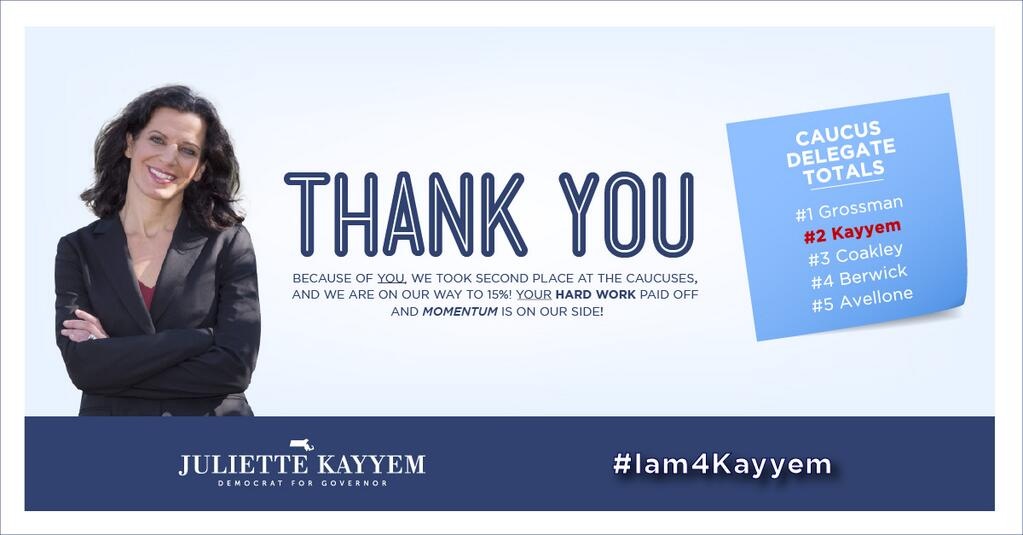
The photo above is not a meme. It’s real. Governor hopeful Juliette Kayyem claims to have won the second largest number of committed delegates as selected by the party’s caucuses, which have now finished.

This would be huge news if it’s a true count. The truth of it is diminished somewhat, however, by the number of uncommitted delegates chosen. In Kayyem’s photo, “uncommitted” is not listed. Many uncommitteds were chosen in the immediate Boston area, and many of these are said to be actually Martha Coakley votes. Maybe what’s being said isn’t so, but the number of uncommitted delegates is not small. A spokesman for the Kayyem campiagn says the uncommitteds total about 50% of all delegates elected.

But to say it again : Kayyem having more committed delegates than Martha Coakley is big news. Coakley leads all public polls of the Democratic nomination; she’s a sitting Attorney General with an heroic record using that office to fight predatory mortgage lenders, whereas Kayyem holds no office at all.

Coakley’s troubles with the activists in her party are well attested. Some of it began with her dispiriting campaign and loss of a US Senate seat to Scott Brown. Coakley continues to be “unexciting” (as one Newton caucus goer called her), on stage in Forums, an under-exposed photograph, and almost as wan in the fund-raising game. And there are many who have not forgotten Coakley’s handling of the Amirault family, Fells Acres day care scandal, or her over-charging prosecution of former State Treasurer Tim Cahill.

Hardly any activist wants to see Coakley as Governor.

Will activists’ dislike of Coakley translate to her losing the Democratic Primary ? That question will be answered if Kayyem wins the 15 percent of delegates needed for the ballot. Everybody agrees that Steve Grossamn has by far the largest number of committed dekegates and that, barring an ambhush, he will win the Democratic convention’s nomination. In the Primary, however, he now polls far, far behind Coakley. Winning the convention’s Ok will bump his poll numbers a lot. Having Kayyem on the ballot will, Grossman must think, cut Coakley’s primary vote still more.

Will Coakley fail to get to 15 oercent of the convention vote ? The answer has to be : she’ll make the cut easily. Those uncommitted votes may not all be hers, but many of them are. Not being Grossman votres, whose can they be but Coakley’s ?

By no means has Kayyem yet made the 15 pecent cut. second place in committed delegates she may have — more even than coakley; but the convention includes many delegates not elected at the caucuses. Might many of these by-pass both Attorney General Coakley and Treasurer Grossman, to plunk for Kayyem (or Berwick) ? It isn’t enough for Kayyem to win 15 peecent or more of the caucused delagres; she has to win 900 votes — 15 percent of the entire body of 6,000 delegates. When I called for a number, Kayyem’s campaign wouldn’t put a figure on her second pla ce claim. It probably doesn’t total 900.

Her task is still a hard one.

—- Mike Freedberg / Here and Sphere
DEMOCRATIC CAUCUSES — AND GOP TOO : IDEALISTS AND REALISTS

Image

^ Newton ward 2 caucus : idealists For Don Berwick, realists for Steve Grossman

—- —- —-

It’s hard to dig any message out of the five-candidate-for-Governor, Democratic caucuses that were held during the past month. Only after a full month of sitting in at about eight of those caucuses has a meaning become even hypothetically true, and it’s a cliched one : the Massachusetts Democratic party is split between idealists and realists. Or if you prefer, radicals and centrists.

This sort of division has ruled Massachusetts Democratic actives at least since John Silber, then Scott Harshbarger, then Shannon O’Brien, became the party’s nominees for Governor. Deval Patrick’s winning the 2006 Democratic nomination confirmed it. Yet in each of those cases, going back to 1990, the Democratic winner differed — in some cases sharply — about policy initiatives already contentious within the legislative calendar. This time the gulf between Democratic realists and idealists has widened. It was much in evidence at the City of Newton caucuses yesterday, where delegate candidates pledged to the quintessentially realistic Steve Grossman barely edged out delegate hopefuls pledged to this year’s idealist of idealists, Don Berwick.

Image

^ realistically idealistic : Steve Grossman at the Boston ward 3 caucus

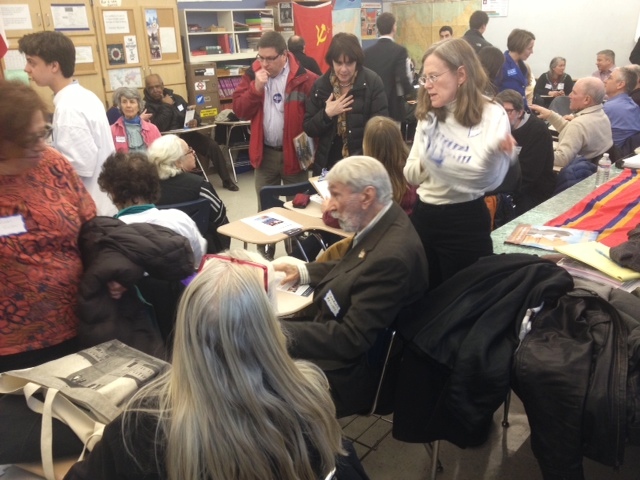
Both men live in Newton, and between them they claimed the entire prize of almost 100 delegates. There wasn’t much sentiment for Juliette Kayyem at the Ward caucus that I sat in on (Ward 2) and none at all for Martha Coakley or Joe Avellone. Home town strength mattered, but it wasn’t the major fact. Of this campaign, Steve Grossman epitomizes realism, Berwick the radical. Kayyem has been a candidate of glamor and nuance : but nuance doesn’t seem to cut it. She’s made scant mark on any of the caucuses I have attended, yesterday’s included. at every caucus she has her team, wearing “I am for Kayyem’ T shirts” (whose grey base contrasts meaningfully with the bold white backing dark blue of Team Berwick); but Kayyem’s team gatherings seem, at leat at the caucuses I’ve sat through, unable to translate enthusiasm into numbers. As for Joe Avellone, he doesn’t even bring a team, much less win a delegate (tough news reports have him winning quite a few out by Worcester County).

Image

^ realistic outsider : Joe Avellone at Boston ward 14 caucus

Avellone is particularly weakened by being a candidate of realism who is also an outsider. This doesn’t work. A candidate cannot be persuasively realistic unless he or she is very much an insider. realistic goals presume the clout to get them done. Outsiders lack that. an outsider must be an idealist; must represent those who want the insider game shaken up. This, Don Berwick — or his helmsman –understands. He advocates all the wish-list that burns tyger-brightly (as William Blake once spelt it) in the night forests of Democratic progressives’ dreams : single payer health care, graduated income tax, green energy funding, sentencing reform, higher taxes to pay for transportation and infrastructure. He insists on them all; and the Democrats of idealist bent have responded. as recently as a month ago I thought that Juliette Kayyem, not Berwick, would be the third Democratic Governor hopeful to win the necessary fifteen percent of delegates or see her campaign end. Today I think it’ll be Berwick.

Image

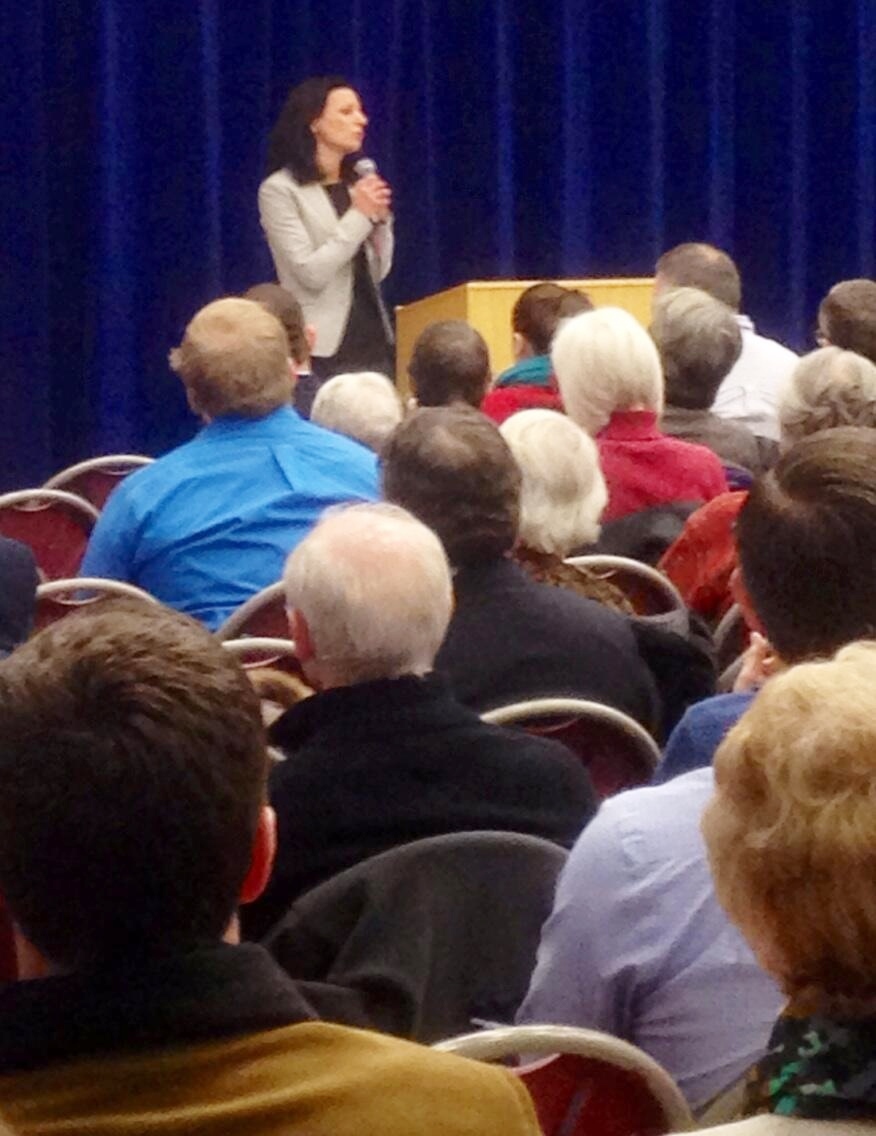
^ nuance and glamour may not work : Juliette Kayyem addresses Newton Governor Fum

Kayyem might have easily taken the route that Berwick took. She would have trounced him had she done so. Kayyem has charisma galore and is stunningly beautiful : if you meet her and don’;t rmemeber it vividly, physically, you’re a zombie. But Kayyem seems to have played her resume both ways : Obama administration,. Homeland security official, and thus an insider who should be realistic; but also outsider — having never run for anything elective — who gets the progressive agenda. Gets it, but doesn’t necessarily advocate it; certainly not in the all-in, progressive or bust gambol that berwick has winged. Unhappily for Kayyem, it’s unconvincing for a novice candidate to present as competent and idealist. Even for someone already an office holder, it would be difficulty to be both, especially in this season, when voters disbelieve that office holders are competent and distrust that idealists really mean it. Thus the success of Grossman and Berwick : because Grossman has proven himself uniquely competent, and Berwick, as a doctor successful in private practice and government, has the health care issue credibly to himself as well as the bedside manner that we expect of a physician.

And what of Martha Coakley, whom the polls say is still the choice of most Democratic voters ? Among activists, at least, she is falling way short because she has already failed the competency test, as a candidate first of all, and seems to continue to fail it — her money intake lags badly as does her presentation at Forums. There she demonstrates that an idealist, she isn’t. On those issues where she takes uncompromising stands — abortion rights, a prime example — she seems to move by calculation, not conviction.

Coakley may well still win the Democratic Primary, though I doubt it. If Kayyem doesn’t make the fifteen percent, I do not see her supporters going to a candidate even more diffident than Kayyem and — as one caucus goer put it — “hardly exciting.” Some will go to Berwick; but i think most will move to Steve Grossman.

If Grossman becomes the Democratic nominee, he will face a Republican who does seem convincing both as an idealist and a realist. Idealist, because in today’s GOP — even in Massachusetts, where the party at Governor level remains progressive — it’s idealistic to support marriage equality, abortion rights, expanding the earned income credit, and raising the minimum wage to $ 11.00 an hour. realistic, because Baker accepts the unemployment insurance give-back that Speaker Robert DeLeo insists on as a condition of his bringing the minimum wage hike to a vote.

Image

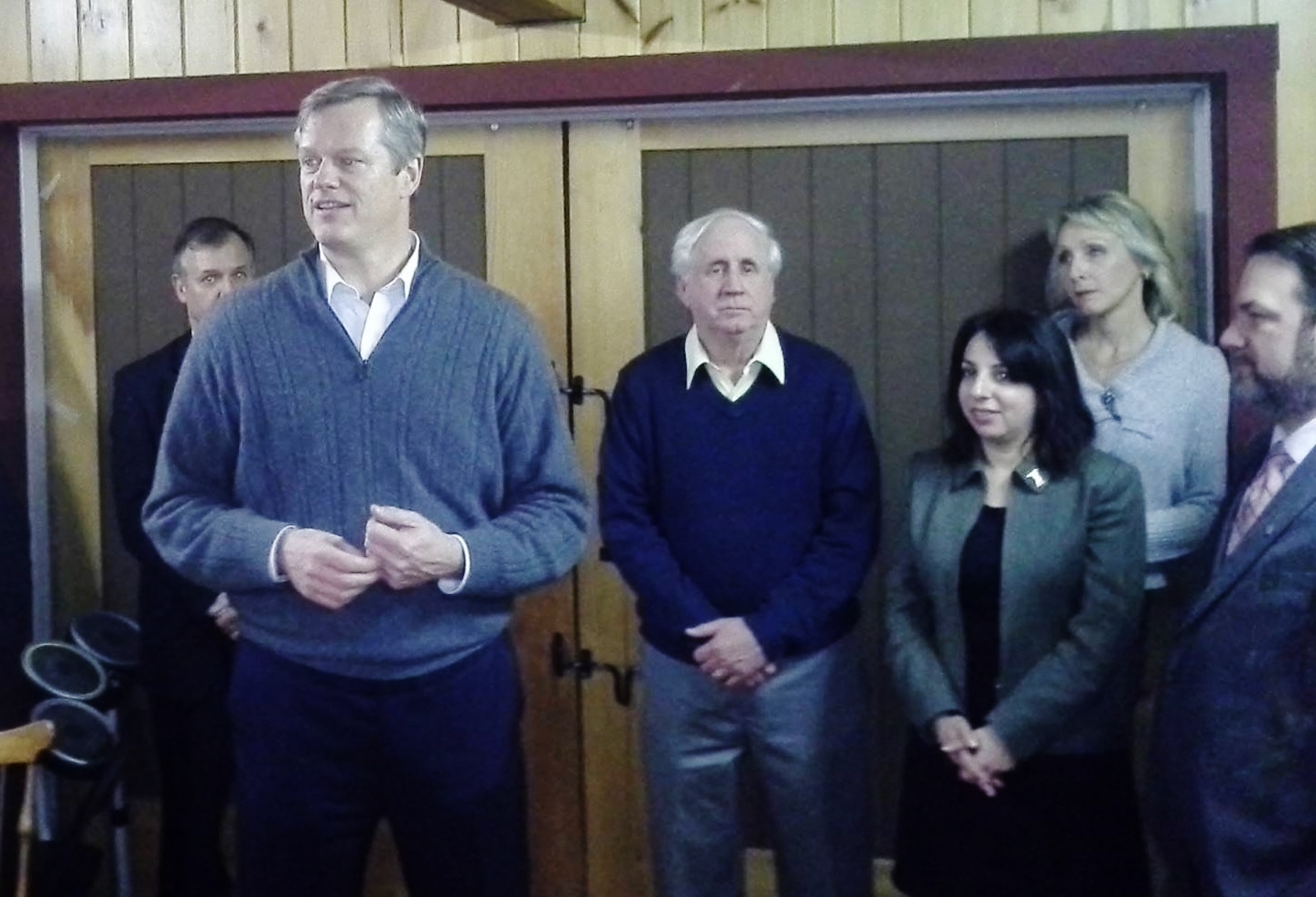
^ leader and voice of the Governor GOP party, one of two MA GOP Parties : Charlie Baker with st rep Jim Lyons of North Andover and (on bottom right) Monica Medeiros, candidate in the Fifth Middlesex Senate District

Image

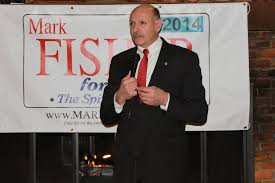
^ representing the “idealism” of the “left outs, the ignored” : Mark Fisher

It’s because Baker convinces both as idealist and realist that he will win his primary against a Tea Party opponent. Mark Fisher almost perfectly represents the idealist wing of today’s Massachusetts GOP. He goes as all-in on the Tea Party;s agenda as Don Berwick does on the Wish list of Progressives. Fisher rejects marriage equality, abortion rights, a minimum wage rise. Fisher dismisses undocumented immigrants as “illegals’ and promises to make life in Massachusetts as difficult for them as he can. Fisher bitterly brandishes “gun rights.” Indeed, Fisher — a classy guy one on one — projects, in his public pronouncements, an angry tone; he rocks his “salt of the earth, long ignored” voters as they rock themselves : angry to be ignored, lashing out at those who get the attention of officials who ignore them, pissed off at Turnpike toll takers, angry about taxes that they see being spent on Boston but not out where they live.

There is, in Fisher’s campaign, an idealism of sorts — he calls it “principles” — as off the table as Berwick’s; but what a toxic idealism it is ! Anger is not a policy, scapegoating people is not legislation, and opposition to marriage equality and women’s reproductive rights is anathema to a large majority of Massachusetts voters. Only within the State’s eleven percent who register GOP does Fisher’s “idealism” have legs. Just as the idealistic Berwick has won himself a significant activist following, so Fisher’s views comport with a significantly GOP activism.

Right-wing actives have captured the GOP State Committee; this we saw in last week’s 52 to 16 vote to adopt the “values voters” platform. But the views these people espouse, their wagons circled in redoubts of reaction like the so-called “Massachusetts Republican Assembly” — which blithely calls itself “the Republican wing of the Republican party” — no more command a majority of GOP voters than the progressivism of Don Berwick commands a majority of Democrats.

It would be unlikely to find a democratic activist as negative as Fisher’s left-outs. The Democratic party is Massachusetts’s governing party; no Democrat is a “left-out.” But our GOP, except on the Governor level, runs nothing.

In fact the gulf in our GOP between Fisher’s “left-outs” and Charlie Baker’s confident moderates derives directly from this split. In fact, the he Massachusetts GOP is nothing less than two entirely separate political parties : one, a Governor GOP party, dedicated to electing its Governor — a party to which a large majority of GOP voters belongs and whose followers do not see themselves as left out or ignored; and two, a “Grass roots” GOP, spearheaded by idealists who are indeed an interest left aside by an overwhelming State consensus on the issues these “grass roots’ actives care about.  care about. Statewide, the Grass roots GOP numbers barely five percent of all voters; but within the eleven percent registered as republicans they’re a significant number — polls say 39% of the GOP whole.

Not surprisingly, the Grass roots GOP dominates in those regions of the state most alienated from Boston, in which GOP registration (and like-minded “unenrolleds”) count a majority of all voters. Almost all the State’s 30 GOP legislators represent Grass Roots GOP communities. How could it be otherwise ? the Grass roots GOP’s stands on the issues make its election impossible in most Massachusetts areas, and in any case, the Governor GOP hasn’t much interest in winning legislative elections on its realist-suburb turf. It’s far readier to accept — and usually can count on — the support of Democratic legislative realists. Can’t do that if you’re running GOP candidates against them !

NOTE : it wasn’t always this way. During the period 1990 to 2006, when Massachusetts had four consecutive GOP Governors, the entire GOP grass roots was deployed on behalf of the Governor. But since 2006 the Governor has been a democrat. With the Governor GOP out of power, the grass roots GOP has been as left out and ignored as it claims to be, and its embrace of the politics of a minority had a certain practicality about it.

Though at what a price !

In the Democratic Party, the division between realists and idealists takes a very different shape, because both mindsets win elections and thus feel anything but ignored or left out. Their differences are those of a contract negotiation, both parties knowing that once a contract is agreed to, each side will have to carry it out; and are quite ready to do so because they’re already doing it.

It is good that Mark Fisher has arisen to give voice to the left-outs. If the rest of us take their anger, their bitterness, their disparagement of everything that “Boston” means to them — huge taxpayer dollars spent; public transit; enormous state government programs; social inclusion — indeed, celebration — of many lifestyles, languages, and immigrants of all conditions; bicycles and night life; rejection of gun culture; the Unions and high wages; devotion to quality of life issues — as seriously as they hate us, perhaps we can find a way to bring these voters back into the community we call “Massachusetts.” And perhaps not. We will probably never see Don Berwick’s single-payer health insurance adopted in Massachusetts, or his graduated income tax. Never might also be the timeline for Mark Fisher’s voters. And maybe that’s OK. After all, what’s an idealism good for if the realists can absorb it ?

—- Mike Freedberg / Here and Sphere

SPECIAL ELECTIONS : WHERE THE MONEY IS … AND ISN’T

Image

^ big money winner in the 13th Suffolk : Dan Hunt campaigning on a wintry night

—- —- —-

If you want to know what’s likely to happen in the four (4) Special state legislature elections now reaching climax day in the Boston area, it’s well worth looking at the money.

Always when I talk money, I have to offer this disclaimer, so here it is : yes, money isn’t everything in politics; people do the voting. They count too.

Yet Massachusetts’ $ 500 limit on donations, and the almost complete absence of secret conspiracy money in special elections, allows the greenback trail to say a lot about how many people are walking that trail to the voting booth. Here’s the OCPF for all four races :

13th Suffolk district (much of Dorchester and one precinct of North Quincy)

Liam Curran —- raised 22,387.53
spent 13,197.92
balance 9,189.71
Gene Gorman — raised 9,795.00
spent 4,878.37
balance 4,916.63
Dan Hunt ——- started with about 45,000.00
raised 49,615.00
spent 61,297.06
balance 43,371.11
PJ McCann —- raised 15,070.00
spent 3,180.52
balance 11,809.42
John O’Toole — no report filed as of this morning

2nd Suffolk District (Charlestown and three-quarters of Chelsea)

Roy Avellaneda — raised 28,460.00
spent 5,884.49
balance 22,575.51
Chris Remmes —- started with 23,560.00
raised 26,460.00
spent 30,476.36
balance 19,420.85
Dan Ryan ———- started with 2,500.00
raised 4,039.18
spent 29,990.43
balance 17,370.11

16th Suffolk District (most of Revere; one-quarter of Chelsea; two precincts of Saugus)

Josh Monahan — raised 6,455.18
spent 2,772.17
balance 3,682.01
Linda S Rosa —– raised 5,100.00
spent 2,596.76
balance 2,503.24
Todd Taylor (R) — raised 7,115.00
spent 2,551.06
balance 4,563.94
Roselee Vincent – raised 42,598.92
spent 27,257.19
balance 15,344.73

5th Middlesex Senate (Malden, Melrose, Stoneham, Wakefield, Reading, most of Winchester)

Chris Fallon — started with 8,400.00
raised 52,947.00
spent 52,284.01
balance 9,566.59
Anthony Guardia — started with 2,550.00
raised 19,245.00
spent 11,284.42
balance 10,510.58
Jason Lewis — started with 109,723.25
raised 37,185.00
spent 89,242.69
balance 57,665.56
Monica Medeiros (R) — started with 2,443.60
raised 4,275.00
spent 2,101.78
balance 4,516.87

As you can read, in two of the three State Representative races there’s a clear donor winner. Dan Hunt, in the Dorchester-Quincy District, has raised more money than all his rivals combined (leaving out John O’Toole, who has yet to report.) Roselee Vincent, of the Revere-centered District, holds an even larger advantage over her combined opponents. Even before I researched the money, Hunt and Vincent looked like winners on March 4th Primary day. Their dollar results certainly don’t wrongfoot me.

Image

^ overall money leader in the 2nd Suffolk : Chris Remmes

Image

^ 2nd Suffolk money leader in this reporting period : Dan  Ryan

Things are less clear in the Charlestown and Chelsea District. All three men have raised credible money. Question is, will this race’;s dominant money raiser, Chris Remmes, dominate the vote ? On the ground, he looks like 3rd place, but the money says otherwise. The bulk of it comes from donors living outside the district, but that isn’t a disqualification. Perhaps the decider is how much money the three have raised in this reporting period. Dan Ryan is the clear leader — but not by a number overwhelming. My conclusion : these three men are very, very dissimilar, and in a district with many different voter strains, there’s money to support those dissimilarities. Primary day may tabulate a very, very close result.

Image

^ scant money raised, in a District arguably Republican : Monica Medeiros of Melrose

The State Senate special election taking place along Route 28 north of Everett, from Malden to Reading, offers surprises of its own. For 22 years this was Republican Ricard Tisei’s seat almost uncontestably; yet now, the lone Republican candidate, a Melrose City Alderman, has raised almost no money at all. There are three Democrats running; two have raised large money. The big name, Chris Fallon, has, however, been significantly beaten in the money game by Winchester state representative Jason Lewis. I haven’t covered this race at all and have no opinion on who will likely win the Democratic nomination — though the twitter-verse has recently talked up Lewis.

If he wins, he will face the Republican, who in a District quite competitively two-party ought to be a serious opponent and even, given the disconnect going on right now between suburbs and Beacon Hill, the favorite. But the money record tells a much different story. Why Monica Medeiros shows so weakly, I don’t know, but given the anti-voter turn being taken by right wing activists — who have all but sharked our State’s local-level GOP — I can think of a reason : there’s no constituency, outside of right-wing cocoons, for anti-voter politics, and hopefully there never will be. Whether Medeiros shares this anti-voter bent I will try to find out during the run-up to an april 1st Final.

—- Mike Freedberg / Here and Sphere
THE SALLY CRAGIN TRI-TOWN REPORT : IS IT FEBRUARY ? IS IT MARCH ?

Is it February? Is it March? Or is it still January, the month with a heavy tread. My editor requested a blog post a while ago, and then it snowed, and the kids were home and then I had a bug and then it snowed… And on it goes. Living in the north central portion of the state is a very different proposition than living further east. If you look at Massachusetts as a miniature version of the map of the US, yes, we’re in the midwest where people are cranky, vs. Bostonian pissed-offedness. And geographically, we’d be somewhere around North Dakota, among the frozen chosen.

So January, February…it’s all a blur. There’s Groundhog Day which means we get an extra 60 days of winter, vs. 6 weeks; and then Valentine’s Day — which as I keep reminding single-gal friends is a HOLIDAY FOR CHILDREN, and really only meaningful on February 15, when the chocolates go on half-price, and then there’s my wedding anniversary to Chuck, somewhere around February twenty….first? No — it’s 26th. That’s when it was.

See? a blur….

So what do we do to survive this mentally? I cross-country ski at Saima Park. Here’s the thing — skis are generally cheap; it’s the bindings and boots that cost. I have the skates in the car, but haven’t gotten to our local rink, the Carmelita Landry. She was a national champion in outdoor speed skating! look it up!) http://fmcicesports.com/2012/01/04/whats-in-a-name-fitchburg/
X-c at Saima Park (saimapark.org) is free on Saturdays in February from 10 am to 3 pm. They open the clubhouse, and there are lots of friendly Finns there to advise, or to help you borrow (not rent — this is FREE) skis to set you up. Some years, the snow is terrible, but this was a great year, and I’ve been several times a week. Yes, it helps to drive the momavan which can fit skis and a lot of the clothes my children discard in the car because they’re “too hot.”

Indoor activities are what most people like. This year, I started a venue at Fitchburg Library, “Author’s Night.” We have published authors come and read from work and talk about writing and publishing. Dunkin Donuts supplies refreshments and it’s fun. If you’re a published author, email me at sallycragin@verizon.net. We’re also planning a May event that will focus on Fitchburg History, as the city is 250 years old this year.

And, I’m working on a few things politically — getting signatures for Senator Jen Flanagan, evaluating Democratic candidates for governor. We had our caucus last week and several people came out to speak, including Mary Ellen Grossman, Steve’s sister. She’s a dynamo and I’ve sent information to her to give to the Treasurer about the woefully skewed standards applied to urban districts like Fitchburg in terms of standardized test scores. We’ll never get ahead, because we have lower BEGINNING scores and higher poverty. We are expected to close wider gaps, which less-challenged districts (also less culturally diverse) aren’t expected to do. Senator Pat Jehlen of Somerville is working on this issue, and I and other members of our school committee will help. This is an issue that Mayor Lisa Wong, who helped start the Gateway Initiative to organize the leadership of urban Massachusetts is very concerned with.
So, I guess we are doing a lot, besides living whole days in a cloud-inflected color free twilight. We really notice that extra minute of daylight out here. For more, visit fitchburgfun.blogspot.com. And thanks to my editor for reminding me. You’ll have to keep doing that you know…

Sincerely,

Image

Sally Cragin
mother of two
Fitchburg School Committee vice-chair
Editor of Button, New England’s tiniest magazine of poetry, fiction and gracious living
astrology columnist for the Portland and Providence Phoenix
winter survivor

#MAPOLI : POLARIZATION COMES OF AGE IN MASSACHUSETTS POLITICS

Image
Yesterday I wrote about the Left-ward momentum in the Massachusetts Democratic party and how it was confounding the party’s ability to pick a best Governor nominee. My story felt incomplete, more notion than news. Today I had in mind to dig deeper; to discuss the tremendous surge of activity going on, outside the Boston area Core, under the rubric of the GOP, that confirms, in the opposite direction, the Democrats’ Leftward momentum story. In short, polarization, as we have come to see it in national politics these past six years and more.

Such was my design when, an hour ago, I sat down to read today’s Boston Globe and found on the front page, the following story : http://www.bostonglobe.com/metro/2014/02/20/proposal-would-add-planks-about-abortion-gay-marriage-state-gop-platform/n3wDwD1SxePriF8eHVHpON/story.html

It is not a pleasant story. News that discrimination is invading the political scene never is pleasant. But it supports — gives a sad cast to — my own column, today, about the polarization that bids to take over our state’s politics.

Perhaps it’s a battle we have to fight. We cannot allow the voices of darkness to gain traction. They have already gained plenty. The charlatan talk show hosts, who say outrageous things to get attention and thus ad dollars, have given discrimination and hate legitimacy — with those who either do not see that they’re being had, or who actually believe that their darkest thoughts should become political policy. I suppose that most of us have road rage moments; but most of us also recognize that such squalls of anger augur no good. So it would be, were it not for the talk show thing. But we now have talk show politics; it is not going away, as I — many of us — used to imagine it would. As the economy continues to struggle; as wages for most of us lag while huge money accrues to the very few; as life becomes more diverse and all of that diversity confronts us via social media, a politics has come of age that rejects a future it feels not a part of; a politics of deep pessimism and profound alienation, politics of naked personal fear.

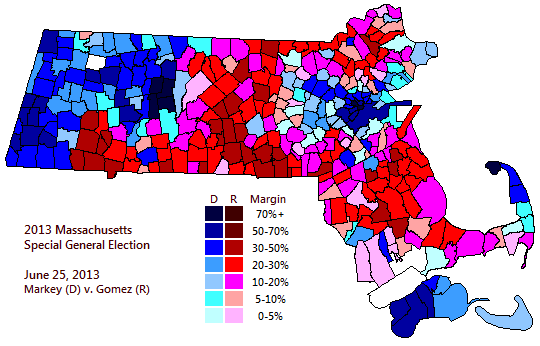
This is the turbine that drives the train of political intensity across Massachusetts’s towns and cities. But the polarization isn’t simply of value judgments. It has a geography. From the outer suburbs of Boston along Route 495 and close inside it and throughout central Massachusetts all the way to the exurbs of Springfield there has arisen a wide swath of towns whose voters reject the politics of the Boston area, reject Boston values, Boston diversity, Boston inclusion and experiment. This circle of towns — maybe 100 in all — is the heartland of the “Tank the Tax’ referendum; of Tea party sentiment; of Republican votes in recent elections. There are towns in this Circle of rejection that gave 20 and 30 point victories to Gabriel Gomez even as he lost last year’s US Senate race to Ed Markey by 10 points. These same towns gave Scott Brown 30 and 40 point victories in his 2010 special election win. And today these towns are generating a large number of Republican candidates for the Beacon Hill legislature — many more such candidates than we’ve usually seen in Massachusetts, with much better funding and a much deeper bench of activist support.

This last development makes the polarization story significant. US Senate elections have their own dynamic. Massachusetts has elected Senators from each party, all the way back to the late 1800s and ever since. But not since the GOP lost majorities in our State legislature some 60 years ago has there been, except in a few upper income places, any kind of Republican activity at the local level. Today almost all of those upper income communities have become Democratic. The most Republican active communities today are middle income, even low income, places : tract house suburbs, low-density exurbs, and sparsely populated rural places. think Billerica, Bellingham, and Tewksbury; Grafton, Mansfield and Whitman; Douglas, Monson, and Charlton.

Image

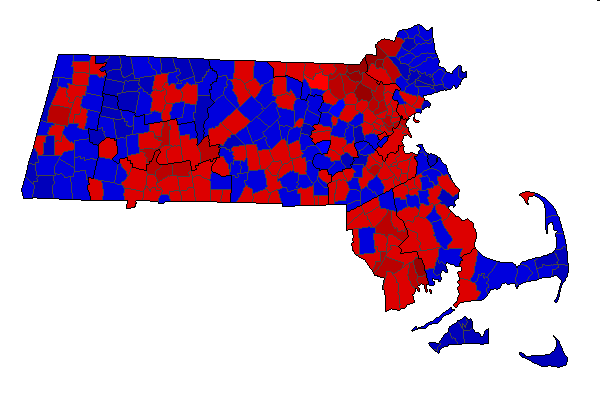
^ Bush – Kerry in MA, 2004. Note Charlton, in the middle of the map towards the bottom.

Charlton — a pass-through stop on Route 20 southwest of Worcester — exemplifies the new, hard right Massachusetts GOP. In 2004, when John Kerry, then our US Senator, was winning 62 % of the Massachusetts vote for President, Charlton gave its 60 % to George Bush.

Not that long ago, party divisions in Massachusetts had more to do with ethnic histories and 1920s-1930s Labor radicalism than with city versus rural, diversity against the old way. (And then, the Democratic party was culturally much more conservative than the socially liberal, WASP GOP establishment.) We can mark each step in the change thus : in 1970, Arlington, filled with prosperous Raytheon workers, was a bellwether town — as it voted, so did the State. Today Arlington. an academic community, is a guaranteed 20 to 40 point Democratic victory. By the 1980s, the bellwether vote town was Framingham — farther from boston than Arlington but definitely a commuting place. Today, Framingham votes 15 to 30 points Democratic. Conversely, in the late 1990s, the bellwether community was Peabody, a town filling up with culturally conservative Italians. Today, Peabody gives the GOP a 10 to 20 point victory and has a Republican state legislator, Leah Cole.

Today the bellwether city in our state is Waltham : the front line between Boston diversity and old-line factory city passes right through it. Quincy shares much the same mix. Yet these few exceptions aside, there really is no bellwether community today in Massachusetts. Most towns and cities are now all GOP or all Democratic. That is why we see the current surge of GOP activity at the state legislature level. It’s when a community moves from swing voting to being all one thing or all another that low level, neighbor to neighbor elections take on a partisan color.

Image

^ how it was in 1978, when Senator Ed Brooke was narrowly defeated by follow progressive Paul Tsongas. — a campaign of nuance, not polarization

Fortunately for those of us who live by Boston, city values — diversity, inclusion, welcome to immigrants, and government working to serve all the people — the polarization taking shape on both ends claims a clear city values majority. Democrats running state wide can pretty much count on winning by 6 to 20 points. That’s because about 25 % of Massachusetts voters live in the Boston core area — and another 15 % in the academic bastion Connecticut Valley and points West, and these areas (Amherst, Lee, Springfield, Cambridge, Brookline, Dorchester) vote overwhelmingly Democratic : 30 to 70 points ! No Democrat is likely to lose a statewide election with that kind of wind at his or her back.

For despite the surge of GOP energy out beyond the City core, its roar represents an interest distinctly minority and one that is dwindling — and knows it. It is fighting a rear guard battle and seems energized to fight to the last man standing. It is Alamo politics : dramatic, fascinating while it is going on, but, in the end, complete defeat. Those of us who move with the blossoming majority — the flowers of tomorrow, no matter the huge challenges looming– can take heart in knowing that Alamo politics do not end with an Alamo victory.

Image

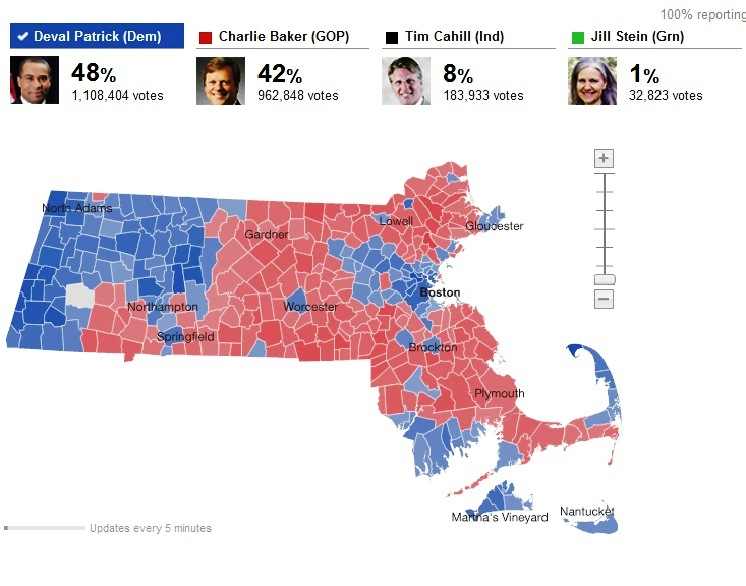
^ the shape of polarization — and its limits : Patrick / Baker / Cahill, 2010

And what of the 2014 Governor race ? There I predict a Charlie Baker victory. He is running as a city values candidate, has credibility as a city values guy, and almost certainly has the GOP surge vote on his side simply because it dislikes the Democratic tone of voice so profoundly. Though the Democratic party is moving Leftward by the same dynamic that has the GOP moving Right, many more Democrats than Republicans remain pragmatic centrists : because .the Democrats own the legislature and run the State. These Democtrats cannot throw aside their investment in state policy and governance. The most practical team to get things done, that they care about, is Charlie Baker as governor and Robert DeLeo as Speaker — because, ultimately, it is easier for them to stand — loyal Democrats ! — behind a Democratic Speaker as he pacts with a Republican Governor than to find themselves ripped in two directions by constituents here and a Democratic Governor there.  These go-along Democrats represent a significant vote, especially in the suburbs that lie between the GOP outer ring and the innermost Boston core. Think Winchester, Salem, Braintree, Norwood, Wilmington, Woburn, Natick.

It would seem a paradox to find a centrist progressive like Charlie Baker elected by a state whose politics are polarizing so momentously. But life is complicated, and not every mind moves to the flavor of the moment. Those who take the long view also matter.

—- Mike Freedberg / Here and Sphere

#MAGOV14 : THINGS GET NASTY FOR JULIETTE KAYYEM

Image

^ the charm offensive has its limits : Juliette Kayyem meets caucus push back

—- —- —-

Not even two days had passed after Democratic governor hopeful Steve Grossman accused rival Martha Coakley of being vague in her commitment to civil liberties than, this morning, I found my twitter feed filled with attacks upon a third Democratic contestant : Juliette Kayyem. One tweet said “Charming Kayyem favors ‘assassination as an instrument of intelligence and law enforcement.” Another, from the same twitter source, said “Charming Kayyem leading panel to legalize Torture ‘we were a room full of people who think it works’.” A third tweet from said source — “Bostonnish” — said : “If Kayyem hadn’t led effort to concoct legal cover for Bush -Era torture use, she wouldn’t be a charming accomplice to torture.”

“Bostonnish” sent me two more tweets of a similar nature. These were sent to me, evidently, as a response to my own tweet “if @Juliettekayyem had an agenda aspecific as her personal charm is masterful, she’d charm Spkr DeLeo — & win the election.” I am , of course, flattered to find that my tweets merit attack by an opponent of the candidate I happen to mention. Yet that’s not all there is to this story. Kayyem did work for the Deprtment of Homeland Security and has surely known that in the heat of this Governor battle she’d be challenged thereon. Big time : because the Homeland Security issue isn’t only about Kayyem. Edward Snowden’s revelations have made it clear that the war on terror has curtailed Americans’ privacy rights much, much more than we either knew or need to accept. The issue has also divided the Democratic Party. Had Snowden’s revelations been made of a Republican presidency, every Democrat would be ringing the tocsin. But no: the revelations were made of the Obama administration, and only on the very Left has there arisen any support for Snowden. Most Democrats find him a traitor.

This split matters for Kayyem especially, because the impact of her candidacy has been strongest among Democrats who consider themselves progressives — exactly the Democratic constituency among which the Snowden revelations have aroused the greatest anger. Now comes an attacker who connects Kayyem not to the Snowden revelations per se but to the Bush administration, no less, and to that part of the Bush government in which “enhanced interrogation” was defined, justified, and decked out in legal lipstick. Much of the Snowden revelations involved NSA measures begun in that Bush administration — though Obama expanded them. It would be hard to think of any political connection less appealing to Democratic progressives than to the Bush ’43 war on terror. For Kayyem, far more than for Coakley or Grossman — who so likely have no such connections — the attack made by “Botonnish” poses threat. And as I have 640 twitter followers right now, almost all of them political, “Bostonnish”‘s attacks will be seen by many.

Is there any truth to them, and, if so, how much truth ? I have read the two newspaper articles linked in the Bostonnish tweets. They do connect Kayyem to Homeland Security discussions on interrogation techniques — discussions in which she participated as part of a Harvard Law School professor’s symposium whose participants sought agreement on what interrogation techniques were permissible and to write their conclusions as a policy paper.

To the average voter, what I’ve just written may seem splitting hairs. Kayyem was involved in torture discussions, helped define “acceptable limits.” Nuff said. And to most voters, her participation therein as a policy advisor ruffles no consciences. unfortunately, the voters whose support Kayyem is seeking — and needs — may not take such a casual attitude of the matter. Though many Democratic progressives are the first to condemn Snowden as a traitor, and to accuse Bush’s Vice President, Dick Cheney — whose brief it was to secure policy approvals on interrogation techniques — of war crimes, other progressives dub Snowden a hero. There’s scant escape for Kayyem here. The Democrats who think Snowden a traitor hate Dick Cheney just as much as do the Democrats who think Snowden a hero; and Kayyem helped write policy papers for matters ultimately answerable to Cheney and Bush. The New York times article, from 2005, appended to one of my “Bostonniosh” tweets documents it.

What does Kayyem do about this ? If I were her advisors I’d tell her to discuss the matter thoroughly. She served the Obama administration as well as Bush’s — as did Bob Gates and others. She can say that she put “country first” — and if the man for whom that was a campaign theme — John McCain — is a case study in why our nation should oppose “torture lite” always, Kayyem did not make policy. She advised possible policy makers. And all of this happened many years ago.

photo (1)

^ beauty talks : Juliette Kayyem with Worcester St Reps Mahoney and O’Day

Also on her case is a report, in the Globe, that Kayyem missed voting in two elections during the time she was living in Washington. There’s some disagreement as to whether she registered to vote there or not. She says she did; the DC elections board has no record of it.

Myself, I find this matter small potatoes. so what if she missed two elections or if she did or did not register to vote in Washington while living there ? She is running for Governor, not “super voter.’ yet the small potatoes does highlight the bigger potato of her consultancy participation in the “torture bureaucracy.”

It is not my job to make excuses for Kayyem or to devise responses for her to difficult challenges. She has opted to play big league ball, and cannot complain if an opposing pitcher plunks her with a curve ball. Her response, however, will matter a lot in how Democratic progressives, as sensitive as any activists to heavy handed war measures, take Kayyem’s interrogation policy years to heart. Who knows ? Maybe they’ll shrug it off. Charm does have its way even with issues obsessives, and charm Kayyem has more than plenty of. But the average voter probably won’t shrug so readily — if Kayyem gets her name onto the average voter’s Governior ballot. This flap doesn’t make that task any easier for her.

—- Mike Freedberg / Here and Sphere
#MAGOV : RESTRUCTURING THE MASSACHUSETTS DCF

Image

^ Commissioner Olga Roche : not to blame for DCF budget cuts and out of date agency practices

—- —- —

The six major candidates seeking to be our State’s next Governor sure didn’t plan to have the department of families and Children (DCF) as a huge campaign issue, but that’s what it now is. The facts emerging from the DCF’s failed oversight of 5-year old Jeremiah Oliver cry out. Oliver’s social worker missed several mandated visits to his home but put “visit made’ into her case log; and her supervisor confirmed that the visits were made. When Oliver disappeared –months later, he has yet to be found — the failure and cover up left the DCF’s higher-ups nowhere to hide.

Yet are the DCF top guns to blame ? How was the agency;s head, Olga Roche, to know that a social worker and supervisor in the Fitchburg DCF office had falsified logs and failed their jobs ? Roche can’t personally micro-manage every employee in every DCF office. At some point we have to grasp that this DCF failure is structural and to propose serious reform. Nor can we blame Governor Patrick much. His plate has been heaped with major spending fights in transportation and education and with monitoring the contentious casino licensing process as it works through the gaming Commission. Line Departments like DCF and Public welfare, governed by State Law chapter 119, require oversight by the Governor’s secretary of administration and finance; and to my knowledge, no one has suggested that Glen Shor has misfired his oversight of the DCF. Nonetheless, one notes that in his job description as posted on his page at http://www.mass.gov, Shor doesn’t list DCF in his itemization of key responsibilities:

“Glen Shor serves as Secretary of the Executive Office for Administration and Finance. He is responsible for managing state finances, including preparation of the governor’s budget recommendation, development of a state capital budget, managing budgetary activities across state government, and developing long-term fiscal policy. He also oversees the state agencies that provide core administrative services in the Commonwealth, including the collection of state taxes, the administration of IT services and the management of human resources in state government.

“Prior to his appointment as Secretary in January of 2013, Glen Shor served as Executive Director of the Massachusetts Health Insurance Connector Authority. While at the Connector, Shor oversaw the programs, policies, operations and staff of the Commonwealth’s official public health insurance Exchange – a cornerstone of the state’s historic health care reform law of 2006 and the model for health insurance Exchanges nationwide under the landmark federal Patient Protection and Affordable Care Act.”

No one can doubt that collection of taxes and administration of information technology are crucial state governance tasks; or that management of “human resources” — state employees — is a non-stop matter that can make stinky headlines if a day of monitoring goes missing. Still…

…here we are, with a scandal and anecdotal talk of many other missed visits by social workers and slack oversight by DCF managers, and the blame machine is already whipping up pies to the face of DCF’s higher-ups. I find the furor misdirected.

Image

^ DCF failures will surely be discussed at a social workers’ conference at Boston College on February 24th that has Charlie Baker as its featured speaker. (See UPDATE below)

Has anyone bothered to notice that, since 2009, the DC budget has fallen by 100 million dollars ? this, during years when our State’s population of homeless and of families in need has increased mightily.

If we want to make events like the Jeremiah Oliver failures less common, we need to restore the 100 million dollars cut from the DC budget — the Governor’s $ 9.2 million budget increase hardly matters ! The DCF needs to monitor social worker visits not in log books but via the internet; to install check-in software in social workers’ cell phones, so that managers know where they are during work hours; to give DCF managers software and smart phones, fully applicationed, so that case loads can be managed, on an ongoing basis, in real time. We need to reset DCF process so that Olga Roche — or whoever succeeds her as DCF commissioner — has on her schedule an in-person meeting at each DCF area office on a revolving basis, with Roche on the road, like a Circuit Judge making rounds, managing the entire DCF not from an office in a Boston State administration building but from an iPad in a state car serving as her mobile headquarters.

Political campaigns operate that way in this year 2014. Why not State governance ?

It’s more important that Roche have a state car and a driver than that she have a large office in a state building. It’s more effective that she hold monitoring sessions — including questions and answers and monitoring reviews — at each local DCF office than that she await reports coming to her from the managers of those offices. After all, social workers have to visit the children whose cases are theirs to oversee. Why shouldn’t Roche, or her successor, do likewise ? DCF is an agency that operates by visits. This should be its strategy top to bottom, bottom to top.

It will be interesting to hear and read the DCF reform plans that each of the major Governor candidates presents to the voters. If they do present one.

Meanwhile, Commissioner Roche is reportedly slated to receive a $ 10,500.00 pay raise.

—- Mike Freedberg / Here and Sphere

UPDATE 02/17/14 10.30 AM : Charlie Baker, the likely Republican nominee for Governor, has called for Olga Roche’s resignation. Many — but not all — GOP legislators have also made this call. To me it seems a bit premature and quite misdirected; but perhaps Baker will explain.