BOSTON MAYOR FINAL : CHARLOTTE DECIDES

Image

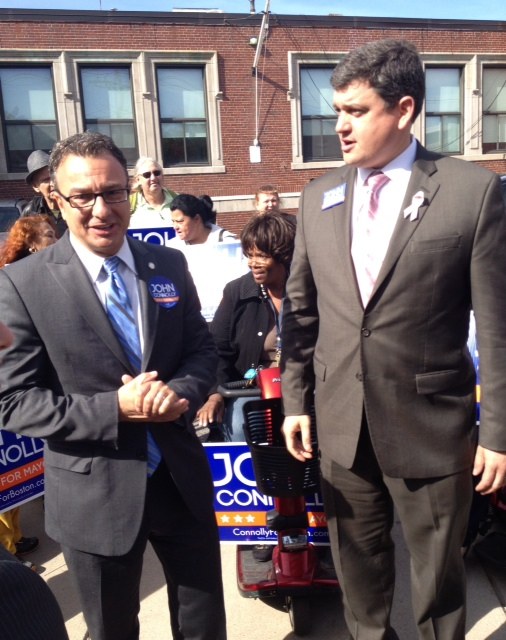
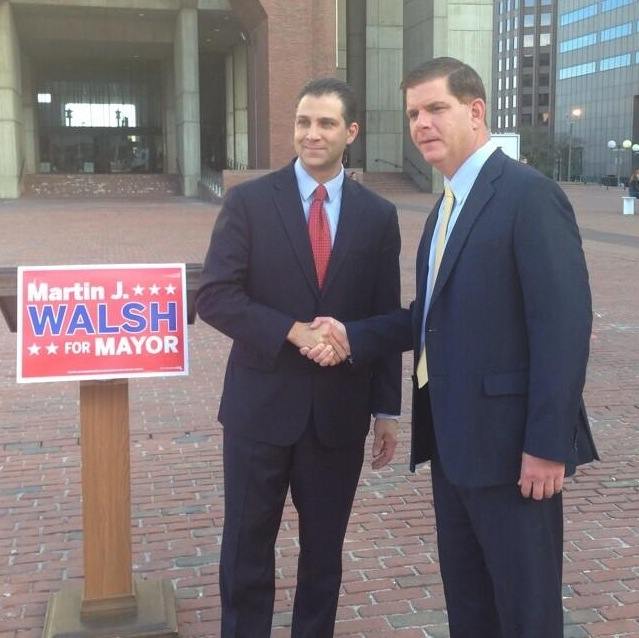
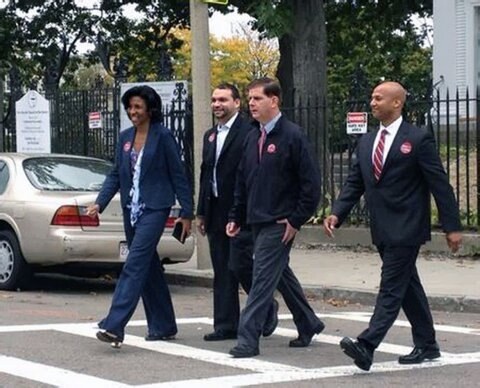
^ Abbey Road (as Dorchester’s Joyce Linehan says) : Charlotte joins Team Walsh

—- —- —-

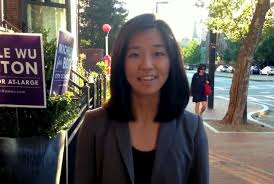
The picture that heads my column is one that I admit I never expected to see in this Mayor election. Charlotte Golar-Richie, the quiet, cautious, middle of the road administrator, endorses Marty Walsh, her opposite in every way.

It’s a big boost for Walsh and will certainly have an effect on the November 5th vote. Until Golar-Richie came forward, Walsh’s campaign looked lost and losing. Just in the first five of Boston’s 22 wards he looked down by 10,000 votes. Now that margin looks quite less.

I opine thus not because of the mere fact of Golar-Richie’s endorsement but on account of WHY. The answer is not simple or obvious. Sure, there are personal issues and policy differences that have developed over the years of Connolly’s service on the Council, between him and some activists who certainly Golar-Richie talked to. But i prefer not to think that Golar-Richie chose because of personal stuff. She’s bigger than that. And her endorsement speech offers a wider clue : she talked about Walsh being a Mayor for “working families.” That phrase never crossed her lips during the Primary. They are Walsh’s theme. So who was she saying them to ?

There’s answer for this question too : she was saying them to the union activists who oppose the school reforms that John Connolly wants. These reforms have drawn the ire of Teachers’ Union activists since they were first bruited. Yet they are exactly the reforms being advocated by President Obama’s education secretary, Arne Duncan, and, in Massachusetts by Democrats for education reform.

Why would union activists, Democrats all, oppose so resolutely reforms being proposed by a Democratic President ? In the twitter-sphere — and the blog-o-sphere — one finds out. There one finds a growing anger among progressive people against the radicalized GOP and also against a President whom these activists see as “giving away too much” to the GOP. The radicalization of the GOP is, as Bill Moyers writes astutely, the big political story of the year. Almost as big a story is the like radicalization taking ground inside the Democratic party. You cannot radicalize an electorate in only one direction; voters who differ aren’t going to just sit still and let a radical party take over — or block — the nation ‘s direction. Activists DO things. And so activists on the progressive tip are doing.

In Boston’s Mayor election that has now come to mean opposing a school reform led by Democrats ! The verbal overkill abounds : that Connolly’s school agenda means “privatization” of the public schools, that it’s “some outside group” doing it, that “he’s a jerk,” etc etc. In fact, John Connolly is about as traditional a patrician urban reformer as you can find. What is there in his suggestions for a longer school day, greater leeway for principals to choose teaching staff, core curriculum, and support for charter schools as an alternative, that requires raising the hue and cry ? Horace Mann’s school reforms of the 1840s were no less ambitious, nor the much more radical reforms advocated by John Dewey 110 years ago. 50 years from now, John Connolly’s reforms will look as obvious as Dewey’s and Mann’s reforms 50 years after their day.

The older a nation and its institutions become, the harder it is to reform them. Our nation has aged greatly since 1840, 1900, even since 1965. Reforming our associations today seems almost impossible to do; those vested in them simply WILL NOT change. We see it in Washington, where he Tea party opposes everything and anything that will make this nation fairer and better. Now we see it here in Boston.

Reform of Boston’s schools should begin with the teachers; and with the parents; but for too long there has been disconnect — indeed, a widening of it — that has made school reform a bridge broken; and John Connolly, himself a former teacher and a public school parent, has stepped in to span the reform forward. For this he has incurred the enthusiastic support of school parents, and the support of education-agenda Obama Democrats — and the ire of teacher activists and many economic progressives.

I have had personal experience of this disconnect. I read the Boston Teachers’ Union ten-page schools manifesto several times. For some months I have tried to moderate between friends in the Union and the Connolly agenda. I suggested that the BTU should endorse Connolly, saying we differ on how to reform the schools, but we are one in making schools the top city priority.” I failed. I hope we can still talk and be friends.

I suspect there are many, involved in Boston’s civic matters, who are saying something like.

The education-issue split in the Massachusetts Democratic party seems a portentous event. Add to that the economic split : progressive activists dislike the Obama administration’s ties to big finance. In Boston, some fear that John Connolly is the banker candidate. The business development candidate, he surely is. It’s where Boston is headed and has been headed for at least the last dozen years. But Connolly is by no means a Koch Brother or ALEC guy. He might say, in his own words, that the business of Boston is business, but Connolly’s business looks as if it will be a business culture tolerant, diverse, and open to all who have talent; with all lifestyles fully respected; a “green” business culture and one that supports living wage legislation. This is controversial ? Seems that it is.

The Tea Party first arose in very “red’ states, where the “reformers” were all GOP. Massachusetts is a very “blue” state. Here the Democratic party is almost all, and, as the people of a democracy usually find themselves on the opposite side of issues, splitting the Massachusetts Democratic party is the only option. But ; if that were all that is now happening in this mayor election, it might be set aside afterward. it isn’t. The national Democratic party is splitting too, as progressive activists, tired of President Obama’s cautious generosity of style, are taking the matter of opposing Tea regression into their own hands. We see it in Texas with Wendy Davis, in California thanks to Governor Brown, in the talk of nominating Elizabeth Warren for President rather than Hillary. We see the fight everywhere against Wal Mart and for a much more livable minimum wage.

Yet John Connolly agrees with progressive activists on all those issues — passionately and uncompromisingly so. Only on the issue of school reform do he and the activists differ; and that one difference is now enough to cast him as the activists’ bogeyman, the evil enemy. To those who have watched the Tea party demonize conservative GOP Senators who “aren’t conservative enough,” it all looks depressingly familiar.

This is what Charlotte Golar-Richie has decided to take sides with. People do what they are gonna do.

—- Michael Freedberg / Here and Sphere

BREAKING : Just as I began to post this column, word came that Charlotte’s campaign field director Darryl Smith, AND her Finance chairman Clayton Turnbull are BOTH going to work for John Connolly. Talk about timing !
Image

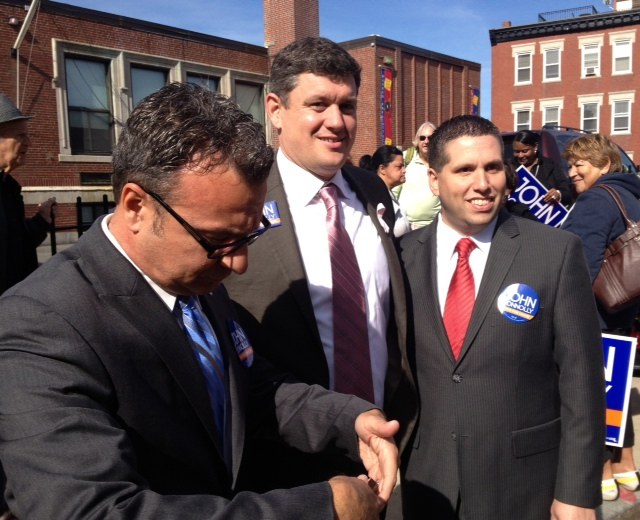
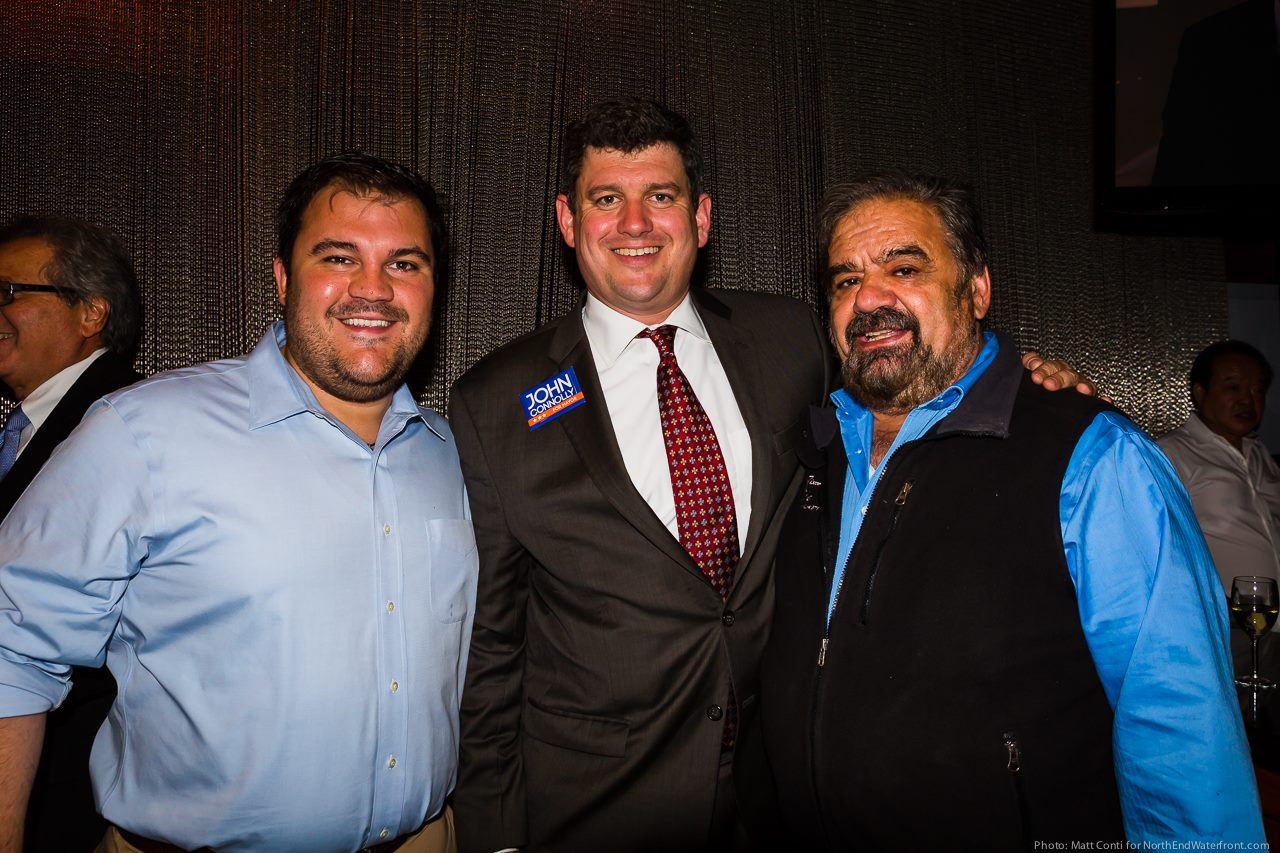
^ Golar-Richie’s Field Director announces that he is joining John Connolly : (Connolly seen here with former Council candidate Philip Frattaroli and his Dad.)

BOSTON MAYORAL : THE MARTY WALSH CAMPAIGN

NOTE : Here and Sphere, for which I write, has endorsed Marty Walsh’s opponent. The following article is my own opinion, however.

Bartlett yard Marty Walsh

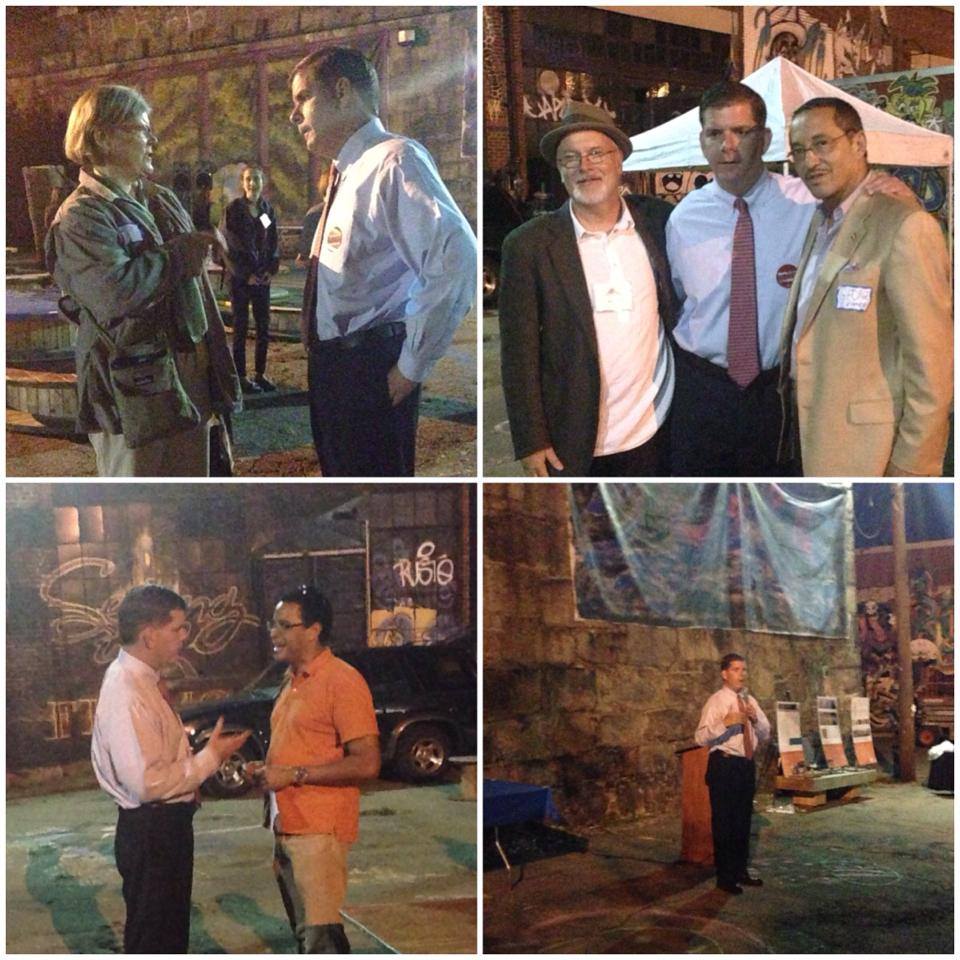
^ Courage and a voice for working people : Marty Walsh at Bartlett Street Bus Yard

Courage is the word that comes to my mind when I think of Marty Walsh and his campaign. For a guy who seems almost introverted, who really doesn’t sense the social wave, who comes from a part of Boston that is visibly shrinking in reach and number, to run for mayor of a City I don’t think he really understands seems an act of huge courage. This is a good thing. By no means do I disparage Walsh’s public persona. It has won friends of all sorts in the Legislature. It has elevated him to the top among those who know him best. I have, in previous columns, called Walsh “a hero of civil rights.” This he definitely is.

His courage — to break loose of the hermetic cultural world in which he grew up; to see himself as one and the same with people living very differently from how life along “Dot Ave — has brought Walsh almost to election as Mayor of Boston. He bested ten rivals in the Primary with a total vote that topped his Final opponent, John Connolly. As he himself claimed it, at a large outdoor rally on election eve : “Tomorrow we will top the ticket !”

But…. Walsh is a “union guy” — was business manager of the Boston Building trades Council — and has built his campaign on continuing the current downtown building boom and the jobs it provides. There is nothing at all wrong with this. The building boom is real. It is good for all Bostonians. It creates jobs, good paying jobs for workers who then spend that money into the city’s economy. All good. But the more that Walsh is a union guy, the less he is the man of courage; the less he is one brave man breaking free of — fighting against — the Old Boston and its old ways.

His challenge, as a Mayor finalist is, how does he bring Boston labor unions into the new Boston, the coming Boston of business innovation, business lifestyle, business politics ? Indeed — as many voters are asking — is becoming Mayor the best way even to do this ? At times in the past month or so, Walsh has talked — sermonized, almost — about recruiting businesses to Boston; taking them from Texas, South Carolina, from all over; of opening up a Boston office of business recruitment. This sounds odd speech coming from a union guy. Few of the businesses he would be preaching Boston to are union shops. There are, by percentage, fewer Union households in Boston than there used to be. In Walsh’s business recruitment world, they will be a smaller percentage still.

At which point Walsh’s courage begets contradiction.

And conundrum : for if union households would decline in numerical importance in a Walsh-for-business Boston, there would be no decline at all in the importance of the Police and Firefighter Unions, or of the Boston Teachers Union. Or of the School Bus Drivers Union. Need I say more : and into the two recent labor union events that have angered almost all Boston — Walsh too — came the news, via John Connolly, that Walsh has five times filed a bill (H. 2467 this year) to make labor arbitration awards final, taking review power away from municipal councils. A request was made that he withdraw the bill. He declined to do so.

Walsh’s strategy now, as a finalist, is to bring to his side working-class voters of diverse origins and skin color. He has John Barros’s endorsement, and he has Felix G. Arroyo’s endorsement — and his strategist, Doug Rubin — and now often voices the message that was Arroyo’s : pathways out of poverty by way of better schools and safer neighborhoods. It’s a good message. It builds upon Walsh’s own story and upon his support base. The Boston building boom should provide building trades jobs for Latino Bostonians, Cape Verdean Bostonians, Viet Namese Bostonians, all Bostonians. And yet…

…the argument did not work for Arroyo in the primary and seems unfitted to what Boston is like today. It is a message not too different from Mel King’s and Ray Flynn’s in 1983. But Boston has become much more entrepreneurial in the past 30 years. (And Mel King himself is close today to Charles Clemons, who was a Mayoral candidate and is a radio entrepreneur with an economic point of view almost Republican.) Boston today is more prosperous than in 1983, more upper middle class. No social group desires radical school improvement more passionately than the upper middle class — and those who would join it. Upper middle class parents push their children to excel. Sometimes they overdo it, but that is what the new Boston often is. Achievement, and bicycles. Downtown boutiques — and advanced courses in every high school grade. Diversity and social metro-lifestyle — because all entrepreneur brains have worthy ideas to pick up on. Upper middle class parents like new ideas. And they’re in a hurry to get them.

Marty Walsh understands this dynamic well, I think. But he cannot be its voice. Because it already has a voice, a man who is of it and personifies it : John Connolly. Thus Walsh has chosen the only course left for him : to voice for the people who would like to be in a hurry but can’t be because they have too much other stuff — dysfunctional homes, kids going astray, language barriers at home, working three jobs to make ends meet; that sort of thing — on their plate.

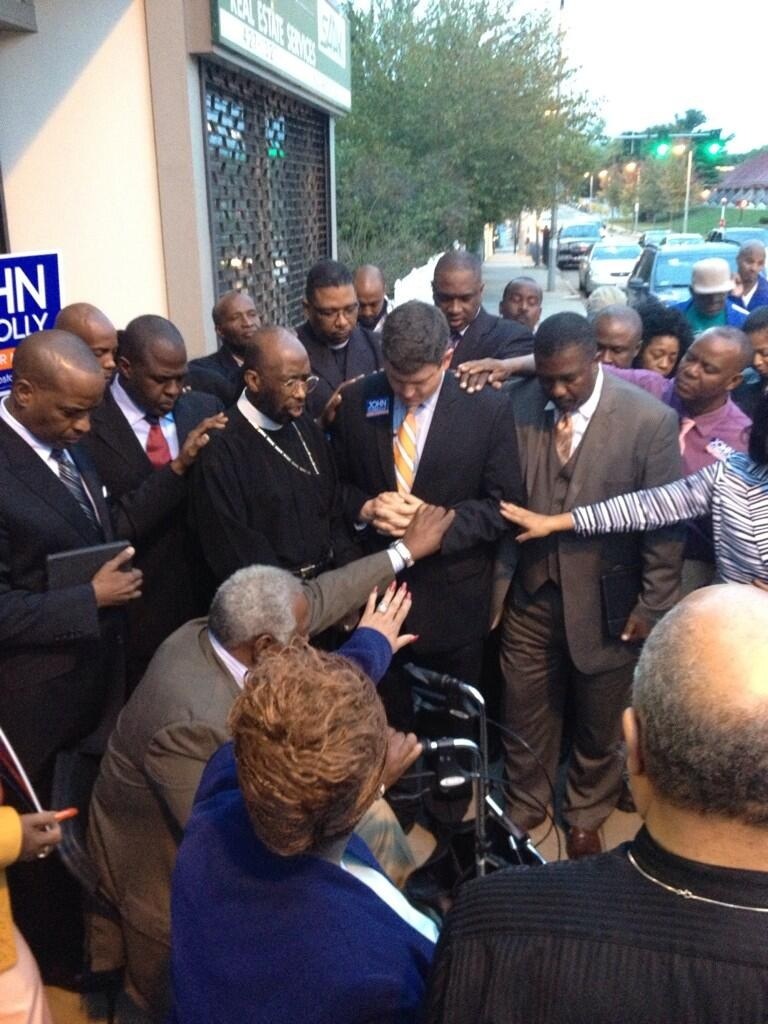
It is good that Marty Walsh is committing to be the voice of those trying to catch up to the people in a hurry. No one speaks it with more personal conviction. But in doing so, he has, ironically, narrowed his reach. Because John Connolly’s campaign extends far beyond upper middle class parents. He has brought to his side Boston Wards very different from upper middle class — Charlestown, East Boston, North End, much of Roxbury and Mattapan — for whom access to the Mayor’s office and the Mayor’s ear is vital. Connolly looks like the winner to these constituencies, including some which did not vote for either him or Walsh in the primary. They can see how things shape, and they are surely correct in thinking that their support assures a Connolly victory and thus access to his office and ear. And yesterday both Communities United’s PAC and the black Ministerial Alliance endorsed him.

photo (12)

Against this dynamic and this perception, Marty Walsh now fights courageously, doing proud those who believe in him.

—- Michael Freedberg / Here and Sphere

BOSTON ELECTION : CITY COUNCIL AT-LARGE FINAL — A FIRST LOOK

Boston’s City Council has little power via the present City charter. Such little as it has is most effectively directed to questioning the Mayor’s agenda. Even though the Council almost always gets onto the Mayor’s side on such, merely by questioning it awakens the City’s voters to agenda items that might not win most voters’ favor. And they are less easily brought aboard the Mayor’s agenda than are the Council members.

Every Mayoral agenda contains items that voters might justly question. That’s why we, at Here and Sphere, in making our endorsement and suggestions for the Council, rank a candidate’s potential independence first of all. We want the Council to answer to constituencies that the Mayor’s agenda does not favor. We see the Mayor’s proposals and the Council response as a kind of labor negotiation, one in which a common middle ground is reached. For that reason, we especially insist that the at-Large (city-wide) elected Councillors demonstrate this independence.

Image

^ Jack Kelly : independence almost assured — we endorse ! (photo  by Kelly campaign)

Which is why we balance our endorsement of John Connolly for Mayor with an endorsement of jack Kelly as a city-wide Councillor. He will be as comprehensive a “voice for labor’ as anyone of the eight candidates on the ballot. None, to our knowledge, has received as many Union endorsements as has he. Moreover, Kelly is not only a “voice for labor.” He has Planned Parenthood’s endorsement, that of District Four Councillor Tito Jackson, and the support of at least two Boston Globe columnists so far.  And just today, he gained endorsement by Ramon Soto, who was an at-large Council candidate himself.

Kelly addresses issues only after careful study — no Council candidate is more thoughtful. His enjoyment of people is infectious; everybody sees it. If anyone in this year’s election has the inner stuff to enthuse almost everyone, it is Jack Kelly.

The other seven candidates include four of the seven who we “suggested” in the Primary. The three who missed the cut — Chris Conroy, Catherine O’Neill, and Phil Frattaroli  — will, we hope, be heard from again. The four “suggested’s” who did make it — incumbent Ayanna Pressley and newcomers Annissa Essaibi George, Marty Keogh, and Jeff Ross, all of whom we like a lot — now find themselves in competition with three whom we did not suggest. These are serious contenders : incumbent Stephen J. Murphy; former Councillor Mike Flaherty; and one newcomer, Michelle Wu.

Image

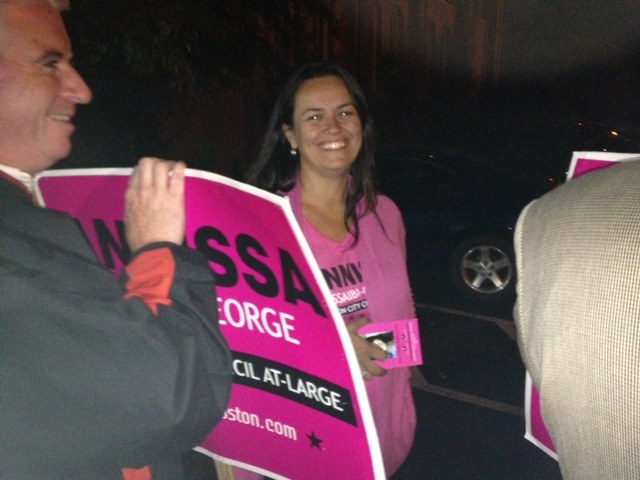
^ Annissa Essaibi George : very Dorchester and as “Dot” is Boston’s largest neighborhood, that’s reason enough to like. we do.

photo (24)

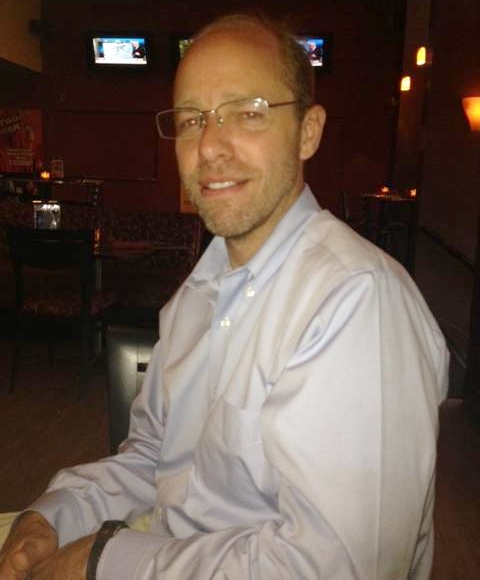
^ Jeff Ross : hard work and a proven, long time commitment to Bostonians needing a voice

photo (43)

^ Marty Keogh : the voice of Wards 18 and 20 — is it enough ? we hope it is.

We continue to like our four “survivors.” We understand that at least one, even of them, will not be elected in November. Yet we cannot simply dismiss Flaherty, Murphy, and Wu any longer. So how, at first look, do we judge their candidacy ?

Image

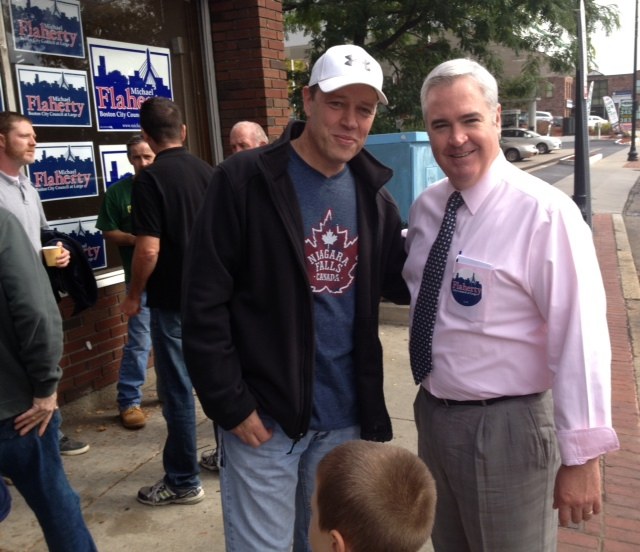
^ strong in every neighborhood of Boston : Mike Flaherty

1.Mike Flaherty has put together a citywide vote as uniformly strong as any Council candidate. And city-wide strength is something we want to see in a city-wide candidate. It’s almost as important as independence.

After failing to win election in 2011 — having lost badly in 2009 when he challenged mayor Menino — Flaherty has won back all the voter confidence that had appeared no longer his. We would be very surprised if Flaherty does not win back his Council seat, and we will be doing a Profile of him next week. In which we will take the temperature of his independence of mind.

photo

^ Stephen Murphy : what has he yet to do that he has not already done ?

2.Stephen J. Murphy has been a personal friend of this writer for almost our entire adult lives. Indepenence from Mayor Menino is built into his soul. Murphy’s mild, gentlemanly manner belies a passionate commitment to traditional Boston ways and agendas — into which he has, much more smoothly than I thought likely, blended all kinds of “new Boston’ constituencies. Murphy seems to say, “you may be think you’re one of those ‘new Bostonians,’ but you’ll fit right into traditional Boston, I will take you there, and you will like it.” No one else on the Council could have done this important mission as successfully.

My only question of Murphy’s continuing on the Council is whether or not his work hasn’t been fully accomplished. What has he still left to do that others can’t do ? I will be asking him this question in a coming profile.

Image

^ Michelle Wu : impressive bio

3.Michelle Wu. She was said to be all over the city; we have all seen her worn-out-shoes news story. Yet I, despite being all over the City at street level myself, since the beginning of August, only met Wu for the first time at the Roslindale parade. Where did she wear out those shoes ?

The Wu candidacy puzzles me. She took fourth spot in the Primary by a huge margin : how did she become so well known ? so well thought of ? Better known than marty Keogh ? Better thought vof than teacher and neighborhood activist Annissa Essaibi George ? More worthy a progressive than Jeff Ross ? Her personal story is impressive : harvard Law School graduate and care provider for her widowed mother. Her political story seems even more to the point : she was a campaign staffer for Senator Elizabeth Warren, the most popular politician in Massachusetts.

Yet others in this year’s Council campaign worked for Warren as well. All, even Jeff Ross, who grew up on the West Coast, have longer and deeper attachment to Boston than Wu, who only recently moved to the City. Why the Council ? To me, at first look, Wu seems better fitted to head a city administrative department than to be a elected voice. If the theme is “new Boston,” Ross, to our mind, fits the bill much more profoundly than Wu. Surely her biography and Warren connection impressed many voters who don’t accord their Council votes a policy importance. To me, using a Councillor vote to congratulate an impressive personal achievement is to disrespect the Council. A Councillor should be more than a graduation day photograph.

That said, we will be talking to Michelle Wu next week and asking her what there is about her candidacy other than a very impressive bio.

—- Michael Freedberg / Here and Sphere

MEEK AT THE MOVIES : Captain Phillips ( 2.5 STARS )

Image
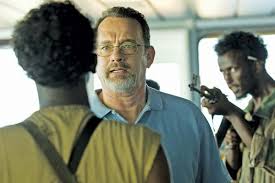
^ Tom Hanks as pirated cargo captain in Paul Greengrass’s “Captain Phillips”

—- —- —-

Back in 2009 the whole world watched rapt as an American cargo ship was seized by pirates off the coast of Africa. To save his crew, the captain offered himself up as hostage and was subsequently cordoned off in a lifeboat pod with a posse of armed and anxious pirates looking for a multi-million dollar ransom. Eventually the US Navy and SEAL Team 6 got involved and brought about a quick resolution. It made for great drama then and would seem a natural fit for film, but though harrowing, “Captain Philips” never quite gets below the surface of the whole ordeal.

All of this might come as a bit of a surprise because “Phillips” is directed by Paul Greengrass, who adroitly chronicled the intrepid doings of the doomed 9/11 passengers in “United 93.” His poignant insight and meticulous care for every passenger’s story and plight rang through cleanly and affected with a genuine earnestness. Here that acumen feels lost or at best, severely muted.

“Phillips” begins rather no-nonsense with the captain (Tom Hanks) and his wife (Catherine Keener) driving to the airport and bantering about how their children are growing up in a harsh world where being righteous and diligent isn’t enough anymore (perhaps an omen of what’s to come?). Shortly after, Phillips and his crew load up food aid for Africa in the Arabian Peninsula and do a once over of the Maersk Alabama. Phillips is working with a new crew that aren’t quite up to his standards and neither is the ship, which ominously has unsecured ‘pirate gates.’

As a result of such shabbiness, once underway around the Horn of Africa, Phillips insists on drills, but just as he sounds the alarm, two speeding skiffs packed with armed men come at the enormous cargo carrier. The Somali pirates fail in their first strike, but have a trailing mother ship to refuel at, and are back nipping at the Alabama the next day.

Three things drive these men on the high seas, money, mind games and stimulants. The pirates, who can speak English, imposter the Somali Coast Guard, while Phillips, knowing they are listening in, pretends to call in an air strike and later, after the Alabama is boarded, lies about the operational condition of the ship. The Somalis, gaunt, angry and hard to tell apart, all gnaw on a narcotic stimulant known as khat and when offered thirty thousand dollars to just be gone, they laugh and whimsically mention that their last take was six million dollars, to which Phillips asks, “Then why are you doing this?” It’s a good question that unfortunately never gets adequately addressed.

Phillips’s men too, see the whole situation as a transaction and don’t want to take on the task of repelling the pirates (they use a series of high power water cannons) because they’re not getting paid enough and ultimately end up hiding in the hold while Phillips deals with the armed intruders.

There are some intriguing bits of chicanery deployed by Phillips and his crew to stem the pirates, but eventually Phillips ends up in the survival capsule with the armed men and the US Navy on their tail, and that’s where the film breaks down — or goes on too long. It becomes an endless loop of the pirates debating whether to kill Phillips and the Navy eternally searching for the right seam to let loose its mighty hammer. One thing is given : the US will not allow the Somalis to take Phillips ashore alive.

The film based on Phillip’s memoir, “A Captain’s Duty: Somali Pirates, Navy SEALs, and Dangerous Days at Sea,” has recently come under fire by crew members who claim it’s a gross fictionalization of what really happened. Complaints, too, have come from the company which allegedly sent the Alabama through pirate infested waters as short cut to save on fuel costs.

The recent Danish film “A Hijacking” also covered a similar real-life arc with great palp and soul by burrowing into the lives and motivations of those in peril as well as their captors. Here Greengrass (who registered much respect with his guttural Bourne films) wows with gorgeous oceanic vastness and crisp, taut editing, and Hanks, on his game, conjures up a thespian tempest; yet without the charts and logs to deepen the now, the full force effort labors as much under the weight of its shallow effusiveness.

—- Tom Meek / Meek at the Movies

BOSTON MAYOR FINAL : THE ITALIAN VOTE ? YES INDEED

Image

^ Two Sal’s Two : John Connolly receives the Yes — at Warren Prescott School in Charlestown

—- —- —-

Today at 1:30 PM John Connolly received endorsement from two Sal’s : State Senator Sal DiDomenico, representing Charlestown and parts of Allston-Brighton, and District One City Councillor Sal LaMattina. Aboard the Connolly campaign they join State Representative Carlo Basile of East Boston, former District One Councillor Paul Scapicchio, District Nine Councillor Mark Ciommo, the North End’s State Representative Aaron Michlewitz, Susan Passoni, and top Menino fundraiser Vinnie Marino of Roslindale.

Yes, dear reader, as you can see, there is an “Italian vote” even in supposedly Irish Boston. And it counts. But first, indulge me in a little trip through Boston social history :

1. Voters of Italian name continue to reside, chiefly, in most of the Boston places that their grandparents lived in : much of the North End; half of East Boston; Readville; one precinct of Ward 6 in South Boston; a significant scattering in Roslindale, Fairmount Hill, and West Roxbury; and a tight little area hard by Brighton Center, to which Italians from the region of Frosinone and San Donato came, three generation ago, to work in quarries. They amount to about 14 percent of all Boston voters.

2. Because the ancestors of most Boston voters of Italian name arrived in Boston later than the forbears of most Bostonians of Irish name, voters of Italian name still show some connection to ethnicity.

3. Since voters of Italian name proved strongly outnumbered by those of Irish name, the custom grew in Italian-name neighborhoods of backing for Mayor not an Italian candidate –who was presumed unlikely to win — but an Irish name candidate who would make a deal with the Italian communities — by way of their political leaders. Italian-name voters tended to vote as a family group; and, not knowing particularly well the Irish-name candidates — who almost always lived elsewhere in the city — they followed their leaders’ recommendation. More than once, the “block” vote in Boston’s Italian-resident areas won the Mayor’s office for the Irish name candidate -chosen by those leaders. It was stupendously true in 1959 — when Collins beat Powers -and importantly so in 1967, when Kevin White beat Louise Day Hicks.

Scroll forward again to now. We have John Connolly and Marty Walsh. Walsh lives in Dorchester, far from any Italian-name neighborhood. John Connolly lives in West Roxbury, at opposite remove from most Italian-name sections of the City. It is a very 1959 situation.

Yes, via social media and a flood of news sources almost every italian-name voter of 2013 knows at least something about both men. Yet few voters know them well. In this voting situation, sponsorship by a trusted local leader can still make a difference. One or two such sponsorings might not turn many heads in this the internet era; but six or seven leaders of same heritage banding together — plus an issue; in this case, school reform — surely will turn lots of noggins.

There was an issue in today’s Sal and Sal endorsement. The event took place outside Charlestown’s \Warren Prescott school, and both Sal’s talked of their working together with Connolly on school reform agendas.

Image

^ LaMattina — Connolly — DiDomenico

Connolly’s band of Italian name pols may even arouse the really BIG Italian name I have yet to mention, a guy you are probably already thinking : Tom Menino, the only Italian-name Mayor that Boston has ever had. What will he do in this election ? Will he do ANY thing at all in it ?

I think that he will. I think that he is already doing it. The events taking place seem to prove that he is involving himself mightily. They cannot be an accident. One endorsement, maybe. Seven ? Not just chance. Menino is indeed involved. And not just among “The Italian vote.”

Did I say “just” the “italian vote” ? It matters a lot more than “just.” Come to the Columbus day Parade this Sunday as it winds through the North end, and you will see much. Come to the after-party at Filippo Restaurant (hosted by Philip Frattaroli, who was a City Council candidate this year). But most of all, think of the families that stand out. In Brighton, Salvucci, Mummolo and Cedrone; in the North End, Passacantilli, Anastasi, Coppola, Anzalone, Langone; in East Boston, Buttiglieri, Aiello, Aloisi, Mangini, Lanzilli, Faretra, Marmo. Readville : Scaccia, LoConte and Pulgini. Fairmount : Pagliarulo and of course Rob Consalvo. From Roslindale, Vadala, Iantosca, and Ferzoco; from West Roxbury, Settana. And the Iannella’s….

So what’s it all add up to ? Pretty basic if you ask me. Yes, the race between Walsh and Connolly is turning into a battle of economic classes (as we all knew it would be). But not every Boston voting bloc identifies by economic class. The “Italian vote’ has almost always — as my list above shows — identified by family and neighborhood. John Connolly is smart to pursue, in this matter, the strategy that won the 1959 race for John Collins and the 1967 race for Kevin White.

Come to think of it, Kevin White looked a lot like Connolly, lived in the same area, pursued a “new Boston vision” just as Connolly is doing, talked the language of “downtown,” and — again like Connolly — came from a family long involved in Boston politics. And had the good sense to court East Boston’s Mario Umana. For the Kevin White of 2013, it’s “so far, so good.” Only 26 days remain until we know if it’s good enough.

Tomorrow : The Walsh strategy

—- Mike Freedberg / Here and Sphere

photo (8)

^ City Council colleagues : LaMattina and Connolly

BOSTON MAYOR : SCHOOL BUS DRIVERS SEND A MESSAGE

Image

^ no school bus today for 57,000 Boston public school kids

—- —- —

Marty Walsh must be thinking the election gods have cursed him. On the very morning that he has two important endorsements to announce, the Boston school bus Drivers’ Union stages a walkout and totally steals everybody’s attention. And who is the candidate of school transformation ? To whom parents turn this morning for guidance ? John Connolly. And at his facebook page they find it, comprehensive and helpful.

Yes, Marty Walsh put out a statement condemning the walkout. Of course he did. But so did John Connolly. and while Walsh’s statement said what need saying, Connolly’s added a vision as well as a reason for condemning the walkout. For Walsh, it’s “let’s get back to the task at hand.” For Connolly, it’s “let’s get back to the task at hand because, given the huge achievement gap in our schools, we must do it.” (emphasis added)

Yes, the job that you signed up to do, you need to do. But even more so, there should be a reason, a goal, a mission, that motivates you to do that job. Score a big one for John Connolly.

The School Bus drivers’ walkout really hurts Walsh. His message has been, “look, I’m a union guy, the union folks trust me, they will listen to me.” Maybe some of them will. More likely is that union workers are supporting Walsh not for his sake but for theirs. Today’s job action makes that point clearly enough — as if the huge BPPA arbitration award hadn’t already made it. And what was the huge labor issue that led to the drivers’ work stoppage ? Simply that they object to a GPS mobile application that enables school parents to track a school bus in real time.

For THAT, the drivers disrupt everyone’s day ? Listen, drivers : the rule is that a parent needs to be at her child’s bus stop when the bus arrives, to pick up said child, or else the bus drives off with the child still inside, and then the parent must do a ton of work to find out when the bus will return. If a parent can track that bus in real time, she will be less likely to not be there when the bus arrives at her stop. I don’t think that’s exactly hard for even a driver to figure out.

But enough. The School Bus Drivers not only dinged Marty Walsh badly, they also stole the spotlight from two big endorsements that he received later this morning : Felix Arroyo and John Barros. the Arroyo endorsement was expected. Walsh already has Arroyo’s top advisor, Doug Rubin, guiding him to key parts of Boston’s communities of color. Arroyo’s Dad, Felix D. Arroyo, was a long time ally of Ray Flynn, a candidate from much the same place as Walsh and of much the same support base. (I’ll have more on this subject in a later article.)

Image

^ John Barros (on the left) : today announces that he supports Marty Walsh for mayor

More surprising is John Barros’ embrace of Walsh. Barros’ education ideas and city vision parallel John Connolly’s almost exactly. So why has he tossed his lot in with Marty Walsh ? I have no hot poop on this issue, but I’m guessing it went something like this :

( 1 ) Barros’ portfolio is education; because Connolly’s theme is education, and his mastery of the issue is so thorough, Barros likely saw no need by Connolly for his advice; whereas with Walsh ? It wouldn’t surprise me at all if the High Schools proposal that Walsh released only two days ago was forged in consultation with Barros. A Walsh administration would have plenty of need for Barros’s education knowledge.
( 2 ) Barros also cares greatly about development of the Dudley Square area. As Walsh’s mantra is the Boston building boom and construction jobs, it would make sense that Barros asked for, and received, specific commitments by Walsh to Barros’s Cape Verdean community that it would get plenty of those construction jobs — and also some construction contracts.

Barros has every right to make the choice he has made. My problem with it is that it undercuts his visionary mission. He has opted for some specific — but small — gains now rather than taking the large, long-term, transforming view with Connolly : a vision that he advocated passionately at numerous Forums. Barros had better hope that he can impart to Marty Walsh and his core advisors some part of the long view that for months he advocated.

If not, he has contradicted himself.

—- Michael Freedberg / Here and Sphere

BOSTON ELECTION : JOHN CONNOLLY FOR MAYOR

Image

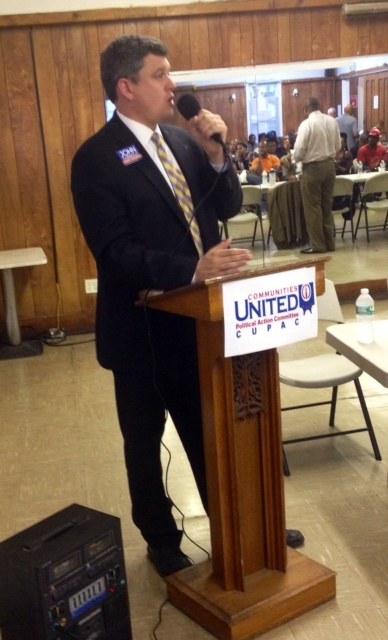
^ John Connolly at the recent CUPAC Forum

—- —- —-

Six months ago, when we launched Here and Sphere, we posted our mission statement : to be a voice for progressive, inclusive, visionary politics everywhere that our online journal could reach.

Little did we know that Tom Menino, Mayor of Boston, would soon announce his retirement, opening up one of the most powerful offices in all of urban America to new leadership and handing Here and Sphere a major story to cover, one that would command our mission for the rest of the year.

Twelve candidates qualified for the ballot. In more than a dozen Forums they answered questions and spoke their agendas. We reported on many of these Forums. At least seven of the candidates would have made a fine Mayor. It was a campaign of ideas, most of them progressive, many of them truly visionary. Since the beginning of August we brought this story to you. Hopefully you found value in our reportage, insight in our opinions.

The two candidates who won the September 24th Primary excelled at almost every Forum. It was no mistake of the voters to choose Dorchester State Representative Marty Walsh and City Councillor (at-Large) John Connolly of West Roxbury. Yes, many voters wanted to see a candidate of color in the Final; we understand why. So do John Connolly and Marty Walsh. Both have reached out to Boston’s communities of color, listened to the frustration, addressed the questions, even the hostile ones. We congratulate them both.

But now it is time to choose not two but one. Proudly we choose John Connolly to be Boston’s next mayor. He has our full endorsement, and here is why :

1.Reforming all of Boston’s schools is indeed the major issue facing Boston. John Connolly made it his issue and has put forth this campaign’s most comprehensive and well-detailed agenda for school reform. And how not ? He was a teacher himself and is a Boston public school parent. Name your school issue : the longer school day; giving principals flexibility in choosing teachers; charter schools as an alternative; family involvement in school plans; school assignment reform : Connolly addresses them all in depth and with conviction.

Connolly and the Boston Teachers Union (BTU) differ widely on what reforms to pursue; still, he and the BTU can agree. They both want education to be the next Mayor’s top priority. Of late, Connolly has been proposing reforms, in some areas, that comport closely with the BTU’s recommendations. The disagreement is not so much Connolly and the BTU as it is the BTU versus public school parents. We look forward to seeing Connolly moderate exciting meetings between Boston’s school parents and education professionals.

2.Segregation in Boston’s social life remains a huge problem, and John Connolly seems to understand the emotional and psychological dimensions of this segregation — and is prepared to confront it — quite better than his opponent. The battle for civil rights is not won when laws are enacted, important though these are (and Marty Walsh was a hero of the fight to enact them). As Connolly noted at a recent Forum in Boston’s Black community, Boston restaurants and night life remain deplorably segregated, with consequences economic as well as social; because, as Connolly noted, young people of color and talent see Boston nightlife segregation and say “no thank you” — and go elsewhere to live. This must change.

3.Relations between the City’s Unions and the rest of Boston taxpayers can never be kumbaya; but John Connolly is in a much more independent position, when the fire-fighters or police come demanding, than Marty Walsh. The Unions that have endorsed Walsh love him; they campaign for him wherever and whenever he needs them. It says a lot about Walsh’s strength of heart (and we have seen it at times too). Yet Walsh’s greatest strength has proven his greatest weakness. Questions were already being asked — and answered vaguely — how he could stand up to Union contract demands, much less reform the Police and Fire leadership, given his almost total dependence on Union support, when all of a sudden Connolly brought up a bill that Walsh filed as a State Representative : House Bill 2467 would take away from City Councils (not just Boston’s) the power to review arbitration awards and, if need be, disapprove. Under Walsh’s bill the arbitrator’s decision would be final.

This is bad law. No un-elected official should have final say over municipal finances. Walsh says that if it came to that, he would always put the residents first. He surely means it. But it’s the Unions’ call, not his. With House 2467 at their hand, their call would be final. We like Walsh’s labor supporters. Many are our friends. But being Mayor is a matter of duty first, friendship later.

Lastly, the vision thing. Boston’s next Mayor will lead the city into the future for four years, maybe eight. John Connolly has vision at his fingertips. He sees a different city, one that is being created even as we write, shaping a very different, more tolerant, prosperous, and structurally diverse city. It will take a mayor of vision to guide the shaping so that the new city is what we want it to be rather than a matter of chance. Marty Walsh has great plans in some cases; selling City Hall and developing City Hall Plaza as a commercial zone is perhaps his most brilliant. But Walsh has yet to articulate a grand vision of what he wants Boston to be six, twelve, 20 years from now. His matter of fact-ness meets current city needs nicely. But what then ?

No such question need be asked of John Connolly. He sees a city of bicycle people — and of car people; a technology center; a city of integrated social life; of education that helps to repair social unwellness rather than being a recipient of it. He sees the new Boston. He gets it. We endorse him to take our city to it.

—- The Editors / Here and Sphere

MEEK AT THE MOVIES —- GRAVITY ( 3 stars )

Image
^ George Clooney and Sandra Bullock about to launch into the void in Alfonso Cuaron’s “Gravity”

—- —- —-

Some might wonder how the director of “Y Tu Mamá También” and “Great Expectations” (bet you forgot about that 1998 foray starring Gwyneth Paltrow and Ethan Hawke) arrived at a space odyssey such as this. Likely, the international success of “Y Tu Mamá También” opened a few doors for director Alfonso Cuarón. Thus his follow on, “Harry Potter and the Prisoner of Azkaban,” which was the best segment of the overheated wizard series, enabled the Latin auteur to play freely with special FX and blockbuster-aimed gadgetry. Two films later he capitalized on that and wowed critics and audiences alike with the bleak future-scape thriller, “The Children of Men,” registering perhaps, the first perfect fusion of grand vision and epic scale in the new world order of digital film making.

What goes on in “Gravity” is pretty straight up: three astronauts from the space shuttle Explorer go out on a spacewalk to repair the Hubble telescope, disaster strikes and the rest of the film is about the survivors trying to get to a safe place. The catastrophe, a debris storm from a Russian missile strike that took out a derelict satellite, comes shortly after the films begins. Jocular banter and the mission at hand are replaced with an urgency to get into the shuttle and out of harm’s way, but they waiver for a moment and then it’s too late. Everyone inside the shuttle dies from exposure while one of the three out in space has his helmet and cranium pierced by a shard of shrapnel that passes through with the ease of a hot knife through room temperature butter, leaving only newbie science officer Ryan Stone (Sandra Bullock) and grizzled vet Matt Kowalski (George Clooney) alive and adrift in space. They’re apart from each other and the now destroyed shuttle, and the prospects for going on look quite dim. It’s a harrowing moment of realization, like becoming lost in a desert or alone in a raft at sea with no land in sight (that story forthcoming in “All is Lost”)—and space is an even more vast and more unfriendly expanse of nothingness. Throughout all this, Kowalski remains exceptionally calm and in the eerie silence of space, using old school navigation techniques, limited communication devices and a lot of luck, he finds Stone, who’s been hurtling around out-of-control, and tethers her to his back (Kowalski is the only one with a jet pack) and they set off to make their way to the International Space Station hoping their jet fuel and oxygen don’t run out first.

There’s more to the plot of “Gravity” (the International Space Station is a whole ‘nother chapter of epic tribulation), but to articulate any further would be to do the film and the experience a disservice. How Cuarón so seamlessly created zero gravity and rendered astronauts spinning out of control at thousands of miles-per-hour with such realistic credibility, boggles the mind. The feast of visual spectacular wows—each one, outdoing the last–drives the film as much as the hanging-by-a-thread survival yarn.

And if being lost in space without a ship seems like a pretty major problem, the tethered pair have also lost contact with Earth, which I guess cuts out any expository banter and insight from down below–and what exactly would those guys be able to do in any case?

Astoundingly, the voice of Houston control is none other than Ed Harris, who played the effusive and resourceful control manager in Ron Howard’s “Apollo 13.” That movie, based on a historical occurrence that was eerily foretold by the 1969 movie “Marooned,” dealt with the rescue of oxygen starved astronauts in space. There, the players on earth and the celestial above, had soul and their lives unfurled with as certain sensitive fragility and death loomed at every turn. In “Gravity” the two survivors overcome such insurmountable odds so many times, you wonder if James Bond might not be a tad bit jealous. We get a sip of back story too. Clooney is his comfortable wry everyman while Bullock’s Stone has a bit more going on, but it feels like artifice so Cuarón can do such mesmerizing stunts as have a camera follow Stone as she careers aimlessly about. From afar we watch her spin, in the back ground we can see Earth, then the deep dark galaxy, then the broken carcass of the shuttle, and it all repeats over and over as the focus slowly moves in on Stone’s face and then we are in her helmet and looking out, and we see the whole dizzy spin cycle from her POV. It’s an amazing feat of film making, but where Cuarón should have applied similar elbow grease was on the script he co-wrote with his son, Jonás. Sure, the characters have the mettle to be up there and their cool perseverance under pressure is beyond enviable, but what else?

What Cuarón missed that Howard nailed in “Apollo 13” (where we already know the conclusion) was the connection between humans doing something heroic that puts themselves at risk for others. There’s some of that altruistic spirit in “Gravity” too, but just a sparse sprinkling.

So if in space you do something monumental and no one is there to witness or benefit from it, does it matter? Probably not, but even if you view “Gravity” as a vacuous fire drill, witnessing that harrowing hollow hell-ride is one breathtaking endeavor.

—- Tom Meek / Meek at the Movies

BOSTON MAYOR FINAL — THE EAST BOSTON CASINO REFERENDUM

photo (84)

^ casino = construction jobs — East Boston’s State senator Anthony Petrucelli endorsing Marty Walsh (backdrop : the City Hall that Walsh wants to sell, on the Plaza he proposes to develop)

—- —- —-

However many East Boston voters you thought would turn out on Mayor Election Day, double it. For “Eastie” November 5th isn’t simply going to be about choosing a new mayor, important though that is for the only Boston neighborhood that has to pay a toll to get into “town.” Much bigger a deal is the Suffolk downs casino project, approval — or not — of which only East Boston will vote upon. The casino is a huge game changer for Eastie. It will likely employ over 4,000 people, many of them surely from the neighborhood. There’ll be much traffic, lots of excitement, entertainment, tourism, the works.

“NIMBY” people hate the idea. So do the busybodies who think that gambling is evil and want to prevent the rest of us from doing it. They’ll be voting in big numbers on referendum day. But so too will the project’s supporters. Already the campaign signs — “It”S ABOUT THE JOBS” and “VOTE “YES” FOR SUFFOLK DOWNS” — have arisen on many many East Boston houses and lawns.

The mayoral campaigns have taken notice and profited by it. Yesterday State Senator Anthony Pettrucelli endorsed Marty Walsh, who as the candidate of labor, including construction workers above all, is all for the casino project. It will give jobs to Walsh’s stand-out volunteers, door-knockers, and contributors — and to Senator Petrucelli’s constituents. This is a political marriage almost ideal for both men. As Walsh lost East Boston on Primary day by a significant percent, the endorsement by Petrucelli, plus a huge vote turnout, can only boost Walsh’s campaign significantly.

Yet John Connolly is not without his Eastie strength. He supports the Suffolk Downs casino project as much as does Walsh : it gives the City $ 55 million (at latest count) in “mitigation” money. Connolly was endorsed by East Boston State Representative Carlo Basile before the Primary; and Connolly carried the Ward. Often a neighborhood’s State Representative is “closer to the ground’ than its State Senator, who has an area six times as large to cover. It is hard to imagine Basile not commanding a strong and much larger poll on November 5th and, other factors being equal, winning for his candidate over Petrucelli’s.

Carlo Basile 1

^ East Boston’s State Rep Carlo Basile : endorsed John Connolly in July

D 1 sal LaMattina and Mayor

^ Sal LaMattina, East Boston’s City Councillor is ….said to be close to…..

One major political voice of East Boston remains to be heard : East Boston’s City Councillor, Sal LaMattina. (He also represents Charlestown and the North End, but those neighborhoods aren’t voting in the casino referendum.) LaMattina is said to be close to Mayor Menino. The rumors about Menino’s feelings with respect to this election have already gone public. I can personally attest two indications that Menino is giving assistance to John Connolly : (1) for the vacant District Five Council seat, city worker Tim McCarthy is receiving assistance and support from state Rep. Ed Coppinger, Connolly’s top campaign chief and (2) Vinnie Marino of Roslindale, a real estate developer said to be very close to Mayor Menino, is hosting a fund-raiser for John Connolly next week.

So what of Sal LaMattina in that equation ? Surely his supporters will be wanting jobs at the Suffolk Downs casino as surely as Basile’s and Petrucelli’s. Will he be helping Connolly win East Boston’s big November vote ? After all, Menino’s support for Connolly is sai to come, in part, because he wants “his” people “protected” in the jobs they now hold. Or maybe moved comfortably to the casino ? It does happen. I wanted to ask LaMattina his opinion on these matters; but he has not, as of this writing, returned my phone call.

—- Michael Freedberg / Here and Sphere

UPATE : I should probably include in this East Boston gumbo Patty Campatelli, who last year won election as Suffolk Register of Probate — defeating Sal LaMattina, in fact, by 800 votes. Campatelli had been unknown politically prior to running for that office; yet she won. She lives in “Eastie.” i wonder whom she is going to support in this showdown. So far, not a clue.

SECOND UPDATE : Boston, October 9th, 10.20 AM : we are informed that Sal LaMattina will endorse John Connolly at a press conference today, along with two other major endorsers.  We will be reporting from that conference. — MF

From Texas with Billie Duncan : What the Tea Party Really Wants to Do

Image

By now it should seem obvious to everyone that the Tea Party wants to dismantle the American government. The fact that the Republican Party is allowing them to follow this agenda shows how little foresight the GOP had when it allowed itself to get hijacked by a group of anti-American radicals who gained power by playing to the basest, most dissatisfied and least educated portion of the population.

Once the Tea Party gained credibility by being anointed by the Republicans, they were able to pour out propaganda that appealed to a wider audience of Americans who were not as radical but were also dissatisfied not only with how the government was being run but by how the Great Recession had affected them.

They then used their new-found power to target people in the Republican Party and replace them with people from the Tea Party—all with the blessings of the Republican Party, which somehow could not see what was happening.

The Tea Party’s objective in Congress is not to govern but to obstruct . They see government as the enemy. They are not Republicans; they are simply using the Republican Party as a vehicle in which to drive the government over a cliff.

The American government is set up as a system of checks and balances, not as a dictatorship. The Tea Party wants to dictate how the country will be run. They have no use for compromise, but they use the term to indicate that others must give in to them while they stand firm in their own beliefs. There is no room in their agenda for listening to people who are not in lockstep with them.

The Republican Party is not only allowing this but actively supporting the TPs in this path to destruction.

The Tea Party has expanded by playing to fears and prejudice. TPs actually believe that the American government has a plan to take away their guns. They actually believe that Latin Americans (particularly Mexicans) are taking away jobs from real Americans. They actually believe that Obama is not a legitimate president. The faction that is violently anti-abortion truly believes that pregnancy cannot result from rape, that any use of birth control is morally wrong, and that a woman who has an abortion is a murderer and should be sent to prison.

They want an “America” that reflects their beliefs, their religious ideology and their racial superiority. This is not what the Republican Party is all about. But, if the GOP continues to allow this drastic group to push them towards the abyss, to force their ideology on all Americans, to abolish all government programs that they don’t like, the Republican Party will cease to exist. The Tea Party will emerge as one of the parties in America’s two-party system. Then they can try to do what they really want to do: fundamentally change what is America.

What they don’t seem to realize yet is that America will not let them do it.

—- Billie Duncan / Houston, Texas