THE SALLY CRAGIN TRI-TOWN REPORT : IS IT FEBRUARY ? IS IT MARCH ?

Is it February? Is it March? Or is it still January, the month with a heavy tread. My editor requested a blog post a while ago, and then it snowed, and the kids were home and then I had a bug and then it snowed… And on it goes. Living in the north central portion of the state is a very different proposition than living further east. If you look at Massachusetts as a miniature version of the map of the US, yes, we’re in the midwest where people are cranky, vs. Bostonian pissed-offedness. And geographically, we’d be somewhere around North Dakota, among the frozen chosen.

So January, February…it’s all a blur. There’s Groundhog Day which means we get an extra 60 days of winter, vs. 6 weeks; and then Valentine’s Day — which as I keep reminding single-gal friends is a HOLIDAY FOR CHILDREN, and really only meaningful on February 15, when the chocolates go on half-price, and then there’s my wedding anniversary to Chuck, somewhere around February twenty….first? No — it’s 26th. That’s when it was.

See? a blur….

So what do we do to survive this mentally? I cross-country ski at Saima Park. Here’s the thing — skis are generally cheap; it’s the bindings and boots that cost. I have the skates in the car, but haven’t gotten to our local rink, the Carmelita Landry. She was a national champion in outdoor speed skating! look it up!) http://fmcicesports.com/2012/01/04/whats-in-a-name-fitchburg/
X-c at Saima Park (saimapark.org) is free on Saturdays in February from 10 am to 3 pm. They open the clubhouse, and there are lots of friendly Finns there to advise, or to help you borrow (not rent — this is FREE) skis to set you up. Some years, the snow is terrible, but this was a great year, and I’ve been several times a week. Yes, it helps to drive the momavan which can fit skis and a lot of the clothes my children discard in the car because they’re “too hot.”

Indoor activities are what most people like. This year, I started a venue at Fitchburg Library, “Author’s Night.” We have published authors come and read from work and talk about writing and publishing. Dunkin Donuts supplies refreshments and it’s fun. If you’re a published author, email me at sallycragin@verizon.net. We’re also planning a May event that will focus on Fitchburg History, as the city is 250 years old this year.

And, I’m working on a few things politically — getting signatures for Senator Jen Flanagan, evaluating Democratic candidates for governor. We had our caucus last week and several people came out to speak, including Mary Ellen Grossman, Steve’s sister. She’s a dynamo and I’ve sent information to her to give to the Treasurer about the woefully skewed standards applied to urban districts like Fitchburg in terms of standardized test scores. We’ll never get ahead, because we have lower BEGINNING scores and higher poverty. We are expected to close wider gaps, which less-challenged districts (also less culturally diverse) aren’t expected to do. Senator Pat Jehlen of Somerville is working on this issue, and I and other members of our school committee will help. This is an issue that Mayor Lisa Wong, who helped start the Gateway Initiative to organize the leadership of urban Massachusetts is very concerned with.
So, I guess we are doing a lot, besides living whole days in a cloud-inflected color free twilight. We really notice that extra minute of daylight out here. For more, visit fitchburgfun.blogspot.com. And thanks to my editor for reminding me. You’ll have to keep doing that you know…

Sincerely,

Image

Sally Cragin
mother of two
Fitchburg School Committee vice-chair
Editor of Button, New England’s tiniest magazine of poetry, fiction and gracious living
astrology columnist for the Portland and Providence Phoenix
winter survivor

#MAPOLI : POLARIZATION COMES OF AGE IN MASSACHUSETTS POLITICS

Image
Yesterday I wrote about the Left-ward momentum in the Massachusetts Democratic party and how it was confounding the party’s ability to pick a best Governor nominee. My story felt incomplete, more notion than news. Today I had in mind to dig deeper; to discuss the tremendous surge of activity going on, outside the Boston area Core, under the rubric of the GOP, that confirms, in the opposite direction, the Democrats’ Leftward momentum story. In short, polarization, as we have come to see it in national politics these past six years and more.

Such was my design when, an hour ago, I sat down to read today’s Boston Globe and found on the front page, the following story : http://www.bostonglobe.com/metro/2014/02/20/proposal-would-add-planks-about-abortion-gay-marriage-state-gop-platform/n3wDwD1SxePriF8eHVHpON/story.html

It is not a pleasant story. News that discrimination is invading the political scene never is pleasant. But it supports — gives a sad cast to — my own column, today, about the polarization that bids to take over our state’s politics.

Perhaps it’s a battle we have to fight. We cannot allow the voices of darkness to gain traction. They have already gained plenty. The charlatan talk show hosts, who say outrageous things to get attention and thus ad dollars, have given discrimination and hate legitimacy — with those who either do not see that they’re being had, or who actually believe that their darkest thoughts should become political policy. I suppose that most of us have road rage moments; but most of us also recognize that such squalls of anger augur no good. So it would be, were it not for the talk show thing. But we now have talk show politics; it is not going away, as I — many of us — used to imagine it would. As the economy continues to struggle; as wages for most of us lag while huge money accrues to the very few; as life becomes more diverse and all of that diversity confronts us via social media, a politics has come of age that rejects a future it feels not a part of; a politics of deep pessimism and profound alienation, politics of naked personal fear.

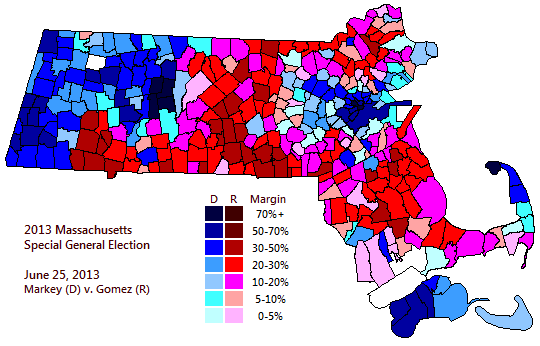
This is the turbine that drives the train of political intensity across Massachusetts’s towns and cities. But the polarization isn’t simply of value judgments. It has a geography. From the outer suburbs of Boston along Route 495 and close inside it and throughout central Massachusetts all the way to the exurbs of Springfield there has arisen a wide swath of towns whose voters reject the politics of the Boston area, reject Boston values, Boston diversity, Boston inclusion and experiment. This circle of towns — maybe 100 in all — is the heartland of the “Tank the Tax’ referendum; of Tea party sentiment; of Republican votes in recent elections. There are towns in this Circle of rejection that gave 20 and 30 point victories to Gabriel Gomez even as he lost last year’s US Senate race to Ed Markey by 10 points. These same towns gave Scott Brown 30 and 40 point victories in his 2010 special election win. And today these towns are generating a large number of Republican candidates for the Beacon Hill legislature — many more such candidates than we’ve usually seen in Massachusetts, with much better funding and a much deeper bench of activist support.

This last development makes the polarization story significant. US Senate elections have their own dynamic. Massachusetts has elected Senators from each party, all the way back to the late 1800s and ever since. But not since the GOP lost majorities in our State legislature some 60 years ago has there been, except in a few upper income places, any kind of Republican activity at the local level. Today almost all of those upper income communities have become Democratic. The most Republican active communities today are middle income, even low income, places : tract house suburbs, low-density exurbs, and sparsely populated rural places. think Billerica, Bellingham, and Tewksbury; Grafton, Mansfield and Whitman; Douglas, Monson, and Charlton.

Image

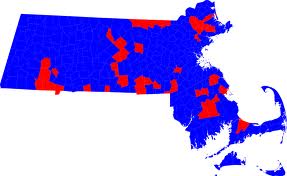
^ Bush – Kerry in MA, 2004. Note Charlton, in the middle of the map towards the bottom.

Charlton — a pass-through stop on Route 20 southwest of Worcester — exemplifies the new, hard right Massachusetts GOP. In 2004, when John Kerry, then our US Senator, was winning 62 % of the Massachusetts vote for President, Charlton gave its 60 % to George Bush.

Not that long ago, party divisions in Massachusetts had more to do with ethnic histories and 1920s-1930s Labor radicalism than with city versus rural, diversity against the old way. (And then, the Democratic party was culturally much more conservative than the socially liberal, WASP GOP establishment.) We can mark each step in the change thus : in 1970, Arlington, filled with prosperous Raytheon workers, was a bellwether town — as it voted, so did the State. Today Arlington. an academic community, is a guaranteed 20 to 40 point Democratic victory. By the 1980s, the bellwether vote town was Framingham — farther from boston than Arlington but definitely a commuting place. Today, Framingham votes 15 to 30 points Democratic. Conversely, in the late 1990s, the bellwether community was Peabody, a town filling up with culturally conservative Italians. Today, Peabody gives the GOP a 10 to 20 point victory and has a Republican state legislator, Leah Cole.

Today the bellwether city in our state is Waltham : the front line between Boston diversity and old-line factory city passes right through it. Quincy shares much the same mix. Yet these few exceptions aside, there really is no bellwether community today in Massachusetts. Most towns and cities are now all GOP or all Democratic. That is why we see the current surge of GOP activity at the state legislature level. It’s when a community moves from swing voting to being all one thing or all another that low level, neighbor to neighbor elections take on a partisan color.

Image

^ how it was in 1978, when Senator Ed Brooke was narrowly defeated by follow progressive Paul Tsongas. — a campaign of nuance, not polarization

Fortunately for those of us who live by Boston, city values — diversity, inclusion, welcome to immigrants, and government working to serve all the people — the polarization taking shape on both ends claims a clear city values majority. Democrats running state wide can pretty much count on winning by 6 to 20 points. That’s because about 25 % of Massachusetts voters live in the Boston core area — and another 15 % in the academic bastion Connecticut Valley and points West, and these areas (Amherst, Lee, Springfield, Cambridge, Brookline, Dorchester) vote overwhelmingly Democratic : 30 to 70 points ! No Democrat is likely to lose a statewide election with that kind of wind at his or her back.

For despite the surge of GOP energy out beyond the City core, its roar represents an interest distinctly minority and one that is dwindling — and knows it. It is fighting a rear guard battle and seems energized to fight to the last man standing. It is Alamo politics : dramatic, fascinating while it is going on, but, in the end, complete defeat. Those of us who move with the blossoming majority — the flowers of tomorrow, no matter the huge challenges looming– can take heart in knowing that Alamo politics do not end with an Alamo victory.

Image

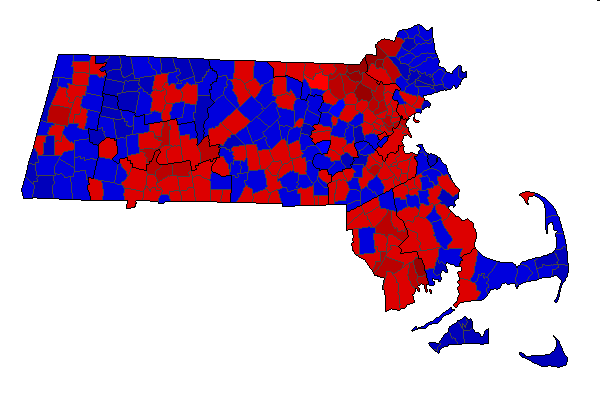
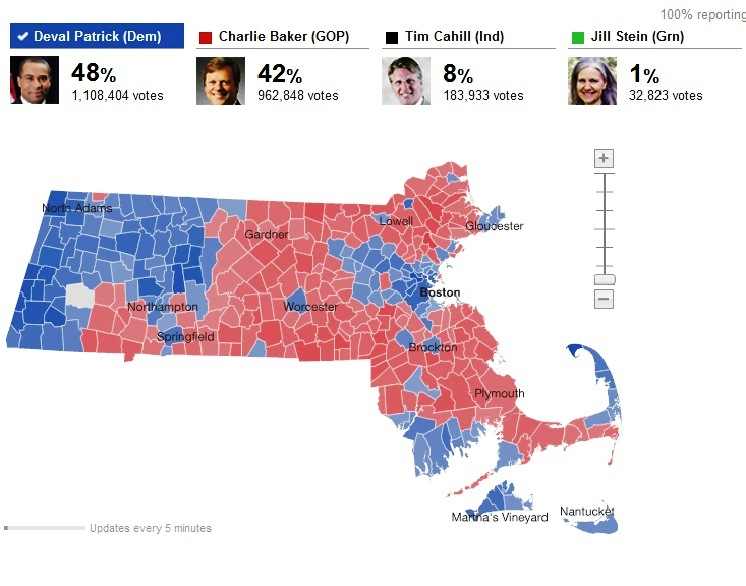
^ the shape of polarization — and its limits : Patrick / Baker / Cahill, 2010

And what of the 2014 Governor race ? There I predict a Charlie Baker victory. He is running as a city values candidate, has credibility as a city values guy, and almost certainly has the GOP surge vote on his side simply because it dislikes the Democratic tone of voice so profoundly. Though the Democratic party is moving Leftward by the same dynamic that has the GOP moving Right, many more Democrats than Republicans remain pragmatic centrists : because .the Democrats own the legislature and run the State. These Democtrats cannot throw aside their investment in state policy and governance. The most practical team to get things done, that they care about, is Charlie Baker as governor and Robert DeLeo as Speaker — because, ultimately, it is easier for them to stand — loyal Democrats ! — behind a Democratic Speaker as he pacts with a Republican Governor than to find themselves ripped in two directions by constituents here and a Democratic Governor there.  These go-along Democrats represent a significant vote, especially in the suburbs that lie between the GOP outer ring and the innermost Boston core. Think Winchester, Salem, Braintree, Norwood, Wilmington, Woburn, Natick.

It would seem a paradox to find a centrist progressive like Charlie Baker elected by a state whose politics are polarizing so momentously. But life is complicated, and not every mind moves to the flavor of the moment. Those who take the long view also matter.

—- Mike Freedberg / Here and Sphere

#MAGOV14 : LEFT-WARD ACTIVISM INSPIRES AND CONFOUNDS THE DEMOCRATIC NOMINATION

Image

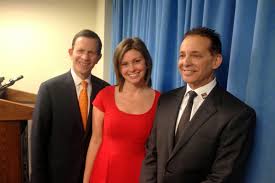
^ the center can be a lonely place : Steve Grossman with officials of SEIU Local 888

—- —- —-

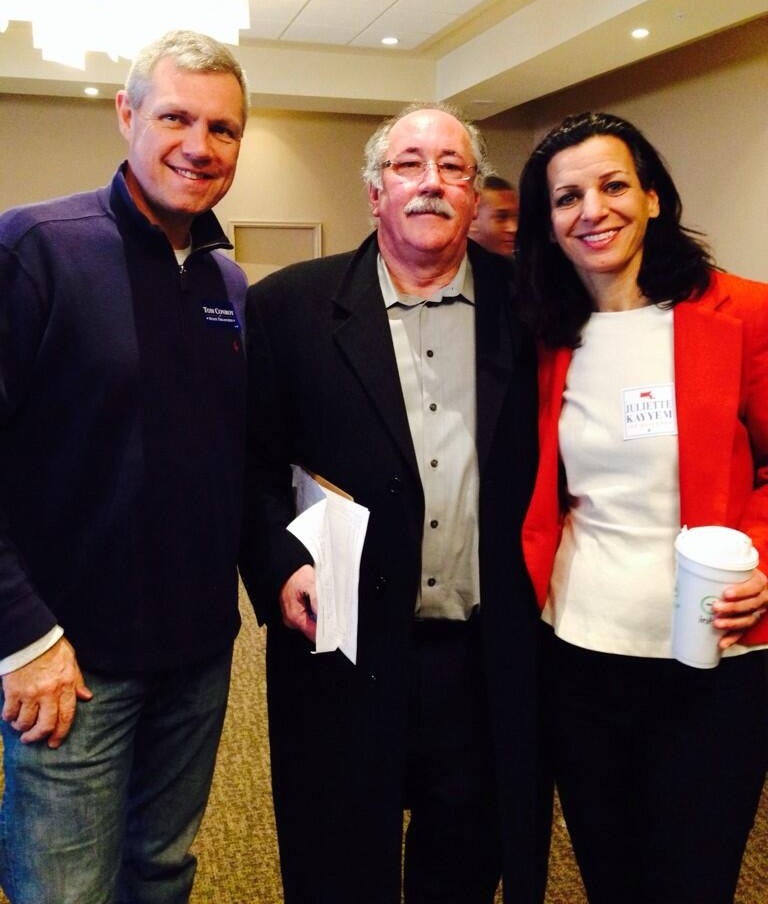
Every report that I hear, or read, says that the Democratic party is having a hard time settling on a Governor nominee — and not just because it has five contenders. Massachusetts’s Democratic party has long been a roil of rival interests; but the current division doesn’t folow traditional splits. Ethnicity used to be the Democtrats’ curse. Today, the division arises from policy first, personality next. What are the differences between juliette kayyem, Don Berwick, and Steve Grossman ? Policy plans, policy advocacy. Steve Grossman talks of hobs and businesses, almost like Charlie Baker. Juliette Kayyem hints at a progressive agenda — a coy version of Senator Warren — without sounding like a purist. Don Berwick has no such reluctance. He’s pure Left, a Massachusetts Bernie Sanders (and even looks like Sanders).

Policy also determines the evident failure of Attorney General Martha Coakley, who dominates the polls, to sweep up caucus goers. They fault her for a host of sins : losing badly to Scott Brown, prosecuting office holders too aggressively, even the 1980s Fells Acres Case, an injustice which she had the opportunity to resolve — but did not.

Only Joe Avellone, who trails badly, seems to garner Democratic delegates for old-line, factional reasons — the Worcester area’s unhappiness with being left behind by the current Democratic governor.

Grossman would seem the ideal Democratic nominee : steadfast, sure of his positions, a business-friendly centrist who also supports minimum wage reform and an overhaul of the scandal-damaged DCF. Grossman has a long record both as businessman, Democratic activist, and state Treasurer. He is “safe,’ a Charlie Baker without the baggage that impedes the Republican brand. And Grossman will probably win the largest share of delegates at the Democratic convention.

I say “probably,” because a large number of delegates rest uncommitted — waiting to be inspired, waiting for a voice they can believe in. These folks want to win; but they also want to know why a win matters. That won’t be an easy question for these five to answer. The purists — who have much momentum on their side, with Elizabeth Warren as an icon — want to elect a statement maker. But what good is a statement maker, when the person who runs the state, Speaker DeLeo, can render the statement maker foolish ? Kayyem people want a human think tank, and Kayyem is that, hip to today, with charm and chic to boot. She’d be our State’s first elected female governor, a strong point for almost everybody in Massachusetts, and lives in the actual modern world, the social media world with all of its language and connectivity.

Image

^ chic and hip and most appealing to just enough caucus goers : Juliette kayyem

She’d have the Left move to herself but for two problems : Berwick is more advanced — he favors a single payer health care system — and Kayyem has that unfortunate connection, well documented, though several years back, to Bush-era “enhanced interrogation” justifications.

Kayyem is drawing huge support via social media; if she makes it onto the Primary ballot, she could easily win the nomination were it not for her torture link. Thus the Berwick surge : he has no such emabrrassments in his resume. But Berwick is quite avuncular. Hip and chic, he isn’t. Which leaves the action — if not the momentum in the party — to Steve Grossman. And Grossman has his won problem : because Charlie Baker has moved smartly to claim the mantle of accom plishment that is Grossman’s core rationale. Baker, with his support for minimumw age lehsiualtion and expansion of the earned income tax credit, and can campaign as the current voice of Massachusetts’s best-working government ; moderate GOP governor, moderate Democtratic Speaker. Grossman cannot do this. And many Democrats who would otherwise be Grossman supporters — pragmatic centrists — see Baker’s point and actually prefer it, for many reasons besides policy effectiveness.

Which brings the Democrats back to the Left. It’s the only Democratic faction that Baker’s move does not command. Yet the Left doesn’t seem to mind. The polichy Left has eyed the 2016 presidential election most of all, at least since last year’s Boston Mayor race. It funded and elected Mayor Walsh, and the split continues, because the Left intensely opposes centrist education policy, Obama’s immigration policies, its inaction on Labor issues, the drone war, and (in fact if not yet voiced) the muddled ACA. The policy Left wants Elizabeth Warren, or someone like her, not Hillary Clinton, as its nominee. It wants its policy written into the platform. These are its priorities, well ahead of electing a Democratic Governor.

We have already had an inspiring Governor, and look now at where he is : at the mercy of the Speaker for whatever legislation he seeks, administering state agencies which seem to have come apart at the seams, and clinging narrowly to sufficient tax revenue to fund needed transportation improvements : funding which will decrease even more if the “Tank the Tax” referendum gets a Yes vote in November (and it well might, given the large following it’s amassing in Boston’s outer, long-commute suburbs and central Massachusetts).

Steve Grossman’s very lack of inspiring speech capability makes him a stronger candidate for election. Those who support him see the point. But the rest of the Democratic activists want something else. and they intend to have it. Election of a Governor seems almost beside their point.

—- Mike Freedberg / Here and Sphere

the cards are aligning toward a Governor Baker

Image

5TH SUFFOLK SPECIAL ELECTION : IT’S UPHAMS CORNER TIME

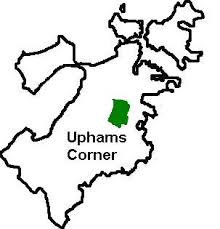
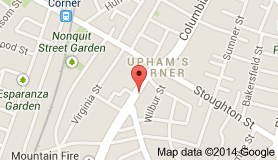
Image ^ the heart and soul of the 5th Suffolk District : Uphams Corner, where Dudley and Stoughton Streets meet Columbia Road  —- —- —-

It’s sad that the 5th Suffolk State Representative District should draw attention only because of the ouster of Carlos Henriquez. Uphams Corner, Bowdoin-Geneva, Meeting House Hill, Cherry Valley, Jones Hill, and Stanwood Street-Lawrence Avenue need a strong voice, an elite voice; none needs disgrace and expulsion. Million dollar homes do exist in the “5th,” on Jones Hill in particular; but most of the District’s neighborhoods are only now emerging — some not yet — from decades of blight, poverty, and urban violence. The 13th District, which borders the 5th to the East, is about to elect a new Representative who from Day one will have big clout on Beacon Hill. The 2nd District, Charlestown and Chelsea, seems ready to do the same.

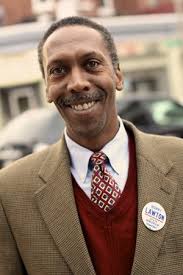
Will voters of the 5th follow suit ? Will they even have the opportunity ? So far four candidates have made the decision. Evandro C. Carvalho, a local activist — we used to call them “citizen” — moved first. Then Jenny Johnson, who lives hard by Ronan Park on Meeting House Hill. Karen Charles-Peterson, of WGBH, has joined them. Today, even as I write, Barry Lawton has entered the list. (Lawton ran in 2010, losing to Carlos Henriquez.) Of the four, only Charles-Peterson was already known to me (and I knew her before I joined WGBH’s correspondent team). Even she is known chiefly to citizens; the general voting public, not so much.

Three of the four reside in Ward 15. John Barros, who ran for Mayor and wowed many with his articulation and knowledge, lives in the Uphams Corner heart of the District. He would have been exactly the All-Star voice the District’s all too overlooked voters need; but no sooner had his possible candidacy become general talk than Mayor Walsh claimed him to be Boston’s Chief of economic Development. As such, Barros will earn more than twice as much as a State Representative; and Barros may well need the money. Same could be said for just about every voter of the 5th District. Image ^ first in, and maybe the man : Evandro C. Carvalho

Image distinguished and active : Karen Charles-Peterson

1 Barry Lawton

^ almost won  the Democratic Primary 4 years ago : Barry Lawton is running again

Somehow the current 5th District contenders fall short of what this District needs. I may be wrong to think so; not one have I met in person as of yet. All may well merit prominence, respect, votes. But this District needs more than supposition.

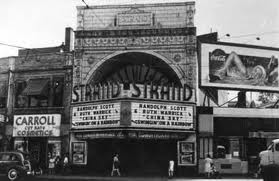
Charles-Peterson, by her connection to WGBH, and married to Kevin Peterson, one of Boston’s most visible leaders on civil rights and Black community issues, might claim the “more” that the 5th needs. But for me, the heart and soul of the 5th is Uphams Corner, whence, decades ago, then state Representative Jim Hart oversaw recovery of the Strand theater — once vacant and derelict — and the creation of Jones Hill, as a neighborhood and a community. (Disclosure : I worked in Hart’s Columbia Road office as a go-fer.) Not since Hart has Uphams Corner been home to an elected State House voice. It needs be again. Uphams Corner is the crossroads of Cape Verdean Dorchester, old Irish Dorchester, Black community Dorchester. Uphams Corner is home to banks, insurance offices, funeral homes, restaurants, traffic. (My goodness yes, traffic.) To each side of Uphams Corner sit gorgeous Victorian homes — take a look at Chamblet Street some day, upper Hartford Street, or Virginia Street, Wendover Street, Cushing Avenue.) The people who own these homes toady are not poor or unmortgage-able, as all area home-owners were, back in the day. The people of Uphams Corner can fund much innovation and many centers of activity. At the Bird Street Community Center they already do.

1 Strand Theater No Uphams Corner person has yet stepped up, and, chatting with my old Jim Hart office mate Linda Webster (who now runs Pacific insurance), she could think of no local thinking of the race. I hope she’s wrong. Really, really I am hoping to see an Uphams Corner candidate step forward and claim the 5th Suffolk District with a new Boston vision of diversity, innovation, reform, and attention — of the right kind. Let the light of tomorrow shine — now !


UPDATE 02.19.14 8 PM : at an important community meeting, at the Strand theater jn Uphams Corner, not one of the four announced candidates in the upcoming Special election appeared. Not one.

—- Mike Freedberg / Here and Sphere Image

#MAGOV14 : THINGS GET NASTY FOR JULIETTE KAYYEM

Image

^ the charm offensive has its limits : Juliette Kayyem meets caucus push back

—- —- —-

Not even two days had passed after Democratic governor hopeful Steve Grossman accused rival Martha Coakley of being vague in her commitment to civil liberties than, this morning, I found my twitter feed filled with attacks upon a third Democratic contestant : Juliette Kayyem. One tweet said “Charming Kayyem favors ‘assassination as an instrument of intelligence and law enforcement.” Another, from the same twitter source, said “Charming Kayyem leading panel to legalize Torture ‘we were a room full of people who think it works’.” A third tweet from said source — “Bostonnish” — said : “If Kayyem hadn’t led effort to concoct legal cover for Bush -Era torture use, she wouldn’t be a charming accomplice to torture.”

“Bostonnish” sent me two more tweets of a similar nature. These were sent to me, evidently, as a response to my own tweet “if @Juliettekayyem had an agenda aspecific as her personal charm is masterful, she’d charm Spkr DeLeo — & win the election.” I am , of course, flattered to find that my tweets merit attack by an opponent of the candidate I happen to mention. Yet that’s not all there is to this story. Kayyem did work for the Deprtment of Homeland Security and has surely known that in the heat of this Governor battle she’d be challenged thereon. Big time : because the Homeland Security issue isn’t only about Kayyem. Edward Snowden’s revelations have made it clear that the war on terror has curtailed Americans’ privacy rights much, much more than we either knew or need to accept. The issue has also divided the Democratic Party. Had Snowden’s revelations been made of a Republican presidency, every Democrat would be ringing the tocsin. But no: the revelations were made of the Obama administration, and only on the very Left has there arisen any support for Snowden. Most Democrats find him a traitor.

This split matters for Kayyem especially, because the impact of her candidacy has been strongest among Democrats who consider themselves progressives — exactly the Democratic constituency among which the Snowden revelations have aroused the greatest anger. Now comes an attacker who connects Kayyem not to the Snowden revelations per se but to the Bush administration, no less, and to that part of the Bush government in which “enhanced interrogation” was defined, justified, and decked out in legal lipstick. Much of the Snowden revelations involved NSA measures begun in that Bush administration — though Obama expanded them. It would be hard to think of any political connection less appealing to Democratic progressives than to the Bush ’43 war on terror. For Kayyem, far more than for Coakley or Grossman — who so likely have no such connections — the attack made by “Botonnish” poses threat. And as I have 640 twitter followers right now, almost all of them political, “Bostonnish”‘s attacks will be seen by many.

Is there any truth to them, and, if so, how much truth ? I have read the two newspaper articles linked in the Bostonnish tweets. They do connect Kayyem to Homeland Security discussions on interrogation techniques — discussions in which she participated as part of a Harvard Law School professor’s symposium whose participants sought agreement on what interrogation techniques were permissible and to write their conclusions as a policy paper.

To the average voter, what I’ve just written may seem splitting hairs. Kayyem was involved in torture discussions, helped define “acceptable limits.” Nuff said. And to most voters, her participation therein as a policy advisor ruffles no consciences. unfortunately, the voters whose support Kayyem is seeking — and needs — may not take such a casual attitude of the matter. Though many Democratic progressives are the first to condemn Snowden as a traitor, and to accuse Bush’s Vice President, Dick Cheney — whose brief it was to secure policy approvals on interrogation techniques — of war crimes, other progressives dub Snowden a hero. There’s scant escape for Kayyem here. The Democrats who think Snowden a traitor hate Dick Cheney just as much as do the Democrats who think Snowden a hero; and Kayyem helped write policy papers for matters ultimately answerable to Cheney and Bush. The New York times article, from 2005, appended to one of my “Bostonniosh” tweets documents it.

What does Kayyem do about this ? If I were her advisors I’d tell her to discuss the matter thoroughly. She served the Obama administration as well as Bush’s — as did Bob Gates and others. She can say that she put “country first” — and if the man for whom that was a campaign theme — John McCain — is a case study in why our nation should oppose “torture lite” always, Kayyem did not make policy. She advised possible policy makers. And all of this happened many years ago.

photo (1)

^ beauty talks : Juliette Kayyem with Worcester St Reps Mahoney and O’Day

Also on her case is a report, in the Globe, that Kayyem missed voting in two elections during the time she was living in Washington. There’s some disagreement as to whether she registered to vote there or not. She says she did; the DC elections board has no record of it.

Myself, I find this matter small potatoes. so what if she missed two elections or if she did or did not register to vote in Washington while living there ? She is running for Governor, not “super voter.’ yet the small potatoes does highlight the bigger potato of her consultancy participation in the “torture bureaucracy.”

It is not my job to make excuses for Kayyem or to devise responses for her to difficult challenges. She has opted to play big league ball, and cannot complain if an opposing pitcher plunks her with a curve ball. Her response, however, will matter a lot in how Democratic progressives, as sensitive as any activists to heavy handed war measures, take Kayyem’s interrogation policy years to heart. Who knows ? Maybe they’ll shrug it off. Charm does have its way even with issues obsessives, and charm Kayyem has more than plenty of. But the average voter probably won’t shrug so readily — if Kayyem gets her name onto the average voter’s Governior ballot. This flap doesn’t make that task any easier for her.

—- Mike Freedberg / Here and Sphere

LIFE IN A HEATHER SUIT … FROM THE (FEBRUARY) FACEBOOK DIARY OF HEATHER CORNELL

Image

February 1, 2014 ….
And the tech gods heard my prayer, and granted my request. Ecstatic does not cover it. — feeling Like March feels forever away.

February 4, 2014 ….
Heart shaped cookie dough donuts?? Omgggg …..#MuffinMangeniusness — feeling hungry.

February 5, 2014 ….
Can someone please post about all this snow? I don’t think anyone knows about it yet. Is it obvious I didn’t get to the liquor store? — feeling stuck inside without happy juice.

February 5, 2014 ….
-Gym
-Grab food, beer, and other liquor ( defeating the purpose if the gym)
-Feel so guilty about undoing my gym time that I consume ALL the items listed.
– Drunken EVERYTHING after that point. Hmmm works for me. — feeling Like snow makes me want to drink and cook stuff.

February 5, 2014 ….

Bed. … The next few days should be full of inanity, lots to do tomorrow… night yall.
….
February 7, 2014 ….

She’s so crazy ha ha ha love her — feeling Like there are no bad days when your daughter is this awesome

February 8, 2014 ….

Procrastinating packing I am not impressed With moving my crap AGAIN when I Said I wanted to live here till I buy my Own house I guess what I meant was”I HATE MOVING Stuff Specially MY stuff.HEY LANDLORD JK So by all means please take that as ( sell the house in a year -force tenants out) ….- NOW to figure out where I want need/am going to move to …… GAH — feeling Like UHAUL and I should have (It’s Complicated) as our relationship statuses ooomph.

February 9, 2014 ….

I think Lauryn Estrella and I should go to BASS WAVE as She-Ra & Catra just cuz…. pros vs. Cons
CON: HeMan reminds me of a low budget Arnold Schwarzenegger cartoon, and gladiator sandals on men — JUST WRONG
PRO: But he totally had a tiger.
PRO: Catra had her own badass feline chauffer.
PRO: Castle of Gray Skull.. nuff said #randomcoffeethought — feeling Like I want to be a “superhero” for a few hours.

February 9, 2014 ….

The moment you realize that you’re realizing a moment. And then laughing as you realize your epiphany is only about the fact that if I’m typing an emoticon, I simultaneously unknowingly mimic the lil yellow head… BUT… On my actual face……. Hmmmm I dislike this discovery that is all! — feeling my fave shape shift to match the one at the start of this sentence.

February 10, 2014 ….

One of my fave tech-sexy DJ/producers is coming just in time for mine and Angel’s Bdays…. This guy is serious, and I’m more than excited.

February 11, 2014 ….

I’m really starting to despise these late night rendezvous with bakery items. Grrr, don’t mind gaining weight I just wish I would think ahead and bake earlier because baking after 10 pm once the pm mads kick in is frickin tricky shit. JS. — feeling pre-apologetic to the fire Department for what may or nay not transpire in my kitchen. @_@.

February 12, 2014 …

Smiles put on your face by the most unexpected people….Good stuff…. Sweet dreams yall xo — feeling Grateful and Sleepy, GOODnight..

February 14, 2014 ….
Blah Blah blah single, Blah Blah oooh presents, screw love, I’m in love, I hate love, Valentines day blahhhhhhhhhhhhhhhhh and stuff. STAAAAAHHHHHP IT, HAS EVERYONE GONE INSANE? THE IMPORTANT THING HERE IS THIS: tomorrow all chocolate is 50% off…Get with it people #priorities #hypedupdayforsuckers #realloveslikethisallyear #IsitMindControltimeyet

February 15, 2014 ….

To all my good friends that TODAY has been so hard on, for so many reasons…. Please Please do me the favor of knowing theses things.
A) YOU ARE BEAUTIFUL, YOU ARE GOOD ENOUGH, YOU DO, yes DO DESERVE all your hearts desires, just make sure what you desire is worth all your attention, love, and heart.
B) Stop lowering your standards, and let him rise to meet yours.
C) The one that;s meant to love you only adds to your life, never deliberately or repeatedly makes conscious decisions to take from your life, put you down, hurt you, or cause you to feel less than you are.
MY TRUE FEW, are BEAUTIFUL, STRONG, SMART, AMAZING woman,STOP SETTLING My friends deserve the dreams they carry in their heart — and the return of the love, compassion, and so much more they put out. KNOW THESE THINGS AS TRUE, Because they are. I love you, “you don’t have to chase someone who wants to stay. – TS” <3xo

February 15, 2014 ….

2 thoughts
1)We need a back up after-hours– we can call it “The Crisis Center”, lord knows it feels like a damn crisis when .: says stay home lol.
2) We need a liquor delivery service, that should also keep several traveling chefs and masseuses on staff.
k that is all

— Heather Cornell / for Here and Sphere

PROGRESS, ACTUALLY : THE MICHAEL DUNN TRIAL

Image

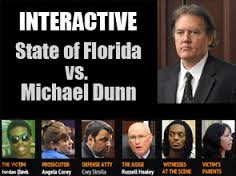
At least, unlike in the Zimmerman case, the shooter in the case of State of Florida v. Michael Dunn didn’t get acquitted. On all but one count of the indictment, the trial jury found him guilty. As the New York times reported, “guilty of three counts of second-degree attempted murder for getting out of his car and firing several times at the Dodge Durango sport utility vehicle in which Jordan Davis, 17, was killed. Three other teenagers, the subjects of the attempted murder charges, were in the car but were not struck. Mr. Dunn continued to fire at the vehicle even as it pulled away. On the attempted murder convictions, he could be sentenced to 60 years in prison.”

Naturally, Dunn claimed self-defense. It’s what you do in Florida after you’ve killed somebody. In Florida all you have to do is show that you were in fear of your life — a judgment entirely subjective, unprovable — and bang ! No problemo, you are free to kill again.

Admittedly I have overstated. Your belief that you are afraid for your life must be reasonable in the circumstances. That’s not much to go on, but once there’s a law giving armed people the right to fight back, not under a duty to retreat — which was for hundreds of years the good sense of our common law — it’s some comfort to know that a shooter has to pass at least the “reasonable belief” test.

Dunn failed even this.

He pulls up next to the car with the teens in it, starts an argument with them — perfect strangers to him; who would do that ? — about the loudness of their music; then, when one of the teens objects to being “told what to do,” he takes a loaded gun out of his car’s glove compartment and shoots. He says he saw a weapon. Oh really ? At night, through his driver’s side window and the other car window ? No weapon was found by the police. Not very surprising.

The trial was “racially charged.” How could it NOT be ? Dunn is white, the kids in the car Black. Many a middle aged white man, alone, finding a car full of black teens next to him, is afraid; but his usual response is to say nothing — as people on a late night subway train often do when Black teens get aboard. But Dunn had a loaded gun in his car. He was not afraid. He was ready for battle, and when he was talked back to, battle he gave.

That was why he had a loaded gun in his car. “Fuck with me and it’ll be the last fuck you’ll ever do.’ that — or something like it — was surely his mindset. He then ordered a pizza , went back to his home and poured a drink ? Of course he did.

That’s pretty harsh of me to write, but can you think of anything less harsh to say about a man who closes an argument that he had no need to start by shooting the person who argues back at him ?

Comparisons to the Zimmerman case have been put and will continue to be put. The two cases do not compare, except for the mindset. In Zimmerman, the person he targeted, Trayvon Martin, actually fought back, physically, and seems to have beaten Zimmerman up — at which point Zimmerman probably WAS in reasonable fear of his life. That he had no business initiating the chain of events that led to his being beaten up, the jury was correct to find, did not deny to him a self-defense argument that would have applied even in a “duty to retreat” jurisdiction. In a “duty to retreat” jurisdiction, a person may, if no retreat is possible — as it wasn’t for Zimmerman, on the ground being beaten — use reasonable force to defend himself. My own position in Zimmerman is that, having initiated the chain of events that led to the shooting, he cannot escape culpability by claiming self-defense when the chain of events turned against him. But the Florida jury’s verdict was not outrageous.

This Dunn case is nothing like Zimmerman. Dunn initiated the chain of events and at all points was the aggressor; he was never in any danger at all — certainly not in any danger when he shot ten times at the car driving away. He was angry, so angry that he “lost it,” as one infamous Massachusetts murderer said as to why he shot a woman at a Route 24 rest stop at 2 AM some years ago.

The Florida jury correctly found Dunn guilty on all counts except first degree murder.
The jury seems to have had doubts what occurred while the Dunn car and that of the teens was parked. that a shot was then fired was proved, but first degree murder requires a plan, formed prior to the event, to kill someone. Clearly in the Dunn case there was no such. what i do not understand is why he wasn’t found guilty of manslaughter. if you shoot a gun at someone, and that person dies, the criminal nature of the act of shooting requires , in Massachusetts, at least a manslaughter verdict.

All that being said, I do see progress in the Dunn case verdict. a Florida jury has found that no self-defense argument will lie, even under a right-to-fire law, unless the shooter’s belief that he is in danger is warranted; and that it is not and will not, henceforth, be reasonable for a white man to be in fear merely because he finds himself parking next to a car with black teenagers in it. Or, that he can be in fear, but he must keep that fear to himself and not act it out.

Can there be any doubt that many Caucasian people feel such a fear in the presence of black teenagers ? The President himself, in a speech not too long ago, recalled times in his life when he could hear car doors locking when he walked up the street. this entirely racial fear is a huge reason why the Michael Dunns of America buy guns, load them, keep loaded guns on or near their person. This racial fear is why gun and ammo manufacturers make huge profits; it’s why there are a reported 310,000,000 guns in private hands (as opposed to 4,000,000 in the military). This racial fear is why the gun and ammo makers pay the NRA to bully legislators in every state they target.

Racial fear stoking the gun industry sits at the core of today’s right wing. Not every right wing person is a racist, but racial fear is the message, the anti-social, armed vigilante mindset that gives right wing venom its venomous edge. It’s what those who talk loudest about “the 2nd amendment” really mean. Thus I find it progress in a Florida jury putting at least some limit to how much armed racial venom they will tolerate.

Sentencing now awaits. Dunn faces a substantial prison term : Image

—- Mike Freedberg / Here and Sphere

#MAGOV : RESTRUCTURING THE MASSACHUSETTS DCF

Image

^ Commissioner Olga Roche : not to blame for DCF budget cuts and out of date agency practices

—- —- —

The six major candidates seeking to be our State’s next Governor sure didn’t plan to have the department of families and Children (DCF) as a huge campaign issue, but that’s what it now is. The facts emerging from the DCF’s failed oversight of 5-year old Jeremiah Oliver cry out. Oliver’s social worker missed several mandated visits to his home but put “visit made’ into her case log; and her supervisor confirmed that the visits were made. When Oliver disappeared –months later, he has yet to be found — the failure and cover up left the DCF’s higher-ups nowhere to hide.

Yet are the DCF top guns to blame ? How was the agency;s head, Olga Roche, to know that a social worker and supervisor in the Fitchburg DCF office had falsified logs and failed their jobs ? Roche can’t personally micro-manage every employee in every DCF office. At some point we have to grasp that this DCF failure is structural and to propose serious reform. Nor can we blame Governor Patrick much. His plate has been heaped with major spending fights in transportation and education and with monitoring the contentious casino licensing process as it works through the gaming Commission. Line Departments like DCF and Public welfare, governed by State Law chapter 119, require oversight by the Governor’s secretary of administration and finance; and to my knowledge, no one has suggested that Glen Shor has misfired his oversight of the DCF. Nonetheless, one notes that in his job description as posted on his page at http://www.mass.gov, Shor doesn’t list DCF in his itemization of key responsibilities:

“Glen Shor serves as Secretary of the Executive Office for Administration and Finance. He is responsible for managing state finances, including preparation of the governor’s budget recommendation, development of a state capital budget, managing budgetary activities across state government, and developing long-term fiscal policy. He also oversees the state agencies that provide core administrative services in the Commonwealth, including the collection of state taxes, the administration of IT services and the management of human resources in state government.

“Prior to his appointment as Secretary in January of 2013, Glen Shor served as Executive Director of the Massachusetts Health Insurance Connector Authority. While at the Connector, Shor oversaw the programs, policies, operations and staff of the Commonwealth’s official public health insurance Exchange – a cornerstone of the state’s historic health care reform law of 2006 and the model for health insurance Exchanges nationwide under the landmark federal Patient Protection and Affordable Care Act.”

No one can doubt that collection of taxes and administration of information technology are crucial state governance tasks; or that management of “human resources” — state employees — is a non-stop matter that can make stinky headlines if a day of monitoring goes missing. Still…

…here we are, with a scandal and anecdotal talk of many other missed visits by social workers and slack oversight by DCF managers, and the blame machine is already whipping up pies to the face of DCF’s higher-ups. I find the furor misdirected.

Image

^ DCF failures will surely be discussed at a social workers’ conference at Boston College on February 24th that has Charlie Baker as its featured speaker. (See UPDATE below)

Has anyone bothered to notice that, since 2009, the DC budget has fallen by 100 million dollars ? this, during years when our State’s population of homeless and of families in need has increased mightily.

If we want to make events like the Jeremiah Oliver failures less common, we need to restore the 100 million dollars cut from the DC budget — the Governor’s $ 9.2 million budget increase hardly matters ! The DCF needs to monitor social worker visits not in log books but via the internet; to install check-in software in social workers’ cell phones, so that managers know where they are during work hours; to give DCF managers software and smart phones, fully applicationed, so that case loads can be managed, on an ongoing basis, in real time. We need to reset DCF process so that Olga Roche — or whoever succeeds her as DCF commissioner — has on her schedule an in-person meeting at each DCF area office on a revolving basis, with Roche on the road, like a Circuit Judge making rounds, managing the entire DCF not from an office in a Boston State administration building but from an iPad in a state car serving as her mobile headquarters.

Political campaigns operate that way in this year 2014. Why not State governance ?

It’s more important that Roche have a state car and a driver than that she have a large office in a state building. It’s more effective that she hold monitoring sessions — including questions and answers and monitoring reviews — at each local DCF office than that she await reports coming to her from the managers of those offices. After all, social workers have to visit the children whose cases are theirs to oversee. Why shouldn’t Roche, or her successor, do likewise ? DCF is an agency that operates by visits. This should be its strategy top to bottom, bottom to top.

It will be interesting to hear and read the DCF reform plans that each of the major Governor candidates presents to the voters. If they do present one.

Meanwhile, Commissioner Roche is reportedly slated to receive a $ 10,500.00 pay raise.

—- Mike Freedberg / Here and Sphere

UPDATE 02/17/14 10.30 AM : Charlie Baker, the likely Republican nominee for Governor, has called for Olga Roche’s resignation. Many — but not all — GOP legislators have also made this call. To me it seems a bit premature and quite misdirected; but perhaps Baker will explain.

PICKING MARTY WALSH’S SUCCESSOR : DAN HUNT’S THE MAN TO BEAT

Image

^ the man to beat : Dan Hunt

—- —- —-

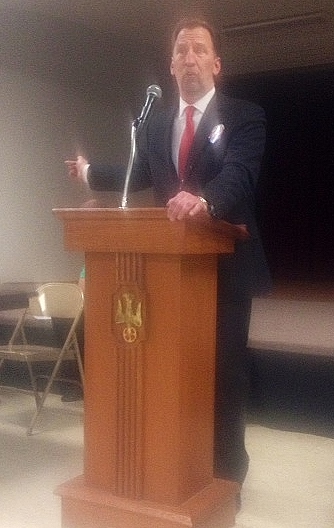
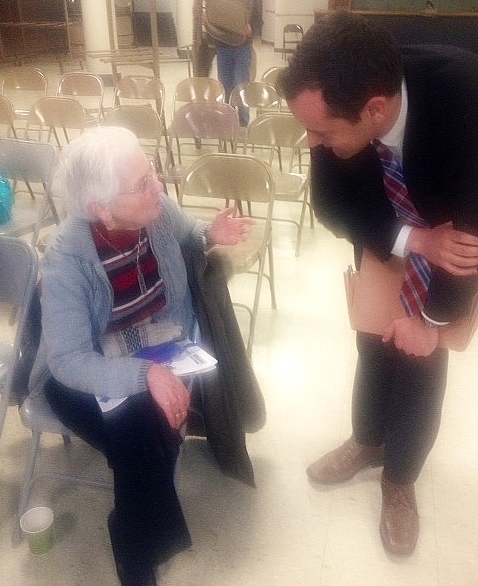
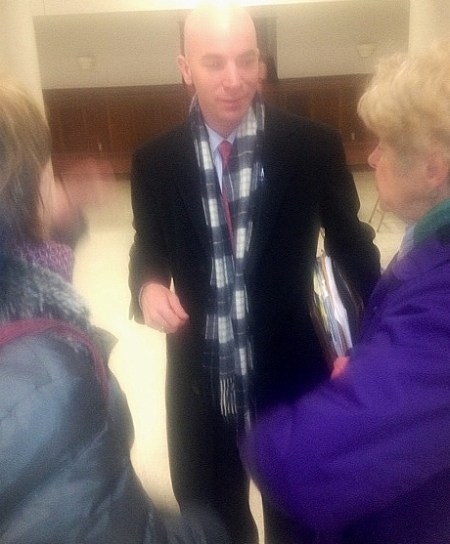
Five Democrats seek nomination to become the next State Representative from the Dorchester-based District that Marty Walsh gave up to take office as Boston mayor. Dan Hunt, John O’Toole, Liam Curran, Paul “PJ” McCann, and Gene Gorman have been campaigning for weeks now — Hunt, longer than that — in the coldest winter we’ve seen in decades, in the snow and often in the dark. They’re “knocking doors,” as they put it; “standing out” — sign-holding — at major intersections with as many supporters as can take single-digit temperatures; doing “meet and greets” at local pubs; raising funds at what Dan Hunt calls a “friend-raiser”; and “getting on the phones” to reach the District’s “super voters” — those who always vote, including in the District’s one Quincy precinct, assuming they know there’s an election going on.

Last night the race got even more serious, as all five men spoke and answered questions at the Cedar Grove Civic Association’s candidate Forum. Cedar Grove — the part of Neponset that borders Quincy — isn’t just another Dorchester neighborhood; in last year’s Mayor election, almost 75 % of the area’s voters actually voted, by far the highest percentage in all Boston. No surprise, then, that about 70 people showed up to listen, or that State Representative Dan Cullinane, from the District across Granite Street, was in the room, as was State Senator Linda Dorcena-Forry.

For candidates at the very local level, even in a varsity political neighborhood — and Dorchester is super varsity, a candidate Forum presents a challenge. You must be ready to speak well, in a voice confidently loud, to give opening and closing remarks not read from notes, and to talk with appreciable knowledge about the major issues. So it was at Cedar Grove.

Gene Gorman, a professor at Emerson college, spoke eloquently and to the point on almost every question asked.

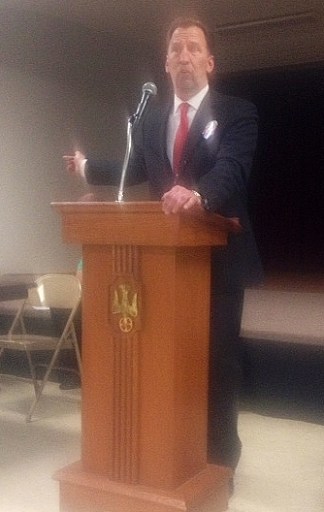
Dan Hunt, generally considered the likeliest to win, spoke with steady confidence about his readiness and with skilled nuance about issues not cookie-cutter simple. Proudly he listed four union endorsements, including the big one : Service Employees International Local 1199, whose work for Marty Walsh is thought by many to have made the difference in last year’s Mayor election,

Image

Liam Curran ^ looked and sounded the eager, even passionate young attorney that he is, in the City of Boston law department. He has the support of Mayor Walsh’s brother and mother — and has made sure everyone knows it — and over and over he cited Marty Walsh’s priorities as the agenda he would adhere to. Like Walsh, Curran was a Labor Union member –Laborers’ local 223. This too he made known.

John O’Toole, himself a past president of the Cedar Grove Civic Association, spoke strongly about neighborhood issues and gave a shout out, by name, to many in the room with whom he has worked with on various neighborhood concerns over the past 20 years. O’Toole, too, has labor support, more Locals than have endorsed Hunt, but at the Forum he named none.

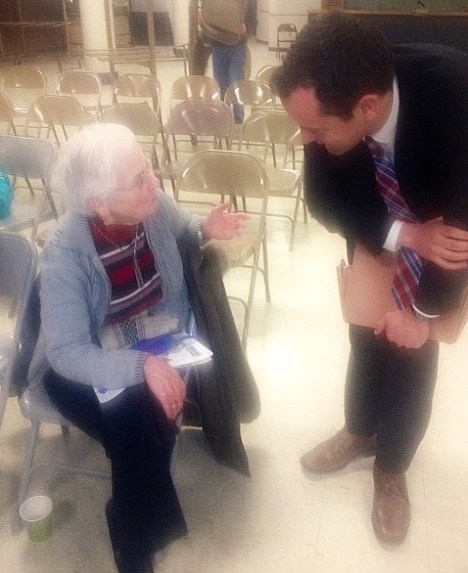
“PJ” McCann — speaking in a voice soft and conversational, hard to hear easily in the long, large meeting room — stressed his experience drafting legislation, collaboratively with many agencies, and his work at the City of Boston’s Public Health Commission.

It has been frustrating for me to pin down any of the five to specifics of major issues facing Massachusetts : transportation funding; education reform and funding; curbing urban violence. Last night, Cedar Grove’s President Sean Weir had no better luck. Granted that the first two issues are complex and coated in controversy, and that the third issue isn’t really a matter of legislation; it would still have been nice to hear what the five will work for by way of funding, and where that funding will come from. You can be sure that the word ‘taxes’ graced no one’s lips all night long.

All five men support raising the minimum wage, and those who addressed the matter of unemployment insurance give-backs all said that it was irrelevant to raising the wage. But Speaker Robert DeLeo, who controls all legislation because he appoints all House committee members, says that the two are indeed connected and that minimum wage legislation must connect them ; and no one, at the Forum, or in conversations with me, has faced the fact. We are left to assume that each of the five, if elected, will make the District’s opinion heard — and then vote the Speaker’s way.

That said, the true importance of this election lies not in legislative specifics but in the loudness and confidence of the voice that will be the 13th Suffolk’s going forward. Can any of these men be a next Marty Walsh, a major voice in labor — or other — issues, a sought-after endorsement in city and state elections, even a potential Mayor ? Because this, not positions on the issues, is the standard for the District’s voters. They are accustomed to having their representative be a center of influence and attention, and they vote in large numbers seeking it. Everybody I speak to expects 4,000 to 6,000 votes to be cast on March 4th Primary day.

The only question is, what KIND of center of attention do these voters want ? Only two of the five men seem to recognize this question as the race’s big decider : Liam Curran and Dan Hunt. Curran has lost no opportunity to pronounce himself the most Marty Walsh of the candidates; and having the mayor’s brother and Mom in his corner gives his pronunciamento some truth. He has pushed the point perhaps too far. Mayor Walsh early on announced himself staying completely out of the race : Curran’s message, has, say some, forced the mayor to embrace Dan Hunt, who is said to be his preferred choice anyway. A day after Curran made major publicity of a photograph taken of him with Walsh’s brother and mother, Mayor Walsh insisted, at a Labor breakfast, on having his picture taken with Hunt, a man very different.

Hunt doesn’t look like Marty, doesn’t sound like him, has a personal history all his own. He grew up in a political household — his Dad Jim Hunt held administrative positions in Boston City governance for decades. As he said at the Forum, he was “sign holding even as a six year old” and “a lifetime, so far, of political and state House service, as staff to two committees.” Not many election hopefuls in today’s America would tout long staff service in government. But a hopeful who understands that Dorchester voters want exactly that makes it a major closing remark.

At Cedar Grove, Hunt sounded confident, commanding, with no equal among the five on that score; and when he cited that Senator Dorcena Forry has endorsed him, it seemed a knockout punch. Had she really done so ? I asked him that question after the Forum, and, yes, he told me, she has in fact endorsed him. That’s quite a step for her to take in a five way local primary. But it makes sense, because of all the five, Hunt alone spoke like a voice of clout who can back up his claim.
Image

John O’Toole ^ stressed his long history of neighborhood activism, and commands maybe the largest Labor contingent ; all good ; but Labor is split in this race, and neighborhood activist isn’t the office being elected. Liam Curran emphasized how Marty Walsh he is ; but the voters want a voice unique as Walsh, not his duplicate. Gene Gorman has all the issues command that anyone could ask ; but a policy wonk can be the Representative’s issues person. Then there’s PJ McCann : respected, articulate, Harvard graduate, experienced in legislation, with a public heath issues priority vital to city life today, McCann seems more City Councillor than State Representative, a voice among collegial voices, not an advocate going to a place where more are strangers or opponents than allies.
Image

^ likeable, smart, and gentle : “PJ” McCann at the Cedar Grove Forum

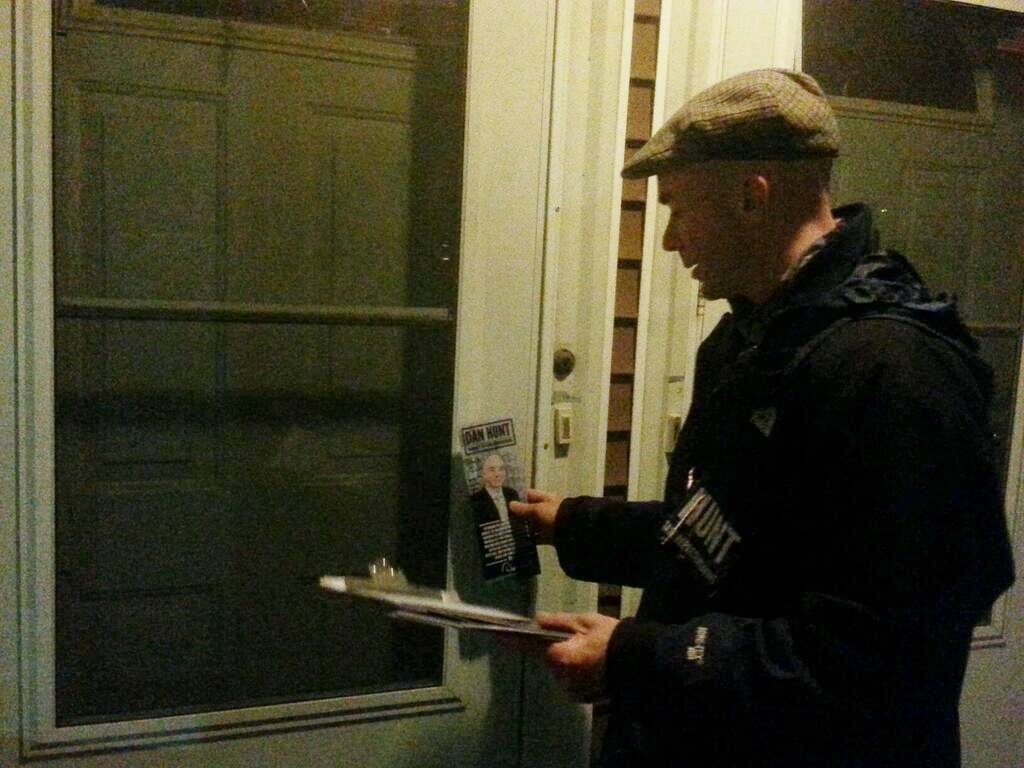
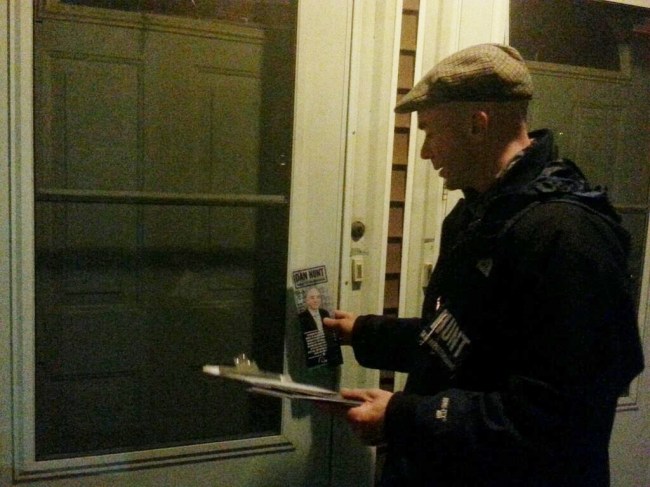
Hunt started first, raised $ 59,365 before the special election was called, and — so he said to me — “has personally knocked on the door of every super voter in the district.” 4,000 doors in two months time, I asked ? “Yes,” he said. And : “I’ve attended every civic association meeting at least twice,. No neighborhood association is too small, I visit them all.”
Image

^ door-knocking at night in a winter campaign ; Dan Hunt with voter list in hand

Yes, the race continues. Yes, John O’Toole, especially, is working to catch up. Yet the race looks Hunt’s to lose. Basic work every waking hour, no mistakes, much money, the largest social media presence, strong support from most of the District’s leaders — including Bill Walczak, who ran for Mayor and got 136 votes in his crucial, Savin Hill precinct even with Walsh on the ballot; City Clerk Maureen Feeney, who was Dorchester’s City Councillor; and Supreme Court Clerk Maura Doyle — and a resume that fits the image. Little wonder that this election is looking like a Dan Hunt victory on March 4th

— Mike Freedberg / for Here and Sphere

Image

^ “freezin’ for a reason,” says John O’Toole, door knocking in savin Hill.

ANNALS OF THE ECONOMY : FATAL CONSEQUENCES OF THE HOUSE PRICE BOOM

Image

^ house prices zooming upward, and debt, of course. Worse if you look back to 1970.

—- —- —-

Back in the early-1970s, the typical house price in Greater Boston ranged from $ 20,000 to $ 40,000. Rents in Boston, for a two-bedroom apartment, ranged from about $ 125 to $ 300 month. Since that time, rents have increased ten-fold, house prices 12 to 16-fold. At the same time, median family income has gone up about four-fold.

In the above numbers lurks huge, vast consequences for our economy, most of it irreversible, much of it enormously damaging. You want to talk income inequality ? It begins with the enormous, unprecedented boom in house prices, a boom which as i see it, is the most significant event in my entire adult lifetime, at least since the mid-1960s civil rights revolution and, ultimately, maybe more significant even than that.

The boom in house prices affected not just Boston. the entire East Coast felt it big time, the West Coast too, and Chicago. No part of America entirely escaped, and only bankrupted cities like Detroit and Camden, New Jersey, have shaken off the boom entirely. And even these places live with the consequences nationally of the huge house price boom.

The rise in house prices from 20,000-40,000 to 250,000-600,000 did not happen because people’s cash on hand suddenly increaesed ten to twelve-fold,. It happened because mortgage debt increased vastly and then some. Before, mortgages were small loans given by neighborhood savings banks to local people and kept by those banks till paid off. Borrowers earned their incomne and paid off those small, 10,000 to 20,000 loans over a 20-year period : paid them off, and never again borrowed money on the security of tueir homes. The national custom was to buy a home, borrow a small amount, pay it off, and live the rest of one’s life free and clear.

Yes, the very very rich lived in their $ 250,000 to $ 500,000 mansions, mostly bought for cash. They were a rare breed. Their home purchases hardly quaked the nation’s economy.

But that was then. In 1970 a system was established whereby banks were encouraged to sell their house mortgages as negotiable instruments, like bonds: the Federal government would guarantee these mortgages for whoever bought them. The idea seemed good at the time : the banks that first gave mortgages would get paid and with that money would be free to lend again.

From Wikipedia’s “Housing Bubble” page comes the following excerpt. Read it. It tells the story in numbers and events —

  • 1970 Federal Home Loan Mortgage Corporation (Freddie Mac) is chartered by an act of Congress, as a GSE, to buy mortgages on the secondary market, pool them, and sell them as mortgage-backed securities to investors on the open market. The average cost of a new home in 1970 is $26,600 [2] ($140,582 in 2007 dollars). From 1960 to 1970, inflation rose from 1.4% to 6.5% (a 5.1% increase), while the consumer price index (CPI) rose from about 85 points in 1960 to about 120 points in 1970, but the median price of a house nearly doubled from $16,500 in 1960 to $26,600 in 1970.
  • 1974Equal Credit Opportunity Act imposes heavy sanctions for financial institutions found guilty of discrimination on the basis of race, color, religion, national origin, sex, marital status, or age.
  • 1977Community Reinvestment Act passed to encourage banks and savings and loan associations to offer credit to minority groups on lower incomes or owning small businesses 12 U.S.C. § 2901 et seq.).[3][4] Beforehand, the companies had been engaging in a practice known as redlining.
  • July, 1978: Section 121 allowed for a $100,000 one-time exclusion in capital gain for sellers 55 years or older at the time of sale.[5]
  • 1980: The Depository Institutions Deregulation and Monetary Control Act of 1980 granted all thrifts, including savings and loan associations, the power to make consumer and commercial loans and to issue transaction accounts, but with little regulatory oversight of competing banks; also exempted federally chartered savings banks, installment plan sellers and chartered loan companies from state usury limits.[6] The cost of a new home in 1980 is $76,400 [7] ($189,918 in 2007 dollars).

The housing market began to move faster and faster, and as it sped up, so prices began to rise. And we all know how that turned out. Less obvious the underlying consequence : mortgage debt increased enormously, to the point where, today, many trillions of dollars of house-secured debts distort the entire economy.

When one talks about inc ome inquality, pone shoiuld aslo think of the huge creditor interests that crowd the Us economy. Back in 1970, when house debt was 12 to 15 times smaller than it is now, the creditor interest loomed far less large — and paid far less income to bankers and other credit administrators. Today the enormous money pools that ultimately deliver the cash that gets paud out in mortgates generate nine-figure salaries and bonuses to managers of those money pools; and the money itself, instwsd of funding capital investments in production and service, spins its wheels in the markets in which mortgage dbets are boiught and sold. A great dea;l more such money sits parked in money-market accounts awaiting revival of the housing market ; because even hard-pressed home owners are a surer — and vastly more diversified — investment bet than risky enterprises, credit swaps, or excahnge-prate arbitrage. The more individual debtors a monmey pool can hook, the stronger its income stream — and the longer : becaue 30 year and 40 year mortgages commit a debtor way beyond the term of most business infestment.

There is no way to escape the enormous inequality that today exists between creditor money and debtor indebtedness. Today’s debtors live mostly from paycheck to paycheck and do not have any prospect of paying off their indebtedness. And it is not on;py house debt. The amount of studebnt loan debt keeps on rising, and as it — unlike house debt =– cannot be discharged in a bankrupytcy, it rebders its dbetors indentured srvants to the stiudent loan grantors. And were do you suppose the money comes from to pay college administratiors seven-figure salaries, or to fund the cutting edge education that businesses now dmand of their new hires ? Thus the economy of today takies its shape : assets intolerably overpriced, consumers burdened to the limit by those intolerable overprices.

But it all began with the house price boom. And how will it end, other than by destroying the entire credit economy ? it won’t. Bankrupting today’s creditor class would wipe out every part of the American economy beyond survival and subsistence.

We can raise the minimum wage, and we can cut interest rates on student debt. But we cannot make houses or education vastly cheaper without crippling the incomes of those who work in education and housing. We can loosen the low-pay strangle, relieve some debt, and bring on the innovation economy; and we should. None of it, however, resolves the fundamental imbalance, the economic unsustainability of the house price bulk boom, the immovability of credit.

—- Mike Freedberg / Here and Sphere