#16TH SUFFOLK DISTRCT : WE INTERVIEW TODD TAYLOR

Image

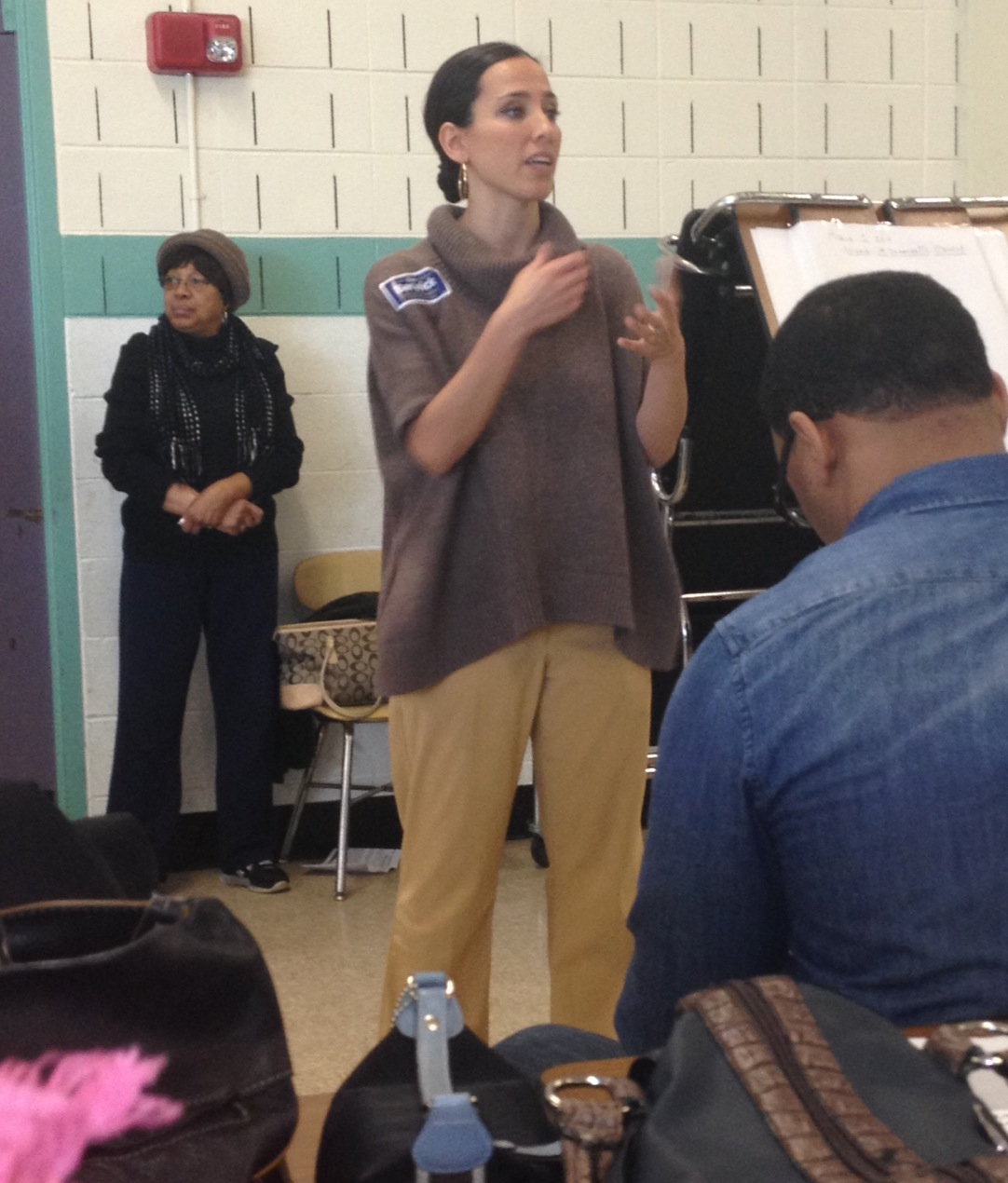
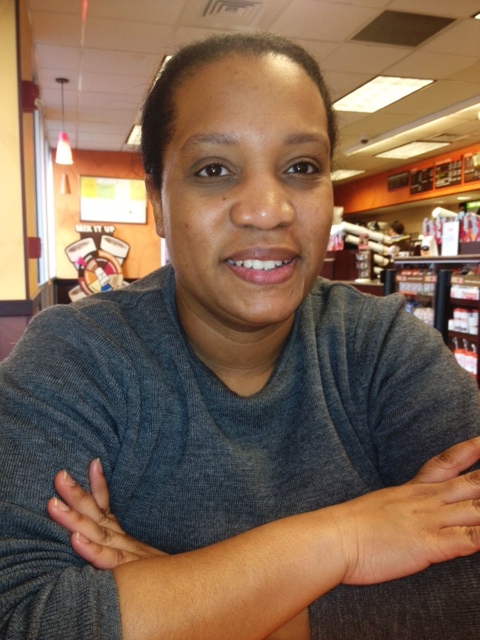
On March 4th the Democratic Primary voters of the 16th Suffolk State Representative District chose Revere’s Roselee Vincent to be their nominee. Observers commenting on her primary victory seem to assume that it’s election. It isn’t. On April 1st, Vincent faces Chelsea businessman Todd Taylor, the Republican candidate.

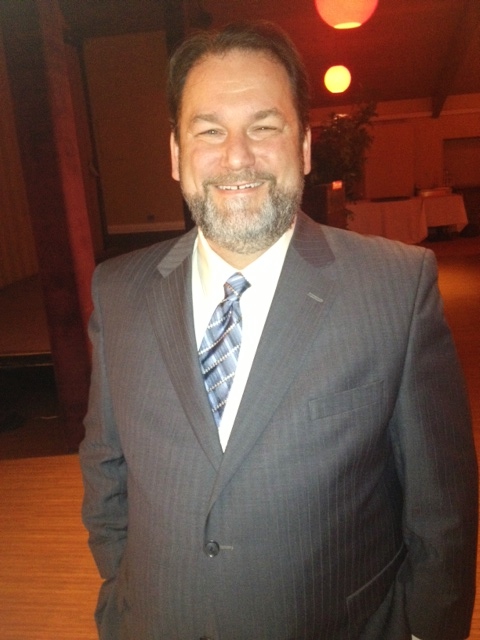
Taylor — who grew up in Arizona and has lived in Chelsea since 2000, and owns a staffing company at which he started many years ago as a waiter, working his way up — hopes to disprove the common perception of a Vincent victory. “We’ve been door knocking for two months now,” he told me at the Kow Loon restaurant in Saugus last night. “Lots of doors.”

“Have you door-knocked all the super voter doors,” I ask him ?

“By election day we will have done so, yes.” Taylor smiles a confident smile, a full shoulder smile.

Taylor’s literature spells out the same old “policies that spur job creation…reducing burdensome regulations” mantra that I see from every GOP legislative candidate these days; but when questioned on the issues, he sounds like an actual candidate.

“We’ve gotta get people working again,” he says. And concentrate on quality education for our kids. We have to lift the charter cap.”

I remind him that teachers unions an d public school advocates oppose lifting the cap, that they’re concerned about losing funding from their budgets, that they feel that charter schools are trying to replace them. Taylor rejects these arguments.

“Charter schools are a supplement, not a replacement,” he says passionately. As for the argument that charter schools don’t serve special education kids of English language learners (so called “ELL”‘s), he says, “Look. My kids attend the East Boston Br0oks school. it serves the ELL community well and special education kids too. Example : we have two Ethopian adopted kids at the school who have made made fantastic progress acquiring English. Brooks does the job !”

Is this a State wide issue, I ask Taylor, or is there a need in his Chelsea – Revere – Saugus district ? He concedes “not so much here as in the state’s underserved communities.” He gives Chelsea city manager Jay Ash “great credit turning Chelsea schools around. But state wide we need to anticipate problems, not play catch up. Charter schools force other schools to improve. It’s that simple.”

Taylor talks of arguments between “conservatives and liberals”; so I felt a need to ask him : for Governor, does he support Charlie Baker or Mark Fisher ? “I’m a Char;lie Baker supporter,” he says — firmly. “Charlie Baker is what we need.”

But Baker is running quite a progressive campaign, I remind Taylor — noticing, too, that Paul Craney of Mass Fiscal Alliance (MFA) is in the room, and that MFA opposes the minimum wage raise that Baker strongly supports.

Says Taylor t0 me, “by ‘conservative,’ I mean smaller and more effective government. Effective, efficient.”

Fair enough. So I ask Taylor another question that often outs GOP conservatives : “your district is filled with immigrants of all statuses. Moroccans, Brazilians, Hispanics. What do you feel about that and them ?”

Taylor’s answer surprises me. “Diversity is us’ he says. “My business employs 1000 people of all cultures, languages. Our nation is waves of immigration. We need to welcome people here. Both parties are responsible for the immigration problem, it’s not the immigrants’ fault.”

Taylor says that he’s “not a professional politician” and decries the system of people staying in politics all their lives; but his answers to my questions sound properly political to me. Thus I ask him, “OK, you sound like you hear your district’s voice” — he smiles that shoulder smile — “so tell me ; how are you, a Chelsea guy, going to beat Roselee Vincent, who was chief of staff to State Representative Kathi Reinstein (whose resignation occasioned this vacancy) and who has the entire Revere political establishment behind her ?”

“That’s exactly the problem,” says Taylor. “If we keep electing the same people, we’ll keep getting the same results. I have plenty of Revere support. You’ll see.”

I’m looking at Taylor’s staff — young and think-tank conservative, quite off to the side of a Massachusetts electorate, eighty percent of which supports raising the minimum wage and few of whom (including most GOP voters) want anything to do with the Party platform that Taylor’s campaign staffer just voted for.

There is disconnect between what he tells me and what the make-up of his support group suggests.

Taylor can’t miss the look of skepticism on my face. “I am going to surprise you,’ he grins. “I’m going to surprise a lot of people on April 1st.”

I believe that he means to do just that.

—- Mike Freedberg / Here and Sphere

BOSTON SCHOOLS, PART 2 : SEEKING A COMPREHENSIVE EDUCATION POLICY

Image

^ we first suggested it, now others are joining us : John McDonough as Boston’s new school superintendent

—- —- —-

Note : what you are about to read is my re-write of a column that I posted to Here and Sphere a few days ago. This is why I’m doing it:

1. In the days since I first wrote, the Boston Globe published a full page editorial addressing the complexity of school reforms now taking shape as state legislation; and Globe columnist Larry Harmon added his opinion that current Boston interim superintendent John McDonough should be given the permanent position. (Two months ago, I posted the same opinion. I was glad to see others taking up my suggestion.)

2.The Globe editorial arose in response to a strong push by public schools advocates that the state’s current limit on charter school numbers not be lifted. As I wrote in my original article,

“It pains me to read news recently that the chief reason why Massachusetts got busy creating charter schools was that 250,000,000 Federal dollars were at stake. I had thought that the creation of charters — schools privately run but publicly funded — was a matter of policy, not purchase. But now we read that bills in the legislature to expand the number of charter schools allowed is stalling, not because the policy has changed but because the Federal dollars aren’t there any more.”

Charter schools cannot be seen as replacing standard public schools. They were never intended as such and aren’t used as such now. Teachers unions and their allies want to push the notion of replacement because they somehow feel that education reform threatens their jobs. Their fears have some basis. In many states there’s been much legislation cutting back on public employees’ bargaining rights; and some corporate interests, backed by right-wing think tanks, want to use charter schools as a wedge to eliminate public, taxpayer-funded schools for all children. That agenda has some presence even in Massachusetts. Some business interests want aggressively to control the education of their potential future employees and are determined to get as complete control of the process, from K to graduation, as they can — and if not, to move operations elsewhere.

My inclination is to let such corporations go, if they choose to. Massachusetts’s pre eminence in higher education, research, and finance assure that we will always have plenty of enterprises who want to stay here, move here, set up shop here and continue here. This, of course, assumes that our education of all children continues to be the most rigorous and productive in the nation. To that end, I suggest the following :

1. charter schools should be encouraged and their numbers increased on a one or two at a time basis, by application to the State Commissioner of Education. Funding for charters must come from a combination of user fees, local aid, and taxes assessed state-wide for the purpose.

2. charter schools should continue to act as experimental places, innovating curriculum, teaching method, teacher hires, and student homework loads. Charters might even in some cases be boarding schools ; why not ? Charters cannot become routinized in anything or they cease to be what they were created to do.

3. budgets for standard public schools must be separately assured and planned without thought of what alternative schools may cost. Rivalry for funds cannot be permitted.

4. what succeeds at charter schools — the so called “best practices” test — should be applied in standard schools where and as feasible, and no standard school should see its routines written in stone, ever. Teachers in unions cannot be permitted to cling to work rules — including short school days — that impede pedagogic improvement. In this regard, John McDonough has shown the way by imposing a teacher recycling system that has already produced pedagogic improvement in the schools where he has put it in place.

5. School principals must be free to choose every member of their teaching staff — and of their school support staff too.

6. all schools must educate for two goals : employment and citizenship. The reasonable needs of reasonable employers must be met; the employers want capable hires, and the children want solid employment. Citizenship is the role that children will play as adults in community; to that end, schools must teach cooperative study and play, emotional education, social knowledge — including the role and risks in sex play — and basic civics including the role and process of democratic politics and government.

7. Testing is the only way that we can find out where education is or isn’t succeeding and how well or not. Tests should be semi-annual — no more frequent. Tests should include essay writing, reading comprehension, spelling, mastery of concepts both spacial and philosophical; mathematics and computation; American and world history; basic sciences; civics; and social knowledge including manners and dealing with emotions.

8. Tests need not be given as rigidly as the MCAS. Each school course can conduct its own course tests which can then be fed into the MCAS process and added into the total test score.

9. Teachers should be given the lead role in compiling such tests.

10. As many schools as possible — charter schools too — should be dual-language. Students whose first language is not English need it, and students whose first language IS English need to learn another language. It’s vital if we are to encourage cultural diversity and free American kids from cultural isolation.

So there you have it. What follows is the rest of my original article, slightly revised:

Mayor Walsh has added 39.6 million dollars to this year’s Boston Public Schools budget. Most of it will go to fund teachers’ pay raises. There will some millions left over. So, what does the phrase “taking resources away” mean now ? Probably just that the increased dollars won’t be coming from Washington. they’ll be raised locally. And that means that some other local aid funded need will have to make do with less.

Such is indeed the talk. In the Governor election going on in Massachusetts right now, all the talk is of local aid : increasing it; releasing 100 million dollars of it already collected but held; increasing it again. Candidates running for the State legislature or Senate all talk of local aid needs. The Department of Children & Families is in crisis; State transportation repairs and service upgrades cry out for attention; drivers’ licences for undocumented immigrants must be done. All these get mentioned ; but the big talk is, local aid, local aid, more local aid. You hear it whether the speaker is a Democrat or a Republican. Local aid now; the other matters can wait.

Charter schools were meant to be an alternative to standard public schools, not simply public schools with a new name. If charter schools do not do the job they were intended to do — significantly improve student achievement — they shouldn’t be funded, whether the Federal money is at hand or not. And if charter schools do do what they were intended as, they should be funded regardless of money from Washington.

Legislation to increase the number of charters being stalled now, those that do exist are kind of on their own, to prove their worth. Charter parents will have to speak out; to organize. Democrats for Education Reform, the local chapter of a nationwide group deployed to power up the alternative schools constituency, will have to get talking.

Did I mention curricula ? The battle is raging already to reject the national education establishment’s “common core” as being too difficult for children to master and too narrowly tested. Myself, having read through the “common core proposal, I find it a trope, a slice of common sense. Every society with schools at all has had a common core curriculum; it’s how that society prepares its children for the jobs it offers. this was as true of Rome in year 300 A.D. as of western Europe in year 1090 A.D. and 1500 A.D., and it was the basis of the New England School Law of 1634. Children must learn a common basic curriculum in order to do the jobs that will need to hire them; and to be good citizens. Is it difficult ? It always was. Life, too, is difficult. Tears come to one’s eyes as well as joy.

Kids can manage. They really can.

As for teacher pay and standard school budgets, in Boston these look paid for — this year. After that, a lot depends on who the next School Superintendent will be. The “search committee” is already on it, but for me, the best choice is John McDonough, the current “interim superintendent,’ who says he doesn’t want to be considered for the permanent job : but whom all sides respect and who can therefore best steer “standard Boston public schools,” troubled schools as well, into the next phase, alongside charters as they are and all manner of experimental school set-ups that innovators may successfully propose — as they surely will, and should.

—- Mike Freedberg / Here and Sphere

5TH SUFFOLK SPECIAL ELECTION : KAREN CHARLES PETERSON INTERVIEW

Image

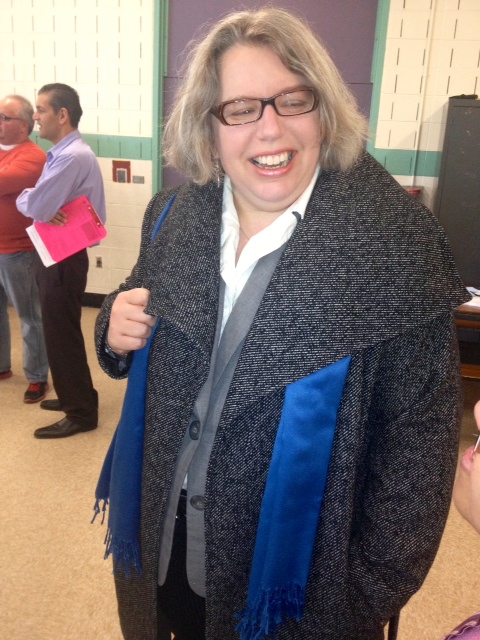
Yesterday I had an hour long talk with the candidate said by some to be the favorite in this four-person race: Karen Charles-Peterson of Percival Street on Meeting house Hill. She is said to be the favorite because she has the support of Charlotte Golar-Richie, who finished a strong third in last year’s Mayor race and who herself served as 5th Suffolk state Representative. Charles-Peterson does in fact have Golar-Richie’s endorsement and that of Nelson Merced, who also once represented the District.

n this District the Golar-Richie imprimatur is not the whole story, not even the largest part. In that same Mayor race last year, John barros drew many more votes than Golar-Richie within the 5th’s precincts; and Barros — or his key supporters — are said to be lining up for one of Charles-Peterson’s opponents. Nor are her other two rivals lacking in strong activist support. Thus nothing is assured, and Charles-Peterson has to earn a victory, not simply cruise to it.

Charles-Peterson has a long resume of government service in Boston. She worked in the late City Councillor Bruce Bolling’s office and helped direct his campaign for Mayor back then. She then joined state government, topping off a long career as Chief of staff at three agencies, including the Registry of Motor Vehicles and Executive Office of Transportation.

(Disclosure : Charles-Peterson was for a time a television producer at WGBH, the station to whose news branch I report on a correspondent basis.)

Those who care about “roots in the District” should note that Charles-Peterson grew up in the district and has long family ties thereto. Her grandparents lived on Olney Street in the Bowdoin-Geneva neighborhood, her parents on Ridgewood Street, near Fields Corner. They later moved back to olney Street, where Charles-Peterson was born. She remembers the ward 15 hearty of the 5th all the way back to the 1960s, when Dom Pasiucco was its state house voice — she notes seeing a framed picture of him in the foyer of an assisted living facility she campaigned at.

Service to 5th District voters who remember Pasciucco being a given, Charles-Peterson moves on to tell me her three priorities as a legislator, and why :

“First is public safety,’ she says. “Too many of our people live insecurely. Just this year we ssaw an uptick in the number of murders, and many happen right in this district. Though as a legislator i’m called on to vote on bills that affect the whole state, I intend to initiate action on guns, because they’re a problem everywhere, not just here in the 5th. We have to craft the gun laws to the needs of public safety.”

Does Charles-Peterson then support the gun control legislation up for enactment riught now ? She tells me that yes, she does.

“Second is education. i don ‘t support raising the charter cap,’ says the candidate, “but I support univeesal pre-kindergarten, yes. as for common ciore, we already have a better curriculum, why not stick with it ?”

“Third is jobs” — Charlers-Peterson says it with passion and a sigh — “voters time and again tell me, ‘Karen, I’m without a job, I would like to work, what can you do to help me ?’ Well, there’s much that I can do as a legsilator,’ says the candidate. “Part of my role is to know what prograns are out there — such as career centers — and to find out if they are working, and if they aren’t, then work to fix them. Because people who want to work should be able to get a job, even a part time job !”

I decide to mention the Massachusetts DCF to her. what of its failures and needs / isn’t this a priority ?

“Of course,” she says, ‘but it all ties in tyo me three priorities. families in crisus because of no jobs, or inadequate education, or living in unsafety — either as a crime victim or with a family membver who may be involved in dtrime — it all burdens the DCF and overtaxes its staff.”

Education, we both agree, is needed; so I show her a comment that a suburban technology executive posted on my facebook thread, abiyut having given up on Boston school graduates and relying on H i b visas for his technoliogy hires. She reads the entire cvomment and then says, “Ok, it’s ftrustrating –“

“It doesn’t make you angry ?” I ask.

“No, not angry; frustrated,” she affirms. “How do we get our kids to the point that they can compete with the H 1 B visas ? I have to reach out to executives with attitudes like his. I need to find out what brought him to this point. I need to get our (district’s) kids to his point.”

The primary comes on April 1st, twenty days from today. It isn’t much time to wake up the District’s voters, many of them disconnected from power, busy with family crises every day, working to pay survival bills. It’s especially little time given that there’s only one candidate Forum currently on offer, at the iconic First Parish Church on Meeting house Hill, Sunday March 23rd.

—- Mike Freedberg / Here and Sphere
VAUDEVILLE SHOW AT THE SUFFOLK COURT HOUSE

Image

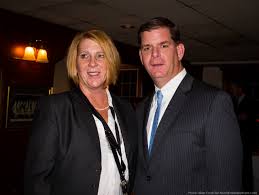
^ the Lady’s not for trashing : Patty Campatelli on the big stage — with Mayor Walsh

—- —- —-

It’s vaudeville time at the Edward W. Brooke Court house down-town, hard by TD North Garden, up the street from pugs and mugs bars, close on Haymarket Square.

Yep, vaudeville time. There’s the current Register, said to be a party animal given to fisticuffs and cuss words. She’s now on “paid leave” while certain scandalous allegations made against her are duly investigated by inquisitors official.

There’s not one but two (2) former City Council candidates — one of them who served as such, with distinction — seeking to replace her. There’s also an East Boston businessman in the running. My question to all is, “why ?”

WHY does ANYONE want to be Register of Probate ? Why is the job an elected one at all ?

The Register of Probate keeps the records of Probate Court cases : estates, guardianships, divorces, custody matters, and some restraining orders. Because estates especially are public records and must necessarily be so, the keeper of these records gets to be elected by the public. Or so goes the collective wisdom of those who enact our State’s laws. And why not elect each county’s Register of Probate ? We elect the State Auditor, for goodness sake. We elect Registers of Deeds. We elect Library commissioners.

One wonders why we don’t go ahead and elect the Boston Harbor Master, or the Commissioner of Transportation, or the Franklin Park Overseers. But the trend is moving in the opposite direction : toward appointing ministerial officials. Heck, we no longer elect even Boston’s School Committee — and for very good and sufficient reason. Our experience of the School Committee in its last decade was of a body beset by racist demagoguery, by insider politics with respect to administrative jobs, by a custodian’s union immune to reform and accused — perhaps unfairly — of acts verging on the illegal. The elected school committee spent more time politicking than managing; and the school department’s managers spent more time politicking, too. Today, the Mayor appoints Boston’s school committee. It perhaps hasn’t enough power : but it does advise, and often wisely. Those who serve on it do so as citizen activists, which is what elected school committees are supposed to do as they govern the system that prepares the entire society’s next generation.

A Register of Probate has no such vital task. The Register’s work is purely ministerial. The only connections the office have public policy are that its expenses are paid by the public, and its administration must enable those who seek Probate services to do so efficiently and well informed.

Upon these tasks are placed, in Suffolk County, a six figure salary and a six year term. a Register, once elected, is almost impossible to defeat. The work is not strenuous. Assistant registers do the grunt stuff. A name well known to the voting public, and not tainted by scandal, gives a candidate entree to that never-to-be-lost six figure income and the tasty pension that accrues to it.

Thus the vaudeville. Let’s look at the players :

Image

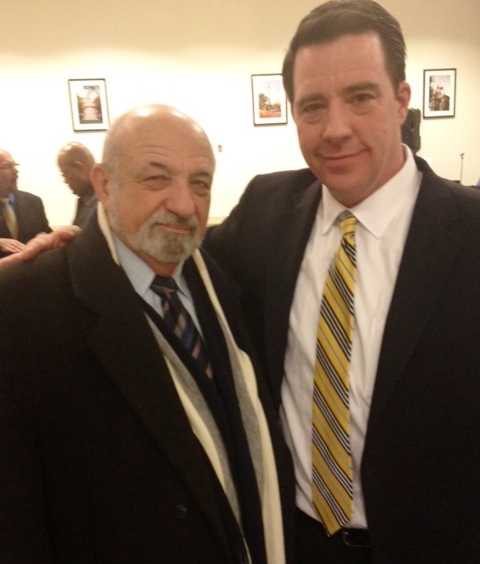
^ out of retirement : Felix D. Arroyo with newly elected Charlestown St Representative Dan Ryan

Your show time includes Felix D. Arroyo, returning from pleasant retirement in Uruguay, to the political klieg lights with a familiar beard and an act that he performed very skillfully long before he was ever a City Councillor : administrator of a bureaucracy. People forget that he served as such in the Mayor administration of Ray Flynn.

photo (43)

^ dancing and prancing : Marty Keogh is rushing to the stage now

The marquee also lights up the name Marty Keogh, long a City Hall aide and, last year, a City Council candidate at large. Keogh has an especially lively act on offer.

Every vaudeville act needs a newcomer, a kind of opening act, and in East Boston business-person John Sepulveda, this show has its man. Give him room to show his stuff and then applaud or throw rotten tomatoes, in the best vaudeville tradition.

And finally there’s Patty Campatelli, the buxom gal who won the Register’s job in 2012, when it happened to be open; and who has since then entertained many, infuriated others, and delighted me. I kind of like her act. Spunky, charismatic, buxom strong. But then she hasn’t yet punched my face or called me a vagina.

Yes, it’s show time at the Probate Comedy Hour, and not far from where once the Old Howard theater — formerly an emporium of serious theatricals — displayed strippers and dialect comics to Harvard students and those who couldn’t get enough of bare boobs, scatological wise cracks, and ethnic cartoonery. I miss the Old Howard, and so, probably, do you. Time to welcome it back.

Arroyo, Campatelli, Keogh, Sepulveda. One to be Register of Probate, the others to be — why not ? — Boston Harbor Master, Franklin Park Commissioner, Head Keeper of Licensed Bicycles. I insist.

All that’s missing, so far, is for Ted Lewis to strut on stage, cane in hand, and orate “Is everybody happy ?”

—- Mike Freedberg / Here and Sphere

BOSTON SCHOOLS : IS FUNDING EVERYTHING, SCHOOL POLICY NOTHING ?

photo (36)

^ stalling on charter schools, ostensibly because the Federal $$$ aren’t coming : St Senator Sonia Chang-Diaz

—- —- —

It pains me to read news recently that the chief reason why Massachusetts got busy creating charter schools was that 250,000,000 Federal dollars was at stake. I had thought that the creation of charters — schools privately run but publicly funded — was a matter of policy, not purchase. But now we read that bills in the legislature to expand the number of charter schools allowed is stalling, not because the policy has changed but because the Federal dollars aren’t there any more.

At the outset of President Obama’s first term, the education bureaucracy was all het up about “race to the top” and such like programs to improve student achievement. Money was gushing, and so were expectations. Now the money is heaving dry, and expectations have taken a skeptical swerve. The talk now is of “taking resources away from standard schoolS,” not of “improving achievement.”

You would think that “Taking resources away from standard schools” is teacher-speak for : the teachers’ union’s next contract won’t have a pay raise equal to raises granted the latest police or Firemen’s union contract. Right now, it doesn’t mean that. Mayor Walsh has added 39.6 million dollars to this year’s Boston Public Schools budget. Most of it will go to fund teachers’ pay raises. There will some millions left over. So, what does the phrase “taking resources away” mean now ? Probably just that the increased dollars won’t be coming from Washington. they’ll be raised locally. And that means that some other local aid funded need will have to make do with less.

Such is indeed the talk. In the Governor election going on in Massachusetts right now, all the talk is of local aid : increasing it; releasing 100 million dollars of it already collected but held; increasing it again. Candidates running for the State legislature or Senate all talk of local aid needs. The Department of Children & Families is in crisis; State transportation repairs and service upgrades cry out for attention; drivers’ licences for undocumented immigrants must be done. All these get mentioned ; but the big talk is, local aid, local aid, more local aid. You hear it whether the speaker is a Democrat or a Republican. Local aid now; the other matters can wait.

But education can’t wait. kids grow up. They graduate from grade to grade. Time delayed cannot be made good. Charter school waiting lists grow bigger, and the once ready Federal money river no longer flows into them. Thus we hear more of the same old arguments that were adduced at the outset for why charter schools shouldn’t be : they winnow their students, eliminating those with discipline problems and unwillingness to adapt; they don’t serve English language learners; they expel kids who don’t shape up academically; they impose rigid discipline.

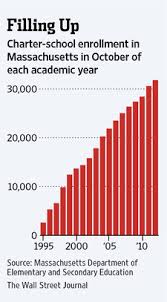
And so they do. Charter schools were meant to be an alternative to standard public schools, not simply public schools with a new name. If charter schools do not do the job they were intended to do — significantly improve student achievement — they shouldn’t be funded, whether the Federal money is at hand or not. And if charter schools do do what they were intended as, they should be funded regardless of money from Washington. Meanwhile, to look at how rapidly enrollment has climbed, it seems that charter schools have been a smashing success :

Image

Legislation to increase the number of charters being stalled now — the chief staller being Boston State senator Sonia Chang-Diaz, who serves on the senate Education Committee — those that do exist are kind of on their own, to prove their worth. Charter parents will have to speak out; to organize. Democrats for Education Reform, the local chapter of a nationwide group deployed to power up the alternative-schools constituency, will have to get talking. My own strong belief is that education in America needed badly to reshape itself enormously, to conform to the new workplace, new jobs, new technology and new communities of competitive collaboration. If schools exist to do anything, it’s to prepare students for the jobs of tomorrow (and for citizenship : but that’s a more traditional matter and doesn’t require an entire re-think). The best way to get schools shaped for that end is to try out many different shapes — school day lengths, curriculum choices, and out-of-school after-work — and see which one or ones meet the challenge. Charters, partnerships, collaborations, and, yes, standard public schools all have a seat at this particular table, and all should be set upon the task.

Did I mention curricula ? The battle is raging already to reject the national education establishment’s “common core” as being too difficult for children to master and too narrowly tested. Myself, having read through the “common core proposal, I find it a trope, a slice of common sense. Every society with schools at all has had a common core curriculum; it’s how that society prepares its children for the jobs it offers. this was as true of Rome in year 300 A.D. as of western Europe in year 1090 A.D. and 1500 A.D., and it was the basis of the New England School Law of 1634. Children must learn a common basic curriculum in order to do the jobs that will need to hire them; and to be good citizens. Is it difficult ? It always was. Life, too, is difficult. Tears come to one’s eyes as well as joy.

Kids can manage. They really can. as for testing, well : every job that a student is given as an employee is a test, believe me. So don’t complain; just do it. And please, don’t use lack of money as an excuse not to.

Time for Liam Kerr, Richard Stutman, Citizens for Public Schools, and Stand For Children to loosen up, set the past behind,and re-imagine the teaching of knowledge to children grasping at it.

As for teacher pay and standard school budgets, in Boston these look paid for — this year. After that, a lot depends on who the next School Superintendent will be. The “search committee” is already on it, but for me, the best choice is John McDonough, the current “interim superintendent,’ who says he doesn’t want to be considered for the permanent job : but whom all sides respect and who can therefore best steer “standard Boston public schools,” troubled schools as well, into the next phase, alongside charters as they are and all manner of experimental school set-ups that innovators may successfully propose — as they surely will, and should.

—- Mike Freedberg / Here and Sphere
5th SUFFOLK SPECIAL ELECTION: JEN JOHNSON INTERVIEW

Image

On Tuesday I had the opportunity to interview Jen Johnson, one of the four candidates seeking to hold the State Representative seat from which Carlos Henriquez was ousted by vote of the House.

Johnson and I met at an eatery in Uphams Corner, which for me is the central crossroads of a district that grab-bags several neighborhoods of Boston that don’t get much attention from the powers that be or from the media — including stretches of Blue Hill Avenue, the north side of Dudley Street, the Stanwood Street area along Columbia Road, and Bowdoin-Geneva. Johnson sees the district in pretty much those terms and vows that she will be a voice for a district that needs just about everything.

One thing, the district already has : diversity. This, Johnson likes. “The diversity, I find wonderful,” she says. “we have to find a way to maintain it.” First priority ? “Public safety,” she says. “So many people living in poverty. 40 percent of the district’s families.”

And how to change that, as a State Representative ? “I look to bring my   training programs and entrepreneurship,” Johnson says. “More training programs; it supports jobs. We n  a liveable wage. So many people in the 5th hold three and four jobs right now just to make ends meet. And no, no separate wage for teenagers. Many teenagers in my district are already hears of families.”

Johnson supports the minimum wage increase legislation — to $ 11.00 an hour by 2016 — that now awaits House action. She also wants it to apply to tipped workers — waiters and waitresses and such — whose minimum wage is now $ 2.63 an hour (and who often have to bring a Labor Board complaint to get paid even that.) She also supports senator Elizabeth warren’s legislation to bar employers from accessing job applicants’ credit histories and using it as an employment criterion. “we need to do something similar here on the State level,” she says.

CORI reform and sentencing reform are also high on her list of things to voice at the State House. “Too many kids in my district have a couple of years in a gang and then end up in jail and now have a CORI,’ she says. “Yes, sociopaths need to be off the street, but most kids who pass in and out of a gang aren’t that. Prison should be the last resort.”

Johnson is no stranger to prisoner issues. “rom 2002 to 2005 I helped co-ordinate a Pen New England program for prisoners. It was eye opening to see how many of these (foster home) young men ended up in prison. One young man i knew was in 55 foster homes between ages 9 and 15.”

On public school funding, Johnson supports a policy that’s been pushed for at least three decades but has never been fully implemented : school pupil spending equity. “We spend 16,000 per pupil here in Boston, but in places like Wellesley and Needham it’s 23,000. So of course their schools do better. we should be treating all children the same.”

But school funding in Massachusetts has a long, long history of total local control. So how would Johnson reach her pupil spending equity goal ? “Take the money we save by sentencing reform and use it for schools,” she says. I point out to her that the State budget can’t be flexed that simply. She admits that it’;s a difficult problem but insists that a way must be found. “Teachers tell me all the time about the money they have to pay out of their own pocket for necessary supplies like books,” says Johnson. “We just HAVE to figure out a way to get prison money over to the school system !”

Johnson grew up in Saint Tammany Parish, Louisiana, on the north bank of lake Pontchartrain. She came to Massachusetts 25 years ago and almost immediately became an activist. She worked for Mass PIRG, then Share Group. More recently she’s done sales for venerable medical book publisher John Wiley and Sons but is campaigning full time now.

Johnson supported Felix G. Arroyo in last year’s mayor election and has the support, this time, of ward 15’s Judy Meredith, a key and longtime social justice and labor issues activist who also supported Arroyo. Johnson also has a full time campaign manager and a full campaign schedule.

If elected, Johnson would like to be assigned to the Committee on business and economic Development, also Judiciary and the committee that oversees Public health and welfare. Climate change also engages her time. After all, her District, albeit hilly, is part of Boston, a city in which much of the Downtown core will be under water if predictions come true. “There is going to be tremendous dislocation,” Johnson says. “How are we going to be prepared when 25 to 30 percent of Boston will be under water ; will we make Boston like Venice ?”

Johnson is making the rounds of community meetings and plans to take part in the First Parish candidates’ Forum to be held on Sunday, March 23d. The Primary takes place just nine days later.

—- Mike Freedberg / Here and Sphere
SMART-ALECKY : JAMIE JONES @ BIJOU BOSTON 03.07.14

Feelin’ the Music : Our dance music critic’s review of Jamie Jones’s sold out club set at Bijou Boston last night.

hereandsphere's avatarHere and Sphere

Image

The first Boston DJ performance by Wales’s Jamie Jones was a smashing success for Bijou, the techno emporium at which he made the scene. The club was full, full, full, and it stayed so full right to the last note of Jones’ last track of a two hour set.

For this observer, however, Jones’s set fell short. This was a surprise. Beatport’s list of his top ten downloads feature some of the most ticklish joke-juke funk anyone has ever heard from a dance music track maker. “Road To the Studio,” “Jealousy,” “Percolator,’ and “Hungry For the Power” all squat, shrug, and grin like the vaudeville cameos they are. Not since the joke juke rap work of 1980s acts like Newcleus, Zapp, and (aptly named) Cameo has funny funk had its grinning in your face view of life this eloquently expressed. Unhappily, at Bijou, Jones’s lithe portraits of shrug, squat, and…

View original post 470 more words

SMART-ALECKY : JAMIE JONES @ BIJOU BOSTON 03.07.14

Image

The first Boston DJ performance by Wales’s Jamie Jones was a smashing success for Bijou, the techno emporium at which he made the scene. The club was full, full, full, and it stayed all full right to the last note of Jones’ last track of a two hour set.

For this observer, however, Jones’s set fell short. This was a surprise. Beatport’s list of his top ten downloads feature some of the most ticklish joke-juke funk anyone has ever heard from a dance music track maker. “Road To the Studio,” “Jealousy,” “Percolator,’ and “Hungry For the Power” all squat, shrug, and grin like the vaudeville cameos they are. Not since the joke juke rap work of 1980s acts like Newcleus, Zapp, and (aptly named) Cameo has funny funk had its grinning in your face view of life this eloquently expressed. Unhappily, at Bijou, Jones’s lithe portraits of shrug, squat, and grin gave way to hard loudness — stomp, growl, grumble and gargle — shapes all standard-issue for DJs dropping sets in Boston.

It would have been all right for Jones to play that kind of standard sound had he shown himself its master. And Jones, though still very young in a DJ world dominated by middle-aged masters, has a world-wide reputation; in 2011 he topped Resident Advisor’s reader poll of DJs. One might expect that ANY list’s Number one DJ would deliver a sound profoundly original, daringly crafted, full of message and feeling; yet Prok & Fitch, purveying a very similar sound at a Providence night club some months ago, topped every aspect of Jones’s Bijou set : daring, clarity, originality, progression.

Perhaps that’s because Prok & Fitch played what they do; whereas at Bijou, Jones clearly was playing what he figured the Boston crowd wanted to hear instead. Jones’s tracks tickle and seduce. they’re light to the touch, a peck on the cheek, a soap bubble joke. They feel as delicate as Prince in that song where he pretends to be your girlfriend. But there was nothing girl-friendly about Jones’s massive yuck-work at Bijou.

He played several of his top ten list, including its number one, “Moan and Groan,” a caricature of the now out of favor “electro” style. Here was a balloon of sound blown up almost to the bursting point. As a spoof on bad DJs, it had legs. But it was a hard act for even its maker to follow.

Jones dropped several daredevil mixes — from acappella to a big stomp, big stomp to sharp tones, wobbly voice fade ins and glitch-tone fade outs, strips of tonality — that proved his chops and had me wondering why, given his ability to leap across sonar abysses, there wasn’t more of it. What there was a lot of was gimmicky sound-shaping, much of it glaringly tacky, as if Jones were caricaturing Donald Glaude, the DJ world’s emperor of tacky.

Caricatures of tacky still sound tacky, and irony as an attitude leaves many — certainly left me — at odds with the beat and the sound. House music wants to get inside your soul; techno wants to surround you. Both genres transport the dancer — “take you on a journey,” Danny Tenaglia puts it. Jones’s smart-alecky goose waddles, however, left me at the station. As an alt-rock kind of dance music, it had a point, I guess, and Jones’s young fans seemed to get that. I still prefer Prok & Fitch.

Local house DJ Tamer Malki’s opening set featured a lush low moan taken at a sleezy 120 bpm, a set as earnest and soulful as Jones’s was voraciously comedic.

—- Deedee Freedberg / Feelin’ the Music

Image

HOW CASINO POLITICS DETERMINED THE 2ND SUFFOLK…AND MORE

  • photo (6)
  • ^ got lucky, dodged a missile : Dan Ryan
  • The 2nd Suffolk state Representative race won on Tuesday by Charlestown was the big story of the night — I said so, and I’m sticking to it. But in the politics of casino development there’s an even larger story surrounding that one.
  • As it happened, the 2nd Suffolk race was won by exactly the man who looked a winner of it from day one : Dan Ryan. Yet as strong as his campaign flexed, he dodged a missile when, on the night of Febraury 25th, Revere voted 64 to 36 in favor of the Mohegan Sun / Suffolk Downs project. Consider this :
  • 1.Ryan faced a Charlstown rival, Chris Remmes, who made opposurion to all casinos a pivot of his campaign. Remmes raised plenty of campaign ,oney early and had a power base in the Ward 2 Democratic committee, which he chairs.

    2.Charlestown voters overwhelmingly do not want the Steve Wynn casino project planned for the Everett waterfront. At a hugely attended meeting at charlestown High School they made their opposition very plain.

    3.Dan Ryan favors the Revere casino, as did his Chelsea popponent, Roy avellaneda. Ryan’s large following among Building trades and transport workiers also favor a casino — b ut preferably the Revere choice — as does a key Ryan supporter, Mayor Walsh.

    4.had the Revere casino vote been won by the “no casino” crowd, Ryan would now have been squeezed both ways. Oppose the only remaining casino option — Everett — and his building trades supporters might well have gone with Roy Avellaneda. Support the Everett casino, and Ryan risked losing votes to Chris Remmes, even the election itself.

    Opposition to the Everett casino was indeed THAT strong in most Charlestown homes. Walsh, too, who lost Charlestown badly in last year’s Mayor race, would have found himself again at odds with a community that doesn’t change allegiances easily.

    That was the prospect facing Ryan (and Walsh) as, with fingers crossed, they awaited news of how Revere had voted on the Tuesday night before the 2nd Suffolk special election day. as we all know now, it didn’t happen. Revere voted Yes, Chris Remmes’s campaign lost its reason for beimg, and Ryan (and Walsh) could joyously tout the Revere casino plan, taking away Avellaneda’s hoped-for issue, and pleasing all supporters and offending none on his way to the big victory that he got on March 4th.

    But it might easily have come crashing down.

    Nor is the casino game over in the 2nd Suffolk District.

    In September, when Ryan runs for election to a full term, the Gaming Commission will likley have issued its decision. What if it selects the Steve Wynn, Everett proposal, as seems likely given the plan’s waterfront location and superior brand name ? What position will Ryan take, now as Charlestown’s elected voice ? And then there’s the man most responsible for Ryan’s election : Congressman Mike Capuano. Will he step into the Steve Wynn casino battle and help Ryan deflect possible opposition from C town ? I’m guessing that the two men have talked much about this prospect and what to do if it comes to pass. It wouldn’t surprise me if they wee already moving the Gaming Commission to pick the Revere option. If the Commission does take that route, you can bet six Navy Yard Bistro dinners that Ryan and Capuano were forcefully on it.

    Marty Walsh, too. With Ryan’s election, Walsh got lucky, more or less. A Revere decision by the Gaming Commission would double Walsh’s luck.

    — Mike Freedberg / Here and Sphere

BLANK BUILDINGS FOR JACKSON SQUARE — BUT THEY’RE NEW !

Just now we published this article on our Roxbury Here local affiliate.

hereandsphere's avatarRoxbury Here

Image

Last night I attended a “community input” meeting sponsored by Jamaica Plain Neighborhood Development Corporation (JPNDC) to discuss, with such members of “the community’ as cared to, plans for a residential building on the now vacant 75 Amory Street parcel. The District’s City Councillor, Tito Jackosn was there, along with about 40 residents with questions tlo ask.

For those who might not be familiar, the parcel in question abuts the Orange Line on its eastward side and also the south side of Centre Street across from the Jackson Square bus station/T stop.

If you knew Jackson Square a generation ago but haven’t seen it since, you won’t recognize the intersection of Columbus Avenue and Centre street. Gone, almost all, are the weather-worn brick manufacturing floors, the smoke-blackened warehouses — abandoned hulks of an earlier age of heavy lifting. Gone, too, the Edward Hopper-ish storefronts, the taverns and cigarette stores, the…

View original post 567 more words