BOSTON MAYOR RACE : MARTY WALSH HITS A HOME RUN

Image

^ Boston’s City Hall : to be sold and razed ? Walsh says “do it !”

—- —- —-

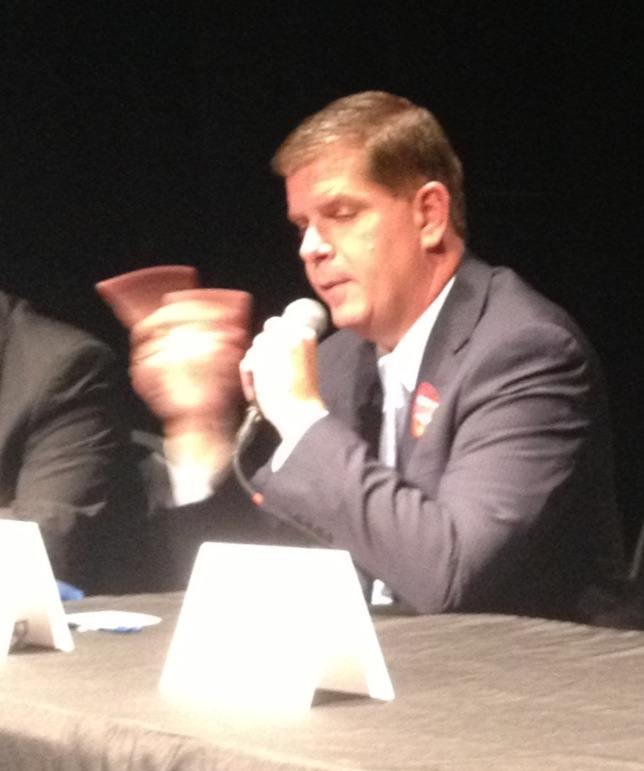
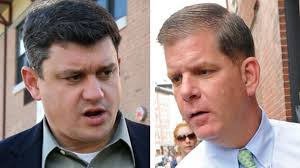
Trapped in a Labor union suit by a week of editorial hits and campaign rivals’ debate points,. Marty Walsh today proposed as significant a single initiative as any other candidate has put forth.

He would sell the current City hall — as intimidating a foreboding palace of cold, cement bureaucracy as any structure I have ever visited — for about 135 million dollars and then develop all of City Hall Plaza for around-the-clock economic growth. “This area must evolve from a 9 to 5 weekday government-dependent culture to a culture economically driven to add value 24/7,” Walsh told the Boston Globe.

Unlike previous efforts to move City hall — Mayor Menino’s plan wanted to build it in the Seaport District — Walsh’s proposal would build the new Hall in the downtown area. The building would be privately built and leased to the city for 20 to 40 years, at a fixed rent; at the end of which term the City would buy it for one dollar ($ 1.00).

Some of Walsh’s rival candidates — but not John Connolly — criticized his proposal, and Rob Consalvo raised the point at today’s Back Bay Association Forum : “how would the city function while the present City hall is bull-dozed ?” asked Consalvo, a bit snidely. Walsh stated the obvious, that City hall would not be sold and razed until the new City hall was built.

I like Walsh’s idea a lot. As he said at the Back Bay Forum, “the next area of the City’s economic growth is Government Center.” His way of getting to it is bold, but the next mayor should be — HAS to be — bold if Boston is to move forward in an ever more complex and technologically fast-paced economy. Walsh’s proposal scopes smaller than John Connolly’s “school transformation,’ but it is a firmer step than anything Connolly proposes. All of Connolly’s school transformation goals have yet to be cast into shape; nor is it easy to envision them shaping up without huge controversy, with the BTU especially. Walsh’s proposal is specific — and achievable quickly.

Image

^ Marty Walsh ; “this area must evolve from a 9-to-5 weekday government-dependent culture to a culture economically driven to add value 24/7 !”

The proposal makes clear just how significant Walsh’s “Construction Boom” candidacy is for the City’s future direction and look. Score a big one here for Marty Walsh.

—- Michael Freedberg / Here and Sphere

BOSTON MAYOR RACE : BIG BUSINESS AND DEVILISH DETAILS @ BACK BAY ASSOCIATION FORUM

Image

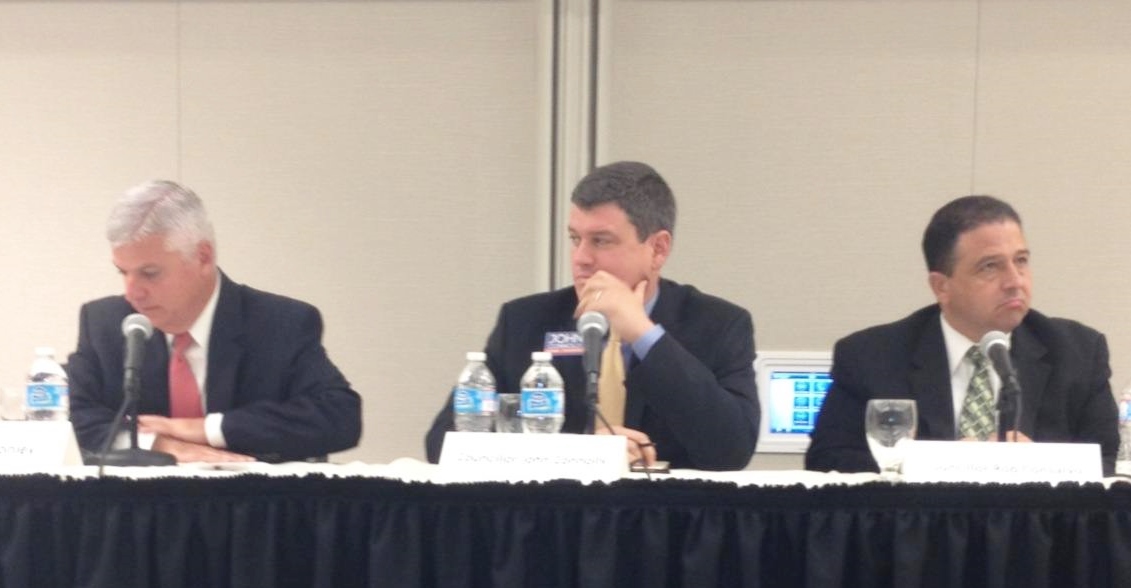
^ Dan Conley, John Connolly, Rob Consalvo at this morning’s Back Bay Association Forum

—- —- —-

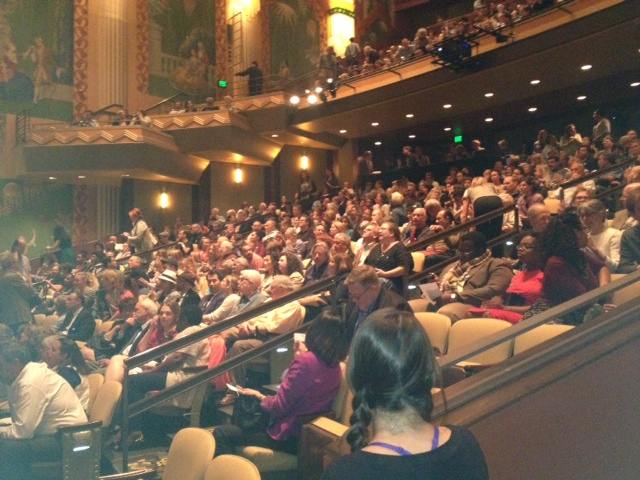
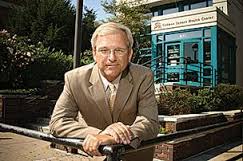
This morning the Back bay Neighborhood Association held its Mayor Forum in an appropriate setting : the conference center of Liberty Mutual Insurance Company. Big granite-walled office bureaucracies are the Back Bay’s money machine.

People fear money machines, and no neighborhood association in the City is more feared by the various business seeking to locate, or to develop real estate. Members live in some of the City’s highest income census tracts; achievement and dominance come naturally to the 200 well-dressed Forum attendees. Attentively they regarded the twelve candidates, answering questions put to them by Tom Keane and his co-host, as if they were job-interviewing — grilling — a room full of interns.

The Forum topics featured, unsurprisingly, zoning, permitting, development, the BRA, and late night closing hours — seriously complex issues all — and the banning of plastic bags.

But to the questions. Some were addressed only to some of the candidates, others to all.

To a question, to some, about what to do with the BRA, John Connolly gave the most well thought answer : “Planning should be an independent function. It’s about having real holistic planning — the process should not be for influence peddling. We need to modernize Inspectional services (ISD). (we) need honest conversations about zoning. We need to move beyond outdated zoning laws).”

The City’s permitting process has come under severe attack in most of this campaign’s Forums, for good reason. All the candidates want the process reformed, som radically. Charles Yancey cited “hostile employees’ at ISD’s office due to “inadequate training for the job.” Dan Conley promised “a bottom to top review’ and said that permitting “should be able to be done online.’ He would also “reform the zoning process.” John Barros decried the process a “illogical…unpredictable.”

Clearly ISD is in for a huge shake-up no matter who becomes the next Mayor.

To a question about “90 % of fire alarm calls not being for actual fires,” Rob Consalvo insisted that :we need more public safety, not less.” Marty Walsh, who has the Boston Firemen’s Union endorsement, admitted that the “number of fires are down” but insisted that “I don’t want to be the mayor who closes a firehouse.” Felix Arroyo said “municipal research says that we need to increase fire efficiency” — whatever that meant — and Charlotte Golar-Richie gave a similarly non-committal answer. And then it was Dan Conley’s turn. He did not waste it :

“There is overwhelming evidence that the Fire Department needs a full review and thus a Mayor who will reform the Fire department,” he said, aiming his remarks directly at Marty Walsh, whom polls show him tied with for second place in the Primary.

To which Conley added, “reform… was posed years ago when I was on the Council, but it was put on the shelf. (Stare Rep) Nick Collins has a bill in the legislature to allow fire people to respond as EMTs. it’s a crazy bill, but the firemen don’t have enough work to do, so this is a way to give them some work.”

Conley’s could have been the Forum’s big moment, but he was immediately knocked back by Charles Yancey, who said “If someone is injured within a block of a firehouse and the EMT’s can’t get there first, the Fire Department must save that life !” Mike Ross’s follow-up — “I’m the only Council member who has stood up to the Fire Department” — sounded like a shrug.

All the candidates were then asked a series of “yes or no, do you support” questions. Most of these at various Forums have been no-brainers to which all answered an easy yes or a no. Not so at this Forum. candidates had to think about whether to allow later closing hours, a “traffic congestion tax,” plastic bags, and Segway. Responses were divided.

Last came a round in which one candidate posed a question to one other, until all twelve candidates had either asked or answered. Obviously the intent was to have candidates emphasize their differences, but only two of the questions rose above the minutiae of Council votes little known to average voters.

The first useful question was Rob Consalvo’s to Marty Walsh, who has proposed razing the current City Hall and redeveloping its huge, centrally located plaza : “How will the city function while city hall is bulldozed, as you suggest ?” Walsh’s answer was as good as Conley’s on Fire Department reform : “Bulldoze is not my word,” said Walsh. “it aas the Herald’s. I want to offer City Hall Plaza to developers for proposals. It will give us 135 million dollars and 12 million a year in tax revenue. I want to reconnect Hanover steer and Quincy market…the next growth area in the City is government center !” Walsh’s answer highlighted his support by the city’s construction unions –and his being the Building Boom Candidate.

Image

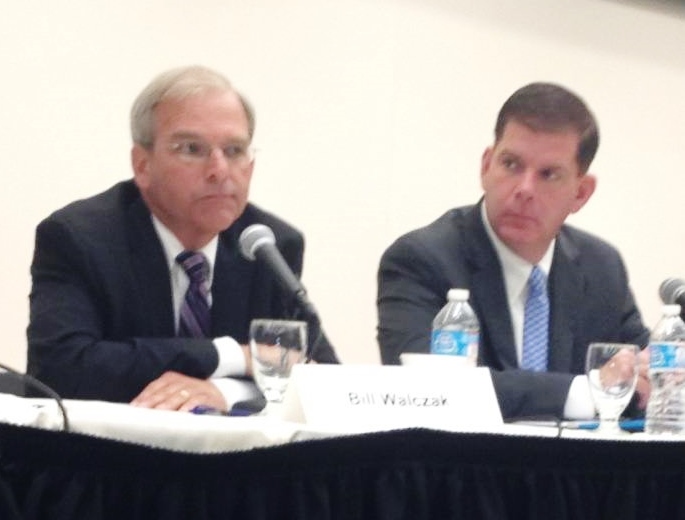
^ Bill Walczak and Marty Walsh : the moralist vs. the building boom candidate

Mike Ross then asked Bill Walczak what he would do for city development if the city had no casino — as Walczak endlessly repeats — but one were then created “seven feet from our door” (in Everett) ? This gave Walczak his opportunity to rail against casinos in general — “I don’t want casinos anywhere” — in the moralistic manner that he truly believes and which gives his candidacy something of the social-issue darkness that has bedeviled a great deal of the national political debate these past five years or so. Who is he — who is anyone ? — to tell people how or where to spend their money ?

Image

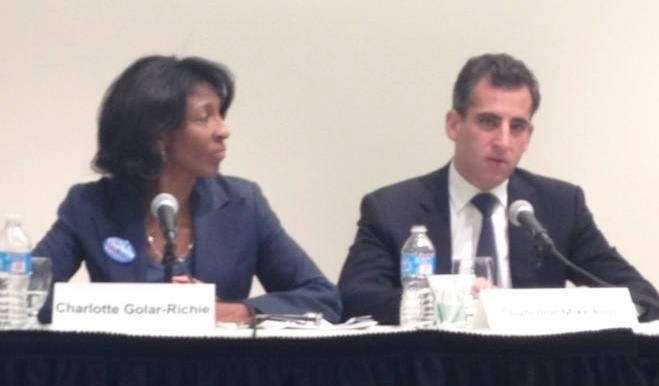
^ Charlotte Golar-Richie and Mike Ross : on Ross’s home ground ? Or maybe not ?

It was difficult to tell which candidates most impressed the association’s members. Unlike the teachers union activists at their Forum, no one cheered or clapped hands. They received the candidates’ often passionate talk as calmly as candidate David Wyatt sits on a stage — though without his facial shrug. Many of the 200 worked laptops ; were they noting points ? Recording testimony as if at a deposition ? Maybe so. And who will they vote for ? This is Mike Ross’s home ground — the Council district that he represents — yet he hardly seemed the crowd favorite — although in the Forum’s humor moments, when he laughed, so did the 200. Maybe that was it. Maybe this Forum was a kind of in-group entertainment, and Mike Ross has its 200 votes in the bank.

If i were he, I wouldn’t count on it.

—- Michael Freedberg / Here and Sphere

BOSTON MAYOR RACE : YES, THE GLOBE POLL MATTERS

Image

^ well ahead : John Connolly

—- —- —-
The University of New Hampshire finally released its poll of the Boston mayor race, and its message has locust-plagued the City’s spin doctors. Just about every candidate purports to believe that the poll is good for him — or her. If only !

It’s hard to believe that none of the twelve candidates is known by more than 68 % of the voters polled. Does that mean that the poll sample has reached well beyond the 100,000 “likely” voters who even the least bullish pundit thinks will turn out ? The poll also doesn’t say how many of its respondents came from which of the city’s 22 wards. We are left to guess what electorate was polled.

Nonetheless, the poll does not drop out of the sky. It accurately reflects, in fact, the money raising that we’ve been reporting — amounts and trends up or down in each candidate’s deposits. It also accords fairly well with what we glean from our observation of the various campaigns. We believe what the poll says. So here are the numbers for the top four :

John Connolly gets 15 % of the vote and is known by 68 % of the voters
Dan Conley gets 10 % and is known by 65 % of the voters
Marty Walsh gets 10 % and is known by 58 % of the voters
Charlotte Golar-Richie gets 10 % and is known by only 50 % of the voters.

Striking facts : (1) Though clearly less well known than Walsh or Conley, Golar-Richie polls equally with them (2) Connolly is measurably ahead of all three, well beyond the poll’s margin of error (3) Walsh has actually lost since the last UNH poll, in which he had 11 %. He has lost 10% of his vote, after a week of being slammed as a union guy — a loss well in line with the political rule that attacks can cost a candidate up to, but not likely more than, said ten percent.

Image

^ Marty Walsh : must prove on Primary day that he’s more than a union guy

Can Walsh recover and secure the second Final spot ? Of course he can. He has lots of money, is running excellent TV ads, and has a superb election day organization working hard and enthusiastically. He doesn’t need many more votes to put him close to Connolly.

Nonetheless, the poll shows that a full 25 % of its voters remain undecided. That’s a lot of undecideds only nine days before voting day. This is where Golar-Richie’s potential looks big. If she can get 10% of the vote with only 50% of voters knowing her, how hard will it be for her to get another 5 % from the 25 % who are undecided ? All she has to do is win the same percentage from them as she has won from the decided.

Image

^ Charlotte Golar-Richie : big potential to move up

Will 15% be enough to secure second spot ? It will not win the top spot. Surely John Connolly will win additional votes from that 25 % undecided. My guess is that he finishes with 21 %. As for the second spot, I will be surprised if whoever gets it wins more than 15 %. It is unlikely that a catch-up candidate will win more undecideds than a candidate who is strong AND perceived to be strong.

I will give Connolly an additional 6 %, Golar-Richie 5 %, Walsh an additional 5 % on the basis of a strong election day pull, and Conley only 4 %, because he polls only equal with Walsh although better known.

The poll shows that the other eight candidates are very much out of the running. Felix Arroyo, John Barros, and Rob Consalvo all win 6 %, Mike Ross 5 %, Bill Walczak 4 %, Charles Yancey 3 %, Charles Clemons 2 %. Arroyo is not known by 34 %, Consalvo by 50 %, Ross by 47 % ; the others poll even less well known. How likely is it that candidates so not-known will garner major vote numbers from the 25 % who remain undecided ? My experience is that the undecideds tend to vote for the most known candidates, not the less well known. Many are undecided because they don’t know any of the candidates, but just as many, likely, are undecided because they know several and like them all.

My guess for these following candidates is that Arroyo wins 7 % but not more. I am truly surprised to see in a poll that though he is better known than Walsh or Golar-Richie, he draws much less of a vote and has a higher unfavorable (21 %) than ANY of the other candidates. Ross wins 7 % — on the strength of substantial funds in his account. Barros wins 7 % (he has surged since the last poll, doubling his vote from 3 %). Consalvo wins 7 % (and maybe less; he has no money). Walczak wins 5 % (he is, after all, against casinos). Which leaves not much for the others.

My guess could be wrong and probably is wrong. But not by much, unless a major story breaks in the next six days or so. Marty Walsh is battling Charlotte Golar-Richie for the second spot on the November ballot. It’s his election day enthusiasm and reach versus her ability to win the same proportion of the undecideds a she has won of those who have chosen. And even then it looks oh so close. Maybe even a recount. It might be a very long night on Primary Day.

—- Michael Freedberg / Here and Sphere

PROFILING THE COUNCIL CANDIDATES : JEFF ROSS

Image

^ Jeff Ross ; has impressed a lot of activists already

—- —- —-

We met at-Large Council candidate Jeff Ross at Club Cafe, where a short while after our interview, he attended an affair for Marty Walsh and was introduced to the gathering.

This is what candidates for Boston’s four at-Large Council seats are doing, as often and as diversely as they can. Even as a veteran worker in Boston political campaigns, Ross must do the same, and as a practiced campaigner, he knows it. He’s also ready with detailed, though usually succinct, answers to the several questions that we ask of Council candidates. Not surprising that he has gained much good press in Boston’s media.

He currently holds office, as the Democratic State Committeeman representing the State Senate seat now held by Sonia Chang-Diaz. (All elected State Committee members are elected by State Senate District at the Presidential Primary every fourth year.) He lives in the South End part of Chang-Diaz’s district — in Ward 9, Precinct 2, for political junkies — and, as he tells us, is “the first LGBT person elected to the State Committee from this district.”

He will also, if elected an at-large Councillor, be (to the best of our knlowledge),the first LGBT person to hold that Boston office.

As he represents one of Massachusetts’s most progressive-voting Senate Districts, he too holds progressive views. But the range of campaigns that he has worked on these past seven years — Ayanna Pressley, Felix G. Arroyo, Gloria Fox, for example — has taken him to old-line politics (Fox) and business-oriented mainstream (Pressley) as well.

“I have lived in Boston for 20 years,” Ross tells me. “I grew up on the West Coast in a working class a family; my Mom worked for minimum wage; often we used an oven to heat our house.

“I was the first in my family to go to college. I was on the waiting list at U(niversity of) Penn(sylvania) but got into Northeastern. So to Boston.”

Ross’s bio answers Here and Sphere’s standard first question, “what about you uniquely qualifies you to be a City Councillor ? Thus we proceeded directly to our other usual questions.

Here and Sphere (HnS): What can you do as a Councillor to advance your concerns for the working wage that some have proposed ?

Ross : “We can propose home rule petitions and testify for them at the State House. I have testified at legislative hearings. I’m ready to do it again.”

HnS : Do you support Ayanna Pressley’s Home Rule petition (to give Boston control over its own liquor licenses) ?

Ross : “I do support it. Some neighborhoods have too many licenses, some too few. The point is to create destination neighborhoods. Many neighborhoods need supermarkets … that are within walking distance for people who go about on foot.”

HnS : Abolish the BRA or reform it ?

Ross : “reform it. Development should be neighborhood-driven. They should include affordable housing.”

HnS : Lift the charter school cap or not ?

Ross : “If we’re going to lift the cap it should be an innovation type of school, a school free of state-mandated curriculum. For the lowest-testing twenty percent of schools I support after-school programs in art, music and woodcraft. These help (a kid) to reconnect. And innovation around sports, because (these kids) need more student interaction.”

HnS : Do you favor an Elected school committee, as some are now proposing ?

Ross : “I do not support an elected school committee. The schools have improved a lot under the appointed committee

HnS : You live in the new Boston, thus we have to ask ; do you favor late night transport and a later closing hour than the current two A.M. ?

Ross : “(of course) there’s the need to extend the cloing hoyfrs in he Downtown area, Financial District, and Waterfront. The concern in other neighborhoods is the noise, though. Late night transport, yes; people who work late in the buildings need a way to get home.”

HnS : Do you agree with something Marty Walsh said, that there’s a heroin epidemic in the city ?

Ross : “There is an uptick in ‘STI’ and (as we know) Molly. And heroin (too). We need public health education in the schools, plus, (better) outreach to families. We need to have these conversations with young people. it gets back to what I said about early evaluations and early intervention as treatment and recovery. I have a family member, same age as me, who died (like that) and who needed that sort of social safety net…”

And so ended the Q and A, and both of us joined the Marty Walsh affair beginning in the next room. Jeff Ross to campaign, we to be the newsie in the room.

—- Michael Freedberg / Here and Sphere

BOSTON MAYOR RACE : CONNOLLY, WALSH, ROSS DOMINANT AT ARTS FORUM; HERALD DEBATE LESS INSTRUCTIVE. BUT ….

Image

^ so many would-be mayors, so few Will-be’s…

—- —- —

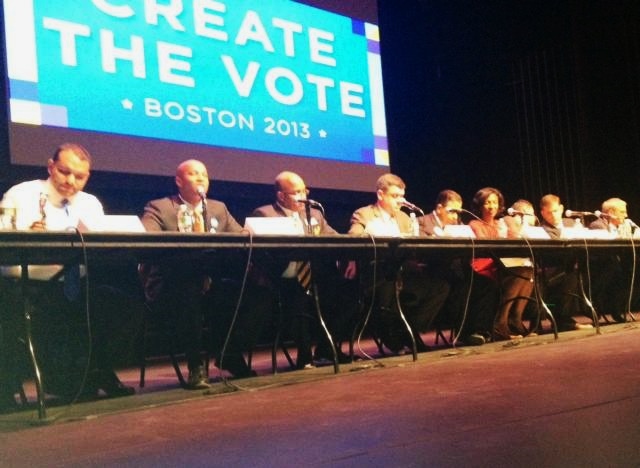
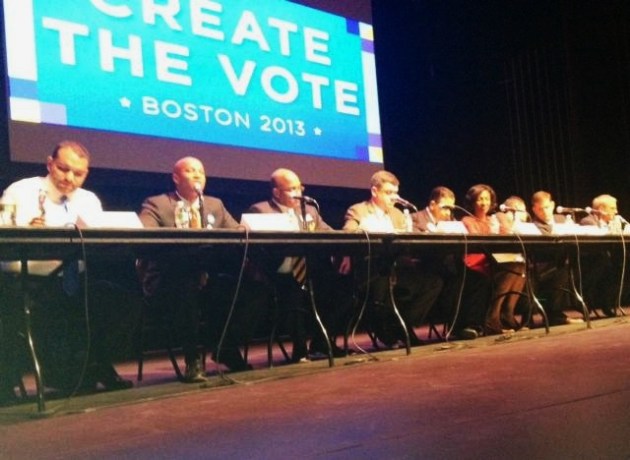
Bostonians had not one but two Mayor Forums to attend to tonight. First came Create the Vote’s Forum on Arts, Culture, and Creativity. Half an hour later came the campaign’s first televised debate, hosted by Joe Battenfield of the Boston Herald. Nine of the twelve hopefuls answered questions at Create the Vote’s Forum — Dan Conley, David Wyatt, and Charles Yancey missed out. All twelve took part in the televised debate.

Very little ground was covered in either Forum that earlier Forums had not already addressed. There were, of course, some specific questions that several candidates gave obviously ad hoc responses to. Yet none of the candidates surprised. All gave answers, to every question, well within the range of their agendas already long since worked out in admirable detail. This was as true of the Herald debate — of which we saw only part — as of the Arts Forum.
Image

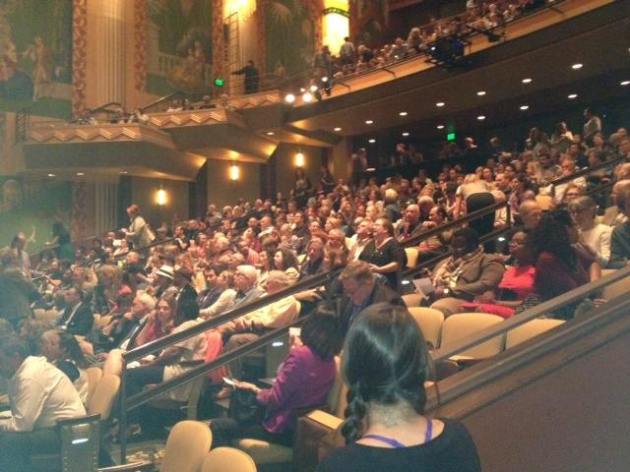
^ large audience — and fully aware of what it wanted to hear

The differences tonight were the size of the audience and the command that the various candidates demonstrated in applying their respective agendas to the specific questions. Here was surprise. Felix Arroyo’s soft-spoken, highly personal narratives did not often command the same attention in these Forum’s big-hall and aggressively moderated formats that he easily wielded in earlier, more intimate Forums. His best moment was his paean to the Jamaica plain Music Festival, which he had attended the previous day.

John Barros, too, gave less developed answers to questions than his usual. Barros has a message of change that requires time to explicate. Given little time, he resorted to quips and smiles as a kind of narrative shorthand that, probably, those seeing him for the first time missed the significance of. He also overreached noticeably when, in response to a question about arts classes in Boston schools, he said, “no kid should be allowed to graduate high school without at least one arts class.”

Surprising, too, was the Arts Forum audience’s applause for Bill Walczak, who repeated, with hardly any new elaboration, his usual mantras : he’s from Codman Square, and he’s against the casino.

Charlotte Golar-Richie had strong moments — “I will be an arts Mayor,’ she promised; “I aspired to BE an artist. I will partner with non-profits to raise arts funds, and I will establish a blueprint for the arts. It’s a social and an economic driver.” But her response to a question, “what were your two most memorable moneys in the arts,” was less inspired: “watching neighborhood kids do the Nutcracker.” Rob Consalvo’s responses sounded entirely generic — “we must assure every kid has arts classes…the budget must include cultural affairs” — except to that “memorable moments question, in which he cited his home area of Hyde Park for its Riverside Theater, perhaps Boston’s most notable community stage play company.
Image

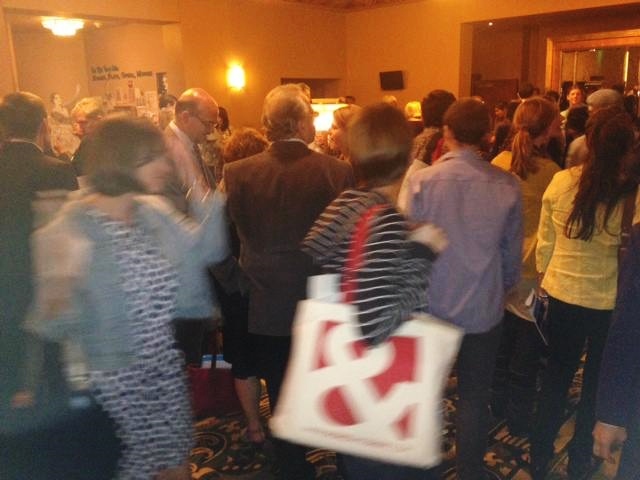
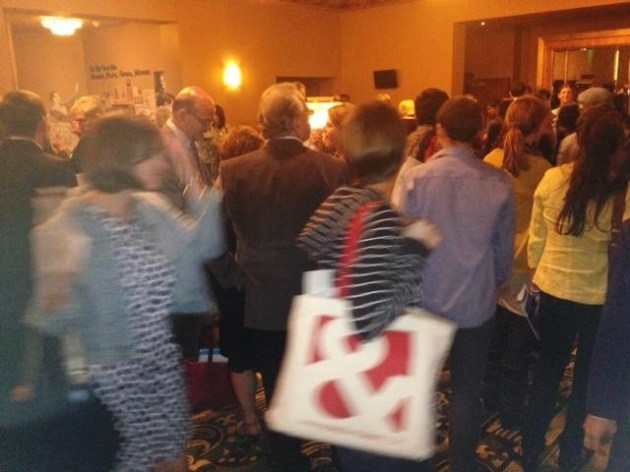
^ no food in the foyer this time, but drinks were served and much conversation was exchanged.

In both Forums, command honors went to Marty Walsh and John Connolly; Mike Ross also spoke authoritatively at the Arts Forum. All three men have made it quite clear that they have a vision of the mayor’s office broad as well as deep, detailed as well as thematic.

Ross’s best moment — though he had many — was his response to the memorable arts question : “I am an oil painter. My oils hang on my walls at home…(Yes) arts in every school,” he added. “We need arts and festivals of the arts, and we need in our affordable housing plan housing that includes for artists !” Much applause greeted this answer, and justly; hardly any artist living in Boston is not one step away from not being able to afford the place he or she lives in.

Marty Walsh answered every arts question clearly, concisely, but his best, most original moment responded to a question “which city outside Boston do you look to for inspiration ?” “Montreal,” Walsh said without hesitation. “What they do: public arts and festivals all year round, all over the city. Here in Boston we struggle just to keep First Night !” He is right about Montreal, which hosts a Film Festival, the Juste Pour Rire comedy festival, one of the world’s largest international Jazz Festivals, and two Franco-folies festivals (of francophone pop music. Montreal’s not a city that many Mayor candidates would think of when answering this question. Walsh gets it.

His best applause arose from his answer to a question about raising the city’s arts budget. (Every candidate agreed that this should be done.) Said Walsh, “Change the culture of the BRA ! Create an office of economic planning so that arts can be included (directly) in planning !”

Connolly, too, answered this question memorably : “We spend one one-hundredth of a percent of our budget on the arts. Lobby the legislature for more funds ! we need to work with institutions (in the city), so that if they invest in the arts…and yes, use the capital budget, to build an arts infrastructure !” the applause was loud and long.

Connolly promised to raise the office of city arts commissioner to cabinet status and, as he says at every Forum, to “make the office user friendly, like an apple store.” The line continues to be a good one.
Image

^ John Connolly : good one-liners and a seriously thematic agenda

Entirely missing from the arts Forum was any discussion of performance difficulties in Boston : no late night transit, the 2:00 A.M. closing hour — and the milling around as clubs empty their patrons onto streets with no transport option except scarce taxis; fights sometimes ensue; or the expense of parking, the racism in Theater District nightclubs, problems with bouncers. Not to mention drug mishaps that shut down entertainment arts. Nothing of all of this was discussed at the only Forum where it seemed to be a vital part of the purpose…

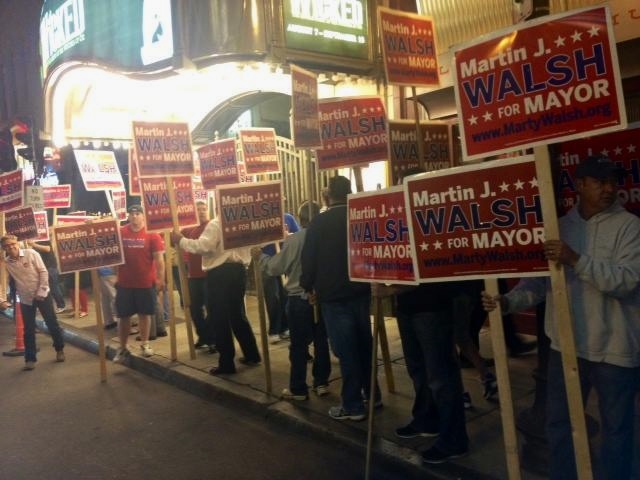
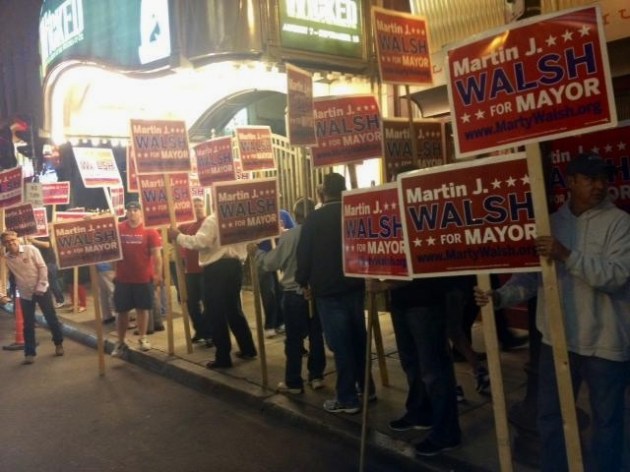
The Herald debate offered the candidates scant opportunity to explain at length or to imagine and create. With twelve on stage, it was difficulty enough to give the candidates time enough to say “hi.’ (David Wyatt almost didn’t say even that, bit that’s how he is at every Forum he decides to attend.) in any case, the real action in this campaign is no longer in the Forums but outside, on the street. Forums worked during August, when the campaigns were just beginning to ramp up. Now, the ramp is so up it tweaks the heavens. Every candidate with any semblance of seriousness spends all day now doing meet and greets, shaking hands at T stations and at supermarkets. The truly ramped up go to house parties two and three a night, shake hands at bingos, go to street parties, block parties, hold fund raiders, even rallies. And they door-knock, while their volunteers phone-call to voters from phone banks. They garner big endorsements and hold press conferences to announce them. And their volunteers do huge stand-outs — sign-holds — that you cannot miss. Sometimes competing stand-outs buffet the traveler along various neighborhoods’ main streets.
Image

^ the real campaign was outside the theater, on the street.

The many Boston City Council candidates are doing the same thing.

We will continue to cover the Mayor Forums as they take place — including two Forums tomorrow. That said, we will, from Wednesday morning on, shift our focus to covering the campaign where it is most heated: on the streets where voters live, dine, work, and shop.

—- Michael Freedberg / Here and Sphere

BOSTON MAYOR RACE — THE MONEY, LOUD AND CLEAR

Connolly Walsh 1

^ much love and affection for John Connolly and Marty Walsh

—- —- —-

In this campaign, as in any other, the money report as campaign’s vote day approaches, does NOT lie.  Any more than a kiss and a hug lie.

With only 16 days remaining before primary day in this one, Boston’s 12 would-be Mayors have been adjudged clearly by donors. Two are out of it; three are losing ground badly. Three are trying hard to catch up. Two who were raising a ton of money are raising a bit less. and two are raking in money faster than a speeding bullet. Let’s look:

Out of It — David Wyatt raised less than 100.00. Charles Clemons less than 3,000.00.

Losing ground badly :

Charles Yancey had 21,504.68 on August 14th; raised  2459.25 from August 15th to August 31st; and had 22,263.93 at the end of the month.

Rob Consalvo had 128,024.51 on August 14th; raised 71,999.59 from the 15th through the 31st; and had a balance of only 66,376.46 as the month ended.

Consalvo local hq

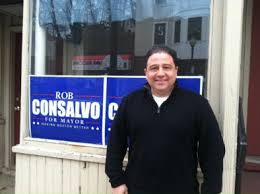
^ Hyde park’s Rob Consalvo : feeling less loved than formerly

Trying to play catch-up :

John F. Barros had 56,566.70 BB on August 14th; raised 33,788.28 in the next 17 days; and had 68,946.48 as August ended.

Felix Arroyo had 158,579.39 on hand on August 14th, In the next 17 days he raised 31,852.32. At month’s end he had a very respectable 149,449.20.

Charlotte Golar-Richie reported a bit less than Arroyo. She had 132318.23 ; in the next 17 days she did well, raising 42,134.63. At month’s end, though, she still had less on hand than Arroyo. Just 125,355.52

Bill Walczak could boast of 131,419.97 in his account on August 14th. He then added another 36,627.00, giving him a respectable 113,819.10 at month’s end.

bill walczak 1

^ Bill Walczak : respectably liked and even a hug or two

Two who were raising tons of money now raised slightly less :

photo (38)

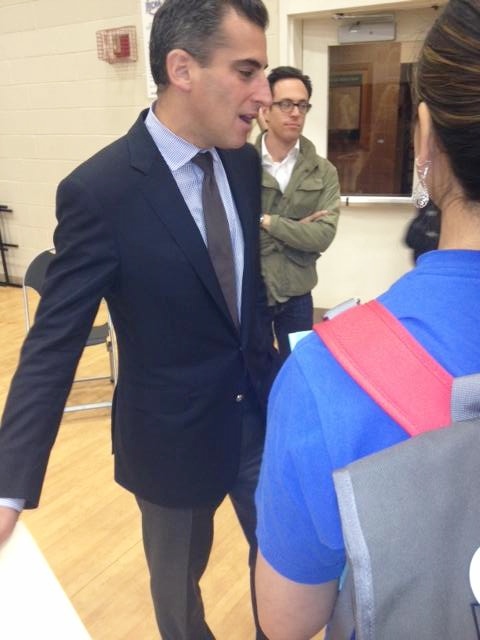
^ lots of love for Mike Ross, but a but fewer hugs this past week. (photo taken at last night’s Madison Park High School mayor Forum)

Mike Ross on August 14th had all of 486,135.08. From then till August 31, he took in 102,863.12, leaving him a still impressive 452,415.72 at month’s close.

photo (37)

^ Charlotte Golar-Richie : looking happier, at last night’s Mayoral Forum at Madison park high School

Dan Conley had money to spare on August 14th :  890,638.63. He took in less than previously, however. just  82973.80 Nonetheless, he still had lots of green at month’s end : 612,598.80

All of the above tell a fascinating story of donor assessment of their candidates’ chances. And if so, what do the donors of our top two candidates tell us ? They smell victory, and they are likely to be correct.

Marty Walsh had 560,670.62 on August 14th, He then proceeded to raise 276,500.05, more than three times what Conley raised. At month’s end he had 658,120.12, more than the previously over-funded Conley.

John Connolly refused an “outside” donor’s 500,000 ? He could afford to. On August 14th he had 727,725.46. In the next two weeks, during which the “outside” donor flap nicked his campaign briefly he took in 161,783.00. At the end of August he had 589,759.97 in his account.

The money lead boasted by Walsh and Connolly has continued. Admittedly incomplete reports for the first week of September show Walsh taking in 58,311.99 and Connolly 74,418. No one else gained anything like these sums. Golar-Richie did the next; donors gave her 14,400.00. Dan Conley took in 13,923.90; Mike Ross, only 7,417.00. Felix Arroyo reported 1,776.04. Consalvo ? His report remains to be filed. same for John Barros and Bill Walczak.

The campaign moves on, crushing some, squeezing others, challenging a few to outdo themselves — maybe — and gifting the lucky two with ever more signs of love and affection.

—- Moichael Freedberg

BOSTON MAYOR CAMPAIGN : RACISM INTERRUPTS

IMPORTANT UPDATE : Even as I wrote this story, the St. Patrick’s Day Breakfast issue was being settled. District Councillor Bill Linehan and Linda Dorcena-Forry issued a joint statement, that Senator Dorcena-Forry would, in fact, be hosting next year’ St. Patrick’s Day Breakfast. The dispute lasted all of two days.

However, the other half of this story — the Freedom House Forum for Mayoral candidates “of color” only, remains. And so I ask you all to read, below, what I wrote before news of the South Boston resolution broke…

The last thing that Boston’s Mayor campaign needs is an interruption by racism. Yet that is what has happened these past two days — through no fault of the candidates, let me make very clear. The 12 hopefuls running, and their campaigns, all speak for the new Boston, long since grown beyond a sadly racist past — 40 years ago and more — and have made this one of the most intelligent, forward-thinking issues conversations I have ever seen in the political arena. It has been citizenship at its high school, civics class best.

And yet the past intrudes. Some voters, and even some civic leaders, can’t help themselves.

First came the news that the committee that puts on South Boston’s annual St. Patrick’s day breakfast was divided on whether to invite its newly elected State Senator, Linda Dorcena Forry, to host the affair. South Boston’s State Senator has, ever since Bill Bulger’s time, done the honors; and all have been white and of Irish heritage; whereas Dorcena Forry is a person of color and of Haitian parentage; and lives in Dorchester Lower Mills. Of course, a case can be made that, as the breakfast is a South Boston event, a South Boston spokesperson should host it. Fair enough; and now, since the resignation of State Senator Jack Hart, South Boston’s City Councillor, Bill Linehan, has claimed host status. But that’s not at all the last word. Though never a rule of the breakfast, the area’s State Senator has hosted it for at least the last 20 years. Thus the problem of Linda Dorcena Forry.

Image

^ Linda Dorcena-Forry : South Boston’s next St Patty’s day breakfast host ?

Will she be invited to do what the District’s last three state senators have always done ? It would be next to impossible, were she not so invited, to avoid that race is the reason. It would be bad business indeed for the breakfast committee to accord any such prospect. Linda Dorcena Forry should host the 2014 St. Patrick’s day Breakfast. She will do just fine.

The above discussion was not till today on my task list. Indeed, I had intended not to mention the St. Patrick’s Day breakfast at all. To me it is a neighborhood affair, and that was that. And then came my discovery, at last night’s Mayoral Forum at the Reggie Lewis Center in Madison Park High School, of the Freedom House Mayoral forum flier pictured below. It forced me to set aside, for awhile, the excellent conversations at Madison park High about jobs, construction,l and schools. Please take a close look at it :

Image

Like you, I could not believe what I was reading. I was stupefied. “The First mayoral Forum for candidates of Color.” proclaimed the flier.

If the South Boston St. Patrick’s day breakfast is just a neighborhood affair, in no way a government-funded or public function — you have to buy a ticket — Freedom House’s Mayoral Forum is every bit a public function.

The flier adds insult to injury. “Free and open to all,” it proclaims. Open to all ? But not to all candidates ? What ARE they thinking ?

This is one Forum that Here and Sphere will, not attend. Nor should any of the candidates “of color.’ All should say “thanks, but no thanks.”

Then it will be time to address the matter of who will host the 2014 South Boston St. Patrick’s day Breakfast. After which the last strokes of old racism will, hopefully, fade away like what they are: the ghosts of failed, immoral attitudes.

—- Michael Freedberg / Here and Sphere

PROFILING BOSTON’S CITY COUNCIL CANDIDATES : PHILIP FRATTAROLI

Image

^ Philip Frattaroli ; at a restaurant, of course….

—- —- —-

Not many candidates for Boston City Council come from the restaurant business. Indeed, it’s hard for me to think of even one. Enter Philip Frattaroli, who owns and operates Ducali in the North End, where he lives in a “fifth floor walk-up,” as he puts it, a living situation not at all uncommon in that ancient part of Boston. restaurants, too, are common in the North end, but not since Dom Caposella, who after losing a race for State Representative, opened a fine dining spot named “Dom’s,” on Commercial Street, decades ago has North End politics and restauranting come together, as Frattaroli has now done at age 31.

Frattaroli was born in the North End — “how different it was !” he recalls — into a family that, like so many North Enders since 1900, had come from Southern Italy : the town of Avellino (Dad) and the Abruzzese (Mom). And, as Frattaroli tells it, they soon opened up a restaurant — and moved to Winchester, where their son graduated from high school.

“I grew up in the restaurant business,’ he says. “it was something i wanted no part of as a career, though. and when my brother was killed by a negligent driver, it changed how I looked at everything. So after college, I went to Suffolk Law School and then to practice law.” But the restaurant business came back into his life anyway “I came up with an idea for a place and so decided to get involved in my own restaurant. Thus Ducali.”

Being a small businessman, says Frattaroli, makes him “a candidate who knows what it might be to lose money.” And as a restaurant owner, “I know what a small (food) business has to go through, all the licensing, the city departments…I’m a lawyer, and it’s hard for me. imagine what it’s like for an immigrant.” But, he continues, “I’ve created jobs in the city, I’ve been through the 1010 Mass Avenue (inspectional services department) process. (Don’t forget) “the North End turned around (and became what it now is) because of small business.”

Having heard this assertion, I felt the need to ask him an obvious licensing question : “So, do you agree with Councillor Pressley’s Home Rule petition to give Boston power over its own liquor licenses ?”

Frattaroli responded at gtreat length. After all, this is the issue he lives by:

“Not sure I agree. To go to an uncapped liquor license system (means that) all the small businesses that have played by the rules will suffer. Their licence is their chef asset. Her home rule proposal needs to be modified. Somerville didn’t go to an uncapped system when they revamped their licensing a few years ago; why should Boston ?

“The licenses aren’t the problem, it’s where they are given out. Some neighborhoods have too many, some have none. Ten percent of all people (employed) in Boston are employed in the restaurant business. The goal here is (to not hurt them). With me, you have somebody who knows the business (and I’m saying that an) uncapped system is going to hurt the current restaurants. Keep some cap on the total.”

It’s clear from the above conversation that Frattaroli’s unique quality as a Councillor is his experience in the restaurant business. thus went Here and Sphere’s first question to candidates. the conversation continues (“HnS” for Here and Sphere):

HnS : What are your two top priorities as a Councillor at Large ?

Frattaroli : “First, small businesses and how the City treats them. Second, young families. We need to make the city easier for them to stay. This involves, first, better assignment process for schools. Schools have to be neighborhood schools. Second, sports programs in the schools, such as Boston Youth Wrestling. it’s proven that kids involved in wrestling don;t drop out of school, and wrestling, unlike basketball or football, is for kids of all shapes and sizes. third, late night transit. it;s better for the city and for safety and for the businesses. Lots of younger people work late and can’t get home.”

HnS : What about the BRA ? Replace or rerform ? If reform, in what ways ?

Frattaroli : “reform it. My friend bought a condo and had to pay the BRA a percentage of the buy price ! he BRA should be treated just like a government agency.

“There should also be transparency. How did the Seaport area get all big-chain, nationally owned restaurants, and none locally owned ? (We still don’t know the process of that.) And to get there you have to have a car — it’s too far to walk. Who planned that ? It all has to be reformed. I’m on the local neighborhood council, and we can’t find out what is happening. (As for the Council having a say,) the budget for the BRA. that is where we come in.

HnS : School reform : what on John Connolly’s school agenda do you favor ?

Frattaroli : “There’s data on what works. We have to replicate (that.) Innovation schools (work). (Take) the Eliot. The teachers there have given up some of their contract perks. We can’t (just) hold on to a system that protects vested interests. (I think of) a school in South Boston (that) had a teacher who was teacher of the year, yet the school had to let him go because he was the last one in !

“A longer school day ? As long as its used the right way, yes. We have to take best practices that work, and apploy them here.”

HnS : Lift the cap on charter schools ?

Frattaroli : “Yes, i think I’d vote to raise the cap. Competition is good. Restaurants are a meritocracy. (why not schools ?) Charter schools (apply) a lot of innovations.”

HnS : Marty Walsh says there’s a heroin epidmeic in Boston. Do you agree ?

Frattaroli : “There’s a drug problem. Whatever the drug is — it’s in society in general. The sports thing that I mentioned is so important (here). As a wrestler, as a kid, I was saved. I made sure that I was never not ready. Kids in sports have mentors. Especially the young men; it’s an important part of their coming of age.”

Frattaroli has had success raising money for his first run at public office. He has raised $ 70,000, he tells me, with a smile. It continues. “You’ll see,” he says. “On Monday evening there’s a fundraiser for me at Ecco in East Boston. the State Rep, Carlo Basile, will be there. Come and see how we’re doing !”

—- Michael Freedberg / Here and Sphere

PROFILING THE BOSTON CITY COUNCIL CANDIDATES : CATHERINE O’NEILL

Image

^ Catherine O’Neill, of the Lower Mills O’Neills, conversing with a roomfull of Seniors at Foley House, South Boston

—- —- —-

There’s something of a Dorchester revival afoot in the City of Boston, an irish-name revival too. Here, in a city decreasingly peopled by those of Irish-name, we see on the Council at-Large ballot a Mike Flaherty; a Stephen J. Murphy; a Jack Kelly, Marty Keough, Chris Conroy, and — by no means the least — the subject of today’s profile, Catherine M. O’Neill, of the large and well, well-known O’Neills of Lower Mills.

It would be hard to have been any sort of active Boston citizen these past forty years and not known at least one of Catherine O’Neill’s siblings. Her brother Tim has been a public prosecutor since the early 1970s; brother Tom was a legendary principal at Mattapan’s famed Solomon Lewenberg School. Brother Ted O’Neill has been well-known too, and her late brother Mike — known to hundreds of politically busy Bostonians as “wide Mike,” — who always reminded me of what the poet and playwright Brendan Behan must have looked like, a presence as physically awesome as he was likeable.

Catherine O’Neil has Mike’s fierce eyes and Viking face, and something of Tim’s soft forehead, and it’s hard to figure how this writer somehow did not meet her back when her brothers were a constant presence. Turns out that her career  followed an entirely different trajectory ; she’s a published playwright (that Behan connection ?) and a media person who hosted The Boston Connection, All About Boston, and the Dorchester Connection, all on BBN-TV.

O’Neill went to St. Gregory’s School — where her Dad was a janitor — for thirteen years, then got her degree from Suffolk University in communication and journalism. She also has a master’s degree in Fine Arts.

She never married — a loss for the best Boston men of my generation — but as a child growing up in a large family, it comes second nature to her to care about people. And so, when Elizabeth Warren, who knew of O’Neill from television , asked her to work on her Senate campaign, O’Neill was ready to take her caring into the formal political groove,

Cath O'Neill and Sen Warren

^ Catherine O’Neill with senator Elizabeth Warren

She found the experience to her liking, and after Warren was elected, went to work in the campaign of her Lower Mills neighbor, Linda Dorcena-Forry — wife of Bill Forry, whose father Ed was “Mr Dorchester News” for several decades — for State Senator. Dorcena-Forry was already the Lower Mills area’s State Representative; indeed, O’Neill had been her field director in her 2005 first campaign. Dorcena-Forry’s Senate campaign made history. She won over the South Boston candidate, becoming the first Dorchester candidate to do so, and the first person of color to represent the District.

O’Neill was now ready to become a candidate herself; and when Tom Menino’s decision it to run for a fifth Mayoral term opened up two of Boston’s four at-large Council seats, her time had arrived.

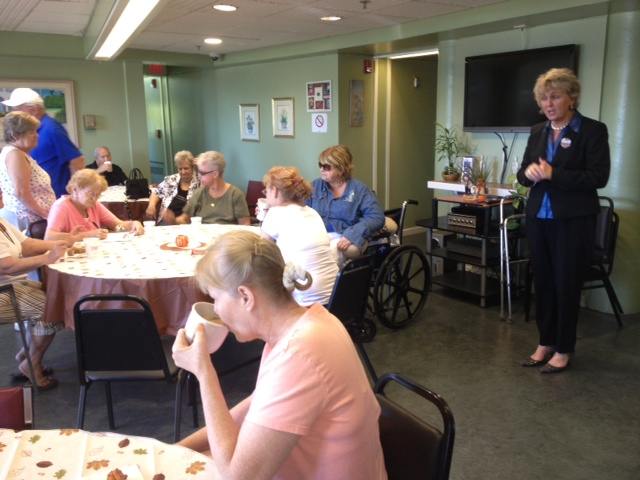
We chatted with O’Neill three times; stood with her as she greeted voters at a Marty Walsh rally in East boston; and saw her in action conversing with voters at the Foley House in South Boston. There was never a minute in which she did not connect eye to eye with voters together an d singly; the experienced media hostess this was ever in command, credible, likeable. Thus our first question — what special qualities do you possess to make you uniquely qualified as a Councillor ? — answered itself.  Not many Council candidates are published playwrights and accomplished television show hosts,

Our conversation continues (Here and Sphere as “HnS”) :

HnS : Your first priority as a Councillor ?

O’Neill: Seniors. My Mom is 93 years old. I know the needs of seniors first hand. Seniors need all the help they can get. Longer stop lights at crossings, better curb cuts. Safety of the neighborhoods !  I will be an advocate for seniors ~!

Here and Sphere (HnS) : Do you favor lifting the charter school cap ?

O’Neill: no, I do not favor it.

HnS : What school reforms do you favor ?

O’Neill: I think a longer school day is a good idea.

HnS : The BRA : replace / reform ? If so, how ?

O’Neill: There needs to be separation of planning and decision, so that the community can have input.

HnS : Speaking of safety, Marty Walsh has said there’s a heroin epidemic in the city. Do you agree ?

O’Neill : The first documentary I did, for BBN television — in 2001, produced and wrote — was on the heroin problem in the city of Boston. It was epidemic in proportion then, and I know we still have that problem with it in our city. The shame is not to be a heroin addict; the shame is not to do anything about it. Heroin addicts, and addicts generally, usually have no advocate. There’s nobody out there beating a drum for people who unfortunately are addicted to heroin.  and I…i would be an advocate. we need more beds for women (addicts too). I really do know a lot about his subject, because of my friend, now deceased, who was the head of the drug corps at South Boston District Court,. it was he who asked me to do the documentary.”

That O’Neill proved so conversant of Boston’s heroin problem surprised me. It probably shouldn’t have. It’s the kind of problem that a television discussion show, such as O’Neill hosted, wants to focus on. Proof that her television experience offers more than just show time to the City Council if she’s elected.

—- Michael Freedberg / Here and Sphere

photo (62)

^ Catherine O’Neill advocating to Seniors at the Foley House on H Street in South Boston.

BOSTON MAYOR RACE : PRESSURE POLITICS TAKE OVER

Image

^ crunch time numbers cruncher : Charlotte Golar-Richie

—- —- —-

The City’s Black political leaders are gathering, it is reported, to try pushing some of the candidates of color out of the race for Mayor. This comes as no surprise. The surprise is that it didn’t happen sooner. Or even that it was needed at all. it should have been obvious to every one of Boston’s six candidates of color that if there were more than two, none would make it to November. Even with only two, it’s no guarantee. But with six ? And so the pressure begins to get to the obvious : have the “extras” drop out and endorse Charlotte Golar-Richie.
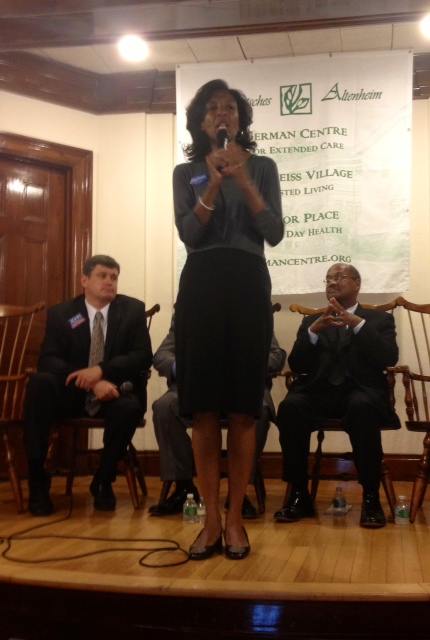
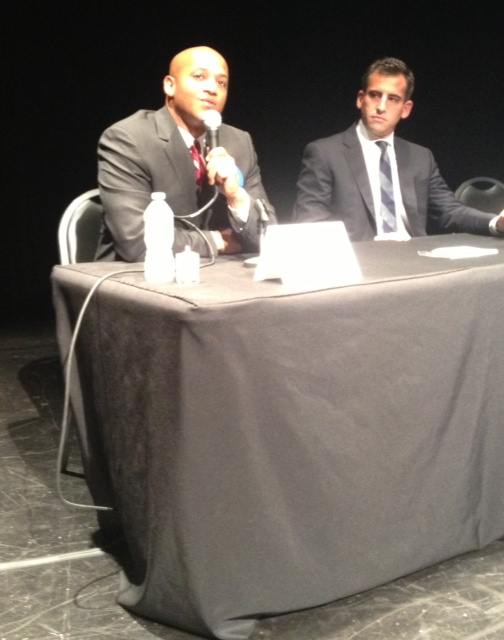
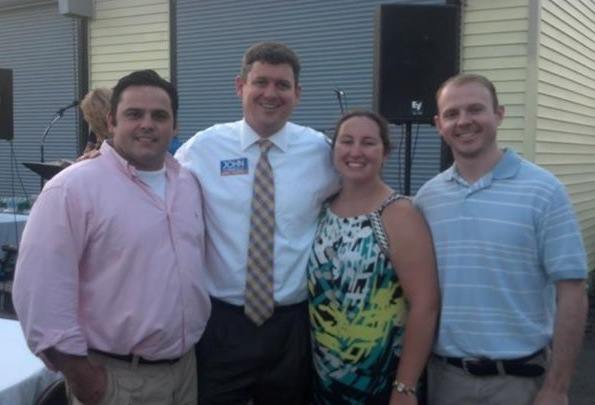
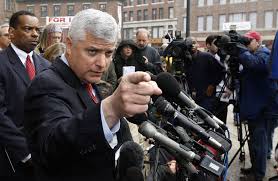
Good luck with that. Why should John Barros, her chief competitor within the Black community, drop out and endorse her ? His vision is very different from hers, his connections more like Connolly”s or Mike Ross’s. As for Charles Yancey and Charles Clemons, each has his own agendas that will seem better served by remaining in the race.

Image

^  John barros (on left) : crunched out ? probably not

The intended recipient of said endorsements claims no part in this effort. That’s wise. No voter likes having a candidate trying to limit a voter’s range of choices. Yet Golar-Richie has been making a dedicated effort of late to bring Boston’s Black political “heavies” into her campaign and has had notable success doing so. She knows better than anyone that if six candidates of color remain in contention on September 24, it will be next to impossible for her to get the 22 % of the vote that some wise heads say will be the November entry point. And so the pressure, by her key supporters, if not by her, cannot be avoided.

Golar-Richie is hardly the only contender using pressure right now. Marty Walsh used the Greater Boston AFL-CIO’s annual Labor day breakfast to make his Labor banner a must for as many union activists as possible. Walsh’s chief rival, John Connolly, has brought forth several endorsements of note, the latest being State Representative Nick Collins of South Boston, who just this morning announced his formal support for Connolly at a press conference in front of the Perry K to 8 school on east Seventh Street in South Boston. At that conference Collins and Connolly emphasized the pair’s long collaboration on Boston Public School reform. Both also emphasized the needed for much more transparent city administration and a dedication to safe neighborhoods — a topic gruseomely dumped into South Boston affairs this past year.

Image

^ John Connolly with Rep. Nick Collins’s brother and Charles Levin at a recent South Booston Leadership conference. His endorsement by Nick Collins seemed likely, soon after this.

Connolly has made much, too, of endorsement by State Representatives Jay Livingstone (Back Bay, Beacon Hill), Carlo Basile (east Boston), and Ed Coppinger (West Roxbury). As his main competitor, Marty Walsh, is a State Representative too, these endorsements hurt Walsh as much as they aid Connolly. (Walsh, meanwhile, has the open support of State Rep Liz Malia and former State Senator Jack Hart.) But the main effect of these endorsements — none of which have yet gone to Dan Conley, who polls a strong third on most lists; will he get any ? — is to pressure the voters. If the pollsters are right, that fully one-third of all who are likely to vote remain undecided about who to choose, endorsements by elected Representatives are intended to push those undecideds to make up their minds. It will surely do that, at least for some.

There will be much more of this pressure coming. Boston’s State Senators ( Chang-Diaz, Dorcena-Forry, Brian Joyce, Mike Rush, Petrucelli ) have yet to choose. Congressmen Lynch and Capuano may weigh in. So might past legislators and major Boston civic associations. As long as the undecided vote remains sizeable, endorsements will be asked for- and probably given. The pressure is on now — on the voters, to decide, once and for all, who to send to the November final.

Image

^ Dan Conley : strong third in polls, but no big endorsements yet

The pressure is also on the twelve contenders. Surely all of them know that they either have a good chance of making “the cut,” are losing ground, or are as out of the running as can be. The candidates out of the running can shrug it off and enjoy two and a half weeks more of forums and speaking on the issues. The candidates one feels for are those who are losing ground. Mike Ross, Felix Arroyo, and Rob Consalvo all, at one time, looked strongly in contention. All have found themselves blocked, however — Arroyo by not receiving union endorsements he might have won, Consalvo by too small a base, Ross by not having command of his own, zipcar-bicycle-restaurants base — and, in Arroyo’s case, passed over by leaders and political activists who made his father a political success and did the same, at the Council level, for the son. Arroyo, Consalvo, and Ross have had to learn, perhaps painfully, that when one is running to be Boston’s all-the-marbles Mayor, people make an all-the-marbles choice of whom to be with.

Image

^ Mel King : should, by all philosophical coincidence, be with Felix Arroyo, but it appears that he isn’t.

And so, as we head into the typhoon of pressure, four boats remain afloat : Connolly, Walsh, Golar-Richie, and Dan Conley. Boston’s next Mayor will be one of these. The voters are beginning to realize it and to decide just who it is that they like.

—- Michael Freedberg / Here and Sphere