AN ACT OF SELFISH IRRESPONSIBILITY

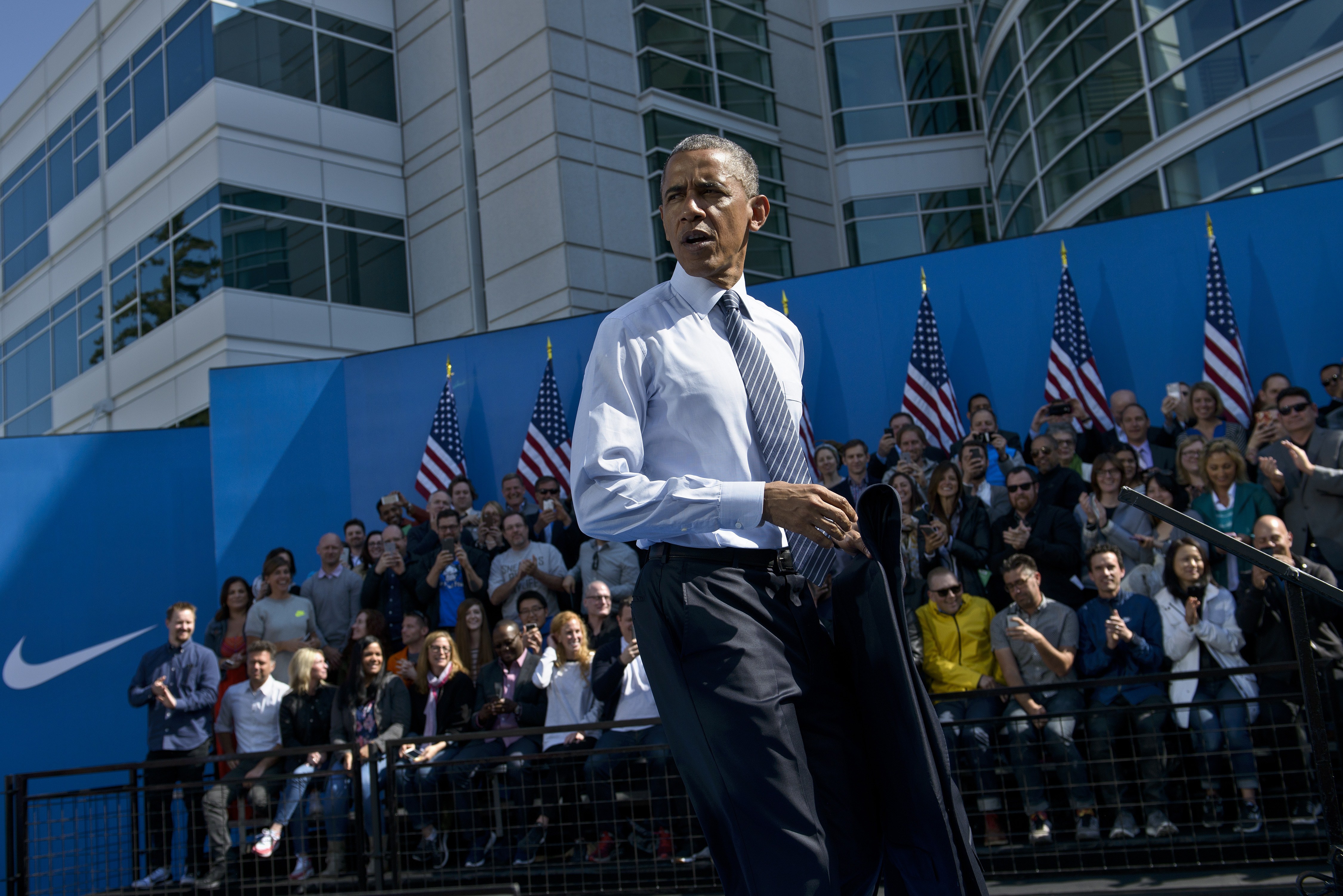
US President Barack Obama leaves after speaking about trade policy at Nike Headquarters on May 8, 2015 in Beaverton, Oregon. AFP PHOTO/BRENDAN SMIALOWSKI        (Photo credit should read BRENDAN SMIALOWSKI/AFP/Getty Images)

^ President Obama seeks the economically bold, finds his party prefers the old.

—- —- —- —-

On Friday the House voted to kill a key provision of the Presient’s Trans pacific trade pact, and thus the pact itself.

House Democrats, bullied by labor unions, killed a provision — “TAA ” for short — that provides for worker protections in the context of trade pacts. TAA is much disliked by Republicans, and thus when the House Democrats also voted to kill it — a bill that they previously had passed unanimously ! — the TAA died, and with it, the entire trade pact : because the Pact version passed by the Senate includes the TAA provisions, makinng recociliation unlikely.

That’s the procedural story, all of it. It sounds rather dry, but it is not dry at all. It was an act of shocking selfishness on the part of organized Labor. Our nation badly needs to partner with the thirteen other Pacific rim nations participating in the Pact, in ordetr to dramatically expand our exports and thus compete with China, the world’s largest economy, fastest growing, and one of the most innovative. Now we will not have that chance.

We need tariff relief, we need cross-border corporate governance; we need international education; and we need cross-order standards for contracts, intellectual property protection, and innovation procedures.The Trans Pacific pact seeks a foothold of acceptance for all of these. ow that task becomes infinitely more distant.

Instead of working to improve America’s economy for tomorrow, as we transition to a fully world-wide economy in which the entire world of work transforms, labor has seen to it that we will safeguard, for a few more years, jobs of the old economy, jobs that are going away whether the Trans Pacific Pact is signed or isn’t.

Labor did this, let us note, to a Democratic President. We often think of organized Labor as the core of the Democratic party, but its work on Friday shows that that isn’t true at all. The AFL-CIO is as selfish — irresponsibly selfish — an organization as any in American politics, as willing to demean and degrade as the vilest Right Wing vigilante and every bit as defensive of the indefensible.

I will, never forget hearing a local AFL-CIO leader talk — at a funeral no less ! — about how the deceased, were he still alive, would find a way”to take down Charlie Baker.”

If this is how an AFL-CIO leader speaaks at a funeral, imagine what he thinks of the world of politics. The NRA at its most disgusting, anti-gay bigots at their vilest, offer nothing more destructive.

That is the mindset that, on Friday, saw to it that the President’s work to gain American goods and services a powerful international partnership for tomorrow would be killed so that yesterday might gasp for one more day on life support.

This is not to say that the AFL-CIO can’t be a powerful ally when it sides with maor policy initiatives. Boston’s Olympics Bid enjoys the support of the AFL-CIO just as it does of all labor unions that I am aware of. Labor’s support here is bold and economically smart, because the Olympics plan will transform the City as it must be transformed for the new economy.

So why this time clinging to the old, the dying, the obsolete ? I am at a loss to explain it.

America’s old-economy industrial jobs are not coming back. Why should they ? That’s not where the economy of tomorrow will be. Tomorrow’s economy will be run by innovators and small technology shops, platforms like Uber, Lyft, alibaba, and ebay; by biotechnology researchers; by educational experiment; and by the vast numbers of service workers who will supply the needs and desires of the innovator entrepreneurs. Work in 2020 and 2030, much less 2050, will look nothing like the work, that the AFL-CIO protects. What blindness !

If the AFL-CIO wants to do something useful for tomorrow’s workplace, it can advocate for a
$ 15,00 an hour minimum wage, maybe even a $ 21.00 an hour wage, so that the legions of new-economy service workers will have sufficient money to buy the same stuff that the innovators will be shopping for. After all, these service workers are going to need unions — smart, forward-thinking unions like Local 26 Hotel and Hospitality Workers — to fight or them, just as their industrial predecesoors needed craft unions back in the 1930s-1960s.

But no, that’s not how the tape-rewinded AFL-CIO thinks. Just as the religious fanatics who have spoiled the Republican party impose outdated “family values,” so, evidently, does the AFL-CIO seek to impose outdated economic values. When will American political interests stop rewinding a silent movie and start shape-shifting the digital future that is coming whether or not Americans like it ?

—- Mike Freedberg / Here and Sphere

BOSTON 2024 AND THE LEGITIMACY OF GOVERNMENT

FullSizeRender (17)

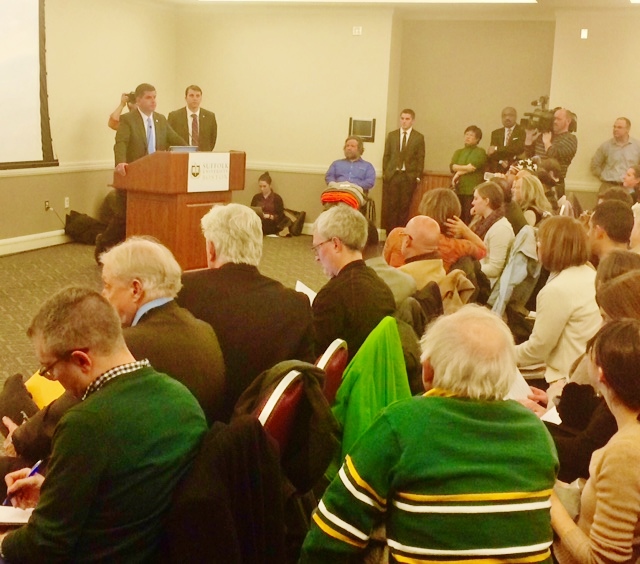
^ Mayor walsh at an Olympics hearing : did we elect him to lead with bold leadership or to be Jeeves ?

—- —- —- —-
Clearly the Bid Committee that proposes to bring the 2024 Olympics to Boston did not anticipate that it would face opposition, much less the firestorm of vitriol that has befallen it.

I suspect they imagined that this most sports-minded of cities would take to the Games as it has taken to the Patriots, the Bruins, and, in good times, the Celtics and Red Sox. This expecation was not a foolish one. Why, then, did the opposite come to pass ?

Three situations come to mind.
(1) As the project of a business elite backed by City hall, the Olympics Bid became a third rail for all those who distrust government and business leaders — “not the job of millionairs, private corporations”, as one prominent, Left-leaning critic of mainstream policy put it to me (2) over the past 50 years, development projects in Boston have become ever more subject to what we call “community review,” meetings at which only opponents of a proposal show up, where they can nitpick, delay, and thus kill every proposal that seeks to change things.
(3) the Bid Committee did not expect that what for it was a first draft would be taken, by the mdedia and opponents, as a final edition.

The second and third factors overlap. Every development does cause a ripple in the mindset of neighborhood equilibrium; and if one six-family residential project is occasion for 60 people showing up to quibble about shrubbery or what rent price to set– an everywhere fact in Boston civic life — it should have been easy to anticipate that a development as massive as the Olympics would cause pandemonium in no-change circles; and easy also for the Bid Committee to have foreseen that releasing a first draft, very sketchy and full of poorly researched details, would pour sulfuric acid into the souls of anti-change folks.

Perhaps the Bid Committee assumed that because its leaders are also major Boston developers, accustomed to winning over “community review” thing-ies, they would be accorded respect and room for initial error. They were wrong.

When crunch time came, supporters of the bid compounded their misread. Instead of thinking through about why opposition arose on both the far Left and the entire Fight, they called upon political leaders to endorse the Bid. If your opponents oppose you because, basically, they don’t trust government leaders or “millionaires and private corporations,” adding more of these to your Bid team simply confirms that The Mark of Cain is what you are.

As it happens, the opponents of Boston’s Olympics Bid were few, only the far Left in Boston and the anti-tax Right in the Route 495 region; but what they lacked in number they made up in decibels. They were very loud, and very disruptive, and many in the greater public got the impression that the Olympics Bid was a crazy show run by circus promoters hiring a bevy of ill-mannered pie-throwers : hardly the image wanted !

If the brickbats and insults being hurled by “NoBo’s” at the Bid Committee’s “millionaires, private corporations’ and political machers were strictly a Boston tornado, there’d be not much more to say. But as we have seen, protest against big government and big corporations has become the prevailing weather pattern. Government in America has become the plaything of a most anrchic el nino.

From the vigilante guns of Cliven Bundy to highway-blocking by radical Occupyers, there is a whole lot of weather out there tending to tear apart our citizen democracy.

If elected leaders are not elected to make bold, comprehensive decisions, what are they elected to do ? Be a kind of Jeeves ? That won’t get the job done, because, for example, it’s the mayor of Boston’s job to take the entire City ito the future — a future that will take us if we do not take Boston to it.

The same thing nationally : If the President can’t have executive wiggle room to take necessary steps, as he has recently sought on matters of immigration, wages, and trade, it isn’t just his record that suffers, it’s the nation’s.

The world is moving fast. It will be moving faster still. We in America have been gridloocked for a decade now. Meanwhile China, Southeast Asian natiions, and even Dubai and india have moved fast and efficiently, commanding new businesses and inventing networks of commerce, education, and knowledge. These nations are not impeded by the delays of a democracy.

These forces will not be deterred by a failure of public planning. They canot be denied by NIMBYing. No union, lashed to the mast of old systems created for bygone sitautions, can stop them. The new economy is already here, transforming every block of our City even if we cannot see it.

The Olympics bid rides this tidal wave. I think the committee sees that now. That the bid has put at issue whether Boston’s leadership has legitimacy to get things done, or does not have it.

The Bid Committee understands that Governor Baker is watching g. Nothing now but a thorough, detailed ground-up plan will pass muster.

Upon a positive answer to that challenge, and the larger question, depends our ability to move our city forward by means of government.

Some have said that the Olympics will benefit only contractors and unions. This is false. Hosting the games will benefit the hotel industry, transportation businesees, restaurants, entertainments, retailers. It will even benefit networking, in real time with people from all over. It will force us to reimagine how Boston feel, smells, sounds, its shape and its dimensions. Reimagining all these, we will be that much more able to reimagine our economy, employment, housing and education. Add to all this a $ 15.00 hourly wage for service workers — a policy initiative that I fully support — and we will have a very different City from the Boston of now.

The huge planning effort required by the 2024 Olympics bid will put Boston leaders at the forefront of the change. We’ll have a circle of knowledge about how to do it, and as a City we will all gain the confidence to create the next Boston.

—- Mike Freedberg ? Here and Sphere

BOSTON : THE TRANSPORTATION CHALLENGE

transpo 1Transpo 2

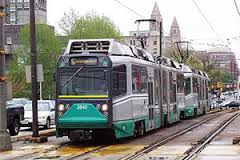
^ transportation in Boston toady is already a mix of options. Tomorrow there’ll be more options, and much more mixing.

—- —- —- —-
Much ado has been bruited about what the 2024 Olympic Games might inflict upon Boston traffic; Boston parking; Boston public transit. All of this ado prevents us from hearing the underlying conversation about transportation : it will change big time, in ways that will alter almost every part of our lives, our habits, our expectations, our time.

The challenge is upon us; and, as with so much that is changing in Boston, the change will happen whether we like it or not (and many of us do like it) : so, why not take charge of the change instead of passively bitching about it as others impose it on us ?

What are those changes in transportation, that are already hitting us ?

1.The T, of course. Governor Baker and the legislature have got us to the threshold of reconfiguring every part of its operation : equipment, governance, work rules, administration, scheduling, outsourcing. And there are changes that go beyond what politics is likely to accept, For example : why does the T need to own and repair any buses ? Why can’t it lease them all, and have them repaired by the lessor ? Calculate the millions of dollars this would save every year. You don’t want the T’s fares hiked ? Leasing would enable the T to NOT raise fares at all.

2.T expansion. Why can’t we extend the Blue Line to Lynn, the Orange Line southwest to Needham, the Green Line north beyond West Medford, top Woburn ? As for bus routes, why not hire van-sized vehicles to serve less traveled routes and late night riders ?

3.Parking. Mayor Walsh is doing an inventory of every parking space in the entire city of Boston – an effort as momentous,. And powerful as was the Doomsday Book to William the Conqueror in 1086. We can’t effectively create new parking spaces until we know where they are most needed – and where it is most feasible to create them.

4.Transportation competition. The taxi business as we knew it is finished. Today’s taxi companies – Uber, Lyft, and Bridj; and who knows what others ? – own no vehicles and employ no drivers. They are flexible, on demand services, the epitome of what a service business must be.

5.Cars. Some modern-day Luddites want them gone, but that’s silly. The two most significant reforms that we can do to cars are (1) make them much smaller and (2) make them much more energy efficient. European cities get by with street widths created in the 15th century, sometimes; because European cars are a s small as matchbooks and make 60 miles per gallon of gas, largely because (1) they are tiny and (2) gas costs triple in Europe what we pay.

Public transit and on demand taxis cannot serve all of us. It’s nice to have the supreme flexibility of a car. But having a car does not mean having any damn car we please. For city driving, especially, we should create economic barriers to the usefulness of huge cars with large fuel consumptions. May I add that taking this policy route will also lighten the burden we now place on parking space sizes ?

6.Bicycles and Vespas. Again, European cities could not exist as they are, had not thousands of urbanites these two options. Everybody who can use a bike or Vespa in Europe does so. The same trend is imposing its truth on Boston. We should encourage it.

7.Traffic.  Cities are full of traffic ? Why is t.hat a bad thing ? Bad would be for Boston to have no traffic. Traffic means commerce, commerce means prosperity. Yes, traffic brings noise, and slow movement, and some carbon emissions. The emissions, we can deal with. But noise and slow movement are part of the DNA of a city., if you don’[t liker them, you probably should not live in Boston, not even in its nearby communities. That, you will have to decide.

One thing we can change is traffic patterns. Building a new road, however, doesn’t get us there. A new road creates new traffic. And entrances and exits create build-up and bottlenecks no matter how we design them. But we can use one-way signage to direct existing traffic onto streets where it is most needed. We can do it and should. Up to now, Boston one-ways its streets often because of neighborhood complaints. That’s reactive; it is not good leadership.

To use one-waying – and other means of traffic diversion — effectively, however, we need to research traffic preferences regionally, not simply within Boston. This will be a huge undertaking for every governmental body that decides to do the research.

To sum up : transportation as we have known it – cars, or trains, the T or taxis – is moving off stage, to be replaced by systems much less clumsy, less inefficient as to both costs and service, and far more individualized. We’re entering a small unit world in almost everything – the new economy is bringing it to us. Our transportation models cannot avoid the new paradigm.

—- Mike Freedberg / Here and Sphere
STARTING A NEW BUSINESS : A WOMAN’S LAMENT

FullSizeRender (17)

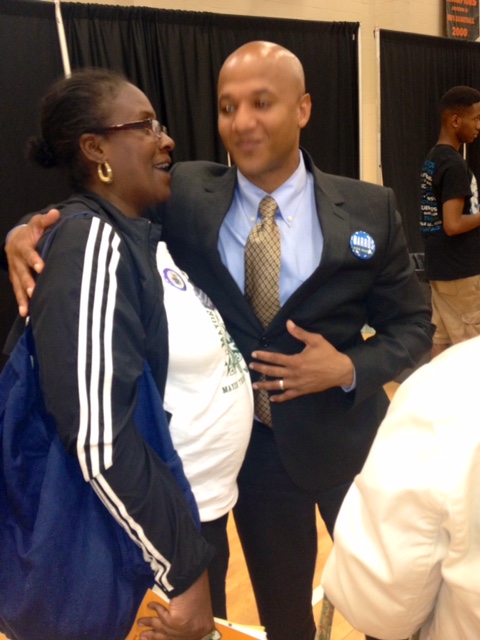
^ John Barros, Boston’s Director of Business Development : helping women become entrepreneurs. Cities do that.

—- —- —- —-

Why is it so hard or a woman to start a new business ?

That was the question asked of me yesterday by a good friend, a woman of long-time American heritage who lives in an exurb on the North Shore. She was responding to a facebook post showing that immigrants start businesses at almost double the rate of long-time Americans.

Her question is a good one, as is the issue of why immigrants start so many more businesses than long time Americans. Neither admits of a simple answer. There isn’t room, in an op-ed of 700 to 1000 words, to list and analyze all the likely reasons why immigrants do entrepreneurship so well, or why a non-immigrant woman living in an exurb might find it hard to start a business; but it’s well worth briefing some of the factors.

Immigrants have two ready advantages over long-time Amerricans. First, because they live in communities of language, often close by each other, they start all the businesses that the nation at large starts but which they, not proficient in English, or not speaking it at all, cannot patronize : they do restaurants, their own insurance firns, their own lawyers and tax accountants. They do radio stations, groceries specializing in what they ate back home. They do check cashing, money wiring, real estate firms. These they do in addition to starting businesses, eventually, that cater to others outside their ethnic community.

Immigrants also seem better positioned to committing the entire extended family to a new business. Long-time Americans are more likely to live in nuclear familes, the relatives living far away, maybe out of state or even out of the country entirely, pursuing their separate lives; whereas immigrant families arrive more or less all at once, starting their American lives at the same time and place and thus all available to help.

The second advantage immigrants enjoy is that almost all of them live in cities. It is hard to plant an immigrant community of 5000 to 10,000 people in a suburb; few in the community have money to buy a home, and out there rentals are few. To live in exurbia, one needs a car; few immigrants readily acquire funds to buy and register a car, or to pass the road test, which requires some knowledge of English. Thus immigrants by and large take the bus to work. If you ride the 5 AM to 6.30 AM buses, you will see them on their way to the jobs that they almost monopolize : cleaning offices, hospitals, college dorms, and working hotels and restaurant kitchens. These jobs are city jobs.

Living in cities gives immigrants an enormous entrepreneurial advantage. Cities are populous with diverse interests, and it is from diversity that commerce arises : a community where everyone is a farmer is a community without commerce. Commerce requires that A buys from B what she, A, does not have, and that B buys from A, what he, B, does not make. There can be some of that in exurbia, but in cities, that is the whole story. Everybody has or does soemthing that everybody else needs or wants. An immigrant can start almost any kind of business in a city and find customers : food trucks (try doing THAT in exurbia !), day care, pet walking, a gas station, a DJ service. (Yes, you can do all of these in exurbia, but it’s much much harder, because customers are sporead out and not easily informed that the new business even exists. In the City, that’;s not the case.

Cities are also where public relations businesses start up, and entertainments, and networking firms. Cities host all sorts of journalism (simply because so much of interest is happening). And cities are where most technology start-ups start, because cities are where the advanced education institutions are found — and their students.

Again, all of these can initiate in exurbia but subject to all sorts of obstacles that don’t pertain in cities.

Lastly, cities have offices of business development that help new entrepreneurs to get started. Because cities are who they are, city business development teams give special attention to immigrants, people of color and — women; extra attention and pathways to funding. Exurbia doesn’t do that. Living out there — 25 to 50 miles from the city — you’re pretty much on your own, in an environment not plenteous with commercial opportunity.

as exurbia is where my friend lives, she has full cause to complain. Perhaps she can start a pet-sitting business, or do crafts, or repair laptops and computers; or do house cleaning — all in high demand in exurban towns. She might also become a real estate broker, as many exurban women do. She’ll have to do it without much set-up help and using her own capital.

I wish I had more suggestions to offer her than these; but demographics really are destiny where commerce is the goal.

—- Mike Freedberg / Here and Sphere

AT HIS BEST, THE MAYOR, WHERE THERE IS TRUST

FullSizeRender (14)

^ Mayor Walsh speaking to voters who trust him — and who he trusts too

—– —– —– —–

Last night I saw Mayor Walsh at his best. It was “Monday with the Mayor,” and he spoke and, for almost 90 minutes, answered citizens’ questions at Excel High School in South Boston. Walsh was at ease; he knew many of the questioners personally, and they knew him. Some addressed him as Marty, not “Mayor.” He called them by their first name too. Most of the questions involved basics ; traffic, parking, housing, schools, trash removal. Walsh gave surprisingly well informed answers to most. I’m not sure that “Southie”s own representatives know the neighborhood as well as he does. It was appreciated.

It was clear that the questioners trust Walsh; and that he trusts them. Only once did I hear a speaker tell the Mayor “you don’t listen to us.” Only twice did Walsh cut off a questioner who spoke too long. Everybody else made clear that they felt well listened to, and that the Mayor really will clear up, or at least address, the neighborhood snags that were broiught to his attention. And why not ? He had with him a representative of almost every City department, and for detailed answers to some questions, he called on those representatives to provide an answer. It was very effective politics.

How different this meeting with the Mayor was, from the conentious, angry, brickbat words I’ve seen exchanged at Olympics meetings ! Different last night’s meeting was even from other Walsh Mondays that i’ve attended, in Charlestown, Mattapan, East Boston. At angry Olympics meetings, the Mayor isn’t shy about fighting back. He has a temper, and you really do not want to feel its teeth or fire. I like that in Mayor Walsh; it’s why he has supporters who will go to the mat for him. Still, a Mayor must do more than give battle to those who bring him heat. The Mayor must lead, must change minds. That, he seemed to do at last night’s Monday.

There was skepticism aplenty, among the South Boston voters conversing with the Mayor, about rising real estate taxes, housing and parking shortages, and — above all — the Olympics. “No neighborhood in the City will be as impacted as we will,” said one civic association leader. Yet she, and the several hundred who applauded her, seemed persuaded that Walsh understands the point and will not allow an Olympics plan that South Boston doesn’t accept. And why not be persuaded ? As Walsh said, “i live right across the bridge from here, i have family here.”

He might also have said, “and you guys voted or me.” In his 2013 campaign, Walsh carried South Boston by 20 points. He is Irish, and so are most of South Boston’s activists. He is a recovering alcoholic (and mentioned it, a lot) : it’s a recovery that many South Boston people can identify with.

If anybody can lead South Boston activists, including several in the room who in 2013 opposed him, into the very, VERY different Boston that he envisions for 2030 — all night long he talked about “imagine Boston” and invited people to share their ideas for it — Walsh can. Last night he worked to do that; to get the most populous of Boston deeply rooted neighborhoods attuned to a very changed City, and, perhaps, to like it and even profit by it. Most civic leaders present applauded a lot of what Walsh was saying.

By any political measure, this was a success for Walsh. It was the Mayor at his best. He will need to match it many, many times over the coming two years as he faces a re-election campaign that right now looks stormy.

—- Mike Freedberg / Here and Sphere

DEFINING CONSEQUENCES OF GOVERNOR BAKER’S REFORM

1 Stephen Pagliuca

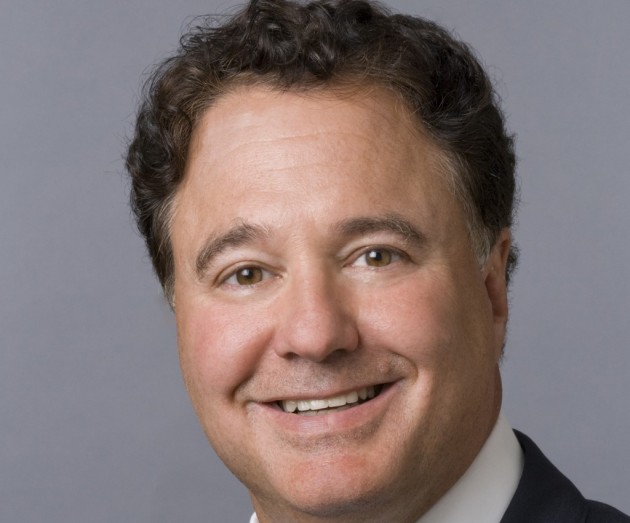
^ Boston2024’s new chief, Stephen Pagliuca : feeling the heat of Governor Baker’s “wise use of taxpayer funds” principle, now firmly established in Massachusetts public policy

—- —- —- —-

It should by now be apparent to all that “wise use of taxpayer funds” is the first principle of Governor Baker’s government reform. Don’t undertake an initiative if it wastes money; don’t do necessary state services incompetently; don’t expand a state agency that isn’t handling its current duties well.

This insistence on efficient, effective government, in both the execution and the planning stage, has radically recalibrated public policy assumptions even as it cancels, or delays, one project after another that can’t justify its budget.

Before, the assumption seemed to be “roll out the plan first, worry about paying for it later.” We now know the consequences. Governor Baker has put in place, in five short months, the exactly opposite assumption. We approve. So do the voters.

The consequences of this major shift show up all over both City and State. Most obvious is reform of the T, in which the principle of “reform first, then new revenue” is well on the way to enactment by the legislature. Clearly it was the T’s collapse that convinced voters to endorse the Baker Principle.

He has applied it to everything.

Many people were surprised that Baker decided to halt Massachusetts Department of Transportation’s move to new quarters on Tremont Street in Roxbury, yet that decision rests on the same Baker principle : get things right first before undertaking new ones. Reforming the MBTA’s operations matters more than moving its headquarters, so, reform the MBTA first. then, once that’s done, move the headquarters — maybe.

Governor Patrick had pushed the “DOT” move as a means to jump-start private investment in Roxbury — an agenda well worth achieving. Revival of Roxbury’s economy has moved ahead anyway, at a pace alarming to some, who see the neighborhood changing rapidly, becoming pricey and “gentrified.” As the only sure way to halt “gentrification” of a neighborhood is to make it less, not more, desirable to live in, those who oppose “gentrification” of Roxbury might have welcomed Baker’s move, were it as damaging to Roxbury prospects as Patrick claimed when touting the plan. Yet no such applause was heard. (NOTE : We shall see. This entire topic merits a separate op-ed, which Here and Sphere will publish at its Roxbury Here subsidiary.)

Baker has also established the axiom that state budgets should not incur deficits that have to be covered by borrowing. Hard decsions were made about funding for crucial state agencies : DCF, District attorneys’ offices, aid to early education, includiung grants. All of these programs have large constituencies; in the Patrick years, taxes would have been raised; yet the House, under Speaker DeLeo”s leadership, voted UNANIMOUSLY for Baker’s no new taxes budget.

The Baker Principle has changed the story also for the Boston Olympics bid. Opposition to the bid began with public school advocates, from both sides, the Teachers’ union and the so-called “Democrats for education reform,’ who normally oppose the Teachers Union. Why spend public money on a three week party, these folks said, when the same dollars could be allocated to schools ? It was a red herring question, because the money likely to be spent on Olympics structures wasn’t otherwise going to be spent at all; and this was seen or what it was, and the Olympics Bid went forward quite undeterred. Mayor Walsh decided to go all in, sending his top political people to the Olympics Bid staff. No sooner had he done so than support for the Bid collapsed, as the piublic began to see it as purely a haven for political typoes needing a cionsulting paycheck.

All of that was interesting to newsmakers such as me; but it also played into the Baker Principle, as the Bid Committee was seen to not have a land use plan free of embarrassing errors or t0o have a financial plan not grounded in wishes and hopes. Baker demanded a better plan, one that adheres to his Principle. He could do so, because the Bid Committee anticipates using public funds — a funding source it denied at first — and public funds are Baker’s territory. Period.

Baker has continued to demand a candid, defensile plan, even as the Bid Committee has restructured itself completely — including easing out its original chieftain, John Fish — and as it twists in the wind of its poor (even deceptive) prior planning.

Today, the Olympics Bid’s ordeal with the Baker Principle stands as the most vivid demonstration of why that Principle matters, and of its timeliness in a state where big plans are driving a booming economy of innovation. there’s hardly one voter constituency, other than the Building Trades Unions, that do not stand with Baker’s applying his Principle to the Olympics Bid; and support for applying his Principle to the MBTA — and all of state government — seems hardly less strong. It might even be stronger.

I’m not at all sure that the OLympics Bid Committee can come up with a plan that meets the Baker test. But they will have to, or else be defeated. Because the Baker Principle has taken deep root and now guides all of Massachusetts public policy — Roxbury dynamics and Olympics dreams included.

—- Mike Freedberg / Here and Sphere
FIXING THE T : THE CARMEN’S UNION THREATENS WAR

1 james o'brien

^ Carmen’s Union’s James O’brien opposes a Fiscal Control Board for the T,  threatens to invoke the Federal Transit Act

—- —- —- —-

Yesterday’s Boston Globe reported that the Carmen’s Union, which represents most MBTA workers, refuses to accept the Fiscal Control Board that Goveror Baker and the legislature seek to enact, and by which the Governor will possess full power to reform every part of the MBTA’s operations.

Said their President James O’brien, the Carmen will invoke a 1974 Federal law that protects transit workers throughout the nation from having any of their bargaining rights amended — a law that authorizes the Federal government to withhold Federal funds assistance from any authority seeking to amend those worker protections. In the case of the MBTA, those funds amount to several billions of dollars. O’Brien is saying, in essence, that he will crash the T rather than compromise even one part of the Carmen’s bargaining agreements.

It’s worth reading the transit law that O’Brien threates to invoke. So here it is — the statutory requirements of Section 13(c) of the Federal Transit Act, as codified at 49 U.S.C. § 5333(b):

“It shall be a condition of any assistance under section 3 of this Act that fair and
equitable arrangements are made, as determined by the Secretary of Labor, to protect the
interests of employees affected by such assistance. Such protective arrangements shall
include, without being limited to, such provisions as may be necessary for (1) the
preservation of rights, privileges, and benefits (including continuation of pension rights
and benefits) under existing collective bargaining agreements or otherwise; (2) the
continuation of collective bargaining rights; (3) the protection of individual employees
against a worsening of their positions with respect to their employment; (4) assurances
of employment to employees of acquired mass transportation systems and priority of
reemployment of employees terminated or laid off; and (5) paid training or retraining
programs. Such arrangements shall include provisions protecting individual employees
against a worsening of their positions with respect to their employment which shall m no
event provide benefits less than those established pursuant to section 5(2)(f) of the Act
of February 4, 1887 (24 Stat. 379), as amended. The contract for the granting of any
such assistance shall specify the terms and conditions of the protective arrangements.”

The language of Section 13(c) seems inescapable. If Baker’s T reform seeks to amend even one bargained agreement with the Carmen, the Secretary of Labor can move to withhold Federal transportation assistance from that transit system.

Section 13(c)(1) and (2) leave no room whatsoever for unilateral alterations. But two of the proposed changes that the Carmen object to may not fall under a bargaining agreement. First : is the operation of the MBTA pension system a contractual right ? Second, is the Pacheco Law — an entirely separate, state enactment regarding the process needed before T workers’ work is outsourced — any part of the Carmen’s actual bargaining agreement, or is it, instead, a separate protection, entirely state-sanctioned, and thus not covered by the Federal law O’Brien threatens to invoke ?

The one bargaining right assured to  the Carmen by the Transit Act is binding arbitration. It’s specifically mentioned in therein.  Some have argued that as no other public worker union in Massachusetts enjoys unreviewable binding arbitration, why should the Carmen have it ? True : all other public worker unions arbitration rights are subject to review by city councils, mayors, and town managers. Why should T workers not see their arbitration awards subject to review ? Boston Mayor Marty Walsh, when he was a state representative, introduced legislation to remove the reviewability of arbitration awards; it went nowhere. Public sentiment has moved in the opposite direction.

Nonetheless, the Federal Transit act stands. O’Brien is free to invoke it to safeguard binding arbitration. Does he really want to do that ? Maybe he does.

My own opinion is that the Governor and legislature should forge ahead with the top to bottom T reform law they are likely to enact; and let the Carmen do their damedest. The law they seek to invoke does not apply at all unless an actual move is made by the Fiscal Control Board (FCB) to make the unilateral changes O’Brien complains of. Meanwhile, the state can petition the Department of Labor for an administrative opinion letter as to what the FCB can and cannot do.

Meanwhile, I am not sure that O’Brien will, in fact, invoke the Federal Transit Act and its withholding of Federal funds assistance. To do so would put the Carmen at odds with the entire riding and taxpaying public, as well as with the legislature and governor. It would be the end for any public support at all for T workers and their bargains, at a time when public unions do not look particularly good to most voters. It would be a huge mistake for the Carmen — for any public workers’ union — to take such a course.

NOTE : for those who want to read the emntire Federal Transit Act, and learn its legislative history, as a significant study in public policy as it operates upon our nation, here’s a link to the entire thing :

Click to access tcrp_lrd_04.pdf

—- Mike Freedberg / Here and Sphere

REJECTING THE RIGHT WING ROOT AND BRANCH

1 President O speaks

^ the right-wing noise fantasy — fakers all — hates the America that President Obama is president of, but it’s glad to rake in millions of dollars from hate media which Obama’s America allows.

This has gone far enough.

For at least six years, Americans have been pummeled by the ugliest sort of negativity from what we call the “Right Wing.” Racism, selfishness, religion on the hoof, guns in your face, demeaning of everyody who isn’t White and — by their definition of it — Christian. The election of President Obama boomed this wave of anti, but even during George W. Bush’s presidency it festered. And now comes the lunacy that has circulated through social media these past two weeks, that an Army training exercise in Texas is actiually a plot to “take over” the state.

This has gone more than far enough.

This sort of craziness would be insignificant — clown car stuff– were it not that media controlled and funded by bigot billionaires give it enormous presence, seducing us to think that it represents many people, whereas it represents hardly any. It is but a loud fart farted from a very small butthole.

This smelly buffoonery toilets the noses of millions, persuading us, ny its stink, that something factual is at our door. It isn’t. None of it is a fact;. Nothing that right wing media bellows at us has any truth to it at all. It is false, as anyone can find who takes the time to do some serious looking at how things actually fall out.

The typical tactic of rightist media is to hit upon a incident which no one else finds of any importance, edit that incident, cut and splice the events, and reshape them as something that never did happen at all, then bellow that invented event at you as if it were your danger.

This has gone well beyond far enough.

Nothing of this diverges from what Nazi Germany did, or Stalin’s Russia, or from any other tyranny imposed, in the age of radio, TV, and the internet, by pirates and schemers lying to people and spreading groundless fears among us. But one difference there is : ur current noise folks do it for the money it brings them. Hucksters. Elmer Gantry.

As Franklin Delano Roosevelt said in 1933, “the only thing we have to fear is fear itself.” He said this at a time when Americans had plenty to worry about, and at which there were plenty of demagogues and liars all around — some with microphones and large audiences of the scared — bellowing out doom and hatred. Go listen sometime to the rants of Gerald L. K. Smith.

It stopped back then, and it must stop now. And if you won’t stop it, we will.

To the falsifiers, the propagandists, the apologist for greed, for bigotry, for guns and racism, the pugs who wrap their butts in “the Constitution” — whose purposes they actually oppose — as they go about attacking our nation, insulting what it stands for, we say this : America is not you and never will be you.

Though the struggle is difficult, and made much more difficult because of the noise glitter uttered by bigot media — which many seem to believe who ougut to know better — the America of tomorrow is coming : diverse, optimistic, innovative, tolerant, respectful, less violent; brave and welcoming.

The new America is growing fast in our big cities, whence it shall spread to the rest of our country, erasing the illusions, ridiculing the falsities, dissolving the fears and the hatreds, many of them spread by policy pimps whose purpose is to profit from people’s willingness to believe craven liars.

The new America is ours. Let us go for it, emabrace it, teach it to our children.

—- Mike Freedberg / Here and Sphere

LOOKING PAST THE POLITICS OF PESSIMISM

1 Boston on a hill

^ Boston at night seen from East Boston. Our City on the coast was — and is being — built by believers in a better future

—- —- —- —-

America exists because many generationms o men annd wome have opted to make the world new. Optimism drives the nation, makes it what it is ; a land of tomorrow.

There are plenty of human societies in which yesterday is the goal. Whose people fear the future, terribly afraid of what it may ring and what it means. America has never bee among them. It has been the place to which believers in the future have come. We call such people “immigrants.” they are us.

But today that which America has ever been is fast becoming what it now is : a land in which people fear the future and what it will bring. Every poll shows that a huge majority of Americans think the nation is on “the wrong track.” The same polls show overwhelmig disapproval of Congress. that isn’t surprising. People who fear the future fear especially the government charged with leading them ito the future.

Why do so many Americans fear the future ? It’s easy to say that declining earnings and buying power make people afraid. They do. But there is much more afoot than that. As Thomas Friedman recently opined in the New York Times, the entire world of work, of production, of education and information, is changing top to bottom; and few of us have figured out how to adapt to that revolution in human arrangements.

We who live in Boston see it up close. The economy of collaborative competition among small start ups and research outfits, bound together by networking and public relations, and fueled by educational experimentation in partnership with business and government, has grow up all around us without — util recently — our really noticing. Now we notice big time. Now that it has taken command of our institutions, our salaries, our living costs and our social arrangements, we see it, we feel it. It hurts even we who live among it. imagine how those who live far beyond the City and its economy must feel about things.

Pessimism ? Let me count the ways : Student debt that can’t be paid off; graduates who cannot find jos i their study field, or at all; an interview process that excludes almost everybody; background checks that eliminate entire categories of people; layoffs and more layoffs, followed by years of searching for a new job at half the pay — and ot getting one; rising costs or housing; expensive credit card fees and bank charges; the enormous costs that we shove onto the shoulders of the poor, including the risk of ies and penalties for those who drive without insurance because they can’t afford it or without a license because they can’t pay old traffic tickets — not to mention back child support.

internet access costs money. So does a new smartphone. The cell service bill, with unlimited data — which one needs — costs at least $ 100 per line per month. Utilities are not cheap, given our City’s heating season. Cable TV costs about 4 170 a month. Parking a car costs up to $ 20 a day downtown. Clothes needed for city life cost money, entertainments and a meal out cost even more. If you aren’t making $80,000 a year at least, you can’t hang out, can’t network, can’t stay with the momentum. And the $ 80,000 a year jobs are there, for the lucky few who have the education, the imagination, the connections and the look. Even the $ 150,000 jobs are there, and some at $ 250,000.

the people earning such salries have the optimism that livelies up a room. Go to Row 34, or Trade, or the Bostonia Pub or Cathedral Station, Stephanie’s, Bricco, the Navy Yard Bistro, and Bastille Kitchen : you’ll see them conversing and discussing all the way through $ 40 a person meals and $ 7 craft beers. No politics of pessimism here.

But for every 100 people yoiu will see at these smartphoned boites there’s 10,000 people who don’t have the money to pay last month’s cable TV bill, or two months ago’s electric bill, or their auto excise tax, much less afford a $ 40 meal out. 10,000 stay at homes who you do not see but who exist living “lives of quiet desperation,” as Henry David Thoreau once said of the average family. Among them, the politics of pessimism rule. It’s a wonder that — at least here in Massachusetts — more people living on the edge (or over it) have ot yet plunked for political pessimism.

Oe tright spot : the Downtown inovatots who ear $ 80,000 to 4 250,000 a year 9ad higher) buy a loty of stuff from businesses who employ a lot of service workers. The next twety years will see a huge urst of service jobs. We should assure that those thousands of new service workers (and those already working) enough money to buy the same stuff that they serve. That was the principle that made Henry Ford a rich man and grew America : “my workers should earn enough to buy the cars that they make,” he said. He paid them that, and buy they did.

The $ 15 ann hour wage that Boston’s service workers now seek is a good start. Frankly, i would not mind seeing full time service workers earn $ 22 an hour. They earn that in much of Europe, with benefits too. Why not here ? Many US cities are already ordering the $ 15 an hour wage. Businesses are flocking to such cities, because they know that there they’ll find an entire populace with money to spend.

The economic revolution well under way is going to breed more pessimism still. Every arrangement our society has taken for granted will be not at all the same ten years from now, 20 years, 50 years. Not work, not education, not business, not wages, not transportation, not the climate, not lifestyles. Yet we cannot go back to what was. Those ways have been rendered useless. we have only two feasible options : grumble through the changes, or take command, make ourselves masters of it all. Just as our boldest forbears did, again and again.

Three good places to start : raise the miimum wage to $ 15 an hour, or higher, and adjust other wages accordingly; make community college tuition free for all, including for undocumented immigrants; and free publicly funded education from the one size fits all, work rule inertia that keeps schools focused on 1930, not 2030.

Too difficult ? i think not. As Nelson Mandela, the greatest of political optimists, famously said : ‘it always looks impossible until it’s done.”

—- Mike Freedberg / Here and Sphere

MBTA REFORM AND STAN ROSENBERG’S LONG GAME

1 Speaker DeLeo fights1 Stan Roseberg speaks

^ Speaker DeLeo has neatly deflected Senate President Rosenberg’s power play — for now — by advancing the Governor’s T reforms

—- —- —- —-

With the announcement today by House Speaker Robert DeLeo that he supports Governor Baker’s call for creation of a Financial Control Board to operate the MBTA, full reform of the “T” looks as if it’s going to happen. Actually.

i attribute the Speaker’s decision at least in part — maybe important part — to the ongoing turf war between the House and State Senate. Senate President Rosenberg has made it quite clear from the beginning of this session that he had an agenda of his own, and he has pursued that agenda relentlessly. One part of that agenda is to free the Senate from dominance by the House. Speaker deLeo has fought back. The dispute remains undecided.

Rosenberg’s power play has led to huge changes on Beacon Hill. For the past two decades plus, Beacon Hill has been run by the Governor and the key legislative leader worling in parthership. While Bill Bulger was Senate president, he was the partner. But ever since then, the House Speaker has been the dominant. Governors who failed to accept a subordinate role found very quickly that they had no role in legislation. Governor Baker early on realized that partnership with DeLeo was the only way for him to have any effect at all.

That was how it looked when, on January 8th of this year, Baker was sworn in. But almost the next day, Senate President Rosenberg announced that he was no longer satisfied with being a minority player in joint legislative committees; that the Senate wanted equal representation or it would set up its own committees.

The dispute at first seemed procedural only — a musical chairs thing but not a policy fight. Fairly soon that impression was shown the door. By March at the latest it became evident that Rosenberg — supported by several very vocal Senate members, Jamie Eldridge above all — intended to pursue the so-called “progressive” agenda. It was, and is, an agenda that DeLeo does not support.

Progressives made it quite clear during last year’s Governor campaign, in which they advanced a candidate of their own, Don Berwick, that they viewed DeLeo as an obstacle. His priorities align closely with those of the business community — and with the Governor’s. The progressives have other connections.

It seemed, as Rosenberg took the Senate into progressive policy space, that his move would make it difficult for Baker and DeLeo by themselves to settle the state’s business. The opposite has happened. As DeLeo has fought back, he has actually strengthened his partnership with the Governor on many key issues, because he now needs the Governor as much as the Governor needs him.

DeLeo has fought this new battle impressively. The house unanimously enacted Baker’s no new tax, fiscal year 2016 budget, with its deep cuts to many programs — cuts necessitated by a $ 1.8 billion deficit. That unanimous vote included all the House’s progressives, even the most progressive. Unanimously they voted for a budget matching Governor Baker’s.

The Fight for MBTA reform seemed, until today, to be a different matter. The legislature speedily gave the Governor complete control of the Department of Transportation’s oversight board — but not, yet, the Fiscal Control baord that he wanted in order to gain day to day, operational control of the T itself. Senator Rosenberg, too, was quick to give Baker that; and why not ? Giving Baker — the expert manager — full control of a board that appeared to have control of the T but actually does not have it, was giving him a booby trapped gift : with only oversight under his control, Baker would not be able to reform the T (its unions especially) and, in 2018, with an unreformed T obvious to all, Rosenberg and his likely 2018 Governor candidate could campaign against the managerial failure of “expert manager'” Baker.

The Governor does not seem to have realized that a trap was being set. To the Transportation Board — all of it now his to appoint — he appointed only one person likely to be in the Senate camp : Local 26 President Brian Lang; whereas he ought to have appointed only Senate candidates, people who, he could say in 2018, had hindered his expertise in supporting the T status quo.

He did not do that, and until today, the risk was real.

Speaker DeLeo’s support for the Fiscal Control Board wanted by the Governor may not do the trick; but I think it will — a few Senators already support it, dividing that now isolated body. More importantly, the Speaker’s move heads off the entire Rosenberg 2018 argument.

Rosenberg would be wise now to concede. He has made his point. He has proved to the progressives that the Senate is theirs, a launching pad for a 2018 Governor candidacy. Here, Rosenberg cannot lose. If his progressive Governor candidate wins, he has bested the Speaker. If that candidate loses, Rosenberg still controls the path to the Democratic nomination, giving his fellow progressives the dominant position in future Democratic nominations. And who knows ? After 2018 he may even confront a different Speaker who hasn’t the enormous power now wielded by DeLeo.

That, in my view, is Rosenberg’s long game. The Speaker has smartly deflected the gambit, or now — and full T reform will surely follow. But there are other fights ahead, on issues in which the public is not as universally on the side of both Governor and Speaker as it is with regard to the T. I think of early education funding, or alternative energy priorities (incliuding funding for the Department of Environmental affairs), and the DCF caseload crisis. All these will reuire new revenues and thus, possibly, new taxes. The fiscal year 2017 budget will be the arena in which Rosenberg will make his nexxt, much stronger move in what is — so far — a brilliantly planned long game.

—- Mike Freedberg / Here and Sphere