TRANSFORMATION AT CITY HALL

atyia martin

^ Mayor Walsh names Boston Public Health Commission member Dr. Atyia Martin as Chief Resilience Officer

—- —- —-

Those who paid attention to Mayor Walsh only in the context of the Boston 2024 Olympics pie fight have missed the big picture. There, the Mayor was seen in his old Boston guise : union leader leading a coalition of Building Trades guys and the big developers who give Building trades guys (and gals) their big pay checks; a following of loyalists, many of them from the Eastern side of Boston and bearing last names of often Irish provenance.

To be sure, that is Mayor Walsh’s core following. But the Mayor is not standing still. Anyone who has tracked his management hires these past few months can see that he’s making good on changing the look and sound of City Hall. To list but the most prominent :  Tommy Chang, Boston Public School Superintendent; Shaun Blugh, Chief Diversity Officer; Bill Gross, Boston Police Superintendent; Jascha Franklin-Hodge as Chief Information Officer; Daniel A. Koh, Chief of Staff; and now Dr. Atyia Martin, a Boston Public Health Commission member with FBi and Boston Police experience, as Chief Resilience Officer, charged with outreaching to poorer Bostonians who may be impacted  by disasters natural or otherwise.

Martin’s appointment has been well received by many — particularly popular with the people she has ben tasked to assist.

Lastly, Mayor Walsh has named a OneIn3 Council of 37, hardly. any of which names I know :

Kevin Becerra, Dorchester,
Leland Berman, Beacon Hill
Emma Blaxter, Jamaica Plain
Nicola Braginsky, Fenway/Kenmore
Diana Brennan, Beacon Hill
Alessandra Brown, Hyde Park
David Brown, West Roxbury
Jessica DesCarles, Dorchester
Andrew Destefano, East Boston
Max Egan, Back Bay
Jessica Frattaroli, North End
Dave Falvey, South Boston
Christine Galatis, Roslindale
Cristina Garmendia, Allston
Reynolds Graves, Roxbury
Karleen Herbst, South Boston
Liam Hoare, East Boston
Chu Huang, South End
John Hynes, Fort Point
Jasmin Johansen, Mattapan
Senam Kumahia, Back Bay
Michael Landry, South End
Kevin Liang, West End
Marlena Love, South End
Cara Matthews, Roxbury
Benji Moll, Back Bay
Tyler Murphy, Downtown
Ruth Nkemontoh, Brighton
Anthony Richards, Dorchester
Nicole Rodriguez, Roslindale
Christopher Rusk, West Roxbury
Ken Ryan, South Boston
Rachel Spekman, Dorchester
Ryan Walsh, South Boston
Donald Washington, Hyde Park
Adam Weisman, Back Bay
Matthew Wells, South Boston

These are not the same old same old, not at all. Mayor Walsh has also put out a public request, via online, for consulting services to implement his very ambitious Imagine 2030 Plan. To underscore his determination, Walsh’s chief of staff has also moved to bring aboard — so I am informed — all manner of young, tech-savvy programmers and web managers to lift the City’s entire communications system up to state of the art online for smartphones, ipads, and other interactive devices.

It shows. If you follow Mayor Walsh on twitter or facebook, he is always interacting with you; he holds weekly tweet sessions inviting public feedback, and Imagine Boston 2030’s entire operation solicits — and receives — immense public feedback directly to its data gathering staff.

Almost two years remain before Walsh’s re-election effort faces show time. Given the opposition that has arisen by way of the Olympics, chiefly, but also his foray into campaigns that did not succeed, not to overlook his ongoing battle with casino mogul Steve Wynn, Walsh badly needs every bit of the transformation and technology that he is rapidly putting in place.

If he can mobilize the thousands of Boston people who are feeding back into his several outreach initiatives — if he can bring even a decent fraction of them into the direct campaign process — he will be hard to beat. No serious opponent whose name people talk to me about can likely match the Mayor’s potential support. Opponents will probably look chiefly to the traditional type of activist — the “community person” (we used to call them “opinion leaders”) — because that’s who’s easiest to see, hear, and get to know. A potential opponent can also draw upon opinion leaders’ support group. But this traditional source of campaign boost, strong as it is, can’t match the vast number of people interfacing with the new, tech-driven City Hall, if — a big IF — these can be raised from the interface level to that of active supporter.

That won’t be easy. The Mayor’s core group aren’t well placed, socially or even geographically, to recruit interface people. His most dependable canvassers and door-knockers are marvels of dedication, but at the new game, they’re not likely the best troops. In addition, I hear that there is some friction between the Mayor’s technology cadres and his traditional supporters. That cannot help, because he can NOT do without his best (and best liked) core operatives at his side.

The Mayor has also found himself maneuvered into corners which he freed himself from only at the cost of looking weak. It was embarrassing to watch him, during the climax of Olympics battle, get pinned to the transparency wall by Councillor Jackson’s subpoena order, escaping only by surrendering a vital principle of Mayoral authority.

That said, it is good for the transformation of Boston that the Mayor looks weak to some, and maybe even to himself . He isn’t going to coast or boast his way into the upcoming battle. He knows he has a fight on his hands and that he is assembling an army that doesn’t even realize it’s going to be an army, facing opponents who know who to mobilize and how. But risk isn’t merely Walsh’s fate. It’s his opportunity. Transforming City governance is the right thing to do. That alone is a strong argument for re-electing him.

Will it work ? Probably, but not definitely. 2017 is going to be an interesting election.

—- MIke Freedberg / Here and Sphere

ASSESSING THE MASSACHUSETTS CONSENSUS

consensus

^ consensus in “liberal” Massachusetts

—- —- —-

We’ve written before about the remarkable, political consensus that has enabled important reforms to take hold in how our State operates. Now comes an article in today’s Boston Globe examining a few aspects, at least, of why that consensus thrives. The writer shows, statistically, that our legislature is the second most liberal in the nation, and he tells us why : almost all our legislators hew to the political middle, more or less.We have, says the writer, no conservatives, which is enough, despite our also having few far left legislators, to make us second only to California for liberalism.

You can link directly to Evan Horowitz’s story here : http://www.bostonglobe.com/2015/08/09/how-liberal-massachusetts/5Ryp0CxUBidusnB8TY8fbM/story.html

I disagree with Horowitz’s findings but not with his close observation. Our legislature is hardly as liberal as he claims. If anything, it’s the very definition of centrist. The fascination is to see why that Is so, in a state whose vote does have a very deep blue complexion in national elections.

First : Republicans make up only 11 percent of the state’s voters and are able to win legislative elections only in districts far from Boston.

Second : because Republicans are so few, and because Republican legislators number hardly more than a few, the major super PACs and right wing advocacy groups do not spend money or time here. After all, they want to win stuff.

Third : lacking a right wing donor base to fund their campaigns, Republican candidates for the Massachusetts legislature have no choice but to seek campaign funds from actual voters, whose donations are limited by law to $ 1,000 per year. Thus Republican legislative campaigns must appeal to a fairly broad base of voters. A Republican candidate in Massachusetts has no oligarchic ideologue to fund circumvention of the electorate.

Fourth : because the Speaker of the House rules the House absolutely, and because the Senate President wields almost as much power, Republican legislators could not gridlock the legislature even if they wanted to. They would simply be shut out; and as their numbers aren’t close to enough to sustain a veto or override a ruling, they have little choice but to “work with” the Speaker and Senate President.

Fifth : on the Democratic side, the PAC-funded, advocacy-directed party that dominates Massachusetts’s national elections cannot press its advantage locally, because ( a ) the majority Massachusetts voters aren’t Democrats (the party counts only 36 – 37 % of voters) and, second, because the Speaker and Senate President find it easier to maintain dictatorial control by pushing controversial agendas to the side. (This doesn’t mean that controversial agendas get no attention at all. They do. But they are not made a priority. To reach that status they have to amass a significant, broad based of support. Which to me is how it should be.)

Sixth : because the Democrats control the legislature so overwhelmingly, few if any left-leaning PABCs and advocacy groups press their points. Their only opening would come in the Democratic primary, but because controversial agendas don’t motivate most primary voters — who choose this or that candidate by familiarity or character — they can’t often elect an ideological candidate. And what if they do ? He or she will s\till have to defer to the Speaker or Senate President.

\Seven : because our state votes almost two to one Democrat in national elections, it is never in play and so national party organizing never takes place, nor is there any local debate. Massachusetts party organizations are built by locals for local reasons, and if there is any debate,. it’s about local, Massachusetts issues in which the dominant tone is commanded by the majority of our voters being of neither political party.

Will this situation continue ? That’s an important question. My guess is that it will. Here’s why :

One : power and politics in America are devolving rapidly back to the states, as Washington gridlock becomes the norm. If nothing can happen by way of the Federal government, it has to happen in the states — which pre-exist the Constitution and in it retained significant powers, especially the electoral college method of electing a President.

Two : the big money right-wing agenda PACs have concentrated their spending and candidate recruitment in the starts where they think they can win, and thereby have achieved much of their aims in those states, which today make up about half of all. States controlled by right-wing PACs suffice to block anything they dislike from becoming law in Washington.

Three : the same is true of Democratic-leaning PACs and voter groups, which today dominate the other half of our 50 states. It’s enough to prevent any agenda that Democrats don’t like from becoming law in Washington.

We see the “prevention” purpose of today’s national politics in the arguments made for electing the next President. Folks tell me I must vote for Hillary Clinton not for what agenda she may advocate but for whom she will pick for the Supreme Court. The same argument is given to me on behalf of Jeb Bush. This is telling, because the Supreme Court cannot Do anything; all it does is to permit or disallow. Its power is entirely negative. Somehow, electing a President to prevent stuff doesn’t exactly empower him or her to render the Federal government active again.

There is, of course, a counterpoint to all of this. The supporters of Donald Trump want him to wipe out the Democratic half of states. Those who support Bernie Sanders want the opposite. This is why they are so angry. They cannot abide that America today has devolved into two kinds of states pursuing two opposite agendas — one of which they loathe, the other love — or that Washington can’t do anything. They want everything to go “my way or the highway.” They insist.

My guess on this aspect is that it will fail. Most voters aren’t ideologues and go with the flow. And the flow is to enable, empower, and harden two different agendas in two sets of states, the gridlocked Federal government all but powerless to interfere with either. It’s a system that works for those who drive it. And, for the most part, it works for the voters who elect it, otherwise they wouldn’t do so.

—- Mike Freedberg / Here and Sphere

PROS AND CONS OF THE IRAN AGREEMENT

Schumer

^ opposing Iran Agreement and being “punished” for his decision : New York’s Senator Charles Schumer

—- —- —- —-

Recently we opined in support of the Iran agreement negotiated by six nations and Iran. Nothing has changed; we stand by our position. So why revisit the issue ? We do so because we do not like the ugly tactics visited upon Senators by supporters and opponents of the arrangement.

First, we’re outraged that supporters of the agreement want to “punish” Senator Charles Schumer of New York for opposing the deal. Was it not just a month ago that activists were excoriating Democratic Senators for supporting a Presidential initiative (the Trans Pacific Partnership, familiarly known as “TPP”) ? For us, a Senator’s decision on the Iran arrangement, as with the TPP, is his or her right. We may disagree with the choice, but we understand that no Senator is us, and that we need to accept that no Senator will likely take the view that we take, every time or even most times.

Every serious political person understands that if a Senator can’t be with you on this issue, there’;s always a next issue. So why make an enemy of a Senator thereby ? Disagree with the Senator, respectfully —  don’t seek to “punish” him or her — and then work to win the Senator’s support next time. That is how Senators themselves do; why should we adopt an uglier standard ?

If the President’s Iran arrangement cannot win sufficient support in the Senate to survive negation, maybe that’s how it should be. As we see it, it’s up to supporters of the arrangement to make a sufficient case to win the vote. If we cannot do that, shame on us, not on the Senators who we could not convince.

Our own view is that support for the agreement is entirely negative : every other outcome is worse. Many Senators think otherwise, nor can we say assuredly that they are wrong. If the agreement is to work, without overturning arrangements in the Middle East, all parties will have to remember why they agreed in the first place : to keep the peace and to bring Iran’s 80 million people fully into the world economy. Nothing about this purpose is guaranteed. Whatever Iran’s people may want — and we do believe that most want to embrace a Western lifestyle — that nation’s leaders have much power to prevent such outcome. Leaders of even democratic nations have much power to steer their inhabitants; the people of an oligarchic nation like Iran can want all day long and not get — and can do very little about it. We are therefore taking a gamble on events well beyond our control evolving favorably. It is fingers crossed time.

Which makes the opposition’s case actually the more realistic. Iran will get sanctions relief, and quite a bit of those billions of dollars will likely allocate to conventional weaponry for Iran’s Middle East proxies. Here’s the part of the agreement that decided Schumer’s vote. What, then, does Iran want its proxy militias to do with those billions ? I cannot tell; but my guess is that Iran wants — first of all — to keep the region’s Sunni militias far away from Iran’s borders. Second, yes, Iran wants to support Shi’ite populations in neighboring countries where they’re an oppressed minority. Can we live with that ? It depends. Third : Iran talks a lot about eliminating Israel. can it do that ? Not at all, and I suspect Iran’s leaders know that. However, by talking down Israel, Iran can embarrass the unadmitted alliance between  Israel and the major Sunni Muslim powers : Saudi Arabia, Jordan, and Egypt. As long as those three powers cannot openly team up with Israel, Iran denies them the support of the region’s ,most powerful military and strongest economy.

If i am right about what Iran’s leaders want — or what they expect they can achieve without having war dropped on them — then the President’s Iran agreement will be e a boon even of full rapprochement between the West and Iran does not transpire. I think this will indeed be the result of the great negotiation; but I could well be wrong.

—- Mike Freedberg / Here and Sphere

PUSHING BACK AGAINST POLITICAL ANARCHY

Bernietrump

^ anarchy at work — disrupters shoving Bernie Sanders aside; Donald Trump vomiting ego on everyone

—- —- —- —-

Anarchy need not be a thousand bomb tossers. One person amok can be anarchy. Thus it is that American politics today finds itself beset by anarchy from both directions, the right and the left.

On the left we find the more traditional events of anarchy ; disrupters, highway blockers, internet trolls attacking each other and their soi-disant allies. (Did they really disrupt Bernie Sanders, their most likely defender ? It looks as if they did.) These we’re familiar with. We are accustomed to code pink, to Greenpeace kayaks, to animal rights activists attacking wearers of fur. The older of us may recall anti-war protesters blocking railways, pouring blood on Pentagon files, etc.

Why the left’s anarchists do what they do, who can say. Certainly they do not do it to grow support for their cause — just the opposite ensues. My take is that they do it because it makes them feel good. It really is all about them. Fifty years of encounter with anarchy from the left has matured our response : we now dismiss it as what it is — “all about me” — and continue to supporting the reforms that the anarchists claim to act on behalf of.

Whichever the case, the work of reformers goes on, bit by bit, step by step, as it has to in a society complex and diverse, with all kinds of competing interests to be challenged, persuaded, assembled, compromised with. Reform on Beacon Hill this year is a case study in how it’s done when all responsible parties accept responsibility for acting responsibly on time.

Anarchy from the right, we’re not so sure of. We’ve yet to craft a response to the loud-mouthing, the bullying, the libertine barfing that has struck.

I refer of course to Trump. What else is his vomit of hate, his spit of insults, his upchuck of bluster, if not anarchy ?

Anarchists can act alone, and do. One anarchist’s bullets started World War I. Today we see them as terrorists; but the line between terror and anarchy is one of degree, not kind. The behavior of Trump is anarchy, and because it is words, not bullets or highway blocking, it isn’t criminal and so cloaks itself in civil rights protections whose principle it contemns.

The bluster anarchy of Trump also draws support. Where the criminal anarchy of the left alienates, the puffery of Trump allows everyone with grievance diarrhea to take a very loud dump. And who of us doesn’t have a grievance ? Being aggrieved is a common thing, an OK state of mind.

Unfortunately for Trump, grievances don ‘t line up neatly. Your grievance is not my grievance. And what of those of us who don;’t give in to grievance, who accept that things do not always go our way when we want them to ? Very likely we find Trump’s gripe dumps a ludicrous or distasteful bother.

And so it would be; Trump anarchy would get pushed aside as readily as the left’s disruptions and highway blockings, except for one inconvenient fact : grievance has become the norm for the GOP onto which Trump is dumping. If you are Republican, Trump dump is simply a livid phase of what you already are.

We can dismiss leftist anarchy because it is not us. It is harder to cast aside anarchy that is us. To do that, we have to start taking a hard look at who we are, we the Republicans who have allowed grievance to become our dictator. If Republicans cannot make that step — cannot move from blaming others to blaming themselves — Trump anarchy will continue to befoul Republican thinking and render it almost impossible for the party to win a majority.

Yet the opportunity is there. Republican candidates need — in a hurry — to overwhelm Trump anarchy with positive politics that exchanges grievance for growth, insult for ideals, vulgarity for vision. You can’t defeat grievance by embracing it. Instead of repealing President Obama, the party should improve upon his reforms — and there is much about them. Instead of vilifying government, Republicans should offer ways to make it do a better job — and there is much in the Obama record that needs a better doing. Instead of imposing angry religion upon voters, Republicans should free voters from being dictated to.

Were the Republican party to do this, it would make Trump even angrier and more an anarchist than ever; but it would also render him ever more alone, an insult tosser generating the kind of shrug we have learned to give to anarchists of the left. Will it happen ? I am skeptical — but very willing to be proved wrong.

—– Mike Freedberg ./ Here and Sphere

WILL THE DEVELOPING OF WORCESTER FLING A CHALLENGE AT BOSTON ?

Yesterday, after signing into law an expansion of the Earned Income Tax Credit that he had made a centerpiece of his campaign, Governor Baker headed to Worcester, joined by his Lieutenant Governor, Karyn Polito, for whom, as a resident of the region, Worcester issues are a special responsibility.

There Baker announced that the state’s capital projects fund — known as MassWorks — would allocate $ 75 million — a fifty percent increase from last year’s contribution — to downtown Worcester’s City Square project, a major development which includes the following projects, as reported last December by MassLive. I quote the details :

“The city’s Planning Board Wednesday unanimously approved plans for the construction of 370 new apartment units as well as retail space as part of the CitySquare project — a $563 million multi-phased private/public commercial real estate project which aims to create a vibrant, pedestrian-friendly center in downtown Worcester.…the plan consists of two five-story apartment buildings — one with 239 units and the other with 131 units. A 479-space parking garage and 12,000 square feet of retail space will also be included in the project.. 

The development is just the latest in the ongoing CitySquare project, which kicked off in earnest in 2010 with the start of demolition of the former Worcester Common Outlets, previously known as the Worcester Center Galleria. The demolition of the mall allowed the city to reopen Front Street, which the mall had been built on. The move reconnected Worcester Common with Washington Square.” 

Spreading the huge wealth that is the “Boston boom” out to Massachusetts’ “Gateway” cities became a priority for several of last year’s Governor hopefuls. Baker said the same and by picking a running mate from the immediate Worcester metro area, he signaled that his commitment to Worcester development would be personal. Thus it was hardly a surprise to hear Baker say, yesterday, about City Square, that “We are going to continue to make that program the centerpiece in a lot of our activity in terms of public private partnerships and state and local partnerships. We are also going to expand that program to do more with it.”

All of this re-imagining of downtown Worcester contrasts vividly with the response by many to the 2024 Olympic Games Bid Committee re-imagining of Boston.

For example : Mayor Petty joined Baker and Polito throughout the Governor’s appearance and had this to say :  “It doesn’t look like much now, but when it’s completed City Square will be a very different place and it will be a very different downtown.”

Lieutenant Governor Polito sounded an even bolder note of the same  song : “…a reimagining of what downtown Worcester could be” by Murray and other Worcester leaders…Often time plans in government sit on a shelf. It takes real leadership and imagination to make those plans happen.”

IMG_9973

^ Governor Baker (R)reviews City Square plans  with Mayor Joseph Petty (center) and Lt Gov Polito (L)

—- —- —- —-

Very similar statements were made in Boston, during the debater about the 2024 Games Bid, by Mayor Walsh and Bid chairman Steve Pagliuca, as well as by the Bid’s many, many supporters. In Worcester, talk, of “re-imagining downtown” elicited praise and thank-you’s. In Boston, many were angered by it. Little wonder that whereas Baker held the Games Bid at arms length, he has gone all in for Worcester.

Boston’s loss may well be Worcester’s gain. There is only so much business to go around. Businesses that almost certainly would have rushed to Boston’s Olympics Plan, like iron filings to a magnet, had the Bid become a fact, doing so despite the density of the City and all the inconveniences arising therefrom, may now opt for Worcester, bringing their investments and jobs to that city;. After all, if one city wants you badly, and another city maybe doesn’t., where will you go ?

If you’re in the innovation game — business, education, social living — and there’s two cities to choose from, one that welcomes you and one that maybe looks upon innovation as a difficulty, you’re likely to choose the city that wants all the innovation you can bring it. Granted that Boston currently enjoys a banquet of innovation, a feast of construction, a fiesta of change that will almost certainly transform everything we are; but that is how things look now. It need not always be. Forty years ago nobody wanted anything to do with Boston; people moved out as soon as they could. Then the cycle turned. It can turn again.

Worcester enjoys ready access to Interstate routes. Its house prices run 50 to 75 percent cheaper than those in Boston — rents, too. Worcester also has many colleges. None enjoys the world fame of Harvard or MIT, but Holy Cross and Clark University, to name two, do quite well, thank you. Traffic in and around Worcester moves much more smoothly than it does in the Boston region. Worcester even has its share of superb restaurants, as anyone who dines on “restaurant row” of Shrewsbury Street will confirm. It’s a city ready to rise.

Worcester has leadership in place from local to  Beacon Hill and a civic sentiment that “it’s now our turn to shine.” Boston innovators and political leaders — chastened, perhaps, by discovering that many Boston people don’t trust “transformation” — should not assume that we will always have the boom game to ourselves.

—- Mike Freedberg / Here and Sphere

WE SUPPORT : THE PRESIDENT’S SEARCH FOR RACIAL JUSTICE

Obama          eloquence in the name of civil rights : President Obama —- —- —- —-

Sometimes people misjudge the state of things, then take their misjudgement for brilliant insight. We’re seeing this sort of mind event right now, a classic example of it.

A narrative has arisen, of late, that relations between dark complected people and those of light complexion have worsened since President Obama took office and that it’s his fault. Why we in the year 2015 are still classifying people by the complexion of their skin, I find inexplicable. What the blazes has a person’s skin shade got to do with his or her talents, imagination, good citizenship, moral worth ? Yet we see that for some people, skin shade is it. And when skin shade is The It, you can be sure that a value judgment follows immediately : in most cases, it’s light skin, good; darker skin, bad.

Police are no different from anyone else except that they are called upon to patrol neighborhoods and, therefore, people of dark skin. And if dark skin equals bad, and you are patrolling dark skinned people, it is not unlikely that you will act out your opinion. So we have recently seen in the most graphic manner available acts of injustice almost inexplicable. Some of, these acts may be explained away, but not all; clearly for many police, dark skinned people are a threat no matter what they are doing or not doing, and when said dark skin people do do something — anything — it equals danger. Dark skin people have died thereby.

We cannot forget these deaths, we must not forget them, we can never excuse them or accept them. The President has been absolutely right to speak out about it. We applaud his speaking.

When the President recalled that he, too, as a young man experienced skin color prejudice — the sound of car doors being locked as he, walked across the street — he was right to say so, to unsettle us, to make us uneasy. We applaud his having done so.

When the President said about Trayvon Martin, shot dead while walking home to his Dad’s condo with skittles and a soft drink, that had he a son he would look a lot like Martin, he was right to say so, to make us feel very uneasy, even ashamed. we applaud his candor.

The President has ordered the Department of Justice to investigate police departments in which incidents of skin color prejudice have been shown systemic and current, and to order them reformed if need be. We applaud his efforts.

What he has done and continues to do assuages skin color conflict directly; heals the wound; moves us to a higher plane. The President has called for soul searching by all of us. Is there ever a time when to soul search is anything but remedial, a thing morally beneficial to the nation ?

Those who feel that the President’s intervention on behalf of Americans whose civil rights are compromised, even to the point of being killed, have worsened race relations need to recalibrate. No just society can tolerate the deaths of Tamir Rice, Sandra Bland, Sam Dubose, Eric Garner, Walter Scott, Jerome Ferrell — and there are countless more whose names have not yet become social media hashtags. Nor is there the slightest legitimacy in pointing out, as those who blame Obama do, that dark-skin people kill each other many more times than the police kill them. Crime in and among dark skinned people is a national scandal, but as the cliche has it, two wrongs do not make it right.

That dark skin on dark skin crime exists is no justification for random police killings of dark skin people. And how can we not respond as the President has to the killing of nine church worshipers in Charleston, South Carolina ? How was their killing by a deluded young white supremacist Obama’s fault ?

What sort of a mind would even think such a thing ? The blame for such killings goes to those who do the killing. End of story !

The President spoke snd sang the anguish if tgst crime. We applaud his passion.

Lastly : it is no argument against the President that many Black Lives Matter activists express virulent racism themselves and act criminally. It is all too easy for those who endure skin color prejudice to respond in kind, to elevate their own skin color above the color of prejudices, and to sling slogans to that false elevation.It feels good to lord it over those who you think are lording it over you.

This response is wrong, and we are right to object to it. But to blame anti-racism racism on the President is to misplace. The conversation that he has initiated is even handed, is just, is deeply moral in the most honorable American tradition.

If many of us fall short thereof, or blame him for our failings, these are not his faults but ours.

—- Mike Freedberg / Here and Sphere

THESE ARE GREAT DAYS FOR GOVERNOR BAKER. MEANWHILE…

biking buddies

^ Biking buddies : Governor Baker (2nd L) and Mayor Walsh (R) at Pan-Mass Bike Ride

—- —- —- —-

How much good fortune can one elected leader acquire ? Right now Governor Baker has just about everything going his way. The state finds that — after enduring seven months of stringent accounts — has a budget surplus. Boston’s 2024 Olympics Bid became a mudpie donnybrook — that never left even a spatter on Baker’s face. State Senate President Stan Rosenberg’s move to give the Senate some legislative independence forced House Speaker DeLeo to partner more closely with Baker than he might have liked, on budget and MBTA matters. Meanwhile, Rosenberg’s policy preferences enabled Baker to win his proposal to expand the Earned Income Tax Credit.

Speaking of which, tomorrow, at 1.30 PM, in the Briefing area of Room 157 at the State House, Baker will. sign the Earned Income Tax Credit and hold a press conference.

Every week of Baker’s term so far seems to uncover management failure or taxpayer money wasted, all of it traceable to the prior administration. Imagine the room this gives Baker to reform yet more aisles of state government’s supermarket. The Health Connector, The Registry of Motor Vehicles, DCF, Medicaid allotments, and, finally, the state’s outmoded Public Records Law, which everybody now wants to update, where a year ago the issue passed the lips of no one. Naturally, Baker announced updated public records regulations first. While others talked, he acted.

Meanwhile, Baker won almost all of his MBTA reform proposals. He has complete control now of the T’s day to day operations — with a Fiscal Control board — that includes one of the state’s shrewdest union leaders — innovating work practices, such as using the Commuter rail operator’s $ 5 million in performance fines to upgrade Commuter rail staff — that left opponents stuttering. Baker even has control now of the T Workers’ pension trust, through an oversight committee that features Steve Grossman, the smartest of his 2014 campaign’s Democratic rivals. Grossman vows to reposition the T workers pension, and he showed everybody, in last year’s campaign, that he has almost flawless knowledge of the state’s administrative pathways.

If the above were not enough to raise Baker’s political stock higher than high, consider this : where last year he sought diligently and every day to win at least the neutrality of Boston’s Mayor Walsh, and after first election sought Boston opportunities for partnering with Walsh  today it is Walsh, stung by the collapse of an Olympics Bid that he all but committed his political career to, who goes out of his way to tout a partnership with Baker — evident recently in numerous joint appearances all across Boston and topped by Walsh’s praiseful announcement that he was joining Baker in the 25-mile Pan-Mass Bike Ride, an event dedicated to fighting cancer, of which Walsh himself was a childhood survivor.

Baker’s political hand does not play a perfect tune. He missed the significance of the South Carolina Confederate flag takedown and had to apologize for his first comment on it. Last year he at first missed the full significance of the Hobby Lobby decision and had to clarify his initial opinion. He is such a locally Massachusetts man that he just doesn’t seem to have paid attention to events like these, emanating from elsewhere, or to the controversies begetting them. Yet this lack hasn’t hurt him hardly at all, or for long; voters understand that Baker is our governor, not our Senator or a Congressman, and that within his chosen arena — state administration and the people it serves — he has the kind of mastery and grasp that few if any governors have ever equaled, and a winning personality never, in my memory, possessed by governors who mastered the issues. How many policy wonk politicians do you know who are also selfie kings ?

Baker is re4makintg the state’s political expectations. It’s quite the trick to make “I want state government to work for those it serves”: into a big, idealistic dream ? He has done it.

It works because, I think, at a time when people no longer trust government, Baker has given people solid, boots on the ground reasons to trust government again; and the voters believe in what he is doing. that is why the criticisms — few but not absent — being made of his budget decisions by Progressives have found almost no takers. Most often today, criticisms of elected leaders become a battle cry; they go viral on twitter even against the President. With Baker — so far — that doesn’t happen. Gone is the BakerFacts twitter account, of last year’s campaign; and rare, too, is any derogation of Baker by left-wing tweeters. Even the right wing, so vicious and ugly, has given Baker wide berth..

Meanwhile, Baker has all that surplus money to hand out. We will soon see who gets how much. So far, money has gone to Summer Youth Work, the Opioid addiction fight, reforms at the RMV, and repairs of MBTA infrastructure. Higher education has had its vetoed appropriation restored; pre-school funds too. Money has been granted to expanding alternative energy, solar power especially. Still, these grants hardly satisfy the needs of road and bridge infrastructure, MBTA expansion, Court staffs and District attorney budgets, or funds for upgrading the state’s beaches and parks.

Nor does the new funding accomplish criminal justice reform, nor has anyone yet moved to add public accommodations civil protection to our state’s transgender rights law. These are policy fights, not fix-it reforms. Tackling them will move Baker out of his sweet spot. Look for an interesting the two years in Room 330 of the State House.

—- Mike Freedberg / Here and Sphere

\

CAN WE DEFEAT SOCIAL MEDIA’S TROLL POLITICS ?

Cait Brennan@PlanetCait 15h15 hours ago

. busting ‘s privilege warms the heart of the original slightly less well off trans gal named Cait. 🙂

^ trolling Caitlyn Jenner with slogans and insult

—- —- —- —-

During the past three years so a new platform has grown up for political irresponsibility. Facebook in part and twitter vividly have been appropriated by active extremists in pursuit of this or that agenda. Using slogans, buzz-phrases, defamation, lies, and plain old intimidation, and acting in concert, non-stop, this very small but very poisonous number of voices has managed to troll the entire universe of social media, rendering its conversations disgusting, useless.

Troll politics arose in response to talk show politics, a bastard entertainment in which an emcee says the host outrageous things he or she can get away with, as a means of drawing attention and thus advery6sing dollars to his or her “show.” It’s nothing but hucksterism, an amoral act contemptuous of actual politics and willing to destroy people’s confidence in poo9i8y69icsd for the sake of show ratings. Most of these talk hucksters worked the political right; it took awhile for a response to gather on the left, but that has now happened. From the ad hoc Occupy movement, which did not quite make sufficient or disgusting enough noise, has arisen several movements of troll politics — environmental radicalism, “Black Lives Matter,” AFL CIO intransigence, full of race carding and class warfare tropes: all of it depressingly Orwellian — which, joined to the old Occupy fixation on big, bad corporations and banks, have intimidated ordinary citizens away from the political arena — who, after all, has the stomach for being insulted, defamed, and intimidated endlessly by strangers ? — thereby opening vast territory to depredation by trolling.

It is not clear yet by what means mainstream politics can defeat the trolls. The First Amendment gives them the right to dirty everyone and every discussion. There’s also the old adage “never get into a pissing contest with a polecat.” You can’t win a mud fight with a mud mouth : you end up looking just as muddy as the mud troll. Nor is it any good to ignore the trolls. Do that, and you’ve ceded the entire discussion to them.

Where, then, is the weakness of troll politics ? Through which it can be eviscerated once and for all ? Actually there are several weaknesses that normal politics can exploit :

1. The trollers are few. During the debate over the Boston Olympics, opponents using internet troll devices numbered about 70, with another twice that number closely aligned. (The Mayor said “10 people on Twitter,” but it was more like my figure.) 210 tweeters sure make a bunch of noise on a twitter user’s news feed : but it’s still a very small number in an electorate numbering hundreds of thousands. Activating the much, much larger number of people who don’t breathe fire on an issue, but who support it, and keeping this huge number motivated, and focused, during the long haul while being trolled every hour of every day is difficult to achieve : but if achieved it cannot fail to win.

2. The trollers are so extreme that to publicize their statements is to alienate everyone from them. Shining the harsh spotlight on criminal or anarchic actions by the Black Lives Matter people and stubborn, obsolete accusations by AFL-CIO’s against Trans Pacific partnership (TPP) demonstrated to everyone else just how far out of bounds these trolleries were taking things. (Exposure killed the AFL CIO’s anti-TPP campaign; fortunately for social justice, acts and race-baiting insults by Black Lives Matter people were so extreme that they alienated everyone from the activists but not at all from the actual cause, which continues thanks to the Department of justice.)

3. The trollers tend to be humorless and melt very quickly when made fun of. Sarcasm and satire prove very effective weapons against hepped-up hotheads because most people aren’t hepped up and because hepped-up behavior really does look funny when seen apart from its content. Most political trolls are hugely full of themselves; trolling is the dark side of ego tripping. And ego is an extremely vulnerable state of being, easily toppled, made to look as foolish as it truly is.

4. Many political trolls are remarkably ill informed. Which is why they think that a slogan view of things is a eureka moment. Sooner of later some realize that they’ve been had.

All of the above being said, and suggested, defeating internet troll politoics will not be easy. Campaigns will require great discipline, canny planning, much “intel” about who they are facing, strong focus, and a huge group of supporters ready to walk through mud and fight fire with ice, to smile when provoked and steer always toward the main  chance.

It will not be easy or happen often. Only the best run, shrewdest campaigns will manage it. But we owe it to citizenship to make the attempt always. Social justice will be destroyed, not achieved, if we don’t.

—- Mike Freedberg / Here and Sphere

IN BOSTON, IS THERE SUCH A THING AS “COMMUNITY” ?

]

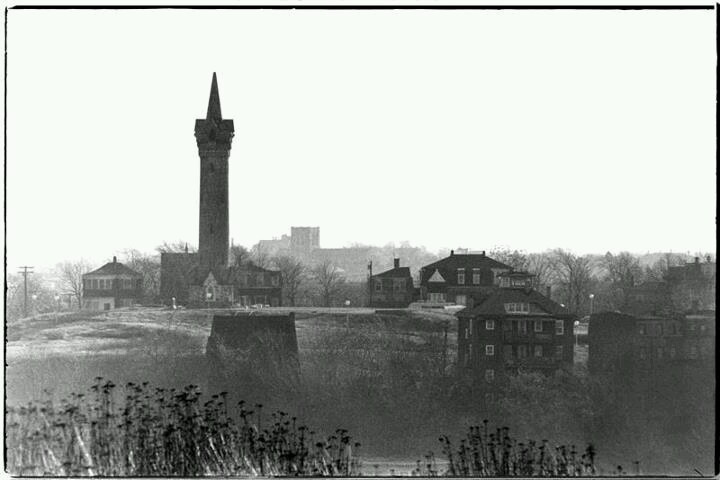
DudleyFort Hill then

^ Dudley Square today — Fort Hill then : change brings Roxbury back to life

—- —- —- —-

Often, during recent elections, we heard much about “the community.” We heard it again in the recent Boston 2024 donnybrook. People said, “the community wants this” or “it’s not good for the community” and even “the community opposes…” We also became vividly accustomed to the term “community activist.”

This sounds good. Most of us who hear the term “the community” envision it. We see happy neighbors cooking out or attending a local public meeting, or perhaps rooting for a local school baseball team as it squares off against a team from somewhere else. These impressions gain sinew from Boston’s history : the present city is made up of what were once  eight separate towns : Charlestown, South Boston, Noddle Island (East Boston), Dorchester, Hyde Park, Brighton, Roxbury, and Boston itself. And some of these eight themselves encompassed separate sections : Dorchester included Mattapan, Savin Hill, Uphams Corner, “Columbia Point,” Cherry valley, Fields Corner, Port Norfolk, Codman Square, and Lower Mills; Roxbury included Mission Hill, Roxbury Highlands, “Lower Roxbury,” Jamaica Plain, Roslindale, and West Roxbury; Brighton included Allston. And Boston itself broke into North End, West End, Beacon Hill, South End, Back Bay, Bay Village, Chinatown, and Downtown.

Sharp hills galore, and ,many valleys and tidal plains, gave most of these geographic pictures lump and smell, not to mention a position set off from each. And thus geography became the frame for the photos in our community picture book.

But there are at least two major contrary facts that dilute our picture, that render it illusory.

First is that Boston is not simply a puzzle of pieces entirely individual. Hardly anybody who lives within the frame of one “neighborhood” photo spends all his or her time there. Most work elsewhere, many socialize elsewhere or shop elsewhere.

Second is that hardly anybody who lives within this or that picture today will still be living there 20, 30 years from now, or lived there 20, 30 years ago. Most people in America move constantly. Many end up living in five, ten, even twenty different places during their lives. Even long-time residents of this or that “community” move to Florida for retirement. I can’t begin to count the number of “Dorchester people”: I know who were ferociously active as such but who now live elsewhere, returning — if at all — only to visit a pub  or a barber shop or to work a poll on election day. The same is abundantly true of Charlestown, the North End, West Roxbury, and “Southie” — to name just the most self-identified of “old loyalty” communities.

Even died-in-the-woool “Dot Rats” or “Townies” move away without a qualm if there’s a better job out there, or a great price offered for their house, or if they have a child to be closer to, or who want better schools than what they think their Boston “community” has to offer.

Thus even in Boston, with its geographically vivid, pictured frames, “community” is more a vision than a thing, more a dream than a waking. New “neighborhoods’ appear, old ones disappear : today the brand new, still a-building Seaport District is Boston’s loudest burgeoning frame-picture; while the “New York Streets,” once a teeming neighborhood (and its own City Ward), has so disappeared that only attic figs recall it.

“Community” is a convenience. When it loses its convenience, it gets left behind.

I have set all of this forth because too often in Boston today activists raise the “community” slogan as a stop sign : thou shalt not develop Codman Square ! You may NOT “gentrify” Uphams Corner ! One activist whom I often read — and enjoy the company of — talks of building Boston “from the community up.”

It seems to me that by “community” people who use the term express a belief. The evidence for that belief may disappoint, but the belief has its own life. It goes on despite facts. Today I had a longish conversation on twitter with a Codman Square activist who insisted, at first, that Codman Square has “lots of community activity” and that I did not know the neighborhood., I pointed out, as per the first version of this article, that I had made clear that most people who live in a “community:” do not respond thereto. I pointed out that at Codman Square DC meetings, 156 people show up, out of a neighborhood with maybe 5,000 adult residents. The twitter converser then said “that’s why there needs to be all encompassing community action.”

She may well be right about what the people who live in and around Codman Square may need. Or she may be wrong. My own belief is that the people of Codman Square should bed trusted to make their own, individual decisions about what they “need.”

The same Codman Square tweeter also talked of the plight of people she knew who have “lived here for generations.” But that is manifestly untrue. Codman Square in the last 40 years has changed population almost completely, and it is changing again. It exemplifies my point that “community” is a concept ephemeral, in part illusory, and highly subjective to the individual using the term.

I don’t mean to suggest that neighborhood activists cannot give voice to their area of Boston, and draw the City’s attention. They can. Neighborhood activists also provide personality to an area and patronize its eateries — because if you’re going to gather in groups to talk things out, an eatery is a pretty accommodating place to do it. Still, neighborhood activists do best when they work on details rather than the big picture, because the picture is not theirs to draw except in part.

A good example is our friend Chris Kollett, of Roslindale, who describes the “community process thus : “This certainly can be a problem with the community process, esp. when a small group ends up with an outsized voice….Reaching community consensus *can* be messy & problematic at times. But it’s pretty great when communities come together.”

Stability is not how the reality of Boston neighborhoods works, nor can. A big city like Boston is built on commerce, its real estate on prices. For every activist who wants “the community” to decide, there’s six homeowners ready to sell — almost always to someone who does not now live in “the community” and who likely won’t live there 30, 40 years from now. The businesses in a “community” are even more ephemeral. Most don’t last five years; hardly any last. for 40. Their owners go where thew customers are. If they’re “in the community,” fine. If not, then not. And what business, situated in a “neighborhood” rather than center city, relies only on customers who live “in the neighborhood” ? Not very many.

There is, however, one kind of “community” that does stay pretty much the same decade after decade : a dying one, a community with scant commerce and not much income. East Boston was like that in 1970, when my Aunt Liz came back for my Mom’s funeral after living in Cleveland since 1928. She recognized every building and almost every store.

That’s not “Eastie” today, is it ? Today’s East Boston is as vibrant a pass-through as it’;s never been, teeming with development, with newcomers of all kinds and more income than its streets have grasped since JFK’s grandfather ran a saloon on Meridian Street. Nor do the vast changes tidal waving through “Eastie” arise “from the community.” They are brought to nit by investors risking risk capital and crafting plans — just as did William Sumner and his followers when, in the 1830s and for decades after, they created the first East Boston.

That is how “community” is made. By risk capital, by bold seers, by shops and technology hubs willing to chance the future of an area. The more “community” activists impede these risk takers, the surer it is that their “community” will slide away; because change is life, and life is change. Only the dying stand still; only the dead commit to it.

What I have just written is not romantic, and it may not be fair (community and change has nothing to do with concepts like justice); but it is the truth.

As for the various “neighborhoods” of Boston that we love to love, charming and evocative of loyalties, sing them while you can : because unless they decay, they will 20, 30, 40 years hence chant very, very different tunes from the songs they proffer to you now.

—- Mike Freedberg / Here and Sphere
THE USOC ENDS BOSTON’S GAMES BID

Walsh

^ “I will not mortgage the City’s finances !” — Mayor Walsh stood firm against the USOC’s ultimatum

—- —- —-

The headline sums it up. The USOC — United States Olympic Committee — yesterday told our City to go to hell. No 2024 Olympic games for us. It was a stunning act of disrespect.

The day began with a hastily called presser by Mayor Walsh, who announced that no, he was not going to sign the USOC’s financial guarantee. “I will not mortgage the city’s finances,” he said, his face stiff with anger.

Four hours of tense negotiations ensued, involving the Mayor, the Boston Bid Committee, and the USOC, with — evidently — Governor Baker participating by teleconference. I could find out nothing; my sources had shut off their cell phones. Then, at 1.47 PM, I received an e-mail — in red letters, no less — telling me that Governor Baker would hold a presser at 3 pm. What was he going to say ?

Not until about 2.35 PM did we find out that the negotiations had failed, that the USOC refused to amend its requiring the City to guarantee cost overruns and that the Boston games bid was therefore finished. Did the Mayor have any regrets ? “None at all,” he said.

At 3 pm the Governor faced the press. There was anger in his face — I’ve seen him in all kinds of moods, and this was his angry mode. “All along the Senate President, the Speaker,and my office have told the committee that we had a process and that we expected we’d have an answer on about the first of August,” he said. “until a week ago nobody had a problem with that.”

The event Baker was referring to took place on Friday. Evidently the USOC told the Governor to get aboard the Bid immediately. I don’t know too many people who would react well to that, much less a Governor as sure of his command as Baker.

The USOC said it was in a hurry facing a mid-September deadline for formally submitting a bid to the International Olympic Committee. I find that argument unconvincing. Deadlines can be extended. When our Bid Committee has spent millions of dollars, hired many staffers, engaged thousands of volunteers, and devised a very detailed plan — all while being criticized and vilified at every turn — the least the USOC could do was have the Bid Committee’s back and get the mid-September deadline extended. Instead, the USOC cut everybody adrift.

I hate to write what I have written. I wanted the Games to come to Boston, wanted it very much. I am a journalist but also a citizen, and as a citizen I went all in for the games, giving the Committee pretty much all I had in me, because I liked the vision, approved of all the changes, enthused over the developments, applauded the jobs and, yes, the developers’ profits; I also wanted very much to cover a nine-year story and — personally important to me — looked forward to taking my grand-kids to the games in 2024.

But the facts are hard to gloss. Fact is that the USOC proved a dishonorable partner. Who do they think we are ? A city or a television contract ? What sort of tone-deaf entity gives ultimatums to democratically elected political leaders ? We can’t have Olympic games in Boston if the pay price is having to submit to the USOC’s mindset.

And now to the battle that took place on the ground. From the outset, the Bid Committee made one huge mistake : it presented an incomplete, sketchy bid to a dozen public meetings, as if it were the mother of all BRA design review developments. The BRA’s design review process is already well past usefulness. Meetings are packed with opponents of every detail, whereas proponents usually do not show up. Secondly, the Bid Plan was presented to a public already hepped up by the casino – anti-casino fights that took place barely 18 months ago and, in some neighborhoods, are still going on. Those anti-casino people mostly took up the anti-Olympics theme, well organized to vilify every meeting they could get to. Third, every environmentalist ultra in the City objected to the Bid Plan’s green action even though its green plan was a terrific boon. The ultras simply did not want developers for profit — whom they hold responsible for un-green ing the City — to create new greenspace.

These three constituencies added up to a ton of social media fury that the media loved reporting — it made superb copy.

No wonder that support in Boston for the Bid headed downward right up until recently. As the Olympic meetings moved from one neighborhood to the next, it alienated one neighborhood after the other.  The Committee seemed at a loss how to deal with this. Most were planning specialists , quiet gentle people entirely ill equipped to confront dogged, inflammatory opponents.

All kinds of weaponry brandished : Subpoenas, referenda, calls to give the Bid to Los Angejes, mountains of quizzical accountings from Olympic Games in other cities — a  mountain of quibble and squabble, detours and kaleidoscopy that made the City look like a house of cray-cray.

It didn’t matter much that new Bid chairman Steve Pagliuca oversaw the issuing of a much better Plan 2.0 because by then, the battle between supporters and opponents had already blown up to full combat mode.

Still, about six weeks ago, the Committee figured out that as the Olympic games are a sports event, they ought to lead with sports figures — Olympians galore and David Ortiz — and that it would be smart to set loose its thousands of sports-loving volunteers to canvass neighborhoods and sign up new volunteers all over the City, especially in communities of color, where opposition was slight and the need for jobs high. Unfortunately, this change of tactic, too — wise though it was — came too late for the USOC’s hurry.

In addition, at all times the huge elephant in the Olympic sandwich was the question of cost overruns. As we see, this question was never settled — probably was never addressed realistically; indemnification agreements were needed, and no one that late in the game would step up to sign one — and when Mayor Walsh finally called the question, the USOC said “nothing doing.”

And there you have it. A huge opportunity lost, to drive change in the City — change that is going to happen anyway, and with a finality that boggles mouldy minds and ultra insisters.– and give us a grand sports party to boot. I’m sorry for our City, sorry for our sports community, and sad for my grand-kids who now will not see the games here at home.

—- Mike Freedberg / Here and Sphere