#MAPOLI : POLARIZATION COMES OF AGE IN MASSACHUSETTS POLITICS

Image
Yesterday I wrote about the Left-ward momentum in the Massachusetts Democratic party and how it was confounding the party’s ability to pick a best Governor nominee. My story felt incomplete, more notion than news. Today I had in mind to dig deeper; to discuss the tremendous surge of activity going on, outside the Boston area Core, under the rubric of the GOP, that confirms, in the opposite direction, the Democrats’ Leftward momentum story. In short, polarization, as we have come to see it in national politics these past six years and more.

Such was my design when, an hour ago, I sat down to read today’s Boston Globe and found on the front page, the following story : http://www.bostonglobe.com/metro/2014/02/20/proposal-would-add-planks-about-abortion-gay-marriage-state-gop-platform/n3wDwD1SxePriF8eHVHpON/story.html

It is not a pleasant story. News that discrimination is invading the political scene never is pleasant. But it supports — gives a sad cast to — my own column, today, about the polarization that bids to take over our state’s politics.

Perhaps it’s a battle we have to fight. We cannot allow the voices of darkness to gain traction. They have already gained plenty. The charlatan talk show hosts, who say outrageous things to get attention and thus ad dollars, have given discrimination and hate legitimacy — with those who either do not see that they’re being had, or who actually believe that their darkest thoughts should become political policy. I suppose that most of us have road rage moments; but most of us also recognize that such squalls of anger augur no good. So it would be, were it not for the talk show thing. But we now have talk show politics; it is not going away, as I — many of us — used to imagine it would. As the economy continues to struggle; as wages for most of us lag while huge money accrues to the very few; as life becomes more diverse and all of that diversity confronts us via social media, a politics has come of age that rejects a future it feels not a part of; a politics of deep pessimism and profound alienation, politics of naked personal fear.

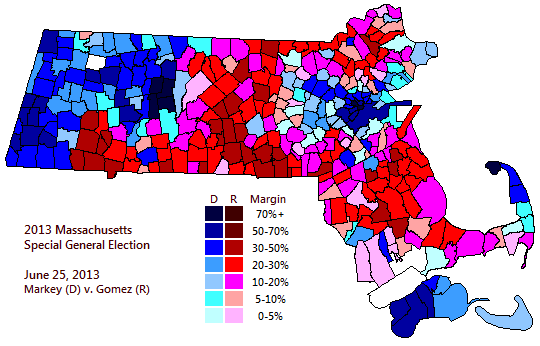
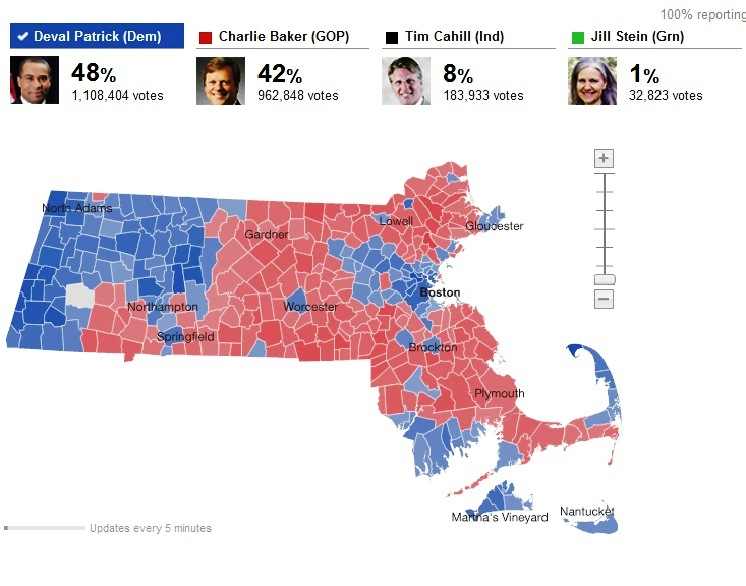
This is the turbine that drives the train of political intensity across Massachusetts’s towns and cities. But the polarization isn’t simply of value judgments. It has a geography. From the outer suburbs of Boston along Route 495 and close inside it and throughout central Massachusetts all the way to the exurbs of Springfield there has arisen a wide swath of towns whose voters reject the politics of the Boston area, reject Boston values, Boston diversity, Boston inclusion and experiment. This circle of towns — maybe 100 in all — is the heartland of the “Tank the Tax’ referendum; of Tea party sentiment; of Republican votes in recent elections. There are towns in this Circle of rejection that gave 20 and 30 point victories to Gabriel Gomez even as he lost last year’s US Senate race to Ed Markey by 10 points. These same towns gave Scott Brown 30 and 40 point victories in his 2010 special election win. And today these towns are generating a large number of Republican candidates for the Beacon Hill legislature — many more such candidates than we’ve usually seen in Massachusetts, with much better funding and a much deeper bench of activist support.

This last development makes the polarization story significant. US Senate elections have their own dynamic. Massachusetts has elected Senators from each party, all the way back to the late 1800s and ever since. But not since the GOP lost majorities in our State legislature some 60 years ago has there been, except in a few upper income places, any kind of Republican activity at the local level. Today almost all of those upper income communities have become Democratic. The most Republican active communities today are middle income, even low income, places : tract house suburbs, low-density exurbs, and sparsely populated rural places. think Billerica, Bellingham, and Tewksbury; Grafton, Mansfield and Whitman; Douglas, Monson, and Charlton.
Image

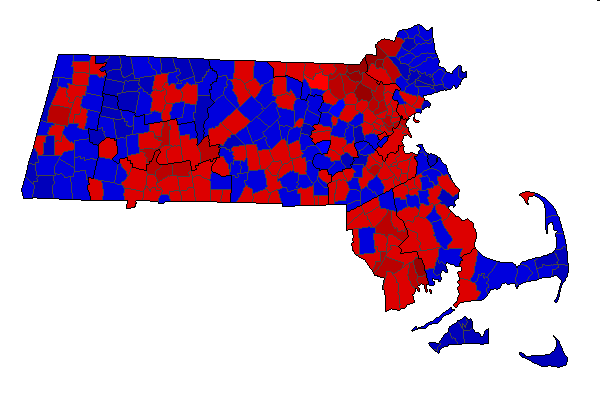
^ Bush – Kerry in MA, 2004. Note Charlton, in the middle of the map towards the bottom.

Charlton — a pass-through stop on Route 20 southwest of Worcester — exemplifies the new, hard right Massachusetts GOP. In 2004, when John Kerry, then our US Senator, was winning 62 % of the Massachusetts vote for President, Charlton gave its 60 % to George Bush.

Not that long ago, party divisions in Massachusetts had more to do with ethnic histories and 1920s-1930s Labor radicalism than with city versus rural, diversity against the old way. (And then, the Democratic party was culturally much more conservative than the socially liberal, WASP GOP establishment.) We can mark each step in the change thus : in 1970, Arlington, filled with prosperous Raytheon workers, was a bellwether town — as it voted, so did the State. Today Arlington. an academic community, is a guaranteed 20 to 40 point Democratic victory. By the 1980s, the bellwether vote town was Framingham — farther from boston than Arlington but definitely a commuting place. Today, Framingham votes 15 to 30 points Democratic. Conversely, in the late 1990s, the bellwether community was Peabody, a town filling up with culturally conservative Italians. Today, Peabody gives the GOP a 10 to 20 point victory and has a Republican state legislator, Leah Cole.

Today the bellwether city in our state is Waltham : the front line between Boston diversity and old-line factory city passes right through it. Quincy shares much the same mix. Yet these few exceptions aside, there really is no bellwether community today in Massachusetts. Most towns and cities are now all GOP or all Democratic. That is why we see the current surge of GOP activity at the state legislature level. It’s when a community moves from swing voting to being all one thing or all another that low level, neighbor to neighbor elections take on a partisan color.
Image

^ how it was in 1978, when Senator Ed Brooke was narrowly defeated by follow progressive Paul Tsongas. — a campaign of nuance, not polarization

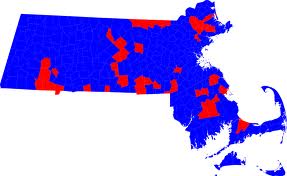
Fortunately for those of us who live by Boston, city values — diversity, inclusion, welcome to immigrants, and government working to serve all the people — the polarization taking shape on both ends claims a clear city values majority. Democrats running state wide can pretty much count on winning by 6 to 20 points. That’s because about 25 % of Massachusetts voters live in the Boston core area — and another 15 % in the academic bastion Connecticut Valley and points West, and these areas (Amherst, Lee, Springfield, Cambridge, Brookline, Dorchester) vote overwhelmingly Democratic : 30 to 70 points ! No Democrat is likely to lose a statewide election with that kind of wind at his or her back.

For despite the surge of GOP energy out beyond the City core, its roar represents an interest distinctly minority and one that is dwindling — and knows it. It is fighting a rear guard battle and seems energized to fight to the last man standing. It is Alamo politics : dramatic, fascinating while it is going on, but, in the end, complete defeat. Those of us who move with the blossoming majority — the flowers of tomorrow, no matter the huge challenges looming– can take heart in knowing that Alamo politics do not end with an Alamo victory.
Image

^ the shape of polarization — and its limits : Patrick / Baker / Cahill, 2010

And what of the 2014 Governor race ? There I predict a Charlie Baker victory. He is running as a city values candidate, has credibility as a city values guy, and almost certainly has the GOP surge vote on his side simply because it dislikes the Democratic tone of voice so profoundly. Though the Democratic party is moving Leftward by the same dynamic that has the GOP moving Right, many more Democrats than Republicans remain pragmatic centrists : because .the Democrats own the legislature and run the State. These Democtrats cannot throw aside their investment in state policy and governance. The most practical team to get things done, that they care about, is Charlie Baker as governor and Robert DeLeo as Speaker — because, ultimately, it is easier for them to stand — loyal Democrats ! — behind a Democratic Speaker as he pacts with a Republican Governor than to find themselves ripped in two directions by constituents here and a Democratic Governor there.  These go-along Democrats represent a significant vote, especially in the suburbs that lie between the GOP outer ring and the innermost Boston core. Think Winchester, Salem, Braintree, Norwood, Wilmington, Woburn, Natick.

It would seem a paradox to find a centrist progressive like Charlie Baker elected by a state whose politics are polarizing so momentously. But life is complicated, and not every mind moves to the flavor of the moment. Those who take the long view also matter.

—- Mike Freedberg / Here and Sphere

5TH SUFFOLK SPECIAL ELECTION : IT’S UPHAMS CORNER TIME

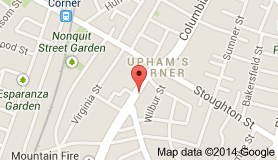
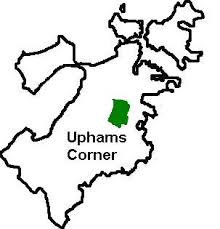
Image ^ the heart and soul of the 5th Suffolk District : Uphams Corner, where Dudley and Stoughton Streets meet Columbia Road  —- —- —-

It’s sad that the 5th Suffolk State Representative District should draw attention only because of the ouster of Carlos Henriquez. Uphams Corner, Bowdoin-Geneva, Meeting House Hill, Cherry Valley, Jones Hill, and Stanwood Street-Lawrence Avenue need a strong voice, an elite voice; none needs disgrace and expulsion. Million dollar homes do exist in the “5th,” on Jones Hill in particular; but most of the District’s neighborhoods are only now emerging — some not yet — from decades of blight, poverty, and urban violence. The 13th District, which borders the 5th to the East, is about to elect a new Representative who from Day one will have big clout on Beacon Hill. The 2nd District, Charlestown and Chelsea, seems ready to do the same.

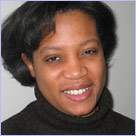
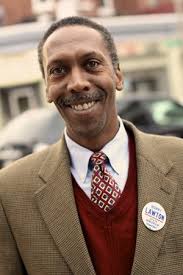
Will voters of the 5th follow suit ? Will they even have the opportunity ? So far four candidates have made the decision. Evandro C. Carvalho, a local activist — we used to call them “citizen” — moved first. Then Jenny Johnson, who lives hard by Ronan Park on Meeting House Hill. Karen Charles-Peterson, of WGBH, has joined them. Today, even as I write, Barry Lawton has entered the list. (Lawton ran in 2010, losing to Carlos Henriquez.) Of the four, only Charles-Peterson was already known to me (and I knew her before I joined WGBH’s correspondent team). Even she is known chiefly to citizens; the general voting public, not so much.

Three of the four reside in Ward 15. John Barros, who ran for Mayor and wowed many with his articulation and knowledge, lives in the Uphams Corner heart of the District. He would have been exactly the All-Star voice the District’s all too overlooked voters need; but no sooner had his possible candidacy become general talk than Mayor Walsh claimed him to be Boston’s Chief of economic Development. As such, Barros will earn more than twice as much as a State Representative; and Barros may well need the money. Same could be said for just about every voter of the 5th District. Image ^ first in, and maybe the man : Evandro C. Carvalho

Image distinguished and active : Karen Charles-Peterson

1 Barry Lawton

^ almost won  the Democratic Primary 4 years ago : Barry Lawton is running again

Somehow the current 5th District contenders fall short of what this District needs. I may be wrong to think so; not one have I met in person as of yet. All may well merit prominence, respect, votes. But this District needs more than supposition.

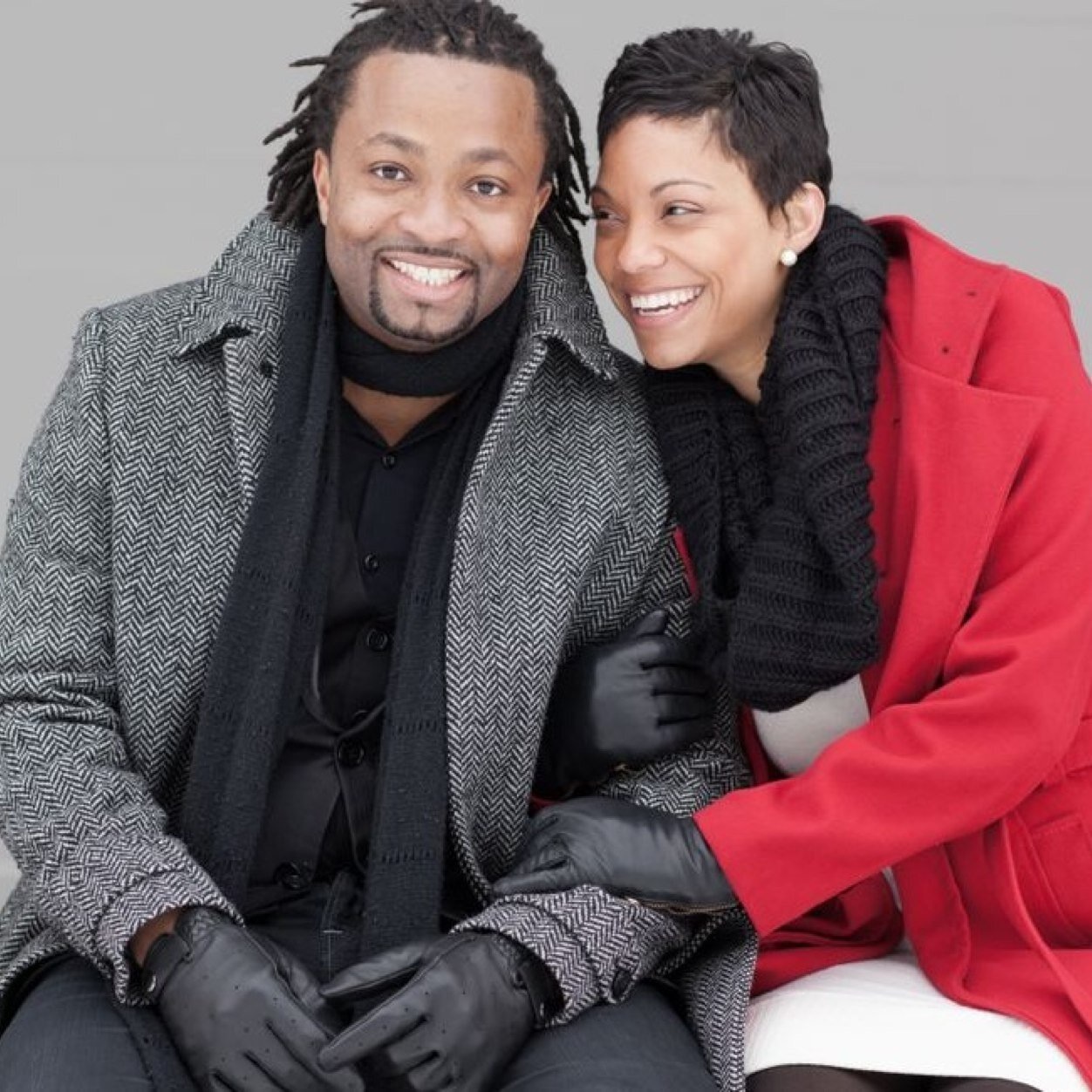
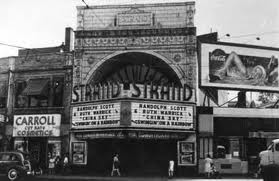
Charles-Peterson, by her connection to WGBH, and married to Kevin Peterson, one of Boston’s most visible leaders on civil rights and Black community issues, might claim the “more” that the 5th needs. But for me, the heart and soul of the 5th is Uphams Corner, whence, decades ago, then state Representative Jim Hart oversaw recovery of the Strand theater — once vacant and derelict — and the creation of Jones Hill, as a neighborhood and a community. (Disclosure : I worked in Hart’s Columbia Road office as a go-fer.) Not since Hart has Uphams Corner been home to an elected State House voice. It needs be again. Uphams Corner is the crossroads of Cape Verdean Dorchester, old Irish Dorchester, Black community Dorchester. Uphams Corner is home to banks, insurance offices, funeral homes, restaurants, traffic. (My goodness yes, traffic.) To each side of Uphams Corner sit gorgeous Victorian homes — take a look at Chamblet Street some day, upper Hartford Street, or Virginia Street, Wendover Street, Cushing Avenue.) The people who own these homes toady are not poor or unmortgage-able, as all area home-owners were, back in the day. The people of Uphams Corner can fund much innovation and many centers of activity. At the Bird Street Community Center they already do.

1 Strand Theater No Uphams Corner person has yet stepped up, and, chatting with my old Jim Hart office mate Linda Webster (who now runs Pacific insurance), she could think of no local thinking of the race. I hope she’s wrong. Really, really I am hoping to see an Uphams Corner candidate step forward and claim the 5th Suffolk District with a new Boston vision of diversity, innovation, reform, and attention — of the right kind. Let the light of tomorrow shine — now !


UPDATE 02.19.14 8 PM : at an important community meeting, at the Strand theater jn Uphams Corner, not one of the four announced candidates in the upcoming Special election appeared. Not one.

—- Mike Freedberg / Here and Sphere Image

#MAGOV14 : THINGS GET NASTY FOR JULIETTE KAYYEM

Image

^ the charm offensive has its limits : Juliette Kayyem meets caucus push back

—- —- —-

Not even two days had passed after Democratic governor hopeful Steve Grossman accused rival Martha Coakley of being vague in her commitment to civil liberties than, this morning, I found my twitter feed filled with attacks upon a third Democratic contestant : Juliette Kayyem. One tweet said “Charming Kayyem favors ‘assassination as an instrument of intelligence and law enforcement.” Another, from the same twitter source, said “Charming Kayyem leading panel to legalize Torture ‘we were a room full of people who think it works’.” A third tweet from said source — “Bostonnish” — said : “If Kayyem hadn’t led effort to concoct legal cover for Bush -Era torture use, she wouldn’t be a charming accomplice to torture.”

“Bostonnish” sent me two more tweets of a similar nature. These were sent to me, evidently, as a response to my own tweet “if @Juliettekayyem had an agenda aspecific as her personal charm is masterful, she’d charm Spkr DeLeo — & win the election.” I am , of course, flattered to find that my tweets merit attack by an opponent of the candidate I happen to mention. Yet that’s not all there is to this story. Kayyem did work for the Deprtment of Homeland Security and has surely known that in the heat of this Governor battle she’d be challenged thereon. Big time : because the Homeland Security issue isn’t only about Kayyem. Edward Snowden’s revelations have made it clear that the war on terror has curtailed Americans’ privacy rights much, much more than we either knew or need to accept. The issue has also divided the Democratic Party. Had Snowden’s revelations been made of a Republican presidency, every Democrat would be ringing the tocsin. But no: the revelations were made of the Obama administration, and only on the very Left has there arisen any support for Snowden. Most Democrats find him a traitor.

This split matters for Kayyem especially, because the impact of her candidacy has been strongest among Democrats who consider themselves progressives — exactly the Democratic constituency among which the Snowden revelations have aroused the greatest anger. Now comes an attacker who connects Kayyem not to the Snowden revelations per se but to the Bush administration, no less, and to that part of the Bush government in which “enhanced interrogation” was defined, justified, and decked out in legal lipstick. Much of the Snowden revelations involved NSA measures begun in that Bush administration — though Obama expanded them. It would be hard to think of any political connection less appealing to Democratic progressives than to the Bush ’43 war on terror. For Kayyem, far more than for Coakley or Grossman — who so likely have no such connections — the attack made by “Botonnish” poses threat. And as I have 640 twitter followers right now, almost all of them political, “Bostonnish”‘s attacks will be seen by many.

Is there any truth to them, and, if so, how much truth ? I have read the two newspaper articles linked in the Bostonnish tweets. They do connect Kayyem to Homeland Security discussions on interrogation techniques — discussions in which she participated as part of a Harvard Law School professor’s symposium whose participants sought agreement on what interrogation techniques were permissible and to write their conclusions as a policy paper.

To the average voter, what I’ve just written may seem splitting hairs. Kayyem was involved in torture discussions, helped define “acceptable limits.” Nuff said. And to most voters, her participation therein as a policy advisor ruffles no consciences. unfortunately, the voters whose support Kayyem is seeking — and needs — may not take such a casual attitude of the matter. Though many Democratic progressives are the first to condemn Snowden as a traitor, and to accuse Bush’s Vice President, Dick Cheney — whose brief it was to secure policy approvals on interrogation techniques — of war crimes, other progressives dub Snowden a hero. There’s scant escape for Kayyem here. The Democrats who think Snowden a traitor hate Dick Cheney just as much as do the Democrats who think Snowden a hero; and Kayyem helped write policy papers for matters ultimately answerable to Cheney and Bush. The New York times article, from 2005, appended to one of my “Bostonniosh” tweets documents it.

What does Kayyem do about this ? If I were her advisors I’d tell her to discuss the matter thoroughly. She served the Obama administration as well as Bush’s — as did Bob Gates and others. She can say that she put “country first” — and if the man for whom that was a campaign theme — John McCain — is a case study in why our nation should oppose “torture lite” always, Kayyem did not make policy. She advised possible policy makers. And all of this happened many years ago.

photo (1)

^ beauty talks : Juliette Kayyem with Worcester St Reps Mahoney and O’Day

Also on her case is a report, in the Globe, that Kayyem missed voting in two elections during the time she was living in Washington. There’s some disagreement as to whether she registered to vote there or not. She says she did; the DC elections board has no record of it.

Myself, I find this matter small potatoes. so what if she missed two elections or if she did or did not register to vote in Washington while living there ? She is running for Governor, not “super voter.’ yet the small potatoes does highlight the bigger potato of her consultancy participation in the “torture bureaucracy.”

It is not my job to make excuses for Kayyem or to devise responses for her to difficult challenges. She has opted to play big league ball, and cannot complain if an opposing pitcher plunks her with a curve ball. Her response, however, will matter a lot in how Democratic progressives, as sensitive as any activists to heavy handed war measures, take Kayyem’s interrogation policy years to heart. Who knows ? Maybe they’ll shrug it off. Charm does have its way even with issues obsessives, and charm Kayyem has more than plenty of. But the average voter probably won’t shrug so readily — if Kayyem gets her name onto the average voter’s Governior ballot. This flap doesn’t make that task any easier for her.

—- Mike Freedberg / Here and Sphere
PROGRESS, ACTUALLY : THE MICHAEL DUNN TRIAL

Image

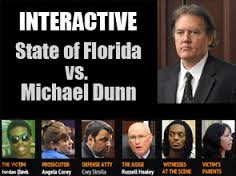
At least, unlike in the Zimmerman case, the shooter in the case of State of Florida v. Michael Dunn didn’t get acquitted. On all but one count of the indictment, the trial jury found him guilty. As the New York times reported, “guilty of three counts of second-degree attempted murder for getting out of his car and firing several times at the Dodge Durango sport utility vehicle in which Jordan Davis, 17, was killed. Three other teenagers, the subjects of the attempted murder charges, were in the car but were not struck. Mr. Dunn continued to fire at the vehicle even as it pulled away. On the attempted murder convictions, he could be sentenced to 60 years in prison.”

Naturally, Dunn claimed self-defense. It’s what you do in Florida after you’ve killed somebody. In Florida all you have to do is show that you were in fear of your life — a judgment entirely subjective, unprovable — and bang ! No problemo, you are free to kill again.

Admittedly I have overstated. Your belief that you are afraid for your life must be reasonable in the circumstances. That’s not much to go on, but once there’s a law giving armed people the right to fight back, not under a duty to retreat — which was for hundreds of years the good sense of our common law — it’s some comfort to know that a shooter has to pass at least the “reasonable belief” test.

Dunn failed even this.

He pulls up next to the car with the teens in it, starts an argument with them — perfect strangers to him; who would do that ? — about the loudness of their music; then, when one of the teens objects to being “told what to do,” he takes a loaded gun out of his car’s glove compartment and shoots. He says he saw a weapon. Oh really ? At night, through his driver’s side window and the other car window ? No weapon was found by the police. Not very surprising.

The trial was “racially charged.” How could it NOT be ? Dunn is white, the kids in the car Black. Many a middle aged white man, alone, finding a car full of black teens next to him, is afraid; but his usual response is to say nothing — as people on a late night subway train often do when Black teens get aboard. But Dunn had a loaded gun in his car. He was not afraid. He was ready for battle, and when he was talked back to, battle he gave.

That was why he had a loaded gun in his car. “Fuck with me and it’ll be the last fuck you’ll ever do.’ that — or something like it — was surely his mindset. He then ordered a pizza , went back to his home and poured a drink ? Of course he did.

That’s pretty harsh of me to write, but can you think of anything less harsh to say about a man who closes an argument that he had no need to start by shooting the person who argues back at him ?

Comparisons to the Zimmerman case have been put and will continue to be put. The two cases do not compare, except for the mindset. In Zimmerman, the person he targeted, Trayvon Martin, actually fought back, physically, and seems to have beaten Zimmerman up — at which point Zimmerman probably WAS in reasonable fear of his life. That he had no business initiating the chain of events that led to his being beaten up, the jury was correct to find, did not deny to him a self-defense argument that would have applied even in a “duty to retreat” jurisdiction. In a “duty to retreat” jurisdiction, a person may, if no retreat is possible — as it wasn’t for Zimmerman, on the ground being beaten — use reasonable force to defend himself. My own position in Zimmerman is that, having initiated the chain of events that led to the shooting, he cannot escape culpability by claiming self-defense when the chain of events turned against him. But the Florida jury’s verdict was not outrageous.

This Dunn case is nothing like Zimmerman. Dunn initiated the chain of events and at all points was the aggressor; he was never in any danger at all — certainly not in any danger when he shot ten times at the car driving away. He was angry, so angry that he “lost it,” as one infamous Massachusetts murderer said as to why he shot a woman at a Route 24 rest stop at 2 AM some years ago.

The Florida jury correctly found Dunn guilty on all counts except first degree murder.
The jury seems to have had doubts what occurred while the Dunn car and that of the teens was parked. that a shot was then fired was proved, but first degree murder requires a plan, formed prior to the event, to kill someone. Clearly in the Dunn case there was no such. what i do not understand is why he wasn’t found guilty of manslaughter. if you shoot a gun at someone, and that person dies, the criminal nature of the act of shooting requires , in Massachusetts, at least a manslaughter verdict.

All that being said, I do see progress in the Dunn case verdict. a Florida jury has found that no self-defense argument will lie, even under a right-to-fire law, unless the shooter’s belief that he is in danger is warranted; and that it is not and will not, henceforth, be reasonable for a white man to be in fear merely because he finds himself parking next to a car with black teenagers in it. Or, that he can be in fear, but he must keep that fear to himself and not act it out.

Can there be any doubt that many Caucasian people feel such a fear in the presence of black teenagers ? The President himself, in a speech not too long ago, recalled times in his life when he could hear car doors locking when he walked up the street. this entirely racial fear is a huge reason why the Michael Dunns of America buy guns, load them, keep loaded guns on or near their person. This racial fear is why gun and ammo manufacturers make huge profits; it’s why there are a reported 310,000,000 guns in private hands (as opposed to 4,000,000 in the military). This racial fear is why the gun and ammo makers pay the NRA to bully legislators in every state they target.

Racial fear stoking the gun industry sits at the core of today’s right wing. Not every right wing person is a racist, but racial fear is the message, the anti-social, armed vigilante mindset that gives right wing venom its venomous edge. It’s what those who talk loudest about “the 2nd amendment” really mean. Thus I find it progress in a Florida jury putting at least some limit to how much armed racial venom they will tolerate.

Sentencing now awaits. Dunn faces a substantial prison term : Image

—- Mike Freedberg / Here and Sphere

#MAGOV : RESTRUCTURING THE MASSACHUSETTS DCF

Image

^ Commissioner Olga Roche : not to blame for DCF budget cuts and out of date agency practices

—- —- —

The six major candidates seeking to be our State’s next Governor sure didn’t plan to have the department of families and Children (DCF) as a huge campaign issue, but that’s what it now is. The facts emerging from the DCF’s failed oversight of 5-year old Jeremiah Oliver cry out. Oliver’s social worker missed several mandated visits to his home but put “visit made’ into her case log; and her supervisor confirmed that the visits were made. When Oliver disappeared –months later, he has yet to be found — the failure and cover up left the DCF’s higher-ups nowhere to hide.

Yet are the DCF top guns to blame ? How was the agency;s head, Olga Roche, to know that a social worker and supervisor in the Fitchburg DCF office had falsified logs and failed their jobs ? Roche can’t personally micro-manage every employee in every DCF office. At some point we have to grasp that this DCF failure is structural and to propose serious reform. Nor can we blame Governor Patrick much. His plate has been heaped with major spending fights in transportation and education and with monitoring the contentious casino licensing process as it works through the gaming Commission. Line Departments like DCF and Public welfare, governed by State Law chapter 119, require oversight by the Governor’s secretary of administration and finance; and to my knowledge, no one has suggested that Glen Shor has misfired his oversight of the DCF. Nonetheless, one notes that in his job description as posted on his page at http://www.mass.gov, Shor doesn’t list DCF in his itemization of key responsibilities:

“Glen Shor serves as Secretary of the Executive Office for Administration and Finance. He is responsible for managing state finances, including preparation of the governor’s budget recommendation, development of a state capital budget, managing budgetary activities across state government, and developing long-term fiscal policy. He also oversees the state agencies that provide core administrative services in the Commonwealth, including the collection of state taxes, the administration of IT services and the management of human resources in state government.

“Prior to his appointment as Secretary in January of 2013, Glen Shor served as Executive Director of the Massachusetts Health Insurance Connector Authority. While at the Connector, Shor oversaw the programs, policies, operations and staff of the Commonwealth’s official public health insurance Exchange – a cornerstone of the state’s historic health care reform law of 2006 and the model for health insurance Exchanges nationwide under the landmark federal Patient Protection and Affordable Care Act.”

No one can doubt that collection of taxes and administration of information technology are crucial state governance tasks; or that management of “human resources” — state employees — is a non-stop matter that can make stinky headlines if a day of monitoring goes missing. Still…

…here we are, with a scandal and anecdotal talk of many other missed visits by social workers and slack oversight by DCF managers, and the blame machine is already whipping up pies to the face of DCF’s higher-ups. I find the furor misdirected.

Image

^ DCF failures will surely be discussed at a social workers’ conference at Boston College on February 24th that has Charlie Baker as its featured speaker. (See UPDATE below)

Has anyone bothered to notice that, since 2009, the DC budget has fallen by 100 million dollars ? this, during years when our State’s population of homeless and of families in need has increased mightily.

If we want to make events like the Jeremiah Oliver failures less common, we need to restore the 100 million dollars cut from the DC budget — the Governor’s $ 9.2 million budget increase hardly matters ! The DCF needs to monitor social worker visits not in log books but via the internet; to install check-in software in social workers’ cell phones, so that managers know where they are during work hours; to give DCF managers software and smart phones, fully applicationed, so that case loads can be managed, on an ongoing basis, in real time. We need to reset DCF process so that Olga Roche — or whoever succeeds her as DCF commissioner — has on her schedule an in-person meeting at each DCF area office on a revolving basis, with Roche on the road, like a Circuit Judge making rounds, managing the entire DCF not from an office in a Boston State administration building but from an iPad in a state car serving as her mobile headquarters.

Political campaigns operate that way in this year 2014. Why not State governance ?

It’s more important that Roche have a state car and a driver than that she have a large office in a state building. It’s more effective that she hold monitoring sessions — including questions and answers and monitoring reviews — at each local DCF office than that she await reports coming to her from the managers of those offices. After all, social workers have to visit the children whose cases are theirs to oversee. Why shouldn’t Roche, or her successor, do likewise ? DCF is an agency that operates by visits. This should be its strategy top to bottom, bottom to top.

It will be interesting to hear and read the DCF reform plans that each of the major Governor candidates presents to the voters. If they do present one.

Meanwhile, Commissioner Roche is reportedly slated to receive a $ 10,500.00 pay raise.

—- Mike Freedberg / Here and Sphere
UPDATE 02/17/14 10.30 AM : Charlie Baker, the likely Republican nominee for Governor, has called for Olga Roche’s resignation. Many — but not all — GOP legislators have also made this call. To me it seems a bit premature and quite misdirected; but perhaps Baker will explain.

PICKING MARTY WALSH’S SUCCESSOR : DAN HUNT’S THE MAN TO BEAT

Image

^ the man to beat : Dan Hunt

—- —- —-

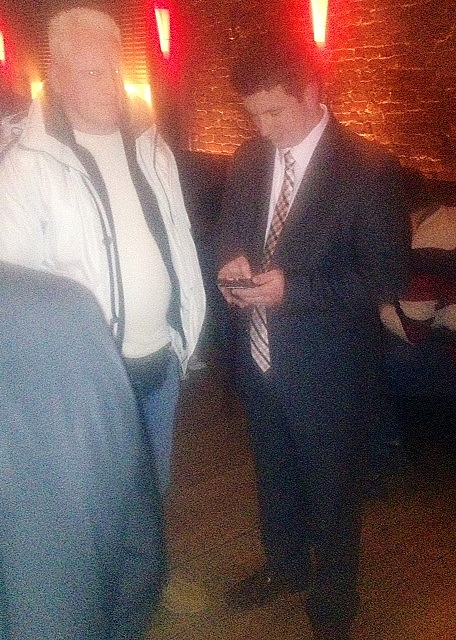
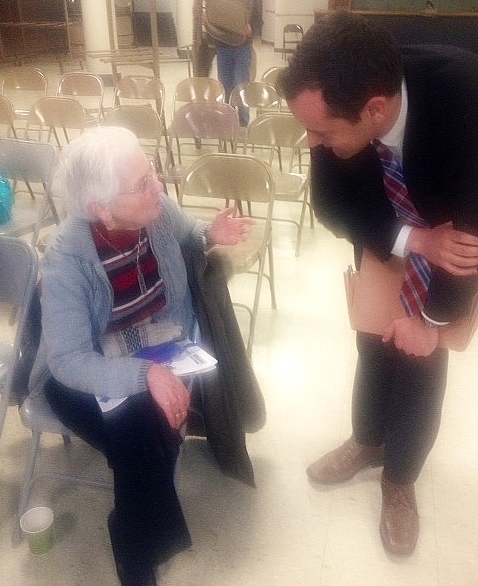
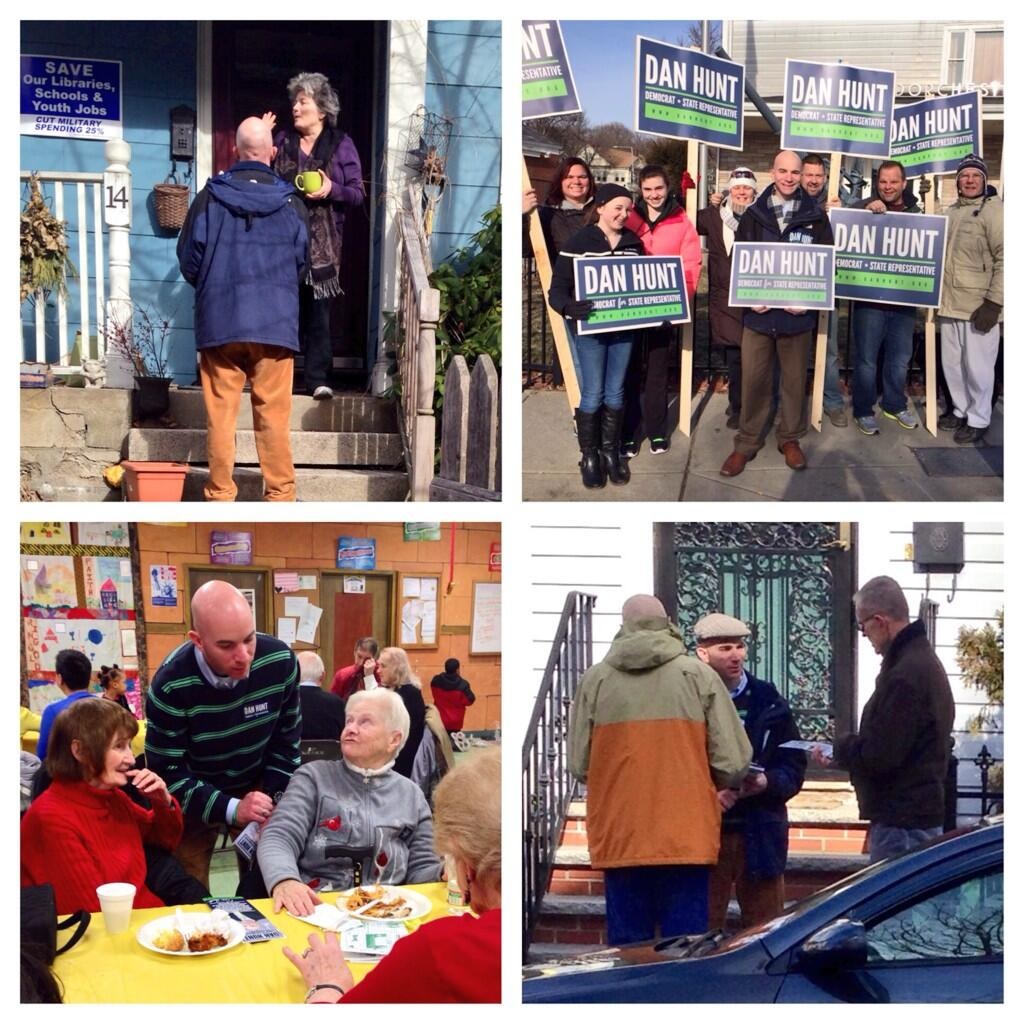
Five Democrats seek nomination to become the next State Representative from the Dorchester-based District that Marty Walsh gave up to take office as Boston mayor. Dan Hunt, John O’Toole, Liam Curran, Paul “PJ” McCann, and Gene Gorman have been campaigning for weeks now — Hunt, longer than that — in the coldest winter we’ve seen in decades, in the snow and often in the dark. They’re “knocking doors,” as they put it; “standing out” — sign-holding — at major intersections with as many supporters as can take single-digit temperatures; doing “meet and greets” at local pubs; raising funds at what Dan Hunt calls a “friend-raiser”; and “getting on the phones” to reach the District’s “super voters” — those who always vote, including in the District’s one Quincy precinct, assuming they know there’s an election going on.

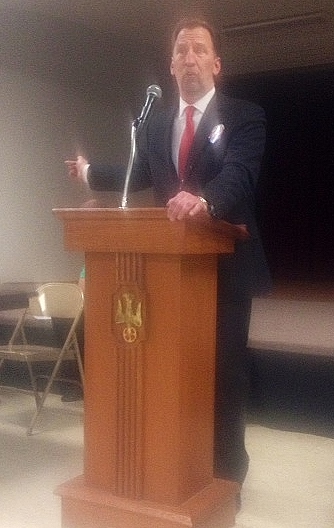
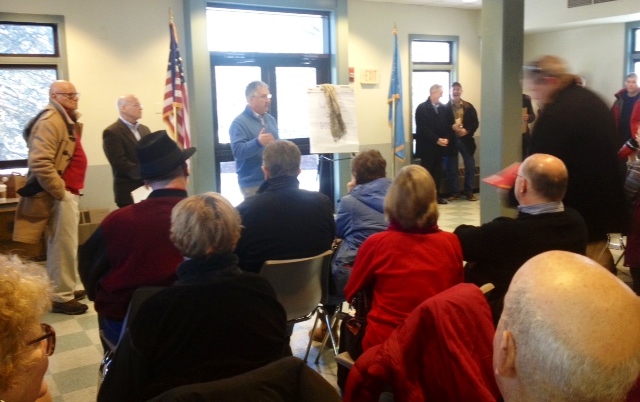
Last night the race got even more serious, as all five men spoke and answered questions at the Cedar Grove Civic Association’s candidate Forum. Cedar Grove — the part of Neponset that borders Quincy — isn’t just another Dorchester neighborhood; in last year’s Mayor election, almost 75 % of the area’s voters actually voted, by far the highest percentage in all Boston. No surprise, then, that about 70 people showed up to listen, or that State Representative Dan Cullinane, from the District across Granite Street, was in the room, as was State Senator Linda Dorcena-Forry.

For candidates at the very local level, even in a varsity political neighborhood — and Dorchester is super varsity, a candidate Forum presents a challenge. You must be ready to speak well, in a voice confidently loud, to give opening and closing remarks not read from notes, and to talk with appreciable knowledge about the major issues. So it was at Cedar Grove.

Gene Gorman, a professor at Emerson college, spoke eloquently and to the point on almost every question asked.

Dan Hunt, generally considered the likeliest to win, spoke with steady confidence about his readiness and with skilled nuance about issues not cookie-cutter simple. Proudly he listed four union endorsements, including the big one : Service Employees International Local 1199, whose work for Marty Walsh is thought by many to have made the difference in last year’s Mayor election,

Image

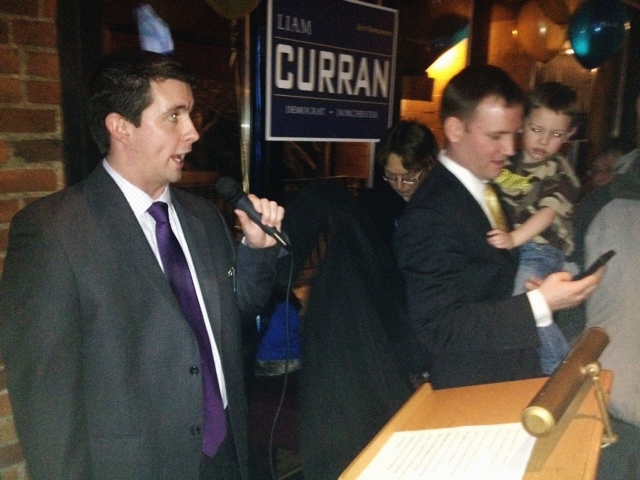
Liam Curran ^ looked and sounded the eager, even passionate young attorney that he is, in the City of Boston law department. He has the support of Mayor Walsh’s brother and mother — and has made sure everyone knows it — and over and over he cited Marty Walsh’s priorities as the agenda he would adhere to. Like Walsh, Curran was a Labor Union member –Laborers’ local 223. This too he made known.

John O’Toole, himself a past president of the Cedar Grove Civic Association, spoke strongly about neighborhood issues and gave a shout out, by name, to many in the room with whom he has worked with on various neighborhood concerns over the past 20 years. O’Toole, too, has labor support, more Locals than have endorsed Hunt, but at the Forum he named none.

“PJ” McCann — speaking in a voice soft and conversational, hard to hear easily in the long, large meeting room — stressed his experience drafting legislation, collaboratively with many agencies, and his work at the City of Boston’s Public Health Commission.

It has been frustrating for me to pin down any of the five to specifics of major issues facing Massachusetts : transportation funding; education reform and funding; curbing urban violence. Last night, Cedar Grove’s President Sean Weir had no better luck. Granted that the first two issues are complex and coated in controversy, and that the third issue isn’t really a matter of legislation; it would still have been nice to hear what the five will work for by way of funding, and where that funding will come from. You can be sure that the word ‘taxes’ graced no one’s lips all night long.

All five men support raising the minimum wage, and those who addressed the matter of unemployment insurance give-backs all said that it was irrelevant to raising the wage. But Speaker Robert DeLeo, who controls all legislation because he appoints all House committee members, says that the two are indeed connected and that minimum wage legislation must connect them ; and no one, at the Forum, or in conversations with me, has faced the fact. We are left to assume that each of the five, if elected, will make the District’s opinion heard — and then vote the Speaker’s way.

That said, the true importance of this election lies not in legislative specifics but in the loudness and confidence of the voice that will be the 13th Suffolk’s going forward. Can any of these men be a next Marty Walsh, a major voice in labor — or other — issues, a sought-after endorsement in city and state elections, even a potential Mayor ? Because this, not positions on the issues, is the standard for the District’s voters. They are accustomed to having their representative be a center of influence and attention, and they vote in large numbers seeking it. Everybody I speak to expects 4,000 to 6,000 votes to be cast on March 4th Primary day.

The only question is, what KIND of center of attention do these voters want ? Only two of the five men seem to recognize this question as the race’s big decider : Liam Curran and Dan Hunt. Curran has lost no opportunity to pronounce himself the most Marty Walsh of the candidates; and having the mayor’s brother and Mom in his corner gives his pronunciamento some truth. He has pushed the point perhaps too far. Mayor Walsh early on announced himself staying completely out of the race : Curran’s message, has, say some, forced the mayor to embrace Dan Hunt, who is said to be his preferred choice anyway. A day after Curran made major publicity of a photograph taken of him with Walsh’s brother and mother, Mayor Walsh insisted, at a Labor breakfast, on having his picture taken with Hunt, a man very different.

Hunt doesn’t look like Marty, doesn’t sound like him, has a personal history all his own. He grew up in a political household — his Dad Jim Hunt held administrative positions in Boston City governance for decades. As he said at the Forum, he was “sign holding even as a six year old” and “a lifetime, so far, of political and state House service, as staff to two committees.” Not many election hopefuls in today’s America would tout long staff service in government. But a hopeful who understands that Dorchester voters want exactly that makes it a major closing remark.

At Cedar Grove, Hunt sounded confident, commanding, with no equal among the five on that score; and when he cited that Senator Dorcena Forry has endorsed him, it seemed a knockout punch. Had she really done so ? I asked him that question after the Forum, and, yes, he told me, she has in fact endorsed him. That’s quite a step for her to take in a five way local primary. But it makes sense, because of all the five, Hunt alone spoke like a voice of clout who can back up his claim.

Image

John O’Toole ^ stressed his long history of neighborhood activism, and commands maybe the largest Labor contingent ; all good ; but Labor is split in this race, and neighborhood activist isn’t the office being elected. Liam Curran emphasized how Marty Walsh he is ; but the voters want a voice unique as Walsh, not his duplicate. Gene Gorman has all the issues command that anyone could ask ; but a policy wonk can be the Representative’s issues person. Then there’s PJ McCann : respected, articulate, Harvard graduate, experienced in legislation, with a public heath issues priority vital to city life today, McCann seems more City Councillor than State Representative, a voice among collegial voices, not an advocate going to a place where more are strangers or opponents than allies.

Image

^ likeable, smart, and gentle : “PJ” McCann at the Cedar Grove Forum

Hunt started first, raised $ 59,365 before the special election was called, and — so he said to me — “has personally knocked on the door of every super voter in the district.” 4,000 doors in two months time, I asked ? “Yes,” he said. And : “I’ve attended every civic association meeting at least twice,. No neighborhood association is too small, I visit them all.”

Image

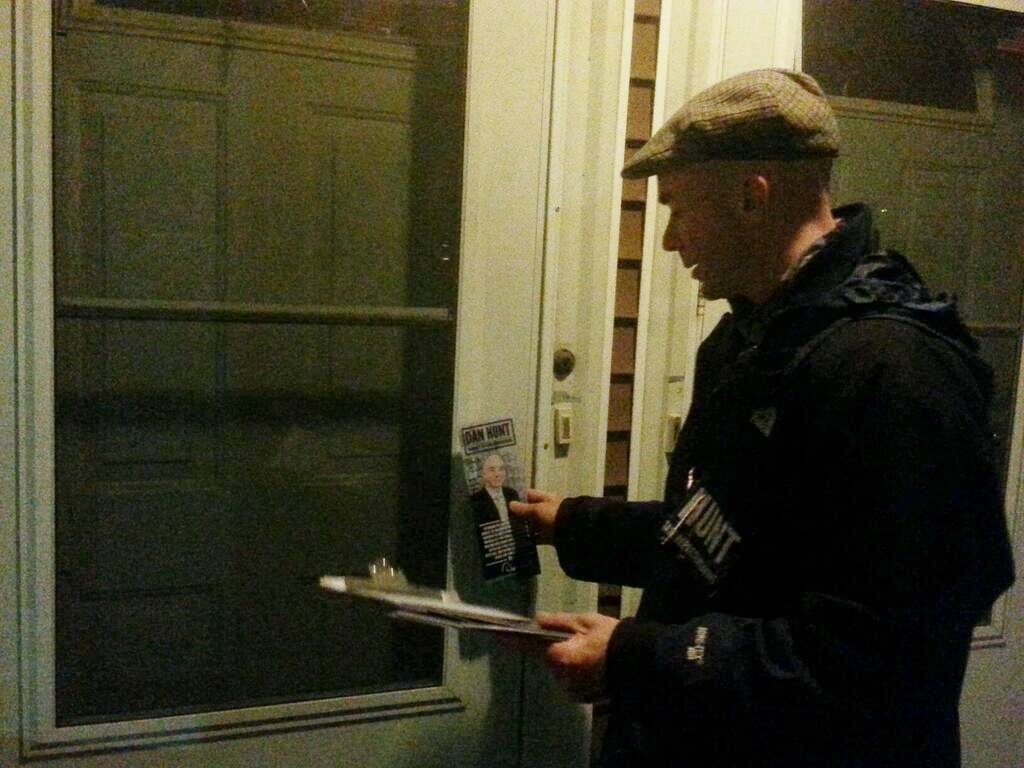
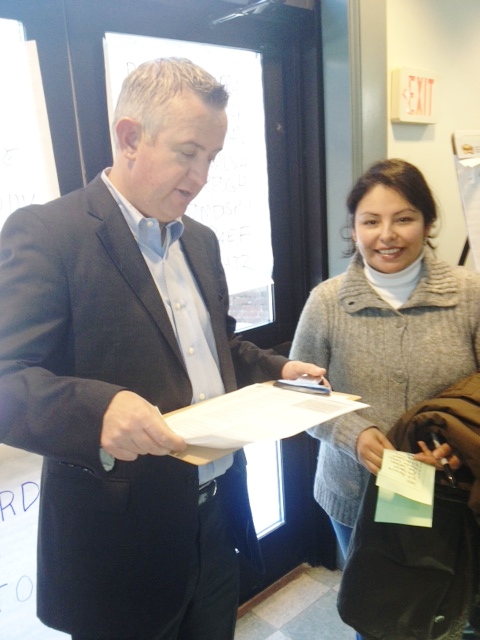
^ door-knocking at night in a winter campaign ; Dan Hunt with voter list in hand

Yes, the race continues. Yes, John O’Toole, especially, is working to catch up. Yet the race looks Hunt’s to lose. Basic work every waking hour, no mistakes, much money, the largest social media presence, strong support from most of the District’s leaders — including Bill Walczak, who ran for Mayor and got 136 votes in his crucial, Savin Hill precinct even with Walsh on the ballot; City Clerk Maureen Feeney, who was Dorchester’s City Councillor; and Supreme Court Clerk Maura Doyle — and a resume that fits the image. Little wonder that this election is looking like a Dan Hunt victory on March 4th

— Mike Freedberg / for Here and Sphere

Image

^ “freezin’ for a reason,” says John O’Toole, door knocking in savin Hill.

BOSTON POLS : CAUCUS — WARD 20 ; AMBITION — 5TH SUFFOLK

Image

^basic democracy : Democratic state chairman Tom McGee of Lynn instructs West Roxbury’s ward 20 caucus

—- —- —-

There may be secret money in the Big Picture, but at the small level where actual people live, vote, and run for office, the money doesn’t taint. Whether it’s caucusing in West Roxbury or manoeuvering a run for State Representative in Dorchester, you find politics basic, the real deal, activism for its own sake. So it was, this morning at Boston Ward 20’s Democratic Party caucus, attended by almost 200 people. So it has been the past two days, since the House expelled Carlos Henriquez, leaving the 5th Suffolk State Representative seat vacant awaiting seekers.

But first, the caucus. I chose Ward 20’s because it is Boston’s biggest voting ward; many were sure to attend to elect 29 delegates to the Democratic convention. The caucus met in the community room at West Roxbury’s Police Station. Attendees and candidate volunteers filled every nook — the hallway too. The State Party chairman was there, Tom McGee of Lynn; so were two competing slates of delegates, a Don Berwick group led by Helen Bello — who hosted the huge Berwick house party that I wrote about recently — and a Juliette Kayyem list led by an old friend, Paul Nevins, an employment lawyer. A group of independent names was nominated too, well known people sure to draw votes on name alone; and attendees voted as much for names they knew as for any slate; there wasn’t at all the structure that I had expected of this meeting. It seemed as much a meet and greet as an election.

Image

^ Ward 20 state Representative Ed Coppinger discusses matters with Here and Sphere follower Michelle Von Vogler

There was voting, but mostly there was conversation as faces familiar or new worked the room. State Senator Mike Rush was there, as was West Roxbury State Representative Ed Coppinger. Governor candidate Martha Coakley worked the room for about 20 minutes, then left. District Attorney Dan Conley shook hands. So did Congressman Steve Lynch. Old friends Carole White (Kevin White’s sister in law) and Marilyn LaRosa were elected; I noticed Helen Greaney in the room and Greg Haugh also — two other Haugh’s sought election as delegates — and Ann Murphy, still glamorous as ever, now working as an aide to Mike Rush. A couple of Boston Teachers Union activists signed in — but I did not see Ward 20’s biggest BTU name, Ed Doherty — and people from both the Connolly and Walsh mayor campaigns.

Circulating as well were four who ran last year for City Council : local resident Marty Keogh, Jack Kelly, and winners Steve Murphy and Michelle Wu. It was a “good hit,” as pols say of an event well worth being seen at.

UPDATE ON DELEGATES ELECTED : Thanks to Rob for posting to me the entire list, mostly of the usual Ward 20 activists (including two Haugh’s and a BTU active, City Council candidate Marty Keogh, a Marty Walsh cabinet member — Alejandra St. Guillen — and at least one State Employee) and two Don Berwick delegates. Take a look :

Female Delegates:
Alyssa Ordway – 75 votes
Carole White – 74
Ann Cushing – 71
Cathy Fumara – 68
Helen Haugh – 68
Diana Orthman – 68
Marilyn LaRosa – 65
Patricia Malone – 65
Anita Salmu – 65
Margaret Sullivan – 63
Josiane Martinez – 60
Alejandra St. Guillen – 59
Sue Anderson – 58
Heather Bello – 26
Hema Kailasam – 21
Jennifer McGoldrick (Alternate)
Pamela Keogh (Alternate)

Male Delegates:
Robert Orthman – 69 votes
David Isberg – 66
Steve Smith – 66
Marty Keogh – 65
Bill Smith – 64
Kevin Walsh – 64
Bill MacGregor – 63
George Donahue – 62
Joe Haugh – 60
John Fumara – 59
Leo Connell – 58
Tom Hanktankis – 58
Patrick Murray – 58
Larry Connolly – 56
Bob Tumposky – 56

(UPDATED 02/09/14 at 10.45 AM)

—- —- —-

And now to the 5th Suffolk District, in Dorchester, where the expulsion of Carlos Henriquez has left a gaping hole…

Image

will he be the first Uphams Corner state Rep since Jim Hart 40 years ago ? John Barros may become a candidate in the 5th Suffolk special election… But so might the woman pictured below, Karen Charles of the Bowdoin-Geneva neighborhood :

Image

The 5th Suffolk State Representative seat in the Massachusetts House won’t be vacant for long. Already the hungry are circling, impatient, guessing and out-guessing. The big news is that John Barros, who ran for mayor last year and impressed many, is seriously considering a run. Barros lives in the heart of the District, owns a successful restaurant in it,. and would be an elite voice for 40,000 people very much in need of one. Barros is not, however, the only notable who is thinking publicly about running. There’s also Karen Charles, who works at WGBH (full disclosure : WGBH’s Peter Kadzis was my editor at the Boston Phoenix and remains a friend professionally and personally), and who, with her husband Kevin Peterson, an NAACP activist, make a formidable team of articulate reformers and who are said to be close to Charlotte Golar-Richie, who once represented the 5th Suffolk, still lives in it, and who was, like Barros, a candidate in last year’s Mayor campaign.

In that Mayor campaign, Barros won 2,072 votes in the 5th District’s 20 precincts; Golar-Richie won 1,465. Barros thus starts with a 600 vote advantage. That isn’t the entire story, though, Felix Arroyo won 570 votes in the District; and Carlos Henriquez, of Hispanic origin like Arroyo, is said to intend running again to reclaim his seat. Even if he does not run, the 570 Arroyo votes seem up for grabs, not to mention the 313 won by Charles Yancey and the 495 won by John Connolly. (Marty Walsh’s 640 votes might split between Barros and a Golar-Richie-backed candidate, as both she and Barros helped Walsh win the Final).

That said, Barros certainly would enter the race as the favorite no matter who else decides to run — including Henriquez himself. The two men are said to be close friends as well as political allies, and some speculate that if Henriquez runs — and he probably will — Barros will not. We shall see. Whatever the case may happen, this is a District that badly needs an A-list voice. It has always had a working-class majority even in the days, not too long ago, when much of it was Roxbury Red Raider country. The “5th” includes the entire Bowdoin-Geneva neighborhood, one of Boston’s most impacted by gang violence; a stretch of Blue Hill Avenue that Red Raiders knew as “Cherry Valley,” once almost entirely blighted but, of late, enjoying the beginnings of a resurgence (as anyone familiar with local hot-spot Merengue Restaurant knows); Upham’s Corner and half of Jones Hill (where I had my first adult job, working as go-fer to state Rep. Jim Hart); and, of Roxbury, the north side of Dudley Side from Hibernian Hall eastward, all the way past the Governor Shirley mansion to and including “the Prairie” ball field (where Red Raider teams played Park League baseball and football). None of the district is high-income; not much of it is middle-income. Everyone benefits from having an eloquent and respected voice in the legislature, but the people of the 5th Suffolk would benefit more than most.

There will be a special election to fill the vacancy. It will be called soon — the date of it as yet unknown but probably early May. It will be a short campaign, a local effort, politics at its most basic and not much different from that Ward 20 caucus that I attended this morning. More voters to reach, yes, but not much more structure. It also looks now to be the most attention-getting time that the 40,000 people of the “5th” have gained in many, many years if ever. Let the democracy of it begin.

—- Mike Freedberg / Here and Sphere
MISDEMEANORS TO THE FORE : THE HOUSE EXPELS CARLOS HENRIQUEZ

Image
^ “impaired judgment” ? the 5th Suffolk’s Carlos Henriquez addressing the Massachusetts house during debate on expelling him

—- —- —-

Not very often do you see a Legislature vote to expel a member. It hasn’t happened in Massachusetts since the late 1970s, when State Senator Joseph DiCarlo was booted for taking bribes. I well remember that day. DiCarlo was a boisterous, dominant presence, the Senate’s majority leader. His crime was a felony, a high crime by any legislature’s definition. Expelling him was a big deal, a giant of politics crashing and burning.

In contrast, yesterdays 146 to 5 vote — to accept the House Ethics Committee’s unanimous resolution to expel the 5th Suffolk District’s Carlos Henriquez — seemed like small potatoes. Yes, his conviction on two misdemeanor counts of assault and battery on a woman was serious. He should have resigned. Had he any concern for the well-being of his 40,000 constituents, many of them needing a full-time legislative voice, he WOULD have resigned. Of this affair he has made many statements. He is innocent, he says — again and again. Not once has he grasped that that isn’t the point ; that the point is his 40,000 constituents. Not once, in his “I am innocent” statement on the floor of the house yesterday did he address a bigger picture. Indeed, he had the temerity to say that domestic violence is a serious crime and cannot be tolerated !

Having delivered this message, he then walked out of the House, an insult to every member and, I suppose, intended as such.

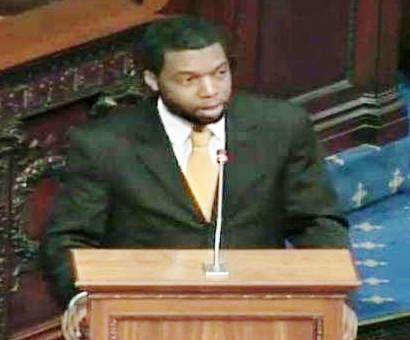
Debate on the Ethics Resolution — H. 3894 — lasted more than an hour. Speaker DeLeo, on whose complaint the Ethics Committee was acting — seemed ready to let his members speak as long as they liked. Several did. Most supported the committee recommendation, some sadly, a few angrily. Over the top was Malden’s Chris Fallon, who shouted his disapproval of domestic violence, very much the candidate — as he is — seeking a state Senate seat, the one vacated by newly elected Congresswowman Katherine Clark.

Image

^ cogently arguing for censure, not expulsion : Russell Holmes of the 6th Suffolk District

Representative Russell Holmes, of the 6th Suffolk District bordering Henriquez’s 5th, offered an amendment to the Ethics Committee’s resolution. He asked that the House censure Henriquez, not expel him. Holmes’s amendment made two strong points : that with parole, Henriquez will be out of jail by mid April, well before a special election to replace him occurs; and that his crime did not explicitly violate the House Rules and thus could not warrant expulsion.

Image

^ “this is a sad day for us all, i don;t enjoy this task at all” : Ethics Committee Acting  Chairman David Nangle of Lowell

The Ethics Committee’s finding, that Henriquez had violated Rule 16A, which addresses a member’s impaired judgment, did seem strained. Arguing the point, Reps. Garrett Bradley and David Nangle (acting Ethics Chairman) asserted that, being convicted of a crime of domestic violence, Henriquez’s ability to judge domestic violence legislation was impaired. Really ? if anything, his judgment on such legislation has probably become more acute. As for Henriquez being free of jail by mid-April, Bradley and Nangle argued that that was not the point; that Henriquez is quite free to seek re-election to his seat and to be allowed to take his seat if elected.

They’re right on this. It has happened in other legislatures, including Congress.

Yet even if the Ethics Committee’s Rule 16A argument stretched things, there was a general sense in the House that Henriquez no longer had any credibility to address domestic violence matters and that, by his continued insistence on innocence and not resigning, Henriquez had impaired his own judgment on the matter. Representative Ted Speliotis of Danvers voiced the feelings of many when he noted that, by walking out before the end of debate, Henriquez had insulted the “institution.”

No one, not even Russell Holmes, argued with the Ethics Committee’s finding that domestic violence is a serious matter and cannot be taken lightly by the House. Accepting this argument, the House now deems expulsion no longer limited to felonies; that a misdemeanor conviction of domestic violence is full grounds for expelling a member. As Representative Bradley said, “we’ve never faced this situation before, this is a case of first impression.”

But to return to Russell Holmes’s amendment : it was defeated with only 10 members voting “Yes.” Among the Yeas were Representatives Gloria Fox, Byron Rushing, Carl Sciortino, Denise Provost, Holmes himself, Benjamin Swan, John Rogers, and Angelo Scaccia.

Holmes himself said that Henriquez should have resigned. Little wonder that the actual expulsion vote was even more one sided. Voting not to expel were only Carl Sciortino, Denise Provost, Gloria Fox, Benjamin Swan and, after some hesitation, Holmes too.

A special election for the 5th Suffolk District has been called.

—- Mike Freedberg / Here and Sphere
IN CHARLESTOWN : EVERETT MAYOR CARLO DE MARIA WINS AT WYNN CASINO MEETING

Image

Three hundred people, at least, attended last night’s Wynn Casino public meeting at Charlestown High School. The meeting lasted more than two hours, as representatives of the Wynn project spoke, then City of Boston officials and consultants, then local elected officials and residents.

Much was explained, about traffic flow and overflow, new uses of Sullivan Square — which is slated for extensive reconfiguring, dredging of the Mystic River, disposal of contaminated dredgings, public transportation, and noise impacts. Consultants illustrated their concerns about traffic queuing; Boston Transportation Commissioner Jim Gillooly weighed in on Sullivan Square’s competing outcomes ; District Councillor Sal LaMattina expressed that it was “very insulting that you (Wynn) don’t have an answer to the traffic problem.” A Wynn representative answered LaMattina : “It’s a 100 million expense that makes the project unfeasible. Others cause much of the traffic.”

Image

^ “very insulting that you haven’t solved the traffic problem” — District Councillor Sal LaMattina

Image

^ “would you prefer a stadium ? More people, no mitigation ?” — Mayor Carlo deMaria of Everett, the Wynn casino’s host city

And so it went. then came Everett Mayor Carlo deMaria, who, for me, commanded the night’s key moment. “You know,” said deMaria — reminding the audience that he had Charlestown relatives too and that “many of your families live in Everett” — “there’s noises and smells coming from both sides of the (Mystic) River. This project is the best for all of us. Mitigation and jobs.” Then deMaria delivered the bomb : “Others have approached me about use of that land ; scrap yards, a stadium — the New England Revolution wants to build a stadium there. Many more people. No mitigation.”

Sometimes it takes a slap down that painful to get a message across to people who fear the future. “Hey,” deMaria was telling them, “I’m the Mayor over there, 92 % of my people voted for this, I am gonna do it, and if you say no, I will build a stadium that you will like even less.”

The audience got the message. Some residents spoke in favor of the Wynn plan. As one resident said, “Wynn is the best casino operator we have.” Another pointed out that casino traffic was mainly nighttime, not rush hour. Of other objections to the Wynn casino, little was heard. It was Carlo deMaria’s night. And Steve Wynn’s.

—- Mike Freedberg / Here and Sphere
13TH SUFFOLK : CAMPAIGNING IN THE DARK, COLD & SNOW

Image

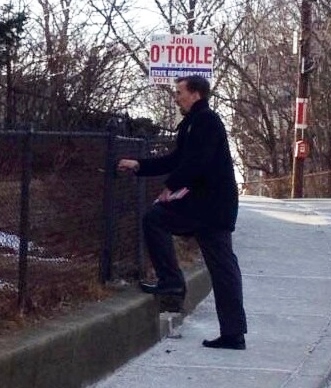
^ door-knocking alone on a winter cold day ; John O’Toole working Savin Hill’s Grampian Way

—- —- —-

Six men seek the State Representative office that Marty Walsh resigned to become Boston’s Mayor. Since the beginning of January, they’ve ben out and about meeting voters. It’s hard enough to run a race with five rivals on your case. Try doing it in a Boston winter !

If you look closely at the snap of John O’Toole above, you’ll see that he has a voter list in his hand, and a pen. He isn’t just door-knocking. He is seeking out specific doors, at which he is trying to meet a “good voter” — someone who will almost definitely vote in the cold-blast election he is moving toward.

This is campaigning the way one-finger hunt and peck typing is writing.

You HAVE to door-knock. A door here, another door there, two doors on the next street — a lot of walking. With the sun setting at 5 pm — as early as 4.25 pm when January began — by the time that voters get home from work, it’s already dark. Many voters won’t open their door when it’s dark, older voters in particular. The most reliable voters are the older voters. How do you meet them ? OK, you can door-knock older voters on the weekend, in the daytime. Oh wait : only four weekends remain before the March 4th election Tuesday. Five weekends have gone. How many voters can you door-knock, anyway, on a weekend ? If you work seven hours on Saturday and seven on Sunday — Saturday night and Sunday morning aren’t wise times to door-knock — you can knock maybe 120 doors. (In Dorchester, houses are packed so closely together that, at least, you don’t have to walk much to go from one door to an other. it’s all right there for you.) Of those 120 doors, if you’re lucky there’ll be 60 people at home. Nine weekends of 60 voters means you’ve met 540 voters.

But 11,635 13th Suffolk votes were cast in last year’s mayor election…

So let’s say that of the 540 voters you meet, one of four commit to you — 135 votes — and of those, 15 agree to volunteer. The 15 each host you a coffee party, at which you might meet 25 people — of whom some won’t live in your District, while others you’ll already have met. Maybe of the 25 voters in the room, 15 can actually vote and are new to you. Why even bother ? Answer : because maybe 3 of those 15 will volunteer for the campaign, and, just as significant, the house party host, to get 25 people in her living room, will probably have sent out 250 invites, all of which publicize your name.
Of course in winter a snow blast can cancel that houseparty on you.  Oh well…Image

^ speaking intensely to listeners cool : “PJ” McCann at the Columbia/Savin Hill Civic association on a snowy night Monday

During the week, you can only door-knock from 6 pm to 8.30 pm, all of it in the dark. Some houses don’t have street numbers; on many that do have them, the numbers are hard to read in the dark. More time wasted on logistics — but you keep at it, and on each weekday night you can door-knock maybe 80 doors, meet 40 people, commit maybe 20 votes. It does add up, slowly. Each week, if all goes well, you commit 100 votes.

You warm your feet later. On March 5th.

Sounds somewhat good, all this one-at-a-time work : but it isn’t even that good, because every voter you meet is also meeting, or thinking about, your five rivals. Of these voters, only those who actually volunteer for your campaign are your votes for sure. Those who only commit verbally can end up going to one of your rivals. My rule of thumb is that each rival can take ten percent of your committed non-volunteer votes. If this rule of thumb holds, each week you only commit 50 votes on the weekdays and 67 each weekend. By March 4th, that totals 1,053 committed votes that do not go elsewhere.

Image

^ is going everywhere in a parka enough ? is shivering each snow gust with a hat on ? Dan Hunt intends to find out.

There’s also the weather. Many of the six have campaigned on snow days; but in the snow everything moves more slowly. The only advantage is that more people will actually be at home when you door-knock. You’re happy to have even that advantage, because in this kind of campaign there aren’t many advantages available.

If all goes well — and in campaigns much usually doesn’t — by March 4th you’ll have those 1,053 committed votes plus maybe another 500 who you’ve met here and there, out and about, or who’ve read your literature and like it, or whose best friend is supporting you. So now it’s time to get these 1,553 people actually to vote. Sounds easy, but it isn’t. In a special election, with nothing else happening, if two thirds of your voters vote, you have been graced by the election gods.

And what if there’s a nor’easter on voting day ? Unlike school, elections don’t get canceled. But I digress…

Will that number — 1,036 — be enough to win ? Probably not. In a District as politically attuned as Dorchester, there’ll be a substantial number of voters who vote simply because there’s an election happening; voters whose preferences none of the six knows. As many as 2,500 such voters can do their duty. You had better win a fat portion of them.

Image

^ warm among friends — but most times, handshaking in snow : Liam Curran says he “will not be out-worked”

My guess is that 1,850 votes wins the race. Maybe less, because as I see it today, there’s two strong candidates and two gaining strength rapidly. Even the fifth candidate is moving vigorously, knows how to campaign, and speaks eloquently about city life. The five candidates could end up winning 1,600 votes, 1,450, 1,350, 1,250, and 1,000 respectively. (The sixth candidate is running on stickers. Who knows how many will be counted ?) That’s a total of 6,650 votes — a large number for a special election in March, but par for the course in a neighborhood as politically energized as Dorchester. Energized by the indomitable campaigning love of those who, like Dorchester pols before them going way, way back, take to the streets, eateries, senior citizens groups, civic association meetings, and house party living rooms in search of elected office.

—- Mike Freedberg / Here and Sphere