AN INSIDER LOOK AT “IMMIGRATION” — Pedro’s Story

hereandsphere's avatarMAN-CESTRY


–PEDRO’S STORY–

immigration

IMAGINE… That not EVERYTHING you “think” you’ve seen, read, or heard “might” NOT be true!!

“PEDRO’S STORY” —  an insider’s first hand knowledge — might make you re-think exactly that.

Immigration reform, citizenship, amnesty, undocumented workers, bipartisan deals…. These words and phrases are seen, read, and heard in every news, press, and media outlet repetitively ad nauseam. Yet not many people know what they “actually” mean. Sadly, fewer still can apply what they do” know” to events happening in our country.

Don’t worry, this is not a vocabulary lesson of epic proportions. This is a story about a young man. For the sake of keeping things fairly similar to the facts — we will call him Pedro.

Pedro Luis Vasquez hails from a village in the mountains of Guatemala. Its inhabitants lead a simple life, with few of the comforts that even poor…

View original post 1,118 more words

Daddy Day-Can’t — The first of a three part Top 3 FAQ’s of New Parents

hereandsphere's avatarCoffee or Vodka?

Question # 1 –TOP 3 FAQ’S OF NEW PARENTS

crying baby

Dear: Parenting 911

My wife and I recently had our first baby, Alivia is already 2 months old and incredibly smart — at least I think so.  She is very aware of my wifes presence, and seems to fuss the moment she is out of sight. I however do not get the same grievance when I leave or enter a room, where Alivia is learning all about her surroundings. I work long hours, BUT; I took off a whole month so as to help my wife care for our daughter. My wife Jennilynne had a very difficult pregnancy, and even harder delivery — resulting in a C-section. I woke with Alivia attempted to feed, change, and even bath her. Though I can truly say as I tried to bond with her — SHE ALWAYS WANTED MY WIFE!!!!! It didn’t matter…

View original post 953 more words

ANNALS OF SEDITION : BREAKING UP THE AMERICAN NATION

Image

^ says “liberty,” means “sedition” : Ted Cruz of Texas

—- —- —-

Before our very eyes, as we watch stupefied, the American nation is breaking up, shattering into its 50 component parts. Actually, we aren’t merely watching. We — the good guys, of course — are actively participating in the break-up. We have no choice but to do so, bcause it is being done to us by forces that will stop at nothing, including the unity of the nation, to have their way with us. The forces I speak of are the billions of dollars, unleashed by the Citizens United Supreme Court decision, to PACs that seek to shut down the Federal government, or to block it from working, and to purchase the election, in vulnerable states, of legislatures and governors hired to enact the billion-dollar agenda by which all money flows to the top, as the votes of those being sucked dry are suppressed as ruthlessly as their wages, hours, health insurance, and survival money are taxed and diminished inexorably.

Citizens United came at a time already portentous. The Republican party was already undergoing break-up, as extreme,y regressive donor groups assaulted the party’s governing core. The alarm bells should have sounded as far back as 2006, when the “right wing media entertainment complex,” as opponents call it, snuffed President Bush’s nomination of Harriet Miers to the Supreme Court. But the warning passed, and even in September 2008, when the House GOP Caucus opposed Bush’s economy-saving TARP program -which passed only because many Democrats voted for it —  the danger was not heeded. Today the regular GOP knows that it has been kidnapped into sedition; it wants badly to get off the break-up train, but as I see it, things have progressed too far for that. Only the Democratic party can stop right-wing sedition, and that only by defeating the GOP seditioners in the states they now control.

Good luck with that. The Democratic Party has a hard enough time defending its own turf right now. It can contest a few states currently dominated by right-wing sedition, but not many. The really dominated stares, such as Kansas, Indiana, Mississippi, Tennessee, Alabama, South Dakota, Oklahoma, and Texas, seem well out of reach, gone and moving even farther away.

Image

^ not ready to surrender : fighting sedition in North Carolina

Democrats are wont to blame GOP sedition on the significant vote provided to it by reactionary religion.  But these folks, who think they have a right to legislate and tell the rest of us how to live, would be a minor annoyance, a fringe fungus, were their numbers not blended into the “liberty” and “patriot” money bomb. For a while, we who live outside the regions purchased by the money bombers could stand amazed at what was going on. We could laugh at the “legitimate rape” comments, the antics of a Christine O’Donnell, the nazi-ish fulminations of a joe Miller, the selfie-ism of a Ted Cruz. We anger at the trash use of “liberty” to mean sedition and “patriot”: to mean gun brandishing; confident that our own, still respected civil rights are safe. But over the past year or more we have taken to travelling the same route — in the opposite direction. Our own money pools are now bombing the election wars and driving us, in states not Tea-publican at all, forward fast on all fronts : wages, union labor rights, civil rights, gun control, immigration.

We in Massachusetts, New York, Connecticut, Rhode island, Minnesota, Maryland, Hawaii, Washington, Illinois, maybe Oregon — and especially California, social justice’s go for broke democracy –recognize that the Constitution, in its very preamble, talks of “promoting the general welfare.” Not the welfare of only some, but of all ; because that is what “general” means. We recognize that if the rights and welfare of some are curtailed, so are the rights and welfare of all. We do not think that the Founding fathers were mistaken to commit to all, nor that it is wrong for us today to continue that commitment. We are glad for, not offended by, the social safety net. Most of us welcome immigration and dislike guns and ammo. We accept science.

Our money people mostly agree. Money interests in our states mostly understand that if everyone prospers, all prosper. And so we in the states where our views are shared by the monied classes among us are buying elections of like-minded legislators and governors.

Image

^ social justice goes for broke : Governor Jerry Brown of California

Yet we too are breaking up the nation. There is no longer one America but two; or should I say, fifty ? Such a fragmenting has always been implicit in our complex governing structure. The Constitition itself envisions states retaining significant local autonomy. Often that multifold autonomy has engenered leguslative experiment — recognized and written into many Supreme Court opinions by Justice Oliver Wendell Holmes, who valued legal empiricism. But just as often state autonomy invited ghastly injustices — lynching and Jim crow laws, for example — and put them beyond the reach of Constitutional protection. We as a nation were only able to interrupt those injustices when the Federal Congress enabled laws to do so; and as anyone who has read the history of America from 1900 to 1960 knows, such laws were almost always blocked by representatives of unjust states. The nation might well have shattered to pieces, as it had done in 1860; because injustice is ananthema to most Americans and most states. But two facts, the remembered defeat and horror of our Civil war and the common threat that a nuclerar armed Soviet Union posed to all of us, held our fractured country together : all in gress could agree on the arms race. Today that common threat is gone, and the horror and defeat of our Civil war looks unnecessary : why secede from the union, and risk war, when you can simply stop the nation cold and then legislate your 1850s agenda in the states your money bombers can buy ?

We in the social justice states forget that many in the pre-Civil War north wanted to part ways with the slavery South. Break-up of he Union was advocated by some. (It was in response to northern break-up sentiment that Daniel Webster delvered the Senate speech in which he magnificently said “union and liberty, liberty and union, inseparable.”) Only when South Carolina forced the secession issue to war –attacking F ort Sumter in Charleston Harbor — did the North commit to war. Today, we know better. Why not just let the states of injustice do their thing while we do social justice in our states ? At least in our states we can do what citizenship is supposed to do. And if by doing so we render the Federal governemnt even more hors de combat than it already was, well, that’s just how it is.

Thus what was once called “America” is becoming two very different countries. Unless our polity can reverse course very soon, the break up is going to be a fact for a long, long time — and will aggravate. Because it has consequences. People are not going to live oppressed in regressive states. They will move, if they can, to states of justice and opportunity. Their children will move too. The more people who leave the injustice states, the more unbeatably injust they will become : because those who leave take their votes with them. In the same way, the more people who move to the justice states, the more just these will be. Thus will time break our nation farther aapart and to pieces.

The consequences will be huge. And not in a good way. I wish I could see a different outcome. But right now I cannot.

—- Mike Freedberg / Here and Sphere

#MAPOLI : CRAP AND FURY IN CENTRAL MASSACHUSETTS

Image

^ PAC’d up talking points : Mike Valanzola of Wales

Image

^ talking the Tea from tax to tightwad ; James Ehrhard says that Stephen Brewer is  Brookline liberal

—- —- —-

As I cover this year’s Governor election, on a statewide basis, I am struck by the number of Republican state legislature candidates from Central Massachusetts who talk the same glib. From Sturbridge to Athol, Clinton to Chicopee, Winchendon to Uxbridge, Ware to Phillipston, you hear what the Cato Institute and its local farm teams, the Mass Fiscal alliance and the Pioneer Institute, have on offer. As if city-based, billionaire-funded policy pushers had anything to say to people living on or close to the edge in towns far beyond the technology quadrant of our state, towns lacking infrastructure, and sometimes health care,effective  schooling or even visibility — the region being vastly under-served by major media.

Ground zero for robo-think Republicanism may well be the State Senate seat now held by Stephen Brewer,a  Democrat who talks the “job creator” poop as glibly as any PAC-d up Republican. Brewer is waiting on the winner of two GOP opponents : Mike Valanzola of Wales and James Ehrhard of Sturbridge. Ehrhard sounds even more Tea-tongued than the rigidly PAC-i-fied Valanzola, and his negative tone doesn’t have much legs : in 2010 he lost a selectman race in Sturbridge by a vote of 1039 to 764. Valanzola in 2012 gave up, after two terms, his selectman seat in tiny Wales; but Valanzola is, so far, running by far the more intense campaign. Central Massachusetts’s Tea-friendly activists badly want the Brewer senate seat, and they have reason to be cheerful : the district’s towns include a bushel of towns that Republicans carry by 30, even 40 points. As Ehrhard points out, Scott Brown in 2010 and Charlie Baker in 2012 carried every one of the district’s 28 communities.

Still, it chills me to see candidates in this hardscrabble district talking Tea fury or  expensively hired bull-bleep. If any area of Massachusetts needs straight talk, and mucho state assistance on many, many fronts, its the Worcester, Hampden, and Hampshire senate district.

Image

^ Democrat on the Tea hot seat staring down PAC flux : 25-year Beacon Hill veteran Stephen Brewer of Spencer

The imposition of PAC-d up quackery isn’t by any means restricted to the Brewer race. Nor the venting of Tea. All Central Massachusetts groans of them. One would think that the Central Massachusetts GOP hopefuls whose facebook pages, twitter feeds, and campaign websites I surf would voice the voices of their towns (few are running in a city); but no : almost all churn out the exact same GreedPAC robo-call, or worse : cut taxes, repeal taxes; don’t raise the minimum wage ; make public assistance almost impossible to get; harass immigrants; go for your guns. Hasn’t anybody got anything original to say ? That suggests a mind at work, not just a lip ?

You confront one of the more aware of these sloganeers, as I have, and you get the answer ‘we need better solutions.” So how about suggesting some ? Maybe.

From the others, all you get is defriended or blocked. Debate not permitted in Central Massachusetts !

PAC-ism is the curse of politics today, especially toxic to regions lacking diversity in people, political party, or media. The Democratic party has PACs too, as we in Boston recently confronted; but these PACs have, it seems, made a decision not to shuttle resources to an area they do not need to win because they already own supermajorities in the legislature; a region lacking in Democratic reliables : Union members, educators, health care interests, and urban planners. Cato-ism thus has free rein — more or less — to rule the unpopulous midsection of our state.

The effect is to drive Republican victory in Massachusetts farther and farther away from  the big cities and from the issues and concerns that big city voters have. It’s a temptation that, right now, our GOP is hard-pressed not to surrender to, a message from the “Quabbin quorum,” so to speak, that will impact city people’s impression of GOP governor hopeful Charlie Baker as much and diligently as he rejects it.

Thus the Democratic party’s light touch in Central Massachusetts be pays big dividends for them.

After all, why not let your opponents voice stuff that doesn’t pass the nutrient test ? You’ve heard the same crap now since 2009. You know it by heart ::

1.”free up the ‘job creators’ to hire people.” Businesses do not hire because taxes are cut. They hire because demand for their product or service increases. Consumer demand amounts to TWO THIRDS OF THE ENTIRE ECONOMY. it can NOT grow if consumers’ income does not grow.

2.”cut taxes, slash public assistance, cut state spending.” How, pray, does it aid the economy to cut taxes ? Our economy cannot grow as it should if our roads, bridges, and transit are constantly in repair, jamming up traffic (no need for a Bridge-gate here, we have a kind of one going on, by itself, every day). Our economy cannot grow if state education spending cuts school needs. Our economy cannot grow if out of work workers can be retrained, can’t get unemployment assistance, can’t get to work because the transit system can’t do maintenance and car updates.

3.Don’t raise the minimum wage, mom and pop businesses will go bust.” That I doubt. If a business is so marginal that it can’t pay its employees enough to not need public assistance, it shouldn’t be in business at all. There may be some such; but there are far, far more working people — and most minimum wage workers are women — who can’t make ends meet, who can’t participate in the growth economy, whose low wages we taxpayers subsidize. This must stop.

4.”force the undocumented immigrants out” : talk about self-defeating ! Every immigrant, documented or not, is a consumer; every consumer maintains the economy.

5.”more guns make us safer.” This one I won’t even dignify. I’m done there.

Why, I ask, why is this haunch gunk being spread across Central Massachusetts, the state’s neediest region, where huge State investment is needed badly, in schools, transit, roads, career centers, and better wages ? A region where many people go unnoticed by any media — except when a tragedy strikes, such as the recent death of a Fitchburg area child in DFC foster care — and basically are left to fend for themselves ?

Expect very little of this to be said out loud in the Stephen Brewer contest with either the angry Ehrhard or the polished Valanzola. Under the table, however, the future of a very dry-rub region of our state will be profoundly affected. Because in theory, at least, Brewer is a Democrat, and he cannot be entirely overlooked, every day, by the big egos in the big city to his east.

—- Mike Freedberg / Here and Sphere

CORRECTION : an earlier version of this story had James Ehrhard being a  Sturbridge selectman, whereas in fact he lost that race in 2010, to Mary B. Dowling by 1039 to 764.

UPDATE 01/21/14 : four days ago, Stephen Brewer announced that he will not seek re-election. His very GOP-leaning seat is now open — maybe — for GOP pick-up.

#MAGOV : AS THE CAUCUSES APPROACH, WHO’S HOT AND WHO’S NOT ?

photo (6)

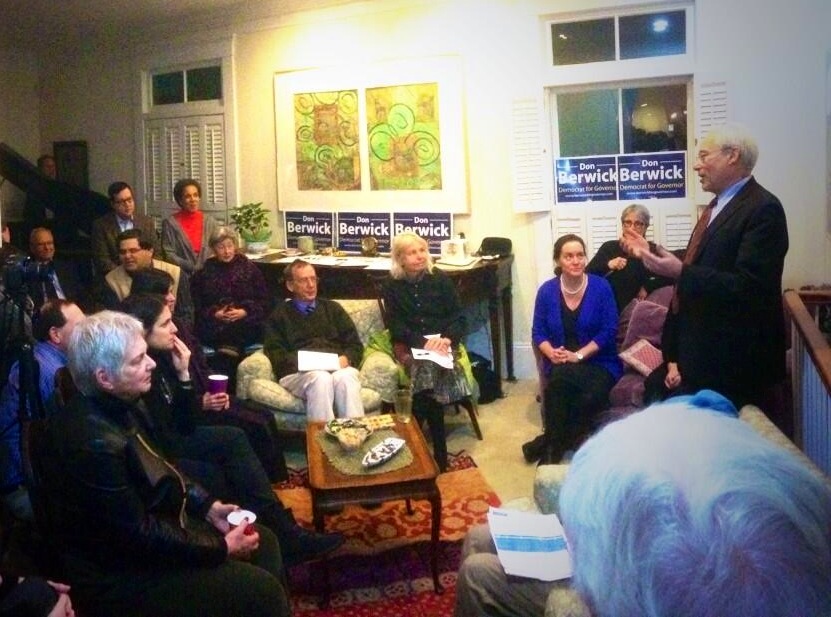
Today, January 11th, Democratic governor hopeful Don Berwick tours the West. His day begins in Athol, moves to Orange, then over the mountains to Williamstown; the afternoon and evening find him in Springfield, Chicopee, and Palmer. That is a lot of driving, but how else is a statewide candidate to reach out to activists spread across three counties that, combined, comprise about 20 % of Massachusetts’s population ? You can’t helicopter it; trains don ‘t carry people any more; taking the bus seems just a bit wack. So you drive. Berwick has been driving a lot lately. Cape Cod has seen him quite often, the Merrimack valley, even Tea party-laden Worcester County. Tireless he is, this medical man who has a bedside physician’s touch for people he meets.

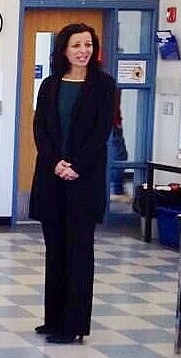
Peripatetics alone should earn Berwick a high place in the list of hot political properties. Berwick has also attracted solid money this month : $ 62,849 since January 5th. Yet a fourth place man he seems. Attorney General Martha Coakley has twenty times the state-wide clout, as she wields the investigatory poewers of her office. State Treasurer Steve Grossman has the big bucks — don’t be fooled by his raising only $ 13,122.96 this past week; his mid-month report is likely to show a solid dollar haul.. Whoever you talk to, they’ll tell you that Grossman and Coakley own the top two spots in the Democratic part of the governor race. Then there’s Juliette Kayyem. She hasn’t raised as many shekels even as Berwick, much less Coakley or Grossman — though her last week’s $ 39,115.68 merits notice — but on social media she’s the champion of charisma — has more followers than anyone but the seasoned Coakley and, if current tends continue much, will soon pass her too. Kayyem is a physical presence too : eye-catchingly fashionable, and willing to push the style envelope, she could easily be an Oscar actress. She’s the female version of Scott Brown — and a policy wonk besides.

photo (8)

If all else were equal, Kayyem would easily grab the largest number of Democratic delegates at the upcoming caucuses and go on to face Charlie Baker — no slouch in the charisma department himself. But Democratic activists run Masachusetts; they are not amateurs, and no matter how strongly Kayyem may appeal to their idealistic paint, many — probably most — listen not to their paint but to their posts and beams, the basic structure that is the State government which they build and maintain. The carpenter in them knows that Coakley or Grossman already occupy the building and know where its doors and stairways turn up.

Dr. Berwick at least has the health care constituencies to himself. They’ve been his go-to all his adult life and into his government career. They know him, and he knows them. Who does Kayyem have to compare ? I suppose that social media is in itself an interest group these days; and very much a Democratic-leaning one; and them, she has. I run into Kayyem supporters when I’m online far more frequently than supporters of Berwick, Grossman , and Coakley combinbed. But social media people do not overlap very well with caucus goers, many of whom are elderly or professorial and temperamentally at odds with social-speak. Thus both Kayyem and Berwick are toughing it out speaking to 50 people at a gathering or even just 20. It’s like building a sand castle one grain at a time, but there’s no other way for them to climb the castle wall within which lurk Grossman and Coakley.

The caucuses lead to the Democratic convention, at which a candidate must win 15 % at least of the voting delegates. If not, their names won’t be on the Primary ballot. Important to caucus goers are the policy plans, articulated at length, that both Berwick and Kayyem are issuing on their websites. (Grossman too.) A delegate may or may not give kudos to any of these plans; but their issuance at least assures a potential delegate that the candidate offering them is ready — maybe — to govern on Day One. But who to commit to ? We will soon know.

photo (7)

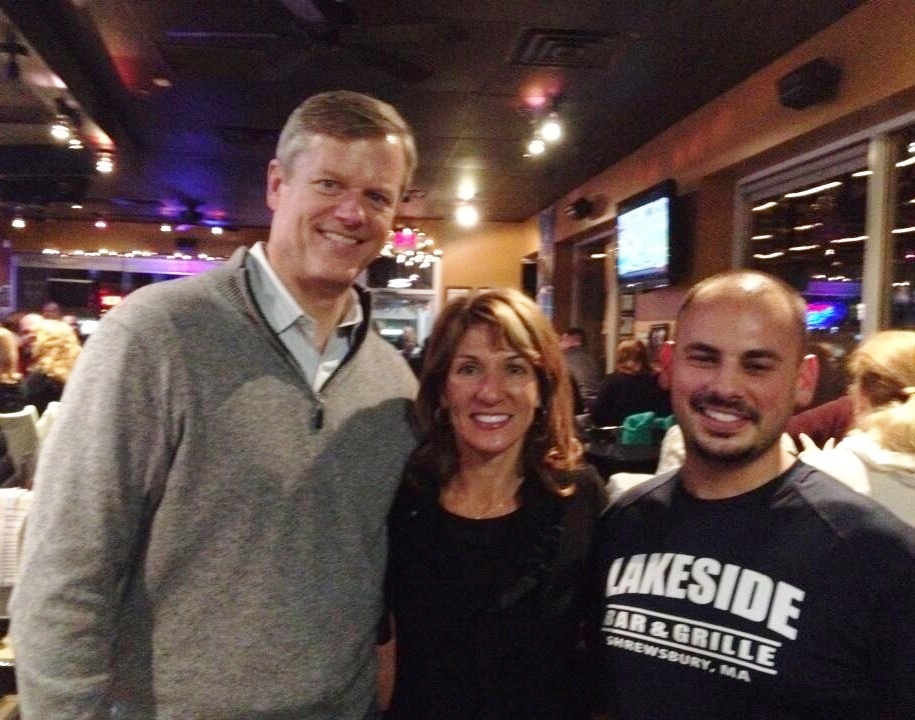
I mentioned Charlie Baker. How is he doing, you ask ? From where I sit typing, he looks doing quite well. He and his running mate Karyn Polito have raised as much money as the Democratic money champ, Steve Grossman. Baker even has a primary cahllenger, a Tea party true believer — “gun rights,’ anti-immigrant, “voter ID,” blame-the-poor : the whole Tea-angry talk show — whose presence in the Republican race frees up Baker to be the moderate problem-solver that Massachusetts voters like.

Baker has given us much more lollipop than the chippy curve he pitched at folks four years ago. He presses the flesh and seems to like it. He mixes with people. He visits cities, even Boston, and talks city issues almost like a Mayor. He has begun to offer policy papers as worthy as, or better, than those of Kayyem, Berwick, and Grossman. He is running almost as if he were competing right now with all four potential democratic winners; and in fact he is competing with them right now. The Tea party, which will, hopefully, split off to one of the several protest candidates on the November ballot, represents about one third of Republican voters. The other two thirds, who form Baker’s core, amount to no more than eight percent of those who will vote for Governor in November. He’ll need to convince plenty of Democrats that he is a better choice than Grossman, Coakley, Kayyem, or Berwick; and the surest way to do that is to do it now, when all four are in the field.

Massachusetts voters often choose Republican governors as a check on our one-party legislature. The four governors prior to Deval Patrick were all GOP. Baker has history on his side. Yet it still might not be enough. Grossman and Kayyem look very strong to me at this time, as strong as Baker; and Berwick stands not far behind them.

—- Mike Freedberg / Here and Sphere

MEEK AT THE MOVIES : AUGUST : OSAGE COUNTRY ( 2.5 stars )

Image

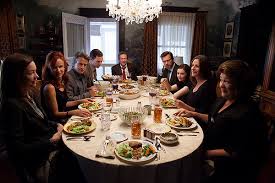
^ a deep dark closet of skeletons at the Weston family table in “August : Osage Country”

—- —- —

There’s plenty of thespian timber and uncorked rage in this austere melodrama about familial dysfunction and reckoning out on the plains of Oklahoma. The emotional turbulence in “August: Osage County” is devastating, so much so, you could think of it as an angry twister wrecking havoc across the sleepy farm land, or as the evil step-sister to “Steel Magnolias,” appropriately shamed and exiled to the prairie for bad behavior.

If there’s any calm in the film, it’s the one that comes before the storm, and even that’s not so pretty. It all begins serenely enough as Beverly (Sam Shepherd) delivers an introspect confessional to Johnna (Misty Upham as the newly hired house help, who is Native American and has to, by job description, endure the oncoming onslaught passively) that he drinks too much — but that, at this later stage, it’s now tolerated by his wife because he puts up with her incessant pill popping. Beverly’s a dapper guy with a slight twang and a love for books. No sooner has he presented Johnna with a personal selection (TS Eliot) for her to read, that his wife, Violet (Meryl Streep) lopes through the door, red-eyed, in a bathrobe and hopped-up on something. Her hair’s short, matted and falling out. She looks like an extra from a film exposing Nazi atrocities.

We learn quickly enough that Violet has mouth cancer, which is both a touch poetic and ironic because what comes out of her mouth is nothing but cancerous. Point and case when she judgmentally asks Johnna if she’s an ‘Injun’ and what kind, and then proceeds to tear into Beverly for being a boozing philanderer and a do-nothing. Is it the pills or something more deep-seated? For a woman on death’s door and flying high, Violet has all the reserves of a Navy SEAL Team.

Soon, two of the three Weston daughters descend on the house, Iris (Julianne Nicholson) and Barbra (Julian Roberts) with her estranged husband (Ewan McGregor) and their precocious daughter, Jean (Abigail Breslin changing it up impressively from her turn in “Little Miss Sunshine”). But Bev is missing, and oddly, no one seems too concerned. He’s subsequently found drunk and drowned, and it’s the funeral that summons in the third daughter, Karen (Juliet Lewis) and her Ferrari revving beau (Dermot Mulroney), as well as Violet’s controlling sister, Mattie Fae (Margo Martindale) and her introspective husband, Charles (Chris Cooper).

If the reveal about Bev’s demise seems a spoiler, just know that it comes in the opening few moments, and serves as the plot’s lynchpin for the potpourri of combative personalities to assemble and take off the gloves–if they were ever even on. I’ve been told that Tacy Letts’s Tony Award and Pulitzer Prize winning play that the film’s based on, runs well beyond three hours on stage and that it’s also a touch more subtle and nuanced than John Wells’s screen adaptation. Letts’s works in general are angry and often violent compositions. If you need a reference, just check out the 2011 screen rendering of Letts’s “Killer Joe,” and you’ll know what I mean hook, line and grim sinker.

The cast of “Osage” features no less than five best acting Oscars among them (three of which are Streep’s), and Wells, either by design or timid admiration, throws open the barn door and lets the actors loose to steer themselves. The result is both impressive and muddled. Each hits notes with aplomb, but few seem to bounce off each other with any heartfelt synergy. Wells, who has worked well with a diverse and ranging ensemble before (including Cooper) in “Company Men,” tries to condense too much meanness into the lean two-hour time-frame; and, perhaps, the more grounded medium of the screen alleviates the inherent suspension of disbelief that comes with the stage.

It’s not until the post-funeral feast that the Westons’ deep, dark closet of skeletons, hinted at for so long, finally gets opened. Incest, childhood abuse, tough times and infidelity get trotted out with vitriolic accusation. Cancer and the recently passed loved one seem to be the furthest thing from anyone’s mind, and the men sit by emasculated and soak it all up silently like cornbread in curdled gravy. Barbra, as tart tongued as she is, garners some degree of sympathy; she’s trying to be a good mother and repair her marriage after her husband has stepped out with a coed under his tutelage. The most endearing of the Weston clan, however, are Nicholson’s Iris, a branded spinster who’s never left the Dust Bowl, and Mattie Fae’s meek son, Little Charles (Benedict Cumberbatch in an intriguing juxtaposition from his recent turns as Khan and Julian Assange), who’s constantly berated a halfwit by his own mother. Only they harbor any hope or optimism despite their limited possibilities–a notion that becomes even more isolated and embossed by the hate and vitriol raging around them.

With a less competent ensemble “Osage” might have been just a disturbing, forgettable go. Even with A-listers, the pecking and picking rages on far too long with scant few moments of reflection or atonement. It’s the somber quiet ones like Charles Sr., and Iris and Charles Jr. who give life to the Weston’s big house of pain on the prairie.

— Tom Meek / Meek at the Movies

ANNALS OF MURDER : HERNANDEZ FROM THE INSIDE

Image

^ slain because he refused to let a stranger — who turned out to be Aaron Hernandez, big shot — get in front of him in line ? Daniel Abreu

below : Safiro Furtado, who evidently also refused to let the large stranger get in front of him in that Cure line

Image

Of all the murders now on prosecutors’ table in Massachusetts, none puzzle me more than those allegedly committed by ex-football star Aaron Hernandez. Underworld murders one grasps; they’re part of the business, and all who enter the criominal life understand that. Terrorist murders, though truly nutty, at least profess a larger purpose. But what the blazes were the murders about that Hernandez is accused of doing ?

Though nothing at all has yet been proved, and we should keep that strongly in mind, the events now outlined by various police investigations tell us a whole lot. But first let’s look at what is alleged to have happened :

1.Hernandez and a friend (said to be Alexander Bradley) are standing in line outside Cure Lounge on Tremont Street, waiting to be let in. It is midnight. There is often a line outside Cure at that time — I’ve seen them. Directly ahead of them in line are two men, who we later learn are Daniel Abreu and Safiro Furtado. Anyway, Hernandez and friend finally enter Cure directly after Abreu and Furtado.

2.Hernandez downs two drinks — the Herald says that he “slammed” them — and then leaves, with Bradley in tow.

3.The two immediately get their car, the now infamous silver SUV with Rhode island license plates, and circle the block waiting for Abreu and Furtado to leave.

4.Two hours later (!!) they’re still circling ! Now Abreu and Furtado leave, with three other people. (Q : If Bradley was in the car with Hernandez, didn’t he say something like “it ain’t worth it, man. Forget about it”? If he did not say thus,why didn’t he ? More on this below.)

5.Hernandez and Bradley follow them, circle a block, then pull up alongside the Abreu & Furtado car at a stoplight.

6.Someone fires five shots, killing Abreu and Furtado and injuring others in that car.

The question immediately comes to mind : huh ? What happened here ?

What indeed. There’s no indication that Hernandez knew the two men, nor was there any report of any altercation between him and them inside Cure. What the blazes got Hernandez so ticked off that he went out, waited two hours for the men to leave, and then shot them ?

Only one explanation makes any sense at all :  Is it not likely that he asked the two men to let him get in line ahead of them — and they refused ?

This was enough, it would seem, to violate the ego of a man to whom being a big shot was everything in a life otherwise filled with danger, hangers-on, and living for the moment.

It seems small. It’s also completely ordinary. Stuff like what happened to Hernandez in that Cure line happens to lots of people. You get refused like that, you get angry you want to kill the people who take you down, ka-bang. That’s human nature for many. But then life goes on, and you forget about it. Hernandez couldn’t forget about it. He was with his friend. His friend saw it go down. Hernandez the big shot, the star Patriot tight end, could not be seen being taken down. His front had been pied. And so the waiting and the killing. To wipe the pie off his front.

And that is why Bradley probably did not say “it ain’t worth it” to Hernandez. He either said nothing or perhaps he even encouraged Hernandez. Not because he wanted the two men to die but because he did not want HIMSELF to die. He knew his man. In  fact, about eight months later, so it is reported, Hernandez did try to kill Bradley.

Killings like this happen all the time in the criminal underworld. Front is the only shield that criminals have against being killed themselves. They need to be feared. Especially they need to look tough to their crew. Not fearful, no crew. No crew, dead man. This, we understand. But how to understand it of a $ 40 million football star ? In his life it was murder for murder’s sake.

Out of the ego killing that night arose the next murder, the one for which Hernandez now faces trial as the accused. It seems equally senseless.

1.Hernandez and Odin Lloyd go to Rumor, another nightclub not far from Cure.

2.At Rumor, Lloyd talks to someone who, Hernandez says, he has “had trouble with.”

3.Two nights later, Hernandez calls two Bristol, Connecticut buddies to come join him. The two men dash up — after all, when a $ 40 million football star calls you, and you’re basically about nothing, you are thrilled that he called you. It makes you somebody.

4.At about 12.30 am the three men go to Lloyd’s house and he joins them in their car. (Question : did he not sense danger ? He surely did, but what choice did he have ? If he had refused to join them, he was a dead man, and he knew it, because he KNEW Hernandez. Heck, he was dating the sister of Hernandez’s financee. So into the car he went.)

5.At about 1.30 AM Lloyd texts his sister a couple times, the last one being to tell her “I’m with HIM. Just so you know.” (Q : the three guys LET Lloyd keep his cell phone and send texts ?)

6.About fifteen minutes later Lloyd is ouside the car and is shot dead.

The police report says that Lloyd was killed because “possibly he had information about the killing of Abreu and Furtado” and that that is why he was killed. This made no sense.

But now we find out things that do make sense. We learn that a security staffer at Rumor — a man known to me, as much more at Rumor than just a staffer — told police that “someone spilled the beans” about the 2012 killing “right in front of me.”

Could this “security staffer” be the person whom Hernandez had “had trouble with” ? Could it be that that “staffer’ had been working as such at Cure on the 2012 night in question, and that at Rumor, Lloyd had said hello to him, as somebody he, Lloyd, knew, and that conversation had then ensued ? And which Hernandez saw and heard, remembering very well who the “staffer” was ?

In this case, Hernandez waited not two hours but two nights to make his move. He had been seen packing heat at Rumor before; but evidently not on the night in question. Besides, at Rumor it was only him and Lloyd. He needed backup.

All of this is standard issue in the criminal underworld. People with information get killed all the time. By their close friends ? Of course ; who better to get inside a man’s guard than a close friend ? What is NOT standard issue is to see this sort of thuggery in the daily calendar of a $ 40 million football star. But that — big time football star — is how WE see Hernandez. He evidently saw himself differently. VERY differently — from inside himself.

One last time I caution you that none of the criminal acts narrated by me have yet been offered as evidence, much less proved. The Hernandez trial has yet to begin; the indictment is still in the pre-trial, procedural stage. But the narration is a common one in a world in which fear rules everyone every minute of every day and every word one says, even every item of clothing one wears; fear, worry, anger, and living — regardless of what the side doors of one’s life open onto, stardom included — entirely by the sneer and bad-ass of one’s paper-thin front page.

For the thinness of that paper front, folks have to die.

—- Mike Freedberg / Here and Sphere

BOSTON MAYOR : TRIUMPH OF THE OLD OLD

Image

^ the old ways first, then the new, maybe : Trin Nuguyen, Alejandra St. Guillen, Joyce Linehan, Joe Rull, Keith Williams, Eugene O’Flaherty

—- —- —-

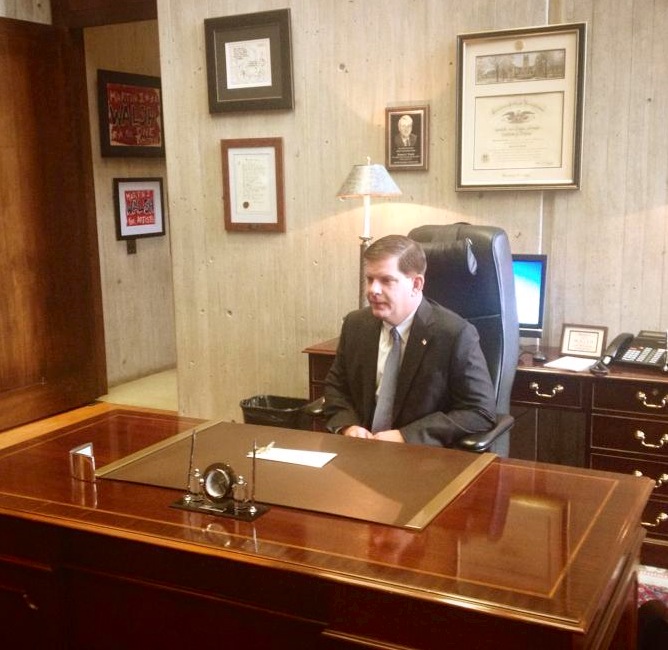
Mayor Walsh’s first list of appointments has already generated much controversy. I find a lot of the talk otiose. A new Mayor will make new appointments. Who knows if all will last ? Abraham Lincoln, newly at war, made many appointments of generals, but not for two to three years did he identify a team who would and could do the job. It would not surprise if Walsh’s appointments follow a like course.

That said, the current appointments do accord us a look at how Walsh thinks. In the campaign he promised to create a cabinet of adminstratiors that would reflect the cultural diversity of today’s Boston. This he appears to be doing. The appointment of William Gross as deputy Police Commissioner fulfills a commitment in particular to apppoint a person of color to a Police leadership position. His cabinet also now includes Alejandra St. Guillen of Oiste, Felix G. Arroyo (as Chief of Health and human Services), Keith Williams, and Trinh T. Nguyen. St. Guillen will interim direct the Office of New Bostonians; Nguyen, the Office of Jobs and Community Service. Williams, who served Mayor Menino as deputy director of Neighborhood Services, will interim manage the Office of Small Business. These appointments stand; yet all, except Arroyo, are positions of deputy level. The top positions in the new Mayor’s adminstration have gone almost all to people who to Walsh are long-established, close associates and friends. The only exception so far is new police Commissioner William Evans; and even he is a man of tradition.

Image

^ campaign commitment honored : new Deputy Police Commissioner Bill Gross

The two-level division of Walsh appointments mirrors how the Mayor campaign played out. First aboard were Walsh’s core supporters, those who were wth him before the 12-candidate primary. From them has Walsh called upon Joyce Linehan, his new director of policy; Joe Rull, his chief of Operations; Chelsea-Charlestown State Represenative Eugene O’Flaherty, who will be his Corporations Counsel; and — reportedly — former State Representative Brian Golden, of Brighton, as interim director of the BRA. At second remove come those who Walsh added to his support vote after the primary — including Felix G. Arroyo, who alone among second-wavers has earned a first level position in the Walsh administration. One is led to believe that Walsh has said, “First group, I trust. Second group, I will see if I can trust.”

That Walsh seems to value long time relationship so highly isn’t unusual at all in local politics. It’s the norm. It’s how Boston voters vote, and it’s why Boston politics changes hardly at all, especially compared to Boston commerce, Boston residence, Boston fashion and social life. Being a “new” Bostonian is a disadvantage in city governance. It was both the great strength of John Connolly’s campaign — because “new” Boston is so dynamic a presence now, and quite numerous — but it was also that campaign’s big weakness. The old knew its opponent very well, identified it very specifically both geographically and in lifestyle. Walsh has made the very practical decision to emphasize the old and the long-time — shrewdly, if ruthlessly — and to accord the new and the briefly recognized an entry, yes : but not the big prizes. Incremental change it is. We know the drill.

Brian Golden

^ George W. Bush favorited : former St. Rep Brian Golden of Brighton may be directing Mayor Walsh’s BRA

It’s also fascinating to see how many of Walsh’s long-timers now live outside the city and will have to move back into it in order to take positions in his administration. Can I also note that many of these long-timers are politicians of very conservative views ? Brian Golden endorsed George W. Bush in 2004. Eugene O’Flaherty is one of the most socially conservative Democrats in the Legislature. I don’t know Joe Rull’s political opinions, but he is a South Boston native — and Southie is right now by far the most Republican-voting neighborhood in the City. Doubtless all three men will accomodate their views to Walsh’s Left-tinged labor traditionalism — because when you take a job with the boss, you do so knowing what he wants of you. But the appointment to high City office of political people much, much more conservative “at heart” (as most will tell you privately) than the brief they are given has been a fact of Boston city governance as long as I can remember. There hasn’t been a Mayor administered by operatives of reformist mind since Kevin White’s first two terms.

No wonder that Michelle Wu voted for Bill Linehan for Council President. She gets the message coming from the corner office — and from 40 years before it, of governance by very conservative folks. The theme is clear.

—- Mke Freedberg / Here and Sphere

THE TRI-TOWN REPORT : WINTER SPORTS AND A MOUSE TRACK

Image

Here in North Worcester County, the land of the frozen chosen, January can (seem to) last several months. And so, if you have your wits about you, you’ll take up a winter sport. My husband and son ski at Mt. Wachusett, and I cross-country, when the snow is fine. And my daughter, age 4.5 (or, as she says Four and a half and three quarters) would happily ski down our front yard over and over. You know who we are? We’re the part of Massachusetts that receive a foot of snow, when those in Boston are quivering about an anticipated six inches. And then reality hits, which is that the nor’easter bypasses Boston and heads straight for the middle part of the state, and we end up getting 18 inches.

Image

You know what that looks like? Curved forms, verses liner. Henry Moore sculpture that’s constantly changing. I’m writing this now, in the middle of the “Polar Vortex” (which, frankly, sounds like a hair metal band I might have seen at Bunratty’s way back when) and noticing all the snow on the trees is gone.

So what we do is head to The Finnish Center at Saima Park http://www.saima-park.org/index.html to go through the trails. They’re cool with snowshoers as well. Or stay indoors and work on textile projects (e.g., quilting, which seems to have a huge following out here). When I was growing up there were several stores devoted exclusively to fabric. In the era of the mighty-mall, you can find remnants at Michael’s and Joanne’s, but my preference is getting those shrunken wool sweaters at Goodwill and making stuffed animals.

And if you want to go out, come to Fitchburg Public Library on January 25, 4:15 pm for “Stories and Shelter Cats.” This is produced by ACE, Animal Care and Education, the group I founded to help look out for stray and homeless animals and educate school kids (ace4animals.org). We have information on how to adopt a dog or cat. Visit ace-central ma on Facebook — excellent pet advice and sharing.

Speaking of animals — you see that picture? You see that picture? It shows a winding trail that was all that remained after the sun melted the first six inches of snow. That’s a mouse-track, heading straight to our compost heap. The shadowy form underneath? That’s a moose track. I have no idea when these two paths intersected, but I’m very, very sorry to have missed this.

— Sally Cragin / The Tri-Town Reprt

Sally Cragin writes the astrology column “Moon Signs” for the Portland and Providence Phoenix newspapers and is reachable at moonsigns.net

“A KID FROM TAFT STREET IS NOW MAYOR OF BOSTON !”

Image

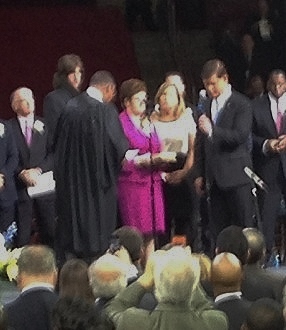
^ taking the three-part oath as Boston’s 48th Mayor :Martin Joseph Walsh of District 3

—- —- —-

So said Marty Walsh after being sworn in as Boston’s 48th Mayor. Chief Justice Roderick Ireland swore Walsh in. Walsh’s Mom and brother and his gal-pal Lorrie Higgins stood by to watch the “kid from Taft Street” official become His Honor. It was a moving moment no matter which of the 12 Mayoral candidates you wanted. Walsh grew up without a big name, on a three-decker street, surrounded by temptations, some of which befell him. And now here he was, the City’s leader, holder of perhaps the most powerful elected office in Massachusetts.

Other men have traced the same kind of path from bottom to top. One thinks of Diocletian, Roman Emperor, yet born a slave, who rose, who educated himself. Or of Abraham Lincoln. Or Fiorello LaGuardia and Al Smith. It is, in fact, a commonplace of politics, that those on the bottom often believe in the system more truly than many on the top and who, aspiring, steel themselves to rise within it, no matter how long or painful the climb, and to become the steward of it and of all it represents. There have been innumerable Marty Walshes in history. And yet…it is still moving to see an actual Marty Walsh actually become Boston’s Mayor and to see the gathered thousands of Boston’s elite and non-elite actually there, in Conte Forum, to witness his becoming Mayor and to cheer it.

Image

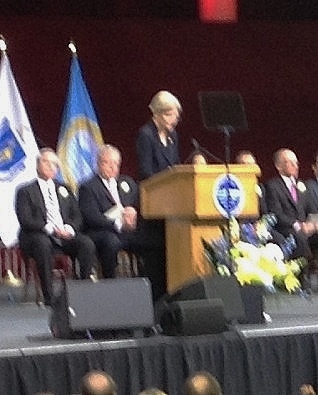
^ Senator Elizabeth Warren delivering her remarks to “my friend Marty”

The powerful did not hang back. Senator Elizabeth Warren spoke eloquently about the passion that she and Walsh, so she said, share for alleviating inequality and the achievement gap. Governor Deval Patrick, choosing a light comic note, told Walsh that he would wake up from “a day of blur” but to savor the moment anyway. Cardinal Sean O’Malley of Boston also sat on stage. Yo Yo Ma performed the “Danny Boy Serenade” with dominant intensity and equally masterful delicacy. The entire City Council, all 13 members, sat on the other side of the podium and took its own oath. The front rows of the Forum found a seated multitude of descendants of former Mayors : Flynns, Whites, Fitzgeralds, Hyneses, Collinses — lending depth to the occasion’s topside.

Image

^ the gathered thousands included a huge segment from Dorchester, all of whom cheered loudly when their Councillor, Frank Baker, was sworn in.

Walsh then delivered an inaugural address sturdy and point by point clear. All the themes of his campaign took a turn : collaboration, diversity in staffing, improving education, ending the achievement gap, attacking violent crime, and assuring full equality to all Bostonians no matter what their sexual orientation, lifestyle or origin. He thanked “,my sisters and brothers in labor” — was roundly cheered — and almost in the next sentence said “let it be known that Boston is open for business.” Here he spoke of “innovation in every neighborhood, not just downtown” and of small business, start-ups, and businesses big.

It was a firm speech, confidently delivered, steady as she goes. Which may well be the defining tenor of Walsh’s administration.

And so you have it. Marty Walsh is your Mayor. Yep.

Image

Image

^ from Chelsea, with what mission ? new corporations counsel Eugene O’Flaherty, currently chairman of the State’s House Judiciary Committee

Hardly two hours had elapsed after that “yep” when an announcement was made at least as portentous as the inauguration itself : State Representative Eugene O’Flaherty, of Chelsea, is giving up his House seat and his House Judiciary Committee chairmanship, moving from Chelsea to Boston, and becoming Walsh’s chief corporations counsel : the city;s top lawyer. I admit that this choice surprised me completely. It was easy enough to believe that Walsh wanted O’Flaherty, who was first elected to the House in the same year as he (1996). The two men share much heritage. The difficult part for me was, why would O’Flaherty take the job ? He isn’t just a State Representative, he is one of the chamber’s key leaders. And also have to move house. There has to be a big story going on, and what it is, I can only speculate. It may involve the Steve Wynn casino project : O’Flaherty represents Charlestown, which Walsh did not come close to winning on election day and which will; be heavily impacted. Is O’Flaherty being asked to use his particular knowledge of the area to win the best mitigation package possible from Wynn, including — a top Walsh priority — construction jobs ? or perhaps to sue the Wynn project, or the Suffolk Downs Revere-only casino project if needed ?

We will soon find out.

We will also find out who Walsh chooses to head the other City departments. Of only one such did he say there would be a “nationwide search” : schools superintendent. Of course so. No Bostonian would want the thankless, frustrating job. (One of his two school committee appointments has already caused comment : replacing charter school principal Mary Tamer with labor lawyer Michael Loconto.) As the school committee appointment shows, not many Bostonians Walsh might name as superintendent would avoid raising an outcry from one interest group or another. Compared to schools superintendent, it’ll be easy to pick a Police Commissioner and one for the Fire Department. No nationwide search needed there.

—- Mike Freedberg / Here and Sphere