BOSTON SCHOOLS : CHARTER SCHOOLS UNDER ATTACK AT CPS FORUM

Image

^ seeking answers to the challenge that charter schools pose to standard public schools : at the Citizens for Public Schools Forum

—- —- —– —–

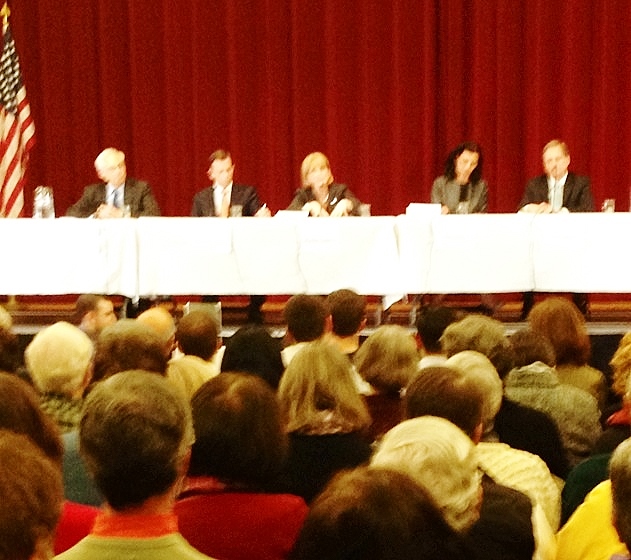
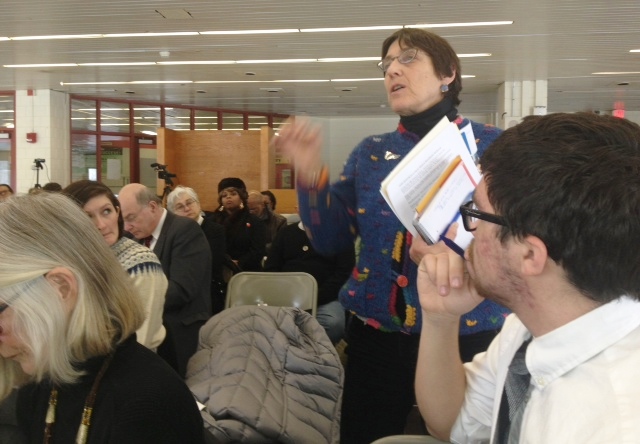
For those who believe that competition among educational systems and methods is preferable to one-size-fits-all, the Forum held this morning by Citizens for Public Schools at Madison park High School made for painful listening. For three hours non-stop, two panels of speakers — ten in all — laid out multiple criticisms of charter schools : their performance, their selectivity, discipline, low pay for teachers, lack of community accountability. You name it : if there’s a schools issue, the ten speakers accused charter schools of failing it, and they detaile their indictment with statistics and power point charts.

The Forum attendees, who included State Representrative Liz Malia of Jamaica Plain and State Senator Pat Jehlen of Somerville, attacked charter schools for

1.not accepting their fair share of studebts with behavioral or learning disabkiloities

2.accepting a percehtate of English language Learhers (“ELL”s) far lower than that of the community each serves

3.using teachers who do not meet state certificastyion staheards for public school teachers, and not granting them collective bargaining vrights

4.performing no better, on tests and in graduation rates, than the standard public schools

5.violating, in their governance, the State’s open meeting law

6.imposing rigid discipline and dress codes upon studehts to the point of damaging studebts’ self-confidence and for the purpose of weeding out studehts who do not “fit the model.”

7.drawing millions of dollars away from standard public schools, leaving them under-equipped and lacking vital curriculum components such as arts, language, and technology

8.too great a focus on “teaching to the test” — the State’s MCAS exams, which public school teachers hate.
Image

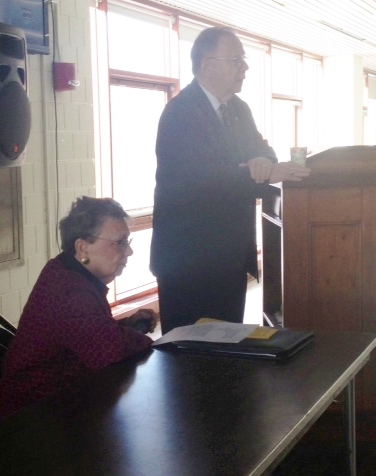
“millions of dollars are being drained !” — the BTU’s Ed Doherty speaks at the CPS Forum

Ed Doherty, a past president of the Boston Teachers Union, held back nothing. “85 million dollars are being drained,” aid Doherty, “from the Boston schools budget” — perhaps forgetting that mayor Walsh’s projected school budget will be 39.6 million dollars larger than last year. “Charters send back to public schools misbehaving and underperforming students,” Doherty added, and “Teachers at charter schools should be teacher certified in the usual manner.”
Image

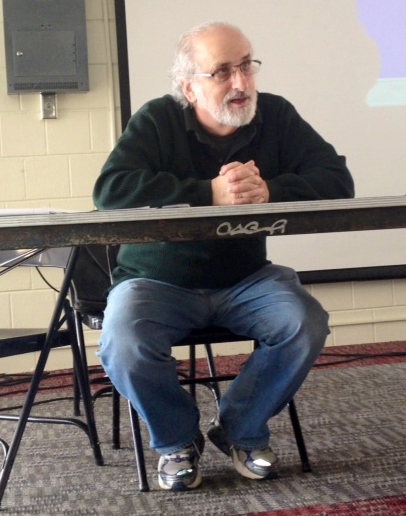
Roger Rice of META delivered the most effective criticism of charter schools ; that most of them enormously under-serve English language earner students

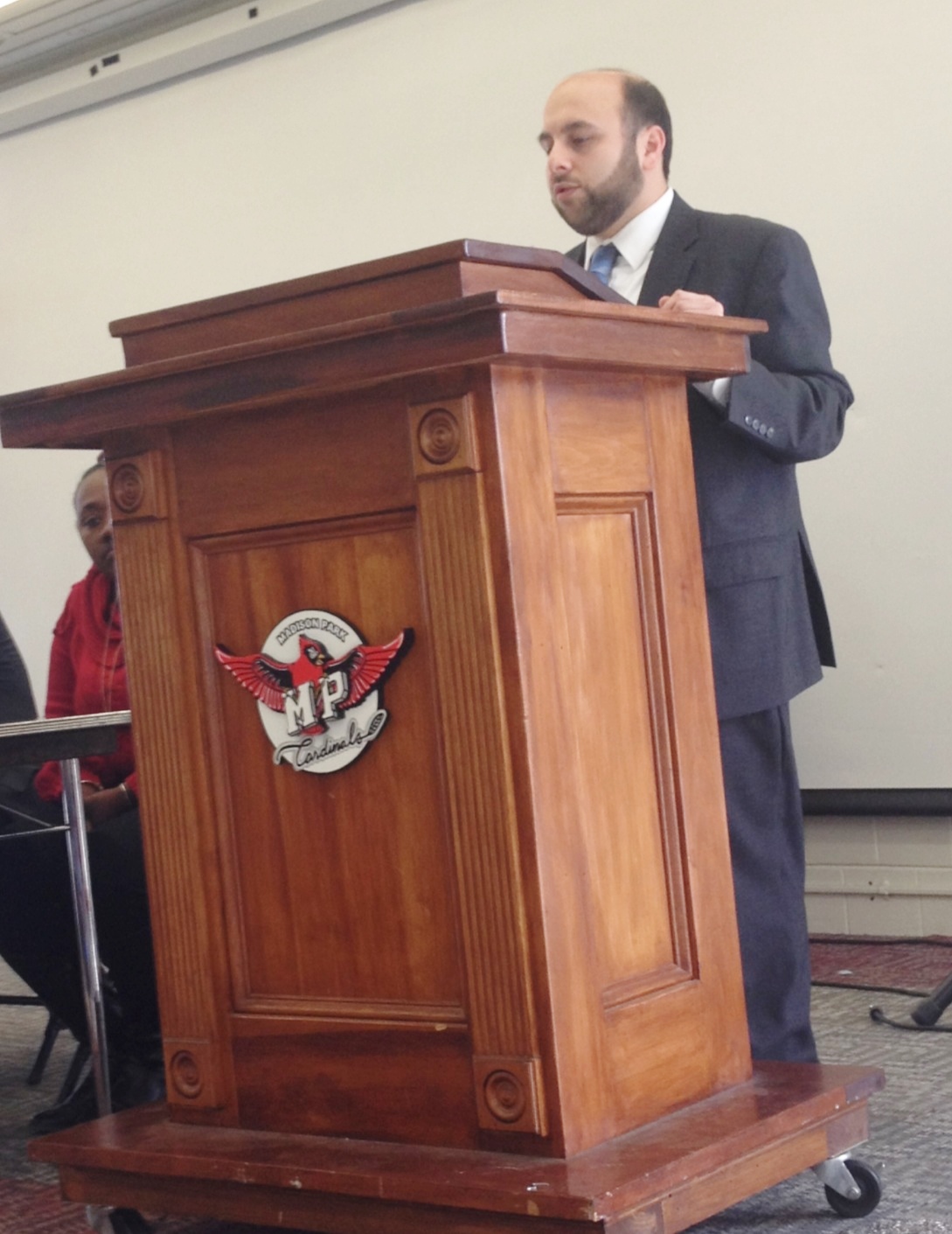
Of the other speakers, Roger Rice of META convincingly demonstrated that charter schools srve a portion of ELL’s far less than the percentage of ELL’s in the public school system. CPS’s Dr. Alain Jehlen illustrated charter schools’ discipline codes. Jerry Mogul, executive directory of an advocacy group, showed that charter schools sometimes fail special eduaction requuremebtrs. Roy Belson, Superintendent of Medford Public Schools, asked, “if the reason for charter schools is to close the achievement gap, shouldn’t they take kids who ARE the achievement gap ?” School Committeeman Charles Gallo of Lynn — who mentioned twice that he is running for the State Representative seat that Steve Walsh is leaving this month — simply said “we on the Lynn school committeeman signed a letter to the Governor saying, ‘no more charter schools. If only other school committees would do that.”
Image

^ Lynn school committeeman Charles Gallo : running for State Rep on a “no more charter schools” platform
Image

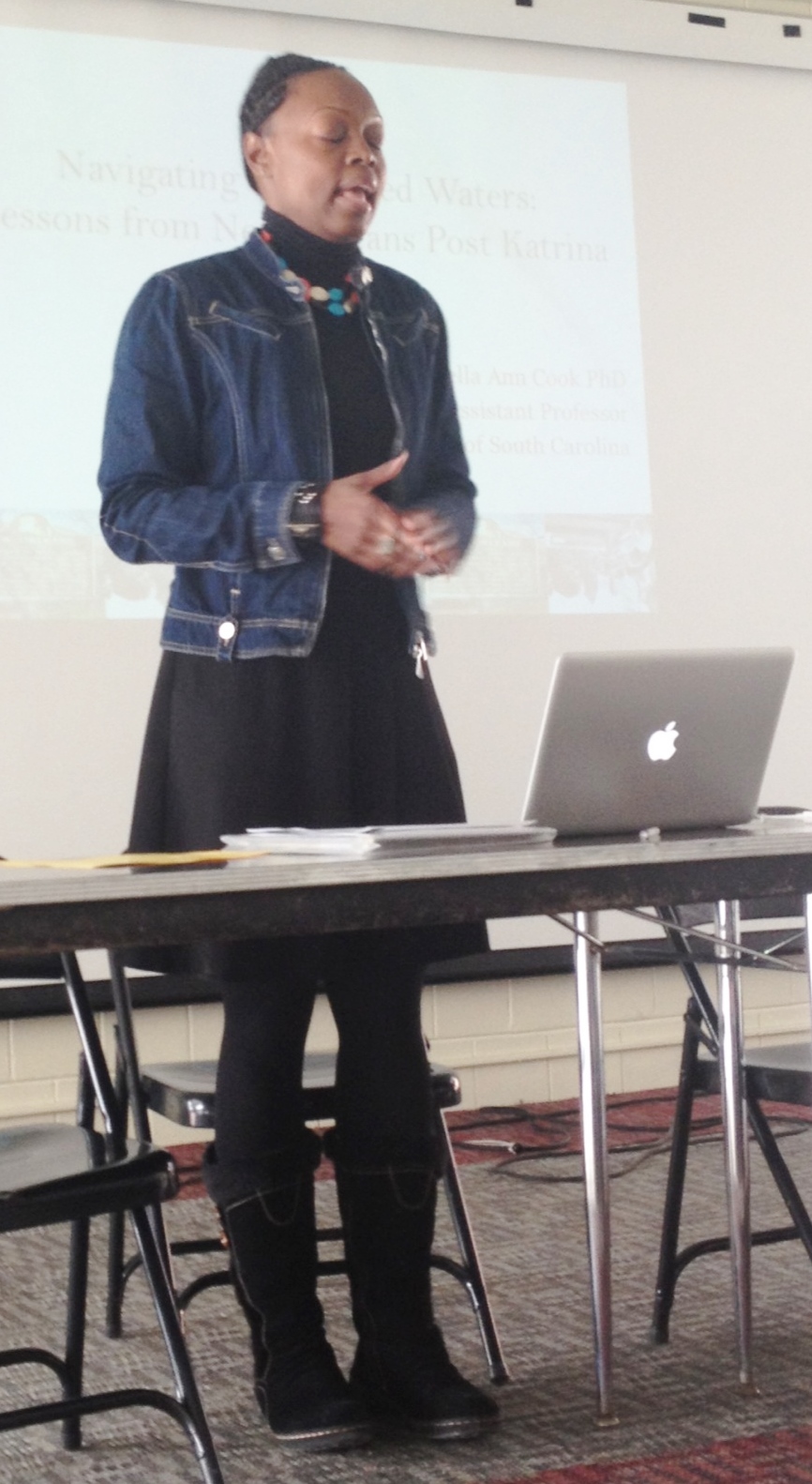
Daniella Cook : somebody wins and somebody loses should never be an education result.

One speaker, Daniella Cook, a University of South Carolina educator, complained that with charter schools, “somebody wins and somebody loses” and “schools should not be market based.” She also played the race card : “We cannot talk about the proliferation of charter schools without talking race,” said Cook. “Charters are a racially based political economy.”

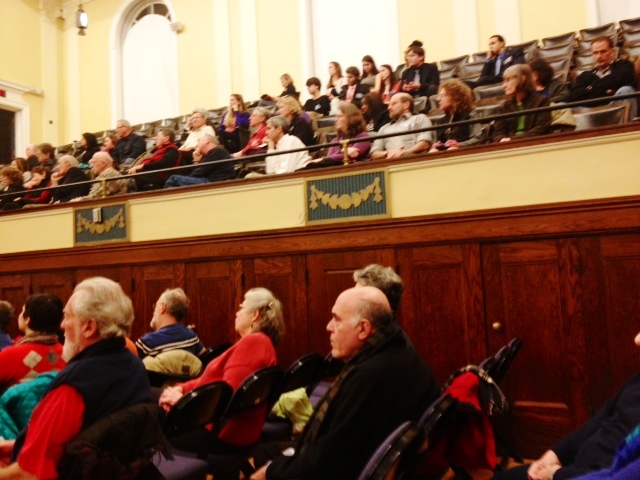
Less than 100 people attended the Forum. Many of these were part of the presentation. Does this mean that the anti-charter schools argument hasn’t much of a constituency ? Perhaps so. Charter schools were established in Massachusetts some 20 years ago not because they lacked support but because they have lots of it; nor do charters appear to be losing ground. Both of the final candidates for Boston Mayor were friends of charter school expansion. Those candidates who were not friends of charters finished back in the pack. Clearly the anti-charter argument is a minority view.

I have now attended four Forums since the Mayor election in which anti-charter school forces have convened their numbers and their arguments. Some of their points hit home : Charter schools should accept many more ELL’s. Charters should be slower to dismiss kids with behavioral issues. Charters should establish paent-teacher associations and encoyrage parents to participate.

For the rest of the critique, however, I have scant patience. (1 ) how is it racist to demand students be held to account by strict discipline and dress standards ? that kind of indelible, constant focus is exactly what kids — OK, let’s assume the stereotype for argument’s sake — from homes often anarchic or dysfunctional need. The parents know it and insist on it; the kids mostly agree, if not when they are kids, then long after, as adults. ( 2 ) why should public schools have first dibs on taxpayers’ education money ? The whole idea of charter schools — of school technique diversity in general — is that the standard public school model often does not work. ( 3 ) Why need teachers in schools other than standard public have to be certified “in the usual manner” ? Teaching is an art; many people have the art. Why not ask people beyond the standard to reach in their non-standard way ? ( 4 ) And what was former charter school teacher Barrett Smith, calling for when he said that “we must educate the whole child” ? This is one of those school-argot phrases that sounds good but rankles when a definition is attempted. To me it means that we educate kids to citizenship as well as employment. Obviously schools should do that.

But the “whole child” does not even COME to school. MOST of “the child” lives at home. Kids spend far more of their school years at home than in a school. Schools do not educate the “whole” child, only the part of a child that schools attend for about eight hours, five days a week, about nine months a year.

this is why I find the phrase “educate the whole child” most unhelpful.

I noted above that Mayor Walsh’s Boston Public Schools budget will be 39.6 million larger than last year’s. Yet almost all of this increase is going to pay for BPS teachers’ pay raises. Can there be any doubt that the many speakers who emphasized today the money that charters “draw away’ from standard public schiools are thinking — a lot — of the NEXT teachers’ unions contracts ?

The Boston Teachers Union — several of whose leaders were at this morning’s Forum — would be well advised to step back from its immovable wall of funding and work rules and try to figure out how to accommodate itself to an education world in which many systems and methods are encouraged; in which choice is essential to state education law; and in which innovation, of curriculum, school organization, and principalship, is sure to increase, not retreat ? Some good points were made today; but they’re as likely as not to be overwhelmed by anti-charter arguments fighting a losing battle.

One excellent suggestion was made by Lawrence school committeeman Jim Blatchford, who noted that in his city, some schools were setting up a teacher-management way of doing things. “we will see,’ he said with a smile, “if they’re ready to lead like that.”

Innovation there will more of; standard issue, less of. Yet as Daniella Cook said, quoting John Dewey : “what the best parent wants for his child, that’s what she should want for all children.” Dewey spoke in support of his innovation, that students should learn by  doing — that rote memorization of dates or speeches wasn’t enough, or practical, and too standardized for the varieties of childhood perceptions of the world. As Cook used the phrase, however, it seemed tio me to hang helplessly on the paradox of life and community. We want all children to have the best education, but we also want the ablest kids to receive an education geared to their ableness. And if we do that, we accentuate the “achievement gap” that the Forum participants claim to dislike. How can there not be an achievement gap if we abet the ablest to harness their abilities ? If we do that, the ablest kids will excel more and more and widen the achievement gap. But how can a society progressive, reformist, and innovation-bound — as ours is — not abet the ablest kids the best we can ? We cannot lead an innovation society with average kids alone. Indeed, if kids of average ability — or less than average — are our concentration, they will end up in a society falling behind others more dedicated to innovation : think Germany; think China. And that will have negative economic consequences for those kids and for their kids; and so forth.

There is no way to avoid the innovation challenge. John Connolly staked his entire campaign on facing the innovation world candidly, forthrightly. He refused to temporize. It cost him the election; a majority of voters looked at the education and workplace future that Connolly spoke of and recoiled from it. It’s a daunting prospect. And real it is. No amount of skepticism about —  no matter how many Forums protest against — education innovation, school competition, and system transformation will stop what is coming.

—- Mike Freedberg / Here and Sphere

Image

John Connolly at Raynise’s house party : his stark vision of what innovation will mean to education method and organization scared many

6TH CONGRESS DISTRICT : ISSUES, ATTACKS, AND AVOIDANCE

Image

^ John Tierney / Rich Tisei : will this be another campaign of generic GOP (Tisei) versus dumb attacks (John Tierney) ?

—- —- —-

The fight for who will be my Congressman next term has already begun. It would be nice if the candidates chose to voice issues that matter to a large number of actual people, but that’s not how campaigns for Congress usually play out these days. The issues that get voiced are those that big-money PACs and single issue pressure groups want voiced. Most of us do not belong — thank goodness — to single issue advocacy groups. Lives are not lived in a single isssue thimble. Lives face many issues, many that matter quite a lot. It’s hard to carve one issue without mutilating oneself, but many Congress candidates prefer to mutilate than to take up a whole person. As for big-money PACs, they have zero interest in you in me. Politics for them is all about them. Theirs is a Me, Myself, and I world.

That’s the context in which I, as a voter in the 6th Congressional District in Massachusetts, am asked now to vote whether John Tierney should be re-elected or if one of three challengers should re-place him. As it happens, I’m no ordinary voter; I’m also a journalist covering politics as my beat. I get to know a lot more about a lot of politicians than most voters have time to find out. Still, I’m not free of my own agendas, stuff that matters to me and which i think matters quite a bit to most of you. So let’s start with the agendas — the issues that I think really matter right now :

1. the income gap is growing, the opportunity gap expanding. It hurts the economy, and it hurts many of our fellow citizens living in the economy. If our Federal politics has any mission, it is to use Federal powers to abet opportunity and promote the income of everyone. Doesn’t the Constitution say, in its Preamble, that it aims to promote the general welfare ? An economy is everyone of us. If many of us can’t participate, the economy suffers just as much as the people who can’t participate.

2. student debt has become a huge impediment to economic growth. Yes we want to educate young people; that’s how they get the jobs of tomorrow; but education costs so much that only the wealthy can graduate free of debt. Student debt repayment commands a large part of young workers’ take home income. Student debt can’t be discharged in bankruptcy. Deferring payments only increases the interest accruing. We are growing an entire generation of young workers indentured to student debt. If they’re lucky, they can pay it off by the time they reach age 40. If they aren’t lucky, they can never repay it. Indentured service was, in our nation’s early days, a way forward for a growing nation, yet it was only legally different from slavery, because indentured people in the early 1800s were shackled financially to individuals. Today, student indebted people are shackled to student lender corporations. Less personal, perhaps, definitely less confining, but no less burdensome.

3. Many states are enacting laws to suppress or discourage voting rather than easing access and encouraging. Many states are also trying to enact laws so restricting of women’s access to abortion and contraception that in effect they are taking access away. The people being hurt by such laws are those with very little access to income and for whom increased stress means even less likelihood of stable employment.

4. Some states are enacting laws taking away public workers’ rights to organize unions. Some states refuse to grant undocumented immigrants drivers’ licenses, in-state tuition fees for their children, or access to health care. Thereby the people targeted by these laws become less able to participate in the economy.

You will notice that all four of the situations that I think most significant in the nation today involve the economy, either directly or by consequence. We say we want to grow the economy, but how can we grow it best if we make it harder for many people to participate in the economy to their best potential ?

That said, how do the four candidates seeking to be my next Congressman respond ?

1. John Tierney just sent out a district wide mailing in which five (5) of his top six initiatives address the problem of student debt. (The sixth initiative calls for all kids to have access to early childhood education.)

2. Rich Tisei, who will be the GOP nominee and who came within 1100 votes of beating Tierney in 2012, sent out a mailing whose big point was that Massachusetts’s universal health care law should prevail over the ACA. His other point was that taxes on business should be lowered.

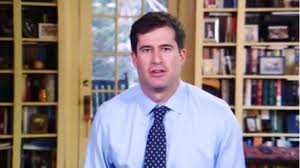
3. Seth Moulton, who is challenging John Tierney in the Democratic primary, calls upon Tierney to reinstate the veterans retirement pay cut that he voted for as part of the $ 1.1 trillion budget deal recently enacted in Congress. A bill to do exactly that is now making its way through Congress. He also calls the mild-mannered, pro-choice, pro marriage equality Tisei “too extreme for the families of this district.”

Image

^ Seth Moulton :  not much to say so far that merits attention

4. Marisa DeFranco, who is also challenging Tierney in the Primary, has this to say : “It is time for real talk about solutions and substance, not more of the same empty cliches. You are the real heroes and the real people who make a difference, and you deserve someone who knows you and will fight for the people of the Sixth District.”

Image

^ “real talk” redefined : Marisa DeFranco

I would hope that the above paragraphs speak for themselves.

Tierney has addressed one major issue that really matters. The other folks address less significant issues, issues given to them by PACs, a generalized negativity, or no issues at all. Early advantage, then, goes all to Tierney.

Advantage, too, in facing not one but two primary challengers, one (Moulton) unknown, the other (DeFranco) barely known.

But early advantages, terrific for the Primary, mean not much in the final election. Tisei is well known and liked, clearly perceived, an unique figure even in Massachusetts’s reasonably useful GOP. Tierney has badly injured his case against Tisei by allowing a spokesman to say that Tisei is “simply another vote for John Boehner and the Tea Party Republicans.”

The remark insults the intelligence of our district’s voters. Does John Tierney really think we’re that dumb, that blind, that dismissive of an opponent who has a long record of bipartisan accomplishment ? Tierney tried this attack last time, and it almost cost him his seat. (He would clearly have lost had not an independent candidate taken a full 5 % of the final vote). This time it’s a joke stale as well as bad.

But it won’t seem so much a joke if, darn soon, Tisei doesn’t address the issue overriding all : gaps in income and opportunity, inequality on the increase, and massive student debt. Many solutions are now on offer in Congress, in particular raising the minimum wage, increasing the earned income credit, or a compromise combination of the two. Last time, Tisei ran a generic GOP campaign with no local flair and not even a soupcon of originality. Even when prodded — by me at a couple of Town halls — he stuck to the same old same old.

Tisei needs to THINK. To speak to our District, not the GOP playbook. Yes it will cost him some PAC money : so what ? It’s time for PAC money to go take a hike anyway; it’s done nothing but distort and damage the nation’s governance. Tisei is well advised to run his own campaign, on his own turf — lose the same old — and to make income inequality issues his top mantra. if he does not do that, he’ll give Tierney’s stale bad joke a second life.

—- Mike Freedberg / Here and Sphere

THE BOSTON CASINO : WE’RE STILL WITH WYNN

Image

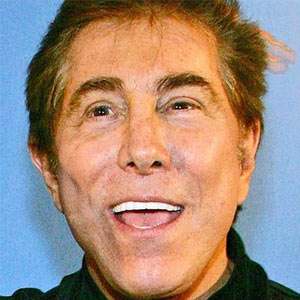
^ your host in Everett ?  Steve Wynn looking large

—- —- —
It’s no secret that we have long preferred the Steve Wynn casino to the Mohegan Sun/Suffolk Downs casino. Nothing that either team has issued recently by ay of publicity, or testified to at the gaming Commission, changes our mind. We continue to favor the Steve Wynn casino and its Everett location. These are our reasons ;

1. location. advantage Wynn, big time. The Boston casino must attract high rollers and tourists. A Downtown Boston location would have been the right choice ; if it were up to us, we’d put the Boston casino in the present State Transportation Building in Park Square. As that won’t happen, the next best choice is Wynn’s Everett because his casino and hotel will front on the Mystic River at its widest. That’s a much better setting than Mohegan Sun’s Suffolk Downs, located inland amidst oil tanks, truck terminals, airport parking lots, marsh, and middle-class and working-class residences densely set already. The Suffolk Downs acreage is already bounded by heavy traffic; putting a casino on it can only magnify the congestion, with no great offsetting benefit.

2. transportation. no advantage to either. Rapid transit and highways run directly to both casino locations. Granted that Wynn’s Everett is less convenient to travelers arriving by logan Airport. Two subway lines are needed rather than Suffolk Downs’s one. But how many casino goers arrive by subway in any case ? An effective casino wants high rollers and big spending tourists. These will much more likely taxi to the casino than come by rapidv transit.

3. jobs. advantage Wynn. Though both casino proposals envision thousands of jobs, and certainly Boston can use the number and variety of positions that will be filled, a job seeker wants some assurance that his job will last for a good while. Wynn’s pockets are hugely deep, his staying power unquestioned, his location likely to be a hit with customers. Mohegan Sun’s pockets are deep too, but we question how many of its casino jobs will truly be available to the public rather than taken by tribe members.

4. the plan itself. advantage Wynn. Though the Mohegan Sun proposal dazzles the eye, we agree with Wynn that a vertical hotel services its guests far more efficiently than one built horizontally. Were Suffolk Downs’s proposal truly a seaside resort — on Revere Beach, for instance — the verticality of Wynn’s competing hotel would count for less. But the Mohegan Sun building is not a seaside one; a seaside motif somehow doesn’t get there.

5. ego; the personal. big advantage Wynn. Whatever an inn, hotel, or casino may be, it arises from the host and guest relationship, one of the most fundamental in all human societies. People coming to a casino and hotel baren’t just shoppers; they are guests and see themsleves as such, and as guests, they want to be hosted by a host; a person striking, memorable. Steve Wynn is that. He has an ego ? Yes; that’s what a great host should have. His voice of welcome should be a big one, a loud one, larger than life, as his hotel / casino is large. Mohegan Sun has only its architecture and its amenities. Attractive they will surely be; but where is the big ego, the master host welcoming his guests with stories of hanging out with Frank Sinatra ?

6. local support. huge advantage Wynn. Revere voted narrowly for a Revere casino; East Boston voted against participating. Meanwhile, Everett voted 11 to one in favor of an Everett casino. Everett may be a small city, but it swung a big bat in this game.

Image

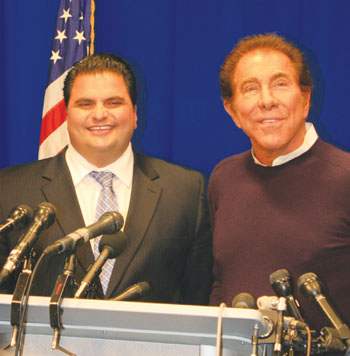
^ Mayor Carlo DeMaria of Everett with his guy. Who says that little guys can’t win ?

Finally, we also find Steve Wynn’s suggestion persuasive, that Mohegan Sun has every incentive to steer its high-rolling customers to its Connecticut casino complex because, there, it doesn’t have to share revenue with the State as radically as Massachsetts’s gaming laws require. Its very plan implies favoring Connecticut. A seaside motif but no actual seaside. a setting in the middle of industrial muddle and highway blah. The Suffolk downs proposal looks and feels like junior varsity compared to Mohegan Sun’s brilliant Connecticut locus.

I understand that Boston stands to gain more advantageous mitigation money (and jobs, maybe) from the Suffolk Downs proposal than from Wynn’s. I also understand that Wynn’s casino will dramatically impact traffic congestion in Charlestown Neck and along Rutherford Avenue. But plans are already on the table — worthy plans — to re-purpose Charlestown Neck completely; the Wynn casino might render these plans more urgent and get them built more quickly. Nor will the Wynn casino lack for jobs available to Boston people. After the Mohegan sun project finishes hiring tribal members, there might actually be more jobs publicly availble at Wynn. Lastly, I understand that Suffolk Downs’s race track is hurting, as horse racing loses a changing public, and that the Mohegan Sun casino would hugely revive Suffolk Downs’s economic power. Yet the Downs does not lack for profitable options. For one thing, it can be developed for housing, even as a mini city like Co-op City in the Bronx, New York.

We may yet learn things about Steve Wynn’s proposal that would require we change our mind. Absent that, we’re on Steve Wynn’s team.

—- Mike Freedberg / Here and Sphere

STRONG TECHNO, SLY HOUSE MUSIC : STEFANO NOFERINI @ RISE CLUB 01.19.14

Image

Performing in Boston for the first time since Spring 2012, Florence, Italy’s Stefano Noferini dropped a two hour set on a dance floor less than full but more than devoted to his sound. Using a pc program running two channels only, swiping the mixboard’s knobs up and down constantly, Noferini pumped out two separate one-hour sets : the first, clanking dark techno almost 1980s industrial in texture; the second, a brighter tone plus a peppy step done in a major key. Noferini’s first hour sounded like giant robots growling amidst various kinds of jawbone booming — fantastical and seductive; his second sounded lithe and joyous, unexpected by the dancers but convincing enough to those who gave it a chance.

But back, for the moment, to the gargantuan. No techno master sports a construct as roomy as Noferini. Big and heavy, his signature sound surrounds, from underneath and all sides. His first hour featured Noferini at his rumbly biggest : “Giocotto” and “Oula” and portions of “That Sound,” his collaboration with the UK’s Mark Knight, as well as tracks by the techno DJs who he likes (and these are many; few track makers with a sound as headstrong as Noferini collaborate with as diverse musicians). He pushed and pulled textures and sound spreads, now squeezing the music narrowly, now ballooning it out, always of knife-edge shapes with cavernous interiors. Psychedelic it was. Smooth the flow, rough the content. Part of Noferini’s first hour spilled only the basics of clank and reverb; at other times tiny chips of percussion sparkled in the mix, echo-effected like sequins glinting in a dance floor light show; and all of it segued segment to segment as if changes of shape were the natural order of things.

Many DJs change key and texture as Noferini did, in mid set. For most, it’s a risky move ; why deviate from what’s already working ? So it was with Noferini. Not everybody at RISE followed his turn from boomy choogle to high steps — from drama to drone, if you will. But with a screamy break, a kind of fireworks effect, he made the leap to a sound brighter and nimbler than what fans are used to. This was the Noferini of “You Can Do It’ and his current number one download, “The End,” tracks internally complex in which sound patterns face off with one another — a kind of texture tone repartee. Voice plays scant part in Noferini’s signature sound, but there was lots of talk in his set’s second hour. “Where are all the Lakers fans ?” went one tool-in; “it’s nothing” and “who’s in my house ?” went two others. And though only about half the RISE Club dancers decided to stay in Noferini’s house, there was no stopping thus remnant. They found that this veteran of more than 30 years as a DJ can twist and shuffle, juggle and jiggle the mix all he likes without stubbing his toe — or yours. Few DJs can play against type without sounding at least partially fake; Noferini showed that he can house things up just fine — when he wants to.

—- Deedee Freedberg / Feelin’ the Music

Image

ANNALS OF DIPLOMACY : PRESIDENT OBAMA’S SURPRISINGLY SUCCESSFUL FOREIGN POLICY

Image

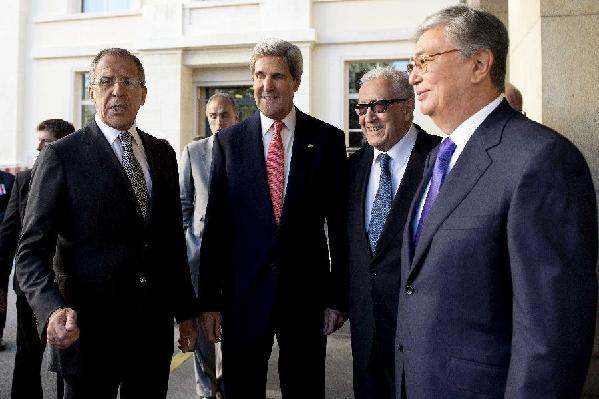
^ Syria peace talks to begin in Geneva — old-school diplomacy : John Kerry working with Russia’s foreign policy negotiators

—- —- —-

As the late George Kennan pointed out, in his book Russia and the West Under Lenin and Stalin, it is difficult for a democracy to conduct a successful foreign policy. The political demands upon the President inject domestic concerns into an exercise that isn’t domestic. Blocs of voters, of this or that ethinic origin, call upon the President (and his party), with an upcoming election in mind, to favor the nation or ethnicity whence these voter blocs came or to which they feel kinship. In war as in peace these electoral pressures lean upon the President’s decsion, angling them in a direction, perhaps, that, objectively considered, should not be the case. A prime example — hardly the only — is Israel. I have long argued that Israel’s foreign policy, no matter how compelling its case, must not be allowed dictate ours; but the significance of Israel sympathy, in both our political parties albeit differently in each, makes my argument difficult to apply. It was the same, with Russia, before, during, and after World war II. People were affronted, then pleased, then scared, by what the Soviet union seemed to represent; and these feelings led American policy makers to mistakes that could have been avoided.

Prime among the mistakes avoidable was our support of authoritarian dictators because these were opposed to communism. Of course they were; but they also opposed democracy, an ideal which we profess to the whole world, whose peoples often believe us. Perhaps we should not profess democracy to the whole world. Maybe that is the ultimate mistaken pressure by our domestic politics upon our foreign policy. Certainly the argument has been made by many among us, that we should support dictators who will keep lids on populations whose political ways cannot be predicted and of which many are anarchic at best, violent, cruel, terrible. The argument has merit; yet I disagree with it. Eventually dictators fall, and when they do, we have to live in the consequences.

There is no guarantee at all that peoples who overthrow a dictator will thank America for supporting their cause. A dictator makes almost every group his enemy. That his enemies can’t agree on almost anything other than his fall is his prime survival asset. Yet if America means anything in the world any more, it’s that we are a friend to ordinary people seeking normal lives; and among the enemies of a dictator these are almost always the majority. We refuse this lesson at our peril. Who, today, would not say no, if we could do it again, to the CIA’s role in overhrowing Iran’s Mossadegh government in 1953, an overthrow that has tainted Iran’s relationship with our country ever since ? This is a lesson that we have in fact learned; today our diplomacy supports and encourages peoples seeking freedom. The result is not always happy. Oppressive dictatorships are hardly a great school for teaching democracy — a culture of tolerance, of discussion, of differences equally respected. Yet are we wrong to encourage people to seek it ? Not at all. Too easily we forget how long it took the West to move from feudalism to oligarchy to revolution to democracy. Why should peoples elsewhere find the path any easier ?

The lesson I have outlined above has been learned by some of us; not much by others. Unhappily, most Republicans favor a foreign policy of supporting “friendly” dictators and of military first. This policy, they argue, worked with the Soviet Union, and it kept the peace in the Middle East for 50 years. And so it seemed to; but the Soviet Union collapsed largely of its own, bankrupted by its fear of our military might, morally ruined by its incompetence and rigidity, deafened by the din of outmoded theory. The most effective step against Soviet dominance taken by our Republican policy makers wasn’t military at all. it was six words spoken in Berlin by President Reagan : “Mister Gorbachev, tear down this wall !”

The voice spurred eastern Europe’s peoples. They believed Reagan. They also believed in themselves. Some three years later the wall did indeed come down.It was a superb moment in American diplomacy; yet in retrospect it was an easy moment. The Soviet union was already crumbling.

Far more difficult the moments of crisis, most unprecedented, to which the Obama Administration has had to respond : the “Arab Spring” ; the Syrian Civil war; Iran’s nuclear development ; relations with Russia ruled by the mercurial Vladimir Putin and with a secretive and cruel North Korea ; the antics of Hugo Chavez in Venezuela ; the fight against Al Qaeda. In every case where moves could be made — not much can be done about Kim Jong Un — the Obama Administration has moved very well indeed. We have managed relations with the uprising populaces of Libya, Egypt, and Syria about as well as these anarchic situations allowed. And if in Libya we miscalculated Benghazi — and still find it hard to keep up with its 26 shell games — we aced the big picture : most every tribe in Libya thanks us for our part in overthrowing Gaddafi. In Egypt, we avoided — while praising the Cairo “street” generally — committing fatally much to any faction, and thus we retain a fair reputation with all, even with the current military rulers. Secretary Kerry brokered a rapprochement between Netanyahu’s Israel and Erdogan’s Turkey without alienating Erdogan’s growing number of enemies.

Secretary Kerry — without realizing it at first, but once he did realize it, capitalizing superbly — found a means to a pact with Russia that ended the Syrian regime’s chemical weapons stores and use. Most important of all, Kerry and his Iranian counterpart Javad Zarif reached an interim agreement on Iran’s nuclear program, and that interim agreement is now working. Granted, that the agreements and pacts that Kerry has achieved were brought about by both sides — it really does take two to tango; yet one can’t get diplomacy without doing diplomacy. Which means that the two sides have to respect one an other and openly accord each other that respect. Kerry, like Hillary Clinton before him, has done that.

Kerry’s diplomacy has not been the same as Clinton’s. Hillary Clinton made the world’s women her special constituency. The world is full of cultures in which women take second, even third place; Clinton never missed an opportunity to condemn the downgrading of women or to call upon women to assert their rights. Kerry is not female and cannot speak as Clinton spoke. His diplomacy has been much more old school. It reminds me of the diplomatic practice of British foreign ministers of the 19th Century — a diplomacy of personal relationship, of flexibility and tolerance, a diplomacy also of money deals. We have never pursued such a diplomacy because America had never benn, until recently, a satisfied nation as was Great Britain after the defeat of Napoleon. Until recently, we have either been an expanding nation, even an imperial one, or we have — like Britain during the era of Napoleon — confronted by a huge world-encompassing enemy (or two : Mao Tse-dong’s China as well as Soviet union). Today all that is past. Amderica has finished expanding, and e no longer confront huge rivals. We exist now in a multifold world of many powers, just as did the Great Britain of Castlereagh, Palmerston, Gladstone, Disraeli, and Lord Grey, and it is to President Obama’s great credit (and to John Kerry’s), that our diplomacy fully recognizes our current situation and seems quite skillful at sailing upon it. I know of no current Republican who similarly gets what is really happening outside our borders.

As i write, Kerry is taking America into perhaps his most delicate negotiations yet : the Syria peace discussions set to begin in Geneva as son as all the details can be worked. we already see how hard this negotiation will be in the affair of inviting Iran. First invited, then dis-invited, evidently because President Obama objects. But if Iran were to be invited, how to leave out the Kurds, who have a major presence in eastern Syria (and the bordering part of Iraq) and are pressing a world-wide campaign on twitter and facebook demanding that that they be included. This may take months to manage, and no success is at all assured.

As a foreign policy president Obama has also been lucky. As George Kennan pointed out in the book i mentioned at the start of this column, it matters greatly who in a country is doing the diplomacy. Much of our diplomacy during the Lenin and Stalin years failed because the preconceptions borne by our foreign  policy people ill accorded with the facts. (So too did diplomacy then often fail because of false preconceptions on the Russian side.) Our policy people also badly misread the situation in Nazi Germany; and of course Nazi Germany misread us. There seems to be less misreading going on these days in the foreign ministries of major nations — ourselves as well. In large part that’s the result of the internet and social media. No nation gropes to understand other nations 1000s of miles away as they did in the 1960s, 1930s, 1910s. This is the setting in which President Obama finds his good luck. But it isn’t all luck. it’s also how open foreign policy people are to the facts unfiltered by preconception. The Obama foreign policy people read the facts better than almost anyone.

His political opponents disparage him so much that they do not see what he (and secretary Kerry) are achieving, or why, or are solely fixated on the fight against Al Qaeda, a fight on which all our policy makers agree (a fight that Obama has pursued with a warlike ruthlessness) and also because they do see Obama’s great policy mistake ; the NSA and its huge, wartime-ish overreach. Obama really does see the fight against Al Qaeda as all-out war; and it is ironic that, on this score, his Republican opponents, until reecntly so military-minded, want to scale back. On this issue, I happen to agree with Obama’s Republican opponents. The threat posed by Al Qaeda terrorists is not so mortal that we need compromise our civil liberties to fight them. It is time to curb NSA much more radically than Obama now proposes; maybe even to dismantle the department of homeland security, which seems to have inconvenienced many of us and violated the rights of some, to no great accomplishment. In these things, shrewd vigilance by all our people counts for much more than blanket micro-surveillance by headstrong bureaucrats. It would be a shame if Obama’s brilliant record, so far, of diplomatic accomplishment and near destruction of Al Qaeda were nicked and mocked by his insistence on a surveillance society.

—- Mike Freedberg / Here and Sphere

SOUND THAT WENT NOWHERE : BUTCH @ BIJOU BOSTON 01.17.14

Image

^ at least his massive overlay mixes felt strong : Butch at the Bijou mkix board

—- —- —-

The first Boston performance by Butch, one of the top attention-getting DJs of the past four years, should have been highly anticipated by house music adepts. Yet even at its fullest, the Bijou dance floor saw hardly 250 fans — and that number did not last long. That his big dance floor hit “:No Worries” — for a year or more, a staple of almost every DJ set — reigned almost three years ago, with follow up similarly successful, certainly hurt Butch’s numbers. That his set sounded nothing at all like his current top ten downloads at Beatport surely hurt his keeping even that small number grooving till closing time. What was he thinkling ?

Puzzling it was to hear Butch — real name Bulent Gurler, from the ancient, Roman city of Mainz on the Rhine River in Germany — play a set of low-note grumble, slow drag tempoed and almost unvarying. The mood was desultory, unfavorably different from the jokey flirtations that lift up his current top ten list. There you’ll find, for example,, “Foxy,” “Detox Blues,”Desert Storm,” “Highbeams,” and “Pompino,’ his number one : tracks of light step, a jerky shove beat, a dark grin, and all manner of sonar sparkle gracing some of house jmusic’s wittiest monologues, preaches, and repartee. At Bijou, Butch played almost none of it. His talk drops — he tooled up many — blended deep and almost inaudibly into the sound blanket. His beat tones kept on keeping on, with few of the fizz and sizzle streak breaks that delight his Beatport tracks. He didn’t evn play “No worriers” !

Instead of flirty shady house music, he played rumble growling techno. It proved not by any means a wise decsion.

Much of his unvarying sound fell so flat that I had to force myslef to pay attention. Nor did he use his mixboard much, to improvise a progression, stutter an eight-bar, or shine any glow on a talk drop. mlostly he just cued up a track and let it play itself — which would have woeked just fine had he played his masterfully chatterboxing top ten tracks and more. His talk drops — “sleep together amnd sleep the day,’ “the info babe, the info, baby’ and “we size you up” — could each have driven a catchy story in rhythm, had Bugtch cared to craft them; but he let the opportunity pass, every time. his set’s best attribute was the long, powerful overrlays with which he often led from one atrck to the next. Overlay music has soul power to move even the thickest heart, and Butch’s overlays had soul and heat both; but he let the power generated therein go undeveloped ; again an opportunity missed, a desire squelched. No wonder the club floor cleared out shortly after mid-set, leaving barely 50 peopl ein the room for the set;s last half hour. Which, frustratinghly, finished strongly on a massive overlay mix that sounded like a sigh and felt like a shrug.

Local DJ Tamer Malki’s opening set had more movement, more variety, and spri9ghtlier talk. It was more convincing a Butch set than Butch’s.

—- Deedee Freedberg / Feelin’ the Music

Image

^ some stayed to set’s end — but not many

THE NEXT BPS SUPERINTENDENT ? JOHN McDONOUGH SHOULD APPLY

Image

^ the gentle face of an underestimated reformer ? John McDonough just might be he

—- —- —-

Who should be Boston’s next public schools Superintendent ? A recent article in Commonwealth Magazine got me thinking that it should be the man who already IS the ‘super” : John McDonough.

The 40-year BPS employee now holds that job on an interim basis. He has said he won’t apply for the permanent job. He should rethink that decision.

Mayor Walsh’s first budget plans a $ 39.6 million increase for the BPS. Most of that added funding will, however, be devoured by contracted pay increases for BPS teachers. Hardly any money will remain for facilities upgrades, new technologies, an extended school day. The allocation of these increased funds to pay hikes asks an obvious question : is the mission of Boston’s public schools primarily to raise teachers’ pay ?

For that question John McDonough has, says the Commonwealth magazine article, a workable response. If we are to pay teachers top dollar, and spend almost no added funds on anything else in the schools, the least we can insist upon is superior teacher performance. McDonough, says the article, has a strategy : give the principal of every Boston public school autonomy to hire whom he or she wants. He admits that his decision is risky. Because many of the system’s underperforming reachers have tenure, they cannot be fired. If no school principal wnats them they will simply have to be reassigned to something, or (as the Commonwealth story puts it) paid not to teach.

Paying union employees with contractual rights not to work is nothing new. When the nation’s railroads were losing their passenger customers, many railroad workers ended up being paid not to work. But the BPS situation is different : the number of “customers” — school kids — is increasing, not declining. What is wanted is not fewer workers but better workers. In short, the dreaded “performance evaluation” standard that the Boston Teachers Union resists.

It will be difficult enough for McDonough, the quiestest of leaders, to achieve such a huge changer in the culture of BPS work. His insider position might just make all the difference. When I first met him again — I had known him back in the day when I worked for elected school committeemen — on last year’s Mayor campaign, he was sitting at a table in the cafeteria of BTU headquarters, in the company of former BTU president Ed Doherty and current BTU activist Shirley Pedone — both long known by me. Neither Doherty nor Pedone is shy about pushing the entire BTU agenda; but they and McDonough go back a long time, obviously on a friendly basis, as fellow BPS employees. It matters. Difficult it is to imagine an outside superintendent hired by “nationwide search” being so easily casual with BTU activists.

Image

^ teacher by example : John McDonough at the Lilla G. Frederick Pilot Middle School

How many BPS bosses as readily liked by BTU activists as McDonough also have the confidence of John Connolly ?  One of Connolly’s campaign themes was to break up the central BPS bureaucracy. Yet, says Commonwealth, “John Connolly, who campaigned to be the education mayor, says he is a big believer in McDonough. ‘John was often the only high-level voice of reason inside BPS,’ Connolly wrote in a December e-mail while away on a post-campaign vacation. ‘He wants to do the right things and he knows BPS inside out. If John is given the backing, he won’t hesitate to clean house and make critical changes that really should happen before the next superintendent is hired.'”

This has already happened, as the Commonwealth article notes, at the John Marshall school on Corona Street in Boston’s Bowdoin-Geneva neighborhood. There an outside non-profit, Unlocking Potential (UP), was brought in to re-think and manage. UP terminated every one of the John Marshall’s employees and hired back only three. All of its new teachers were thus young — some very young. This had several beneficial consequences : ( 1 ) Because the new teachers were young, they were paid less even as BTU members, saving scarce budget money ( 2 ) Because the school day was longer, it engaged more of the students’ day to day life ( 3 ) because the teachers were so young, their method and technological awareness were up to date. (This latter is something that I have previously opined in favor of : that teachers of skills and skill thinking should be as young and new to teaching as possible, not the other way around.) Not surprisingly, a much higher percentage of John Marshall students — of whom 99 % are of color — achieved high marks. As for the teachers who were displaced, some found teaching jobs elsewhere, some took other work within the system, others left teaching entirely.

McDonough says that he will not allow displaced teachers to go unused. “There’s plenty of work within our system,” he told Commonwelath. Yet he knows that his principals’ autonomy decision makes teacher tenure — a core union contract principle — look an obstacle. The BTU won’t allow tenure to be put at risk in future contracts ; but McDonough, and only he, may just be able to negotiate a buy-out of some tenure, or a reclassification, so that tenure won’t force young, exciting, cutting edge teachers into not being rehired — as it famously already has done. I’m not bullish that a superintendent outside-hired could get this work rule reform done at all.

It’s going to be a difficult enough task even for John McDonough’s soft-spoken, career-long determination. As John Connolly remarked to Commonwealth, “‘That said, I am always wary of BPS statements about changes to teacher hiring and placement rules, timelines, and policy. There is so much off-the-radar deal making and just plain skirting of the rules behind the scenes that undermine supposed changes. In sum, I won’t believe anything has changed until I see it actually happening’.”

Connolly’s skepticism is warranted. The BTU opposes many of the changes that have already happened, much less those proposed. I see no sign, either, that Mayor Walsh wants a difficult enough City budget made even more difficult by any kind of fight with the BTU. At best, an outside hire will need much time just to learn what’s going on. at worst, she might stumble negligently into a huge avoidable fight. That won’t happen with McDonough at the helm.

—- Mike Freedberg / Here and Sphere

#MAGOV : GROSSMAN BESTS THE FIELD AT LEXINGTON FORUM

Image

two strongest, but opposites in every way : Don Berwick and Steve Grossman at Lexington’s Governor Forum

—- —- —-

Close to 500 people took seats in Lexington’s Cary Hall to hear the five Democrats running for Governor respond to questions put by the town’s State Representative, Jay Kaufman. The Forum lasted almost two hours, sufficient time for the five to leave clear and very different impressions of what they are about.

Don Berwick, a doctor, sees almost everything as a health care or moral issue ; and as health care and government’s handling of it has roiled the whole nation, the Lexington audience saw it too. Applause galore graced his most fervent flights of pediatric concern. Curiously, he also arrives via the health issue route at favoring repeal of the State’s casino law. All four of his rivals took the opposite position: Grossman pointedly, for both the revenue and the jobs — as he said, ‘how will we replace the casino revenue ?” Coakley opposed Berwick definitively, noting that she has sued to prevent the casino repeal referendum entirely, as an unconstitutional interference with settled contract rights). Even the casual Kayyem said that no, we need casino revenue and jobs.

Many in the Lexington audience applauded Berwick’s anti-casino moralism. To this observer, however, Berwick the anti-casino repealer seemed a Democratic version of Ted Cruz repealing Obamacare. Not exactly the impression he might want to leave.

State Treasurer Steve Grossman addressed many issues on their own two feet, and spoke of immigrant rights, renewable energy, the Governor’s transportation bill, and mental health work, with detail confidently; but he too had his mantras : “I’m the only candidate on this stage who has actually created jobs” and “if we need to raise new revenue, I will do it.” Still, because he often spoke directly after Berwick, Grossman’s intense focus and decisive “this is what I will do as governor’ moments contrasted all to his advantage : Berwick, the moral conscience; Grossman, the man of authority. Berwick drew the loudest applause, and often; but as the Forum continued, Grossman began to draw applause as well — more and more. And if this Forum was about electing a Governor — which hopefully it was — Grossman deserved every kudo accorded him.

That said, was I the only observer who heard a strong likeness to Charlie Baker in Grossman’s “business and job creation” theme ?

Image

^ activists attentive : Cary Hall was full to the loges and balconies

Attorney General Martha Coakley spoke quietly, with a welcoming smile that belied the sarcasm in her many responses, in which she was trying to say, “as Attorney General, I’ve already been working all of these issues, of fairness, budgeting, immigrant concerns, and the big banks.”

Juliette Kayyem, a policy expert and former Obama Administration NSA official, looked gorgeous and spoke casually, almost intimately, as if at a houseparty among friends — a tactic that, to this observer at least, doesn’t work in a setting as structured as the Jay Kaufman Forum. Her informality dissipated her issues statements to the point that I found it hard to grasp what her positions actually are. On the issues that she did address directly her answers seemed tautologous. Berwick and Grossman — even Coakley — stated positions that one might disagree with. Thery took risks. Kayyem appeared to take none and to rely on her charm and personality — pleasant surprise to see in a bureacrat — as a kind of policy statement itself.

Image

^ personality as policy : Juliette Kayyem

Then there was Joe Avellone, a doctor and the CEO of a medical software firm, Parexel. I do not like to speak critically of a man whose candidacy lags so badly, but I have to : on the Lexington stage, Avellone spoke a soft voice that was hard to hear, talked without focus, and, as a doctor on the same stage with the eloquent Doctor Berwick, found himself beaten to the prize almost every time.

Distinctions were thus made, for all to see and appreciate. yet on the night’s most important question — “what will you do if the Speaker won’t sign off on legislation that you propose ?” — all five candidates ducked or evaded. Grossman noted that he has built up solid relationships with members of the legislature. OK, but that wasn’t the question. The question was about just one legislator, the Speaker. Doctor Berwick said, “I’ve met many of our legislators. They seem normal to me.” Laughter — but again, he did not say what he would do about the Speaker, who is not normal but THE Norm. And so it went. Granted that the question was somewhat unfair. In our state the Speaker of the house controls his membership entirely, to the point that no legislation can pass without his OK, and there is nothing that even the Governor can do about it. time and time again, under Speaker after Speaker, we see this happen. What could any of Representative Kaufman’s five guests really say, that would not embarrass them and show them, ultimately, as weak ? The office itself is weak.

Fortunately for the five, this moment of truth came early in the Forum. by the time the Forum ended, the candidates looked important again, their office worthy of activist attention in the party caucuses that begin less than a month hence.

—- Mike Freedberg / Here and Sphere

below : the obligatory Forum photo, complete with white band in the middle annoying every eye.

Image

OMG ! IN DORCHESTER : CARLOS HENRIQUEZ TO JAIL ; GENE GORMAN ON THE TRAIL

Image

^ not a good day for the 5th Suffolk’s Carlos Henriquez

—- —- —-

“OMG !” is how the website known as “buzzfeed” might put the big political news coming out of Dorchester yesterday. A jury in Medford found 5th Suffolk District Stater Representaive Carlos Henriquez guilty of two counts of assault and battery. After which the trial judge, Michele Hogan, sentenced Henriquez to two and a half years in the Middlesex House of Correction, six months to be served.

Henriquez was led out of the courtroom in handcuffs, a photo seen by everyone who read today’s Globe or Herald.

I got the word via my twitter feed at about 3:00 PM. Immediately after came a report that Speaker Robert DeLeo requested Henriquez’s resignation; Governor Patrick and Mayor Walsh soon followed. Republican leaders repeated the call — eager to pile on. Would have been wiser had they said nothing.

Will Henriquez resign his office ? It looks simple, but it isn’t. The voters have a right to elect, even re-elect, a person convicted of a misdemeanor. My opinion is that Henriquez should do what his District’s voters want. If they want him to resign, resign. If they are OK with him representing him, no one else has any right to overstep things. I have not sampled opinion in his District, but Henriquez’s troubles have not gone unnoticed among the District’s activists, and he is sure to hear that many of them have had enough.

The many exchanges that I had with Henriquez during the recent Mayor campaign didn’t exactly inspire me. Before the primary, he was nowhere to be heard from; after Arroyo, Barros, and Golar-Richie endorsed Marty Walsh, however, and were joined by some others, Henriquez was suddenly an apostle for Walsh, furious in his intensity, all over twitter chanting Walsh’s praises, arguing at length with Connolly people whom he knew ; and almost all of what the suddenly converted Henriquez said was 100 percent standard Walsh talking point. Not one word from his own experience or observation of a man who, after all, was his state house colleague AND political neighbor. I did not exactly form a high impression of Henriquez’s perspicacity, or loyalty, or his ability to convince anyone of anything.

None of the above is a crime; and, truth be, it seems to me excessive to sentence to jail a man with no criminal record on a misdemeanor conviction. Probation is what we usually do, and rightly. We seek reformation, not retribution. Did Henriquez not receive the mediation that we accord most misdemeanor defendants because he is a legislator ?

That said, resignation seems likely; Speaker DeLeo will seek expulsion if Henriquez doesn’t resign. Of all the State representative openings that have occurred in Boston the past year — five so far, this would be a sixth ! — this one offers truly fascinating possibilities.

One : Charlotte Golar Richie once held this seat. Might she run for it again, regain the political currency that she lacked last year, and, with the backing of communities of color — who very much want a Mayor of color as soon as feasible — run against Walsh in 2017 ?

Two : John Barros also lives in the District and owns Cesaria, a very popular restaurant on Bowdoin Street. Might he run and win and then become a Mayor candidate in 2017 on the same grounds that I posited for Golar-Richie ?

As of 2011, the District included Ward 7 Precinct 10; Ward 8, Precincts 5 and 7; Ward 12, Precinct 6; Precincts 1, 2, 4, 5, and 6 of Ward 13; all of Ward 15 except precinct 6; and Ward 17, Precinct 2. It seems made for Barros.

Of course, momentous possibilities may not come to pass. Both Golar-Richie and Barros campaigned exhaustingly last year. Both have the ear of Mayor Walsh. Who could blame them for not running for yet another office to possibly no great result ? The District does not lack for ambitious new names who will surely run. But whoever does run and win, one fact of the 5th Suffolk district stands out : low voter participation. In its 18 precincts, only 6547 people voted in the Mayor election — about 31 to 33 % of the total registration. Compare that to turnouts of 50 to 80 % in precincts where Walsh or Connolly held a base. Whoever the new 5th Suffolk representative is, he or she should make it a priority to engage the 2/3 of voters who didn’t respond to last year’s intense mayor campaign.

Image

^ better news, right next door, in the 13th Suffolk ; candidate Gene Gorman greets his supporters in Savin Hill

Meanwhile, the Dorchester State Rep seat that Mayor Walsh resigned, next door to the 5th, has a special election on tap; there are — it seems — six candidates in the race, and I attended a reception for one of them, Gene Gorman. The Harp & Bard, scene of many Dorchester political “times,” was plenty full at 7.30 Pm as Gorman, a first time candidate, spoke to the almost 100 people assisting. “Why are we here ?” asked Gorman, “Because we’ve embraced this idea of city life for a lifetime. it’s an important decision. Dorchester by choice.”

Gorman recounted how he, a North Carolina native who now teaches at Emerson College, moved to Savin Hill, because he chose to; and how, a few years ago, he and his wife decided “we wanted a little more room and so we found a house on Melville Park — in Dorchester still.” There, he said proudly, he “served on the governing board of the Robert Frost innovation school. They wanted to close it down. We parents protested , they kept it open, and now it’s a Level One school, one of the strongest performing schools in the whole system !”

Image

^ solid friends in “Dot” : Gene Gorman embraced by Jim and Millie Rooney — at the Harp & Bard on Savin hill Avenue

Gorman spoke of “progress and transformation” — John Connolly’s theme; and, as Gorman is one of the “new Bostonians” who Connolly’s campaign so appealed to, I almost expected to hear that Gorman had been a supporter. But no; he had volunteered for “Marty,” wrote policy papers for him, and served on Walsh’s Housing task Force during the Transition. Gorman has now resigned that work, to concentrate on the campaign. Judging from last night’s turn out and his own command of the effort, Gorman seems a serious contender even in a field boasting several candidates with major local clout.

—- Mike Freedberg / Here and Sphere

#MAGOV : COAKLEY ATTACKS BAKER; BAKER SAYS “THANK YOU”

Image

Coakley the Chin attacks more thin than win

—- —- —-

In this era of talk show politics, candidates have learned that they can draw attention by attacking opponents early and often. Attention practically erupts when the attacking comes from a surprise direction. It was so, yesterday, when Martha Coakley attcked Charlie Baker for — so she claimed — opposing the minimum wage hike now awaiting enactment by our legislature. Who expected to hear Coakley, the poster child for dull campaigning, signing chin music ?

Coakley’s attack certainly got Baker’s attention. His spokesman Tim Buckley shot back a quick response : that Baker is “open to raising the state’s minimum wage but aslo has other suggestions for putting more money in low-wage workers’ wallets : increasing the earned income tax credit and assuring such workers of longer hours.

To the knee jerk ear Baker’s response sounds like waffling. it isn’t. His earned income tax credot increase is a solid idea, and so is his assurance of longer hours. Too many minimum wage workers aren’t given a 40 hour work week. An employer doesn’t have to provide healh insurance and othetr benefits to workers on the job less than full time; many employers who pay low wages also use the short hours system to avoid incurring benefits. Voters who take the time to think seriously about Baker’s wage and employment ideas will find them quite reform=-minded.

Image

^ a smile on his face : “thank you, Chin, for attacking me !”:

Coakley’s attack, on the other hand, came sucker-punch fashion : slam bang and out. No policy nuance, no ideation, just the one raise the wage do-it. I am all for raising the minimum wage gto # 11.00 an hoiur; we at Here and Sphere have editorialized often in favor of the raise, and we will probably say so again and again. But is “raise up” the only move worth making ? Why should it be ?
Moreover, Coakley added the two talking points being talked by all the standard-issue Democrats : the rause is “good for working families” and “Baker favors the top one percent.” This is dumb stuff. Coakley must know better. I get the impression, actually,l that her attack wasn’t directed at baker at all but a her Democratyic rivals. Coaklehy isn’t runnihg against baker right now;. She is running against Steve grossman, Juliette Kayyem, Don Berwick, and Joe Avellone. Her by-the-book talking points are what Democratic Primary — not November election — voters like to hear.

Coakley must think that by attacking Baker, she’ll be heard first (and she has been) and maybe foremost and that her rivals will have to play catch-up — somehow: because they can’t catch up by attacking Baker : that would look to voters like copy-catting and, well, catching up. We will soon find out how Kayyem, Berwick, Grossman, and Avellone respond to Coakley’s two-bank billiard shot. The winner, one hopes, will be the Coakley rivals who refiuse to play her game at all; who continue to present their own issues and agendas, in their own time and place, gathering support at the upcoming caucuses from activists who want a confident winner, not an attack game tactician. But I could be wrong.

As for Baker, he should send Coakley a thank-you gift. To be attacked so loudly, by such a lamed candidate, this early as the caucvus and convention season ios about to begin, is a blessing. Baker has to be smiling a big smile as I write this column tonight.

—- Mike Freedberg / Here and Sphere