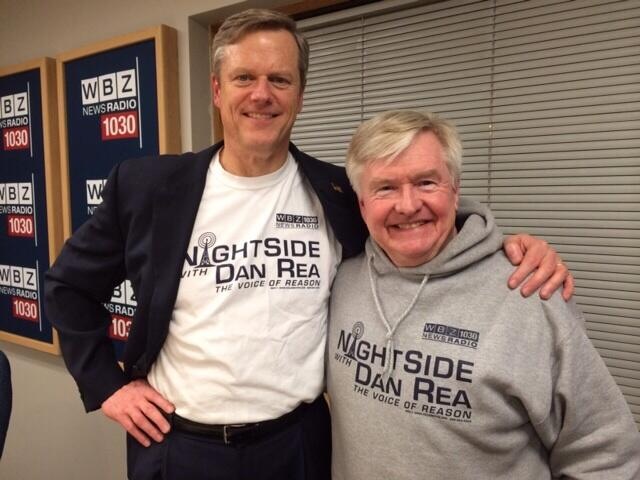
MAGOV14 : STRENGTHS OF THE CHARLIE BAKER ARGUMENT

photo (70)

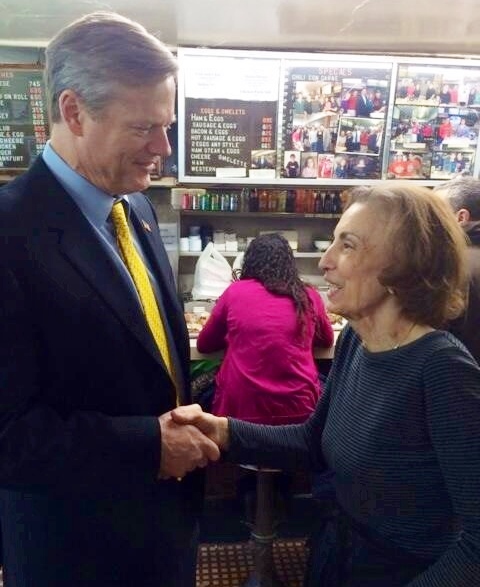
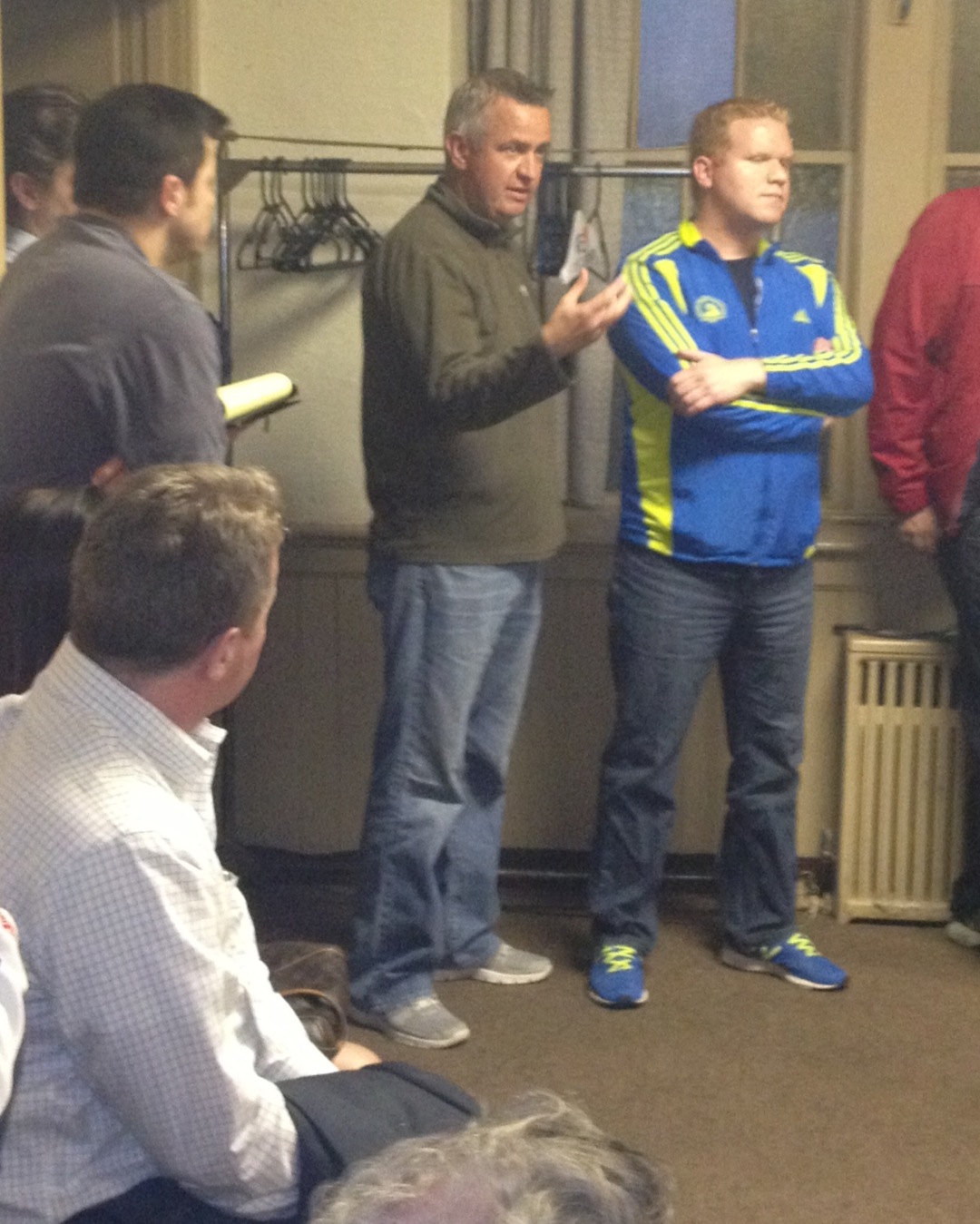
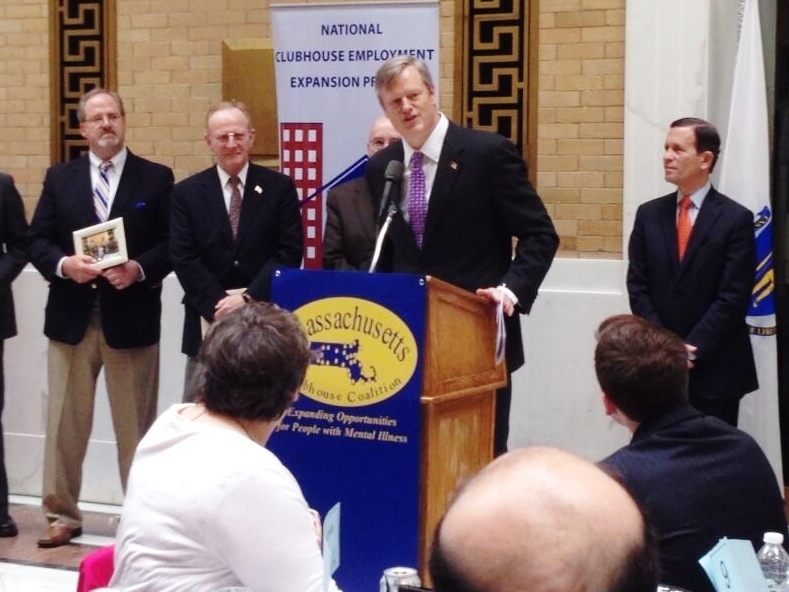
It doesn’t show in the polls, but Charlie Baker’s argument for why he should be the governor is a very strong one. He made that quite clear when he spoke last night to 200 people gathered at a fundraiser in his home town of Swampscott.

He spoke about great schools : “a school in which the principal has autonomy to direct the school is a great school. I saw just such a school in New Bedford. A standard school but with an excellent principal. It’s a level one school — top 20 percent performing. Why can’t we do this everywhere ? We need to leverage the strengths that are already have.”

Giving managerial autonomy to school principals is the core reform that Boston “interim’ superintendent John McDonough has put in place. It’s a reform that almost everybody supports. Baker is the first governor candidate who I have heard address this issue.

He spoke about state owned land. “There’s so much unused state-owned land in boston. Why can’t we develop it ? There are three high cost barriers to development in Boston : permitting, labor, and the land. Mayor Walsh is fixing the permitting. Labor will always be expensive. But why must the state have to make a profit on the land ? Let’s sell it low cost and develop affordable housing. It helps the City’s tax rolls and brings life to land where there was none.”

He spoke about local aid. “We cheat the cities and towns when we withhold local aid. 500 million dollars has been cut. As governor I’ll make sure that all the local aid fund goes to communities, because that’s how you build great communities. And so far I’m the only governor candidate who has made this pledge.”

You will notice what Baker did not say. Nothing about too high taxes, nothing about small government, nothing but cities, city issues, city problems.

Baker also laid down this challenge : “Both Karyn (Polito, his running mate) and I have long experience of local and state government; she in the legislature, me in the executive; and both of us have long experience in private business. No one running can match us. No one brings to this job what we do !”

He’s right. The Democratic candidates for Lieutenant Goverbor, especially, albeit well-meaning citizens, fall way short of Polito’s ten years in the legislature and service as a town selectman. Nor have any of Democratic candidates for governor, not even Don Berwick, anything like the wide-ranging experience that Baker can claim.

The Swampscott audience — all kinds and ages of people, too — loved Baker’s speech.

photo (71)

^ Baker’s running mate, former Shrewsbury State Rep Karyn Polito

So what does Baker’s Swampscott pronouncement say about his chances of election ? It says a lot.

Right now he polls 30 to 32 percent of the vote; his chief potential November opponents poll an average of 37 and 49 per cent. These are daunting numbers; baker will be campaigning uphill all the way to election day. yet if he can stick to his current message, addressing city problems to city voters in a city way — and adding his quite forward ideas on technology transformation of state administration — he has a path to victory.

It may be his only path to victory. It is also exactly what the next governor needs to make his priority, his commitment, his work to accomplish. Because it is in the cities of our state that the future is being talked out, decided, and made.

—- Mike Freedberg / Here and Sphere

INCOME INEQUALITY : SUGGESTIONS FOR CURBING IT

Image

^ the smartest and most realistic economic reformer in the USA today : Robert Reich

—- —- —-

We all know now, thanks to Thomas Pikettty’s Capitalism In the 21st Century, what many political economists have been opining for several years now : that growing disparity of incomes threatens the growth, the effectiveness, the very stability of the economy we live in. Robert Reich blogs almost every day about it and has highly useful suggestions to make. Paul Krugman opines about it — and other economic events and decisions — and almost always gets it right.

We have several suggestions for curbing income inequality; but first, let’s do a little analysis and then read a bit of history :

What French economist Piketty has added to the discussion is to show, at length, that ( 1 ) the fruits of commerce almost always tend to go chiefly to the top and ( 2 ) the process is fundamentally absurd.

By “absurd,” I mean that income equality grows hyperbolically : the more unequal the apportionment, the faster it grows still more unequal, until almost all income goes to hardly anyone but a very few.

This happens because the generation of income is a dynamic process; the momentum of it controls the process. We see this quite clearly in stock markets, where “uptrends” — and “downtrends” — of stock prices tend to increase ever faster the higher they go, as more and more speculators get aboard the trend, until they end in a “spike” top or “spike” bottom. Stock prices are a particularly pure form of hyperbolic money momentum, but the same trend dynamic applies, albeit more gradually, sometimes interrupted, to almost every economic enterprise in which transactions occur.

The disruptive consequences of price trend spikes and of boom and bust economics became quite painfully known to advanced nations a long time ago. from the 1870s to the 1960s, such nations either enacted corrective legislation or underwent revolution; some did both. In the USA we set up the Interstate Commerce Commission to regulate railroad pricing; established anti-trust laws to curb monopoly; set up the Federal Reserve Bank to backstop the nation’s money supply — and, in the 1930s, to impose “margin” requirements (limits on how much leverage a borrowing buyer could take) on stock and bond speculators. We enacted much labor legislation to protect workers seeking to organize and bargain wage and benefit contracts collectively. We gave the Federal Reserve the power to establish national interest rates, to stimulate an economy in recession or slow down an economy going into boom mode. We introduced the graduated income tax and estate taxes, to slow down income accumulation and cut down the power of inherited concentrations of money. We passed the Glass-Steagall Act, forbidding depository banks from using depositors’ money to speculate in securities.

Canada enacted many of the same reforms. western European nations did the same, or imposed stare ownership on many industries along with extremely generous wage rates and high taxation. Some nations tried all-out state economics, centrally owned and state controlled. This model went too far,. innovation was discouraged, experiment feared, diversity prosecuted. The model failed.

The other two models worked well until about 20 to 30 years ago. Then came the internet, and speculation fever, after the collapse of which speculative money, as yet unstated, bought into the mortgage market and, as we know, into the speculative trading of mortgage bonds and other mortgage-backed instruments.

This activity collapsed, but the vast income inequality it generated did not. Publicly traded companies are hounded by speculative money pools that own their stock, to maximize short-term profits, as short term as the rapid fire trades that pressure these firms. Firms found that they could grant enormous stock bonuses to their top executives in turn for maximizing short term profits and thus becoming favored by speculative money pools whose buys boosted these companies’ stock prices — which in turn made the stock option bonuses that much more valuable.

The surest ways to maximize quick-month profits are to skimp on research, pay workers as little as possible, and do stock buybacks. All are favored methods for companies whose stock is traded, to CEO advantage, by speculative money pools.

Hence the absurdity. Money is generated by speculative trading, which makes money for the CEO’s stock options, which in turn assure that he will run the company to the purposes of the speculators. And the speculations’ money, instead of investing in new products, or creating new industry — which is what investment money is best used for — invests basically in itself : money buying money which buys money to sellers who pay money to buy money sold to them.

By this means money is, basically, taken out of the economy entirely to chase its own tail.

Meanwhile, the 99.9 % of people who have to live by a paycheck — or by public assistance or retirement funds, most of it in forms of social security — find hardly any additional money accruing to them. Between jobs outsourced, layoffs, and outright wage theft — and by making workers be “temporary” status, this eliminating their benefits — companies maximize the amount of money they can spin into the speculative tail chase and into CEOs’ stock option increases.

You would suppose that companies’ own stockholders would reject this policy. They would, except that today the huge money pools own as much a 90 % of all the stock of such firms; they control every part of the company’s money usage.

Not all publicly traded companies suffer money masturbation. Some, like Costco, practice an opposite policy : pay workers generously, limit the CEO’s pay enormously. Companies in which the founding family retains a “control block” — like the Pitcairns of PPG Industries, or the Lilly Foundation of Eli Lilly — also resist being masturbated. In these firms, investment in employees and research takes precedence. Firms operating in enterprises requiring high skill — oil and gas, technology, aircraft — also manage to avoid being jerked off. Thus the economy doesn’t completely fold in upon itself — yet.

So : what to do ? All manner of suggestions have been propounded. we have our own :

1.Reform corporate governance laws so that stock can only vote if owned bona fide by individuals, not money pools or other institutions.

2.raise the minimum wage to a living wage level : $ 15.00 an hour, or, better yet, to a stated proportion of the median income for each state.

3.require publicly traded companies, as a condition of admission to a stock exchange, to have at least one third of its board members be representatives of the firm’s employees; require that each board also have on e consumer representative if the firm’s chief business is selling to retail customers

4.Grant the “Fed” power to impose margin requirements on the buying and selling of all traded financial instruments, not just those traded on formal exchanges.

5.make the classification of employees as “temporary” or as “independent contractors” an unfair labor practice, and fund the NLRB to enforce labor laws by earmarking receipts from stock transfer taxes to the NLRB (and SEC) enforcement personnel and expense.

6.Impose a surtax on firms that move their incorporation offshore.

7.give the “Fed” regulatory power over interest rates and fees charged to consumers by credit card grantors, similar to the regulatory power that state utilities commissions have over public utilities’ rates.

8.move universal health care to Medicare single payer administered by Medicare and Medicaid staffs.

9.make student loans a grant in aid, like Pell Grants, renewable each term upon performance.

10.encourage immigration and regularize the status — including path to citizenship — of all who are here already (except those who have significant criminal records)

You will notice that my list does not include the penalty taxes suggested by Robert Reich and which have been proposed in California. That’s because tax costs can all too easily get passed on to consumers — example : cigarette taxes — and thus fail of the effect intended.

The basic principle of my reforms ? simply this : the economy must work for all, with reasonable fairness, or it can’t work at all.

And by the way : remember that I mentioned Canada toward the front of this story ? I had a purpose : that nation did not allow the speculative practices that we set afoot 20 years ago, nor the banking excesses. Canada’s banks remained “boring,’\” and today, our neighbor to the North has the best-paid middle class in the advanced world.

Let the discussion begin.

—- Mike Freedberg / Here and Sphere

MAGOV14 : DON BERWICK WANTS SINGLE PAYER — BUT DOESN’T SAY HOW TO GET THERE

photo (69)

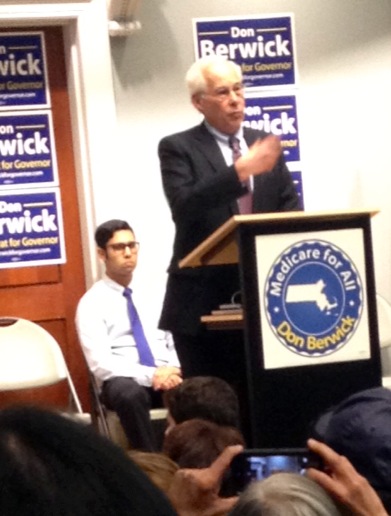
Last night Democratic governor candidate Don Berwick held a “Medicare For All” town meeting at Bakst Auditorium in Boston University Medical School. The site was appropriate, and as a pediatrician, Dr. Berwick is the right candidate to discuss “Single Payer.” Unfortunately, in almost two hours of explanation and question answering, Berwick didn’t tell us how to get there, nor did he say much about what “Medicare for all'” would look like as a program specific to Massachusetts.

Berwick did make clear that he wants single payer; that ‘all means all,’ and that that would be a priority were he to be elected governor. He said that Massachusetts’s current universal health care — which he congratulated our state for being first in, without mentioning that it was done by a Republican governor — is too costly, too confusing, too opaque; that we spend ten times as much on administration as we should; that with a single payer system, 90 % of that administrative cost could be devoted to actual health care; that the coding and bill processing burden takes up far too much of health care professionals’ time; and that it’s almost impossible for users to figure out the rules for what is or is not covered.

All true. Yet Berwick said not one word about the collapse, at great expense, of our state’s health care connector to Obamacare — at Forums he decries it; why wasn’t it on his speech list last night ? He said nothing about seeking a waiver from the AC. Indeed, after rapidly listing “technical issues and (Federal) pre-emption,” he said nothing about how the state would overcome these : only that “we can do it and should do it.”

He was much applauded. Clearly his supporters do want single payer. So do many of us. We all know what Medicare is and many of us know how cost effective a system it is. But Medicare is a Federal operation. Berwick seeks a single payer system that would operate only in Massachusetts. Last night he said that it would work better on a state level: but as i have already noted, he said nothing at all about how it would work, who would administer it, how it would be paid for. He of course said nothing about how we would go about replacing the universal health care system that we put in place only eight years ago.

There is, in Vermont, another move to establish single payer in one state only: but Berwick didn’t mention Vermont, and from what I gather, the Vermont proposal has yet to be worked out.

It would be nice to know how the single payer state system would be paid for and by whom administered. I suspect, unhappily, that administration of it would be mishandled — as is much of Massachusetts social service — by an overburdened management, despite Berwick’s insistence last night that he “will never compromise on management excellence.”

If he has answers to these questions, he needs to start giving them soon. Otherwise it will be hard to give serious attention to an issue that only he, among all 6 serious governor candidates, has raised and which I do not hear high on most voters’ list of priorities.

That said, there’s no denying Berwick’s commitment to cost-effective, simple to understand health care for all. And to “medicare for all” being a social justice issue too. Over and over he emphasized that health care should be a human right. Who could not be moved — I sure was — by the story he told, at the event’s end, of a 15-year old African-American whom he helped cure of leukemia, a disease almost always fatal at that late age ? “we threw the book at his leukemia and we cured it,” Berwick said. “But what happened to that young man ? He ended up later on dying on the streets.

“He had two fatal diseases, leukemia and injustice. The one, we cured. the other we could not.”

—- Mike Freedberg / Here and Sphere


NOTE : this article was UPDATED at 2.45 pm on 04/17/14

MAGOV14 : CHARLIE BAKER — THE 30 % MAN

photo (15)

^ a scene he’ll have to repeat about 500,000 times : Charlie Baker wins a voter

—- —- —-

Both new polls of the Massachusetts Governor race make clear that Charlie Baker has a 30 percent chance of winning. Give or take, about 30 percent of Massachusetts voters support him no matter who his November opponent will be.

It’s a simple calculation. 30 percent support means 30 percent chance of winning, just aa 60 percent support means 60 percent chance of winning.

I say this even though about 33 percent of our state’s voters poll “undecided.” If Baker is to win, he will need to carry the undecided voters about two to one. Very rarely does a block of voters that large — in Massachusetts, 33 percent equals about 1,000,000 voters — pick any candidate by two to one.

Yesterday’s U Mass Poll gave us a more detailed look at the governor race than did Western Mass University’s poll last week. Let’s look both polls’ numbers now :

U Mass Poll                       Western Mass U Poll

Baker 34                             Baker 25
Coakley 45 ( und 21)     Coakley 54 (und 21)

Baker 29                              Baker 29
Grossman 35 ( und 36 ) Grossman 38 ( und 33 )

Baker 32
Kayyem 32 ( und 36 )

Baker polled much better in the U Mass Poll against Coakley, no better at all against Grossman. But this poll allows us a peek at something more ominous : how Baker polls against Juliette Kayyem. She draws a mere 3 % of the Democratic Primary vote — according to the poll — and so is, basically, a “generic Democratic vote.” Against a “generic Democrat,” therefore, Baker polls dead heat — but no better. This cannot be good news for a man now running his second statewide campaign for governor.

I said, last week in analyzing the Western Mass University poll, that Baker has a very narrow window to victory. The new poll confirms it. Against Coakley, he is down by 11 points with only 21 percent undecided. To beat her he’d have to win the undecideds by 17 to 4; that will not happen. If he wins the undecideds by 12 to 9 — which could happen — he loses to Coakley by 54 to 46, only a two point difference from the result suggested in the western Mass poll.

Against Grossman, U Mass’s poll offers Baker a marginally better chance than did the Western Mass. From that one, I suggested a 52 to 48 Grossman win (and an opportunity, among legislative insiders, for Baker to turn it around). The U Mass poll has a full 36 percent undecided; if Baker wins them 21 to 15 — a result very doable — he and Grossman tie at 50-50. If that happens, the insider action that I suggested in my previous column would almost certainly give Baker the corner office.

I say “would almost” rather than ‘will” because there’s other factors at work that the U Mass Poll highlights. You will note the “word cloud” statistic ? OK, what words do come to mind — in descending order of frequency — when you think of Baker ? Of Coakley ? Of Grossman ?

For Coakley : 1st, smart; 2nd, liberal; 3rd, honest; 4th, good’; 5th, strong. Democrat / that comes 6th.

For Grossman ; 1st, unknown; 2nd, unsure; 3rd, know; 4th, none.

For Baker : 1st, Republican; 2nd, unknown; 3rd, conservative; Businessman ? Hardly appears at all. Good ? Only a little better. Experienced ? way down the list.

These are hardly good associations for Baker. To be known chiefly as a Republican is, in Massachusetts, to have some ‘splainin’ to do. Conservative, even more ‘splainin’. Baker needs badly to rebrand himself, and he has very little time to do it. And no chance at all to beat Coakley to the words that generate a vote : smart, good, honest, strong — not to mention Democrat.

Baker’s associations do look more vote-productive than Grossman’s. How can an elected statewide office holder, the State Treasurer, poll unknown, unsure, none ? Grossman has spent tons of money to become known, so it seems, only by Democratic activists. With about seven months remaining in the campaign he is not on most voters’ radar. And yet — and yet ! — against the much better known — but “Republican, conservative” — Baker, he polls 6 to 9 points ahead.

The word cloud tells me that my prognosis for Baker in a contest against Grossman has been far too optimistic . If “unknown, unsure” Grossman beats Baker by 6 to 9 points, what will Grossman poll once he does become better known ?

Baker has to be sweating it. But this is what it’s like when you are a “conservative, Republican” drawing about 30 percent in Massachusetts. You have a 30 percent chance to win.

When it’s like that, and you’re in it, you gamble. You throw the dice as far ahead of you as you can.

—- Mike Freedberg / Here and Sphere
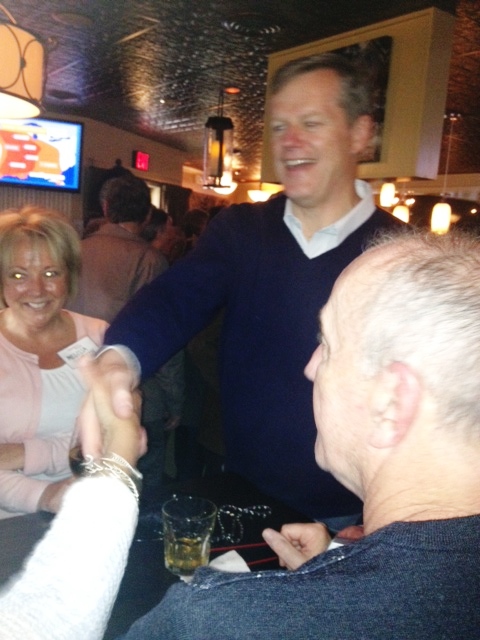
UPDATE : April 18, 2014 at 10 AM — turnout might help Baker a little,. In his home Congressional District, the 6th, there is an expensive, very close contest underway between incumbent Democrat John Tierney and Republican challenger Richard Tisei. This is a re-match for the two men; both are well known. Turnout will almost certainly tally higher than otherwise, by maybe 20,000 votes; and as Baker lives in Swampscott — the heart of the contest — he can only benefit. — MF

WEST ROXBURY : THE QUARRY MEETS AND GREETS

Image

^ proposing quarry reclamation laws : State Senator Mike Rush (in black sweater)

—- —- —-

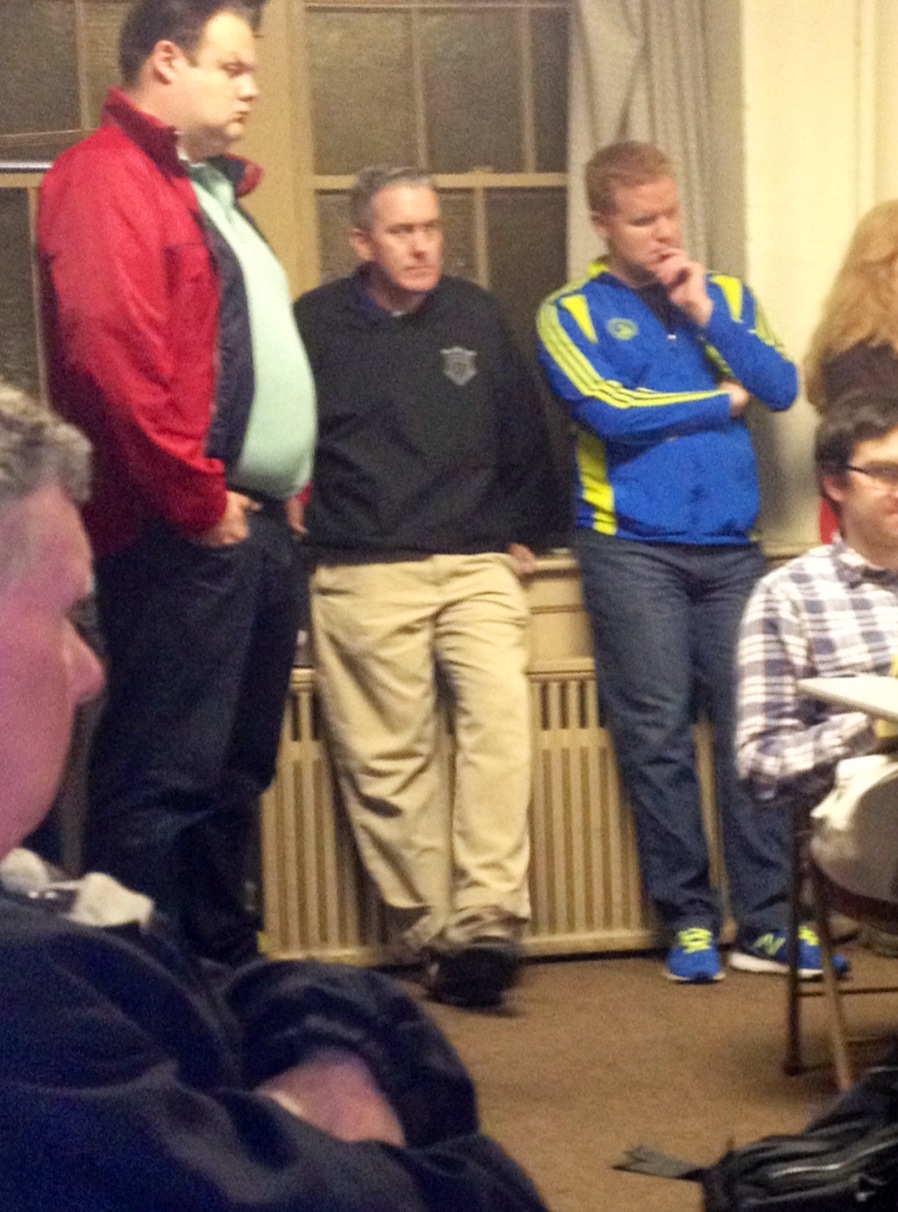
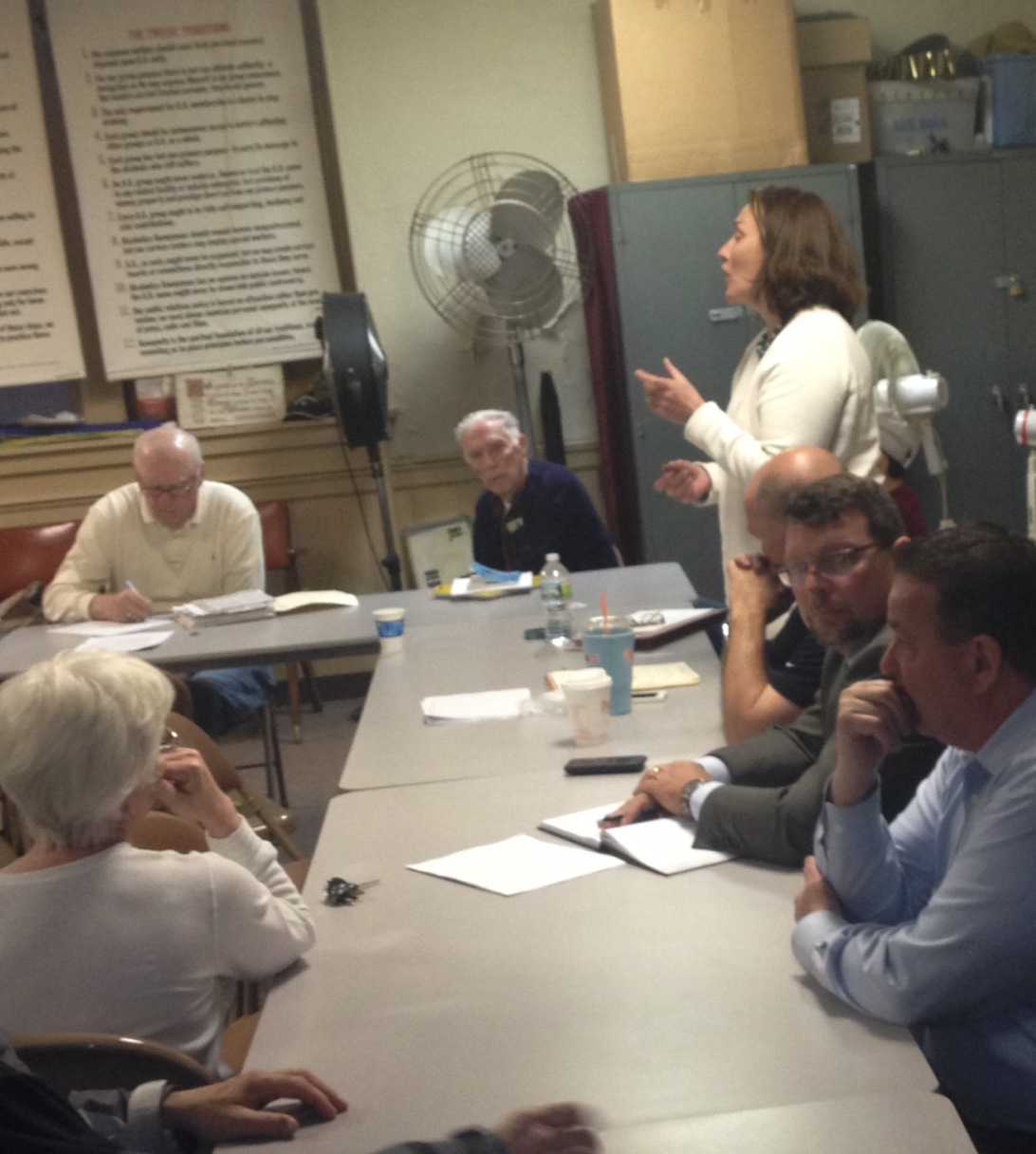
Like a candidate seeking election, the West Roxbury Quarry held a kind of meet and greet last night at St. Stephen’s Church on Washington Street. Into the church’s downstairs meeting room, where posters for the parish’s AA meetings hang on the wall, two Quarry people — including Laura Lorusso Peterson, of the long-owning Lorusso family — spoke to members of the West Roxbury Civic association (with old friend Larry Boran at the head table) and took questions from about 75 people, standing room only.

The message : the Lorussos want to drill for another 20 years, and they want to fill the Quarry’s huge hole even as they continue to drill. And to fill it, so it seems, with dirt that many local residents consider contaminated, even if recently changed state regulations don’t.

The Quarry people talked reclamation; but local State Senator Mike Rush, hard as a cinder block, noted that “what I’m hearing isn’t about reclamation, it’s about extra operations.”

Was he right ? It wasn’t easy to tell. Most of the conversation was about fill ; lines of dump trucks trafficking Centre Street, unregulated fill, noise, dust, pedestrians at risk.

At this point State Representative Angelo Scaccia, elected from the District immediately to the Quarry’s east, entered the room and took his seat. Scaccia said not a word; his colleague Ed Coppinger, did the talking, Mike Rush and City Councillor Matt O’Malley too; both constantly nodded toward Scaccia as they spoke, as if seeking his blessing on the content of their conversations. (Perhaps justly, because Scaccia has sat in the House for over 40 years and has seen it all.)

Among the stuff Scaccia has seen all of is the Quarry. Noise from Quarry blasting has been an issue since both he and I had a full head of black hair. Dust from the quarry has been an issue that long too. An end to quarry operations has been spoken of since Bobby Orr played hockey. Yet the quarry does not end. It goes on. Today it commands a huge hole in the ground covering about 50 acres of what would have been prime West Roxbury land. If filled in — with dirt that doesn’t harbor chemical contraband — it would command huge money from housing developers who gladly pay $ 200,000 for a buildable house lot.

All of the above was mentioned with cold specificity by Steve Smith, of the West Roxbury Community Council.

Much else was said, with icy specificity, by people who face the Quarry up front : that the trees along Centre Street have all died of dust; that the blasting draws ever nearer to houses along its perimeter; that the Lorussos can’t be trusted because all of their previous promises haven’t been kept; and so on. Someone even suggested that there would be fill brought in from the Everett casino project, fill very contaminated indeed.

That was scary and raised all kinds of issues that none of the elected officials in the room chose to touch.

Image

^ the Quarry’s Laura Lorusso Peterson meets and greets

Laura Lorusso Peterson offered to pay $ 50,000 a year to “the community” as mitigation. Some scoffed ; asked one man standing on the opposite side of the hall, “are we really ready to sell West Roxbury that cheaply ?”

Peterson offered a “90 day moratorium” on bringing in new fill. “We can bring in fill whenever we like,” she said, ‘but we don ‘t want to do that. We want to give the community a chance to work out an agreement with us.”

Image

^ proposals to slow the fill : State Rep ed Coppinger and City Councillor Matt O’Malley

City Councillor Matt O’Malley wasn’t having it. “I’ve sponsored an amendment to our zoning code,’ he said, “All twelve of my colleagues have signed it. It will require that you seek community approval, then full neighborhood approval, then a zoning board of appeal hearing.” He then added : “i’m not trying to stop what you’re doing, just to assure a proper process.”

Many Americans complain of bureaucracy and red tape as it is, much less of new red tape. Not the people in the St Stephen’s room, however. This was a night to celebrate red tape.

Sensing the theme, Senator Rush took the floor to deliver an almost five minute speech on Massachusetts’s lack of laws governing quarry reclamation. He said that he would introduce extensive legislation to govern it and outlined his proposals. Applause was his, and more applause.

There was no mention in Rush’s speech of the taxpayer cost to hire people to monitor and enforce the new laws; but it sounded good, especially when Rush noted that “other states have quarry reclamation laws, so should we !”

As the cliche has it : “there oughta be a law.”

The meeting continued well past two hours long, but the theme of it was fully established in its first hour. There would be a new law, maybe or maybe not enforceable. City Zoning would acquire an additional layer of obstacle. The neighbors would continue to live with the Quarry, like it or not. New fill would be withheld for a time — but maybe not. And the blasting and drilling would continue for another twenty years.

And there would be a study committee formed.

Perhaps Angelo Scaccia summed it up best : “Michael, they talk fill, but they want to drill. This isn’t about reclamation at all. Same old.”

—- Mike Freedberg / Here and Sphere

9th CONGRESS DISTRICT : A CAMPAIGN THAT IS NO CAMPAIGN AT ALL

Image

^ the least no-campaign of the four and thus the odd man out ? John Chapman, endorsed by Mitt Romney and Gabriel Gomez

—- —-

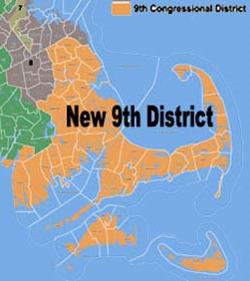
Four Republicans seek the party’s nomination to lose in November to current Congressman Bill Keating.

That is the fundamental dynamic in this campaign which isn’t really a campaign at all.

Because the four are running a race they will not win, the entire effort is to see which kind of Republican will win the nomination and thus give tone to the Republican party as it peoples the communities within the 9th District.

Minority parties often turn in upon themselves in this fashion. It becomes more important –MUCH more important — within them to see who will command the party than who might actually win an election. in Massachusetts, that’s how the entire GOP operates except for the very separate Governor GOP. The Governor GOP exists to win elections. It’s a normal political party and voices normal political policies that can very well win a majority vote. The same is definitely not true of the other MA GOP. It knows it cannot win and advocates policies that assure that it won’t win, policies advanced for the express purpose of keeping everybody else out. That is why the other MA GOP liberally offends all kinds of voters. The more voters it offends, the less competition for leadership of the party.

It is difficult to run a campaign for Congress within a framework of offending as many voters as possible. Most people who become candidates assume that winning is the objective. It takes them a while to realize that the opposite is what they’ve stepped into. It must be quite a revelation for them to realize that such efforts are won by the candidate who can successfully offend the most voters.

I call a campaign of this type “no campaign at all.” Just as accurate would be to call it an ‘anti-campaign,” a rejection of the very notion of campaigning as we understand the word “campaign” in a democracy. This sort of campaign is Leninist : his method was to direct the Bolshevik party to such extremes as to eliminate all but the hardest of hard core followers.

Leninism is the operative principle of the anti-campaigns that mark most of today’s GOP.

But the Leninists still do not have the ground all to themselves; within the MA GOP there are — to extend the analogy to Russia 1917 — Mensheviks too, and constitutional socialists like Alexsandr Kerensky, even some moderate democrats like Paul Miliukov. And these forces have money behind them, and voters, and they have no intention of being Lenin’d out of the GOP. Thus there is political significance to the GOP primary in the 9th Congress District despite its no-campaign thrust.

Image

^ playing no-campaign in a District in which exist many issues that a no-campaign refuses to address

The leading candidates all talk the usual national GOP talking points : that the ACA is bad, that we need “job creation,’ that unemployment benefits and other social safety net programs are bad. Nothing could be more meaningless, or boring, not to mention stupid, than these mantras. Because they are utterly meaningless, the actual meaning in the 9th District Primary lies elsewhere, in the no-campaign groove. You must get this fact so as not to dismiss John Chapman, especially, as just another robo. Or to think Daniel Shores naive, or Vincent Cogliano passe’.

Image

^ young, even normal, ambition : Daniel Shores

Shores is the kind of young, ambitious lawyer who in MA usually runs as a Democrat — in a state where “Demoocrat” means “i want to win’ just as much, or more, than it means anything about policy. Were Shores to win the primary, it would inject some measure of normal political ambition into a party in which ambition usually takes a darker turn.

Image

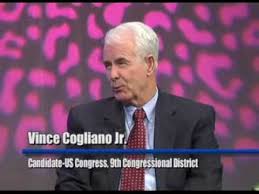
Cogliano is a local politician’s local, and as all normal politics is local, his victory would add to the MA GOP some measure of attention to precinct, ward, and community politics, at which most of the MA GOP fails all tests.

Then there’s John Chapman. He has the endorsement of Mitt Romney and Gabriel Gomez, who lives not far outside the District. Gomez today is by far Massachusetts’s most -progressive GOP voice, more so than even Richard Tisei. His endorsement of Chapman, in the state’s most Portuguese District, will carry weight and should. (Gomez is not Portuguese, but as an Hispanic he knows the next-door Portuguese community better than most Anglos.) Chapman seems actually to be seeking voters who want to win the election. To do that, he will have to set aside his robo mantra and campaign on real issues that matter to Portuguese voters : fishing rights, Federal dollars for Section 8 housing and for port building, education reform, student debt reform,  transportation funding, immigrants’ rights : stuff that no-campaign Republicans loathe and spurn. Unfortunately for Chapman, the more he addresses such issues, the more anathema he becomes to Leninist GOP cadres.

Image

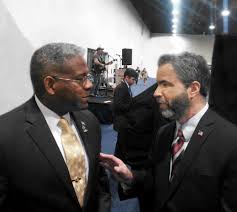
^ Like Lenin with his mentor Georgi Plekhanov : Mark Alliegro with the no-campaign theorist (and former Congressman) Allen West

These cadres belong to the fourth candidate, Mark Alliegro, whose pronunciamentos epitomize the world of no-campaign, of GOP Leninism. Alliegro condemns the ACA, shoots his gun rights mouth off about ‘social engineering,” talks the “freedom’ mantra of those to whom “freedom’ means eliminating all social safety net — indeed, all federal government programs you can think of except (maybe) Defense. For no-campaign Leninism, Alliegro’s rant matches Mark Fisher’s failed governor effort and maybe even surpasses it ; because where Fisher assaulted the Governor GOP in its stronghold — liked the failed Bolshevik attempt of 1917 — Allegro is challenging only the 9th District outpost, a fortress not defended by the Governor GOP. He may not conquer the outpost; but do not bet against it.

—- Mike Freedberg / Here and Sphere
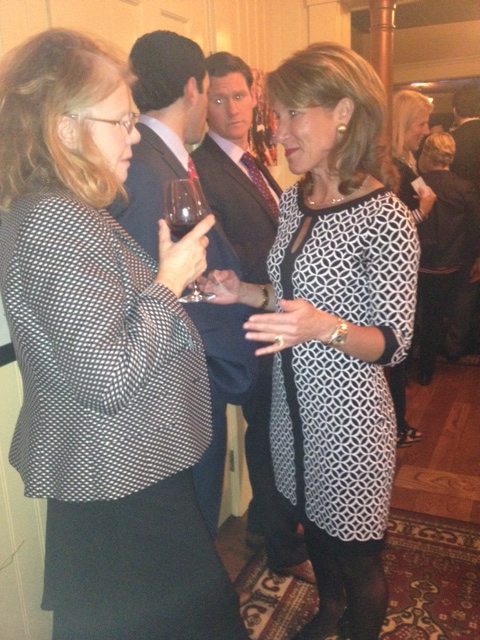
EVERYTHING WAS QUIET & BUSINESS-LIKE AT MATTAPAN TRANSPO MEETING, AND THEN …..

Image

^ the community has questions : last night’s Fairmount Line (MBTA) meeting in mattapan

—- —- —

Last night “the community” filled much of the Mildred Avenue Community Center auditorium to hear an MBTA project team outline plans for a new Blue Hill Avenue – Cummins Highway T stop on the Fairmount Line. State Representatives Dan Cullinane and Russell Holmes were there, as was State Senator Linda Dorcena Forry. City Councillor Tim McCarthy came too. It was all set to be a very genteel, slide show presentation of the much-talked-of new Fairmount Line, featuring many local stops so that the line can serve Boston’s communities of color; through which the Fairmount runs and which, until recently, it had not served at all.

Genteel it was, as the project manager showed photos of new Fairmount stops at Newmarket, Uphams Corner, Four Corners, Talbot Avenue, Morton Street. Beautiful they were, and handsome, almost, the newly rebuilt bridges (there are 41 bridges on the Fairmount, said the project guy) over Columbia Road and Massachusetts Avenue. All of it done and the stations open, operating and doing just fine.

Then came the renderings of the proposed Blue Hill to Cummins Highway station.

Good-bye to genteel.

The audience was not happy to see what they saw : a T stop running between Woodhaven Street and Regis Road, all the way from Blue Hill Avenue (at SIMCO’s) to Cummins Highway (on the other side of Mattapan Square). Of course the line already runs that route and impacts those homes; the only new factor is the T stop. It seemed not that big a change, but to an audience waiting to pounce, it was big enough.

Image

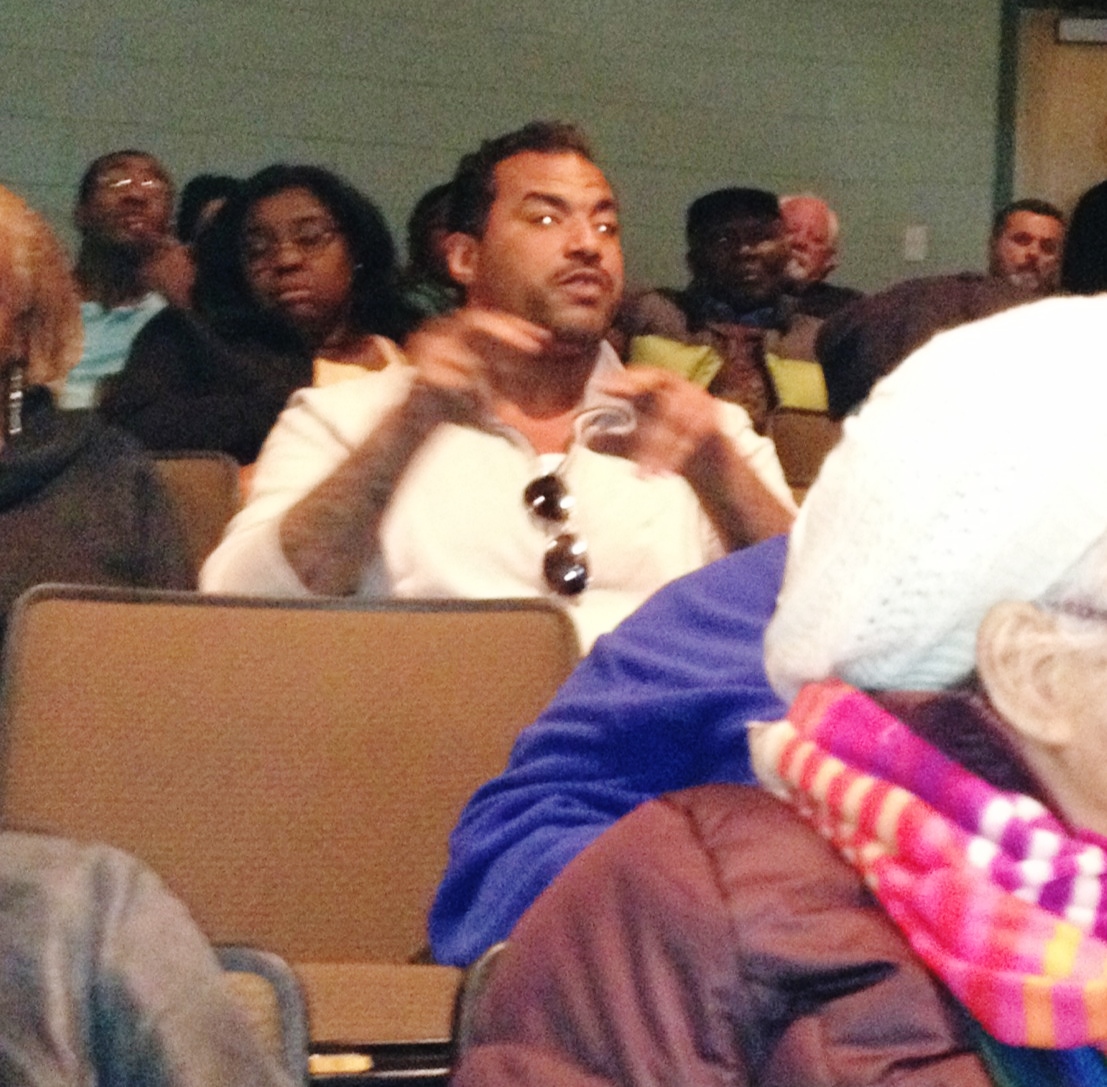
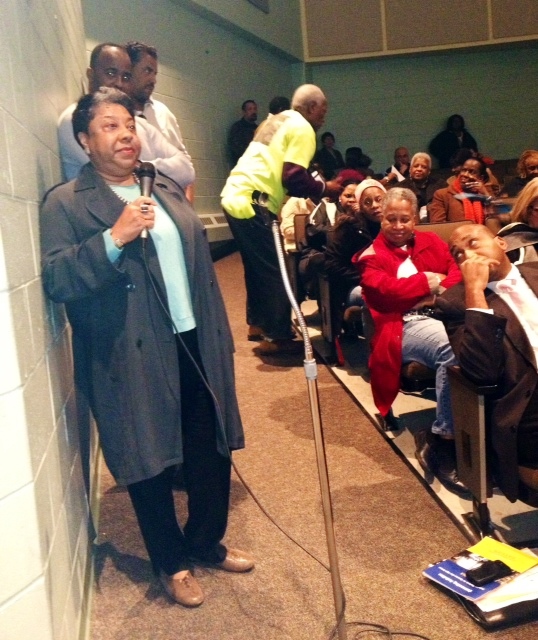
^ They lined up at the microphone to ask questions. Well, not so much questions as to rant against the T in general.

“It seems to me that we’re always having stuff imposed on us,” said one woman. “We need honesty. we’re the abutters.”

Said another man, “We never get anything !”

“In 2005 they promised us cameras and a phone at the Morton street,’ said another. “Came 2007, the phone was in, but not the camera.”

“Why isn’t there even one station between Blue Hill and Fairmount avenue ?” asked a man. “Three mile stretch and you can’t do even one stop ?”

“i do not trust the T,” said an older woman, speaking to Russell Holmes directly next to her.

Image

^  St Rep Russell Holmes listens to grievances

Image

“Where were you when all this was being done,” a man asked of Holmes, who pretty soon had had enough. He stood up, addressed the questioner directly. “You’re for it,” he said to the man, who obviously knew Holmes — addressing him “Russell.” “And I’m for it. So what is the problem ?”

“If the community wants it, it should have it,’ answered Holmes’s friend. “if it doesn’t, then not.”

Holmes certainly was right to stand up a he did. the Fairmount has been in works for over three years now — as Senator Dorcena Forry pointed out in a fierce, extensive speech during which she challenged the nay-sayers and defended the project — which, as the T’s spokes-gal said, is wanted by at least 60 percent of local residents.

Her speech not only quieted the crowd but even garnered extensive applause. But then the questioning continued. There was much talk of the T stops being for “outsiders.” And so it went.

Silly me, I guess, for thinking that the Fairmount line’s addition of several local stops, to serve those who need public transit to get to work, was an unmitigated good thing. I should have realized that even indisputable benefits to a neighborhood look like an imposition to some when they are delivered from the State House by a government in which very few people of color have any direct voice.

The objectors were not, however, playing a race card. One woman loudly praised State Senator Jack Hart, of South Boston (who represented Mattapan before Linda Dorcena Forry) for his work with the neighborhood’s concerns. Rather, the race component lay far deeper in the anger than that. It was directed to the State House in general. And it was hard not to see that every one of the Fairmount Project staff was white — except for its “neighborhood outreach advocate.”

It was also hard not to agree with the woman who talked about promises made in 2005, when Mitt Romney was still governor. The disconnect between State plans and state performance is not Democrat or Republican. It is systemic. it arises from budget traffic jams, departmental conflicts, the constant buffeting, from one crisis to another, of governors by the public. It is very difficult for a complex, 21st century government to do anything quickly or well, and that is how it is with a democracy in which everybody votes and voters get listened to, as they should be.

Some call this performance traffic jam “waste.” I call it democracy in action. Community meetings and neighborhood input are now a core part of the process by which public improvements are brought from concept to built. Onward we go, anger and conflict and all that.

—- Mike Freedberg / Here and Sphere

below : “the community” gathers to listen and object

Image

MAGOV14 : CHARLIE BAKER’S CHANCES LOOK LESS GOOD RIGHT NOW

Image

^ 29 point lead in latest poll : Martha Coakley (D)

—- —- —

For the past several months of covering this year’s Governor election I’ve been of the opinion that Charlie Baker was the favorite; that he had the most compelling case to make; and that the tax revolt under way in the outer suburbs would surge him to victory. But now, after looking at Western Mass University’s new poll, i am changing my mind.

Prior polls showed Baker losing to Martha Coakley by some big numbers : but in them, neither candidate topped 45 percent, much less a majority. In the new Western Mass poll, Coakley wins 54 percent to Baker’s 25. As Coakley’s numbers have risen, Baker’s have fallen.

All of this is bad enough; and there is more. The poll has Baker not known by a full 30 percent of voters. how can a man who ran for Governor in 2010, in a hotly contested and well-journalized election, be not known by that many people ? The only explanation is that baker’s name dropped out of the news ; and that now he is playing the most basic of catch-ups, very late in the game.

The solidest votes that candidate has are the early votes. the earlier, the better. Later on, the doors start to close ever more quickly. The doors haven’t yet begun to close — 21 % of voters remain undecided in a Baker Coakley election — but they will soon begin to. Meanwhile, the poll numbers detail the bad news :

Independents go Coakley, 49 to 27.
Women choose Coakley 62 to 16
Even 10 % of Republicans prefer Coakley to Baker; only 3 % of Democrats prefer Baker to Coakley
Baker loses every region of the state; his home region (North Shore and South shore suburbs he loses by 12. in Boston he is wiped out : Coakley 60, Baker 20.

Baker’s apologists point to Scott Brown’s come from way behind victory over Martha Coakley in the January 2009 special senate election. Sorry, but that election is an exception, not a model. Brown was a fresh face; baker isn’t. Coakley ran an ignore-him campaign. She won’t do that again, isn’t doing it now. the Democratic party GOTV operation took a pass in 2009; it is fully geared up now.

Baker’s apologists reply that Coakley continues to be a poor candidate. She is that. But she has become smoothly glib with a gentle smile — enough, probably, to not lose a 29 point lead.

Will the race tighten ? Of course it will. Baker’s favorable-unfavorable number is 31 to 13; Coakley’s is 51 to 27. Baker looks well positioned to gain a majority the 21 % still undecided, perhaps too win a few votes away from Coakley as well. By all means, give Baker a 2 to 1 break of the 21 percent undecided. But that only makes the race 61 to 39. It is axiomatic that a candidate can take 10 % of his opponent;s vote away — probably not more — if he campaigns well. So let’s do that. Now the result is Coakley 55, Baker 45.

That was the result in last year’s Gabriel Gomez – Ed Markey US Senate race.

If everything breaks for Baker — if he runs a near perfect campaign — if Coakley continues to be the dicey, underexposed photograph that she has been, then a 55 to 45 loss is doable for Baker. Such an outcome means Baker will win all the places that the current GOP always wins : central MA, most of the South Shore, much of the North Shore. He might carry a city or three ; Chicopee, Melrose, Methuen. Elsewhere, he will be beaten where he cannot afford to be beaten (Peabody, Quincy, Brockton, Framingham, Norwood) and wiped out where current GOP candidates are always wiped out (Cambridge-Boston-Brookine-Newton, the West, the Outer cape, Worcester and Springfield). There the margin will be 30 points, maybe more.

Image

^ looking gubernatorial, and against Steve Grossman, he might be : Charlie Baker

Baker does much better against State Treasurer Steve Grossman. The Western MA Poll has it Grossman 38, Baker 29. Partly that is because Grossman’s favorable-unfavorable is only 21 to 14 : people who know him (44 % don’t) don’t like him nearly as well as they like Coakley and Baker. So Baker’s actual vote goes up from 25 to 29, and the undecideds go up from 21 to 33.

Facing Grossman, Baker actually wins two regions of the state ; Central MA by 18 points (45 to 27, 28 % undecided) and his home region by 3 (34 to 31, 35 % undecided). But he loses the West by 17 (39 % undecided) and is smashed in the Boston core (47 to 23, 30 % undecided).

Clearly a Baker win against Steve Grossman is doable; but it’s not quite probable. losing by 9 — and winning only 8 % of Democrats while losing 9 % of Republicans (!) — Baker has to win the 33 % of voters who remain undecided by 2 to 1. Can he do that ? Maybe : but there are more undecided voters in Democratic areas of the State than in GOP sections. My own guess is that he will probably — if he runs that excellent campaign I mention above — and continues to raise the big money he has gained thus far — win the undecideds by somewhat less : 19 to 14. That would make the November result Grossman 52, Baker 48.

Baker has one more card to play in a race this close, but it’s a highly sophisticated one : so bear with me as I explain what many highly moral readers do not want to hear :

Historically, strong GOP governor candidates have been able to bring aboard many Democratic legislators, in the cities especially, and with their active support either carry that city or come close. Many Democratic legislators (and I will specify no further) would love to see Baker elected, both for policy reasons, public works, and issues of House governance. But none of these will come actively into a Baker campaign unless they feel pretty sure they can make the difference. (The reasons for this should be obvious.) 52 to 48 is exactly the kind of race of which 20 or 30 Democratic legislators could turn the result around. BUT : of all the Democrats running, Steve Grossman is the candidate closest to exactly that kind of Democratic legislator. Would 20 or 30 of them turn on him ? Nobody is better positioned to make that happen than Baker, with his connection to the Big Dig and its huge dollars paid out to Building trades workers. But it definitely WON’T happen unless ( 1 ) the Democratic nominee is Grossman ( 2 ) the race is as close as I estimate and ( 3 ) Grossman can’t counter it.

Baker’s fate is in the hands of key Democrats. Since John Volpe’s 50.3 to 49.7 win in 1960, it has always been like that for GOP governor candidates. Believe me, he knows it.

—- Mike Freedberg / Here and Sphere
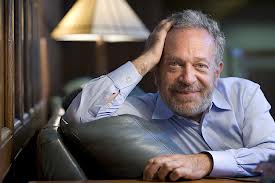
BOSTON SCHOOLS : REFORM MOVES FORWARD THROUGH THE BERMS

Image

^ street theater at City Hall & Faneuil  : the “$ 61 million” BPS parents’ bake sale yesterday

—- —- —-

As just about everyone knows who is involved in it, moving the Boston Public School system forward is almost a combat challenge. Berms galore face the advancing warriors ; severely decreased Federal funding; unfunded State mandates; administrative change, including to staffing and work rules; figuring out a workable relationship between charter schools and “standard schools”; layoffs; teacher salaries. Doubtless I have left out many more.

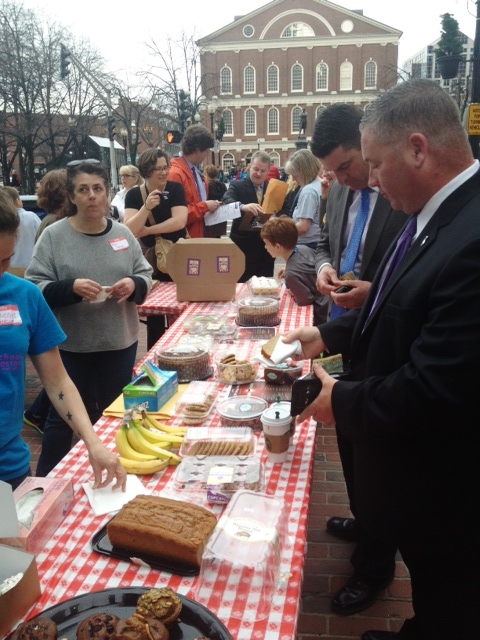
That said, the army of school reform Is moving forward. Some even of the opponents of reform are actually assisting it by highlighting the difficulties. One such highlight took place yesterday, at the back of Boston City Hall, across the street from Faneuil Hall : a school parents’ “$ 61 million” bake sale.

The $ 61,000,000 they refer to is, as they see it, the dollar amount by which the Boston School department’s FY 2015 budget falls short of what is needed. Superintendent John McDonough agrees that the new school budget has “at the end of the day…only so much revenue,” as he put it at the March 26th Budget hearing. Whether McDonough concurs that the shortfall amounts to $ 61 million, I do not know; there is no disagreement, however, that the budget foes come up short. as McDonough put it, “trade offs” were needed. The trade-offs included eliminating abort 200 position : 100 of them from central school department administration, another 100 or so from the staffs of individual schools.

Hard hit was the Mary Curley K to 8 school in Jamaica Plain ; a school that has, since the late 1970s, occupied a central place in Jamaica Plain’s re-invention as a gentrified neighborhood. Parents of Curley School children cite losing a coach, support personnel, and a school nurse. Other parents, with children at other schools on Boston’s western edge, report the same.

it may well be that McDonough chose to layoff staff in these schools rather than in poorer neighborhoods because he knew that Curley parents would organize and protest loudly, and that those responsible for cutting Federal and state school funding would hear ; and that their protests would matter more to these officials than if he himself were making them. McDonough is as shrewd as they come, and I find nothing that he does to be without well placed purpose. In this case, if his intent is as I suggest, he has planned well indeed.

Image

^ shrewdest guy in Boston : School Superintendent John McDonough at the “$ 61 million” bake sale

The bake sale drew at least four City Councillors, several Boston teachers, and much media attention. Less attention has been paid to what McDonough has done to school administration. He has made major moves, chiefest of which is to give every Boston school principal full authority to choose every teacher and staff at the school of which he is principal; and to do so by early hiring, when the best teachers are still on offer, and to count diversity as a criterion. The effect on future teacher union work rules can only be revolutionary.

Mayor Walsh, too, has made school improvement moves. his new appointees to the School Committee both voted for McDonough’s propos;las (which were adopted unanimously); and today, at the City Councils’ FY 2015 Budget Hearing, orders presented by the Mayor were adopted unanimously, as follows:

Order # 0637, to borrow $ 72,848,295 for constructing the Dearborn 6-12 STEM/Early college Academy, on Dearborn Street in the Cape Verdean part of Boston : the City’s first new school building in many, many years.

Orders # 0588 through 0593, statements of interest to the Massachusetts School Building Authority, for six more new projects, in West Roxbury, South boston, Jamaica Plain , East Boston, Hyde Park, and the South End.

It would he hard to make a case that thee projects are moving forward without an accompanying commitment by the mayor and City to set these new schools up in any way but under the McDonough reforms.

Now all that is needed is for the State and Federal governments to do their part in funding the goal that McDonough states best : “this isn’t about charter schools or standard schools. It;s about making all schools better. we must cloze the achievement gap.”

—- Mike Freedberg / Here and Sphere

UPDATE 11.30 PM 04/09/14  : Mary Tamer, who was a Boston School Committeewoman until her term ended on January 5th, questions the viability of the Dearborn STEM project — citing what she calls the “poor results” at the current Dearborn as a turnaround school — and also some other school moves being made around the City. Tamer asks how the City justifies the Dearborn project. It’s a good question deserving an answer that was not given at today’s Council hearing.

WITH THE MINIMUM WAGE NOW RAISED, HERE’S WHAT’S NEXT FOR MASSACHUSETTS

Image

^ the Democrat with fewest weaknesses : Juliette Kayyem

Image

^ the best potential governor, on an across-the-board basis : Charlie Baker (with Nightline’s Dan Rea)

—- —- —-

Two days ago, the Massachusetts House passed a big rise in the minimum wage, to $ 10.50 in 2015 and $ 11.00 in 2016. The House legislation included, however, a provision that the Senate bill does not : a give back of five percent, on the unemployment compensation portion that employees pay. That portion will rise from 15 % to 20 %.

Because the two bills do not mesh, a conference wil be held at which the two bills will be reconciled. Almost certainly the reconciliation will adopt the House version: because Senate President Murray is leaving, whole Speaker DeLeo is very much staying.

Such is the way of things in the Massachusetts legislature. The big result, however, is that the base wage for every Massachusetts worker now earning minimum wage will rise by over $ 3.00 an hour. Minimum wage earners will no longer need as much public, taxpayer-paid assistance as before; taxpayers will get some relief; and workers will have some money to spend into the discretionary economy. In Boston, $ 10.50 to 4 11.00 an hour is still nowhere near enough; not with  rentals costing $ 1,600 and up; but in outlying cities such as Worcester, New Bedford, Holyoke, and Fitchburg, the new minimum wage will provide a real boost to many, many families and thus to the economy of those cities.

There were 24 votes against the Raise. Their message was the same : the higher wage would mean fewer jobs.

Businesses that have been able to short-change employees and pass them off to taxpayers will now not have that taxpayer subsidy. Will these businesses close ? To ask the question is to answer it. What then will they do ? Easy. They will change their business model.

These businesses will be operating in a very different economy, one that will grow quite quickly at first as the boost in wage checks gets spent into the economy. And this is good all around. But it is far from being enough. Massachusetts needs much more reform in how it operates ; some of it economic reform, a lot of it structural.

Here’s what we would like to see happen ;

1.economic : expand the earned income credit to childless families who qualify on an income basis.

2.economic : give Boston granting authority over its liquor licenses. A home rule petition, by Councillor Ayanna Pressley now sits in the legislature awaiting action.

3.economic : enable innovation districts in neighborhoods of Boston, and in outlying cities, on the model of those currently operating in Cambridge and Seaport Boston. Local aid funding can help here.

4.structural : reconfigure the website interface and interactivity of every State department, from health connector to DCF to Secretary of State and permitting. Publish the State Budget online. Embed a mobile phone app into the State’s most-used Department websites, such as the DCF, RMV, DOR, and Transitional assistance.

5.encourage and establish the full range of public school reforms now being put in place in Boston by Superintendent John McDonough

6.human rights : eliminate mandatory sentencing; establish a prisoners’ bill of rights that would provide for legal remedies — including assigning public defenders to each state or county lock-up — to prisoners who are abused by incarceration personnel; pay minimum wage to prisoners doing work they are required to do by the institution; assure re-entry procedures that are fair and helpful to the released prisoner; restore voting rights to convicts who have finished their sentences;.

7.civil rights: extend the state’s transgender rights law to include places of public accommodation. grant driver’s licenses to undocumented immigrants and pass the Trust Act

8.gun control: require owners of guns (other than antique) to purchase liability insurance, as we now require owners of vehicles; require smart gun technology

9.transportation : review all transit and road budgets and cost-cut administration where feasible; repair and replace MBTA cars and buses, lines,a nd equipment; expand Green Line to West Medford; complete new stations on Fairmount Line; finish the South Coast rail Connector

10.DCF : hire sufficient case workers so that the state-mandated maximum case load is never breached; pay social workers a professional salary; require the DCF chief to circuit-ride from DCF office to office and to use mobile phone and ipad communication as a regular feature.

All of what we’d like to see is more than enough to challenge two governor terms, much less one. Some of this year’s Governor candidates want still more. That’s OK, for a wish list but not for the campaign, which we hope will be about now and the next four years, not times still over the horizon. After all, our list doesn’t even talk about climate change, alternative fuels, conservation, affordable housing, in-state tuition for undocumented immigrant kids, and local aid — any one of which could occupy an entire editorial.

— Mike Freedberg / Here and Sphere