5TH SUFFOLK DISTRICT : FOUR VISIONS AT CANDIDATES FORUM

Image

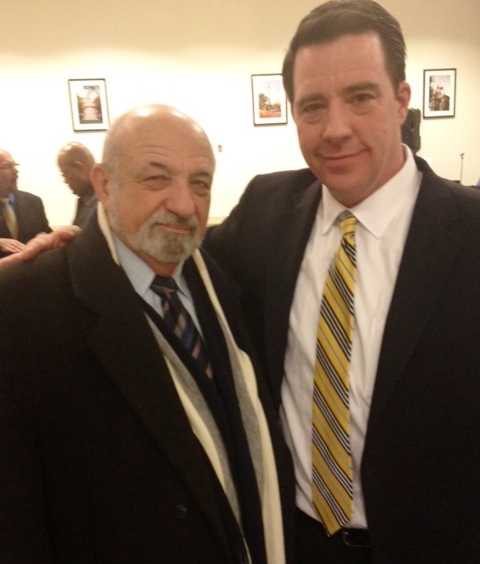
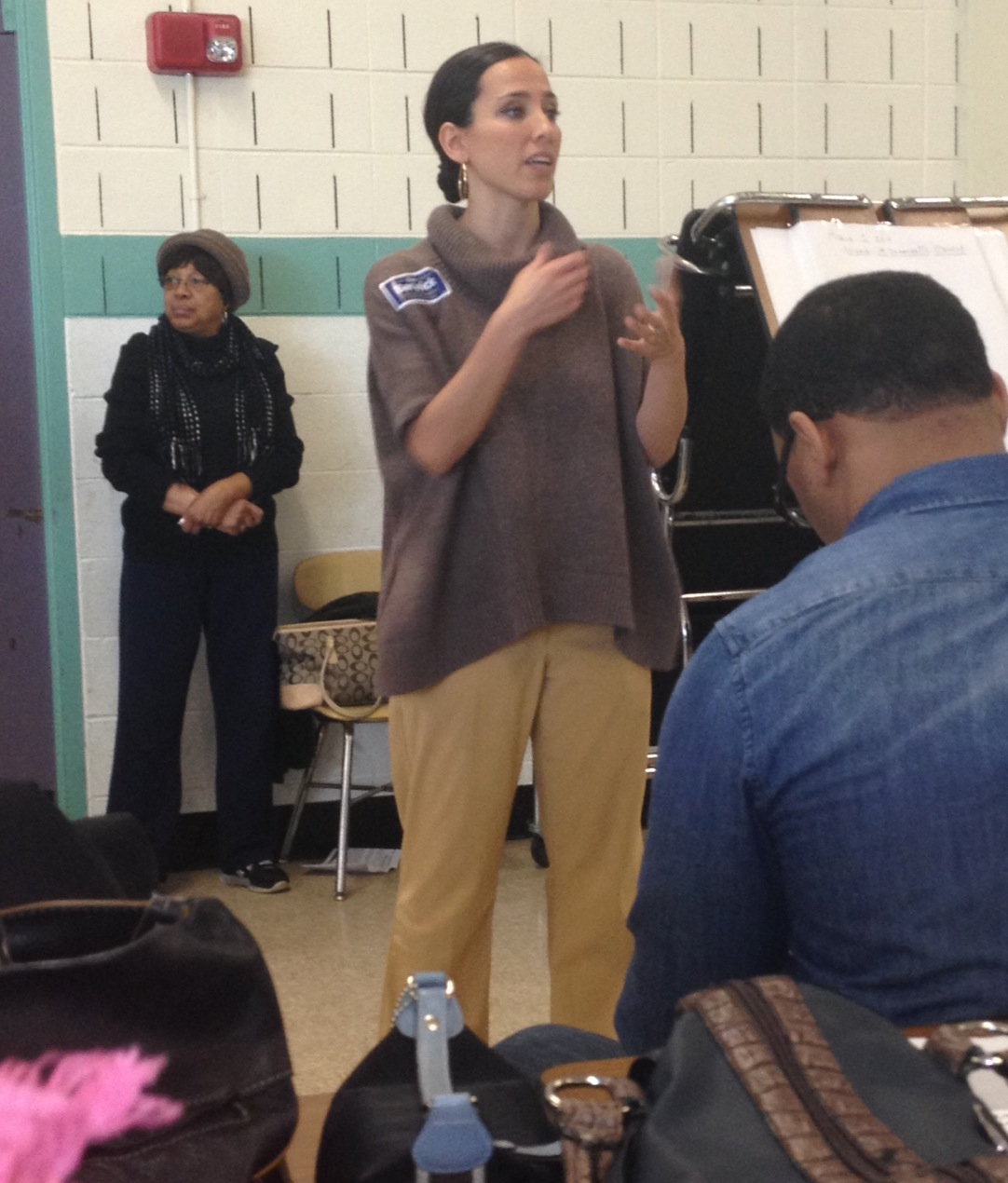
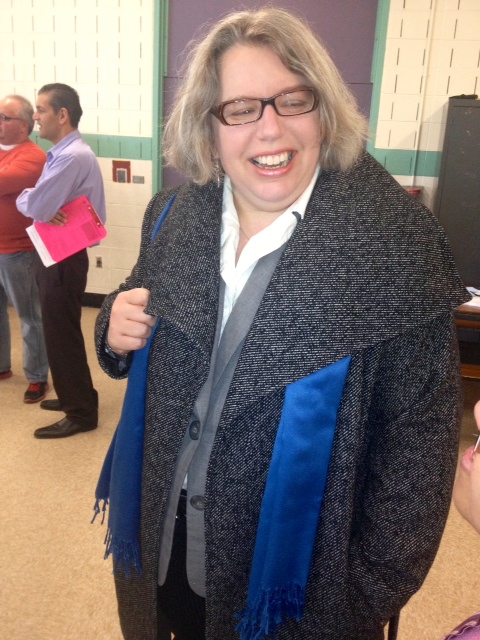
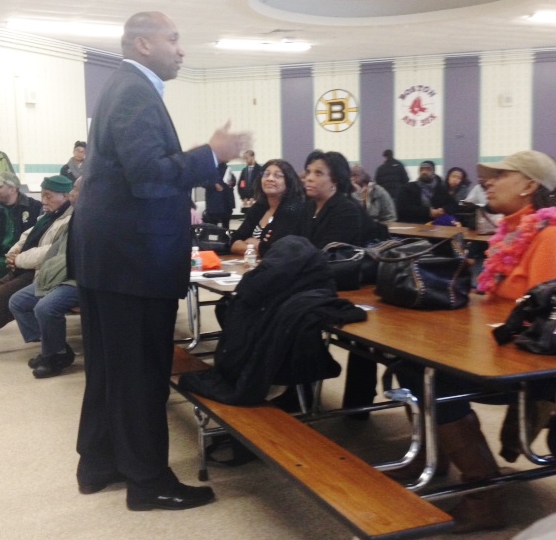
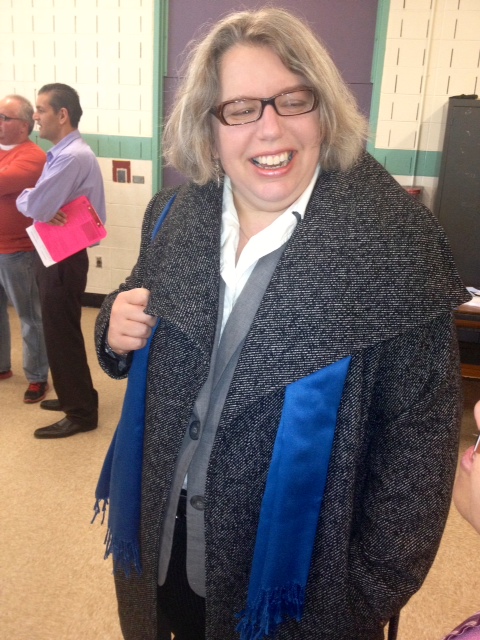
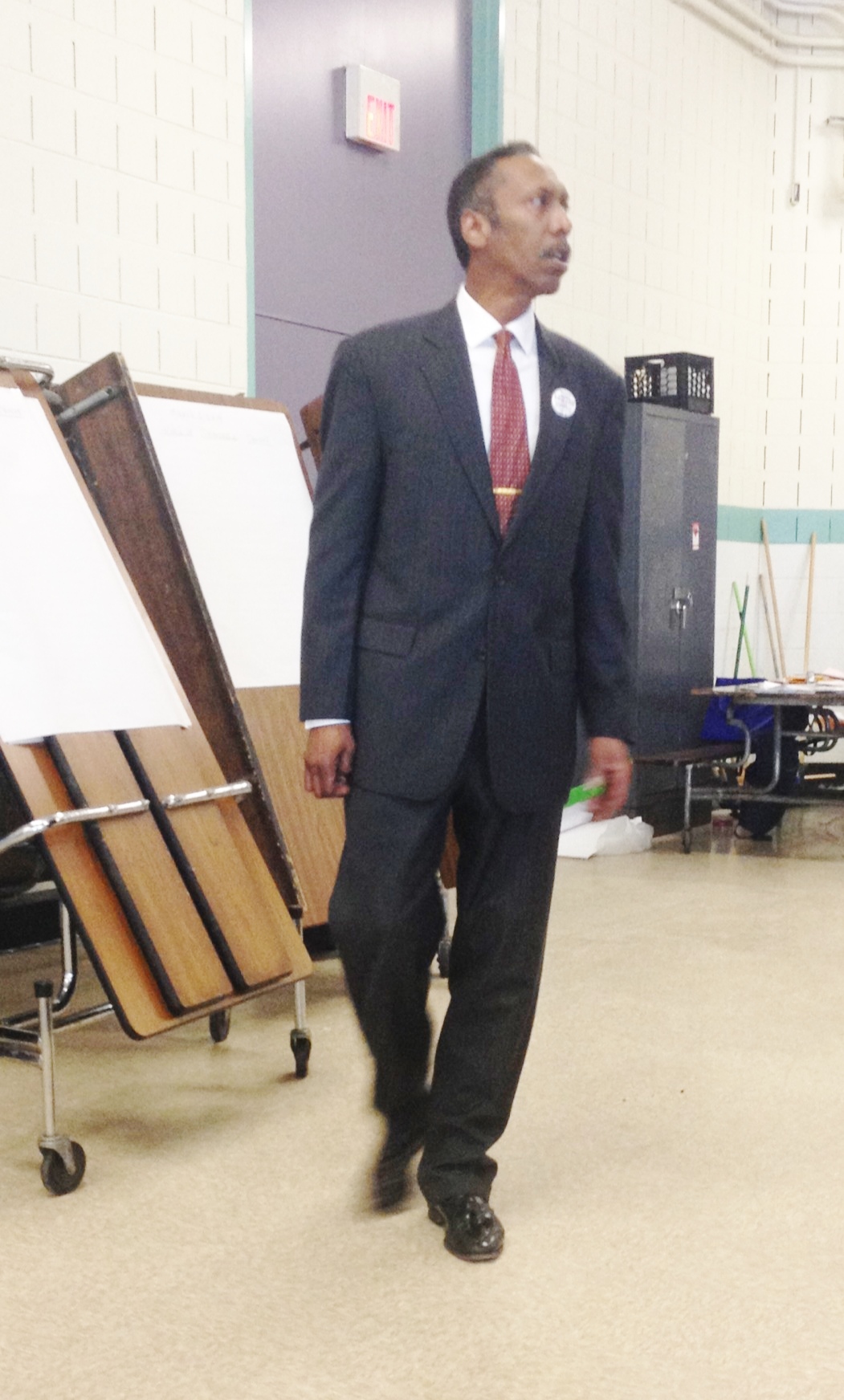
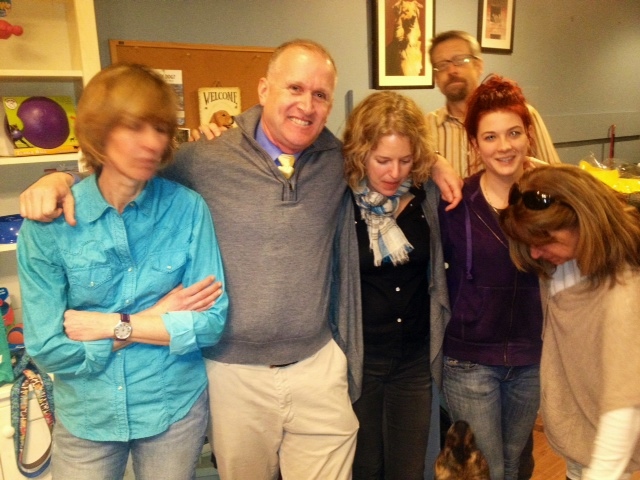
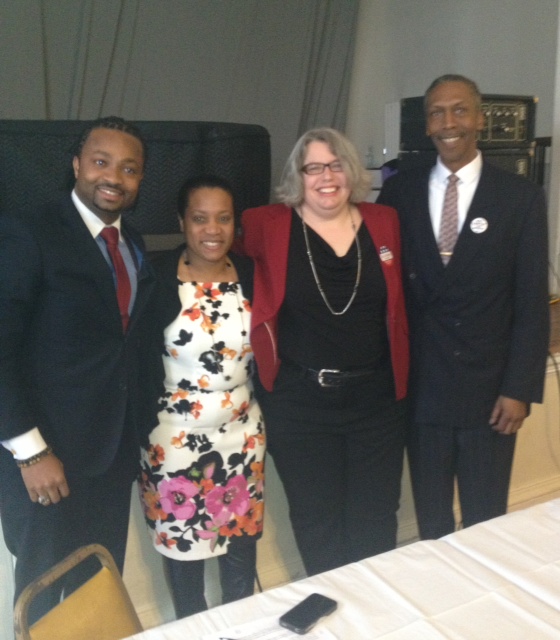
^ 4 visions 4 : from Left : Evandro C. Carvalho; Karen Charles-Peterson; Jennifer Johnson; Barry Lawton. (a fifth candidate, Roy Owens, did not participate in the Forum)

—- —- —=-

Yesterday afternoon voters of the 5th District had this campaign’s only opportunity to see, on one platform answering questions, four of the five candidates who seek to represent them. About 100 of the District’s residents showed up. There was plenty of enthusiasm among them — which was a good thing, because every one of the four needs to up his or her speaking craft.

That’s OK; I don’t expect candidates for State Representative, in a special election hurriedly called after the February 5th expulsion of Carlos Henriquez following his domestic violence conviction, to be silver tongued orators or think tank masters. This was a neighborhood event, and its candidates sounded like neighbors.

Moderated diligently by Boston Neighborhood News’s Chris Lovett, all four candidates — Evandro C. Carvalho, Karen Charles-Peterson, Jennifer Johnson, and Barry Lawton — managed to give Forum attendees a pretty fair impression of who they are, why they are running, and what they are likely to work on as the District’s State House representative. Still, all had some difficulty focusing on State legislation matters rather than concerns more appropriate for a City Councillor.

This was true even of Barry Lawton, who in his opening remarks said “i am the only candidate on this stage who has written legislation” — which he likely did as a staffer to former State Representative Royal Bolling, Jr. — but then proceeded not to mention even one piece of legislation that he would sponsor if elected. Lawton did have plenty to say, however, about vacant city lots, jobs, and his long experience as an activist.

Evandro C. Carvalho did make at least one potential legislative point — to include expansion of vocational education in state school reform bills — but, curiously, given his history as a Suffolk County prosecutor of gun crimes, failed to mention the very detailed gun control legislation now before the legislature’s Public safety committee.

In fairness to Carvalho, neither did any of the other three candidates mention, much less discuss, this legislation. it was a curious omission considering the urgency, in neighborhoods of the 5th District, of curbing gun violence.

Karen Charles-Peterson at first spoke in the quiet voiced generalities that anyone who heard her chief political backer, Charlotte Golar-Richie, during lat year’s mayor election is quite familiar with. But half way through the Forum she suddenly became a different Peterson. She had sat; now she stood up. as Barry Lawton spoke loudly, with hand gestures like a preacher, so now did  Charles-Peterson. She ended strongly, announcing that “I will take all 40,000 residents of this District with me to the State House” and “I will give everyone my personal cell phone number, call me any time.” Charles-Peterson also discussed aid for the small businesses that string the length of Bowdoin and Hancock Streets, in the center of the District. that said, neither she nor any of the four, except Jennifer Johnson, uttered the place name “Uphams Corner” — despite its being the major crossroads of the District.

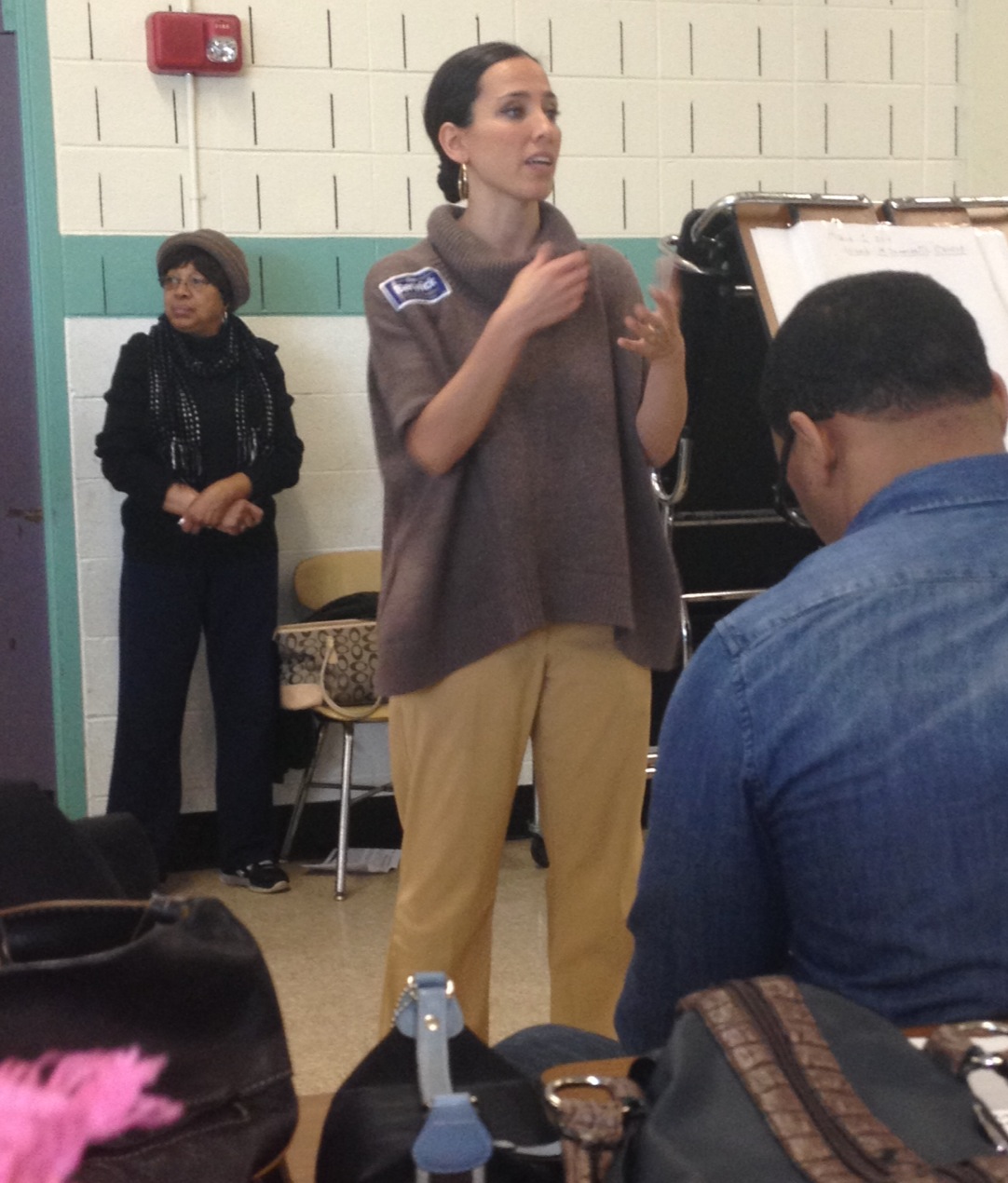
And now I come to Jennifer Johnson. Ostensibly she’s an unlikely candidate ; Caucasian in a District largely of color and an authentic issues voice among candidates unclear about which issues matter, and in what way, to a legislator. Johnson’s far from  being the polished, focused speaker she will need to be if she’s to make issues heard and understood; but she spoke in some detail about the formal, even bureaucratic, task that small businesses face as they seek loans; about how and why business development matters to a District among the lowest income of all; about how to frame affordable housing agreements with developers; about raising the minimum wage (strangely, this initiative, so vital to the District, was hardly mentioned by the other three candidates)and, most fascinating of all, about technology : connecting technology enterprises to the District and to schools, and the District to technology jobs.

Johnson could easily have delivered her remarks to the chamber of commerce or a Business round table. Odd it felt to hear a 5th District candidate talking enterprise and cutting edge innovation. But why not ? She called herself a  “Kennedy liberal,” a phrase as attuned to business success as to social justice. Would it be too much a reach to say that the two reinforce each other ? (It was shrewd of Johnson to talk so much about business. Business development was John Barros’s signature, and by talking it, Johnson sought to take up the banner of a man who was given 2,071 votes — first place — from the District in last year’s mayor race.)

There was plenty of applause for Johnson, and for Charles-Peterson; but the day’s noise prize was won by Carvalho, who, with John Barros unavailable, has picked up the banner of Boston’s Cape Verdean community. It dominates the 5th District, and if Carvalho spoke softly, seemed to be thinking out loud, and often rambled, he could afford to do so; his vote is energized and likely will be the largest bloc on the April 1st Primary day. Alone of the four, his vision seems to be : who i am. Or to phrase it another way, If I win, all Cape Verdeans win.

At the Forum, it worked. And though I think that the District’s Cape Verdeans could as well as any other District residents use the technology advocacy that Johnson would surely put in play, getting to that may well take much more time than the one week that remains for voters to consider who best can be their political clout — to the City or at the State House. Nor will there be another Forum to help them. Yesterday was it.

—- Mike Freedberg / Here and Sphere


SCHOOLS REFORM : THE “ACT TO FURTHER NARROW THE ACHIEVEMENT GAP” — WHAT WE LIKE AND WHAT WE DON’T

Image

^ stalling the huge reform, maybe for good reason — one hopes ; St Senator Sonia Chang-Diaz

—- —- —-

Much energy from the usual suspects in schools reform matters has decried the exquisitely named “Act to Further Narrow the Achievement Gap” that now sits “stalled” in the legislature’s Education Committee. To find out why, and to assess the opponents’ arguments, one need first to actually read the proposed bill.

Please do so before going on to read my words. Here’s the link : http://www.bostonfoundation.org/uploadedFiles/Sub_Site/web_specials/Race_to_the_Top/An%20Act%20to%20Further%20Close%20the%20Achievement%20Gap%20(1.17.2013).pdf

You will have noted that the proposed new school law is twelve (12) pages long and has twelve (12) sections. Each has its points; some merit more discussion than others. As for the Bill in its entirety, you will have noted its language to be procedural. This is a law for administrators; not a law for teachers.

Were it a law for teachers, it would give some guideline, at least, for what teachers are to teach, and how, and in what spirit. This, the law does not do. It’s a law for superintendents, evaluators, testers, commissioners of education. All of which limits the law’s reform reach and thus details the devils.

The more a law clings to details, the more opposition it will draw. Each detail of an administrative directive inconveniences those who administer. From mastery of the process, they return to being beginners, having to re-learn all over again what it is they are supposed to do. Of course they don’t like it.

It would have been far wiser for the reform bill to set general goals and empower generally. Then the persons affected could work out for themselves how to devil the details; and all such work-out discussions would have given the affected persons personal input into making it work. This new law denies them that. It’s a directive — a tsarist ukase. Little wonder that the established interests are complaining and that key staff are opposing.

That said, the law commits to some very useful tasks :

It grants a superintendent strong power to make the administrative, staffing, and curriculum changes that he or she sees fit, the objective being to improve the performance of so-called “underperforming schools.”

It allows for additional charter schools, above the 140 charters already allowed by MGL c. 71 : but, unwisely, only in districts that fall within under-performance results specified in section 4 of the bill.

It identifies what school performance falls short of stated standards and thereby gives the superintendent a flash point at which to intervene comprehensively.

Let me note right away that everything the reform bill grants to superintendents, John McDonough is already doing as interim superintendent of the Boston Public Schools. This part of the reform law would be difficult for even the most change-averse teachers union to object to.

Much more controversial is Section 4’s creation of an under-performing school district exception to the 140 charter school limit in the current MGL cl. 71, section 89. In the context of the law’s drastic superintendent takeover of under-performing schools, this charter school exception feels like punishment : not only are the personnel of an underperforming school district to face an entire, superintendent make-over of everything they do, including keeping their jobs, but, with the charter school creation possibility, they are put in the position of losing students notwithstanding how they might improve performance under direct superintendent management.

It would be far wiser for the proposed school law to choose one or the other — superintendent takeover, or charter school creation — but not both. Superintendent takeover threatens the jobs of poor teachers; charter school establishment threatens all the affected District’s teachers.

The consequences of this provision in the proposed law leads it almost inevitably to its most objectionable provision : Section 2(g), in which superintendents are given the power, when confronting an under-performing school or district, to alter the compensation, hours, and working conditions of school staff. I don’t think it wise to threaten the pay of the very people whose enthusiastic support the law needs if it’s to work. as for hours of work, everybody agrees the school day should be extended; but i there any reasonable objection to the teachers’ insistence that they be paid for working longer hours ? I think not.

I’m also not a fan of that provision in Section 9 which, in case the Commonwealth is approaching its “net spending cap,” gives preference to charter school providers who operate in more than one municipality. Why so ? No charter school should be like a bank’s branch office, understaffed maybe and offering fewer services. I trust the proposers will explain ?

To sum up : the reform bill contains many valuable provisions, assuming that a bill almost purely administrative is advisable, and that micro-managing the administrative requirements is realistic. The charter school exception, however desirable, makes its entrance on the wrong foot and in the wrong way. it should be the subject of separate legislation and should NOT be tied to under-performance issues and administration. Heck ; if charter schools are good — and I strongly support them — why should only children in under-performing districts have extra access to them ? Has no one learned anything from the Special education experience ? parents, seeing that special need children could claim an individualized curriculum, did everything in their power to get their children designated as special needs so that they too could get an individualized curriculum plan. I can easily see, under this proposed law, parents seeking to have their kids’ school designated as under-performing so that their kids would have a better chance of winning a charter school placement lottery.

This is what happen when you try, by laws, to do too much. You end up with laws that work opposite to the intention, or which can’t get enacted at all because they coalesce many kinds of opposition.

Pare down the bill, make it less administrative, put its page after page of do-this detail — especially the per pupil tuition reimbursement formula ; my goodness me ! — into a regulation, and give the statute some room to flex and develop. Then offer it for enactment. Until then, I think not.

—- Mike Freedberg / Here and Sphere
5TH SUFFOLK SPECIAL ELECTION : EVANDRO CARVALHO

Image

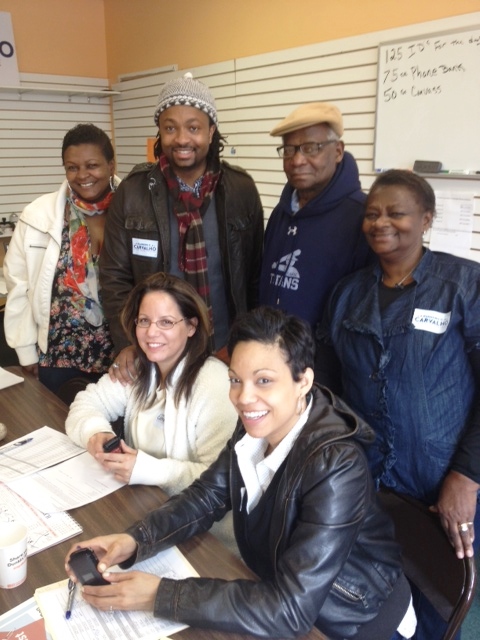
^ Team Carvalho. Evandro is second from left in back row.

—- —- —-

Of the four candidates seeking votes on April 1st, a mere 16 days from now, Evandro Carvalho may be the most traditional. He is of Cape Verdean lineage and, in a field with three candidates who are not Cape Verdean, hopes that his lineage will push him to the top. This is ethnic politics as it used to be.

It’s a feasible, even sensible, plan, because the 5th Suffolk District includes almost all of Boston’s Cape Verdean voters. They vote. In last year’s Mayor Primary, John F. Barros — Cape Verdean and a resident of the District –captured 2,071 votes within the 5th Suffolk’s precincts. He finished first of the then twelve Mayor hopefuls, almost 600 votes ahead of number two, Charlotte Golar-Richie, and 1300 ahead of Felix G. Arroyo, who finished third.

I interviewed Carvalho by telephone and then next day visited him at his Bowdoin Street headquarters. There, hard at work with laptops, voter lists, and canvassing packets were his field staff and his parents. Carvalho was on his way to door-knock, with his campaign aide alongside, and so I couldn’t supplement the phone interview — in which Carvalho told me of his work as an Assistant Suffolk county District Attorney — working for District Attorney Dan Conley — posted to the Roxbury District Court. There he prosecuted gun crimes — certainly one of the 5th District’s major concerns. As his hand out card adds, “there he saw first hand the cycles of poverty and violence that put our young men and women in the system” —  he means the criminal justice system. It’s what all the 5th District’s candidates talk about, and it is real. The 5th’s Bowdoin-Geneva neighborhood is one of Boston’s most violent.

Carvalho could make a fair case for electing him based on his prosecutorial experience alone, but he spends more time talking to me about education. “I am for universal pre-kindergarten,” he affirms, but is not “sure what to do about the charter cap. We have to keep funding the Boston Public Schools, and we need more of vocational career schools.” Schools funding is an issue that galvanized last year’s Mayor election and will certainly commit a large chunk of the 5th District Representative’s work on Beacon Hill.

He also supports raising the minimum wage to $ 11.00 an hour and wants to see a jobs and development initiative in the District — he’s glad to welcome such an initiative to Dudley Square, which lies just outside the 5th Suffolk, if as some reports have it, the initiative actually happens. But just as important are “more construction jobs within our community, and we just have to make it easier for people within the community to get access to loans, perhaps in partnership with the City.” The loans he has in mind are business loans, a major need throughout the 5th Suffolk, most of whose commercial streets feature only Mom and Pop store fronts of no great prosperity.

This is an issue which he certainly will be able to discuss — probably already has — with John Barros, who now serves as Mayor Walsh’s Chief of Business Development. Carvalho never comes out and says so, but one of his strongest appeals is to the Cape Verdean solidarity that centers on Barros, a local hero.

Carvalho doesn’t know yet which House Committees he’d like to serve on. He’s completely focused on getting elected. Can he ? The votes are there to make it happen, if they vote on April 1st. One advantage Carvalho definitely has : his votes are going to be his even if, as expected, expelled Representative Carlos Henriquez runs again in September once he’s out of jail. Henriquez commands a following that feels he got a raw deal. But Henriquez is not Cape Verdean. The votes that Carvalho gets will be his no matter what. He seems likely not to be just a temporary office holder.

This might just seal the deal for Carvalho, who as a prosecutor is the opposite of the man he seeks to replace

. —- Mike Freedberg / Here and Sphere

Image

BOSTON SCHOOLS, PART 2 : SEEKING A COMPREHENSIVE EDUCATION POLICY

Image

^ we first suggested it, now others are joining us : John McDonough as Boston’s new school superintendent

—- —- —-

Note : what you are about to read is my re-write of a column that I posted to Here and Sphere a few days ago. This is why I’m doing it:

1. In the days since I first wrote, the Boston Globe published a full page editorial addressing the complexity of school reforms now taking shape as state legislation; and Globe columnist Larry Harmon added his opinion that current Boston interim superintendent John McDonough should be given the permanent position. (Two months ago, I posted the same opinion. I was glad to see others taking up my suggestion.)

2.The Globe editorial arose in response to a strong push by public schools advocates that the state’s current limit on charter school numbers not be lifted. As I wrote in my original article,

“It pains me to read news recently that the chief reason why Massachusetts got busy creating charter schools was that 250,000,000 Federal dollars were at stake. I had thought that the creation of charters — schools privately run but publicly funded — was a matter of policy, not purchase. But now we read that bills in the legislature to expand the number of charter schools allowed is stalling, not because the policy has changed but because the Federal dollars aren’t there any more.”

Charter schools cannot be seen as replacing standard public schools. They were never intended as such and aren’t used as such now. Teachers unions and their allies want to push the notion of replacement because they somehow feel that education reform threatens their jobs. Their fears have some basis. In many states there’s been much legislation cutting back on public employees’ bargaining rights; and some corporate interests, backed by right-wing think tanks, want to use charter schools as a wedge to eliminate public, taxpayer-funded schools for all children. That agenda has some presence even in Massachusetts. Some business interests want aggressively to control the education of their potential future employees and are determined to get as complete control of the process, from K to graduation, as they can — and if not, to move operations elsewhere.

My inclination is to let such corporations go, if they choose to. Massachusetts’s pre eminence in higher education, research, and finance assure that we will always have plenty of enterprises who want to stay here, move here, set up shop here and continue here. This, of course, assumes that our education of all children continues to be the most rigorous and productive in the nation. To that end, I suggest the following :

1. charter schools should be encouraged and their numbers increased on a one or two at a time basis, by application to the State Commissioner of Education. Funding for charters must come from a combination of user fees, local aid, and taxes assessed state-wide for the purpose.

2. charter schools should continue to act as experimental places, innovating curriculum, teaching method, teacher hires, and student homework loads. Charters might even in some cases be boarding schools ; why not ? Charters cannot become routinized in anything or they cease to be what they were created to do.

3. budgets for standard public schools must be separately assured and planned without thought of what alternative schools may cost. Rivalry for funds cannot be permitted.

4. what succeeds at charter schools — the so called “best practices” test — should be applied in standard schools where and as feasible, and no standard school should see its routines written in stone, ever. Teachers in unions cannot be permitted to cling to work rules — including short school days — that impede pedagogic improvement. In this regard, John McDonough has shown the way by imposing a teacher recycling system that has already produced pedagogic improvement in the schools where he has put it in place.

5. School principals must be free to choose every member of their teaching staff — and of their school support staff too.

6. all schools must educate for two goals : employment and citizenship. The reasonable needs of reasonable employers must be met; the employers want capable hires, and the children want solid employment. Citizenship is the role that children will play as adults in community; to that end, schools must teach cooperative study and play, emotional education, social knowledge — including the role and risks in sex play — and basic civics including the role and process of democratic politics and government.

7. Testing is the only way that we can find out where education is or isn’t succeeding and how well or not. Tests should be semi-annual — no more frequent. Tests should include essay writing, reading comprehension, spelling, mastery of concepts both spacial and philosophical; mathematics and computation; American and world history; basic sciences; civics; and social knowledge including manners and dealing with emotions.

8. Tests need not be given as rigidly as the MCAS. Each school course can conduct its own course tests which can then be fed into the MCAS process and added into the total test score.

9. Teachers should be given the lead role in compiling such tests.

10. As many schools as possible — charter schools too — should be dual-language. Students whose first language is not English need it, and students whose first language IS English need to learn another language. It’s vital if we are to encourage cultural diversity and free American kids from cultural isolation.

So there you have it. What follows is the rest of my original article, slightly revised:

Mayor Walsh has added 39.6 million dollars to this year’s Boston Public Schools budget. Most of it will go to fund teachers’ pay raises. There will some millions left over. So, what does the phrase “taking resources away” mean now ? Probably just that the increased dollars won’t be coming from Washington. they’ll be raised locally. And that means that some other local aid funded need will have to make do with less.

Such is indeed the talk. In the Governor election going on in Massachusetts right now, all the talk is of local aid : increasing it; releasing 100 million dollars of it already collected but held; increasing it again. Candidates running for the State legislature or Senate all talk of local aid needs. The Department of Children & Families is in crisis; State transportation repairs and service upgrades cry out for attention; drivers’ licences for undocumented immigrants must be done. All these get mentioned ; but the big talk is, local aid, local aid, more local aid. You hear it whether the speaker is a Democrat or a Republican. Local aid now; the other matters can wait.

Charter schools were meant to be an alternative to standard public schools, not simply public schools with a new name. If charter schools do not do the job they were intended to do — significantly improve student achievement — they shouldn’t be funded, whether the Federal money is at hand or not. And if charter schools do do what they were intended as, they should be funded regardless of money from Washington.

Legislation to increase the number of charters being stalled now, those that do exist are kind of on their own, to prove their worth. Charter parents will have to speak out; to organize. Democrats for Education Reform, the local chapter of a nationwide group deployed to power up the alternative schools constituency, will have to get talking.

Did I mention curricula ? The battle is raging already to reject the national education establishment’s “common core” as being too difficult for children to master and too narrowly tested. Myself, having read through the “common core proposal, I find it a trope, a slice of common sense. Every society with schools at all has had a common core curriculum; it’s how that society prepares its children for the jobs it offers. this was as true of Rome in year 300 A.D. as of western Europe in year 1090 A.D. and 1500 A.D., and it was the basis of the New England School Law of 1634. Children must learn a common basic curriculum in order to do the jobs that will need to hire them; and to be good citizens. Is it difficult ? It always was. Life, too, is difficult. Tears come to one’s eyes as well as joy.

Kids can manage. They really can.

As for teacher pay and standard school budgets, in Boston these look paid for — this year. After that, a lot depends on who the next School Superintendent will be. The “search committee” is already on it, but for me, the best choice is John McDonough, the current “interim superintendent,’ who says he doesn’t want to be considered for the permanent job : but whom all sides respect and who can therefore best steer “standard Boston public schools,” troubled schools as well, into the next phase, alongside charters as they are and all manner of experimental school set-ups that innovators may successfully propose — as they surely will, and should.

—- Mike Freedberg / Here and Sphere
VAUDEVILLE SHOW AT THE SUFFOLK COURT HOUSE

Image

^ the Lady’s not for trashing : Patty Campatelli on the big stage — with Mayor Walsh

—- —- —-

It’s vaudeville time at the Edward W. Brooke Court house down-town, hard by TD North Garden, up the street from pugs and mugs bars, close on Haymarket Square.

Yep, vaudeville time. There’s the current Register, said to be a party animal given to fisticuffs and cuss words. She’s now on “paid leave” while certain scandalous allegations made against her are duly investigated by inquisitors official.

There’s not one but two (2) former City Council candidates — one of them who served as such, with distinction — seeking to replace her. There’s also an East Boston businessman in the running. My question to all is, “why ?”

WHY does ANYONE want to be Register of Probate ? Why is the job an elected one at all ?

The Register of Probate keeps the records of Probate Court cases : estates, guardianships, divorces, custody matters, and some restraining orders. Because estates especially are public records and must necessarily be so, the keeper of these records gets to be elected by the public. Or so goes the collective wisdom of those who enact our State’s laws. And why not elect each county’s Register of Probate ? We elect the State Auditor, for goodness sake. We elect Registers of Deeds. We elect Library commissioners.

One wonders why we don’t go ahead and elect the Boston Harbor Master, or the Commissioner of Transportation, or the Franklin Park Overseers. But the trend is moving in the opposite direction : toward appointing ministerial officials. Heck, we no longer elect even Boston’s School Committee — and for very good and sufficient reason. Our experience of the School Committee in its last decade was of a body beset by racist demagoguery, by insider politics with respect to administrative jobs, by a custodian’s union immune to reform and accused — perhaps unfairly — of acts verging on the illegal. The elected school committee spent more time politicking than managing; and the school department’s managers spent more time politicking, too. Today, the Mayor appoints Boston’s school committee. It perhaps hasn’t enough power : but it does advise, and often wisely. Those who serve on it do so as citizen activists, which is what elected school committees are supposed to do as they govern the system that prepares the entire society’s next generation.

A Register of Probate has no such vital task. The Register’s work is purely ministerial. The only connections the office have public policy are that its expenses are paid by the public, and its administration must enable those who seek Probate services to do so efficiently and well informed.

Upon these tasks are placed, in Suffolk County, a six figure salary and a six year term. a Register, once elected, is almost impossible to defeat. The work is not strenuous. Assistant registers do the grunt stuff. A name well known to the voting public, and not tainted by scandal, gives a candidate entree to that never-to-be-lost six figure income and the tasty pension that accrues to it.

Thus the vaudeville. Let’s look at the players :

Image

^ out of retirement : Felix D. Arroyo with newly elected Charlestown St Representative Dan Ryan

Your show time includes Felix D. Arroyo, returning from pleasant retirement in Uruguay, to the political klieg lights with a familiar beard and an act that he performed very skillfully long before he was ever a City Councillor : administrator of a bureaucracy. People forget that he served as such in the Mayor administration of Ray Flynn.

photo (43)

^ dancing and prancing : Marty Keogh is rushing to the stage now

The marquee also lights up the name Marty Keogh, long a City Hall aide and, last year, a City Council candidate at large. Keogh has an especially lively act on offer.

Every vaudeville act needs a newcomer, a kind of opening act, and in East Boston business-person John Sepulveda, this show has its man. Give him room to show his stuff and then applaud or throw rotten tomatoes, in the best vaudeville tradition.

And finally there’s Patty Campatelli, the buxom gal who won the Register’s job in 2012, when it happened to be open; and who has since then entertained many, infuriated others, and delighted me. I kind of like her act. Spunky, charismatic, buxom strong. But then she hasn’t yet punched my face or called me a vagina.

Yes, it’s show time at the Probate Comedy Hour, and not far from where once the Old Howard theater — formerly an emporium of serious theatricals — displayed strippers and dialect comics to Harvard students and those who couldn’t get enough of bare boobs, scatological wise cracks, and ethnic cartoonery. I miss the Old Howard, and so, probably, do you. Time to welcome it back.

Arroyo, Campatelli, Keogh, Sepulveda. One to be Register of Probate, the others to be — why not ? — Boston Harbor Master, Franklin Park Commissioner, Head Keeper of Licensed Bicycles. I insist.

All that’s missing, so far, is for Ted Lewis to strut on stage, cane in hand, and orate “Is everybody happy ?”

—- Mike Freedberg / Here and Sphere
BOSTON SCHOOLS : IS FUNDING EVERYTHING, SCHOOL POLICY NOTHING ?

photo (36)

^ stalling on charter schools, ostensibly because the Federal $$$ aren’t coming : St Senator Sonia Chang-Diaz

—- —- —

It pains me to read news recently that the chief reason why Massachusetts got busy creating charter schools was that 250,000,000 Federal dollars was at stake. I had thought that the creation of charters — schools privately run but publicly funded — was a matter of policy, not purchase. But now we read that bills in the legislature to expand the number of charter schools allowed is stalling, not because the policy has changed but because the Federal dollars aren’t there any more.

At the outset of President Obama’s first term, the education bureaucracy was all het up about “race to the top” and such like programs to improve student achievement. Money was gushing, and so were expectations. Now the money is heaving dry, and expectations have taken a skeptical swerve. The talk now is of “taking resources away from standard schoolS,” not of “improving achievement.”

You would think that “Taking resources away from standard schools” is teacher-speak for : the teachers’ union’s next contract won’t have a pay raise equal to raises granted the latest police or Firemen’s union contract. Right now, it doesn’t mean that. Mayor Walsh has added 39.6 million dollars to this year’s Boston Public Schools budget. Most of it will go to fund teachers’ pay raises. There will some millions left over. So, what does the phrase “taking resources away” mean now ? Probably just that the increased dollars won’t be coming from Washington. they’ll be raised locally. And that means that some other local aid funded need will have to make do with less.

Such is indeed the talk. In the Governor election going on in Massachusetts right now, all the talk is of local aid : increasing it; releasing 100 million dollars of it already collected but held; increasing it again. Candidates running for the State legislature or Senate all talk of local aid needs. The Department of Children & Families is in crisis; State transportation repairs and service upgrades cry out for attention; drivers’ licences for undocumented immigrants must be done. All these get mentioned ; but the big talk is, local aid, local aid, more local aid. You hear it whether the speaker is a Democrat or a Republican. Local aid now; the other matters can wait.

But education can’t wait. kids grow up. They graduate from grade to grade. Time delayed cannot be made good. Charter school waiting lists grow bigger, and the once ready Federal money river no longer flows into them. Thus we hear more of the same old arguments that were adduced at the outset for why charter schools shouldn’t be : they winnow their students, eliminating those with discipline problems and unwillingness to adapt; they don’t serve English language learners; they expel kids who don’t shape up academically; they impose rigid discipline.

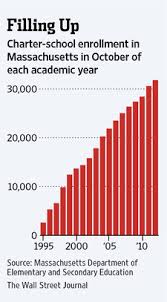
And so they do. Charter schools were meant to be an alternative to standard public schools, not simply public schools with a new name. If charter schools do not do the job they were intended to do — significantly improve student achievement — they shouldn’t be funded, whether the Federal money is at hand or not. And if charter schools do do what they were intended as, they should be funded regardless of money from Washington. Meanwhile, to look at how rapidly enrollment has climbed, it seems that charter schools have been a smashing success :

Image

Legislation to increase the number of charters being stalled now — the chief staller being Boston State senator Sonia Chang-Diaz, who serves on the senate Education Committee — those that do exist are kind of on their own, to prove their worth. Charter parents will have to speak out; to organize. Democrats for Education Reform, the local chapter of a nationwide group deployed to power up the alternative-schools constituency, will have to get talking. My own strong belief is that education in America needed badly to reshape itself enormously, to conform to the new workplace, new jobs, new technology and new communities of competitive collaboration. If schools exist to do anything, it’s to prepare students for the jobs of tomorrow (and for citizenship : but that’s a more traditional matter and doesn’t require an entire re-think). The best way to get schools shaped for that end is to try out many different shapes — school day lengths, curriculum choices, and out-of-school after-work — and see which one or ones meet the challenge. Charters, partnerships, collaborations, and, yes, standard public schools all have a seat at this particular table, and all should be set upon the task.

Did I mention curricula ? The battle is raging already to reject the national education establishment’s “common core” as being too difficult for children to master and too narrowly tested. Myself, having read through the “common core proposal, I find it a trope, a slice of common sense. Every society with schools at all has had a common core curriculum; it’s how that society prepares its children for the jobs it offers. this was as true of Rome in year 300 A.D. as of western Europe in year 1090 A.D. and 1500 A.D., and it was the basis of the New England School Law of 1634. Children must learn a common basic curriculum in order to do the jobs that will need to hire them; and to be good citizens. Is it difficult ? It always was. Life, too, is difficult. Tears come to one’s eyes as well as joy.

Kids can manage. They really can. as for testing, well : every job that a student is given as an employee is a test, believe me. So don’t complain; just do it. And please, don’t use lack of money as an excuse not to.

Time for Liam Kerr, Richard Stutman, Citizens for Public Schools, and Stand For Children to loosen up, set the past behind,and re-imagine the teaching of knowledge to children grasping at it.

As for teacher pay and standard school budgets, in Boston these look paid for — this year. After that, a lot depends on who the next School Superintendent will be. The “search committee” is already on it, but for me, the best choice is John McDonough, the current “interim superintendent,’ who says he doesn’t want to be considered for the permanent job : but whom all sides respect and who can therefore best steer “standard Boston public schools,” troubled schools as well, into the next phase, alongside charters as they are and all manner of experimental school set-ups that innovators may successfully propose — as they surely will, and should.

—- Mike Freedberg / Here and Sphere

5th SUFFOLK SPECIAL ELECTION: JEN JOHNSON INTERVIEW

Image

On Tuesday I had the opportunity to interview Jen Johnson, one of the four candidates seeking to hold the State Representative seat from which Carlos Henriquez was ousted by vote of the House.

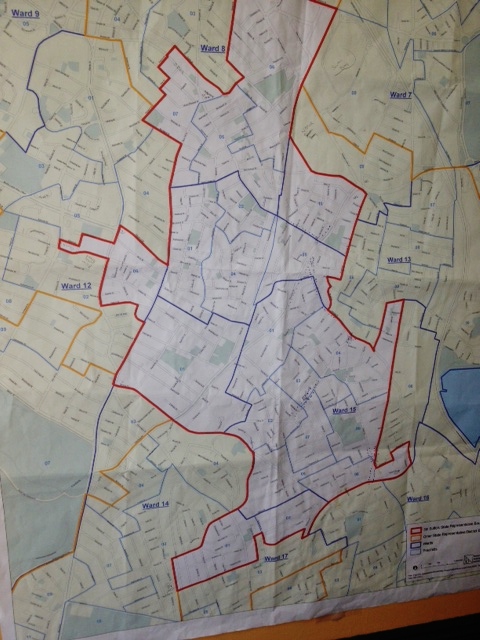
Johnson and I met at an eatery in Uphams Corner, which for me is the central crossroads of a district that grab-bags several neighborhoods of Boston that don’t get much attention from the powers that be or from the media — including stretches of Blue Hill Avenue, the north side of Dudley Street, the Stanwood Street area along Columbia Road, and Bowdoin-Geneva. Johnson sees the district in pretty much those terms and vows that she will be a voice for a district that needs just about everything.

One thing, the district already has : diversity. This, Johnson likes. “The diversity, I find wonderful,” she says. “we have to find a way to maintain it.” First priority ? “Public safety,” she says. “So many people living in poverty. 40 percent of the district’s families.”

And how to change that, as a State Representative ? “I look to bring my   training programs and entrepreneurship,” Johnson says. “More training programs; it supports jobs. We n  a liveable wage. So many people in the 5th hold three and four jobs right now just to make ends meet. And no, no separate wage for teenagers. Many teenagers in my district are already hears of families.”

Johnson supports the minimum wage increase legislation — to $ 11.00 an hour by 2016 — that now awaits House action. She also wants it to apply to tipped workers — waiters and waitresses and such — whose minimum wage is now $ 2.63 an hour (and who often have to bring a Labor Board complaint to get paid even that.) She also supports senator Elizabeth warren’s legislation to bar employers from accessing job applicants’ credit histories and using it as an employment criterion. “we need to do something similar here on the State level,” she says.

CORI reform and sentencing reform are also high on her list of things to voice at the State House. “Too many kids in my district have a couple of years in a gang and then end up in jail and now have a CORI,’ she says. “Yes, sociopaths need to be off the street, but most kids who pass in and out of a gang aren’t that. Prison should be the last resort.”

Johnson is no stranger to prisoner issues. “rom 2002 to 2005 I helped co-ordinate a Pen New England program for prisoners. It was eye opening to see how many of these (foster home) young men ended up in prison. One young man i knew was in 55 foster homes between ages 9 and 15.”

On public school funding, Johnson supports a policy that’s been pushed for at least three decades but has never been fully implemented : school pupil spending equity. “We spend 16,000 per pupil here in Boston, but in places like Wellesley and Needham it’s 23,000. So of course their schools do better. we should be treating all children the same.”

But school funding in Massachusetts has a long, long history of total local control. So how would Johnson reach her pupil spending equity goal ? “Take the money we save by sentencing reform and use it for schools,” she says. I point out to her that the State budget can’t be flexed that simply. She admits that it’;s a difficult problem but insists that a way must be found. “Teachers tell me all the time about the money they have to pay out of their own pocket for necessary supplies like books,” says Johnson. “We just HAVE to figure out a way to get prison money over to the school system !”

Johnson grew up in Saint Tammany Parish, Louisiana, on the north bank of lake Pontchartrain. She came to Massachusetts 25 years ago and almost immediately became an activist. She worked for Mass PIRG, then Share Group. More recently she’s done sales for venerable medical book publisher John Wiley and Sons but is campaigning full time now.

Johnson supported Felix G. Arroyo in last year’s mayor election and has the support, this time, of ward 15’s Judy Meredith, a key and longtime social justice and labor issues activist who also supported Arroyo. Johnson also has a full time campaign manager and a full campaign schedule.

If elected, Johnson would like to be assigned to the Committee on business and economic Development, also Judiciary and the committee that oversees Public health and welfare. Climate change also engages her time. After all, her District, albeit hilly, is part of Boston, a city in which much of the Downtown core will be under water if predictions come true. “There is going to be tremendous dislocation,” Johnson says. “How are we going to be prepared when 25 to 30 percent of Boston will be under water ; will we make Boston like Venice ?”

Johnson is making the rounds of community meetings and plans to take part in the First Parish candidates’ Forum to be held on Sunday, March 23d. The Primary takes place just nine days later.

—- Mike Freedberg / Here and Sphere

5TH SUFFOLK DISTRICT : THE RACE BEGINS ON AN AMBUSH MOMENT

Image

^ “Henriquez intends to run in September” : State Rep Russell Holmes tells his ward 14 caucus

—- —- —-

There we all were, yesterday, at the Ward 14 Democratic caucus, at the Joseph Lee School on Talbot Avenue, two 5th Suffolk Special Election candidates among us, Jen Johnson and Barry Lawton, because one large precinct of ward 14 is in the District. Having listened to bushels of candidates plunk for votes; we were all about to call it a day, have cookies and a drink and socialize; when, completely unannounced, the caucus chair, State Representative Russell Holmes, decided to change the subject completely.

“We in the House had other options than to expel Carlos Henriquez,” he said — not that anyone in the room had asked him about that event, which took place almost a month prior; “I felt that censure was the right option.

And then came the ambush.

“When he ran in 2012 after the indictment, he had opponents in the primary. One got 40 votes, the other got 60. In the final, his opponent got 2000 votes, Carlos got 9000.” He continued : “I spoke to Carlos last week, he can’t run now, but he intends to run in September.”

So much for the candidates standing there, guests, in Holmes’s caucus. And for the voters of the 5th Suffolk who are now being aked to choose a successor to the disgraced Henriquez.

Why Holmes, who represents the 6th Suffolk District, bordering the 5th Suffolk on its west, chose to belittle both the Special Election and the candidates running it, I will not guess. He didn’t give any motive. Is it in any way his affair whom the voters of a District not his choose to be their State house voice ? Granted that Holmes has a right to an opinion and to express it; still, there are ways to do that and ways not to do it. If either Jen Johnson or Barry Lawton, present at the caucus, win the District’s vote on April 29th, Holmes will have some fences to mend. He’ll have fences to mend as well if the seat is won by Evandro Carvalho or Karen Charles-Peterson, the other two candidates. It won’t be easy to mend those fences if Holmes remains committed to seeing them defeated by Henriquez in the September Primary.

But the human soul works in ways beyond any man’s control; by what he said, Holmes has now given voters of the 5th District a fighting reason to come out in big numbers to choose their own voice, not Holmes’s; and to send Henriquez a message too, that his time has passed, September or no September.

My reporting of the 5th Suffolk District’s special election will continue, and it will expand. Several District events portend; I will attend many and hope there to converse with Charles-Petersen and Carvalho.

Image

^ citizen reformer : Jen Johnson at the Ward 14 caucus

Image

^ eloquence and State House “cred” : Barry Lawton addressing the ward 14 caucus

For now, I’ll just add two observations, from conversing with candidates Johnson and Lawton yesterday: Lawton is an eloquent speaker with an impressive State House, staff resume. He knows the turf and would be able to give his extremely diverse, mostly low-income voters some serious clout. Jen Johnson is a soft-spoken, citizen reformer — “environmental activist,” she described herself speaking to the caucus-goers — with an engaging personality and much idealism of a kind usuallly found in upper-income suburbs, not low-income urban districts. As easily as Lawton would meld with the House’s leadership, Johnson seems likely to join the House’s Progressive caucus. I like both her and Lawton a lot. (Disclosure : I know Johnson, having met her last year at a house-party for then Mayor candidate Felix G. Arroyo.)

As for the Henriquez matter : Holmes having brought it up, my own state Rep, John Keenan of Salem, told me, when I asked him, that the house felt that it had to make a sitting member’s domestic violence conviction — leading to a jail sentence — an expulsion offense; that the credibility of the body, with women voters, was at stake. We take domestioc violence crimes very, very seriously, he said.

The vote was 146 to 5. Not exactly a close call.

Was the vote a race thing, as some Henriquez supporters have asserted ? You can’t prove that by the House vote. Not one Hispanic House member voted “No.”

—- Mike Freedberg / Here and Sphere

2ND SUFFOLK SPECIAL ELECTION : SOME NOISE AT LAST, AND DRAMA

Image

^ hush hush meets its opponent — until Avellaneda met her, this well informed Chelsea voter hadn’t known there was an election

—- —- —-

PREFACE : On January 6th, Gene O’Flaherty, said to be Mayor Marty Walsh’s best legislator friend, at last accepted the offer to become Boston’s Corporations Counsel. He resigned this seat in the legislature, giving up a powerful committee chairmanship and thus setting up the Charlestown versus Chelsea fight here chronicled. — MF

A week ago, Roy Avellaneda, five-term Chelsea City Councillor and one of the three men seeking to take the State Representative seat that had been Gene O’Flaherty’s, told me, after a discouraging day of voter shrugs, that he would wake up the voters of his city. That he would overcome the Charlestown side of things and win the seat. I was skeptical and told him so. “Come tomorrow night to Crest Avenue and you’ll see,” he said.

Of course I was there. So were about 35 “Roy” supporters. We heard Avellaneda’s election day warrior, Michael Albano, sound the warning : “Either we win this seat his time or there’ll never be another Chelsea State Rep. Never,” Albano yowled. “They’re already planning to cut up Chelsea three ways,’ Albano roared, his sandstone voice piqued. The room trembled with vigor and joy. “Roy ! Roy ! Roy !”

I have seen this sort of thing before. Campaign people always cheer and roar, or they wouldn’t be in a campaign, they’d be at home watching TV reruns. So I remained skeptical. I’d seen what was going on across the Mystic River, in Charlestown, which outvotes the Chelsea portion of “the 2nd” by about six to five. I’d seen the campaign of Dan Ryan, 16 years an aide to powerful Congressman Mike Capuano. Ryan, who with his perfectly parted black hair and chiseled face looks like Tyrone Power, seemed to have every political Townie on his team. Ryan had run for office once before — District One City Council, in a Special Election, no less — nad had won 94 percent of the Ward 2 vote, barely losing the race to Sal LaMattina from much larger East Boston. If Ryan wins 94 percent of the Charlestown vote this time, the seat is his.

Avellaneda can count just as well as Ryan. He wasn’t angry that I seemed skeptical of his wake up calls. He just smiled that chin to eye smile that makes him look like a high school prom king. “We delivered Chelsea for Elizabeth Warren,” he reminded me. “We’ll do it again.”

He has spent the past week doing exactly that. Though it’s not clear to me that he will arouse enough Chelsea for Avellaneda votes to win — Ryan has plenty of Chelsea votes himself — he has definitely upped the noise. The race had been as quiet as a well behaved high school study hall. Now it was brimming with huzzahs, as Avellaneda challenged his two C Town rivals — for there are, indeed, two Townie candidates running — to declare themselves on issues vital to his Latino vote base : did Ryan and Chris Remmes support the DREAM Act ? Did they favor driver’s licenses for undocumented immigrants ? In-state tuition for undocumenteds ? The Massachusetts Trust Act ?

Image

^ an issues candidacy ? Chris Remmes welcomes it. (at Durty Harry with supporters three nights ago)

For Chris Remmes, a new-Boston issues guy, this was manna from heaven, a chance for him to prove his progressive platform; and he did so on all the points that Avellaneda listed. Dan Ryan then stated his support, too, for every one of Roy’s points and with common sense arguments.

One might be tempted to tag this play a loss for Avellaneda; but it was a gain, because merely by forcing Remmes and Ryan to respond to him, he accrued much voter attention. Albano had told me, at that first campaign rally, that he wanted to see 2,000 votes cast in Chelsea; and Roy had, by his gambit, given them reason to vote on March 4th.

And then Roy turned up the heat again. At his father’s shop — Tito’s Bakery, a Chelsea institution — he held a Latino Chelsea rally; Felix D. Arroyo — who is running for Suffolk County Register of Probate — was there, and Gabriel Gomez, who ran against Ed Markey last year for US Senate, tweeted his support. Next day, Dan Ryan announced that Suffolk County Sheriff Steve Tompkins endorsed him, as did three labor unions; but Ryan’s announcement, given so quickly, helped Avellaneda’s cause too by showing, to a still mostly disconnected people, that there was an election coming and that competition in it was intensifying.

Until that first Avellaneda ally the race had been far too quiet for it to be an accident. Nobody in Charlestown wants to lose this race — the Town hasn’t had a State Representative of its own since 1974 — and if that meant campaigning hush-hush, hush hush it would be. The fewer Chelsea votes the better, especially with two Town candidates running hard. And now — I am speaking of last Friday — the hush hush was going away. By now, it’s almost gone. Avellaneda has mounted yet another issues challenge — cleaning up the Mystic River waterway for use as commuter transport and shipping, and he has forced the casino issue as well, advocating for the Mohegan Sun Revere casino plan even as Chris Remmes opposes all casinos.

The casino issue is a dangerous one for Dan Ryan. Many of his solidest Town supporters intensely oppose the Steve Wynn, Everett casino that is almost certain to win gaming Commission approval. Mayor DeMaria of Everett has given Charlestown no choice. “If you don’t go for this plan, that land will be a stadium, with more people and more traffic and no mitigation,” DeMaria told 400 Townies at a recent casino plan meeting. For Ryan to support the Mohegan Sun casino plays into Avellaneda’s hands; for him to say nothing makes him seem to duck.

Yet the Dan Ryan I have come to know doesn’t duck any issue at all. He will probably first see what happens in tomorrow’s Revere casino vote and then make his statement. and then return to the phone banking, meet and greets, and senior citizens election day networking of the message that, after all the issues have been fought to a conclusion, is probably worth a 2500 vote Ward 2 turnout and thus cannot fail him : “after 40 years, this time it is Charlestown’s turn.”

Voting day is March 4th, eight days away.

Image

^ forty years waiting — and if C Town has anything to say about it, now is the time. Candidate Dan Ryan with C town’s last state Rep, Jim Collins

—- Mike Freedberg / Here and Sphere
#MAPOLI : POLARIZATION COMES OF AGE IN MASSACHUSETTS POLITICS

Image
Yesterday I wrote about the Left-ward momentum in the Massachusetts Democratic party and how it was confounding the party’s ability to pick a best Governor nominee. My story felt incomplete, more notion than news. Today I had in mind to dig deeper; to discuss the tremendous surge of activity going on, outside the Boston area Core, under the rubric of the GOP, that confirms, in the opposite direction, the Democrats’ Leftward momentum story. In short, polarization, as we have come to see it in national politics these past six years and more.

Such was my design when, an hour ago, I sat down to read today’s Boston Globe and found on the front page, the following story : http://www.bostonglobe.com/metro/2014/02/20/proposal-would-add-planks-about-abortion-gay-marriage-state-gop-platform/n3wDwD1SxePriF8eHVHpON/story.html

It is not a pleasant story. News that discrimination is invading the political scene never is pleasant. But it supports — gives a sad cast to — my own column, today, about the polarization that bids to take over our state’s politics.

Perhaps it’s a battle we have to fight. We cannot allow the voices of darkness to gain traction. They have already gained plenty. The charlatan talk show hosts, who say outrageous things to get attention and thus ad dollars, have given discrimination and hate legitimacy — with those who either do not see that they’re being had, or who actually believe that their darkest thoughts should become political policy. I suppose that most of us have road rage moments; but most of us also recognize that such squalls of anger augur no good. So it would be, were it not for the talk show thing. But we now have talk show politics; it is not going away, as I — many of us — used to imagine it would. As the economy continues to struggle; as wages for most of us lag while huge money accrues to the very few; as life becomes more diverse and all of that diversity confronts us via social media, a politics has come of age that rejects a future it feels not a part of; a politics of deep pessimism and profound alienation, politics of naked personal fear.

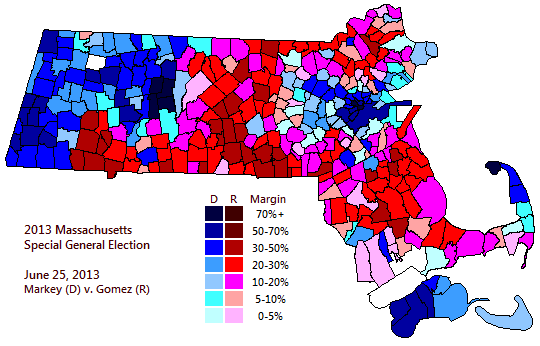
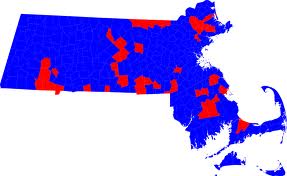
This is the turbine that drives the train of political intensity across Massachusetts’s towns and cities. But the polarization isn’t simply of value judgments. It has a geography. From the outer suburbs of Boston along Route 495 and close inside it and throughout central Massachusetts all the way to the exurbs of Springfield there has arisen a wide swath of towns whose voters reject the politics of the Boston area, reject Boston values, Boston diversity, Boston inclusion and experiment. This circle of towns — maybe 100 in all — is the heartland of the “Tank the Tax’ referendum; of Tea party sentiment; of Republican votes in recent elections. There are towns in this Circle of rejection that gave 20 and 30 point victories to Gabriel Gomez even as he lost last year’s US Senate race to Ed Markey by 10 points. These same towns gave Scott Brown 30 and 40 point victories in his 2010 special election win. And today these towns are generating a large number of Republican candidates for the Beacon Hill legislature — many more such candidates than we’ve usually seen in Massachusetts, with much better funding and a much deeper bench of activist support.

This last development makes the polarization story significant. US Senate elections have their own dynamic. Massachusetts has elected Senators from each party, all the way back to the late 1800s and ever since. But not since the GOP lost majorities in our State legislature some 60 years ago has there been, except in a few upper income places, any kind of Republican activity at the local level. Today almost all of those upper income communities have become Democratic. The most Republican active communities today are middle income, even low income, places : tract house suburbs, low-density exurbs, and sparsely populated rural places. think Billerica, Bellingham, and Tewksbury; Grafton, Mansfield and Whitman; Douglas, Monson, and Charlton.

Image

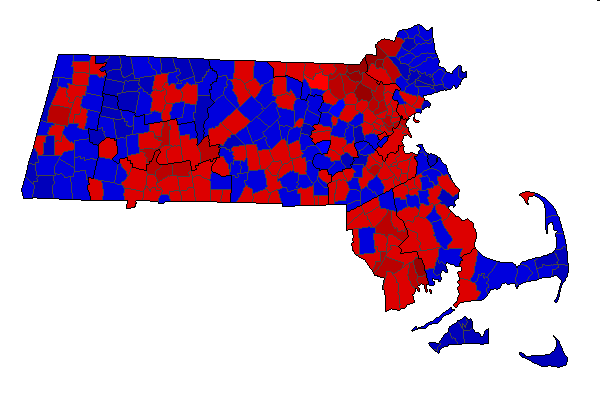
^ Bush – Kerry in MA, 2004. Note Charlton, in the middle of the map towards the bottom.

Charlton — a pass-through stop on Route 20 southwest of Worcester — exemplifies the new, hard right Massachusetts GOP. In 2004, when John Kerry, then our US Senator, was winning 62 % of the Massachusetts vote for President, Charlton gave its 60 % to George Bush.

Not that long ago, party divisions in Massachusetts had more to do with ethnic histories and 1920s-1930s Labor radicalism than with city versus rural, diversity against the old way. (And then, the Democratic party was culturally much more conservative than the socially liberal, WASP GOP establishment.) We can mark each step in the change thus : in 1970, Arlington, filled with prosperous Raytheon workers, was a bellwether town — as it voted, so did the State. Today Arlington. an academic community, is a guaranteed 20 to 40 point Democratic victory. By the 1980s, the bellwether vote town was Framingham — farther from boston than Arlington but definitely a commuting place. Today, Framingham votes 15 to 30 points Democratic. Conversely, in the late 1990s, the bellwether community was Peabody, a town filling up with culturally conservative Italians. Today, Peabody gives the GOP a 10 to 20 point victory and has a Republican state legislator, Leah Cole.

Today the bellwether city in our state is Waltham : the front line between Boston diversity and old-line factory city passes right through it. Quincy shares much the same mix. Yet these few exceptions aside, there really is no bellwether community today in Massachusetts. Most towns and cities are now all GOP or all Democratic. That is why we see the current surge of GOP activity at the state legislature level. It’s when a community moves from swing voting to being all one thing or all another that low level, neighbor to neighbor elections take on a partisan color.

Image

^ how it was in 1978, when Senator Ed Brooke was narrowly defeated by follow progressive Paul Tsongas. — a campaign of nuance, not polarization

Fortunately for those of us who live by Boston, city values — diversity, inclusion, welcome to immigrants, and government working to serve all the people — the polarization taking shape on both ends claims a clear city values majority. Democrats running state wide can pretty much count on winning by 6 to 20 points. That’s because about 25 % of Massachusetts voters live in the Boston core area — and another 15 % in the academic bastion Connecticut Valley and points West, and these areas (Amherst, Lee, Springfield, Cambridge, Brookline, Dorchester) vote overwhelmingly Democratic : 30 to 70 points ! No Democrat is likely to lose a statewide election with that kind of wind at his or her back.

For despite the surge of GOP energy out beyond the City core, its roar represents an interest distinctly minority and one that is dwindling — and knows it. It is fighting a rear guard battle and seems energized to fight to the last man standing. It is Alamo politics : dramatic, fascinating while it is going on, but, in the end, complete defeat. Those of us who move with the blossoming majority — the flowers of tomorrow, no matter the huge challenges looming– can take heart in knowing that Alamo politics do not end with an Alamo victory.

Image

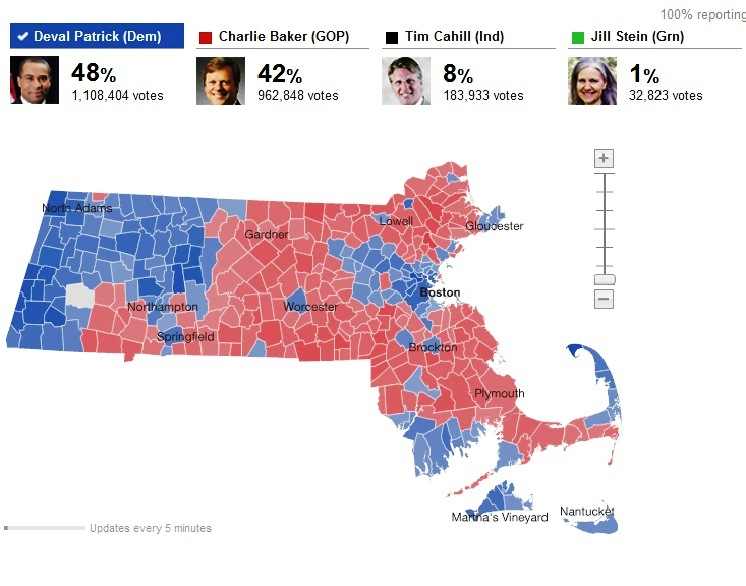
^ the shape of polarization — and its limits : Patrick / Baker / Cahill, 2010

And what of the 2014 Governor race ? There I predict a Charlie Baker victory. He is running as a city values candidate, has credibility as a city values guy, and almost certainly has the GOP surge vote on his side simply because it dislikes the Democratic tone of voice so profoundly. Though the Democratic party is moving Leftward by the same dynamic that has the GOP moving Right, many more Democrats than Republicans remain pragmatic centrists : because .the Democrats own the legislature and run the State. These Democtrats cannot throw aside their investment in state policy and governance. The most practical team to get things done, that they care about, is Charlie Baker as governor and Robert DeLeo as Speaker — because, ultimately, it is easier for them to stand — loyal Democrats ! — behind a Democratic Speaker as he pacts with a Republican Governor than to find themselves ripped in two directions by constituents here and a Democratic Governor there.  These go-along Democrats represent a significant vote, especially in the suburbs that lie between the GOP outer ring and the innermost Boston core. Think Winchester, Salem, Braintree, Norwood, Wilmington, Woburn, Natick.

It would seem a paradox to find a centrist progressive like Charlie Baker elected by a state whose politics are polarizing so momentously. But life is complicated, and not every mind moves to the flavor of the moment. Those who take the long view also matter.

—- Mike Freedberg / Here and Sphere