SOME FINAL THOUGHTS ON THE ELECTIONS IN MASSACHUSETTS

FullSizeRender1 Susannah Whipps LeeDebGoldbergphoto (26)photo (9)

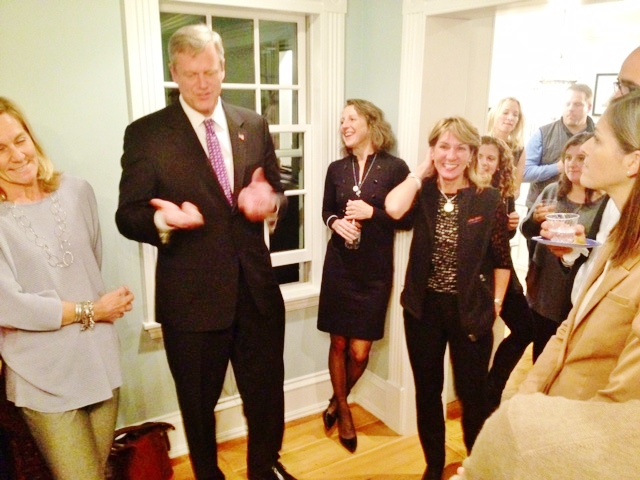
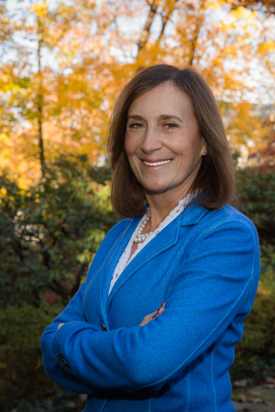
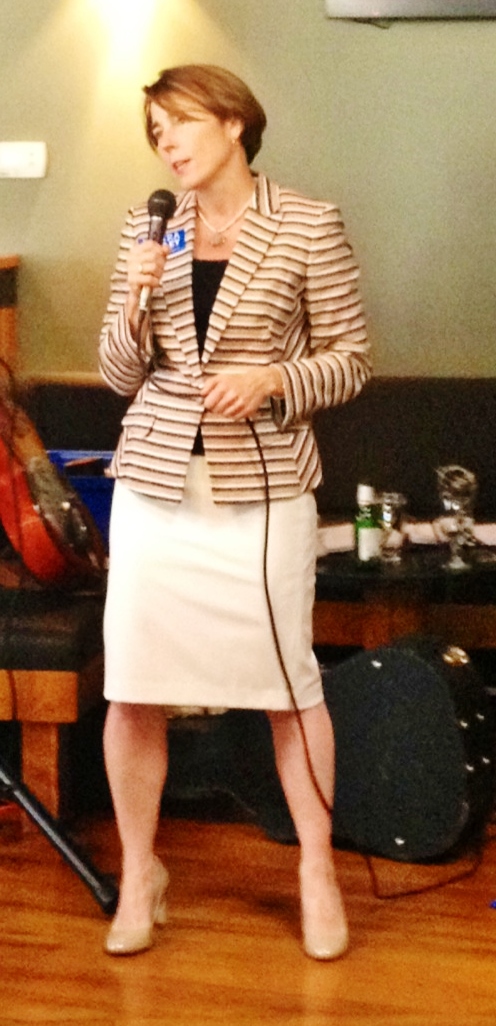
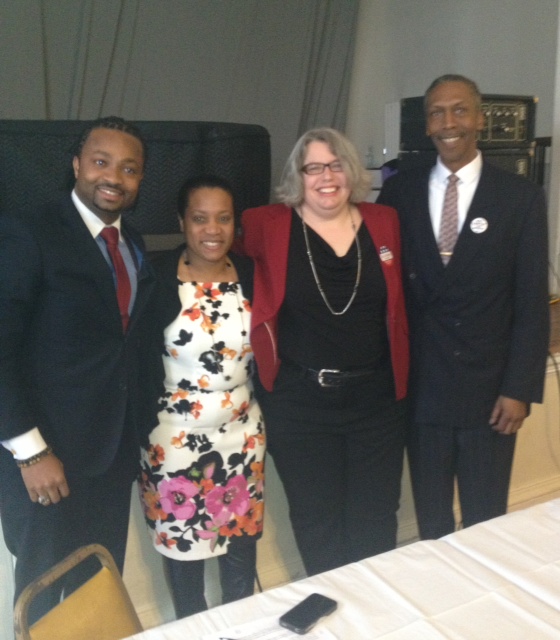
^ new leadership after months of democracy in action : Charlie Baker; State Rep-elect Susannah Whipps Lee; Deb Goldberg; Maura Healey; State Rep Evandro Carvalho (on left of photo)

—- —- —- —-

The election of a new Massachusetts Governor had already begun before choosing a new Boston Mayor had ended last November. For the past two years, thus, the people of Boston, especially, have ben called to democracy in action. So were we at Here and Sphere.

It was an intense two years, passionate and almost physical, as democracy often is when it takes hold of our society. Opposing ideas were debated, hotly; different interest groups took differing paths, butting heads and leaving some hard feelings. Candidates stood up; some got knocked down, others prevailed. Tens of thousands of activists took on the challenge; many woked on it full time — 17 hours a day for those closest to the candidate, seven days a week, for months without stopping.

That’s what it takes to make democracy work. Nothing is automatic where citizenship in action happens. There are no short cuts. Because every person has one vote to give, every person with a vote has to be talked to, one person at a time. No short cuts. The effort overwhelms all but the most committed.

No matter how much lazy money gets dropped into campaigns, no matter how egregious, false, or ugly the advertising purchased by ignorant money, the real campaign takes place between candidate and voter or campaign worker and voter, or both. Voters aren’t stupid. They know when they’re being had. They get when they’re being respected. They grasp the difference.

Most voters also vote for the best candidate. In Massachusetts it’s the way we do. Partisans tend to forget — or to deny — that voters do this. Those of us who dive into political battle and issues discussion need to rememeber that : the voters decide. we only make the case. we’re the laywers, the voters are the jury.

Sometimes those of us who thrive by campaigning tend to think that we are the big dogs; that we are the deciders of history — “opinion leaders,” as candidate consultants call us. We are not. All that we are doing, in all the hours, weeks, mionths that we put into a campaign, is to prepare the case for our candidate(s) so that the voters can decide better — or so we hope.

For now, the work is done. Charlie Baker is our Governor, Karyn Polito the new Lieutenant Governor. Maura Healey will be our Attorney General, Deb Goldberg our Treasurer — fresh leadership for a society constantly renewing. The next Massachusetts legislature, too, will feature many new faces and a larger contingent of Republicans (36 in the 160 member House, 6 of the Senate’s 40) : debate will actually occur and point to policies more widely inclusive than had been the case.

As for the next campaign — city elections in Boston and elsewhere — it won’t begin till next February or March. So things sound quiet now. There’s time to reflect, to rest up, to enjoy the Holidays; to be glad that we participated and that we helped make democracy work in a society that trusts the people and is trusted by the people.

—- Mike Freedberg / Here and Sphere

THE GOP SENATE : FREE TO ACT, OR UNFREE TO DO ANYTHING ?

1 Mitch M1 Joni

^ do you have confidence in this man ? Or in the controversial new Iowa Senator Joni Ernst ?

—- —- —- —-

Republican partisans who we talk to say that the newly GOP United States Senate will be able to actually legislate, as it has not been able these past few years. I would like to believe it, but I do not.

Were Senators free agents, legislation could happen. It could equally have happened during the last session of Congress. There were 100 Senators then as there are 100 now. What has changed except which party has the majority ?

That the Senate and House are both now solidly in GOP control does not, in any way, portend legislation. It portends confrontation, because the President is no more going to sign GOP legislation than he was ready to do so last year. Why shoiuld he ? President Obama’s party opposes the sorts of legislation that the national GOP wants, and he is right to do so.

Were the Senate free agents, conferences might well produce legislation that the President can sign. But the Senate is not free to act. Every Senator — certainly every one elected on Tuesday — is the captive of huge money, of greedy millions of special interest money that has no intention of compromising on anything, because their membership lists and donations depend on confrontation and division. These PACs are not instruments of legislation. they are machines of conquest.

That goes or Democratic Senators too.

A United States senate campaign today costs upwards of ten million dollars; some cost 50 million, even 100 million. The candidates on whom that sort of money is spent are entirely the captive of it. And make no mistake : the PACs dumping vast millions into campaigns want theitr way. Their way or the highway.

in all this, the public interest goes a-begging. It is homeless. It has no shelter, no address, no voice. All there is — all there can be — is for one group of big-money mansions to oppose each other, because each oversized piece of ugly real estate wants the other defeated. That is not a recipe for compromise, not an arena for legislation.

That said, the size of the GOP successes on Tuesday truly astounds. The party added nine (9) senatd seats and bulked its majority in the House. New GOP Senators now represent Iowa, Colorado, North Carolina, Arkansas, Montana, South Dakota, West Virginia, Alaska, and will likely soon represent Louisiana. New GOP Congressmen were elected in NY, IL, GA, and more. The GOP is today the party of the legislative branch, just as the Democratc party was the legislative party for 60 years. The consequences will be enormous and permanent. Even though the GOP of 2014 was a realistic party, not a Tea crazy affair, its agenda is the opposite of what America should now be doing.

The national GOP of Tuesday opposes all moves for economic justice, workers’ rights, women’s reproductive rights, immigration reform, energy alternatives, climate action, civil rights and voting rights. it is a party of reactionary oligarchs who view “the 47 percent” every bit as negatively as did Mitt Romney and who will stop at nothing to demand that its elected puppets enact as much regressive legislation as possible. And just think about what GOP control means for the Supreme Court !

There won’t be debt defaults or government shutdowns, no; but there will be incremental action to dismantle everything fair that our nation has put in place since the 1930s, even since the 1890s.

Pundits assert that the totally GOp-controlled legislature will have to compromise and enact or it risks being the party of “nO’ and that a Democrat will be elected President in protest. My vi8ew is the opposite : that the GO-p ;legislature wants a Democratic President, because then it can oppose her with all question, whereas a GOP President may have other priorities than  the GOP legislature and create conflict — just as it did during the President vies of George Bush 41 and George Bush 43.

Besides, it is easier to scare up 100 million dollar donations to stop a Democratic President than to explain to fat cats why they should donate to opposing a Republican President.

I am not optimistic about what the future holds even if Hillary Clibton is elected President in 2016.

—- Mike Freedberg / Here and Sphere

CHARLIE BAKER IN BOSTON, PART 2 : THE FIGHT FOR BOSTON AND A NEW GOP

FullSizeRender (1)FullSizeRender

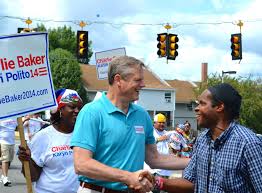
^ Charlie Baker, his wife Lauren, and running mate Karyn Polito at a new-Boston-ish meet and greet in Charlestown

—- —- —- —-

Tuesday’s results in the Governor election make very clear that a fight, begun in last year’s Mayor election, continues over what kind of politics will direct the Big City’s future, a fight that will also determine whether the Massachusetts GOP can acquire some lasting measure of public policy power.

To be specific : Baker’s vote improved most over Scott Brown’s 2010 vote in precincts carried by John Connolly in last year’s mayor election. Though Baker won some precincts carried in that race by Marty Walsh, Baker’s vote in Walsh precincts either stayed the same as Brown’s or went down.

Baker drew greatest strength in precincts that epitomize the new, prosperous, technology Boston. He was a Downtown, Charlestown, North End, Waterfront, South End, West Roxbury candidate. Sound familiar ? It should. John Connolly was the same.

Granted that Baker did much better than Connolly in most of the “old Boston” precincts; but where he lost ground, or gained none, in those precincts from Brown’s 2010 achievement, he topped Brown significantly in the John Connolly part of Boston. And why not ? Both men spoke the language of citizen reform, of innovation, opportunity, technology, and social and cultural liberalism. Both men spoke of enterprise, prosperity, envitronmental conscience, effective government.

All of these policy pursuits are gaining election day strength in the City. For decades, Boston politics had been dominated by inward-looking, skeptical, pessimistic people who distrusted big ideas, and the world beyond Route 128, and who eschewed change; people much more interested in holding onto what they had than chancing or risk-taking. This mindset provened just enough to give Marty Walsh, the candidate of skepticism, at-home, and security, a narrow win over Connolly. But that was then.

Where Connolly won 48.5 percent of Boston voters while Baker won only 30,.1 percent, only a careless mind dares overlook the similarity — even iddentity — of their policy messages. And may I say that their shared message is very likely to be the message of a transformed Republican party, at least here in Massachusetts ? The new generation of Massachusetts GOP operatives and policy thinkers wants “the cities” to be the heart of a new Republican agenda, and they are taking their view to the street. They did it all year long, with only a baker candidacy to cling to; now Baker is governor.

Baker will realize a lot of what the new Republican activists want; upon that prospect, many new-Republican candidacies are already being bruited, Boston-minded and Boston-based. If what you hear from these new, Baker-ist voices sounds a lot like what John Connolly spoke of, do not be surprised at all. Reform, innovation, opportunity, choice, and inclusion are in the air, even as Massachusstts’s Democratic party struggles to appeal beyond its base in labor union conservatism (especially that of teachers unions) communitioes of color, and advocacy groups defensively protectve of rights that no significant person in Massachusetts is threatening.

Baker carried 42 of Boston’s 255 precincts. It would not surprise me at all if a Republican statewide candidate even more boldly innovative than Baker carries 80 Boston precincts — maybe even a majority of them. The key will be which policy voice can win the votes of the City’s communities of color. The Republican party of 60 years ago was home to these voters : it can happen again. The Democratic party should take heed, though likely it won’t. Parties on the way down rarely do until it’s rather too late.

Right now, the Massachusetts Democratic party is collapsing in upon its base, just as the national GOP did during the period 2004 to 2012. The Coakley campaign was a campaign to the base, consciously so and eerily regressive. Not since I was a kid had I heard campaigners talk of “vote the Democratic ticket.”

What sort of message is “vote the ticket” ? Massachusetts voters want policy proposals and candidates who they judge capable of making them happen. They don’t want “tickets.”

A party that speaks of “vote the ticket” is well on the road to minority status in an independent-majority state like ours.

—- Mike freedberg / Here and Sphere

CHARLIE BAKER IN BOSTON : INROADS TO “NEW BOSTON”

Baker in RoxBaker 2

Charlie Baker’s 30.1 % of the Boston vote has been compared by most pundits to his 2100 vote, but the real comparison should be to Scott Brown’s 30 % in the 2010 special election that he won over Martha Coakley. In 2010, Baker was running against an incumbent seeking re-election. That’s an entirely different election from one in which no incumbent is running. I’d rather look at two races, both open seats, in which Martha Coakley was the candidate : because she is the Democrat, and Boston is supposed to be a Democratic citadel.

Looking at the two races, it’s clear that Charlie Baker succeeded in winning some moderate progressive votes that Scott Brown could not. The two men ended with almost the same percentage – Baker did slightly better, Coakley a couple of points worse – but the shape of the Baker vote was noticeably more moderate – call if reformist – than the Brown vote.

Baker succeeded even as he held onto almost all of the votes that Brown won in Boston’s most conservative neighborhoods.

In South Boston, Brown beat Martha Coakley 6343 to 4790; Baker bested her by 5908 to 4373.

In slightly less conservative West Roxbury, Brown beat Coakley 6205 to 6071; Baker beat her by only 5997 to 5989.

In Charlestown, a community moving noticeably into the “new”, Scott Brown lost to Coakley by 2915 to 3086. Baker almost topped her : 3128 to 3205.

Baker did much better in the North End than Brown managed. We like to think of the North End as little Italy, but most of these four precincts’ voters today are young professionals. In any case, Brown lost them to Coakley 1825 to 1961; Baker carried them handily., 1814 to 1553.

Baker also measurably bettered  Brown”s results in the South End — quintessential “new Boston.” Brown lost the South End to Martha Coakley 4044 to 9864, about 28 % for Brown; Baker upped the ante : 4867 to 8694, about 38 % for Baker. Charlie also did better than Scott brown in the Seaport District — Boston’s trendiest community. Brown lost to coakley 423 to 714 : 36.8 % of the vote. Baker won 40 % of the precinct’s 1352 votes.

Stronger still was Baker’s improvement in Beacon Hill and the Back Bay. Brown lost these nine precincts 2909 to 4826; Baker almost won them : 3258 to 3610. (This despite – or maybe because of — St Rep Jay Livingstone, a smooth trendy guy, campaigning for Coakley wearing Union/SEIU drag.)

It helped Baker in these socially liberal precincts that he was not running on national issues in which the GOP has alienated so many. But votes are votes; Baker needed every one.

Baker’s seven to twenty point improvement in “new boston” precincts mirrored his eight to 20 point improvement in Boston’s western suburbs south of Route 2 : he lost Newton by 20, not 31; won Needham, Wellesley, Weston, and Wayland, towns no GOP candidate had carried since the 1990s.

These too were crucial gains. Without them, and his Roxbury vote, Baker would have lost the race.

Baker campaigned intensely in Roxbury. Despite having practically every political person in the area against him, and a campaign appearance for Coakley by First Lady Michelle Obama, Baker won more than double the percent of voters that Brown was able to get. Granted that the numbers for baker were still a drubbing : 621 to 7106. But that was much better than Brown’s 316 to 7169. Better, too, was baker’s total in Ward 14, the heart of Black boston. Scott Brown won only 3.5 percent : 207 to Coakley’s 5077. Baker doubled that, winning 7 percent : 411 to 5715.

The same is true of Baker’s relative success in Jamaica Plain, perhaps Boston’s most progressive neighborhood. Where Brown was beaten 1735 to 11,874, Baker won 2154 to Coakley’s 10,600. Brown managed 13 percent in Jamaica Plain; Baker, 18 percent. He needed every vote.

Baker campaigned very visibly to Boston’s ethnic communities. The Mattapan vote shows that he managed a slight, but still vital, increase among Haitian voters. Brown lost Ward 18’s ten more or less Haitian precincts 504 to 6162 : 8.4 percent of the vote. Baker lost these same precincts by 696 to 6561 : 10.5 percent.

A two percent increase may not seem like big fish : but two percent was Baker’s margin statewide. It mattered.

Moreover, Baker’s campaign to Boston kept Coakley from improving her 2010 performance in our state’s biggest city even as, in her targeted cities outside the Boston area, she \bettered her 2010 percentages significantly.

In other parts of the city – Hyde Park, Roslindale, Dorchester, East Boston, Brighton – Baker and Brown won more or less the same percentage of vote. Baker won 36.5 percent in Brighton, brown 35.3 percent. Roslindale did Baker no favors : he lost its 12 precincts by 2119 to 6196. Brown actually did a bit better : 2175 to Coakley’s 5952. Hyde Park fared worse for Baker. He lost the neighborhood 1844 tio 3825, where Brown numbered 1988 to Coakley’s 3361. But these disappointing numbers were nonetheless enough, when added to Baker’s success in neighborhoods closely associated with “new Boston,” to give him that 30.1 % of the Boston vote without which his statewide margin might have fallen to recount territory.

The final total Boston results for the two men look so similar :

Brown 46575 Coakley 105544

Baker   47584 Coakley 104759

Yet appearances can deceive.

—- Mike Freedberg / Here and Sphere

JED HRESKO : OVFERREACH IN YESTERDAY’S MASSACHUSETTS ELECTION

By guest columnist Jed Hresko —

There’s a concept of “overreach” in politics, usually when ideologues or loyalists decide to double down… and ultimately alienate the center and lose the big contest:

– Question 2: expanded bottle bill. Everyone is used to the nickel on soda. I bet if the question had solely been to expand the nickel deposit to other drinks, it could’ve passed. But no, the environmentalists also had the indexing provision. The bogeyman of paying a 25 cent deposit freaked voters out.

– Coakley: I get why certain unions wanted to reward Coakley for taking legal action on behalf of their members, but really, here we are again where Coakley was pushed through the Primary over candidates who would’ve done better in the general election. Enough already.

– Charter schools: my non-political 12-year-old who attends a charter school told me that he was voting in the school’s straw poll for Baker because, “Baker supports charter schools.” This, at a Boston charter where I’m sure most of the parents and staff are progressives or Dems. Lesson: Senator Chang-Diaz and some anti-ed-reform lefties in JP doubled-down last year and ground charters to a halt, with some inexplicable help from Deval Patrick’s Dept. of Ed. Did this provoke a major backlash? Of course not in terms of statewide numbers. But did it matter in a close election? Sure.

– public employee unions: the general policy of deny-deny-deny the need for reforms doesn’t hold water with regular voters. Baker was able to make the argument that he’ll be a better manager and that he’ll be a check/balance against the status quo of a Dem legislature, Dem governor and public sector unions that are overwhelmingly Dem supporters.

FOR GOVERNOR, IT’S CHARLIE BY 2 POINTS

Bakermap

At last the year-long campaign to choose Massachusetts’s next Governor is over. Charlie Baker has won by two percent, a lead of 40,000 votes out of 2,040,000 cast (with 99% of precincts reporting.

It was closer than many expected, a bit closer than even I had anticipated. Though the loser, Martha Coakley, had seemed, as recently as a month ago, to have almost no campaign at all, during the time since, a campaign was put together for her, and she, somehow, found her voice, one that voters could actually connect to.

There was enthusiasm in her campaign, and several constituencies, and a tactic that made sense: concentrate on the 37 percent of Massachusetts voters who are Democrats.

If a Massachusetts statewide candidate can win the votes of at least 90 percent of our Democrats, he or she is almost sure to win, because only 12 percent of our voters are Republican. To beat a candidate winning 90 percent of Democrats, an opponent would have to win almost all the Republicans and at least 70 percent of Independents. That hardly ever happens.

Nor was it enough for Coakley to concentrate on Democrats. She had to give them a completely, almost only, Democratic agenda and she had to get them to actually come to the polls and vote. Thus the campaign’s embrace of the Democratic party’s most loyal interests – unions, left-wing advocacy groups, immigrants, and communities of color.

That concentrating her campaign on these very polarizing interests might isolate her from the state’s moderate, unorganized majority was a risk she had to take, and did take. After all, without them fully committed, she had no campaign at all, because she was – and remained – very unpopulkar with her own party. At the Democratic convention to choose a nominee, she won only 23 percent of delegate votes. She barely finished ahead of the third place candidate.

Coakley’s passionate army of ideologues, unions, and communities of color then targeted several cities in which many similar types of Democrats live : Boston, Cambridge, Somerville, Framingham Worcester, Springfied, Brockton, Lowell, New Bedford, Chelsea, Lawrence. She carried them all, and except in Boston, won them by a larger margin than she was accorded in her legendary US Senate loss to Scott Brown in 2010.

Yet if Coakley succeeded in assembling a real campaign and in meeting her targets, so did Baker. Between the two, there was no comparison : Baker was by far the stronger, more convincing candidate on almost all levels. And if Coakley’s campaign was about the Democratic Party, Baker’s was about the entire state and its needs.

Baker concentrated on winning independent voters, disaffected Democrats, and as many city voters as he could talk to. It worked. That Baker was able tol defeat the well-organized, ideological Coakley campaign was almost entirely his personal achievement. Yes, Baker had a strong boiler-room operation and more canvassers than any Massachusetts Republican campaign has deployed in at least 40 years; but “Team Baker” was no match for Coakley’s team, in numbers or intensity. Yet he did win.

Baker targeted several regions and surpassed Scott Brown’s 2010 margins in all. In Boston he won 31 percent; Brown took 27. In the Western suburbs of Boston south of Route 2, Baker topped Brown’s 2010 results by four to eight points. Baker campaigned all year long as the “North Shore candidate,” and he won the area by 15 points, five points better than Brown in 2010. He won big victories in Worcester County and all along the South Shore.

Baker appears to have won independents by 32 to 17 and captured the votes of 18 percent of Democrats. Those are numbers a Massachusetts Republican cannot fall short of and expect to win.

It was just barely big and wide enough to top Coakley’s own improvements. Just as the state’s long tradition of electing Governors independent of the Legislature’s dominant Democrats tops, but barely, our voters’ preference for the Democratic party over the Republican. It was a close-run thing but a decisive one. The Deval Patrick era on Beacon Hill is over.

Patrick is an idealist and an inspiring man; but he has had less success managing state services. There is often confusion on Beacon Hill between Governor and the legislature. That will now change. Baker is the most precise of men and as committed to reform as Patrick has been to inspiration. The moment now belongs to “Charlie.”

—- Mike Freedberg / Here and Sphere

WHAT IF THE REPUBLICANS TAKE CONTROL OF THE SENATE ?

1 Cory Gardner CO1 Dan Sullivan AK

Two GOP likely winners to watch : Colorado’s Cory Gardner and Alaska’s Dan Sullivan

—- —- —-

Much alarm is being sounded by those who don’t like the prospect of seeing Republicans achieve a majority in the US Senate — as seems quite lilely to happen tomorrow. We’re not so sure it’s a bad thing.

As a majority, the Republicans will be held to account. It’s so much easier to be the minority. All you have to do is oppose and criticise. Not so when you’re the majority. Then you have you propose and to face up to criticism.

Some will say, “but the Republican already are the majority, in the House, and they’re nothing if not opposers and criticizers.” That is true; but with the Senate firmly in Democratic hands these past six years, the House GOP majority can act like a minority, knowing that their opposition to everything will be blocked in the Senate and thus remain just talk.

It will now be different if, as polls predict, the GOP adds six to eight to its current 45 Senators. South Dakota, Montana, West Virginia, Arkansas, Colorado, Iowa, and even Louisiana and Alaska seem poised to elect Republicans, and New Hampshire looks on the verge; only Kansas, of current GOP senate seats, lookms ripe to go the other way. That adds up to a Senate with 53 Republicans and 47 Democrats.

Some Republican radicals plan to use their majority to scrap Obamacare or greatly change it; to limit Federal spending; to oppose any efforts at immigration reform or pay equity. That is certainly what the Republicans of 2010-2012 would have done. Today, the GOP walks a differnt route. Though skeptical of Federal deficits and spending, critical of aspects of Obamacare, and uneasy with path to citizenship for undocumented immigrants, the GOP of now has tempered its rhetoric : compromise seems in the offing, maybe even innovation. The young generation of GOP operatives insists on it. For them — urbanites mostly — the GOP must change its ways, its culture, its priorities and move from the rural countryside to the downtowns : where the next generation of elections will be won.

A few Republican Senators get this already. I’m betting that if the GOP does take control of the sebate, more Senators still will find their way to new agendas and new campaign fields.

—- Mike Freedberg / Here and Sphere
WE RECOMMEND : STATE REPRESENTATIVE CANDIDATES

1 Josh Cutler1 Susannah Whipps Lee

two good ones : St Rep Josh Cutler (D) of the 6th Plymouth District and 2nd Franklin District challenger Susannah Whipps Lee (R)

—- —- —-

We have looked closely at some 30 contested State Representative races and have a recommendation to make in 26 of them. You will notice that our recommdation is for the person, not the party. Neither party has a monopoly of informed discourse. Thus our list features 15 Republicans and 11 Democrats.

What we’re looking for is a candidate who either campaigns to “100 prcent of the vote,” as Charlie Baker has put it, or who eloquently represents a partisan viewpoint. Ability to raise substantial campaign money, and thus to mount a credible campaign, is also a plus for us.

And now to our list :

1st Barnstable : no incumbent. We favor Tim Whalen (R)
2nd Barnstasble : Democratic incumbent. We favor Adam G. Chaprales (R)
2nd Bristol : Democratic incumbent : We favor Bert J. Buckley (R), the challenger, over the controversial incumbent in this Attleboro district.
3rd Bristol : Republican incumbent. We like populist Shaunna O’Connell, seeking her third term representing Taunton and Easton, especially for her “yes” vote on raising the state’s minimum wage.
1st Essex : open seat. We like Amesbury selectman James Kelcourse (R)
16th Essex : Democratic incumbent. We support the re-election of Marcos Devers over his discredited opponent, who was ignominiously  ousted Mayor of Lawrence.
2nd Franklin : Democratic incumbent. We like incumbent Denise Andrews, but we like the challenger, Susannah Whipps Lee (R) even better. She just may be our favorite State legislative candidate of this entire cycle.
2nd Middlesex : Democratic incumbent. James Arciero was the target of one of this campaign’s most unfair PAC attacks. His re-election is the answer to such stuff.
5th Middlesex : Democratic incumbent. David Linsky was the leading sponsor of our state’s new gun control legislation. Reason enough to re-elect him enthusiastically.
18th Middlesex : open seat. We recommend Rady Mom (D),l who will be the state’s first Cambodian-American legislator if elected.
31st Middlesex : open seat. We recommend Michael S. Day (D)
33rd Middlesex : open seat. We endorsed Steve Ultrino (D) in the Primary and continue to like him, although independent candidate James Matheson, who like Ultrino is a Malden city councillor, also merits your consideration.
36th Middlesex : Democratic incumbent. We recommend long-time state representative Colleen M. Garry be re-elected by this Dracut/Lowell district.
15th Norfolk : Democratic incumbent. We prefer bright, articulate, smart newcomer Curt Myers (R) to this north Brookline district’s current, conventionally-minded state legislator.
1st Plymouth : open seat . Current state representative Vinny deMacedo (R) is seeking a state senate. We favor Matthew Muratore (R), who will continue the deMacedo approach to state issues.
4th Plymouth : Democratic incumbent. We recommend that James M. Cantwell be re-elected.
6th Plymouth : Democratic incumbent. Josh Cutler is one of the state’s most diligent and open-minded representatives. We prefer him to his rather histrionic challenger.
lst Suffolk ; Democratic incumbent. We strongly prefer Carlo Basile to his anti-casino challenger.
5th Suffolk : Democratic incumbent. Evandro C. Carvalho is fast becoming one of Boston’s most eloquent voices on Beacon Hill. Easily we prefer him to his social conservative challenger.
5th Worcester : open seat. Anne Gobi, the current (D) representative, is seeking a state senate seat. We like Donald Berthiaume (R) as her successor.
7th Worcester : Republican incumbent. Paul K. Frost was one of six Republican legislators to vote “yes” on raising the state’s minimum wage. For that vote alone he merits enthusiastic re-election.
8th Worcester : Republican incumbent. We like Kevin Kuros for another term.
9th Worcester : open seat. The retirement of George Peterson is a loss for reasonable discourse in the legislature. David K. Muradian, the (R) candidate, will contnue the Peterson point of view.
18th Worcester : open seat. Ryan Fattman, the current (R) legislator, is seeking a state senate seat. Joseph McKenna (R) of Webster will be, if anything, an even smarter voice for this district of all too overlooked southern Worcester counthy towns.

—- Mike Freedberg / Here and Sphere