DETROIT MAYOR : NAPOLEON v. DUGGAN

Image

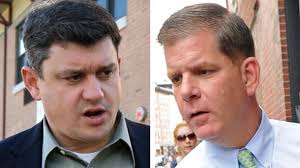
^ Former Med Center CEO Mike Duggan / Wayne County Sheriff Ben Napoleon

—- —- —-

Yesterday, Detroit voters chose the two finalists who will compete to be the City’s next Mayor : Wayne County Sheriff Benny Napoleon and former Detroit Medical Center CEO Mike Duggan. Napoleon led the printed ballot overwhelmingly. Duggan, however, who had to run as a write-in because he turned in his nomination papers two weeks before he qualified as a city resident.

Still, the results were quite clear. As published by the Free Press, “with 100% of the precincts reporting, (Benny) Napoleon had 28,352 votes or 30% of the total votes cast, to 50,328 votes or 53% for write-in candidates, with (Mike) Duggan presumably garnering the vast majority of those. Duggan said about 97% of write-ins were (for him).”

Total turn-out was low — about 18 % of Detroit’s registered — but higher than prerdicted.

Duggan’s 52 % of the vote, as a write-in, shows that committed voters know very well what they are about. Pundits, especially many who presume to represent today’s version of the GOP, incline to doubt that inner-city people of color, many of them living in poverty, can vote intelligently and negotiate such intricacies as a write-in vote. Anyone who has ever worked a campaign in a large American city knows this put-down to be utterly untrue; yesterday’s 50,328 write-in votes — 97 % for Duggan — disproves these pundits’ nonsense beyond all doubt. Indeed, the city’s write-in voters had to spell Duggan’s name correctly, as there was also another write-in candidacy for a man of the last name “Dugeon.” 97 % of Detroit’s write-in voters knew the difference and knew which difference they wanted. That, dear Here and Sphere readers, is informed voting.

That Mike Duggan happens to be White, in a city in which four of every five voters is of color,l also says something about informed voting and the readiness of voters disparaged by “conservative” pundits to select precisely. Obviously, many Detroit voters have had enough of Mayors who have coasted to office on assumption that voters of color will always vote for mayors of color. Detroit looks to be rising from its ashes, and a substantial portion of its voters are ready to endorse whomever seems likelier to extend that rise. As a successful executive, Mike Duggan clearly made sense to such voters. Thanks to Duggan and his Primary voters, even if, in November, Detroit chooses Benny Napoleon, a man of color and a successful county official, skin color will likely not be the determinant that it has long been presumed.

Indeed, the issue between Duggan and Napoleon is one familiar across most of today’s political America : should local control be led by neighborhood activists or by businessmen ? Duggan says that as a business CEO, he can better convince Michigan’s Governor Snyder to return management of the city to the Mayor’s office — today the city is run by Kevyn Orr, an administrator appointed by Snyder. Napoleon, on the other hand, stresses that citizen involvement, in the neighborhoods — led by him — will free the city from State management sooner.

Either course begins as soon as the next mayor is chosen and well before power to run Detroit is returned to its Mayor pursuant to the city successfully presenting a bankruptcy reorganization plan. Yesterday’s vote starts a saga of a city rising from past miscarriages — the primary of skin color among them.

—- Michael Freedberg / Here and Sphere

THE DETROIT BANKRUPTCY IS A STEP OF PROGRESS

Am re-posting our bankruptcy-law analysis of the Detroit bankruptcy. Updating it, too.

The issue of pension obligations has come to dominate the bigger picture of this bankruptcy. it shouldn’t, for the reasons given in this article. Pensioners will be treated as a separate creditor class, one whose vote to approve any reorganization plan must be given, or the plan cannot be confirmed by the Court.

There is also now a campaign going on to elect a new Mayor, as current mayor Dave Bing declined to run again. Much is being made of the new Mayor’s lack of authority over a city being run by a court-appointed manager. The much being made is beside the point.The campaign raises all sorts of vital issues ; the future of the city — toward what goal or goals / who will be involved / How long will it take ? what about race relations inside the city ? crime ?  schools ? Businesses and zoning ?

All of these will be discussed by the City;s voters, and when, eventually, the mayor to be elected does take control — and that will happen once the City gets its reorganization plan conformed by the court — the discussions and decisions made in this Mayor campaign will ground whatever city will be built thereupon.

Game on. Let the politics begin.

— Michael Freedberg / Here and Sphere


hereandsphere's avatarHere and Sphere

Image

^ Detroit : on the move at Movement

Three weeks ago Here and Sphere published Susan Domitrz-Sapienza’s extensively researched story on the comeback of Detroit. As she noted, the economy of “Automobile City” had already reached its bottom and was — and is now — expanding along several lines newly established. The decision of the city’s state-appointed manager to file a Chapter 9 (Municipal) bankruptcy petition would seem, at first, to contradict our reporter’s finding. In fact, the Chapter 9 filing conforms our reporter’s conclusion.

To learn why, one needs to know a bit more about bankruptcy law than the common perception. Most people think of the word “bankruptcy” as the end, a kind of giving up the ghost. This perception is false. There are two kinds of bankruptcy cases. The one that most people think of is “liquidation,” in a liquidation, yes: the petitioner is in fact giving up…

View original post 406 more words

BOSTON MAYOR RACE : INTO THE FAR TURN NOW

Image

^ a John Connolly – Marty Walsh final ?

August will arrive this week, leaving only seven weeks until Primary day, at which the two Boston Mayoral Finalists will be chosen. At this point the preliminaries are over; the race is taking on a distinct shape; and those on the wrong side of the taking are beginning to get shelved. It’s the beginning of crunch time. Where does the race stand as the crunch starts ?

Polls have been taken and published. These show that John Connolly, Marty Walsh, Dan Conley, and Rob Consalvo occupy a “top tier” — grabbing from 8 % to 12 % of the assured primary vote — and that Felix Arroyo, Charlotte Golar Richie, and Mike Ross make a “second tier,” each at 5 % of the assumed vote. Four other candidates, Charles Yancey, John Barros, Bill Walczak, and Charles Clemons, also draw a measurable vote.

No surprises in any of this — nor is it a surprise that the “new Boston” candidates are splitting among themselves a vote that, if unified, would assure such candidate making it to the Final.

Arroyo, Ross, and Golar-Richie, their support totaled, easily top the “traditional” field. Indeed, their potential vote should be larger than polled: because the polls taken have tended to concentrate on the most assured voters — namely, the “traditional” voters. Surely, if one or other of the “new Boston” candidates is seen as having a solid chance of winning, “new Boston” voters will turn out in larger than polled numbers. Being seen as a solid potential winner is the major indicator, in almost every election, of a candidate’s ability to turn out voters.

Image

^ Felix G. Arroyo : solid contender if the “new Boston’ vote unifies

Image

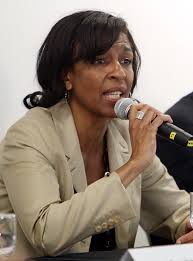
^ Charlotte Golar-Richie : a sure winner in November If she can get to the Final

Unhappily for “new Boston,” this Primary  offers no fewer than six viable “new city” candidates. None has made a move to drop out. The six probably draw about 20 % of the polled sample, and on Primary day might garner measurably more. It will do no good, however, if all six continue in the race. All six will lose. This is a disappointing prospect and one that we at Here and Sphere decry. We feel that it is time for Boston to elect a “new Boston” Mayor, “new” voters representing at least two-thirds — probably more — of the entire city vote.

If no “new Boston” candidate withdraws soon, before the ballot is printed, the chances are strong that the Final will choose between two “traditionalists.” Currently the top two candidates in polls are City Councillor at Large John Connolly, at 12 %, and state Representative Marty Walsh, at 11 %. We feel that’s an accurate picture. Walsh, a four term Representative, has a solid Dorchester base extending strongly now into South Boston and, somewhat less strongly, into Jamaica Plain, West Roxbury, and Roslindale. He has won the backing of Local 18, the Boston firefighters’ Union. As for John Connolly, son of former Secretary of State Michael J. Connolly, he lives in Ward 20 — which will likely cast ten to 12 % of the entire Primary vote — and has shown broad city-wide support besides. Connolly is waging an active house party and issues campaign, focusing on Boston Schools parents. He can also count on much trust from city workers and their families gained during his terms on the Council.

Dan Conley, the Suffolk County District attorney, has by far the most money, but his city wide support seems surface at most; huge publicity for him, thanks to the many murder investigations under way, does not seem to have added anything to his image as a possible Mayor. Crime, after all, is a huge issue, but not a big Mayoral issue. Schools, development, zoning, and culture seem the issues most germane to the mayor’s office. (NOTE : a report in today’s Herald opines that Conley might switch to run for Massachusetts Attorney Geerral if Martha Coakley, as expected, declares for Governor, Conley has not responded yet.)

Image

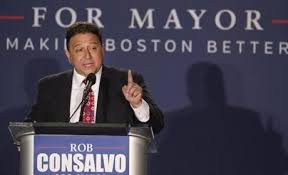
^ superb campaign but not enough ? Rob Consalvo

Then there’s Rob Consalvo, who holds the district Council seat that Mayor Menino held from which he won election as Mayor. Consalvo has the problem of bringing together a widely dispersed — and much less ethnic than it used to be — “Italian” vote, from East Boston, the North End, and Hyde Park, and of lacking much city-wide familiarity. That he has nonetheless managed to poll close to the top vote-getters is a credit to the detail and mastery of his very professionally directed campaign. Can Consalvo, thus well directed, perhaps make it into the final ? Probably not.

Which leaves Boston to choose between two men as different as similarly backgrounded people can be. it will, actually, somewhat resemble the 1983 race between David Finnegan and Ray Flynn to choose who would face “new Boston” candidate Mel King. Finnegan lived in West Roxbury, Flynn in South Boston, and as one shrewd observer said, it was a race between “discount store cashiers” and “Boston Latin School.” The same class gulf may well apply to a Walsh versus Connolly Final. The Flynn and Finnegan fight was heated and often bitter — the two men seemed to despise one another. Expect nothing less if a Walsh versus Connolly Final imposes itself on a City that can use some drama not arising, thank goodness, from murder indictments and trials.

—- Michael Freedberg / Here and Sphere

WHO WILL BE THE NEXT MASSACHUSETTS GOVERNOR ?

Image

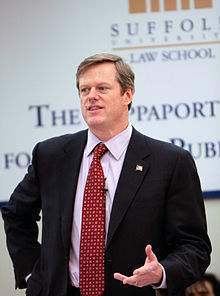
Front runner : the GOP’s Charlie Baker

The election won’t take place until November of NEXT year. Yet already the big political talk state-wide is, “who will be our next Governor ?” As Deval Patrick is not, after two terms, running for re-election, the question matters.

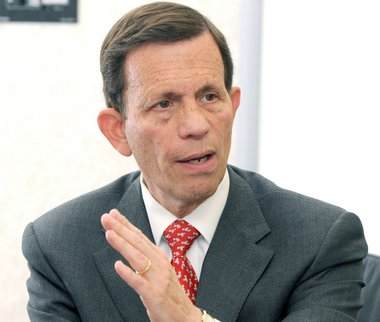
There is no obvious successor. Many fit the role, but none dominates it. For the Democrats, Attorney General Martha Coakley looks most formidable; but State Treasurer Steve Grossman — who announced his candidacy yesterday — rates as supportable as well, and so also, on his resume alone, does Donald S. Berwick, a medical doctor best known as President Obama’s administrator of Medicare and Medicaid services.

Image

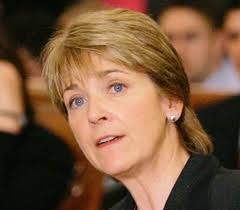
leading Democrat : attorney General Martha Coakley

Image

also strong : State Treasurer Steve Grossman

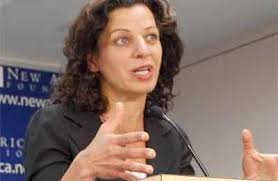
You would suppose that the presence of three such star-quality candidates would preclude the availability of a fourth: but you would be wrong. A second Obama administration official, Juliette Kayyem, is said to be preparing her candidacy. Kayyem appeals to those who believe that intellectual rulers should rule. She worked in the sardonically named “Department of Homeland Security,” lectures at Harvard University and writes op-eds for the Boston Globe. Kayyem is an all-in supporter of the secret surveillance state. Sadly, this is what the Democratic Party, once the courageous tribune of the rights of ordinary people, has just about become in paranoid America, 2013.

Image

Governor Snoop ? Democrat Juliette Kayyem is thinking about it.

Of course Kayyem might not actually declare. We hope she does not. State government has already become an enemy to many of the basic rights of ordinary people : think the recent and ongoing attack upon people receiving EBT benefits. Ponder the opposition to the Governor’s “transpo” bill and its new taxes, money needed if the state is to maintain, even improve, public transit, by which many ordinary Massachusetts people get to work. The last thing that ordinary Massachusetts citizens need right now is a governor trained in secret snooping.

Of all the Democrats likely to run, Martha Coakley has the best record of advocating for ordinary people. Her long campaign against the mortgage banks and their predatory, deceptive, and downright self-seeking lending and foreclosure practices deserves the congratulations of us all. Yet even Coakley has a tainted past. What Coakley watcher can forget how ruthlessly and unforgivingly she, as Middlesex District attorney, pursued the Fells Acres, day care providing Amirault Family back in the 1980s and for two decades thereafter ?

Despite which, Coakley looks to be the Democrats’ top gun, and that perception is currently well deserved.

Which brings us to the Massachusetts Republican Party. Since the local GOP has provided four of our last five governors — Weld, Cellucci, Swift, Romney — you might expect the GOP nominee to be the favorite to win in 2014. We think so too. Quite unlike the national party’s decline in civic morality and policy intelligence, the Massachusetts GOP features a long bench of A-list candidates, most of them progressive on every civil rights issue and some of them progressive even on economic agendas. Do not be misled by the dullness — except for Dan Winslow — of the GOP’s recent US Senate campaign. For the governorship, our local GOP has plenty to cheer about.

First up is Charlie Baker, an master administrator who ran in 2010 and would probably have won, had his campaign handled more deftly the presence of a strong third candidate. Baker is almost sure to run again.

It is thought that if he does not, former Senator Scott Brown will run. Brown is low-key, personable and still very much liked. He knows Beacon Hill well, having served in the legislature for ten years. The last State Senator to be elected Governor in his own right, the late Paul Cellucci, was an effective leader indeed.

(NOTE : Jane Swift had been a State Senator prior to becoming Lieutenant Governor. She succeeded to the Governorship when Cellucci was appointed Ambassador to Canada.)

Image

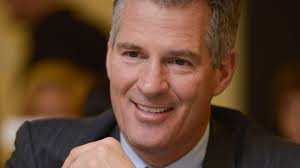
will he run ? Former Senator Scott Brown

Mary Z. Connaughton, who ran for state Auditor in 2010 and lost by one percentage point, might run if neither Baker nor Brown does so. She is an excellent campaigner and would be a superb candidate if she moves away from her retrograde views on social and civil rights issues.

Also possible candidates are Dan Winslow, by far the sharpest — and most under-funded — of the recent US Senate hopefuls, and Rich Tisei, a committed progressive, 16-year State Senator who lost a 2012 race for Congress by only 1,000 votes.

Clearly the Massachusetts GOP offers our citizens what a major political party should : credible candidates who stand for progressive policies beneficial to the many, not just the few. At least one such GOP candidate will run; and given the strength of the Democrats’ Coakley and Grossman — Berwick too — it should be a very intense election, with state infrastructure and education spending the prime issue : issues about which the Massachusetts GOP — so unlike the GOP nationally — offers solutions well in keeping with our state’s regard for civil rights and for the needs of those on or near the economic bottom

Our Governor campaigns always are about solutions and, by election day, so intense. This one already is.

—- Michael Freedberg / Here and Sphere

UPDATE  as of 1:45 P.M. 07/11/13 : yesterday we learned that State Senator Dan Wolf, founder of Cape Air and representing of the Cape Cod and Islands District, has announced for the Democratic Party’s Governor nomination. More details as we get them.

BOSTON MAYOR RACE : THE FIRST MONTH

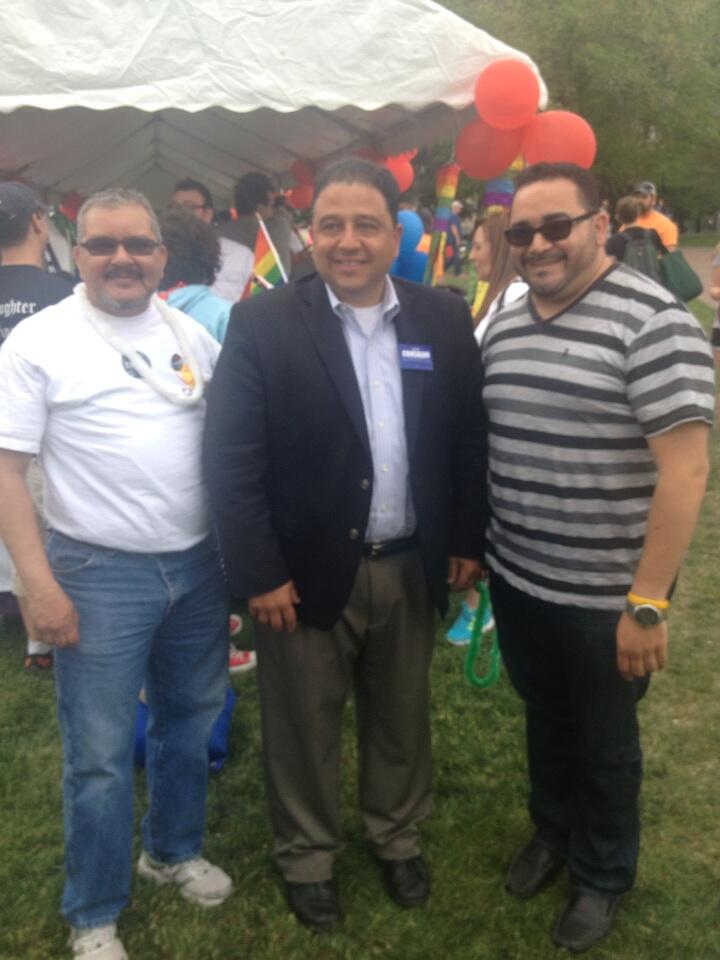
Mayor connections : Hyde Park’s Rob Consalvo at BAGLY (Boston Area Gay & Lesbian Youth) event

Mayor Tom Menino’s more or less last minute announcement that he would not be running for re-election set of what has turned out to be a mad scramble, by a hurrying multitude, to get to the “final” in which only two will face off. To date there are twenty-four (24 !) candidates signed up, making 1967’s eight look sparse. Could 24 people actually all have a chance to get past the September primary ? The answer is yes, for most: because in a four and a half month campaign, anyone can shape up. Usually a run for an office as powerful as Boston Mayor begins well in advance — at least a year before, maybe two. Indeed, as any veteran campaigner in Boston knows, your whole life — maybe also those of your parents and grandparents — goes into making you strong on vote day. Still, all that life history of connections and re-connections needs to be organized and called upon. That this year a candidate will get only 20-odd weeks, no matter who he or she is, grievously levels the odds.

Some things remain the same, however. Candidates holding current office already have made their connections and reconnectiions. They are combat ready. The first battle is to collect 3,000 certifiable nomination signatures. Large organization in place makes it easier to collect at least 3,000 signatures — and to submit them first, because if a voter signs more than one Mayoral nomination paper — and many do — only the first submitted counts. Consider also this : for 24 candidates to qualify for the ballot, at least 72,000 signatures will need to count. that is fully 20% plus of ALL Boston voters. The City has probably never seen such a huge street-level effort.

Probably half the 24 will actually make it onto the ballot. So what comes next ? Already the major eight or so candidates are running all over the city; marching parades, meeting and greeting at eateries, shaking hands at festivals and crowd gatherings, congratulating park League sports teams; holding coffee parties in neighborhoods; advancing an agenda. But does any of this even matter on vote day ? Not many voters give their vote, in a multi-candidate field, to a candidate they happen to meet once, or even twice. Likely they have already known at least one of the “major 8” already and have interacted with him or her. It is difficult for another candidate to overtop a voter’s long experience of another candidate. Truly, in local politics, it’s an axiom that the longer that one has known a candidate, the more likely he or she is to vote for that candidate.

The force of this axiom is likely why the “major 8′ are spending so much time right now acmpaigning to communitiues of voters — LGBT and allies, Haitians, Cape Verdeans, Asians, “new Boston — who for the most part do NOT have long connection with Boston politics. If the long-connected voters — the “traditional” voters of Wards 6, 7, 16, 19, 20, and half of 18; and the “new Boston” voters of Wards 4, 5, 8, 9, 10, 11, and 21 — are pretty much already “in the bag” for one or another of the “majors,” then it makes sense for them to seek out whatever they can bag up from the less connected communities.

Less connected voters also means “issues” voters. Voters who may not be able to say to a “major”, “geez, I knew your Daddy back in the West End — great guy,” for example, can judge that candidate’s stand on the issues. Thus the rolling out of agendas, that we have already seen from the canniest candidates: Dan Conley (gun control; citywide casino referendum), Felix Arroyo (labor rights), and Marty Walsh (education).

Canny candidates have also sought, smartly, to demonstrate that however they may be “based” in a long-connected community, they have the respect and support of leaders of the less connected. thus Charlotte Golar Richie, African-American of Dorchester, parades endorsements by State Reps. Michael Moran of Ward 22 and Aaron Michlewitz of Wards 3 and 8, and the Callahan Brothers of Ward 2. Likewise Marty Walsh, Irish-American from Ward 16, has the support of openly gay State Rep. Liz Malia of Jamaica Plain. City Councillor John R Connolly, too, strongly based in ward 20, has a house-sign campaign going on all over the city. Almost certainly the other “majors” will, if they can, announce similar cross-community support.

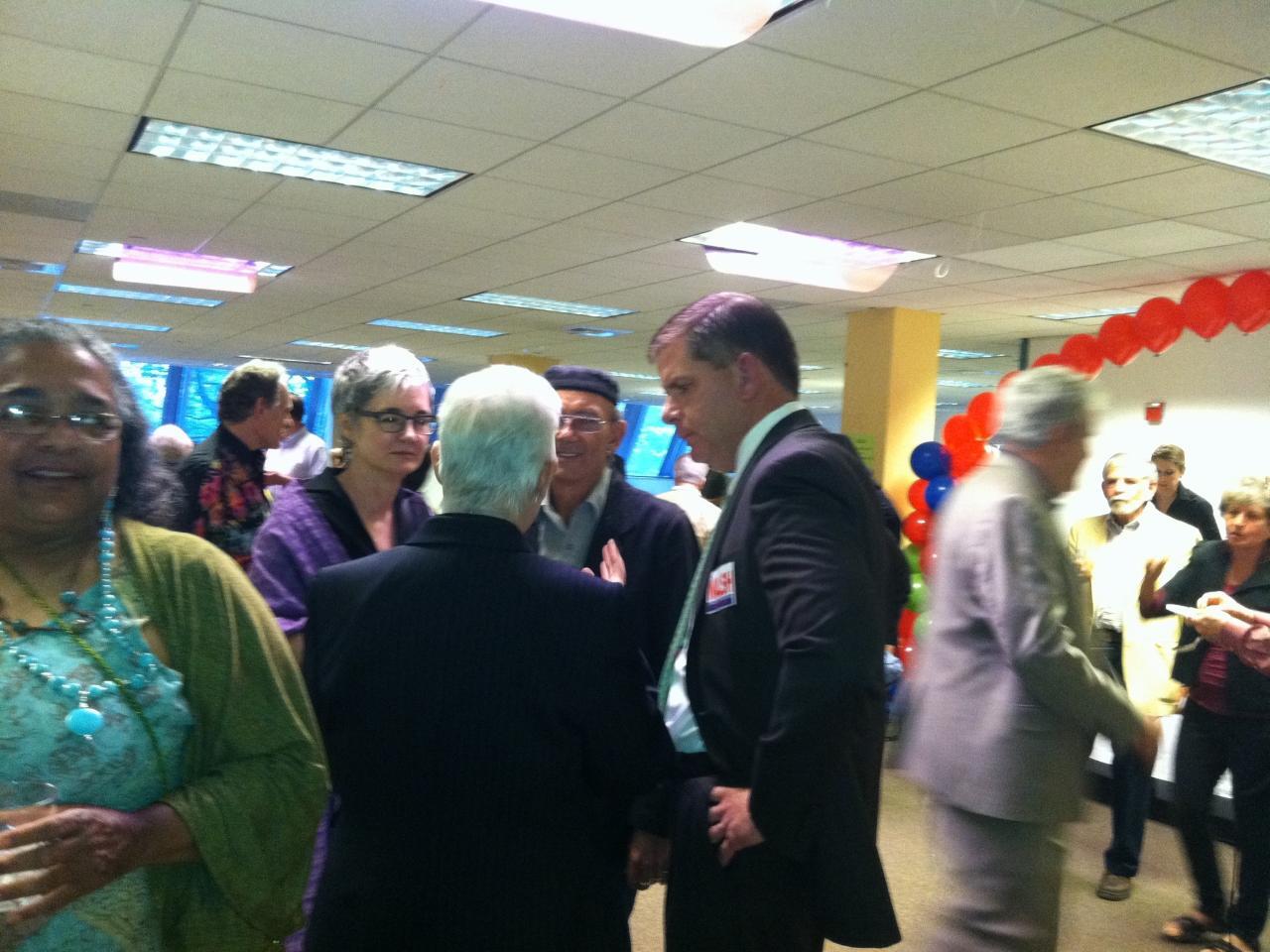
Ward 16’s Marty Walsh greeting City Life / Viuda Urbana supporters at the SEIU Hall.

This, then, is the exciting phase of the Boston mayor campaign. watching the city’s long-connected candidates dig deeply into its less-connected communities enhances the city’s togetherness and makes everyone feel that he or she counts in the halls of power. It is “retail politics” at its truest. It’s also a campaign phase that didn’t exist until Ray Flynn made it happen in 1983, as a South Boston guy campaigning among Jamaica Plain lefties. Before Flynn, Boston mayor races were combats of the powerful versus the powerful — the less so didn’t matter much and were, in fact, often pushed out of the city entirely by “urban renewal.” And Flynn himself had already worked with Jamaica Plain activists on Logan Airport issues, specifically approach run overflights of residential areas. This year, the “majors’ are seeking out the less connected voters no matter what, for their own sakes. This year, the less connected are being welcomed into the halls of city power.

—- Michael Freedberg / Here and Sphere