BOSTON MAYOR RACE : SIX WEEKS TO GO

Image

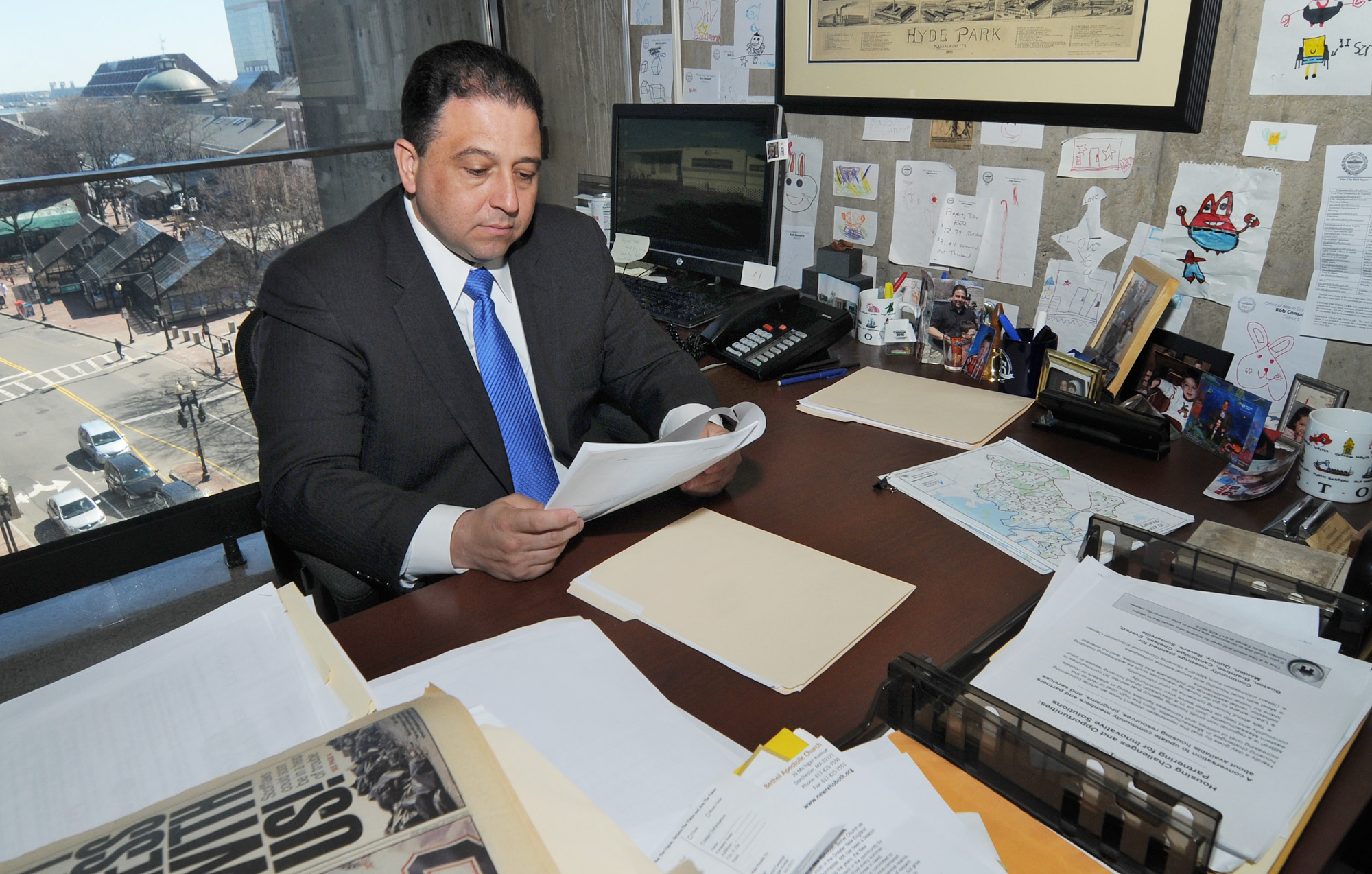
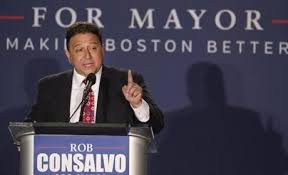
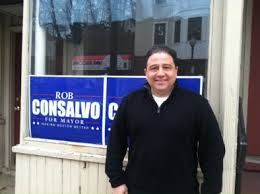
^ Rob Consalvo outside one of his local headquarters

—- —- —-

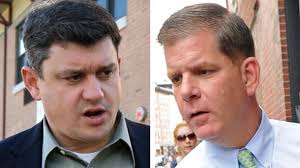
It’s getting nitty now, and gritty, the 12-candidate race to elect a new Boston Mayor. Candidates and their armies are knocking on doors, talking to voters one on one — which is the ONLY way to do it. The lawn signs wars are crowding fast. The money is in, and many key endorsements, ones that actually can deliver votes. Nor, fascinatingly, is anyone dropping out. It’s too late to do so, as the Primary ballots have already been printed. The rumors of Dan Conley moving away to run for Attorney General did not pan out. (This is good news for Rob Consalvo.)
Image

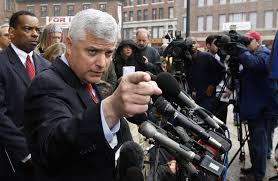
^ Dan Conley : staying in mayor race

Indeed, Conley, like Rob Consalvo, Marty Walsh, Felix Arroyo, and, probably, the other “major” candidates, have already begun to open local headquarters in the neighborhoods they are counting on; and to staff them. (Haven’t seen a John Connolly local HQ yet, but very likely soon.) With local headquarters open, the candidates who have them can ramp up their reach out to voters as yet uncontacted, or contacted but uncommitted. From local headquarters phone banks can be more precisely targeted than from a central office.
Image

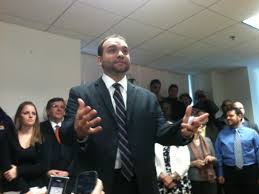
^ Felix Arroyo : “forward with Felix” showing up at last in the neighborhoods that count

The ‘majors’ are also scheduling regular weekly ‘events,’ such as Marty Walsh’s “Mondays With Marty” and Felix Arroyo’s regular meet-and-greets at locations key to his campaign. Rob Consalvo is making his headquarters openings an “event.” Surely John Connolly and Dan Conley are doing the same. For these candidates, “events” are occasions to raise the enthusiasm level of their already committed voters — and campaign volunteers — and to bring to the committed-vote level voters who have shown interest. In other words, the fun and games times in this campaign are over. From here on it’s all about commit, commit, commit and identify a vote and keep it identified all the way to Primary day.
Image

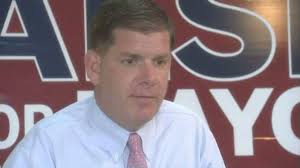
^ Marty Walsh : “Mondays With Marty” in every neighborhood ?

So much for the “major’ candidates. What we do not understand, frankly, is the stance of the other candidates. Why are Charles Clemons, John Barros, and Bill Walczak still in this race ? And what of District Councillor Mike Ross, who has raised much money from real estate interests but doesn’t seem so far to have gathered an observable following ? Unfortunately, neither question has a ready answer. Clemons, Barros, Walczak, and even Ross surely knew that they were almost certain not to get to the November Final, yet they ran anyway. Is it about introducing oneself to voters ? Hard to see the advantage in making a first impression as an election loser. More likely they see that for the Final, the votes they do manage to win on Primary day will give them influence as the two finalists compete to win their support. Sometimes that campaign purpose succeeds.
Image

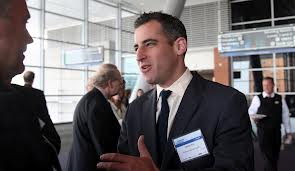
^ Mike Ross : lots of money, so far not many visible votes

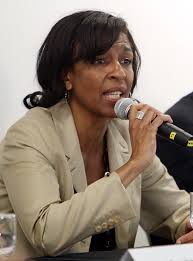
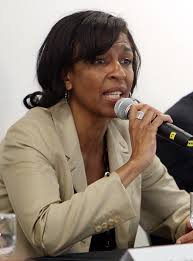
The above discussion did not mention candidate Charlotte Golar-Richie. Her campaign remains the most puzzling of all. As the only woman in the race, as a person of color, and as a widely accomplished city and state administrator, she has all the credentials a next Mayor would want to possess and an identifiable, sizeable constituency. Yet her campaign hasn’t made itself felt much. She lacks money. She is only now beginning to be visible in the lawn sign wars. She has key endorsements, but they were won early and do not so far seem to have brought her many votes. Nor has she dominated the news. How could she, when, as reporter David S. Bernstein has pointed out, she has only the vaguest of messages and no platform ? The other “majors’ have both message and platform. It matters.
Image

^ Charlotte Golar-Richie : disappointing campaign so far

In a campaign like this one, which will reach almost every voter, most of them at the door, a candidate has to make himself or herself FELT as well as seen and heard. We used to say, “make them feel your grip, just as if you were grabbing them by the wrists.” Walsh, Consalvo, Connolly. Arroyo, and Conley are doing that; so far, Charlotte Golar-Richie hasn’t. Time for her to get tough. A Mayor of Boston HAS to be that.

Prediction : right now we see Rob Consalvo looking stronger, possibly moving to second place; Connolly weaker. Walsh still a good bet for second, even first place. Dan Conley fourth. None of the eight “new Boston” candidates has a chance if all stay in the race — and with the September ballots already printed, all remain in it.

—- Michael Freedberg / Here and Sphere

Insult to Sindustry?

funny photoA recent poll of 100 men, indicated that, 35% of the men polled were — or have been, jealous, intimidated, or insulted — by a partner’s request or  use  of “toy-play”, in the bedroom.

When asked why; The response that the thought of the query or blatant use and action of “toy-play” was just to taboo for Man-land.

The survey taker’s insinuated that — “It is in indirect insult to the size, effectiveness, and over all satisfaction, of their “equipment”.

OUCH ego crusher? or Help with your lover? Though every man who took part had a slightly different way of portraying his distaste for The Bedroom-Battery-Buddy, one truth remained TRUE — Most feel that they are just “Not enough”.

Top 5 irrational insecurities

  1. The women in question — are DISSATISFIED on some level.
  2. That the toy in question is either a replacement, or “the something missing”.
  3. That she will be able to satisfy herself better than he can.
  4. That he is packing less than heat in his “nether-regions”…..
  5. In the more severe of the irrationality — some guys even believe ” that toy-play ” is — The beginning of the end.

“WOMAN’S VIEW” — as to why that is absurd………. or not….

  1. The woman is merely trying to spice things up — where-by, keeping YOU interested…..
  2. She is genuinely trying to alleviate some of the “pressure” you may feel to satisfy her — thus making your job easier and more enjoyable.
  3. In “some” cases woman stated — “that their sex drive is much higher than her other half, by filling her “excess need” — you can relax, and NOT feel as if you are slacking or not fully satisfying her.
  4. “IF” she was not happy or content with the “hardware” — she would have fired you, and begun shopping for a more “adequate upgrade” — let’s just say she adopted Home Depots motto of, “You can do it, we can help”.
  5. An (inside secret) admitted by 25% of woman polled said they felt — “inferior or inexperienced” — when compared to their partner. By learning what excites them — solo or with you, they feel a bit more confident in their “abilities and super-sexy-sheet-skills”. Be happy and perhaps a bit grateful she cares that much….. She’s a keeper…..

What is the consensus here?

TALK TO EACH OTHER…. Honesty really is the best policy. He’s thinking one thing — you’re thinking another — and the truth and solution lie somewhere in the middle of BOTH of your truths……. FIND IT or BUZZ OFF.

buzz lightyear

    :Heather Cornell

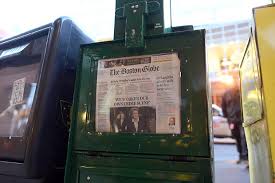
WHAT WILL THE $ 70 MILLION BOSTON GLOBE BECOME ? OUR VIEW

Image

^ our “paper of record,” you know it is.

—- —- —-

Everybody in Here and Sphere’s Boston home region knew that the Boston Globe was for sale. The New York Times, which owned the paper, had hardly kept their intentions a secret. Everybody knew, too, that several active bidders — including members of the Taylor family that had owned the Globe and sold it to the Times — were on the case. It was even known that one of the bidders was a group led by John Henry, principal owner of the Boston Red Sox.

Still, it surprised every observer when the two papers announced that the Globe had been sold for $ 70,000,000 — cash deal, no debt — and that the buyer was John Henry alone. No partners.

Image

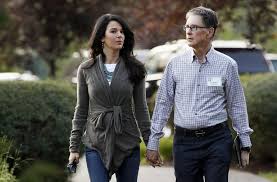
^ John Henry, Globe Owner. Walking tall (with wife Linda)

In 1993 the New York Times had purchased the Boston Globe, as well as the Worcester Telegram and the Globe’s huge building on Morrissey Boulevard in Dorchester, for a reported $ 1.3 billion. Now, 20 years later, all of that — the Telegram and building, as well as all of the Globe’s internet presences — gets sold for $ 70,000,000. This, dear reader, is a heck of a discount, no ? It sends a message of desperation to those who see only the past. And yes, already the bears are howling : it’s the end, print media is dying, John Henry just wants to break it up and sell the pieces, then curtains.

We strongly disagree that that is going to happen.

Yes, the Globe’s circulation has declined from more than 420,000 in 1993 to about 200,000 now. Yes, the news staff has lost 180 positions, from 550 to 370. Yes, advertising revenue continues to drop — reportedly even during the period that the Times buffed it up to make the paper look most sale-able. Yes, many papers similar to the Globe have gone into bankruptcy, for example the Philadelphia Inquirer and the Tribune Companies. All of this is why the Globe properties fetched only $ 70,000,000 rather than the $ 1.3 billion, But that is the past. What the Globe WILL be lies in the future. It’s a future that begins strong:

First : Henry is buying the paper and its properties with no debt, all cash. He can use the Globe’s reveneus as he sees fit.

Second : the 200,000 circulation represents a hard core readership. What the ‘net can take, it has taken. the rest are staying. Indeed, I would submit that even that 200,000 represents a very different composition than detractors think. They are not just ‘what is left.’ Many, perhaps most, are new readers, even a new type of reader. More on this topic below.

Third : that hard core readership likely resembles the core readership of Boston magazine — an upscale fan base with much discretionary income to spend on advertisers’ wares. Boston Magazine has , of late, hired some major players in local journalism. That’s not the action of a publisher who thinks that print media is doomed. Why can’t the same reasoning apply to the current Globe’s readership ?

Fourth: as media journalist Dan Kennedy has pointed out, the Globe’s huge building on Morrissey Boulevard might pf itself be worth the $ 70,000,000 paid by Henry. Kennedy suggests that he might sell it, move the printing operation — highly profitable — to the Telegram’s Worcester area, and move the Globe’s news and business operations to smaller quarters in the heart of newly prosperous, bustling Downtown Boston.

Fifth : in 2009, when the Times first tried to sell the Globe, it had a pesky competitor for progressive, in-City news : the Boston Phoenix, then well established and, like the Globe, quartered in a building its owner owned and bolstered by a printing business. But in march of this year, the Boston Phoenix stopped publication. Such competition as it presented — circulation nearly 90,000 — is now available, in need of a voice.

A Boston Globe awash in Downtown’s high-end living is not likely to lack for well-heeled readers and advertisers. Were John Henry to make the Globe even more the voice of prosperous, progressive, mercantile Boston than it now is, he would only be doing what all successful newspapers have always been; the voice of a very definable readership, one that knows itself, identifies as a class or community, and insists on having a print voice to show itself off to all comers. Isn’t that what news media necessarily must be Information, one can get anywhere. The internet, ad fliers, gossip, word of mouth. The successful news media is one that communicates information of a defined kind, or with a defined point of view and even in a defined style of writing, to an audience similarly defined — and self-defining. Boston today has precisely such an audience. Large and growing, affluent, and highly concentrated in Downtown — and emulated by many who work and party Downtown even if they have — lacking the wherewithal — to live elsewhere.

A readership high-life living in $ 3,000 -rent apartments and $ 6,000 a month condos is a readership well worth playing to. It’s right there for John Henry to partner with. It wasn’t as obviously there in 2009 and not at all there in 1993, when the Times bought a very different Globe than now portends.

Why else would he even bother ? $ 70,000,000 to Henry is amuse-bouche money. Usually he plays ten times that amount. The only reason a mere $ 70 million can be worth hos time is that he sees an opportunity to add a zero to the seventy. And he definitely can. He can make the Globe the affluent community’s voice, as I have described, and at the same time create individualized, perhaps internet-only, neighborhood news outlets for every other part of Boston’s highly patchworked neighborhoods of long separatist memory. Into this community approach even the Worcester Telegram fits. (In the Telegram’s case, only into this sort of plan. That and resting on the profit foundations of the Globe’s world-class printing operation.)

Yes, many of Boston’s neighborhoods beyond downtown already have their own local print media. Can they fend off a well-heeled readership and a canny owner ?

What I have just laid out may not be Henry’s game plan at all. But if it is his plan, it is far from a stupid one.

—- Michael Freedberg / Here and Sphere

BOSTON MAYOR RACE : DAN CONLEY FOR ATTORNEY GENERAL ?


Image

^ Dan Conley : more a law officer than a Mayor ?

—– —– —–

Question : has any Suffolk County District Attorney ever been elected Boston’s mayor ? This writer can’t think of one.

Perhaps this is why rumors abound that Dan Conley, the current “DA,” will leave the Mayor race to seek the office of Massachusetts Attorney General instead. Supposedly all that Conley is waiting for is current “AG” Martha Coakley announcing her candidacy for Governor – a decision that all observers expect.

If true, the move by Conley makes sense. He has amassed barrels of money – at last report his account had well over $ 1,000,000 on hand – and proposed a bold agenda, yet still lags in recent polls that show him running third to Marty Walsh and John Connolly. It is Connolly and Walsh who have won the past week’s major endorsements; Conley was passed by.

The murder of Amy Lord and the pending indictments of Aaron Hernandez have brought enormous publicity to Dan Conley. Yet none of it has helped his Mayoral hopes. If anything, the publicity has actually hurt Conley. Crime and prosecution are certainly big matters to voters; but they are not matters that people identify with being Mayor.

The issues that voters ascribe to their Mayor are these : zoning; schools;  development;  civil rights; and, most sweeping of all, quality of life – in the neighborhoods, with street cleaning and snow removal as well as road repair, and Downtown, moving it to a closing hour more progressive than the current 2 A.M. absurdity. Conley, as District Attorney, deals with hardly any of this.

Were Conley to leave the mayor race, who would benefit most of the 9 % of voters that current polls give him ? Nine percent of the likely Primary vote totals about 14,000 votes. Obviously the 14,000 will not go only to one Mayoral contender. That said, as we see it, the largest block of this 14,000 will go to the remaining “traditional” candidates. And not just any of them; the most significant benefits will surely go to Councillor-at-Large John Connolly and State Representative Marty Walsh, and not to District 5’s City Councillor, Rob Consalvo.

Image

^ Rob Consalvo : being squeezed out ?

Here’s why we see Conley’s support going chiefly to Connolly and Walsh:

Conley lives in Ward 20. So does John Connolly. Connolly is polling in first p[lace. As voters like to pick winners rather than give up a vote on someone who won’t likely win, Connolly is sure to pick up most of the “local guy” vote that Conley is now drawing. Consalvo, too, has strong support in Ward 20; but he has failed to win recent endorsements, indeed was passed on by St. Rep. Carlo Basile of East Boston. If Consalvo can’tr win  the support of an Italian-name legislator, who can he win that he does not already have ? He will pick up some Conley votes, yes; but not nearly enough.

Image

^ John Connolly : will benefit if Conley leaves Mayor race

But that’s not the whole story. Conley has paid much attention for months now to South Boston. He campaigned there on April lst, when that neighborhood (and Dorchester) chose a new State Senator. (Here and Sphere photographed him that day campaigning among voters at Gate of Heaven parish hall, where two South Boston precincts voted.) South Boston  is still home to large numbers of city and county employees; and Conley’s Irish name surely still draws many votes in the City’s archetypal Irish-name neighborhood (though that is changing, as we all know).

Image

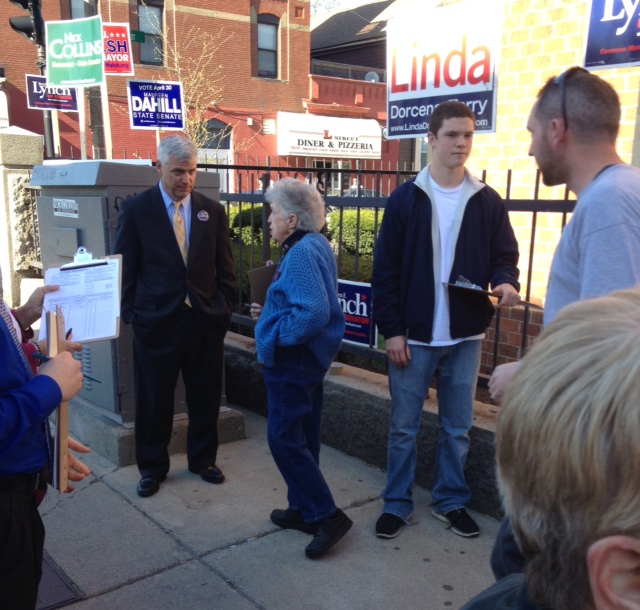
^ Dan Conley campaigning at Gate of Heaven parish hall on April lst.

In Southie, the winner of most Conley votes would likely be Marty Walsh, not John Connolly. Walsh lives in Savin Hill, the Dorchester neighborhood closest to “Southie” culturally and proximately. Like Connolly, Walsh, looks a winner. He polls a close second to Connolly and has significant support from Labor Unions both public and private – groups strongly represented in the South Boston’s vote.

Image

^ Marty Walsh : major support from the City;’s Unions – strong in South Boston

For some time now, the September primary for this year’s Mayor race has looked like a Walsh and Connolly “final.” Dan Conley leaving it to run for Attorney General makes this Primary result almost a certainty. It WILL Be a certainty if the many “new Boston” candidates now dividing about 25 % of the likely Primary vote don’t stop chasing their own individual dreams, none of which can come true if all keep on chasing. The “new Boston” vote can command the Primary and win the “final.” But it can’t do anything if it continues on its current eight-candidate course.

Dan Conley’s momentous decision awaits.

—- Michael Freedberg / Here and Sphere
BOSTON MAYOR RACE : INTO THE FAR TURN NOW

Image

^ a John Connolly – Marty Walsh final ?

August will arrive this week, leaving only seven weeks until Primary day, at which the two Boston Mayoral Finalists will be chosen. At this point the preliminaries are over; the race is taking on a distinct shape; and those on the wrong side of the taking are beginning to get shelved. It’s the beginning of crunch time. Where does the race stand as the crunch starts ?

Polls have been taken and published. These show that John Connolly, Marty Walsh, Dan Conley, and Rob Consalvo occupy a “top tier” — grabbing from 8 % to 12 % of the assured primary vote — and that Felix Arroyo, Charlotte Golar Richie, and Mike Ross make a “second tier,” each at 5 % of the assumed vote. Four other candidates, Charles Yancey, John Barros, Bill Walczak, and Charles Clemons, also draw a measurable vote.

No surprises in any of this — nor is it a surprise that the “new Boston” candidates are splitting among themselves a vote that, if unified, would assure such candidate making it to the Final.

Arroyo, Ross, and Golar-Richie, their support totaled, easily top the “traditional” field. Indeed, their potential vote should be larger than polled: because the polls taken have tended to concentrate on the most assured voters — namely, the “traditional” voters. Surely, if one or other of the “new Boston” candidates is seen as having a solid chance of winning, “new Boston” voters will turn out in larger than polled numbers. Being seen as a solid potential winner is the major indicator, in almost every election, of a candidate’s ability to turn out voters.

Image

^ Felix G. Arroyo : solid contender if the “new Boston’ vote unifies

Image

^ Charlotte Golar-Richie : a sure winner in November If she can get to the Final

Unhappily for “new Boston,” this Primary  offers no fewer than six viable “new city” candidates. None has made a move to drop out. The six probably draw about 20 % of the polled sample, and on Primary day might garner measurably more. It will do no good, however, if all six continue in the race. All six will lose. This is a disappointing prospect and one that we at Here and Sphere decry. We feel that it is time for Boston to elect a “new Boston” Mayor, “new” voters representing at least two-thirds — probably more — of the entire city vote.

If no “new Boston” candidate withdraws soon, before the ballot is printed, the chances are strong that the Final will choose between two “traditionalists.” Currently the top two candidates in polls are City Councillor at Large John Connolly, at 12 %, and state Representative Marty Walsh, at 11 %. We feel that’s an accurate picture. Walsh, a four term Representative, has a solid Dorchester base extending strongly now into South Boston and, somewhat less strongly, into Jamaica Plain, West Roxbury, and Roslindale. He has won the backing of Local 18, the Boston firefighters’ Union. As for John Connolly, son of former Secretary of State Michael J. Connolly, he lives in Ward 20 — which will likely cast ten to 12 % of the entire Primary vote — and has shown broad city-wide support besides. Connolly is waging an active house party and issues campaign, focusing on Boston Schools parents. He can also count on much trust from city workers and their families gained during his terms on the Council.

Dan Conley, the Suffolk County District attorney, has by far the most money, but his city wide support seems surface at most; huge publicity for him, thanks to the many murder investigations under way, does not seem to have added anything to his image as a possible Mayor. Crime, after all, is a huge issue, but not a big Mayoral issue. Schools, development, zoning, and culture seem the issues most germane to the mayor’s office. (NOTE : a report in today’s Herald opines that Conley might switch to run for Massachusetts Attorney Geerral if Martha Coakley, as expected, declares for Governor, Conley has not responded yet.)

Image

^ superb campaign but not enough ? Rob Consalvo

Then there’s Rob Consalvo, who holds the district Council seat that Mayor Menino held from which he won election as Mayor. Consalvo has the problem of bringing together a widely dispersed — and much less ethnic than it used to be — “Italian” vote, from East Boston, the North End, and Hyde Park, and of lacking much city-wide familiarity. That he has nonetheless managed to poll close to the top vote-getters is a credit to the detail and mastery of his very professionally directed campaign. Can Consalvo, thus well directed, perhaps make it into the final ? Probably not.

Which leaves Boston to choose between two men as different as similarly backgrounded people can be. it will, actually, somewhat resemble the 1983 race between David Finnegan and Ray Flynn to choose who would face “new Boston” candidate Mel King. Finnegan lived in West Roxbury, Flynn in South Boston, and as one shrewd observer said, it was a race between “discount store cashiers” and “Boston Latin School.” The same class gulf may well apply to a Walsh versus Connolly Final. The Flynn and Finnegan fight was heated and often bitter — the two men seemed to despise one another. Expect nothing less if a Walsh versus Connolly Final imposes itself on a City that can use some drama not arising, thank goodness, from murder indictments and trials.

—- Michael Freedberg / Here and Sphere

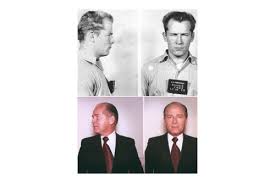
THE TRIAL OF WHITEY BULGER : THE HORROR AND THE HATE

Image

^ the many years of James “Whitey” Bulger

—- —- —-

Watching the long parade of thugs, pugs, and lugs walking up to and planting themselves in the witness chair at Federal Court these past three weeks has put this writer into the paranormal. i lived and did political work in the city these fellows dented. Though my center of gravity lay several fenders to the southwest — in Roslindale, west Roxbury, and Hyde park — I had begun my roadwork in Dorchester — Upham’s Corner to be exact — and spent many hours, days, and weeks working Dorchester campaigns and activities. The South Boston these fellows destructo’d lay only a mile or two to the north, and at many many Dorchester events the vinegar of South Boston was often tasted. And occasionally I ventured into Southie itself.

Image

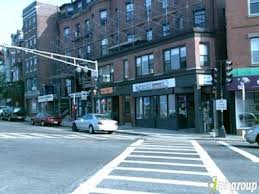
^ Southie : corner of Broadway and Dorchester Street

We knew what that meant. We were not fools or naive. It was always there, the under-rumble of hard nose. Later, as William Bulger began his political rise, we could feel the Bulger shoulder, hear its footstep, see its shock wave. There were stories, too, about both brothers — each different yet both of one brick. Of those stories I am not sure that i should write even now, decades after; suffice it to say that one very powerful politician from “Southie” had his life crunched pretty good by the Bulgers, according to what we heard.

It started way back, in 1972, when a certain associate of Whitey Bulger’s brother Billy, one Joe Toomey, was a Democratic state Committeeman from the then still intact South Boston Senate District. Joseph Moakley, who was then the senator, had already announced that he was challenging Louise Day Hicks for the “South Boston Congress” seat — he went on to win it that Fall. Anyway, in the 1972 Presidential Primary — which is when State Committee people are elected — in march, an associate of my political sponsor — who has long since passed — decided to run against Toomey. He lived in “Southie,” of course, and had become best pals with my sponsor: they had served in the Legislature together.

As it turned out, my sponsor’s friend lost to Toomey by only a handful of votes. Never will I forget the faces we saw when we went to Toomey’s headquarters that night to congratulate hi,m. the faces were hard as longshore piers, the bodies stocky as cinder block walls. The air was so angry you could almost see it froth at the mouth. Hate was here, and we knew it, and very quickly left.

Image

If only we had known the whole story ? HaHa, only I did not. My sponsor’s associate knew it well; but his ordeal was just beginning. Two years later, during the crisis and riots brought on by Federal Judge Arthur Garrity’s order that Boston schools be integrated — including the schools of “Southie” — my sponsor’s friend did hos best to calm the situation, to bring people together, to have conversations, not confrontation. The Bulgers were having none of it. Billy, now a State Senator, made the Globe and Herald his enemies; accused them of bias against “Southie”; opposed all efforts at compromise.

As for Whitey ? Nothing can be proved, but we all heard the stories : of how my sponsor’s Southie friend had been run off the road, how he had been forced to flee his South Boston home — he and his wife and kids — and live for a time in Quincy or somewhere. We heard these stories, and we believed them.

Later on both my friend’s friend and Whitey Bulger — and now Bill Bulger too — became much more powerful; more caustic still the brothers’ hate for the man i am thinking of. How palpable was this ? I will never forget one of Bill Bulger’s Saint Patrick’s Morning breakfasts, political as politics can politic — he started the affair, now a Southie must-be-at, for pols and soon-to-be pols, hosted by whoever is South Boston’s State Senator . So there I was, standing in the crowd of “repS’ and City Councillors, campaigners and election junkies, and they and I were watching Bill Bulger do his do on the front stage. Behind him stood a row of the respectful. Prominent among them stood my sponsor’s buddy. Bluntly Bulger ignored his presence on the podium. Passed him by, did Bulger; and he sort of grinned it off, as if to say, “what do you hot-shots out there expect ? This is how it is over here.”

Bill Bulger puts on a time, he run s the time. And so he proceeded to  recognize everyone else on the podium by name. But not the man we were all looking at.

Image

^ State senator Bill Bulger : being paid respect to. at Breakfast.

It was said, when both Whitey the man snubbed by Billy were at the peak of their power, that Whitey warned him, after a particularly nasty exchange — with my sponsor’s friend now in a position to make daily life very difficult for Whitey and even more difficult for Whitey’s guys — that Whitey said to him, “I can’t kill you, but i can kill your friends.” And my sponsor’s friend’s close associates knew that Whitey meant it. It must have been hard for them. They enjoyed the strong protection of closeness to my sponsor’s friend, and still they had no protection at all — almost: for, after all, Whitey did not, despite the threat, kill any of them. But the man whose protection they should have enjoyed did just what Whitey had implied he should do. He went his way, paying no attention to Whitey, and not much to Billy, as he did his thing in Boston and for Boston — all of it, with honor and openness to all. As for Whitey — and for his Senate President brother Billy — they just kept on — amassing power : Billy collected political clout the ways some people collect stamps. As Senate President he controlled the State Budget, and he used that control to control, in part, the administration of the state’s courts. It was said that when Judge Ed Daher, then of the Boston Housing Court, objected to some job moves by Bill Bulger, he found the budget for his Court slashed. Was this so ? We sure thought it was.

Image

^ crossing State senate President Bill Bulger was no joke. And he knew who you were, believe me.

With Whitey, we know what the 1980s brought him. we know it now, that is. The murders and betrayals, extortions and beatings, the guns in mouths, the informing and being informed on. We learned the names and traits of John Martorano — feared relentless killer’; Kevin weeks, tough and snarly; Steve Flemmi — kill or watch a killing; the Winter Hill Gang — not in Southie but in the “‘Ville,” oddly enough;  and John Connolly — the FBI man among men (ya right) and his colleagues at what should have been called the Muff-BI. We hear the names of the killed, the extorted, the beaten, the deceived, the betrayed — and the innocent who happened to be in the line of — ping ! — a bullet or three.

We see the families of the killed, their brains stuck on vengeance — and who can blame them ? They lived, feared, ,loathed, and bled it.

Once I left the Dorchester offices where my roadwork started, I avoided South Boston entirely.  I had friends there, yes, and cherished them. They know who they are.

Some owned taverns that were riotous good fun to have a “frosty” in. Some worked the Lithuanian Club — always a good time on a night. Some ran funeral homes; others played Park League hockey, or baseball for the South Boston Chippewas. So,me worked at the South Boston District Court House on Broadway — a fun place to be on South Boston Parade day in March. Some were gorgeous, spunky gals one met at “happy hours” on Cape Cod — Clawson’s on a Sunday night was a favorite lawn to hit on — or at “Dot So Cha” reunions — big social mixers — featuring folks from Southie, Dorchester, and Charlestown: the Irish heartland of Boston, often held at the Victory Road Armory in Fields Corner.

Image

^ gals of Southie : jst as gorgeous spunky as in the 1970os-1980s

And some went on to political fortune : Ray Flynn, Jack Hart, Brian Wallace, Mike Flaherty, Steve Lynch — he by beating Bill Bulger’s son, no less, to win the State Rep seat left open when Jack Hart succeeded Bill Bulger as State Senator.

Image

^ Kevin O’Neil of Triple O’s — today, after the groove has gone.

I never did meet Kevin Weeks, though I did know — unforgettably — his brother Jack. Nor did I ever meet Kevin O’Neil,. or Pat Nee, or Billy Shea, or any of the other biggies of Whitey’s close circle. But watching them now, greying and aging, as they testify to what they did, saw, heard, and planned back when, I know that I easily could have known all of the, stood at a bar with them drinking “a frosty” or two, worked campaigns with them — and felt a touch of fear at what they might well have been like in a less celebratory or energetic corner of life. Almost all of us who lived in Boston then knew these guys or guys much like them. We knew the city that they helped scratch, the way a vandal would key a brand new Mercedes, only meaner — and dirtier — yet also, as is a vandal, occasionally fun to be around. In a cynical groove in a then inward-angled city that fortunately no longer exists, for me or for them. Or for the rest of us.

It is over now.

— Michael Freedberg / Here and Sphere
CRIME : THE MURDER OF AMY LORD

Image

^ surveillance photo at Upham’s Corner, Dorchester, showing Amy Lord, in gym clothes, getting out of passenger side of her Jeep to withdraw money at ATM per her kidnapper’s orders.

Just when we in Boston have had about all that we can stand of murder most foul, of murder trials, of murder testimony and murder graphics, our city has awoken to the happening of yet another murder — one more than foul; a murder beyond explication. Amy E. Lord, a 24-year old gal living in South Boston — reputedly one of our safest neighborhoods — was, it appears, kidnapped by two men (the police think it was two — but see update at the end of this report), forced to withdraw her money at ATM’s, then stabbed to death and her corpse dumped in scruffy woods several miles away, in Boston’s Hyde Park section.

Lord grew up in Wilbraham, a flat-land suburb bordering Springfield, a once-booming, former mill city 100 miles west. She had moved to the “big city” — for Boston is that, to kids living in our state’s back areas — to make her way in the world; and was, it seems, doing so, as a web designer; not spectacularly but in an ordinary, tech-savvy, 21st century way. “If you had a daughter, you would want her to be like Amy,” her grandfather Donald Lord is quoted as saying. A great many daughters are, indeed, like Amy must have been. That is what most unsettles us. Murder beyond foul is not supposed to happen to daughters like Amy Lord.

Her killer or killers did not stand outside a seedy dive in Boston’s Theater district looking for streetwalkers to hijack — some killers do do that. The killer(s) did not break into a millionairess’s loft in the tony Back Bay, looking for jewels and riches — some killers do that, too. Nor were they, it seems, sexual predators on a rape spree — that, too, more than once happens, depressingly. These killers weren’t terrorists, or athletes night-shifting as gang-bangers, or big name mobsters — all of which are on trial, or soon to be on trial, right now in our city, living through our time as America’s Grand Central station of high-profile murder. Amy Lord was none of this. Nor were her killers. They, appear to have been as ordinary as she. This is what unsettles us most.

They (or he) wanted money, ordinary money; probably for drugs — an ordinary craving. They found an ordinary girl, forgetting, or not giving a damn, that ordinary people, too, have families and friends who care about them. People in crisis, like streetwalkers, have advocates. Millionairesses have big money lawyers and influential relatives. Attack a streetwalker or a millionairess, and you will face heavy, institutional retribution. This is known. But attack an ordinary person ? Who is there to defend her but her ordinary family ?

So might think the killing mind, if it thinks at all when kidnapping, robbery and murder pushes it to act.

They kidnapped her at an ordinary time — 56AM — when many tech-ies are already awake and up, getting ready for work, which in many tech companies begins at 7 AM. They robbed her by ATM machines — as routine as money gets.

The robbing of ATM kiosks was over at 6,47, the BPMDtells us. 47 minutes. Not much longer than savoring a latte at Starbucks.

Everything about the murder of Amy Lord ws ordinary, as ordinary as life is good, which it ordinarily is, for most of us, even though it has its stressful stretches — and these stressful times are ordinary too. But that murder should be an ordinary part of an ordinary life, that is the shocking thing, the inexplicable, the frightful. It is not merely hyperbole to say that Amy Lord is us. She WAS us. Her murder murders a part of us too.

Let us grieve….

—- Michael Freedberg / Here and Sphere
UPDATE at 12.45 PM : Police have now concluded that it was only ONE man who kidnapped, robbed, and killed Amy Lord, and that he beat her seriously inside her apartment building before ordering her into her Jeep — which he hijacked — to withdraw money.


UPDATE # 2 :  Boston Police still are not ready to make an arrest, even though they have a suspect in custody in another South Boston mugging that occurred the same morning. It is thought that said suspect is involved in the Amy Lord murder.  This morning the suspect, one Edwin Alemany, age 28, was found mentally incapable of attending an arraignment. He is now at Bridgewater State Hospital for the Criminally Insane, undergoing the standard 21-day psychiatric evaluation.   (This update at 8.40 P,M. 07/25/13)

BLUES TALK : JOHN TEJADA @ ARC NIGHT CLUB 07.12.13

Image

When this writer arrived at Arc, a new room for Boston house music, at about 12.15 AM, John Tejada was already hard at it. Working his own mix board, rich with shape-shifting knobs and beat-breaking buttons, Tejada put the bluest house music this writer has heard recently into talk and walk shape. Blues is a music of talk and walk — of move and monologue — and in house music there are plenty of move and monologue tracks. Tejada dropped a couple of those — glitch vocal tool ins — but his talk works sounded most prickly and seductive when he made instrumentals do the talking.

Born in Vienna, Austria, to an Austrian, orcherstra-conducting Dad and a Mexican Mom, Tejada, who will be forty years old next year, has been workling his uniquely bluesy sound for almost fifteen years — but rareky in boton. His last vist that we know of happened four yrears ago. The rarity of his performing in Boston assured a full dance floor at Arc, and full it was, and entirely committed to Tejada’s mix work. Guys danced to the front; cameras flashed on all sides; and on and on Tejada moved his music, never coasting, not taking a bathroom break (something no DJ should ever have to do in a two hour set), no acceding to a fan greeting. (Why fans feel they have the OK to interrupt DJs, this writer will never understand. People at a rock or jazz concert wouldn’t think to come up on stage like that.) With Tejada, fans evidently felt they owed him the space not to play “hey good-buddy ! hi-ya !” with. He was able thus to concentrate all attention upon forty or so mix board edit buttons of which he made constant use.

He describes his sound as techno — but of the Detroit, not the German version. Detroit, at Arc, it was ; a sound almost entirely blues based from which ticklish, twisty, wire-thin strands of upper register noise arose, seductive to the body as to one’s ear. His sound had family resemblance to that of Carl Craig : choppy but soulful, airy as well as blues. Tejada, however, dropped a sound much more walk and talk than Craig’s glide and sublime.

Playing his best-liked “Elsewhere,’ “Somewhere,’ and “Here” — the titles felt appropriate to the sonic displacements Tejada made — as well as “Wanna,” “Seven X Seven” and several others similar, Tejada played stomp and tickle, rumble and fumble; and his fans loved every move.

There was, however, less dancing than appreciating. Most of the approximately 225 fans stood to watch Tejada do his mixes and to snap photos of it. This was not a mistake. Tejada played the mix board as if it were a piano. Almost every knob and button made its mark, as Tejada jumped from track to track and shattered, repeated, stuttered, undertoned, fade-knobbed, flatted and sharped his sound. He kept his head down, his hands on the music, making it a throat, lips, and belly of burp, squeak, and irresistibly lush blues walk-offs.

Curiously, Tejada’s set ended not at Arc’s closing time but at 1.25 A.M. he was followed by Matt Mcneil, a local DJ who dropped a plush, loud, embracing sound. Mcneil has the deep house chops needed to take over from a headline master, and he did not lose Tejada’s ground. This writer will be very disappointed if Mcneil does not get invited, and soon, to open at Bijou, Boston’s most important house music venue, and, quickly thereafter, to headline.

— Deedee Freedberg / Feeling the Music

BOSTON MAYOR RACE : IF MONEY MAKES A WINNER, THEN THE WINNER IS .

Image

Dan Conley tops the $$$ race (photo courtesy wbur.org)

Money isn’t everything in politics, but it is how everything becomes ….a thing. The thing that money most helps become is a voter base — of committed votes. With twelve (12) candidates on the September 24th Primary ballot, a shockingly small voter base can choose the two Mayoral finalists. As few as 20,000 votes — little more than five percent of all Boston voters — might get a candidate onto the November ballot.  Add the votes going to his or her opponent, and you end up with a mere 45,000 voters choosing the final two. That’s barely 12 percent  of all registered Boston voters.

But it is what it is. Quite a few of the twelve candidates have enough political sock to tally 20,000 votes. So money will make the difference in who actually does it. Money buys campaign literature, campaign advertising, lawn signs, campaign staff. It allows a campaign to make its newspaper, interest group, and union endorsements known — and unless publicized, they don’t count for much. It buys an election-day street-level operation : poll checkers, door knockers, telephone callers, telephone banks, coffee trucks for poll workers, precinct captains, secure phone lines, lists of who needs a ride (with phone numbers and addresses), precinct maps,  ID’d voter lists. Money generates “good morning voter’ doorknob cards that we used to deliver to doors, like newsboys, at 4 AM in the morning. assuming that four or five candidates have a fairly equal ID’d vote, money gives him or her who has it a strong advantage in getting those ID’d voters actually to the polls.

So who has the big bucks ? Now, at the start of July, with less than three months to go ?

Here’s the cash on hand list as of the most recent OCPF report :

Dan Conley — over 1,250,000
John R Connolly — about 675,000
Mike Ross — 500,000
Marty Walsh — about 400,000
Rob Consalvo — about 225,000
Bill Walczak — about 125,000
Felix Arroyo — also about 125,000
John Barros — about 85,000
Charlotte Golar Richie — 50,000
Charles Yancey — about 45,000

The other two candidates, David Wyatt and Charles Clemons, reported no cash on hand.
Image

John R Connolly — strong second in the money campaign (photo : courtesy wbur.org)

The list contains several surprises. We did not expect that Charlotte Golar-Richie, the only woman in the field and boasting of wide support beyond her home Dorchester turf, would figure so low on the list. Nor did we expect Bill Walczak, who has never run for city office, would top two city councillors AND Golar-Richie. And who could have foretold that Dan Conley would have almost double the cash on hand of his nearest competitor, or that he would top the entire list ?

Given that Conley has also put forth the completest policy agenda — and a progressive one at that — and that he will be in office, as Suffolk County District attorney even if he loses, and so should be able to raise money and volunteers aplenty, one has to conclude that he will make the November ballot. In this regard, it was instructive to see Conley’s poll worker operation on US Senate election day, June 25th. In wards 18 and 20, which will likely combine to deliver a full 25 percent of the September vote, he had by far the completest poll worker showing. Conley means business.

So the question remains : who will Conley’s November opponent be ? The money fact gives us scant clues. Though Mike Ross and Bill Walczak have raised much, they lack a definable voter base. As for the others, John Connolly, Rob Consalvo, Marty Walsh, and Felix Arroyo all have defined voter bases and sufficient cash to maximize their base voters’ turnout. Charlotte Golar-Richie should have the same prospect; but her lack of funds, at this late stage, sends a very negative message, both to prospective donors and to voters as yet undecided. With City Councillor Charles Yancey also on the ballot drawing votes from Golar-Richie’s likely base, her prospects look poor.

Image

Marty Walsh : likely to gain (photo courtesy : charlestownbriodge.com)

Two candidates seem poised to benefit most from Golar-Richie’s decline : Marty Walsh, the strongest Dorchester candidate, and Felix Arroyo, who needs to win convincingly among Boston’s voters of color if he is to beat Marty Walsh to the November ballot.

Image

Felix Arroyo : also likely to gain strength

—- Michael Freedberg / Here and Sphere


BOSTON MAYOR RACE : THE FIRST MONTH

Mayor connections : Hyde Park’s Rob Consalvo at BAGLY (Boston Area Gay & Lesbian Youth) event

Mayor Tom Menino’s more or less last minute announcement that he would not be running for re-election set of what has turned out to be a mad scramble, by a hurrying multitude, to get to the “final” in which only two will face off. To date there are twenty-four (24 !) candidates signed up, making 1967’s eight look sparse. Could 24 people actually all have a chance to get past the September primary ? The answer is yes, for most: because in a four and a half month campaign, anyone can shape up. Usually a run for an office as powerful as Boston Mayor begins well in advance — at least a year before, maybe two. Indeed, as any veteran campaigner in Boston knows, your whole life — maybe also those of your parents and grandparents — goes into making you strong on vote day. Still, all that life history of connections and re-connections needs to be organized and called upon. That this year a candidate will get only 20-odd weeks, no matter who he or she is, grievously levels the odds.
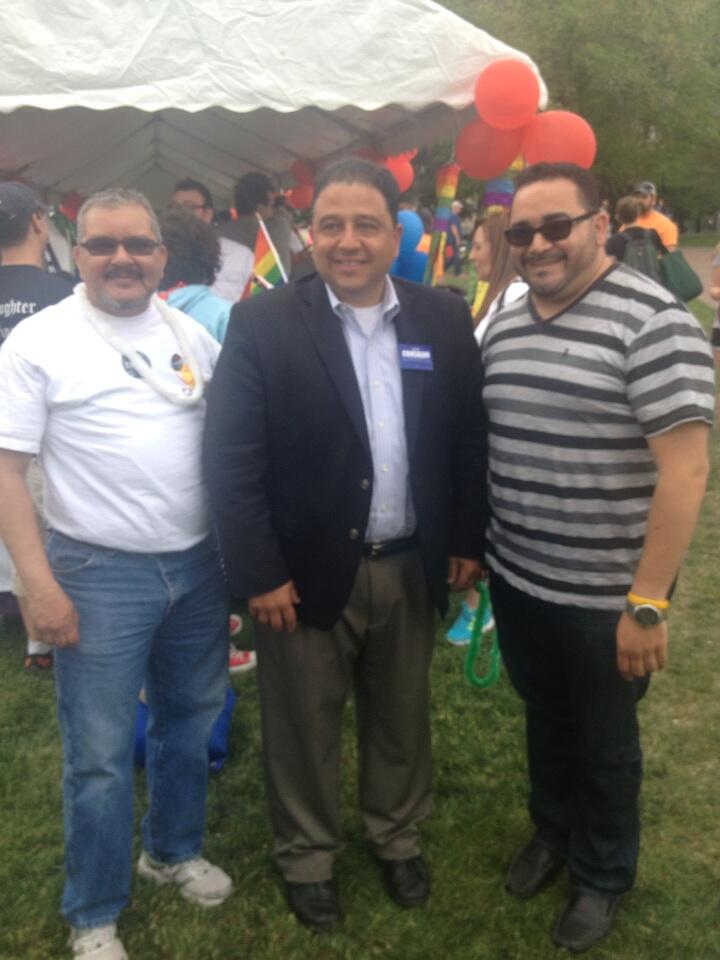
Some things remain the same, however. Candidates holding current office already have made their connections and reconnectiions. They are combat ready. The first battle is to collect 3,000 certifiable nomination signatures. Large organization in place makes it easier to collect at least 3,000 signatures — and to submit them first, because if a voter signs more than one Mayoral nomination paper — and many do — only the first submitted counts. Consider also this : for 24 candidates to qualify for the ballot, at least 72,000 signatures will need to count. that is fully 20% plus of ALL Boston voters. The City has probably never seen such a huge street-level effort.

Probably half the 24 will actually make it onto the ballot. So what comes next ? Already the major eight or so candidates are running all over the city; marching parades, meeting and greeting at eateries, shaking hands at festivals and crowd gatherings, congratulating park League sports teams; holding coffee parties in neighborhoods; advancing an agenda. But does any of this even matter on vote day ? Not many voters give their vote, in a multi-candidate field, to a candidate they happen to meet once, or even twice. Likely they have already known at least one of the “major 8” already and have interacted with him or her. It is difficult for another candidate to overtop a voter’s long experience of another candidate. Truly, in local politics, it’s an axiom that the longer that one has known a candidate, the more likely he or she is to vote for that candidate.

The force of this axiom is likely why the “major 8′ are spending so much time right now acmpaigning to communitiues of voters — LGBT and allies, Haitians, Cape Verdeans, Asians, “new Boston — who for the most part do NOT have long connection with Boston politics. If the long-connected voters — the “traditional” voters of Wards 6, 7, 16, 19, 20, and half of 18; and the “new Boston” voters of Wards 4, 5, 8, 9, 10, 11, and 21 — are pretty much already “in the bag” for one or another of the “majors,” then it makes sense for them to seek out whatever they can bag up from the less connected communities.

Less connected voters also means “issues” voters. Voters who may not be able to say to a “major”, “geez, I knew your Daddy back in the West End — great guy,” for example, can judge that candidate’s stand on the issues. Thus the rolling out of agendas, that we have already seen from the canniest candidates: Dan Conley (gun control; citywide casino referendum), Felix Arroyo (labor rights), and Marty Walsh (education).

Canny candidates have also sought, smartly, to demonstrate that however they may be “based” in a long-connected community, they have the respect and support of leaders of the less connected. thus Charlotte Golar Richie, African-American of Dorchester, parades endorsements by State Reps. Michael Moran of Ward 22 and Aaron Michlewitz of Wards 3 and 8, and the Callahan Brothers of Ward 2. Likewise Marty Walsh, Irish-American from Ward 16, has the support of openly gay State Rep. Liz Malia of Jamaica Plain. City Councillor John R Connolly, too, strongly based in ward 20, has a house-sign campaign going on all over the city. Almost certainly the other “majors” will, if they can, announce similar cross-community support.

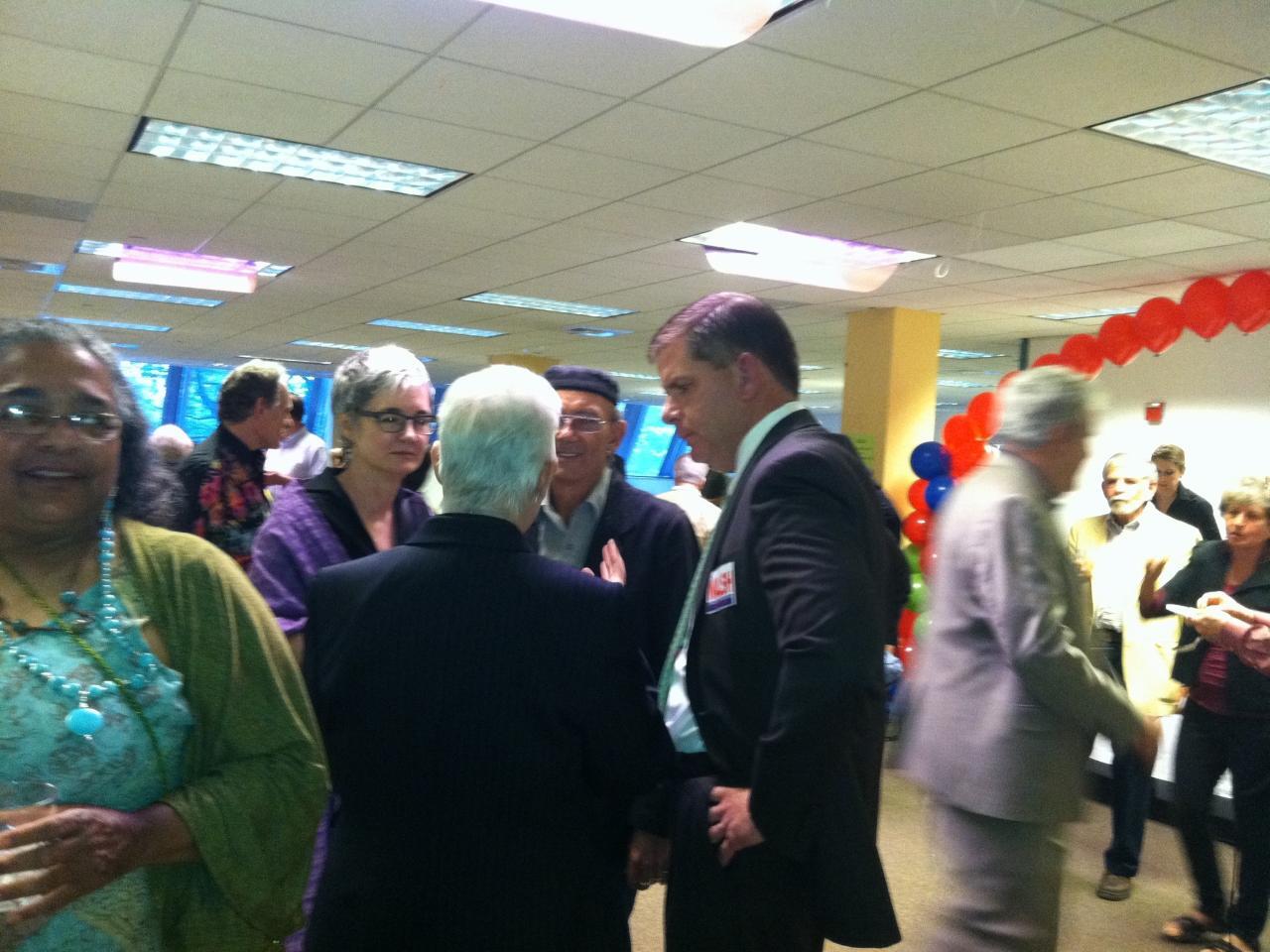
Ward 16’s Marty Walsh greeting City Life / Viuda Urbana supporters at the SEIU Hall.

This, then, is the exciting phase of the Boston mayor campaign. watching the city’s long-connected candidates dig deeply into its less-connected communities enhances the city’s togetherness and makes everyone feel that he or she counts in the halls of power. It is “retail politics” at its truest. It’s also a campaign phase that didn’t exist until Ray Flynn made it happen in 1983, as a South Boston guy campaigning among Jamaica Plain lefties. Before Flynn, Boston mayor races were combats of the powerful versus the powerful — the less so didn’t matter much and were, in fact, often pushed out of the city entirely by “urban renewal.” And Flynn himself had already worked with Jamaica Plain activists on Logan Airport issues, specifically approach run overflights of residential areas. This year, the “majors’ are seeking out the less connected voters no matter what, for their own sakes. This year, the less connected are being welcomed into the halls of city power.
—- Michael Freedberg / Here and Sphere