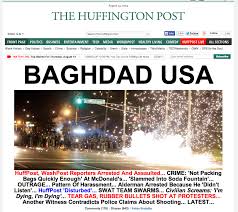
IN FERGUSON — AND IN MUCH OF AMERICA — IT’S A CRIME TO BE BLACK

1 Baghdad USA

Huff Post headlines often overstate. Not this time though.

—- —- —-

All America has been shocked by the Baghdad-like scenes of police riot in the Missouri town of Ferguson. The shock is fully justified. Arrest and assault upon journalists, destruction of news crews; equipment. Military weaponry aimned at protesting citizens. Tear gas for everyone, Rubber bullets for clergy people. Elected officials pushed aside. Arrest of elected officials.

This was the Ferguson response to citizens protesting — often angrily, and why not ?– the shooting of an unarmed young Black man, Michael Brown, by a policeman whom the town refuses to identify. (breaking : the shooter has now been identified as one Darren Wilson.)

It is all so familiar to those of us who’ve lived long. I well recall the most shocking police riot of all, in Birmingham, Alabama 1963, as officers controlled by the infamous Sheriff Bull Connor, turned high power water hoses upon protesting Black citizens. The images of that criminal act — bodies slammed up against walls by the power of water — can never leave me.

I had thought — probably all of us had thought — that the days of Bull Connor’s America were long gone, ended forever by the Civil Rights Acts of 1964 and 1965.

i was wrong. We all were wrong.

Fact is, in miuch of America it’;s still a crime to be Black. From Trayvon martin, gunned down by a slef-appointed vigilante because we wa Black, to Jonathan Ferrell murdered by a policeman while seeking help after an auto accident, to Rachel Bledsoe, killed by a white homeowner whose door she knocked on in search of help, to the Pace University student shot by a Westchester County police,man a few years ago, being Black often means having to accept the possibility of being murdered, for no reason or any reason, by whoever has a gun, police officer or not.

These acts, vipolations of Titke 38 (Civil Rights Acts) all, are bad enough. Ferguson waas worse. There, an entire police department, acting on behalf of a city government — reportedly all of it Caucasian — took upon itself to treat the town’s 69 % Black citizenry as an enemy. But they forgot one thing : we live in an age of instant youtube and social media.

The whole nation saw it.

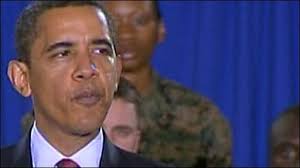
Governor Jay Nixon of Missoiuri took action — finally — by replacing the Ferguson police with state highway patrolmen and police from Black-majority St. louis. and President Obama called the Ferguson police out even as he ordered the Department of Justice to commence a full investigation of the shooting of unarmed Michael Brown. Thereby the town of Ferguson has returned to something like normal.

But we in America cannot return to full normality. Because we know, or must know, and must face, that in much of America, and for many police depoartments, it is a crime to be Black. This is true even in supposedly progressive New York City. Under the previous Mayor, city police harassed Black men especially, arrested them, and denied them basic rights after arrest. Reports in recent New York Times articles detail an institutional reign of terror inside the City’s notorious Rikers island prison.

Much attention is now focusing on what critics call “the militarization of police forces,’ as local police receive military-grade weapons disposed of by the Pentagon as authorized under 1997 Federal legislation. A Democratic congressman, Hank Johnson of Georgia, is now calling for repeal of that authorization. His legislatoon deserves a full hearing. Though soem police forces may well need military-grade weapons in order yo deal with drug gangs, their use should be very strictly limited and those limits strictly enforced.

That would help, but it will not solve the basic problem : to many police — and to those who enable them — it is a crime to be Black, and anyone who is Black — young Black men especially — need walk in fear everywhere they go.

This culture must be stopped. I call upon the Justice department to iuse its Title 38 enforcement powers to the fullest, to prosecute police officers who violate the civil rights of Black citizens and to make it clear to everyone that future violations will not be tolerated.

It is not — I repreat, NOT — a crime to be a citizen of any national origin, of any skin color, of any lifestyle. It is NOt a crime, it is one’s inalienable right to be that kind of citizen.

What happened in Ferguson, Missouri, must never happen in America again.

—- Mike Freedberg / Here and Sphere

IRAQ, THE KURDS, HAMAS, ISRAEL, THE YAZIDIS, IRAN AND … US

1 Kurdish fighters retake Kirkuk

1 ISIS in black

War on Kurdistan : (top) Kurdish fighters escort the Governor of Kirkuk (in flak jacket) into the newly captured city (bottom) men of ISIS march furiously

—- —- —

Major events are taking place in the Middle East, at its heart — what as kids we were taught to call “the Fertile Crescent” — and they would affect the US hugely even if we were not as a nation involved : which we are.

From Gaza to Jerusalem, and from the Lebanon border to Damascus,and from northern Syria to the gates of Baghdad, and from Sinjar Mountain to Erbil in Kurdistan, armies formal and informal are killing each other. Some of these armies are raping women, beheading men, committing atrocities beyond description, almost beyond belief.

Our own interests are in harm’s way here. Our friends the Israelis and the Kurds are at risk ; the one hounded by world anti-Semitism and hurt by Hamas rockets, the other attacked fiercely along a 650 mile border by an army of Orcs forged in the evil crucible of Assad’s Syria.

We could not stand aside even if we want to; and fortunately our President has not wanted to. He, as our leader, has responded forcefully and, for the Kurds, decisively.

Less sure is the outcome of Israel’s fight with Hamas, a seemingly endless yin and yang of war and truce, truce and war.

These commitments call our nation to action that we can deliver. Less sure is the question, what does it all portend ? At times the peoples of the Fertile Crescent seem determined to exterminate one another and take pleasure in doing that. Under the rubrics of delusional ideologies they commit actual atrocities almost without realizing it, so frenzied are they by anger and vitriol.

Then there’s Iran. Its leader, Ayatollah Khamenei, has a twitter account, but what he discusses in his tweets seems a distraction. He talks of bombs dropped at Hiroshima and accuses us, but while he talks that up, his negotiators are working out along term deal on Iran’s nuclear capabilities. Khamenei tweets a lot about the plight of Gaza, in which his armies have no part and where Hamas, once his proxy, is a proxy no longer. meanwhile, he says nothing about ISIS, whose recent advances gravely threaten Iran’s borders and have brought war to iran’s friends, the Shi’ites and the Kurds. About ISIS, whose ferocity cannot leave Khamenei unconcerned, he tweets not a word.

1 Khamenei no fool

Ayatollah Khamenei : a shrewd leader. follow his moves, not his words

As i see it, with Khamenei, one attends the events he does NOT tweet about. You have to follow his moves, rather; and they have been sure : his best soldiers have organized the defense of Baghdad. He, like us, has pressured Prime Minister al-Maliki to quit; and he, like us, is befriending the Kurds.

He will never say it, but his moves right now parallel ours. And I sense that he is glad to make moves under the cover of big bad Uncle Sam.

But nothing about Iran’s moves rises to the level of an agreement; we have to sus Iran’s intentions out, and that means that uncertainty is written into a large part of our Middle east policy.

It matters, because Iran has backed some of the actors whose atrocities have boiled the Fertile Crescent’s peoples and because nations far closer to us than iran gravely distrust Iran and are making their own policy decisions incorporating that deep distrust.

Of course distrust is not limited, in the Middle East, to the motives of Iran. hardly anyone in the Middle East trusts anybody else. it it hard to steer the ship of any state, much less ours, across a sea of distrust. Most people don’t want anything to do with people one can’;t trust; Americans are no exception. but we cannot simply walk away from Middle East distrust. the fires of war in that region can envelop the entire world if someone doesn’t try to tamp them down.

This is what our policy seeks to do; yet even as we try to cool the fires of war, there are wars that we cannot ignore and cannot cool down. the war of ISIS against the Kurds is one such. It cannot be put off, cannot be smiled away; it is at our front door now.

It is at our door in part because the Iraq government cannot get out of its own way. Nori al-Maliki, who began well, has become a selfish stump in the ground, and pushing him out, as now seems assured, is a decent beginning, hopefully, in making Iraq an actual nation rather than the three sided anarchy it has become under Maliki’;s misleadership.

Some want to call all this anarchy — atrocity and distrust — a fruit of Islam. I reject that. Islam has often been a religion of great progress; of science; of invention. The problem lies not with Islam but with some of the people who profess to be Islamic. Crimes are nor committed by religions but by people. No religion has executed Yazidis or persecuted Chaldean Christians; people are doing that.

1 Yazidis burying their dead

improverished Yazidis stick on Mount Sinjar carry their dead

The ordinary people of the Middle East have lived side by side without hate since time immemorial. today’s fires of hate are not inevitable, not permanent. Eventually they will retreat; and that will be the work, mostly, of the Middle East peoples themselves. All that we can do is to support our proven friends — Kurds and Israelis, most Lebanese, Jordanians, Saudis,and Egyptians, Kuwaitis and UAE citizens, steadily and strongly so that they can relax a little, counting on us to keep them somewhat from harm. that’s the rub : whoever feels that he is more or less safe from harm puts away some of his fear, of his hate, of his need to kill and destroy.

As for the brutality that is ISIS, we must never forget that it was forged by the torture and killing brought upon Sunni Syrians by Bashir Assad and his butchers. The Sunnis oF ISIS were not born killers, rapists, beheaders of harmless Yazidis, persecutors of Christians. They were made all that by the evil work of Bashir Assad. I suspect that if you, like many men of ISIS, had seen your brothers hung from ceiling hooks and tortured for days, your sisters gang raped, your father hanged and beheaded — as has happened to tens of thousands of Syrian Sunnis — you’d likely seek violent revenge madly too.

The Syrian civil war has been a monstrous disaster for the Middle East and a huge problem for our own nation, globally committed. The fighting between Israel and Hamas pales by comparison. Israel and Hamas do not wage war to the death. They fight, then truce. Hamas is irksome, and it pursues a dead end anti-Israel policy, but it is not consumed by ferocity. The fighters in Assad’s Syria are consumed, indeed have no choice but to be consumed, lest they themselves be slaughtered.

1 Israeli troops enter Gaza

War on Israel : soldiers of the IDF (Israel Defense Forces) enter Gaza

Meanwhile, though there is practically nothing we can do — or should try — to end the Syrian civil war, its ripple effects through the Middle East can bring about a better day if we seize the opportunities : solid friendship with the Kurds, support for Israel, a quiet understanding with iran, co-operation with the new Egypt — and rescue of maybe 100,000 Yazidis, whose fate has caught the attention of the world and focused a world of anger on ISIS. These are not small advances. A coherent foreign policy is achievable here — if we understand our limitations as well as advantage our opportunities.

—- Mike Freedberg / here and Sphere

AMERICA AND THE MIDDLE EAST : TOWARD A COHERENT POLICY AT LAST

photo (17)

photo (16)

Defending our friends ; (top) Kurdish troops rescue the Yazidis on Sinjar Mountain (photo by Harem Karem) (bottom) big rally “I Stand With Israel” in Paris

—- —- —-

The world is finally alive to the barbarians who call themselves ISIS. It took a while; but the world is now responding, and so are we, the United States. we are defending the Kurds, our best allies in the Mesopotamia region. We are fighting on their side. we will not fail; because we can’t, and neither can they.

The President’s people that they are doing this because they didn’t want another Benghazi. Maybe so ; but on the ground, the facts are what they are. And what they are — along with the facts of our rock solid support for Israel in its fight against Hamas, is that we, the United States, are now actively defending — with money and weapons and with people — our two best allies in the entire region, the only full democracies in it.

We are doing this at the same time that we have a friendly, solid government in place in Egypt, for the first time in six years; a solid, moderately reforming autocracy in;place in Saudi Arabia; a solid friend ruling Jordan; a deal in process with Iran, whose enemies are ours too; and with Russia distracted by its dead-end adventure in the Ukraine.

We are defending our friends and showing our other friends in the region that we mean business — finally.

1 President O speaks

President Obama ; ‘this will take a long time”

Not since the Fall of Iran’s Shah in 1979 has our Middle east Foreign Policy shown such effective coherence. that event upended the region and unhinged our own policy. An era of terrorism came upon us and demanded our attention. we focused on the immediate crisis. Even Iraq’s invasion of Kuwait, in 1990, was an immediate, local crisis; we solved it as we had the other local crises; but our policy seemed to look no further.

then came the biggest crisis of them all, 911; also a local crisis, though we did not realize it at the time. this one, too, we solved — so thoroughly that President Bush was riven to overreach ; the second Iraq war was terribly planned, miserably misconceived; it was pursued under flag of freedom : the President said so. freedom is, of course, a good thing; but most of the Middle East has rarely known any freedom and moves at a tribal level merely. Reaching for freedom was several bridges too far.

Then there is Israel. Again, we have treated Israel’s many struggles with Hamas and others as local crises; we support Israel, yes we do — always. But that support has often, since 1979, seemed unrelated to any general policy principle, much less ;policy in action.

But now that has changed — If we realize it. If we see that we are now defending not freedom but autonomy; not democracy as such, but the right of our allies not to be slaughtered by barbarians or terrorist rockets. Not regime change, but regime support.

Encourage our friends, whatever their lifestyle, so to speak. In this, our Middle East policy seems to mirror the best of our domestic arrangements : celebrate diversity. Don’t try to make people be who you want them to be; respect them as they are, and defend their rights.

That, it seems to me, is the right policy for us to parade all across the Middle east, as we fight only those who threaten our friends without seeking to make our friends be what we are.

The new policy has enormous political consequences here in America. Yes, almost everybody supports the Kurds, but a significant portion of the non-Jewish left does not support Israel — indeed, oppose it. The new Middle east policy unites almost all the Republican party : the Christian right, for religious reasons supports Israel; the realists support it for policy reasons. the Democratic party, however, looks badly split, between the realists in Washington and Jewish Democrats on the one hand versus the non-Jewish left on the other. Before the ISIS mob attacked the Kurds, the split over Israel looked a big deal. Now it has, to a large extent, been forgotten in light of the horrors being wreaked in northern Iraq.

Still, that split is real. I myself have been “unfriended; on facebook by a few people who I thought were pretty good friends — obviously i was mistaken. I imagine the same thing has happened — a lot — to everyone who defends Israel on social media.

The split may heal before the 2016 election begins to heat up ; but it also may not heal. Friendships have been broken, and no one on either side is likely to forget that. Certainly Jews can NOT forget it. Jewish history reeks of abandonment by almost everybody. Every person of Jewish ancestry knows the history and has probably experienced it personally as have I.

Meanwhile, the disparate pieces of our local-crisis Middle East policy are cohering into one comprehensive, very doable, very realistic message : “friends, we stand with you, money and weapons if need be; to defend you as you are and as you want to be !”

—- Mike Freedberg / Here and Sphere

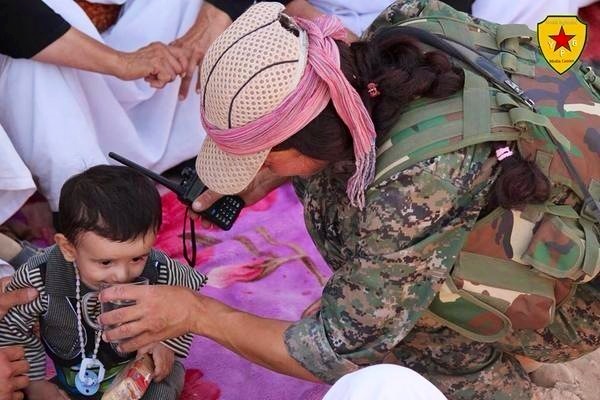
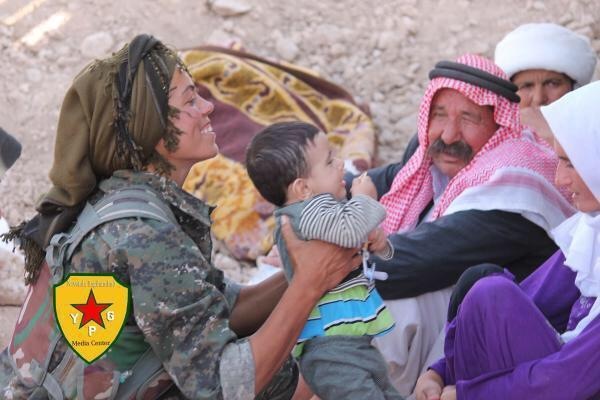
below : ( 1 ) the Goldins bury a son ( 2 ) Kurdish Pesh Merga fighter rescuing & embracing a Yazidi child (photo by Hare,m Karem)

photo (19)

photo (18)

FOR REFORM FROM BOTH DIRECTIONS : CHARLIE BAKER & MAURA HEALEY

Baker and Local 26

photo (15)

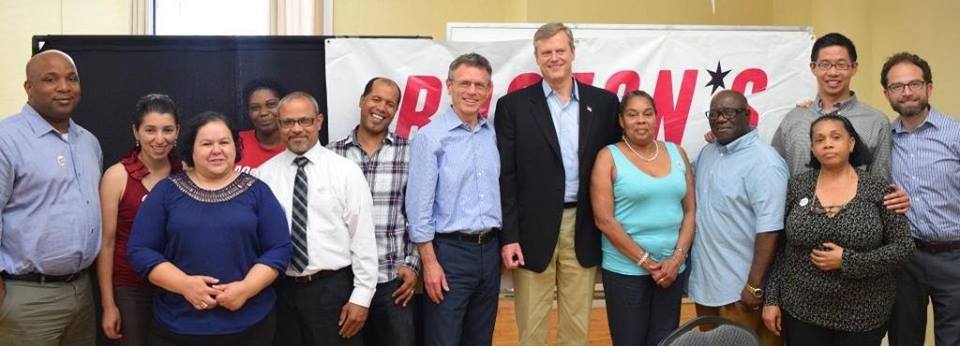
^ top : Charlie baker with leaders of Local 26 Hotel and Hospitality Workers Union

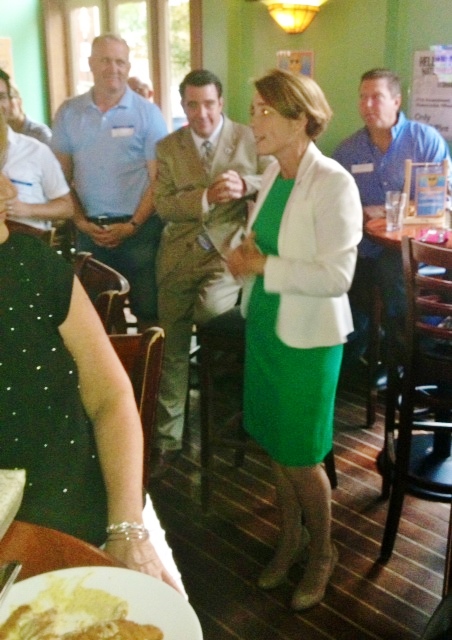
(bottom) Maura Healey with Charlestown State Rep Dan Ryan and (behind him) Chris Remmes, who was a Ryan opponent in the recent special St rep election

A few days ago i made up my mind whom I wanted to be our state’s net Attorney General. I chose Maura Healey. I had already chosen Charlie Baker to be our next Governor; so I put stickers for both on my car’s bumper, and I posted a picture of my Baker/Healey “ticket.”

To me, Healey and Baker were, respectively, the best candidates, of those on offer, for the offices at issue, and at that time I thought no further.

Tonight, however, after journo-ing Maura Healey’s meet and greet event at the Ironside Grille in Charlestown — more about this event later — I realized that there is a far more profound purpose than I had realized, in selecting Baker and Healey rather than any of their rivals.

That purpose is reform. “Reform from both directions,” i call it.

Baker brings a radical change vision to state administration, changes he is well gifted to accomplish and which are sorely needed : vastly improved data management; transparency; user-friendly online access, coherence, and hugely more effective dollar deployment. Waste, incompetence, obscurity, DCF failure, shady managerial hires (remember Sheila Burgess ?), health care connector collapse, legislative confusion : you name it, state administration during the past four years has fallen from grace.

Baker passes all the prerequisite policy tests — of women’s health rights, marriage equality, transgender rights, support for fair wages, even an ability to work with the state’s major private sector unions. On these scores, he supports what most voters in Massachusetts support. Thus putting him in charge of reforming state administration does not, at the same time, risk losing our progressive momentum on the issues.

At the same time, Baker, politically, cannot do things that Maura Healey can; just as Healey cannot, as attorney general, undertake reforms that Baker as governor can. Healey as attorney general can use the power of law enforcement and oversight to advance women’s rights, the rights of small people against the big banks and bureaucratic systems, the rights of transgender people, matters of public safety and gun regulation. She talks about these tasks all the time, and does so with passion and in detail.

Healey has the voice of a stump speech reformer; Baker has it too. The culture of Beacon Hill badly needs to hear both of these voices.

Yes, she and he are, otherwise very different. One is a Democrat, the other a Republican. One is managerial, the other a crusader. They complement one another marvelously.

Together, they have the power, and will have sufficient public attention, to force Speaker DeLeo to listen. DeLeo, like many Speakers before him, has used his complete control of the House to pass only the legislation that he wants, in the shape that he wants it, and to see off legislation that he does not want — even bills offered by the (Democratic) Governor have gone nowhere without DeLeo aboard. Martha Coakley, as attorney general, has made no moves — none that i am aware of — to use the force of office to bolster any of Governor Patrick’s initiatives. I suspect that Maura Healey will not be so shy; and on matters where she and Baker can agree, I suspect that their joint efforts will force Speaker DeLeo to change his priorities more than once.

In Charlestown tonight, in the neighborhood where she lives (and, indeed, was given her first job, so she told us) Healey showed her strength on the ground. The event was hosted by Chris Remmes, a classic city progressive who ran for State Representative in a special election this year and drew only about 550 votes. But midway through the event, the man who defeated him, State Representative Dan Ryan, showed up, as did quite a number of Ryan’s Teamster supporters. When Healey began her speech, the Ironside was packed, close to 100 people.

This of itself was news; unions form the base of support for Healey’s primary opponent, Warren Tolman. It was pointed out to me that Teamsters Local 25 supports Healey’s current boss, Martha Coakley, for Governor. Fair enough; but support for one doesn’t require support for the other. Perhaps the Teamsters Local 25 leadership has recognized that the guarantee of unionism’s newly improved political power in Massachusetts is to ally, at ;least in the Attorney General race, with the state’s progressives and reformers.

In that, i think the Teamster leadership has it right. There is, for a smart union, no further advantage in remaining faithful to old arrangements. The smart union is the one that sees the new coalition forming and moves to join it. This the Teamsters of Local 25 hae now done in the matter of Maura Healey versus Warren Tolman.

By making that choice, the Teamsters — and, so it seems, Dan Ryan — have probably assured that Maura Healey will win the hotly contested primary that she is in and will thereafter fairly easily beat her November opponent, a skilled lawyer to be sure but, politically, of unsympathetic instincts and scant imagination.

I wish the Teamsters would also choose Baker and not Coakley. Baker’s mentor, Bill Weld, enjoyed widespread union support when he was Governor, and for good and tangible reasons. The same can be true of a Baker administration, and he is making moves to demonstrate that to major unions in the state. The reforms of state administration which he voices are no less significant to labor than to anyone else, because all of us suffer from state incompetence.

If Baker can pass the issues tests — as Healey has done in her own way — he can bring other smart unions, if not this time the Teamsters, to his side, as she has.

Were that to happen, there’ll be a very, very different state leadership than we have seen these past eight years. All to the good.

—- Mike Freedberg / Here and Sphere

ANNALS OF POLITICS IN AMERICA : THE NEXT PHASE

1 service workers seiu

^ the new unionism : SEIU members raising up


The first significant signs of a new alignment of American politics are already apparent.

Even as the Tea Party and its corporate enablers roar through many “red” states, and even as marriage equality takes hold as the law of all states, new civil rights battles are coming to the fore as well as new economic urgencies.

Free-for-all banking is crashing to the ground as huge financial institutions rely, almost always unsuccessfully, on low level staffs with huge turnover that precludes learning the intricacies of customer service in the age of investment by hedge fund pools and pass-throiugh securities. The future of banking is “go small” : no big bank of today comes close to matching the efficiency and customer service smartness of medium-sized and community banks.

The needs of high-tech and cutting-edge employers for entry-level hires fluent in the basics of programming, math, and reading are pressuring public education to sacrifice common ground for small-unit specialization. This is the motive force behind charter schools, and also the inspiration for opposing common core curriculum standards. Supporters of small, experimental eduction don;t want common standards or a one size fits all school. they want individualized schooling.


that entirely individualized schooling cuts children off from the other great educative principle — citizenship in a common community, Horace Mann’s ideal — is less important to these folks, entirely fixated on securing their children a good career.

I oppose their single mindedness, as do many other Americans in the new politics. It’s a battle that will divide old alliances and is already creating new ones. Witness the coalition that opposes “common core” : right wing Republicans and teachers’ unions.

Income inequality in America has reached a level where it threatens the sustainability of the entire economy. Many states are already taking steps tp remedy this imbalance. Some are raising the minimum wage radically; proposals to raise the minimum wage even higher are taking hold in the most progressive cities. Unions, too — until recently dubbed “obsolete” by some “conservatives” — are finding themselves newly popular and powerful. in the service work world, unions are winning huge wage increases — with more to come — and new unions are being organized for the most basic of worker demands : a living wage and basic benefits.

At the same time, many public sector unions are losing popular support, as more such unions are seen to protect wage packages that bust city budgets, packages for six-figure earnings that look to fall on the tycoon side of income inequality.

1 seiu leaders

^ SEIU leaders : economic power AND women power

Nor does it help public sector unions that they often stand in the way of system reforms. Big changes are coming in how public education is delivered. Many teachers unions are fighting all these changes rather than getting aboard them; and the larger public — much the same public that supports service worker unions — is noticing and not liking.

American living arrangements are shifting radically. Millerites want to work, live, shop, and play in the downtowns of big cities, and in many cases to do so without cars. Almost all the well-paid young techies live this way; few if any have any interest at all in living in suburbs enduring hour to two-hour commutes to work. Meanwhile the less well paid have no choice bit to move away from Downtown — the farther away, the cheaper the housing — and to endure commutes, while shopping in malls along Interstate highways and socializing via online social media. Meanwhile, within the big cities, neighborhoods are reshaping as mini Downtowns, complete with boutiques, nightclubs, leafy restaurants, and young activists, many of them members of education/commerce co-operatives.

In all of these new living arrangements, personal diversity is the norm. Gay, lesbian, transgender people participate as regularly as anyone else; for millennials, personal lifestyle is no more an issue than one’s hair color or choice of beverage.

These changes read like “blue state America,” but they are also occurring in “red’ states. The difference — if it is one — is religion. In most of “blue” America, religion embraces, or tolerates, people’s choices rather than condemn them; the churches of big cities mostly look outward to the whole world as much as, or more than, they look inward into the individual soul. This orientation has big consequences, and a large future. The same, more or less, is true of churches in “blue’ state suburbs. But even if the churches of “red” stares orient opposite, the economies , education, and living arrangements of “red” states are changing in much the same direction as they are in “blue’ states. nd this too has consequences.

One consequence is that the “angry, old, straight white man” who has embodied right wing populism is fading from the scene, like the hippies of 40 years ago. In his place we find nerdy think tankers, big-stomach gun toters, and — ba-da-bing ! — women and people of color. Because, yes, even the South is becoming less nativist, less male dominant, less white.
The Hispanic population of practically every deep Southern state is growing fast. Georgia, South Carolina, Louisiana, even Alabama will be 20 percent Hispanic soon — or higher than that. Texas will be majority Hispanic by 2030 at the latest. The populations of these states will be younger, too. And more female, because women are the glue that holds immigrant families together.

Thus we arrive at the biggest change of all : America is rapidly moving toward having a majority of its people being of color. This matters in every way, but right now it most matters because the rights of people of color, and of women, have not been achieved as thoroughly as lifestyle civil rights. After all, gay, lesbian, and transgender people are just as likely to be Caucasian as not. Identity civil rights are this mot a matter of skin color or immigrant status.

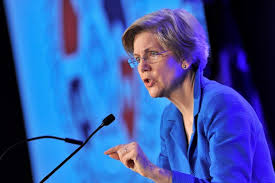
1 Eliz warren 2

the voice & face of change in the Democratic party : Senator Elizabeth Warren

The rights of people of color, and the rights of immigrants, continue to be an issue. But these will be solved by the change in our population. As for the rights of women, these too may well be secured, finally, as women become more powerful politically by way of their primacy in the newly powerful service worker unions. By far the majority of service workers are women; and as service worker women acquire higher pay and greater political power thereby, so will they — as women and as union leaders — secure the personal, body rights that men take for granted.

It was noted that Hobby Lobby, while denying to its women employees health insurance coverage from some contraception, made no such detail for men’s Viagra. In the new era of financially and union empowered women, that kind of discrimination will become unlawful no matter what the excuse.

Our two political parties are only now beginning to adjust to the new America. The Democratic party has adjusted more quickly ; the new unionism unifies Democratic politics in some places, even as the huge change in education is dividing it. The GOP has changed less ; yet even in the GOP, new voices are working out new responses to the change in education, income inequality, and population shifts. The difference is that change in the Democratic party arises from activists and large interest groups, whereas so far in the GOP it is coming mostly from think tanks. Curious, the asymmetry. We live in a democracy, where voters rule. the Democratic party operates on this principle; the GOP doesn’t — yet. My guess is that the GOP will have to change its ways as radically as the nation is changing — will have to start acting like a party of voters, not of researchers; and to trust the voters, not disdain them — or its recipe will fade from the new America.

—- Mike Freedberg / Here and Sphere

ENEMY OF THE PEOPLE

1 refugee children 2

^ enemies ? really ? to the national GOP, yes

—- —- —-

The phrase arises from revolutionary Europe of 100 years ago, where it was often misapplied; but today, here in America it applies precisely. The national GOP has made clear that it is the people’s enemy. Time and time again, and yet again: for on Friday, the House GOP voted to adopt enemy status.

I refer to the so-called “Border Bill.” It passed the House by a vote of 223 to 180. The story may be read by clicking this link : http://www.usatoday.com/story/news/politics/2014/08/01/border-funding-house-bill/13457447/

This Border Bill — which is dead on arrival at the Senate — provides additional immigration judges, some $ 684 million to states to cover the cost of housing refugee children — whom it wants gone ASAP — and goes on to authorize the National guard to patrol the border.

The National Guard ? Really ? So it is coming to that, in the minds of the national GOP ? Fortress America ?

Clearly the national GOP doesn’t much value (or doesn’t know) Napoleon’s saying : “it is an axiom of the art of war that the side that stays within its fortifications is beaten.”

To the national GOP, we ARE at war — with the entire world, whose beneficial practices it rejects, whose people it fears, and whose dark side it doesn’t understand at all — and might as well circle the wagons and lose.

The House bill digs a deeper grave. At the Tea Party’s insistence, an amendment was added, repealing President Obama’s executive order of two years ago, which gave about one million young undocumenteds — so-called “Dreamers” — permission, under conditions, to remain in America and not be deported. This amendment was too muhch for all of eleven (11) House Republicans. they voted “no.” The amendment still passed, 210 to 192.

Can the national GOP really be so stupid as to offend nearly every Latino family in America — for nearly every such family has a relative or a friend, or both, who face deportation — by voting such punitive legislation ? It seems that yes, the national GOP is just that stupid.

An enemy of the people.

Here in Massachusetts, even, running in a Congressional District loaded with immigrants — the 9th, now represented by Bill Keating (D) — the most “reasonable” of the four Republicans running against Keating yesterday posted on his facebook page a long and pointed critique of Keating for voting “no” on the border Bill.

The candidate who did that is John Chapman. Can Chapman really be that stupid / that offensive to those whom he hopes to represent ? The gods only know what his three “unreasonable’; GOP opponents must be posting.

It turns out that Chapman isn’t as stupid as i would like to think him. In the Republican primary, he does in fact face voters who mostly share his views. recent polls have shown that about 43 to 44 percent of all Massachusetts voters oppose Governor Patrick’s plan to house the 1,000 refugee children being sent to this state. Among Republicans, who in Massachusetts reject almost everything that most of our state’s voters want, the figure in opposition must be hugely higher.

But if Chapman’s anti-immigrant posting probably represents majority opinion among GOP primary voters, it is very much a minority opinion in his District, which has far more immigrants than the state average. Moreover, Chapman’s post fails the moral test ; a test which Jeb Bush so well summed up, about immigrants coming to America against the law, that “it’s not a felony, it’s an act of love, to give their families a better life.”

One would think that the national GOP, and John Chapman, would embrace Bush’s view, which holds so much promise for welcoming the millions who risk life and limb to come to the country that used to represent the best hope of mankind. But no. the national GOP does not embrace Bush’s vision. probably because it also doesn’t believe that America is the last best hope of mankind. One surmises that to the national GOP, as it rejects immigrants, who are, after all, the very definition of our nation, America is finished, and all that is left is to give it a good swift burial.

No guarantee of health care for all. No advocacy of fair wages for all workers. Suppression rather than enablement of voting. Harassing women in their most intimate health concerns. No help for the unemployed or for veterans. Shutting down the government. No money for infrastructure repair and improvements. Tax breaks for corporations that outsource jobs overseas. Demonizing gay people and transgenders. And boundless hatred for immigrants who risk all to come here.

Enemy of the people ? Yes. Enemy of the people.

—- Mike Freedberg / Here and Sphere

PROBATION DEPARTMENT : REFORM, AND WHAT MARTY WALSH SAID

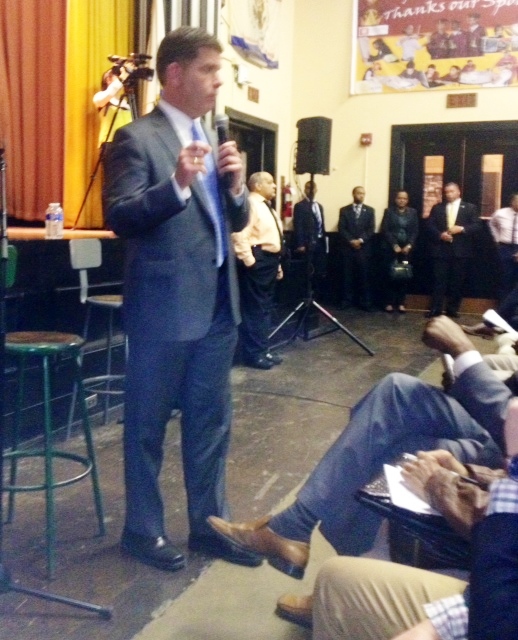
photo (10)

^ Marty Walsh blames the system, not John O’Brien. in a significant sense, he is right

—- —- —-

Mayor Walsh of Boston has been pied pretty good by pundits for what he said about John O’Brien, the now convicted former head of Massachusetts’s Department of probation. Doubtless Walsh wanted simply to defuse the entire matter; to not pick a fight with Speaker DeLeo; and to not throw an old friend from his Dorchester neighborhood under the bus. After all, the Probation department is not a City of Boston matter — of those Walsh has quite enough to handle as it is.

But in any case, neither Walsh’s remarks, nor the questions asked of him by radio emcee Margery Eagan (a Boston Herald columnist) did more than duck the real question, the truly serious question : what specifically went wrong at the Probation department ? Why was O’Brien able to turn the entire Probation staff into his own personal hiring agency ? And pervert it utterly, subvert judges, shove aside probation officers already on the job ? How was O’Brien able to do that ? Why did the legislature — and Governor Patrick — allow him to do that ?

These are the questions that need answering. And there actually is an answer.

it begins, as does so much in Massachusetts public life, with Billy Bulger, who was once President of the State senate, and a,most powerful senate President was he.

Bulger as Senate President had control of the state budget, which originates in the legislature and must be enacted by it. Bulger was also one of the most avid patronage providers. Among the most plum of plum positions are court jobs; and so when Bulger wanted a relative — for there were very many of these — or a supporter appointed to a court job, the judge of that court was told that next year’s budget for his court would be decreased — maybe even that judge’s salary — unless Bulger’s guy got the job.

Some judges balked, and their budgets were cut. Thereafter, judges got the message.

O’Brien thus adopted the Bulger method. He was not Senate President, of course, but he was close friends with the new top power in the legislature : the Speaker of the house. If an O’Brien candidate didn’t get the probation job that O’Brien wanted for him or her, that court’s budget would be cut next year in the House. Legislators knew that O’Brien would get those whom they sponsored hired, and how he would do it; and so the system began, and continued, and worked until it entirely took over the entire probation department’s hiring and promoting.

The conviction of O’Brien and top aide Elisabeth Tavares ends their careers, but it does nothing to reform the legislature’s willingness to use court budgets to bully the state’s courts onto hiring patronage hires. As long as a House Speaker, or a senate President, or both, are willing to bully the state’s judges, probation department hires (and of course clerks of court too) are at the legislature’s mercy.

Granted, that for the near future, the legislature will not dare to bludgeon court judges in this manner for this purpose. But the budget comes up every year, and there is nothing except the public’s memory of outrage to prevent it happening again. And as Mayor Walsh says, it’s part of a legislator’s job to help out his constituents, including helping them find a job. A legislator has a perfect right, maybe even a duty, to write a letter of recommendation for a constituent : government departments do want to know that a job candidate has the ear of a legislator, for state agencies are always needing to communicate with legislators who oversee them. That’s as it should be.

Yet to prevent powerful legislative leaders from abusing their advantage, what can we do / because we ought to something. Myself, I suggest that agency budgets itemize prospective hires (and promotions) for that budget year as a separate budget item, and that that budget item be published, in timely fashion, in every major newspaper and online; and that “job postings” be subject to independent monitoring by a watchdog organization such as Sam Tyler’s Municipal research bureau.

In other words, transparency — the buzzword of this campaign season and a major reform. Transparency won’t eliminate abuses, but it can curb them before they become epidemic.

—- Mike Freedberg / Here and Sphere

MAGOV14 : IT’S GAME ON NOW, TO WIN BOSTON

Baker and Local 26

^ going to the flash point of a Boston election ; Charlie Baker meets with officers of Local 26 Hospitality and Hotel Workers

—- —- —-

The fight is on now. To win Boston, and thereby, probably, the entire election.

You may think my assessment wildly crazy. How can Charlie Baker, the Republican, win a city that has of late voted three to one Democratic, and more than three to one ?

Maybe Baker cannot win the city outright. But even if he comes close, he wins the election. And he is definitely staking his claim to doing just that.

Baker’s move on Boston didn’t begin last week. He has been working the city steadily for many months now, on e community at a time. But last week he made two moves that up the intensity of his Boston effort by a lot : first, he door knocked the heaviest-voting precinct in the city, Dorchester’s ward 16 precinct 12 — a precinct that Marty Walsh won, for mayor, by more than four to one. Second, Baker met with officers of Local 26 Hotel and Hospitality Workers. Local 26 last year made the move — endorsing Marty Walsh over their personal favorite, Felix G. arroyo — that started Walsh’s momentum rolling. Their endorsement of Baker, were it to happen, would surely do the same for him.

Baker hasn’t won the voters of that Dorchester precinct yet, nor has he gained local 26’s endorsement so far. But the fight for both is now on, and beyond it lies much ground : many Boston -based unions of great significance — SEIU Local 1199 in particular — and about 150 voting precincts, low and moderate income, in which the Democratic Governor candidates have yet to make much impact, their campaign having concentrated on the high income suburbs and on Downtown boston’s upper income areas.

Baker has much to offer the voters of these precincts and the members of the city’s major private industry unions. To the voters in communities of color, he offers support for additional charter schools — something that prompted State Rep. Russell Holmes to sponsor a charter cap lift bill that the Senate amended and killed. (Nor will Baker’s support for charter schools put him at odds with Mayor Walsh, who sat on a charter school board and is backing John McDonough’s efforts to transform how Boston public schools are managed). To voters in Dorchester (and beyond), Baker offers a continuation of Boston’s building boom — his proposal to dispose of much State-owned land for development — and thus continued work for everyone in the Building Trades. Continuation of the building boom also offers the workers of Local 26 a prosperous future, just as the recently enacted minimum wage hike — which Baker supported — offers the members of SEIU Local 1199 a chance to earn a decent living.

If all of this reminds you very much of last year’s Boston Mayor campaign, it’s no coincidence. Baker appears to be campaigning Boston very much on Mayor campaign issues, to constituencies (including Mayor Walsh’s core supporters in the Building trades, service workers, and Dorchester) ; and it is shrewd of Baker to do so, because this is what last year’s intense Mayor campaign ingrained into Boston voters’ political expectations generally.

Baker now has the pole position in the race to win boston. Of course the ultimate Democratic nominee can catch up; Boston is Democratic enough that a campaign to catch up to Baker in the city has plenty to work with. But if the Democratic nominee — probably Martha Coakley — has to spend time winning back Boston, that is time that she will not be able to spend winning votes in parts of the state far less favorable to her but where most Massachusetts elections are decided. And Coakley is hardly the candidate to win a game of catch-up. Her vague, surfacey campaign is geared for front running. A catch up candidate has to hit and hit hard and to be specific on the issues, sure of itself, pointed, forensic. I have yet, in five years of watching, to see Martha Coakley be any of these things.

I cannot say enough about the boldness of baker’s 2014 campaign, about its shrewdness, its instinct for how campaigns are run and won, its tone, its currency. We have become accustomed to seeing Republican campaigns run on spin-doctored talking points, delivered to robo-voters, or campaigns of virulent, petty negativity — who can forget Scott Brown making a fetish of Elizabeth Warren’s supposed Cherokee ancestry ? — that alienate everybody not of “the base.” Baker’s campaign — and that of his charismatic running mate, Karyn Polito — look, sound & feel entirely different from all that. theirs is not a campaign of think-tank manifestos but of outreach to actual voters and to what actual voters — of all kinds and in all neighborhoods — want and expect.

This is campaign in the classic manner, as big an effort as i have seen a Republican do in Massachusetts since 1990, maybe even since the days of John Volpe almost 50 years ago.

Little wonder that Baker and Polito continue to raise tons more money than any of their five rivals — and raised it from Massachusetts, not out of state PACs. Great campaigns give great confidence to those with smallish donations to give, from budgets that can spare only smallish funds. Baker will have all the money he needs to bring his city campaign to every urban precinct. The campaign to win them is now “game on.” Big time.

—- Mike Freedberg / Here and Sphere

TOWN GREENS, FARMS, SENIOR CITIZENS, AND WOODS

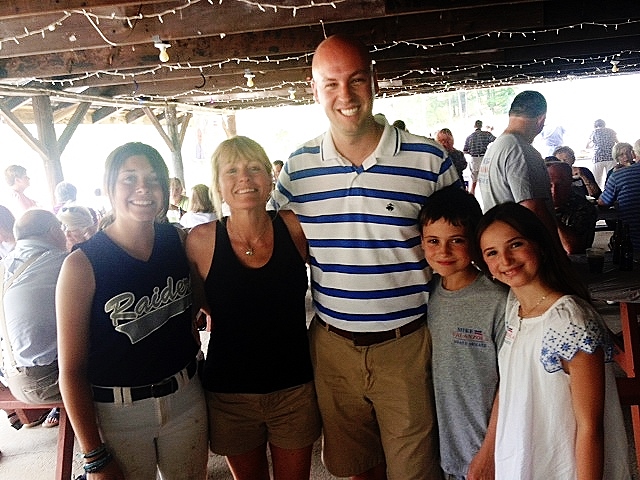
photo (3)

^ seeking an open State Senate seat : Mike Valanzola and friends

—- —- —-

Town greens, farms, senior citizens, and woods : that’s what i saw a lot of yesterday as I traversed much of the Worcester, Hampden, Hampshire, and Middlesex State Senate District, where a race is afoot to succeed long time incumbent Stephen Brewer, who is retiring.

I also saw posters for fish & game club cookouts, old-style main streets in many towns, homee ancient and brand new, and lots of uninhabited stretches through which slender, 1950s roads bumped and twisted, almost without markings. This is GPS country.

It’s also some of Massachusetts’s most forgotten territory, filled with towns that got cut off from cross-state traffic when Quabbin reservoir — forming the District’s eastern edge — was filled in the 1930s. Long useless factories loom like sad ghosts along the main streets of Ware, Spencer, Winchendon, Barre, Warren and Charlton. Even in Athol, where the Starrett Company soldiers on, there is little evidence of a manufacturing future, much less expansion.

Mill towns closer to Boston — Clinton, Hudson, Stoughton, Peabody — have already passed through their eras of decline, forgottenness, and re-invention. Technology now occupies their industrial paces. In the “WHHM: there is some technology — I saw a biotech firm called “rEVO” on Route 31 in Spencer — but for most WHHM workers, you either commute the 50 to 70 moles to Boston or you work at low paying jobs in the District.

There aren’t a whole lot of Starbucks coffee shops in the WHHM. Exception : Sturbridge, where big-deal tourism keeps things busy much of the year, wages aren’t uniformly minimum, and small, tourist-serving businesses can prosper.

Upon this nature-beautiful but mostly hardscrabble District, there are three (3) candidates running to become the next State Senator :

1 Anne Gobi w Stepehn Brewer

1. ^ State Representative Anne Gobi, of Spencer (D) (with Stephen Brewer)

photo (1)

2. ^ Town of Wales selectman Mike Valanzola (R) (with Susannah Whipps Lee, R candidate for state representative, 2nd Franklin District) and

1 James Ehrhard 2

3. ^ James Ehrhard (R), a former selectman candidate in Sturbridge.

Yesterday I made my first journo-ing trip into the District, driving through Charlton, Sturbridge, Holland, Wales, Brimfield, and Spencer and stopping at two events.I also surfed the candidates’ FB and twitter accounts and read Mike Valanzola’s literature.

So what are my first impressions ?

1. Both Mike Valanzola and James Ehrhard make a point — Valanzola soft spoken, Ehrhard in full barn burn cry –of saying something like “refuse to reward illegals with in- state tuition or divers’ licenses.” To which i respond, “In what way does denying them drivers licenses do anything whatsoever to help the people of the WHHM improve their job prospects ?” Indeed, why is the issue relevant at all ?

One can’t help but note that, as Steve Grossman told a Boston audience two nights ago, “there would no farm industry in Mass but for undocumented workers.” The WHHM is a farm district par excellence.It is filled with undocumented workers whose difficulty getting from farm to farm, for work, without drivers licenses, in this NH border to CT border District I can only imagine.

Lest you incline to lump Valanzola and Ehrhard together, don’t. the two men, albeit voicing somewhat similar agendas, represent bitterly opposed portions of Massachusetts’s GOP. Ehrhard has the endorsement of the so-called Massachusetts Republican Assembly, an organization as right wing as any talk show host you can think of — and which endorsed Mark Fisher for governor. Valanzola has the backing of the Governor GOP — Charlie Baker’s team — and of those grass roots activists who care more about winning elections than flinging inflammatory demonizations. There’s no love lost between two factions so completely at odds, and the Valanzola – Ehrhard primary on September 9th is likely to be a contact sport event.

2. Ehrhard and Valanzola are thus campaigning hard. Both have lawn signs aplenty, and Valanzola drew a large crowd to his BBQ yesterday. Of Anne Gobi’s campaign I saw nothing. Still, from Gobi’s twitter account I learned plenty. Her issue seems to be conservation and nature — not a bad issue in a farm and woods district — and she spends a lot of time with (1) seniors — significant in a District with many older people and (2) town activists — also significant in a District with very little option for urban entertainments.

Gobi also has an inflammatory issue — should Kinder Morgan’s Northern Pass gas pipeline be built or not ? — and it’s an issue which, unlike drivers’ licenses for undocumented people, actually matters to her District (the pipeline will pass through all the towns on the WHHM’s northern border). Gobi is opposed to building the pipeline, presumably on conservationist grounds. . From her two rivals I have seen nothing on this issue: it’s probably a wise decision on their part.

Gobi’s conservation position and general practicality would seem to be by far the best approach — and she seems much more widely visible in the WHHM than her rivals; except that she is a Democrat; and in the WHHM the word “Democrat” means “Beacon Hill,” and “Beacon Hill,”to the farmers and seniors of the WHHM,usually means turnpike tolls, high taxes for city stuff, Boston especially, and not much for the WHHM, and — as we now know — corruption. The WHHM includes many of MA’s most GOP-voting towns and not many — if any — that vote Democrat. So the question is : will Valanzola’s soft spoken accusations prevail, or Ehrhard’s all out, talk show condemnations? Because one of these men seems more likely than Gobi to be the next WHHM State Senator.

— Mike Freedberg / Here and Sphere
MAGOV14 : THE RIDDLE OF STEVE GROSSMAN’S CANDIDACY

photo (56)

^ speaking to the few : steve Grossman at Merengue Restaurant on Blue Hill Avenue (to his right, Merengue’s Hector Pina and, to the left of Pina, Mrs. Grossman)

—- —- —-

Here’s the riddle ; Steve Grossman, Massachusetts’s State Treasurer, should be the front runner for the Democratic nomination, but he isn’t. In every poll, he badly trails his main rival, Attorney General Martha Coakley.

That he won the Democratic convention’s endorsement doesn’t seem to matter at all. It often doesn’t matter to ordinary Primary voters, but never have I seen a convention endorsee trailing a rival by 30 points, as Grossman has until recently.

Grossman is articulate and authoritative, Coakley glib and vague. Yet she leads, and he trails. badly.

Grossman attributes it to “lack of name recognition,” and he’s right about that ; over 50 percent of voters intending to vote in the Democratic primary ay they don’t know him at all, or too little to have an opinion. But why is this so ? Grossman was elected statewide in 2010, in a hard fought and close race, and for at least twenty years before that he was a major Democratic activist — party chairman, national committeeman. Granted that these are party offices, not general public. But you would think that most members of his party, at least, would be fairly familiar with their top leaders.

I certainly thought so, but I have been wrong. Grossman’s lack of name recognition tells me that in Massachusetts, party identification doesn’t matter very much. Who we elect to state offices — unlike to national ones — is pretty much a non-partisan thing.

That, i think, is the real reason that Steve Grossman polls so poorly only seven weeks before the Democratic primary ; nonpartisan is something he has scant experience at being. His entire career has blossomed inside the cocoon of Party.

This year, Grossman’s career as party man especially hurts, because in this election the Democratic party — Grossman’s party — has concentrated its efforts almost entirely in the high-income, technology-oriented suburbs that surround boston and drive its economy and culture : Newton (where Grossman lives, Brookline, Watertown, Belmont, Cambridge, Wellesley, Lexington, Arlington, Concord, Lincoln, Winchester. In these communities os the money that Democratic candidates need. And the activists : the first Governor Forum of this season took place in Lexington in January and was attended by at least 300 people. When Juliette Kayyem chose a location whence to re-up her underdog candidacy, she chose Arlington. even Don Berwick, the Democrats’ ,most outspoken progressive, voices the issues of the high-income suburbs.

Meanwhile, the big cities, the most Democratic-voting communities in our state, have gone almost unattended until lately, and it shows. Last night Steve Grossman held a meet and greet at Merengue Restaurant on Boston’s blue Hill Avenue : about 20 people attended.

photo (57)

20 for Steve : that was all…

This had to disappoint Grossman. He’s the convention endorsee, the meet and greet was hosted by a major Boston political player — Jovita Fontanez, a former election commissioner and veteran of 30 years of campaigns — and yet only 20 people showed up. Only two months ago, Felix Arroyo, running for a low-level office, Register of Probate in Suffolk County, put 100 people in the same room; and last year, Mike Flaherty, running or Boston City Council, drew at least that many to the same Merengue room.

Quite obviously, city activists have noted where the Democratic candidates have put their chips down and where not.

All three Democratic governor rivals — Coakley and Berwick as well as Grossman — are now making campaign stops all across boston, but it’s very late in the game, and it’s summer : many boston voters are off to Cape Cod or thinking vacation, not politics. it was so even in last year’s intense Mayor campaign. all the more so for governor candidates who talk the talk of Newton, Brookline, Lexington, and Arlington.

But Grossman is beginning to get it. campaigning to city voters entails something other than high-minded reform. it entails jobs. Speaking to the 20 attendees at last night’s meet and greet, Grossman hit a home run, not by voicing his strong support for the 1,000 refugee children now in Massachusetts — that was a given, for this entirely hispanic audience — but when he mentioned that “as governor i will supervise 85,000 jobs. imagine what it would mean for diverse communities if 35 percent of them were from diverse backgrounds !”

Jobs and more jobs. That is indeed what city activists want to hear. Jobs that won’t be laid off — as united Airlines is now doing to 650 gate attendees, whose $ 50,000 salaries will be replaced with minimum wage subcontractors. Jobs that can help a three-decker, renting family move up in life.

That Grossman cannot simply fire 35 percent of the state work force and replace them with his supporters didn’t seem to matter to his listeners. It was enough that Grossman at least understood what the objective is.

Grossman knows all the issues and articulates sensible answers to most. He spoke about the obstacles faced in Massachusetts by small businesses, especially those run by immigrants, women, and minorities — Merengue is just such a small business, nd its owner, Hector Pina, was in the room — and touted his work as Treasurer in securing $ 1.7 billion of bank loans for small businesses owned by women, minorities, and immigrants. No candidate for governor this year has a better handle on what such small businesses need; certainly Martha Coakley has yet to say anything of substance about it.

Grossman speaks with equal authority on just about every issue you can name, from state management to technology to energy to transportation, even education; yet it hasn’t mattered much — so far. That may be changing ; today’s Boston Globe poll has Grossman at 18 percent, Coakley at 46 : his best, her weakest showing yet.

A 28 point gap, however, is nothing to cheer about with so little campaign time left. And so Grossman is going to start door-knocking. He makes the point ; “door knocking, in a statewide race ? Yes. i want the people to see me and hear from me,” he told last night’s attendees.

He may well want voters to see and hear him; but the big reason for him to door-knock is that it will likely get him major media attention. door knocking, in a statewide race ? That IS news. And news, he needs. Lots of it, and lots more. Door-knocking is Grossman’s Hail Mary pass.

It may work. That and the one million dollars that he has in the bank, to spend on advertising, the final two weeks of the campaign, to all those 52 percent of primary voters — probably mostly City people — who don’t know much about him.

—- Mike Freedberg / Here and Sphere