WE SAY YES TO GIVING THE PRESIDENT TRADE PACT AUTHORITY

NO GOOD REASON NOT TO GIVE THE PRESIDENT FAST TRACK AUTHORITYEliz Warren 1

^ on the issue of international trade, it’s his yes versus her no. We’re with Yes.

—- —- —- —-

Last week we argued that the President should, on balance, be granted what he calls “fast track” authority to negotiate an Asian trade partnership Pact (TPP). Since that time we’ve heard, or read, all the primary arguments pro and con. We come away even more certain than we were : the President should — must — be granted full authority to conclude the TPP.

Trade is the lifeblood of civilisations. Commerce makes us freer than we would be otherwise, and more prosperous. Commerce promotes tolerance, cultural diversity, lifetsyle multiplicity.

Commerce is not tio be trifled with. Yet ever since the embargo used by President Jefferson , in 1812, as a kind of war by other means, Americans have from time to time thought it useful to disconnect our trade from the world’s. It almost never is wise. The 1812 embargo bankrupted coastal New England. President Carters’s boycott of the Moscow Olnypics, on an issue of human rights, saved no people from rights abuse but did bring us scorn and irrelevance. Moves to have universities divest holdings in companies doing business with Isarel disfigure those who make such moves. The same is true of those who would have universities divest from the energy industry. All that such moves do is to put thousands of well-paid jobs at risk and make an investor’s task harder.

Yet embargo and divest are the siblings of the courses being bruited by those who oppose the TPP. We can’t have it, they say, because our prospective trade partners might not obey our ideas about child labor, unions, smoky skies, or currency. We can’t have trade agreements because some of our trade partners abuse human rights. (Hmmm, so do we.) Or, say some of the objectors, we can’t have TPP because the Obama administration isn’t enforcing provisos written into trade treaties already enacted.

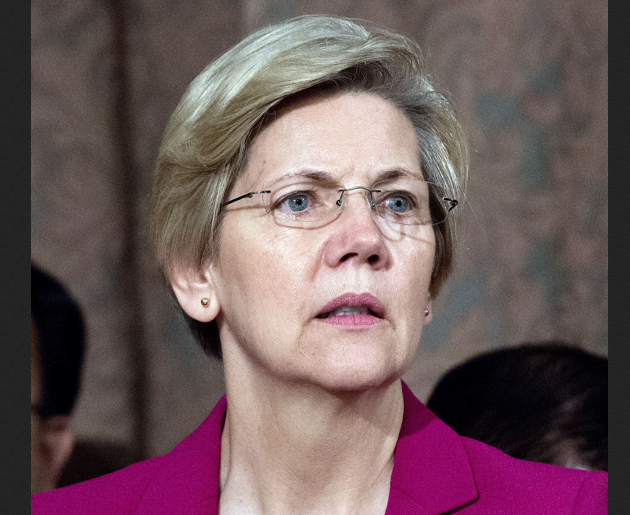
Our own senator, Elizabeth Warren, has made a huge magillah along these lines. Those who think no further than the sound emoted from her lips applaud her profusely.

The “fast track”: proposal was held up, briefly, because some Senators want to attach provisos to it barring currency manipulation by the Chinese and insisting on protections for workers, including a ban on child labor. Worthy goals all. I do ot see how not having a TPP treaty at all advances them.

We find the objectors’ refusals a mere, modern version of embargo. Do things our way or we’ll take our marbles and go home.

Forget, I guess, that, as President Obama points out, the nations with whom we wish to do TPP represent 95 percent of the world’s consumers. Forget, evidently, that if we don’t partner with these nations, our economic competitors will be glad to step in. Forget, too, I guess, the huge economic benefits of TPP : the trade surpluses — which strengthen our dollar and support our Federal bonds; the enormous revenue opportunities; the innovation that will be required in order to dominate this huge economic zone, which just happens to feature most of the world’s best education systems, best skilled students, and most efficient manufacturers.

Lastly, there’s the big private industry labor unions. they too don’t want to see the President have “fast tarck.’ Heck, they don’t want any trade treaty at all. to them, trade treaty means lost American jobs.

About that, they’re probably right,. a trade treaty does probably mean lost American jobs. But it also, just a likely, means new American jobs, of a different order in different economic environs. Are these new jobs nothing ? To the unionists they probably are nothing, because it’s very likely they won’t be union jobs. Skilled technology jobs in small enterprises aren’t very conducive to the union method — a very worthy method, as it is, for the settings in which it works.

The new types of jobs that the TPP is likely to create will be higher paid, perhaps ot very secure, highly mobile; but they will be jobs. Better them than no jobs at all. The jobs that the anti-TPP union leaders seek to preserve will not be around much longer no matter how much political formaldehyde they’re washed in.

No one can say if the TPP will create a brave new world of workers’ rights, currencies not manipulated, environments shiny and new. But I don’t see how not ennacting TPP will bring any of those to pass either. Give the President full, authority to het a TPP treaty doe.

—- Mike Freederg / Here and Sphere

FIXING THE T : COST CONTROL BEFORE REVENUE ROLL

1 Green Line Ext

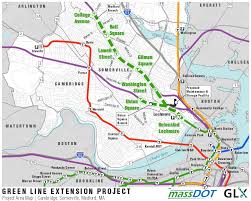
^ Hallelujah !  route of Green Line Extension to be ready by mid 2020

—- —- —- —-

Two nights ago I attended a meeting in Medford at which community activists discussed the forthcoming Green Line extension with MBTA project managers. What i heard, over the course of almost two hours, was a case study in budget busting. I’m afraid that such busted budgets are a way of life at the “T.” This cannot continue.

Extension of the Green Line, from its current terminus at Lechmere out through Somerville and into Medford, has been on the table for years and years. At the meeting we found out — because I asked; nobody else did — that completion won’t take place until mid-2020. Meanwhile, the entire project is having to undergo environmental reviews of all kinds ; noise, vibration, track bed, bed width, snow fences, station size, exiting and entering, footpath access and crossings, traffic study, train frequency. All were at issue at Wednesday night’s meeting, along with the usual NIMBYism.

Here’s a link to the Green Line Extemsion project in all of its details : http://greenlineextension.eot.state.ma.us/

i cannot imagine how large the bill will be for all these environment studies; the people hired to do them; the equipment; the web-siting; and meetings after meetings, leading — probably — to yet more design reviews, environmental studies, and more meetings. All of it just to get a few miles of much needed rapid transit built.

The MBTA project team had already worked a full day as the meeting began. They called an end to it somewhat after eight o’clock because, as some said, their last trains home left at nine p.m.

I have seen several such MBTA project teams hosting meetings well past their scheduled work hours. Never have I heard even one T project person express frustration, or show anger, at having to go through endless questioning of the most minor points, some of them palpably irrelevant, again and again. I do’;t kow how they manage it. I could not. I don’t have half the patience. Why do we even have such meetings ?

Riders need the T. Taxpayers are being asked to pay for its deficits. Once we decide that building out the T is a public policy priority — and we have — the process should be one, two, three : pick a route, design the track bed and stations, award the contracts and build. I’m betting we could have at least twenty percent of the cost, and at least half the time, if not more. Get it done.

The above example symbolizes the huge political Rue Golderg that is our present T operation, i which a thousand coflictig political intdrests beget tripliaction and quadruplication, lung-emptying time lapses, and a culture of shrug. Why should a T worker be diligent when all around him is slack ? Why should a T economist count his dollars when the process requires illogical expenditures and spendthrift conversations ?

No woder that South Coast rail ca’t get built despite billions spent on plans, studies, and miore studies.

Some transit extensions have failed for uglier reasons. Thirty years ago, addition to the Orange line from Forest Hills to Needham was quietly snuffed, in some part at least, over objections by suburbanites (and others closer in) to granting “those people” rapid transit access to their precious picket fence havens. The same genus of objections infected extension of the Blue Lne to Salem. I heard them voiced. And yes, I can hear quite well.

If only the T could have been built region-wide back in the day, before narrow interests coalesced to stop things in the public interest from happening !

The T exists so that riders can ride it, to work or to home, to the city or out of the city. The T exists because one cannot usuallly walk to where one needs to go, or bike, or park i the City, or catch a Uber ride. It exists for riders, who are also a large part of its taxpayers. The T should be managed by those who act in riders’ interest. As for the noise, the vibrations, the smell of trains, the traffic, well : those are part of the fizz and buzz of inhabiting the City. Please don’t double the cost (and inefficiency) of T projects because you don’t like the hubbub you live in.

The Governor’s proposed Fiscal Control Board will have power to reconfigure every part of T operation, including collecting fares on the Commuter-rail : its cost, its work rules, its bargaining arrangements, its culture, its mission, its accountability. Because the Winter exposed the T’s may weaknesses mercilessly, we have a unique opportunity, politically, to conquer the maelstrom. We should take it. We MUST take it. Those who oppose the Governor’s proposal want things to stay as they are — and some, I think, have a more disingenuous agenda that we cannot allow to gain traction.

But that’s a story for another day — though maybe not at all, if the Governor wins this fight.

—- Mike Freedberg / Here and Sphere
NO GOOD REASON NOT TO GIVE THE PRESIDENT FAST TRACK AUTHORITY

NO GOOD REASON NOT TO GIVE THE PRESIDENT FAST TRACK AUTHORITY

^ The President is angry. He has a right to be.

—- —- —- —-

We haven’t seen the details of the Trans Pacific partnership accord that President Obama is negotiating. As the details of the accord are listed classified, we can not see them. Nonetheless, we can tell a lot about the accord by the opposition to it : who is opposed, and why. Based on that opposition, we feel pretty confident in supporting the President’s request for authority to “fast track” the accord.

By “fast tarck” it is meant that the accord, once negotiated, can only be voted up or down, as is. The Senate cannot amend.

It was this request by the President that the Senate voted down two days ago. The vote was 52 to 45. Only one Democrat, Tom Carper of Delaware, voted yes. Rejected by his own party, the President had a right to be angry.

Once before we saw this sort of thing debase the Senate. It was a dark day, two years ago when pressure by Republican extremists forced defeat of the Disabilities treaty that Bob Dole fought long and so hard for. Only eight Republicans voted for it; the rest surrendered to crazy outcries from home schoolers.

In the “fast track” case, it is labor unions who drummed down 44 of 45 Democrats. Even the fast-track initiative’s sponslor, Senator Ron Wyden of Oregon, folded — reminding us of how Senator Jerry Moran of Kansas, leading sponsor of the Disabilities Treaty, folded his spine on that dark day two years ago.

The labor union drum, high-hatted by our state’s vocal Senator Warren, is that the new trade treaty will cost millions of American jobs. How do they divine this ? They cite the 1993 North American free trade Agreement (NAFTA), which did result in a dramatic shift of old-line manufacturing jobs away from high-wage America to low-wage nations south of us.

This argument has two parts. We disagree with both. The first argues that because A did X, B, which is of the same genre as A, must also do X. This is nonsense. 22 years later NAFTA, the world of trade and work has transformed. Old line manufacturing jobs no longer lead an economy; indeed, they’re a distraction from the economy that has taken hold and is expanding relentlessly. There aren’t many jobs left to outsource — quite the opposite. Many outsourced indiustries are returning to America for production because today’s US workforce has ar greater competency than that of 1993. As for labor union jobs, today’s can hardly be outsourced or devalued : building trades, service work, government employment. None of these is going to suffer when the Trans Pacific partnership finally becomes agreed to do.

The second argument against “fast track” seems to be that somehow it will create unfair cost competition for American companies seeking to sell to “the rest of the world, 95 percent of the world’s consumers,” as the President puts it. This is merely a circuitous version of the first argument. America conmpanies making manufactured goods have already settled what they saw as labor cost imbalaces.

The opponents simply refuse to accept that the world of work today is dominated by small unit technology enterprise in communication, biomedicine, and education above all; and that these fields know no national boundaries — no boundaries of any kind except for artificial ones erected by governments. China in particular has set up artificial detours to trade in these technology zones, road cones that “TPP” seeks to move aside, so that America technology firms can travel the highways of innovation to the benefit of consumers throughout the TPP zone. (That zone includes Mexico, by the way.)

But we too have barriers to cross border trade. Our laws of trade involve rights and obligations that much of the world has’t yet recognized or adopted.Opponents of “fast track’ seek to defend every jot and tittle of our business laws. The effort is laudable but unrealistic. International conventions on business law and trade regulations are part of the “TPP” and will perforce be part of world wide trade in futuro.

The new global world of techno-work is not one conducive to labor unionization. It’s far too fragmented, rebellious, ornery for the mass teamwork that makes unions effective. Old line unions are having a very hard time adjusting to the new arrangement of economies. They simply do not know how to get from yesterday to tomorrow, and they have a point. But that point cannot command our support. The future of work and trade is already in place and taking over almost every enterprise with economic potential. In big cities like our own Boston, the new economy is a fact to which the rest of the city is now adapting, with some difficulty but adapting all the same. America as a whole needs to follow suit.

Lastly, we reject the idea that NAFTA was all loss. It accelerated economic transformation maybe too quickly, and its consequences caught many by surprise. But even as it destroyed that which could no longer be sustained, it hastened the new world of technology and productivity gains — no decade in 100 years achieved productivity improvements on anything like the same scale.

Thus we come to our decision. The opponents of “fast track’ authority have made the case why that authority should be given to President Obama.

—- Mike Freedberg / Here and Sphere

FIXING THE T : THE BATTLE BEGINS

FullSizeRender (34)

^ the Governor (with Secretaries Stephanie Pollock and Jay Ash by his side) testifying in favor of his T Reform bill at yesterday’s legislative hearing

—- —- — —
At Gardner Auditorium yesterday it quickly became evident that everybody wants major reform of the MBTA except the T’s own employees. A good many T workers — not a full room, the auditorium was much more crowded for the recent Opioid Addiction hearing — sat behind him, stone faced as the Governor and his team of transportation advisers testified to the legislature’s transportation Committee in favor of the his T reform bill.

A link to the actual Reform Bill is here, in PDF format : http://www.mass.gov/governor/legislationexecorder/legislation/mbta-legislation.html

It also became obvious that sveral legislators were more ready to voice the T workers’ objections than the reforms that riuders, taxpayers, and the public have made the State’s number one current issue. One Senator, Linda Dorcena Forry, voiced one T worker objection in particular, the absenteeism documented in the report recently issued by the Governor’s MBTA reform panel. Absenteeism, as the panel’s report showed, has caused over 10,000 missed bus trips. Senator Forry wanted to excuse much of that absenteeism on one ground or another.

Perhaps there is room for adjustment on this or that critique made of T performance in the MBTA panel’s report, but now seems not the time to be making it. the public wants reform big time, and it wants it now. Polls say that T reform is the state’s number one issue. The public wants the entire T operation reconfigured, and ater this winter’s failures, on top of years of missed trips, equipment failures, and broken down trains, the public has absolutely had it up to here. This, however, you would be hard put to know from what was said yesterday by several members of the Transportation Committee.

House chairman William Straus, in paticular, let it be known — and showed it on his face — that he finds the Governor’s legislation unnecessary, even devious. “Exactly why do we need a Financial Control Board,” he asked the Governor several times, ‘when we’re already giving you a T Board appointed by you ?”

That really Is the question. The Governor didn’t really answer it — although one of his advisers did. the reason that he wants a T Financial Control board is to redirect, rearrange, rethink the T’s entire financial picture, including outsourcing some work now barred by the state’s Pacheco Law and overseeing the MBTA workers’ pension system. The T’s workers want none of this.

The Governor didn’t say it — most of his testimony accentuate big thenes, such as “if nothing changes, then nothing will change” — but fact is that the MBTA Board, as proposed, and whose creation the entire legislature accepts, gives the Governor only oversight powers. His MBTA Board can monitor the T, but it cannot change any part of its procedures. the legislature also is ready to give the Secretary of transportation power to name the MBTA general manager; but the manager cannot change work rules, or act outside the Pacheco Law, or reform the T workers’ pension system, or avoid binding arbitration of labor negotiations.

The Financial Control Board can do that. Which is exactly why the State senate, and some in the House, won’t grant it. or these legislators, it’s well and good to create a few appearances of reform, but unthinkable tlo enable actual, on the ground reform.

It really is a sweeping reform, one that has the power to change the MBTA forever.
Read the Governor’s own legislative argument :

“Effective Oversight and Management: A Fiscal Management Control Board (FMCB) will function as the board of the MBTA, consisting of 5 members, 3 appointed by the Governor, and 1 each referred to the Governor by the Senate President and Speaker of the House, through June 30, 2018. The daily operational, budgeting and planning duties would lie with a Chief Administrator appointed by the Governor.

“Reconstitute the MassDOT Board: Chaired by the Secretary of Transportation, the MassDOT Board will consist of 11 members, eight serving four-year terms coterminous with the Governor, and three serving three-year terms. Members will include a representative from an MBTA core community, an outer MBTA community and a city or town served by a regional transit authority.

“Financial Accountability and Transparency: The FMCB will immediately develop one and five year operating budgets with a focus on improving productivity and increasing revenues. A clear separation of the operating and capital budgets will be implemented and improved procurement practices will move the MBTA to assuring that its capital funds are timely and well spent. The MBTA Retirement Fund would be frozen for payouts to new hires until an independent audit is completed within 180 days and would be subjected to annual audits and public record law.

“Operations, Personnel and Contracting: The FMCB will have the ability to restructure the organization of the MBTA and install rigorous performance management metrics while altering existing procurement requirements and lifting the Pacheco Law’s application to the MBTA.”

No wonder the T’s workers don’t want it. Recess would be over, class about to begin.

This battle is not new to the State. As one of the Governor’s advisers testified yesterday, as receiver of the City of Springfield, he was empowered to make whatever decisions were needed — including labor decisions — to cobble the City’s finances into new and feasible order.

As mayor Joseph Sullivan — who chaired the Governor’s T Reform panel — testified, ‘we considered receivership for the T.” Receivership remains an option, if the legislature chooses the T’s workers over its riders and the taxpayers. But it’s a clumsy option, drastic, and likely to lead to much disruption on the job. I doubt the Governor wants to be seen as “breaking’ unions. Testifying yesterday, he went out of his way to reject any such intention.

And now we see the shrewdness of his recently naming Brian Lang, political director of Unite Here Local 26 Hotel Workers, to the MBTA board. that is hardly the move of a Governor with an anti-union purpose.

More likely is that the Governor will keep the issue vividly in the news, highlighting the legislature’s priorities, and counting on the public (and his allies in the business community) to — perhaps — move the T workers’ union leadership off its no-reform stance and, once that’s done, force reluctant Senators to agree to some measure of Financial Control Board, if not one as fully empowered as the Governor advocates.

In this fight, the Governor also counts one more, truly huge ally : the Speaker of the House, Robert DeLeo, who supports the Financial Control Board’s three year suspension of the Pacheco Law. All year long, DeLeo and the House have been fighting against the Senate’s moves to change the legislature’s joint committee rule. recently, DeLeo has been winning the fight, as his body has voted unanimously — ! — again and again on budget items that he and the Governor agree on, forcing the Senate to concur. This time, the Senate has committed itself beyond walk-back to an ideological course that directly challenges the Speaker. It’s his turn now. as the debate on the Governor’s T Reform bill goes forward, we will soon see if Speaker DeLeo can win this one. it will not be easy.

—- Mike Freedberg / Here and Sphere

BOSTON : EVALUATING THE MBK REPORT FOR MINORITY YOUTH EMPOWERMENT

FullSizeRender (33)

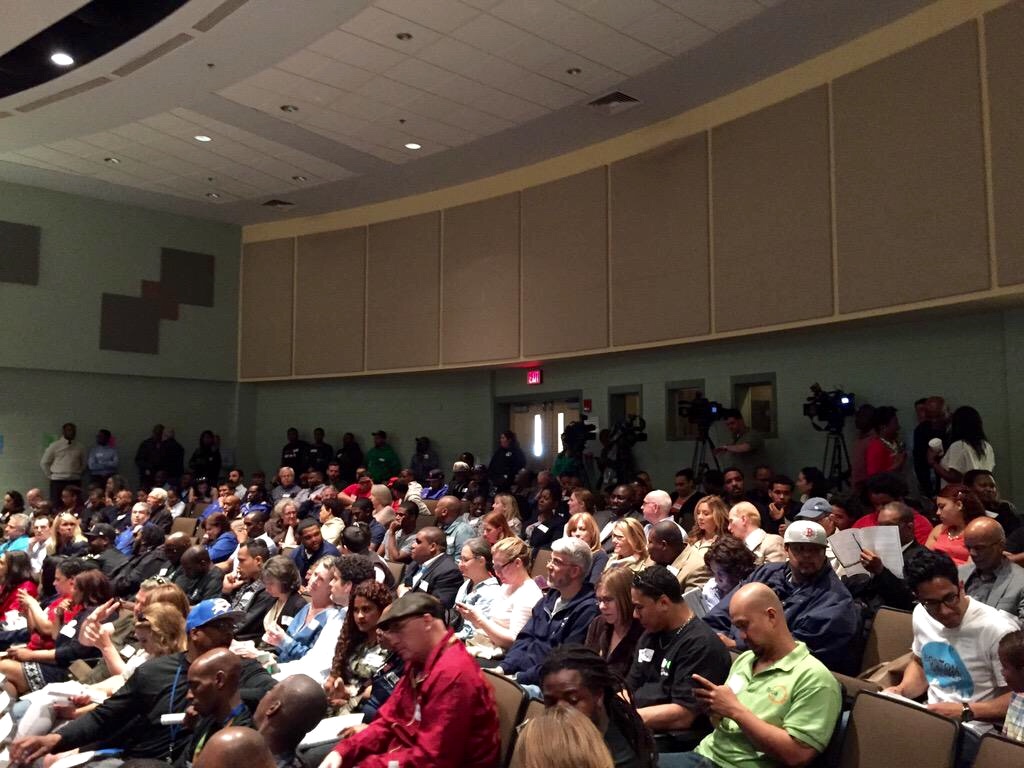
^ a huge turnout greeted the My Brother’s Keeper committee in Mattapan yesterday. Let’s see if the community confidence continues.

—- —- —- —-

Thanks to our friend Ed Lyons for directing our attention to the report newly issued by the organization My Brother’s Keeper pursuant to Mayor Walsh’s request. It’s worth uoting the preamble in full, by which you can grasp the report’s purpose :

“Mayor Martin J. Walsh tasked the My Brother’s Keeper (MBK) Boston Advisory Committee to
develop policy and program recommendations to provide a lasting, sustainable impact on Boston’s youth, especially Black and Latino males. By engaging the community and working across subcommittees, the MBK Boston Advisory Committee shaped recommendations supported by best practices, evidence-based practices, and promising practices from effective existing policies and programs locally and nationally. Each recommendation is also supported by action plans and data indicators to measure future progress and success.”

All during the 2013 Mayor campiagn, candidates agreed that improving the oppportunioty prospects for Black and Latino youth was a top priority for whoever won. Mayor Walsh made that clear as well during his inaugural address. 17 months later, we have the action plan that he endorses and will, presumably, now work to implement.

A link to the full report is here, in PDF format : http://www.cityofboston.gov/images_documents/MBK%20Recommendations%20Handout%20-%20English_tcm3-51119.pdf

The first “milestone” in the report concerns education — as it should. The paper’s recommendations will surprise many. It makes no bones about involving business and universities in monitoring, advising, shaping Boston’s schools. The report expects, demands, better school performance : “rigor for all” is its motto. This is all good. It takes the administrative reforms put in place by Superintendent John McDonough and expands them.

If the City can succeed at doing this, it will transform the learning experience for tomorrow’s young people — as it must, if they are to be ready on graduation day to accomplish even entry-level jobs in the new technology economy and its generous pay scales.

Milestone One also includes a commitment to expanding minority staffing of Boston schools. as the City is under Federal Court order to reach 25 percent minority staffing, but hasn’t even come close, this matter is more than a priority. It must be done. Why hasn’t it been done before this ?

Crucial to accomplishing more than just a token of minority staffing is the undertaking that I quote directly from the report :

“Both BPS Human Capital and Equity Offices are rethinking teacher development
strategies and prioritizing the need for central and school based educators to
demonstrate cultural proficiency in their practice. Planned training reforms will
focus on culturally responsive and relevant instruction, and will call on educators to
demonstrate an understanding and use of research-based strategies to engage
students who are disproportionately found in the gaps.”

Milestone Two of the report concerns getting Black and Latino youth from school to employment. The recommendations in this section will reuire constant and broad-based participation from the City’s businesses. I am not bullish that can happen, but the mayor does have many levers of power by which he can persuade business leaders to make this chancey effort. Again, to uote from the report :

“1. Increase resources and policy support for the development of award-winning vocational and technical training within Boston public high schools to support a pipeline of talented Black and Latino youth as well as all youth.
2. Leading by example, re-examine the City of Boston’s hiring policies to build a focused
strategy for investing in and employing Black and Latino residents for construction and
permanent jobs.
3. Launch a new Disparity Study to assess the City of Boston’s record and formal practice of
engaging Minority-Owned & Women-Owned Business Enterprises (MWBEs/WBEs & MBEs)
in its contracts and procurement. Study results will guide the City’s official engagement
strategy for leveraging its spending power for economically disadvantaged entrepreneurs.”

Here one senses more wish than achievement. All of these objectives have been part of Boston City government’s stated goals for at least two decades. Why have they not fully happened ? There’s also politics in this section. Mayor Walsh knows that he will likely face a strong, minority opponent in the 2017 election, and the never-ending outcry all across the City’s communities of color is for “jobs, jobs, jobs.” it was so in the 2013 campaign. walsh knows that he must deliver good jobs to people of color, and also contractor work paying prevailing wage. Thus this part of the report. Can he do it ? He will have to.

That said, the closing recommendations in this Milestone read bold, very bold. An all out effort to mentor Black and Latino youth and to encourage entrepreneurship among these youth will be worth doing even as a start-up project. Simply putting Black and Latino youth together with young entrepreneurs and start-up peopl,e from the City’s innovation economy will have social repercussions, enmding the social isolation of people of color from Caucasians, that one confronts everywhere — at night especially — in Downtown Boston.

Milestone Three is the big one : Reducing Youth Violence and Providing a Second Chance.
That’s the title, and it directs the MBk mission not strictly to Black and Latino youth bit to a subset of these young people. It’s nice that the report recognizes that violence and family dysfunction impact far too many young people of color, but — as many Mayor candidates pointed out during the 2013 campaign — this is a mission that involves everyone and everything.

What part can even the most diligent City government play in the lives of young people who live 24-7 in a world of information everywhere from every source and whose most intimate relations are with the street they live on ? Even the most engaged citizens in the highest income neighborhoods do not live civic activism all the time; far from it. In the neighborhoods that Milestone Three seeks to reach, hardly anyone is an activist at all. To most people in Milestone Three’s target communities, government is an outside obstacle, a nuisance, when it isn’t completely irrelevant or, worse, a fearful danger.

Making any dent at all in this disconnect will take all the resoiurces Mayor Walsh is likely to command and far more. The report’s recommedations are worthy, for example :

“Develop a strategic plan for the Boston Centers for Youth & families, outlining short and long
term goals to increase engagement and use of its facilities, especially supporting youth and
families from low-income households.

“Through the Mayor’s Public Safety Initiative, create a quality assurance system to streamline
coordination and communication to improve the delivery of trauma response within the
community and accountability for safer streets and neighborhoods. In tandem, this quality
assurance system should include standard programming to provide outreach and
communication within the community regarding available resources and services.”

But the report does not say exactly who will do these things, or under which City departments, or how much the initiatives will cost. The words do have good intentions. That’s the easy part.

Six My Brother’s Keeper subcommittees will meet, open to the public, during June. There’s a schedule of these meetings at the end of the report. You would do well to attend a few. There we will likely find out if the report’s target communities believe in the initiative. Mayor Walsh had better see that they do.

—- Mike Freedberg / Here and Sphere

MAYOR WALSH LAUNCHES NEW MASTER PLAN FOR BOSTON

FullSizeRender (31)FullSizeRender (28)

^ Mayor Walsh and Boston’s architecture estb;lishment at Faneuil Hall yesterday celebrating the formal launch of Boston 2030

—- —- —-
Change is coming to Boston every day. this is, in my mind, an extremely good thing. I am glad that Mayor Walsh agrees. Because, unlike me, he has the power to shape it. So does Brian Golden, who as head of the BRA, has the power to approve actual development projects.

Walsh has the plan to shape change in Boston, and Golden endorses it, and yesterday at Faneuil hall the two leaders unveiled it formally. It’s called “Boston 2030,” which looks awfully like the Olympics’ “Boston 2024” and probably should be sen as that veture’s twin. The two go together.

However, there was no mention at all of either Olympics or 2024 at yesterday’s unveiling. The controversy thereof could only have shaken the applause with which 500 or so of the City’s architecture, city planning, and development establishments — the Hall was full — celebrated this other, and so ar much larger, plan for Boston.

FullSizeRender (30)

^ the BRA’s Brian Golden addressing a full Faneuil hall yesterday

What, then, iS Boston 2030 ?

As Mayor Walsh described it, the plan envisions a City in which structures give “form to space” by connecting residence to commerce, convenience, and what we used to call “quality of life.” Buildings to be constructed should pay particular attention to which materials are used, and in what proportion or relationship to one another. Sidewalks assume crucial importance (as anyone knows who, not wearing mountain boots, has tried to negotiate Boston’s cracked, sloping, narrow, or badly materialized walkways).

Other important principles, said Mayor Walsh’s panel members, include these : affordable housing built on land whose price hasn’t been fattened by dollar speculation; reform of outdated zoning laws (especially usage restrictions and height or setbacks limitations); and holistic neighborhoods (restaurants and gathering places not only in Downtown). Walsh also directed the Faneuil Hall attendees to Boton 2030’s own website : imagine’boston.gov is its URL.

A singular feature of the presentation was the new Bruce C. Bolling Municipal Building (formerly the Ferdinand) in Dudley Square. its architect used a slide presentation to demonstrate the Bolling Block’s shape, surface texture, interior arrangements, open spaces, sidewalking, and relationship to neighboring structures. Also noted were the Bolling Building’s radical difference from what was the norm for Dudley Square architecture 120 years ago, when it was first developed. Esthetics of structure have definitely changed enormously, and the block’s architect has not been shy about transforming everything.

Using the city of Amsterdam as an example, she called her work “capturing the feel of older buildings without imitating them.” This description supported Walsh’s assertion that “the future of Boston design should reflect its past.”

Walsh also stated that “this is the begimning of the conversation, there will be public meetings.” The same is true of the Boston 2024 Olympics initiative. Both initiatives envision biog cahnge, at least to how Boston is built. All of which satisfies Walsh’s core mission : keeping Boston’s building boom going, expanding its reach, bringing it into the neighborhoods and putting good wages in his Building trades’ followers’ wallets.

Not everybody likes this. Many residents don’t want a building boom and the economic waves that it portends. They do not trust that there’ll be any “affordable” housing; they’re likely to be right on that, as Boston rents and house prices are climbing faster than an aircraft taking off. And they don’t want to see population density thicken, traffic metastasize, noise mushrooming — city life as we live it in 2015, much less in 2030.

Fair to say that there will be a whole lot of talking going on, in Boston during this City Council election year and heading toward the big 2017 re-election campaign.

—- Mike Freedberg / Here and Sphere

WILL MASSACHUSETTS TAKE THE NEXT STEPS OF REFORM ?

1 Speaker DeLeo fightsFullSizeRender (4)

^ If our state is to accomplish any of the reforms now on the table, reformers will need to support the above two leaders in huge sustained numbers. Can we do it ?

—- —- —- —-

Success breeds its own demise. As the most successul nation of the past 150 years, America now faces the largest panorama of demise.

What do I mean here ? Simply this : to carry out all of our successes we have set up organizations, bureaurcaies of people. These set-ups, having carried out their kission, have continued on, perpetuating their organization, their jobs, their income. They are now blocking the road to future reform.

The energy industry; police unions; teachers’ unions; the criminal justice system and its thousands of corrections officers; an education bureaucracy managed by people drawing outlandishly high salaries; athletes paid hundreds of millions of dollars to do — basically nothing; entire neighborhoods whose residents want nothing about them to change.

Reform means, basically, beginning things anew. It woulc be good if we could erase the blackboard and begin afresh, as those who created America were uniquely able to do. But we cannot.

Nationwide reform looks almost impossible. America is spinning off in 50 different diurections, deconstructing back to the states that pre-existed the Constitution and its unity, plus the states that came after but were set up with the same red uctyive powers as the 13 originals. In these 50 retreats from the future various immovably vested interests are crushing reform, indeed are negating even those reforms already won nationwide.

We in Massachusetts think we stand above that kind of rejection, but we mistake. What is the anti-flourdiation cult if not a rejection of reform ? Yet this return to witchcraft thinking has arisen in two Cape Ann communities.

Boston magazine recently profiled the failure, in Newtin, of an affordable housing project that some loudmoiths objected would devalue their overpriced mansions. Forget that state law calls for affordable housing in every municipality : these rejectors weren’t having it.

the same sort of rejection happens now in many neighborhoods of boston. No “:gentrification” — code word for “no money people of today buying up homes we want to pay yesterday’s price for.”

I suppose we can be thank ful that we haven’t many people here who want to roll back the women’s rights and civil rights reforms of the past 60 years, not many anti vaccine people or climtae change deniers and not many people who want to break unions or abolish the social safety net. Wow, huh ?

Still, we can’t comngratulate ourselves just yet.

Massachusetts needs to transform its schools, diversify its public workforce, eliminate corporate giveaways, reform the MBTA from top to bottom, change the way we deal with addiction — handling it as a health matter, not a criminal thing; enact a living wage — say $ 15 an hour; reform our sentencing laws and imprisonment system, redraw the outrageous costs of higher education, amend our transgender rights law, build an Olympics 2024. We need to do all of these, but the constituencies of No stand loudly and passionately in the way.

As Boston school Superintedent John McDonough wisely but sadly says : “change is difficult.”

So I ask it again : who will do these reforms ? Who will accomplish even one of them ? Can Governor baker and Speaker DeLeo, working now as solidly in sync as any Governor and Speaker I have seen in 30 years, do it ?

The two men cannot do it without a tsunami of support from the voters, support that they can see, hear, feel, touch. the opposition to each reform is already there, occupying the ground to be shifted. They are playing defense on their own turf, always a strong position to be in. The forces of reform will need to outnumber the defenders of things-as-is by at least two to one and do it every minute of every day for probably two entire legislative years. The same thing is true of reform (and reconstruction) at the neighborhood level. I am not holding my breath.

Nonetheless, this is our chance. A hugely popular Governor and a strong-minded Speaker have forged the most effective public policy pairing in decades. We of the reform party must support them as they move forward to pry loose the defenders of ways long since past their sell-by date.

—- Mike Freedberg /Here and Sphere

INJUSTICE IN BALTIMORE

1 our fellow Americans1 our Baltimoreans

^ Our fellow Americans protesting what we too would protest were it done to us

—- —- —- —-

For a few days I have held off writing this editorial because I did not want to rush to judgment. i wanted to ponder to think, the other side, to confirm myself. i have done that now. My view is, if anything, more committed than it was at first.

This was injustice. It was indifference to life. It was a violation of Freddie Gray’s civil rights, from beginning to end. There are no shades of grey in it, it is black and white.

That people rioted, that they destroyed much property — of their neighbors and maybe even family — wasn’t a rational act or an excusable one. The President rightly said so. But it was violence grievously understandable. I cannot say that, were I in the position of the Baltimore angry, that I would not have thrown a nutty. I think i would have. I get angry when I am disrespected.

The dignity of self requires, sometimes that one not turn the other cheek, not retreat, not go quietly away.

The riot was a sign of life in people who generations of police indifference — or worse — have left maimed at the fringes of living, bruised mentallly, beaten in the soul. The riot proved that bruises may maim the soul but do not have to crush it.

Did selfish ones exploit the burst of anger, to loot and burn ? Yes they did. Them, I condemn. They are enemies of the people.

And so, the people. Are these Baltimoreans not Americans every inch as American as you or me ? They are. Does the poverty that many live in put an asterisk on their American-ness ? It does not. Does the violence that plagues one of America’s most crime-ridden cities defray their Constitutional and civil rights ? It does not.

One suspects that the police — including two who themselves are Black — who arrested Freddy Gray without cause and who thereafter treated him like a bag full of empty tin cans as they bumped the van along Baltinmore streets, stopping several times, ignoring his cries for medical assistance did all of that because that is simply how they do. It’s the custom. It makes the citizens of dangerous neighborhoods afraid of the police, who experience has taught need to be feared, or else.

Lawyers for the six indicted police assert that t.hey did nothing wrong. I have not the slightest doubt that they fully believe that. The six did what they always do. Freddy Gray was not, when the incident began, known to the police. He was just the usual suspect. Running ? Up to no good. Screaming about being manhandled ? Don’t they all. Requesting medical assistance ? Hmmm, he’s preparing a lawsuit.

Then all hell broke loose.

This is how it happens. This is how decades of civil rights abuses and police terror get called to account. Not by a superstar but by a man utterly ordinary. As one protester said : “there are a lot of Freddy Grays in this City.”

There’s an even larger lot of Freddy Grays in the nation, our nation, our experiment in black and white. The age of smartphone video cameras has made clear just HOW many. Too many. A whole lot of people who by the color of their skin incite fear in those of us who look upon people with dark skin as dangerous thereby. And not just dangerous. People of dark skin carry entire placards of negative stereotype on their shoulders. We have put those placards o them. Dare we now deflect the bad consequences ?

The President said that the nation needs to do a lot of soul searching : that this problem “is not new.” It is not new. It is in our soul and if we search it there, we will find it, the problem, the stereotype, the injustice as a matter of conscious policyl of intimidation.

In Court the six officers may avoid conviction. Criminal cases demand a high standard of proof, and the defense for these six writes itself : we were simply following procedure.

It is high time that police departments change that procedure.

It is also way past time that we searched our souls. search and destroy the badass we find inside us. It is time we reform our poloice departments, reorder their priorities, embrace people of dark skin color, and in poverty, as folks like us. Because, believe me, no one wants more to be part of us than those we have put out of the home that belongs to all of us as Americans.

If you were listening to what was said by actual Baltimoreans during the events, you heard exactly that, spoken with urgency that i applaud. I am not sure that we deserve their wanting to be part of us. Let us work to deserve it.

—- Mike Freedberg / Here and Sphere

BIG CHANGES HAPPENING IN MASSACHUSETTS GOVERNMENT

1 reformers and intimidators1 Speaker DeLeo fights

^ (L) The Governor’s MBTA Panel looks intimidated, as well it should (R) Speaker DeLeo defends his power

—- —- —-

While most of us focused on the sad events in Baltimore these past days, much of high significance has been going on right here in Massachusetts government. I’ll list some of these events and opine about them :

1.Reform of the MBTA has taken its seat in the legislature’s lap, and the prospects do not look good that the recommendations in Governor Baker’s Panel will survive the politics. The T’s uions have made it clear they will accept no change whatsoever in their contractual privilege, their work rules, or their financial operation. The House will almost certainly approve the panel’s administrative reforms and its financing suggestions, but the state senate has a different agenda from the rest of Beacon Hill and probably will not.

We will have MBTA reform. the public insists. But it will probably have to be done by the Governor acting unilaterally : receivership.

2.Speaker Robert DeLeo has moved powerfully to assert the House’s primacy in the legis lature. He refuses to accept Senate President Stan Rosenberg’s moves to win equal power for his branch of the legislature, and he seems to have almost unanimous support from his members, even the GOP and the Progressives. The sentiment I hear from House memers of all sorts is that they are proud of the Speaker for asserting the House’s primacy so forcefully. Proof that this isn’t just lip service comes by way of the several unanimous votes the house has given to budget bills that in prior years would have been quite divisive. Who could have imagied that the House would unanimously — even the progressive members from Cambridge, Brookline, and Somerville — adopt Governor Baker’s $ 38.1 billion FY 2016 udget, complete with cuts ?

Sooner or later Seate President Rosenberg is going to have to face that Governor Baker and Speaker DeLeo have forged a striking unity of policy objectives and that he will look the obstructionist if he doesn’t accede to that pact. Meanwhile, Baker and DeLeo are demonstrating what I have been saying for the past 15 months : Massachusetts works best when the Democratic Speaker and non-Democratic Governor agree upon a course of action.

3.The committee pursuing the Boston 2024 Olympics bid has shake itself up enormously and risen from disaster. A month ago “Boston 2024” looked like the Deval Patrick administration in exile, a political rescue farm rather than a huge civic enterprise. No loger. Boston 2024 has added a galaxy of sports stars to its board; those sports figures now lead the discussion. Did it really take John Fish and his team this long to figure out that a sports event should be spokespersoned by sports people ? I guess it did.

meawhile, the opponents of Boston 2024 keep on keeping their objection mode. Having been trumped on the spokespeople front, they’re now pointing to siting miscues — the MBTA repair yards and several real estate developments in Columbia Point cannot be used, and the proposal to use them looks like very poor planning. But of course, what looks like poor planning is simply a proposal that needs adjustment, as happens in all major projects. Miracle men might get such a immense project right the first time on every detail, but human beings aren’t miracle men. So ? Adjust the plan, Problem solved.

But not for the No crowd. They’re even bringing back their first argument, that Boston 2024 will lose money leading to taxpayer bailouts. This despite the Committee’s readiness to finance the etire project other tha permanent infrastructure improvements.

One gets the impression that the No people want the Olynpics to fail. they really do sound like party poopers. The new oston coming into being dioes not eed — cannot use — party poopers. It needs bold optimists and happy risk takers. The Olympics committee seems ready now to forge ahead quickly.

4. But we shall see. Governor Baker has now suspended the Boston Convention Authority’s
$ 1 billion expansion, which depends for its financing on state bonds. The halt also stops some very big construction projects in the Seaport district. I understand the Governor’s view that taxpayer money should not finance private investment, but stopping the dynamism — the momentum — of the Boston building boom doesn’t strike me as a happy consequence of his decision. We need more building momentum, not less.

5.The Governor has begun aggressively to replace the members of almost every State administrative board with people of his choosing. All governors do this, but Baker is doing it across the board and quickly now, even as he initiates admiistrative review of all state regulations.

This sort of momentum I fiully approve. Baker needs to make it clear that it’s his call now, his agenda, his way of doing things, his expectation that the taxpayer will get a full dollar of effective government for every tax dollar spent.

We deserve nothing less. To give less is to disrespect everybody, the taxpayer and the person being served by tax dollars. In his campaign last year, Governor Baker said he’d compete for 100 percent of the vote. By his across-the-board, top to bottom reforms, he is doing exactly that.

—- Mike Freedberg / Here and Sphere

ELECTING A 45TH PRESIDENT — FIRST LOOK

1 Hillary as candidate

^ Hillary Clinton : correct on the issues even if corrupt ?

—- —- —- —-

Two days ago I lunched with one of Massachusetts’s major political presences. The conversation turned to electing our next President.

Who will it be ? Why ? On what issues ? All of these questions and more, we discussed. But fairly quickly our talked turned to the negatives : the Republican candidates are too far to the right; Hillary Clinton is the very essence of corruption. We decried having such a subtractive choice.

Unsaid by either of us was the implication that it is crucially important who the president is. But is it ? Of the 44 people who have held the office, not many have been “great.” Quite a few have been mediocre, several miserable. Yet the nation survived.

Still, most of the many Presidents who flunked or merely got by held office long ago, before the world beyond our borders came calling and before the national government had to address an economy (and a population) vastly more complex than what existed in 1789 or even in 1889. Today, it matters greatly that a President not flunk. Presidet Wilson, in 1915, could bungle a war in the Caribbean and screw up a foray into Mexico; George W. Bush, in iraq in 2003-07, bungled huge consequences.

Because so many Presidents, much less mere presidential candidates, have less than greatness in them, the argument for small, innsignificant Washington government has some cogency — though it’s never the argument the small-government people raise. ew of us, however, would want to discard strong Federal protectios and programs on the pretext that a President might be less than msterful. And so we hope, we beg, we insist, that the next President heed a call to greatness, as one President — JFK — once put it.

Against the call to greatness, the corruption in Hillary Cloiton looms larger than a similar corruption loomed in Warren Harding, in 1920, or in U. S. Grant, in the 1870s. Looms also because the Clinton corruption travels a worldwide orbit of mega-deals and sovereign wealth chits.

My friend and I chafe at this prospect. Yet what is the alternative ? A dozen Republicans all lean so far to the right that only a ideological true believer can get aboard; and neither of us is a true believer in anything except the nation as a whole and all of its people, immigrant or not, undocumented or documented, poor or not, of whatever skin color and lifestyle.

For that, there seems to be no true believer candidate except — in words, at least — the Corrupt One.

Corruptly correct on the issues : can you live with that ? I suppose so; but we deaserve better.

These are dark times for the next presidential choice.

Yet there may be a recue. Big business has recently shown, in indiana, that it will take a stand against bigotry and discrimination and that it has the clout to win that battle. It does. Big business has the money and it has millions of employees; it has a worldwide reach and thousands of powerful local reaches. Big business is, perhaps, the single most significant interest abetted by the Constitution and protected therein. The Constitution was written chiefly by a merchant aristocracy to promote and regulate a strong, unified economy.

So : cannot there arise a big business candidate, from the business establishment that values and demands inclusion and openness, that rdecognizes business’s moral responsibilities to us all, that has the power and will to win the battle ?

My riend and I await such a candidate. Until he or she appears and says so, we remain discouraged by having to select among a palette of candidates more likely to embarrass than enhance the national morale, or headed toward flunking the test, not ace-ing it.

—- Mike Freedberg / Here and Sphere