BOSTON ELECTION : JOHN CONNOLLY FOR MAYOR

Image

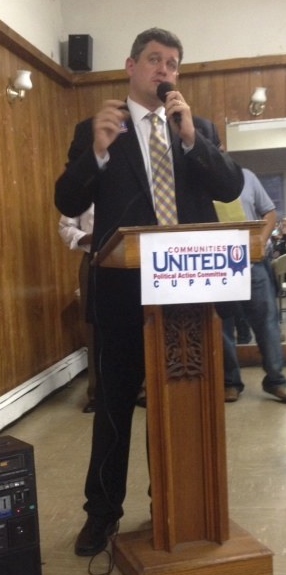
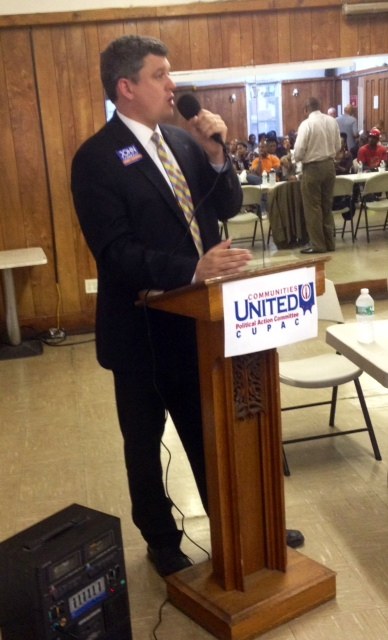
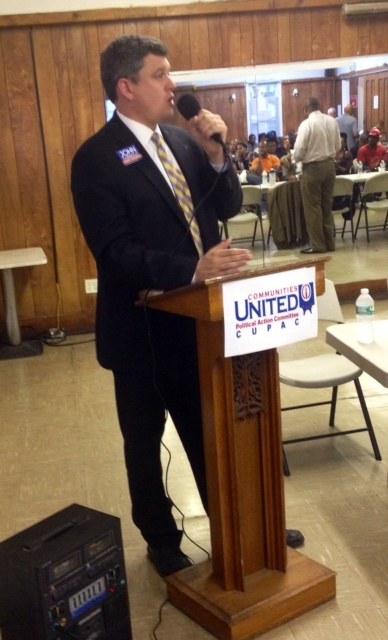
^ John Connolly at the recent CUPAC Forum

—- —- —-

Six months ago, when we launched Here and Sphere, we posted our mission statement : to be a voice for progressive, inclusive, visionary politics everywhere that our online journal could reach.

Little did we know that Tom Menino, Mayor of Boston, would soon announce his retirement, opening up one of the most powerful offices in all of urban America to new leadership and handing Here and Sphere a major story to cover, one that would command our mission for the rest of the year.

Twelve candidates qualified for the ballot. In more than a dozen Forums they answered questions and spoke their agendas. We reported on many of these Forums. At least seven of the candidates would have made a fine Mayor. It was a campaign of ideas, most of them progressive, many of them truly visionary. Since the beginning of August we brought this story to you. Hopefully you found value in our reportage, insight in our opinions.

The two candidates who won the September 24th Primary excelled at almost every Forum. It was no mistake of the voters to choose Dorchester State Representative Marty Walsh and City Councillor (at-Large) John Connolly of West Roxbury. Yes, many voters wanted to see a candidate of color in the Final; we understand why. So do John Connolly and Marty Walsh. Both have reached out to Boston’s communities of color, listened to the frustration, addressed the questions, even the hostile ones. We congratulate them both.

But now it is time to choose not two but one. Proudly we choose John Connolly to be Boston’s next mayor. He has our full endorsement, and here is why :

1.Reforming all of Boston’s schools is indeed the major issue facing Boston. John Connolly made it his issue and has put forth this campaign’s most comprehensive and well-detailed agenda for school reform. And how not ? He was a teacher himself and is a Boston public school parent. Name your school issue : the longer school day; giving principals flexibility in choosing teachers; charter schools as an alternative; family involvement in school plans; school assignment reform : Connolly addresses them all in depth and with conviction.

Connolly and the Boston Teachers Union (BTU) differ widely on what reforms to pursue; still, he and the BTU can agree. They both want education to be the next Mayor’s top priority. Of late, Connolly has been proposing reforms, in some areas, that comport closely with the BTU’s recommendations. The disagreement is not so much Connolly and the BTU as it is the BTU versus public school parents. We look forward to seeing Connolly moderate exciting meetings between Boston’s school parents and education professionals.

2.Segregation in Boston’s social life remains a huge problem, and John Connolly seems to understand the emotional and psychological dimensions of this segregation — and is prepared to confront it — quite better than his opponent. The battle for civil rights is not won when laws are enacted, important though these are (and Marty Walsh was a hero of the fight to enact them). As Connolly noted at a recent Forum in Boston’s Black community, Boston restaurants and night life remain deplorably segregated, with consequences economic as well as social; because, as Connolly noted, young people of color and talent see Boston nightlife segregation and say “no thank you” — and go elsewhere to live. This must change.

3.Relations between the City’s Unions and the rest of Boston taxpayers can never be kumbaya; but John Connolly is in a much more independent position, when the fire-fighters or police come demanding, than Marty Walsh. The Unions that have endorsed Walsh love him; they campaign for him wherever and whenever he needs them. It says a lot about Walsh’s strength of heart (and we have seen it at times too). Yet Walsh’s greatest strength has proven his greatest weakness. Questions were already being asked — and answered vaguely — how he could stand up to Union contract demands, much less reform the Police and Fire leadership, given his almost total dependence on Union support, when all of a sudden Connolly brought up a bill that Walsh filed as a State Representative : House Bill 2467 would take away from City Councils (not just Boston’s) the power to review arbitration awards and, if need be, disapprove. Under Walsh’s bill the arbitrator’s decision would be final.

This is bad law. No un-elected official should have final say over municipal finances. Walsh says that if it came to that, he would always put the residents first. He surely means it. But it’s the Unions’ call, not his. With House 2467 at their hand, their call would be final. We like Walsh’s labor supporters. Many are our friends. But being Mayor is a matter of duty first, friendship later.

Lastly, the vision thing. Boston’s next Mayor will lead the city into the future for four years, maybe eight. John Connolly has vision at his fingertips. He sees a different city, one that is being created even as we write, shaping a very different, more tolerant, prosperous, and structurally diverse city. It will take a mayor of vision to guide the shaping so that the new city is what we want it to be rather than a matter of chance. Marty Walsh has great plans in some cases; selling City Hall and developing City Hall Plaza as a commercial zone is perhaps his most brilliant. But Walsh has yet to articulate a grand vision of what he wants Boston to be six, twelve, 20 years from now. His matter of fact-ness meets current city needs nicely. But what then ?

No such question need be asked of John Connolly. He sees a city of bicycle people — and of car people; a technology center; a city of integrated social life; of education that helps to repair social unwellness rather than being a recipient of it. He sees the new Boston. He gets it. We endorse him to take our city to it.

—- The Editors / Here and Sphere

MEEK AT THE MOVIES —- GRAVITY ( 3 stars )

Image
^ George Clooney and Sandra Bullock about to launch into the void in Alfonso Cuaron’s “Gravity”

—- —- —-

Some might wonder how the director of “Y Tu Mamá También” and “Great Expectations” (bet you forgot about that 1998 foray starring Gwyneth Paltrow and Ethan Hawke) arrived at a space odyssey such as this. Likely, the international success of “Y Tu Mamá También” opened a few doors for director Alfonso Cuarón. Thus his follow on, “Harry Potter and the Prisoner of Azkaban,” which was the best segment of the overheated wizard series, enabled the Latin auteur to play freely with special FX and blockbuster-aimed gadgetry. Two films later he capitalized on that and wowed critics and audiences alike with the bleak future-scape thriller, “The Children of Men,” registering perhaps, the first perfect fusion of grand vision and epic scale in the new world order of digital film making.

What goes on in “Gravity” is pretty straight up: three astronauts from the space shuttle Explorer go out on a spacewalk to repair the Hubble telescope, disaster strikes and the rest of the film is about the survivors trying to get to a safe place. The catastrophe, a debris storm from a Russian missile strike that took out a derelict satellite, comes shortly after the films begins. Jocular banter and the mission at hand are replaced with an urgency to get into the shuttle and out of harm’s way, but they waiver for a moment and then it’s too late. Everyone inside the shuttle dies from exposure while one of the three out in space has his helmet and cranium pierced by a shard of shrapnel that passes through with the ease of a hot knife through room temperature butter, leaving only newbie science officer Ryan Stone (Sandra Bullock) and grizzled vet Matt Kowalski (George Clooney) alive and adrift in space. They’re apart from each other and the now destroyed shuttle, and the prospects for going on look quite dim. It’s a harrowing moment of realization, like becoming lost in a desert or alone in a raft at sea with no land in sight (that story forthcoming in “All is Lost”)—and space is an even more vast and more unfriendly expanse of nothingness. Throughout all this, Kowalski remains exceptionally calm and in the eerie silence of space, using old school navigation techniques, limited communication devices and a lot of luck, he finds Stone, who’s been hurtling around out-of-control, and tethers her to his back (Kowalski is the only one with a jet pack) and they set off to make their way to the International Space Station hoping their jet fuel and oxygen don’t run out first.

There’s more to the plot of “Gravity” (the International Space Station is a whole ‘nother chapter of epic tribulation), but to articulate any further would be to do the film and the experience a disservice. How Cuarón so seamlessly created zero gravity and rendered astronauts spinning out of control at thousands of miles-per-hour with such realistic credibility, boggles the mind. The feast of visual spectacular wows—each one, outdoing the last–drives the film as much as the hanging-by-a-thread survival yarn.

And if being lost in space without a ship seems like a pretty major problem, the tethered pair have also lost contact with Earth, which I guess cuts out any expository banter and insight from down below–and what exactly would those guys be able to do in any case?

Astoundingly, the voice of Houston control is none other than Ed Harris, who played the effusive and resourceful control manager in Ron Howard’s “Apollo 13.” That movie, based on a historical occurrence that was eerily foretold by the 1969 movie “Marooned,” dealt with the rescue of oxygen starved astronauts in space. There, the players on earth and the celestial above, had soul and their lives unfurled with as certain sensitive fragility and death loomed at every turn. In “Gravity” the two survivors overcome such insurmountable odds so many times, you wonder if James Bond might not be a tad bit jealous. We get a sip of back story too. Clooney is his comfortable wry everyman while Bullock’s Stone has a bit more going on, but it feels like artifice so Cuarón can do such mesmerizing stunts as have a camera follow Stone as she careers aimlessly about. From afar we watch her spin, in the back ground we can see Earth, then the deep dark galaxy, then the broken carcass of the shuttle, and it all repeats over and over as the focus slowly moves in on Stone’s face and then we are in her helmet and looking out, and we see the whole dizzy spin cycle from her POV. It’s an amazing feat of film making, but where Cuarón should have applied similar elbow grease was on the script he co-wrote with his son, Jonás. Sure, the characters have the mettle to be up there and their cool perseverance under pressure is beyond enviable, but what else?

What Cuarón missed that Howard nailed in “Apollo 13” (where we already know the conclusion) was the connection between humans doing something heroic that puts themselves at risk for others. There’s some of that altruistic spirit in “Gravity” too, but just a sparse sprinkling.

So if in space you do something monumental and no one is there to witness or benefit from it, does it matter? Probably not, but even if you view “Gravity” as a vacuous fire drill, witnessing that harrowing hollow hell-ride is one breathtaking endeavor.

—- Tom Meek / Meek at the Movies

BOSTON MAYOR FINAL — THE EAST BOSTON CASINO REFERENDUM

photo (84)

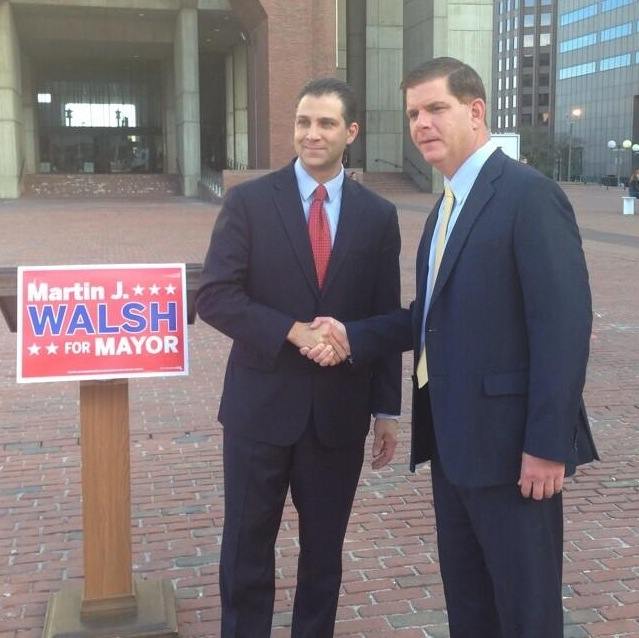
^ casino = construction jobs — East Boston’s State senator Anthony Petrucelli endorsing Marty Walsh (backdrop : the City Hall that Walsh wants to sell, on the Plaza he proposes to develop)

—- —- —-

However many East Boston voters you thought would turn out on Mayor Election Day, double it. For “Eastie” November 5th isn’t simply going to be about choosing a new mayor, important though that is for the only Boston neighborhood that has to pay a toll to get into “town.” Much bigger a deal is the Suffolk downs casino project, approval — or not — of which only East Boston will vote upon. The casino is a huge game changer for Eastie. It will likely employ over 4,000 people, many of them surely from the neighborhood. There’ll be much traffic, lots of excitement, entertainment, tourism, the works.

“NIMBY” people hate the idea. So do the busybodies who think that gambling is evil and want to prevent the rest of us from doing it. They’ll be voting in big numbers on referendum day. But so too will the project’s supporters. Already the campaign signs — “It”S ABOUT THE JOBS” and “VOTE “YES” FOR SUFFOLK DOWNS” — have arisen on many many East Boston houses and lawns.

The mayoral campaigns have taken notice and profited by it. Yesterday State Senator Anthony Pettrucelli endorsed Marty Walsh, who as the candidate of labor, including construction workers above all, is all for the casino project. It will give jobs to Walsh’s stand-out volunteers, door-knockers, and contributors — and to Senator Petrucelli’s constituents. This is a political marriage almost ideal for both men. As Walsh lost East Boston on Primary day by a significant percent, the endorsement by Petrucelli, plus a huge vote turnout, can only boost Walsh’s campaign significantly.

Yet John Connolly is not without his Eastie strength. He supports the Suffolk Downs casino project as much as does Walsh : it gives the City $ 55 million (at latest count) in “mitigation” money. Connolly was endorsed by East Boston State Representative Carlo Basile before the Primary; and Connolly carried the Ward. Often a neighborhood’s State Representative is “closer to the ground’ than its State Senator, who has an area six times as large to cover. It is hard to imagine Basile not commanding a strong and much larger poll on November 5th and, other factors being equal, winning for his candidate over Petrucelli’s.

Carlo Basile 1

^ East Boston’s State Rep Carlo Basile : endorsed John Connolly in July

D 1 sal LaMattina and Mayor

^ Sal LaMattina, East Boston’s City Councillor is ….said to be close to…..

One major political voice of East Boston remains to be heard : East Boston’s City Councillor, Sal LaMattina. (He also represents Charlestown and the North End, but those neighborhoods aren’t voting in the casino referendum.) LaMattina is said to be close to Mayor Menino. The rumors about Menino’s feelings with respect to this election have already gone public. I can personally attest two indications that Menino is giving assistance to John Connolly : (1) for the vacant District Five Council seat, city worker Tim McCarthy is receiving assistance and support from state Rep. Ed Coppinger, Connolly’s top campaign chief and (2) Vinnie Marino of Roslindale, a real estate developer said to be very close to Mayor Menino, is hosting a fund-raiser for John Connolly next week.

So what of Sal LaMattina in that equation ? Surely his supporters will be wanting jobs at the Suffolk Downs casino as surely as Basile’s and Petrucelli’s. Will he be helping Connolly win East Boston’s big November vote ? After all, Menino’s support for Connolly is sai to come, in part, because he wants “his” people “protected” in the jobs they now hold. Or maybe moved comfortably to the casino ? It does happen. I wanted to ask LaMattina his opinion on these matters; but he has not, as of this writing, returned my phone call.

—- Michael Freedberg / Here and Sphere

UPATE : I should probably include in this East Boston gumbo Patty Campatelli, who last year won election as Suffolk Register of Probate — defeating Sal LaMattina, in fact, by 800 votes. Campatelli had been unknown politically prior to running for that office; yet she won. She lives in “Eastie.” i wonder whom she is going to support in this showdown. So far, not a clue.

SECOND UPDATE : Boston, October 9th, 10.20 AM : we are informed that Sal LaMattina will endorse John Connolly at a press conference today, along with two other major endorsers.  We will be reporting from that conference. — MF

From Texas with Billie Duncan : What the Tea Party Really Wants to Do

Image

By now it should seem obvious to everyone that the Tea Party wants to dismantle the American government. The fact that the Republican Party is allowing them to follow this agenda shows how little foresight the GOP had when it allowed itself to get hijacked by a group of anti-American radicals who gained power by playing to the basest, most dissatisfied and least educated portion of the population.

Once the Tea Party gained credibility by being anointed by the Republicans, they were able to pour out propaganda that appealed to a wider audience of Americans who were not as radical but were also dissatisfied not only with how the government was being run but by how the Great Recession had affected them.

They then used their new-found power to target people in the Republican Party and replace them with people from the Tea Party—all with the blessings of the Republican Party, which somehow could not see what was happening.

The Tea Party’s objective in Congress is not to govern but to obstruct . They see government as the enemy. They are not Republicans; they are simply using the Republican Party as a vehicle in which to drive the government over a cliff.

The American government is set up as a system of checks and balances, not as a dictatorship. The Tea Party wants to dictate how the country will be run. They have no use for compromise, but they use the term to indicate that others must give in to them while they stand firm in their own beliefs. There is no room in their agenda for listening to people who are not in lockstep with them.

The Republican Party is not only allowing this but actively supporting the TPs in this path to destruction.

The Tea Party has expanded by playing to fears and prejudice. TPs actually believe that the American government has a plan to take away their guns. They actually believe that Latin Americans (particularly Mexicans) are taking away jobs from real Americans. They actually believe that Obama is not a legitimate president. The faction that is violently anti-abortion truly believes that pregnancy cannot result from rape, that any use of birth control is morally wrong, and that a woman who has an abortion is a murderer and should be sent to prison.

They want an “America” that reflects their beliefs, their religious ideology and their racial superiority. This is not what the Republican Party is all about. But, if the GOP continues to allow this drastic group to push them towards the abyss, to force their ideology on all Americans, to abolish all government programs that they don’t like, the Republican Party will cease to exist. The Tea Party will emerge as one of the parties in America’s two-party system. Then they can try to do what they really want to do: fundamentally change what is America.

What they don’t seem to realize yet is that America will not let them do it.

—- Billie Duncan / Houston, Texas

BOSTON MAYOR FINAL : CONNOLLY and WALSH ADDRESS BLACK COMMUNITY ANGER at CUPAC FORUM

Image

^ John Connolly : “our city is terribly segregated socially — kids of color see what’s available here and they say ‘no thank you.'”

Image

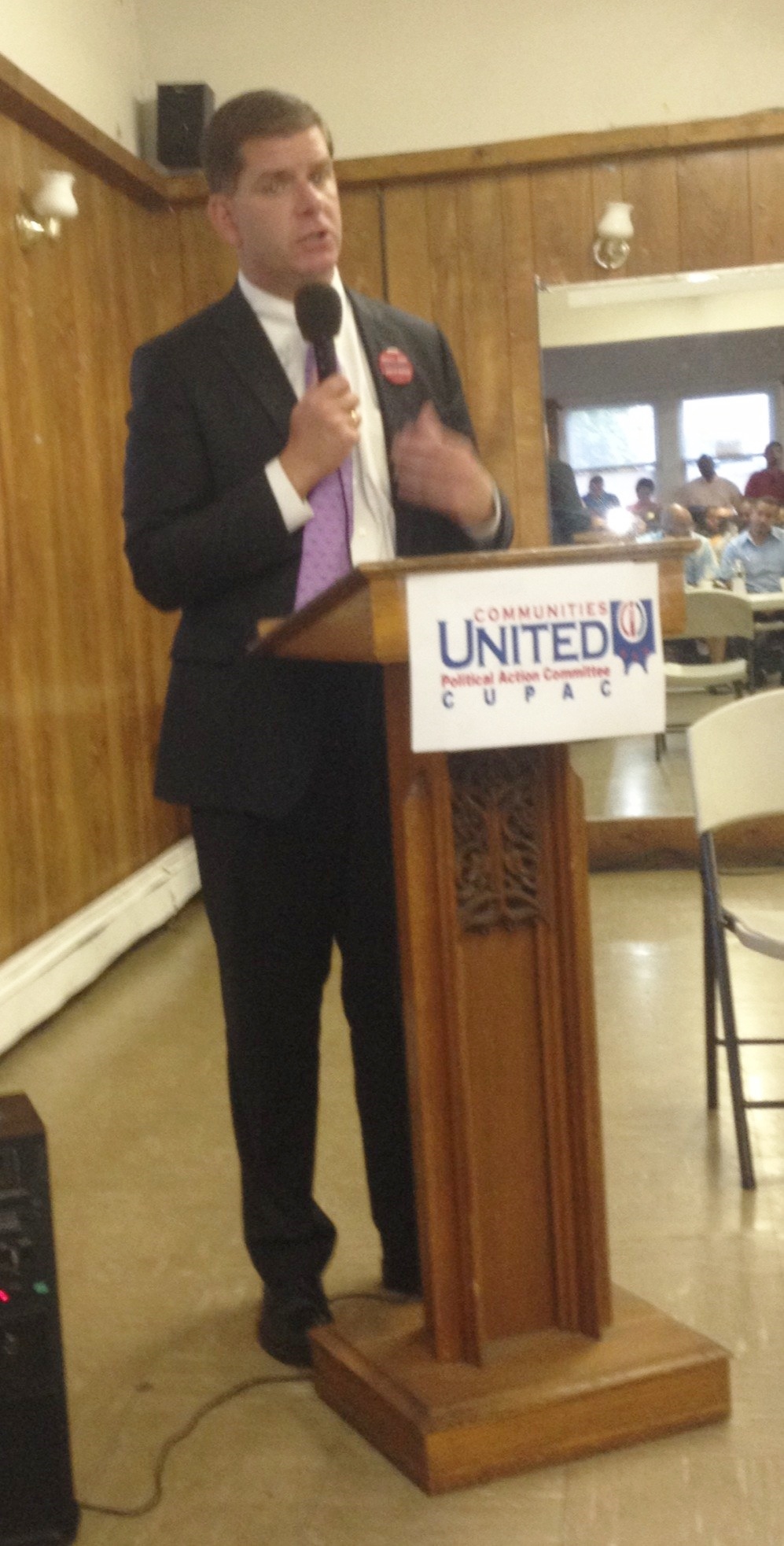
^ Marty Walsh ; “there will be no discrimination in my administration, i won;t stand for it !”

—- —- —-

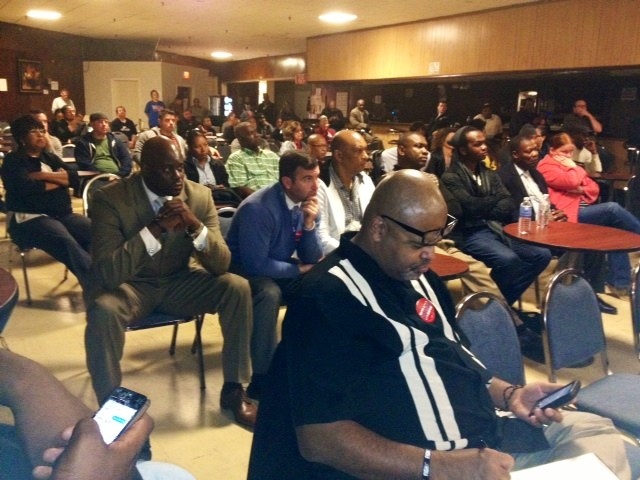
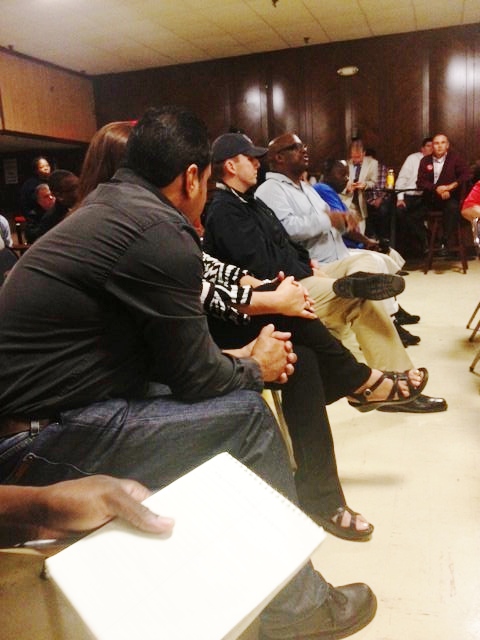
Last night’s Forum at CUPAC (Community United PAC) in the heart of Boston’s Black Ward 14 was one of the most elevated forums this dramatic Mayor campaign has yet seen. Addressing — then being questioned by — a room full of Black police, the Vulcans (Black firefighters), and several articulate community activists, first Marty Walsh spoke masterfully, and then so did John Connolly.

To a room full of people who aren’t exactly thrilled to have two “Irish” candidates put upon them, and trying to express his ordinary-guy status in life, Walsh said, “Yesterday I was at a meeting with Jack Connors — you know ? because he’s Jack Connors — on the 60th floor. I was uncomfortable. Later I was at a meeting in Grove hall. I was more comfortable with them.” The people understood his point.

Said Connolly an hour later — not an ordinary guy but, of sorts, a teacher (which he was) : “diversity is in my heart…if we want to reach every corner of this city, every (city) department needs look like the city. it’s vital that teachers of color be there to mentor kids. It’s also good for my daughter !” He was roundly applauded.

Both men had almost always performed with authority at Forums during the Primary. So it was no surprise to see them take command at this Forum. Impressed I was, however, to see them stepping up their forensics to the next level. Each articulated a vision of the city he wants Boston to be; and each could command the support of almost everybody. Still, there were significant differences in the two candidates’ grasp of issues questioned of them by CUPAC board members and several Forum attendees.

Image

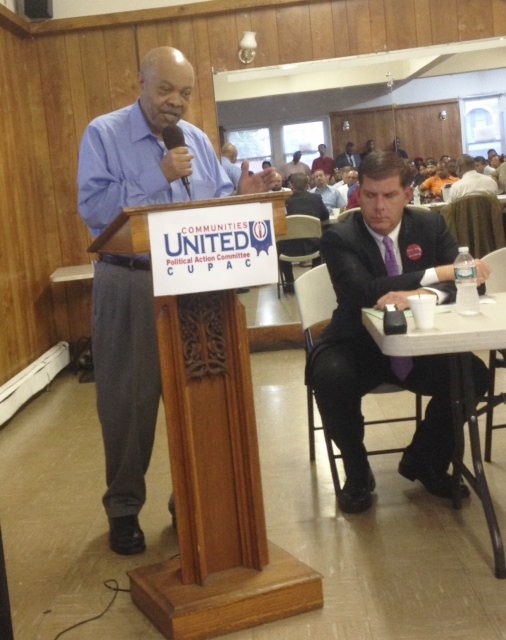
^ Former State senator Bill Owens addressed a question to Marty Walsh

Image

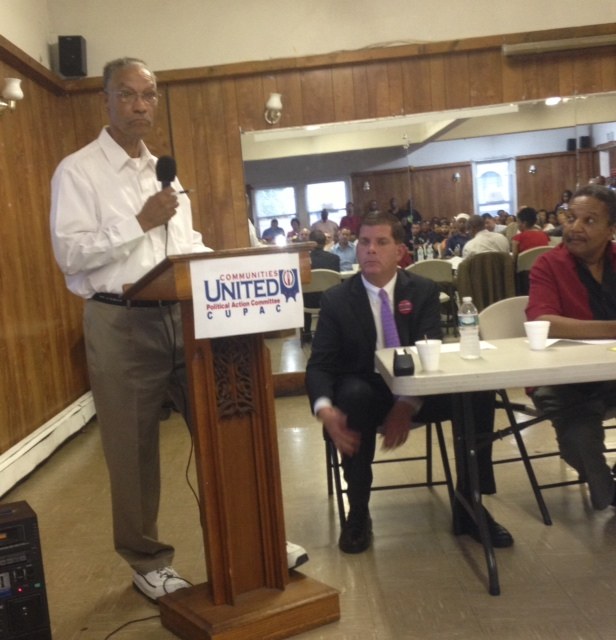
^ Minister Don (Muhammed) addressed a very blunt race justice question to Marty Walsh

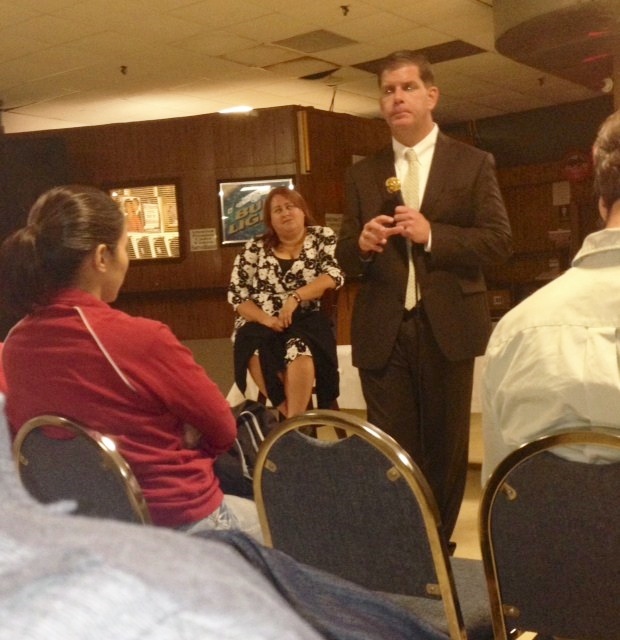
Walsh was questioned very bluntly ; would he commit to full inclusion, in his cabinet, of people of color ? Yes, he would. Would he commit to appoint a black police commissioner ? No, he could not commit to that. Did he support an elected school committee ? No, he felt that the appointed school committee simply needed to be expanded to include every community. How did be feel about his “own white privilege” ? The question set Walsh aback — Connolly, with his wider cultural reach, could have answered better — but he made a vow as firmly as I have ever seen him : “there will be no discrimination in my administration. I won’t stand for it !” Would he bring back civics to the school curriculum ? Said Walsh, “it’s a disgrace that we don’t teach our kids the history of our nation, the world, and the neighborhoods. Yes I support civics !” Would he as Mayor see that the neighborhood gets connected to the city’s tourism ? He saw this question differently from as it was asked : “tourists yes, but we need to bring pride to our communities. Not just tourists.”

How at a Forum sponsored in part by Black police could the BPPA arbitration award not come up ? it did. Would Walsh, known to be a union guy, balance the interests of unions and the taxpayers ? Answered Walsh : “My union experience will enable me as mayor to negotiate at the table. My intention is to settle a contract before it ever gets there (to arbitration). I have asked the BPPA and the Mayor to go back to the table. (and yes), when I am making a decision as Mayor the residents will always come first !”

He was well and long applauded. Then it was john Connolly’s turn.

Connolly was questioned on the themes that are his. What was his plan to recruit more teachers of color ? “Recruit more principals of color too,” he answered. “reach out and have community based organizations recruit teachers and principals of color.”

Had he a plan to eliminate the current trend of youth violence ? Yes, said Connolly, a plan that includes everyone and every program, because youth violence has so many causes. He would prioritize the search for a new school superintendent and a new police commissioner; and would have a city-wide summit on sate neighborhoods. Was Connolly amenable to having vocational programs put into the city’s high schools ? Yes, Connolly was amenable and presented his plan to have each high school offer a unique vocational program; some “partnering” with unions, some with a university, others with a non-profit organization.

To all of these questions the audience heard Connolly’s responses politely. there was some applause — not much. Things changed, however, once the BPPA award was put to him for opinion. “I’m inclined to vote against it,” he said. “Look, I know that you guys work hard and deserve good pay. But I want to rethink the entire contract, get rid of the flaws. You guys work way too many hours” — he was interrupted here by much applause — “we need to correct those flaws in the contract.” Applause there was.

Then came the question that cinched Connolly’s presentation for many — and for me. “Too many young people of color,” said the questioner, “with talent, graduate and move away. They see the discrimination in the city’s social life. What will you do to keep young people of color here, with social opportunity as well as work opportunity ?” Answered Connolly ; “Our city is terribly segregated socially. How many people of color do you see in the restaurants, the night spots ? Not many. Kids of color see what’s available here and they say “no thank you.’ And the downtown discrimination ! Clubs that get cited ! Other cities get it; we need to change !”

The applause was loud and long.

Image

^ John Connolly : “other cities get it. we need to change !”

After it came more of the usual questions — the BRA, planning, affordable housing; and all were answered well and in detail, as Connolly, like Walsh, knows how; but for me, Connolly, by his savvy answer to the question on social discrimination, showed that he understands that he black community;s frustration with “two Irish candidates” is not simply political. it is social. It is cultural. Boston really Is a socially segregated city. Every night I see it, I feel it. It does need to end. talented young people of color are not going to stand for it and will take their talents elsewhere. And what of the white people they leave behind ? Are they any the more enriched for being separated from their contemporaries who happen to be of color — and maybe even of a different cultural bent ?

Connolly talked of how we get tourism in Boston “by luck, because we are an old city.” He is right ; we ARE lucky that way. But we need to become a destination city for who we are, not just for the history that happened here. Ending social discrimination in our city’s restaurants, night life, and friendships is the front line in this necessary battle.

Which is not to say that Marty Walsh’s heart is not in the right place. it is. Nobody in our politics has a stronger civil rights record than he. But the battle is not only political. it is moral and it is social. And this, John Connolly clearly gets.

—- Michael Freedberg / Here and Sphere
BPPA AWARD TO THE COUNCIL ? STEPHEN MURPHY LAYS INTO MENINO

Image

^ Council President Stephen Murphy

—- —- —-

Boston, October 2, 2013 at 2.45 PM —- Stephen Murphy, Boston City Council president, is not at all happy with having the City’s arbitration with the Patrolmen’s Union bounced back to the Council for a yes or no.

“I’m angriest at the Mayor,” Murphy told me. “We’ve been good to him on all his projects, and now that he’s out the door he hands this to us. No, I’m not happy.” In fact, Murphy is angrier than that quote. He shares with me some not-so-choice words about Mayor Menino.

Murphy doesn’t know when there’ll be a Council hearing on whether to accept the award, which gives the Patrolmen a 25,4% raise over several years. “First the award has to get to us,” he said. “it hasn’t. I need to see what’s in it before I know how to vote.”

Will it come before the election five weeks from now ? Murphy isn’t even sure of that. One hears the frustration in his voice.

Murphy also doesn’t know if he will have the Council as a whole do the hearing or give it to District 9 Councillor mark Ciommo’s committee.

His beef isn’t with the award itself, which he hasn’t seen the details of. “There hasn’t been a lot of public outcry about the award, though the media want to make it one,” he tells me. But when questioned about the Walsh legislation — House Bill 2467 — that Connolly has cited, Murphy agrees that “it is a mistake” to take away the Council’s authority to approve or turn down arbitration awards.

The issue thus continues. It will definitely be raised by Connolly time and again. And parried by Walsh again and again. Meanwhile, Tom Menino walks out the political door with a “who, me ?” shrug.

—- Michael Freedberg

BOSTON MAYOR FINAL : THE NUMBERS BEHIND MARTY WALSH’S BLACK COMMUNITIES PUSH

Image

^ planting his flag in precincts of color : Marty Walsh at Bartlett Street Garage (ward 9 Precinct 5)

—- —- —-

Marty Walsh’s big effort to win at least a majority of voters of color continues. He is getting advice from a respected operative who knows where Walsh should up, and he is showing up and doing it relentlessly. It is essential if Walsh intends to get into the win game for November. Why ? Let us look at the numbers. (I ask my readers’ indulgence on this. It’s a lot of statistics to read, but voting is measured in statistics. They matter totally.)

We have selected 40 precincts dominated by voters of color, by which we mean Black community voters, not Cape Verdean or Hispanic. 40 precincts is, I think, a lot fairer to both candidates than the Globe’s recent one-precinct story featuring a precinct that is far from typical. Here is the list, and the September 24th result. Keep in mind that by far the majority of voters picked Golar-Richie, Barros, Clemons, and even Arroyo.

Ward 12 Precincts 2 and 4
(along the West side of Blue Hill Avenue) ……….. Connolly 68 Walsh 55
Ward 12Precincts 6 and 8
(further up the west side of Blue Hill Avenue to Grove Hall)
…………………………………………………………….          Connolly 42 Walsh 37
Ward 12 Precincts 3 and 5
(along Warren Street along M. L. King Blvd) ……. Connolly 48 Walsh 46
Ward 12 Precincts 7 and 9
(south of M. L. King Blvd to Seaver Street) ……..  Connolly 93 Walsh 73
Ward 14 complete (14 precincts)
(easterly side of Blue Hill Ave from Fayston Street all the way to walk Hill Street, and across Blue Hill west to Harvard St from Talbot Ave south) .. Connolly 479 Walsh 371
Ward 18 Precincts 3 and 21 (Almont Field area) .. Connolly 125 Walsh 81
Ward 18 Precincts 2 and 4 (Mattapan Sq)………… Connolly 85 Walsh 77
Ward 18 Precinct 15 (along River Street, railroad underpass to Hungtington Ave)\
…………                                                                     Connolly 54 Walsh 29
Ward 10 Precinct 7 (Bromley Heath housing)…… Connolly 29 Walsh 27
Ward 11 Precincts 2 aand 3 (along Washington Street from Cedar Street to Columbus Ave)
…………                                                                     Connolly 60 Walsh 60
Ward 17 Precincts 1 and 3 (Washington Street Dorchester from Park Street south)
…………                                                                     Connolly 80 Walsh 108
Ward 17 Precincts 5 and 7 (Codman Sq. west) … Connolly 33 Walsh 40
Ward 17 Precincts 8 and 10 (Codman square South and Norfolk Street west)
………….                                                                   Connolly 84 Walsh 68
Ward 15 Precincts 2 and 8 (Richfield Street / Bowdoin-Geneva and Charles Street north of
Fields Corner ………………………………………….       Connolly 45 Walsh 71
TOTAL VOTE IN 40 PRECINCTS ………………….       Connolly 1357 Walsh 1188

On Final election day these 40 precincts will likely cast a total of about 16,000 votes. If so, it means that about 13,470 votes are up for grabs, with — if the September proportions hold — an advantage to Connolly of about eight points = 1100 votes. It’s a small advantage, but as the precinct numbers show, it was, except for areas close to Walsh’s Dorchester, a consistent one for Connolly. Given how poorly Walsh performed on Primary day outside of his South Boston / seaside Dorchester base, it’s a consistent 1100 vote loss he can’t afford. But there is more to it for him than just the 1100 votes. Look:

White candidates of good will often campaign in Black communities not simply to try to win Black voters’ votes. These candidates know that many white voters are watching them and are assured of these candidates’ progressive or reformist bona fides thereby. Walsh’s serious effort in Boston’s most Black voter precincts is thus an effort to impress white voters in neighborhoods dominated by progressive or reformist whites, all of which he lost decisively on September 24th. He can’t BE Felix Arroyo, or John Barros, and certainly can’t do Charlotte Golar-Richie; but he can try to impress their white, reformist allies.

Will it work ? It might. All depends on how strongly progressive or reformist voters rate winning voters of color’s confidence, compared to the campaign’s hottest agenda issues : school reform, jobs and the building boom, the bicycle/Hubway movement, restaurants and liquor licences, diversity in the police force and Mayor’s cabinet. Yet even if Walsh’s larger objective fails, the vigor of his campaign in the 40 precincts (and some others) will keep him from being beaten decisive therein by John Connolly. This is no minor factor. Historically, Boston’s communities of color have been much more easily drawn to patrician, even Brahmin reformers like Connolly than to candidates with rough edges and laborer’s hands, who Marty Walsh personifies.

Anybody who meets Walsh sees pretty quickly that he is as passionate a reformer as he is about Labor. The only question is, how many voters of color will meet him ? And believe him ? His success on Novemnber 5th probably depends on it.

—- Michael Freedberg / Here and Sphere
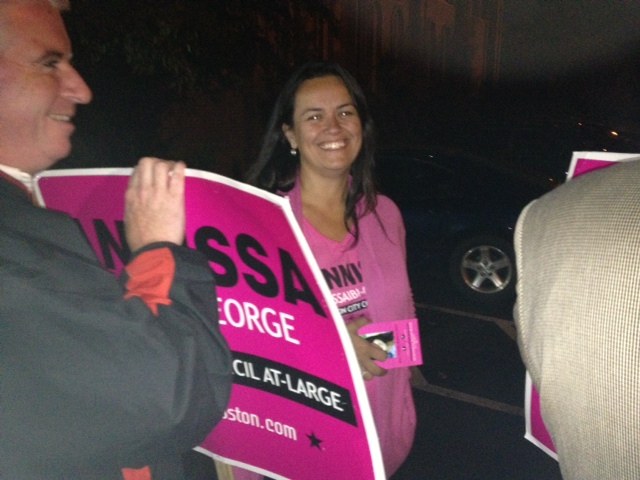
BOSTON CITY COUNCIL PROFILE : ANNISSA ESSAIBI-GEORGE

Image

As many of you reading this already know, we put Annissa Essaibi George on Here and Sphere’s suggested” list for the Primary. Of her we said the following :

a Boston Teacher’s Union (BTU) activist, Essaibi-George has the radiance, class, and articulation for which Boston Public school teachers are justly respected. We met her and liked her instantly, and mot just because she’s from Dorchester, with strong support in East Boston as well (where she teaches at East Boston High School). She runs a small business, and has time, somehow, to also be a neighborhood activist. We think no one will outwork her on the Council, and definitely her voice for the BTU is needed, even if the BTU itself sometimes misses the political bulls-eye.”

Everything we said of Essaibi-George then, we found to be just as true as we had observed of her. We met her in the home neighborhood, that part of Dorchester centered on St., Margaret’s Church. It’s where the late House Speaker John McCormack lived, and it’s where Marty Walsh was born and still lives. Essaibi-George was born and grew up here too — and keeps her campaign headquarters nearby as well. (And yes, it was open with volunteers busy when we met her.)

Despite the exotic name — her Father came from Tunisia; George is her married name — Essaibi-George is a total Dorchester kid. She has the accent and she knows the people. When we met her at the Sugar Box on “Dot Ave” she was just finishing an intense discussion with District Three Councillor Frank Baker, who also grew up close to St. Margaret’s and still lives there.

We and Baker said our hello’s, and he left for other business, and we asked Essaibi George (AEG below) the questions we always ask of Council candidates. The first question that Here and Sphere (HnS) asks is, “what unique qualities do you bring to the Council if elected ?”
This answer we already knew : as a Boston Teachers Union memeber and activist, she will be a voice for teachers : who are, after all, the focal point of Boston’s most costly and biggest single city department.

HnS : What school reforms do you see as needed ?

AEG : “A lot of Catholic schools end in the eighth grade. We need to ramp up what we are doing in our high schools so bthat parents feel better about sending kids to them. Not every kid gets the exam schools. Each of our high schools needs to be partnered with a union, a big business, or a university. To give the kids hands-on training connected to learning. Bio-tech firms need to be in this mix). More than once a year. Let our kids see what it’s like to work. Universities: let sophomores at BU (Boston University) come to the high schools and mentor our kids. Our kids need to know what it’s like to go to college. They need to see what it’s like to do the work (that’s expected of them) in college.”

HnS : The BRA — replace it or reform it ?

AEG : “Reform it.. Don’t get rid of it. Community opinion (should be) heavily weighted.”

HnS : Doesn’t that simply enable NIMBY ?

AEG : NIMBY comes from a neighborhood not being included. There has been undue dumping of low quality housing in some neighborhoods. And too many methadone clinics. These are often for-profit, and the more people they can run through their system, the more profit. And the neighborhood ends up having to deal with it.”

HnS : As for neighborhood development, what about liquor licenses ?

AEG : “Every neighborhood has different characteristics. Again, if the neighbors feel that a liquor license is needed or useful, then the City should be able to grant it. And if it isn’t needed, then not.”

HnS : Do you agree with what Marty Walsh said a couple months back, that there os a heroin epidemic in Boston ?

AEG : “There is a heroin epidemic and a mrthadone epidemic. We need to hold the methadone clinics resposnsible for the quality of their care. Care and supervision needed.”

That discussion that we mentioned her having with Councillor Baker was, so she told us, about when the Council hearing would be held to discuss the 25.5% BPPA arbitration award — Baker did not yet know when it would be held. The subject being mentioned, we of course had to ask — indeed, she insisted we do so :

HnS : “All right then, what IS your opinion of the BPPA award ? Can we assume it is the same as everybody else’s ?

AEG : “I support the award ! We’ve negotiated, and we should make the decision before it gets to arbitration. After 24 negotiating sessions we should be able to settle ! Otherwise why have negotiations ?”

On this resolution she and we disagree. But we were impressed to find her giving so forthrightly a contrary opinion to our own. She has a point : how can a labor negotiation not reach settlement after 24 bargaining sessions ? The question wants to answer itself. Besides, we actually prefer to see diversity of opinion on the Boston City Council. If all four at-Large Councillors agree on matters, why have four of them at all ?

Image

^ the candidate in West Roxbury, meeting voters at ward 20 Precincts 10 and 14, on Primary night

Essaibi-George finished seventh in the Primary. We’ll be looking to see her in the areas she is now focusing on, including, of course, West Roxbury and Jamiaca Plan. She has the active support of Catherine O’Neill, who was on our “suggested” list as well but finished ninth and thus missed “the top eight cut.” O’Neill comes from the opposite end of Dorchester and, as a television hostess and published playwright, has a different following from Essaibi-George’s but one that complements it. Did we mention that the Firemen of local 718 also support her ? They do.

—- Michael Freedberg / Here and Sphere

NOTE : Our summer intern, Dave Morrison, contributed important research and reporting to this profile.

BOSTON MAYOR FINAL : MARTY WALSH REACHES OUT

Image

^ Speaking plainly and taking the heat : Marty Walsh at Talbot Avenue “Monday”

—- —- —-

Marty Walsh, one of the two finalists to become Boston’s next mayor, is making a major push to win the city’s communities of color. He is meeting voters in Dudley Square, along Blue Hill avenue, and in Mattapan, at bus stops, along shopping districts, in restaurants. If he wants to win in November, it’s something he must do and thus is spending a lot of these last six weeks of the campaign doing it. Last night he upped his push by holding a “Monday With Marty” at the old and storied Carver hall — now Russell Auditorium — on Talbot Avenue.

About 80 people, most of them from the neighborhood, showed up to “have a conversation” with Walsh. Many were female — a good sign for a candidate whose campaign has had a “burly white union guy” image. But a “union guy” he is; his campaign theme has been jobs and more jobs; and at Russell Auditorium he talked about jobs first : “Kids will stay in school if we give them a reason to stay in school,” Walsh said, about the high drop-out rate in the Talbot Avenue area and how it often leads to jail. “It’s an important message we send to the neighborhood. You go to jail, all the hopes of being a police officer, fire-fighter, teacher go out the window.”

Walsh was the Building Trades Council business manager, and his campaign has always stressed construction (and its jobs). Often this for Walsh translates to talk about constructing new schools, to replace schools built, as he always mentions, between 1870 and 1926. Thus at the Russell, after delivering the message, he promised, “I will establish an office of new school construction,” he said. “A billion-dollar plan. We will build those schools as community centers, used 18 hours a day.”

And of course he then talked about his 150 million dollar proposal to sell City hall and develop all of City hall plaza for commercial use — “adding all that money to the City tax rolls,” he pointed out. No one in the room missed the point : developing City Hall Plaza means construction jobs. Lots of them.

Walsh also stepped directly onto his opponent John Connolly’s school reform turf. Citing his work as a board member of a successful charter school, Walsh insisted : “I can prove that I am the candidate who will change the schools, not just talk about it.

Image

^ frustrated, but listening : the crowd at Walsh’s Talbot Avenue “conversation.”

It was a strong and articulate stump speech as Walsh has shown he knows how. He stressed is Dorchester roots and the skin color diversity of the district he represents, which, as he noted, “begins just down the street from here.” Still, the audience, albeit polite, proved, once the discussion portion of the event began, that it was not at all pleased with having to choose between Walsh and Connolly. To be quite specific, the Russell audience was sick and tired of having “Irish” mayors, and it said so, in words almost that blunt. In question after question, people let Walsh have it ; the lack of diversity on the police force, police disrespecting them when they call 911; guns everywhere in the community, but not in the white neighborhoods; the utter failure of Madison Park High School. One man — wearing a “Boston raider” t shirt, a man who easily, were he white, could have been a burly Marty Walsh Union guy — angrily pointed out that he never sees people of color in downtown construction jobs nor minority contractors. He challenged Walsh on what he was going to do about it, and about the lack of high-ranking policemen of color.

The scene reminded me a lot of what Robert Kennedy faced, almost 50 years ago, when, as United States Attorney General, he took himself to Black Community meetings to listen to — be insulted by — the frustrations and anger of people of color about what was going on in the South — and in the North too. It made me pretty upset to find that the Russell crowd was making the same points, almost in the same heated expressions, as I had hoped we had put paid to back in RFK’s day. Obviously we have not put paid to the existence of skin color discrimination and divisions.

Image

^ palpable : the confrontation of community and candidate

Walsh listened to it all, respectfully, no sign of anger on his face; almost certainly he agreed with everything the people were saying. He answered every question as best he could. He said much that needed to be said. And if his eloquence did not rise to that of RFK, that’s no criticism, for how many politicians these days do speak at RFK’s level of moral fervor ? Still, Walsh’s even tone and plain language, if it did not inspire the audience, engendered respect.

Will respect be enough to bring to Walsh a majority of votes from Boston’s most economically isolated communities of color ? John Connolly has long been active in Boston’s neighborhoods of-color and has expanded his presence therein all through the campaign. His patrician presence has long — since the days of Boston Brahmin reformers — found more favor among Boston ‘s people of color than Walsh’s rough accents, which, to many Boston people of color mean the old school segregation racism. That memory is unfair to Walsh; and his dogged outreach to Boston people of color is changing minds. But he isn’t, as was RFK, the brother of a President. As for John Connolly, he’s the son of a former Secretary of state and a District Court System ‘s chief judge. If to Boston’s people of color, Walsh exemplifies building trades jobs and a hug and handshake of heart to heart solidarity — a feeling that Walsh proves every day — Connolly exemplifies entry, for people of color, to the board rooms and “tables of power” where the highest aspirations are decided.

Walsh’s outreach is a superb portent for Boston’s political future. And that is how Walsh put it at the Russell : “it’s not about me being Mayor. it’s about the future of Boston.” There he spoke truth, as he almost always does.

My feeling is that Walsh will have to win the votes of Boston’s people of color almost one family at a time and that he must do it if he’s to get into the win game. We’re talking 25 % of the total final vote. He has less than five weeks to make it work.

—- Michael Freedberg / Here and Sphere
UPDATE October 2, 2013 at 1.00 AM : earlier this afternoon Marty visited the Bartlett Garage art works and met many of the makers. This is one of Roxbury’;s best-liked secret places, and it says a lot about the canny advice he is now getting — from someone who knows — about where to go and who to see in “the ‘Bury” and along Blue Hill avenue. Tonight he’ll be at the MAMLEO Forum at 61 Columbia Road. The outreach continues at full force.

“SECESH” FOR THE 21ST CENTURY ?


Image

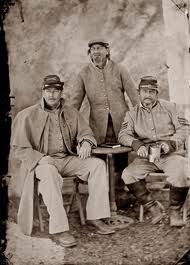
^ “Secesh” 1860s style : Confederate troops fighting for slavery

The word “secesh” hasn’t been heard much in America since the 1860s, but we read and speak it more and more these days as a small band of rabid anti-government congress-people push the Federal government to a shut-down and a Federal debt default.

In 1860-65 “secesh” referred to the southern states that seceded from the Union, and to their troops. It was northern, Unionist talk, and it still is so, and for very similar purposes.

Then, the issue was slavery. Today it is a whole lot of stuff : Obamacare, Federal debt, immigration reform, minimum wage legislation, food stamps, voting rights, marriage equality, gun control, even the Obama presidency itself : all of which 21st century “Secesh” despises.

Image

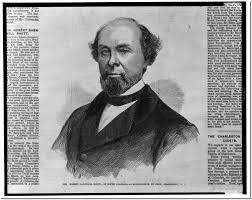
^ Robert Barnwell Rhett : the 1860 Secesh “fire eater” — like today’s Secesh voices, he was a media man (newspaper editor)

In 1860, “Secesh” left the Union rather than accept restrictions on slavery. But by LEAVING the Union, 1860 Secesh actually strengthened it — unified it — and made Secesh’s defeat almost certain.

Today’s Secesh is smarter. Instead of leaving the Union and thus making it stronger, Secesh is staying in the Union and destroying it from within. Secesh today is ABLE to do so because, unlike the 1860 Secesh, it is being copiously funded by corporate goliaths through huge-money PACs  and “think tanks”and through ownership of many media outlets, on which the funds-givers program talk show demagogy with a broadcasting reach that 1860s Secesh couldn’t even dream of. Because of this vast broadcast reach, today’s Secesh has supporters in far more states than the 1860 Secesh had any chance of.

Image

^ Secesh 2013 : Charles Koch, the money behind ALEC and much of the shut-down media

In 1860 Secesh in Congress didn’t have the filibuster or the majority caucus or a “Hastert Rule” (in the House) by which its minority view could be forced upon the entire Union. Today’s Secesh has all of those procedural artillery pieces and plenty of media ammunition with which to fight the nation from within.

Image

^ Bryan Fischer ; Secesh 2013’s version of R B Rhett

President Obama and the majority Democrats could give in, but they have chosen not to. At some point a stand must be taken. Obamacare is the law of the land, and good that it is. Gun control measures must come., Immigration reform will come. Minimum wage legislation should come. Voting rights must be assured to every citizen and expanded, not suppressed. Marriage equality kust come to the 36 or so states in which it still remains unsecured. Federal debt should be seen for what it it is : the world’s economic glue, the safest investment, one which almost every financial institution depends upon, and a no-brainer given today’s near-zero interest rates costing the Federal Budget less than 2 % of its total expenditure.

The President and his party are to be congratulated for refusing to let America’s future be extorted by its enemies.

This is America’s future. A nation welcoming, diverse culturally, more economically fair, secure fir those who live with great insecurity, confident of its currency, cleansed of guns and ammo. If Secesh wishes to stop the future — OUR future — let it try., It will fail. Ignominiously.

—- Michael Freedberg / Here and Sphere