BOSTON MAYOR RACE — THE MONEY, LOUD AND CLEAR

Connolly Walsh 1

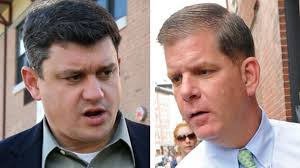
^ much love and affection for John Connolly and Marty Walsh

—- —- —-

In this campaign, as in any other, the money report as campaign’s vote day approaches, does NOT lie.  Any more than a kiss and a hug lie.

With only 16 days remaining before primary day in this one, Boston’s 12 would-be Mayors have been adjudged clearly by donors. Two are out of it; three are losing ground badly. Three are trying hard to catch up. Two who were raising a ton of money are raising a bit less. and two are raking in money faster than a speeding bullet. Let’s look:

Out of It — David Wyatt raised less than 100.00. Charles Clemons less than 3,000.00.

Losing ground badly :

Charles Yancey had 21,504.68 on August 14th; raised  2459.25 from August 15th to August 31st; and had 22,263.93 at the end of the month.

Rob Consalvo had 128,024.51 on August 14th; raised 71,999.59 from the 15th through the 31st; and had a balance of only 66,376.46 as the month ended.
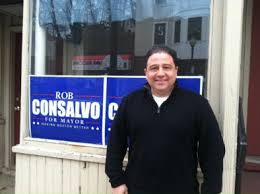
Consalvo local hq

^ Hyde park’s Rob Consalvo : feeling less loved than formerly

Trying to play catch-up :

John F. Barros had 56,566.70 BB on August 14th; raised 33,788.28 in the next 17 days; and had 68,946.48 as August ended.

Felix Arroyo had 158,579.39 on hand on August 14th, In the next 17 days he raised 31,852.32. At month’s end he had a very respectable 149,449.20.

Charlotte Golar-Richie reported a bit less than Arroyo. She had 132318.23 ; in the next 17 days she did well, raising 42,134.63. At month’s end, though, she still had less on hand than Arroyo. Just 125,355.52

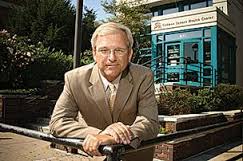
Bill Walczak could boast of 131,419.97 in his account on August 14th. He then added another 36,627.00, giving him a respectable 113,819.10 at month’s end.
bill walczak 1

^ Bill Walczak : respectably liked and even a hug or two

Two who were raising tons of money now raised slightly less :
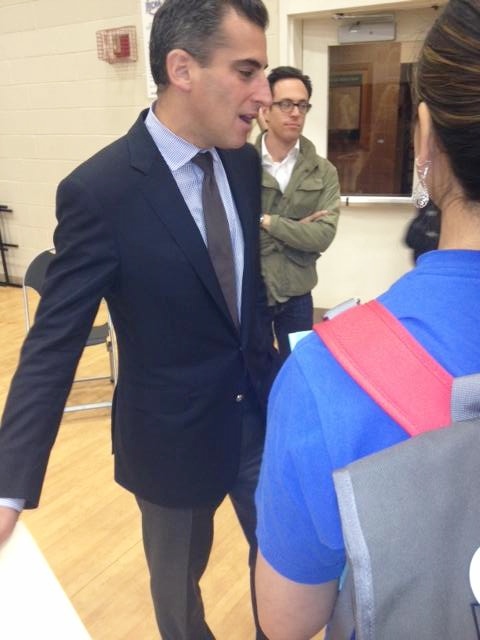
photo (38)

^ lots of love for Mike Ross, but a but fewer hugs this past week. (photo taken at last night’s Madison Park High School mayor Forum)

Mike Ross on August 14th had all of 486,135.08. From then till August 31, he took in 102,863.12, leaving him a still impressive 452,415.72 at month’s close.
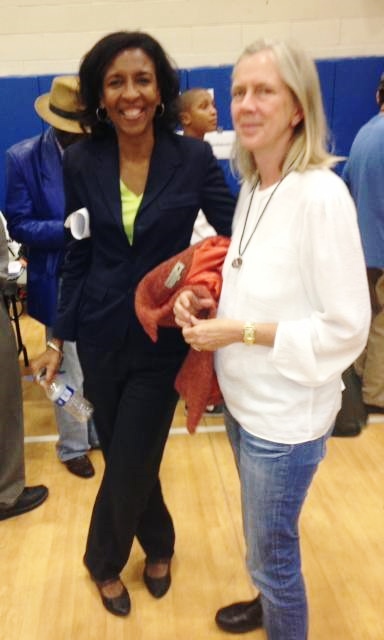
photo (37)

^ Charlotte Golar-Richie : looking happier, at last night’s Mayoral Forum at Madison park high School

Dan Conley had money to spare on August 14th :  890,638.63. He took in less than previously, however. just  82973.80 Nonetheless, he still had lots of green at month’s end : 612,598.80

All of the above tell a fascinating story of donor assessment of their candidates’ chances. And if so, what do the donors of our top two candidates tell us ? They smell victory, and they are likely to be correct.

Marty Walsh had 560,670.62 on August 14th, He then proceeded to raise 276,500.05, more than three times what Conley raised. At month’s end he had 658,120.12, more than the previously over-funded Conley.

John Connolly refused an “outside” donor’s 500,000 ? He could afford to. On August 14th he had 727,725.46. In the next two weeks, during which the “outside” donor flap nicked his campaign briefly he took in 161,783.00. At the end of August he had 589,759.97 in his account.

The money lead boasted by Walsh and Connolly has continued. Admittedly incomplete reports for the first week of September show Walsh taking in 58,311.99 and Connolly 74,418. No one else gained anything like these sums. Golar-Richie did the next; donors gave her 14,400.00. Dan Conley took in 13,923.90; Mike Ross, only 7,417.00. Felix Arroyo reported 1,776.04. Consalvo ? His report remains to be filed. same for John Barros and Bill Walczak.

The campaign moves on, crushing some, squeezing others, challenging a few to outdo themselves — maybe — and gifting the lucky two with ever more signs of love and affection.

—- Moichael Freedberg

BOSTON MAYOR RACE : THE FIRST MONTH

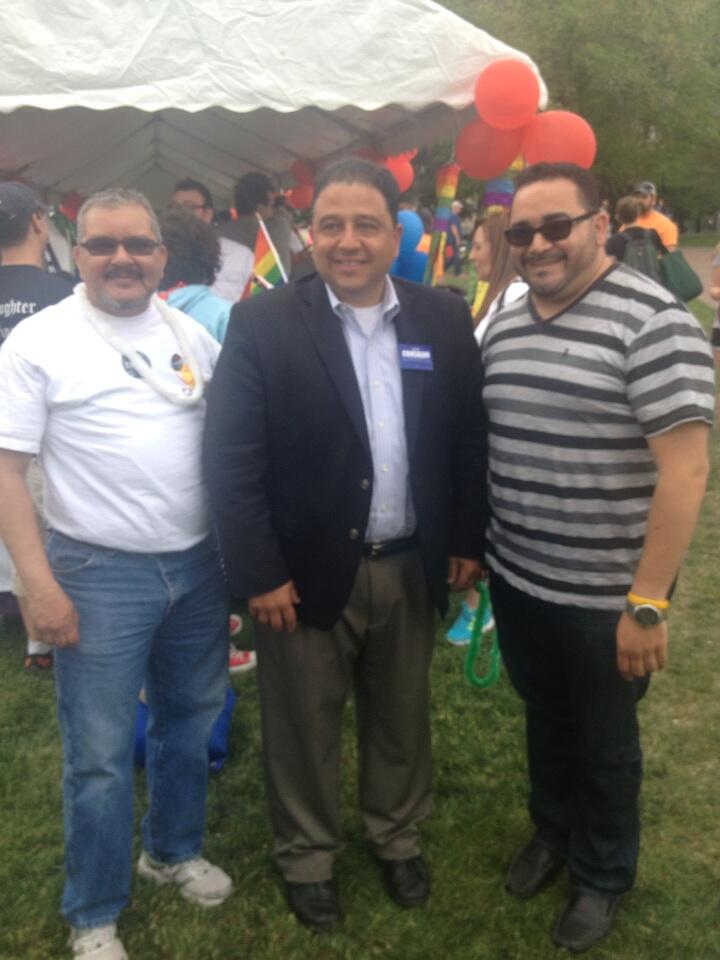
Mayor connections : Hyde Park’s Rob Consalvo at BAGLY (Boston Area Gay & Lesbian Youth) event

Mayor Tom Menino’s more or less last minute announcement that he would not be running for re-election set of what has turned out to be a mad scramble, by a hurrying multitude, to get to the “final” in which only two will face off. To date there are twenty-four (24 !) candidates signed up, making 1967’s eight look sparse. Could 24 people actually all have a chance to get past the September primary ? The answer is yes, for most: because in a four and a half month campaign, anyone can shape up. Usually a run for an office as powerful as Boston Mayor begins well in advance — at least a year before, maybe two. Indeed, as any veteran campaigner in Boston knows, your whole life — maybe also those of your parents and grandparents — goes into making you strong on vote day. Still, all that life history of connections and re-connections needs to be organized and called upon. That this year a candidate will get only 20-odd weeks, no matter who he or she is, grievously levels the odds.

Some things remain the same, however. Candidates holding current office already have made their connections and reconnectiions. They are combat ready. The first battle is to collect 3,000 certifiable nomination signatures. Large organization in place makes it easier to collect at least 3,000 signatures — and to submit them first, because if a voter signs more than one Mayoral nomination paper — and many do — only the first submitted counts. Consider also this : for 24 candidates to qualify for the ballot, at least 72,000 signatures will need to count. that is fully 20% plus of ALL Boston voters. The City has probably never seen such a huge street-level effort.

Probably half the 24 will actually make it onto the ballot. So what comes next ? Already the major eight or so candidates are running all over the city; marching parades, meeting and greeting at eateries, shaking hands at festivals and crowd gatherings, congratulating park League sports teams; holding coffee parties in neighborhoods; advancing an agenda. But does any of this even matter on vote day ? Not many voters give their vote, in a multi-candidate field, to a candidate they happen to meet once, or even twice. Likely they have already known at least one of the “major 8” already and have interacted with him or her. It is difficult for another candidate to overtop a voter’s long experience of another candidate. Truly, in local politics, it’s an axiom that the longer that one has known a candidate, the more likely he or she is to vote for that candidate.

The force of this axiom is likely why the “major 8′ are spending so much time right now acmpaigning to communitiues of voters — LGBT and allies, Haitians, Cape Verdeans, Asians, “new Boston — who for the most part do NOT have long connection with Boston politics. If the long-connected voters — the “traditional” voters of Wards 6, 7, 16, 19, 20, and half of 18; and the “new Boston” voters of Wards 4, 5, 8, 9, 10, 11, and 21 — are pretty much already “in the bag” for one or another of the “majors,” then it makes sense for them to seek out whatever they can bag up from the less connected communities.

Less connected voters also means “issues” voters. Voters who may not be able to say to a “major”, “geez, I knew your Daddy back in the West End — great guy,” for example, can judge that candidate’s stand on the issues. Thus the rolling out of agendas, that we have already seen from the canniest candidates: Dan Conley (gun control; citywide casino referendum), Felix Arroyo (labor rights), and Marty Walsh (education).

Canny candidates have also sought, smartly, to demonstrate that however they may be “based” in a long-connected community, they have the respect and support of leaders of the less connected. thus Charlotte Golar Richie, African-American of Dorchester, parades endorsements by State Reps. Michael Moran of Ward 22 and Aaron Michlewitz of Wards 3 and 8, and the Callahan Brothers of Ward 2. Likewise Marty Walsh, Irish-American from Ward 16, has the support of openly gay State Rep. Liz Malia of Jamaica Plain. City Councillor John R Connolly, too, strongly based in ward 20, has a house-sign campaign going on all over the city. Almost certainly the other “majors” will, if they can, announce similar cross-community support.

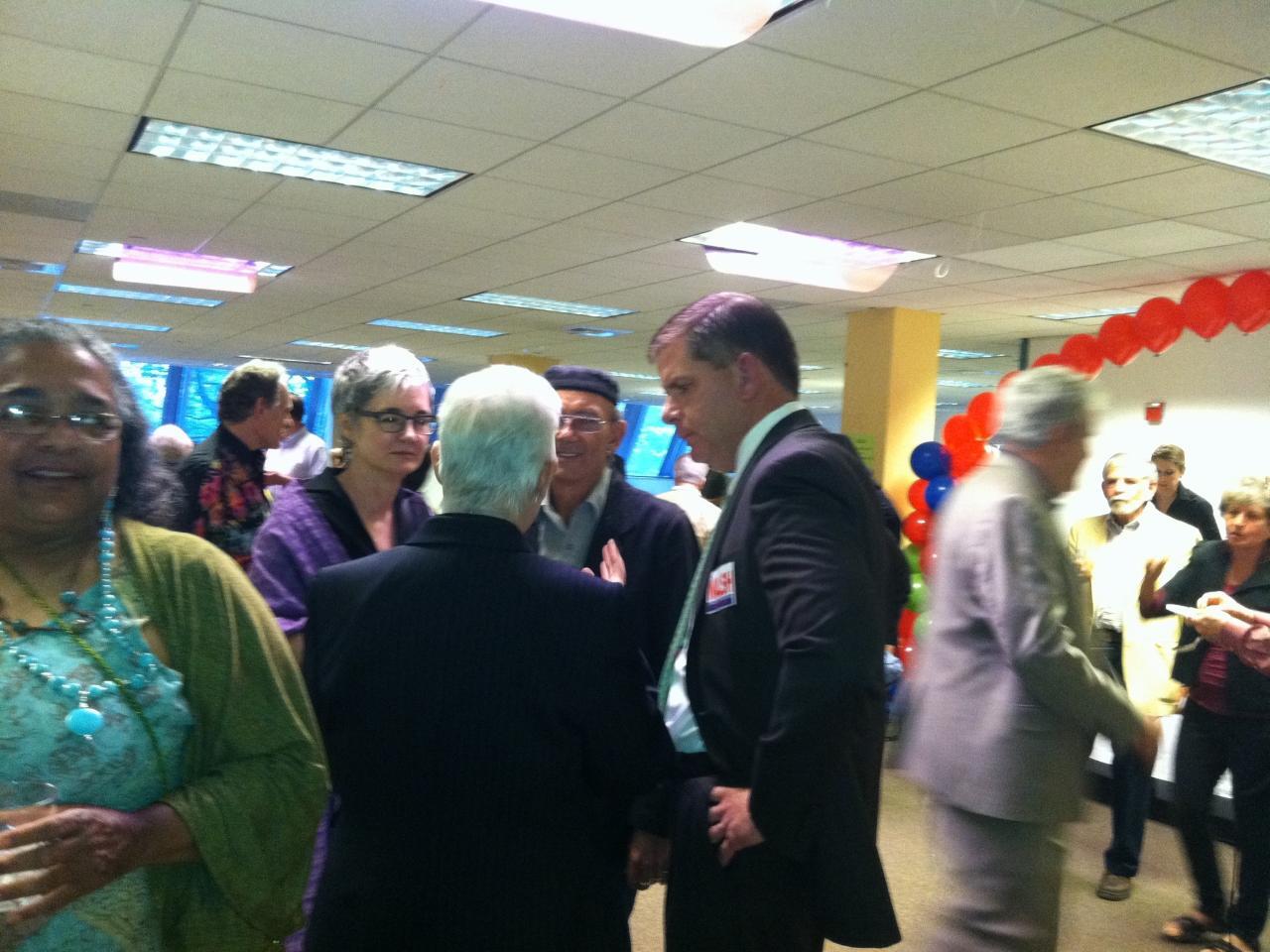
Ward 16’s Marty Walsh greeting City Life / Viuda Urbana supporters at the SEIU Hall.

This, then, is the exciting phase of the Boston mayor campaign. watching the city’s long-connected candidates dig deeply into its less-connected communities enhances the city’s togetherness and makes everyone feel that he or she counts in the halls of power. It is “retail politics” at its truest. It’s also a campaign phase that didn’t exist until Ray Flynn made it happen in 1983, as a South Boston guy campaigning among Jamaica Plain lefties. Before Flynn, Boston mayor races were combats of the powerful versus the powerful — the less so didn’t matter much and were, in fact, often pushed out of the city entirely by “urban renewal.” And Flynn himself had already worked with Jamaica Plain activists on Logan Airport issues, specifically approach run overflights of residential areas. This year, the “majors’ are seeking out the less connected voters no matter what, for their own sakes. This year, the less connected are being welcomed into the halls of city power.

—- Michael Freedberg / Here and Sphere