BOSTON MAYOR RACE : THE END OF AUGUST MONEY MESSAGE

Image

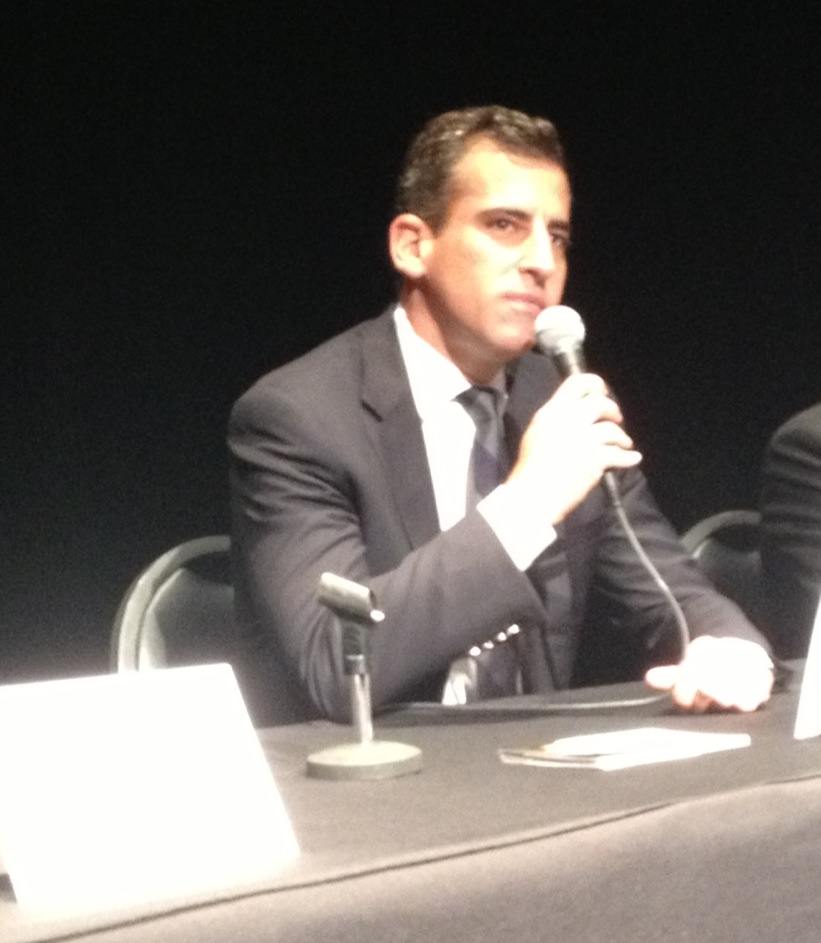
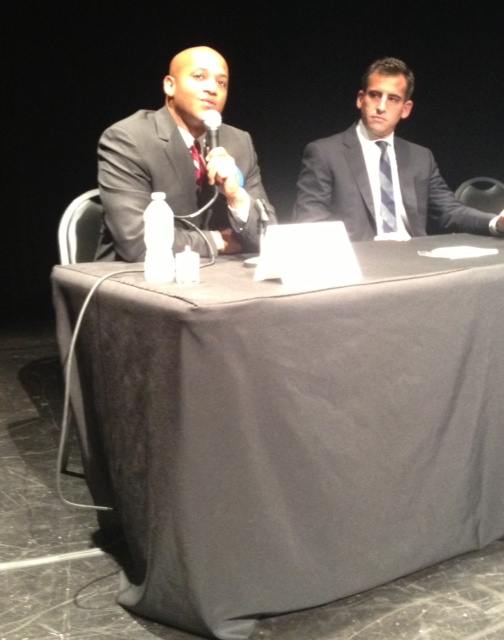
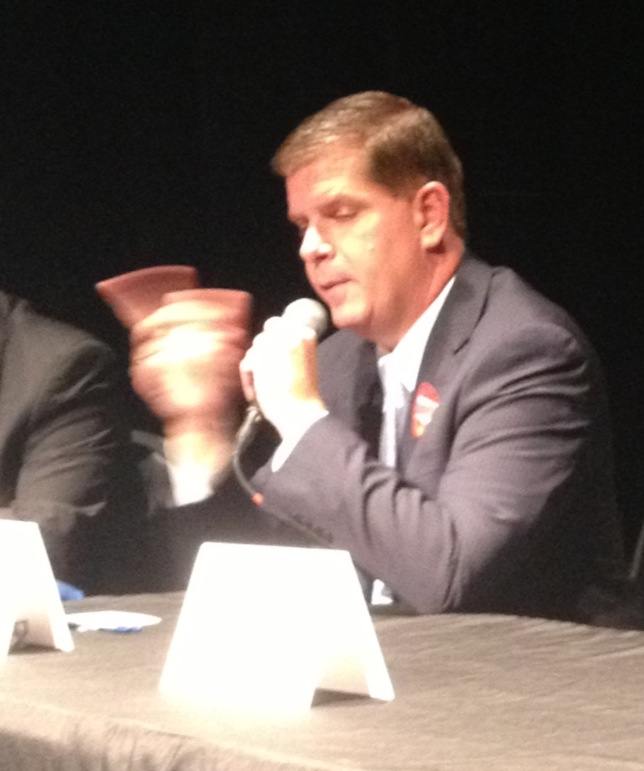
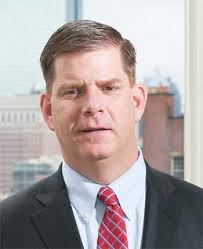
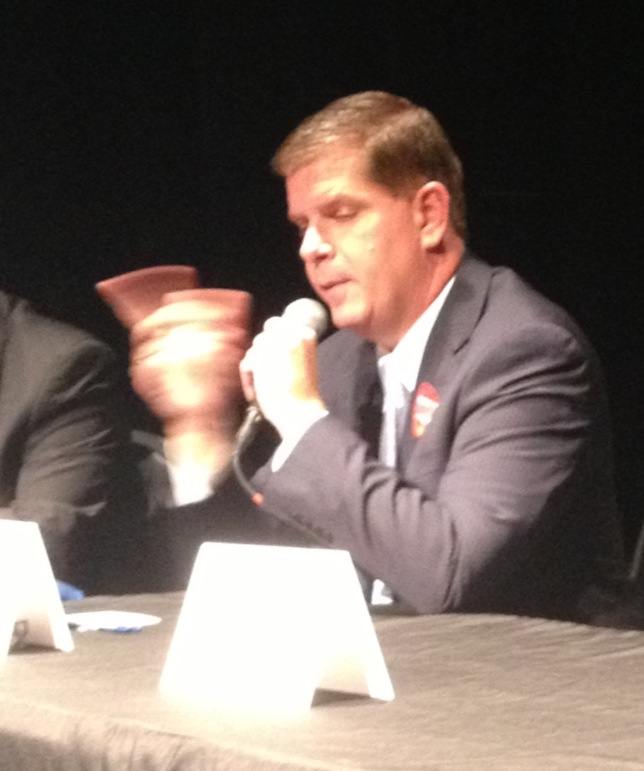
^ Marty Walsh ; big money raised, big voter support

—- —- —-

A candidate can begin his fund-raising by asking friends and colleagues. But in the Boston Mayor campaign, once the August 15th to August 30th reporting period arrives, that go-to reserve has long been tapped, and the money raised comes almost all from people and entities making a hard assessment of the candidate’s chances of winning.

Donors’ assessments of a candidate’s chances aren’t votes, but they’re a pretty good indication of what people who know a thing or two about the campaign think is happening. So let’s look at the money as reported to the State’s Office of campaign Finance  (not including David Wyatt, who has raised less than 100.00.) :

From the beginning of 2013 through August 15th —

Arroyo — raised 219,578.09

Barros — raised 137,977.48

Clemons — raised 8,673.65

Conley —- raised 736,057.35

Connolly —- raised 925,985.96

Consalvo — raised 496,340.72

Golar-Richie —- raised 217,625.14

Ross —- raised 649,014.94

Walczak — raised 260,122.95

Walsh — raised 961,748.51

Yancey — raised 28,092.16

From August 16th through August 30th, this is what has been so far reported (caution : there may be more reports filed next week) —-

Arroyo — raised 13,962.63

Barros — raised 19,523.28

Conley — raised 71,425.80

Connolly — raided 65,674.00

Consalvo — raised  31,089.59

Golar-Richie — raised 32,979.54

Ross —- raised 79,533.12

Walczak — raised 17,053.00

Walsh — raised 213,287.04

(Yancey and Clemons filed no reports for this period that we could find.)

The message in the money is fairly clear:

First, Marty Walsh has dramatically increased his money intake, while Felix Arroyo’s fundraising shows a significant fall-off.

These two seem connected and no coincidence. The endorsement of Marty Walsh by the Hotel and hospitality Workers’ Union was given during this two-week period. It was an endorsement that Arroyo was counting on; a Union most of whose members are people of color, many of these Hispanic.
Image

^ Felix Arroyo ; an inspiring message, delivered with empathy and command; but a Union endorsement lost has taken its toll.

Second, as Arroyo’s money tree has shed leaves, that of Golar-Richie has blossomed quite a bit. Only Walsh, Connolly, Conley, and Ross raised more than her 32,979.94 intake. Perhaps this is why her headquarters are always open, people actively working in them, and why at Forums her discussion of the issues has become much more authoritative and convincing.
Image

^ Charlotte Golar-Richie : benefitting big-time from fall-offs by several rival candidates and by her own stronger performance on the stump

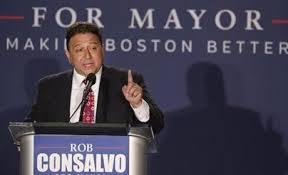
Third, Rob Consalvo, who during the first summer months of the campaign looked strong both in his Hyde park base and across much of the city, has lost both his money mojo and his persuasiveness at Forums.
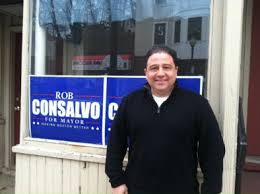
Image

^ Rob Consalvo ; what has gone wrong here ? And why ?

Fourth, Dan Conley, despite rumors of being difficult to get along with or work for, remains a strong contender who understands the details of City administration and how to correct its deficiencies. he polls a strong third place, and his 71,425.80 raised says that his supporters feel that he can make up the gap between where he polls and the top two. He might indeed do that.

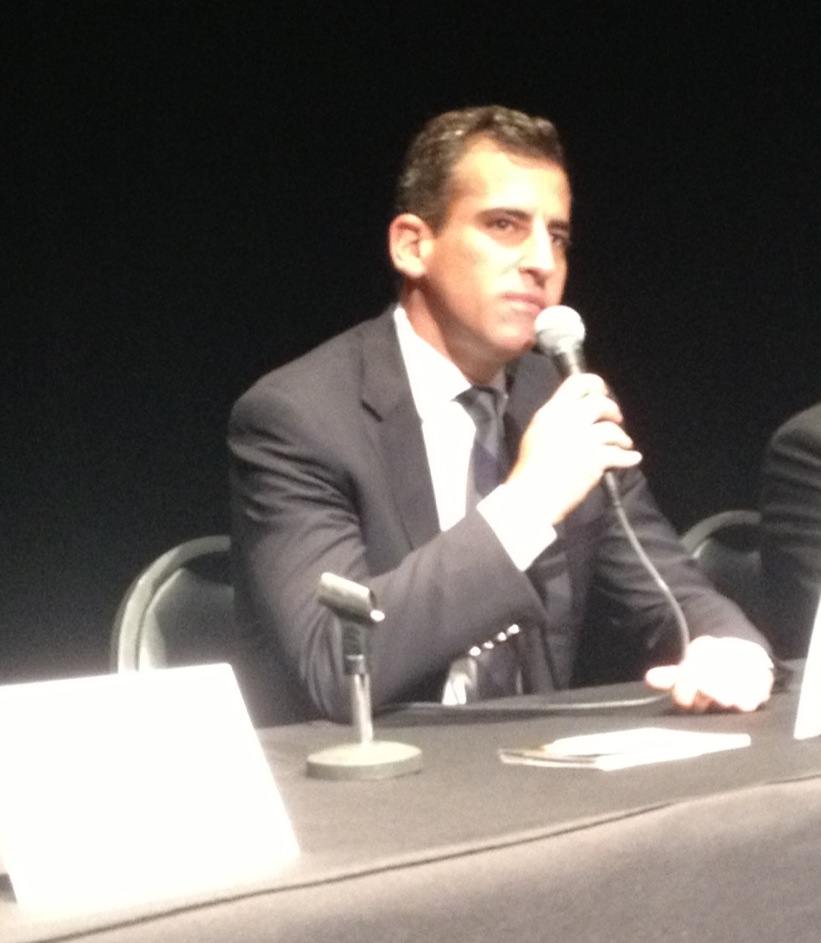
Fifth, Mike Ross continues to draw big money, much bigger than his standing — tied for 4th place — would seem to justify. His performance at Forums is almost always dominant; but his range of interests seems limited to the lifestyle of Downtown. Perhaps his donations increased because of the impact — however brief — of the Stand Up For Children (SFC) “outside money” flap upon John Connolly’s campaign; because Ross, although no friend of the SFC agenda, stands even more pointedly for the apple-store, zipcar, bicycles world envisioned by Connolly than Connolly does. Indeed, Ross personifies it. Interesting to note that Connolly reported only 65,674.00 in donations for this period. Could it have been that some Connolly supporters were looking for a fall-back candidate just in case ?
Image

^ Mike Ross : big money and a chance now to be taken very seriously
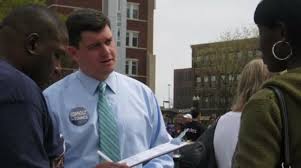
Image

^ John Connolly : none of the other candidates has been as buffeted as he. that’s what happens when you poll in first place.

Meanwhile, Marty Walsh, with the Hotel and Hospitality Workers endorsement in hand, and no missteps on the issues, and with strong performances at his “Mondays With Marty” rallies, saw his fundraising increase beyond all expectations.

Walsh and Golar-Richie look well positioned to gain the votes of the one-third of likely voters who, in recent polls, remain undecided whom to back. But Connolly has recovered strongly from the SFC affair, and Felix Arroyo has a message of hope and friendship that he is delivering in person — and at Forums — to the City’s citizens stuck in low income lives.

Our conclusion ? Walsh first; Connolly second, but perhaps shaky. Conley third, but with the chance that Golar-Richie will overtake him and maybe Connolly too. then Arroyo and Ross, with Consalvo fading to 5th and maybe farther down than that.

There’s not much time left to alter these trajectories once the voters — and most of the candidates — return from a well-deserved weekend on the Cape.

—- Michael Freedberg / Here and Sphere

UPDATE 09.01.13 at 10.30 AM : this morning’s Boston Globe reports that Felix G. Arroyo raised 101,324.00 in August. (The report appears on a back page, easy to miss.) The impression the brief article wants to create is that Arroyo increased his fundraising. Indeed, for all of August, that is true, OUR article, however, focuses on what was raised in the period August 15 to 30. It tells a much different story — and not only for Arroyo.

In the first weeks of August, Arroyo looked like the rising star of the campaign; union endorsements from unions heavy with people of color looked likely. Then came the Hotel and hospitality Workers’ decision to go with Marty Walsh despite, a Union spokesman Brian Lang put it, the union’s admiration for Arroyo.

THIS is the sort of movement that our focus on August’s last two weeks was meant to catch. Using the total August figures would, we thought, miss “the action.” — MF / HnS

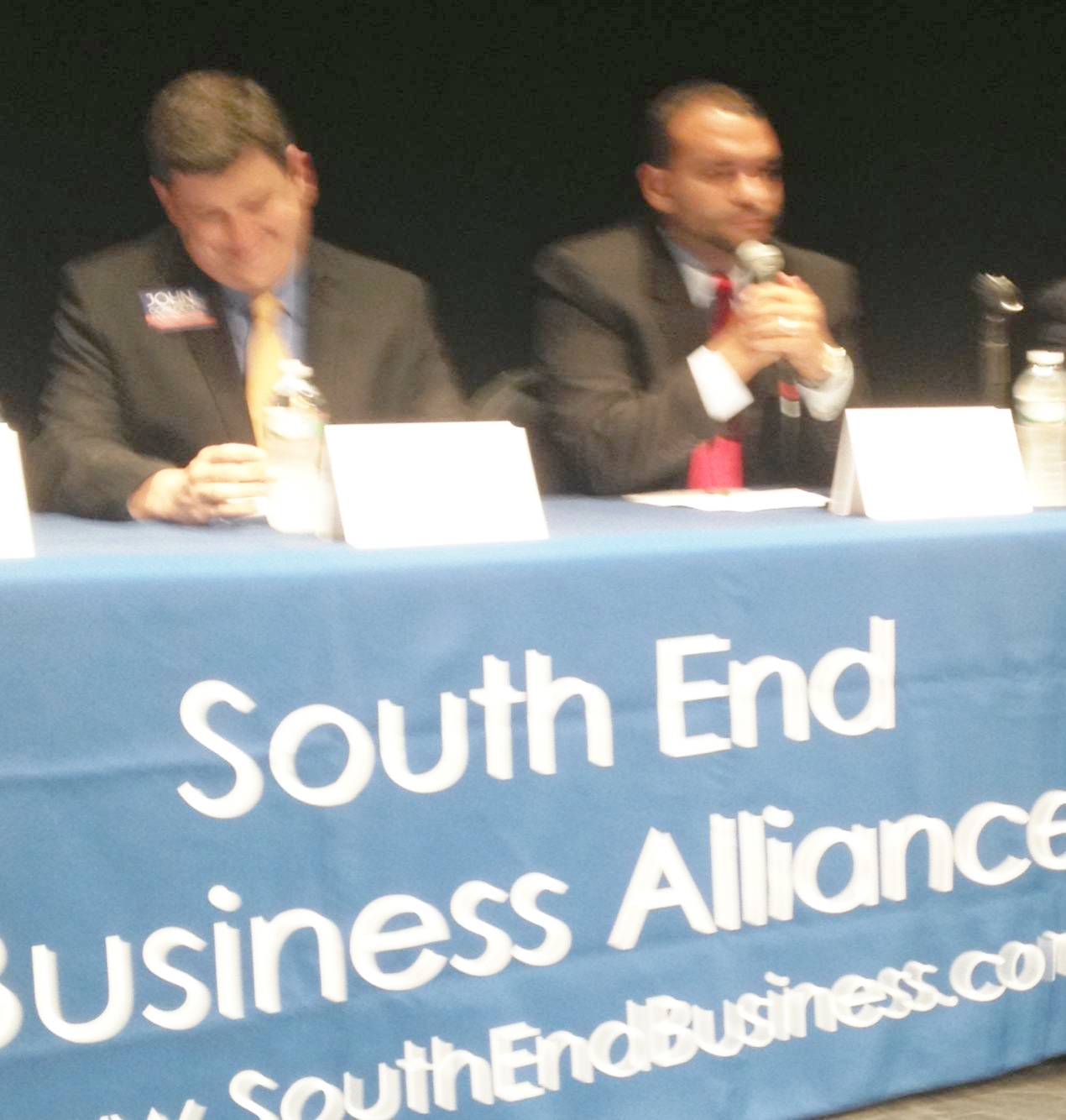
BOSTON MAYOR RACE : CONNOLLY, WALSH, and ARROYO IN COMMAND at SOUTH END BUSINESS ALLIANCE FORUM

Image

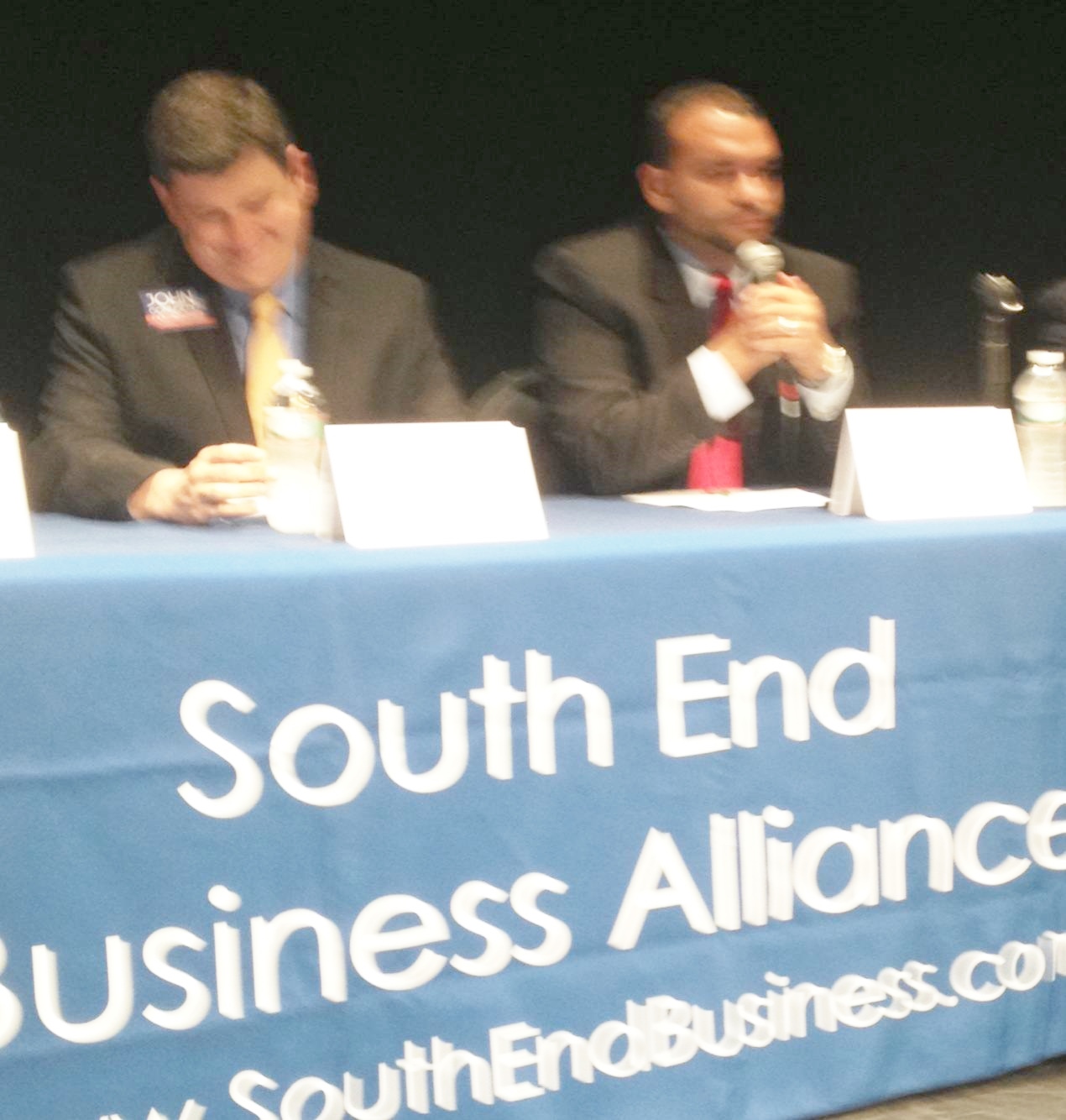
^ Charles Clemons, John Connolly, and felix Arroyo at SEBA Forum

—- —- —

Last night’s Mayoral Forum at the Calderwood Center on Tremont Street asked the most pointed questions and addressed more topics than at any Forum we’ve observed so far. It being the South End, heart and stomach — excellent hors d’oeuvres were served in the foyer — of the “new Boston,” comprehensiveness was to be expected. Basic just won’t do for a locus of million-dollar condos.

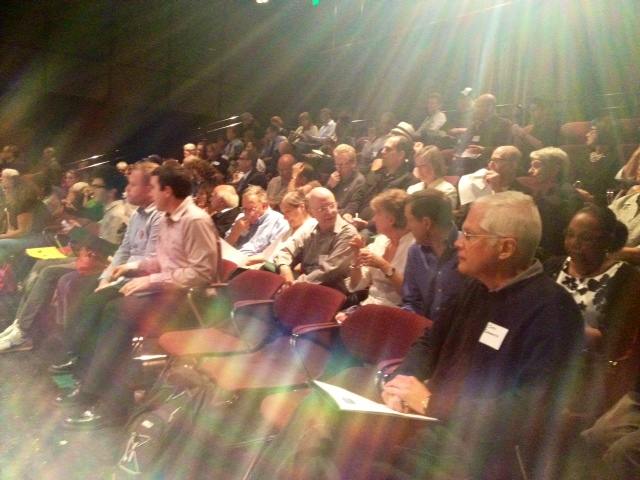
Hosted by the South End Business Alliance — SEBA — the Forum gathered an audience of about 200. it was a well informed group, with definite preferences: favorable answers from the candidates drew approving cheers and applause; unfavorable ones were given the silent treatment. There was plenty of each.

That said, this Forum made clear what has portended for some time now : that the leading candidates, according to polls, are leading for good reason. They have greatest command of the issues — big and not so big — and of how to address them. Connolly, Walsh, and Arroyo made their points with specificity, each man inputting his own expertise and vision, each speaking his own language — and doing so with persuasive conviction. For Connolly, that meant the most modern of cities : zipcar, apple store, user-friendly, bicycles, lifestyle diversity — and biolab 4. For Arroyo, it meant a city in which pathways out of poverty are a priority. Marty Walsh saw a partnership city, between business and labor, the Mayor working in team with the City Council and with the Boston delegation to the state Legislature.

Image

^ an audience informed and knowing what they want

The other candidates on stage — Charlotte Golar-Richie worked the foyer but did not sit in; Consalvo and Wyatt made no appearance at all — answered less strongly. Mike Ross, who has spoken eloquently at earlier Forums, seemed less in command here — perhaps it was the questions, which did not fit his vision of fun city — restaurants, liquor licenses, and neighborhood nightlife. His best answer fitted that slot : “Yes I am a supporter of food trucks (which SEBA’s restaurant members don’t like), but keep in mind that some good food trucks have stepped up to be bricks-and-mortar restaurants.”

Image

^ Mike Ross : food trucks to restaurants

Image

^ John Barros : seeing City hall from his neighborhood (Mike Ross to his right)

John Barros and Bill Walczak spoke from the viewpoint of their particular experience ; schools for Barros, the Codman square Health Center for Walczak. The tactic made their answers sound provincial. a Mayor should see the neighborhoods from City hall. Barros and Walczak did the reverse : looked at City hall from a neighborhood. And Walczak, as always, offered his “no casino” mantra.

Dan Conley stayed at the Forum only long enough to respond to a twenty-question round robin of “yes, no, or thinking about it” quickie answers to this or that one-word issue : casinos, liquor licenses, South Boston parade, audit the city, change the BRA, and such like. As for Charles Yancey and Charles Clemons, each made a couple of notable points — specific to their personal resumes — but both lacked preparation, and it showed.

Each candidate was asked what was his proudest moments, in public life and in his work. Marty Walsh answered thus : “protecting jobs. We passed legislation which has allowed technology companies to bring in new jobs that for he most part were in California. But hey, it wasn’t just about me. (It’s) working with a team. It’s not just you, it’s going to be working collaboratively.”

Then Felix Arroyo : “my proudest moment on the Council ? There was an attempt to close our city’s libraries. I was instrumental in stopping that. Before that, the work that I did in organizing janitors. They were making eight dollars an hour,. now they’re making fifteen.”

Connolly : “most important council work ? getting a strict energy efficient city code passed. as an attorney, my proudest moment wa represennting a client, pro bono, two guys here in the South End (who were victims) in a gay-bashing case.”

Another not so typical Forum question was then posed ; ‘have you started thinking about who you would include in your administration — in your cabinet — as Mayor ?” The strongest candidates gave the most intriguing and thoughtful answers.

Walsh : “a new superintendent of schools first…the hierarchy of the Police department should be revamped. Look at the Fire department too. Include all the city in my discussions and decisions.”

Image

^ Marty Walsh : vows big changes at the Police department

Connolly : “new generation, new leadership. Superintendant of schools — how about one who is non-traditional ? A city-wide summit on public health. Begin overhauling city hall to be user-friendly.”

Arroyo : “A diverse cabinet that shares my values. A superintendant of schools who knows that you have to work with everyone.”

Image

^ john Connolly and Felix Arroyo : will they work with the Council ? So they say…

Next came a question guaranteed to elicit an unreal answer: “how will you as Mayor work with the City Council ?”

Connolly : “We are better when we disagree. I want a council that is bold and independent. Disagreement makes us better.” (to which I comment : “sounds good, but that’s not how it plays out. The Mayor may let the council gripe, but he has the power and the Council doesn’t.”)

Arroyo — “The Council is there because the voters put them there. But more importantly” — and here he pointed to the Forum audience — “I want to work with YOU !” (to which I comment : “a slick way of ducking the question !”)

Walsh : “The city council is a partner. I would also include the Boston legislative delegation and also legislators from around the state. The mayor can’t do it alone, he’s not a dictator.” (to which I comment “no, but the Mayor often thinks he is.”)

By this time the Forum had shredded badly. Conley first, but then Ross, Barros, Clemons, even Connolly, one after the other, had to leave to attend other events. Only Arroyo and Walsh said they were here for the duration.

They all apologized, of course. But as the race is now well into crunch time, every candidate with any chance at all has more events on his or her daily schedule than could be attended in three days. And so it goes. rush, greet, rush, talk, rush, talk, greet, talk, rush. You want to keep up ? You will have to rush, rush too.

—- Michael Freedberg / Here and Sphere

BOSTON MAYOR RACE : CONNOLLY, GOLAR-RICHIE TAKE COMMAND AT “STAND UP FOR SENIORS” FORUM; BARROS EFFECTIVE TOO

Image

^ John Connolly : the day was his

—- —- —-

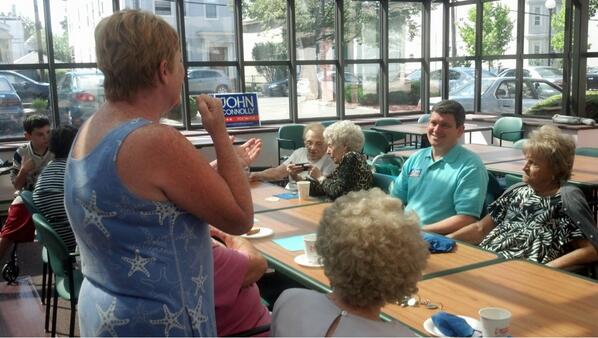
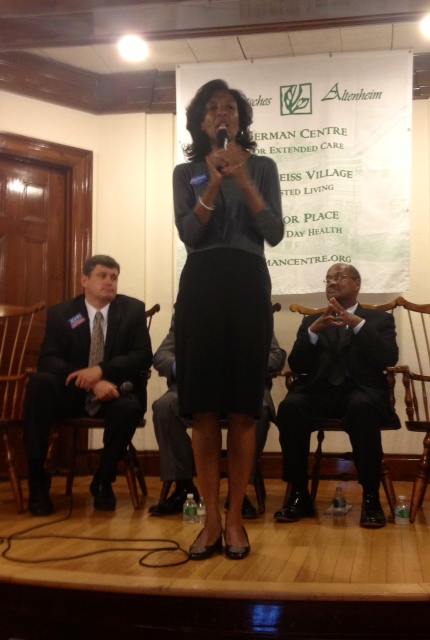
The Deutsches Altenheim, on Centre Street in West Roxbury, put itself center-stage in Boston’s mayor race by hosting a “stand Up for seniors’ forum. Because there are 12 candidates in the action, the sponsors divided the field into two parts. On Saturday over 100 seniors at the “old ones’ home” — which is what “Altenheim” means in German — the home was founded by Boston’s then German immigrant community — heard from Dan Conley, Felix Arroyo, Marty Walsh, Bill Walczak, David Wyatt, and Rob Consalvo. Yesterday, an even larger crowd, maybe 150, listened to — and questioned — the other six Mayor hopefuls. Between them there was much difference, both in positions advocated and in command of city governance.

The day belonged to John Connolly, who lives in West Roxbury and grew up in Roslindale, and to Charlotte Golar-Richie, who delivered her most authoritative Forum argument to date. In response to a question about quality of life in the neighborhood, she emphasized her focus on the safety of women, which also is, as she noted, an issue for seniors, most of whom are female.

She spoke with unforgettable detail about seniors who find themselves plagued with scams, because older people often save their money and credit rather than spend it : “late at night they may answer the phone and respond to a voice and give their credit card number. then  the credit card bill arrives with unwarranted charges. There should be a way to get those charges removed !”

Golar-Richie also put forth suggestions for improving women’s safety on public transportation.

Image

^ Charlotte Golar-Richie : her most authorotative Forum performance yet

Still, as effective and on point as Golar-Richie spoke, John Connolly assumed command of the Forum. Confident in speaking on home ground, to voters who know him a well as he knows them, he first addressed a question about scams that plague elderly people more than most, that “it’s hard to block phone numbers because they can always switch to another and then another. This is a problem of outreach and awareness. Seniors are often unaware, living often in isolation. we should use the city’s elderly commission to increase outreach.” Given a question about broken sidewalks being a serious hazard for older people, he responded with impressive command of detail : “this sis partly a public utilities issue. The phone company and electric dig up the streets, their contractors do, and then they don;t pout it back the way it it was. we need to set city standards, a check list, for such digs and see that the contractors adhere to them.

Connolly had more to say on the streets and sidewalks issue (which though hardly epic, are matters that every city resident is plagued by all the time). Given a question about the difficulty that seniors have in crossing a main street before the stoplights change, Connolly said, “we need to do a thorough streets and intersections assessment, so that when we design an intersection, we take into account pedestrians as well as motorists.”

And then came a moment that candidates hope they will have. A question was asked about money to keep the West Roxbury library open on weekends : is there the money to do so, or not ? Connolly said that funding for the library was tenuous at best; that it’s always low on the list of funding priorities. Candidate Charles Clemons — often given to blanket assertions that sound good — smiled widely. “Of course the money is there.” he roared, in the loud voice of an ex-policeman (which he is) “The city just paid 13 million dollars to buy a particular building in downtown that was assessed for six million !”

Image

^ Charles Clemons : one blanket assertion too many

It was Connolly’s chance. “It’s two different things, Charles. Libraries and the staff salaries are paid out of the city’s spending budget. Capital purchases are made from a different budget, the capital budget. You can’t use the capital budget to pay salaries or open libraries, it’s against the law.”

This is what winning candidates show that they can do. And though there was much well-informed discussion thereafter, by John Barros especially — Golar-Richie had had to leave the Forum to get to another event, and her comments were missed — of streets, snow removal, and phone call blocking, the big moment was Connolly’s, and the Altenheim voters knew it.

There was one other dramatic moment. Someone asked candidate Chares Yancey why he is running both for Mayor and for re-election to his city council seat, when all the other councillor candidates in the Mayor’s race were giving up their council seats ? It was a question many voters have wanted to ask. Why, indeed ?

Yancey — who ceaselessly repeated his mantra “My name is Charles Yancey, and i’m running for Mayor” — said, “i’m glad you asked that question.”

No one laughed, but…

He had an explanation, too ; “I am providing the voters of my district a choice. If I am re-elected councillor and am elected mayor, i will make my choice then, at that time.”

This, from the candidate who over and over again touted that “I have 30 years of experience in city budgets, more than any other candidate in the race.” Maybe experience isn’t an unmixed blessing.

—- Michael Freedberg / Here and Sphere

BOSTON MAYOR RACE : WALSH, ARROYO, BARROS and ROSS DOMINATE YOUTH GROUP FORUM

Image

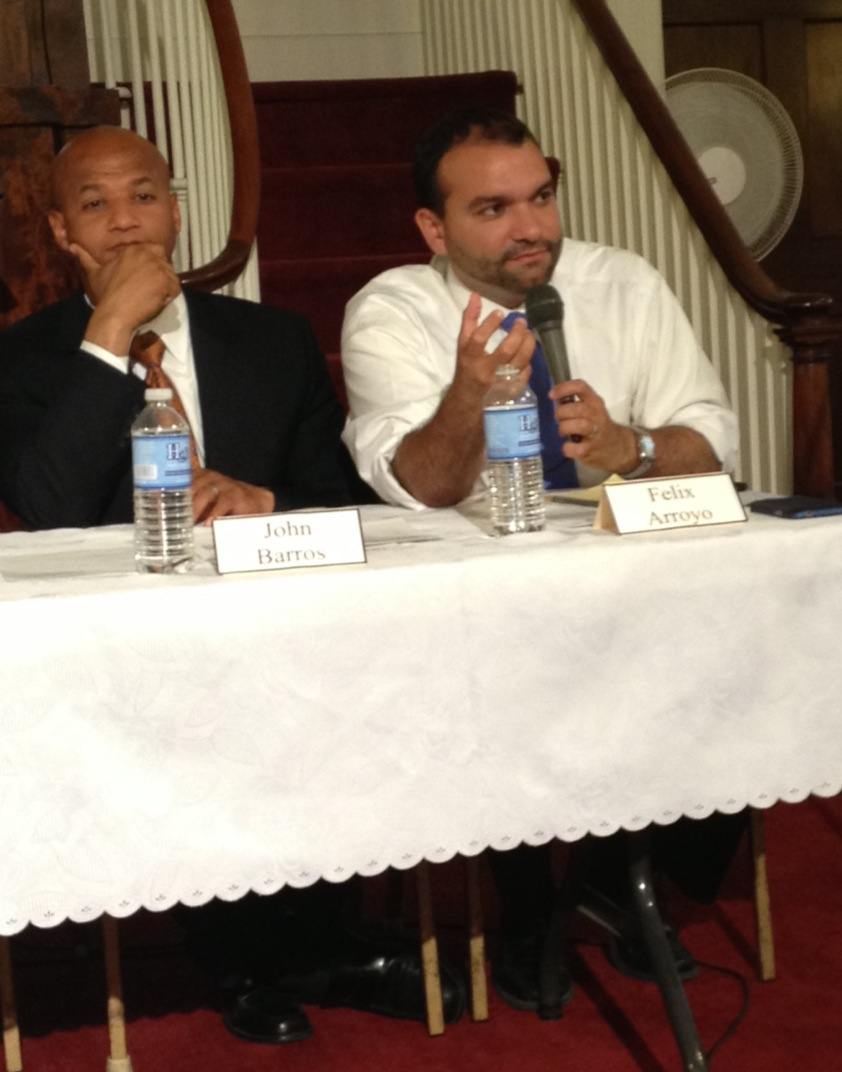
^ the Nine : Yancey, Wyatt, walsh, Walczak, empty chair (Ross came later), Golar-Richie, Clemons, Barros, Arroyo

—- —- —-

Nine of the 12 candidates running to be Boston’s next Mayor took their seats at tonight’s Youth Group Forum held at the newly steepled parish Church on Meeting House Hill in Dorchester. About 150 residents of the neighborhood sat in the old New England pews to listen as the Mayors-to-be answered questions posed by speakers selected by the Cape Verdean Community UNIDO’s Youth Leadership Academy.

Dan Conley, John Connolly, and Rob Consalvo did not participate.

Questions to the candidates addressed dual-language education, school reform and preparation for technology jobs, and how to curb violence in the community. Mike Ross — who arrived late, but apologized — gave strong answers; even stronger, John Barros and Felix Arroyo, whose eloquence is second no nobody’s on behalf of those who live in Boston but lack access to the best. Strongest of all, surprisingly, was Marty Walsh, who had obviously prepared himself for the types of questions likely to be asked him. He spoke deliberately, in detail and with feeling, applying his work as a legislator and stating his goals for changing how the Mayor’s office confronts the problems that this Forum’s youth sponsors will be dealing with.

One issue that has turmoiled Boston voters recently, that of a longer school day, was settled. All the “major” candidates called for a longer school day, even Felix Arroyo, who has aligned himself with the Boston Teachers Union most closely of all the hopefuls. He, Walsh, and Barros gave the directest answers on what a longer school day should focus on. Barros’s call for a two-shift teaching force might roil the BTU a bit, however.

Image

^ John Barros (Felix Arroyo on his right): “for the longer school day we should have teacher shifts, an early shift for the morning and lunch hours and a late shift for the afternoon.”

On the question of dual language schools, Both Arroyo and Barros spoke with personal experience. Said Arroyo,  “I grew up in a subsidized apartment with immigrant parents who spoke ‘espagnol.’ I know what it’s like to grow up among kids who I did not understand because they spoke English… we have only four dual language schools. Parents of all backgrounds want dual language education. Look at the Hernandez School, it works well. I look for the day when we have many different language’d dual-language schools. French, Cape Verdean Creole, even Mandarin. Why not mandarin ?”

Image

^ Felix Arroyo (John Barros on his left) speaking to the schools issue : “every Boston school child deserves the best education because every child is a best child.”

Barros ; “I’m a son of cape Verdean immigrants. When I joined the city’s school committee, and in my work, I fought to assure that all Boston public school students learn English fully.” These sentiments were of course reiterated by other candidates at the forum, of whom Charlers Clemons nloted that he was ideally suited to understand the disconnecvgt between studenyts who come to bostyon with anoyher language and the Ejglish-language adyuklt world. “Not by language but by my heritage. My father descends from slaves brought here on slave ships; my mother from the Brewsters on the Mayflower.”

It was a memorable, if not conclusively Mayoral moment. And led almost inevitably to Walsh’s comment : “My parents didn’t face a language challenge, but they were challenged too. Both had less than a high school diploma.” Walsh, who grew up and still lives in the Dorchester section directly abutting Meeting House Hill, discussed the funding process for dual language education and his part in it as a 16-year legislator. He concluded with a challenge: “We should have two different kinds of dual-language schools. When a child’s first language is English, we should have them learn another language !”

Image

^ Marty Walsh ; “with a longer school day we shouldn’t just have more classroom but also some programs, the arts.”

The question on preparation for graduating to the City’s best jobs brought this comment by Arroyo : “The next mayor has to have as a priority closing the ‘achievement gap.’ And it begins very young. If a child falls behind in the third grade, even , it is already too late. We need to teach financial literacy, too, to all our children.”

Walsh ; “we don’t just need to change our city’s jobs policy for the kids, We need to rewrite it. Right now we’re being sued because our city jobs policy doesn’t meet the US Constitution !”

Many of he candidates mentioned Madison park High School — the technical high school closest to Meeting House Hill — in their answers to this question. Barros ; “We absolutely do invest in technical High schools in Boston. Now we have to make sure that Madison park has a technology center. And more ; Boston residency, for Boston jobs.”

Charles Clemons, a former Boston police officer, was skeptical ; “residency policy ? It has never been enforced. We give parking tickets and licensing fines but we don;t enforce residency. Why not ?”

The forum moved on to discussing the problem of violence in the Meeting House Hill neighborhood and others.  Many of the candidates addressed the issue well.

Mike Ross had now joined the group and, with his usual grasp of big-picture basics, said : “there’s diversity needed (on the police force). It’s not OK that there is not one police captain of color nor one who is female….the opposite of violence is opportunity (for kids at risk).”

Image

^ Mike Ross : was at another event; apologized for coming late; and, as always, spoke well and to the point

Arroyo : “there’s a short term strategy and a long term strategy. Short term : back to community policing. Police bicycling through the community. Long term : if we are not serious about ending the cycle of poverty we’re not serious about reducing crime.”

Walsh, who has said “there’s a heroin epidemic in the City right now,” gave this pledge : “(if I’m elected,) The first meeting that i will have in my office will be on violence. we have to attack this problem one street at a time, one family at a time.”

I have highlighted the answers given by candidates Walsh, Arroyo, Barros,and Ross most of all because they addressed the questions, gave answers which signal that some thought has taken place in the brains about these issues, and demonstrated seriousness about doing the job, not just campaigning for it. The other candidates present either gave rambling, conversational responses — Charlotte Golar-Richie — or ones that seemed too narrowly focused, locally and in minutiae — Charles Clemons and Bill Walczak. Others of the nine on stage seemed to be talking more to themselves than to the voters. One wonders why they are running. At this stage, with less than five weeks till Primary day, there’s no time left for candidacies that won’t, or can;t command the issues on a large scale. Mayor of Boston is the most difficult political job, maybe, in all New England. Fumble-itis, vagueness, and circuitous thinking are NOT in the job description.

BOSTON MAYOR RACE : CONNOLLY RECOVERS NICELY; WALSH FOCUSES; THE FIELD GETS SOME MOJO

Image

^ John Connolly : what schools flap ?  — here he is in East Boston

—- —- —-

We will admit it : we didn’t think that John Connolly would be able to surmount the huge flap over a $ 500,000 “outside” money dump that that smothered his campaign. But he has.

We thought sure that his schools agenda would look less reformist, — as a result of his being gifted by Stand for Children, an Oregon-based advocacy group debunked by some for relying hugely on corporate money of a seriously regressive sort — than insidious. For about three quarters of a day, it looked like we had it right.

But then, in less than an evening, Connolly struck back, fully. Supporters rallied to his side — publicly and unreservedly. He touted his “green-ist” credentials as the campaign voice of Boston’s “park people.” Big-name Democrats like Ian Bowles stepped up.  And he rejected the $ 500,000 for once and all, in a statement that left little doubt that he was quite angry at being ambushed by a group purporting to support his candidacy.

How effective was Connolly’s response ? Rival Dan Conley congratulated him on rejecting the money. THAT good.

Connolly also benefitted by an over-reaction by Felix G. Arroyo, who not only touted his support for Boston Teachers (and their Union, the BTU),which was OK, but then proceeded to assert that as Mayor he would work to eradicate poverty in Boston. Oh really ?

So here we are, on August 22nd, with a Mayoral Forum, taking place tonight at the newly re-steepled white church on Dorchester Center Hill, and 32 days left before Primary Day, and all is back on course. What WERE we thinking ?

Yes, a few doubts linger about Connolly’s commitment to school reform that isn’t a corporate take-over. You can see the doubts in his Twitter feed. But he is confronting the doubters, indeed, allowing their doubting tweets to stand in his Twitter list for all to read. this is a smart move.

Image

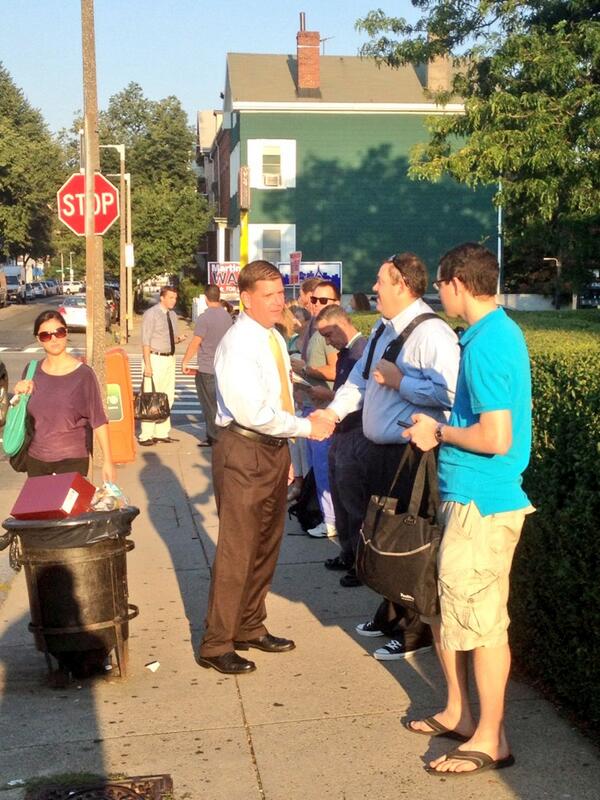
^ Marty Walsh on L Street : pressing some Wards 6 and 7 flesh and moving on up

Meanwhile, in South Boston, Marty Walsh is taking care of some unattended business. Last night former Senator Jack hart co[-hosted a huge party for him; during the day, Walsh greeted voters along L Street. Jon Connolly has cozied big-time up to South Boston’s State Representative, Nick Collins. Bringing Jack Hart into play allowed Walsh to send Connolly a message — and one to Coll;ins as well. It has always seemed sure that the strongly labor-backed Walsh would dominate in South Boston, but lately that primacy has come into doubt. Today there seems less doubt in play.

The Walsh campaign moves ahead to another neighborhood where support from his fellow State Representative has eluded him : East Boston. In this case, the legislator (Carlo Basile) has actually endorsed a rival. So, on Monday Walsh will host a “Mondays with Marty” in East Boston. It will be interesting to see who and how many come to hear him speak.

Image

^ Rob Consalvo : neighborhood schools. In Kenmore Square ?

The rest of the Mayor race’s bigger hopefuls seem finally to have found their stride. was it the Connolly flap that tweaked them ? It seems so. Many of his rivals suddenly became advocates for neighborhood schools (Consalvo), or opponents of charter school increases (Ross), or voices for public school teachers and the under-performing schools (Arroyo). Golar-Richie pushed a women’s safety agenda — significant certainly,l in light of the murder of Amy Lord, not to mention the killing, in nearby Waltham, allegedly by Jared Remy — Jerry Remy’s son — of his girlfriend.

Image

^ Charlotte Golar Richie in the North End,. with St. Rep. Aaron Michlewitz.

Connolly also launched his first television ads. So has Consalvo. Marty Walsh probably has them running also, though we haven’t yet seen any.

Every night now, Boston voters have a vast choice of campaign events to drop in on, or events of their own for candidates to appear at (for us at Here and Sphere too). Every day there’s a meet-and-greet — or three, or five — going on somewhere in the City. It’s all out sprint time, indeed a typhoon of sprints, as the campaign approaches the first week of September and all that that portends for political weather.

—- Michael Freedberg / Here and Sphere

Meranwhile, top rioval marty walsdh is tak

BOSTON MAYOR RACE : SCHOOLS FLAP — THE BTU FIGHTS BACK

Image

^ The BTU’s Richard Stutman : a man who insists.

—- —- —

The fat is in the fire. Boy, is it ever. A Mayor campaign that was already hotting up pretty good has now, beginning with yesterday’s announcement by SFC that it would spend at least $ 500,000 on John Connolly’s campaign, become a heat wave. Even yesterday, the Felix G. Arroyo campaign expressed its anger at the SFC money dump and at the schools agenda it advocates. Now comes the release, by the Boston Teachers Union (BTU), of a poll which — so it told the Globe — that it had intended to keep private until the SFC money dump made it imperative to release to the public.

Believe that one, and I’ll offer you a bridge in Brooklyn.

In any case, the BTU now has its poll, which, according to the Globe, reported low support for an increase in charter schools and strong support for “working with” the BTU. Upon its poll the BTU has now made explicit that it will endorse a candidate, for the first time in twenty years, and it will almost certainly endorse a candidate who opposes any increase in the number of charter schools, any lengthening of the school day, and any additions to the rigor of teacher evaluations and of school performance.

Here the BTU has set itself against state schools policy enacted into law in 2010 and further agreed to by all parties in 2012; against Governor Patrick’s schools agenda; against what the Boston Globe, the Boston business community, and most school parents want.

Of course the BTU doesn’t need to take the entire State into account as does the statewide Massachusetts Teachers Association (MTA). It need only answer to Boston voters. The BTU is relying upon Boston voters’ well-attested favorability to Labor Unions and their mission, indeed hoping that Boston voters will put protection of the Union’s bargains above the large changes that candidate Connolly — and others — want to bring about in the ways of Boston schools. This is a risky move for the BTU to make. After all, schools exist for the benefit of children first, the society at large second. Schools do not exist to give teachers jobs. Teachers obtain school jobs because they are wanted for the work of educating children.

As children, not teachers, are the focus of schools, so the BTU must recognize that, either it gets on board the school priorities that best educate children for the workplace they will face in this age of technology, social media, and a world economy, or parents and the workplace community will have to act without the BTU.

This would be unfortunate. No one wants to consider teachers an adversary. their job is difficult, the pay less than they could make, with similar skills, in the corporate workplace. Teachers make the City stronger.

The changes enacted into State law, and which Mayoral candidates like Connolly are now resolving to establish in Boston, do not erase the BTU. All they intend is to get the city’s public school teachers to adjust their job descriptions to the needs of schools today. Adjustment is difficult for labor unions; only by hard bargaining did they win the job rules that they now have. Their reluctance to unbargain those bargains is understandable.

Understandable, but not final.

Image

^ Felix G. Arroyo : will the BTU endorse him ?

Combat about Boston schools policy has given Felix G. Arroyo his chance to break free of the five other “new Boston” candidates and become a serious contender in the Primary. If Arroyo secures a BTU endorsement, his rise will almost certainly cut down the prospects of John Connolly, already a bit embarrassed by the infusion of “outside” money into his campaign.

And more : the rise of Arroyo and the downturn of Connolly will almost certainly advantage the campaign of Marty Walsh, whose strong Labor support, accompanied by a compromise approach to schools policy, looks — for now — like the ultimately winning agenda in November.

Image

^ Marty Walsh : the winner in any Arroyo vs. Connolly donnybrook

—- Michael Freedberg / Here and Sphere

BOSTON MAYOR RACE : THE SCHOOLS ISSUE GETS DIVISIVE

Image

^ John Connolly : SFCs $ 500,000 guy

—- —- —-

The cat is out of the bag now. Big-time.

About a week ago we mused, on our Facebook page, that there would soon be huge money entering the Mayor election on behalf of a “major” candidate. As Marty Walsh had already said, “and it won’t be for me,” we concluded that the money at issue would go to John Connolly.

Today’s Boston Globe confirms it. Stand for Children (SFC), a non-profit, school reform advocacy group based in Oregon, will spend at least $ 500,000 to promote John Connolly’s candidacy. And why not ? His schools agenda conforms almost exactly to SFC’s. He, like SFC,supports a longer school day, more stringent teacher performance standards, counseling for all children, and — yes — an increase in the number of charter schools. None of this should have been fire-storm news.

Still, no sooner did the Globe article appear than all hell broke loose. The brother of candidate Felix G. Arroyo attacked SFC on his Facebook page as “anti-teachers union, pro-privatization …group ‘Stand ON Children'” and linked to an article about SFC headlined “profiteering and Union-busting repackaged as school reform.”

Nor is Arroyo the only candidate who supports the Boston Teachers Union in opposing authorizing more charter schools. So do candidates Charles Clemons, Rob Consalvo, and Michael Ross.

Meanwhile, candidates Barros, Conley, Connolly, Walczak, and Walsh support lifting State law’s current limitation on how many there can be of charter schools. Of these five, SFC picked Connolly as its “most aligned with us” candidate. That is what advocacy groups do.

Of course a hue and cry also arose about “outside money” coming into what has paraded itself as a locally funded, “people’s pledge” campaign (the pledge refers to an agreement made between Scott Brown and Elizabeth Warren in their 2012 Senate race, not to accept outside PAC money.) Candidates opposing SFC’s schools position cried the loudest; Consalvo even asked all Mayor candidates to take that “people’s pledge.”

Image

^ Rob Consalvo : people’s pledge not to accept SFC money …

It is a given that big money is spent on big elections, and in Boston there’s none bigger than an open election for Mayor — especially now, with the City in the midst of a construction boom and a Downtown revitalizing as a place to shop, work, party, and live. Connolly has latched onto the downtown wave, and his schools agenda hews close not only to SFC’s but also to that of Governor Patrick, to legislation adopted in 20120 and to a schools agreement concluded in 2012. It signals that he absolutely means to see the agreements enacted in 2010 and 2012 adopted throughout the Boston School system. Also that he, if elected, will powerfully push for more charter schools and for a longer school day. Radical ? Not at all. most voters agree with all of it. Anti-union ? only if the Boston Teachers Union (BTU) sees it that way.

Image

 Marty Walsh : Labor’s guy supports lifting charter schools cap

Fascinating it is, to see how far out of step with voter sentiment the BTU has become. Forty years ago, Boston teachers were being elected to the City’s School Committee simply because they were teachers. the profession had that much respect. The schools of that day were racially segregated, and that was wrong; but to most parents they provided an education that comported well with what parents then expected : preparation to enter the then industrial and public-employee workforce.

Today public employee jobs still exist aplenty, but industrial employment mostly does not. If your child is going to be hireable into the technologically savvy economy — even into public employment — he or she needs more than just to pass an MCAS test or three. He or she needs to become computer fluent, conversant with mobile technology, program languages capable; failure-free in spelling, grammar, technical writing, Windows, Unix, network administration, mathematics, and, yes, current events; as well as able to create an Adobe PDF document, not to overlook all kinds of other forms and formats that today’s businesses create and modify every minute. These skills and arts cannot be mastered in a school that settles for average achievement in a short school day. The children of 40 years ago needed to know mainly how to respond to a boss and to concentrate on tasks repeated over and over. Today’s child needs to master work teams, social graces, how to take and respond to criticism and give it; how to book travel and negotiate airports; to speak and read more than one language; and such like.

That corporations might just have an interest in seeing that Boston’s school graduates can handle strongly all these skills and arts may seem like “corporatism” to some. To us it seems only common sense. Corporations hire a large number of those graduating. If they cannot fill that large number of hires in Boston, why shouldn’t they relocate to cities whose graduates can fill them ? The same is true for start-ups. Boston has far more than its share of these because we care about education. we will not settle for the out of date or the average. Teachers Unions, like all institutions, develop an institutional undertow of their own; the Union is led by those who began in it decades ago and then rose to power inside it, notwithstanding the huge societal and economic changes going on outside. Because Teachers’ Unions leaders must respond to its membership, and because its membership goes by seniority just as it insists on seniority as a job securement, so the Teachers’ leaders fight to hold on to bargains already won — even as these bargains lose their cogency to what is needed of schools. And thus the Teachers; union has lost a great deal of the solid support and respect that it once had among Boston voters.

Image

^ Felix Arroyo : advocate for Boston Teachers Union

The BTU seems not to understand how cornered it is in the arena of public opinion. While the MTA (Massachusetts Teachers Alliance) has heard the message and opted into the State’s reform process, it is not clear that the BTU has faced the music. Until charter schools, it was the BTU way or no way; public schools, or off to the suburbs or to parochial school. The coming of charter schools, however, which operate something like parochial schools, in which teachers are paid less but have much more input, along with parents, into curriculum and administration, parents now have choices. No wonder that they are exercising those choices.

It is no way a bad thing that Boston school parents now have choices. Heck, they want even more choices ! Why should they not have them ? It is their children who are going to school, after all; and schools exist for their students, not for their employees. School employees only serve. SFC’s backing of John Connolly’s campaign puts the ball of school improvement and school flexibility directly into the Teachers’ court — and to the voters.

—- Michael Freedberg / Here and Sphere

UPDATE : Because of today’s release, by the BTU, of a poll purporting to show that few voters support more charter schools, we will be posting a follow-up to the above story. This story is likely to grow even bigger as Primary Day approaches.

BOSTON MAYOR : ROSS, CONNOLLY, ARROYO, AND WALSH IN COMMAND AT MAIN STREETS COALITION FORUM; DAN CONLEY EFFECTIVE TOO

Image

^ the Twelve : Arroyo, Barros, Clemons, Conley, Connolly, Consalvo, Golar-Richie, Ross, Walczak, Walsh, Wyatt, Yancey

—- —- —-

Supporters of Mike Ross, John Connolly, Felix Arroyo, and Marty Walsh can sleep well tonight.  At the Forum held by the Main Streets coalition of 20 Coalition members, their candidates spoke well informed on every topic asked, indeed eloquently at times. Each seems to have his vision of the mayor’s mission well in place, and each saw the questions — mostly the concerns of small, neighborhood business, because that is what the Main Streets program is about — authoritatively in their particular mission’s terms. Dan Conley spoke effectively too, albeit in detail only — no grand themes did he embrace.

At a Forum, a candidate uses forensic skills. Speaking at a podium or into a microphone isn’t all that matters to a campaign — far from it — but voters do want to know that the candidates they are assessing can speak to the issues on voters’ minds and do so boldly, without resort to talking points. At the main Streets Coalition Forum, held in Upham’s Corner’s Strand Theater, the five candidates so far mentioned aced the test. If only the theater had been more full. It holds easily 1200 people, but most seats were empty. Let’s say that 300 were in the room, many of them supporters of local favorites John Barros, who lives nearby; Charlotte Golar-Richie, who lives almost as close by as Barros; and Felix Arroyo.

The evening had its highlights. Each of the effective speakers chalked up several.

On the question of what to do with the BRA, Marty Walsh and John Connolly answered well. Said Walsh : “Certain things are working, but much is lacking. Costs of construction don’t get figured properly. Main Streets organizations aren’t told where to apply to fill slots on their boards.” Connolly gave this answer : “going into the BRA should be like walking into an apple store : serve the customer. We should utilize technology to make the BRA’s services more user friendly. There should be a time limit on all BRA Board members. we should know how the BRA plans to create jobs and housing.”

Image

^ John Connolly ; an apple store government, with equity funding for small businesses

Even stronger was Ross’s answer : “Remove all affordable housing plans from the BRA. We shouldn’t decentralize the BRA in the middle of a building boom, but affordable housing must be the first principle of any developer’s plans.” Conley’s answer was also memorable : “the BRA has a lack of predictability, accountability, transparency. I will publish all BRA decisions on my website. Splitting the BRA would hurt its effectiveness.”

Image

^ Dan Conley : no big vision, but much useful reform

As these answers make clear, the candidates are divided on whether planning should be a separate process from that of BRA approval. The voters will have to decide that one for themselves.

On the permitting and licensing process, all of the effective speakers agreed that it takes far too long to navigate the process and costs far too much to get so many city agencies to sign off a plan. Ross said it best : “We need less bureaucracy ! in this city it should take 30 days — no more — to get a business permitted. No business owner should have to call an elected official to get his business open !” Walsh added this : “27 permits to get an outdoor vending business licensed. That’s just not right !” Arroyo made much the same points, though more gently. You could hear the frustration in Ross’s and Walsh’s words; clearly they have heard horror stories galore from business people in Boston.

Image

^ Mike Ross : “restaurants are ambassadors for a neighborhood.”

The candidates were asked if they support Councillor Ayanna Pressley’s home rule petition to the State legislature to have all of Boston’s Licensing Board appointed by the mayor; under current law, the Governor appoints a member. All the “major” candidates said yes, but Ross’s answer stood out. It just might have been the best by any candidate to any question posed : “Must say to you that the legislature is very reluctant to give this power up. But restaurants are ambassadors for a neighborhood. If people are visiting a neighborhood in the city and can’t have their hosts take them to a local restaurant because there isn’t one, that hurts the neighborhood.” On which point Arroyo noted that Mattapan, for instance, has almost none of the 1000 liquor licences in Boston, ‘and,” said he, “that’s just plain wrong.”

Image

^ Arroyo : the people’s candidate. And why not ? it worked for Scott Brown.

Finally, the candidates were asked about funding for small neighborhood businesses. Here Walsh gave the most effective answer : “Small banks need to give back to the community they’re in. The Mayor can make a difference by picking where the City deposits its money.” Arroyo noted that he has legislation filed to require banks to disclose how much and where they lend out money into the neighborhood they serve. Connolly made his own characteristic, tech-savvy point : “We should be talking equity investment, not just lending, to be available to local businesses. Call it a ‘buy Boston’ program.”

So there you have it. Connolly sees the Mayor as the director of an Apple store and maybe the entire Apple business, too. Walsh’s Mayor would bend city agencies to the needs of the construction boom and the businesses it is empowering. Arroyo as Mayor will serve people where they live, informally as they live, and make these living informalities his priority. Dan Conley will work quickly to de-mystify the arcane ways of City Hall and City planning. And Mike Ross will do much the same as Arroyo, but with a broader vision that includes developers as well as informal people.

Image

^ “traditional” Marty Walsh : authority and command even at a new-Boston Forum

Ross was the evening’s good surprise. I did not expect him to give voice as eloquently as Arroyo to the frustrations that average people have with City Hall: but he did so. Arroyo spoke from the heart; Ross spoke from the heart and the head; his is the true voice of classic urban progressive reform in this campaign, a voice that recalls the great urban reform speakers of a hundred years ago. Unfortunately for Ross, there aren’t all that many 2013 voters who speak, or respond to, the voice of classic urban reform.

The evening also surprised in a bad way :

Rob Consalvo spoke much too quickly and lowered his eyes most of the time. He needs to look up and speak deliberately; say less words, more meaning.

John Barros disappointed. We had heard that he has the most eloquent vision of a city in progress; at this Forum he retreated from boldness to a kind of guy-next-door friendliness. That persona might elect a City Councillor; as a would be Mayor it failed.

Charlotte Golar-Richie continues to see herself as an administrator — more capable than the current, but an administrator most of all. That is not a message to win votes. Voters want an advocate, not a manager. The Mayor can hire managers.

—– Michael Freedberg / Here and Sphere

BOSTON MAYOR RACE : THE STRATEGY OF FELIX G. ARROYO

Image

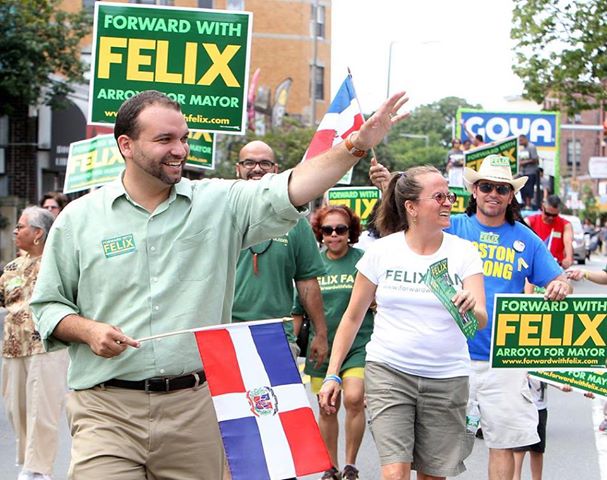
^ Felix G. Arroyo at the Dominican Parade. (photo by Eroc Arroyo-montano)

With only 35 days remaining before the September primary, Boston’s candidates for mayor had better be presenting — or mirroring — a really Big Story or they have no chance of finishing in the top two.  John Connolly’s Big story is being the “education Mayor.” Marty Walsh’s big theme is “Boston’s construction boom, its businesses and laborers.”

Only one other candidate seems to have a really big Story in hand: Felix G. Arroyo. His story appears a social-issue, left-leaning one. He is pushing to be THE candidate of Hispanics, of committed left-leaning labor, and of the lesbian, gay, and transgender communities. Given Boston’s overwhelmingly left-leaning, socially progressive voting record, Arroyo’s big story makes election sense. Of course it’s the only story available to him, given Connolly’s and Walsh’s dominance of the other two big Boston stories. Yet Arroyo has surely not chosen this path because there was no other for him. His life bio almost dictates it. His father, Felix D. Arroyo, achieved major political success in Boston by winning to his side almost all of the Left and building upon it. Arroyo junior would have been ill-advised not to have followed his Father’s successful — and well remembered — course.

That said, Arroyo junior’s story line confronts obstacles that Walsh’s and Connolly’s don’t. First, the election for mayor is not a national election in which Presidential and Congressional issues command the voter. Boston’s Mayor ballot doesn’t even list political parties — and in fact eleven of the 12 candidates are Democrats, including all of Arroyo’s major rivals.

Second, because social issues do not divide Boston as they do the nation — almost all Boston voters are socially progressive and look favorably upon organized labor — it is NOT Arroyo versus everybody else. Connolly has significant support from the constituencies that Arroyo needs, and even Marty Walsh, supported by openly gay State Representative Liz Malia, has a flag planted in the socially liberal camp too.

Third, the issues in a Mayor election don’t fall neatly into progressive against conservative. Trash collection, casino development, the BRA, school improvement, snow removal, traffic issues, and zoning have their own dynamic. The Mayor administers the city; he does not legislate wages, labor union rights, abortion, or pay equity. He is a bureaucrat, not a preacher to the nations.

There is no progressive or conservative way run a Boston city budget. The voters demand services, and that is that. These have to be paid for, and they are. And though yes, the Mayor can set a socially progressive tone, or not, and establish strong outreach to LGBT people, or not, no one is going to be elected Mayor this year who isn’t completely committed to social progressivism.

Lastly, few voters in a city election want to vote for a candidate who looks unable to win. The perception that Arroyo is not likely has already cost him a union endorsement and is likely to move voters favorably disposed to him to give him more kudos than votes.

I am not saying that Arroyo can’t get past the Primary; there is a large enough “new Boston” vote that indeed he can. Yet even as a “new Boston,” he is cornered. Its vote is by no means mostly his. Charlotte Golar Richie and, it appears, both Mike Ross and John Barros will have significant support therefrom — support that for the most part could be Arroyo’s were Ross, Golar-Richie, and Barros not in the race. But they are.

I make one final observation : Arroyo’s campaign story reminds us of Mel King’s themes in 1983. King, too, was a candidate of the Left — the very far Left. in 1983, being far Left got King into the final. But King was the only far Left candidate — and the only candidate of color — running in 1983. This time there are three significant candidates of color on the ballot. Moreover, King’s far left views guaranteed his overwhelming defeat in 1983. Today, Boston has moved left; such views would not automatically spell November doom. They would, however, still generate strong opposition from a Boston business community enjoying a huge building boom — and the popularity that comes with it. Furthermore, downtown Boston is heavy with technology people, finance executives, and education and medical people who, thirty years ago, either didn’t exist or mostly lived in the suburbs. These voters are surely socially progressive, but far Left views on labor and the economy don’t speak their language of prosperity and enterprise.

Arroyo may yet gather to him, in a 12-candidate primary, enough voters to threaten the current two leaders. I like his enthusiasm and also sense a pragmatism in him (as in his Dad) that belies his image as a left-leaning ideologue. (Mel King he isn’t.) Arroyo would, I think, make an exciting Mayor, one who could bring the current Boston prosperity to many who have yet had the opportunity to participate. The excitement that i feel for Arroyo as Mayor surely excites his followers. If he does not make it past the Primary, as looks highly likely, he will have a significant say ion which of the two finalists does win the prize.

—- Michael Freedberg / Here and Sphere

BOSTON CITY COUNCIL RACE : JACK KELLY OF CHARLESTOWN

Image

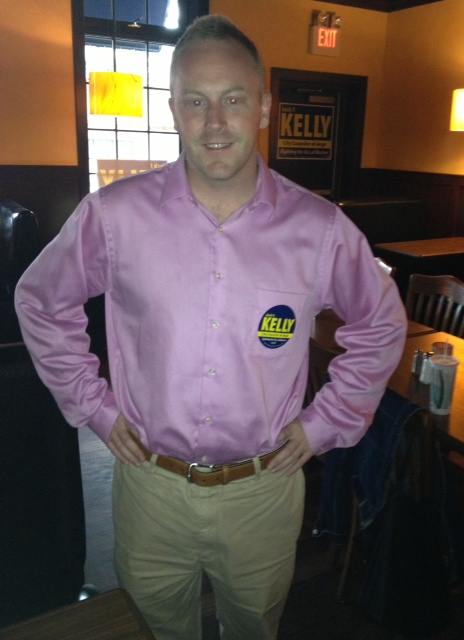
^ At-large Council hopeful Jack Kelly at a recent “friend raiser” in Dorchester

—- —- —-

Note : Here and Sphere will make an effort to interview as many City Council candidates as we can reach. This effort must, unfortunately, come second to our coverage of the Mayor race — coverage which starting on Monday will continue every day right through to the September 24th Primary. We will, however, do what we can with the time that we have. First up is Jack F. Kelly III, who was born and grew up in Charlestown, the son of two working patents : a Verizon worker Dad and a Mom who has worked for Boston Public Schools for over two decades.

We first met Kelly at a block party in West Roxbury early last month. About two weeks ago we attended a “Mondays for Marty Walsh” town hall in Charlestown, where we heard first hand the concerns that that neighborhood has with the City’s powers that be. Given the smallness of Charlestown — but its long significance in Boston’s political life too — it was our decision right then that Jack Kelly would be our first City Council interview.

We talked to Kelly at a fund[-raiser event in the Savin hill section of Dorchester — an event he prefers to call a “friend raiser.” What follows was the substance of our talk :

Here and Sphere (HnS) : “What’s your campaign’s chief issue ?”

Kelly : “public health; fighting drug addiction, HIV and hepatitis C. It’s what I do currently, working for Mass General (Hospital). We have to increase the presence of community health workers.”

HnS : “so you agree with what Marty Walsh said that night in Charlestown, that there’s an heroin epidemic in Boston ? He didn’t overstate ?”

Kelly : “Absolutely. No, he did not overstate things. Drugs are everywhere and I see it in my work and know of it in the ‘Town. (Keep in mind that) fighting the drug plague is fundamental to (public) safety.”

Note : Kelly knows the drug menace personally. as his campaign bio puts it, “After graduating from high school, my life took an unexpected turn. Like many kids in my generation throughout Boston, I became addicted to…Oxycontin. for several years I struggled with …addiction… (until) on October 12, 2003…with the help of my community, prayers, and addiction programs, I became sober and began my life again.”

HnS : “fighting drug addiction and diseases like HIV and hepatitis is hardly the usual City Councillor undertaking.”

Kelly : “That’s why i can be heard. It has to be addressed.”

HnS : “Turning to other issues, the various casino proposals are an issue in Charlestown. What is your position ?”

Kelly : “it’s an issue everywhere in the city. I favor an East Boston vote only, not city-wide.. Traffic’s an issue; we will deal with it. The one casino I do NOT want in any circumstance is the Everett proposal. The traffic impact would be intolerable. Any casino has to be in Boston, but you know what ? Why not have it on one of the Harbor islands ? Doesn’t that make the most sense ?”

HnS : “School improvement has been john Connolly’s big issue, one that has given him citywide strength. And that means charter schools. What’s your position on legislation to lift the ‘cap’ on how many charter schools we can have ?”

Kelly : “Definitely school improvement. I favor increasing the number of charter schools but not eliminating the cap entirely.’

HnS : “Partial ‘cap’ lift ?”

Kelly : “Yes.”

HnS : “one thing that John Connolly specifically cites in his school improvement agenda is that the school day should be longer. Your view  is ?”

Kelly : “i agree; but teachers must be compensated for a longer day.”

HnS : “The Boston Globe two days ago focused on the various mayor candidates’ positions on the BRA. Changing the BRA seems on everybody’s mind. What do you think should happen ?”

Kelly : “i want more transparency and for the city council to have a vote on who the new director will be. And by more transparency : all meetings with developers should be videotaped and shown online to be posted on (the websites of) affected neighborhood(s) and their civic association(s).”

HnS : “But you don’t advocate replacing the BRA ?”

Kelly : “correct.”

HnS : “Lastly, a numbers question. You come from Charlestown, one of the City’;s smallest neighborhoods. How can you win citywide ?”

Kelly : “It’s not just Charlestown. It’s the entire City Council District that I’m from, that includes East Boston and the North end. We haven’t had anybody elected city-wide since John Nucci;. It’s about time.”

HnS : “How can you do it ?”

Kelly : “I’m strong in South Boston, Dorchester, West Roxbury. I have friends all over the city, from labor. I was an ironworker after I became sober, a Local 7 member. I also know people everywhere in Boston from being Charlestown Neighborhood co-ordinaor for Mayor Menino. Look at my union endorsements !”

NOTE: Kelly has major union support. His campaign website notes the following union endorsements : Teamsters local 25; Teamsters 122; Laborers 223; IBEW Locals 103 and 104; Heat and Frost Insulators and Asbestos Workers local 6; Plumbers and Gasfitters Local 12; Plasters and Cement Masons local 534; Custodians Local 1952; Pipefitters Local 537; Sprinkler Fitters Local 550; Sheet metal workers Local 17. (Of these, the most significant might be the Custodians union. Most custodians live in the city — unlike the members of many construction Locals —  and they are numerous; and almost all of them vote every election.)

HnS : “Thank you for talking to us !”

We will likely cross Kelly’s campaign path often as we go about Boston neighborhoods this alt month of the Primary campaign. (indeed, we have already met up with him often.) Still, it’s an uphill fight for the first time candidate, even given his already wide-ranging political resume: in addition to being a neighborhood co-ordinator in Mayor Menino’s administration, Kelly was an elected Hillary Clinton delegate to the 2008 Democratic Convention — considering the size and strength of the Council field. Incumbents Stephen Murphy and Ayanna Presley are running for re-election; former Councillor Michael Flaherty seeks to return to that body. To win the one remaining at-large seat, Kelly must top Lower Mills native Catherine O’Neill (now a resident of Savin Hill); Marty Keogh, a well known West Roxbury attorney; , former Senator Warren campaign staffer Michelle Wu, a South End resident, North Ender Philip Frattaroli, former District Councillor Gareth Saunders; neighborhood co-ordinator Ramon Soto, a Mission Hill resident; and nine others.

His unique candidate profile and personal witness of major public health issues just might do it.

—- Michael Freedberg / Here and Sphere

CORRECTION : this article has been corrected. The original article said that Kelly favored a city wide vote on a casino proposal. In fact, he favors only an East Boston, neighborhood vote. This change has been made in the article that you have read.