ELECTIONS IN AN OLIGARCHY : WHAT WILL THEY BE LIKE ?

Image


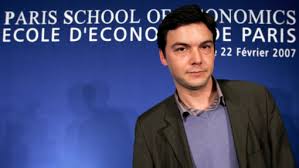
^ the dynamic of inequality : capital over wages — Thomas Piketty
Image

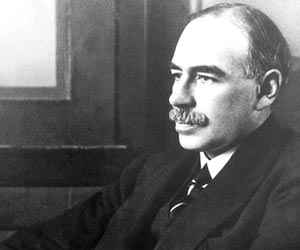
^ politics as the umpire of economics : John Maynard Keynes

—- —- —-

Those who read Thomas Piketty’s capitalism In the 21st century — and we all should read it — will find much that has already been said by Robert Reich, by Paul Krugman, and — above all — by John Maynard Keynes in his magisterial Economic Consequences of the Peace. (the “Peace” he was writing about wa the Versailles treaty that ended World War I. With its consequences we still live.) Keynes’s work should be read even before one starts on Piketty: in it one finds that exquisite meld of politics with economics that define how money moves in a political environment; and as we all live in a political environment, keynes describes how all of us find money moving.

The politician of Keynes’s day didn’t study eceonomics much. they were about making political agreements; the money part was set forth in the terms they knew best : transfer of territory, which had been the subject of treatiers for hundreds of years.

Today we know better. We know that transfers of money are in no way like transfer of territory. Land is but a carpet upon which (or in which) people do their business. Money, however, is the means of that business and its fruit; and its power. to transfer billions of dollars in reparations, as the Versailles treaty sought to do, was to transfer not just some land but the entire life work of a nation. Today, no one would think of doing that in a treaty. it would make a future war almost inevitable — as the Versailles Treaty in fact did.

But if international agreements no longer transfer the economy of one nation to that of another, money does continue to get transferred, both between nations and inside each of them. This sort of transfer Adam Smith and Karl Marx both saw and discussed. But we have moved beyond the ultimates of both these writers. we now know that there is no permanent cure for the imbalances in money transfers; that imbalance is the dynamic, always, and that only political action can balance it.

The correct analogy is to the NL and NBA. Every year these sports leagues conduct a drag of newly graduating talent. the order of pick goes from weakest team to strongest; and thereby the league retains balance, preventing the rich teams from forever perpetuating themselves. A kind of equality is assured. The weakest-first draft happens not by some voluntary generosity. It happens because the leagues are governed by the entire body of tem sin it. as there are more losing teams than winning ones, the losers rule.

You would think that that would be the case in our democracy too. There are far more people with small money than those with big money; and the numbers on each side grow ever more apart. How can a tax system not be enacted, that graduates from tax credits for small earners to high rates of tax for top earners ? That taxes large estates much more vigorously than we do ? How can our politics not ensure living wages to those who work, and universal benefits to those who live in our nation ?

The answer we know. These outcomes do not get enacted because the money winners all vote, and all donate, and all lobby every politician, constantly; while at the same time, the small earners either do not vote, or are divided in their vote because they are distracted from the main chance by issues of culture, faith, or mere mindset. Right now all the momentum is to increasing dominance by large money, large earners, large organizations.

Upon this vision is directed, right now, the attention of Paul Krugman, Robert Reich, Thomas Piketty.

It need not be so. History makes clear that oligarchy does not make economic injustice invincible. There have always been some oligarchs who sought to curry favor with ordinary people by enacting laws that benefitted the many. This was the case in Leo the Isaurian’s Byzantine Empire; in Lorenzo de’ Medici’s Florence;. in numerous communal movements in medieval European Cities. it was the case in our own nation at its founding, and both Teddy Roosevelt and Franklin Delano Roosevelt were money oligarchs with a moral and a political commitment to social justice.

Of course it would be better for average people to govern ourselves and to enact economic regulations that balance money between labor and capital. But are we to reject fairness laws because they’re enacted by hugely wealthy oligarchs ? I think not. the power to do good requires money just as the power to be selfish. Witness the work being done by the Clinton family in its Global Initiative.

Still, in an oligarchy, things often become aggressively unjust before the tide turns. Often it turns by revolution, not election. the history of medieval cities is full of such violent changes of policy and rulers.

And yet : our nation does not lack for oligarchic balance. For every pair of Koch Brothers there is a John Singer; for every Foter Freiss, a MacArthur Foundatilon; for every Heritage foundation, a Clinton Initiative; for every Wal-mart, a Costco. Economic fairness is far from finished even in an oligarchy.

—- Mike Freedberg / Here and Sphere

CIVIL RIGHTS : WE CELEBRATE AND COMMIT

Image

^ basic to what america is all about : President Lyndon Johnson signs the Civil Rights act of 1964

—- —- —-

This year America celebrates the 50th anniversary of the signing into law of the Civil Rights act of 1964. This was a landmark piece of legislation, as basic as can be to what citizenship in America means. The import of this law we quote from Wikipedia :

“The Civil Rights Act of 1964 (Pub.L. 88–352, 78 Stat. 241, enacted July 2, 1964) is a landmark piece of civil rights legislation in the United States that outlawed discrimination based on race, color, religion, sex, or national origin. It ended unequal application of voter registration requirements and racial segregation in schools, at the workplace and by facilities that served the general public (known as “public accommodations”).

“Powers given to enforce the act were initially weak, but were supplemented during later years. Congress asserted its authority to legislate under several different parts of the United States Constitution, principally its power to regulate interstate commerce under Article One (section 8), its duty to guarantee all citizens equal protection of the laws under the Fourteenth Amendment and its duty to protect voting rights under the Fifteenth Amendment. The Act was signed into law by President Lyndon B. Johnson on July 2, 1964 at the White House.”

The law had opponents then — chiefest of whom was that year’s Republican nominee for president, Barry Goldwater, whose opposition has cursed the Republican party ever since — and it has opponents now. We reject such opposition root and branch. It is un-Constitutional in the exact sense of the word.

Opposition to the Civil Rights act of 1964 — and to the Civil Rights and Voting rights acts that soon followed — arises from anarchy, from selfishness, from refusal, basically, to be a citizen. The welfare of all is why our predecessors created the Constitution : Its provisions are to be the supreme law of the land, and its protections, as a result of the 14th Amendment, are guaranteed to every person living in every state. The power to enforce those Constitutional guarantees is also granted –and must be. No one living in America can be allowed to deny or compromise the basic civil rights of any other person living here. Those who oppose this oppose the Constitution itself.

No one living in America more loudly talks about supporting the Constitution than those who in fact oppose it — its purposes, its effect, its provisions. These people are deluded at best, liars at worst.

False or misled may they be, their persistence, since the days of slavery, made it necessary to pass the 1964 Civil Rights Acts 90 years after the equally commanding Civil Rights acts of the 1870s were adopted, only to be explained away by Supreme Court decisions that could not accept that Civil rights meant Civil Rights.

Fortunately, the Supreme Court of the 1965-1975 period agreed that Civil rights means Civil rights, nothing less, nothing explained away.

The opponents of Civil rights have never given up. They know that if the Federal government is allowed to guarantee basic rights to everyone, it can guarantee other incidents of equality; and nothing means more to the opponents of civil rights than that people should not be equal; should, indeed, be as unequal as luck, money, and ingenuity can make them.

Opponents of Civil rights laws have, recently, been offered a new battlefield to fight on: civil rights for people of differing sexual orientation or identity. It has pleased the opponents of Constitutional guarantees no end to find that this new ground for objecting to equality actually has supporters, sufficient vin number to have set back the Constitution’s guarantee by a decade and more. Indeed, the new opposition continues to set back constitutional guarantees in over half the states.

This effort will fail. It is failing even as I write. In state after state, Federal courts are overturning laws that violate the civil rights of people whose sexual orientation or identity are objected to by those who cannot bear the thought that all people — yes, all — are equally protected by the Constitution.

But even as, state ay state, the guarantees fundamental to America are enforced and obstacles to them wept aside, let us never forget that those who cannot stand the idea of equality remain enemies to it and will never, ever give up trying to render equality an evil.

The equality of all souls is the most radical social principle ever advanced. But it is ours, as Americans — people of the most radical experiment in social justice ever attempted in human history.

We either enforce civil rights for all vigorously, always, or we fail all of us. From time to time we may relax; or we may declare the fight for civil rights won. But eventually we will return to the fight, as did our grandfathers in 1964, as did their grandfathers of 1870-75, because the fight for equality is never absolutely won .

This is our society’s core mission, and we are proud to accomplish it, no matter how often it need be done.

—- Mike Freedberg / Here and Sphere


MAGOV14 : DON BERWICK WANTS SINGLE PAYER — BUT DOESN’T SAY HOW TO GET THERE

photo (69)

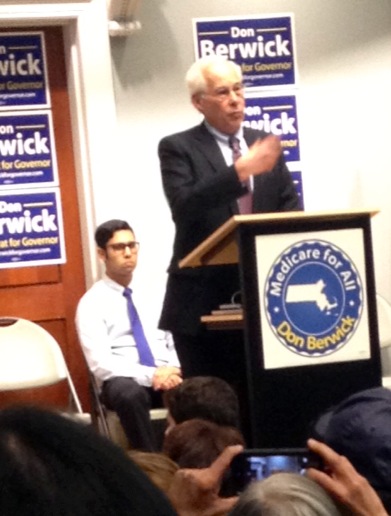
Last night Democratic governor candidate Don Berwick held a “Medicare For All” town meeting at Bakst Auditorium in Boston University Medical School. The site was appropriate, and as a pediatrician, Dr. Berwick is the right candidate to discuss “Single Payer.” Unfortunately, in almost two hours of explanation and question answering, Berwick didn’t tell us how to get there, nor did he say much about what “Medicare for all'” would look like as a program specific to Massachusetts.

Berwick did make clear that he wants single payer; that ‘all means all,’ and that that would be a priority were he to be elected governor. He said that Massachusetts’s current universal health care — which he congratulated our state for being first in, without mentioning that it was done by a Republican governor — is too costly, too confusing, too opaque; that we spend ten times as much on administration as we should; that with a single payer system, 90 % of that administrative cost could be devoted to actual health care; that the coding and bill processing burden takes up far too much of health care professionals’ time; and that it’s almost impossible for users to figure out the rules for what is or is not covered.

All true. Yet Berwick said not one word about the collapse, at great expense, of our state’s health care connector to Obamacare — at Forums he decries it; why wasn’t it on his speech list last night ? He said nothing about seeking a waiver from the AC. Indeed, after rapidly listing “technical issues and (Federal) pre-emption,” he said nothing about how the state would overcome these : only that “we can do it and should do it.”

He was much applauded. Clearly his supporters do want single payer. So do many of us. We all know what Medicare is and many of us know how cost effective a system it is. But Medicare is a Federal operation. Berwick seeks a single payer system that would operate only in Massachusetts. Last night he said that it would work better on a state level: but as i have already noted, he said nothing at all about how it would work, who would administer it, how it would be paid for. He of course said nothing about how we would go about replacing the universal health care system that we put in place only eight years ago.

There is, in Vermont, another move to establish single payer in one state only: but Berwick didn’t mention Vermont, and from what I gather, the Vermont proposal has yet to be worked out.

It would be nice to know how the single payer state system would be paid for and by whom administered. I suspect, unhappily, that administration of it would be mishandled — as is much of Massachusetts social service — by an overburdened management, despite Berwick’s insistence last night that he “will never compromise on management excellence.”

If he has answers to these questions, he needs to start giving them soon. Otherwise it will be hard to give serious attention to an issue that only he, among all 6 serious governor candidates, has raised and which I do not hear high on most voters’ list of priorities.

That said, there’s no denying Berwick’s commitment to cost-effective, simple to understand health care for all. And to “medicare for all” being a social justice issue too. Over and over he emphasized that health care should be a human right. Who could not be moved — I sure was — by the story he told, at the event’s end, of a 15-year old African-American whom he helped cure of leukemia, a disease almost always fatal at that late age ? “we threw the book at his leukemia and we cured it,” Berwick said. “But what happened to that young man ? He ended up later on dying on the streets.

“He had two fatal diseases, leukemia and injustice. The one, we cured. the other we could not.”

—- Mike Freedberg / Here and Sphere
 

NOTE : this article was UPDATED at 2.45 pm on 04/17/14

MAGOV14 : CHARLIE BAKER — THE 30 % MAN

photo (15)

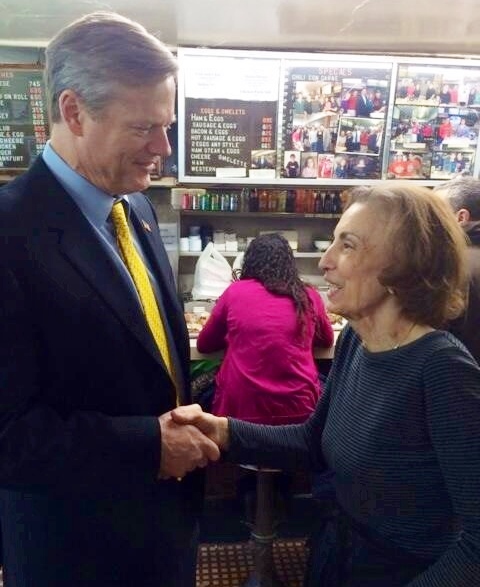
^ a scene he’ll have to repeat about 500,000 times : Charlie Baker wins a voter

—- —- —-

Both new polls of the Massachusetts Governor race make clear that Charlie Baker has a 30 percent chance of winning. Give or take, about 30 percent of Massachusetts voters support him no matter who his November opponent will be.

It’s a simple calculation. 30 percent support means 30 percent chance of winning, just aa 60 percent support means 60 percent chance of winning.

I say this even though about 33 percent of our state’s voters poll “undecided.” If Baker is to win, he will need to carry the undecided voters about two to one. Very rarely does a block of voters that large — in Massachusetts, 33 percent equals about 1,000,000 voters — pick any candidate by two to one.

Yesterday’s U Mass Poll gave us a more detailed look at the governor race than did Western Mass University’s poll last week. Let’s look both polls’ numbers now :

U Mass Poll                       Western Mass U Poll

Baker 34                             Baker 25
Coakley 45 ( und 21)     Coakley 54 (und 21)

Baker 29                              Baker 29
Grossman 35 ( und 36 ) Grossman 38 ( und 33 )

Baker 32
Kayyem 32 ( und 36 )

Baker polled much better in the U Mass Poll against Coakley, no better at all against Grossman. But this poll allows us a peek at something more ominous : how Baker polls against Juliette Kayyem. She draws a mere 3 % of the Democratic Primary vote — according to the poll — and so is, basically, a “generic Democratic vote.” Against a “generic Democrat,” therefore, Baker polls dead heat — but no better. This cannot be good news for a man now running his second statewide campaign for governor.

I said, last week in analyzing the Western Mass University poll, that Baker has a very narrow window to victory. The new poll confirms it. Against Coakley, he is down by 11 points with only 21 percent undecided. To beat her he’d have to win the undecideds by 17 to 4; that will not happen. If he wins the undecideds by 12 to 9 — which could happen — he loses to Coakley by 54 to 46, only a two point difference from the result suggested in the western Mass poll.

Against Grossman, U Mass’s poll offers Baker a marginally better chance than did the Western Mass. From that one, I suggested a 52 to 48 Grossman win (and an opportunity, among legislative insiders, for Baker to turn it around). The U Mass poll has a full 36 percent undecided; if Baker wins them 21 to 15 — a result very doable — he and Grossman tie at 50-50. If that happens, the insider action that I suggested in my previous column would almost certainly give Baker the corner office.

I say “would almost” rather than ‘will” because there’s other factors at work that the U Mass Poll highlights. You will note the “word cloud” statistic ? OK, what words do come to mind — in descending order of frequency — when you think of Baker ? Of Coakley ? Of Grossman ?

For Coakley : 1st, smart; 2nd, liberal; 3rd, honest; 4th, good’; 5th, strong. Democrat / that comes 6th.

For Grossman ; 1st, unknown; 2nd, unsure; 3rd, know; 4th, none.

For Baker : 1st, Republican; 2nd, unknown; 3rd, conservative; Businessman ? Hardly appears at all. Good ? Only a little better. Experienced ? way down the list.

These are hardly good associations for Baker. To be known chiefly as a Republican is, in Massachusetts, to have some ‘splainin’ to do. Conservative, even more ‘splainin’. Baker needs badly to rebrand himself, and he has very little time to do it. And no chance at all to beat Coakley to the words that generate a vote : smart, good, honest, strong — not to mention Democrat.

Baker’s associations do look more vote-productive than Grossman’s. How can an elected statewide office holder, the State Treasurer, poll unknown, unsure, none ? Grossman has spent tons of money to become known, so it seems, only by Democratic activists. With about seven months remaining in the campaign he is not on most voters’ radar. And yet — and yet ! — against the much better known — but “Republican, conservative” — Baker, he polls 6 to 9 points ahead.

The word cloud tells me that my prognosis for Baker in a contest against Grossman has been far too optimistic . If “unknown, unsure” Grossman beats Baker by 6 to 9 points, what will Grossman poll once he does become better known ?

Baker has to be sweating it. But this is what it’s like when you are a “conservative, Republican” drawing about 30 percent in Massachusetts. You have a 30 percent chance to win.

When it’s like that, and you’re in it, you gamble. You throw the dice as far ahead of you as you can.

—- Mike Freedberg / Here and Sphere

UPDATE : April 18, 2014 at 10 AM — turnout might help Baker a little,. In his home Congressional District, the 6th, there is an expensive, very close contest underway between incumbent Democrat John Tierney and Republican challenger Richard Tisei. This is a re-match for the two men; both are well known. Turnout will almost certainly tally higher than otherwise, by maybe 20,000 votes; and as Baker lives in Swampscott — the heart of the contest — he can only benefit. — MF

WEST ROXBURY : THE QUARRY MEETS AND GREETS

Image

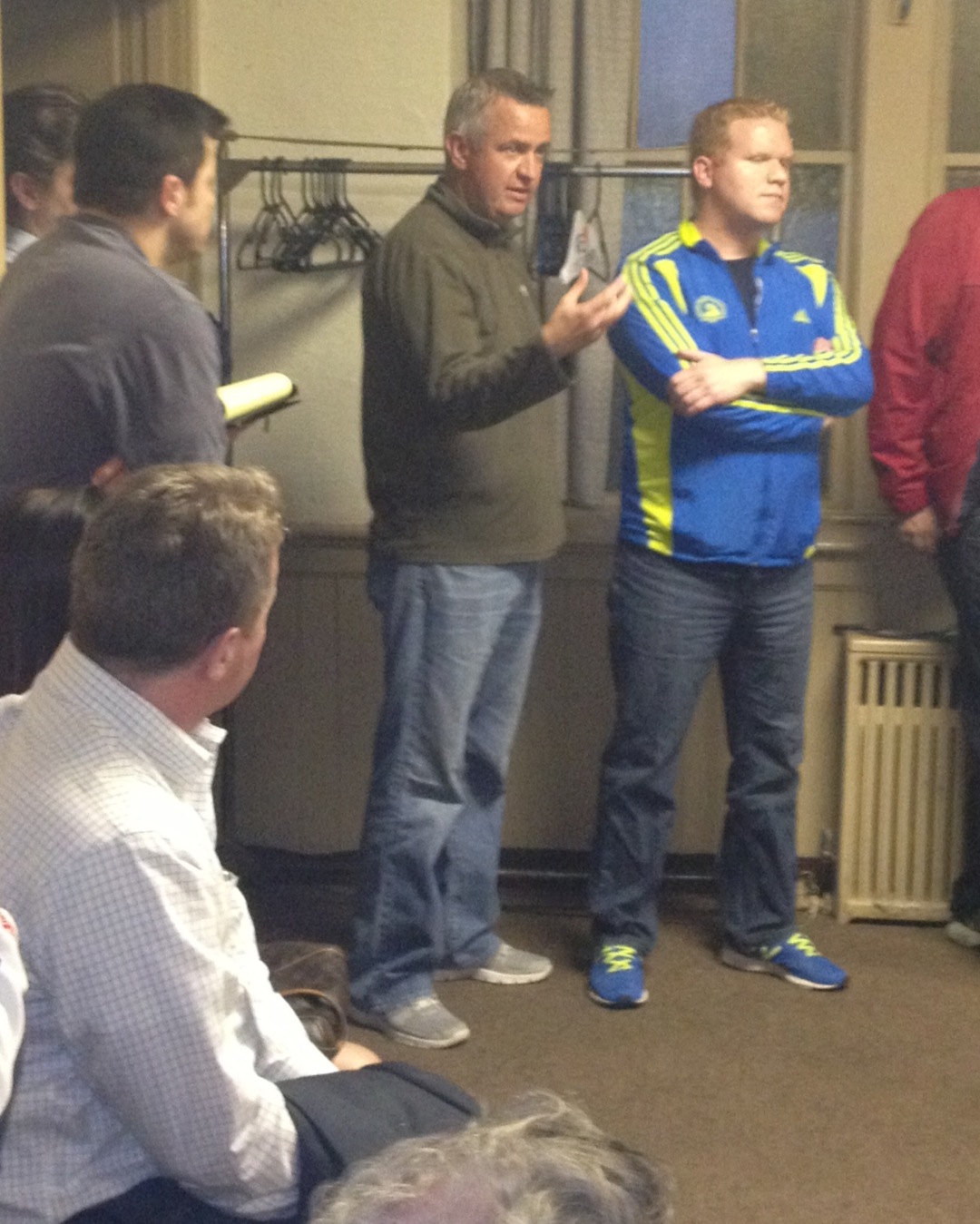
^ proposing quarry reclamation laws : State Senator Mike Rush (in black sweater)

—- —- —-

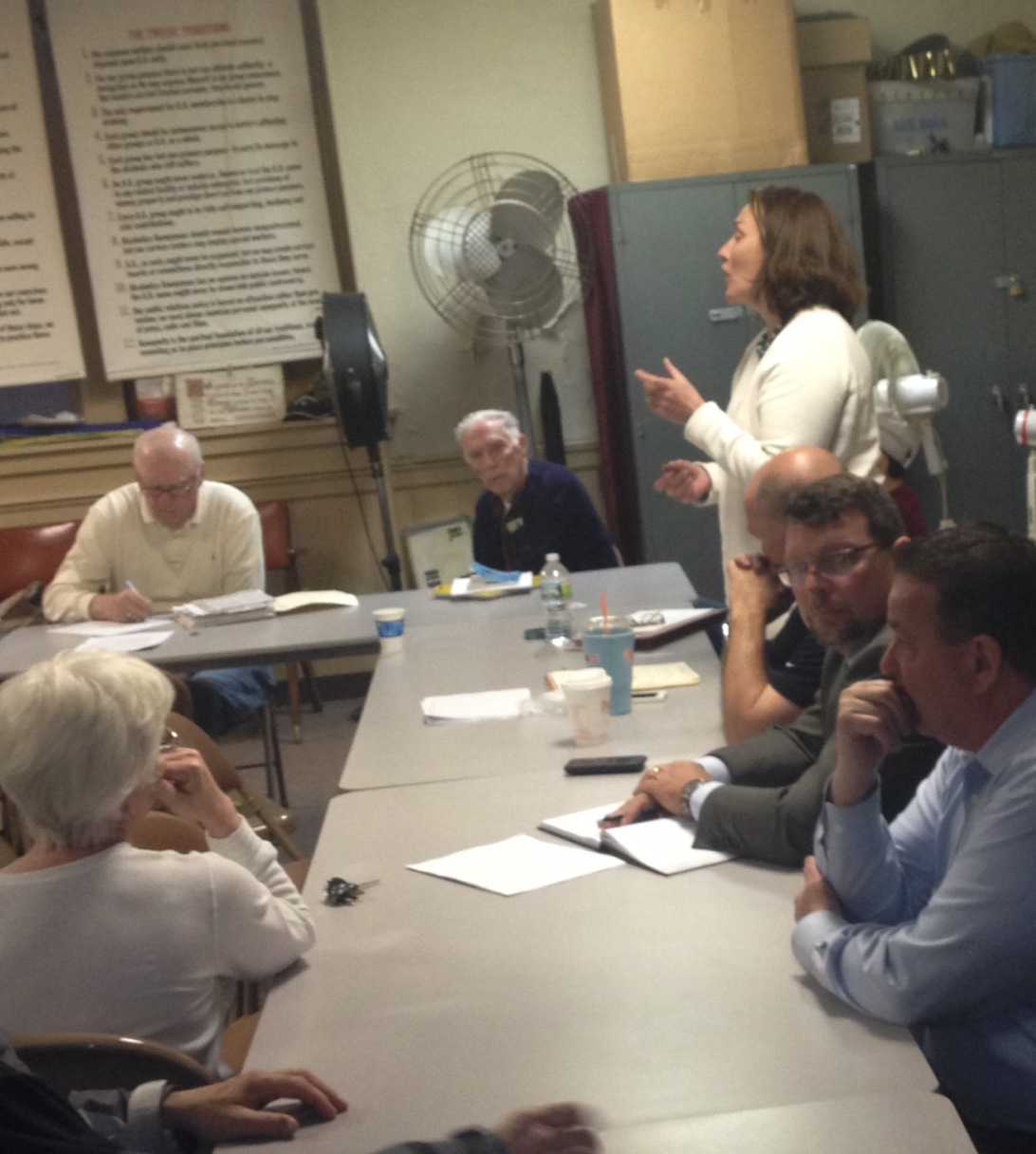
Like a candidate seeking election, the West Roxbury Quarry held a kind of meet and greet last night at St. Stephen’s Church on Washington Street. Into the church’s downstairs meeting room, where posters for the parish’s AA meetings hang on the wall, two Quarry people — including Laura Lorusso Peterson, of the long-owning Lorusso family — spoke to members of the West Roxbury Civic association (with old friend Larry Boran at the head table) and took questions from about 75 people, standing room only.

The message : the Lorussos want to drill for another 20 years, and they want to fill the Quarry’s huge hole even as they continue to drill. And to fill it, so it seems, with dirt that many local residents consider contaminated, even if recently changed state regulations don’t.

The Quarry people talked reclamation; but local State Senator Mike Rush, hard as a cinder block, noted that “what I’m hearing isn’t about reclamation, it’s about extra operations.”

Was he right ? It wasn’t easy to tell. Most of the conversation was about fill ; lines of dump trucks trafficking Centre Street, unregulated fill, noise, dust, pedestrians at risk.

At this point State Representative Angelo Scaccia, elected from the District immediately to the Quarry’s east, entered the room and took his seat. Scaccia said not a word; his colleague Ed Coppinger, did the talking, Mike Rush and City Councillor Matt O’Malley too; both constantly nodded toward Scaccia as they spoke, as if seeking his blessing on the content of their conversations. (Perhaps justly, because Scaccia has sat in the House for over 40 years and has seen it all.)

Among the stuff Scaccia has seen all of is the Quarry. Noise from Quarry blasting has been an issue since both he and I had a full head of black hair. Dust from the quarry has been an issue that long too. An end to quarry operations has been spoken of since Bobby Orr played hockey. Yet the quarry does not end. It goes on. Today it commands a huge hole in the ground covering about 50 acres of what would have been prime West Roxbury land. If filled in — with dirt that doesn’t harbor chemical contraband — it would command huge money from housing developers who gladly pay $ 200,000 for a buildable house lot.

All of the above was mentioned with cold specificity by Steve Smith, of the West Roxbury Community Council.

Much else was said, with icy specificity, by people who face the Quarry up front : that the trees along Centre Street have all died of dust; that the blasting draws ever nearer to houses along its perimeter; that the Lorussos can’t be trusted because all of their previous promises haven’t been kept; and so on. Someone even suggested that there would be fill brought in from the Everett casino project, fill very contaminated indeed.

That was scary and raised all kinds of issues that none of the elected officials in the room chose to touch.

Image

^ the Quarry’s Laura Lorusso Peterson meets and greets

Laura Lorusso Peterson offered to pay $ 50,000 a year to “the community” as mitigation. Some scoffed ; asked one man standing on the opposite side of the hall, “are we really ready to sell West Roxbury that cheaply ?”

Peterson offered a “90 day moratorium” on bringing in new fill. “We can bring in fill whenever we like,” she said, ‘but we don ‘t want to do that. We want to give the community a chance to work out an agreement with us.”

Image

^ proposals to slow the fill : State Rep ed Coppinger and City Councillor Matt O’Malley

City Councillor Matt O’Malley wasn’t having it. “I’ve sponsored an amendment to our zoning code,’ he said, “All twelve of my colleagues have signed it. It will require that you seek community approval, then full neighborhood approval, then a zoning board of appeal hearing.” He then added : “i’m not trying to stop what you’re doing, just to assure a proper process.”

Many Americans complain of bureaucracy and red tape as it is, much less of new red tape. Not the people in the St Stephen’s room, however. This was a night to celebrate red tape.

Sensing the theme, Senator Rush took the floor to deliver an almost five minute speech on Massachusetts’s lack of laws governing quarry reclamation. He said that he would introduce extensive legislation to govern it and outlined his proposals. Applause was his, and more applause.

There was no mention in Rush’s speech of the taxpayer cost to hire people to monitor and enforce the new laws; but it sounded good, especially when Rush noted that “other states have quarry reclamation laws, so should we !”

As the cliche has it : “there oughta be a law.”

The meeting continued well past two hours long, but the theme of it was fully established in its first hour. There would be a new law, maybe or maybe not enforceable. City Zoning would acquire an additional layer of obstacle. The neighbors would continue to live with the Quarry, like it or not. New fill would be withheld for a time — but maybe not. And the blasting and drilling would continue for another twenty years.

And there would be a study committee formed.

Perhaps Angelo Scaccia summed it up best : “Michael, they talk fill, but they want to drill. This isn’t about reclamation at all. Same old.”

—- Mike Freedberg / Here and Sphere
OCTOPUS TECHNO : CHUS & CEBALLOS @ BIJOU 04.11.14

Image

Friday night the dance floor at Bijou Boston was as full as can be, shoulder to shoulder with people who expected to be upraised, stupefied, taken on a journey. They were not disappointed. The two Madrilenos, who often DJ for Boston fans, dropped one of the most adventuresome sets I have ever heard them do.

For two hours Chus Esteban and Pablo Ceballos sculpted techno to octopus shape : a bulbous heart, soft but deep, extending eight separate tentacles of texture, talk, and tone — ear candy sweet and salty. within this underwater-ish world  screamy high voices buoyed dancers upward; boomy bottoms had them strutting.

The two DJs are known for their “Iberican” sound, a kind of psychedelic-effected tribal rhythm, but that phase of their work has ended, and today Chus and Ceballos ply the much solider, massive structures we hear as techno. Where formerly their break pauses featured long jets of wind noise, today they favor edgier streaks — flashes of meteoric. All of this pinged and immersed the Bijou dancers, and all of it they loved.

We are accustomed to see Chus playing solo, then Ceballos, and only a few minutes of duet; but on Friday they played duet almost all night long. Thus they were able constantly to inject crazy voices into complex beat progressions, top them with sound effects, and mix humor with boot stomp, or sarcasm with reverb; and to cover emcee monologues with layers of this and that. Especially catchy was their re-mix of the Get Along Gang’s “This Is My Bassline” — a punky monologue reminiscent of Ya kid K almost 25 years ago, but set in an entirely new ring of rhythm and atmosphere.

Somehow their sound, despite its size and heft, felt as sultry and lush as did their slinky Iberican of ten years ago. Credit the quickness of their mix cuts, catapulting through glimmer effects first, across screams next, underlining a quote from old house music. They took the music from rolling thunder to stomp and whisper, and the dancers went with them. Stroll strong, bounce big.

Like every DJ in sight, they sampled Ramon Tapia’s “Beats Knockin.”; but unlike any other DJ, they shapeshifted it to say “boots lickin’.” Everybody loved it. Their own “Lambestic,” “Reflections,” “Check Tech,” “Partenza”, and “Shakewerk” confirmed their move — begun three years ago — into the heart of techno; they also dropped a couple minutes of  “Addicted To Drums” — though nothing else from their Iberican past. Only in the finale of their set did they display a Chus & Ceballos signature : the fireworks finish, in which everything dropped during the body of their set reappeared all at once in a complexity more like ten octopuses than one. The dancers loved it.

Providence-born, but now world-wide, DJ Gino Santos opened strongly in the new Chus & Ceballos style, playing a bluesy 122 bpm and featuring many tracks that fans will want to grab onto. Best of these was Gel Abril’s “Changing steps” — techno as it should be.

—- Deedee Freedberg / Feelin’ the Music

Image

9th CONGRESS DISTRICT : A CAMPAIGN THAT IS NO CAMPAIGN AT ALL

Image

^ the least no-campaign of the four and thus the odd man out ? John Chapman, endorsed by Mitt Romney and Gabriel Gomez

—- —-

Four Republicans seek the party’s nomination to lose in November to current Congressman Bill Keating.

That is the fundamental dynamic in this campaign which isn’t really a campaign at all.

Because the four are running a race they will not win, the entire effort is to see which kind of Republican will win the nomination and thus give tone to the Republican party as it peoples the communities within the 9th District.

Minority parties often turn in upon themselves in this fashion. It becomes more important –MUCH more important — within them to see who will command the party than who might actually win an election. in Massachusetts, that’s how the entire GOP operates except for the very separate Governor GOP. The Governor GOP exists to win elections. It’s a normal political party and voices normal political policies that can very well win a majority vote. The same is definitely not true of the other MA GOP. It knows it cannot win and advocates policies that assure that it won’t win, policies advanced for the express purpose of keeping everybody else out. That is why the other MA GOP liberally offends all kinds of voters. The more voters it offends, the less competition for leadership of the party.

It is difficult to run a campaign for Congress within a framework of offending as many voters as possible. Most people who become candidates assume that winning is the objective. It takes them a while to realize that the opposite is what they’ve stepped into. It must be quite a revelation for them to realize that such efforts are won by the candidate who can successfully offend the most voters.

I call a campaign of this type “no campaign at all.” Just as accurate would be to call it an ‘anti-campaign,” a rejection of the very notion of campaigning as we understand the word “campaign” in a democracy. This sort of campaign is Leninist : his method was to direct the Bolshevik party to such extremes as to eliminate all but the hardest of hard core followers.

Leninism is the operative principle of the anti-campaigns that mark most of today’s GOP.

But the Leninists still do not have the ground all to themselves; within the MA GOP there are — to extend the analogy to Russia 1917 — Mensheviks too, and constitutional socialists like Alexsandr Kerensky, even some moderate democrats like Paul Miliukov. And these forces have money behind them, and voters, and they have no intention of being Lenin’d out of the GOP. Thus there is political significance to the GOP primary in the 9th Congress District despite its no-campaign thrust.

Image

^ playing no-campaign in a District in which exist many issues that a no-campaign refuses to address

The leading candidates all talk the usual national GOP talking points : that the ACA is bad, that we need “job creation,’ that unemployment benefits and other social safety net programs are bad. Nothing could be more meaningless, or boring, not to mention stupid, than these mantras. Because they are utterly meaningless, the actual meaning in the 9th District Primary lies elsewhere, in the no-campaign groove. You must get this fact so as not to dismiss John Chapman, especially, as just another robo. Or to think Daniel Shores naive, or Vincent Cogliano passe’.

Image

^ young, even normal, ambition : Daniel Shores

Shores is the kind of young, ambitious lawyer who in MA usually runs as a Democrat — in a state where “Demoocrat” means “i want to win’ just as much, or more, than it means anything about policy. Were Shores to win the primary, it would inject some measure of normal political ambition into a party in which ambition usually takes a darker turn.

Image

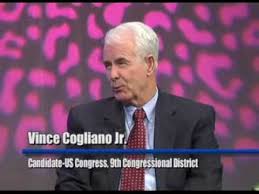
Cogliano is a local politician’s local, and as all normal politics is local, his victory would add to the MA GOP some measure of attention to precinct, ward, and community politics, at which most of the MA GOP fails all tests.

Then there’s John Chapman. He has the endorsement of Mitt Romney and Gabriel Gomez, who lives not far outside the District. Gomez today is by far Massachusetts’s most -progressive GOP voice, more so than even Richard Tisei. His endorsement of Chapman, in the state’s most Portuguese District, will carry weight and should. (Gomez is not Portuguese, but as an Hispanic he knows the next-door Portuguese community better than most Anglos.) Chapman seems actually to be seeking voters who want to win the election. To do that, he will have to set aside his robo mantra and campaign on real issues that matter to Portuguese voters : fishing rights, Federal dollars for Section 8 housing and for port building, education reform, student debt reform,  transportation funding, immigrants’ rights : stuff that no-campaign Republicans loathe and spurn. Unfortunately for Chapman, the more he addresses such issues, the more anathema he becomes to Leninist GOP cadres.

Image

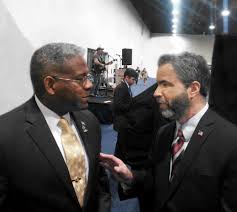
^ Like Lenin with his mentor Georgi Plekhanov : Mark Alliegro with the no-campaign theorist (and former Congressman) Allen West

These cadres belong to the fourth candidate, Mark Alliegro, whose pronunciamentos epitomize the world of no-campaign, of GOP Leninism. Alliegro condemns the ACA, shoots his gun rights mouth off about ‘social engineering,” talks the “freedom’ mantra of those to whom “freedom’ means eliminating all social safety net — indeed, all federal government programs you can think of except (maybe) Defense. For no-campaign Leninism, Alliegro’s rant matches Mark Fisher’s failed governor effort and maybe even surpasses it ; because where Fisher assaulted the Governor GOP in its stronghold — liked the failed Bolshevik attempt of 1917 — Allegro is challenging only the 9th District outpost, a fortress not defended by the Governor GOP. He may not conquer the outpost; but do not bet against it.

—- Mike Freedberg / Here and Sphere

MEEK AT THE MOVIES : JOE — 2 STARS

Image

 ^ scruff, a dog fight, and a kind heart in the backwoods : Nicholas cage and Tye Sheridan in David Gordon Green’s “Joe”

—- —- —

Like Jude Law’s Dom Hemingway, Nicolas Cage’s Joe is an angry feral mess, not to be tangled with. He’s also a puppy on the inside, should you catch him when he’s sober. That’s the blessing and the curse of “Joe,” a character study in which the character is so all over the road, that each time you think you’re getting to know him, something knee jerk and nonsensical comes out of left field and throws you.

Director David Gordon Green’s been a bit all over the map himself from the small indie gem “George Washington” (2000) to the raucous stoner mayhem in “Pineapple Express” and most recently, “Prince Avalanche.” “Joe” begins on a somber promising note as Gary (Tye Sheridan filling a similar role to the one he did in “Mud”), a youth of poor means, takes up a hatchet on a brush clearing gig for Joe, whose reputation as an explosive ex-con permeates the depressed Texas enclave. Gary’s the only white person amid a lot who look like they know Joe from his days behind bars, but they’re all hard working now and focused.

Joe’s pretty focused too, until he drinks too much. The rub comes in Gary’s alcoholic father (Gary Poulter) who goes by the moniker G-Dawg. He’s both complex and a cartoonish caricature, and perhaps the most alluring and annoying aspect of “Joe.” In one scene he’s so pissed he can’t stand up and in another, he’s bashing in a vagrant’s head. It’s humorous too, to see the motley hillbilly cum scraggly white beard and amoral ethic bust some rap moves, but to what end?

Meanwhile, Joe’s got a hard on for the new rookie on the police force who regularly impedes his drunken sojourns to the local brothel. And when the big German Shepherd won’t let Joe across the foyer of the broken-down bordello, Joe remedies the situation by bringing his own dog (a ripped pit bull bitch) to the fight. It’s one of the film’s grimmer scenes that’s bound to turn viewers stomachs nearly as much as G-Dawg pimping out his mute daughter.

Not much is pretty in the backwoods world that Gordon Green has carved out. It’s a quagmire of shit with Gary shining through as the conflicted innocent, hard working, attuned and full of promise, yet ever on the precipice of being sucked under. The plot, despite some sudden and strange turns, moves in a fairly predictable fashion, as the father-son conflict and Joe’s burgeoning bond with Gary orbit each other with the inevitability of a cataclysmic collision. Cage, Poulter and Sheridan pour alot into their faintly drawn characters, and Gordon Green, while he does take the viewer into a new realm (though anyone who’s seen “Mud” will be feeling deja vu) the journey ends up being more of baroque window shopping excursion than a soul searching revelation.

— Tom Meek / Meek at the Movies

MEEK AT THE MOVIES : Draft Day —- 2 STARS

Image

^ not much of a draft picker : Kevin Costner as NFL GM Sonny weaver, Jr (with Jennifer Garner) in Ivan Reitman’s “Draft day”

—- —- —-

Here’s something new : Kevin Costner back in a sports movie. Ok, maybe not new, but this time it’s football and not baseball, and he’s traded his cleats for a front office job. “Draft Day” is supposed to be a funny quirky race against the clock, cum romance, like “Jerry Maguire,” but it’s no all that funny. Costner does his job channeling his signatures : assured nonchalance as Sonny Weaver Jr., general manager of the Cleveland Browns.

The film starts off on the morning of the big titular day with Sonny going back and forth with his girlfriend Ali (Jennifer Garner) about who he might pick, and of course she has some big news to tell him, but his phone keeps ringing. Cleveland has the number one pick in the draft and everyone wants it because there’s a QB out there who’s the next Tom Brady (which is ironic because the team that’s after him the most, the Seattle Seahawks, have Russell Wilson and just won the Super Bowl; kind of the same post- shoot conundrum that afflicted “Fever Pitch” when the Red Sox won their first World Series in 76 years and the filmmakers had to scurry to stay with the times).

Sonny, who fired his beloved Dad as head coach, seems to be a front office bonehead as he trades away the team’s next three number one picks and appears to be on the verge of being shown the door by the team’s owner (Frank Langella) who’s just as concerned about flash and pomp as he is about winning. It doesn’t help that Ali works for the Browns as well, and they’re not out as a couple, even though everyone knows.

In short Sonny’s in a world of shit and I won’t even mention the issues with his mother (Ellen Burstyn), ex-wife (Amanda Peet) or his new head coach (Denis Leary playing a Barry Switzer-esque role in that he had a Super Bowl ring because he inherited a championship caliber club).

As the clock winds down in the fourth quarter, the whole back and forth of the deal becomes more tiring than successive spring training sessions, as does the “are they, or aren’t they?” water cooler talk. All the actors are fine, it just feels like they’re given saw dust to recite and a circuitous plot that offers few gems as payoff for the rigor. It’s a neat premise and there are some attempts at deepening the human interest aspect of it (a star athlete trying to get paid to support his family of slim means vs. the flash QB who may not be all he appears to be), but the drama of the real draft and the unscripted nature of it, bears far more intrigue and consequence.

Next time producer/director Ivan Reitman (“Ghost Busters”) should draft a better team of writers.

—- Tom Meek / Meek at the Movies

EVERYTHING WAS QUIET & BUSINESS-LIKE AT MATTAPAN TRANSPO MEETING, AND THEN …..

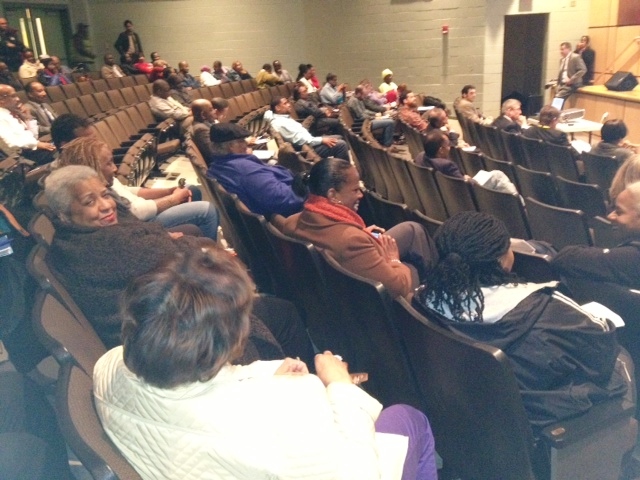
Image

^ the community has questions : last night’s Fairmount Line (MBTA) meeting in mattapan

—- —- —

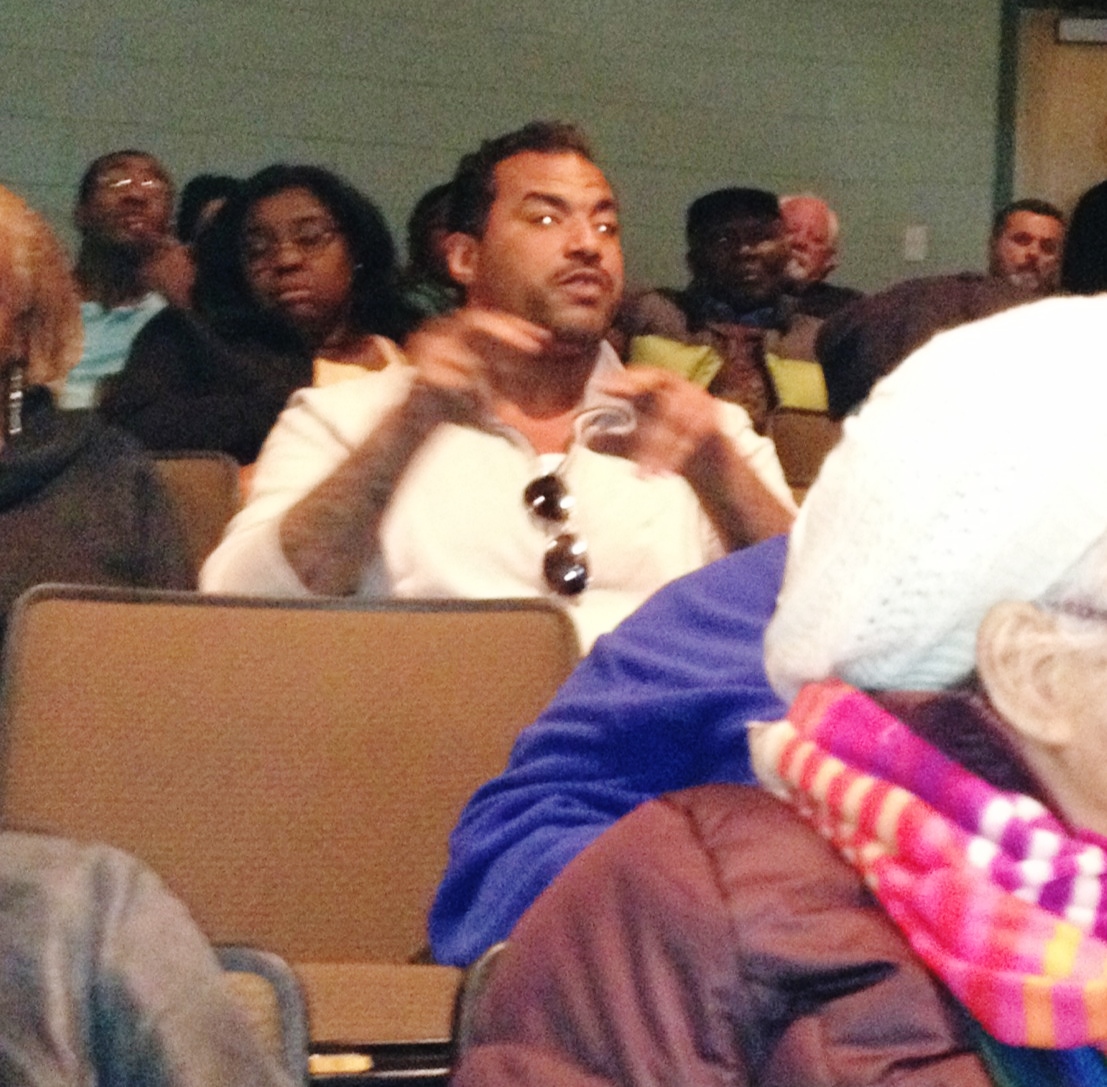
Last night “the community” filled much of the Mildred Avenue Community Center auditorium to hear an MBTA project team outline plans for a new Blue Hill Avenue – Cummins Highway T stop on the Fairmount Line. State Representatives Dan Cullinane and Russell Holmes were there, as was State Senator Linda Dorcena Forry. City Councillor Tim McCarthy came too. It was all set to be a very genteel, slide show presentation of the much-talked-of new Fairmount Line, featuring many local stops so that the line can serve Boston’s communities of color; through which the Fairmount runs and which, until recently, it had not served at all.

Genteel it was, as the project manager showed photos of new Fairmount stops at Newmarket, Uphams Corner, Four Corners, Talbot Avenue, Morton Street. Beautiful they were, and handsome, almost, the newly rebuilt bridges (there are 41 bridges on the Fairmount, said the project guy) over Columbia Road and Massachusetts Avenue. All of it done and the stations open, operating and doing just fine.

Then came the renderings of the proposed Blue Hill to Cummins Highway station.

Good-bye to genteel.

The audience was not happy to see what they saw : a T stop running between Woodhaven Street and Regis Road, all the way from Blue Hill Avenue (at SIMCO’s) to Cummins Highway (on the other side of Mattapan Square). Of course the line already runs that route and impacts those homes; the only new factor is the T stop. It seemed not that big a change, but to an audience waiting to pounce, it was big enough.

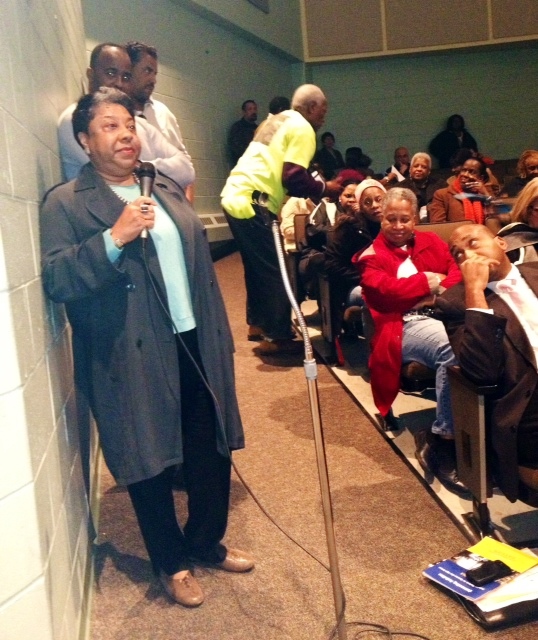
Image

^ They lined up at the microphone to ask questions. Well, not so much questions as to rant against the T in general.

“It seems to me that we’re always having stuff imposed on us,” said one woman. “We need honesty. we’re the abutters.”

Said another man, “We never get anything !”

“In 2005 they promised us cameras and a phone at the Morton street,’ said another. “Came 2007, the phone was in, but not the camera.”

“Why isn’t there even one station between Blue Hill and Fairmount avenue ?” asked a man. “Three mile stretch and you can’t do even one stop ?”

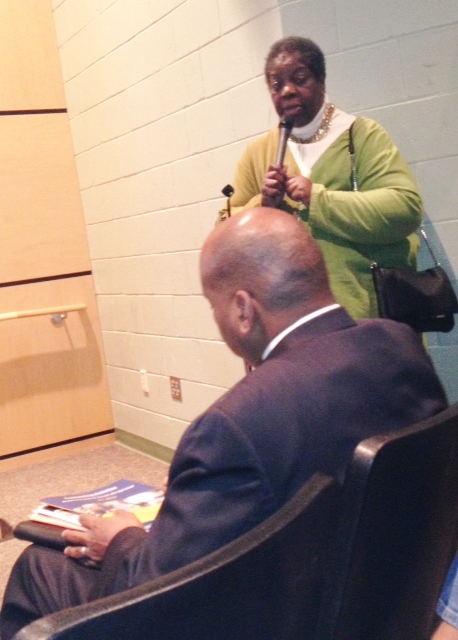
“i do not trust the T,” said an older woman, speaking to Russell Holmes directly next to her.

Image

^  St Rep Russell Holmes listens to grievances

Image

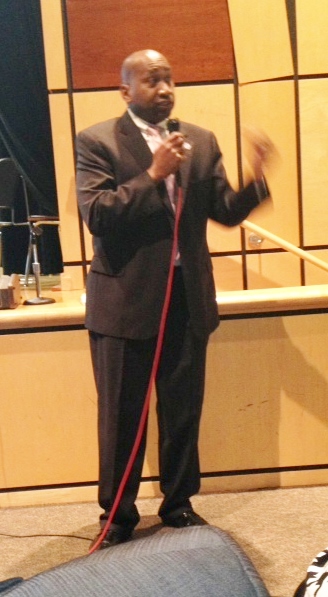
“Where were you when all this was being done,” a man asked of Holmes, who pretty soon had had enough. He stood up, addressed the questioner directly. “You’re for it,” he said to the man, who obviously knew Holmes — addressing him “Russell.” “And I’m for it. So what is the problem ?”

“If the community wants it, it should have it,’ answered Holmes’s friend. “if it doesn’t, then not.”

Holmes certainly was right to stand up a he did. the Fairmount has been in works for over three years now — as Senator Dorcena Forry pointed out in a fierce, extensive speech during which she challenged the nay-sayers and defended the project — which, as the T’s spokes-gal said, is wanted by at least 60 percent of local residents.

Her speech not only quieted the crowd but even garnered extensive applause. But then the questioning continued. There was much talk of the T stops being for “outsiders.” And so it went.

Silly me, I guess, for thinking that the Fairmount line’s addition of several local stops, to serve those who need public transit to get to work, was an unmitigated good thing. I should have realized that even indisputable benefits to a neighborhood look like an imposition to some when they are delivered from the State House by a government in which very few people of color have any direct voice.

The objectors were not, however, playing a race card. One woman loudly praised State Senator Jack Hart, of South Boston (who represented Mattapan before Linda Dorcena Forry) for his work with the neighborhood’s concerns. Rather, the race component lay far deeper in the anger than that. It was directed to the State House in general. And it was hard not to see that every one of the Fairmount Project staff was white — except for its “neighborhood outreach advocate.”

It was also hard not to agree with the woman who talked about promises made in 2005, when Mitt Romney was still governor. The disconnect between State plans and state performance is not Democrat or Republican. It is systemic. it arises from budget traffic jams, departmental conflicts, the constant buffeting, from one crisis to another, of governors by the public. It is very difficult for a complex, 21st century government to do anything quickly or well, and that is how it is with a democracy in which everybody votes and voters get listened to, as they should be.

Some call this performance traffic jam “waste.” I call it democracy in action. Community meetings and neighborhood input are now a core part of the process by which public improvements are brought from concept to built. Onward we go, anger and conflict and all that.

—- Mike Freedberg / Here and Sphere
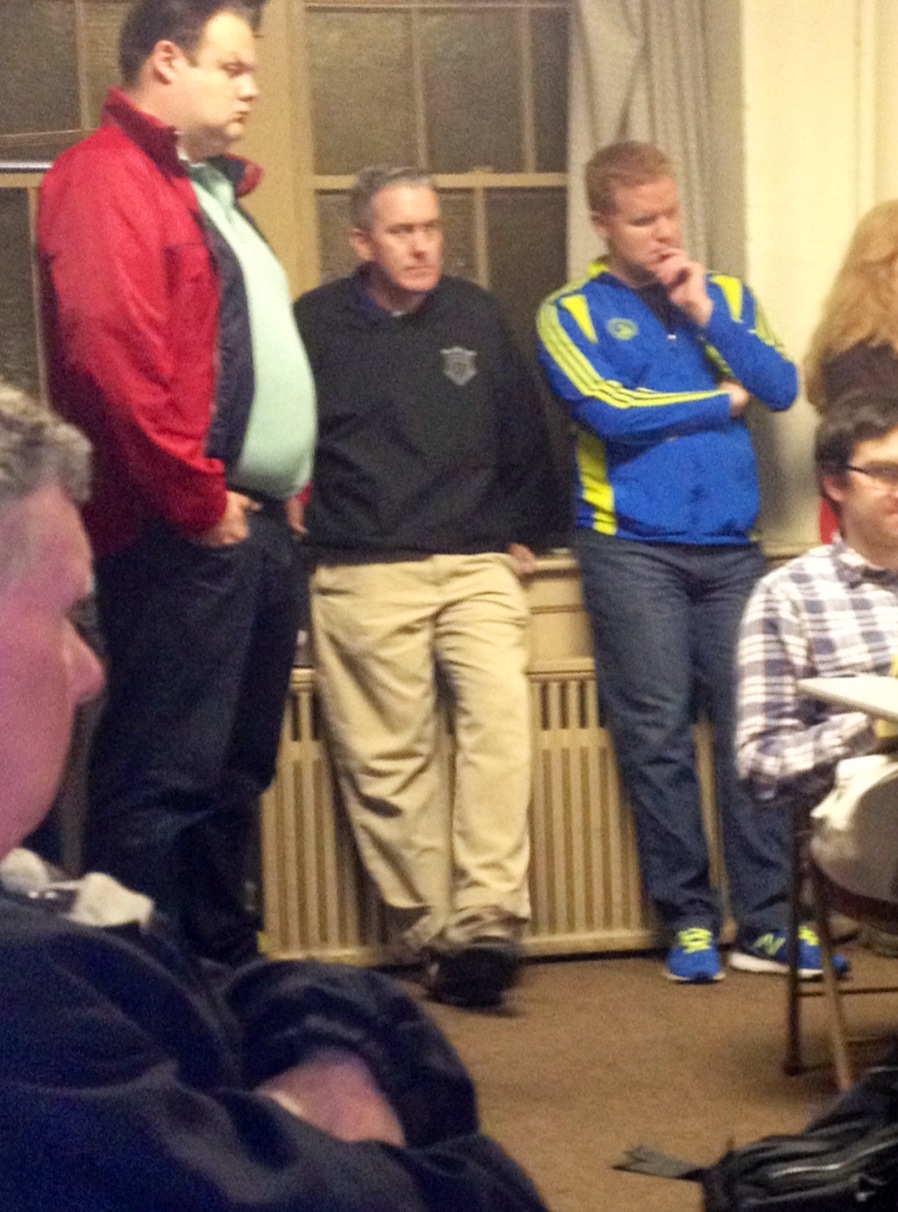
below : “the community” gathers to listen and object

Image