BRINGING THE 2024 OLYMPICS TO BOSTON

1 boston 20242 boston 2024

We like the prospect of Boston hosting the 2024 Summer Olympic games. We’re excited about it. There are legitimate concerns — and I will discuss those — but first let me itemize why we’re rooting for Boston to be the Olympic host city.

Preparation for the Olympics will assure that our public transit — and roadway — infrastructures get the massive upgrade that they need.

Housing the athletes and other attendees will require the City to build maybe all of the 53,000 units of “affordable” housing Mayor Walsh has called for. We need all of that and more, and it probably will take a huge event like the Olympics to force our city to actually build them, rather than just talk about it while doing very little.

The 2024 Olympics will require a stadium. The Patriots’ Robert Kraft wanted to build one years ago but was NIMBY’d out of doing so (by political and citizen pressure that included a nasty streak of anti-Semitism). Now the City will; get that stadium, bringing tons of business back into Downtown that now takes its dollars way out to Foxboro, because that’s where Kraft built after the Boston door was slammed in his face.

The entire city will revel and excite itself, as Boston has much rteas9on to celebrate these past ten years of ec0onomic boom, community diversity,and governmental progress. We aren’t the dark-side necropolis that we used to be; the new generation of Boston leaders has its eyes wide open and its vision cosmopolitanm; it belongs to the world, not narrowly to islands of ethnic cling,and the 2024 Olympics — summing up 25 years of boom and re-population, and a culture completely transformed — will give us all an occasion for partying hardy. There will be traffic and there will be noise, and these are good things. If quiet and emptiness were the objective, we could all mover to Caribou, Maine.

Some of us have voiced concerns that focusing on the Olympics will take energy and maybe money away from improving the City;’s schools. i find this concern unwarranted. The Olympics will be a privately funded, building boom thing. We have a huge building boom now. Has it detracted from improving Boston schools ” Just the opposite : it has brought into the city thousands of people who are accustomed to succeeding, people who will not settle for under-performing schools.

Granted, that most of Boston’s newcomers want school choice. One size fits all won’t do. Many of the skeptics about Boston 2024 are also people opposed to increasing the number of charter schools and, in general, to innovative educational ventures. These folks — many are my friends, I applaud their passion and their knowledge of public school budgets — want things to c9ontinue that cannot continue. The transformation of work requires transformation of education, and much of that transformation will happen, sooner rather than alter., Skepticism about bringing the 2024 Olympics to Boston arising from worries about public school funding is both misplaced and counter-productive.

Others simply don’t want the vast excitement and economic change that a Boston Olympics will bring; others fear the Games will suck up taxpayer funds. The second objection has been answered : no State or City taxpayer funds. The first objection is being bulldozed by economic facts. Boston IS changing, faster and faster; neighborhoods are being re-priced, re-imagined, re-configured by people new to living there and importing new ideas, new ways, new energy. I applaud it all. The past is being bought out, the future bought in.

Cities mean ,money. They mean commerce. Cities originate change. That’;s what they are for. Boston is a City once again after having been an ex-city. 30 years we could barely host a First Night. 10 years from now we will manage to host the biggest event in all sports and do it the right way. That, dear reader, is growth. Put Boston on the A list, because we’re going to deserve it.

—- Mike Freedberg / Here and Sphere

CHARLIE BAKER GOVERNING : THE BATTLE OF THE BUDGET

FullSizeRender (14)

^ newly sworn in, Charlie Baker is greeted by well wishers — but already looks worried about the task ahead

—- —- —– —–
The Inaugural festivities over, the forceful and bold speeches spoken, Governor Charlie Baker and his team now turn their attention to finding the $ 500 million that most students of Massachusetts’s state budget assert is the size — at least — of the 2015 Fiscal year budget.

I say ‘at least” because the Massachusetts Taxpayer’s Foundation finds the potential deficit even larger. Looking at ten categories of revenue and spending, the MTA tallies a deficit of $ 813 million : $ 288 million in revenue shortfall (predicted revenue less actual receipts) and $ 525 million of overspending : actual expenditures versus amounts allocated in the Final budget as enacted by the legislature.

Here’s a link to the MTA analysis or readers who want to take a closer look :

Click to access MTF%20-%20FY15%20Budget%20Risks.pdf

And this is a,link to the actual Final Budget, enacted as chapter 165 of the acts of 2014:
https://malegislature.gov/Budget/FinalBudget/2015

A deficit of $ 813 million — 2.75 % of the total $ 326 billion FY 2015 budget — is no laughing matter. One allows for estimates of revenue to fall short, because, ater all, no one can predict exactly the future of money. But overspending has nlo such excuse. It’s simply bad governance.

Bad enough it is to budget expenditures that spend every dollar of projected revenues, leaving to chance a potential deficit (and our State Constitution forbids us from operating a deficit budget), rather than leaving a reasonable amount of projected revenue unallocated. A non-allocation fund would be wise, given budget planners’ awareness that Massachusetts has significant, ongoing expense obligation shortfalls : pension liability for State employees being one of the largest. But none was made.

Far worse to overspend the budgeted expenditures — doing so almost guaranteed a budget deficit of significant size. so it turned out.

So what is Governor Baker to do about it ? No one likes a skinflint, yet skinflint baker is goung to have to be. There will be cuts in spending, major cuts. Some are easy enough : millions of state dollars were wasted on implementation of the Health Connector, millions more on incoherent management at the MBTA (Boston area’s public transit). But waste will not make good more than half the $ 500 million, much less the additional $ 313 million foreseen by MTA.

How to make any such cuts, at all, with voters wanting better education (and more of it) ? From expansion of early education to the implementation of diverse school programs, communities will need the state to provide them much more local aid — Baker has already released to the state’s 351 towns and cities $ 100 million of local aid money held back by Governor Patrick as a kind of back-door rainy day fund. He’ll somehow have to find more local aid millions even while trimming other state budget accounts.

Baker has instituted a hiring freeze and ordered every state agency to conduct an in-depth review of its own budget accounts. This is bad news for DCF (Department of families and Children), the troubled social services agency that employs 3309 people and needs many more because its social workers now handle more cases per worker than allowed by their union contract, a caseload directly responsible for several highly publicized child care failures.

How many employees does each state department now have ? Here’s a link to the itemized list :
https://massfinance.state.ma.us/CommonCents/commonEmployeeResult.asp?pg=6

No one is suggesting layoffs. The likelihood is that several departments will need to expand. Yet consolidation of some management offices may well be on the table, and possibly early retirement buyouts. One looks especially at the vast numbers of employees listed in the state university and state college systems. Expenditure practices at state colleges have given rise to scandal quite recently; salaries of top executives seem enormously high — many times what we pay the Governor, for example. Change may be coming to this state account.

The state’s technology will be upgraded enormously. Most of state government still lives in the age of fax and PCs It needs to embrace the age of twitter, laptops, and iPads.

Modernizing the State’s technology will cost money at 8irst but save much more — in time not wasted, bad decisions not made, communication better arranged — than the confused mish-mash we’ve allowed to overwhelm many state services.

A quick look at Budget details turns up one feature that baker is sure to grab hold of : the state’s indebtedness costs. There are five separate indebtedness accounts under the 0699 tab, under which interest and principal is paid annually, plus some technical adjustment amounts. For FY 2015, payments total $ 2,309,436,764.

That’s over two billion dollars that the state shouldn’t need to spend but has to, because in order to fund our enormous public transit and highway costs, we authorized,in the last year alone, borrowing more than $ 12 billion. The new bond issue joined an already existing state indebtedness of an additional $ 12 billion or so.

Baker cannot order this large bond sum paid off in one year, but he can likely ask some additional user fees for highway travel — perhaps road tolls geared to mileage, as some are suggesting — which fees can be used partly to pay down indebtedness and partly to replace the $ 100 million revenue lost to the state when voters at the November election repealed Gas Tax Indexing.

Otherwise, and given the years it will take baker to pay down the state’s costly debt burden, you’d expect him to close the $ 500 to $ 813 million deficit by asking some departments to spend less. Managers will have to trim, line employees to economize, all workers to seek efficiency wherever feasible. Looking at the various department budgets, it’s not immediately clear which ones will have to shorten sail : perhaps the various Court, Legal services, and probation systems, which together cost about $ 737 million, will be a place to look. Education costs the state much, much more, but as everybody wants schooling expanded, this budget will likely expand as well.

Perhaps the state will receive additional Federal funds. The current budget shows Washington paying us $ 9,449,454,682. No wonder baker has met with President Obama and will likely do so again, and again.

Whatever happens will have to happen even as Baker forces state agencies to deliver innovative services to the public with greater effectiveness than the norm of now.

The rubric will be “do more with less, and do it better.”

I have scant idea how Baker will get that done; but get it done, he will. Whatever your view is, right now, of Massachusetts state administration, it’s going to be very out of date, compared to what will actually be, well before the 2018 election at which the voters will judge Baker’s record.

Count on it.
—- Mike Freedberg / Here and Sphere

UPDATED 12.37 PM January 12, 2015

ICYMI : THE OTHER SPEECH THAT GOVERNOR BAKER DELIVERED YESTERDAY

FullSizeRender (8)FullSizeRender (10)

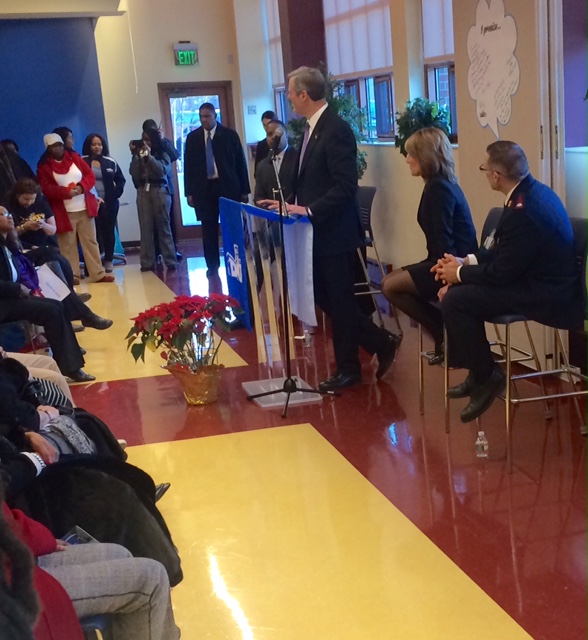
^ Governor Baker and LtGov Karyn Polito converse with and speak to 200 community leaders and Dudley Street Neighborhood Initiative members yesterday at the Kroc Center —- —- —- —- —- Governor Baker delivered as inaugural address at the State House yesterday, and all of us in the media have covered it, analyzed it, opined about it. But Baker delivered a second speech yesterday, one that no one has yet written about. This speech was given at the Kroc Center on Dudley Street in Roxbury, where Baker and his Lieutenant Governor, Karyn Polito, heard from, and then spoke to, about 200 assembled community leaders and members of the Dudley Street Neighborhood Initiative, otherwise known as the “Promise Movement.” It was a speech of inspiration such as I have not heard a Republican deliver in at least 40 years, words of encouragement and uplift and quite pointed, a  speech almost revolutionary in its potential political consequences.

Baker said “there’s an awful lot of good stuff going on in communities of color…things you never hear about…which the media does not cover…we should pay more attention to the success going on, here and right up the street, at places like The Base.” Baker talked about the city of Lawrence too : “you don’t often hear about Lawrence in a good light, but two days ago we visited the Frost School there, a level one school in a city where education progress is going on right now. The city has doubled the number of top performing schools.”

Summing up his theme, Baker said “success usually mean doing more of what works and less of what doesn’t” and “We need to focus on the success stories !” You may be tempted to think that Baker was simply voicing a cliche about the news always reporting bad things that go on in communities of color and none of the good, but Baker’s meaning, addressed to an audience of people of color rigorously dedicated to self-improvement, went much deeper than that. He was telling the 200 that their personal successes matter : to the community of which they’re part; to the City; and to the state, as validation, as role modeling, as foundations to be built upon, not merely by money or programs but, most basic of all, by will power and confidence, attributes of the soul that work whether there’s money aound or not.

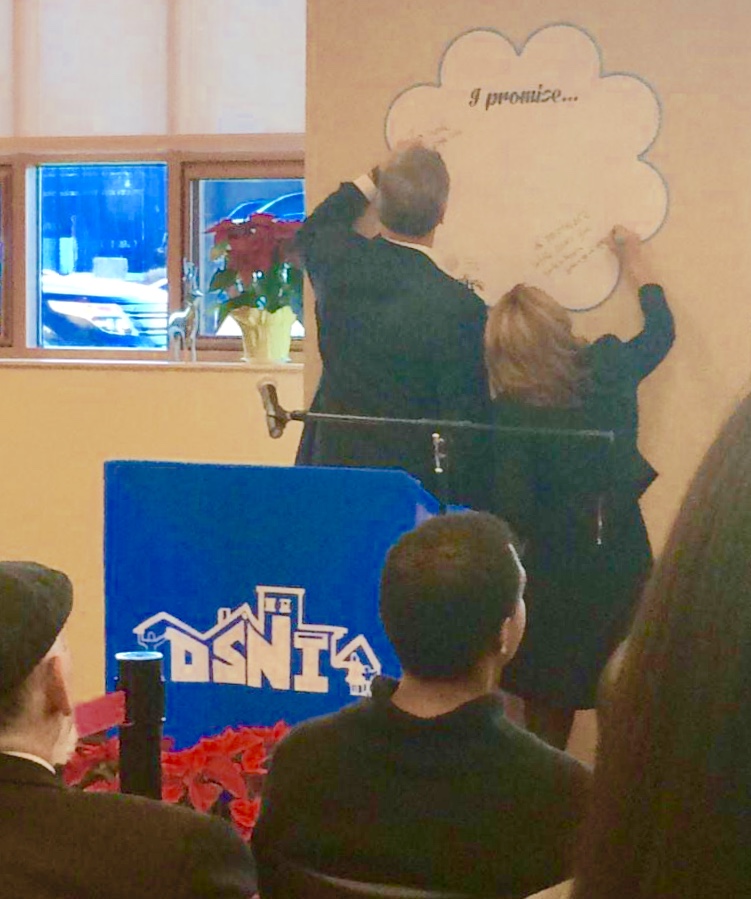
Before they spoke, both Polito and Baker wrote upon the organization’s “Promise Board” their promises to the community

. FullSizeRender (9)

^ Baker and Polito writing their promises to the Dudley Street Neighborhood Initiative on the group’s “Promise Board”

This was inspiration at the Deval Patrick level and then some, for dpecificity and resolve and becasue it was made to an audience of color by a Republican governor and lieutenant governor.

The 200 applauded every sentence of Baker’s speech, as well they might, given what most people in communities of color have seen and heard from Republicans recently.

Suffolk County Sheriff Steve Tompkins was there, as were State representatives Evandro Carvalho and Russell Holmes, local business leader Clayton Turnbull, UMass Boston chancellor Keith Motley, Roxbury Community College president Gloria Roberson, incoming Labor Secretary Ron Walker, City of boston Development leader Sheila Dillon, and Boston Police Commissioner Bill Evans. It was an impressive display of what in gospel singing is called ‘witness.” Baker also had with him two cabinet secretaries of great significance to the Dudley Street community : Business and economic Development chief Jay Ash and Chrystal Kornegay, who will be Baker’s Housing and Urban Development leader. Baker singled them out and also their recent work : Ash as Chelsea City manager and Kornegay as head of Urban Edge.

I thought of Senator Ed Brooke, who died barely days ago, and what he would have thought had he been on hand, in the neighborhood that he lived in, to hear Baker’s words. His life, his work, his politics exemplified “Promise.”

Baker’s speech reached back to that era in Republican politics and, for me at least, reclaimed it for himself, and, by implication, for Republican political priorities as well. And if Baker often sounded more like RFK than not, that too takes us back to a time when success-oriented urban reform, and the moral impulses that underlay it, were the driving force of successful Massachusetts Republicanism : and to its adoption, intentionally, by the Kennedys, who eventually made it a major Democratic mission even as the Republican party lost grip. But that was almost 50 years ago, and Governor Baker is now : potentially, a political force as game-changing as were the 1960s Kennedys. —-

—- Mike Freedberg / Here and Sphere

IT’S GOVERNOR BAKER NOW

1 Charlie and karyn

^ LtGov  Karyn Polito and Governor Charlie Baker : to be inaugurated today at noon

—- —- —- —-

Here and Sphere endorsed Charlie Baker for Governor, and both of us who write Here and Sphere personally supported his candidacy. So it’s no surprise that we are happy to see him take office at noon today.

We think he will do exactly the job of governance that this state badly needs ; make state administration less confusing, less wasteful, less disappointing to those who need its services. We think that Baker will bring coherence to each agency’s mission; effectiveness to the state’s technology; and focus to budgeting. Baker campaigned on these grounds, and his presentations embodied his resolves. If you ask the voers to choose you for your mangerail mastery, there’s no better way to prove it than by running a masterful campaign. Baker did that and more. it was a campaign as bold as well targeted. We see no reason why his governance of the state won’t show the same leadership example.

Deval Patrick, who leaves office today, asserted even more boldness than Baker — but mch of the time failed even to identify a target, much less focus on it. Patrick did establish, for a very long time to come, social values that we all now embrace : equality, inclusion, the dignity of everyone. Foresight on budget matters, however, was not a strong point, nor was his legislation well crafted. He misplayed the game : instead of winning gthe Speakier of the house — the state’s single most important lawmaker — to his proposlas before annoumncing them, pattrick anouncved them and then waited for the Spdasker to respbd. ioften the Spoeaker said ‘nothing doing.” Patrick, knowing his popularity among Democratic actkivists, may have wanted to pressure the Speaker, who too is a Democrat; instead, the Speaker’s push back highlighted the weakness of the goverbor — any goverbor, but paticularly a Democrat.

This was a political failure; and Patrick was never a politician, not at the beginning, not at the end, by which time he seemed to have long since lost niterest in the details of governance.
In some measure Patrick’s failure at things political mirrored that of his predecessor, Mitt Romney, who never even tried to be political. At least Patrick tried, and on values issues, succeeded.

Charlie Baker has already proced himself a master of Massachusetts politics. as his campiagn to the cities and interest group constituencies showed political insight, so have bhis picks for top administrative positions confirmed it. Political party affiliation has played scant part in Baker’s selections, more of whom are Democrats than not. Republicans have wondered wny; Democrats deem themsleves pleasantly surprised; yet nheither get the point : that Baker really does see his job not as a boosting of partisans but as better state administration, for the good of all.

It’s a mission he can fulfill. Baker doesn’t need Speaker DeLeo’s permission, or accord, to accomplish this mission. all he needs is to pick solid administrators — and a solid core of net-level managers, because it’s a that next level down that state administration really gets delivered — and see that they do the job he’s entrusted to them.

There will be struggles. Baker has to find ways to close what looks to be a very large budget deficit; and then comes next year’s budget, which will be all and only his. He will need to confer with the Speaker beforehand,and he knows it. Baker’s selection of east Boston state Representative Carlo Basile as his board appointments secretary sent a signal, I think : no legislator had a closer working relationship with Speaker DeLeo. It’s a relationship which has legs. Baker’s budgeting decisions will not cahllenge the Speaker, they will include him.

Including the Speaker is really the key to loosening his monopoly of legislatibve power. It will be hard for the Speaker to block passage of budget allocations that he has helped to negotiate. I think that Baker understands this dynamic.

Of course all of this remaions to be seen. or now, it’s a new day in Massachusetts, a new tone, a new look and a new way of doing. Our incoming governor is a policy wonk, a brilliant explainer of otherwise complex governance issues, a man intimidated by no one and as caring as was Deval Patrick and as determined to surprise skeptics as to live up to believers’ expectations.

—- The Editors / Here and Sphere

THE TRIAL OF AARON HERNANDEZ WILL NOT BE A SLAM DUNK

1 aaron Hernandez w lawyer

^ Aaron Hernandez in court with his lead lawyer, Michael K. Fee

—- —- —- —- —-

Now that the Dzhokhar Tsarnaev trial is underway, it is time to think carefully about the next high-profile, Massachusetts murder trial, set to begin soon enough down in Bristol County : that of Aaron Hernandez.

Unlike The Tsarnaev trial, the Hernandez process will be no slam dunk. Serious questions of motive stand unanswered. The time line of events doesn’t help. It’s difficult to grasp what happened in that car in which Odin Lloyd rode in company with Hernandez and his two imported sidekicks. As I see it, the decision to kill Lloyd happened during the ride, not before . If it was Hernandez who actually did the killing.

As best I can time-line what happened, here it is :

1.Hernandez learnede that Lloyd had talked to a club security man about the deaths, the prior year,of Daniel Abreu and Safiro Furtado — deaths that Hernandez is also now accused of.

2.A few days after that occurred, Hernandez asked two friends to come up to Boston and ride with him as he picked up Lloyd at Lloyd’s house late that night.

3.Lloyd evidently feared no harm, as he came out of his house and joined the three men.

4.No one in that car took Lloyd’s cell phone away. He was free to text right up to just before the shooting. The inference is that, during the ride, Lloyd was a friend.

5.Lloyd’s discussion with the club security man was talked about. One man in the car has said that Lloyd and Hernandez straightened it out right there and that, evidently, all was good. (And why shouldn’t it have been? Lloyd was dating the sister of Herandez’s fiancee. He was almost family.)

6.One senses that Hernandez had asked his friends to join him and Lloyd as a kind of jury, to listen to the two men discuss the club matter and to weigh in if needed. As for killing Lloyd, it would be quite foolish to kill a man with two witnesses present.

7.Lloyd texted his sister that “I’m with NFL…just so you know.” The words might suggest that he now feared his life — but also implies only that Lloyd wanted to put his sister at ease about why he was off riding around with three men so late at night. (The text’s many possibly interpretations is good enough reason why Judge Gersh has excluded it from trial presentation.)

8.The four men rode aound for an hour. As the Attleboro industrial park where Lloyd was evidently killed is much closer than that to his house, clearly the long ride was long because of the discussion about the club matter.

9.They arrive at the industrial park. Lloyd is soon thereafter shot — outside the car. Why did Lloyd leave the car at all ? Was he forced outside ? What happened during the last part of that ride to change the outcome ? Or did nothing happen, except that Lloyd recognized the industrial park as a place of no good and, afraid now, he bolted out of the car on his own — he had a door seat, so why not ? — seeking safety, at which point Heranndez or his accomplices chased him down. Lloyd was shot in the back.

10.Which man actually killed Lloyd ? The murder gun has not been fiound. Whose fingerprints are on it ?

11.Lastly : did Lloyd escape the three men and was shot by somebody else ? It may seem unlikely, but it is not beyond possibility.

These questions leave plenty of room for Hernandez’s defense to cast doubt upon the prosecution’s case. Much depends upon what the two accomplices testify to and whether either man can be believed. Yet even if their testimony proves unhelpful, much doubt arises from the facts themelves. If the murder gun could be found, at least the killer’s identity would likely be established. Lacking the gun, presented with such a makes-no-sense fact line, and facing a team of superb lawyers well prepared for the defense, the Hernandez prosecutors can’t take their job lightly. At this stage, an acquittal is a distinct possibility.

Granted, that Hernandez’s pose have done him no favors in the court of public opinion by clamming up, by seeming to abet his evasions, by acting out street codes of screw-the-cops. Yet none of that will play out in court, where evidence, not the mindsets of Hernandez’s unhelpful friends, will decide the verdict.

—- Mike Freedberg / Here and Sphere

WHAT MASSACHUSETTS ASKS OF ITS GOVERNOR

1 Paul Cellucci

^ the late Paul Cellucci : he wasn’t a policy wonk, but he understood Massachusetts, and our legislature, masterfully – better than any other governor of my lifetime — and so was a very effective chief executive

—- —- —- —- —-

The long and exhaustive summary, in today’s Boston Globe, of Deval Patrick’s eight years as Governor deserves your reading it, as it required mine. Its observations do Patrick full justice; its conclusions underline his failures. Patrick is a man of wide vision, of optinmism and challenge such as few of our recent governors have equalled. Unfortuntely, he was an uneven administrator at best and, more often than not, a stranger to how the legislature works.

As Patrick himself is quoted, “you can’t get the substance part done unless you do the performance art part of the job.”

Performance art ? By this phrase Patrick encompasses what to those of us who love political engagement mean by conversation, discussion, attention to all the 200 legislaors and even their key staffers.

i suppose that to engage the people who actually make the state’s laws in framing them can be seen, somehow as “performance art.” If so, a Governor had better become really good at performing. Because finding a way to co-operate with the legislature, rather than conflict with it, majes up at least half of a Massachusetts Governor’s duty.

Our state constitution was written in 1780, by men who had had enough of single-handed colonial governors. They wanted the legislature to dominate. A governor was to execute legislative directions; his appointive power was limited by a governor’s council. Originally, the Goveror was elected for a one year term only. Few Massachusetts governors became household names; they came and went. Power was the legislature’s.

Today we elect Governors to four year terms. He directs many, many state agencies, enacted in the past 50 years mostly, and administers a vastly bigger state budget than governors in the 1850s. He appoints the directors of those agencies free of Council approval. He also appoints all of the management-level administrators, and because the Governor has so many such at his command, his personal presence in Beacon Hill’s halls of power weighs far more heavily than it did in 1780, 1880, or even 1980.

Yet when it comes to legislation, it’s still 1780. The legislature commands all.

Our House is the only legsialtive body in the entire nation — that I am aware of — in which the Speaker appoints all members of every committee and all committee chairmen. (ironic : the Speaker is as much a dictator today as our colonial governors were 275 years ago.)

That said, each of the 160 House members is different, because all represent separate communities with very separate histories. Massachusetts has 351 towns and cities, each run by separately elected officials, each with long history apart from one another. For example : incoming Governor Charlie Baker lives in Swampscott; next door lie Marblehead on the east, Salem to the north, Lynn and Nahant on the South. These five adjoined communities have political cultures as different aas if they were 100 miles apart.

The same differences exist throughout Massachusetts. Wilmington and Billerica, for example, border each other as north of Boston suburbs, but they vote very differently, inhabited by people from very different backgrounds. The same is true of Acton and Concord, or of Hudson and Stow, or of Southbridge and Sturbridge, or Seekonk and Attleboro, or Uxbridge and Milford; and the list goes on. Any Governor who wants to work well with our 160 House members needs to know the difference between Norton and Easton, Ware and Hardwick, Chicopee and Holyoke, Granby and Amherst.

The fractured state of Massachusstts polity affects administration. What one community supports, a neighboring community may oppose. With 351 separate communities in the room, that leads to a lot of division and mutual opposition. Some state agencies administer laws that affect every resident more or less equally ; tax collection, drivers’ licensing, the DCF and Health Connector. Several others — especially Business and Community Development, Education, Public Safety, Transportation, and Housing — face tasks that vary to some degree every time a town or city boundary is crossed.

For example : Patrick successfully led the legislature to reejecting a proposal for Marriage equality to go to referendum; that’s because equality is the same no matter where we live. He was less successful with casino legislation, until a new Speaker took office, and continued to face casino conflict, because casinos are location items, and our state has 351 political locations. Transportation funding aroused unending controversy because our 351 communities have about 351 different public transportation priorities.

Our Governor has to know the state in detail, geographically and culturally, if he is to lessen the potential for missteps, the chance of mistke. It really does begin here. Baker and Polito have both served as town selectmen; Baker made a point of it in his campaign speeches; again and again he emphasized that his and Polito’s selectman years matter a lot to the performance potential of his governance. He was very right.

Knowing the towns and cities, a governor knows each legislator’s voters and thus what those voters expect of him or her. The Speaker, too, is such a legislator. Speaker DeLeo’s Winthrop is not next-door East Boston. If the Governor grasps this basic, he has gone a long way to getting every legislator’s attention and thus the Speaker’s. Add to that a willingness to treat every legislator — the forty Senators too — as a partner in governance, and a Governor is well on the way to accomplishing stuff that actually matters and to enacting legislation that he wants : beause his wants are those of the 351 communities and recognized to be such.

Lastly, a Governor needs to be ready to deliver the services that the legislature has enacted, and he needs everybody in state government to accept that he knows how to get it done as well as why and for whom.

It sounds simple. But few governors master all of this simple-sounding stuff, or care to. Paul Cellucci did it. Other than him, I can’t recall a single one — not even Mike Dukakis, as dedicated a policy person as the corner office has ever seen — who mastered these basics of the job description we’ve written for our governor.

—- Mike Freedberg / Here and Sphere
BOSTON 2015 : OUR CIVIC PREDICTIONS

1 seaport housing

The Boston Building boom ; here seen at its heartland, the Seaport District, will expand to almost all of Boston in 2015 —- —- —- —-

The major election of 2014 now decided, and the even bigger vote in 2016 yet to arrrive, 2015 may seem an interlude. Yet there will be a Boston city election this year, and a special election in East Boston, and perhaps others, if Governor Baker is of a mind to add still more local office holders to his bold team. There will also be issues politics, because Boston is changing faster, at street level, than almost any of us realize.

In that vein we now make three big-time predictions.

1.The BRA will enlarge the city’s already bullish building boom, bringing major development to the “neighborhoods.”

Billions of dollars have already committed to the Seaport District and Downtown : hotels, mixed-use mini-cities, loft buildings converted. The City’s public transit system is expanding service. Businesses are relocating, or starting up — and billions of dollars have committed to start-ups as well.

Every week brings new projects to the drawing board and from the drawing board to the BRA’s approval process. Mayor Walsh has called for creating 53,000 new units of “affordable” housing, and Governor Baker supports this program.

As 2014 wound down, many such projects began to arise in neighborhoods abutting the “downtown miracle” : Roxbury, East Boston, Allston. (Lower Roxbury had already been sited for development during the Menino years; that trend is quickening.) now that transformative movement will expand. Thanks to a home rule petition sponsored by City Councillor Ayanna Pressley, Boston now controls its own liquor licenses ; and these new licenses will abet restaurant development in all the neighborhoods, thereby enabling other forms of business creation and residential building.

Roxbury in particular will be the playing field for varsity development. From along Melnea Cass Boulevard up to the Dudley Street corridor, innovation and renovation, new construction (including a bright, big bew Tropical Foods supermarket) and, yes, higher rents and house prices will be the neighborhood story all year long. Do not be surprised if development extends beyond Dudley, up Warren Street and Walnut Avenue at least to Malcolm X Boulevard.

1 the new Madison Park

what Tremont Street may look like, near Roxbury Crossing, once the Parcel 9 Madison park development is finished

2. Boston will elect 13 city councillors to a two year term, probably with a disappointingly low turnout.

You would think that with all the activity going on in Boston — all the change, some of it radical, much of it with consequences few are taking stock of — there’d be a big vote in November. But in the major 2013 Mayor campiagn only 37 percent (152,000) voted, and in last year’s even bigger Governor race almost the exact same number came to the polls. Why this happened, I cannot be sure : but certainly one reason is that, for many Bostonians, work takes up every waking hour of one’s day, be it low wage work for people holding two and three jobs to get by, or high tech work demanding 70-hour work weeks. When do we have the time to vote ? Frankly, it’s a credit to Boston people’s civic enthusiasm that even 37 percent took time to vote.

In most non-Mayor elections, 27 percent of Boston voters cast a ballot; some elections see even fewer numbers. There aren’t many juicy  issues in city council elections — nothing like a major policy dispute –because, in the at-large races at least, a voter has four votes to give. No at-large candidate wants to alienate the supporters of any other candidate and thus lose second, third, fourth choice votes. Which means that the at-large contest is feel-good, a personality contest : who do you like the best ?

City-wide, a potentially fiercer race than usual is shaping up  between the four incumbents — Ayanna Pressley, Michelle Wu, Michael Flaherty, and Stephen Murphy — and Dorchester’s Annissa Essaibi George, who finished fifth in 2013 and has already begun her 2015 campaign. Whether she wins this time will probably depend on her ability to symbolize — and speak to — the big changes going on in today’s Boston more effectively than one of the four incumbents.

(disclosure : I am advising the George campaign)

As for the nine District Councillors, few ever face a serious challenge, at least in part because the Council has so little actual power. Boston has a strong-Mayor charter. The Mayor controls all City Hall jobs that aren’t civil service except for Council staff. The Council can approve a city budget but does not initiate one. The Mayor can veto council action that he doesn’t like ; the Council almost never overrides his veto.

Few politically ambitious people see much advantage in making the effort, raising the money, or gathering campiagners, to challenge an office so powerless.

Right now I know of only one District Councillor who faces a serious opponent. That would be Charles Yancey, who has represented District Four since the current map was created in 1983. Yancey is the target of well-connected newcomer Andrea Campbell.

3. Boston’s bid for the 2024 Olympic Games will fail.

I support bringing the 2024 Olympic Games to Boston. The energy of them encourages me; the fans; the big structural developments necessary to support them. But the bid has opponents, and they are quite determined, and I see no major surge of support for the bid. Support there is, including that of many Boston civic leaders and political voices (Juliette Kayyem and Steve Kerrigan both support Boston 2024). But unless a much larger and more vocal number of boton’s sports fan base — and beyond it — get aboard the 2024 Boston bid, we are going to get passed over, by Los Angeles and maybe also by San Francisco.

What of the East Boston special state represehtative election that i mentioned earlier ? No prediction so far. The date hasn’t even been called yet. Three candidates are already making moves — Adrian Madaro, Joe Ruggiero, and Ed Deveau — but who can tell me there won’t be more ? I’ll reserve reportage of this campaign until it has an actual voting date.

—- Mike Freedberg / Here and Sphere

REGULATE UBER AND LYFT : BECAUSE INNOVATION WORKS

FullSizeRender (6)

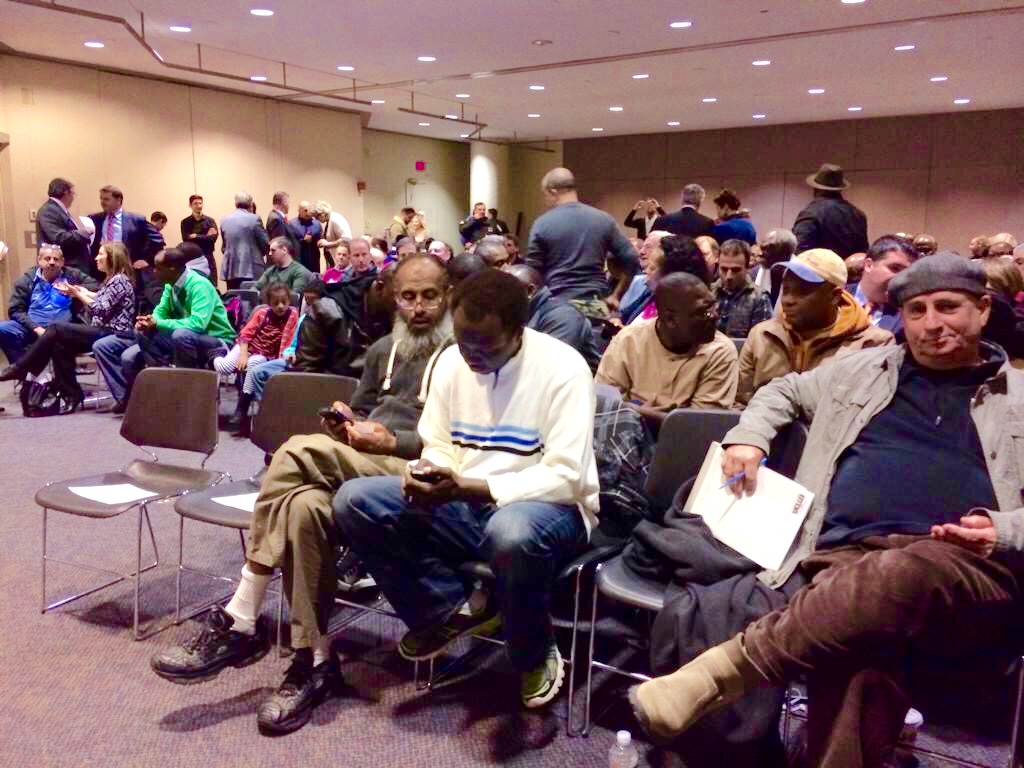
Taxi guys opposed : big crowd of taxi men at today’s “DOT” hearing on Governor patrick’s proposed Uber and Lyft regulations

—- —- —- —- —–

In Boston there’s a brouhaha going on right now that very likely you haven’t heard much about, but which has already generated intense conlict and much controversy. I refer to the battle between Uber and Lyft, two ride-sharing ride-sharing businesses, and licensed taxis.

Even as I write this column there’s a hearing going on — a day-long hearing — at the offices of Massachusetts’s Department of Transportation at which Governor patrick’s proposed regulations of ride-share firms will be discussed. Patrick has previously okayed these firms to opeerate but now wants Uber and Lyft to conduct criminal background checks for all drivers used and to obtain proper liability insurance. Uber’s managers support the regulations.

Taxi drivers passionately oppose both the regulations and the firms themselves. their view seems to be that the state shouldn’t permit the kind of ride competition that Uber and Lyft bring to the marketplace; that it’s hard enough or taxi operators to make a living without having to compete with the entirely new service offered by Uber and Lyft.

It Is hard to make a living driving a taxi. But that is no reason why innovation shouldn’t reconfigure the ride-for-hire business. Potential riders do not exist to give a living to drivers. Drivers exist to give service to riders.

1 Uber customer with his ride summoning app

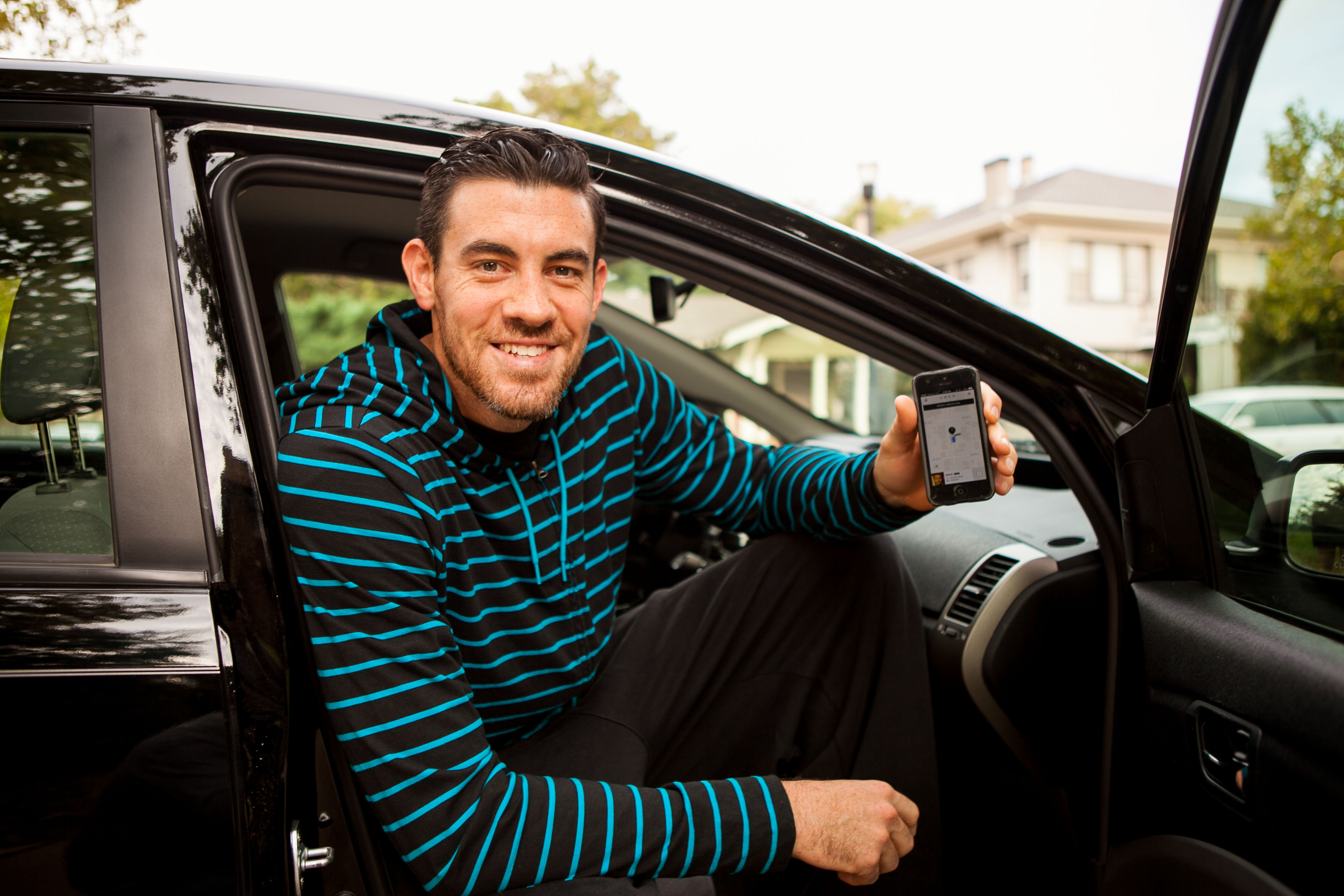
use your smartphone Uber “app” to find an Uber car near you. That’s all there is to it.

There is no good reason why Uber and Lyft shouldn’t compete for business in the ride marketplace, any more than Hertz should be able to bar Zipcar.

If I can rent a car, why can’t I rent a ride ? Why should taxi drivers be able to limit my choices this way ?

Uber and Lyft charge far less for long rides than taxis do. Taxi fares are regulated by the department of public Utilities, which uses a cost per minute scale. Uber and Lyft use a cost per distance. More sgnificantly, a rider hails an Uber or Luft car by application on a smartphone. The “app” shows the location of the most nearby available car. Taxis can’t be hailed that way, at least not yet.

Uber, Lyft, and also SideCar have created a new system for city people to get from point a to point B. They’re to be applauded for innovating and thereby better serving poyential customers. That’s how a healthy business marketplave works.

There has been much publicity given to unpleasant ride experiences at Uber, whose business practices have also come to criticism. That’s for the market to work out. If Uber or Lyft alienate or mistreat customers they won’t be in business very long. As for taxis, it;s up to them to recalibrate how their systems operate. Rides for hire atre a service offered to the public. Those who drive riders serve the riders, not the other way around.

Taxi drivers in Cambridge, another city that deals with Ubver and Lyt, oppose ride-summoning businesses altogether. Of course they do. i see no grounds whatsoever for their opposition other than to assert monopoly so that their members can control prices. we don’t allow monopolies in America,. and we shouldn’t sanction this one.

Approve the regulations and let the market then work out what business model — and waht prices — best serves those who seek rides and are ready to pay for them.

—- Mike Freedberg / Here and Sphere
WHAT CHEAP HOUSING PRICES BEYOND BOSTON ARE TELLING US

Sam Sutter

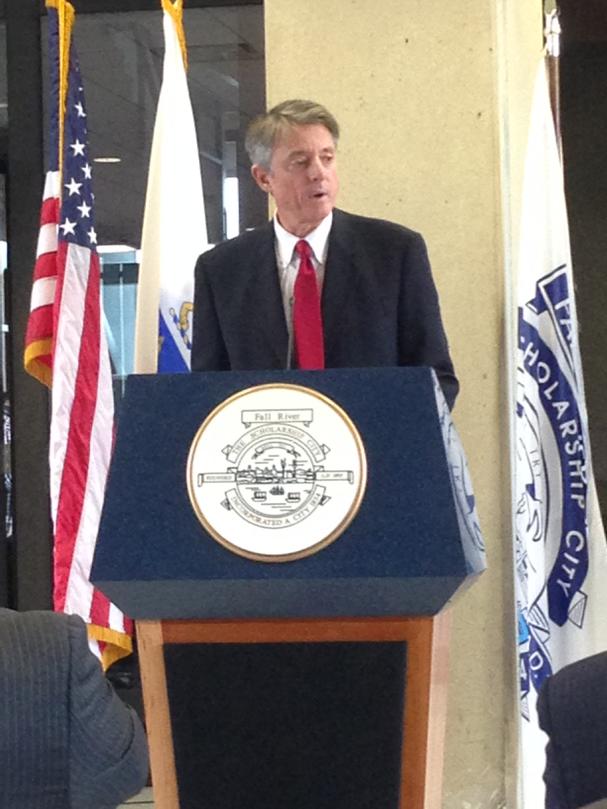
Today at 9.30 AM, the City of Fall River inaugurated its new Mayor. Sam Sutter, hitherto the reformist District Attorney of Bristol County, takes over from Will Flanagan, overwhelmingly recalled by 16,557 voters, a huge turnout for a Christmas season election.

Sutter has promised his city a new, optimistic, forward-looking era, and given his record as District Attorney, he’ll probably do it. Certainly Fall River needs it. Vacant land abounds’ empty factories; boarded-up storefronts. Dining out costs about one-third of what you’ll pay in equivalent Boston restaurants. Unemployment approaches ten percent.

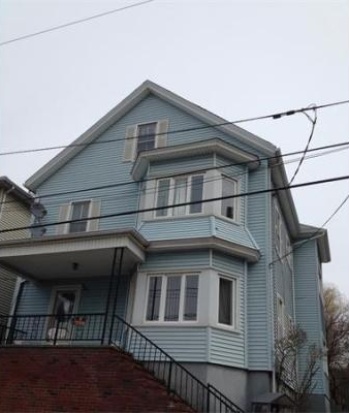
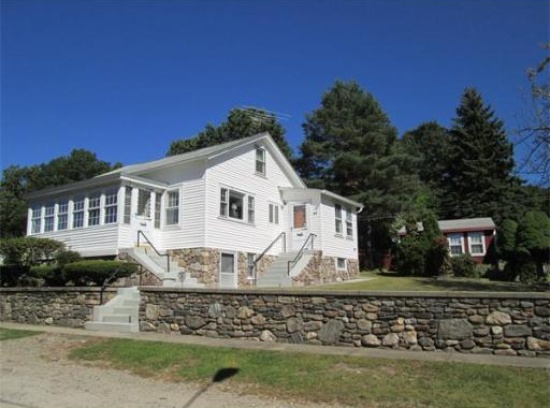
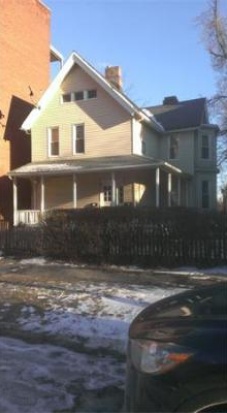
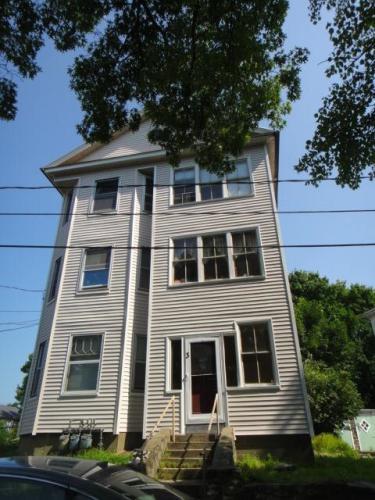
Fall River lies 38 miles from downtown Boston, but it might as well be 3800 miles for all that the booming Boston economy means to this riverside community of about 90,000 people. Housing prices tell all that you need to know. You want a spacious two-family house ? $ 199,000 will buy you many. You need a cozy single-family home ? Pony up $ 150,000 and there’s all kinds of offerings at the ready. Rents, too, boggle the Boston mind. Two-bedroom apartments in the city’s marvelously ethnic core fetch $ 600 a month, three-bedrooms $ 900.

Fall Rivber

$ 185,000 buys you this two-family home in the uphill corner of Fall River behind South main Street at Kennedy Park

There isn’t anywhere in Boston that you can find housing at anything close to Fall River prices. Even the cheapest Boston rents ask more than double the Fall River price; house purchases too; and in most of Boston, the increase runs much higher than that. Renting even a small apartment in downtown Boston will cost you $ 2800 and up; buying a downtown condominium, at least $ 575,000 and probably much more.

What does this price abyss tell us ? Plenty that isn’t good at all, for either Boston or Fall River and the many cities in Massachusetts like it — some where housing costs even less, occasionally much less, than in Fall River.

Developers of housing aren’t charities. They’re mostly small business people who build to make a profit. They can’t wait around. An unsold home deteriorates. A developer wants to build and sell and move on.

In  Boston, a developer can do all of that and be very sure about it. Downtown Boston is booming economically — and socially — because the new network of technology, research, finance, public relations, government, health care, and the many service businesses that cater to employees of these all want now to cluster close to one another, personally and for business reasons. Think of today’s downtown Boston — the entirety of it — as one great big Industrial Park with attached amenities; or, more aptly, as one huge mixed-use — residential, restaurants, offices, parking,entertainment — development project.

Fort Point condoFort Point 2

Downtown Boston : $ 1,285,.000 for this 2-bedroom, 2 bath condo in the “Channel Center” complex

Lots of money circulates through t.his Development Project we call “downtown,” and housing is being created within it as fast and as plenteous as builders can get financing and BRA approval for.

Downtown Boston has pretty much sucked the money out of the rest of Massachusetts the way a vortex sucks air out of a jet stream. Likewise, Downtown Boston is a magnet for people, lots of people who a generation ago would have lived in the suburbs, or even farther away, and commuted to jobs.

All of this has left outlying cities like Fall River gasping for attention, people, and money. And worse : housing in many outlying cities of Massachusetts aren’t even holding firm. They’re declining.

Grafton Hill house

$ 150,9000 buys this home on Worcester’s Grafton Hill

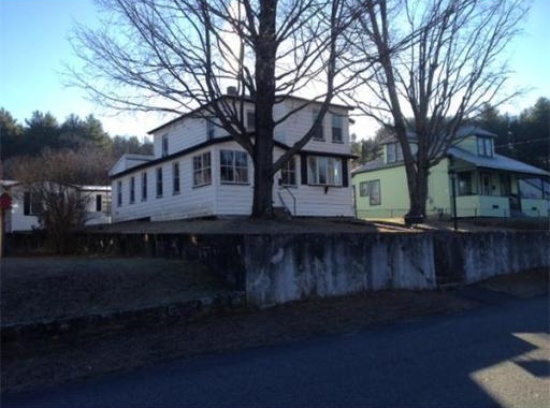
Beyond Route 495 one soon comes to Worcester, the state’s second largest city. Despite having many colleges and a robust health system, Worcester has a housing market cheaper even than Fall River. Prices in and around downtown run about 20 percent less than in Fall River. Currently there’s many single family homes for sale under $ 140,000, two family properties at $ 165,000 threes at $ 199,000. In Fitchburg, an old mill city north of Worcester, $ 80,000 to $ 150,000 will buy you a “single”; even lower prices are not impossible.  Farther west, in Athol, most currently for sale singles run from $ 40,000 to $ 140,000. There’s also one for $ 269,000 — a ten-room home on more than an acre of land with a two-car garage. Such a home would likely sell for $ 750,000 in Boston, if you could even find one.

Athol house

“MOTIVATED SELLER” — I’ll bet he or she is, to be offering this Athol 4-bedroom, 2 bath house at $ 118,999

Holyoke house

$ 90,000 is the asking price for this house on Walnut Street in Holyoke

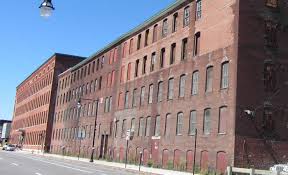
House prices in Holyoke, on the Connecticut River and loaded with empty industrial buildings, begin at about $ 30,000 and go to the $ 150,000s.

To some, the prices I’ve posted here look like magnificent opportunities. I think otherwise. When house prices are that cheap, it doesn’t pay to renovate, because a renovator — and most houses in these cities badly need renovaion — can’t recoup his investment back. Nor can a builder build anew, for the same  reason. And if he could build, who will buy ? People aren’t moving into these cities; if anything, they are moving out. Businesses too.

Of these cities only Worcester faces a significant economic boost. It’s close enough to Route 495 and Boston to attract industries seeking cheaper land costs and commercial rents without being so far from Boston that workers can’t commute. Worcester also has the new Lieutenant Governor, Karyn Polito, and a Governor who appears ready to make economic revitalization of Worcester a priority.

Fall River, with its new “trophy Mayor” and Portuguese culture attractive to tourists, may also see some significant change. If so, its house prices — Worcester’s too — will jump, and its rents. That will be the crisis point, not to be surpassed unless the entire business and culture of the city transforms. Can they ? Should they ?

But if not transformation, what other course will the cities far from Boston choose ? What course can they achieve ? Perhaps like White River Junction in Vermont, or Claremont in New Hampshi8re — once thriving mill cities — they will become havens of post-modern rural tourism, museums for the Industrial Age soon vanished. Myself, I find this outcome much more likely than that they will rise again as centers of innovation. Because housing prices and rent costs that low — plus distance from stuff — impose their own agenda, one in which scarce money eliminates far more possibilities than it incubates.

The same economics are reshaping America’s families as much as its cities. Prosperous families prosper more and moire; the un-prosperous become yet more un-prosperous and have to live vastly different lives than the lives of the propserous.

Actyivists can talk a good game and throw all kinds of political drama into the vortex, but every day that passes, without radical change, the trend I see embeds itself, like a tic, ever more irrevocably in the nape of our nation’s neck.

Welcome to tomorrow.

—- Mike Freedberg / Here and Sphere

OUR VIEW : BAKER AS GOVERNOR WILL SPREAD THE BOSTON ECONOMY OUTWARD

1 worcester factory1 worcestrer coral

^ reviving Worcester — a baker/Polito priority. (Left) Lots of space and cheap (Right) Coral Seafood on Shrewsbury Street’s restaurant row

—- —- —- —- —-

It won’t be easy, but incoming Governor Charlie Baker will definitely accomplish at least this basic Massachusetts task. Baker’s administration will extend the successful economy of Greater Boston outward.

How far outward ? No one yet can say; but Worcester can count its good fortune. Politically, Baker has to make this city a place to be. His Lieutenant Governor, Karyn Polito, hails from Shrewsbury, Worcester city’s biggest bordering suburb. Her political clout — and future — depend on it. So does baker’s political success. If his selecting Polito as his governance partbner signified anything, it said “Worcester matters.”

Baker and Polito have spent at least as many campaign and post-election hours in Worcester as in Boston. Politically, they have to. Baker carried every commnity in Worcester County except the city itself, and by large margins. These voters are counting on him to give them attention — and a better economy. So is Polito.

Worcester lies just beyond commuting distance from Boston, but to new businesses it offers advantages : much cheaper housing than Boston’s and plenty of under-utilized commercial land. Boston’s old factories and lofts have all been reconfigured, as technology space and hugely expensive condos. Nothing like has yet befallen Worcester. But with a city administration eager for economic progress, and a Governor whose Business and Econimic Development chief, Jay Ash, knows how to negotaite attractive deals to lure businesses to a location, Worcester is sure to become a “hot” place to site.

1 worcester grafton hill

cheap and funky housing on Grafton Hill in Worcester’s southeast

Three bedroom Worcester apartments rent for $ 1,000 to $ 1,400, as opposed to Boston’s $ 3,000 and up. Worcester has almost as many colleges, a booming night life, an auditorium (the Centrum) for major entertainments, a restaurant row (Shrewsbury Street) second to none, and easy access to the new MGM casino in Springfield.

Juan Gomez, a Worcester activist now running for Mayor, famously said at a Baker rally during the governor campaign, “we don’t need more programs, we need more opportunity !” Chalk it up.

Beyond Worcester, there’s much more development work to do. Let’s look briefly at three major regions :

1.Springfield has the new MGM Casino to look forward to, but it won’t be up and running for a few years. Meanwhile, Springfield house prices remain much too low to attract investment or to repay upgrades; downtown lacks every modern amenity; and at 100 miles from Boston, the city cannot connect economically or culturally to the Boston boom.

2.New Bedford and Fall River lie much nearer to Boston, but they’re difficult to access from the Interstate highway system that makes the Route 128 and 495 belts, north of the Masachusetts Turnpike, so effective a commercial zone.

Downtown and Park Square, Pittsfield, Massachusetts

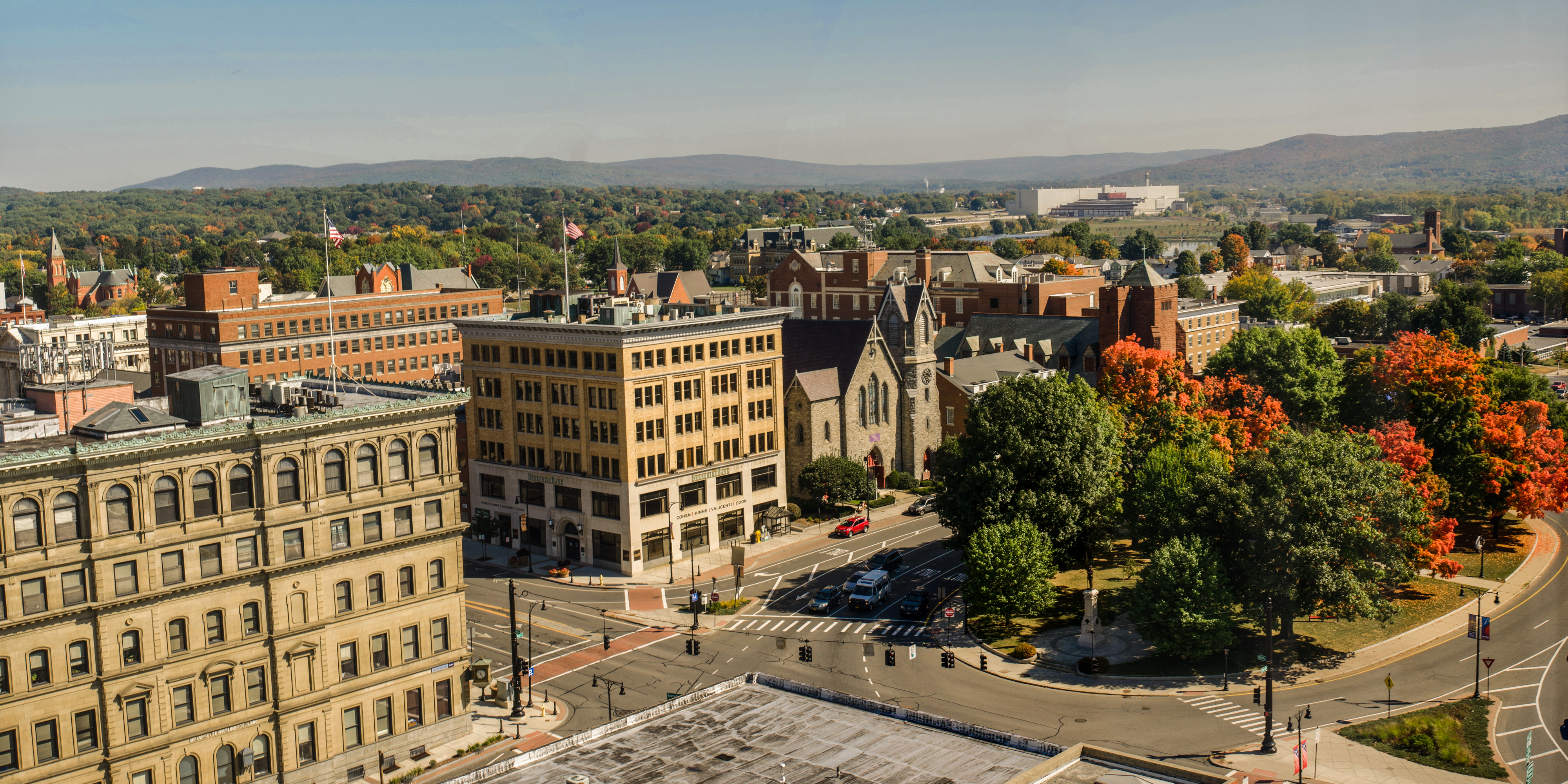
Pittsfield, a city much forgotten by Boston, 135 miles away

3.Pittsfield, all of 135 miles from Boston, and west of the Berkshire ridge line, connects more to New York state than to the rest of Massachusetts : it’s just a 30 mile drive to Albany, the state capital, and its Tri-City complex (Schenectady and Troy). Until two decades ago it was home to a major General Electric plant : but that’s now long gone, and the city has endured a bankruptcy. Pittsfield’s problems extend throughout the northern half of Berskshire county, to Adams and North Adams. Small manufacturing once made these inacccessible communities matter. No longer.

Building “innovation Districts” in these three areas doesn’t seem likely. High technology in general isn’t going to move away from where it already has a circle of discussion and networking. Yet there is a model that works, if baker can make it hapepn : germany’s “mittelstand.”

The “mittelstand” is the vast honeycomb of middle-sized, mostly famiuly-owned, specialty manufacturing enterprises that make the Geramn economy so powerful. Most “mittelstand” enterprises are located outside Germany’s major cities — some of them in small cities indeed, and all over that country’s landscape. Successful “mittelstand” businesses provide such niche prodcts as ice making machines, pressure valves, hydraulic brake systenms, water pressure valves, fire extinguishers, electric pumps, and the like : markets that each “mittelstand”: business dominates, even owns altogether. In the small cities where they’re loacted they are that town’s employer.

That’;s how it used to be in back-counhyry New England, but few such American businesses survived industrial phase-outs, as most of our middle-stand operations either sought to become biggies, or were bought out (most being publicly traded corporations) and foled into others’ biggie operations.

in Germany that didn’t happen, because family-owned businesses, unlike companies publicly traded, couldn’t be bought out aginst the owners’ wishes, and because the best middle-stand businesses paid their workjers incredibly eell — and still do.

In western and soiuth-coast Massa husetts a few such businesses remain, and baker during the campaign sometimes talked about business development in these parts of the cstate as if he had “mittelstand” in mind. Replicating the German model will not be simple. That nation’s middle-firms took decades, even a century, to achieve — and maintain — market omiance of extremely specialized niches. The long view will be needed : and Americans rarely accept it.

German’s middle-firms also have a huge geographic advantage. They’re right there in the heart of the world’s largest market — all of Europe — and well attuned, politically and by cultural habit, to doing business with every player in the Middle East, as we are not. America, on the other hand, is separated from most of the world by the vast distances of our oceans. Transportation costs alone put our piotential middle-firms behind an eight-ball.

Still, Baker wants to connect the manufacturing businesses of tMassachustts’s outlying regions with their school systems, so that graduates can target available jobs, many of which, Baker said, go unfilled. This is a good first step for Baker and Jay Ash to take.

Somehow, we must make the deep valley towns of Berkshire, the by-passed city of Springfield (and nearby Holyoke, where hundreds of acres of brick factories sit empty), and the port cities of the South Coast havens of family-owned, middle-sized, niche market manfacturers (or servicers : because some services, too, have niche sepcificity) who can develop, over time, sufficient market dominance to prevail long-term. Massachusetts once had many thousands of such firms. The future of our state’s west and south may depend on doing it again.

—- Mike Freedberg / Here and Sphere