WHAT WILL THE 2018 MASSACHUSETTS ELECTION BE LIKE ? A SHAPE APPEARS

IMG_0469

^ Governor Baker at ground level — as in his campaign he said he would do — supervising MBTA upgrades

—- —- —- —-

Initiative petitions should not be the first sign of how an upcoming election might break, but right now that’s how it looks here in Massachusetts.

On one side, there’s the initiative to raise the charter school cap. It will be on the November 2016 ballot. Governor Baker supports it strongly. On the other side is a petition to amend the Constitution and enact a two-tier state income tax. This initiative will need two votes (at least 50 in support, or it fails) by the legislature and cannot be on the ballot until 2018. Baker has not weighed in, but as his no new taxes stance remains fully in force, I expect that he will oppose this.

Early polls indicate risk for Baker. Support for raising the charter cap at best barely outnumbers opposition. As for the two-tier tax initiative, SEIU supporters tell me it polls very well. They would say that, but I’m willing right now to believe them, even though twice in the 1990s initiatives to enact a graduated state income tax failed two to one. Perhaps this time will be different because people’s income expectations have fallen back.

Connected to the two-tier tax initiative is a big push to have the legislature pass a $ 15.00 an hour minimum wage, to be phased in at three intervals. Will Baker support it ? He isn’t saying, nor should he yet say.

What interests me politically about these moves is the composition of their support.

Backing the charter school cap lift one finds Pioneer Institute conservatives, some of them for anti-teacher union reasons or in opposition to common core curricula; many of Massachusetts’s communities of color, who have had enough of underperforming schools and few options otherwise; a substantial number of the state’s employers, who need entry level workers every year with sufficient skills to do the job; innovation school projects snd skills bridge groups; and — of course — the charter school movement itself, including its advocacy support.

By itself, this support should score a substantial victory boosting Baker’s re-election two years later. But tgst assumes that supporters of the initiative will also support Baker; whereas many, especially from communities of color, are core Democrats. In 2014, Baker won barely 9 percent of Boston’s Black voters and only about 18 percent of Hispanic voters. His all in support for the charter cap lift — which is almost universally supported by voters of color — should win him many; but  core Democrats will be pulled toward the Democratic nominee by their party activist neighbors, who include almost all the state’s of-color elected officials. Will the many, many activists of color who rallied at the State House this week in support of charter cap lift rally for Baker in 2018 despite big pressure from such as Councillors Ayanna Presley and Tito jackson, three or four State Representatives, and two state Senators ? I see this question as a daunting challenge.

Support from Baker’s of-color charter school ralliers faces added pressures, because voters of color almost all support the $ 15.00 an hour wage boost. I know of not one elected official of color in Boston who opposes the big wage hike. Baker would surely solidify his “Yes !” from inner city charter school activists if he supports the $ 15.00 an hour hike or at least does not oppose it; yet Baker is also very much the candidate of the state’s business establishment, which isn’t keen on this wage hike.

He does have other cards to play. He has brought to his side leaders of the State’s shrewdest unions, Local 26 Hotel Workers and the Building Trades. Their first priority is to keep the building boom going — and to see the MBTA and commuter rail operate within budget and on time all the time, because Building Boom workers use it to get to their job sites and customers and tourists use it to get to hotels and downtown buildings. In 2014 almost every union opposed Baker actively. i suspect that in 2018 many will stay neutral, maybe even support him. As for the initiatives, most of Boston’s unions support both the charter cap lit and the $ 15.00 minimum wage.

Baker has one other, huge card to play : his solid partnership with House Speaker DeLeo. As the Globe’s Scot Lehigh shrewdly observed, DeLeo is happy to be Baker’s reformist ally. History makes clear that the Speaker almost always gets what he wants; he can therefore deliver to Baker victory on Baker’s key agendas. Yet DeLeo is also a Democrat and so cannot ignore the support many of his 123 or so Democratic members want him to provide to the wage hike, especially — and to yet another bill now in process : adding public accommodations protections for transgender people to the current transgender civil rights law. The last thing that Baker and DeLeo need is a split on this issue, which should not be an issue at all. Hopefully the two men will get this bill enacted quickly and then move on with an alliance crucial to Baker’s re-election.

The State Senate is another matter altogether. as i have editorialized often, it is now the institutional base for the agendas being pushed by SEIU and what some call “the Elizabeth Warren wing of the State’s Democratic party. From the Senate comes a constant pepper of criticism of stances taken by Baker and DeLeo and their bsuiness, big labor, and innovation-economy allies.

Of course all of this shifting and shoving won’t matter much if Baker’s 2018 opponent turns out to not loom large. (A 70 percent afvoarble poll gives much reason to pause.) But the charter school cap and minimum wage hike fights promise to be divisive, passionate, energetic. Which means that Baker will have to lead by passionate, energetic example — because when you’ve picked a side in such a battle you can’t be so-so about it. Your support finds other things to do if you look like you’re hearing time outs.

In any case, the honeymoon phase of Baker’s term will soon give way to the battle act. These are fights that Baker must win if he’s to be the successful Governor his campaign promised that he would be.

—- Mike Freedberg / Here and Sphere

BAKER’S LONG, LONG CLIMB OF TRANSPORTATION MOUNTAIN

FullSizeRender

^ Governor Baker at presser expressing confidence that he will get Green Line extension completed.

—- —- —- —-

Today at 1.30 PM Governor baker will pay a visit to the MBTA’s Staging facility in Dorchester, there to review and discuss ongoing winter resiliency efforts.

At a presser in the State House on Monday, he spent many minutes detailing what the T has already achieved, and why it made the improvements thus chosen. Doubtless today’s visit will highlight those upgrades in hopes of convincing the riding (and taxpaying) public that the T is restoring itself to some sort of dependable health.

These upgrades seem the easy part of Baker’s “Fix the T” mission. Because, like some kind of endless ridge up a Himalayan mountain, the Massachusetts public transportation climb gets longer and longer. Is there no end to the fixes needed, the cost of fixing, the bad news uncovered at every close look the Fiscal Management Control Board takes ?

Yesterday the FMCB issued a 50-PAGE report which you can – should — read here (in pdf format) : http://www.mbta.com/uploadedfiles/About_the_T/Board_Meetings/FMCB60dayReportReport1BaselineAnalysisandProgresstoDate.pdf

Key findings of the report read urgently enough :

 The MBTA’s operating budget (including debt service) is unsustainable, with expenses increasing at nearly
three times the rate of revenue growth. Left unaddressed, the structural operating deficit of the MBTA will reach $427 million in FY2020.
 Annual capital spending on deferred maintenance and capital investment – the “state of good repair” backlog –has historically fallen substantially below the $472 million annual spending needed to prevent the SGR backlog from growing greater. That backlog has risen to $7.3 billion, reflecting both this prolonged underspending as well improvements in the SGR data base. The SGR backlog does not, however, account for inflation. Other non-SGR needs, including safety and security,better accessibility, and improved capacity and modernization, add further pressure to the capital budget.

The report then itemizes steps that the FMCB has taken to improve MBTA service.

 The FMCB and MBTA management are increasingly utilizing performance metrics to improve MBTA operational
practices and to expand transparency and accountability for the riding public.
 Capital spending increased to $740 million in FY2015 and is budgeted at $1.05 billion for FY2016. MBTA management and the FMCB are closely monitoring capital spending to ensure that all available funds are spent and that the MBTA remains on course to reduce the SGR backlog.
 The MBTA’s Winter Resiliency Plan has prepared the system to better withstand major storms and extended periods of cold.
 The MBTA and Keolis Commuter Services have signed a Performance Improvement Plan to address identified shortfalls in commuter rail performance. On-time performance for the commuter rail system has improved since April.
 The FMCB and MBTA management are developing a strategy to improve MBTA contracting processes and to review all
existing service contracts. Utilizing the contracting flexibility provided by the Legislature, the MBTA has issued a Request for Information for the private sector to provide service on some low- and moderate-ridership bus routes, some express bus routes, and late-night bus service.
 The FMCB and MBTA leadership are pursuing efforts to increase workforce productivity and to reduce absenteeism among MBTA staff, the leading cause of dropped trips on buses and the subway. The FMCB is committed to a positive employee engagement program, understanding that morale,a shared sense of mission, and workforce investments are essential ingredients of any successful organization.

Every page of the 50 page report teems with performance goals, tasks itemized, timelines for accomplishing. The report warns that the MBTA budget is not under control and isn’t likely to reach stability until FY 2020 at the earliest. Page 8 of the report makes clear that the FMCB will request the State’s FY 2017 budget to appropriate much more funding of T operations than  the system received in FY 2015 and FY 2016. This should not surprise. I said as much in a prior article some months ago. There’s far too much deferred upgrading as it is; either the T finishes these upgrades now, or it will continued to not have the public’s confidence, which means that rider fares will fall short of where they need be.

I’m impressed with the clarity of the report. Impressed too with the steps itemized. This is what all of us expected of baker as expert manager. The legislature was not wrong to enact Baker the enabling laws that he requested.

Unfortunately, the FMCB’s MBTA report does not embrace the entirety of the State’s Transportation challenges. It touches only tangentially on Green Line extension — a project that Baker said, at Monday’s presser, that he supports and wants to accomplish, as soon as, and if, the project’s cost can be stabilized at something less than the billion-dollar overrun  recently forecast.

Assuming that Baker can find a way to complete Green Line extension to Medford without busting the transportation budget — he thinks he can do this — we come next to a list st.ill long of projects awaiting or in discussion : installing positive train control, at a cost of about $ 490 million; putting in place new trail technology and cars on the Fairmount commuter rail line, at a cost of about $ 350 million; and deciding whether to build a North Station to South Station rail connector, and with what components. For this last project, which will cost at least $ 2 billion and maybe as much as $ 8 billion, there is no telling yet what it will entail and certainly there’s no likelihood of it being included in a FY budget before 2021.

We also cannot tell whence the FY 2017 and FY 2018 transportation allotments will arrive. Will there be added revenue from a gas tax increase ? Will the SEIU’s two-ti8er tax initiative, which requires amending our Constitution, be approved ? And, if so, will the additional revenue anticipated actually arrive and, if it arrives, will it be earmarked to transportation, as the SEIU wants ? Good luck with that. My guess is that if the FMCB requests a budget sum, it will be granted them, from available revenue, because fixing the T is a priority for everybody. And this will be true right through FY 2019, no matter what becomes of the SEIU tax initiative.

That leaves three major State needs in second place : bridge and road repair, especially in regions beyond the T and commuter rail heads; the South Coast rail project, which remains trapped in competing environmental impact reviews; and early childhood education, which many people want but which so far has received funding on a case by case basis only.

I look at the transportation needs listed in the prior paragraph and wonder exactly how they will fare if the North – South rail connector makes its way into an FY 2021 budget. Did I mention that the connector, as envisioned by its supporters, conflicts with the Governor’s plan for South Station expansion, a $ 1.6 billion plan that Mayor Walsh very much wants as well ?

Clearly there’ll be no end to the steeply necessary public transportation ridges that Baker will be climbing all the way to his re-election campaign and, if he’s re-elected, well into his second term too. I think he can climb them all, it’s why we elected him; but the sheer scale of Transportation Mountain makes clear just how much climbing our previous State leadership teams chose to avoid. They failed us.

—- Mike Freedberg / Here and Sphere

GOVERNOR BAKER’S “BIG IDEA”

FullSizeRender (35)

^ education, skills training, school choice, “rise up” : a VERY big idea, and Baker has it and is working it

—- —- —- —-

A few days ago the Boston Globe published an article in which the writer asserted that while Baker may be a great “Mr Fix It,” he has to start showing a “big idea.” Because Governors are supposed to have big ideas.

The writer implies that Baker hasn’t got a “big idea” ; that he is so tied to the caution which is his obvious first principle that he is skeptical of big ideas, loath to advance one. I disagree with this assessment. I think baker has hold of a very big idea indeed and is advancing it every step of the way. That idea can be expressed in two words : “rise up.”

“Rise up” is no stranger phrase. Those seeking a $ 15 an hour minimum wage use it, albeit amended as “raise up.” Jeb Bush, in his current Presidential campaign, uses the theme “Right to rise.” All have the same goal : getting those who lack up to a place where they can manage and even abound. Yet there’s a difference. Supporters of “raise up” advance a worthy but single object. Jeb Bush means well, but his device for rising seems detached from the actual steps needed. Baker, on the other hand, sees the idea comprehensively and is in office to do something about it.

So : what then is Baker working on in pursuit of “rise up” ? Quite a lot.

Baker has focused his program on the people who need it most and who have the least clout : those with low incomes, or who lack job skills, or who live in dysfunction or are homeless; and on communities of color. He supports all manner of self-help and non-profit organizations which provide education, skills training, personal confidence training, recovery from addiction and/or isolation. Almost daily you’ll find him at gatherings of such groups — and did I forget to mention sports groups ? baker is there for them, too, and for the same purpose. Baker’s attendance enhances their visibility and clout. There’s also State grant money, which Baker designates on a well purposed case by case basis.

Baker is often accompanied to these meetings by Labor Secretary Ron Walker and Business Development Secretary Jay Ash. the message is clear : Baker supports self help, sports,m and non profit skills training groups because they help their mostly low-income and/or people of color participants to gain education, find jobs, and perhaps go into business.

I was puzzled when Baker appointed Ron Walker, a banker, rat.her than a unionist, to be labor Secretary. Now it’s clear why. He wants a Labor Secretary to oversee new jobs that don’t yet exist, not old jobs that soon will not exist.

Toward the “rise up” goal, Baker will soon up the ante : he will file legislation to increase the number of allowed charter schools. There’ll be nothing cautious about this move. Teachers’ unions and allied parent groups doggedly oppose even the current charter schools, much less an increased number. For Baker, however, expanding access to charters — and hopefully to all kinds of innovative school set-ups — expansion of innovation education is crucial to giving parents of ‘”rise up” kids more options for assuring their children an education that can get them to the jobs that Ron Walker monitors.

Baker’s move also portends major changes in the traditional public school. If baker’s charter school expansion succeeds, traditional schools will have little choice — at least in the big cities — but to individualize, so that each “traditional” school adopts an innovation curriculum unique to itself. This transformation will have other major consequences. Kids will now all have to travel to the school of their innovation choice; there’ll be a lot less “neighborhood’ schoolhouses. And this, too, will enact changes, big social changes, as kids from all parts of the city become friends with kids from all over, not chiefly from only their six or seven abutting blocks. The result can only be revolutionary.

This is a very big idea. It’s a risky idea. Breaking up the one-size-fits-all public school, an institution put in place almost 175 years ago,. is no small thing. Breaking up any vested bureaucracy is never minor. But Baker sees very clearly that the state’s economy has transformed and will continue to transform; and that education must transform with it, because one of education’s two main purposes is to prepared graduates for the actual job market. (The other purpose of education is to prepare kids for citizenship : social life in public.)

Baker knows that right now, it’s often non-profits that get low-income and/or people of color school ready for employment. At YearUP’s opening ceremony last week in their new offices, the group’s CEO touted that State Street Bank alone had taken in 500o graduates of the program during its 15 years of existence; and that this year the bank will take in 125. That’s an awful lot of kids who needed more than the graduation they received in Boston’s public schools and which they could not get from a charter school because the allowed number of charters offer barely one-sixth of seat applicants a seat.

Transforming the procedures and pathways for low-income and/or kids of color to ‘rise up” is a huge idea. And Baker has it and is working it. He’s a lot more than just Mr Fix It.

—- Mike Freedberg / Here and Sphere

HOW TO APPLY THE U.S. CONSTITUTION

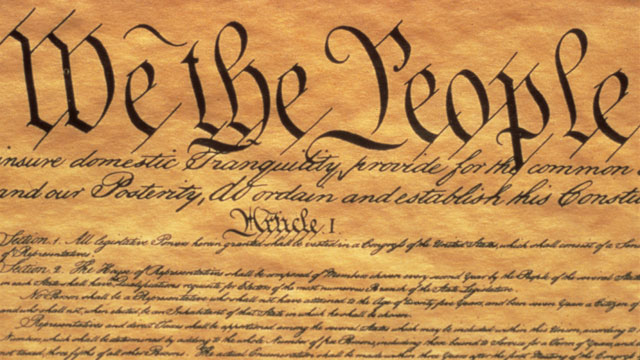
1 constitution

^ it might have been wiser to not have our Constitution be a written one

—- —- —- —-

It was not a given that the document we call “the Constitution” would be a written one. From the decision to make it so follows much of what the Constitution is and does. From it also follow most of the misreadings made by those who evoke it as a political calling cry.

The British have a constitution : but it remains unwritten. (Magna Carta was not, and is not, a British Constitution.) Many other nations have developed without a written Constitution. Not writing the constitution of a nation, state or city avoids the crystallization that comes with writing. An unwritten constitution can change, develop, adapt to the felt needs, era by era, of a society a lot more easily than a written one. (for example : France, from the 6th to the 12th Century, changed enormously, on an ad hoc basis, according to the practicalities of the time; not only did France have no written Constitution, it often had almost no court officials who could read or write.)

We see the difference play upon language itself. English spelling reflects how our words were pronounced at least 600 years ago. The pronunciations have changed as people use the words in speech. No one asks, when he speaks, how am I supposed to pronounce this word or that ? We simply speak as best we feel.

When we read the words upon the pages marked “The Constitution,” we read not the words we speak, but the words varnished and formal. This is true not only of the Constutution. If we sing Episcopal hymns, we sing “thou” and “thee” and all kinds of words written on the hymnal page which no longer get used in speech. Hymnal words have a context of their own, that probably is not the conntext of our actual lives. The same occurs with the Constitution ‘s words and phrases.

This troubling disconnect between the Constitution’s printed words and the words that we actually use in daily life makes for much misapplication. As the Constitution was written in 1787, using words that its framers used ordinarily, many of these words now mean quite differently from what they meant to the men who first put them to parchment 228 years ago.

Responses to this riddle mostly miss the significance hereof. The “originalists” who assert that we should read, and apply, the Constitution as those who framed it deny to us today the validity of the lives we lead, today, according to what we feel the need to do, today, as we go about. Is the Constitution a document for the living, or isn’t it ? Why should the living apply words according to their meaning ten generations ago ? Are not our life trajectories every bit as sacred as the lives of those who faced their life decisions 228 years ago ? The framers did not create a Constitution based on documents written in 1559, after all. Nor did the men of 1559 enact charters using the words of 1331.

The Constitution contains no mention of any religion — though it alows people to practice one, yet Originalists approach the Constitution the way Christians approach the Bible. To believers, the ministry and death of Jesus, whlo lived some 1990 years ago, is the only revelation. But is it reasonabke to believe that our generation is to be denied a Savior appearing among us, now and today ? Are we any less created by the Creator than the people of Jesus’s day ? You can believe, if you like, that God sent his son then and never will do so again, but that belief undermines the creation that believers believe in. In the same way, Originalists deny us today the right to have the Constitution apply to us, today and now.

Faith may benefit from its belief in one Revelation only. For secular human life, the principle cannot stand. Were our Constitution unwritten, the one time only theory would not even arise. Politicians and citizens would apply the rules to meet eigencies as they happen. Why should a written Constitution not enjoy a similar practicality ? The living have every right to work out the societal rules that will govern their lives : who better to do so, than those who will have to live with the rules thus made ?

The Constitution has always expanded, even as the nation it guides has done so. Always in the direction of greater participation, larger equality, more comple commerce. Every Amendment has widened the Constitution’s sanctions — with only one exception, Prohibition, whose 1933 repeal confirms the law of Constitutional expansion. I see no time at which the Cionstitution will cease to so expand. After all, its stated purpose is “to promote the general welfare” — a mission every word of which is basic.

The welfare that the Constittion promotes generally is the welare of those who live in it. Just as today the Constitution must mean what today’s citizens read it to mean, so tomorrow will the Constutuon mean something a bit else. This is what it must do, if it is to remain trusted by the living people — now and in futuro — whose political arrangements it professes to guide.

—- Mike Freedberg / Here and Sphere

THE ISOLATED WORLD OF BABY BELLA

Bella-Bond

^ Bella Bond, a life in isolation ending anonymously

—- —- —- —-

We in Boston are all upset to the max to discover that “baby Doe” lived immediately among us, next doot to neighbors whose kids played with her one day and then not the next. We are shocked to find that “Baby Doe,” now identified as Bella Bond, was killed at home, next door to those neighbors who, with her picture posted everywhere by police seeking to find out who she was, never said a thing; never said “I know that girl !”

Unfortunately, the world in which children like Bella Bond live doesn’t operate as we wish. Dysfunctional families such as Bella’s mother’s live isolated. We can see them on the street; we can live next door; we can play with their kids or say “hi” to the mother, and none of it dents the isolation that I am talking about.

Isolation isn’t merely a skin rash of dysfunctional life; it is central to it. People like Bella Bond’s mother may dwell in addiction; they may live from Food stamp day to food stamp day; they often swerve from one behavioral eruption by their child to the next; or they may be visited by social workers from DCF and ground to bits by DCF administrative procedures. Or they may experience all of the above, for long periods of time. Boyfriends may visit — often dysfunctional themsleves, here today and gone tomorrow, and, while visiting, experiencing the child as an annoyance. A dysfunctional parent often can’t wiat to be free of a child’s constant need for attention — aggravated in a dysfunctional home, where the parent sometimes wants to party, or sleep, or go do drugs : anything that will free her from being lashed to her child. (Note that while i use the proun “her,” the same dysfunction applioes to d ads as well as to moms like Bella’s.)

I could go on for several dozen pages listing the incidebts of conflict, avoidance, disorganization, and obstruction that dysfunctional people swim in. What they all add up to is isolation. Together, conflict — obstruction — disorganization — and avoidance envelop the entire lives of dysfunctional people; indeed, they solifify the dysfunction, isolating a person from the opposite world, the world of order, purpose, breathing room, agreement.

It is hard for a dysfunctional person’s neighbor to grasp that the neighbor lives in a world opposite. All too easy it is to simply assume that that person is having a hard time, or “going through a stretch,” such as we in our own, orderly lives, sometimes do. It’s difficult to see that a dysfunctional person’s “hard time” is, for them, the way it is. Our difficulty at grasping this situation confirms the isolation of dysfunction.

Neighbors of a person living in dysfunction isolation are, after all, neighbors only. They’re not family members. Most neighbors do not mind the business of other neighbors. Many may live in dysfunction themselves. Thus the dysfunctional neighbor becomes just another neighbor, someone whose ways one accepts day by day as life goes on.

We who now express shock about Bella Bond going identified may very well be going unaware of some other child missing or mistreated right under our noses. And we won’t know until something ahppens and the news announces it to us in print or on televsion. So let’s not be judgmental about the Maxwell Street neighbors who did not spring into action as we say we would have done.

It turns out that, according to news reports, Rachelle Bond was well known to police as a drug user and prostitute. DCF had been involved in her life before. We might like to think that this history is exceptional; but it isn’t. It’s commonplace.

As for the thousands of kids who are very likely living in homes as dysfunctional as the Bonds — kids maybe unwanted, fathered by a prostitute’s johns — what of them ? DCF cares for as many as are brought to its attention; but as we all have read recently, DCF does not have either the systemic efficiency or manpower availability to monitor every child brought to its attention. Nor will it ever; because DCF, no matter how effective we make it, cannot live 24-7 with each child, nor would our society condone such administrative imposition on family primacy.

Nor should we. Our society charges parents with caring for children. A person who makes the decision to give birth to a child should, says our society, care for that child as he or she grows to adulthood; it is right and proper that parents be parents and not merely vehicles for birthing. Which responsibility only works if our society grants parents full moral leeway to make these decisions and carry out this mission as free as we can make it of interference by government.

That parents sometimes do not, or by way of dysfunction cannot, do what we give them full freedom to do is the price our society pays — and is right to pay — for sanctioning the primacy of parenting.

—- Mike Freedberg / Here and Sphere

UNION ORGANIZING OF SERVICE WORKERS BOOSTS THE ECONOMY

Target

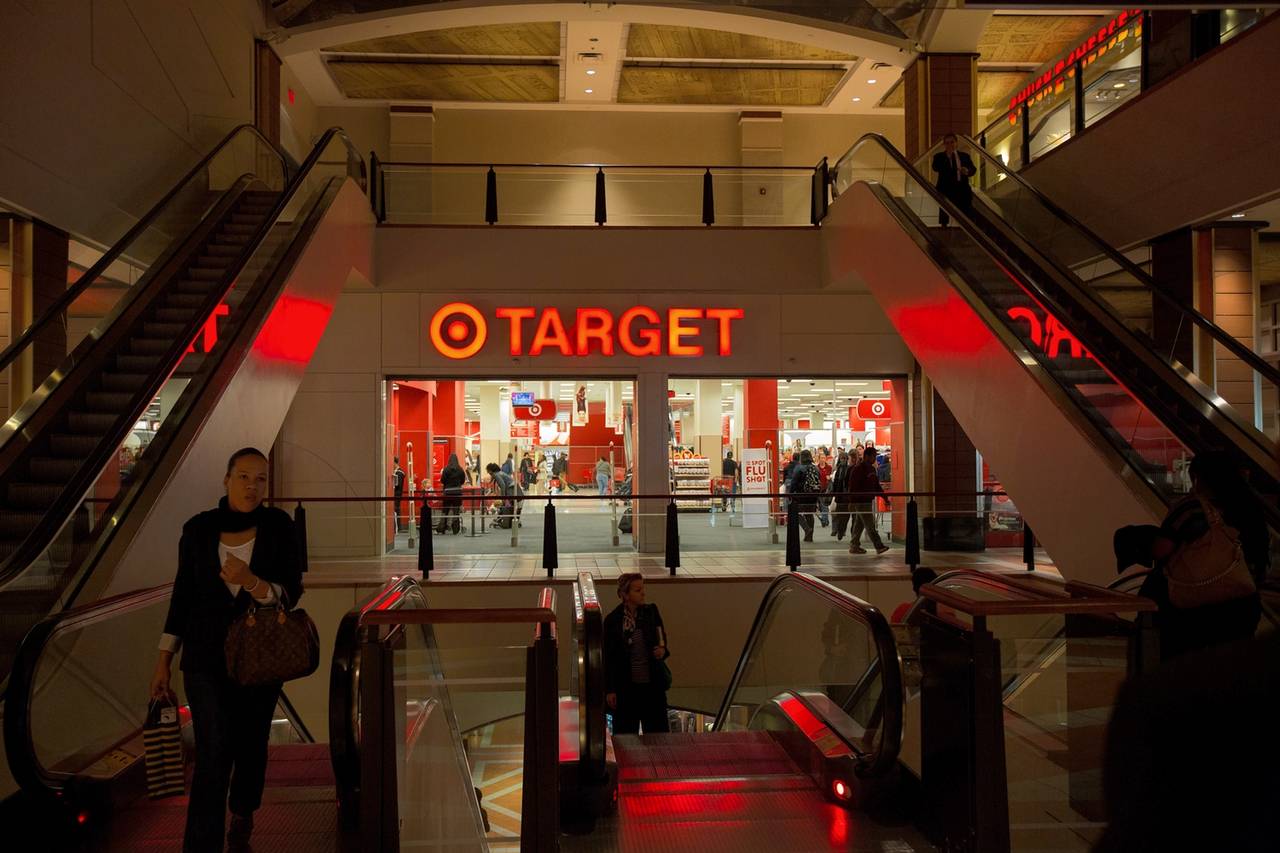
^ Target workers vote to unionize in search of higher pay and better benefits

—- —- —- —-

News comes today, via the Wall Street Journal, that workers at a Brooklyn-location Target store have voted to join a union. They join a growing number of retail and fast food service workers who are unionizing in search of higher pay — maybe even much higher. I applaud their effort.

A link to the story : http://www.wsj.com/articles/target-workers-at-brooklyn-store-vote-to-join-union-1442445420

I have editorialized several times in favor of raising the minimum legal wage to $ 15.00 an hour here in Massachusetts. I see service worker organizing as crucial to that policy goal. I even prefer it, because a one-size minimum wage isn’t as efficient as a union bargain. A $ 15.00 minimum wage may be too small for some cities, such as Boston, and maybe too generous for others. Union bargaining store to store can achieve a wage more effectively location-based.

Retail and service workers have for too long been paid far too little. many have needed taxpayer-funded public assistance merely to get by. Workers in that situation cannot participate in the discretionary economy, the chief locus of economic growth. (the other engine of economic growth is immigration. More about that later.) Unionized service workers can more effectively. bargain for useful incomes than workers on their own, and they should be encouraged to do so,not only in order to spend into the discretionary economy but also to boost the esteem in which the public holds service workers. There is no objective reason why service work should be judged inferior to managerial work. The chief cause is income. Low paid workers can’t socialize at restaurants and pubs as readily as high paid workers and thus become socially isolated. We tend to look down upon those we see only in a crowd, passing, or behind a service counter. It’s completely different if the person who serves us at a service counter someone we know and socialize with.

I support unionizing service workers for both reasons : enabling such workers into the discretionary economy and boosting the respect in which service workers are held.

The second reason also has economic consequences. Those whom we respect, we do socialize with. The wider the circle of respect, the larger the party we can gather, at a pub or restaurant, or at a golf course, or on a trip, all of which means money is being spent into the economy.

The results that I support do mean important changes in the way businesses are governed., For smaller businesses and the privately owned, workers must be considered a major business asset, not a burden or a cost. As higher paid workers are more loyal and more enthusiastic, they help a business to avoid the vast costs and time wastes occasioned by high employee turnover. This holds true for large, publicly traded businesses as well, but the large issue here is that stockholders of such businesses can no longer be free to impose short-term earnings results in search of rapid speculative arbitrage. (Donald Trump, oddly enough, has it exactly right when he criticizes hedged fund speculation;’s ruinous impact on business operations.)

Some businesses complain about having these changes imposed on them, but their plaints fall flat. How can improving a worker’s ability to buy stuff be bad for any business ?

I briefly mentioned immigration  as a vital source of economic growth. This isn’t difficult to see. Every immigrant, no matter how he or she got here, is a customer. The more customers a business has, the bigger it grows. Immigration does not merely grow our economy; it created it. Immigration created America. To impede immigration is to impede us.

Many accusations are hurled at immigration; one that merits a response is the claim that immigrants take jobs that Americans already here would otherwise get. I oppose this claim. Immigrants do not take existing jobs, they create jobs that didn’t exist : working in businesses serving the immigrant community itself; doing work that other workers won’t do, such as cleaning toilets at 5;00 o’clock in the morning and picking crops at farms; as language interpreters and community information centers. Immigrants also create new businesses — indeed, more new businesses than are started by Americans already here.

But it is true that many immigrants work in regular service jobs that people already here might take. As I see it, tahts’ a problem that boosting service wofrkjers’ income can relikeve. As service workers gain more income, their spending into the discretionary income boosts businesses and thus creates jobs that Americans already here can get hired for.

I don’t say that boosting the income of service and retail workers will bring Nirvana. But it sure will boost then economy for lots and lots of people who are waiting to see their own economies improved. Let’s support service workers as they unionize to bargain better wages and benefits.

—- Mike Freedberg / Here and Sphere

THE ISSUE : RIDE-SHARING AND ITS CHALLENGES

Bill Evans

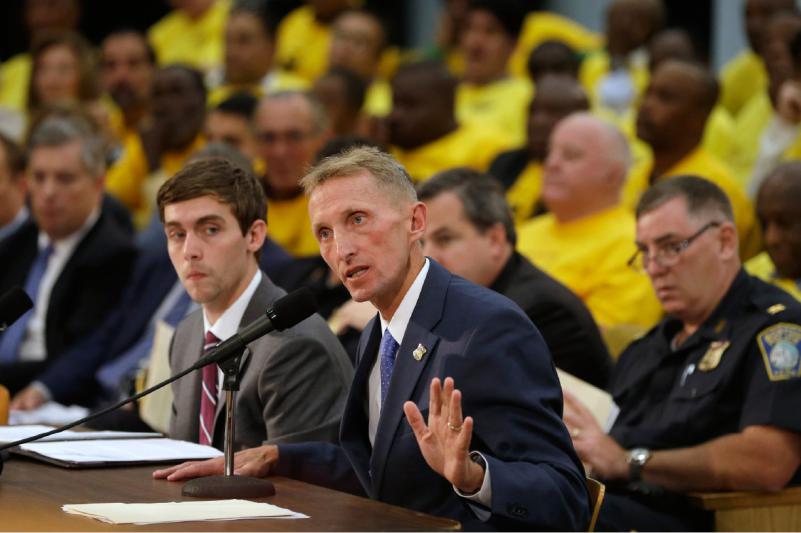
^ Boston Police Commissioner Bill Evans testifies — for tough ride share legislation — at yesterday’s ride-share legislation hearing

—- —- —- —-

We whole-heartedly support ride-sharing, as a concept and as a business. In case you haven’t been living in the real world these past two or three years, ride-sharing businesses have now become the ride hire of choice for a growing number of city denizens. One accesses ride sharing via smartphone applications, Uber and Lyft being the best known. Ride sharing costs less than standard taxi fares and is far easier to call upon. No need to stand on a busy sidewalk, outstretch your arm and yell “taxi !” in hopes — often vain — that such taxi will be empty and will stop. You simply call the ride share firm by phone application, make request, and — voila !

Standard taxi operations are not taking this transport revolution well. Instead of adapting to the new paradigm, they are protesting it. That’s highly unlikely to work.

Ride-sharing does present difficulties, as does any new methodology. Uber and Lyft users want to know that the driver who picks them up is not a criminal or a weirdo. Ride share vehicles must carry significant insurance. The vehicles have to be inspected, just as do any vehicle registered upon Massachusetts roads. Horror stories have arisen about ride share pricing : in busy times, so the anecdotes have it, ride prices explode upward — so-called “surge pricing.” If true, .the state ought to curb the practice. (see our argument below.)

In April, Governor Baker filed detailed legislation to regulate ride share firms. You can access the proposal here http://www.mass.gov/governor/legislationexecorder/legislation/oversight-of-transportation-network-companies.html

State Senator Linda Dorcena Forry and State Represented Mike Moran have submitted a much more onerous regulation bill. You can read its provisions and the legislators’ arguments here : http://www.bostonglobe.com/opinion/editorials/2015/08/05/why-want-regulate-uber/VpzJVS6OEteQAnt2Ss8AAJ/story.html

Which bill do we support ? Probably a bit of both.

We support the Forry-Moran bill’s call to have ride share drivers background checked under the same regulations now imposed on taxi livery, and train operators. It seems needlessly complex to write two separate background regulations into law.

However, we support the Baker bill in most other aspects. The Forry-Moran bill calls for ride share vehicles to be accessible to disabled people. This is an admirable goal; but imposing it on every private vehicle used for ride shares — and almost all ride share vehicles are private — would eliminate almost every vehicle now used for ride shares. Baker’s bill also addresses the issue of surge pricing : ride share prices will, under his legislation, be overseen by the DPU. Ride share firms say that surge pricing induces more people to offer ride shares in peak traffic times, so that those calling for rides don’t have to wait long. I don’t see it. Retailers hold sales, but they don’t do rush-time price hikes. It’s enough that peak usage hours offer more customers and thus more fares for Uber and Lyft drivers.

As for the insurance requirement of both the Baker and Forry-Moarn proposals, I agree that requiring individual drivers to buy $ 1,000,000 of commercial-price insurance is a deal breaker. What individual driver can afford $ 10,000 for insurance ? Requiring it will restrict ride share drivers to only the well off. In my opinion, insurance for ride share drivers should be carried, as a blanket policy, by the companies for which ride share drivers drive. After all, the companies have almost no other costs except for technology administration, marketing, and server fees. They’re cash cows.

As for the standard taxi industry, it probably has to reconfigure and become, in effect, itself a ride share business. Otherwise it will be as gone in a few years as the horse and buggy by 1940. I read that some taxi drivers are now choosing to be Uber or Lyft drivers instead. I can’t blame them, and why shouldn’t they ? The system, of day leasing cabs from medallion owners, with all of the abuse and manipulation that seems to accompany it, cannot go on, and should not go on. If that means that medallions, for which big money was paid before, now become almost worthless, so be it. The market rules its own.

—- Mike Freedberg / Here and Sphere

THE TRANSPORTATION QUAGMIRE

shuttles

^ future T service : biotech companies split the cost of shuttling employees from one facility to another

—- —- —- —-

It was suggested, in a recent Shirley Leung column in the Boston Globe, that businesses may have to pony up a big part of what the MBTA fix will cost. Keep that suggestion in mind as I outline to you the quagmire of our transportation systems.

Fixing the T may just be the simpler part of the clean-up. The legislature enacted every crucial systemic reform. Innovation is here. Management is trying stuff out — using Keolis’s non-performance fines to hire additional fare-collecting commuter rail staff is one such. The MBTA employees’ pension trust is being reconfigured to align with the pension system that oversees other state employees’ retirement. Tracks, signals, and switches are well on the way to optimal condition. Low-usage bus runs are being outsourced to low-cost operators. Bus and transit departures are being closely monitored for on-time performance. Missed runs, too.

Even the present Green Line extension through Somerville to West Medford poses no conflict. The sole issue is cost overruns. Procurement and design issues have arisen, as they must when transit costs fall under pressure. Still, the extension cannot be set aside; Somerville and Medford have committed their municipal planning to it.The process issues raised will have to be addressed the next time an expansion of T service arises..

Paying for all of this still includes comprehensive system reform. Is it really possible, as this photograph suggests, that bus supervisors track buses on paper ? in 2015 ? The T must update — big time –what Juliette Kayyem in last year’s Governor race called “data management.” Money ? yes, it will require money. Properly accounted for money.

FullSizeRender

^ garage supervisor monitors T buses … by paper ?? Really ? (photo via Jed Hresko)

What about roads and bridges ? Here we face an additional difficulty : some roads and bridges are municipal responsibilities, others the State’s. Massachusetts has 351 cities and towns. That means there are 352 government entities overseeing the upkeep of highway transportation. Or maybe more : because the State’;s highway brief includes the very separate Massachusetts Turnpike Authority, with its own funding system and day to day management.

Which brings me to the bottom line subject of this editorial : how do we pay for the transportation systems that we need ?

If only transportation funding were simple, one size fits all. It isn’t :

  1. tolls pay for the Turnpike and for Boston’s bridges and tunnels.
  2. fares pay part of the cost of operating the T and commuter rail
  3. highway bonds fund most of the State’s highway responsibilities.
  4. Federal funds pay a significant part of T expansion
  5. the State’s Local Aid fund, by which money from the Lottery goes to cities and towns, pays for highways and bridges that fall under municipal responsibility
  6. local aid also pays for much snow removal work and tidal flooding clean-ups. Beyond that, Federal disaster funds sometimes help.
  7. taxpayer dollars, much of it via the State’s gas tax, pay for some highway maintenance and T operations.

Seven payment streams, and it’s still not enough. Nor does it look as though there’s much logic to proposed alleviations. A coalition of progressive-politics advocacy groups seek to place on the November 2016 ballot a two-tier tax — which would require a Constitutional Amendment — earmarking to transportation (and education) the additional tax money they hope to raise. Even assuming this proposal becomes adopted, there is no certainty that the additional money will in fact pay for transportation costs. Tax revenues coming into the State’s coffers aren’t differentiated, and I do not see any feasible method for marking which tax dollars arise from the two tier tax and which not.

Thus the solution proposed by Shirley Leung.

As Leung points out, businesses already pay for some transportation means. Many businesses operate shuttles to take workers from one facility to another. Massport operates shuttles to and from Logan Airport. And then there’s Steve Wynn, who, says Leung has offered to pay for transporting customers to and from his casino.

I think we should run with this idea. Why shouldn’t businesses pay into the T’s operations costs ? Without an optimum T operation, businesses suffer, as workers take longer to get to work and as customers take longer as well. And if business payments lead to discussing funding entire transit routes, or creating and funding news ones, why not ? We already have Uber and Lyft transforming the taxi concept. Why not businesses transforming at least part of the transit operation ?

That prospect, of course, leads to confrontation with the Carmens’ Union and the Pacheco Law.  But there’s no way around the huge transportation cost quagmire. We must have a workable, diverse transportation system, and it costs money to operate. Somebody has to pay for it, and he who pays should have the authority to decide.

In any case, business paying for ad hoc transportation service seems to me a very smart idea.

My guess is that it will take at l,east 20 years to accomplish reconfiguration of the State’s transportation operations in such fashion that nobody loses his or her job even as methods of transport and payment for them change drastically. Am I optimistic that we can actually do this ? Yes I am. Governor Baker, Speaker DeLeo, and even Senate President Rosenberg seem ready to not be deterred. Neither man will hold power for anything like 20 years, but each will hold it long enough to render clkean-up of the quagmire unstoppable.

I hope.

—- Mike Freedberg / Here and Spherer

MASSACHUSETTS MUST ENACT FULL TRANSGENDER CIVIL RIGHTS

speaker_deleo_240grace sterling stowell

^ ( Left) Speaker DeLeo, at signing ceremony for the 2011 law; (right) Grace Sterling Stowell and Nancy Nangeroni, leaders in the fight to establish full civil rights protection for transgender people in Massachsuetts

—- —- —- —-

Four years ago Massachusetts joined the list of states according transgender people some civil rights protection. The law banned discrimination in housing. employment, lending, and public education.

Left out of the law, however, were “public accommodations” protections. Transgender people could still be denied service in stores and restaurants — indeed, all manner of public places. This omission now needs to be remedied. Transgender people cannot have fewer civil rights than the rest of us.

It has been the custom, rigidly, to see people as male or female, irrevocably, to the extent that a gender identity is socially imposed on you in all that you do. That custom is now seen to be mistaken. Gender identity is not perforce a subject for imposition; rather, it belongs to the arena of affirmation.

To put it quite simply : you are who YOU say you are, not who other people say you are.

During the past year, the fact of transgender has become commonplace. Not too long ago, the notion of transgender was strange and quite uncommon to see. Today we know, as a society, that transgender people are just like the rest of us in every aspect that matters.

The Boston Globed reports today that support for assuring public accommodations protections for transgender people is increasing smartly; that many businesses now want our transgender civil rights law amended to include such protections. (This growing support accords with the editorial that we at Here and Sphere wrote yesterday about “business progressivism” as an important new force in our nation’s politics.) The Globe also notes that State Senate President Stan Rosenberg supports amending the law and that members of the House support it as well.

Whether our state will enact this measure of social justice is now up to Speaker DeLeo. So far he has not decided. Nor has Governor Baker, who, according to the Globe, “prefers” the current law. That’s an interesting choice of verbs. Baker does NOT say he would veto the amendment if it reaches his desk. The implication is that if it reaches him, he will sign it, his “preference” notwithstanding.

Baker’s diffidence arises from his awareness that almost the entire House’s GOP 2011 membership opposed passage of the transgender rights bill; and that some vocal activists still oppose transgender rights. Baker does not want a fight with the House GOP caucus on an issue which, to him, as a social progressive, should not be an issue at all.

So : will the amended transgender rights bill reach Baker’s desk ? The finger of fate points directly at Speaker DeLeo. It’s his call. 123 of the House’s 160 members are Democrats — a super-majority. If DeLeo, a Democrat himself, supports the law, it passes and gets signed. If not, not.

Speaker DeLeo boasted of his support for the 2011 law. At the signing ceremony he said : “As my very first event as Speaker of the House, I went to the MassEquality dinner, and I had made a statement that we were going to get this done . . Henceforth, we as a Commonwealth will not have to tolerate hatred . . . I’m so proud to be part of such an important civil rights milestone.” Will the Speaker now finish the job that he had such an important part in beginning ?

We urge the Speaker to support this important grant of civil rights protection to our transgender neighbors, friends, and family. There’s a hearing on the proposed amendment this Thursday at the State House. Supporters should attend.

—- Mike Freedberg / Here and Sphere.

NASHVILLE ELECTS A MAYOR

1 Megan Barry

^ Nashville, Tennessee’s new Mayor :Democrat Megan Barry, a business progressive

—- —- — —

We all know what Nashville is : the capital of Country Music. That it is; but Nashville also exemplifies the politics of urban America, and political Nashville is the topic today.

On Tuesday the city elected its first female Mayor, Megan Barry, currently an at Large city Councillor, who voices a combination much more powerful in the nation’s political life than observers realize : business progressivism.

Barry, according to the New York Times report (see the link below), supports marriage equality, a raised minimum wage, and women’s health care rights. Significant business community support boosted her vote already strong in a city hosting not only Country Music but also Vanderbilt University, Fisk college, and a growing population of technology workers.

To read the New York Times article in full, click here : http://www.nytimes.com/2015/09/13/us/nashvilles-mayor-elect-finds-path-between-liberalism-and-commerce.html?_r=0

In the article you find a story that isn’t as uncommon as casual observers may think. Business has taken a leading role in fighting the recent tide of religion-based discrimination. In the past twelve months we’ve seen business overturn a discrimination law in indiana; prevent one in Louisiana; and turn back such a law in Arizona. Here, too, in Boston, businesses large and small have moved to the forefront of civil rights causes. it was no surprise to see business groups provid ing a huge majority of the marchers in Boston’s 2015 Pride Parade; and the same has been true in the small, but nationally iconic, city of Salem, where as we all know, hundreds of people in 1692 were accused of witchcraft and twenty were hanged.

Businesses and city basing more and mire, as the most technologically advanced workers, and their start-ups, congregate in cities to live; to work, buy, socialize, and educate. This is happening in the South just as much as it is elsewhere in America. For City businesses and their millions of workers, progressivism and capitalism form an obvious partnership. The car-less life, the twelve hour work day and six hour play day, the expensive meal, the entertainment lifestyle, artistic ambience, and crowded accommodations epitomize enterprise in all things. call it a “business lifestyle,” you won;t be far wrong.

Businesses want customers. They embrace lifestyle customers — who have plenty of money to spend. Few businesses of any kind care to be seen by any potential customer as unwelcoming. Nor is this a new deal. Businesses fought Jim Crow in the post-Reconstruction South and did so as long as Jim Crow ruled. The infamous Plessy v. Ferguson Case (Supreme Court 163 U.S. 537, 1896), in which a majority of the Court held that “separate but equal public accomodation s were OK, arose becase the Illinois Central Railroad resisted the segregated trains required by a Louisiana Jim Crow law. Businesses also played a key role in stopping the lynch law terror that dominated sveral Southern states from about 1890 to 1920. (Lynching did not end entirely, but never agian did it rule unchecked and even sanctioned.) More recently, long before “equal opportunity employment” became automatic, najor businesses embarced the policy and eforced it.

This is not to say that business in America equates with progressive social and economic policy. Much business politics — arising from individual billionaires in particular — backs regressive agendas, and a few corporations seem wwilling to be governed by religious sanction. But these have nothing like the ground-level, concentrated vote clout wielded by city-based businesses.

In the South, there are more than a few Megan Barrys. Houston, Texas, has a Mayor, Annise Parker, who is female and lesbian. Black Mayors rule many Southern cities. And as we saw during the Charleston, South Carolina shooting tragedy, Mayor Joseph Riley stands as progressive and business oriented as Barry will ever be. Still, the election of Megan Barry is the story of the moment and is, finally, being talked about for what it really is : a coming of age, so to speak, of a politics that is very likely to expand in force and power as the next national election takes place — and beyond. The business progressivism of urban America has a brilliant future in a jobs-expanding South; and in the South — as in the North — almost all of it belongs to the Democratic party.

In the South, this aprtisan condition portends bad days agead for the GOP, which has dominated the region these past 15 years. As the Republican Party more and more embraces voters who live the opposite of urban, and voices agendas that city voters anathemize (and many suburbanites too), elections in much of the South will see Democrats winning again — and more so as elections 2020 and 2024 approach. The era of rural-religion politics is coming to an end.

—- Mike Freedberg / Here and Sphere