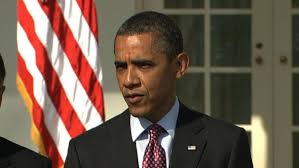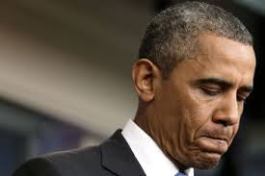
PRESIDENT, 2016 ; EARLY POLLS ALL FAVOR CLINTON and CHRISTIE

Image

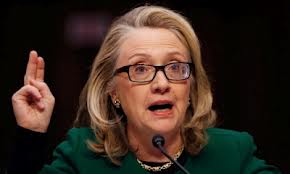
^ Hillary Clinton : beats all opponents

McClatchy Newspapers and Marist have just published a full poll of the Presidential race. It shows that Hillary Clinton beats all challengers, most by double digits:

Clinton v. Chris Christie : Clinton 47 Christie 41
Clinton v. Jeb Bush : Clinton 48, Bush 40
Clinton v. Marco Rubio : Clinton 50, Rubio 38
Clinton v. Rand Paul ; Clinton 50, Rand Paul 38
Clinton v. Paul Ryan : Clinton 53, Ryan 37
Clinton v. Rick Perry ; Clinton 52, Perry 36.

as for the Dem primary, it’s Clinton 63, Biden 13, Cuomo 6.

This poll mirrors those already released by Quinnipiac University and Public Policy polling (PPP). Those polls show Clinton carrying Virginia against all comers and doing the same in iowa and Ohio except against Chris Christie, who ties her in those two states. Clearly, Hillary Clinton right now is the clear favorite to become our next President — If she runs.

Moreover, her huge numbers over Vice President Joe Biden, in the Democratic Primary, make clear that voters do NOT see Hillary as a continuation of the Obama Presidency. Indeed, it appears that they see Hillary as the opposite of him. this is bad news for those GOP pundits who want to assert that after eight years of Obama, it is time for a change. Hillary Clinton IS that change — at least she is how voters see it.

Image
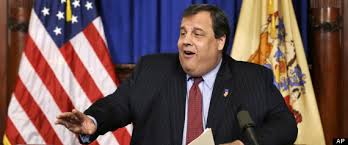
^ Chris Christie : competitive against Clinton and favored by GOP voters

We have also been opining that the above results guaranteed that neither Christie nor Jeb Bush will get the GOP nomination. After all, they run competitively. And to the GOP base, being competitive with a Democrat means compromising with the unthinkable. But the McClatchy/Marist poll of Republican Primary voters indicates that we were wrong. It looks now as though we were wrong. Tea Party loudmouths, fake God preachers, and Tea-district Congressmen may view compromise with Democrats as anathema, but GOP Primary voters appear to favor Chris Christie, whose career has symbolized GOP-Democrat co-operation and mutual respect.

Here is the McClatchy/Marist GOP primary result :

Christie 15
Ryan 13
Rubio 12
Paul 9
Bush 9
Cruz 7

To the GOP loudmouths and haters, Christie is “dead to me.” that is how they talk of him. But to the GOP’s voters, Christie is more alive than any of the other hopefuls, several of whom look rather much like “dead.”

Maybe Chris Christie can do it — win the 2016 GOP nomination. If so, the GOP will be at least useful again to most people — an instrument of policy, not venom.

— Michael Freedberg / Here and Sphere

THE DETROIT BANKRUPTCY IS A STEP OF PROGRESS

Image

^ Detroit : on the move at Movement

Three weeks ago Here and Sphere published Susan Domitrz-Sapienza’s extensively researched story on the comeback of Detroit. As she noted, the economy of “Automobile City” had already reached its bottom and was — and is now — expanding along several lines newly established. The decision of the city’s state-appointed manager to file a Chapter 9 (Municipal) bankruptcy petition would seem, at first, to contradict our reporter’s finding. In fact, the Chapter 9 filing conforms our reporter’s conclusion.

To learn why, one needs to know a bit more about bankruptcy law than the common perception. Most people think of the word “bankruptcy” as the end, a kind of giving up the ghost. This perception is false. There are two kinds of bankruptcy cases. The one that most people think of is “liquidation,” in a liquidation, yes: the petitioner is in fact giving up the ghost — is ending things. There is, however, an entirely different kind of bankruptcy petition : the “reorganization.” In a reorganization filing, the petitioner seeks to restructure its affairs so that they can prosper again. All municipal, Chapter 9 filings are reorganizations.

The reorganizing petitioner seeks to — must — present a reorganization PLAN to the bankruptcy trustee appointed to the case, for approval by its creditors, the Trustee, and the Court. So,me corporate reorganizations fail, but a municipal reorganization cannot : cities have tax revenues that must be paid, and these are quantifiable. all that a city’s reorganization plan needs to is match tax revenues — and maybe also the proceeds of sales of city-owned real estate — to debts. Clearly, in such reorganization, the city’s creditors (including its pensioners) will probably be offered less than full repayment; and yes, each class of creditors must separately approve the reorganization plan. Many amended plans may be filed. But a city’s revenue can be counted on, and, as a reorganization plan may take up to five years to perform, the city’s revenues over that period are likely to offer creditors a fair return.

In addition, financing is often available to reorganization debtors after they file that was not available before ; because (1) post-filing debt is not included in the bankruptcy and thus is not subject to payment of less than full amount due and (2) the reorganization plan, as it becomes an order of court, makes the city’s post-filing credit standing easy to compute. A Detroit bondholder, for example, can readily exchange pre-filing bonds for post-filing bonds, if such are offered.

So much for the bankruptcy law as it applies to the Detroit filing.

The bigger point is that no bankruptcy petitioner files a reorganization until its finances look promising enough for it to present a feasible Plan. Such is the case with Detroit. Its finances are improving. real estate is selling fast. New businesses are starting up. Chrysler’s Jeep Cherokee plant is booming — as was reported recently in the Bew York Times. The Movement EDM Festival is bringing thousands of young visitors to the city on Memorial day weekend. Artists are setting up shop in Detroit, where rents for lofts are cheaper than cheap. Real estate tax revenues will only increase.

All of which is why Detroit’s bankruptcy filing signals the city’s recovery, not its failure.

—– Michael Freedberg / Here and Sphere

Coffee or Vodka? Parenting 911 SUMMER SAVVY-SUMMER SMART

hereandsphere's avatarCoffee or Vodka?

SUMMER SMART

summer survival kit logo

Dear: Parenting 911

I’m a mother of 2 under the age of 6, my youngest Ari is 3 1/2 years old and Conner-Joel is 5.  Since it is summer — weekend after weekend, I find myself neck-deep in — cook-outs, birthday parties, weddings, family gatherings, and beach/park days. Although most of these should be pure fun  for my little family; I feel as if I’ve headed out on an endless mission. No matter how much I prepare for these events — I still find myself running back home for one thing or another, often more than once — it surely puts a damper on any summer fun that may have ensued. I attempt to plan ahead — but the kids always have me rattled and frenzy-ish before ever leaving the house — causing me to always be unprepared. Since my husband is a Sargent in the military, he is rarely…

View original post 749 more words

Coffee or Vodka? Parenting 911 SUMMER SAVVY-SUMMER SMART

Coffee or Vodka? Parenting 911 SUMMER SAVVY-SUMMER SMART.

AN UNWISE DECISION : THE 4TH CIRCUIT REJECTS “REPORTER’S PRIVILEGE”

Image

^ James Risen : testify or go to jail, says the Appeals Court

We awoke today to find that the Federal 4th Circuit Court of Appeals has overturned a District Court decision that freed New York times reporter James Risen from having to testify in a criminal prosecution by the Justice Department. The Appeals Court has just decided, 2 to 1, that he DOES have to testify.

Risen can, of course, refuse to testify — and go to jail. What a choice.

The case at hand is a trial involving leaked C. I. A. data. shades of Ed Snowden and the “secret’ FISA Court. We know what the Justice department did with that one. But Ed Snowden is not a reporter, and his disclosures are not protected Free Speech. 

The District Court had opined, strongly, that there is, within the First Amendment, a “reporter’s privilege,” by which reporters need not disclose their sources even in the context of a Federal criminal prosecution. The District court argued that to not grant reporters at least some area of “privilege” would crimp free speech itself. For if sources know that the reporter they talk to will have to disclose them, those sources might decide not to talk at all. And thus a story that the reporter has a First Amendment right to publish won’t get published notwithstanding.

The District Court opined that safeguarding the right to publish trumped any governmental interest in having story sources disclosed. We agree with the District Court. We strongly disagree with the Appeals Court’s reversal.

The Risen case is hardly the first one in which the Federal government has forced reporters into jail rather than disclose a source in a criminal prosecution context. The most infamous recent occasion was that of New York Times reporter Judith Miller, who chose jail in 2005 rather than reveal who had disclosed to her that Valerie Plame was a CIA operative. Not until her source voluntarily came forward was Miller released.

All such Federal court deecisions begin with the case of Branzburg v. Hayes, a 5 to 4, 1972 Supreme Court decision (408 U.S. 665) involving a reporter’s refusal to testify before a grand jury. In Branzburg the High Court said :

“The First Amendment does not relieve a newspaper reporter of the obligation that all citizens have to respond to a grand jury subpoena and answer questions relevant to a criminal investigation, and therefore the Amendment does not afford him a constitutional testimonial privilege for an agreement he makes to conceal facts relevant to a grand jury’s investigation of a crime or to conceal the criminal conduct of his source or evidence thereof.”

Ominous it was that the 1972 High Court chose to see the reporter’s refusal to reveal sources as “concealing facts.” The reporter who safeguards a source is not “concealing facts.” Those facts remain factual and can be found by other means. The reporter not revealing his source is, rather, protecting the publishing a story that the public has an interest in — a right to know. If that isn’t a First Amendment interest, what is ?

The Appeals Court now says, “Clearly, Risen’s direct, firsthand account of the criminal conduct indicted by the grand jury cannot be obtained by alternative means, as Risen is without dispute the only witness who can offer this critical testimony.” Is this so ? Is it “clear” ? Is Risen “without dispute the only witness who can offer this critical testimony” ? It is not “clrear’ at all; the source can also testify. And why isn’t anything said to Risen by his source hearsay when testified to by Risen ?

Judge Roger Gregory dissented. His dissent expresses our view too : “Under the majority’s articulation of the reporter’s privilege, or lack thereof, absent a showing of bad faith by the government, a reporter can always be compelled against her will to reveal her confidential sources in a criminal trial,” Gregory wrote. “The majority exalts the interests of the government while unduly trampling those of the press, and in doing so, severely impinges on the press and the free flow of information in our society.”

“The free flow of information.” Indeed. In an era when an Ed Snowden can be pilloried and chased from airport to airport, what is left of “the free flow of information” ? Only that information that the government doesn’t mind us knowing. But the First Amendment was established to protect ALL information, especially and chiefly such information as the powers do not want us to know.

Most often THAT is the information that really MATTERS.

—– The Editors / Here and Sphere

SLAM, FLIRT, AND RUMBLE : GARY BECK @ RISE CLUB 07.20.13

Image

^ Gary Beck : two hands on the wheels

Facing a dance floor so crowded that almost every dance move required shoving, techno hot-shot Gary Beck, making his first RISE appearance, dropped one of the most passionate techno sets this writer has ever attended. Using Traktor with two CDs and one mix-board, Beck imposed his excitations on almost every minute of the music. He mixed with both hands, all the time, often impelled by his body action. Many DJs dance for dancing’s sake at the mix board; Beck made mix moves of his dance moves.

He played mostly his own works; and as he has more than plenty of tracks to his credit, he nowhere near exhausted his crate. His sound is a seductive thing, flaunting ghouls’ smiles and glints of flirt talk. These pop in and out of, or ride alongside, a bottom ramble that has more flesh on its bones than one hears in almost any other techno. At RISE it played out lasciviously : the well-known hit “Diva”; the sentimental glimmer of “Vaag”; the clamor and rapture of “Before the Crash”; and — peak moment — lots of “in your face” girl talk atop the bristling bottoms of “Video Siren.” Plus many more Beck tracks put onto fans since he first came to world-wide attention about five years ago.

Heft and heave are Beck’s action. Set to classic train-ride rhythm narratives — of roll and chug, saunter and strut, his muscle tracks carried the RISE dancers’ bodies along with them. Beck made it feel pleasurable to just move, move, and move; and as he inserted barely a handful of pause breaks into his trip of continuity, the dancers had few opportunities to stop moving. Not that they wanted any.

Beck’s basic DJ move is the quick-cut, a mix  technique first devised back in the disco years, whereby the performer jumps from one track to another without warning — no overlaying, no dissolve, just a leap of faith. Beck’s quick cuts slammed one track’s lift off against the next track’s stride — using the jump mix to ramp up the power of his music. Again and again he quick-cutted beat to voice, voice to beat, and beat to bigger beat. After getting slammed by such an energy burst, the RISE dancers found Beck’s runs of rumble — themselves as heated as most DJs’ mix bursts — almost easy to ride.

Thus it was that Beck’s three hours of slam, flirt, and rumble raised his set from mere music to a peak of body, soul, and spirit; a party so non-stop that few who exercised in it will soon forget. No wonder that the crowd included many local connoisseurs of techno, DJs included. Their being on hand was no mistake.

photo (62)

^ Camilo Serna at the RISE mix-board

Almost as fascinating a performance was Camilo Serna’s set of crunch and rumble. This was Colombian Inependence Day, and many at RISE were there to celebrate with their fellow Colombian as much as to see Beck. Serna wore a studious look, the face and delicate body of a nerd. Twenty years ago, guys who look like Serna would be seen jamming in an indie-rock band. Today they are DJs like Serna, all business at the RISE mixboard, an expression of absolute concentration on his face as he dropped a tangle of ferocious soulful beats.

—- Deedee Freedeberg / Feeling the Music

MEEK AT THE MOVIES —- The Hunt (2.5 STARS)

Image

If you’ve seen Sam Peckinpah’s masterfully macabre “Straw Dogs” (let’s all please agree to forget the far inferior recent remake) then you’re already up to speed on what happens in “The Hunt” : quiet European hamlet; a mindful and reserved intellect with a complex past; slow constant simmer; sexual tension; strong reactions based on false assumptions; and a gentlemanly hunt in the woods serving as a ruse for a deeper more perverse game at hand.

Though the arc, ambiance and elements of the two films bear many acute similarities, the context and articulation could not be further apart. Mads Mikkelsen — whom most US viewers know as Hannibal in the self-titled NBC TV series, or as the European bad-ass who bashed in Bond’s balls in “Casino Royale” — plays Lucas, a quiet man trying to gain some degree of custody of his teen son in the aftermath of a bitter divorce. As a caregiver/instructor at a nursery school, he’s pretty well liked and respected by his peers and his charges — by some, perhaps a little too much. Tow-headed Klara (Annika Wedderkopp) takes his kindness for something more and, after a failed furtive kiss, which Lucas quickly and sternly rebuffs, she becomes angry and tells her parents (who happen to be Lucas’s best friends) and the school head, in vague terms, that Lucas did something to her. Then later, after Klara catches a glimpse of smut on her brother’s iPad and the adults try to further educe from her what exactly transpired, it only takes a few dark slanted inferences for the toxic charge of pedophilia to erupt.

The film directed by Dane Thomas Vinterberg (“The Celebration”), a Dogme 95 compatriot of Lars con Trier, leverages its remote Danish townlet setting where justice is administered by elected elders and enforcement, when needed, comes from somewhere afar, so as the rumor billows and emotions flare. There’s a heated call for immediate action–one that will not wait for outside mitigation– as slices of vigilante retribution begin to rain on the accused. Lucas’s son stands by him, as does his new girlfriend, an immigrant cafeteria worker who’s fearful of losing her job and being deported; but in the end Lucas must stand alone against the amassing throng, and boldly so, not unlike Dustin Hoffman’s nebbish in Peckinpah’s bloody classic.

The niggling to “The Hunt” can’t be put onto Mikkelsen or any of the actors, who are sharp and heartfelt in their roles. Mikkelsen’s rendering of internal turmoil, malaise and depressed entrapment, dutifully echoed by the grim, washed-out primal atmosphere etched by Vinterberg, drives the film with purpose. Still, the logic and the obvious questions not asked by normally rational minds both undermine the overall effort. The premise of a town turned inward by accusation and mob justice is a piquant one, it’s just too bad Vinterberg didn’t bring a more spirited dog to the fight.

—- Tom Meek / Meek at the Movies

AFTER THE TRAYVON MARTIN CASE : GUEST COMMENTS BY RON WYNN OF NASHVILLE, TN

Here and Sphere note —- as aftermath to the Zimmerman case and to President Obama’s dramatic speech, a conversation and then some has begun in America’s Black communities and among commentators. High on our list of cutting edge commentators is Ron Wynn, of Nashville, TN, who speaks out on Being Black in America with an insistence that reminds us of Bill Press speaking out on progressive politics. we at here and Sphere highly esteem both men, but especially Ron Wynn, whom we are honored to call personal friend.

Being Black in America — and the raw topic of black on black violence that is part of the general conversation — are talks that every American of good will should at least listen closely to, maybe even join. Thus the following Guest Editorial shall serve to begin that conversation at Here and Sphere.

Image

^ news commentator Ron Wynn of Nashville, TN

Wynn : “The current issue of Ebony magazine has the third in a continuing series on crime and violence in the Black community, this one focusing on Chicago. Time’s array of articles on race and the Martin verdict include a lengthy column by Philadelphia mayor Michael Nutter on the need for less talk and more action in regards to killings and crime in Black neighborhoods. These on top of a series of columns, essays, and articles I’ve seen on  Black websites ranging from Black Voices and Black America com. to The Root and Black Agenda Report. I mention this only because I still see people saying that no one’s talking about nor cares about crime in Black neighborhoods, and in particular Blacks who kill other Blacks. If you want to believe that, fine, but there’s ample evidence that shows you are incorrect making that statement.me in Black neighborhoods. These on top of a series of columns, essays, and articles I’ve seen

A friend of Wynn’s then commented thus : “This should also serve as a reminder to folks (or a revelation) that Ebony Magazine has dealt with the Black-On-Black crime matter as far back as 1979. I remember and still have this copy of the publication.

WYNN : “There are a few (just a few) truly concerned people in the Black community who honestly haven’t seen these articles or know about the ongoing battles against crime that many have been fighting for years. But much of this rhetoric is standard right-wing deflection stuff, designed to try and quell the anger over the unjust Martin verdict. The people at National Review or on the Wall Street Journal editorial board could care less how many Black people died in Chicago on any weekend.

Wynn also attended a Nashville area protest of the Trayvon Martin / Zimmerman verdict. Here is his report  :

“Incredible experience this afternoon at the Federal courthouse. For almost two hours (actually close to three since I got there 45 minutes early) a diverse crowd that truly represented the spectrum of Nashville got together to hear words of wisdom, inspiration, information and education at the prayer vigil for Trayvon Martin. But it was much more that just a vigil. Speaker after speaker urged all of us to do more than just show up today and go home. Voter registration, community advocacy and citizen participation were repeatedly emphasized, and a host of viewpoints were represented during the event. I was thrilled to see so many of my friends and others I didn’t know by name, but were delighted to see. A truly memorable event.”:

You can (and should) connect to Ron Wynn at Facebook. Meanwhile, Here and Sphere shall be reposting his Facebook reports on Being black in America from time to time as we go forward.

THE GOP DESCENDS TO OBSTACLE STATUS

Image


^ New Hampshire State Senate leader Jeb Bradley (R), point man on blocking 58,000 NH residents from Medicaid insurance coverage.

It is one thing for a political party to disagree with the policies of the party opposite. It is another thing entirely for a political party to offer nothing to voters but obstacles.

News comes this morning that in New Hampshire, a state that borders on Here and Sphere’s home state of Massachusetts, the GOP majority in that state’s legislature is blocking New Hampshire from implementing the Affordable Health Care Act, popularly known as “Obamacare.” Specifically, the GOP legislature is blocking 58,000 currently uninsured New Hampshire residents from joining the 137,000 already receiving Medicaid insurance coverage.

It stuns us that a political party in a democracy, whose prospects depend on the good opinion of voters, would think it had anything to gain by blocking 58,000 uninsured people from obtaining health insurance and thus improving their health. Never mind that to deny people access to proper health care is unconscionable, immoral; does it not make economic sense for people to live healthier lives and thus miss less days of work on account of illness ? Or perhaps become able to work at all ? What conceivable policy objective is gained by blocking this outcome ?

Unhappily, the New Hampshire GOP legislature’s refusal is no unique event. Since September 2008, when the GOP-controlled House tried to block President Bush’s TARP Program — which prevented the collapse of our entire economy — the national GOP, with few exceptions (Chris Christie, Jeb bush, and John McCain especially) has become merely an obstacle. “Block this, stop that.” Stop America from moving ahead. Every act, almost every speech, that the current GOP has made or said defies us : “We will stop you, people, from doing anything to improve your lives.”

NO to sensible gun control legislation. No to pursuong unibversal hrealth care insurance. No to ther food stamp program by which millions of us love. no to women’s pay equity. No to the Treaty on Disabilities. No to President Obama’s nominations to Federal Courts and Federal Agencies. No to immigration reform. No to reforming “stand your ground” laws. No to Voting Rights updates.

No, no, no.

The Federal government ? No to it, too.

Yes only to putting governement into your vagina and into your sex life.

As we said : this is not a policy agenda. This is an obstacle merely. This is contempt, for you and for us.

It has happened in America before, and every time a political party has retreated to obstacle status, it has meant pain and suffering to millions of Americans.

It happened in the 1840s and 1850s, when slavery was the obstacle. It took a Civil War and 750,000 deaths to unblock that one.

It happened in the 1920s, when business tycoons and their political mouths blocked anti-union legislation; and again in the 1930s when a reluctant Supreme Court blocked FDR’s New deal reforms.

It happened from 1880 to the 1960s, when Southern Democrats blocked all attempts to making lynching a Federal ctime and to accord Black Americans the voting rights and other civil rights that we thought that the grievous Civil War had won.

It took almost 85 years of injustice, torture, killing, and intimidation before finally that block was removed.

How long will it take America to remove the many blocks set up by the current GOP ? How many Americans will suffer and even die because ? Only time will tell. Hopefully it will not take almost a century to remove the block THIS time.

Meanwhile, 58,000 New Hampshire residents wait for health care insurance and the healthier, more fruitful life that we all want.

—- Michael Freedberg / Here and Sphere

THE PRESIDENT’S SPEECH ON RACE IN AMERICA

Image

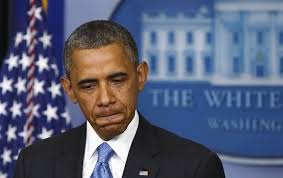
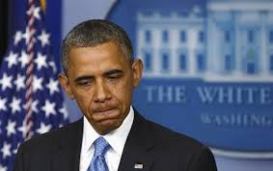
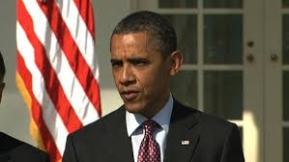
President Obama gave an unscripted, 18 minute speech yesterday, on race relations, race perceptions, and racial injustice in America as they live on today, 50 years after Martin Luther King’s “I Have a Dream” speech. It was a speech that touched us at Here and Sphere to the core; it spoke to our soul and to yours. In it the President laid bare the fear and discouragement that black men feel every day as others make clear their wariness of Black men’s presence.

It is horrific to go about knowing that people fear you; that they assume that your presence is a menace. It collapses one’s soul, wounds one’s dignity, cripples one’s confidence. It makes one angry, bitter, determined — not always in a positive way; and this is very understandable. you would react the same.

The specific occasion for the President’s words was People v. Zimmerman. Not the verdict, not even the evidence and testimony, most of it garbled or amateurishly handled. What occasioned the President speaking was simply that the entire mindset which gave rise to the Zimmerman case should never, ever have taken place. Not the profiling of Trayvon Martin, not Zimmerman’s disregard for police advice, not the tracking of Martin. None of which was justified in any way whatsoever. A young man going about his peaceful business was killed as a result.

People, we must do better. We must rid OURSELVES of the fears that corrode us and injure men of color. The President said it all, eloquently as he has ever spoken of it; his speech should be required reading for every American, young and old. To that end, we reprint it entire, as follows :
Image

THE PRESIDENT: “I wanted to come out here, first of all, to tell you that Jay is prepared for all your questions and is very much looking forward to the session. The second thing is I want to let you know that over the next couple of weeks, there’s going to obviously be a whole range of issues — immigration, economics, et cetera — we’ll try to arrange a fuller press conference to address your questions.

The reason I actually wanted to come out today is not to take questions, but to speak to an issue that obviously has gotten a lot of attention over the course of the last week — the issue of the Trayvon Martin ruling. I gave a preliminary statement right after the ruling on Sunday. But watching the debate over the course of the last week, I thought it might be useful for me to expand on my thoughts a little bit.

First of all, I want to make sure that, once again, I send my thoughts and prayers, as well as Michelle’s, to the family of Trayvon Martin, and to remark on the incredible grace and dignity with which they’ve dealt with the entire situation. I can only imagine what they’re going through, and it’s remarkable how they’ve handled it.

The second thing I want to say is to reiterate what I said on Sunday, which is there’s going to be a lot of arguments about the legal issues in the case — I’ll let all the legal analysts and talking heads address those issues. The judge conducted the trial in a professional manner. The prosecution and the defense made their arguments. The juries were properly instructed that in a case such as this reasonable doubt was relevant, and they rendered a verdict. And once the jury has spoken, that’s how our system works. But I did want to just talk a little bit about context and how people have responded to it and how people are feeling.

You know, when Trayvon Martin was first shot I said that this could have been my son. Another way of saying that is Trayvon Martin could have been me 35 years ago. And when you think about why, in the African American community at least, there’s a lot of pain around what happened here, I think it’s important to recognize that the African American community is looking at this issue through a set of experiences and a history that doesn’t go away.

There are very few African American men in this country who haven’t had the experience of being followed when they were shopping in a department store. That includes me. There are very few African American men who haven’t had the experience of walking across the street and hearing the locks click on the doors of cars. That happens to me — at least before I was a senator. There are very few African Americans who haven’t had the experience of getting on an elevator and a woman clutching her purse nervously and holding her breath until she had a chance to get off. That happens often.

And I don’t want to exaggerate this, but those sets of experiences inform how the African American community interprets what happened one night in Florida. And it’s inescapable for people to bring those experiences to bear. The African American community is also knowledgeable that there is a history of racial disparities in the application of our criminal laws — everything from the death penalty to enforcement of our drug laws. And that ends up having an impact in terms of how people interpret the case.

Now, this isn’t to say that the African American community is naïve about the fact that African American young men are disproportionately involved in the criminal justice system; that they’re disproportionately both victims and perpetrators of violence. It’s not to make excuses for that fact — although black folks do interpret the reasons for that in a historical context. They understand that some of the violence that takes place in poor black neighborhoods around the country is born out of a very violent past in this country, and that the poverty and dysfunction that we see in those communities can be traced to a very difficult history.

And so the fact that sometimes that’s unacknowledged adds to the frustration. And the fact that a lot of African American boys are painted with a broad brush and the excuse is given, well, there are these statistics out there that show that African American boys are more violent — using that as an excuse to then see sons treated differently causes pain.

I think the African American community is also not naïve in understanding that, statistically, somebody like Trayvon Martin was statistically more likely to be shot by a peer than he was by somebody else. So folks understand the challenges that exist for African American boys. But they get frustrated, I think, if they feel that there’s no context for it and that context is being denied. And that all contributes I think to a sense that if a white male teen was involved in the same kind of scenario, that, from top to bottom, both the outcome and the aftermath might have been different.

Now, the question for me at least, and I think for a lot of folks, is where do we take this? How do we learn some lessons from this and move in a positive direction? I think it’s understandable that there have been demonstrations and vigils and protests, and some of that stuff is just going to have to work its way through, as long as it remains nonviolent. If I see any violence, then I will remind folks that that dishonors what happened to Trayvon Martin and his family. But beyond protests or vigils, the question is, are there some concrete things that we might be able to do.

I know that Eric Holder is reviewing what happened down there, but I think it’s important for people to have some clear expectations here. Traditionally, these are issues of state and local government, the criminal code. And law enforcement is traditionally done at the state and local levels, not at the federal levels.

That doesn’t mean, though, that as a nation we can’t do some things that I think would be productive. So let me just give a couple of specifics that I’m still bouncing around with my staff, so we’re not rolling out some five-point plan, but some areas where I think all of us could potentially focus.

Number one, precisely because law enforcement is often determined at the state and local level, I think it would be productive for the Justice Department, governors, mayors to work with law enforcement about training at the state and local levels in order to reduce the kind of mistrust in the system that sometimes currently exists.

When I was in Illinois, I passed racial profiling legislation, and it actually did just two simple things. One, it collected data on traffic stops and the race of the person who was stopped. But the other thing was it resourced us training police departments across the state on how to think about potential racial bias and ways to further professionalize what they were doing.

And initially, the police departments across the state were resistant, but actually they came to recognize that if it was done in a fair, straightforward way that it would allow them to do their jobs better and communities would have more confidence in them and, in turn, be more helpful in applying the law. And obviously, law enforcement has got a very tough job.

So that’s one area where I think there are a lot of resources and best practices that could be brought to bear if state and local governments are receptive. And I think a lot of them would be. And let’s figure out are there ways for us to push out that kind of training.

Along the same lines, I think it would be useful for us to examine some state and local laws to see if it — if they are designed in such a way that they may encourage the kinds of altercations and confrontations and tragedies that we saw in the Florida case, rather than diffuse potential altercations.

I know that there’s been commentary about the fact that the “stand your ground” laws in Florida were not used as a defense in the case. On the other hand, if we’re sending a message as a society in our communities that someone who is armed potentially has the right to use those firearms even if there’s a way for them to exit from a situation, is that really going to be contributing to the kind of peace and security and order that we’d like to see?

And for those who resist that idea that we should think about something like these “stand your ground” laws, I’d just ask people to consider, if Trayvon Martin was of age and armed, could he have stood his ground on that sidewalk? And do we actually think that he would have been justified in shooting Mr. Zimmerman who had followed him in a car because he felt threatened? And if the answer to that question is at least ambiguous, then it seems to me that we might want to examine those kinds of laws.

Number three — and this is a long-term project — we need to spend some time in thinking about how do we bolster and reinforce our African American boys. And this is something that Michelle and I talk a lot about. There are a lot of kids out there who need help who are getting a lot of negative reinforcement. And is there more that we can do to give them the sense that their country cares about them and values them and is willing to invest in them?

I’m not naïve about the prospects of some grand, new federal program. I’m not sure that that’s what we’re talking about here. But I do recognize that as President, I’ve got some convening power, and there are a lot of good programs that are being done across the country on this front. And for us to be able to gather together business leaders and local elected officials and clergy and celebrities and athletes, and figure out how are we doing a better job helping young African American men feel that they’re a full part of this society and that they’ve got pathways and avenues to succeed — I think that would be a pretty good outcome from what was obviously a tragic situation. And we’re going to spend some time working on that and thinking about that.

And then, finally, I think it’s going to be important for all of us to do some soul-searching. There has been talk about should we convene a conversation on race. I haven’t seen that be particularly productive when politicians try to organize conversations. They end up being stilted and politicized, and folks are locked into the positions they already have. On the other hand, in families and churches and workplaces, there’s the possibility that people are a little bit more honest, and at least you ask yourself your own questions about, am I wringing as much bias out of myself as I can? Am I judging people as much as I can, based on not the color of their skin, but the content of their character? That would, I think, be an appropriate exercise in the wake of this tragedy.

And let me just leave you with a final thought that, as difficult and challenging as this whole episode has been for a lot of people, I don’t want us to lose sight that things are getting better. Each successive generation seems to be making progress in changing attitudes when it comes to race. It doesn’t mean we’re in a post-racial society. It doesn’t mean that racism is eliminated. But when I talk to Malia and Sasha, and I listen to their friends and I seem them interact, they’re better than we are — they’re better than we were — on these issues. And that’s true in every community that I’ve visited all across the country.

And so we have to be vigilant and we have to work on these issues. And those of us in authority should be doing everything we can to encourage the better angels of our nature, as opposed to using these episodes to heighten divisions. But we should also have confidence that kids these days, I think, have more sense than we did back then, and certainly more than our parents did or our grandparents did; and that along this long, difficult journey, we’re becoming a more perfect union — not a perfect union, but a more perfect union.

Thank you, guys.”
Image

—- posted by Michael Freedberg / Here and Sphere