BOSTON PRIMARY DAY : WHAT IT MEANS

Image

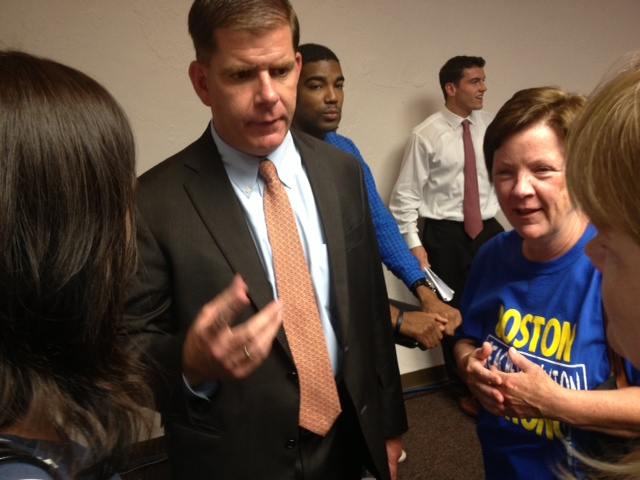
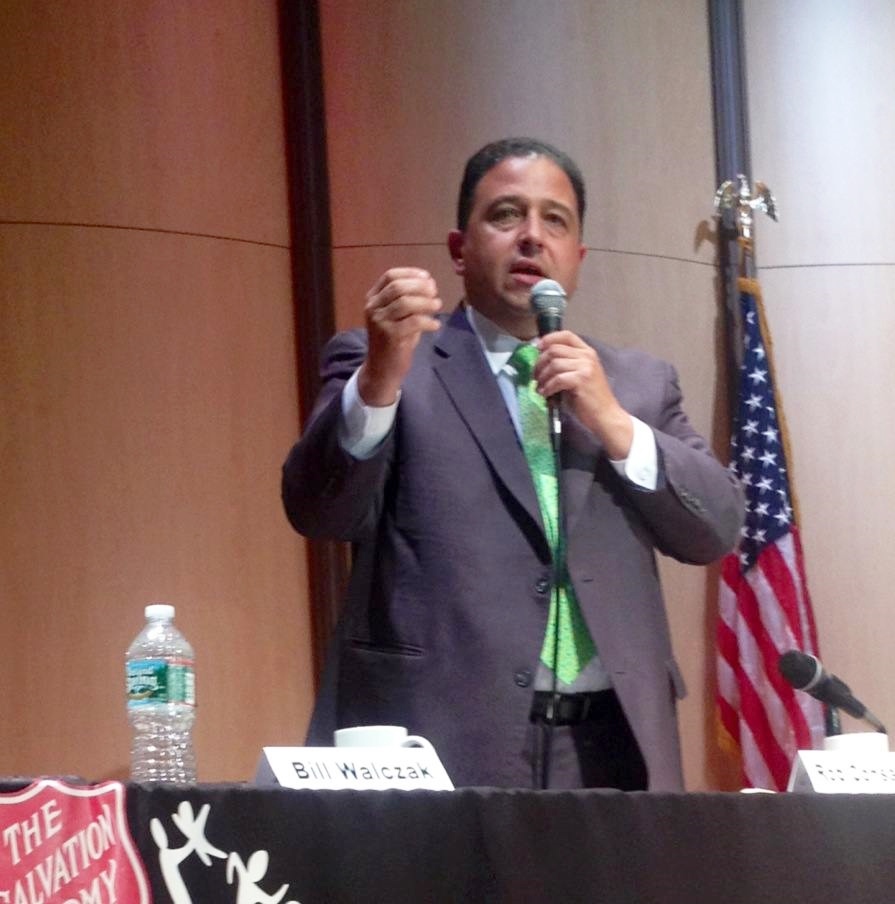
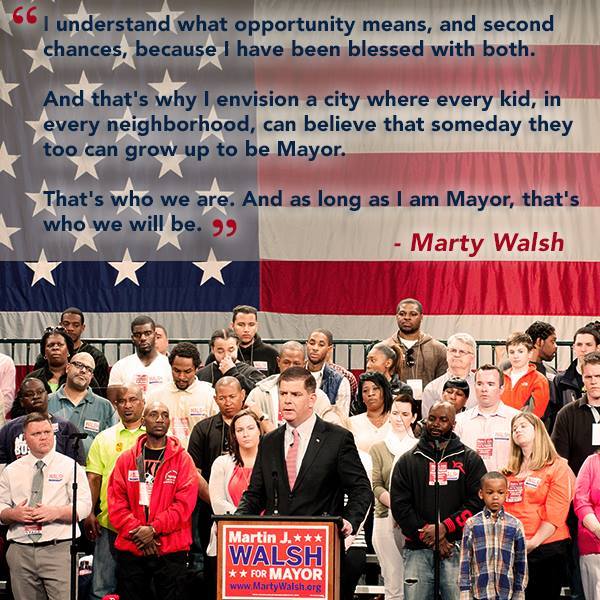
^ And now the political theater begins : Marty Walsh

112,804 Boston people cast ballots in yesterday’s Preliminary Election. That’s way less than the 157,041 who voted in 1967’s equally intense mayor primary, but it IS more than voted in 2009’s FINAL. It’s a good number, and not far short of the 119,000 we predicted would vote.

You all know by now the result. Marty Walsh, with 20,838 votes, made good on his election-eve claim that he would “top the ticket.” John Connolly finished with 19,420 votes — in second place. Charlotte Golar-Richie finished third — 3900 votes back of Connolly; Dan Conley finished 2800 votes behind her, and Felix Arroyo took the fifth spot some 1900 votes behind Conley. John Barros finished a close sixth, 750 votes short of Arroyo. Consalvo and Ross finished seventh and eighth.

For the 12 primary hopefuls, it was a polite campaign. No one wanted to go negative and this excite the others’ supporters to come out in larger numbers. Indeed, that 112,804 people turned out to vote in a love fest is a credit to the civic-mindedness of some 30 % of Boston’s registered voters. It was far different in 1967, when there was passion and drama all over the campaign, anger between candidates, riots at times in the city, and unrest the rest of the time.

We can do without the riots, but everything else that made 1967 such a Shakespearean campaign we need plenty of. We need debate, we need anger; we need the two remaining candidates and their supporters to go at it hammer and tong. Because Walsh and Connolly really are very different men with very different agendas and support bases. None of it should be glossed over with pretty talk and grins. If the huge differences between these men do not collide with the sound of shoulder pads and helmets clanging, so to speak, it will man hiding these differences in the closet, to taint the administration of whomever wins, and to make the winner’s agenda distrusted from the start.
Image

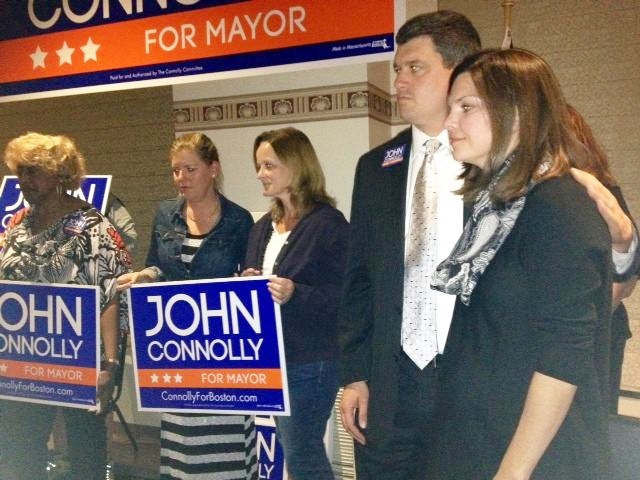
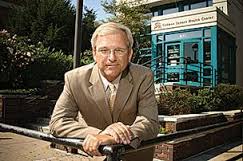
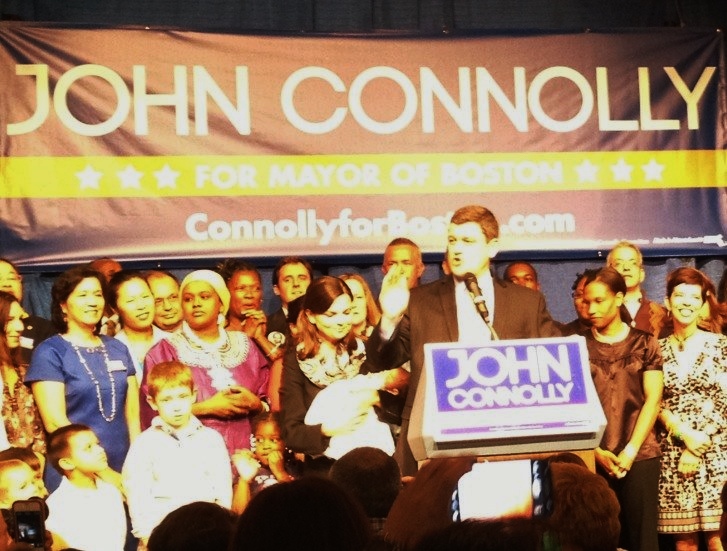
^ thespians all : john Connolly

As for analysis, here’s how we see yesterday :

1. The “base” vote. Walsh did much better in his South Boston/Dorchester “base” than Connolly did in his West Roxbury/Roslindale homeland. But Walsh did not have to compete with a seriously strong candidate in his base, as Connolly did with Dan Conley. Had Walsh had to give up 30 % of his home vote to a competitor, as did Connolly, Charlotte Golar-Richie would be in the Final today, not Walsh.

2. East Boston, Charlestown, North End, Downtown. These areas were to be John Connolly’s trump, his claim to city-wide strength, and so they were. He beat Marty Walsh convincingly in the region. But the turnout here was small. Connolly’s field organization did not do the job here that it should have. Had turnout in this region come even close to that in Ward 20, Connolly would have finished convincingly in first place.

3. Communities of Color. Despite valiant efforts, neither Walsh nor Connolly broke 75 votes in any precinct of Wards 8,11, 12, or 14. Nor in most precincts of wards 9, 10, 17, and 18. This entire region — maybe 25% of the City — now stands up for grabs, with no obvious inclination in either man’s direction.

That said, John Barros should be on John Connolly’s first-call list right now, and Felix Arroyo on Marty Walsh’s. The supporters of each have a natural place in these respective campaigns. Charlotte Golar-Richie’s support, however, is the prize — and the mystery. Her agenda fits, more or less, with both Walsh’s and Connolly’s.

4. School Transformation. It was Connolly’s mantra, and it carried a lot of weight. But not enough. As Walsh well said on election night, “I am not the one-issue candidate in this election !” Connolly should immediately, if not sooner, grab the administrative reform issue that made Dan Conley a serious contender. Connolly should in particular pick up Conley’s brilliant series of neighborhood brochures listing specific administrative reforms, most of which hit the bulls-eye. Conley and Connolly are natural allies. If Connolly hasn’t called Dan already, he should do so NOW.

5. Unions. Huge, football fan-like support from union activists gave Marty Walsh a big Primary day field force. They got their vote to the polls. Nonetheless, Union support is not a strength for Walsh going forward. Labor activists can get 20,000 voters to the polls. They cannot get the 80,000 or so which will likely be needed to win in November. Unions generate strong opposition even in progressive Boston. No one liked the pressure the Firemen brought to bear on the City budget at their contract time; and the Big Dig, albeit an economic boon, is not forgotten for huge cost overruns in part generated by Union wages. Personally, I have no problem at all with union wages; hard working people deserve great pay. But the Unions that negotiate such pay often use tactics that alienate large swaths of people — who do not forget. Walsh needs badly to convince those who did not vote for him that he is not Walter Reuther.

That said, the construction workers and the Firemen at least have strong ties to Boston people, ties that remain, at least in part, because these Unions are led by shrewd political leaders (of whom Walsh himself was one). The same cannot be said of the Boston Teachers Union (BTU). It endorsed two losing candidates — Felix Arroyo, justifiably; Rob Consalvo much less so — and now stands out in the cold. Neither Connolly nor Walsh are likely to enact the BTU’s agenda, especially its opposition to charter schools — schools backed by a huge majority of Boston voters — a meaningful longer school day, giving principals power to choose their teachers, or the seniority rules that caused 2012’s “teacher of the year’ to be laid off because he was junior in time on the job. Had the BTU acted shrewdly — by endorsing Connolly, for making the schools a prime issue, saying something like “we differ with Connolly on how, but we agree with him on the need for reform” — it would now be in a strong position to see some of its agenda included in the Connolly package. Didn’t happen.

6. A majority of the November winner’s vote will come from people who DID NOT vote for him yesterday. How does a candidate win the votes of those who did not choose him first ? One principle cries out : these voters will now vote for the candidate they DIS-like less. Thus the need that I presented earlier, to run a negative campaign; to DIFFER with the opponent, passionately. And there is plenty to differ with, for both Connolly and Walsh. Plenty on many fronts.

—- —- —-

A Final word from me : the campaign trend that I most reject is already developing : both campaigns are becoming institutionalized. Television theater. Connolly’s already had done so. Now Walsh’s too. This I hate. It makes the campaigns look phony and sound plastic. We have enough Plastic Men in our politics. I do not want to see Walsh or Connolly standing on a stage with an American flag behind them, like a President — which they aren’t — and what looks like a diversity audience at an Oprah show. Diversity is wonderful, but in such calculated displays it looks like window dressing. Let’s see Connolly or Walsh on stage by themselves, with no flags or fooforaw, just them, speaking to us all out in the crowd, on the street like a jury of 175,000.

— Michael Freedberg / Here and Sphere

MEEK AT THE MOVIES : PRISONERS ( 3 STARS )

Image

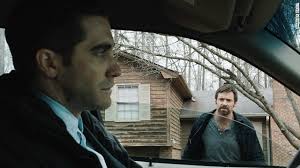
^ Prisoners — of their own panic. Hugh jackman and Jake Gyllenhall

—- —- —-

The film’s tacit title has a multi-faceted meaning, primarily referring to two young girls who are kidnapped off the street in a rural Pennsylvania town on Thanksgiving Day, but also to the parents of those kidnapped : who grow frustrated with the sputtering police investigation and take matters into their own hands (they take a person of interest and hold them captive). It also catches the homicide detective, who is constantly tripped up by the interfering parents, an unsupportive higher up, and the burnt out working class town that has suffered through decades of tragedy.

It’s a broad net, probably broader than screenwriter, Aaron Guzikowski (the Brockton native who penned “Contraband”) ever intended, but the material in the hands of Denis Villeneuve (whose “Incendies,” a haunting 2010 exploration of arcane family roots in the Middle East, garnered an Academy Award nomination) everything is narrow and focused, and rife with tension. That’s “Prisoners”’s gift and bane, eternal dark bleakness. Take either of David Fincher’s serial killer flicks, “Zodiac” or “Seven,” and you’d have a good idea what Villeneuve is shooting for.

As much as “Prisoners” gives the Canadian based filmmaker a big budget to work with and break into the mainstream, it’s also a showcase for Hugh Jackman to do something other than be Australian or bear metallic spiked claws, and he doesn’t let the opportunity waste. The affable Aussie plays Keller Dover, a hardworking, recovering alcoholic who runs a small carpentry business and has a survivalist’s stockpile in the basement. We hardly get to know him before his daughter and her friend (Erin Gerasimovich and Kyla Drew Simmons) are snatched off their quiet side street in a flash.

The suspected vehicle, an old RV, gets cordoned off by the police pretty quickly, but it’s empty. The girls are nowhere to be found and the driver, Alex Jones (Paul Dano) possesses the mental facilities of a ten year-old and can’t give a straight answer. Plus there’s not enough evidence to hold Alex on, and Loki (Jake Gyllenhaal), the lead investigator who boasts a 100% solve rate, can’t get any traction as the clock ticks onward and Keller grows increasingly anxious. Throw in a few strange chance encounters with Alex and Keller blows a fuse and abducts him, holding him hostage in an abandoned apartment complex where he begins his own brand of torture based interrogation.

If that prospect sounds unlikely, as the two men are under constant scrutiny, and a massive search for the two girls continues, Villeneuve, Jackman and Gyllenhaal sell it well and they get help in the form of a near catatonic Maria Bello as Keller’s wife and Terrance Howard as the aggrieved father of the other girl who becomes greatly conflicted when learning of Keller’s devious initiative. The plot has some nice underpinnings, too, that keep the macabre edginess pinned at high : namely the whisky pickled priest with a sex offender tag and a few skeletons in his basement and the ghostly wisp in a hoodie who out runs Loki through a maze of backyards, dog pens and the freeway as if warming up for a parkour contest. Then there’s Melissa Leo as Adam’s kind adoptive mother, remaining relatively calm throughout and forever trying to sell the beat up muscle car on her front lawn.

It all works seamlessly for more than three quarters of the two and a half hour running time, mostly thanks to Jackman’s frenetic father always ready to bull down a door and Gyllenhaal’s calm sobriety. They’re the good cop, bad cop that propel the nightmare with human context, but when it comes time to lay the cards down, the order of sensibilities and logic hits a nearly groan worthy snag.

There’s much to admire in “Prisoners,” it’s just too bad it becomes bound and hobbled by the same rope it uses to pull us in.
— Tom Meek / Meek at the Movies

BOSTON PRIMARY DAY : TURNOUT ?

Image

^ In case you hadn’t noticed ….
—- —- —-

The polls for Boston’s big Mayor Primary open in about twenty hours.

So who will vote tomorrow ? Most likely, those who have voted in the past City elections. Voting patterns change remarkably slowly. Universal suffrage really IS the conservative political factor that its first advocates, back in the 1870s — Otto von Bismarck of Germany and the UK’s Benjamin Disraeli — expected it would be.

Yet Boston has changed significantly since the last open Mayor election in 1993. “New Boston” has expanded beyond all expectation back then, bringing in thousands of young technology-oriented people — and those who operate or staff businesses catering to them. Wards 3, 4, 5, and 9 look nothing like what they did 20 years ago. Even Ward 11 looks different, and Wards 2 and 6 are changing quickly, albeit only recently.

Still, a citizen’s likelihood of registering to vote, and actually voting, in a Mayor election varies almost directly with two factors : ( 1 ) length of permannent residence in the City and ( 2 ) a feeling of connectedness to City government. In most elections, the income level of a person is also a factor. Not so in Boston City elections. Lower income people in “connected” neighborhoods are quite more likely to vote in a Mayor race than even high-income people in less “connected” neighborhoods.

The City’s most “connected” neighborhoods are Charlestown, South Boston, Ward 16 of Dorchester, and West Roxbury/Roslindale. Together, their population totals about 120,000 — one sixth of the whole City. Now look at some facts :

1. In the 2011 City Council-only FINAL, Charlestown (2309 votes) almost out voted East Boston (2334), a neighborhood two and a half times a populous.

2. In that election, Ward 20 (West Roxbury/Roslindale) outvoted (7166) Ward 18 (6623) substantially — even though Ward 16 is 50 % more populous than Ward 20.

3.In that same election, the “connected” neighborhoods that total one-sixth of the City’s people provided FORTY percent of the total votes cast.

3.In the last Mayor election PRIMARY, in 2009, an electorate not much different from tomorrow’s voted thus :

Total turnout — 81,766. Charlestown total : 2788. South Boston total : 7689 Ward 16 total : 4927
Ward 20 Total 9402.

Ward 20, with 9407 votes cast, almost outvoted 50 percent larger Ward 18 (9880). With 6.5 % of Boston’s people it cast 11.5 % of the City’s vote.

South Boston, with about 5 % of Boston people, cast 9 % of the total vote. Charlestown, comprising about 2 % of Boston people, cast 3.5 % of the total vote. Meanwhile, Ward 21, with 5 % of Boston people, cast 3.5 % of its vote, and Ward 15, home to about 4 % of Bostonians, cast 2.4 % of the vote. Most striking : high-income ward 5, home to almost 6 % of Boston folks, cast less than 4 % of the vote.

Image

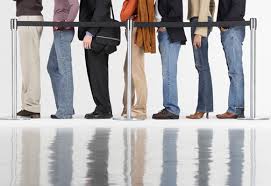
^ 119,000 pairs of legs will walk or wheel-chair into Boston’s 254 voting precincts. We predict it.

Turnout in this Mayor Primary will surely go much higher than 2009’s 81,766. Three Council Districts (4th, 5th, and 8th) have District Council race primaries too. My prediction is that 119,000 voters will cast ballots. Want to see how I get my numbers ? Here they are (and percent of total) :

Ward 1 (East Boston) — 6200 ( 5.1 %) — intense battle between walsh, Consalvo, Connolly, Arroyo
Ward 2 (Charlestown) — 5100 (4.3 %) — big increase, for home boy Jack Kelly’s Council race
Ward 3 (North End & Downtown) — 6500 (5.5 %) — many new residents —
Ward 4 South End — 4500 (3.8 %)
Ward 5 (Baack Bay, Beacon Hill) — 6500 (5.5 %) — big Council race; Mike Ross’s home district —
Wards 6 & 7 (South Boston & Seaport) —- 12,000 (10.1 %)
Wards 8 & 9 (Lower Roxbury & South End) — 6000 (5.05 %)
Wards 10 & 11 (Mission Hill, Hyde Square, Eastern J.P.) —- 8000 (7.075 %)
Ward 12 (upper Roxbury) — 5000 (4.2 %) — big for Golar Richie —
Ward 13 (Uphams Corner, Savin Hill) —- 5500 (4.7 %) — big increase in Walsh’s home area —
Ward 14 (Blue Hill Avenue) —- 6500 (5.5 %) — see remarks on ward 12 —-
Ward 15 (Bowdoin/Geneva) — 3300 (2.8 %)
Ward 16 (South Dorchester — 8100 (7.1 %) — see ward 13 remarks —
Ward 17 (Codman square, Lower Mills) — 6000 (5.05 %) — Walczak brings out the vote —
Ward 18 (Mattapan, Hyde Park) —- 15,000 (12.8 %) — Consalvo and Conley compete —
Ward 19 (Jamaica Plain, Rossie Square) — 8000 (7.075 %)
Ward 20 (West Roxbury/Roslindale) — 14,500 (12.2 %) — Connolly’s home Ward —
Ward 21 (Allston, Comm Avenue) — 4000 (3.3 %)
Ward 22 (Brighton, North Allston) — 5000 (4.7 %)

So yes :  “new Boston” will up its grammar. To maybe 45 % of the total. But not anywhere near enough to render “traditional” Boston a past participle.

Wednesday morning we will know if this is the IT or just a will o’ the wisp.

—- Mkichael Freedberg / Here and Sphere

THE IRAN THING : HASSAN ROUHANI COMES TO THE UN

Image

^ Hassan Rouani : a new day in Iran, a new start for Iran – American relations

For those of Boston these days, what’s going on in the rest of the world, beyond our borders, has had little meaning. Yes, Cambridge, with its universities across the Charles River, and their technology geniuses, has been talked much of. The city of Everett, too, for its embrace of Steve Wynn’s proposed billion-dollar casino. At Mayoral Forums, candidates have occasionally cited Montreal or Detroit (Marty Walsh), San Diego (Dan Conley), and New Orleans (Charles Yancey), as models for future Boston or for the challenges. New York City often draws comment. But that’s about it.

One almost shies from mentioning, into such an interior monologue, the name “Iran.” Yet Iran is coming to us — its newly elected President, Hassan Rouhani, to the UN, and soon, along with new Foreign Minister Mohammed Zarif; where, it is whispered, the two men might actually meet with President Obama. 

That would be news indeed. No Iranian President has met an American President since the 1979 overthrow of the last Shah. It hasn’t been even a possibility, nor has it been thought desirable. now it is not just possible but probable. And well worth happening.

President Obama has often been demeaned by his political enemies here in the US as an ineffective leader. This is a false flag. The President, and his new Secretary of state John Kerry, have made major moves these past few months, and they have moved the chess pieces in a positive direction. First came the restart of Israel-Palestinian peace talks. then came the Syria chemical weapons disposal real — begun by accident maybe but well finished by full intention. Now comes a possible agreement with iran, the palpable result of a tough economic sanctions policy held to by our President.

Image


^ President Obama : thumbs up for good foreign policy moves this season

Image

^ Secr/State John Kerry ; flexibility and good sense

Reaching any kind of agreement with Iran will likely prove tougher than them all. Hassan Rouhani may represent the reformists in Iran, but their reforms are all domestic to Iran; on the question of achieving nuclear weaponry, the reformists seem as resolute as the hard-liners. Still, the rhetoric has changed entirely. President Mahmoud Ahmadinejad cursed and insulted Israel every day for breakfast. Rouhani tweeted Rosh Hashana greetings to Jews all over the world. Clearly Rouhani wants to at least talk to the “evil” West. That is good news for sure; but talk is sometimes more dangerous than enmity. When rivals talk, they begin, willy nilly, to respect each other, even to like one another. That makes disagreement harder. And we and Iran will surely disagree. 

What, then, will Rouhani, Zafir, Kerry and Obama talk about ? Iran’s nuclear weapons project of course. Probably they will only agree to commence formal discussions on the topic. These have been held before and failed. Rouhani remembers that well, because he was then Iran’s discusser; and its failure hurt his political career. Now he’s back, with the full confidence of the big man, “Supreme leader” Ali Khamenei. Rouhani will not want to fail again to reach some agreement. He has given Zarif full power to be Iran’s negotiator. Zarif is an unusual Iranian. He was educated in America and has lived more than half his life here.

Image

^ Foreign Minister Mohammed Zafir : as American as any iranian in their regime

Perhaps Obama and Rouhani will agree only to talks. That go nowhere. Still, the two men will have met each other. that cannot be undone. A new era in Iran – American diplomacy will have begun. It will have its own momentum. Israel and Russia will be watching closely. So will Bashir Assad. He might just be the trading piece. That would indeed be good news.

—- Michael Freedberg / Here and Sphere
 

BOSTON ELECTION : FOR AT-LARGE CITY COUNCIL

Boston voters go to the polls on Tuesday — in less than 48 hours — to choose the candidates who will face off in the November 5th “Final.”

Mayor is of course Boston’s first priority; but a City Council final eight will also be selected. Below are our choices. Please read about them all. We like all eight.

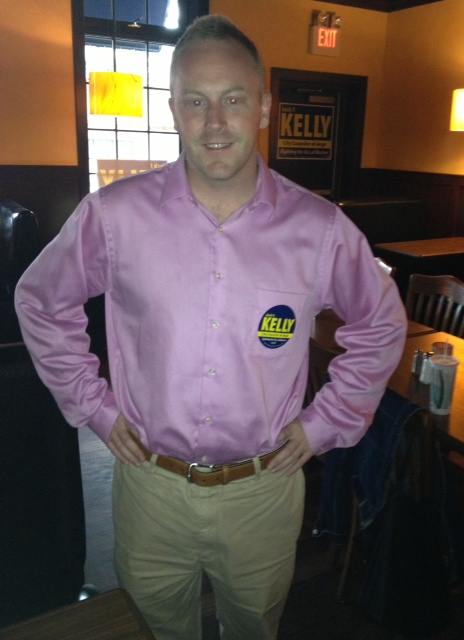
photo (69) Jack Kelly : our first choice, as the most across-the-board voice of labor we’ve seen in decades, at a time when a trusted voice of labor is most needed on the Council. Kelly’s campaign has captured the imagination and support of the entire City — even the Boston Globe –and he has the endorsements (including from Councillor Tito jackson and planned parenthood) to prove it. He also has ours.

photo (55)Chris Conroy : his campaign lacks money and moves sometimes on foot, but Conroy has much more city-wide support than that suggests. He grew up in ward 16 (Fields Corner) and lives now in ward 11 (Roxbury) and speaks in eloquent and passionate detail about bettering the City’s schools — not bit by bit, but hugely. Some might say, “a white guy in Roxbury ? and think “1969 hippie,” but that’s for throwbacks. Conroy is the Roxbury of today : diverse, and progressive for real, not just for hippie dreams.

Annissa Essaibi

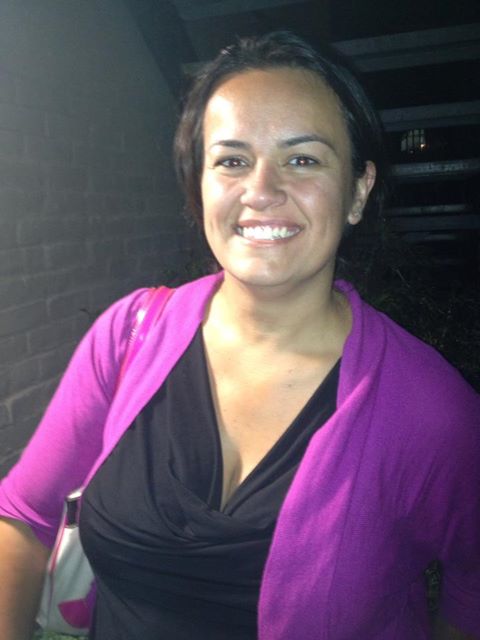
Annissa Essaibi-George : a Boston Teacher’s Union (BTU) activist, Essaibi-George has the radiance, class, and articulation for which Boston Public school teachers are justly respected. We met her and liked her instantly, and mot just because she’s from Dorchester, with strong support in East Boston as well (where she teaches at East Boston High School). She runs a small business, and has time, somehow, to also be a neighborhood activist. We think no one will outwork her on the Council, and defintely her voice for the BTU is needed, even if the BTU itself sometimes misses the political bulls-eye.

photo (65) Philip Frattaroli : resident in the North End, he owns a restaurant, Ducali, on Causeway Street and grew up in his Dad’s restaurant business. As Mayor candidate John Barros says, “ten percent of all workers in Boston work in the restaurant business.” Reason enough to want Frattaroli on the Council; add to that his growing city-wide support, as he captures the imagination of small business people everywhere in Boston frustrated  by the red tape encasing the City’s bizarro permitting process.

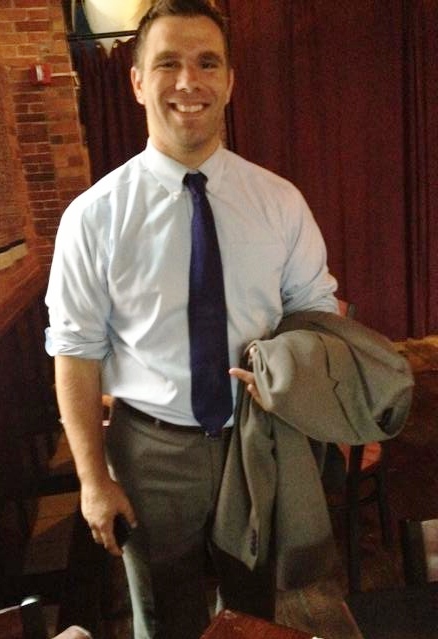
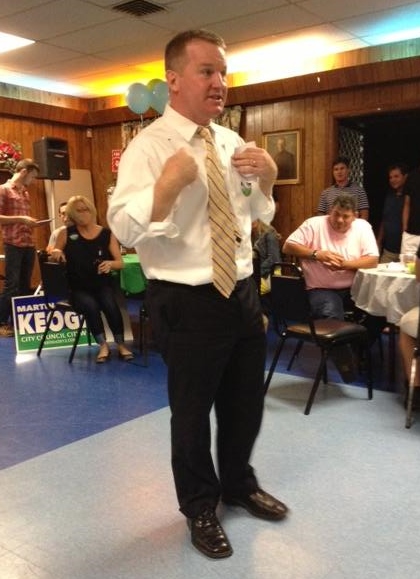
photo (43) Marty Keogh : we’ve known Marty for a long time — and that’s him : this season’s most energetic voice of “traditional” Boston. From that side of Boston– as it stands  today — he has gathered the kind of committed support that elected Councillors galore thirty and forty years ago. Keogh has significant labor union support and is beginning to make some inroads into parts of “new Boston.” We can’t wait to see him debate cultural issuers with Jeff Ross (see below), progressive agenda with Chis Conroy, and school assignments policy with just about everybody.

photo (61) Catherine O’Neill : if Senator Elizabeth Warren does nothing else for Boston, her selection of O’Neill to work the campaign’s media presence deserves our thanks. O’Neill, we discovered soon enough, isn’t just a Warren protege. She comes from the large and we,ll-known O’Neills of Lower Mills, field-directed Linda Dorcena-Forry’s historic State Senate win,  is a published playwright, and hosts a Boston television show (at BBN TV). And it shows. She simply loves people and political discussion — city-wide ? no problem at all — and people take to her as well. We look forward to seeing her speak from the perspectives of both “traditional” Lower Mills and “new Boston” media on all the issues — senior citizens too.

photo (39) Ayanna Pressley : she’s an incumbent, and we hope that she continues to be one. The Chicago native is articulate, genial, classy — and has hold of an issue vital to Boston’s quality of neighborhood life : her Home Rule petition to the legislature to grant Boston control over the number and location of our liquor licenses. ask restaurant businesses if that matters ? Hint : it does.

photo (24) Jeff Ross : a South End resident — in Ward 9 Precinct 2, for political junkies like Ross — this politically experienced, veteran campaigner now steps forward to run for office himself, bringing to the battle long and progressive knowledge of what must be done to make Boston a more diverse, more fun, and more effective city for all. You have to respect — and want to see elected — a guy who grew up in a working-class, home, was the first in his family to graduate college, is a voice for the city’s LGBT community, and has the neighborhood touch too.

Conclusion : by no means do we wish to denigrate the eleven at-large candidates who did not make either our endorsed or suggested list. Indeed, the eleven include two long time personal friends and several promising newcomers. But one must choose; that’s what elections are about. If the eight people we have singled out above all “make the cut,’ Boston will enter a new political era, one less dominated by the old ways and more inclined to articulate diversity. that’s what cities should be.

—- Michael Freedberg / Here and Sphere
BOSTON MAYOR RACE : TIME TO CHOOSE

The Primary takes place Tuesday. The deciding time is now.

To help you decide, we now present what in our view is the strongest argument for each of the nine candidates who have impressed us. Some carry more authority than others; this is inevitable, for people do differ. Still, all nine hopefuls deserve support. How MUCH support is for YOU to decide.

Image

1. John Connolly.

He owns the campaign’s number one issue — public school reform — and articulates an encompassing plan with passion and detail; a plan which he connects convincingly to two other issues that really matter, with solutions that he articulates persuasively : better jobs and public safety in the neighborhoods. He has broad support all across the city. He has a hip understanding of the new, burgeoning Downtown. If school transformation, cultural awareness, and support from every corner of Boston are your idea of what the next Mayor should be, John Connolly is your man.

photo (4)

2. Marty Walsh

If John Connolly is a cool dude, Walsh is a hot button, a candidate of urgency. No candidate in the race matches Walsh’s civil rights record. His supporters embrace him with a passion no other candidate approaches. Walsh owns the campaign’s second biggest issue : the Downtown Building boom — which he wants extended by school construction, the potential East Boston casino, and an entirely redeveloped City Hall Plaza. He has the most forward plan for recruiting business es to locate in Boston.

Curiously, for a man so committed to a booming Downtown, Walsh seems culturally very unhip, even unaware. And his education plan seems limited compared to Connolly’s, though it has its strong points, especially on emotional and social education — very cutting edge curriculum items. Walsh has the backing of most Boston labor unions — but not the Teachers — and this has hurt him as much as helped.

Still, if extending Boston’s construction boom, bringing in new business, and having a Mayor who doesn’t view union workers as the opposition are your agenda, Marty Walsh gets your vote.

Image

3. Dan Conley.

He’s received almost no endorsements — Connolly has almost all of them — but he doesn’t really need endorsements. Conley is known well already and, as Suffolk County District Attorney, he represents and has been elected by the entire City. He’s even less hip than Walsh — is exactly whom you’d expect to find at a VFW Post or an Elks lodge — but makes up for it by having as progressive a record on staff diversity as anyone seeking to be our Mayor. No candidate would be tougher on reform of the City’s Police and Fire departments — both much needed; Conley displays a better knowledge of City administration, and its failures, than any of his rivals in this race. He doesn’t like casinos much but isn’t obsessed with stopping them. If thorough reform of the City’s various administrative departments is your top priority, Conley gets your vote.

Image

4. Charlotte Golar-Richie.

She is of course the only woman in the race and has become the top choice of Boston’s African-american political community. (Note, however, that the Caribbean Political action Committee endorsed John Connolly.) Golar-Richie has authoritative experience in Boston government, as Tom Menino’s Director of Neighborhood Development, represented Dorchester’s least politically active ward (15) in the Legislature, and worked in Governor Patrick’s administration. She has gained the support of State Representatives Moran and Michlewitz; they are actively campaigning on her behalf. Golar-Richie’s advocacy of issues often lacks depth or detail, and it’s not clear what her top priorities are — other than advancing women to top positions in the Police and Fire departments — but her broad base of support, ability to command Boston’s African-American politics, and advocacy for women moves you, Golar-Richie is your vote on Tuesday.

Image

5. Felix G. Arroyo.

We have known Arroyo since he was a small child growing up as the namesake son of Felix D. Arroyo, Massachusetts’ s most successful politician of Latino heritage. Arroyo has his Dad’s passion for raising the disadvantaged and the poor up into the economic mainstream; they — and the City’s children who find themselves set back in school because at home they speak languages first other than English — are his top priority for attention. He also advocates assuring disadvabtaged kids a sure connection to better jobs, and he seeks the formation of new businesses (his “invest in Boston” program, whereby banks in which Boston deposits its billion dollars are required to lend to and invest in local businesses first, has just been voted favorably by the City Council).  He speaks of securing crime plagued neighborhoods from youth violence, which he rightly sees as the result of lacking opportunity. If attention to raising people usefully out of poverty is your first priority for Boston’s next mayor, Arroyo is your man.

Image

Image

6. John Barros and Mike Ross.

They’re a matched pair, really. The campaign’s two smartest and most visionary candidates forsee a very different Boston than the City we live in today, a City radically evolved in transportation, working wages, environmental green, effective housing plans for every income level, and smart entrepreneurs — all of which both men articulate eloquently and in very practical detail. The mayoralty of either would be an adventure. Hardly any City department is deployed to anything like the City they want to bring about. Voting for Barros or Ross, rather than Connolly — who would likely be the more cautious choice for voters considering these two men — depends upon how successful you think Barros or Ross would be in making their visionary Boston happen. Many voters will decide that adventure into tomorrow is needed right now. They will want to vote for Barros or Ross.

photo (48)

bill walczak 1

7. Rob Consalvo and Bill Walczak.

I’ve paired these two very different candidates because both have made a single issue their campaign gravatar, and those for whom either man’s single issue is the vital necessity for Boston may want to give that issue greater attention by so voting. For Walczak the issue is stopping casinos– in particular both the East Boston casino AND the casino project planned for Everett, right next door to Charlestown — and building an East Boston “innovation district” instead. (why we can’t have both, Walczak does not say.). If you agree that a casino in Boston or Everett needs be stopped so badly that all other issues come second, Bill Walczak is your man. For Consalvo the issue is advocating the Boston Teachers’ Union (BTU) plan for Boston school reform : first principle of which is to curb, if not end, charter schools. There is much in the BTU reform plan — a ten page manifesto well worth reading from top to bottom — that commands support, especially its commitment to give all students, including the difficult kids, equal access to core curriculum attention well beyond the MCAS requirements. No one should plan a school reform that does not command the enthusiasm of school teachers, whose job is so exhausting, exciting, demanding. Those who want Boston school teachers to be heard at school reform time may think the surest way of getting there is to vote for Consalvo.

8.There are three other candidates on the ballot, good men all — Charles Yancey, Charles Clemons, and David Wyatt — but none has drawn significant voter support, mostly because each has run a limited campaign often lacking in depth beyond a demonstrable passion for issues that the major campaigns have not focused upon. You may decide to vote for one of these men. They all deserve attention to their issues : Yancey, his long experience and knowledge; Clemons, making the City administration “look like the City”; Wyatt, his skepticism about the ability of City government to do much better than it has. For us, the significance of their candidacies lies in their infusing their issues into the campaign discussion. A vote, though, seems one infusion too far in such a deep field of strong candidates.

—- Michael Freedberg / Here and Sphere

WHEN IS IT TIME TO GIVE UP THE B’S? Here’s a when, how, and why look at bottle and binky bye bye’s

hereandsphere's avatarCoffee or Vodka?

binky of doom


WHEN IS IT TIME TO GIVE UP THE B’S? Age appropriate and how too’s on saying bye bye to the bottle and Binky’s!!

Dear: Parenting 911

I am a dad of 2 beautiful kids, Zackariah is 3 and Maleiah is 5. With my daughter “LeLe” I had no issues with giving up the bottle  and she never used a pacifier –or “Bink” as Zack calls it. It was an easy conversion her need for independence, and desire to be more grown up far outweighed her need for the comfort of her BOTTLE. She was easy as pie to reach milestones. When Zack was born — my wife and I were  thrilled that we were going to save on formula, since he took to breastfeeding like a champ. LeLe was never a good “latcher” she really struggled with it, therefore the bottle solved our issues. Zack was awesome — he rarely…

View original post 1,300 more words

BOSTON MAYOR RACE : WALSH, ROSS BEST AT WBUR FORUM; CONNOLLY and BARROS DO OK AS WELL

Image

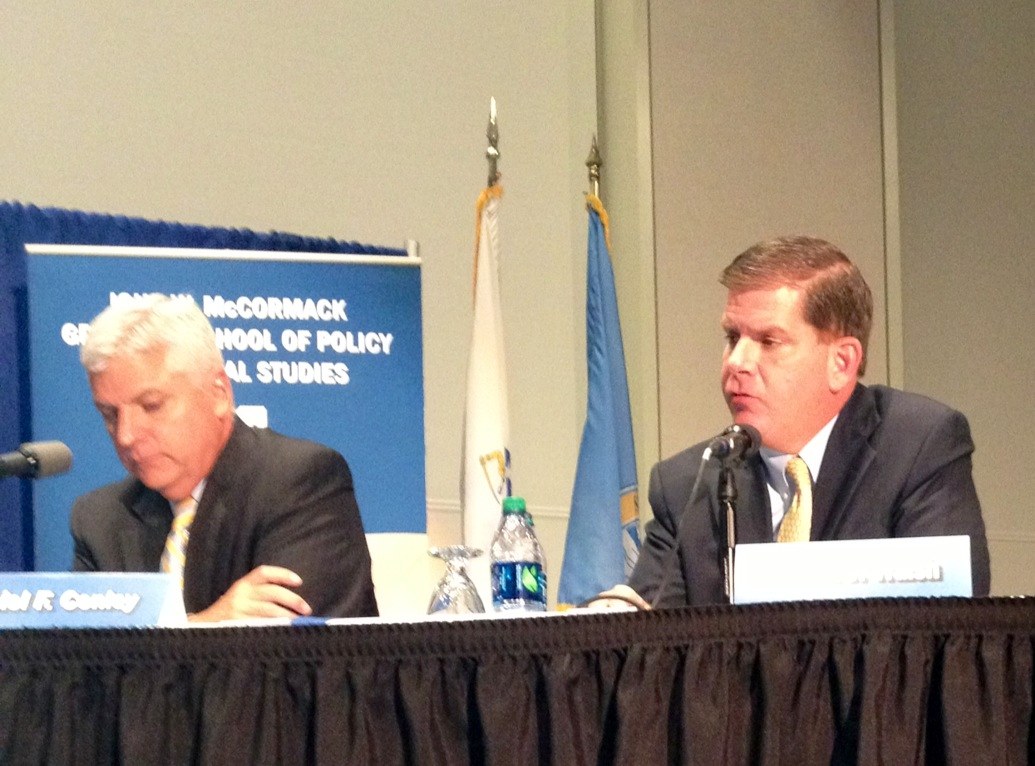
^ Dan Conley and Marty Walsh ; sitting to the side, waiting to get called on at this campaign’s least useful Forum

—- —- —-

Station WBUR hosted the last major Mayor Forum before the Primary and broadcast it as well. Perhaps that was why so many of the ten candidates on stage — David Wyatt and Rob Consalvo did not attend — speechified, pandered, and played the anti-casino hypocrite.

Very little was learned at this Forum except that many candidates who had distinguished themselves for for thoughtfulness and answering the question posed showed that they could swing the sweet stuff and duck a question. This is the sort of swerve that has made so many voters view candidates as a low form of life. It was discouraging to see and hear.

The questions, by WBUR’s Bob Oakes and his sidekick did not make things better. He seemed to favor the candidates sitting in front of him and to overlook those to the stage’s sides. Thus John Connolly and Marty Walsh, sitting at opposite ends, had to raise their hands to get called upon, while Jon Barros, Charlotte Golar-Richie, Charles Clemons, and Mike Ross, sitting stage front, answered and re-answered all night long.

Many of Oakes’s questions sought one line answers; many seemed like pea soup and pecan pie. Bring back David Bernstein ! Piniel Joseph ! Paul Watanabe ! Please, please….

Shall I go through the long night of chocolate mousse and near beer ? I guess that I must.

Asked who was the political figure they most admired, no fewer than six candidates said Barack Obama or Nelson Mandela. Felix Arroyo said “My father.” Wonderful men, all three; but shouldn’t
a question like this call for some original thinking ? Some sense of history ? Only Mike Ross — “Roosevelt” — and Dan Conley — “Abraham Lincoln” broke through the pillow talk.

Image

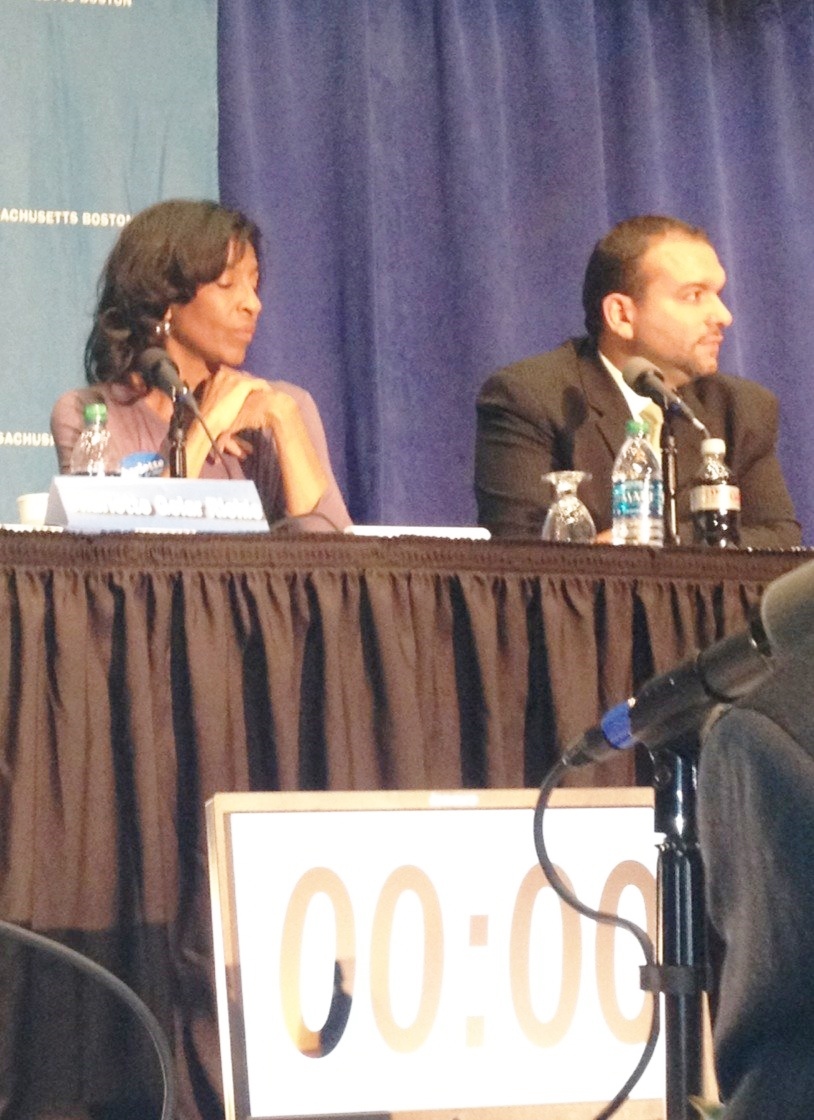
^ Charlotte Golar-Richie, Felix G. Arroyo : ready on day one to speechify …

Asked who was the person outside of politics that they most admired, nearly every candidate said “My Mom” or “My dad.” Let the angels dangle on their harps… Yes, one’s parents are wonderful people — usually — but is one’s family the only awareness field of these potential Mayors’ vision ? I suppose I should be grateful that no one said Mother Teresa…

Asked, “if you can’t be Mayor of Boston, which other city would you like to be Mayor of,” the candidates had to think fast, and it was tasty to watch them do so. Only two came up with a thoughtful answer. Marty Walsh : “Detroit, for the challenges.’ Charles Yancey ; “New Orleans, for the infrastructure work and the culture.” Dan Conley found levity in the query : “San Diego, for the weather !”

Questioned on whether the community vote to approve the East Boston casino should be city-wide or restricted to East Boston, the entire group, with two exceptions, answered as if intimidated by Bill Walczak, whose opposition to casinos, period, is an obsession with him. Walczak never ceases to decry that people of limited means will gamble their money away at the casino — as if they are not already doing that on scratch tickets and Keno ? OK, Bill, we do get it. What was truly depressing was to hear Dan Conley, Mike Ross, even Charlotte Golar-Richie dis the idea of a Boston casino. Ross tried to have it both ways. He doesn’t like casinos, but since if Boston doesn’t approve one there’ll be an Everett casino “seven feet from Charlestown,’ he will grudgingly seek a city-wide vote. Gee thanks, Mike.

Marty Walsh wouldn’t out and out say he likes the idea of a Boston casino, but he did note that it will benefit the economy of the City. (And also the construction workers who are his core constituency.)  John Connolly seemed to approve the casino project without endorsing it; he supported a city-wide vote and said so with his usual originality of argument. Walsh also noted that the enabling legislation — which he participated in enacting –for casinos included a mandate that a casino project would need have a program on site to deal with gambling addiction. So much for Walczak’s throwing drama all over the room on that subject.

photo (7)

^ John Connolly : waiting to be called upon, he looked bored often and frustrated too. My sentiments exactly about this Forum

Listening to Walsh and Connolly address this issue, it’s reassuring to see them holding the top two spots, so it appears in Tuesday’s Primary. as for those who want only an East Boston vote, did anyone tell them that the gaming Legislation calls for a “community” vote ? and that the “community” here is the City of Boston, legally chartered as such ? Nothing in the legislation supports the notion of restricting a casino referendum to a neighborhood. Such a vote would simply be unlawful.

On and on it went. On the BRA and education questions, most candidates gave their usual speechify — Felix Arroyo especially, but also John Connolly, Dan Conley, and Charlotte Golar-Richie — even to some extent Marty Walsh. Perhaps their brains have fried now, their words stuck on hold, unable to restate. After two dozen candidate Forums it gets like that. Still, it is my duty to report, so here is a selection of what the candidates said about school reform :

Felix G. Arroyo : universal pre-school and a longer school day
Golar-Richie ; new school superintendent and create alumni associations of Boston public school graduates
Jon Barros : three strategies — focus, principals, school autonomy
Mike Ross : bring back our neighborhoods first because unhealthy children can’t learn as well as healthy kids
Marty Walsh : need to improve school buildings and school administration; we also need better diversity among our teaching staff

Does it all sound familiar ? You got it. Now go vote. Before the candidates repeat themselves into utter absurdity.

—- Michael Freedberg / Here and Sphere

MEEK AT THE MOVIES —- Thanks for Sharing ( 2.5 STARS )

Image

^ six coins in a fountain ? maybe THAT’s what we hear in “Thanks for Sharing.”

Sex addiction is a strange and fascinating matter. It’s also something that’s hard to comprehend and even harder to have sympathy for, because after all, what are we talking about, someone who’s compulsively after the fruit of life? That’s like trying to feel bad for someone who eats too much sushi or chocolate mousse. No matter, the line between indulgence and addiction is a fine one, and while Stuart Blumberg’s “Thanks for Sharing” doesn’t quite get between the sheets of the matter, it does delve into the lives of three recovering addicts.

Tall and rangy Mike (Tim Robbins) runs a New York based support group like a big Papa Bear — stern, avuncular and always quick with an answer. He may be the warmest practitioner of touch love. Mike’s addiction, while a bit vague, is more substance-based than sexual in nature; but he’s been clean for some time and seems to have a solid home life with his dutiful wife (a radiant Joely Richardson) who has obviously been through the wars (probably not to the same degree as Anthony Wiener’s spouse, Huma Abedin, but still) and opted to stand by her man. Then there’s his trusted lieutenant Adam (Mark Ruffalo), a successful international financier with a primo high-rise condo in Manhattan ; he’s five years sober, and because sex is so easy to come by, goes to painful extremes to truncate alone time with the TV and internet. The good news is that Adam has met the perfect woman in Phoebe (a very toned Gwyneth Paltrow), though he’s reticent to tell her about his bug (sex is permissible, just not compulsive sex). Adam’s also taken on a reticence to tell her about his bug (sex is permissible, just not compulsive sex). He has also taken on a new charge who’s a discombobulated mess. Recently terminated from his medical post in a hospital for sexually harassing a co-worker, Neil (Josh Gad) subsequently rubs up against a woman in the subway and as a result of that offense gets mandated to the group.

As gross as that sounds, Neil’s a pretty affable guy and perhaps the most anchored of the lot. After ‘sharing’ he forges an immediate and awkward alliance with Dede (Alecia Moore, aka Pink, who is excellent in her first real dramatic role) who does more for Neil’s progress than Adam. Adam and Mike, it turns out, are not quite the pillars of Gibraltar initially reported. Mike’s son (Patrick Fujit), who was both a victim and refugee of Mike’s down years, returns to the nest suddenly; past pains quickly percolate to the surface. Over in Adam’s killer view of the big city, Phoebe’s called on her eating and exercise disorders and can’t figure out how to digest Adam’s confession of sexual compulsion.

Such revelations become triggers and how they go off and integrate together in the bigger picture doesn’t quite mesh. Blumberg, who as a story teller garnered an Academy Award nod for penning “The Kids are All Right,” seems a bit hesitant behind the camera in his directorial debut. Situations erupt out of nowhere, and since we’re in varying stages of ‘recovery,’ without a genuine taste of the descent into addiction hell, the “now” feels more like artifice than sincere soul-baring. The Neil and Dede thread yields the greatest rewards, perhaps because we catch Neil just as he’s fallen, coupled with the reality that he’s not a lean, chiseled alpha male, but more a slovenly Jack Black or John Candy type. Dede’s efforts to get him out of his shell and pig sty apartment ring with bona fide compassion. For two big personas, the pair have many quiet, small moments tinged with sexual tension. How Blumberg uses that and the actors is a true charm and maybe the story he should have built the film around. The other A-list actors are fine, it’s just that their characters lack depth, especially Ruffalo’s Adam. He’s a weepy version of Michael Fassbender’s shark-like sexaholic in “Shame,” a film that dove into the nastiness of sex compulsion and put the audience on edge. Here we’re told the stories of depravity in group. Hearing is not seeing.

— Tom Meek / Meek at the Movies

“SECRET LETTERS” to home one stop-loss soldiers story LETTER # 4

If you haven’t been following this series the time to start would be NOW. My fellow Americans this is not a “STORY of fiction” this is one soldier’s ongoing battle or should I say battles THIS IS REAL LIFE — get off your ass and pay attention, THIS is what is REALLY going on….. If you have no interest in the real world a.k.a. our “GOVERNMENT”, or it’s cruelty to those that serve and protect, you are wasting the very oxygen the rest of us with souls and hearts NEED — TO BRING THIS MAN — and all the others like him HOME……

hereandsphere's avatarThe Local Vocal

stop-loss3

“SECRET LETTERS” to home one stop-loss soldiers story LETTER # 4

According to Wikipedia, the Stop-loss definition is:

“Stop-loss is a term primarily used in the United States military. In the U.S. military, it is the involuntary extension of a service member’s active duty service under the enlistment contract in order to retain them beyond their initial end of term of service (ETS) date and up to their contractually agreed end of obligated service (EOS). It also applies to the cessation of a permanent change of station (PCS) move for a member still in military service. Stop-loss was used immediately before and during the first Persian Gulf War. Since then, it has been used during deployments to SomaliaHaitiBosniaKosovo and after the September 11 attacks and the subsequent War on Terror.”

The policy has been legally challenged several times. However, Federal…

View original post 1,054 more words