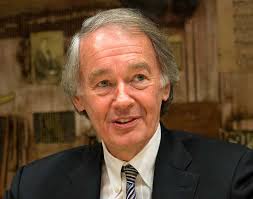
WE ENDORSE, FINALLY : ED MARKEY FOR US SENATE

Image


(photo: courtesy dailykos.com )

If you’re a Massachusetts voter, you almost certainly have found this year’s US Senate seat campaign a puzzling event. Boring, too. That is not what we in Massachusetts expect. We expect and want eloquent, bold, knowledgeable Senators who go to Washington and make a difference, for Massachusetts and the nation. It was that way when Scott Brown faced Elizabeth Warren. It had been that way with Ted Kennedy and with John Kerry, whose resignation to become Secretary of State brought about this year’s election. It had been that way before, all the way back to Daniel Webster and Charles Sumner.

Yet here we are, with two candidates each of whose candidacies brings not eloquence or boldness but enigma. About Markey, one has to ask : why is he giving up 37 years seniority in Congress — seniority which is good for Massachusetts — to become an entirely freshman Senator ? In the case of Gabriel Gomez, the Republican, the riddle is, if you’re going to run for such a high office your first time out, why not be bold ? Why not rivet our attention ? Why not have a message or a vision that gives us a reason to reject Ed Markey’s proven competence, and his commitment to agendas most Massachusetts voters support ? Gomez has failed that test.

He has failed in two ways. First, by not putting forward any such message or vision, he has failed the voters. Second, because a Republican, if he is to overcone Massachusetts’s deep aversion to the national GOP, must speak boldly and even beyond bold; must put forth an agenda so progressive and comprenhsive as to take a Massachusetts voter’s breath away. A message to make a Bay State voter say, “This guy is great ! The national GOP will never control him ! Heck, the national GOP had better watch out !”

To say the least, Gomez has done no such thing. He has barely said anything at all, and what he has said fits — at best — into the dullest, and sometimes most damaging — his refusal to back an assault weapons ban –of national GOP talking points.

Meanwhile, Ed Markey has aid nothing bold either, and his giving up his seniority hurts his own cause as well as our state’s.

Still, until 2014, when hopefully our State can finally elect a bold, attention-getting Senator to a next full term, Markey will do a better job of continuing William “Mo” Cowan’s service as our state’s temporary Senator than can Gomez. Markey, at least, has knowledge, commitment, and long relationships with many Senators. No temporary Senator has a better chance than Markey will, of advancing legislation important to the nation’s progress and vital for directing scarce Federal funds to our state’s defense industry and education institutions.

We endorse the election of Ed Markey to the remaining year and a half of this Senate seat’s current term.

—- Michael Freedberg / Here and Sphere

MASSACHUSETTS : NO ENDORSEMENT YET FOR US SENATOR

Markey ... Gomez


Ed Markey (D)               Gabriel Gomez (R)

In twelve (12) days Massachusetts voters will elect anerw Senator to go to Washington in place of John Kerry, who resigned to become Secretary of State.

Twelve days, and we at Here and Sphere are having a peck of trouble trying to decide who to support. For the Republicans there is Gabriel Gomez, who has never held any elective office, seems unfamiliar with the issues, and appears reluctant to advance any issues that matter to anyone who’s not a politics junkie. For the Democrats, there is Ed Markey, 37 years a Congresssman, who knows the issues cold and says only too clrearly how he will vote: as a Massachusetts Democrat. And this we of course like.

But Markey could vote his views just as well in his Congress seat. Indeed, it puzzles us why Markey is, at this late stage in his career, surrendering 37 years of seniority — clout which benefits Massachusetts — to become a very junior Senator. By not electing him to the Senate, our state retains the advantages of Markey’s seniority.

That alone gives us reason to advance the candidacy of Gabriel Gomez. But we hesitate, because to the extent that we know anythying at all about what kind of Senator he might be, we don’t like it. For example :

He has a “plan to reboot Congress,” but his procedural reforms do not mention the only one that really matters: curbing the filibuster.

On abortion, he says he has no litmus test for Supreme Coiurt nominees, but he wants to write into law a 24-hour “waitng period” for wpomen seeking abortion procedure. Siuch a waiting period may be advisable as a matter of medical. ethiocs, but writing it into law intrudes lawyers and courts upon decisions that only a woman and her doctor(s) have competence to decide.

On gun control, he opposes a federal assault weapon ban — a ban that our previous Republican Senator, Scott Brown, supported.

He is for repealing Obamacare, which has given as many as 50,000,000 uninsured people — mostly of very limited income — health insurance. Whatever its other merits or drawbacks may be, universal health insurance enables people to get well and thus not cost our economy the impediment of workers taking sick days or even extended health absences. Not to mention the loss of income to such workers, almost all of whom cannot afford to forego even one week’s pay.

On taxation and the budget, Gomez thinks it OK to discuss eliminating all kinds of current income tax deductions, including the mortgage interest deduction, upon which most homewoners depend when budgeting their monthly mortgage payment.

Gomez’s stated positions — albeit in most cases worded vaguely and often walked back — would be sufficient grounds for rejecting his candidacy and endorsing Markey’s. Except that it’s not at all clear that Gomez would follow through on any of his stated positions were he to be elected. His vagueness and waffling force us to view him as either a very shifty advocate, or to wonder if he simply doesn’t know what he is talking about. Or is he asking, “Trust me to do the right thing, and I will do it” ? Voters rightly feel manipulated by this Hobson’s choice.

Still, Gomez is, as many Massachusetts voters are saying, “a new voice.’ Two debates have broken his newness in, sometimes to the good. He is spurning the national GOP’s right wing and its loony views; he would surely be a vote for comprehensive immigration reform; and there remains one more debate with Markey, at which Gomez can ramp up his issues advocacy, maybe.

Given our feeling that Markey can do more for Massachusetts by retaining his seniority as a Congressman, we’ll give Gomez this one last chancve to tell, us why he is ready to be a Massachusetts Senator and not just an amateurish twist in the wind of favor versus unfavor.

—- Michael Freedberg for Here and Sphere

MASSACHUSETTS : TIME TO RAISE THE MINIMUM WAGE

Denise Provost

St. Rep. Denise Provost (D-Somerville)

It’s been years since Massachusetts raised the minimum wage it will allow firms to pay their workers. Our state’s minimum sits at $ 8.00 an hour, and that’s nowhere near enough for a family of two minimum wage workers to pay the most basic living expenses in many parts of our State. Rents in particular have increased dramatically in the greater Boston area. So has the cost of fuel oil and gasoline. Even fares on the MBTA have risen 50 percent.

Two bills, H 1757 and H 1701, have been filed, by Representatives Cabral (D-New Bedford) and Provost (D-Somerville), that will raise the pay amount. Cabral’s bill raises the minimum to $ 9.00 an hour this year and $ 10.00 the next. Rep. Provost’s bill is more radical. It raises the minimum immediately to $ 11.00, to $ 11.50 in 2014, and $ 12.00 in 2015. Both bills, along with companion Senate bills filed by Marc Pacheco (D-Taunton), now stand before the Masschusetts House and Senate’s Joint Committee on Labor and Employment. Hearings have been held. The proposals all raise the minimum wage for tip-receiving workers from $ 2.63 an hour to $ 6.30.

Already the opposition has begun. The Massachusetts Restaurant assocaition, predictably, is complaining. So are other small business lobbying groups. We disagree with the opposition and support the more radical of the two proposals. We think that $ 11.00 an hour is neither too much nor a detriment to Massachusetts businesses.

Minimum wage wotrkers fo not remove their income from the economy. They do not stash it. Even at $ 11.00 to $ 12.00 an hour they will need to spend every dollar — on vital purchases they must now defer: clothing for the kids, car repair if they have a car, otherwise maybe a car purchase; summer camp for the kids, maybe a new cell phone to replace the old or broken one; maybe even a dog for the household — because dogs make happy those who they live with (and happiness is a good thing for people’s health. Happiness cuts down on employee sick days). All of these deferred spendings, now able to be spent upon, represent an increase in business for the firms that provide such goods and services; business that Massachusetts firms cannot now get becasuse minimum wage workers don’t have it to spend.

Two other objections to Rep. Provost’s radical minimum wage raise merit response:

First : $ 11.00 and $ 12.00 an hour may be vitally needed in greater Boston, where rents are impossibly high and everything including food and transport costs more but in outlying cities of the state it’s quite generous. To which we respond ; actually, even in outlying cities the greaster raise is needed, because ( a ) workers commute longer distances ( b ) live far away from medical care and so — because for many minimum wage families, a car is beyond budget — may need taxi fare; and ( c ) often have larger families than in socially more single-life Boston and thus have a much larger clothing and household supplies budget.

Second : the higher raise is likely to cause fast food retailers, in particular, but also very samll businesses of all kinds, to simply lay off people. The evidence of past raises, though, is that businesses do not downsize; they simply increases prices. Which in turn leads, as has been pointed out, to higher costs for people living on retirement income — costs not easily absorbed. That is true; but Social Security payments include a cost of living increase. It isn’t as great an increase, in percent, as Rep. Provost’s 38 to 50 % raise, but it Is something.

For all of these reasons, we at Here and Sphere support Rep. Provost’s minimum wage increase. People who work full-time shouldn’t have to liver in poverty.

— The Editors / Here and Sphere

EDITORIAL : THE SURVEILLANCE STATE WILL NOT WORK

photo of Eric Snowden : courtesy csmonitor.com

The recent revelation that America’s Federal government has access to everyone’s phone calls and all internet traffic on the nine most-used websites has shocked our nation. It should. The NSA and CIA claim legislation authorizes them; that the procedures for using such access are rigorous and scrupulously followed. Do you believe them ?

Less than a month ago it was learned that the Department of Justice, searching for whoever leaked intelligence info to the Associated Press, subpoena’d all of the AP’s phone records over a two-month period. Not only phone records relevant to the leaker, but ALL the AP’s phone records. Do you think that was justified ? The DOJ says that the subpoena was perfectly legal. Should it be ?

All of the above actions, most likely, would make sense, and be consented to by the nation,l if we were fully at war. During the Civil war, the writ of habeas corpus, as basic to free people as it gets, was suspended — and after the War, this suspension was upheld by the Supreme Court. World War I, not only anti-war actions but even anti-war speech was prosecuted. During World War II, blanket censorship of mails was put in place. Few complained; were gravely at war, and in war, many of the usual liberties of a free people understandably take a time out.

After the attacks of 9/11, our nation once again moved to a war footing — understandably so. The Patriot Act curbed many of the liberties of a free people and imposed rigorous searches upon anyone boarding an airplane — or even using a library book. Crossing the Canadian border now required a passport. The e-mails and phone calls of non-citizens were snooped on. As long as the emergency after 9/11 lasted, most Americans consented.

Still, in all the above cases ecept the aftermath of 9/11, the incursions upon basic liberties of a free people lasted only for a few years, after which the curbs were stopped. But not this time.

This time the American people are being asked to live long periods of our lives with many of our liberties curbed — get frisked and searched at an airport or the entrance to a court house and then tell us that your liberties aren’t being curbed — and our private communications available everywhere and always to government officials.

There is no limit to who these curbs impact. All of us are being treated as potential enemies, potential terrorists. The government’s position is that it cannot trust us. None of us. We are all suspects.

This attitude, if allowed to continue, will corrode the loyalty of the American people, and it should. Loyalty only works when voluntarily given. Loyalty induced by an official wearing a uniform or a CIA badge is no loyalty at all. Loyalty checked out by search and frisk is no loyalty at all. Loyalty proved only by an invasive eavesdrop is no loyalty at all, not even when that eavesdrop is legislated and made “legal.” Legal it may be; freedom it is not.

The fight we are in with terrorism — most of it initiated overseas, most of it (but not all) Islamic — is not a “war’ any longer as we understand the term “war.” No armies are clashing by night — and the armed forces we still have in Afghanistan are coming home. No navies are slugging it out; no air forces are bombing each other’s cities. The fight against terrorism is handled today by police apparatus and the regular courts with the help — maybe — of the FBI. The injuries caused by low level terrorism can be grievous — witness the horror of Boston on Marathon Day. But it was simple police work that responded and apprehended the two “perps,’ and it is in Federal Court that the surviving suspect will be tried, with full civil rights for his defense.

It is our glory as a society that we assure full civil rights to a defendant in a terrorism matter. But must we the American people have to be such a defendant in order to have our civil rights ? Ought not the entire nation to be assured the same, and our civil liberties as well ? Including our privacy ?

The Federal government needs to trust the American people. It really is that simple. If it won’t,  will eventually decide not to trust IT.

—- Michael Freedberg / Here and Sphere

WHAT IS GOING ON IN TURKEY ?

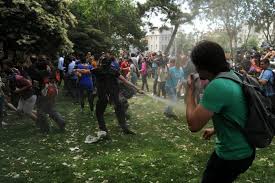
photo : courtesy gloablpost.com

Photos and reports from Istanbul in Turkey of late, and now from Ankara, the capital, chronicle yet another Middle Eastern nation engulfed in popular unrest. What started as a peaceful protest in Istanbul by people who wanted to save a major city park from urban development metastasized in just days into a violent confrontation with Turkey’s government police.

To many, this looked like Cairo, Egypt all over again.

Turkey, however, is no Arab country in long-suppressed need of an “Arab Spring.” Turkey is by no means an autocracy. It does not deny rights to women. It does not persecute Muslims. Its big city, Istanbul, is a modern, cosmopolitan, tourist destination place as alive with nightlife, fashion, restaurants, and money-making as Paris, Rome, lor Barcelona. It hardly looks, to the outsider, like ground zero for major anti-government riots, even though in Byzantine times, when then Constantinople was by far the most populous, multi-cultural, and commercial city in the Western world, mobs and riots were common. Justianian and Theodora, famous as a team, famously put down the most dangerous one, the week-long Nika riots of 532.

Since 1920, when Kemal Ataturk and his fellows overthrew the last Ottoman sultan and established a secular democracy, Turkey has – at least on paper and intention — devolved power to its people. Ataturk’s constitution, moreover, proclaimed Turkey a secular society. Religion there was but not in the government. This was radical; but it held. Until about twelve years ago, when an Islamist political party challenged for power — and soon won Turkey’s Parliament — Turkey was governed by rational designs, not those of faiths.

However, there has always been a dark side in Turkish society — a tribal mindset, an ethnic exclusivity that has done more than its share of harm. In 1915 it was the Armenians who suffered from Turkish ethno-ferocity: more than a million Armenians were slaughtered; another million emigrated (many to Watertown, Massachusetts). At war with Greece from 1920 to 1923, the victorious Turks expelled milions of Greeks from their almost 3000-year homelamds on the Ionian coast. Greeks remained in Istanbul — to them, Constantinople — but were never fully accepted, and today less than 10,000 Greeks remain in the city that was, for more a thousand years, the capital of the Greek Byzantine Empire. More recently it has been the turn of Turkey’s Kurds, a Persian-related people who number many milions and dominate the country’s large southeastern portion (a pie-slice shaped area abutting Kurdish zones of Syria, Iraq, and Iran) to feel the steel of Turkey’s armed forces suppressing them. Until recently even the Kurdish language was banned; the Kurdish leader Abdullah Ocalan remains imprisoned even while negotiating some kind of accomodation with Tiurkey’s Islamist government.

This intolerance has now developed a religious taint. Outside the big cities, women are forced to cover their heads, as in other Islamist countries. Religion in politics has led to Turkey’s estrangement from its long-time, major Middle Eastern ally, Israel. The Islamist inclinations of Turkey’s Erdogan government have now made it almost impossible for Turkey to join the European Union — in the 1990s it looked sure to win admission, only to be stopped by Western European nation’s concerns about Turkey’s long record of human rights violations. (in fairness, Turkey’s human rights record looks good compared to what is commonplace in the Arab Middle East.) And the Euro Zone’s rejection of Turkey’s application to join has, in turn, generated a backlash in Turkey that has taken the nation down a path that Turkish urbanites cannot accept.

Since Erdogan and his Islamist, Justice and Development (in Turkish, the “AK”) party first came to power in 2002 — winning a two-thirds majority in Parliament — Turkey has reformed its economy significantly; as a result, the AK was re-elected handily in 2007 and again in 2011. In addition, as Erdogan’s Wiki entry notes, Erdogan’s government, seeking membership in the EU, gave the European Court of Human Rights supremacy over Turkish courts, reduced the powers of the 1991 Anti-Terror Law, and abolished some restrictions on freedom of speech and the press.
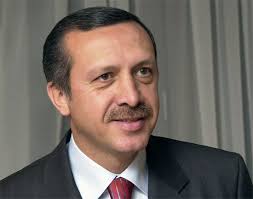
Turkey’s Prime Minister, Recep Erdogan

Nonetheless, during recent years, as it became apparent to Erdogan that the European Union was not goinbg to admit Turkey to membership any time soon, he and the AK moved away from the reforms they had put in place and instead have embraced the rural, reactionary, religion-ist people who were from the first the AK’s power base. Politically, that bis what advanced political forces sometimes do when they appear to have advanced too far. Unfortunately for the AK, it has let the cat of freedom too thoroughly out of the bag for it to be easily belled. Freedom is a sticky thing; once people have it, they find it glued into their souls. Freedom becomes who the free are. And rightly so.

Thus in today’s NY Times we find a full page ad, on page A13, in which the “democracy Movement” procaims “People of Turkey have spoken ” WE WLL NOT BE OPPRESSED.

As the ad then asserts: “Millions are outraged by the vioolent reaction of their government to a peaceful protest aimed at saving Istanbul’s Gezi Park.

“Outraged, yet not surpriosed.

“Over the course of Prime Minideter Erdogan’s ten-year term, we have winessed a steady erosion of oyr civil rights and freedoms. Arrrsts of numerous journalists, artists, and elected officials and restricions on freedom of speech, minorities’ and women’s rights all demonstrate that the ruling party is not serious about democracy.”

And on from there, for an entire NY times page reciting a list of grievances as long –and evidently as true — as those itemized in our own 1776 Declaration of Independence.

What is going on in Turkey  is the opposite of what happened in the “Arab Spring.” The Arabs of Spring were rebelling to gain rights they had not had. The rebellious in Turkey are rebelling to re-secure rights they have already had — but now see taken away. Clearly the events at Gezi park were not the beginning. The anger has been stoking for years. Better that it act now than wait till the repression-minded Erdogan government make future resistance too little too late.

—- Michael Freedberg / Here and Sphere

NEW JERSEY SENATE SEAT l CHRISTIE CHOOSES CORRECTLY

photo : courtesy of minnpost.com

New Jersey Governor has chosen to hold a special election in October to pick a successor to Frank Lautenberg, New Jersey’s five-term US Senator who died last week. We at Here and Sphere applaud Christie’s decision.

When a US senator dies, in most states it’s up to the Governor to appoint a successor or schedule a special election. Whichever choice he makes, he is bound to anger this or that interest group or political party. Governor Christie is up for re-election in November, and all polls show him likely to win a huge victory. His willingness to do what he thinks is right for the people of New Jersey, regardless of party interests, is the primary reason why he is so popular. Rightly so. People in America are fed up with political party goals taking precedence over the needs of the nation. In particular people see the GOP as putting itself first, America second. Chris Christie, though, has spurned this GOP-first agenda — and has won the trust of his state’s voters by doing so.

It looked as though the death of Senator Lautenberg might, finally, trigger a false move by Christie. He, a Republican, could appoint a successor — a Republican, certainly, replacing the Democrat Lautenberg — and schedule no election until November 2014. That is what the national GOP wanted. Or he could have called a special Senate election, to be held on the same November day that he himself is up for re-election. That is what the Democrats wanted, because their preferred Senate candidate, Cory Booker, could bring out a large vote, win the Senate seat, and maybe even threaten Christie’s re-election.

Instead, Christie decided to schedule a special election in October. The decision has angered both parties. It also will cost the state maybe $ 20 million dollars and so has angered some state budget hawks. Governor Christie’s response ? “the people of this state are entitled to choose a new senator, and as soon as possible, and if it costs $ 20 million to do that, I don’t care.”

It’s the right response. $ 20 million spent to ensure that the voters choose their Senator quickly — and to do so separately from Christie’s own re-election, thereby not confusing the two races with one another — ensures that the interests of voters, not of political party interests, will prevail in New Jersey. And if his decision angers both parties ? So much the better.

No political message is more needed in today’s America; and no politician in today’s America has shown anything like Christie’s boldness and consistency in pursuing it. We congratulate him.

— the Editors

Time for the ” Question of the week “

Does better insurance affect quality of care?

We have all been there, sitting in a Hospital waiting room – waiting, and waiting, and waiting…Where it feels as though we are living every minute in dog years. We sift and skim through the pamphlets, magazines, and what’s left of the daily paper….

On to the vending machines we go, rummaging through our purses, wallets and pockets in hopes of having just enough.

Finally the TRIAGE doors swing open. The clipboard-clad nurse decked out in flowery scrubs looks down at the list of hope and devastation, scrupulously giving it a twice -over.  As she looks up…. breaths are held…hope is high….fingers are crossed….And then……Nope instead of you, and your feverish, achy, flu ridden self……She has the AUDACITY to summons “Mr. Snazzy sniffles Fancy pants”!

……………??? WHAT???………………

What makes him so special?, He got here after me, didn’t he? He looks fine to me! Everyone mumbles, grunts, and complains….including yourself.

Now perhaps he was the last one to join in the wait, maybe he was far less critical than others waiting, he may have even been non- emergent completely…

So poses the question of hospital protocol, and politics.

Was he indeed called, triaged, treated, and sent on his merry way simply because:
HE HAD BETTER INSURANCE???

At Here and Sphere we would love to hear from you. Give us your thoughts,opinions, and feedback….

Drop us an E-mail at Here_and_Sphere@yahoo.com. Make “Question of the week” its subject. Maybe your response will be featured in the follow-up…

—- Heather Cornell

image

IN VIRGINIA : VOTING RIGHTS RESTORED

photo : courtesy CNN

VIRGINIA, MAY 31st, 2013 —- On this day Governor Bob McDonnell (R) by decree restored immediately the voting rights of some 100,000 Virginians with anon-violent felony on their record but who have completed their sentences and have no criminal charges pending against them.

We at Here and Sphere strongly support Governor McDonnell’s action.

Nothing is more basic to citizenship in America than the right to vote. It should be assured by all lawmakers and executives and by those who administer our laws and work at our politics. To the powerless, especially, who need the vote most — because in many cases it’s all the lawful power that they have — should the right to vote be aggressively assured.

The right to vote has commanded the courage of generations; in the Civil war, hundred of thousands of Union soldiers died to bring Black slaves out of slavery and into citizenship. The right to vote was then assured to women, and then to citizens age 18 to 20.

The Voting Rights Act of 1965 — secured only after years of protests and brutality inflicted upon the protesters, including murders on the part of its opponents — gave the Federal government full power to enforce and safeguard the right to vote, and to this day the Justice department oversees that guarantee in many Southern states — and elsewhere.

Nor is this enforcement a mere leftover rom settled history. During the period 2010 to 2012 right wing groups — such as “true the Vote” — and, regrettably, many red-state governments sought to suppress voting by persons whom they figured would vote “blue.” early voting hours were cut, “voter ID” laws were rushed through and True the Vote sent poll watchers to polls in “blue” precincts to challenge and, so they hoped, intimidate voters whose likely vote choice they opposed. The cry of “vote fraud’ w raised to justify all these measures, even though actual vote fraud is a crime already, with heavy, felony penalties and is actually quite rare. Very, very rare.

t did not work. Our “blue” President was passionately re-elected, and the “red’ candidate’s party was reduced to almost non-existence among groups targeted for vote suppression — groups whose members turned out to vote in record numbers. as they should have. Threaten an ametican’s right to votes, and he will definitely exercise that right if only to spank you.

In Florida, where Governor Rick Scott secured legislation severely cutting back on early voting, only to see his approval ratings fall to the basement, he now advocates repealing his own legislation !

And now, in VA, Governor McDonnell has, on his own, restored voting rights to persons who did not have them even without “vote suppression” moves.

Hopefully it’s a trend. And that during the 2016 presidential election we will see candidates competing to see which of them can assure voting rights the quickest and the easiest to the most Americans.

—- the Editors


MASSACHUSETTS : PULL BACK THE CAP ON CHARTER SCHOOL OPENINGS

The Charter School debate has been brought to the fore recently two events; ( 1 ) new legislation filed in January had its General Court committee hearing yesterday and ( 2 ) a candidate for Boston mayor, John R Connolly, has made raising the cap an issue in his campaign, and has garnered editorial support from Boston Globe columnist Scot Lehigh.

The issue is not a simple one. Massachusetts school laws don’t just address school openings or curriculum. Funding goes first to standard public schools; and teachers in standard public schools generally belong to either the BTU or MTA, two very powerful teachers’; unions. The involvement of union interests arises because most charter school teachers are not union members. that’s because the teachers’ unions discourage members from working in charter schools. Indeed, the teachers’ unions opposed the creation of charter schools from the beginning, and they still do oppose them. They oppose the cap-lifting legislation that we at Here and Sphere would like to support. 

Funding is also an obstacle, because money directed to new charter schools that the new legislation seeks to allow is funding taken away from standard public schools. This matters, because even if this legislation is adopted, most students will continue to attend standard public schools — the very schools with the poorest record of learning achievement. We are not comfortable with taking money away from schools that often need more of it, per pupil, than better-performing schools. If you are familiar with the boggling problems such schools face — equipment theft, assaults on teachers, school security, and more — you’ll know why.

That said, we favor lifting — but not yet abolishing — the current cap on how many charter schools will be allowed to establish. The argument for doing so is pretty conclusive:

!. Massachusetts charter schools way outperform stabdard public schools in standardized test results — tests that decide a child’s opportunity to attend a great university or college.

2.Massachusetts charter schools offer much more challenging curricula, with greater flexibility, than does the curriculum offered in standard public schools.

3.Just as important as the above, parents have lined u in huge numbers to enroll their children in charter schools. The statewide waiting list, according to reports, stands at ,000 and is growing daily. If parents want charter schooling for their children — and if they are right to do so — how can we in good conscience refuse them ? We shouldn’t.

4.Charter schools work especially in urban areas where standard school performance ranks among the lowest in the state. We strongly support the right of urban children to get schooling as strong as that commonly available to students in wealthier communities.

The current legislation seeks to abolish the cap on charter Schools. We wont go that far just yet. Our position is a middle one: the state should adopt the currently filed legislation and lift — but not yet abolish — the cap limits on how many charter schools can open.

— the editors

ROAD NOISE — JUNE 1st 2013

photo (1)

WELCOME TO THE FIRST EDITION OF ROAD NOISE —- WHERE YOUR ROAD/MOTORING INTEREST AND THE AUTO WORLD MEET.

FROM FORMULA 1 (BZZZZZ) TO ELECTRIC VEHICLE (MMMM) AND ALL ROAD NOISE IN BETWEEN.

ROAD NOISE NEWS : AS AMERICANS DROVE ON MEMORIAL DAY WEEKEND, THE “ROAD NOISE” HEARD AROUND THE WORLD TOOK PLACE AT THE MONACO GRAND PRIX — WHERE NICO ROSBERG WINS, IN HIS MERCEDES, WITH AN AVERAGE SPEED OF 113.378…… SOON FOLLOWED BY THE 97TH RUNNING OF THE INDIANAPOLIS 500, WITH THE AVERAGE SPEED OF 187.433 AND A HUMAN INTEREST STORY — OF TWO BRAZILIAN, CHILDHOOD GO-CART FRIENDS, KANAAN AND HELIO CASTRONEVES, WHO, AS ADULTS DID THIS :

HELIO BECOMES 3 TIME INDY WINNER, TRYING FOR HIS 4TH, ONLY TO WATCH HIS BROTHER KANAAN SUCCEEDS , AFTER 12 TRIES (PERSISTENCE !) , IN FINALLY WINNING THIS YEAR’S INDY 500 — AND GATHERING A 2.3 MILLION EARNING.

ALSO, FOR NASCAR FANS, THE CHARLOTE COCA-COLA 600 RAN UNTIL ON LAP 122 A FOX OVERHEAD TV CAMERA CABLE SNAPPED ALLOWING AN UNUSUAL TIME OUT INTERFERENCE FOR CAR REPAIRS.

ROAD FEATURE VEHICLE : THIS WEEKS SPECIAL INTEREST VEHICLE IS A SMALL ELECTRIC- POWERED VEHICLE SPECIFICALLY DESIGNED FOR WHEELCHAIR USERS. ASSOCIATES OF MINE IN ATLANTA ARE DEVELOPING THIS VERSION. THIS VEHICLE TRANSFORMS A STANDARD MANOEUVRABLE AND EFFICIENT LOCAL CAR INTO AN OPEN INTERIOR SPACE LSV, BUILT TO HOUSE THE DRIVER’S OWN WHEELCHAIR.

ALL HE/SHE HAS TO DO IS SIMPLY TO OPEN, WITH AN ELECTRIC REMOTE, THE EXTRA LARGE REAR HATCH DOOR, THEN ROLL IN, UP TO THE STEERING WHEEL, THE WHEELCHAIR LOCKS INTO PLACE WITH EASY REACH OF THE CARS CONTROLS.

PHOTO COURTESY OF CARS AND CARTS ATLANTA GEORGA

ROAD HISTORY :  WEST LYNN, MASSACHUSETTS IS KNOWN AS THE HOME OF GENERAL ELECTRIC COMPANY’s AMERICAN JET ENGINE WORKS. BUT DID YOU KNOW IT WAS ALSO THE HOME OF ONE OF THE FIRST GASOLINE DRIVEN MOTORIZED VEHICLES ?

AS THE STORY GOES, IN 1894 HIRAM MAXIM, A THEN RECENT COLLEGE GRADUATE, HAD INTEREST IN APPLYING AN EARLY 3 CYLINDER GASOLINE POWERED PISTON ENGINE TO HIS ADULT SIZED 3 WHEEL BiCYCLE. CREATING ONE OF THE FIRST MOTOR PROPELLED VEHICLES. MOST PARTS PUT TOGETHER FROM THE WELDING COMPANY WHERE HE WORKED, HE, FROM HIS GARAGE AT HOME. AFTER NUMEROUS TRIES FROM HIS GARAGE IN WEST LYNN, MASSACHUSETTS HE SUCCESSFULLY RAN THE ENGINE, PUT HIMSELF ON THE 3 WHEEL BIKE UNTIL IT TOOK OFF AT A GREATER SPEED THAT HE IMAGINED UNTIL HE FINALLY FELL OVER THE FRONT, LANDING SCRATCHED AND BRUISED BY PROUD OF IT ALL.

HIRAM MAXIM WENT ON TO PLACE 3 AUTOMOTIVE PATENTS CREATING SOME OF THE WORLDS FIRST MOTOR DRIVEN ROAD NOISE.

ROAD MUSEUM & EVENTS : NOW THE LARS ANDERSON MUSEUM IN BROOKLINE MASS IS RE-OPENED, ITS NEW EXHIBIT ‘PATINA, PROVENANCE, ORIGINALITY’, A TRIBUTE TO THE RESTORATION OF THE COLLECTIBLE AUTOMOBILE, LOOKS TO BE AN INTERESTING VIEWING.

ROAD SAFETY :  And according to the ‘National Highway Traffic Safety Administration’, ‘many people call them car “accidents”, but really the correct term is “collisions” or “crashes”. In a vehicle collision someone was acting in a way that caused the crash to happen which could have been prevented had they acted differently. If it could have been prevented it is NO accident’**. You decide.

ROAD ECONOMICS   ROAD NOISE NOW LEAVES YOU WITH THIS SESSION’S QUESTION FOR NEXT TIME:  IS THE CHINESE CAR COMING TO THE USA WITHIN FIVE YEARS?

THANKS FOR JOINING US !

TILL NEXT TIME MAY YOUR ROAD NOISE LEAD YOU TO YOUR BEST GOALS.

—- Charles Barry

*The Roads We Traveled/Waitley 

** NHTSA