BOSTON MAYOR RACE : INTO THE FAR TURN NOW

Image

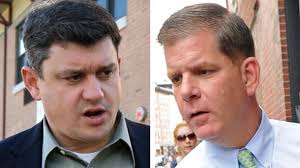
^ a John Connolly – Marty Walsh final ?

August will arrive this week, leaving only seven weeks until Primary day, at which the two Boston Mayoral Finalists will be chosen. At this point the preliminaries are over; the race is taking on a distinct shape; and those on the wrong side of the taking are beginning to get shelved. It’s the beginning of crunch time. Where does the race stand as the crunch starts ?

Polls have been taken and published. These show that John Connolly, Marty Walsh, Dan Conley, and Rob Consalvo occupy a “top tier” — grabbing from 8 % to 12 % of the assured primary vote — and that Felix Arroyo, Charlotte Golar Richie, and Mike Ross make a “second tier,” each at 5 % of the assumed vote. Four other candidates, Charles Yancey, John Barros, Bill Walczak, and Charles Clemons, also draw a measurable vote.

No surprises in any of this — nor is it a surprise that the “new Boston” candidates are splitting among themselves a vote that, if unified, would assure such candidate making it to the Final.

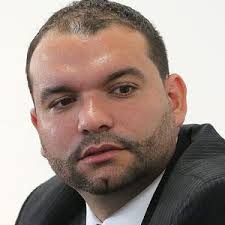
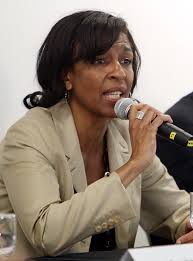
Arroyo, Ross, and Golar-Richie, their support totaled, easily top the “traditional” field. Indeed, their potential vote should be larger than polled: because the polls taken have tended to concentrate on the most assured voters — namely, the “traditional” voters. Surely, if one or other of the “new Boston” candidates is seen as having a solid chance of winning, “new Boston” voters will turn out in larger than polled numbers. Being seen as a solid potential winner is the major indicator, in almost every election, of a candidate’s ability to turn out voters.
Image

^ Felix G. Arroyo : solid contender if the “new Boston’ vote unifies
Image

^ Charlotte Golar-Richie : a sure winner in November If she can get to the Final

Unhappily for “new Boston,” this Primary  offers no fewer than six viable “new city” candidates. None has made a move to drop out. The six probably draw about 20 % of the polled sample, and on Primary day might garner measurably more. It will do no good, however, if all six continue in the race. All six will lose. This is a disappointing prospect and one that we at Here and Sphere decry. We feel that it is time for Boston to elect a “new Boston” Mayor, “new” voters representing at least two-thirds — probably more — of the entire city vote.

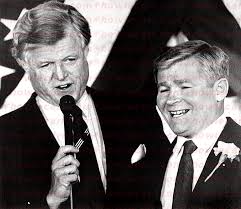
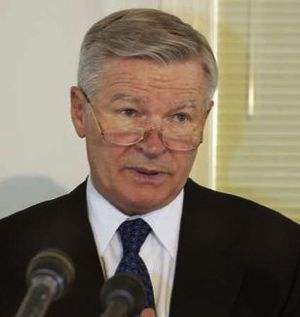
If no “new Boston” candidate withdraws soon, before the ballot is printed, the chances are strong that the Final will choose between two “traditionalists.” Currently the top two candidates in polls are City Councillor at Large John Connolly, at 12 %, and state Representative Marty Walsh, at 11 %. We feel that’s an accurate picture. Walsh, a four term Representative, has a solid Dorchester base extending strongly now into South Boston and, somewhat less strongly, into Jamaica Plain, West Roxbury, and Roslindale. He has won the backing of Local 18, the Boston firefighters’ Union. As for John Connolly, son of former Secretary of State Michael J. Connolly, he lives in Ward 20 — which will likely cast ten to 12 % of the entire Primary vote — and has shown broad city-wide support besides. Connolly is waging an active house party and issues campaign, focusing on Boston Schools parents. He can also count on much trust from city workers and their families gained during his terms on the Council.

Dan Conley, the Suffolk County District attorney, has by far the most money, but his city wide support seems surface at most; huge publicity for him, thanks to the many murder investigations under way, does not seem to have added anything to his image as a possible Mayor. Crime, after all, is a huge issue, but not a big Mayoral issue. Schools, development, zoning, and culture seem the issues most germane to the mayor’s office. (NOTE : a report in today’s Herald opines that Conley might switch to run for Massachusetts Attorney Geerral if Martha Coakley, as expected, declares for Governor, Conley has not responded yet.)
Image

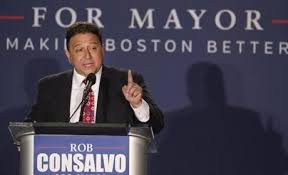
^ superb campaign but not enough ? Rob Consalvo

Then there’s Rob Consalvo, who holds the district Council seat that Mayor Menino held from which he won election as Mayor. Consalvo has the problem of bringing together a widely dispersed — and much less ethnic than it used to be — “Italian” vote, from East Boston, the North End, and Hyde Park, and of lacking much city-wide familiarity. That he has nonetheless managed to poll close to the top vote-getters is a credit to the detail and mastery of his very professionally directed campaign. Can Consalvo, thus well directed, perhaps make it into the final ? Probably not.

Which leaves Boston to choose between two men as different as similarly backgrounded people can be. it will, actually, somewhat resemble the 1983 race between David Finnegan and Ray Flynn to choose who would face “new Boston” candidate Mel King. Finnegan lived in West Roxbury, Flynn in South Boston, and as one shrewd observer said, it was a race between “discount store cashiers” and “Boston Latin School.” The same class gulf may well apply to a Walsh versus Connolly Final. The Flynn and Finnegan fight was heated and often bitter — the two men seemed to despise one another. Expect nothing less if a Walsh versus Connolly Final imposes itself on a City that can use some drama not arising, thank goodness, from murder indictments and trials.

—- Michael Freedberg / Here and Sphere

TRIAL OF WHITEY BULGER — POLL : WILL WHITEY BULGER TESTIFY ?

Image


It is now the defense’s turn.

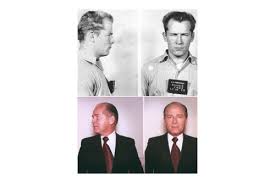
All eyes are on James Bulger, alias The White Man, nickname Whitey.

Will Whitey Bulger testify ? you tell us. Yes or No ?

THE TRIAL OF WHITEY BULGER : THE HORROR AND THE HATE

Image

^ the many years of James “Whitey” Bulger

—- —- —-

Watching the long parade of thugs, pugs, and lugs walking up to and planting themselves in the witness chair at Federal Court these past three weeks has put this writer into the paranormal. i lived and did political work in the city these fellows dented. Though my center of gravity lay several fenders to the southwest — in Roslindale, west Roxbury, and Hyde park — I had begun my roadwork in Dorchester — Upham’s Corner to be exact — and spent many hours, days, and weeks working Dorchester campaigns and activities. The South Boston these fellows destructo’d lay only a mile or two to the north, and at many many Dorchester events the vinegar of South Boston was often tasted. And occasionally I ventured into Southie itself.

Image

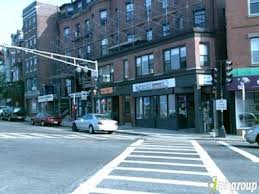
^ Southie : corner of Broadway and Dorchester Street

We knew what that meant. We were not fools or naive. It was always there, the under-rumble of hard nose. Later, as William Bulger began his political rise, we could feel the Bulger shoulder, hear its footstep, see its shock wave. There were stories, too, about both brothers — each different yet both of one brick. Of those stories I am not sure that i should write even now, decades after; suffice it to say that one very powerful politician from “Southie” had his life crunched pretty good by the Bulgers, according to what we heard.

It started way back, in 1972, when a certain associate of Whitey Bulger’s brother Billy, one Joe Toomey, was a Democratic state Committeeman from the then still intact South Boston Senate District. Joseph Moakley, who was then the senator, had already announced that he was challenging Louise Day Hicks for the “South Boston Congress” seat — he went on to win it that Fall. Anyway, in the 1972 Presidential Primary — which is when State Committee people are elected — in march, an associate of my political sponsor — who has long since passed — decided to run against Toomey. He lived in “Southie,” of course, and had become best pals with my sponsor: they had served in the Legislature together.

As it turned out, my sponsor’s friend lost to Toomey by only a handful of votes. Never will I forget the faces we saw when we went to Toomey’s headquarters that night to congratulate hi,m. the faces were hard as longshore piers, the bodies stocky as cinder block walls. The air was so angry you could almost see it froth at the mouth. Hate was here, and we knew it, and very quickly left.

Image

If only we had known the whole story ? HaHa, only I did not. My sponsor’s associate knew it well; but his ordeal was just beginning. Two years later, during the crisis and riots brought on by Federal Judge Arthur Garrity’s order that Boston schools be integrated — including the schools of “Southie” — my sponsor’s friend did hos best to calm the situation, to bring people together, to have conversations, not confrontation. The Bulgers were having none of it. Billy, now a State Senator, made the Globe and Herald his enemies; accused them of bias against “Southie”; opposed all efforts at compromise.

As for Whitey ? Nothing can be proved, but we all heard the stories : of how my sponsor’s Southie friend had been run off the road, how he had been forced to flee his South Boston home — he and his wife and kids — and live for a time in Quincy or somewhere. We heard these stories, and we believed them.

Later on both my friend’s friend and Whitey Bulger — and now Bill Bulger too — became much more powerful; more caustic still the brothers’ hate for the man i am thinking of. How palpable was this ? I will never forget one of Bill Bulger’s Saint Patrick’s Morning breakfasts, political as politics can politic — he started the affair, now a Southie must-be-at, for pols and soon-to-be pols, hosted by whoever is South Boston’s State Senator . So there I was, standing in the crowd of “repS’ and City Councillors, campaigners and election junkies, and they and I were watching Bill Bulger do his do on the front stage. Behind him stood a row of the respectful. Prominent among them stood my sponsor’s buddy. Bluntly Bulger ignored his presence on the podium. Passed him by, did Bulger; and he sort of grinned it off, as if to say, “what do you hot-shots out there expect ? This is how it is over here.”

Bill Bulger puts on a time, he run s the time. And so he proceeded to  recognize everyone else on the podium by name. But not the man we were all looking at.

Image

^ State senator Bill Bulger : being paid respect to. at Breakfast.

It was said, when both Whitey the man snubbed by Billy were at the peak of their power, that Whitey warned him, after a particularly nasty exchange — with my sponsor’s friend now in a position to make daily life very difficult for Whitey and even more difficult for Whitey’s guys — that Whitey said to him, “I can’t kill you, but i can kill your friends.” And my sponsor’s friend’s close associates knew that Whitey meant it. It must have been hard for them. They enjoyed the strong protection of closeness to my sponsor’s friend, and still they had no protection at all — almost: for, after all, Whitey did not, despite the threat, kill any of them. But the man whose protection they should have enjoyed did just what Whitey had implied he should do. He went his way, paying no attention to Whitey, and not much to Billy, as he did his thing in Boston and for Boston — all of it, with honor and openness to all. As for Whitey — and for his Senate President brother Billy — they just kept on — amassing power : Billy collected political clout the ways some people collect stamps. As Senate President he controlled the State Budget, and he used that control to control, in part, the administration of the state’s courts. It was said that when Judge Ed Daher, then of the Boston Housing Court, objected to some job moves by Bill Bulger, he found the budget for his Court slashed. Was this so ? We sure thought it was.

Image

^ crossing State senate President Bill Bulger was no joke. And he knew who you were, believe me.

With Whitey, we know what the 1980s brought him. we know it now, that is. The murders and betrayals, extortions and beatings, the guns in mouths, the informing and being informed on. We learned the names and traits of John Martorano — feared relentless killer’; Kevin weeks, tough and snarly; Steve Flemmi — kill or watch a killing; the Winter Hill Gang — not in Southie but in the “‘Ville,” oddly enough;  and John Connolly — the FBI man among men (ya right) and his colleagues at what should have been called the Muff-BI. We hear the names of the killed, the extorted, the beaten, the deceived, the betrayed — and the innocent who happened to be in the line of — ping ! — a bullet or three.

We see the families of the killed, their brains stuck on vengeance — and who can blame them ? They lived, feared, ,loathed, and bled it.

Once I left the Dorchester offices where my roadwork started, I avoided South Boston entirely.  I had friends there, yes, and cherished them. They know who they are.

Some owned taverns that were riotous good fun to have a “frosty” in. Some worked the Lithuanian Club — always a good time on a night. Some ran funeral homes; others played Park League hockey, or baseball for the South Boston Chippewas. So,me worked at the South Boston District Court House on Broadway — a fun place to be on South Boston Parade day in March. Some were gorgeous, spunky gals one met at “happy hours” on Cape Cod — Clawson’s on a Sunday night was a favorite lawn to hit on — or at “Dot So Cha” reunions — big social mixers — featuring folks from Southie, Dorchester, and Charlestown: the Irish heartland of Boston, often held at the Victory Road Armory in Fields Corner.

Image

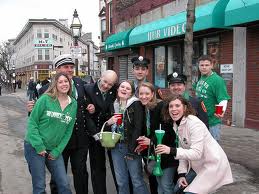
^ gals of Southie : jst as gorgeous spunky as in the 1970os-1980s

And some went on to political fortune : Ray Flynn, Jack Hart, Brian Wallace, Mike Flaherty, Steve Lynch — he by beating Bill Bulger’s son, no less, to win the State Rep seat left open when Jack Hart succeeded Bill Bulger as State Senator.

Image

^ Kevin O’Neil of Triple O’s — today, after the groove has gone.

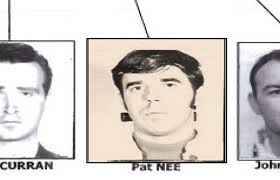
I never did meet Kevin Weeks, though I did know — unforgettably — his brother Jack. Nor did I ever meet Kevin O’Neil,. or Pat Nee, or Billy Shea, or any of the other biggies of Whitey’s close circle. But watching them now, greying and aging, as they testify to what they did, saw, heard, and planned back when, I know that I easily could have known all of the, stood at a bar with them drinking “a frosty” or two, worked campaigns with them — and felt a touch of fear at what they might well have been like in a less celebratory or energetic corner of life. Almost all of us who lived in Boston then knew these guys or guys much like them. We knew the city that they helped scratch, the way a vandal would key a brand new Mercedes, only meaner — and dirtier — yet also, as is a vandal, occasionally fun to be around. In a cynical groove in a then inward-angled city that fortunately no longer exists, for me or for them. Or for the rest of us.

It is over now.

— Michael Freedberg / Here and Sphere

CRIME AND ITS FASCINATIONS : THOUGHTS ABOUT CURRENT MASSACHUSETTS MURDER CASES

Image

PART VI : VERDICT

When we first started writing this Series — Crime and Its Fascinations — Massachusetts Murder Cases — all attention was on a Big Three : James “Whitey” Bulger; Dzhokhar Tsarnaev; and Aaron Hernandez (who has yet to be formally indicted). Much has happened since. First, along came the Zimmerman verdict — in Florida, but of major impact here in Massaachusetts too. And now we have to add the murder of Amy Lord, right here in Boston, to the list of local crime. So be it.

There will be plenty for Here and Sphere to say about all three of our major cases — still under way — and surely a whole lot to say, and learn, about the Any Lord murder, an event that reminds us all too mournfully of several similar local killings ; that of Molly Bish, for example, or that of Alexandra Zapp, back in 2002, in a women’s bathroom at a rest stop on Route 24; or of Christa Worthington a few years ago on Cape Cod. One wants, needs to ask “why ?” We at Here and Sphere ask ‘why” as well.

Still, our Crime and its Fascinations series has focused on trials: the preparation for trial, the trial itself, and now the verdict. The murders are very different, but the process is the same — more or less. It must be. It is that sameness upon which society bases its taming the barbarity of murder.

So then : what Is a verdict ?

We think of a verdict as the jury’s finding. It need not be so. In some criminal trials the defendant chooses to be tried by a judge. In such case, the judge makes the finding. He or she applies the law and decides upon the evidence of fact.

There’s one other trial situation in which the judge, not a jury, makes the decision : directed verdict.  After the prosecution rests its case, the defense may move the court to direct a verdict of acquittal. If the judge finds that the prosecution’;s evidence, taken in its most favorable light, cannot reasonably support a verdict of guilty, he or she will “direct a verdict” — because there is nothing that needs a jury to consider — and the trial ends.

The defense can also moves for a directed verdict after it finishes ITS case. In the recent Zimmerman case, some observers felt the prosecution’s work so iffy that directed verdict should have granted. It wasn’t; but sometimes a motion for verdict-directed is granted. Very embarrassing for a prosecutor…

These exceptions aside, almost all murder trials are heard by a jury, and such is the common notion, So let’s ask again : what is a verdict ?

A verdict is the jury’s assessment of whether the facts as evidenced at trial support the charge. Do the facts determine the charge beyond a reasonable doubt, or do they not ? Most jurors are not lawyers, and they are asked not to think as such but as ordinarily diligent citizens applying common sense and maybe some street smarts as well. The applicable law of the charge is read to them by the judge, in his or her instructions (and these, as we know, can influence the jury correctly or not, as the case may be), and the judge must take great care to instruct his or her jury in a way that does not prejudice the jury’s thinking. Juries give the judge’s instructions great respect — how can they not ? — and that respect almost inevitably sets the jury’s deliberations on a course.

Image

However, make no mistake : most jurors do form their own opinion of the evidence — credibility of witnesses, conclusiveness or not of the forensic evidence, etc. — and go into the deliberation remarkably well prepared to argue for their opinion of it all. In most major cases, much deliberation ensues, because almost all jurors take their duty very seriously and really do defend the house of their opinion vigorously. We tend to think that in a case such as the Zimmerman, in which the jury began its discussions split 3 to 3, that one side or another simply “caves.” Almost certainly that does not happen at all. Jurors do not easily surrender their opinion of a case. Argument becomes intensely detailed, back and forth, and unanimity — which our criminal law requires of a jury — gets reached only when those changing their opinion really do decide that it merits changing. Juries understand that in a murder trial they have the fate of the defendant in their hands — and the concerns of the victim’s family. They care deeply about both. Nobody should ever conclude that a jury makes its finding lightly even when it is unanimous to begin with, much less when it starts its deliberation split.

Image

The argument and the opinions at hand, the jury then — hopefully — reaches a unanimous conclusion. It makes what we call a “finding.” It finds that the facts as presented at trial either support the charge beyond a reasonable doubt or not. So, what is meant by “beyond a reasonable doubt” ? It’s a term in law — not fact — and a key part of any trial judge’s instructions is to set forth the law’s definition of “beyond a reasonable doubt.”

Our definition is as simple as we can make it. In order for there to be reasonable doubt about the evidence, it must support an alternative view of the facts — an alternative that is not merely speculation but has identifiable basis in the evidence itself — to the one put forth by the prosecution. One can suspect, or have a feeling, that the evidence presented may lead to a different conclusion, but suspicion or feeling, though species of doubt, are not reasonable doubt. Reasonable doubt must have a reason.

Whether or not the evidence meets the beyond a reasonable doubt standard is the ONLY finding that a jury is asked to make. It is not asked to question the applicable law, or to follow a hunch, or to import a charge different from the charge(s) made by the prosecution. And the jury that makes this finding must be composed of persons who have not, prior to trial, formed an opinion as to the defendant’s guilt or not. (This was not always so at all. In our law’s early centuries, juries were called from those who had personal knowledge of the matter and were asked to give their narrative of what they knew of it. The idea being that only those most knowledgeable about the circumstances could best get at the truth or falsity of the charge.) We require this more difficult standard because our society holds criminal charges to be so serious that only the most rigorous removal of bias of any kind can render a trial and verdict that gets it right. Almost none of us wants a person falsely accused to have to endure trial, much less be found guilty.

Thus a jury verdict is a finding in which the strictest proof test in all of our law is applied to facts presented. Free as possible of hunch, or inclination, speculation or mistake, a jury verdict almost always disappoints, even outrages, m any who stand outside the trial and do not bear any responsibility to the law or the facts, persons who make their own conclusions as to what happened or did not happen and who think that said conclusion should command the law. These people’s feelings are understandable, because murder is, and must be, an emotional thing, a horrifying thing calling for punishment. But understandable is not the same as responsible. The jury is responsible.

Image

All that stands between the public’s emotions and potential injustice are the jury and its verdict. They are the safeguard of our civilization’s civility.

—- Michael Freedberg / Here and Sphere
 

NOTE : this story was updated at 1.30 PM on 07.27.13

WE APPROVE : THE JUSTICE DEPARTMENT MOVES AGAINST TEXAS VOTE SUPPRESSION

Image

^ Attorney General Eric Holder : sues to protect Texas voters

—- —-

Any worry we may have had, that the Supreme Court’s recent decision to throw out the 40-year-old criteria supporting Section 5 of the 1965 Voting Rights Act might interrupt Attorney General Eric Holder and the Justice Department from protecting Americans’ voting rights, has proved wrong. The Justice Department has moved right ahead anyway, under Section 4 of the act — which requires a finding of actual discriminatory inhtent — to block Texas from so discriminating.

We approve the DOJ’s move. Fully approve it.

No right, other than that of life itself, is more basic to everyone’s equality in our democracy than voting rights. Texas has sought for quite some time now to undermine the voting power of voters its dominant Republican party does not like. This must be fought every step of the way. It is wrong, it is immoral.

The Department of Justice is now moving in Federal Court to enjoin the Texas legislature’s newly drawn State House and State Senate districts — maps that shove voters the Republicans want no part of into districts such voters cannot win. Specifically, the Attorney General Holder asserts that the Texas Republican party is discriminating against Hispanic voters in favor of White voters. Not one week after the Supreme Court ruling, the Texas GOP pushed its manoeuvered map through the legislature and into law. The intent is plain.

If the Federal Court agrees, the GOP map will be blocked. That is the first step. The next step is to get the Court to set up its own panel to draw such legislative districts as will treat all voters fairly. It has been done before, in other states, and not only under the Voting Rights Act.

Holder and his law staff have many issues they can take up with Texas. The state’s radical new abortion restriction law is one; the state’s refusal to offer health insurance to 25 % of Texans is another. School curricula, pay equity for women, and the nation’s most harshly administered criminal law all demand Federal intervention wherever legal means can be found to do so. The first step, though, is to protect every Texan’s equal vote. The DOJ is taking that step. We hail its doing so.  

The need for DOJ intervention may also arise in North Carolina, where a regressive new legislature is repealing some civil rights gains that took half a century to achieve. We support the DOJ for the North Carolina mission as well, if needed — indeed we support the DOJ’s protection of voters’ equality wherever such protection is put at risk by backward powers.

—- The Editors / Here and Sphere

PRESIDENT, 2016 ; EARLY POLLS ALL FAVOR CLINTON and CHRISTIE

Image

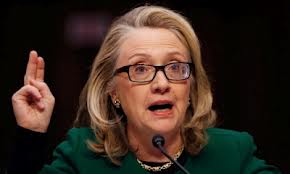
^ Hillary Clinton : beats all opponents

McClatchy Newspapers and Marist have just published a full poll of the Presidential race. It shows that Hillary Clinton beats all challengers, most by double digits:

Clinton v. Chris Christie : Clinton 47 Christie 41
Clinton v. Jeb Bush : Clinton 48, Bush 40
Clinton v. Marco Rubio : Clinton 50, Rubio 38
Clinton v. Rand Paul ; Clinton 50, Rand Paul 38
Clinton v. Paul Ryan : Clinton 53, Ryan 37
Clinton v. Rick Perry ; Clinton 52, Perry 36.

as for the Dem primary, it’s Clinton 63, Biden 13, Cuomo 6.

This poll mirrors those already released by Quinnipiac University and Public Policy polling (PPP). Those polls show Clinton carrying Virginia against all comers and doing the same in iowa and Ohio except against Chris Christie, who ties her in those two states. Clearly, Hillary Clinton right now is the clear favorite to become our next President — If she runs.

Moreover, her huge numbers over Vice President Joe Biden, in the Democratic Primary, make clear that voters do NOT see Hillary as a continuation of the Obama Presidency. Indeed, it appears that they see Hillary as the opposite of him. this is bad news for those GOP pundits who want to assert that after eight years of Obama, it is time for a change. Hillary Clinton IS that change — at least she is how voters see it.

Image
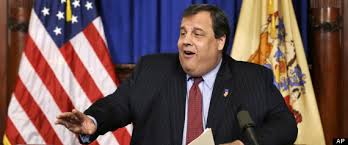
^ Chris Christie : competitive against Clinton and favored by GOP voters

We have also been opining that the above results guaranteed that neither Christie nor Jeb Bush will get the GOP nomination. After all, they run competitively. And to the GOP base, being competitive with a Democrat means compromising with the unthinkable. But the McClatchy/Marist poll of Republican Primary voters indicates that we were wrong. It looks now as though we were wrong. Tea Party loudmouths, fake God preachers, and Tea-district Congressmen may view compromise with Democrats as anathema, but GOP Primary voters appear to favor Chris Christie, whose career has symbolized GOP-Democrat co-operation and mutual respect.

Here is the McClatchy/Marist GOP primary result :

Christie 15
Ryan 13
Rubio 12
Paul 9
Bush 9
Cruz 7

To the GOP loudmouths and haters, Christie is “dead to me.” that is how they talk of him. But to the GOP’s voters, Christie is more alive than any of the other hopefuls, several of whom look rather much like “dead.”

Maybe Chris Christie can do it — win the 2016 GOP nomination. If so, the GOP will be at least useful again to most people — an instrument of policy, not venom.

— Michael Freedberg / Here and Sphere
THE DETROIT BANKRUPTCY IS A STEP OF PROGRESS

Image

^ Detroit : on the move at Movement

Three weeks ago Here and Sphere published Susan Domitrz-Sapienza’s extensively researched story on the comeback of Detroit. As she noted, the economy of “Automobile City” had already reached its bottom and was — and is now — expanding along several lines newly established. The decision of the city’s state-appointed manager to file a Chapter 9 (Municipal) bankruptcy petition would seem, at first, to contradict our reporter’s finding. In fact, the Chapter 9 filing conforms our reporter’s conclusion.

To learn why, one needs to know a bit more about bankruptcy law than the common perception. Most people think of the word “bankruptcy” as the end, a kind of giving up the ghost. This perception is false. There are two kinds of bankruptcy cases. The one that most people think of is “liquidation,” in a liquidation, yes: the petitioner is in fact giving up the ghost — is ending things. There is, however, an entirely different kind of bankruptcy petition : the “reorganization.” In a reorganization filing, the petitioner seeks to restructure its affairs so that they can prosper again. All municipal, Chapter 9 filings are reorganizations.

The reorganizing petitioner seeks to — must — present a reorganization PLAN to the bankruptcy trustee appointed to the case, for approval by its creditors, the Trustee, and the Court. So,me corporate reorganizations fail, but a municipal reorganization cannot : cities have tax revenues that must be paid, and these are quantifiable. all that a city’s reorganization plan needs to is match tax revenues — and maybe also the proceeds of sales of city-owned real estate — to debts. Clearly, in such reorganization, the city’s creditors (including its pensioners) will probably be offered less than full repayment; and yes, each class of creditors must separately approve the reorganization plan. Many amended plans may be filed. But a city’s revenue can be counted on, and, as a reorganization plan may take up to five years to perform, the city’s revenues over that period are likely to offer creditors a fair return.

In addition, financing is often available to reorganization debtors after they file that was not available before ; because (1) post-filing debt is not included in the bankruptcy and thus is not subject to payment of less than full amount due and (2) the reorganization plan, as it becomes an order of court, makes the city’s post-filing credit standing easy to compute. A Detroit bondholder, for example, can readily exchange pre-filing bonds for post-filing bonds, if such are offered.

So much for the bankruptcy law as it applies to the Detroit filing.

The bigger point is that no bankruptcy petitioner files a reorganization until its finances look promising enough for it to present a feasible Plan. Such is the case with Detroit. Its finances are improving. real estate is selling fast. New businesses are starting up. Chrysler’s Jeep Cherokee plant is booming — as was reported recently in the Bew York Times. The Movement EDM Festival is bringing thousands of young visitors to the city on Memorial day weekend. Artists are setting up shop in Detroit, where rents for lofts are cheaper than cheap. Real estate tax revenues will only increase.

All of which is why Detroit’s bankruptcy filing signals the city’s recovery, not its failure.

—– Michael Freedberg / Here and Sphere
AN UNWISE DECISION : THE 4TH CIRCUIT REJECTS “REPORTER’S PRIVILEGE”

Image

^ James Risen : testify or go to jail, says the Appeals Court

We awoke today to find that the Federal 4th Circuit Court of Appeals has overturned a District Court decision that freed New York times reporter James Risen from having to testify in a criminal prosecution by the Justice Department. The Appeals Court has just decided, 2 to 1, that he DOES have to testify.

Risen can, of course, refuse to testify — and go to jail. What a choice.

The case at hand is a trial involving leaked C. I. A. data. shades of Ed Snowden and the “secret’ FISA Court. We know what the Justice department did with that one. But Ed Snowden is not a reporter, and his disclosures are not protected Free Speech. 

The District Court had opined, strongly, that there is, within the First Amendment, a “reporter’s privilege,” by which reporters need not disclose their sources even in the context of a Federal criminal prosecution. The District court argued that to not grant reporters at least some area of “privilege” would crimp free speech itself. For if sources know that the reporter they talk to will have to disclose them, those sources might decide not to talk at all. And thus a story that the reporter has a First Amendment right to publish won’t get published notwithstanding.

The District Court opined that safeguarding the right to publish trumped any governmental interest in having story sources disclosed. We agree with the District Court. We strongly disagree with the Appeals Court’s reversal.

The Risen case is hardly the first one in which the Federal government has forced reporters into jail rather than disclose a source in a criminal prosecution context. The most infamous recent occasion was that of New York Times reporter Judith Miller, who chose jail in 2005 rather than reveal who had disclosed to her that Valerie Plame was a CIA operative. Not until her source voluntarily came forward was Miller released.

All such Federal court deecisions begin with the case of Branzburg v. Hayes, a 5 to 4, 1972 Supreme Court decision (408 U.S. 665) involving a reporter’s refusal to testify before a grand jury. In Branzburg the High Court said :

“The First Amendment does not relieve a newspaper reporter of the obligation that all citizens have to respond to a grand jury subpoena and answer questions relevant to a criminal investigation, and therefore the Amendment does not afford him a constitutional testimonial privilege for an agreement he makes to conceal facts relevant to a grand jury’s investigation of a crime or to conceal the criminal conduct of his source or evidence thereof.”

Ominous it was that the 1972 High Court chose to see the reporter’s refusal to reveal sources as “concealing facts.” The reporter who safeguards a source is not “concealing facts.” Those facts remain factual and can be found by other means. The reporter not revealing his source is, rather, protecting the publishing a story that the public has an interest in — a right to know. If that isn’t a First Amendment interest, what is ?

The Appeals Court now says, “Clearly, Risen’s direct, firsthand account of the criminal conduct indicted by the grand jury cannot be obtained by alternative means, as Risen is without dispute the only witness who can offer this critical testimony.” Is this so ? Is it “clear” ? Is Risen “without dispute the only witness who can offer this critical testimony” ? It is not “clrear’ at all; the source can also testify. And why isn’t anything said to Risen by his source hearsay when testified to by Risen ?

Judge Roger Gregory dissented. His dissent expresses our view too : “Under the majority’s articulation of the reporter’s privilege, or lack thereof, absent a showing of bad faith by the government, a reporter can always be compelled against her will to reveal her confidential sources in a criminal trial,” Gregory wrote. “The majority exalts the interests of the government while unduly trampling those of the press, and in doing so, severely impinges on the press and the free flow of information in our society.”

“The free flow of information.” Indeed. In an era when an Ed Snowden can be pilloried and chased from airport to airport, what is left of “the free flow of information” ? Only that information that the government doesn’t mind us knowing. But the First Amendment was established to protect ALL information, especially and chiefly such information as the powers do not want us to know.

Most often THAT is the information that really MATTERS.

—– The Editors / Here and Sphere

AFTER THE TRAYVON MARTIN CASE : GUEST COMMENTS BY RON WYNN OF NASHVILLE, TN

Here and Sphere note —- as aftermath to the Zimmerman case and to President Obama’s dramatic speech, a conversation and then some has begun in America’s Black communities and among commentators. High on our list of cutting edge commentators is Ron Wynn, of Nashville, TN, who speaks out on Being Black in America with an insistence that reminds us of Bill Press speaking out on progressive politics. we at here and Sphere highly esteem both men, but especially Ron Wynn, whom we are honored to call personal friend.

Being Black in America — and the raw topic of black on black violence that is part of the general conversation — are talks that every American of good will should at least listen closely to, maybe even join. Thus the following Guest Editorial shall serve to begin that conversation at Here and Sphere.

Image

^ news commentator Ron Wynn of Nashville, TN

Wynn : “The current issue of Ebony magazine has the third in a continuing series on crime and violence in the Black community, this one focusing on Chicago. Time’s array of articles on race and the Martin verdict include a lengthy column by Philadelphia mayor Michael Nutter on the need for less talk and more action in regards to killings and crime in Black neighborhoods. These on top of a series of columns, essays, and articles I’ve seen on  Black websites ranging from Black Voices and Black America com. to The Root and Black Agenda Report. I mention this only because I still see people saying that no one’s talking about nor cares about crime in Black neighborhoods, and in particular Blacks who kill other Blacks. If you want to believe that, fine, but there’s ample evidence that shows you are incorrect making that statement.me in Black neighborhoods. These on top of a series of columns, essays, and articles I’ve seen

A friend of Wynn’s then commented thus : “This should also serve as a reminder to folks (or a revelation) that Ebony Magazine has dealt with the Black-On-Black crime matter as far back as 1979. I remember and still have this copy of the publication.

WYNN : “There are a few (just a few) truly concerned people in the Black community who honestly haven’t seen these articles or know about the ongoing battles against crime that many have been fighting for years. But much of this rhetoric is standard right-wing deflection stuff, designed to try and quell the anger over the unjust Martin verdict. The people at National Review or on the Wall Street Journal editorial board could care less how many Black people died in Chicago on any weekend.

Wynn also attended a Nashville area protest of the Trayvon Martin / Zimmerman verdict. Here is his report  :

“Incredible experience this afternoon at the Federal courthouse. For almost two hours (actually close to three since I got there 45 minutes early) a diverse crowd that truly represented the spectrum of Nashville got together to hear words of wisdom, inspiration, information and education at the prayer vigil for Trayvon Martin. But it was much more that just a vigil. Speaker after speaker urged all of us to do more than just show up today and go home. Voter registration, community advocacy and citizen participation were repeatedly emphasized, and a host of viewpoints were represented during the event. I was thrilled to see so many of my friends and others I didn’t know by name, but were delighted to see. A truly memorable event.”:

You can (and should) connect to Ron Wynn at Facebook. Meanwhile, Here and Sphere shall be reposting his Facebook reports on Being black in America from time to time as we go forward.

THE GOP DESCENDS TO OBSTACLE STATUS

Image


^ New Hampshire State Senate leader Jeb Bradley (R), point man on blocking 58,000 NH residents from Medicaid insurance coverage.

It is one thing for a political party to disagree with the policies of the party opposite. It is another thing entirely for a political party to offer nothing to voters but obstacles.

News comes this morning that in New Hampshire, a state that borders on Here and Sphere’s home state of Massachusetts, the GOP majority in that state’s legislature is blocking New Hampshire from implementing the Affordable Health Care Act, popularly known as “Obamacare.” Specifically, the GOP legislature is blocking 58,000 currently uninsured New Hampshire residents from joining the 137,000 already receiving Medicaid insurance coverage.

It stuns us that a political party in a democracy, whose prospects depend on the good opinion of voters, would think it had anything to gain by blocking 58,000 uninsured people from obtaining health insurance and thus improving their health. Never mind that to deny people access to proper health care is unconscionable, immoral; does it not make economic sense for people to live healthier lives and thus miss less days of work on account of illness ? Or perhaps become able to work at all ? What conceivable policy objective is gained by blocking this outcome ?

Unhappily, the New Hampshire GOP legislature’s refusal is no unique event. Since September 2008, when the GOP-controlled House tried to block President Bush’s TARP Program — which prevented the collapse of our entire economy — the national GOP, with few exceptions (Chris Christie, Jeb bush, and John McCain especially) has become merely an obstacle. “Block this, stop that.” Stop America from moving ahead. Every act, almost every speech, that the current GOP has made or said defies us : “We will stop you, people, from doing anything to improve your lives.”

NO to sensible gun control legislation. No to pursuong unibversal hrealth care insurance. No to ther food stamp program by which millions of us love. no to women’s pay equity. No to the Treaty on Disabilities. No to President Obama’s nominations to Federal Courts and Federal Agencies. No to immigration reform. No to reforming “stand your ground” laws. No to Voting Rights updates.

No, no, no.

The Federal government ? No to it, too.

Yes only to putting governement into your vagina and into your sex life.

As we said : this is not a policy agenda. This is an obstacle merely. This is contempt, for you and for us.

It has happened in America before, and every time a political party has retreated to obstacle status, it has meant pain and suffering to millions of Americans.

It happened in the 1840s and 1850s, when slavery was the obstacle. It took a Civil War and 750,000 deaths to unblock that one.

It happened in the 1920s, when business tycoons and their political mouths blocked anti-union legislation; and again in the 1930s when a reluctant Supreme Court blocked FDR’s New deal reforms.

It happened from 1880 to the 1960s, when Southern Democrats blocked all attempts to making lynching a Federal ctime and to accord Black Americans the voting rights and other civil rights that we thought that the grievous Civil War had won.

It took almost 85 years of injustice, torture, killing, and intimidation before finally that block was removed.

How long will it take America to remove the many blocks set up by the current GOP ? How many Americans will suffer and even die because ? Only time will tell. Hopefully it will not take almost a century to remove the block THIS time.

Meanwhile, 58,000 New Hampshire residents wait for health care insurance and the healthier, more fruitful life that we all want.

—- Michael Freedberg / Here and Sphere