BOSTON MAYOR : THE LAST DAYS OF CITIZEN ACTION ?

Image

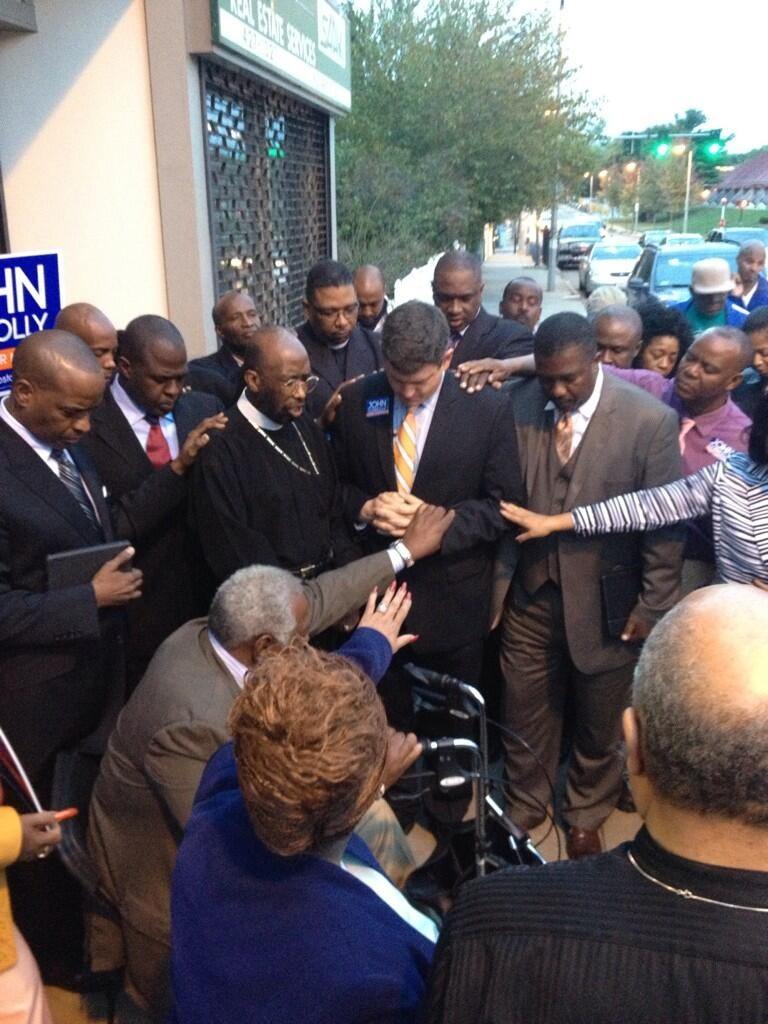
^ citizen action in a classic citizen campiagn ; john Connolly being blessed by the black Ministers’ Alliance three weeks ago

—-    —-    —-

As I look at where John Connolly’s campaign stands now, in contrast to Marty Walsh’s, the thought strikes me : these are last days of citizen action in Boston elections. No matter which man wins.

A true Citizen Movement — moms for school transformation — faces a vast army of interest groups, established powers, and institutional stubbornness. The candidate of Moms raised pretty fair money, but, until last week, when, faced with a sledge hammer of money opposite, he agreed to take his own “outside” money, he found himself confronted by an array of money scandalous in its immensity. This money array has not entered the vote arena out of any goodness of heart. It defends institutional hardball and, let it be said, ripens the thousands of people who staff the money-disgorging institutions which feel threatened by Citizen action.

It used to be, in America, that money had no place in elections; that its presence therein was considered scandalous, even criminal. Candidates shunned campaigning; it ws thought unseemly to stump and door-knock. The office sought the man, not vice versa. The common custom was that holding elective office was an honor and a duty, onerous and of necessity disinterested as much as possible. Obviously those days have long since vanished into bat belfry cobwebs.

Yet even once money came into politics — via Mark Hanna and his vast donation organization for William McKinley in 1896 — and even as the man began to seek the office, by Woodrow Wilson’s time at the latest — citizen action was still the driving force. Money paid for printing campaign lierature. it paid election day ward heelers. But money did not in that era invent interest groips, pay for think tanks, assemble voter profiles, control newspapers. Today money does all of these things.

Example : the Tea party, which would have been a very small, albeit extremely sulfuric, anger cult had not Freedom Works, the Koch Brothers, and the Heritage Foundation vacuumed millions of corporate dollars and spewed them out to the Tea party’s organizers. The Tea Party is fake citizen action. It gets all of its heft by way of media outlets (and their talk show charlatans) which exploit the Tea “movement” in order to generate advertising dollars. The entire thing is fraudulent, utterly bogus, a stain upon whatever honor remains in our political system.

Money endows the vast institutions of learning that have grown up in America ever since the 1862 Justin Morrill Act that created land grant state colleges. Money is the motive force behind the so-called churches whose talk-show host-type pastors have pushed so vociferously into our current politics. We like to think of academics and pastors as avatars of citizen action. They certainly were such in the Abolitionist movement and later in the 1890-1920 progressive era of social reform — the grand decades of true citizen reform action. Even then, of course, reform movements faced stubborn opposition; but with sledgehammer money absent from the fight, citizen action triumphed.

Not so today. At the Presidential level, Barack Obama trumped money institution oligarchy only because he represented a long prior citizen movement — civil rights — and was its climacric event. Once in office, however, Obama found himself blocked at every turn by fake ‘movements,” millionaired media, profit center “churches,’ and billionaired proganandists.

Here in Massachusetts, the cataclysmic US Senate race between Scott Brown and Elizabeth Warren was a fight between money movements and only money movements. Even with outside money excluded, the Warren campaign based itself in the theory that how voters in other states voted for Senator should dictate how Massachusetts voters voted. This was a radical parliament-arization of a system set up to be nothing of the kind ; it should have been shown the door ; yet it resonated, because in nation as drowned by institutional flood, it now really does matter to voters in Massachusetts what Senator voters in Oklahoma or Wisconsin vote for. It matters because there really are no longer any states with state-specific interests. There’s only nationwide pressure groups funded by billionaire money streams.

Senator Warren’s vote-getting operation also drew upon an NSA-like data bank in which every voter found him or herself identified, categorized, boxed, and labeled. This we will all now have to live with. It is nice for a campaign to try to identify its voters; that’s how one gets elected. But to maintain a data bank as invasive as Warren’s — and which has now found its way into the Walsh campaign — is an invasion of privacy every bit as intolerable as the snooping done by the NSA. Voter data as invasive as Warren’s does not come cheap. It is fueled by huge money,. It is said that Warren raised 52 million dollars to defeat Scott Brown. 52 million ! In one United states Senate race !

I call it corruption. Not of the old criminal kind, to be sure. But corruption indeed. Corruption of the very basis of our electoral system.

So now we come to the Walsh campaign. If it looks to you like a labor union, State House, developers and deal makers, local version of the Elizabeth Warren campaign, do not scratch your head : you see exactly what is. The Walsh campaign is the artillery of institutional power, the infantry of entrenched buddy buddy, and — almost now an after thought — a scout platoon of local labor unions : upon all of which veessel is found a beautifully carved bowsprit named Marty Walsh, a man with a laudable life story and a reputation for integtrity.

Competing against this huge ship of state with its gorgeous bowsprit, we find the good ship John Connolly. What is Connolly’s camapign but a throwback to the days, almost 100 years gone, of citizen action ? Of reform, of betterment ?

Watching — and liking — Connolly’s campaign I am struck by its historicity. It’s the kind of camapign that I, decrepit old as I am, studied 50-60 years ago in school : a Mr. Smith Goes to Washington, it is. School moms want to dramatically reform the schools. Candidate wants to reform, even remake City Hall for a very different era. Candidate leads with passion and policy and decent but not obscene money. Moms in tennis shoes gather to help him.

This, dear reader, was what we of my day learned was citizenship.

We now see the result. The candidate of citizen action stands very much an underdog, while the candidate of institutional goniffs struts the streets as an over-dog.

I fully expect that even if John Connolly wins, he will, like Barack Obama since 2009, find himself and his citizen reformers blocked at every turn by immovable institutions employing tens of thousands of people hard-assing to defend their benefits, security, and control; by interest groups determined to chomp the city budget into morsels of pay raise; by the State House crowd, which has always wanted to dictate Boston’s governance; and by the money caches which in nasty secrecy are now pouring their mints into preventing the thing most dangerous to corrupt government : citizen action.

—- Michael Freedberg / here and Sphere
Image

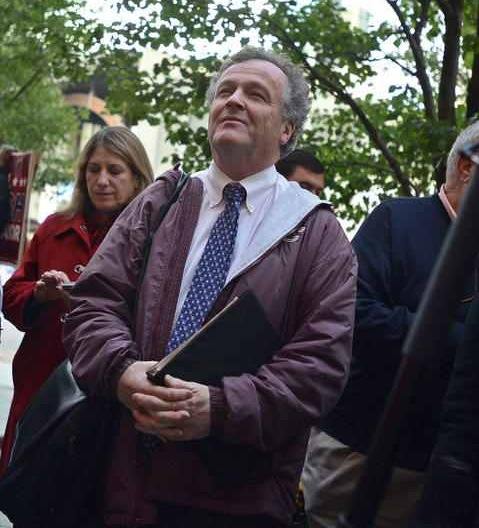
^ institutional high hand : Tom Keady, whom i knew way back when, and as sharp a political mind as I have met in my life, now Boston College’s Director of Development, said tyo be “the architect: of the Marty Walsh campaign.

MEEK AT THE MOVIES : FREE BIRDS ( 2 stars )

Image
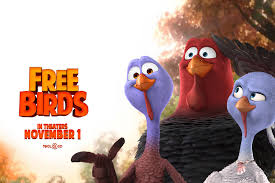
 ^ animated turkey : jimmy Haywood’s “Free Birds”
—- —- —-
Poultry and tradition, that’s what’s on the menu in this animated butterball about America’s family holiday and the secret lives of turkeys. You can’t argue with the film’s angle about the big birds wanting to live, after all how would you feel if all you did was gorge out on death row and pray that your number doesn’t get called as the calendar flips from October to November each year? But re-scripting history and prominently featuring death and violence in nearly every frame, that’s a fairly indignant miscalculation for a kiddie flick.
Not that “Free Birds,” is all stuffing and no trimmings. The 3D animation is crisp and vivid, and there are some quirky touches wittily infused into the script by writer/director Jimmy Haywood (“Horton Hears a Who” and “Jonah Hex”). The most cheeky and rewarding of which is the inclusion of Facebook humor sensation and former Enterprise crew member (Sulu) George Takei as the voice of S.T.E.V.E (Space Time Exploration Vehicle Envoy), a top-secret military time machine. Also adding to the curio is the presidential first daughter as a willful and rambunctious tyke who suffers bouts of narcolepsy.
What any of this has to do with turkeys and Thanksgiving might seem irrelevant, but rest assured : it is all about the birds. “Free” opens amidst a flock of nervous turkeys shuttered in a dark barn debating who’ll be next. One intrepid gobbler, Reginald (voiced by Owen Wilson) makes a call for solidarity and for all to repel the oncoming farmers. For his effort he’s offered up as the sacrificial lamb. Luckily though, his destiny is a trip to the White House where the Reagan looking, Clinton sounding president pardons the young tom and relegates him to the confines of Camp David where the avian settles into a coddled life of watching a cheesy Latin soap opera on cable and ordering pizza from a stoner delivery boy.
Things can’t get any better, but then Jake (Woody Harrelson) shows up — a flighty feathered agent of the T.F.F. (Turkey Freedom Front) claiming he’s seen the ‘Great Turkey’ and that Reggie must come back across time with him to stop the first Thanksgiving to save all turkeys forever. Reggie thinks Jake is nuts and he’s onto something because Jake, while big and imbued with platoon leader-like bravado, can’t stream together a single solid conscious thought. Reggie reluctantly signs on for the quixotic quest and in a bit happenstance, the two uncover a secret silo under Camp David and S.T.E.V.E., who whisks the toms back to 1621, three days before the first Thanksgiving.
You’d think the turkeys of old would be the wild, awkward fliers that grace the bourbon bottles of today, but not so, they’re just as earth-bound as today’s doughy domesticated ilk. To evade the settlers’ muskets and dogs, they’ve taken to the trees like monkeys (swinging from vines like Tarzan) and, like gophers, have built a subterranean colony in a cliff side of the Plymouth shore.
Bizarre as this all may sound, there is historical justification for the treatment.  From the Smithsonian annals, Edward Winslow, an English leader who attended the first Thanksgiving, wrote, “Our governor sent four men on fowling, that so we might after a special manner rejoice together after we had gathered the fruit of our labors. They four in one day killed as much fowl as, with a little help beside, served the company almost a week.”
And with that, Haywood and company render Governor Bradford (Dan Fogler) a plump buffoon and Myles Standish (Colm Meany) a sneering master of the hunt. If your kids are looking for a history lesson from this, be prepared to do mucho explaining.
Ironically, the hunted birds can be seen as an allegory for the Native Americans, hiding in order to survive the invading enemy’s superior firepower while they plot ways to reclaim their land and way of life. Indians are, for that matter, nearly nonexistent in Haywood’s farcical fantasy, other than the notion that Bradford believes they are the key to reversing Plimoth Plantation’s ills, as the settlers have yet to learn how to work the land and are starving; and in one fairly unfunny scene, someone actually does keel over dead from hunger.
Probably the most grim scene however, is the flashback to young Jake’s existence in a caged turkey factory, where thousands of birds sit in muted grey cages fattened and immobile. It oddly evokes connotations of the Holocaust, which is a just another unsettling juxtaposition of the film. The poults in the ‘nursery,’ might educe some ‘awws’ and Amy Poehler as the hen babe with a lazy eye who sets Reggie’s tail feathers on edge, endears too, but in the end, this free-form history lesson is a flightless foul.
— Tom Meek / Meek at the Movies

BOSTON ELECTION : CITY COUNCIL ENDORSEMENTS

Yesterday I posted our endorsements for Boston’s four at-Large Council seats. There was some push-back. Folks evidently do not grasp our method or else disagree that we should use it. The disagreement I can handle : these are our endorsements, so be it. as for comprehending, I will lay out my criteria once more :

1. We insist that a Councillor be independent of the Mayor, even in opposition to him. The Council has little enough power as it is. What good is a Councillor almost powerless if he or she does not stand free of the Mayor and criticize his agenda when it deserves criticism ?
2. We also want an at-large Councillor to demonstrate as much city-wide support as he or she can manage.
3. A Councillor should OF COURSE demonstrate knowledge of the main issues and be able to address them in speeches and on paper.
The above are all the criteria I have used in giving our endorsements. Simple.
On these criteria, there are three candidates who merit Here and Sphere’s unqualified endorsement. I also list their “score” on the two criteria on a scale of 1 to 5, 5 being the highest :

photo (10)

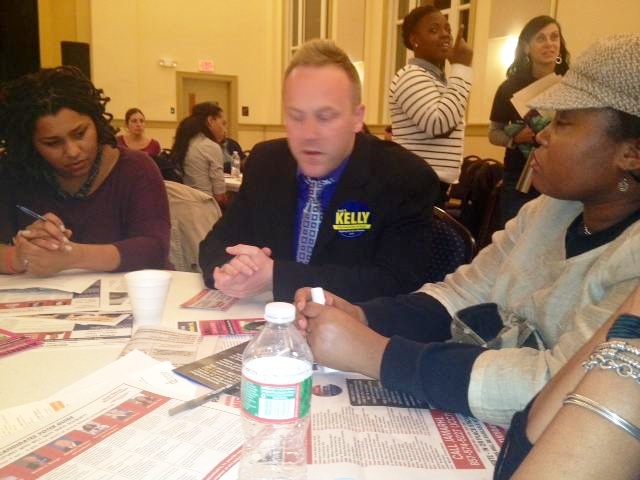
1. Jack Kelly.  Independence of Connolly : 4 Independence of Walsh : 3 City-wide support : 4 ability to address issues : 4
Total score : 15

photo (10)

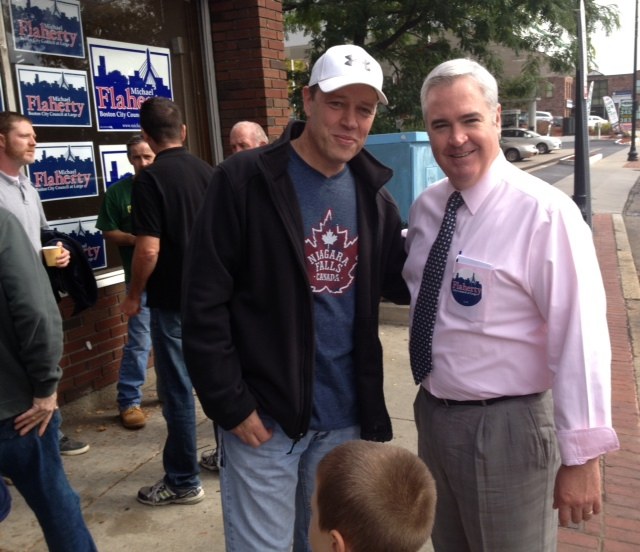
2. Mike Flaherty : Independence of Connolly : 3 Independence of Walsh : 4 City wide support : 5 Ability to address issues : 5
Total score : 17

photo (9)

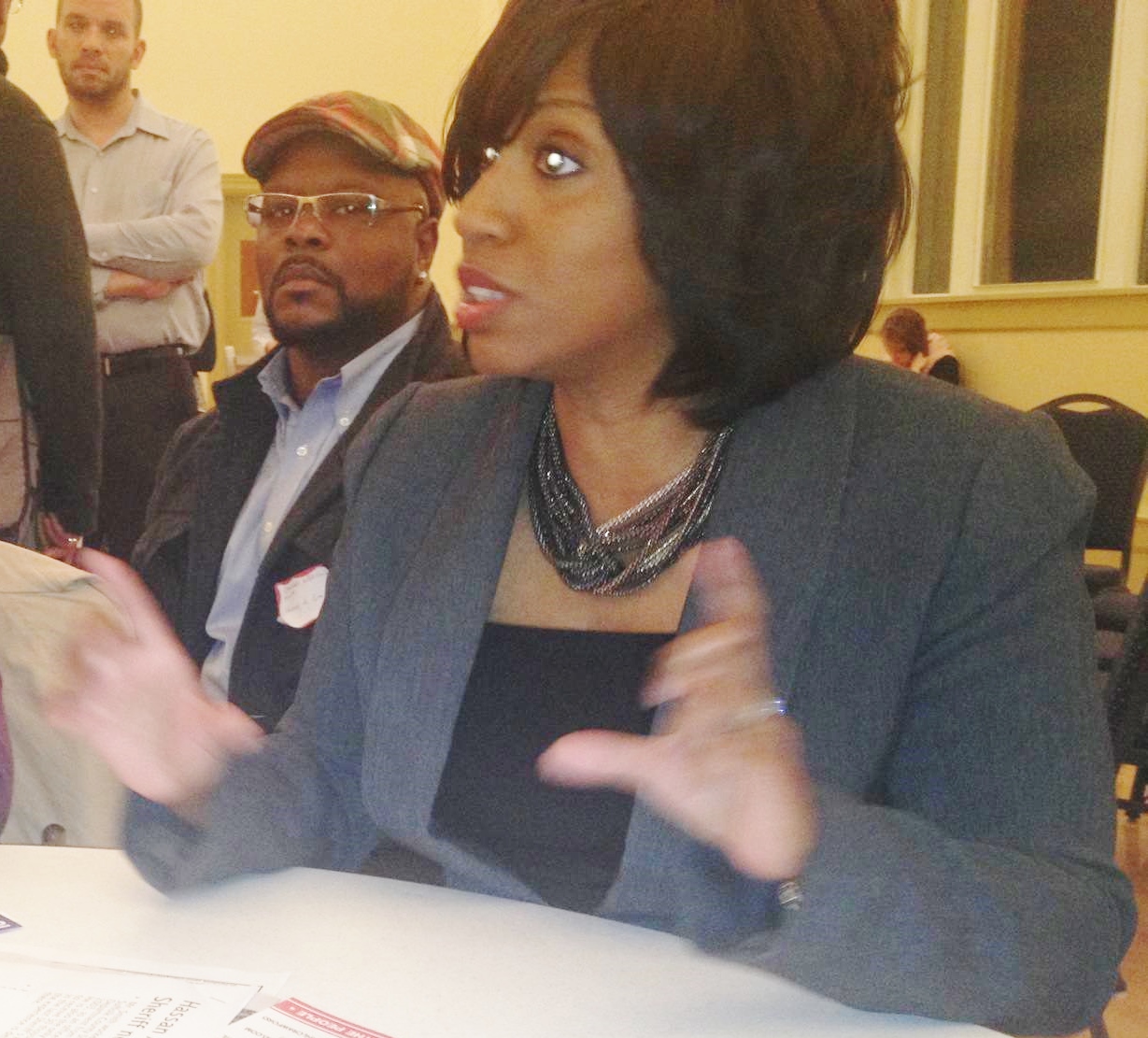
3. Ayanna Pressley : Independence of Connolly : 2 Independence of Walsh : 4 City wide support : 5 ability to address issues : 4.5
Total score : 15.5

Four of the five other candidates merit our endorsement, but a qualified one due to their perceived closeness to one or the other Mayor candidates or a lesser city-wide support than we see in the above three :

4. Marty Keogh : independence of Connolly : 4 Independence of Walsh : 1 City-wide support : 3 ability to address issues : 4
Total score : 12
5. Michelle Wu : Independence of Connolly : 2 independence of Walsh : 4 City-wide support : 5 ability to address issues : 3
Total score : 14
6. Annissa Essaibi George : independence of Connolly : 5 Independence of Walsh : 1 City-wide support : 3.5 ability to address issues : 3.5
Total score : 13
7. Jeff Ross : independence of Connolly : 2 Independence of Walsh : 4 City-wide support : 4 ability to address issues : 3.5
Total score 13.5

You will notice that we make no mention of Stephen Murphy. This is not to disparage Stephen, who has been a personal friend of this writer for many, many years. My reasons for leaving Stephen off the list are two : ( 1 ) I think that his best work — connecting “new Boston” constituencies to “traditional” Boston — is accomplished ; and ( 2 ) Steve was hardly a profile in boldness once the arbitrator’s BPPA award was brought back to the City Council for approval or disapproval. Steve : ya gotta lead, buddy !

OK, so there you have it : our Council endorsements. Now go ye and vote as ye think best.

— Michael Freedberg / Here and Sphere

BOSTON MAYOR : MEL KING ENDORSES MARTY WALSH

Image

^ to the levers of power : Mel King standing with Marty Walsh

—- —- —-

On Wednesday, Mel King, grand man of the Old Left, endorsed Marty Walsh for Mayor at a press conference in the South End. Joining him was former State Representative Royal Bolling, Jr, of Grove Hall, as well as Felix G. Arroyo and John F. Barros. All was friendly; all joined in a ring of hands as King declared that “I stand with Walsh” and “there’s a new rainbow coalition !” It was a moving scene. At age 85 King won’t have too many more such moments; but he is well entitled to this one. Thirty years ago he himself was in a Mayoral Final versus South Boston’s Ray Flynn…

Thirty years ago ! King’s history in Boston politics goes farther back than that. Like Walsh, he was a State Representative. Before that, he was a very vocal, confrontational activist, of a type then common, brought to prominence in the late 1960s by President Lyndon Johnson’s Anti-poverty program. There was lots of money in that program, and a great deal of community planning power — the Model Cities Program overlapped and abetted it — and King was at its center along with activists gentler and, it has to be said, more lastingly effective. Yet effective or not, King drew a following — devoted — on the Left and the Far Left, and this he kept intact, it following him into that 1983 Mayor election in which he lost badly, like Barry Goldwater an ideologue before his time.

Would it be too melodramatic to say that King’s time was yesterday’s press conference ? This was the not the first occasion that Mel King has endorsed a candidate from a constituency not close to his own — in 2009 he and Ray Flynn held a joint endorsement conference for Mike Flaherty; but that was a challenge to an entrenched incumbent, one whom King — and Flynn — both felt had overstayed his time or forgotten “the people.” This time King was endorsing in an open election : endorsing the candidate of established power. So the question presses for an answer : why did he do it ?

One is tempted to conclude that, as Walsh has successfully coalesced all the strands of Boston’s Labor Left, so King the Old Left icon simply joined the party — gave it his imprimatur, as it were. That’s the obvious answer. i think it’s the wrong answer.

For King, the Left is oratory. His objective has always been something else : get people of color to the levers of power. For King, the Left is a means to pry those levers away from the established forces. And Marty Walsh has finally been revealed, this week, not as “the union guy” (though he Is that) but as the quintessential levers of power candidate. The BRA insider candidate. The candidate of developers needing Building Trades union laborers, multi-million dollar money deals, zoning persuasiveness, and planning clout.

Thus the endorsement. The levers of power now reach out from Walsh to King and his fellow seekers of the elvers.

I do not mean to suggest that for King, union solidarity and power to the workers do not matter. They’re part of his life mission.

Prior to the Primary, King was closest to Charles Clemons, a radio station owner whose economic views aren’t much different from Herman Cain’s. King did not support Felix Arroyo — though 30 years ago he and Arroyo’s father Felix D. Arroyo were strong allies — nor did he support John Barros or Charlotte Golar-Richie. It is simple to figure out why : Clemons’s radio station is a lever of power. All media are levers of might. Barros, Arroyo, and Golar-Richie had none, or lesser such levers. Thus King’s support for Clemons, a candidate who was not going to get to the Final in any scenario. King seemed to be saying that he’d prefer to stand by a lever of power that he could count on rather than chance things with the other three.

The Primary proved his skepticism correct : none of the three made it into the Final. King was now free to choose a candidate on better odds : one of the finalists WOULD win. For an entire month he did not choose. But then came polls showing that the wind was blowing in the Walsh direction, and doing so because Walsh’s campaign was wielding goliath-an levers of Hulk power :
$ 2,400,000 — and counting — of special interest money is one hell of a power lever !

King’s choice was thus a simple one, and the man who made his reputation on confronting Irish politcians from the seaside Wards joined hands with one in a “new rainbow coalition.”

Keady beaming ... 10.30.13

^ high point of a thirty-plus year career in Irish Democratic Boston politics : Tom Keady praying that this is not just an illusion

And, symbol of the power levers thus levered, there was Walsh’s reported svengali, Tom Keady — now Boston college’s Director of Development, but long known to me from a time when, as a young political, he worked for then Speaker of the house Tip O’Neill, whose Congressional District included Keady’s home precinct in Brighton’s Ward 22.

Not for himself, at age 85, did King link to Walsh power.This was done, rather, for the next generation of King people. It was a gift from the Grand Old Man of “Arise Ye and take what is rightfully yours.” As such, it is likely to be a powerful endorsement, if it hasn’t come too late in the race in which the tide seems to have already turned..

— Michael Freedberg / Here and Sphere

TRULY A CLASSIC : RED SOX WIN WORLD SERIES 2013

Image

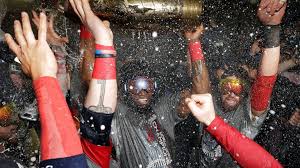
^ champagne and pitch counts : the Red Sox go from bottom to top

—- —- —-

Baseball is not my beat, not at all. But today it has to be. Here in my City, the “olde Towne Team,” i.e, the Red Sox, a team that finished in last place in 2012, this year won their division, league, World. and did so at home, for the first time since 1918, when Babe Ruth was still pitching for the Sox (and setting pitching records long unbroken).  In six games they defeated the St. Louis Cardinals, a team dubbed pretty darn good but which proved highly flawed. The Sox had some flaws, too, and these were hung out to dry; but their flaws were fewer, their hitting devastatingly opportunistic, their pitching good enough — especially Jon Lester and John Lackey.

Lackey ! There’s a story. Written off a couple years ago, labeled a head case by folks who had forgotten, or never knew, just how strong a pitcher Lackey used to be, he became his strong self once again. He pitched just long enough in last night’s deciding game — two outs of the seventh inning — to get the game into the hands of the Sox’s proven late relievers : Tazawa, Workman, Uehara. And this they proved to be. When Lackey finally did get pulled — after giving up four straight hits and one run —  the bases were loaded, the score 6 to 1. The Cardinals needed just one big hit to make things interesting. Tazawa got that last out. The Cardinals never threatened again.

What can you not say about a series that had not one but TWO game decided on fluke plays ? Never before had a World series game been decided by an obstruction call or a runner being picked off. But that’s exactly how Games 3 and 4 ended. Home runs boomed out of nowhere. Johnny Gomes had one in Game 5; it won an otherwise low-scoring pitchers’ duel. Mike Napoli had one. So did Stephen Drew, in last night’s clincher. The real story of this Series, actually, may be that both teams weren’t all that great. Other than the Sox’s David Ortiz, it’s pretty hard to find among either roster a potential Hall of Famer. Great teams do the expected. they roll over the opposition, inexorably : think 1975 Cincinnati Reds, a team with two Hall of Famers (Johnny Bench, Joe Morgan) and one other, Pete Rose, who would have been Hall’ed had he not been Pete Rose. The Cardinals weren’t a great team, and neither were the Red Sox.

The red Sox were just better at devouring the other team’s mistakes. For that, one man deserves all credit : John Farrell. Never, ever say that the manager doesn’t matter. He does matter. Anybody who watched spastic Bobby Valentine do a Three Stooges job last year and then watched Farrell create a team from last year’s leftovers, give them a method, and see them use that method all the way to victory, you know that the manager makes a huge difference. All the more is that the case when the team he is managing isn’t that great.

And then the beards. It’s a silly thing, but sometimes a shattered team looking for a ring to bind them needs a talisman that looks silly in every other context. And so beards it was.

Farrell’s greatest series was not, in fact, the World one. It was the ALCS, in which his Sox found ways to beat the Detroit Tigers. Here was a team as close to great as I have seen in a long time. it has Miguel Cabrera, the only triple crown winner since Carl Yastrzemski did it 46 years ago. He’s a sure Hall of Famer. It also has baseball’s two best pitchers, Justin Verlander and Max Scherzer, and a third, Doug Fister, nearly as good. yet the Sox beat Verlander 1 to 0, as John Lackey out-dueled him. This was John Lackey’s finest hour. Verlander made just one mistake pitch : result ? A Mike Napoli home run. Ball game. The Sox also beat Max Scherzer (season record 21 – 2) not once but twice. The method ? Run up his pitch count, get Detroit’s less than great bullpen into the game, and pounce.

Thus a team that suffered 35 strike outs and was overmatched 99 % of the time used that wayward one percent to beat a team that had greatness in its sights. After that achievement, the World Series was theirs for the wrapping up.

—- Michael Freedberg / Here and Sphere

BOSTON MAYOR : NEGATIVES DOMINATE 3RD DEBATE

Image

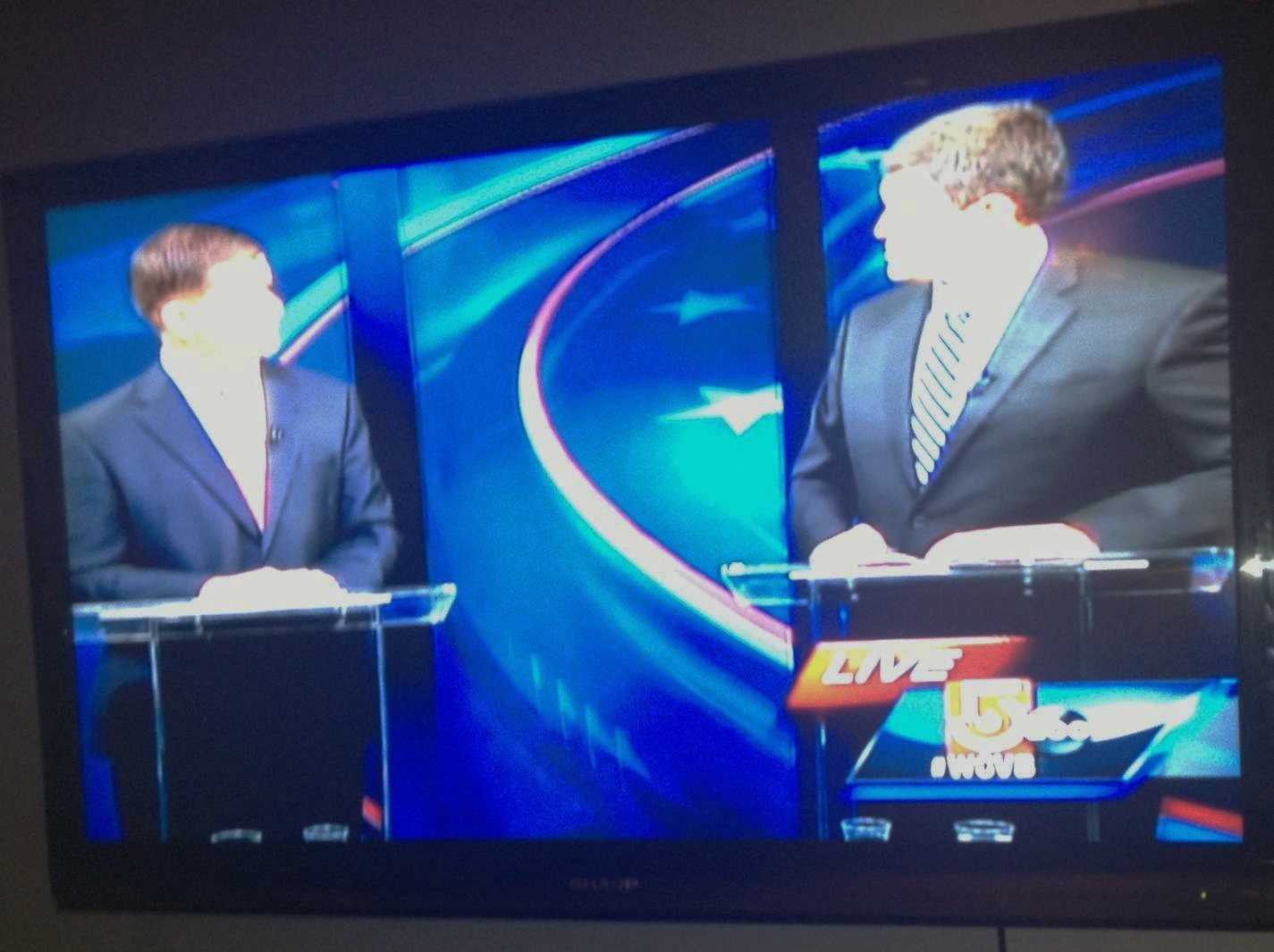
^ gulping down face to face the nectar of Negative Punch : Marty Walsh vs. John Connolly

—-    —-    —-

A month ago I wrote that the Final campaign had to go negative. 65 % of those who voted on Primary day did not vote for either Walsh or Connolly; each, and certainly the winner, would get the big majority of his votes from people who did not want him.

Last night at Debate Number three we saw that negative, at the beginning and at the end. It bookmarked the debate. Clearly both men were determined to assure that, of two men not liked by most voters, his opponent would be liked less.

Walsh attacked Connolly as a “corporate lawyer” and for not doing anything as a City Councillor. “Name one thing you have done,” Walsh challenged. “Did you as a Councillor bring any jobs at all to Boston ?” Connolly had a strong answer to that. Three strong ones, in fact.

Connolly attacked Walsh far more cogently, or at least I thought so. He cited Walsh’s now infamous House Bill 2467, which would take away City Councils’ power to approve or turn down labor arbitrators’ awards, and, at the end of the debate, he noted that Walsh, as chairman of the House Ethics Committee, “took no action” – Walsh’s own words, when asked — despite “one legislator going to jail,” as Connolly noted.

Listening to this attack, Walsh’s face grew grim, his eyes grimmer. If looks could kill…but he did not lose his temper, did Walsh, although at the grimmest point he seemed about to. He is said to have a terrifying temper. We almost saw it.

His record is open to substantial question; but so far the voters do not seem to care about what he has been and done. They want to know what he is going to DO. And during the middle of the debate — really more a Forum, with questions being asked by the moderator, than an actual debate — Walsh talked on and on about his policy proposals, numerous proposals — almost a policy wonk. It was very effective, because what newly watching voter expected “the union guy” to talk in detail about parks, young violence, the BRA, enterprise, budgets, etc etc ? Walsh talked abut them all. He sounded like a Mayor.

Connolly sounded like an insurgent; a challenger; the underdog. It was a shrewd role for him to adopt, as he did the day before the debate on the wings of his internal poll showing the race tied 43 to 43. It was also shrewd because the Walsh campaign’s attacks on Connolly, fueled by huge money, mailings, and an army of union door-knockers, had succeeded in getting voters to care a lot about what, said Walsh, Connolly has been and not much at all about what he would DO as Mayor. At the debate, Connolly time and again had to reassert that he is a City Councillor with a strong record of accomplishment.

It is never good when, at a campaign’s final debate, the man who looks like the challenger has to fend off accusations from the man who looks like the incumbent. But in this case, the man who talks like the incumbent isn’t. He doesn’t have a record to defend. Thus Connolly was punching not a bag but a might-have-been.

Today we found out, at 1:00 PM, exactly what the debate portended : a new UMass Poll finds Walsh now leading Connolly 47 to 40; that people really do believe that Connolly is a corporate lawyer, not a City Councillor; and that Walsh represents the poor and middle class.

Connolly’s hope is knowing that that poll did not take into accoungt the strong questions that he raised at the third debate about Walsh’s record and connections. Unhappily for Connolly, the poll does take in Walsh’s very weak performance at the second debate. If voters watching that debate did not decide for Connolly,. how will they decide for him now, after Walsh’s best debate performance of the three ?

Connolly has six days to change voters’ perception, to get them thinking about Walsh’s status quo attitude, his army of one interest group, his base in the city’s most unreconstructed communities — hardly a home plate whence to hit a home run for the future city. Can Connolly do it ? It’;s all up to him at this point.

—- Michael Freedberg / Here and Sphere

TO RID OURSELVES OF THE OLD POLITICS, WE REPEAT : JOHN CONNOLLY FOR MAYOR

Image

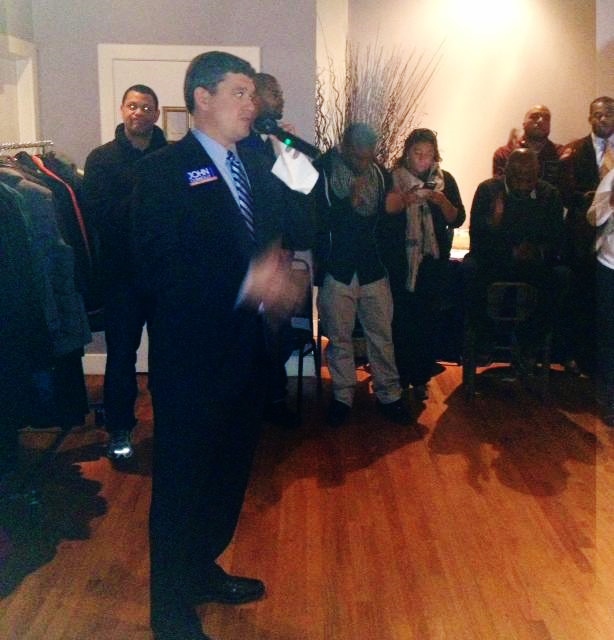
^ a fighting reformer, a transformer even : John Connolly addresses supporters at last night’s Debate watch party at Merengue on Blue Hill Avenue

—-    —-    —-

As this year’s race for mayor of Boston approaches voting day, it has become ever clearer that we are beset by the grip of old politics. We must shake off this dead hand, and do it now. Old politics thrives in old institutions set up long ago to address long-ago challenges. unhappily, the institutional drag survives long after those challenges have been met, its vested interests a grievous obstacle to progress. Such is the case in Boston’s mayor race. It’s why the Marty Walsh campaign looms large as we head to voting day.

Old politics are a curse. We have seen how old, reactionary politics of the Tea party have almost devoured the GOP, rendered it practically useless to most Americans. In the same way, as we wrote over a month ago, the campaign for Mayor has split the Democratic party between Obama Democrats and the Left. That split has now become as clear as the hulk of Godzilla stalking a japanese movie.

We like President Obama because he speaks for the innovation society that is already here and for the rise of new leadership from it, leadership that now takes on the task of transforming our schools, careers, social connections, lifestyles.

This innovation politics has, however,m divided the Democratic party, just as the rise, a decade ago, of pragmatic conservatism split the GOP.

In Boston, the Marty Walsh campaign has made its pact with the Left and its money. Granted that it had no choice. Facing John Connolly, a quintessential Obama Democrat, Walsh by himself had the votes only of union households and the City’s oldest political community (and not even all of that). Thus his move, after the Primary, using his leadership position in Boston Organized labor to bring to his side politicians with large numbers of Union households in their Districts, and, at the same time, union money and door-knockers from everywhere.

Walsh’s army is motivated by people who dare not risk what they already have. But people cannot just cling to what they have or know, because the economic and social world is changing faster than a speeding bullet. It is upon us all, and all of us must begin to move even faster.

This entails some risk; but the risk of not innovating, re-imagining, everything — schools, work, careers, connections, entrepreneurship — is far far greater.

The new economy is much, much bigger than the Democratic Left’s constituencies. Union households comprise about 14 % of all workers. Most work coming into being today is not union-appropriate. The careers of today and tomorrow come in small business units, laboratories of innovation, connected by co-operative competition. They aren’t assembly line. They aren’t low-skill.

We agree that low skill work needs enactment of a living wage, so that people who work such jobs can participate fully in the economy — and so that we the public aren’t forced to subsidize slave wage employers who need EBT and welfare in order to survive because hey aren’t paid enough. But the minimum wage is a State Legislature matter, not a mayor’s.

The mayor of Boston has a different mission : to guide the innovation economy into being, including innovated schools, policing, health care, social connectedness and an end to social segregation.

This is John Connolly’s message. It’s why today we proudly confirm the endorsement we gave to Connolly on October 7th.

John Connolly’s open door message  means innovation supporters as well. One of the features we most applaud about the John Connolly campaign is the newness of his following, Few of Connolly’s people have any history at all in Boston politics. Some come from the Obama campaign, some too from Senator Warren’s, and, yes, some from (Republican) Paul Cellucci’s years. But by far the most are brand new to political combat, and most of these come from communities themselves new to the arena. this we like. Like it a Lot. The newer the better, in fact. Because that’s what America is, at its finest : new, new, tomorrow, a future goal. Morning in America, as Ronald Reagan put it.

Morning means change and the unexpected, even the unpredictable. Into this morning, the politics of the Left needs to step, together with the Obama Democrats whose agenda the Left now recoils from, ominously.

And finally, as a coda to our endorsement, let us add this : the Democratic party cannot be split. Today it’s the only feasible party of national government. It needs to hold together, in Boston and nationally, to direct the new economy, the new society. Until such time as the GOP returns to the field of common sense and forward, splitting the Democratic party, as the Left seems now intent on doing, really is playing with fire.

— Michael Freedberg, editor in chief / Here and Sphere

BOSTON ELECTION : DIFFERENCES APLENTY AT ROX-VOTE’S DISTRICT 7 COUNCIL FORUM

Image

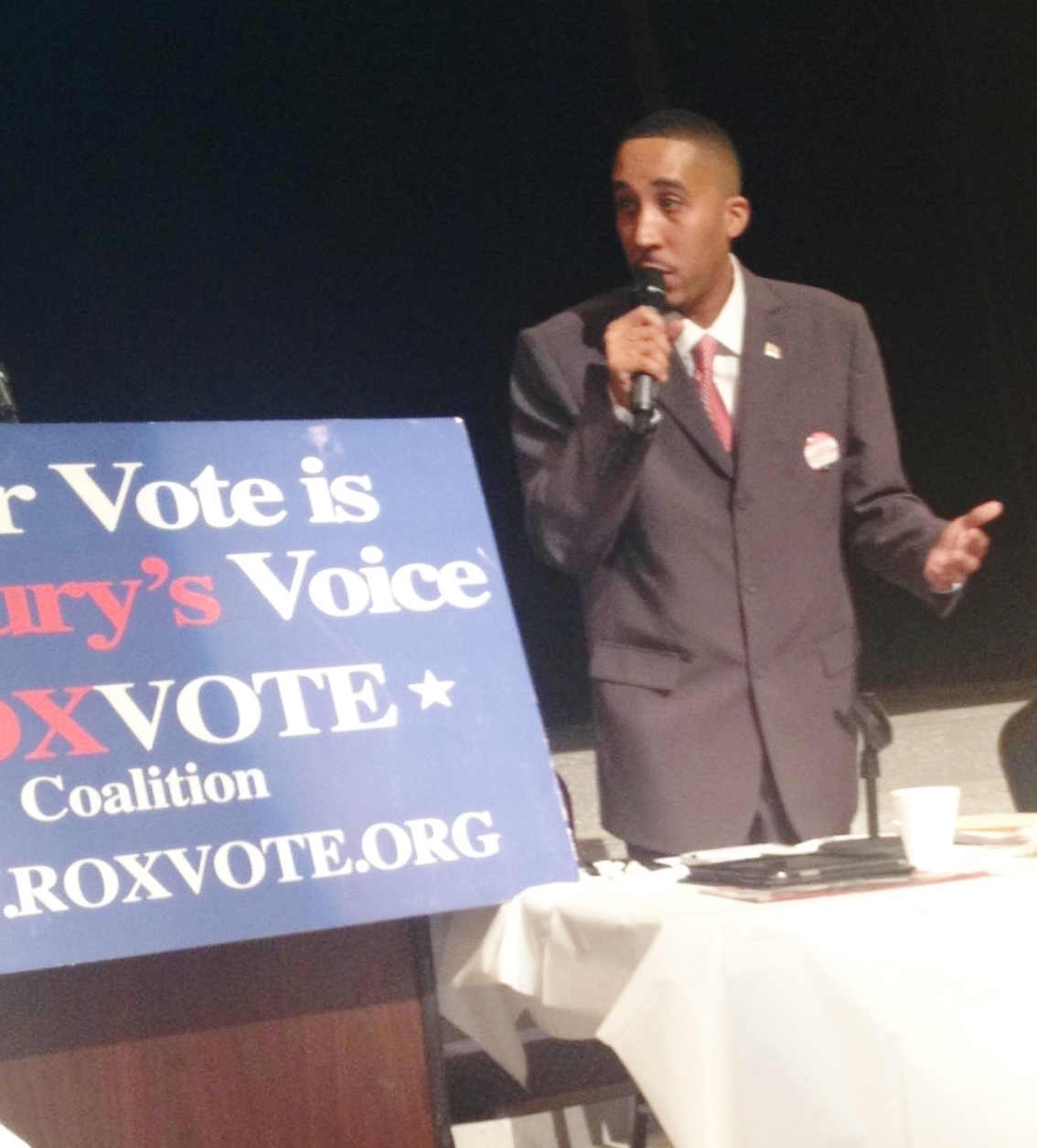
^ insurgent (and endorsed by Doris Bunte) : Jamahrl Crawford acts out at RoxVote Forum

—-    —-    —-


Last night the RoxVote Coalition hosted a Forum for District 7’s three Council candidates, followed by a Forum for the at-Large Council candidates. This report focuses on the District 7 Race, one of three District contests that we are paying close attention to.

The Forum gathered at Hibernian Hall on Dudley Street, and differences aplenty displayed themselves. One saw Tito Jackson, the incumbent, well dressed, well informed, almost professorial as he articulated his council service in detail; Jamahrl Crawford, his main challenger, passionate, a classic insurgent with a long, long history of activism; and Roy Owens, a quiet slender man who has run for office numerous times and whose issue is that City hall should work its Roxbury agenda through faith-based communities.

Time and again Crawford insurged his campaign demands : for housing afforability; that the Roxbury innovation Initiative needs all kinds of enterprises; that city services should revive the RISE movement; that gentrification of the District should mean economic development. Crawford spoke rapidly and intensely, a preacher inspiring. His presentation harked back to an earlier time, when oratory glowed hot onto the faces of listeners; yet it also elicited more applause from the 100 or so voters on hand than either Jackson or Owens. He talked at length about his grandmother, living on the third floor of their Ruthven street house even at her age and being feisty, not one to pander to (as Crawford said politicians do too often when addressing seniors); and this, too, drew applause from many.

Image

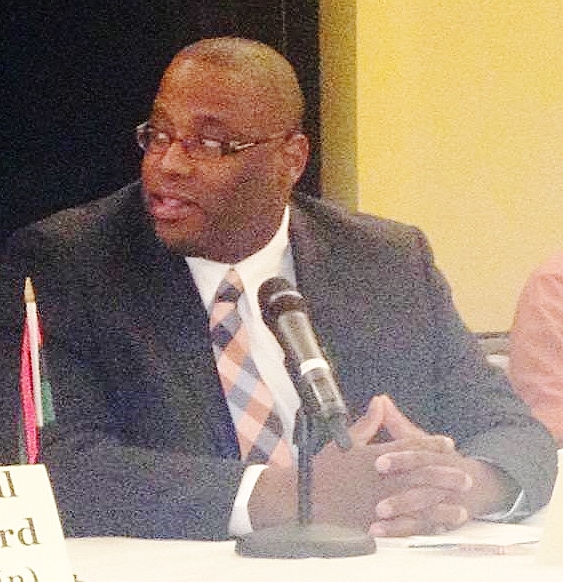
^ detailed answers to all questions but one : Councillor Tito Jackson at RoxVote Forum

Jackson, by contrast, answered every question by narrating the actions he has taken to address the problem or advance the initiative. His housing plan is a three on three : one-third low income housing, one third affordable, and one third market rate. Jackson proposed communication and coffee hours as his constituent outreach proposal. He opined at length about the Boston Police’s Safe Streets task force and the need for the City’s Public Health Commission to rate crime a health problem.

About the Roxbury Innovation Center, Jackson noted that Tim Rowe of Cambridge innovation has committed to run it; but he did not give any answer as to why he was not present when his Council colleague John Connolly, with several prominent Roxbury business leaders at his side, announced his support for said Center. It was at that point that Crawford responded, “we should have had one years ago !”

As for Roy Owens, I mean no disrespect in reporting that his answers were hard to hear, seemed to ramble or disconnect from the question when one could hear them, and often included banter with his two rivals, inaudible except to them. Many in the audience chortled. His was obviously a presence well known to them and long since dismissed. Owens’s one serious point was that all City services should be funneled through “faith based communities.” In a District whose people are so well and diversely led by pastors and church congregations, his call did not seem to me an isolated gasp or readily dismissable. But a generational gulf separated it from Crawford’s protest speeches and Jackson’s managerial steadiness.

—- Michael Freedberg / Here and Sphere

BOSTON MAYOR : CONNOLLY SAYS “I’M THE UNDERDOG”

Image

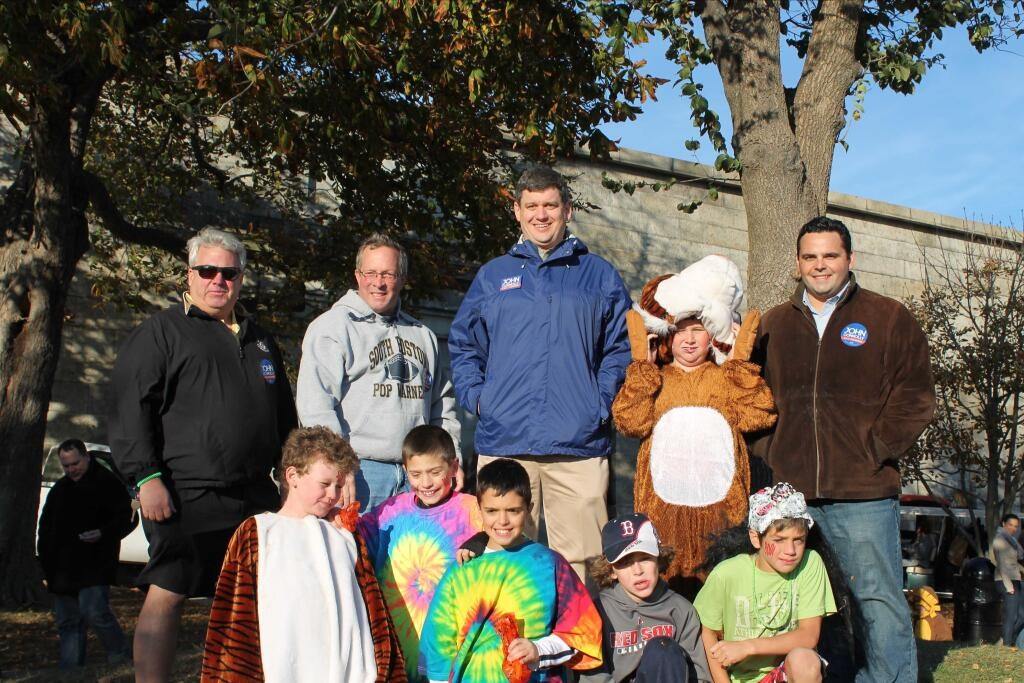
^ the underdog in South Boston with St rep Nick Collins and, on the left, a man whom you may recognize —  and his son.

—- —- —-

After weeks of leading in the polls for Mayor of Boston, John Connolly today anointed himself the underdog. He even had a poll to prove it. This morning he allowed the Globe to observe as he gave a talk to his finance committee in which he revealed that his campaign’s internal poll shows the race now tied, 43 to 43. This, after a Globe poll last week found Connolly leading 47 to 38 (with leaners assigned). Connolly declared that poll “an outlier’ and said that in fact another poll last week, showing him ahead only 41 to 39, was more accurate.

The release, by Connolly himself, of a poll so bad for him puzzled many. Walsh people gloated that he, the “candidate of working families,” as his spin doctors put it, “had huge momentum.” And doubtless the news of said poll invigorated the already vigorous Walsh door-knockers. So why, then, did Connolly make such a move ?

The answer should be obvious.

By assuming the position of underdog, Connolly gave himself three huge advantages :

1.People who had simply assumed that Connolly would be the next Mayor now had to think again; to contemplate — envision — confront — Walsh as Mayor, with all of its implications, many of them not good for the fisc. This is why Connolly has been gradually stressing — and is now emphasizing — his mastery of the City budget, ahead of his original stance as “the education Mayor.”

2.Given the mountain of big-pol endorsements given to Walsh in the past 16 days, and reports of a tidal wave of Labor Union money from all over, Connolly said something like, “OK, Marty, you ant to be the overdog ? Go right head, be the overdog.  by all means — be my guest !”

3.People like underdogs. They want the small guy to beat the big guy. If not, Sylvester Stallone would not be a multi millionaire today. (As I mention a lot, it is 1959 all over again; John F. Collins with few endorsers against John E. Powers with all of them. Collins won.)

Lastly, with their man now drawing the underdog card, Connolly’s workers can no longer be complacent. Their man is NOT going to coast to a ten-point victory. They will have to work for it — work hard and long and with the foul winds of desperation at their backs. Connolly’s voters too. They know they can’t stay home on election day.

This is the mindset you want your organization to have going into the last week before election day. You want your people committed to aee you win. Connolly as underdog is putting his people to that test. As well he should.

As for Walsh’s people, they need to know this, and I am sure that the smartest of them already knows it : Walsh has bet the farm on his winning.

If he does not do so, likely it is that there will never be another significant Mayor campaign from a base tribally Irish and Union labor. Walsh’s city is receding into history. Indeed, even if Connolly does not win, the society whence Walsh’s core support arises will dwindle and calcify as stony as the statue of Paul Revere in the North End. There already IS a new Boston. entirely new. It is fresh and exciting, open and flush with innovation. It can only grow, and pollenate and bloom, because there is no other way forward. This the Walsh people sense. They’re in  a race against time.  It’s why they have felt such heat, all campaign long, as Connolly seeks to apply to his people, now, with all the marbles anted in.

— Michael Freedberg / Here and Sphere

MEEK AT THE MOVIES : THE COUNSELLOR ( 2.5 stars )

Counsellor

^ mixed up shook up bad gals and bad guys : including Brad Pitt and Cameron Diaz in Ridley Scott’s “The Counsellor”

—-   —-    —-

Not so long ago the Coen Brothers deviated from their usually quirky fare and wove a hard-boiled yarn about lawmen and criminals playing it loose and lethal as they pursued an elusive satchel of money back and forth across the Southwest border.  The basis for that masterpiece came from the laconic and acerbic prose of Cormac McCarthy’s similarly titled novel, “No Country for Old Men.” And in an odd and intriguing, first time move, the scribe, for iconic director Ridley Scott (“Alien” and “Blade Runner”), has delivered his first original screenplay. The result is full of pointed soliloquies, diatribes imbued with philosophy and poetry and even daubs of philosophy regarding poetry; but the mainstays, of course, are protracted dissertations on death and destiny, followed invariably by death.

Just as in “No Country” the plot is driven by an accidental anti-hero ensnared in a macabre web of underworld misdoings. In short, McCathy has cooked up an assured rearrangement of “No Country.” It’s not on par by any means, but it is entertaining. And, if you haven’t gotten enough of him lately, Michael Fassbender tackles the eponymous role (that’s all he’s ever called), as a square-jawed, fashionably stoic defender, who, while very dapper and upper crust, has a litany  of unsavory clients. One, an imprisoned mama kingpin (Rosie Perez put a lot of pizzazz into the brief role), asks him to pay a fine for her son who’s in jail for a traffic violation (going over 200 mph). He reluctantly complies, but doesn’t know that the kid is involved in a scheme to hi-jack a 20 million dollar drug shipment. Which doesn’t matter, because by sheer association he’s now considered one of the brains behind the ever expanding plot.

Zanies and assassins from every corner of the muted desert town start to drift up. And, if the similarities to “No Country” haven’t hit you over the head at this point, Javier Bardem drops in for good measure as the shady club operator who has a few nascent business dealings with the Counsellor. Bardem’s real life wife, Penelope Cruz, shows up too, as the Councilor’s betrothed, but she’s mostly just garnish and a bargaining chip. The real feminine fire power comes from the gams of Cameron Diaz as the high priestess of the Southwest gangland. She’s flip, enjoys Gucci and Prada and doesn’t value life too much, and, if she so desires it, she’ll fuck a Ferrari (no joke).

Brad Pitt’s in the mix too as another shady sort who advises the Counsellor on how to get his neck out of the noose, but his role, like Cruz’s, feels more ornamental than substantive and perhaps somewhere out there, there’s  a studio exec who thought it would be devilish fun to release Pitt and Fassbender in this western noir the same week the pair appeared in the more serious, “12 Years a Slave”–celluloid buddies to save the day at the box office?

The problem with “The Counsellor” isn’t so much the every twisting and inward folding machinations that keep the engine humming. That works quite well, the problem is that none of these people are likable and Fassbender’s Counsellor is such a stiff, you never really give a rat’s ass if he gets offed or not. But the film looks great. Scott has always been a visual stylist and really summons up the dusty milieu with artistic elan.  McCarthy too packs it with some rich treasures and a potpourri of indelible underlings. Heads roll (literally) and the stash of drugs is carted around a septic truck that from time to time gets shot up and re-patched so that the shit don’t stink. That’s the wicked type of fun “Counsellor” has. It’s not much, but it clicks along just enough.

— Tom Meek / Meek at the Movies