BOSTON POLS : CAUCUS — WARD 20 ; AMBITION — 5TH SUFFOLK

Image

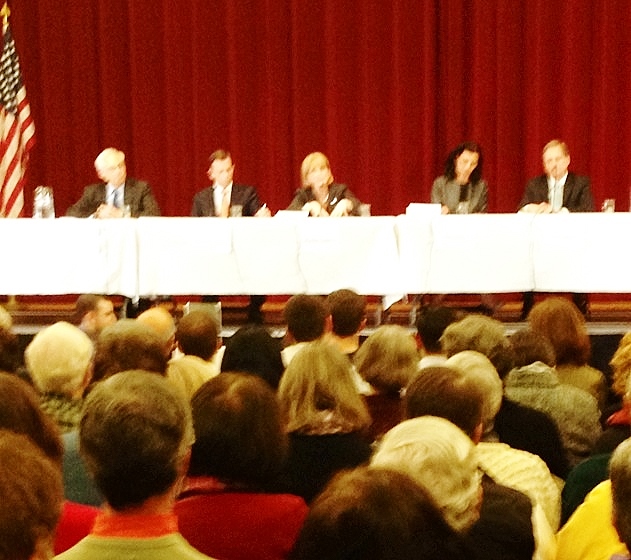
^basic democracy : Democratic state chairman Tom McGee of Lynn instructs West Roxbury’s ward 20 caucus

—- —- —-

There may be secret money in the Big Picture, but at the small level where actual people live, vote, and run for office, the money doesn’t taint. Whether it’s caucusing in West Roxbury or manoeuvering a run for State Representative in Dorchester, you find politics basic, the real deal, activism for its own sake. So it was, this morning at Boston Ward 20’s Democratic Party caucus, attended by almost 200 people. So it has been the past two days, since the House expelled Carlos Henriquez, leaving the 5th Suffolk State Representative seat vacant awaiting seekers.

But first, the caucus. I chose Ward 20’s because it is Boston’s biggest voting ward; many were sure to attend to elect 29 delegates to the Democratic convention. The caucus met in the community room at West Roxbury’s Police Station. Attendees and candidate volunteers filled every nook — the hallway too. The State Party chairman was there, Tom McGee of Lynn; so were two competing slates of delegates, a Don Berwick group led by Helen Bello — who hosted the huge Berwick house party that I wrote about recently — and a Juliette Kayyem list led by an old friend, Paul Nevins, an employment lawyer. A group of independent names was nominated too, well known people sure to draw votes on name alone; and attendees voted as much for names they knew as for any slate; there wasn’t at all the structure that I had expected of this meeting. It seemed as much a meet and greet as an election.
Image

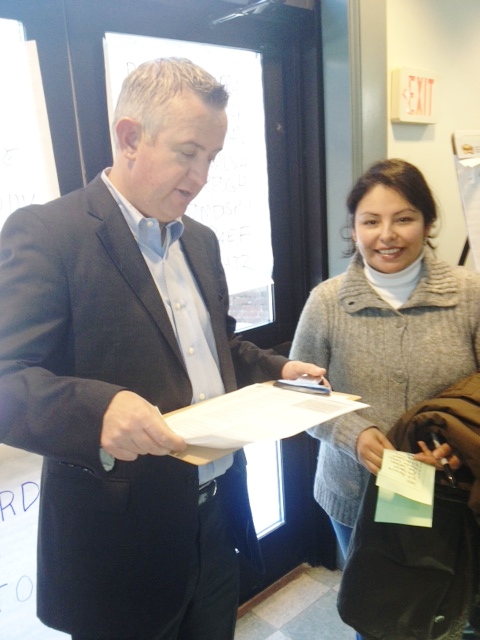
^ Ward 20 state Representative Ed Coppinger discusses matters with Here and Sphere follower Michelle Von Vogler

There was voting, but mostly there was conversation as faces familiar or new worked the room. State Senator Mike Rush was there, as was West Roxbury State Representative Ed Coppinger. Governor candidate Martha Coakley worked the room for about 20 minutes, then left. District Attorney Dan Conley shook hands. So did Congressman Steve Lynch. Old friends Carole White (Kevin White’s sister in law) and Marilyn LaRosa were elected; I noticed Helen Greaney in the room and Greg Haugh also — two other Haugh’s sought election as delegates — and Ann Murphy, still glamorous as ever, now working as an aide to Mike Rush. A couple of Boston Teachers Union activists signed in — but I did not see Ward 20’s biggest BTU name, Ed Doherty — and people from both the Connolly and Walsh mayor campaigns.

Circulating as well were four who ran last year for City Council : local resident Marty Keogh, Jack Kelly, and winners Steve Murphy and Michelle Wu. It was a “good hit,” as pols say of an event well worth being seen at.

UPDATE ON DELEGATES ELECTED : Thanks to Rob for posting to me the entire list, mostly of the usual Ward 20 activists (including two Haugh’s and a BTU active, City Council candidate Marty Keogh, a Marty Walsh cabinet member — Alejandra St. Guillen — and at least one State Employee) and two Don Berwick delegates. Take a look :

Female Delegates:
Alyssa Ordway – 75 votes
Carole White – 74
Ann Cushing – 71
Cathy Fumara – 68
Helen Haugh – 68
Diana Orthman – 68
Marilyn LaRosa – 65
Patricia Malone – 65
Anita Salmu – 65
Margaret Sullivan – 63
Josiane Martinez – 60
Alejandra St. Guillen – 59
Sue Anderson – 58
Heather Bello – 26
Hema Kailasam – 21
Jennifer McGoldrick (Alternate)
Pamela Keogh (Alternate)

Male Delegates:
Robert Orthman – 69 votes
David Isberg – 66
Steve Smith – 66
Marty Keogh – 65
Bill Smith – 64
Kevin Walsh – 64
Bill MacGregor – 63
George Donahue – 62
Joe Haugh – 60
John Fumara – 59
Leo Connell – 58
Tom Hanktankis – 58
Patrick Murray – 58
Larry Connolly – 56
Bob Tumposky – 56

(UPDATED 02/09/14 at 10.45 AM)

—- —- —-

And now to the 5th Suffolk District, in Dorchester, where the expulsion of Carlos Henriquez has left a gaping hole…
Image

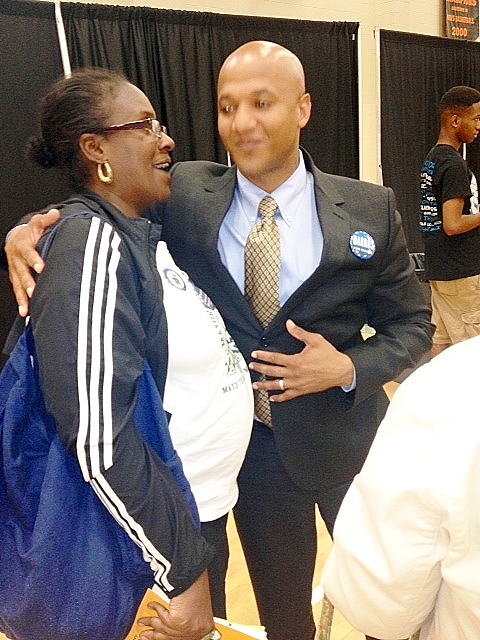
will he be the first Uphams Corner state Rep since Jim Hart 40 years ago ? John Barros may become a candidate in the 5th Suffolk special election… But so might the woman pictured below, Karen Charles of the Bowdoin-Geneva neighborhood :
Image

The 5th Suffolk State Representative seat in the Massachusetts House won’t be vacant for long. Already the hungry are circling, impatient, guessing and out-guessing. The big news is that John Barros, who ran for mayor last year and impressed many, is seriously considering a run. Barros lives in the heart of the District, owns a successful restaurant in it,. and would be an elite voice for 40,000 people very much in need of one. Barros is not, however, the only notable who is thinking publicly about running. There’s also Karen Charles, who works at WGBH (full disclosure : WGBH’s Peter Kadzis was my editor at the Boston Phoenix and remains a friend professionally and personally), and who, with her husband Kevin Peterson, an NAACP activist, make a formidable team of articulate reformers and who are said to be close to Charlotte Golar-Richie, who once represented the 5th Suffolk, still lives in it, and who was, like Barros, a candidate in last year’s Mayor campaign.

In that Mayor campaign, Barros won 2,072 votes in the 5th District’s 20 precincts; Golar-Richie won 1,465. Barros thus starts with a 600 vote advantage. That isn’t the entire story, though, Felix Arroyo won 570 votes in the District; and Carlos Henriquez, of Hispanic origin like Arroyo, is said to intend running again to reclaim his seat. Even if he does not run, the 570 Arroyo votes seem up for grabs, not to mention the 313 won by Charles Yancey and the 495 won by John Connolly. (Marty Walsh’s 640 votes might split between Barros and a Golar-Richie-backed candidate, as both she and Barros helped Walsh win the Final).

That said, Barros certainly would enter the race as the favorite no matter who else decides to run — including Henriquez himself. The two men are said to be close friends as well as political allies, and some speculate that if Henriquez runs — and he probably will — Barros will not. We shall see. Whatever the case may happen, this is a District that badly needs an A-list voice. It has always had a working-class majority even in the days, not too long ago, when much of it was Roxbury Red Raider country. The “5th” includes the entire Bowdoin-Geneva neighborhood, one of Boston’s most impacted by gang violence; a stretch of Blue Hill Avenue that Red Raiders knew as “Cherry Valley,” once almost entirely blighted but, of late, enjoying the beginnings of a resurgence (as anyone familiar with local hot-spot Merengue Restaurant knows); Upham’s Corner and half of Jones Hill (where I had my first adult job, working as go-fer to state Rep. Jim Hart); and, of Roxbury, the north side of Dudley Side from Hibernian Hall eastward, all the way past the Governor Shirley mansion to and including “the Prairie” ball field (where Red Raider teams played Park League baseball and football). None of the district is high-income; not much of it is middle-income. Everyone benefits from having an eloquent and respected voice in the legislature, but the people of the 5th Suffolk would benefit more than most.

There will be a special election to fill the vacancy. It will be called soon — the date of it as yet unknown but probably early May. It will be a short campaign, a local effort, politics at its most basic and not much different from that Ward 20 caucus that I attended this morning. More voters to reach, yes, but not much more structure. It also looks now to be the most attention-getting time that the 40,000 people of the “5th” have gained in many, many years if ever. Let the democracy of it begin.

—- Mike Freedberg / Here and Sphere

#MAGOV : CAUCUSES BEGIN ; BAKER STILL LEADS ALL THE DEMOCRATS. BUT…

Image

^ Still leading the pack, thus reason to smile : Charlie Baker in Leominster

—- —- —-

Massachusetts people are moving to pick a new Governor. The Democratic caucuses begin in a few days. The GOP meetings have already started. As I see it today, February 2nd, Charlie Baker leads the pack. His bold move, last week, to support raising the minimum wage by way of Speaker DeLeo’s legislation, ensures its passage; none of the five Democrats has yet made the same pact. Baker also supports expanding the earned income credit for lower-wage workers. None of the Democrats has even, to my knowledge, mentioned this initiative. Big advantage for Baker.

So is the $ 1,014,906.36 that Baker reported raising last year, with more to come, much more.

In charge finally, Baker stumbled a bit when the question of seeking the death penalty for Dzhokhar Tsarnaev was put to the candidates. All of the Democtrats said that no, the death penalty is not OK for any defendant in Massachusetts; we have abolished it. This is true and principled. Baker’s response ? That he has long advocated the death penalty in very heinous crime situations. His statement seems a step backward for our boldly progressive state. And where do the Feds get their sudden death penalty willingness ? Sirhan Sirhan assassinated Robert Kennedy ; he didn’t get a death peanlty. Is Tsarnaev more heinous ? Or do we simply live in miore barbarous times ? Certainly a great deal of outright barbarism unfolded here in Boston after the Marathon bombing. Who can forget the Antigone situation that arose over the burial of Tamerlan Tsarnaev ? It is not good, not at all, to see Baker play to the Creon mindset.

Advantage then to the five Democrats, as their party’s caucuses begin.

Image

^ heartfelt dedication to social justice : Dr. Don Berwick at a packed house party in West Roxbury yesterday

If yesterday’s Don Berwick houseparty on Chesbrough Road in West Roxbury was any indication of interest, the caucuses should be full-house. 75 locals crowded into every nook of the Chesbrough Road dwelling to hear the gentle, classy Dr. Berwick deliver his social justice speech and answer questions — most of them well informed. And Berwick isn’t even one of the two “majors.” Imagine how many are likely to caucus for Steve Grossman, our State Treasurer, or for Martha Coakley, now the Attorney General. Juliette Kayyem, too, with her personal charisma — 9,749 twitter followers as I write this — is sure to draw many to the hundreds of Democratic town and ward (each ward of a city holds its own) caucuses taking place between next weekend and March 2nd, the last day on which they can occur. So yes, for the five Democrats — Joe Avellone is the one not mentioned above — it’s now crunch time. Any candidate who can’t secure 900 pledged delegates — 15 percent of the total who will vote at the Democratic convention — won’t get his or her name printed on the Democratic Primary ballot.

We won’t know who has done that and who hasn’t until probably mid-March, when the Democratic State Committee tallies the results. But we can assess the five with reasonable objectivity by looking at their fund-raising. (Charlie Baker has yet to report January numbers.) Since January 15th, the day on which I last looked, this is how the five’s fund-raising tallies up :

Martha Coakley 168,951.23
Steve Grossman 153,695.00
Juliette Kayyem 84,679.20
Donald Berwick 50,260.00
Joe Avellone        36,365.64
Total Funds raised by the five —- 493,950.87
Per cent of total :
Coakley —– approx 34 %
Grossman — approx 31 %
Kayyem —– approx 17 %
Berwick —– approx 11 %
Avellone —- approx 7 %

Fund-raising isn’t everything, of course. But in MA, each donor is limited to $ 500 per candidate per year. Thus the list above represents a lot of people. The caucus-goers choices aren’t likely to differ radically from the donors’ picks. In any rate, it’s my working hypothesis as to who — as of today — will make the “15 % cut” and who won’t.

Image

^ charisma and a progressive smile gets Juliette kayyem lots of attention — and probably a spot on the Primary ballot…..

Image

^ or maybe it gets Kayyem second place on a Steve Grossman ticket ? we will see.

For Donald Berwick, who by my analysis falls short, it’s a good thing that the caucus process lasts for a month. He can step up his game in that time — probably needs to. Juliette Kayyem can’t rest calm, either, sitting at 17 % of the total. But then what ? Coakley and Grossman clearly dominate — no surprise there — which means that Kayyem may want to think about taking the Lieutenant Governor position on a Steve Grossman ticket — if offered.

It would be a very strong Democratic pairing. It represents about 50 % of the Democratic convention. The stars are beginning to align.

—- Mike Freedberg / Here and Sphere
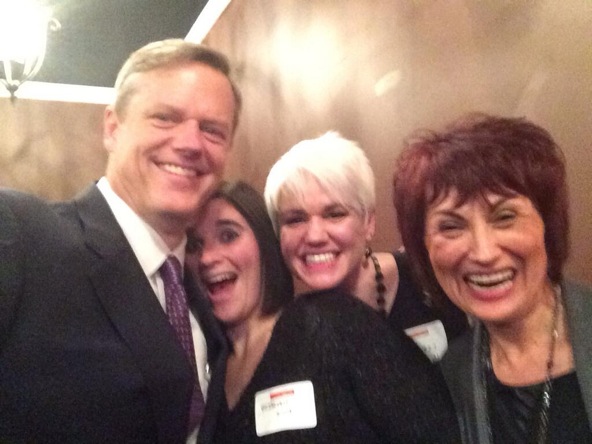
#MAGOV : “WISH” LISTS vs. “DO” LISTS

Image

^ Just DO it : Charlie baker with Karyn Polito supporters in Leominster (photo by Baker campaign)

—- —- —-

The contest for Massachusetts Governor has taken on a definite shape during the past three days. The biggest shaping force has been Charlie Baker’s, given as his response to Governor Patrick’s state of the Commonwealth speech. Baker used the occasion to announce his support for raising the state’s minimum wage and for expanding the earned income credit. The news surprised almost everyone. It contradicted recent GOP orthodoxy — you know, the whole “job creators,” no ACA, no minimum wage legislation mantra — and also went beyond what most of the Democratic candidates have suggested. Baker also accepted Speaker of the House Robert DeLeo’s minimum wage raise requirement, that there be some give-back on umployment insurance contributions.

I wrote yesterday about Baker’s announcement and its implications ; these merit repeating. First, Baker established that he will join with Speaker DeLeo on minimum wage legislation. No Democratic candidate has yet done so; when specifically asked what they would do if the Speaker rdejected their legislation, all avoided answering. Second, by embracing doable (and very popular) legislation to relieve income inequity, Baker has vetoed all those GOP-ish advocacy groups (such as Massachusetts Fiscal Alliance) that oppose “using government to make people’s lives better” (as Mayor Walsh has stated his mission). And this may actually be the hugest consequence of Baker’s announcement. Right now I cannot think of a single Republican Governor, Senator, Congress person — or GOP candidate for these offices — who embraces minimum wage hikes and expanding the earned income credit. Whether Baker’s announcement has national GOP implications I can’t yet say; but for Massachusetts its consequence could not be weightier. He has taken the Massachusetts GOP back not just to Weld-Cellucci — whose administrations Baker was part of and mentioned in his talk — but (as my old colleague Peter Kadzis mentioned to me) to the days of John Volpe, Eliot Richardson, Frank Sargent, and Ed Brooke — almost 50 years ago — when the Massachusetts GOP was the reform party, the advance guard of using government to benefit people.

Granted, that Baker is free to take this stand because the Tea Party has never had much ground in Massachusetts — in 2010, Tea candidates didn’t even get the 15 % of votes at the Republican convention needed to get their names on the ballot — and because the huge right-wing greedPACs that have all but kidnapped the national GOP, knowing how un-Tea this state is, don’t involve themselves here. Baker needs no greedPAC money. He has almost out-raised the five Democratic governor candidates combined. T

Baker’s move all but assures that he will have significant Democratic support in the November election. That is how it used to be for the Massachusetts GOP in state elections, Why not again ?

And here is where my headline for today’s column comes into play : “wish list” candidates versus “do list.” Most of Massachusetts’s 166 Democratic legislators and State Senators are realists — do list people, not wish listers. Their voters want stuff done first, talk stuff later. Massachusetts voters are quite common sensed about this. We send our inspirational wish listers to Washington — none more arch-typal than Elizabeth Warren — to voice our noblest wishes, ideals, hopes for a juster social future. To Beacon Hill, we send our grubs and drones to do the grub and drone work. Nor is our thinking wrong. Deval Patrick’s entire two terms has shown just how powerless wish list eloquence is to move the Speaker of the house — no matter who he was or now is — to support legislation. To cite just two examples ; Governor Patrick wanted casino legislation badly. When Sal DiMasi was Speaker and opposed, no casino.. Then came Robert DeLeo, supportive, and lo and behold, casino legislation, no problemo ! Second example : Governor Patrick wanted an enormous, $ 2 billion transportation bill; Speaker DeLeo wanted a much smaller bill. Guess whose “transpo bill” got enacted ?

We like to think of today’s GOP as missing the point of governance, but the Massachusetts Democratic party misses the point too. In its rush to speak nobly of social justice and the higher purposes of civic life, the Democrats of Massachusetts talk just as unrealistically about governing as do the GOP right-wingers. Yes, there is a “progessive caucus” in the Massachusetts Democratic party, and there’s one in the legislature too. What have they recently achieved ? CORI reform, maybe. But every other advance enacted by the legislature belongs entirely to the realists : charter schools, an $ 800 million “transpo bill,” casino legislation — vigorously opposed by “progressives” and right-wingers alike (Ha!)– electronic toll taking, divorce law reform, mandatory sentencing amendments. I often get the impression that the social justice focus of many Massachusetts Democrats arises as a reaction to GOP right-wing talk rather than for its own sake. A genuine progressive movement would be far more broadly based, out among the people — as was the Progressive movement of 110 years ago — broad enough to affect, even command, both political parties, not just one.

The five Democrats running for Governor cannot break free of these conditions, and only one has really tried : Steve Grossman. In forums he talks real talk about realistic goals. Even he has yet to admit that only in sync with the Speaker can he accomplish anything. Even he has yet to tailor his policy suggestions to the Speaker’s — and just yesterday, the Speaker made clear that the coming year’s State budget would include no tax hikes or fee increases. Still, Grossman talks the business-climate, innovation talk that, until two days ago, was Baker’s core message. He also of course supports minimum age legislation though not the Speaker’s conditions). At Forums, Grossman swims in a sea of words : perfume from Don Berwick, chatty niceties from Juliette Kayyem, and quiet sarcasm from Martha Coakley, and often gains a measure of respect thereby : surely the Forum attendees, most of whom will vote in the coming caucuses, understand that Grossman is climbing the mountain, not paragliding onto it. Yet the impulse to high-minded wish lists runs strong in the souls of our Democratic activists; strong enough that Grossman, even if he becomes the Democratic nominee, will be forced to divide his campaign between talking dreams and picking priorities. Baker right now faces no such division. His party’s angry philosophers have been put to bed, freeing him to focus on a do list that the Speaker can agree with and which thus can actually be enacted into state law. That’s a winning message in a Governor election.

Especially with do-nothing gridlock gripping Washington so completely, voters want state government to get good stuff done. Baker has beaten Steve Gossman to the get-good-stuff-done milepost.

—- Mike Freedberg / here and Sphere

#MAGOV : CHARLIE BAKER MAKES A BOLD MOVE

Baker Jan 13th 2014

^ bold to the front of the discussion : Charlie Baker on income inequity

—- —- —-

Yesterday Charlie Baker, Republican candidate for Governor, made a bold move: he did the right thing. Bold, because doing the right thing doesn’t happen often in Republican campaigns these days.

This is what Baker said : “I agree with Governor Patrick that Massachusetts is a remarkable state with limitless potential, but also a place where far too many are struggling and others are falling behind.

But I believe we can grow our economy, improve our education system, and strengthen our communities without raising taxes again and depleting the Rainy Day fund. We did it during the Weld-Cellucci Administration, and it can be done again.

I also believe we should make work pay for struggling families by raising the minimum wage while also enacting pro-growth reforms like unemployment insurance reforms, and by expanding the earned income tax credit for Massachusetts workers.

Lastly, I think we need real focus on fixing our healthcare problems. Too many Massachusetts families are stuck in healthcare limbo – having been dropped from their health plan and unable to sign up because of a bungled transition to an inadequate federal law. We had a great state system that was working, and we should fight to preserve and protect it.”

Baker’s statement — first reported by my old Boston Phoenix colleague David Bernstein, now an editor at Boston Magazine — hit almost every mark that it aimed at. He supports raising the minimum wage, as does almost everyone : but unlike any of his Democratic rivals, he also accepts Speaker DeLeo demand for adjusting unemployment insurance.

That’s the way for a Massachusetts Governor — of any party — to get his legislation enacted. It’s the only way. The Speaker rules. It’s been that way in Massachusetts for decades. The Democratic candidates for Governor either don’t understand this or are unwilling to admit it. Asked by State Representative Jay Kaufman, at his Lexington Governor Forum recently, “what will you do if the Speaker declines to support your legislation ?” Every single one of the five Democrats — including both the flamboyant Don Berwick and the earnest Steve Grossman, ducked or evaded the question. They looked weak, weak candidates for a weak office.

Baker has beaten them all here. By endorsing the minimum wage, he supports a pressing issue that almost everyone in the state wants. By endorsing Speaker DeLeo’s version of the minimum wage legislation, he ensures its enactment. Game and set, Baker.

He did more. In the words that I quoted, Baker also advocated raising the earned income credit. Not one of the Democratic candidates — only Berwick has mentioned it — has put support for an increase in the earned income credit forward in a context of and on a path to enactment. Game, set AND match, Baker.

Baker both congratulated Deval Patrick and gave one critique — of Massachusetts’s flawed health care connector. For most Republicans, a criticism of how the ACA has been implemented would just sound same old, same old. Not with Baker. By stepping up to the income inequity issue as he has, and by congratulating Patrick for his achievements, Baker has given his one critique a context of fairness that will garner attention, not a shrug.

Three weeks ago Baker released a Homelessness Crisis Paper that was a model of thorough and benefit. No Democrat has even now offered anything close, although some have said fine words, Berwick especially. Indeed, Baker looks more like a governor right now than any of the Democrats except Steve Grossman. If they’re the two who make it to the November election, Massachusetts will have two solid choices, with Baker perhaps the bolder and more progressive. I would not, quite frankly, have guessed this outcome as recently as six weeks ago. And I am glad to have been wrong.

—- Mike Freedberg / Here and Sphere
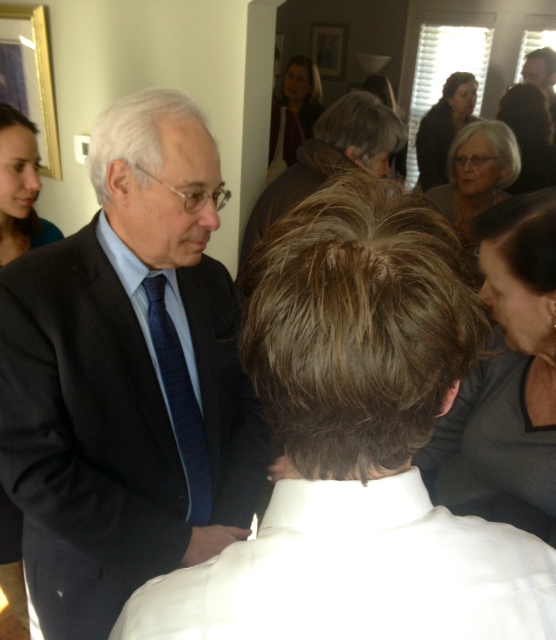
#MAGOV : THE DCF NEGLECT SCANDAL BECOMES A HUGE ISSUE

We are re-blogging our story from yesterday, on the Massachusetts DCF Scandal regarding neglect of 5-year old Jeremiah Oliver, in light of Governor Patrick’s speech today in which he made the revelation that the supervisor of the social worker who missed mandated visits made false entry in her files that the missed visits were made. This cannot happen, and if it does, there must be severe consequences. — The Editors

hereandsphere's avatarHere and Sphere

Image

^ answering questions from legislators justifiably angry : DCF Commissioner Olga Roche

—- —- —-

The unfortunate and wholly inexcusable matter of 5-year old Jeremiah Oliver — a Fitchburg child under Department of Families and Children monitoring, whose disappearance was not known by the department for months because of missed visits — has now made the DCF a major issue in this year’s Governor campaign. In which case his plight — no good outcome is expected — will have at least some good consequences.

Right now, however, the DCF and its Commissioner, Olga Roche, are on the very hot seat of inflamed public scruitiny. How could this have happened ? The very first sentence at the DCF’s website says “The Department of Children and Families (DCF) is the Massachusetts state agency charged with the responsibility of protecting children from child abuse and neglect.” How can an agency  set up to…

View original post 968 more words

#MAGOV : THE DCF NEGLECT SCANDAL BECOMES A HUGE ISSUE

Image

^ answering questions from legislators justifiably angry : DCF Commissioner Olga Roche

—- —- —-

The unfortunate and wholly inexcusable matter of 5-year old Jeremiah Oliver — a Fitchburg child under Department of Families and Children monitoring, whose disappearance was not known by the department for months because of missed visits — has now made the DCF a major issue in this year’s Governor campaign. In which case his plight — no good outcome is expected — will have at least some good consequences.

Right now, however, the DCF and its Commissioner, Olga Roche, are on the very hot seat of inflamed public scruitiny. How could this have happened ? The very first sentence at the DCF’s website says “The Department of Children and Families (DCF) is the Massachusetts state agency charged with the responsibility of protecting children from child abuse and neglect.” How can an agency  set up to prevent neglect do neglect ?

But it did. as we all now know, the social worker whose caseload included Jeremiah Oliver missed several obligatory house visits. She also noted the fact in the ccase record. Her supervisors knew, or were charged with knowing, that Jeremiah Oliver was not receiving the monitoring that DCF must give to children in its work-load.

Of course for Massachusetts people with long memory, case neglect practically defines the agency. We used to joke about news stories so cliched — “dog bites man” stories — they made you laugh. Well, “Children under DCF care abused in home, parents arrested” was such a story. It happened all the time. The DCF has probably undergone more system reviews and policy changes than the entire rest of state government combined; yet here we are, once again, faced with the trope headline : “DCF worker missed visits, child is missing.”

So yes, DCF failure is a big issue in the Governor race. It should be. Other state departments have come under criticism, for good reason, in the past two years. Who can forget the Department of Public Safety hiring, as a Road safety supervisor, a political appointee with an egregiously bad driving record including a DUI ? The Department of Public welfare was also found lax in overseeing the state’s EBT program — not that EBT fraud was widespread (the fraud rate was quite minor, in fact) but that the Department’s procedures for monitoring EBT cards was lax enough to enable fraud to occur. Of course the patronage hire was something that occurs in every administration. People aren’t perfect. Even elected officials aren’t flawless. As for the EBT procedures situation, agency regulations aren’t perfect either and require adjustment to actual practice. Which takes time. But the events at DCF occurred in an administration already shown to be not running smoothly. This time, big change is needed. Kids’ well-being is at stake.

The DCF is set up pursuant to Massachusetts General Laws c. 119, the language of which you can read in this link : https://malegislature.gov/Laws/GeneralLaws/PartI/TitleXVII/Chapter119 . It is helpful to read the mission assigned. The DCF also has its own regulations and procedures, a link to which you can follow here : http://www.mass.gov/eohhs/gov/laws-regs/dcf/regulations-and-policies.html . All the major candidates for Governor are likely now reading these links and devising their response to the Jeremiah Oliver neglect event from what the law and regulations state. Yet these are not the entire story. What did not happen in the DCF Fitchburg office is not merely a matter of egregious failure. it’s also a budget matter. As a recent story in the Boson Globe wrote, “As the department’s lapses have come under scrutiny, its budget has become a focal point. In the five years prior to Jeremiah’s disappearance, the department sustained deep cuts. This week, Governor Deval Patrick proposed restoring some of that funding, but even his proposal would leave the agency with less than it had in 2008, child advocates said.”

So it’s a budget matter ! Imagine that. Who’d have guessed ?

In the Globe story we learn that the DCF’s social worker caseloads have increased from 15 to an average of 19 — this despite a contract — DCF’s social workers are represented by the SEIU — limiting caseloads to 15 per worker. With larger caseloads come increased monitoring, but the money hasn’t been there to budget it. The truth is that we cannot have effective state government if we do not pay for it. State work isn’t charity. State workers aren’t volunteers. Even the DCF workers who neglected Jeremiah Oliver — and were fired for neglecting him — can’t readily work an increased case load without added compensation. Nor should they be asked to do so. The answer is to hire additional case workers, so that none has to work 15 cases at a time, but of course without budget funds the DCF can’t hire the added workers.

The State budget is failing on many fronts. Look at how difficult it was for Massachusetts to enact an $ 800 million transportation bill that included tax increases — being fought now by referendum — without which our public transit and roads can barely be repaired, much less upgraded. Large increases will be needed if our state is to meet its educational reform goals, revise the justice and sentencing system, enable undocumented immigrants, provide for a homeless population that has more than doubled since 2008, add funds to EBT because more families now need it, and, yes, give the DCF what it needs for its increased caseloads.

Is it too rhetorical for me to say that the real neglect story here isn’t the DCF — though neglect at the DCF there surely was and is — but state Government itself ? Our State right now is a neglect adventure. We have given the State several vital communal missions but not the funds to carry them out. The neglect lies with us.

It will be interesting to see what answers Steve Grossman, Charlie baker, Juliette Kayyem, Martha Coakley, and Don Berwick have for the neglect in us. With Democratic caucuses beginning as early as next week — and on the Republican side already under way — we will soon be hearing. I hope.

—- Mike Freedberg / Here and Sphere

UPDATE Jan 27 2014 at 9.45 AM : The Boston Globe reports that Governor Patrick will make a pubic address today on the “systemic” failure of DCF workers to do all of their mandated monthly visits to children in their caseloads. He will, I suppose, also address that these expanded caseloads violate the Social Worker contract; and will also likely mention that his FY 2015 state budget adds $ 9 million for the hiring of additional social workers. — MF

BOSTON SCHOOLS : CHARTER SCHOOLS UNDER ATTACK AT CPS FORUM

Image

^ seeking answers to the challenge that charter schools pose to standard public schools : at the Citizens for Public Schools Forum

—- —- —– —–

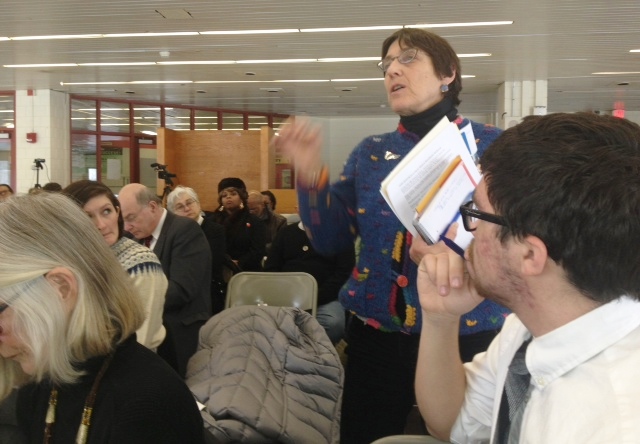
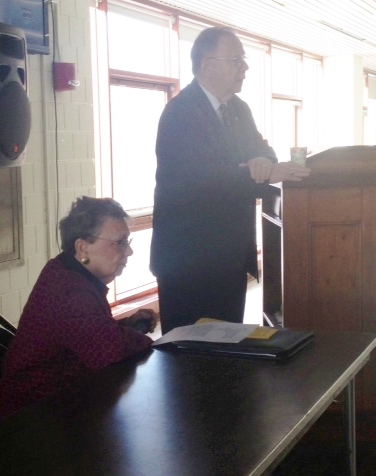
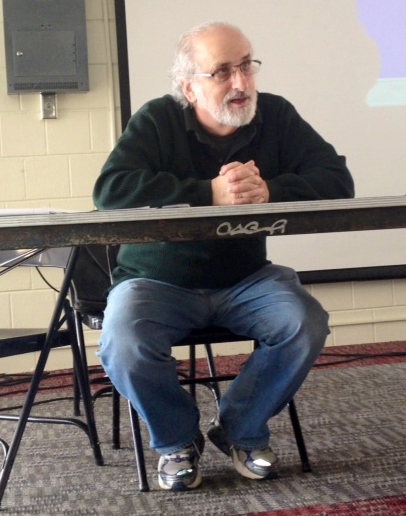
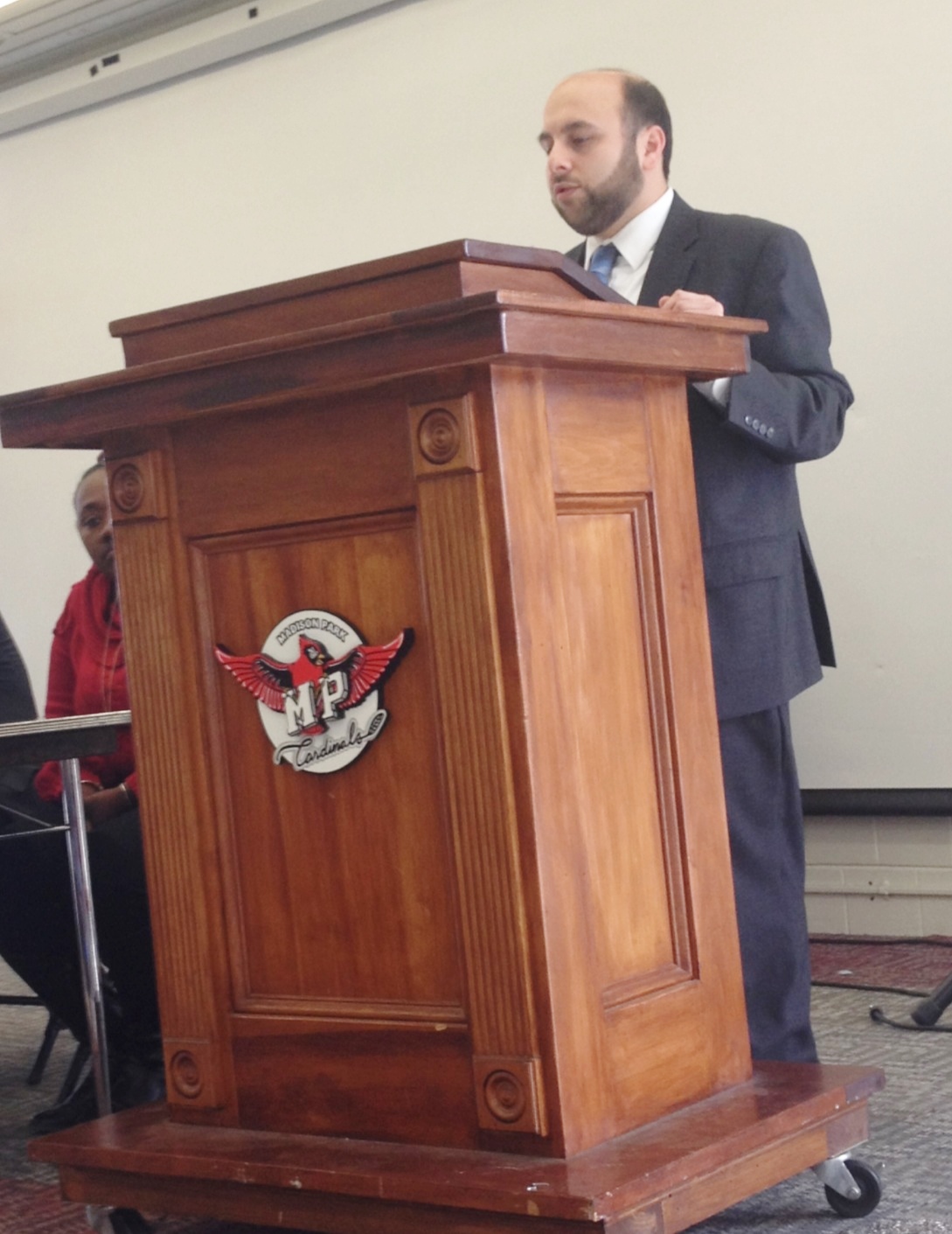
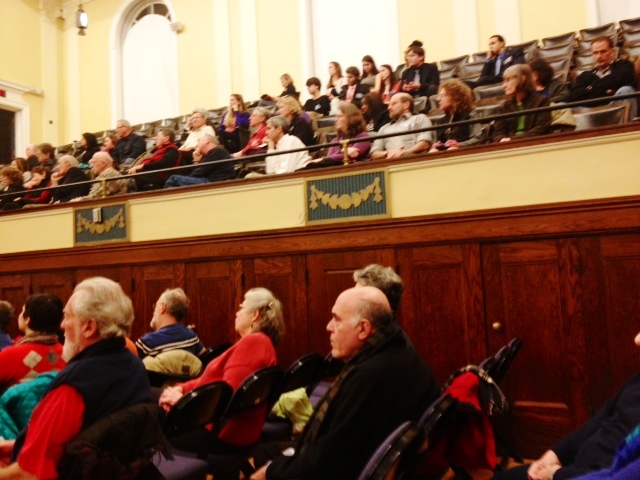
For those who believe that competition among educational systems and methods is preferable to one-size-fits-all, the Forum held this morning by Citizens for Public Schools at Madison park High School made for painful listening. For three hours non-stop, two panels of speakers — ten in all — laid out multiple criticisms of charter schools : their performance, their selectivity, discipline, low pay for teachers, lack of community accountability. You name it : if there’s a schools issue, the ten speakers accused charter schools of failing it, and they detaile their indictment with statistics and power point charts.

The Forum attendees, who included State Representrative Liz Malia of Jamaica Plain and State Senator Pat Jehlen of Somerville, attacked charter schools for

1.not accepting their fair share of studebts with behavioral or learning disabkiloities

2.accepting a percehtate of English language Learhers (“ELL”s) far lower than that of the community each serves

3.using teachers who do not meet state certificastyion staheards for public school teachers, and not granting them collective bargaining vrights

4.performing no better, on tests and in graduation rates, than the standard public schools

5.violating, in their governance, the State’s open meeting law

6.imposing rigid discipline and dress codes upon studehts to the point of damaging studebts’ self-confidence and for the purpose of weeding out studehts who do not “fit the model.”

7.drawing millions of dollars away from standard public schools, leaving them under-equipped and lacking vital curriculum components such as arts, language, and technology

8.too great a focus on “teaching to the test” — the State’s MCAS exams, which public school teachers hate.

Image

“millions of dollars are being drained !” — the BTU’s Ed Doherty speaks at the CPS Forum

Ed Doherty, a past president of the Boston Teachers Union, held back nothing. “85 million dollars are being drained,” aid Doherty, “from the Boston schools budget” — perhaps forgetting that mayor Walsh’s projected school budget will be 39.6 million dollars larger than last year. “Charters send back to public schools misbehaving and underperforming students,” Doherty added, and “Teachers at charter schools should be teacher certified in the usual manner.”

Image

Roger Rice of META delivered the most effective criticism of charter schools ; that most of them enormously under-serve English language earner students

Of the other speakers, Roger Rice of META convincingly demonstrated that charter schools srve a portion of ELL’s far less than the percentage of ELL’s in the public school system. CPS’s Dr. Alain Jehlen illustrated charter schools’ discipline codes. Jerry Mogul, executive directory of an advocacy group, showed that charter schools sometimes fail special eduaction requuremebtrs. Roy Belson, Superintendent of Medford Public Schools, asked, “if the reason for charter schools is to close the achievement gap, shouldn’t they take kids who ARE the achievement gap ?” School Committeeman Charles Gallo of Lynn — who mentioned twice that he is running for the State Representative seat that Steve Walsh is leaving this month — simply said “we on the Lynn school committeeman signed a letter to the Governor saying, ‘no more charter schools. If only other school committees would do that.”

Image

^ Lynn school committeeman Charles Gallo : running for State Rep on a “no more charter schools” platform

Image

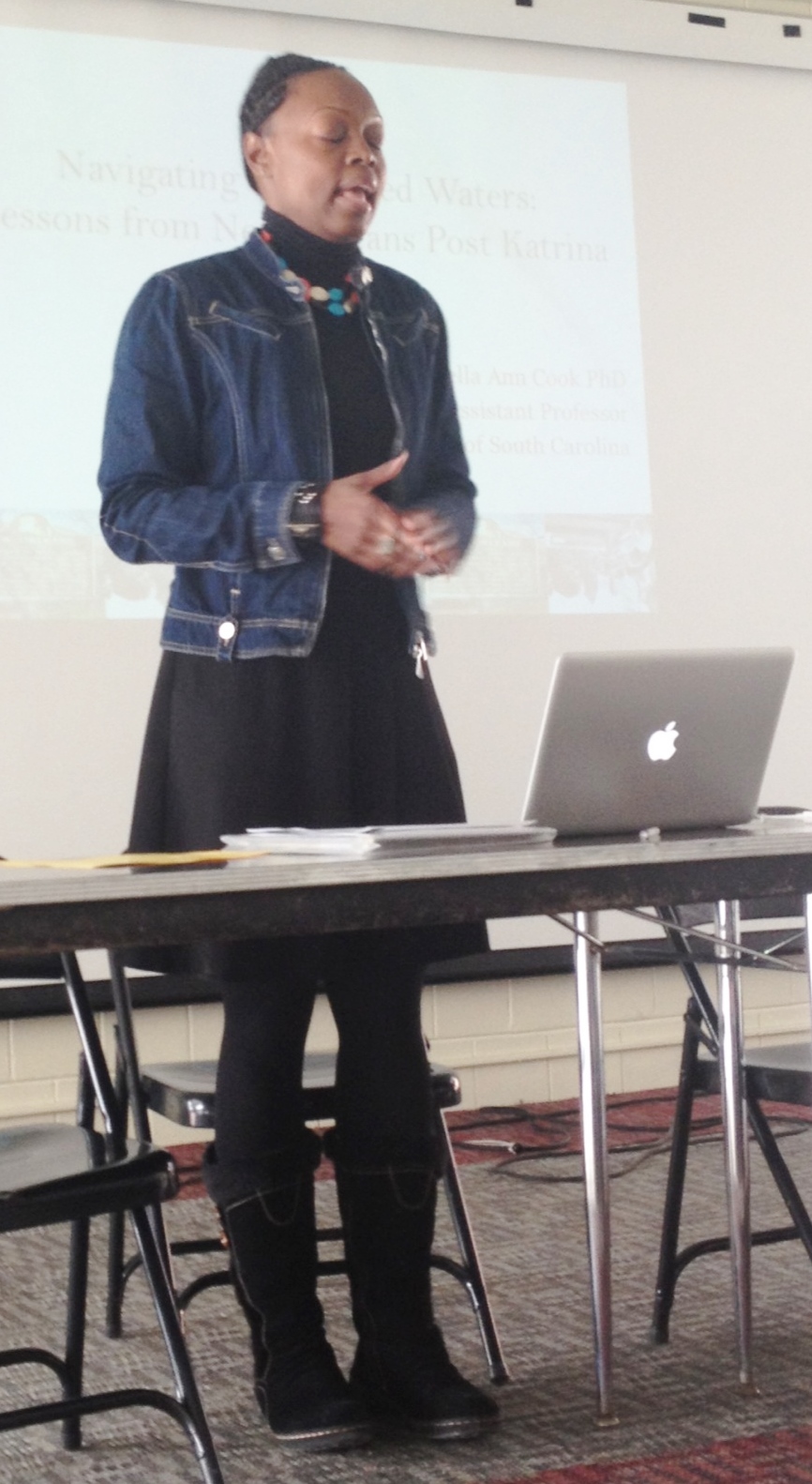
Daniella Cook : somebody wins and somebody loses should never be an education result.

One speaker, Daniella Cook, a University of South Carolina educator, complained that with charter schools, “somebody wins and somebody loses” and “schools should not be market based.” She also played the race card : “We cannot talk about the proliferation of charter schools without talking race,” said Cook. “Charters are a racially based political economy.”

Less than 100 people attended the Forum. Many of these were part of the presentation. Does this mean that the anti-charter schools argument hasn’t much of a constituency ? Perhaps so. Charter schools were established in Massachusetts some 20 years ago not because they lacked support but because they have lots of it; nor do charters appear to be losing ground. Both of the final candidates for Boston Mayor were friends of charter school expansion. Those candidates who were not friends of charters finished back in the pack. Clearly the anti-charter argument is a minority view.

I have now attended four Forums since the Mayor election in which anti-charter school forces have convened their numbers and their arguments. Some of their points hit home : Charter schools should accept many more ELL’s. Charters should be slower to dismiss kids with behavioral issues. Charters should establish paent-teacher associations and encoyrage parents to participate.

For the rest of the critique, however, I have scant patience. (1 ) how is it racist to demand students be held to account by strict discipline and dress standards ? that kind of indelible, constant focus is exactly what kids — OK, let’s assume the stereotype for argument’s sake — from homes often anarchic or dysfunctional need. The parents know it and insist on it; the kids mostly agree, if not when they are kids, then long after, as adults. ( 2 ) why should public schools have first dibs on taxpayers’ education money ? The whole idea of charter schools — of school technique diversity in general — is that the standard public school model often does not work. ( 3 ) Why need teachers in schools other than standard public have to be certified “in the usual manner” ? Teaching is an art; many people have the art. Why not ask people beyond the standard to reach in their non-standard way ? ( 4 ) And what was former charter school teacher Barrett Smith, calling for when he said that “we must educate the whole child” ? This is one of those school-argot phrases that sounds good but rankles when a definition is attempted. To me it means that we educate kids to citizenship as well as employment. Obviously schools should do that.

But the “whole child” does not even COME to school. MOST of “the child” lives at home. Kids spend far more of their school years at home than in a school. Schools do not educate the “whole” child, only the part of a child that schools attend for about eight hours, five days a week, about nine months a year.

this is why I find the phrase “educate the whole child” most unhelpful.

I noted above that Mayor Walsh’s Boston Public Schools budget will be 39.6 million larger than last year’s. Yet almost all of this increase is going to pay for BPS teachers’ pay raises. Can there be any doubt that the many speakers who emphasized today the money that charters “draw away’ from standard public schiools are thinking — a lot — of the NEXT teachers’ unions contracts ?

The Boston Teachers Union — several of whose leaders were at this morning’s Forum — would be well advised to step back from its immovable wall of funding and work rules and try to figure out how to accommodate itself to an education world in which many systems and methods are encouraged; in which choice is essential to state education law; and in which innovation, of curriculum, school organization, and principalship, is sure to increase, not retreat ? Some good points were made today; but they’re as likely as not to be overwhelmed by anti-charter arguments fighting a losing battle.

One excellent suggestion was made by Lawrence school committeeman Jim Blatchford, who noted that in his city, some schools were setting up a teacher-management way of doing things. “we will see,’ he said with a smile, “if they’re ready to lead like that.”

Innovation there will more of; standard issue, less of. Yet as Daniella Cook said, quoting John Dewey : “what the best parent wants for his child, that’s what she should want for all children.” Dewey spoke in support of his innovation, that students should learn by  doing — that rote memorization of dates or speeches wasn’t enough, or practical, and too standardized for the varieties of childhood perceptions of the world. As Cook used the phrase, however, it seemed tio me to hang helplessly on the paradox of life and community. We want all children to have the best education, but we also want the ablest kids to receive an education geared to their ableness. And if we do that, we accentuate the “achievement gap” that the Forum participants claim to dislike. How can there not be an achievement gap if we abet the ablest to harness their abilities ? If we do that, the ablest kids will excel more and more and widen the achievement gap. But how can a society progressive, reformist, and innovation-bound — as ours is — not abet the ablest kids the best we can ? We cannot lead an innovation society with average kids alone. Indeed, if kids of average ability — or less than average — are our concentration, they will end up in a society falling behind others more dedicated to innovation : think Germany; think China. And that will have negative economic consequences for those kids and for their kids; and so forth.

There is no way to avoid the innovation challenge. John Connolly staked his entire campaign on facing the innovation world candidly, forthrightly. He refused to temporize. It cost him the election; a majority of voters looked at the education and workplace future that Connolly spoke of and recoiled from it. It’s a daunting prospect. And real it is. No amount of skepticism about —  no matter how many Forums protest against — education innovation, school competition, and system transformation will stop what is coming.

—- Mike Freedberg / Here and Sphere

Image

John Connolly at Raynise’s house party : his stark vision of what innovation will mean to education method and organization scared many

THE NEXT BPS SUPERINTENDENT ? JOHN McDONOUGH SHOULD APPLY

Image

^ the gentle face of an underestimated reformer ? John McDonough just might be he

—- —- —-

Who should be Boston’s next public schools Superintendent ? A recent article in Commonwealth Magazine got me thinking that it should be the man who already IS the ‘super” : John McDonough.

The 40-year BPS employee now holds that job on an interim basis. He has said he won’t apply for the permanent job. He should rethink that decision.

Mayor Walsh’s first budget plans a $ 39.6 million increase for the BPS. Most of that added funding will, however, be devoured by contracted pay increases for BPS teachers. Hardly any money will remain for facilities upgrades, new technologies, an extended school day. The allocation of these increased funds to pay hikes asks an obvious question : is the mission of Boston’s public schools primarily to raise teachers’ pay ?

For that question John McDonough has, says the Commonwealth magazine article, a workable response. If we are to pay teachers top dollar, and spend almost no added funds on anything else in the schools, the least we can insist upon is superior teacher performance. McDonough, says the article, has a strategy : give the principal of every Boston public school autonomy to hire whom he or she wants. He admits that his decision is risky. Because many of the system’s underperforming reachers have tenure, they cannot be fired. If no school principal wnats them they will simply have to be reassigned to something, or (as the Commonwealth story puts it) paid not to teach.

Paying union employees with contractual rights not to work is nothing new. When the nation’s railroads were losing their passenger customers, many railroad workers ended up being paid not to work. But the BPS situation is different : the number of “customers” — school kids — is increasing, not declining. What is wanted is not fewer workers but better workers. In short, the dreaded “performance evaluation” standard that the Boston Teachers Union resists.

It will be difficult enough for McDonough, the quiestest of leaders, to achieve such a huge changer in the culture of BPS work. His insider position might just make all the difference. When I first met him again — I had known him back in the day when I worked for elected school committeemen — on last year’s Mayor campaign, he was sitting at a table in the cafeteria of BTU headquarters, in the company of former BTU president Ed Doherty and current BTU activist Shirley Pedone — both long known by me. Neither Doherty nor Pedone is shy about pushing the entire BTU agenda; but they and McDonough go back a long time, obviously on a friendly basis, as fellow BPS employees. It matters. Difficult it is to imagine an outside superintendent hired by “nationwide search” being so easily casual with BTU activists.

Image

^ teacher by example : John McDonough at the Lilla G. Frederick Pilot Middle School

How many BPS bosses as readily liked by BTU activists as McDonough also have the confidence of John Connolly ?  One of Connolly’s campaign themes was to break up the central BPS bureaucracy. Yet, says Commonwealth, “John Connolly, who campaigned to be the education mayor, says he is a big believer in McDonough. ‘John was often the only high-level voice of reason inside BPS,’ Connolly wrote in a December e-mail while away on a post-campaign vacation. ‘He wants to do the right things and he knows BPS inside out. If John is given the backing, he won’t hesitate to clean house and make critical changes that really should happen before the next superintendent is hired.'”

This has already happened, as the Commonwealth article notes, at the John Marshall school on Corona Street in Boston’s Bowdoin-Geneva neighborhood. There an outside non-profit, Unlocking Potential (UP), was brought in to re-think and manage. UP terminated every one of the John Marshall’s employees and hired back only three. All of its new teachers were thus young — some very young. This had several beneficial consequences : ( 1 ) Because the new teachers were young, they were paid less even as BTU members, saving scarce budget money ( 2 ) Because the school day was longer, it engaged more of the students’ day to day life ( 3 ) because the teachers were so young, their method and technological awareness were up to date. (This latter is something that I have previously opined in favor of : that teachers of skills and skill thinking should be as young and new to teaching as possible, not the other way around.) Not surprisingly, a much higher percentage of John Marshall students — of whom 99 % are of color — achieved high marks. As for the teachers who were displaced, some found teaching jobs elsewhere, some took other work within the system, others left teaching entirely.

McDonough says that he will not allow displaced teachers to go unused. “There’s plenty of work within our system,” he told Commonwelath. Yet he knows that his principals’ autonomy decision makes teacher tenure — a core union contract principle — look an obstacle. The BTU won’t allow tenure to be put at risk in future contracts ; but McDonough, and only he, may just be able to negotiate a buy-out of some tenure, or a reclassification, so that tenure won’t force young, exciting, cutting edge teachers into not being rehired — as it famously already has done. I’m not bullish that a superintendent outside-hired could get this work rule reform done at all.

It’s going to be a difficult enough task even for John McDonough’s soft-spoken, career-long determination. As John Connolly remarked to Commonwealth, “‘That said, I am always wary of BPS statements about changes to teacher hiring and placement rules, timelines, and policy. There is so much off-the-radar deal making and just plain skirting of the rules behind the scenes that undermine supposed changes. In sum, I won’t believe anything has changed until I see it actually happening’.”

Connolly’s skepticism is warranted. The BTU opposes many of the changes that have already happened, much less those proposed. I see no sign, either, that Mayor Walsh wants a difficult enough City budget made even more difficult by any kind of fight with the BTU. At best, an outside hire will need much time just to learn what’s going on. at worst, she might stumble negligently into a huge avoidable fight. That won’t happen with McDonough at the helm.

—- Mike Freedberg / Here and Sphere

#MAGOV : GROSSMAN BESTS THE FIELD AT LEXINGTON FORUM

Image

two strongest, but opposites in every way : Don Berwick and Steve Grossman at Lexington’s Governor Forum

—- —- —-

Close to 500 people took seats in Lexington’s Cary Hall to hear the five Democrats running for Governor respond to questions put by the town’s State Representative, Jay Kaufman. The Forum lasted almost two hours, sufficient time for the five to leave clear and very different impressions of what they are about.

Don Berwick, a doctor, sees almost everything as a health care or moral issue ; and as health care and government’s handling of it has roiled the whole nation, the Lexington audience saw it too. Applause galore graced his most fervent flights of pediatric concern. Curiously, he also arrives via the health issue route at favoring repeal of the State’s casino law. All four of his rivals took the opposite position: Grossman pointedly, for both the revenue and the jobs — as he said, ‘how will we replace the casino revenue ?” Coakley opposed Berwick definitively, noting that she has sued to prevent the casino repeal referendum entirely, as an unconstitutional interference with settled contract rights). Even the casual Kayyem said that no, we need casino revenue and jobs.

Many in the Lexington audience applauded Berwick’s anti-casino moralism. To this observer, however, Berwick the anti-casino repealer seemed a Democratic version of Ted Cruz repealing Obamacare. Not exactly the impression he might want to leave.

State Treasurer Steve Grossman addressed many issues on their own two feet, and spoke of immigrant rights, renewable energy, the Governor’s transportation bill, and mental health work, with detail confidently; but he too had his mantras : “I’m the only candidate on this stage who has actually created jobs” and “if we need to raise new revenue, I will do it.” Still, because he often spoke directly after Berwick, Grossman’s intense focus and decisive “this is what I will do as governor’ moments contrasted all to his advantage : Berwick, the moral conscience; Grossman, the man of authority. Berwick drew the loudest applause, and often; but as the Forum continued, Grossman began to draw applause as well — more and more. And if this Forum was about electing a Governor — which hopefully it was — Grossman deserved every kudo accorded him.

That said, was I the only observer who heard a strong likeness to Charlie Baker in Grossman’s “business and job creation” theme ?

Image

^ activists attentive : Cary Hall was full to the loges and balconies

Attorney General Martha Coakley spoke quietly, with a welcoming smile that belied the sarcasm in her many responses, in which she was trying to say, “as Attorney General, I’ve already been working all of these issues, of fairness, budgeting, immigrant concerns, and the big banks.”

Juliette Kayyem, a policy expert and former Obama Administration NSA official, looked gorgeous and spoke casually, almost intimately, as if at a houseparty among friends — a tactic that, to this observer at least, doesn’t work in a setting as structured as the Jay Kaufman Forum. Her informality dissipated her issues statements to the point that I found it hard to grasp what her positions actually are. On the issues that she did address directly her answers seemed tautologous. Berwick and Grossman — even Coakley — stated positions that one might disagree with. Thery took risks. Kayyem appeared to take none and to rely on her charm and personality — pleasant surprise to see in a bureacrat — as a kind of policy statement itself.

Image

^ personality as policy : Juliette Kayyem

Then there was Joe Avellone, a doctor and the CEO of a medical software firm, Parexel. I do not like to speak critically of a man whose candidacy lags so badly, but I have to : on the Lexington stage, Avellone spoke a soft voice that was hard to hear, talked without focus, and, as a doctor on the same stage with the eloquent Doctor Berwick, found himself beaten to the prize almost every time.

Distinctions were thus made, for all to see and appreciate. yet on the night’s most important question — “what will you do if the Speaker won’t sign off on legislation that you propose ?” — all five candidates ducked or evaded. Grossman noted that he has built up solid relationships with members of the legislature. OK, but that wasn’t the question. The question was about just one legislator, the Speaker. Doctor Berwick said, “I’ve met many of our legislators. They seem normal to me.” Laughter — but again, he did not say what he would do about the Speaker, who is not normal but THE Norm. And so it went. Granted that the question was somewhat unfair. In our state the Speaker of the house controls his membership entirely, to the point that no legislation can pass without his OK, and there is nothing that even the Governor can do about it. time and time again, under Speaker after Speaker, we see this happen. What could any of Representative Kaufman’s five guests really say, that would not embarrass them and show them, ultimately, as weak ? The office itself is weak.

Fortunately for the five, this moment of truth came early in the Forum. by the time the Forum ended, the candidates looked important again, their office worthy of activist attention in the party caucuses that begin less than a month hence.

—- Mike Freedberg / Here and Sphere
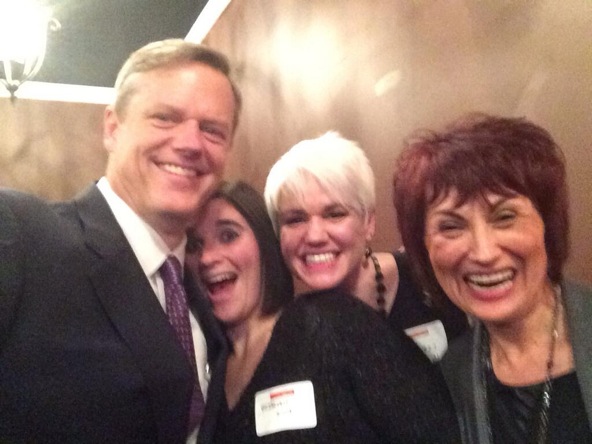
below : the obligatory Forum photo, complete with white band in the middle annoying every eye.

Image

#MAGOV : COAKLEY ATTACKS BAKER; BAKER SAYS “THANK YOU”

Image

Coakley the Chin attacks more thin than win

—- —- —-

In this era of talk show politics, candidates have learned that they can draw attention by attacking opponents early and often. Attention practically erupts when the attacking comes from a surprise direction. It was so, yesterday, when Martha Coakley attcked Charlie Baker for — so she claimed — opposing the minimum wage hike now awaiting enactment by our legislature. Who expected to hear Coakley, the poster child for dull campaigning, signing chin music ?

Coakley’s attack certainly got Baker’s attention. His spokesman Tim Buckley shot back a quick response : that Baker is “open to raising the state’s minimum wage but aslo has other suggestions for putting more money in low-wage workers’ wallets : increasing the earned income tax credit and assuring such workers of longer hours.

To the knee jerk ear Baker’s response sounds like waffling. it isn’t. His earned income tax credot increase is a solid idea, and so is his assurance of longer hours. Too many minimum wage workers aren’t given a 40 hour work week. An employer doesn’t have to provide healh insurance and othetr benefits to workers on the job less than full time; many employers who pay low wages also use the short hours system to avoid incurring benefits. Voters who take the time to think seriously about Baker’s wage and employment ideas will find them quite reform=-minded.

Image

^ a smile on his face : “thank you, Chin, for attacking me !”:

Coakley’s attack, on the other hand, came sucker-punch fashion : slam bang and out. No policy nuance, no ideation, just the one raise the wage do-it. I am all for raising the minimum wage gto # 11.00 an hoiur; we at Here and Sphere have editorialized often in favor of the raise, and we will probably say so again and again. But is “raise up” the only move worth making ? Why should it be ?
Moreover, Coakley added the two talking points being talked by all the standard-issue Democrats : the rause is “good for working families” and “Baker favors the top one percent.” This is dumb stuff. Coakley must know better. I get the impression, actually,l that her attack wasn’t directed at baker at all but a her Democratyic rivals. Coaklehy isn’t runnihg against baker right now;. She is running against Steve grossman, Juliette Kayyem, Don Berwick, and Joe Avellone. Her by-the-book talking points are what Democratic Primary — not November election — voters like to hear.

Coakley must think that by attacking Baker, she’ll be heard first (and she has been) and maybe foremost and that her rivals will have to play catch-up — somehow: because they can’t catch up by attacking Baker : that would look to voters like copy-catting and, well, catching up. We will soon find out how Kayyem, Berwick, Grossman, and Avellone respond to Coakley’s two-bank billiard shot. The winner, one hopes, will be the Coakley rivals who refiuse to play her game at all; who continue to present their own issues and agendas, in their own time and place, gathering support at the upcoming caucuses from activists who want a confident winner, not an attack game tactician. But I could be wrong.

As for Baker, he should send Coakley a thank-you gift. To be attacked so loudly, by such a lamed candidate, this early as the caucvus and convention season ios about to begin, is a blessing. Baker has to be smiling a big smile as I write this column tonight.

—- Mike Freedberg / Here and Sphere