CRIME AND ITS FASCINATIONS : THOUGHTS ON THE THREE MURDER CASES NOW IN MASSACHUSETTS NEWS

PART ONE : HAVING YOUR CAKE AND EATING IT, TOO

No fewer than four murder trials now have the American public – indeed, much of the world, fascinated and attentive,. Of those four trials, three are underway or in preparation in Massachusetts alone. (The fourth one, that of George Zimmerman, is a Florida event.) That Massachusetts be the focus of murder crime may surprise many. Our state’s reputation is that of a progressive, educated citizenry who follow highly moral missions and do their duty to everyone. And our reputation is not a mis-impression. We are all that. Educated, highly moral, committed to the well being of all of our neighbors.

Still, in a society as populous and diverse as Massachusetts, there are many, many agendas going on. Not everyone in Massachusetts works the community’s mission. Our three accused murderers, James “Whitey” Bulger, Dzhokhar Tsarnaev, and Aaron Hernandez had their own agendas even as they lived among the rest of us.

Bulger 1Aaron 1Dzhokhar

Nothing in itself is wrong with that. No society would be worth belonging if it were not open to opt-outs. No society gets it entirely right. Still, it takes an act of will for someone to separate frrom the general opinion. Many acts of will are beneficial : inventors, entrepreneurs, political opponents all go against the societal grain to society’s ultimate betterment.

But some dissents are criminal. By “criminal,” I mean acts that society cannot tolerate, that not only dissent from the society’s mission but portend immediate, actual harm to it and to those who live in it. This, of course, is a commonplace. What is not so commonplace is our fascination with criminal dissent. Why does the criminal do it ? Does he realize that he is acting criminally ? Does it just happen somehow  ? Does he like his criminal self ?

These questions motivate our fascination with the crime events now on trial in Massachusetts or soon to be.

We marvel at their diversity as well as their intensity. There is the old line, noir-movie, city gangster, Whitey Bulger. There’s the terrorist, Dzhokhar Tsarnaev, religious and ioung. And there is the sports star gang-banger, Aaron Hernandez. None has the slightest similarity to any of the others; not motive, not background, not the manner of act. They are linked only by being accused of committing murder — in Massachusetts.

Each probably despises the others. Criminal will is often like that. It defends its own will in the same breath that it condemns other wills. The criminal HAS IT BOTH WAYS. He (or she) breaks the social covenant, but also passionately defends it against others who break it. The criminal gets to be a good citizen and a bad one, both.

This fascinates us, and it should. The cliche “having your cake and eating it too” is a commonplace because we all want to do it – but few of us ever do. The criminal gets to actually do it. How can he NOT fascinate us ?

We wonder how the criminal gets to be so free from taboos even while maintaining a  dedicationl to them. At the trial we see some of how he (or she)  did what he did, and of why, but even at trial the question of how did it get to that is rarely answered even partially. Still, that is the question we want – need – to have answered. Because it is rarely answered in a trial, we follow the trial intently seeking in what is testified to an answer to that question.

We fear, and rightly, that the criminal acts as he does because he likes being criminal. He can condemn the criminal acts of others as vigorously as we do and commit other such acts as we do not. He likes having it both ways ? Maybe not. But what if he does ?

Why did Whitey Bulger choose a life of extortion, gambling, violence, ratting, and killing ? Perhaps because he liked it. Perhaps Tsarnaev liked being his older brother’s loyal helpmate. Maybe Aaron Hernandez liked the power and  swagger, the anger and dominance, that violence to his associates engendered. There is nothing freer than to be free of societal taboos. When one sees that one can do anything, it is hard to walk away. Hard for some, anyway. Fortunately, it is not hard for most of us to eschew doing whatever we want. In any case, we can watch the trials of Hernandez, Tsarnaev, and Bulger and imagine ourselves having it both ways : doing what they did and not doing it. Living it and condemning it.

No wonder that criminal trials fascinate us.


“SOME THOUGHTS ON CRIME” IS A CONTINUING ESSAY, POSTED ONE PART AT A TIME. PART TWO– DID HE REALLY DO THAT ?” —  WILL BE POSTED TOMORROW.

— Michael Freedberg / Here and Sphere

WHO WILL BE THE NEXT MASSACHUSETTS GOVERNOR ?

Image

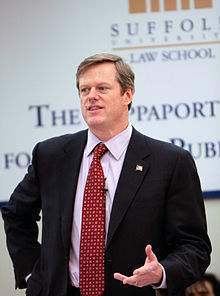
Front runner : the GOP’s Charlie Baker

The election won’t take place until November of NEXT year. Yet already the big political talk state-wide is, “who will be our next Governor ?” As Deval Patrick is not, after two terms, running for re-election, the question matters.

There is no obvious successor. Many fit the role, but none dominates it. For the Democrats, Attorney General Martha Coakley looks most formidable; but State Treasurer Steve Grossman — who announced his candidacy yesterday — rates as supportable as well, and so also, on his resume alone, does Donald S. Berwick, a medical doctor best known as President Obama’s administrator of Medicare and Medicaid services.

Image

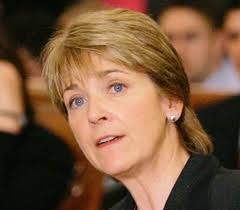
leading Democrat : attorney General Martha Coakley

Image

also strong : State Treasurer Steve Grossman

You would suppose that the presence of three such star-quality candidates would preclude the availability of a fourth: but you would be wrong. A second Obama administration official, Juliette Kayyem, is said to be preparing her candidacy. Kayyem appeals to those who believe that intellectual rulers should rule. She worked in the sardonically named “Department of Homeland Security,” lectures at Harvard University and writes op-eds for the Boston Globe. Kayyem is an all-in supporter of the secret surveillance state. Sadly, this is what the Democratic Party, once the courageous tribune of the rights of ordinary people, has just about become in paranoid America, 2013.

Image

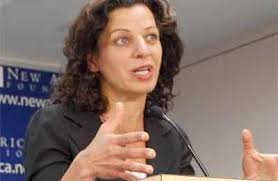
Governor Snoop ? Democrat Juliette Kayyem is thinking about it.

Of course Kayyem might not actually declare. We hope she does not. State government has already become an enemy to many of the basic rights of ordinary people : think the recent and ongoing attack upon people receiving EBT benefits. Ponder the opposition to the Governor’s “transpo” bill and its new taxes, money needed if the state is to maintain, even improve, public transit, by which many ordinary Massachusetts people get to work. The last thing that ordinary Massachusetts citizens need right now is a governor trained in secret snooping.

Of all the Democrats likely to run, Martha Coakley has the best record of advocating for ordinary people. Her long campaign against the mortgage banks and their predatory, deceptive, and downright self-seeking lending and foreclosure practices deserves the congratulations of us all. Yet even Coakley has a tainted past. What Coakley watcher can forget how ruthlessly and unforgivingly she, as Middlesex District attorney, pursued the Fells Acres, day care providing Amirault Family back in the 1980s and for two decades thereafter ?

Despite which, Coakley looks to be the Democrats’ top gun, and that perception is currently well deserved.

Which brings us to the Massachusetts Republican Party. Since the local GOP has provided four of our last five governors — Weld, Cellucci, Swift, Romney — you might expect the GOP nominee to be the favorite to win in 2014. We think so too. Quite unlike the national party’s decline in civic morality and policy intelligence, the Massachusetts GOP features a long bench of A-list candidates, most of them progressive on every civil rights issue and some of them progressive even on economic agendas. Do not be misled by the dullness — except for Dan Winslow — of the GOP’s recent US Senate campaign. For the governorship, our local GOP has plenty to cheer about.

First up is Charlie Baker, an master administrator who ran in 2010 and would probably have won, had his campaign handled more deftly the presence of a strong third candidate. Baker is almost sure to run again.

It is thought that if he does not, former Senator Scott Brown will run. Brown is low-key, personable and still very much liked. He knows Beacon Hill well, having served in the legislature for ten years. The last State Senator to be elected Governor in his own right, the late Paul Cellucci, was an effective leader indeed.

(NOTE : Jane Swift had been a State Senator prior to becoming Lieutenant Governor. She succeeded to the Governorship when Cellucci was appointed Ambassador to Canada.)

Image

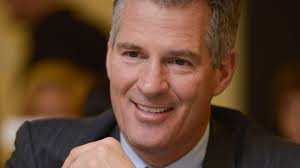
will he run ? Former Senator Scott Brown

Mary Z. Connaughton, who ran for state Auditor in 2010 and lost by one percentage point, might run if neither Baker nor Brown does so. She is an excellent campaigner and would be a superb candidate if she moves away from her retrograde views on social and civil rights issues.

Also possible candidates are Dan Winslow, by far the sharpest — and most under-funded — of the recent US Senate hopefuls, and Rich Tisei, a committed progressive, 16-year State Senator who lost a 2012 race for Congress by only 1,000 votes.

Clearly the Massachusetts GOP offers our citizens what a major political party should : credible candidates who stand for progressive policies beneficial to the many, not just the few. At least one such GOP candidate will run; and given the strength of the Democrats’ Coakley and Grossman — Berwick too — it should be a very intense election, with state infrastructure and education spending the prime issue : issues about which the Massachusetts GOP — so unlike the GOP nationally — offers solutions well in keeping with our state’s regard for civil rights and for the needs of those on or near the economic bottom

Our Governor campaigns always are about solutions and, by election day, so intense. This one already is.

—- Michael Freedberg / Here and Sphere
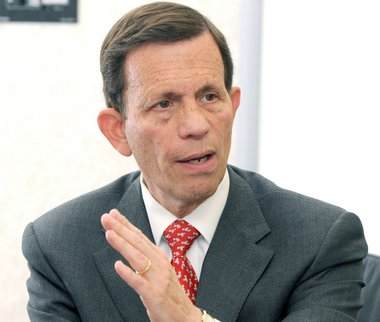
UPDATE  as of 1:45 P.M. 07/11/13 : yesterday we learned that State Senator Dan Wolf, founder of Cape Air and representing of the Cape Cod and Islands District, has announced for the Democratic Party’s Governor nomination. More details as we get them.

EBT REFORM : NOT THE BIG DEAL IT’S BEING WHIPPED UP TO BE

One of Boston’s daily newspapers has made a lot of noise this year ramping up alleged abuses in Massachusetts’s EBT — “electronic benefits transfer,” i.e. food stamps — program. This at the behest of a Taunton State Representative, Shaunna O’Connell (R), who has made it her cause celebre.

We at Here and Sphere reject the fuss. Here’s the daily paper’s claims vs. the Real Deal:

1. EBT benefits went to dead people — yes. About 0.20 % of the state’s EBT funds went to dead people. Most banks would be overjoyed with a loss rate that low. The loss resulted from, in almost all cases, of people delaying to inform the state of the death of their r5elative. The state Department of Welfare estimates that only a very, very few cases involve knowing fraud. Those will be prosecuted if feasible.

2. EBT benefits should be conditioned on recipients working — most benefits go to elderly, the disabled, or to single parents. Single parents already work. If you think that caring for a house of kids isn’t work, trying to doing it sometime. Not only is it work, but also: having a single parent doing it, and paying her benefit money to keep her doing it, costs a heck of a lot less than day care for kids while the EBT recipient goes out and works at something.else. As for the disabled and the elderly, they either cannot work or shouldn’t be asked to. Retirees who do not work are often too physically down to work at much. They may have a hobby : but to order them to pursue their hobby or lose their EBT seems like “piling on” to us.

3. EBT was being used to buy cigarettes, or liquor, or scratch tickets — this is where the whole “EBT abuse” flap began. We agree that EBT recipients shouldn’t use their benefits to gamble; and cigarettes sure aren’t much good for one’s health. But life, for EBT recipients, isn’t exactly fun. In most cases it’s a cramped-up life without a car, without the ability to go anywhere or do anything or buy anything but survival. Try living an EBT life sometime ! Do we as a society REALLY want to insist that EBT recipients can’t buy a cigarette, or have a drink of wine or beer here and there ? I hope we haven’t become that petty. And can we add that even as to food, you cann0t buy pre-cooked food with EBT ? Go to Market Basket — where because of super low prices almost all EBT people in our region shop — and look at the pre-cooked chickens, pork, and turkey: too bad, Bub, you have to pay for those with cash. No EBT allowed !

In any case, the legislature a few months ago amended the EBT regulations to prohibit EBT use for purchase of cigarettes and liquor. And the Governor signed the legislation.  Hope you’re happy now…

Finally, we at Here and Sphere just find this entire wave of beating up on those in opur state who live on the edge of survival about as low as it gets. What possesses us to chaff the weakest and most vulnerable of our fellow citizens ? Is that the way we want to perform our duties of citizenship to the whole community ? Do we think that leaning on the very vulnerable somehow makes us a better place ? Is this really our big priority by way of government reform in Massachusetts ? More important than infrastructure and transportation improvements ? than education updates ? We at Here and Sphere hope not.

— the Editors