5TH SUFFOLK SPECIAL ELECTION : IT’S UPHAMS CORNER TIME

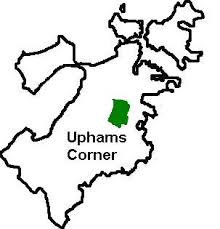
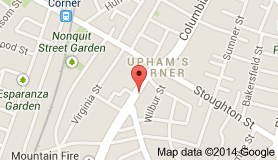
Image ^ the heart and soul of the 5th Suffolk District : Uphams Corner, where Dudley and Stoughton Streets meet Columbia Road  —- —- —-

It’s sad that the 5th Suffolk State Representative District should draw attention only because of the ouster of Carlos Henriquez. Uphams Corner, Bowdoin-Geneva, Meeting House Hill, Cherry Valley, Jones Hill, and Stanwood Street-Lawrence Avenue need a strong voice, an elite voice; none needs disgrace and expulsion. Million dollar homes do exist in the “5th,” on Jones Hill in particular; but most of the District’s neighborhoods are only now emerging — some not yet — from decades of blight, poverty, and urban violence. The 13th District, which borders the 5th to the East, is about to elect a new Representative who from Day one will have big clout on Beacon Hill. The 2nd District, Charlestown and Chelsea, seems ready to do the same.

Will voters of the 5th follow suit ? Will they even have the opportunity ? So far four candidates have made the decision. Evandro C. Carvalho, a local activist — we used to call them “citizen” — moved first. Then Jenny Johnson, who lives hard by Ronan Park on Meeting House Hill. Karen Charles-Peterson, of WGBH, has joined them. Today, even as I write, Barry Lawton has entered the list. (Lawton ran in 2010, losing to Carlos Henriquez.) Of the four, only Charles-Peterson was already known to me (and I knew her before I joined WGBH’s correspondent team). Even she is known chiefly to citizens; the general voting public, not so much.

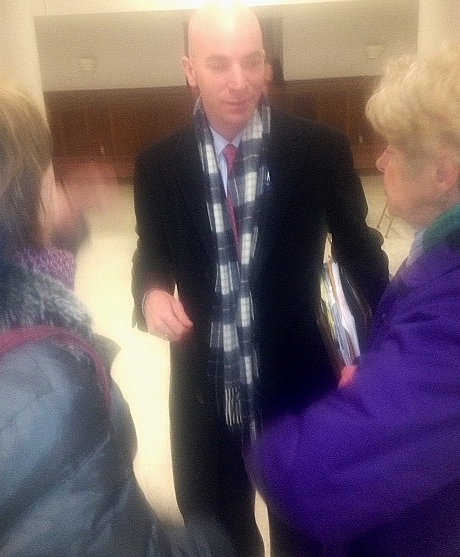
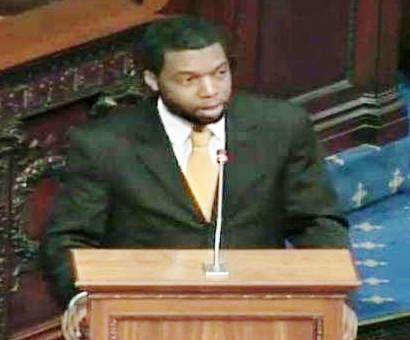
Three of the four reside in Ward 15. John Barros, who ran for Mayor and wowed many with his articulation and knowledge, lives in the Uphams Corner heart of the District. He would have been exactly the All-Star voice the District’s all too overlooked voters need; but no sooner had his possible candidacy become general talk than Mayor Walsh claimed him to be Boston’s Chief of economic Development. As such, Barros will earn more than twice as much as a State Representative; and Barros may well need the money. Same could be said for just about every voter of the 5th District. Image ^ first in, and maybe the man : Evandro C. Carvalho

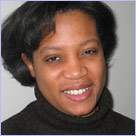
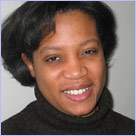
Image distinguished and active : Karen Charles-Peterson

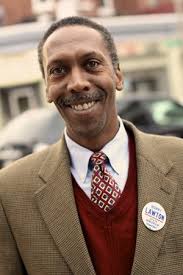
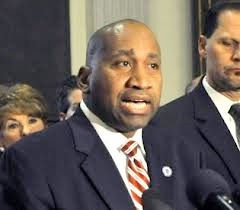
1 Barry Lawton

^ almost won  the Democratic Primary 4 years ago : Barry Lawton is running again

Somehow the current 5th District contenders fall short of what this District needs. I may be wrong to think so; not one have I met in person as of yet. All may well merit prominence, respect, votes. But this District needs more than supposition.

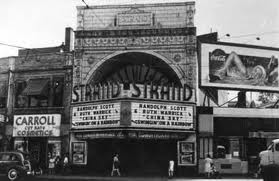
Charles-Peterson, by her connection to WGBH, and married to Kevin Peterson, one of Boston’s most visible leaders on civil rights and Black community issues, might claim the “more” that the 5th needs. But for me, the heart and soul of the 5th is Uphams Corner, whence, decades ago, then state Representative Jim Hart oversaw recovery of the Strand theater — once vacant and derelict — and the creation of Jones Hill, as a neighborhood and a community. (Disclosure : I worked in Hart’s Columbia Road office as a go-fer.) Not since Hart has Uphams Corner been home to an elected State House voice. It needs be again. Uphams Corner is the crossroads of Cape Verdean Dorchester, old Irish Dorchester, Black community Dorchester. Uphams Corner is home to banks, insurance offices, funeral homes, restaurants, traffic. (My goodness yes, traffic.) To each side of Uphams Corner sit gorgeous Victorian homes — take a look at Chamblet Street some day, upper Hartford Street, or Virginia Street, Wendover Street, Cushing Avenue.) The people who own these homes toady are not poor or unmortgage-able, as all area home-owners were, back in the day. The people of Uphams Corner can fund much innovation and many centers of activity. At the Bird Street Community Center they already do.

1 Strand Theater No Uphams Corner person has yet stepped up, and, chatting with my old Jim Hart office mate Linda Webster (who now runs Pacific insurance), she could think of no local thinking of the race. I hope she’s wrong. Really, really I am hoping to see an Uphams Corner candidate step forward and claim the 5th Suffolk District with a new Boston vision of diversity, innovation, reform, and attention — of the right kind. Let the light of tomorrow shine — now !


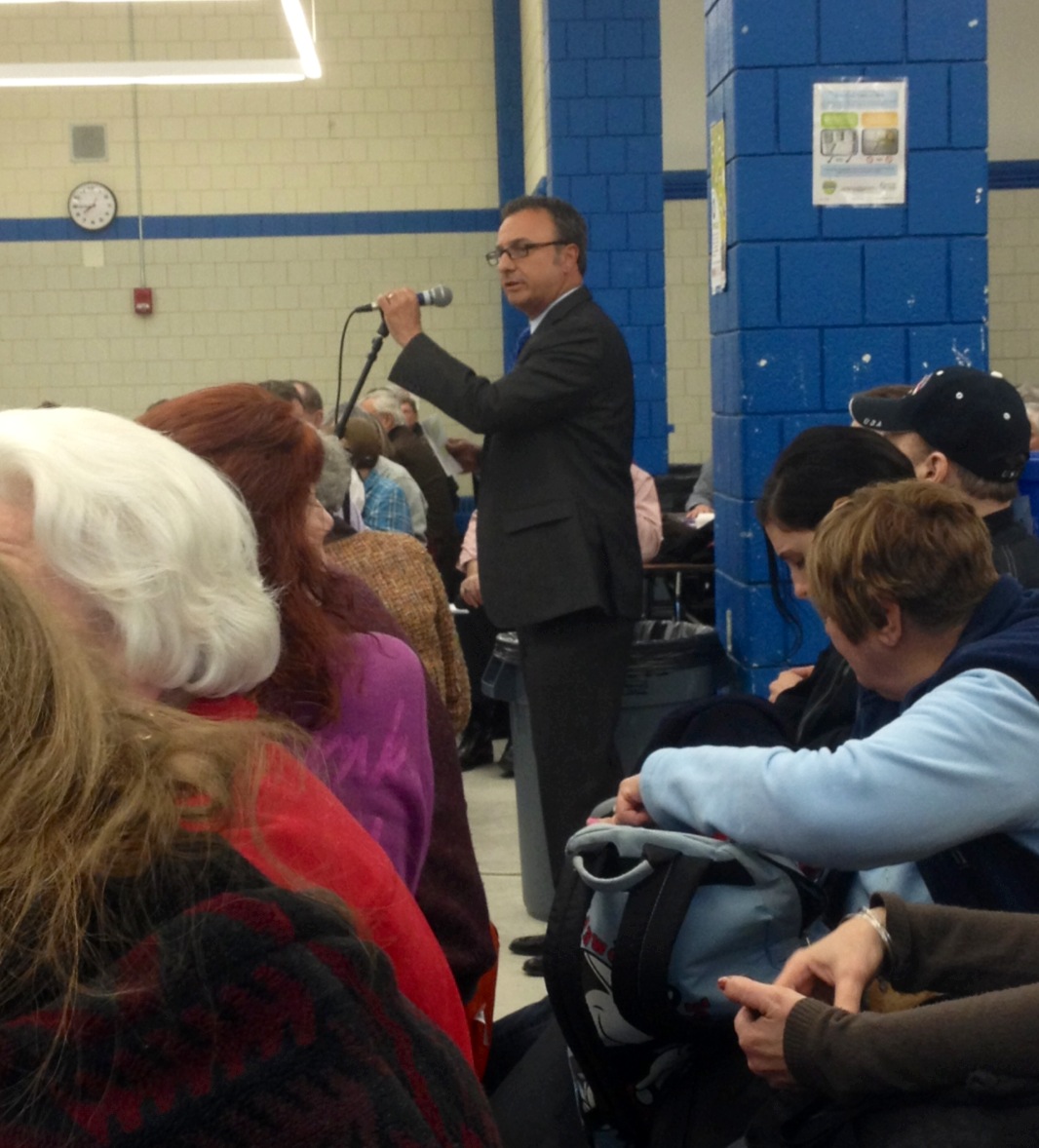
UPDATE 02.19.14 8 PM : at an important community meeting, at the Strand theater jn Uphams Corner, not one of the four announced candidates in the upcoming Special election appeared. Not one.

—- Mike Freedberg / Here and Sphere Image

PICKING MARTY WALSH’S SUCCESSOR : DAN HUNT’S THE MAN TO BEAT

Image

^ the man to beat : Dan Hunt

—- —- —-

Five Democrats seek nomination to become the next State Representative from the Dorchester-based District that Marty Walsh gave up to take office as Boston mayor. Dan Hunt, John O’Toole, Liam Curran, Paul “PJ” McCann, and Gene Gorman have been campaigning for weeks now — Hunt, longer than that — in the coldest winter we’ve seen in decades, in the snow and often in the dark. They’re “knocking doors,” as they put it; “standing out” — sign-holding — at major intersections with as many supporters as can take single-digit temperatures; doing “meet and greets” at local pubs; raising funds at what Dan Hunt calls a “friend-raiser”; and “getting on the phones” to reach the District’s “super voters” — those who always vote, including in the District’s one Quincy precinct, assuming they know there’s an election going on.

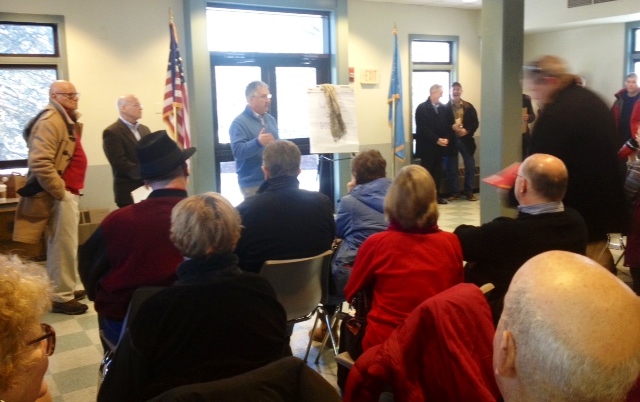
Last night the race got even more serious, as all five men spoke and answered questions at the Cedar Grove Civic Association’s candidate Forum. Cedar Grove — the part of Neponset that borders Quincy — isn’t just another Dorchester neighborhood; in last year’s Mayor election, almost 75 % of the area’s voters actually voted, by far the highest percentage in all Boston. No surprise, then, that about 70 people showed up to listen, or that State Representative Dan Cullinane, from the District across Granite Street, was in the room, as was State Senator Linda Dorcena-Forry.

For candidates at the very local level, even in a varsity political neighborhood — and Dorchester is super varsity, a candidate Forum presents a challenge. You must be ready to speak well, in a voice confidently loud, to give opening and closing remarks not read from notes, and to talk with appreciable knowledge about the major issues. So it was at Cedar Grove.

Gene Gorman, a professor at Emerson college, spoke eloquently and to the point on almost every question asked.

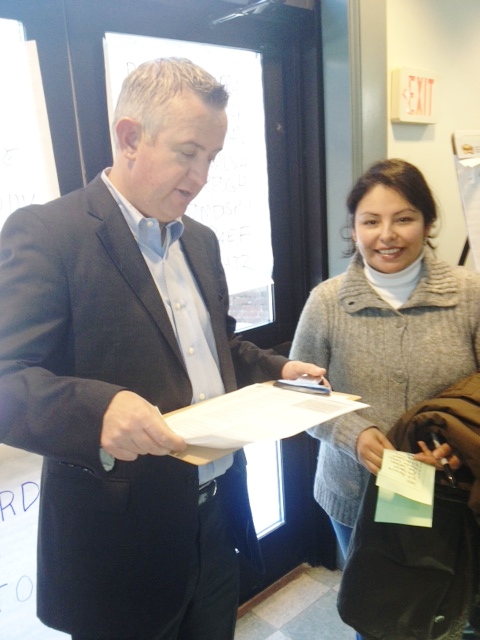
Dan Hunt, generally considered the likeliest to win, spoke with steady confidence about his readiness and with skilled nuance about issues not cookie-cutter simple. Proudly he listed four union endorsements, including the big one : Service Employees International Local 1199, whose work for Marty Walsh is thought by many to have made the difference in last year’s Mayor election,

Image

Liam Curran ^ looked and sounded the eager, even passionate young attorney that he is, in the City of Boston law department. He has the support of Mayor Walsh’s brother and mother — and has made sure everyone knows it — and over and over he cited Marty Walsh’s priorities as the agenda he would adhere to. Like Walsh, Curran was a Labor Union member –Laborers’ local 223. This too he made known.

John O’Toole, himself a past president of the Cedar Grove Civic Association, spoke strongly about neighborhood issues and gave a shout out, by name, to many in the room with whom he has worked with on various neighborhood concerns over the past 20 years. O’Toole, too, has labor support, more Locals than have endorsed Hunt, but at the Forum he named none.

“PJ” McCann — speaking in a voice soft and conversational, hard to hear easily in the long, large meeting room — stressed his experience drafting legislation, collaboratively with many agencies, and his work at the City of Boston’s Public Health Commission.

It has been frustrating for me to pin down any of the five to specifics of major issues facing Massachusetts : transportation funding; education reform and funding; curbing urban violence. Last night, Cedar Grove’s President Sean Weir had no better luck. Granted that the first two issues are complex and coated in controversy, and that the third issue isn’t really a matter of legislation; it would still have been nice to hear what the five will work for by way of funding, and where that funding will come from. You can be sure that the word ‘taxes’ graced no one’s lips all night long.

All five men support raising the minimum wage, and those who addressed the matter of unemployment insurance give-backs all said that it was irrelevant to raising the wage. But Speaker Robert DeLeo, who controls all legislation because he appoints all House committee members, says that the two are indeed connected and that minimum wage legislation must connect them ; and no one, at the Forum, or in conversations with me, has faced the fact. We are left to assume that each of the five, if elected, will make the District’s opinion heard — and then vote the Speaker’s way.

That said, the true importance of this election lies not in legislative specifics but in the loudness and confidence of the voice that will be the 13th Suffolk’s going forward. Can any of these men be a next Marty Walsh, a major voice in labor — or other — issues, a sought-after endorsement in city and state elections, even a potential Mayor ? Because this, not positions on the issues, is the standard for the District’s voters. They are accustomed to having their representative be a center of influence and attention, and they vote in large numbers seeking it. Everybody I speak to expects 4,000 to 6,000 votes to be cast on March 4th Primary day.

The only question is, what KIND of center of attention do these voters want ? Only two of the five men seem to recognize this question as the race’s big decider : Liam Curran and Dan Hunt. Curran has lost no opportunity to pronounce himself the most Marty Walsh of the candidates; and having the mayor’s brother and Mom in his corner gives his pronunciamento some truth. He has pushed the point perhaps too far. Mayor Walsh early on announced himself staying completely out of the race : Curran’s message, has, say some, forced the mayor to embrace Dan Hunt, who is said to be his preferred choice anyway. A day after Curran made major publicity of a photograph taken of him with Walsh’s brother and mother, Mayor Walsh insisted, at a Labor breakfast, on having his picture taken with Hunt, a man very different.

Hunt doesn’t look like Marty, doesn’t sound like him, has a personal history all his own. He grew up in a political household — his Dad Jim Hunt held administrative positions in Boston City governance for decades. As he said at the Forum, he was “sign holding even as a six year old” and “a lifetime, so far, of political and state House service, as staff to two committees.” Not many election hopefuls in today’s America would tout long staff service in government. But a hopeful who understands that Dorchester voters want exactly that makes it a major closing remark.

At Cedar Grove, Hunt sounded confident, commanding, with no equal among the five on that score; and when he cited that Senator Dorcena Forry has endorsed him, it seemed a knockout punch. Had she really done so ? I asked him that question after the Forum, and, yes, he told me, she has in fact endorsed him. That’s quite a step for her to take in a five way local primary. But it makes sense, because of all the five, Hunt alone spoke like a voice of clout who can back up his claim.
Image

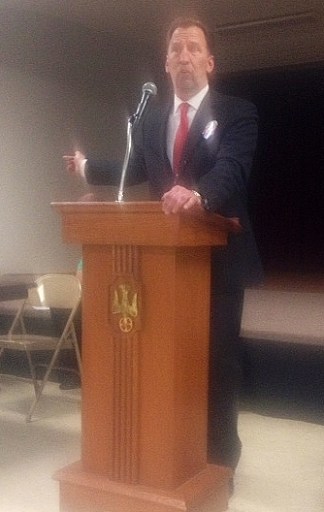
John O’Toole ^ stressed his long history of neighborhood activism, and commands maybe the largest Labor contingent ; all good ; but Labor is split in this race, and neighborhood activist isn’t the office being elected. Liam Curran emphasized how Marty Walsh he is ; but the voters want a voice unique as Walsh, not his duplicate. Gene Gorman has all the issues command that anyone could ask ; but a policy wonk can be the Representative’s issues person. Then there’s PJ McCann : respected, articulate, Harvard graduate, experienced in legislation, with a public heath issues priority vital to city life today, McCann seems more City Councillor than State Representative, a voice among collegial voices, not an advocate going to a place where more are strangers or opponents than allies.
Image

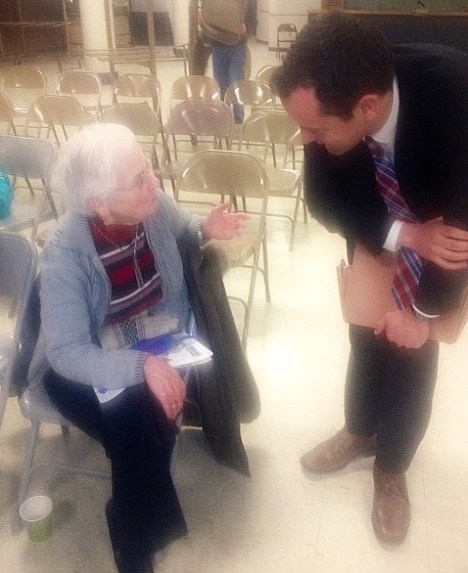
^ likeable, smart, and gentle : “PJ” McCann at the Cedar Grove Forum

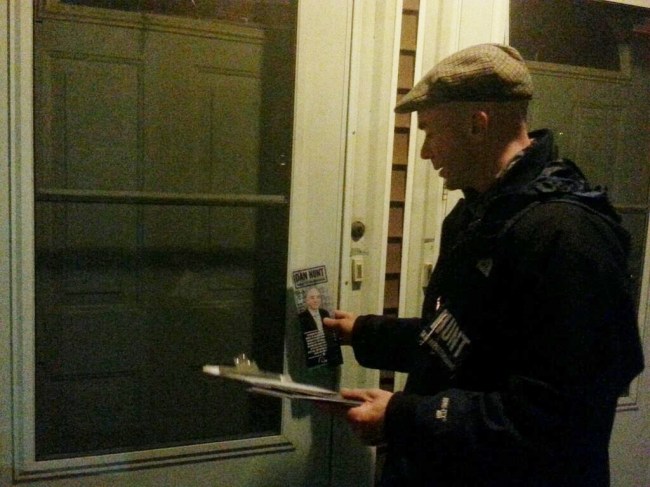
Hunt started first, raised $ 59,365 before the special election was called, and — so he said to me — “has personally knocked on the door of every super voter in the district.” 4,000 doors in two months time, I asked ? “Yes,” he said. And : “I’ve attended every civic association meeting at least twice,. No neighborhood association is too small, I visit them all.”
Image

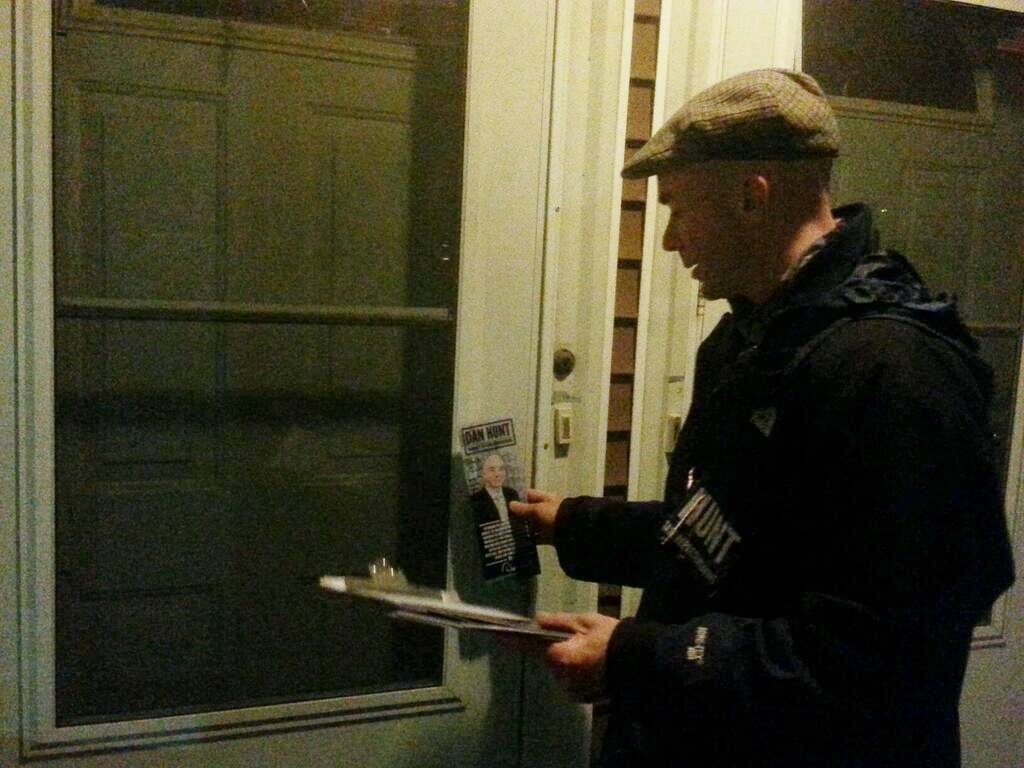
^ door-knocking at night in a winter campaign ; Dan Hunt with voter list in hand

Yes, the race continues. Yes, John O’Toole, especially, is working to catch up. Yet the race looks Hunt’s to lose. Basic work every waking hour, no mistakes, much money, the largest social media presence, strong support from most of the District’s leaders — including Bill Walczak, who ran for Mayor and got 136 votes in his crucial, Savin Hill precinct even with Walsh on the ballot; City Clerk Maureen Feeney, who was Dorchester’s City Councillor; and Supreme Court Clerk Maura Doyle — and a resume that fits the image. Little wonder that this election is looking like a Dan Hunt victory on March 4th

— Mike Freedberg / for Here and Sphere

Image

^ “freezin’ for a reason,” says John O’Toole, door knocking in savin Hill.

BOSTON POLS : CAUCUS — WARD 20 ; AMBITION — 5TH SUFFOLK

Image

^basic democracy : Democratic state chairman Tom McGee of Lynn instructs West Roxbury’s ward 20 caucus

—- —- —-

There may be secret money in the Big Picture, but at the small level where actual people live, vote, and run for office, the money doesn’t taint. Whether it’s caucusing in West Roxbury or manoeuvering a run for State Representative in Dorchester, you find politics basic, the real deal, activism for its own sake. So it was, this morning at Boston Ward 20’s Democratic Party caucus, attended by almost 200 people. So it has been the past two days, since the House expelled Carlos Henriquez, leaving the 5th Suffolk State Representative seat vacant awaiting seekers.

But first, the caucus. I chose Ward 20’s because it is Boston’s biggest voting ward; many were sure to attend to elect 29 delegates to the Democratic convention. The caucus met in the community room at West Roxbury’s Police Station. Attendees and candidate volunteers filled every nook — the hallway too. The State Party chairman was there, Tom McGee of Lynn; so were two competing slates of delegates, a Don Berwick group led by Helen Bello — who hosted the huge Berwick house party that I wrote about recently — and a Juliette Kayyem list led by an old friend, Paul Nevins, an employment lawyer. A group of independent names was nominated too, well known people sure to draw votes on name alone; and attendees voted as much for names they knew as for any slate; there wasn’t at all the structure that I had expected of this meeting. It seemed as much a meet and greet as an election.

Image

^ Ward 20 state Representative Ed Coppinger discusses matters with Here and Sphere follower Michelle Von Vogler

There was voting, but mostly there was conversation as faces familiar or new worked the room. State Senator Mike Rush was there, as was West Roxbury State Representative Ed Coppinger. Governor candidate Martha Coakley worked the room for about 20 minutes, then left. District Attorney Dan Conley shook hands. So did Congressman Steve Lynch. Old friends Carole White (Kevin White’s sister in law) and Marilyn LaRosa were elected; I noticed Helen Greaney in the room and Greg Haugh also — two other Haugh’s sought election as delegates — and Ann Murphy, still glamorous as ever, now working as an aide to Mike Rush. A couple of Boston Teachers Union activists signed in — but I did not see Ward 20’s biggest BTU name, Ed Doherty — and people from both the Connolly and Walsh mayor campaigns.

Circulating as well were four who ran last year for City Council : local resident Marty Keogh, Jack Kelly, and winners Steve Murphy and Michelle Wu. It was a “good hit,” as pols say of an event well worth being seen at.

UPDATE ON DELEGATES ELECTED : Thanks to Rob for posting to me the entire list, mostly of the usual Ward 20 activists (including two Haugh’s and a BTU active, City Council candidate Marty Keogh, a Marty Walsh cabinet member — Alejandra St. Guillen — and at least one State Employee) and two Don Berwick delegates. Take a look :

Female Delegates:
Alyssa Ordway – 75 votes
Carole White – 74
Ann Cushing – 71
Cathy Fumara – 68
Helen Haugh – 68
Diana Orthman – 68
Marilyn LaRosa – 65
Patricia Malone – 65
Anita Salmu – 65
Margaret Sullivan – 63
Josiane Martinez – 60
Alejandra St. Guillen – 59
Sue Anderson – 58
Heather Bello – 26
Hema Kailasam – 21
Jennifer McGoldrick (Alternate)
Pamela Keogh (Alternate)

Male Delegates:
Robert Orthman – 69 votes
David Isberg – 66
Steve Smith – 66
Marty Keogh – 65
Bill Smith – 64
Kevin Walsh – 64
Bill MacGregor – 63
George Donahue – 62
Joe Haugh – 60
John Fumara – 59
Leo Connell – 58
Tom Hanktankis – 58
Patrick Murray – 58
Larry Connolly – 56
Bob Tumposky – 56

(UPDATED 02/09/14 at 10.45 AM)

—- —- —-

And now to the 5th Suffolk District, in Dorchester, where the expulsion of Carlos Henriquez has left a gaping hole…

Image

will he be the first Uphams Corner state Rep since Jim Hart 40 years ago ? John Barros may become a candidate in the 5th Suffolk special election… But so might the woman pictured below, Karen Charles of the Bowdoin-Geneva neighborhood :

Image

The 5th Suffolk State Representative seat in the Massachusetts House won’t be vacant for long. Already the hungry are circling, impatient, guessing and out-guessing. The big news is that John Barros, who ran for mayor last year and impressed many, is seriously considering a run. Barros lives in the heart of the District, owns a successful restaurant in it,. and would be an elite voice for 40,000 people very much in need of one. Barros is not, however, the only notable who is thinking publicly about running. There’s also Karen Charles, who works at WGBH (full disclosure : WGBH’s Peter Kadzis was my editor at the Boston Phoenix and remains a friend professionally and personally), and who, with her husband Kevin Peterson, an NAACP activist, make a formidable team of articulate reformers and who are said to be close to Charlotte Golar-Richie, who once represented the 5th Suffolk, still lives in it, and who was, like Barros, a candidate in last year’s Mayor campaign.

In that Mayor campaign, Barros won 2,072 votes in the 5th District’s 20 precincts; Golar-Richie won 1,465. Barros thus starts with a 600 vote advantage. That isn’t the entire story, though, Felix Arroyo won 570 votes in the District; and Carlos Henriquez, of Hispanic origin like Arroyo, is said to intend running again to reclaim his seat. Even if he does not run, the 570 Arroyo votes seem up for grabs, not to mention the 313 won by Charles Yancey and the 495 won by John Connolly. (Marty Walsh’s 640 votes might split between Barros and a Golar-Richie-backed candidate, as both she and Barros helped Walsh win the Final).

That said, Barros certainly would enter the race as the favorite no matter who else decides to run — including Henriquez himself. The two men are said to be close friends as well as political allies, and some speculate that if Henriquez runs — and he probably will — Barros will not. We shall see. Whatever the case may happen, this is a District that badly needs an A-list voice. It has always had a working-class majority even in the days, not too long ago, when much of it was Roxbury Red Raider country. The “5th” includes the entire Bowdoin-Geneva neighborhood, one of Boston’s most impacted by gang violence; a stretch of Blue Hill Avenue that Red Raiders knew as “Cherry Valley,” once almost entirely blighted but, of late, enjoying the beginnings of a resurgence (as anyone familiar with local hot-spot Merengue Restaurant knows); Upham’s Corner and half of Jones Hill (where I had my first adult job, working as go-fer to state Rep. Jim Hart); and, of Roxbury, the north side of Dudley Side from Hibernian Hall eastward, all the way past the Governor Shirley mansion to and including “the Prairie” ball field (where Red Raider teams played Park League baseball and football). None of the district is high-income; not much of it is middle-income. Everyone benefits from having an eloquent and respected voice in the legislature, but the people of the 5th Suffolk would benefit more than most.

There will be a special election to fill the vacancy. It will be called soon — the date of it as yet unknown but probably early May. It will be a short campaign, a local effort, politics at its most basic and not much different from that Ward 20 caucus that I attended this morning. More voters to reach, yes, but not much more structure. It also looks now to be the most attention-getting time that the 40,000 people of the “5th” have gained in many, many years if ever. Let the democracy of it begin.

—- Mike Freedberg / Here and Sphere

MISDEMEANORS TO THE FORE : THE HOUSE EXPELS CARLOS HENRIQUEZ

Image
^ “impaired judgment” ? the 5th Suffolk’s Carlos Henriquez addressing the Massachusetts house during debate on expelling him

—- —- —-

Not very often do you see a Legislature vote to expel a member. It hasn’t happened in Massachusetts since the late 1970s, when State Senator Joseph DiCarlo was booted for taking bribes. I well remember that day. DiCarlo was a boisterous, dominant presence, the Senate’s majority leader. His crime was a felony, a high crime by any legislature’s definition. Expelling him was a big deal, a giant of politics crashing and burning.

In contrast, yesterdays 146 to 5 vote — to accept the House Ethics Committee’s unanimous resolution to expel the 5th Suffolk District’s Carlos Henriquez — seemed like small potatoes. Yes, his conviction on two misdemeanor counts of assault and battery on a woman was serious. He should have resigned. Had he any concern for the well-being of his 40,000 constituents, many of them needing a full-time legislative voice, he WOULD have resigned. Of this affair he has made many statements. He is innocent, he says — again and again. Not once has he grasped that that isn’t the point ; that the point is his 40,000 constituents. Not once, in his “I am innocent” statement on the floor of the house yesterday did he address a bigger picture. Indeed, he had the temerity to say that domestic violence is a serious crime and cannot be tolerated !
Having delivered this message, he then walked out of the House, an insult to every member and, I suppose, intended as such.

Debate on the Ethics Resolution — H. 3894 — lasted more than an hour. Speaker DeLeo, on whose complaint the Ethics Committee was acting — seemed ready to let his members speak as long as they liked. Several did. Most supported the committee recommendation, some sadly, a few angrily. Over the top was Malden’s Chris Fallon, who shouted his disapproval of domestic violence, very much the candidate — as he is — seeking a state Senate seat, the one vacated by newly elected Congresswowman Katherine Clark.

Image

^ cogently arguing for censure, not expulsion : Russell Holmes of the 6th Suffolk District

Representative Russell Holmes, of the 6th Suffolk District bordering Henriquez’s 5th, offered an amendment to the Ethics Committee’s resolution. He asked that the House censure Henriquez, not expel him. Holmes’s amendment made two strong points : that with parole, Henriquez will be out of jail by mid April, well before a special election to replace him occurs; and that his crime did not explicitly violate the House Rules and thus could not warrant expulsion.

Image

^ “this is a sad day for us all, i don;t enjoy this task at all” : Ethics Committee Acting  Chairman David Nangle of Lowell

The Ethics Committee’s finding, that Henriquez had violated Rule 16A, which addresses a member’s impaired judgment, did seem strained. Arguing the point, Reps. Garrett Bradley and David Nangle (acting Ethics Chairman) asserted that, being convicted of a crime of domestic violence, Henriquez’s ability to judge domestic violence legislation was impaired. Really ? if anything, his judgment on such legislation has probably become more acute. As for Henriquez being free of jail by mid-April, Bradley and Nangle argued that that was not the point; that Henriquez is quite free to seek re-election to his seat and to be allowed to take his seat if elected.

They’re right on this. It has happened in other legislatures, including Congress.

Yet even if the Ethics Committee’s Rule 16A argument stretched things, there was a general sense in the House that Henriquez no longer had any credibility to address domestic violence matters and that, by his continued insistence on innocence and not resigning, Henriquez had impaired his own judgment on the matter. Representative Ted Speliotis of Danvers voiced the feelings of many when he noted that, by walking out before the end of debate, Henriquez had insulted the “institution.”

No one, not even Russell Holmes, argued with the Ethics Committee’s finding that domestic violence is a serious matter and cannot be taken lightly by the House. Accepting this argument, the House now deems expulsion no longer limited to felonies; that a misdemeanor conviction of domestic violence is full grounds for expelling a member. As Representative Bradley said, “we’ve never faced this situation before, this is a case of first impression.”

But to return to Russell Holmes’s amendment : it was defeated with only 10 members voting “Yes.” Among the Yeas were Representatives Gloria Fox, Byron Rushing, Carl Sciortino, Denise Provost, Holmes himself, Benjamin Swan, John Rogers, and Angelo Scaccia.

Holmes himself said that Henriquez should have resigned. Little wonder that the actual expulsion vote was even more one sided. Voting not to expel were only Carl Sciortino, Denise Provost, Gloria Fox, Benjamin Swan and, after some hesitation, Holmes too.

A special election for the 5th Suffolk District has been called.

—- Mike Freedberg / Here and Sphere

IN CHARLESTOWN : EVERETT MAYOR CARLO DE MARIA WINS AT WYNN CASINO MEETING

Image

Three hundred people, at least, attended last night’s Wynn Casino public meeting at Charlestown High School. The meeting lasted more than two hours, as representatives of the Wynn project spoke, then City of Boston officials and consultants, then local elected officials and residents.

Much was explained, about traffic flow and overflow, new uses of Sullivan Square — which is slated for extensive reconfiguring, dredging of the Mystic River, disposal of contaminated dredgings, public transportation, and noise impacts. Consultants illustrated their concerns about traffic queuing; Boston Transportation Commissioner Jim Gillooly weighed in on Sullivan Square’s competing outcomes ; District Councillor Sal LaMattina expressed that it was “very insulting that you (Wynn) don’t have an answer to the traffic problem.” A Wynn representative answered LaMattina : “It’s a 100 million expense that makes the project unfeasible. Others cause much of the traffic.”

Image

^ “very insulting that you haven’t solved the traffic problem” — District Councillor Sal LaMattina

Image

^ “would you prefer a stadium ? More people, no mitigation ?” — Mayor Carlo deMaria of Everett, the Wynn casino’s host city

And so it went. then came Everett Mayor Carlo deMaria, who, for me, commanded the night’s key moment. “You know,” said deMaria — reminding the audience that he had Charlestown relatives too and that “many of your families live in Everett” — “there’s noises and smells coming from both sides of the (Mystic) River. This project is the best for all of us. Mitigation and jobs.” Then deMaria delivered the bomb : “Others have approached me about use of that land ; scrap yards, a stadium — the New England Revolution wants to build a stadium there. Many more people. No mitigation.”

Sometimes it takes a slap down that painful to get a message across to people who fear the future. “Hey,” deMaria was telling them, “I’m the Mayor over there, 92 % of my people voted for this, I am gonna do it, and if you say no, I will build a stadium that you will like even less.”

The audience got the message. Some residents spoke in favor of the Wynn plan. As one resident said, “Wynn is the best casino operator we have.” Another pointed out that casino traffic was mainly nighttime, not rush hour. Of other objections to the Wynn casino, little was heard. It was Carlo deMaria’s night. And Steve Wynn’s.

—- Mike Freedberg / Here and Sphere

13TH SUFFOLK : CAMPAIGNING IN THE DARK, COLD & SNOW

Image

^ door-knocking alone on a winter cold day ; John O’Toole working Savin Hill’s Grampian Way

—- —- —-

Six men seek the State Representative office that Marty Walsh resigned to become Boston’s Mayor. Since the beginning of January, they’ve ben out and about meeting voters. It’s hard enough to run a race with five rivals on your case. Try doing it in a Boston winter !

If you look closely at the snap of John O’Toole above, you’ll see that he has a voter list in his hand, and a pen. He isn’t just door-knocking. He is seeking out specific doors, at which he is trying to meet a “good voter” — someone who will almost definitely vote in the cold-blast election he is moving toward.

This is campaigning the way one-finger hunt and peck typing is writing.

You HAVE to door-knock. A door here, another door there, two doors on the next street — a lot of walking. With the sun setting at 5 pm — as early as 4.25 pm when January began — by the time that voters get home from work, it’s already dark. Many voters won’t open their door when it’s dark, older voters in particular. The most reliable voters are the older voters. How do you meet them ? OK, you can door-knock older voters on the weekend, in the daytime. Oh wait : only four weekends remain before the March 4th election Tuesday. Five weekends have gone. How many voters can you door-knock, anyway, on a weekend ? If you work seven hours on Saturday and seven on Sunday — Saturday night and Sunday morning aren’t wise times to door-knock — you can knock maybe 120 doors. (In Dorchester, houses are packed so closely together that, at least, you don’t have to walk much to go from one door to an other. it’s all right there for you.) Of those 120 doors, if you’re lucky there’ll be 60 people at home. Nine weekends of 60 voters means you’ve met 540 voters.

But 11,635 13th Suffolk votes were cast in last year’s mayor election…

So let’s say that of the 540 voters you meet, one of four commit to you — 135 votes — and of those, 15 agree to volunteer. The 15 each host you a coffee party, at which you might meet 25 people — of whom some won’t live in your District, while others you’ll already have met. Maybe of the 25 voters in the room, 15 can actually vote and are new to you. Why even bother ? Answer : because maybe 3 of those 15 will volunteer for the campaign, and, just as significant, the house party host, to get 25 people in her living room, will probably have sent out 250 invites, all of which publicize your name.

Of course in winter a snow blast can cancel that houseparty on you.  Oh well…Image

^ speaking intensely to listeners cool : “PJ” McCann at the Columbia/Savin Hill Civic association on a snowy night Monday

During the week, you can only door-knock from 6 pm to 8.30 pm, all of it in the dark. Some houses don’t have street numbers; on many that do have them, the numbers are hard to read in the dark. More time wasted on logistics — but you keep at it, and on each weekday night you can door-knock maybe 80 doors, meet 40 people, commit maybe 20 votes. It does add up, slowly. Each week, if all goes well, you commit 100 votes.

You warm your feet later. On March 5th.

Sounds somewhat good, all this one-at-a-time work : but it isn’t even that good, because every voter you meet is also meeting, or thinking about, your five rivals. Of these voters, only those who actually volunteer for your campaign are your votes for sure. Those who only commit verbally can end up going to one of your rivals. My rule of thumb is that each rival can take ten percent of your committed non-volunteer votes. If this rule of thumb holds, each week you only commit 50 votes on the weekdays and 67 each weekend. By March 4th, that totals 1,053 committed votes that do not go elsewhere.

Image

^ is going everywhere in a parka enough ? is shivering each snow gust with a hat on ? Dan Hunt intends to find out.

There’s also the weather. Many of the six have campaigned on snow days; but in the snow everything moves more slowly. The only advantage is that more people will actually be at home when you door-knock. You’re happy to have even that advantage, because in this kind of campaign there aren’t many advantages available.

If all goes well — and in campaigns much usually doesn’t — by March 4th you’ll have those 1,053 committed votes plus maybe another 500 who you’ve met here and there, out and about, or who’ve read your literature and like it, or whose best friend is supporting you. So now it’s time to get these 1,553 people actually to vote. Sounds easy, but it isn’t. In a special election, with nothing else happening, if two thirds of your voters vote, you have been graced by the election gods.

And what if there’s a nor’easter on voting day ? Unlike school, elections don’t get canceled. But I digress…

Will that number — 1,036 — be enough to win ? Probably not. In a District as politically attuned as Dorchester, there’ll be a substantial number of voters who vote simply because there’s an election happening; voters whose preferences none of the six knows. As many as 2,500 such voters can do their duty. You had better win a fat portion of them.

Image

^ warm among friends — but most times, handshaking in snow : Liam Curran says he “will not be out-worked”

My guess is that 1,850 votes wins the race. Maybe less, because as I see it today, there’s two strong candidates and two gaining strength rapidly. Even the fifth candidate is moving vigorously, knows how to campaign, and speaks eloquently about city life. The five candidates could end up winning 1,600 votes, 1,450, 1,350, 1,250, and 1,000 respectively. (The sixth candidate is running on stickers. Who knows how many will be counted ?) That’s a total of 6,650 votes — a large number for a special election in March, but par for the course in a neighborhood as politically energized as Dorchester. Energized by the indomitable campaigning love of those who, like Dorchester pols before them going way, way back, take to the streets, eateries, senior citizens groups, civic association meetings, and house party living rooms in search of elected office.

—- Mike Freedberg / Here and Sphere

#13TH SUFFOLK : DORCHESTER LOOKS FOR THE NEXT MARTY WALSH

photo (6)

^ first into the race, and looking like the man to beat : Dan Hunt, at the Dorchester Board of Trade’s B2B event last night

—- —- —-

Having seen their State Representative elected Mayor, 24,286 voters (numbers from City of Boston Election department website) of the 13th Suffolk State Representative District are looking for the next Marty Walsh. Or at least the 11,358 voters who cast a ballot in the November Mayor election are looking. On March 4th they’ll find out just who that man will be.

They will be choosing among Liam P. Curran, Tony Dang, Gene Gorman, Dan Hunt, Paul L. “PJ” McCann Jr, and John K. O’Toole.

It isn’t quite that simple, and none of the six candidates says it, but the thought is there on everyone’s mind. Most of the six worked actively in Marty Walsh’s mayor campaign; most of their supporters worked in it too. And if there really can’t be another Marty Walsh, these activists definitely want their new Representative to command attention as Walsh did.

Most of these 11,358 voters would like the new Representative to be, like Walsh, a people person; always there to help; to knock on doors and meet voters one to one; to hang out locally in a favorite cafe or other eatery; and, almost certainly, to be a Union member or, if not that, very attentive to Union Labor matters. They would like the new Representative’s priorities to mirror Walsh’s : curbing urban violence, helping schools to close the achievement gap, advocating “transparency” in governance.

I say “most of these voters” because the race is somewhat complicated by the presence in this District of Quincy’s Ward 3, Precinct 3 (the North Quincy T station area) and because in the November election 2,727 of the District’s Boston voters chose John Connolly. In a close race –and I think the result will be close — these odd-men out voters, who are not looking for the next Marty Walsh, could make the difference. If they vote at all.

But now it’s time to asses the six. Which of them fits the bill best ?

photo (3)

^ very like Marty Walsh : Liam Curran

Most like Marty Walsh : Liam P. Curran. He has a union Labor background, grew up in Walsh’s Little House neighborhood and St. Margaret Parish, and even looks a lot like how Walsh appeared at the time of his first campaign 17 years ago.

photo (5)

^ his campaign is picking up and so is his speaking : John K. Toole at last night’s Dorchester Board of Trade event

Best speaker : three of the six rate highly. Liam P. Curran spoke eloquently and in detail at his campaign kick-off last night. But John K. O’Toole also spoke passionately and in detail, about local aid funding, at the Dorchester Board of Trade B2B night. and Gene Gorman, at his kickoff two weeks ago, spoke eloquently about being “Dorchester by choice’; and knowledgeably about housing and school transformation issues.

photo (9)

^ John Connolly-type appeal in a Marty Walsh District : “PJ” McCann at his campaign kick off

Biggest visible support : John K. O’Toole had over 250 supporters — he says 283 — at his campaign kick off last week. “P J” McCann drew well over 200 supporters, as well, to his kick off on Tuesday night.

Most political clout : (1 ) Dan Hunt. He’s chairman of the ward 16 Democratic committee, was a State House aide, worked a significant role in the Walsh Mayor campaign, and has the support of City Clerk (and former Dorchester City Councillor) Maureen Feeney as well as many other activists well known to the political community. He’s also the son of Jim Hunt, who has for over 40 years been a political and neighborhood activist in Dorchester’s Pope’s Hill section. (2) Liam P. Curran, as a lawyer, worked in Boston City government as an Assistant Corporation Counsel, and ‘s brother in law is Chief of staff to Boston city Council President Bill Linehan. (3) “PJ” McCann’s Dad is a veteran BRA executive.

Union Labor support : ( 1 ) Liam P. Curran is a Local 223 laborers Union member. ( 2 ) John K. O’Toole is a member of the Plumbers Union and has the support of Harry Brett, its long time business agent. (3) Tony Dang, an MBTA Police officer, is probably a memeber of one of the several MBTA Unions.

photo (4)

^ enthusiasm of the Marty Walsh kind : Liam Curran mobbed by supporters at his campaign kick-off at. the Blarney stone last night

Most enthusiasm : of course all six candidates command enthusiastic support, or they couldn’t be running. But I was struck by the intensity of Liam Curran’s support at his kick off last night. He drew only about 130 people, but they cheered his speech loudly and constantly, spirited like the go-get-’em, sports-fan crowds that I saw at Marty Walsh’s events. And sure enough, Mayor Walsh’s brother was there, very visible and very much a fan.

Geography : Advantage to “PJ” McCann the only candidate with an address in the Ward 13 part of the District, its spiritual core and the home base for each of the District’s last five representatives. Four of the candidates live in Ward 16 and will likely split its admittedly large vote. Gene Gorman lives in the larger of the District’s two Ward 17 Precincts, the Melville park neighborhood close by Codman Square.

The race grows intense now. Door-knocking has been going on all month, through snow and extreme cold. Nobody is at all tired. If anything, the young people who are doing most of the grunt work are warming to the tasks ahead : house signs, house parties, stand outs, phone calls, meet and greets, more door knocking — after all, they did all this for Marty Walsh, and they have the can-do, will-do feel of confident winners.

photo (8)

^ probably behind in numbers, but an eloquent “new Bostonian” : Gene Gorman at the harp & Bard two weeks ago

So who do I think it will be ? I’ve done no polls, knocked on no doors, but from what I have seen — and reported to you in this column — I rate the six in this order as of today :

1. Dan Hunt — he has clout and longevity; also, he started by far the earliest, and that matters
2. PJ McCann — he has Ward 13 next to his name and a great resume
3. John K. O’Toole — has run before and is well known, but he hasn’t Ward 16 to himself and also waited a long time to decide to run
4. Liam P. Curran — he is maybe too much like Marty Walsh to build his own identity; still, he has the spirit behind him, a well-connected brother in law, and it will surely be known that Walsh’s brother supports him (and Walsh’s Mom, as reported by Dorchester News journo Gin Dumcius). Curran can rise, maybe a lot.
5. Gene Gorman — he isn’t native to Dorchester and lives in a corner of the District
6. Tony Dang — is running a sticker campaign, almost an impossibility

There’s a lot beginning to happen in this race that everybody politically attuned is watching. In two weeks I will update this report.

—- Mike Freedberg / Here and Sphere

NOTE : The presence of one Quincy voting precinct in the District boggles the mind. It’s also a very low turnout area. Of 1186 voters in the precinct, only 159 voted in Quincy’s Mayor election last year. Will even that few show up in this special election ? It’s absurd.

CORRECTION : An earlier version of ,my story identified Tony Dang as a Boston Police officer. He is in fact an MBTA Police officer.

BOSTON SCHOOLS : CHARTER SCHOOLS UNDER ATTACK AT CPS FORUM

Image

^ seeking answers to the challenge that charter schools pose to standard public schools : at the Citizens for Public Schools Forum

—- —- —– —–

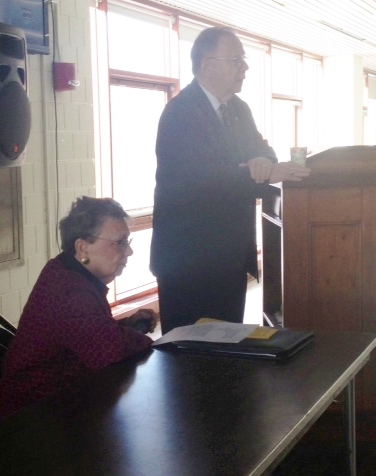
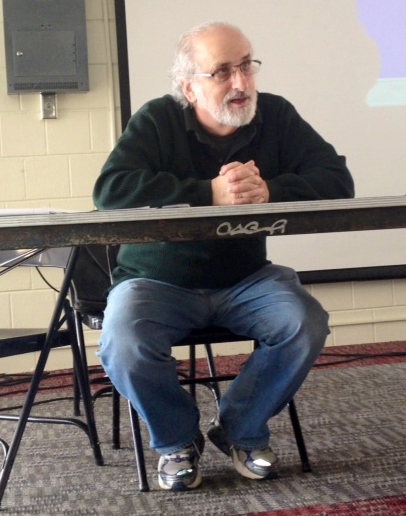
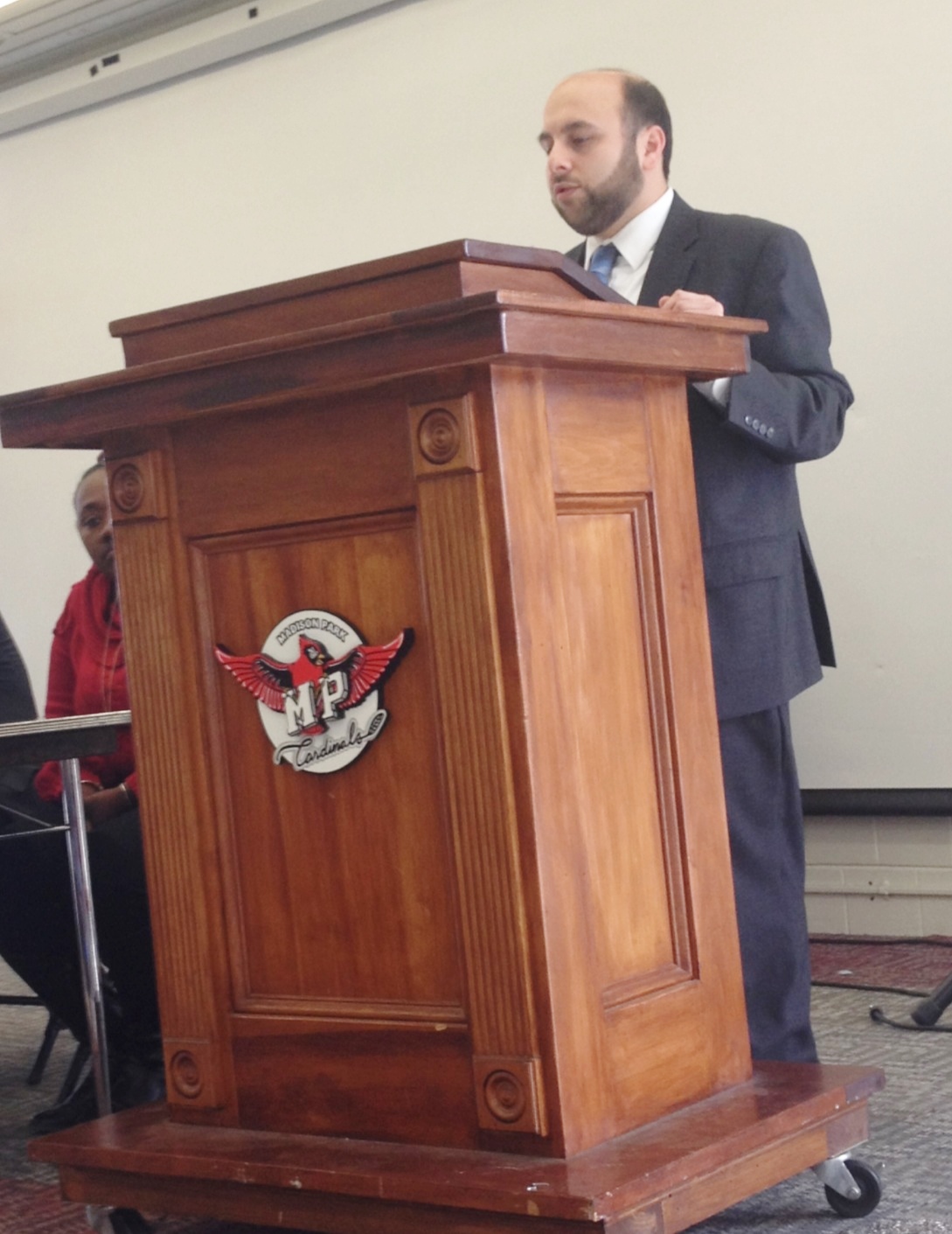
For those who believe that competition among educational systems and methods is preferable to one-size-fits-all, the Forum held this morning by Citizens for Public Schools at Madison park High School made for painful listening. For three hours non-stop, two panels of speakers — ten in all — laid out multiple criticisms of charter schools : their performance, their selectivity, discipline, low pay for teachers, lack of community accountability. You name it : if there’s a schools issue, the ten speakers accused charter schools of failing it, and they detaile their indictment with statistics and power point charts.

The Forum attendees, who included State Representrative Liz Malia of Jamaica Plain and State Senator Pat Jehlen of Somerville, attacked charter schools for

1.not accepting their fair share of studebts with behavioral or learning disabkiloities

2.accepting a percehtate of English language Learhers (“ELL”s) far lower than that of the community each serves

3.using teachers who do not meet state certificastyion staheards for public school teachers, and not granting them collective bargaining vrights

4.performing no better, on tests and in graduation rates, than the standard public schools

5.violating, in their governance, the State’s open meeting law

6.imposing rigid discipline and dress codes upon studehts to the point of damaging studebts’ self-confidence and for the purpose of weeding out studehts who do not “fit the model.”

7.drawing millions of dollars away from standard public schools, leaving them under-equipped and lacking vital curriculum components such as arts, language, and technology

8.too great a focus on “teaching to the test” — the State’s MCAS exams, which public school teachers hate.

Image

“millions of dollars are being drained !” — the BTU’s Ed Doherty speaks at the CPS Forum

Ed Doherty, a past president of the Boston Teachers Union, held back nothing. “85 million dollars are being drained,” aid Doherty, “from the Boston schools budget” — perhaps forgetting that mayor Walsh’s projected school budget will be 39.6 million dollars larger than last year. “Charters send back to public schools misbehaving and underperforming students,” Doherty added, and “Teachers at charter schools should be teacher certified in the usual manner.”

Image

Roger Rice of META delivered the most effective criticism of charter schools ; that most of them enormously under-serve English language earner students

Of the other speakers, Roger Rice of META convincingly demonstrated that charter schools srve a portion of ELL’s far less than the percentage of ELL’s in the public school system. CPS’s Dr. Alain Jehlen illustrated charter schools’ discipline codes. Jerry Mogul, executive directory of an advocacy group, showed that charter schools sometimes fail special eduaction requuremebtrs. Roy Belson, Superintendent of Medford Public Schools, asked, “if the reason for charter schools is to close the achievement gap, shouldn’t they take kids who ARE the achievement gap ?” School Committeeman Charles Gallo of Lynn — who mentioned twice that he is running for the State Representative seat that Steve Walsh is leaving this month — simply said “we on the Lynn school committeeman signed a letter to the Governor saying, ‘no more charter schools. If only other school committees would do that.”

Image

^ Lynn school committeeman Charles Gallo : running for State Rep on a “no more charter schools” platform

Image

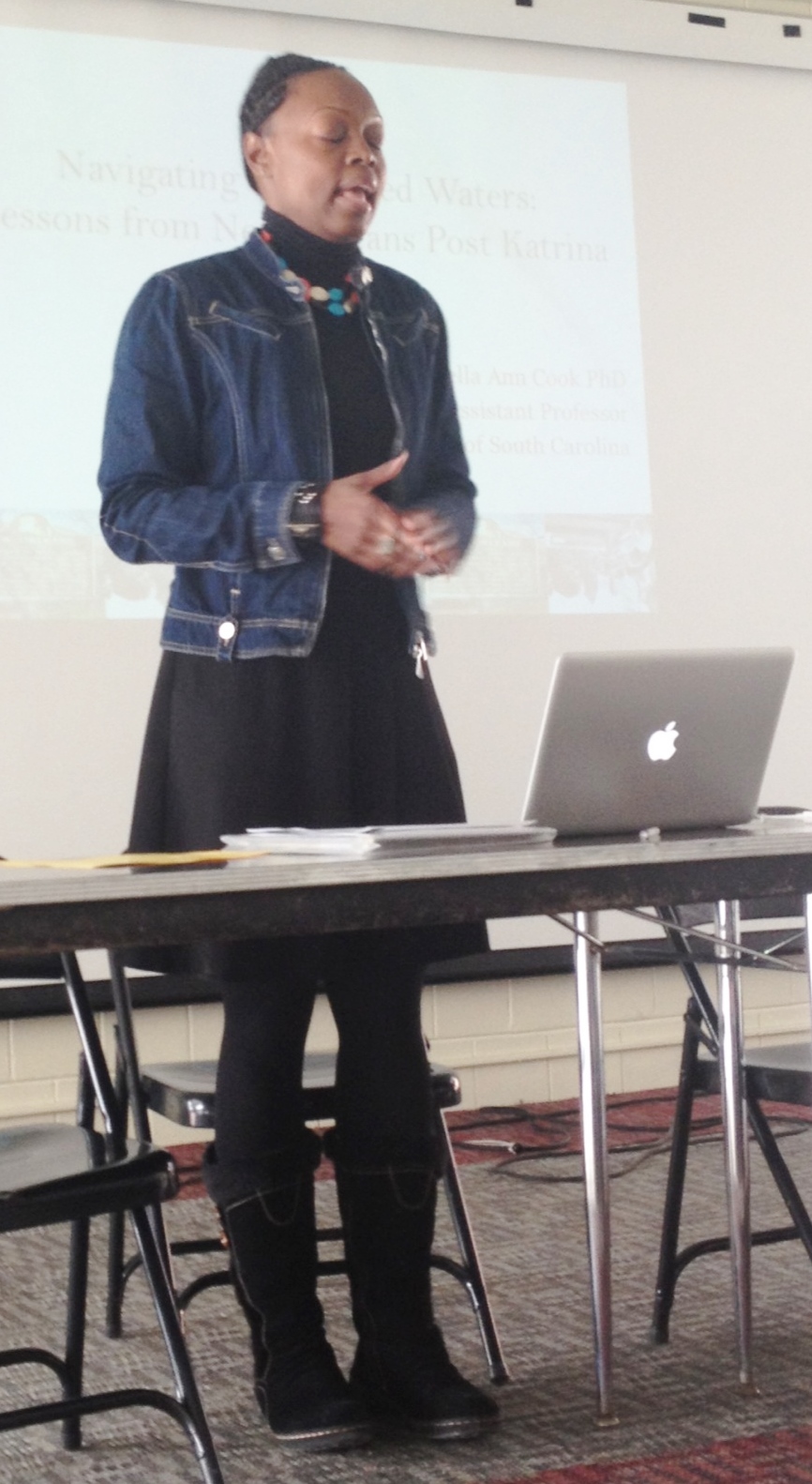
Daniella Cook : somebody wins and somebody loses should never be an education result.

One speaker, Daniella Cook, a University of South Carolina educator, complained that with charter schools, “somebody wins and somebody loses” and “schools should not be market based.” She also played the race card : “We cannot talk about the proliferation of charter schools without talking race,” said Cook. “Charters are a racially based political economy.”

Less than 100 people attended the Forum. Many of these were part of the presentation. Does this mean that the anti-charter schools argument hasn’t much of a constituency ? Perhaps so. Charter schools were established in Massachusetts some 20 years ago not because they lacked support but because they have lots of it; nor do charters appear to be losing ground. Both of the final candidates for Boston Mayor were friends of charter school expansion. Those candidates who were not friends of charters finished back in the pack. Clearly the anti-charter argument is a minority view.

I have now attended four Forums since the Mayor election in which anti-charter school forces have convened their numbers and their arguments. Some of their points hit home : Charter schools should accept many more ELL’s. Charters should be slower to dismiss kids with behavioral issues. Charters should establish paent-teacher associations and encoyrage parents to participate.

For the rest of the critique, however, I have scant patience. (1 ) how is it racist to demand students be held to account by strict discipline and dress standards ? that kind of indelible, constant focus is exactly what kids — OK, let’s assume the stereotype for argument’s sake — from homes often anarchic or dysfunctional need. The parents know it and insist on it; the kids mostly agree, if not when they are kids, then long after, as adults. ( 2 ) why should public schools have first dibs on taxpayers’ education money ? The whole idea of charter schools — of school technique diversity in general — is that the standard public school model often does not work. ( 3 ) Why need teachers in schools other than standard public have to be certified “in the usual manner” ? Teaching is an art; many people have the art. Why not ask people beyond the standard to reach in their non-standard way ? ( 4 ) And what was former charter school teacher Barrett Smith, calling for when he said that “we must educate the whole child” ? This is one of those school-argot phrases that sounds good but rankles when a definition is attempted. To me it means that we educate kids to citizenship as well as employment. Obviously schools should do that.

But the “whole child” does not even COME to school. MOST of “the child” lives at home. Kids spend far more of their school years at home than in a school. Schools do not educate the “whole” child, only the part of a child that schools attend for about eight hours, five days a week, about nine months a year.

this is why I find the phrase “educate the whole child” most unhelpful.

I noted above that Mayor Walsh’s Boston Public Schools budget will be 39.6 million larger than last year’s. Yet almost all of this increase is going to pay for BPS teachers’ pay raises. Can there be any doubt that the many speakers who emphasized today the money that charters “draw away’ from standard public schiools are thinking — a lot — of the NEXT teachers’ unions contracts ?

The Boston Teachers Union — several of whose leaders were at this morning’s Forum — would be well advised to step back from its immovable wall of funding and work rules and try to figure out how to accommodate itself to an education world in which many systems and methods are encouraged; in which choice is essential to state education law; and in which innovation, of curriculum, school organization, and principalship, is sure to increase, not retreat ? Some good points were made today; but they’re as likely as not to be overwhelmed by anti-charter arguments fighting a losing battle.

One excellent suggestion was made by Lawrence school committeeman Jim Blatchford, who noted that in his city, some schools were setting up a teacher-management way of doing things. “we will see,’ he said with a smile, “if they’re ready to lead like that.”

Innovation there will more of; standard issue, less of. Yet as Daniella Cook said, quoting John Dewey : “what the best parent wants for his child, that’s what she should want for all children.” Dewey spoke in support of his innovation, that students should learn by  doing — that rote memorization of dates or speeches wasn’t enough, or practical, and too standardized for the varieties of childhood perceptions of the world. As Cook used the phrase, however, it seemed tio me to hang helplessly on the paradox of life and community. We want all children to have the best education, but we also want the ablest kids to receive an education geared to their ableness. And if we do that, we accentuate the “achievement gap” that the Forum participants claim to dislike. How can there not be an achievement gap if we abet the ablest to harness their abilities ? If we do that, the ablest kids will excel more and more and widen the achievement gap. But how can a society progressive, reformist, and innovation-bound — as ours is — not abet the ablest kids the best we can ? We cannot lead an innovation society with average kids alone. Indeed, if kids of average ability — or less than average — are our concentration, they will end up in a society falling behind others more dedicated to innovation : think Germany; think China. And that will have negative economic consequences for those kids and for their kids; and so forth.

There is no way to avoid the innovation challenge. John Connolly staked his entire campaign on facing the innovation world candidly, forthrightly. He refused to temporize. It cost him the election; a majority of voters looked at the education and workplace future that Connolly spoke of and recoiled from it. It’s a daunting prospect. And real it is. No amount of skepticism about —  no matter how many Forums protest against — education innovation, school competition, and system transformation will stop what is coming.

—- Mike Freedberg / Here and Sphere

Image

John Connolly at Raynise’s house party : his stark vision of what innovation will mean to education method and organization scared many

THE NEXT BPS SUPERINTENDENT ? JOHN McDONOUGH SHOULD APPLY

Image

^ the gentle face of an underestimated reformer ? John McDonough just might be he

—- —- —-

Who should be Boston’s next public schools Superintendent ? A recent article in Commonwealth Magazine got me thinking that it should be the man who already IS the ‘super” : John McDonough.

The 40-year BPS employee now holds that job on an interim basis. He has said he won’t apply for the permanent job. He should rethink that decision.

Mayor Walsh’s first budget plans a $ 39.6 million increase for the BPS. Most of that added funding will, however, be devoured by contracted pay increases for BPS teachers. Hardly any money will remain for facilities upgrades, new technologies, an extended school day. The allocation of these increased funds to pay hikes asks an obvious question : is the mission of Boston’s public schools primarily to raise teachers’ pay ?

For that question John McDonough has, says the Commonwealth magazine article, a workable response. If we are to pay teachers top dollar, and spend almost no added funds on anything else in the schools, the least we can insist upon is superior teacher performance. McDonough, says the article, has a strategy : give the principal of every Boston public school autonomy to hire whom he or she wants. He admits that his decision is risky. Because many of the system’s underperforming reachers have tenure, they cannot be fired. If no school principal wnats them they will simply have to be reassigned to something, or (as the Commonwealth story puts it) paid not to teach.

Paying union employees with contractual rights not to work is nothing new. When the nation’s railroads were losing their passenger customers, many railroad workers ended up being paid not to work. But the BPS situation is different : the number of “customers” — school kids — is increasing, not declining. What is wanted is not fewer workers but better workers. In short, the dreaded “performance evaluation” standard that the Boston Teachers Union resists.

It will be difficult enough for McDonough, the quiestest of leaders, to achieve such a huge changer in the culture of BPS work. His insider position might just make all the difference. When I first met him again — I had known him back in the day when I worked for elected school committeemen — on last year’s Mayor campaign, he was sitting at a table in the cafeteria of BTU headquarters, in the company of former BTU president Ed Doherty and current BTU activist Shirley Pedone — both long known by me. Neither Doherty nor Pedone is shy about pushing the entire BTU agenda; but they and McDonough go back a long time, obviously on a friendly basis, as fellow BPS employees. It matters. Difficult it is to imagine an outside superintendent hired by “nationwide search” being so easily casual with BTU activists.

Image

^ teacher by example : John McDonough at the Lilla G. Frederick Pilot Middle School

How many BPS bosses as readily liked by BTU activists as McDonough also have the confidence of John Connolly ?  One of Connolly’s campaign themes was to break up the central BPS bureaucracy. Yet, says Commonwealth, “John Connolly, who campaigned to be the education mayor, says he is a big believer in McDonough. ‘John was often the only high-level voice of reason inside BPS,’ Connolly wrote in a December e-mail while away on a post-campaign vacation. ‘He wants to do the right things and he knows BPS inside out. If John is given the backing, he won’t hesitate to clean house and make critical changes that really should happen before the next superintendent is hired.'”

This has already happened, as the Commonwealth article notes, at the John Marshall school on Corona Street in Boston’s Bowdoin-Geneva neighborhood. There an outside non-profit, Unlocking Potential (UP), was brought in to re-think and manage. UP terminated every one of the John Marshall’s employees and hired back only three. All of its new teachers were thus young — some very young. This had several beneficial consequences : ( 1 ) Because the new teachers were young, they were paid less even as BTU members, saving scarce budget money ( 2 ) Because the school day was longer, it engaged more of the students’ day to day life ( 3 ) because the teachers were so young, their method and technological awareness were up to date. (This latter is something that I have previously opined in favor of : that teachers of skills and skill thinking should be as young and new to teaching as possible, not the other way around.) Not surprisingly, a much higher percentage of John Marshall students — of whom 99 % are of color — achieved high marks. As for the teachers who were displaced, some found teaching jobs elsewhere, some took other work within the system, others left teaching entirely.

McDonough says that he will not allow displaced teachers to go unused. “There’s plenty of work within our system,” he told Commonwelath. Yet he knows that his principals’ autonomy decision makes teacher tenure — a core union contract principle — look an obstacle. The BTU won’t allow tenure to be put at risk in future contracts ; but McDonough, and only he, may just be able to negotiate a buy-out of some tenure, or a reclassification, so that tenure won’t force young, exciting, cutting edge teachers into not being rehired — as it famously already has done. I’m not bullish that a superintendent outside-hired could get this work rule reform done at all.

It’s going to be a difficult enough task even for John McDonough’s soft-spoken, career-long determination. As John Connolly remarked to Commonwealth, “‘That said, I am always wary of BPS statements about changes to teacher hiring and placement rules, timelines, and policy. There is so much off-the-radar deal making and just plain skirting of the rules behind the scenes that undermine supposed changes. In sum, I won’t believe anything has changed until I see it actually happening’.”

Connolly’s skepticism is warranted. The BTU opposes many of the changes that have already happened, much less those proposed. I see no sign, either, that Mayor Walsh wants a difficult enough City budget made even more difficult by any kind of fight with the BTU. At best, an outside hire will need much time just to learn what’s going on. at worst, she might stumble negligently into a huge avoidable fight. That won’t happen with McDonough at the helm.

—- Mike Freedberg / Here and Sphere

OMG ! IN DORCHESTER : CARLOS HENRIQUEZ TO JAIL ; GENE GORMAN ON THE TRAIL

Image

^ not a good day for the 5th Suffolk’s Carlos Henriquez

—- —- —-

“OMG !” is how the website known as “buzzfeed” might put the big political news coming out of Dorchester yesterday. A jury in Medford found 5th Suffolk District Stater Representaive Carlos Henriquez guilty of two counts of assault and battery. After which the trial judge, Michele Hogan, sentenced Henriquez to two and a half years in the Middlesex House of Correction, six months to be served.

Henriquez was led out of the courtroom in handcuffs, a photo seen by everyone who read today’s Globe or Herald.

I got the word via my twitter feed at about 3:00 PM. Immediately after came a report that Speaker Robert DeLeo requested Henriquez’s resignation; Governor Patrick and Mayor Walsh soon followed. Republican leaders repeated the call — eager to pile on. Would have been wiser had they said nothing.

Will Henriquez resign his office ? It looks simple, but it isn’t. The voters have a right to elect, even re-elect, a person convicted of a misdemeanor. My opinion is that Henriquez should do what his District’s voters want. If they want him to resign, resign. If they are OK with him representing him, no one else has any right to overstep things. I have not sampled opinion in his District, but Henriquez’s troubles have not gone unnoticed among the District’s activists, and he is sure to hear that many of them have had enough.

The many exchanges that I had with Henriquez during the recent Mayor campaign didn’t exactly inspire me. Before the primary, he was nowhere to be heard from; after Arroyo, Barros, and Golar-Richie endorsed Marty Walsh, however, and were joined by some others, Henriquez was suddenly an apostle for Walsh, furious in his intensity, all over twitter chanting Walsh’s praises, arguing at length with Connolly people whom he knew ; and almost all of what the suddenly converted Henriquez said was 100 percent standard Walsh talking point. Not one word from his own experience or observation of a man who, after all, was his state house colleague AND political neighbor. I did not exactly form a high impression of Henriquez’s perspicacity, or loyalty, or his ability to convince anyone of anything.

None of the above is a crime; and, truth be, it seems to me excessive to sentence to jail a man with no criminal record on a misdemeanor conviction. Probation is what we usually do, and rightly. We seek reformation, not retribution. Did Henriquez not receive the mediation that we accord most misdemeanor defendants because he is a legislator ?

That said, resignation seems likely; Speaker DeLeo will seek expulsion if Henriquez doesn’t resign. Of all the State representative openings that have occurred in Boston the past year — five so far, this would be a sixth ! — this one offers truly fascinating possibilities.

One : Charlotte Golar Richie once held this seat. Might she run for it again, regain the political currency that she lacked last year, and, with the backing of communities of color — who very much want a Mayor of color as soon as feasible — run against Walsh in 2017 ?

Two : John Barros also lives in the District and owns Cesaria, a very popular restaurant on Bowdoin Street. Might he run and win and then become a Mayor candidate in 2017 on the same grounds that I posited for Golar-Richie ?

As of 2011, the District included Ward 7 Precinct 10; Ward 8, Precincts 5 and 7; Ward 12, Precinct 6; Precincts 1, 2, 4, 5, and 6 of Ward 13; all of Ward 15 except precinct 6; and Ward 17, Precinct 2. It seems made for Barros.

Of course, momentous possibilities may not come to pass. Both Golar-Richie and Barros campaigned exhaustingly last year. Both have the ear of Mayor Walsh. Who could blame them for not running for yet another office to possibly no great result ? The District does not lack for ambitious new names who will surely run. But whoever does run and win, one fact of the 5th Suffolk district stands out : low voter participation. In its 18 precincts, only 6547 people voted in the Mayor election — about 31 to 33 % of the total registration. Compare that to turnouts of 50 to 80 % in precincts where Walsh or Connolly held a base. Whoever the new 5th Suffolk representative is, he or she should make it a priority to engage the 2/3 of voters who didn’t respond to last year’s intense mayor campaign.

Image

^ better news, right next door, in the 13th Suffolk ; candidate Gene Gorman greets his supporters in Savin Hill

Meanwhile, the Dorchester State Rep seat that Mayor Walsh resigned, next door to the 5th, has a special election on tap; there are — it seems — six candidates in the race, and I attended a reception for one of them, Gene Gorman. The Harp & Bard, scene of many Dorchester political “times,” was plenty full at 7.30 Pm as Gorman, a first time candidate, spoke to the almost 100 people assisting. “Why are we here ?” asked Gorman, “Because we’ve embraced this idea of city life for a lifetime. it’s an important decision. Dorchester by choice.”

Gorman recounted how he, a North Carolina native who now teaches at Emerson College, moved to Savin Hill, because he chose to; and how, a few years ago, he and his wife decided “we wanted a little more room and so we found a house on Melville Park — in Dorchester still.” There, he said proudly, he “served on the governing board of the Robert Frost innovation school. They wanted to close it down. We parents protested , they kept it open, and now it’s a Level One school, one of the strongest performing schools in the whole system !”

Image

^ solid friends in “Dot” : Gene Gorman embraced by Jim and Millie Rooney — at the Harp & Bard on Savin hill Avenue

Gorman spoke of “progress and transformation” — John Connolly’s theme; and, as Gorman is one of the “new Bostonians” who Connolly’s campaign so appealed to, I almost expected to hear that Gorman had been a supporter. But no; he had volunteered for “Marty,” wrote policy papers for him, and served on Walsh’s Housing task Force during the Transition. Gorman has now resigned that work, to concentrate on the campaign. Judging from last night’s turn out and his own command of the effort, Gorman seems a serious contender even in a field boasting several candidates with major local clout.

—- Mike Freedberg / Here and Sphere