FIRST SUFFOLK & MIDDLESEX : DUCKING THE ISSUES

FullSizeRender (6)

^ targeting the “progressives” : State Representative Jay Livingstone.

—- —- —-

The campaign to choose a successor to Senator Anthony Pertrucelli isn’t one month old, and already the leading candidate is faced with vital issues he should not be allowed to duck. For example : the opioid addiction crisis. This leading candidate — whom I will name presently — has a choice to make.

It is disappointing to learn that Speaker DeLeo has chosen to dilute Governor Baker’s opioid legislation. The bill that he will succeed in passing does nothing to change the current situation. It discards all of the tools utilized in the Governor’s bill.

How did this happen ? Easy : the hospitals do not want to deal with addicts and addiction medicine. That simple.

The Speaker lives in our Senate district. I appreciate the influence he brings to bear on our behalf. I am glad that he supports some important aspects of the Governor’s agenda. But on this issue he supports the status quo. It’s not right.

The situation has implications for our District’s special Senate election. Here, on Speaker DeLeo’s home turf, perhaps we can get him to change his mind. I hope this article helps get him there.

And now to the special Senate election, with a primary to take place on April 12th :

More than ever, our District needs a Senator who will advocate and support the reforms that Governor Baker is fighting for and who will say so, eloquently and often. The Speaker needs to hear our conversation right here, where he lives.

In that regard, the race’s likely leader, State Representative Jay Livingstone, is a member of the Speaker’s House. Will Jay vote for DeLeo’s diluted opioid bill, or will he support Governor Baker’s strong bill ? If not, why not ?

Will Livingstone support any of Governor Baker’s reforms — in energy policy, municipal law reform, charter cap lift, and fixing the T ? The voters of our District want to know. Keep in mind — as a purely political calculation — that two thirds of the Suffolk County precincts carried by Governor Baker are in this Senate District. Including all four North End precincts and the one that Livingstone lives in.

Today, Baker would carry the entire District, and a large part of his popularity arises from the strength of the reform legislation he has submitted. If I were running, I’d run as a supporter of Governor Baker’s agenda. It’s good politics AND it’s fright for the District.

Livingstone may also find himself hobbled,  as far as all the District’s voters are concerned, by seeking “the progressive” vote. Doing so probably commits him to some policy choices which I doubt a majority supports — and which, indeed, merit criticism. I speak of “just cause” eviction, which can’t work; opposition to lifting the charter school cap; and support for a poorly conceived, two-tier tax referendum. Being “progressive” might even mean opposing Baker’s MBTA pay structure reforms. That would be most regrettable.

The entire campaign, so far, except for the candidacy of Winthrop’s Joe Boncore seems geared to political activists. That candidates have engaged political consultants for a purely local race doesn’t warm my fuzzy feelings either. Dammit, fellas, run your won campaign. Amass your own following of people who support you because you get it. People who support you because you’re you almost always do more effective campaigning than a battalion of paid operatives led by helmsmen with ulterior agendas. Isn’t that being proved right now by the Donald Trump campaign, as ugly as it is ?

This campaign, so far, has a huge hole in its center. Where in it are the ordinary people ?

We deserve better than to be boot camp for prospective Hillary Clinton or Bernie Sanders operatives, practice sessions for an “XYZ Strategies.” We deserve a Senator who is comfortable relying on one campaign manager overseeing regular folks — who are always by far the large majority.

— Mike Freedberg / Here and Sphere

ISSUES FOR THE FIRST SUFFOLK & MIDDLESEX :

district

^ iconic & crucial :  from right to left, the entire middle strip of this photo is in the First Suffolk & Middlesex Senate District

—- —- —- —-

Just because I, like so many others, either don’t want to run for this office; or, in my case, cannot (arthritis is a bitch) does not mean that I’m gonna keep silent about this election. Ours is an iconic District. It has always, since the days of Mario Umana, been represented by a major political presence, a Senator with plenty of clout in Boston City politics as well as on Beacon Hill and beyond.

Our District’s bigness extends to its issues. Some are specific to the District: Logan Airport, the port of Boston generally, coastal flood zones.  Thus I am looking for a candidate able from Day One to actually do the job, much of which is assessing and voting on actual legislation, or filing bills and advocating for them. I would also like a candidate who is able to articulate the issues in a way that persuades a majority of voters to support his or her take.

Our District contains Massport, Logan Airport, marinas and docks. It is the city’s pre-eminent restaurant District — North End, Downtown, and East Boston most notably — and has the greatest percentage of immigrants, from all over. Office and housing construction abounds. The District features Winthrop’s leafy, suburban streets of single family houses. : home of House Speaker Bob DeLeo. It even extends into Cambridge and thus has town – gown issues, including student housing dislocations.  Mostly working class, the District also embraces, inexplicably, the three precincts of Beacon Hill, where five to eight million-dollar townhouses reign.

So much for the ground facts. Here are nine matters that I need to hear the actual candidates address realistically :

1. Massport : noise, traffic, expansion — and mitigation for the community including preference for Massport jobs. Massport spends plenty of dollars on betterment of East Boston. I give it credit for this. Expansion, however, should probably move outward,m away from Jeffries Point and Wood Island, neighborhoods that the Airport leans ponderously against. An outward new runway might cut down on the noise of constant jet takeoffs and landings. Homeland security background checks heavily burden local applicants for Massport’s excellent paying jobs, whose availability to our community once empowered our elected officials. That power has gone, and with it, some of the clout — and influence upon Massport policy — that our Senator and State Representatives once had. Some compromise must be worked out, so that local residents who haven;’t FBI-quality resumes can seek Massport employment.

2. Climate change and flood preparation. Ours is mostly a seacoast District, and a lot of that coast will be in flood very soon. We need the state and Feds to commit funds and personnel to build engineered flood remediation. We need this now.

3. Immigration. We’re the region’s premier arrival port fir newcomers, some perhaps undocumented. Our Senator must lead the fight for common sense legislation safeguarding Immigrants’ presence, dignity, and integration into the larger community.

4. Opioid addiction. Our Senator must support The Governor’s bill and take this crisis seriously. As Baker puts it, “every tool in the tool box must be available” to fight an epidemic killing more than 1000 Massachusetts addicts every year.

5. Fixing The T. Our Senator must support The Governor’s all-in approach to getting the T, its management and pay structures, its infrastructure and expansion done and its processes reformed, no matter how long it takes.
T fix should also include a Blue Line to Silver Line connection !

6. Charter school cap lift. I support The Governor’s bill, but that can’t be the end. We need to enable and support education innovation of all sorts, including corporate participation in forming curricula, home visits by teachers, and every other idea to assure that the achievement gap is closed.

7. The $ 15/hour minimum wage. A much more effective initiative than the two tier tax ballot initiative, for many reasons. I do not support the two tier tax. Nor do I think that its supposed earmarking revenues to transportation and education will happen. The legislature makes that decision, as it has with respect to previous “earmarkings.” Raising the minimum age is a much, much more effective means of increasing revenue, not to mention spurring the discretionary economy. The tax surcharge is lazy policy. Its sponsors tell me, “it polls well.” Maybe it does; maybe the $ 15/hour wage requires more effort and persuasion ? Then do the more work. Which do YOU think aids our economy more : surcharging a couple of thousand millionaires, or boosting the wages of maybe 500,000 low-wage workers ?

8. Restaurant business. Our District has the highest concentration of attractive food spots of any in the state. Each of these is a business. I support Governor Baker’s executive order to review and simplify business regulations.

9. Transgender civil rights. I fully expect pending legislation to be enacted well before our new Senator takes office. Still, I expect him or her to express full support for the bill during this campaign. Transgender people have it hard enough even with full civil rights protection. 18 states have enacted it. 13 cities in Massachusetts, too. What is the hold up ?

About  political party : to me this is a false issue, an obstacle to good reform. Doubtless our new Senator will be chosen in the “Democratic” primary because there’s hardly any other. Yet the new Senator should be as ready to partner with Governor Baker — and his local team, Carlo Basile, Adrian Madaro, Joe Aiello, Mayor Arrigo of Revere, Tonia Scalcione, and Francisco Urena, to name the most prominent — as with the “Democratic” Senate President (not to mention House Speaker DeLeo !). There is one candidate who, on twitter, boasts of “knocking on #DemDoors” (hashtag prominent). Sorry, but that is the wrong approach to making yourself influential across the board. This Senate race is NOT an exercise in prepping volunteers for Hillary Clinton or Bernie Sanders, thank you.

Surely other issues will arise during the campaign, but these are a start. I look forward to the debate once we know exactly who is actually running. So far it looks like we’ll have one Winthrop candidate, two — maybe three — from Revere, only one East Boston person, NO North End candidate, and one State Representative, Jay Livingstone of Beacon Hill. For almost everybody else, the timing of Senator Anthony Petrucelli’s resignation could not more inconvenient.

Whoever wins the April 12th Primary and a May election will immediately face perhaps two or more other candidates in the state’s regular September primary and November election. It would behoove long-game candidates to focus on that September-November, full term election RIGHT NOW.

What a year this is in the First Suffolk and Middlesex District ! Who knows ? The shadow knows…

—- Mike Freedberg / Here and Sphere

FIXING THE T GETS UGLY

carmen

^ James O’Brien and his well-perked Carmen (with Senator Pacheco, of the infamous “Pacheco Law,” on the right): reforming the T’s wage and contract distortions might be just as difficult as fixing its infrastructure

—- —- —- —-

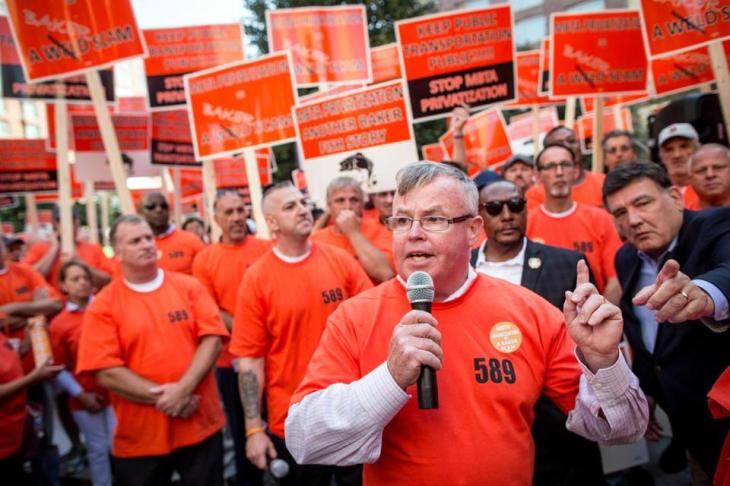
During the past week, thanks to a report by the new Fiscal Control Board, we have learned just how in tractable are the MBTA’s expense distortions.We learned that bus drivers, maintenance workers, and train crews profit from an “overtime” pay perk easy to abuse; that their base pay is the highest of any transit system in our nation; and that, alone among public employee unions, their contract requires binding arbitration  of disputes.

All three of these situations require correction. None will be easy to reform. Here’s what I think the T’s new management should do :

1.“overtime” pay. “Overtime” should mean “hours worked after 40 hours have already been clocked.” At the T, it means something else. Any hours other than those on a worker’s given schedule are considered “overtime.” Even if a worker has, say, just ten hours scheduled during a week, any hours outside of those scheduled are to paid as “overtime,” which by law is 150 percent of base pay.

How easy it is to scam this perk, we learned from the FCB report indicating that one maintenance worker earned $ 315,000 last year, two-thirds of it “overtime’ hours. We also learned that 121 workers at one location,  the Cleveland Circle Green Line terminal, clocked four times as much “overtime” pay as the norm for the entire T system.

There isn’t much that T management can do about this perk until the T union contract comes up for re-negotiation; at which time we propose that “overtime” pay be paid only for hours worked beyond the standard forty per week (Holidays and Sunday time excepted).

2. base pay. I don’t propose any adjustment to T workers’ base pay. It is high, yes; but so is the cost of living in Boston. Unhappily, the absence rate of Boston’s T workers is much too high, requiring T management to call in off-duty workers, who even with my overtime reform in place, may well merit overtime pay.

3. binding arbitration. No other public worker union has it. The  contracts of other public worker unions are subject to approval by a municipality’s city council or board of selectmen. That cannot apply to the T, because it serves many municipalities. Binding arbitration contains two poison pills : first, it vitiates the parties’ need to bargain. Second, it imposes costs on the public with0ut any elected body having a say.

These toxins have, for very sound reasons, prevented binding arbitration legislation from being enacted for other public employees. Nor should the T union have it. What, then, do I suggest ? A system whereby a proposed T union contract is offered for approval, after negotiation, by the state legislature. After all, the MBTA either serves the entire state or is a charge upon the entire state’s budget.

Correcting these pay abuses might save the T $ 20,000,000 annually — enough, as my friend Ed Lyons has pointed out — to fund the T’s arts program, late night service, and the current complement of trips offered by The Ride. It is wrong to cut back T service, and egregious to do so because of pay imbalances.

Let’s recall that these pay abuses are hardly the only challenge embedded in the current MBTA. Two or three months ago we learned that the T requires $ 7.6 billion of repairs to upgrade its infrastructure to safety level. It is just as frustrating to face, almost every day, track failures, signal problems, equipment snafus, and late departures. These cannot continue any more than the T union’s pay perks. The entire T system is off the rails.

Getting it back on track will not be easy. I do not know how it will be done without new revenue. Yet Speaker DeLeo this week confirmed that he will seek no new taxes or fees in the FY 2017 state budget — a policy shared by Governor Baker. What then ? It seems that the T is going to seek a substantial fare increase. That might not fly; the riding public doesn’t seem to like paying more for a T body with so many broken limbs. Nor can a fare increase contribute more than a pittance of the huge billions needed to fix the T’s infrastructure.

Where are the answers to these riddles ? Who has them, if any ? How long will it take to correct the T union contract ? I have no idea. I doubt if anyone on Beacon Hill has answers.

Speaker DeLeo could offer answers if he really wanted to. But why should he walk such a plank alone ? Governor Baker and he either form a team, or they don’t, with serious consequences looming as re-election 2018 draws ever nearer.

—  Mike Freedberg / Here and Sphere

A WAR OF ALL AGAINST ALL

Charroux

Charroux, in southwestern France ; where the Peace of God movement — that era’s response to armed violence everywhere — first began in 989 AD

—- —- —-

We might as well accept that the fight for “gun control” has been lost. The NRA has successfully imposed upon America its view that everybody should be able to carry killing weapons anywhere and all the time and to shoot whomever they please whenever they feel the need to “defend.” As there are all sorts of bogeymen flying through the hallucinations of people, there is often this need to “defend” and thus to shoot. We need to accept that that is now the law of the land.

In practice, this  war of all against all has not yet reached its intended climax because the laws against murder still apply, the courts still exist, and the power to enforce those laws still has superiority when and if those with said power prefer to use it. Yet the courts and the powers cannot be everywhere all day long, and thus thousands of people die in America every year now — tens of thousands — by acts of gunnery: some “legal,” some by murder most foul. If it’s not yet a war of all against all, it is, in some zones, a very ghoulish facsimile, sanctioned by the power of the NRA, its agenda, and its elected gangs.

And that., my friends, is how it is. Bitching about it only aggravates the problem. In almost every state in the nation, guns are now being authorized in bars, schools, theaters, colleges, malls, even airports. Teachers are being armed ! What could possibly go wrong ?

The situation we now find ourselves in is not without historic precedent. As almost no American now studies any history except for the fake histories belched by this or that propaganda pimp, I am quite sure that few of you have ever heard of the movement called “the Truce of God.”

The movement I refer to arose in Western Europe in the late 10th Century, in Catalonia and France. It was begun by several powerful bishops and abetted soon after by the powerful monastery at Cluny, founded directly by the Pope — that era’s version of a central government — and answerable only to him. The purpose was to grant the Church’s protection to innocents in the line of fire during a time when every local lord and his hired gang of armed thugs fought with every other local lord seeking to expand power or to keep rivals from taking it. There being then no central secular power with the means to stop the anarchy, brave bishops took the challenge. They did so without arms.

The bishops and monks called their “truce of God” piece by piece. At first it applied only on Sunday. And only to widows and children. Later, as some lords decided to support the Truce, it extended to more classes of people and more days of the week. Finally, once stronger central government established itself — two or three centuries later — the “king’s peace” extended to every day and the entire realm and to all people. Today, when we talk of t.he crime “disturbing the peace,” it is this “peace of God” that we unknowingly allude to.

All crimes of violence are conceived of as breaking the king’s — the nation’s peace.

You can read all about the Truce of God at this wikipedia link : https://en.wikipedia.org/wiki/Peace_and_Truce_of_God

What, exactly, is my point ? Why do I bring up a movement begun 1050 years ago ? I do so because I find the bishops’ “peace of God” policy a realistic response to a situation where absolutism about gun control has not worked at all. Like the bishops of Catalonia and France in the 980s AD, we need to recognize that guns are everywhere, and that their owners have successfully won the right to carry them and use them — to be judge, jury and executioner — or, by merely carrying them, to put fear into everyone around.

We need to recognize that that is how it is and that yelling at it will not change anything. But there is something that we CAN do, and the Truce of God gives us a model.

It begins with the churches, synagogues, and mosques, and with their ministers, rabbis, and imams. Like the Peace  bishops, bold religious leaders can ask that there be sanctuary, on certain days of the week, or on holidays, and that innocents be allowed to seek said sanctuary. They can ask that “responsible” gun carriers agree to set their guns aside in certain specified places, by agreement and not by state edict, and that such peace agreements be a model for more and more such.

As with the Truce of God, such a peace movement today may not work often. It took the original Truce of God 200 years to become law of the land. I see no alternative, however. The ubiquity of armed violence cries out for a remedy, and a movement based on agreement and small steps one at a time has, I think, a much better chance of success than for peace seekers to demonize those who believe in weaponry.

The long game wins. It took the NRA 38 years to establish its absolutist idea of guns everywhere all the time. It will take a new peace movement maybe five times that long to undo it, because it can only be unravelled by agreement of those who now support it.

As for President Obama’s executive order, it seems well intentioned, and I can’t oppose it. But it misses the problem at hand, seeking to undo what has been firmly and unshakably done and cast in cement, and thus will simply calcify the opposition. We can do smarter than that.

I suppose you have noticed that I made no mention at all of the Second Amendment. I find the “2A” quite irrelevant to the problem. It was devised for a wholly different purpose — opposing the establishment of hired mercenary armies, likely to be quartered in people’s houses, a serious grievance in the 1780s — that hasn’t existed for over 140 years. That our Courts have willed an entirely different purpose into that amendment, one that the Framers did not intend or approve of — may well be deplorable, but the cat is well out of that bag, so there’s really no practical sense discussing it. I will say, though, that ours is the first central government I know of to sanction violent anarchy within its jurisdiction.

Having done so, our government has bequeathed to us a huge problem. Time now for us to revisit France and Catalonia in the feudal 980s AD.

—- Mike Freedberg / Here and Sphere


TOWARD A CAPITALIST PROGRESSIVISM : CITIES

IMG_9028

^ the new city : socializing in a capitalist progressive way at Row 34 in tghe Seaport District

—- —- —- —-

Today I want to discuss the centrality of cities in forging a new political economy that I call “capitalist progressivism.” Of which Boston’s entire “Seaport District” is an exemplar and a monument. But first, let’s look back at the transformation that cities have undergone in the past 35 years :

After World War II, and for at lest the next 35 years, city people hastened to leave. The population of many old line American cities topped out in 1940; some peaked even earlier, in 1910. By 1980, many such cities counted less than half of their peak numbers. Some lost even more.

Loss of old industrial jobs caused much of that decline. So did the availability of cheap, newly built houses, on land that had been farms in towns surrounding the cities, and loans enabled by the GI Bill. The arrival in many big cities of people of color led many thousands of Caucasian city dwellers to leave for the suburbs. Others simply wanted a lawn and a driveway.

But that was then. Today, the big city is where it’s at. The technology economy thrives in cities, and the new generation not only does not dislike diversity of skin color and immigrants, it prefers these. In the past 15 years, American cities have Europeanized : one dines bar-terrasse or in bistros, and one eats bistro food; one shops in boutiques, not big department stores. The streets are full of people at all hours of night — not empty of life as they were three decades ago.

The cities of America today house diversities unimaginable 35 years ago : school innovation, entrepots of start-up entrepreneurs, dance music night clubs open till dawn, ethnic restaurants of all kinds, fashion week celebrations, gender fluidity, and political activism of a specifically city bent. All of life feels and sounds different, in today’;s cities, from what our parents’ generation knew and wanted.

Gone are the ostentatious, fake-gilded “McMansions” that people sought in the 1980s and 1990s;today’s city dwellers live in condominiums one-third the size. Some live in “micro apartments” much smaller than that. The McMansion family owned two, three, even four cars, most of them SUVs. Today’s condo-dwelling city person may not own even one car. She uses Zipcar or Uber instead, or bikes to work and the night club.

With this transformation has come new politics. And new economic thinking. Risk capital is the accelerator of the city economy, the creator of all that follows.  The major institutions, holding billions of dollars of deposits and portfolios, have had no choice but to adopt the risk capital ethos : diversity in all things; self expression in one’s personal life and of things imagined; seeing the world beyond not as threat but as opportunity.

To operate a city life, one has to be an optimist; to believe in one’s future; to welcome risk because the reward is having your dreams come true. This sort of self-willed success appears everywhere : on facebook, in pages like those of my friends Anna Maven, Magdalena Ayed, Jacques Dady Jean, Malia Lazu. It’s no accident that all four are people of color. Today’s city is the place where Americans of color are best enabled to race to the top.

But not only people of color. The City Generation of white people, too, envisions new transportation, new community connection, new applications, new politics. And new equalities. It’s no coincidence that marriage equality first came to power in the new cities, or transgender civil rights. “Traditional” ways of doing things don’t intimidate people whose entire ethos is to innovate and to re-imagine.

Given all of the above, it is no surprise that cities are the places whence has arisen recent movements to raise the minimum hourly work wage. The new city is an expensive place to live. Space is scarce, thus rents rocket upward. Boutique wares have a higher price point than those in general or big box stores. Bistro food and creative cuisine can’t be bought for less than 20 dollars — usually more. Same for craft beers and wines. If the minimum hourly wage of workers doesn’t rise to manage necessary spending, the city economy gets held back.

The community impetus of today;’s cities, added to the drive for higher wages, enables a new unionism that embraces fast food workers, big box store employees, airport cleaners., home health aides, and hotel workers. And  restaurant people too : we spend so much time socializing in bistros and pubs, with bartenders and waitpeople, that it friendships develop; it is awkward to be frie with someone who is waiting on you and who, you know, is earning a lot less than you. far better, is it not, that your waitperson or bartender friend earn enough to go shopping and night clubbing with you ?

In today’s city we come to see that the social worth of work has its own value, and that that value should be accounted in the paychecks rewarding it. Perhaps a bartender, the retail girl in a Bebe store, or your sister in law’s baby care person cannot earn as much as an entrepreneur; but why should they not earn at least enough to afford the social life that nothing besides a paycheck could exclude them from ?

All of the spending that happens in social life is discretionary. It’s in the discretionary economy that most growth occurs. Discretionary spending involves choices and thus the outcome of most entrepreneurial competition. This is why cities are now adopting their own, higher minimum age ordinances, some as high as $ 15/hour. My own feeling is that $ 15/hour is not enough for the most dynamic cities. In Boston, the minimum for work should probably be $ 21/hour.

Critics say that a $ 15/hour minimum, much less $ 21/hour, would overturn many business models. I think t.hat business models based on lower wages have already been overturned by city facts on the ground. Low wage people simply cannot participate in city life today. Which limits the growth of city businesses as well as of enterprises that pay low wages.

Meanwhile, the economic, social, and political life of cities makes them the decider in today’s polarized national politics. Suburban communities may vote 60-40, as most do, for this candidate or that; but city voters now vote 80-20 or even 90-10. In the 2012 Presidential election, city voters made more than the difference in who won Ohio and Pennsylvania, Colorado and Wisconsin, Michigan and Virginia. I doubt that the election of 2016 will produce a different result. More likely, even more for the Democrats than the 2012 turnout.

I say that because city populations are growing — fast; while the numbers in outlying communities are holding steady, or declining, everywhere except in a few big-growth states such as Texas and Florida.

And if you harbor any doubt that the new, capitalist progressivism of today’s cities is the way of our future,m check out this brilliant Harold Meyerson look at the politics of California, which he aptly calls a “city state” :http://calopinion.com/2015/08/harold-meyerson-california-the-new-city-state/

Those of us who live in today’s cities know that we are all California now.

—- Mike Freedberg / Here and Sphjere


TOWARDS A CAPITALIST PROGRESSIVE AGENDA

1 Lawrence Summers

^ smartest economic policy guy on the A list : Lawrence Summers

—- —- —-

Last week I outlined some reforms badly needed if our nation is to restore the stock market to its beneficial purpose : helping entrepreneurial businesses to raise equity capital. In my editorial “Why Not Try Actual Capitalism,” I critiqued the arbitraging and speculation that have neutered stock markets’ capitalist purpose. I suggested a list of reforms, some of them radical, and added a call to raise workers’ minimum wage substantially so that they can actually participate in an entrepreneurial economy.

Today I want to discuss several others initiatives I consider vital to growing our economy while at the same time ensuring the participation in it of all full time workers. The major recommendation that I want to make today is that the Federal government enact a nationwide infrastructure repair and upgrade bill, no less ambitious than the Interstate Highway Act passed in the Eisenhower years; and that we fund it by borrowing the entire amount via Federal bonds.

There are several policy imperatives that attract me to this course. First, the nation badly needs infrastructure upgrades to roads, brides, railways, and public transit. The efficiency of our entire economy depends on it. Second, borrowing costs are almost nil. Federal bonds yield four percent for 30 years, much less or a shorter term. The money is begging to be borrowed. Third, most construction work is done by unionized workers, who draw a very generous hourly wage. The $ 1.5 trillion infrastructure program that I envision would put to work many thousands of such workers — indeed, most of the $ 1.5 trillion will go to wages — who then spend their fat pay checks into the discretionary economy : buying boats, second homes, adding to their first home, vacationing, new furniture and trucks, etc.; and this spending will hugely boost businesses that provide what these workers want, in turn boosting these businesses’s hiring.

So many workers would have to be hired, to absorb $ 1.5 trillion of spending that there might even be a worker shortage leading to higher wages for all. These increased wages would, in turn, generate increased Federal tax revenue with which the $ 1.5 trillion of Federal debt could be paid off, assuming that policy makers want to do that. Personally, I prefer that they do not do that, for reasons going bend the scope of this editorial.

Hillary Clinton has proposed an infrastructure budget merely one-third as large as my recommendation. It’s a good start but not enough. Bernie Sanders has offered infrastructure spending twice that of Clinton’s. My figure includes infrastructure not limited to transportation. Gas pipelines, power plants, and electric utility wires are infrastructure, too, and these badly need repair. Solar and hydro power still cost too much to compete in the utility market place, but they, too, involve infrastructure of their own and must be budgeted. (and of course utility workers are mostly unionized, too, and draw a fat pay check that , if boosted by my spending, can spark the economy.)

Some policy advocates dislike Federal spending. They disapprove of Federal borrowing even more. To their objections I make this response : since The Federal government exists, and has the power to borrow money and enact structural improvements, why not let it use these powers, as they benefit almost everyone and hurt almost no one ?

Meanwhile, there are Federal budget items that can be cut back and maybe should be. The entire structure of education is changing; so is schools administration. What need is there for continuing the Federal government’s primary funding role, if, in the new educational set-up, corporations — which have a major interest in securing adequately educated graduates — stand ready to fund and administer the process ? Federal education dollars should earmark college courses, to the extent feasible within the current tax tables, so that students do not graduate indentured to student debt far too enormous to pay back. Some nations in Europe actually pay students to attend college. That may be a bridge too far for America, but why can’t we at least relieve most of the debt burden ?

As with my first recommendation, relieving student debt is a boost to the economy. instead of having to apply almost all their discretionary income to paying back debt — much of t owed to private lenders who charge high innterest rates on the theory that students, who haven’t found a job yet, are a payback risk — isn’t it far better to let that income get spent into the entrepreneurial economy ? Granted that my recommendation would greatly downsize lenders of student debt, and almost eliminate the collection agencies whose call center collectors harass those who owe; but I can think of jobs a lot more productive for the economy — entrepreneurial jobs, innovation jobs — than chasing down debt owed by people who probably can’t pay it now or ever.

Let me note that almost no law benefits the economy more than Title 11 — the Federal bankruptcy code. Bankruptcy filings achieve three remedies:  one, the debtor no longer has to use his or her income to pay back old debt, thus can now buy discretionary stuff; two, firms, no longer having to expend money paying people to collect often uncollectable debt, can use its workers to actually create, build, and service stuff; and third, businesses whose debts are wiped out by a bankruptcy filing get a tax loss carry forward that can be directly applied against the next three years of income.

Student debt, however, was made almost entirely non-dischargable by an enormously misguided bankruptcy law reform enacted — bipartisan — during Bush 43’s second term. It seems that our Senator Warren, who has taken the lead on student debt reform, now includes .the bankruptcy situation in her advoacy. This is a wise move.

The fundamental policy objective of all these reforms is to maximize the money that income earners can spend back into the discretionary, entrepreneurial economy and to minimize obstacles to such spending. The greater the percentage of a nation’s people who can spend discretionary, entrepreneurial money, the stronger the economy — and the nation. It’s time that we take comprehensive action on all the fronts I have discussed in this article.

Lastly, I propose my capitalist progressive to the Republican party, which can be useful again to all the voters if it discards the current fear and loathing in favor of a confident and realistic agenda that confronts actual challenges, not gripes and rants. Can the GOP advance an alternative to the Democratic party’s reform, that arrives at the same destination via a better route ? Will the GOP once again take up the reform cause ? I intend to make it do so.

—- Mike Freedberg / Here and Sphere

A CHALLENGING YEAR AHEAD FOR GOVERNOR BAKER


IMG_1787

^ alone in his cubicle : Governor Baker is enjoying his work. Next year it will get much tougher.

—- —- —- —-

Governor Baker is going to find 2016 a much more challenging year than 2015 has been. Is he ready ? I hope so. as a supporter, I hope so. As a citizen, I hope so.

Baker has been perfectly matched, as Governor, to the crises of 2015 :

Baker promised no new fees or taxes, and as the voters were not about to grant anything like new revenue to the dysunctioning T, to the boondoggled Health Connector, to the incomprtent DC, he and the voters aligned exactly.

Baker wanted opioid addiction treated as a health issue, not a criminal matter — and that change of theory was readily adopted by a public disllusioned by the injustice and hamfistedness of maximum incarceration.

Baker made local aid and municipal administration reform a top priority, and the elected officials and appointed executives of the state’s 351 municipalities — and their activist citizens — were glad to enjoy the spotlight after being slighted and nickel and dimed during the second of Governor Patrick’s terms.

The Governor devoted a huge amount of time and attention to events in Boston’s communities of color, and just as much effort devoted to highlighting and assisting these communitues’ many self-help progarms, including sports, hunger prevention, urban farming, and arts. Residents have basked in attention that they had not exxpected from a Republican; they have, in some cases, responded to Baker’s call for school choice, co-operatives, and interfaith activism.

Baker also applied his caution motto with superb results. He never signed on to the Boston 2024 Olympic project and, when he told the Olympic Committee to pound sand, made sure that he spoke for both of the state’s legislative leaders as well as for himself. Baker also halted expansion of the Boston Convention Center, a move that certainly did not boost the city’s economy but was accepted because the “tight budget crunch” message was accepted by most political participamts.

Lastly, Baker was the beneficiary of the state’s minimum wage rising, twice — it goes to $ 10.00 an hour tomorrow morning — thanks to legislation enacted the year before he took office.

Little wonder that Baker’s the most popular Governor in America or that his popularity ranks high with Democrats as well as Republicans and people of no party — the majority in our state. Add to all of the above a winning personality — Baker enjoys sports and fun, participates in social media, and has become the poster guy for selfie photos with all and sundry; people call him “the coolest Governor around” — and there really has been no stopping Baker this past year from monopolizing, almost, the political imagery of Massachusetts.

Now comes 2016, a year in which decisions will have to be made that threaten to fracture the Baker tidal wave. Nor do I refer, here, to the still unenacted transgender civil rights law that Baker has resisted tapping into for the sake of a Republican party infight he prefers not to inflame. The transgender matter will be settled soon enough. Instead, I am referring to charter cap lift legislation, Baker’s opioid addiction bill, big MBTA decisions, and, above all, the question of revenue.

If there’s anything Baker’s Republican base is agreed on, it’s that the state shall not have new revenue, not for any purpose whatsoever. That threatens the MBTA with cutting back service and with halting the Green Line expansion through Somerville to Medford. There are many Republican activists who actually wat to see T service cut back; some wouldn’t mid if Baker sold the T to priovate business.

But 78 percent of the voters who elected Baker — narrowly — are not Republicans. What of them ? Many want T expansion; few want T cutbacks; none that I know of wants the T privatized. Baker cannot satisfy these voters without having much ‘splainin’ to do to his Republicans.

What, also, about economic inequality issues ? A move to raise the state’s minimum wage even higher, to $ 15/hour, looks strong, and a initiative to create a tax surcharge on incomes over $ 1,000,000 seems sure to pass. The added revenue from that surcharge is to be designated for transportation and education; but the history of tax revenue earmarked by ballot referenda teaches that the leguslature does what it wants with the money regardless.
Does Baker support the $ 15/hour wage ? oppose it ? Stay neutral ? And what of the tax surcharge referendum, which will appear on the 2018 ballot along with Baker’s re-election ?

Will Baker stick to his “no new revenue” position, counting on the tax surcharge to provide it to him (even if he opposes it) and thereby gain him T expansion money without alienating his Republican support ? At some point opposition is going to call out such a strategy, in which Baker makes everybody else take the tax rise heat while he looks the hero.

Perhaps Baker will do surface commitment to his initiatives, leaving their heavy lifting — and political risk — to others. I already see this game place taking place in the matter of charter cap lift. Baker has been highly visible rallynig communities of color — where support or charter schools runs hugely strong — but, at least to my view, less than front-line in support of his own cap lift legislation. Maybe that’s because Mayor Walsh of Boston opposes the Baker bill, favoring a longer-term cap lift bill of his own. Walsh’s school transformation plans have aroused some opposition from teacher union supporters and anti-charter activists, and Baker — who should be the opposition’s top target but does not seem to be — appears content to see how that plays out.

Still, Baker may not be allowed to play a waiting game; his Republican supporters want charter school expansion and, given Baker’s popularity, they will find it hard to grasp that they can’t yet have it NOW.

So far, Republicans are respoding to Baker’s enormous popularity like someone who’s just won the powerball lottery. The usual GOP view is that Massachusetts is a hopelessly blue lagoon of liberalism in which they, that last true believers, expect to — want to — go down with the ship. instead, they find that their leader is — the most popular politician in the state ! More popular even than Senator Warren, who to many Republican operatives is “the fake Indian” ! It would be only human nature for GOP activists, having won the Big Prize, to expect Baker to do anything and everything he wants to; implement the right wing wish list, break the unions, lower everybody’s wages, eliminate the food stamp “free load,” pay off the T’s multi-billion dollar debt — Nirvana !

It may not be pretty when these activist discover ( 1 ) that Baker may not share their small government utopia (I see him as a fan of large institutions and big-ricket administration); ( 2 ) that the legislature actually has its own agenda and all the votes it needss to enact it ( 3 ) Baker does not believe in instant magic and ( 4 ) does not believe that low wages and low taxes are the key to growing businesses. It may also be unpretty for Baker when he has to accept legislative leadership while explaining to his differing groups of supporters why that is the best case for re-election. After all, before he can be re-elec ted, he has to be re-nominated; and the virulent anti-governance tone of this year’s Republican primary is taking root even here in Massachusetts. The utopian policies of Massachusetts’ aging GOP activists feel very lukewarm — and malleable by a leader — compared to the ferocious revenges breasting through the new generation of GOP people. Baker wll have his hands full maintaining the allegiance of people or whom all or nothing is an article of faith while holding credibility with the vast majority of Massachustts voters for whom all or nothing is ananthema. (The availability of ballot referendum, an instrument becoming more and more common, vitiates even Baker’s substantial ability to control the agenda.)

I see the Baker year ahead as one not of heroism but of dogged persuasion, one in which he will be confronted and challenged, will be forced to compromise, will lose some fights and know when to steer clear in time of others. To put it another way : in 2016 Baker will have to be a politician as well as a reformer : a Steve Grossman, not a Dr Donald Berwick. And on several fronts.

—- Mike Freedberg / Here and Sphere

NO BIG DEAL, EVIDENTLY

Jen Flanagan

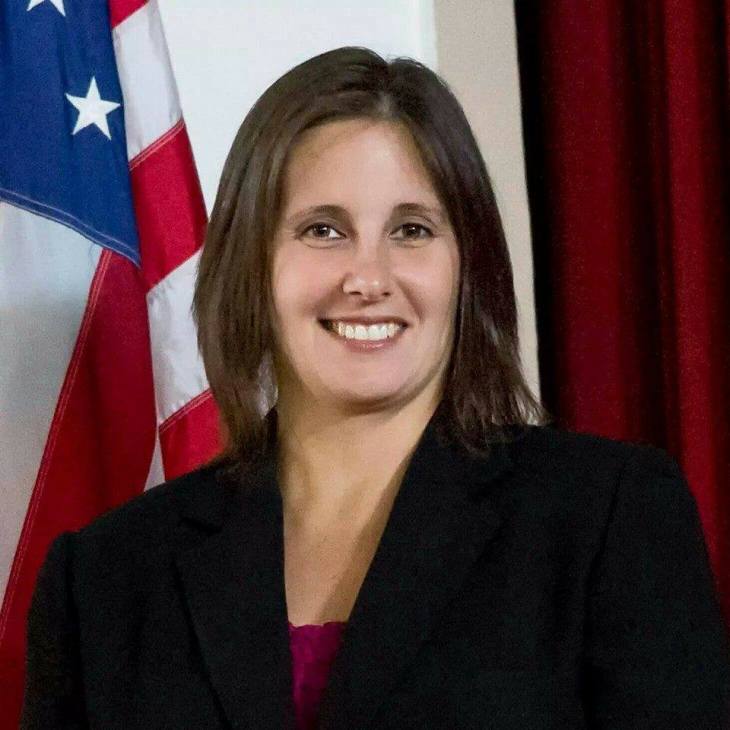
^ State Senator Jen Flanagan says that the 72-hour addict hold — an urgent response to an urgent crisis — can’t be done because there’s not enough hospital staffs.

—- —- —- —-

That’s the impression one gets from how Massachusetts’s legislature is responding to the opioid addiction crisis that Governor Baker wants to fight, using — in his words — ‘every tool in the tool box.” Today the State Senate’s go-to member for drug problem issues, Jen Flanagan of Fitchburg, says that we cannot do the 72-hour forced hold that’s a key part of baker’s legislation because — so she asserts — hospitals don’t have the staff to handle it. This is what she said, in a facebook post this morning reprinted from the State House news Service

“The Senate’s point-woman on substance abuse said the decision to omit a key section of Gov. Charlie Baker’s opioid abuse prevention bill in a redrafted version of the legislation had to do with the limited capacity of hospitals to handle an influx of patients battling addiction.

Baker filed legislation in October that proposed to allow doctors to hold patients with substance abuse issues involuntarily for up to 72 hours for treatment, similar to the civil commitment law for mental health patients.

That controversial section, however, was left out of the redrafted bill currently being polled through the Mental Health and Substance Abuse Committee. House Speaker Robert DeLeo hopes to move that bill to the floor for a vote in January.

“I know there’s going to be some people who are disappointed by the fact that the 72-hour hold is not in there and we have an altered version, but I think it’s very important that we have to work with what we have right now,” said Sen. Jennifer Flanagan, the lead author of the Senate’s substance abuse prevention bill and the co-chair of the House-controlled committee that rewrote Baker’s bill.

After speaking with hospitals and emergency room heads, Flanagan said, “I’m not convinced there’s a capacity to do that, the 72-hour hold.”

Can I get an “amen !” from those of you who find Flanagan’s demurral tendentious ? Are we to believe that if a different kind of epidemic — a major virus — were to afflict thousands, that emergency room staffing would not be found quite quickly ? So why, then, should we settle for the Senator’s cop-out for a crisis that kills more than 1,000 Massachusetts residents every year now ?

We shouldn’t accept it. I am really quite infuriated to read that the Senate’s go-to person on drug addiction matters is ready to shrug her shoulders.

To quote Nelson Mandela : “it’s always impossible till it’s done.”

We are darn lucky to have as Governor the most dedicated, dogged,see-it-through executive this state has had in a long, long time. We should take advantage of his readiness to use every tool in the tool box and use them to the max. Especially on a health issue — and addiction is that — because health services are central to Baker’s resume.Before he became Governor he was a health care executive, and a very successful one too.

Unfortunately, my impression is that the legislature’s weaselly attitude toward administrative crises isn’t limited to the addiction epidemic. It took months an d months for Baker to win the degree of detailed control over the MBTA that he wanted; only because the public almost universally insisted did the legislature finally give in.

A great deal of the difficulty that paralyzed the T during last winter resulted from the legislature’s unwillingness, for many years prior to Baker’s election, to attack the mess hammer and tong. (Governor Patrick either lacked the clout to whip them into line, or else he had other priorities.) And as long as the T didn’t visibly fall to pieces., the public did not see the effects of Beacon Hill shoulder shrugs.

The same was true of DCF mismanagement, the Health care connector snafus, incompetent patronage hires, and the laughably mispackaged Transportation Bill two of whose signature provisions have since been repealed.

Not all of the blame for these miscues and indifferences is the legislature’s, but we can from what today’s legislature is up to that its instinct is to avoid the hard decisions wherever possible. The consequences to the public for most of this are much inconvenience and a lot of confusion. Unfortunately, there’s more at stake if the opioid addiction crisis is handled with kid gloves. It’s a matter of people’s lives.

Support seems very strong for Baker’s 72-hour hold of addicts needing intervention. Only the state’s hospitals have made a point of objecting. If their objection succeeds, addicts needing intervention will be able to find it only in jails, where Sheriffs are building addiction treatment facilities. But Sheriffs are not medical people, nor are their staffs medically minded. The best of them (kudos to Suffolk Sheriff Steve Tompkins and to Essex’s Frank Cousins) are taking on the challenge, but even they are crying out for the medical system to take charge of treating addiction.

I stand with the Sheriffs and with Governor Baker.

My impression is that the legislature’s no-big-deal attitu8de will prevail. In Massachusetts., the legislature, not the Governor — not even one as popular and effective as Baker —  rules the roost. There are many, many vested interests in our state that do not want to be driven at high speed toward reform, that prefer a gradualist approach or even reject reform altogether (charter cap lift). The legislature is where those vested interests go to preserve their “I’m all right, jack” satisfaction with obstacles to giving the voters the services they have a right to expect from our state.

Let’s not allow this state of things to continue.

—- Mike Freedberg / Here and Sphere

A WEAKENED OPIOID ADDICTION BILL

FullSizeRender

^ State Representative Liz Malia : filing a much less forceful alternative to the Governor’s opioid addiction bill

—- —- —-

The legislature has had Governor Baker’s opioid addiction legislation for months now. His bill is a bold one to boldly meet a crisis intensifying. The legislature, however, seems to want something less. I think they’re wrong.

The Governor’s bill includes two provisions that raised hackles in the state’s medical hallways: a 72 hour, forced commitment of addicts and a 72-hour limitation on painkiller prescription dosage. Baker has doggedly amassed support for both, from the state’s Sheriffs, police chiefs, even much of the medical community. The addiction and recovery community, however, seems split on this proposal, and that is most likely why it may be set aside by the legislature. Doctors, too, do not like it.

State Representative Liz Malia of Jamaica Plain and Roslindale has proposed a different opioid addiction bill. This linked Boston Globe story sets forth the differences : http://www.bostonglobe.com/metro/2015/12/28/house-opioid-bill-veers-significantly-from-baker-proposal/dKJrN7vP9pXHeuR7QyqsSJ/story.html

Malia is a veteran legislator, the body’s go to member on mental health issues. Her bill seems likely to gain traction in the House.

I still believe that the forced commitment provision is a good one. Addicts desperately in the power of addiction need, at crisis point, to be taken into detox. At least in the proposed 72 hour period, a recovery beginning can be attempted. Of course, recovery stands a better chance if entered into willfully; but I fail to see the harm in forcing the issue. That’s what an intervention does. Malia’s substitute bill limits intervention to “requir(ing) that patients in an acute care hospital believed to be suffering from an opioid overdose receive a substance abuse evaluation within 24 hours of admission.”

To me, that’s unacceptably weak tea.

Compare Malia’s bill with Baker’s proposal via this link : http://www.mass.gov/governor/press-office/press-releases/fy2016/governor-baker-files-landmark-substance-use-legislation.html

Malia’s bill also vitiates the Baker bill’s prescription limitation. Instead of 72 hours, the Malia limit is seven days. In addition, she widens the Baker bill’s exception for emergencies to include situations of “chronic pain.”

Nobody wants to deny pain remedy medicine to people suffering severe,. chronic pain. But until I read Malia’s definition of “chronic,” I cannot tell if this isn’t a loophole as wide as a Parisian boulevard. Over-prescribing of pain killers is a huge problem in Massachusetts. There’s a vast black market for pain pills. I can tell you, from my own experience with percoset after a surgery ten years ago, that it’s quite easy to endure pain and sell — for a substantial price —  the pills you do not use. In my case, I returned the pills I did not use (because I didn’t really want them after Day One) to the hospital pharmacy; but how many people will do that with pills worth their weight in gold ?

In Maila’s bill, “patients in an acute care hospital believed to be suffering from an opioid overdose receive a substance abuse evaluation within 24 hours of admission.” Gee….

I suppose that any opioid abuse legislation is better than none at all. Still, if Representative Malia’s version supersedes the Governor’s, the arena of combatting opioid abuse will continue to be what it is now : the addiction and recovery community itself : where parents, local clinics, and clinic counselors converse, discuss, and pressure addicts to take that first big step toward a recovery the legislature seems not to want to mandate.

But that is where our state’s addicts are already. Over 1000 of them are dying yearly now, and the number is rising.

— Mike Freedberg / Here and Sphere

SUGGESTIONS FOR RESTORING A CAPITALIST ECONOMY

Nick Hanauer

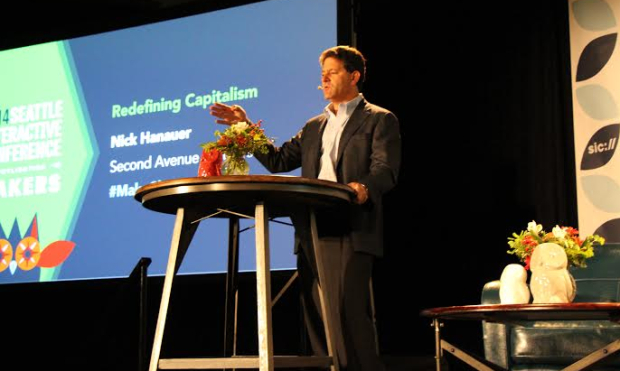
^ venture capitalist Nick Hanauer : venture capitalism IS capitalism. The current stock market is NOT.

—- —- —- —-

Today in America we have two economies : an entrepreneurial, capitalist, start-up economy and a large-corporation, publicly traded arbitrage situation.

While the entrepreneurial, start-up economy epitomizes capitalism as I define it — the application of privately owned funds to the creation of productive value — the structure today of the larger, stock market economy isn’t capitalist at all. It is an arbitrage market — by which I mean that it seeks to reap the profit potential of valuation inefficiencies.

Arbitrage creates no value, invents no products or services, hires few employees. It actually destroys value, by applying money that could otherwise be invested in a capitalist way. The bulwarks of arbitrage must be rolled back.

These include : ( 1 ) rapid electronic trading of stocks by hedge funds and other seekers of market fluctuation profits ( 2 ) a corporate governance system that places stock ownership of companies — and stock voting rights — at the mercy of speculators, whose objectives negate the entire purpose of the enterprise they are able to own ( 3 )  availability of borrowed funds to pay for arbitrage trades ( 4 ) tax benefits given to arbitrage profits.

Stock markets were created for a capitalist purpose : to enable enterprises to raise funds from many investors besides the few who started them up; to provide a buyer for sellers of stock if and when they choose to sell; and to establish a market opinion of an enterprise’s prospects. None of these purposes is an exact matter. Appraisal never is. The inexactitudes in market appraisal provide opportunity for shrewd investors, but, as we see, unchecked they also enable those whose goal is not to acquire ownership in an enterprise but to exploit its appraisers. This must be curbed.

I propose to restore capitalist uses of money to the primary position that a thriving economy requires. To that end I offer the following suggerstions for market reform :

( 1 ) place a substantial tax penalty on stock buybacks, which diminish an enterprise rather than expanding it, the corporation spending money not on boosting its business but on arbitaging its stock value.

( 2 ) Require publicly traded companies to authorize two classes of stock : voting and non-voting, and make only non-voting stock available for trading on a stock market. (Many companies already do this.) Such reform would make it much more difficult for speculators and raiders to take over a corporation’s board of directors and reshape the business for liquidation or break up rather than productive creation.

( 3 ) Eliminate all tax breaks now given to arbitrage profits, especially the “carried interest” benefit. Either we are serious about discouraging arbitrage or we aren’t.

( 4 ) as a condition of being listed on a stock exchange or in an authorized market, require that employees of a firm be represented on its board of directors. Germany does this, which is one reason why its big firms are vehicles for capital investment as I define it. Employee board members are not going to vote in favor of an arbitrage take over or corporate break up raider whose first move is usually to fire workers.

( 5 ) establish a $ 15/hour minimum wage, and an even higher minimum for certain high cost metropolitan areas. An enterprise purposed to the creation of productive value needs to see its employees as assets, not a burden, and to pay them accordingly. Plus, is it not obvious that employees who are paid sufficiently to be able to buy things are a boon to an economy ? One of our economy’s most grievous difficulties right now is that far too many people do not earn enough to buy anything discretionary. (There are many other benefits to a substantially higher wage base, but these go beyond the topic at hand.) Keep in mind that the more customers an enterprise has, the more workers it needs to hire. This policy reform is a win win situation.

( 6 ) give tax benefits to firms that offer employee stock ownership plans and dividend reinvestment for employee stock plans. The more proprietary interest an enterprise can attach to an employee, the better for both.

( 7 ) require 100 percent margin for all hedge funds trading and for all “short” sales. The Federal Reserve has the power to set margin rules (the amount of a purchase that can be paid for with borrowed money), and 100 percent margin means that no borrowed money can be used for these types of transactions or purposes, none of which support capitalism.

The start-up, venture capital economy works exactly as I want it to. Its principles should govern the mature economy as well. If our entire economy were deployed in a capitalist manner rather than an arbitrage one, and if the vast majority of workers have enough funds to actually buy stuff, maybe that $ 7 trillion of funds now parked in money market accounts or spinning wheels in traders’ cubicles, would get off the schneid and risk itself for the sake of productive value creation. It;s at least worth a try. Because the current situation is about as useless a finance as it gets.

—- Mike Freedberg / Here and Sphere