BOSTON : COUNCIL DISTRICT 2 — FIRST LOOK


CityCouncil-Redist-2012-LETTER

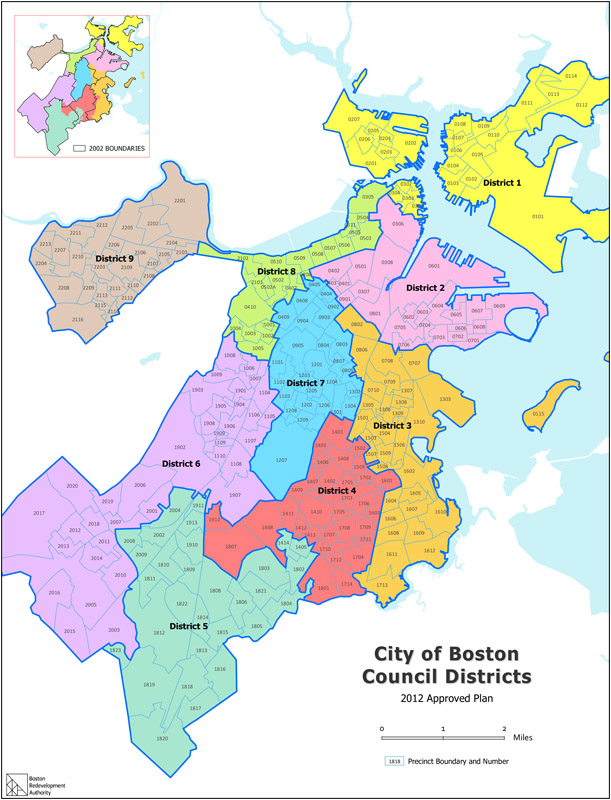
^ in pink, upper right, District 2 : contains all of South Boston, the South End, Bay Village, Chinatown, and the Downtown area that today is vastly more populous than it was ten years ago, much less 30.

—- —- —-

For the first time since 2007, the City Council seat representing District 2 is open. The voters of South Boston, Chinatown, Bay Village, and the South End have only had two Councillors since district representation was established in 1981 : the notorious but charismatic Jimmy Kelly and the soft spoken Bill Linehan, Now, as Linehan is retiring, the area’s communities — much changed since Kelly first took office, with all of the Downtown core of high-rise condominiums now added — will elect a new face.

Well, maybe not a face all THAT new. Of the three leading candidates, one in particular bears a face known best of all to long term residents : Ed Flynn, son of former Mayor Ray Flynn.

Certainly Flynn starts the race as a favorite; but by no means is his election assured, any more than Billy Bulger, Junior’s election as South Boston state representative was assured, many elections ago, when a newcomer to politics, union activist Stephen Lynch, ran and defeated him. If Flynn hopes to win, he will have to earn it the hard way.

His task will not be easy. Among the likely candidates — OCPF lists a total of four so far — we find two who come to the race with substantial followings : Cory Dinopoulos, of 300 K Street in South Boston, one of the founders of the Boston 2024 Olympic idea, and Michael Sean Kelley, of 100 Arlington Street in the Bay Village region, a veteran of the late Mayor Tom Menino’s operation. Kelley knows his way politically, and his facebook page has 2,152 friends. Dinopoulos may be even more social media aware: he’s very active on twitter and  facebook, and his campaign kickoff, on March 2, 2017, at Capo Restaurant, drew a large crowd of not the usual suspects. (There’s also a fourth candidate, Peter Lin-Marcus, of Tyler Street in Chinatown. I have yet to meet him or talk with him.)

When this District was created — disclosure : I was a key advisor to the City Council Redistricting Committee that created the current nine-district map — the goal was to assure South Boston a seat. “Southie” was one of Boston’s most powerful political communities; it to anchor a District. The problem was, what precincts to add, because “Southie” had about 37,000 people, and Districts had to contain about 70,000. We understood that the “added precincts” would likely be “filler,” which made the decision a painful one : who would get screwed ? The South End was the easier choice — the other suggestion was Back Bay and Beacon Hill, and they had too much clout to accept being pawned off. The South End had scant political clout; we saw it, more or less, and maybe unfairly,as a hotch potch of vacant buildings,. underserved populations, and elderly life-long South Enders.

Today the South End is very high-end, as are the precincts north of it, and together they form a seriously powerful constituency of high income movers. To add to the mix, an entirely new neighborhood, the Seaport District, has filled two formerly empty precincts (Ward 6, Precinct 1 and — to a lesser extent — Ward 3 Precinct 8) with about 12,500 voters who weren’t there when Linehan was first elected.. Given this influx, there’s no guarantee at all that a highly respected, lifelong “Southie” candidate like Ed Flynn can carry the day. Bill Linehan himself barely survived a Chinatown challenger, Suzanne Lee, in 2013. How will Ed Flynn stave off Dinopoulos, who lives in South Boston and has widespread support in the upscale precincts, or Michael Kelley, who knows everyone and lives in Bay Village, a very populous singe precinct ?

Is it possible that Flynn won’t even “make the cut” in the primary by finishing in the top two ? I think it is entirely possible. South Boston used to turn out 7000 votes on primary day — you could count on it. Recently the number’s been more like 3700. How good is that, when the Downtown Precinct alone (Ward 3, Precinct 6) lists almost 7500 voters by itself ? Flynn’s people might answer that newcomer voters who live in a tower and have no neighborhood feeling at all aren’t likely to turn out 50 percent for a primary. I would agree. But if this precinct turns out just a quarter of its votes, 1875, that’s worth three or four of Southie’s 14 precincts by itself. Now add in the Seaport precinct’s 1500 votes, almost all of them new to Boston, much more attuned to Dinopoulos than to Flynn, and Flynn is already in big trouble.

Flynn of course knows all of this as well as I do. I trust he is working like crazy — has been working — to dig some serious roots in the non-South Boston precincts that whelm so large. Being the son of a Mayor surely helps; but when Ray Flynn was Mayor, 1983 to 1993, neither the Seaport or the Downtown high rises existed, and the South End had only partly become what it is today. There isn’t much that Ed Flynn’s Dad really can do, “across the channel” to break the ice for his son.

One other curious situation about this race : not one of the three “major’ candidates was an obvious  supporter of Mayor Walsh in his 2013 campaign. The Flynns supported John Connolly; so did Cory Dinopoulos. (So, too, did South Boston’s state representative, Nick Collins, and his Dad, who was himself a state representative, albeit from Charlestown.) Of Mike Kelley’s allegiance, I am uncertain. He is said to be a Walsh ally now. As Walsh is running for re-election, and as South Boston — but not at all the District’s non-Southie precincts — were a Walsh stronghold, having an alliance with Walsh might make  a difference, at least in South Boston, where alliances are valued as “being on the other side”is barely begrudged

The Connolly-Walsh battle has not been forgotten in South Boston, and the Connolly people may just be numerous enough to provide Ed Flynn a base, big enough, when added to his family’s supporters, to get him one of the two top spots in the primary.

I say “maybe.” Nothing about this race is etched in stone. There’s no obvious favorite, despite what old standards may suggest. Let’s see what the campaigns make of it.

— Mike Freedberg / Here and Sphere

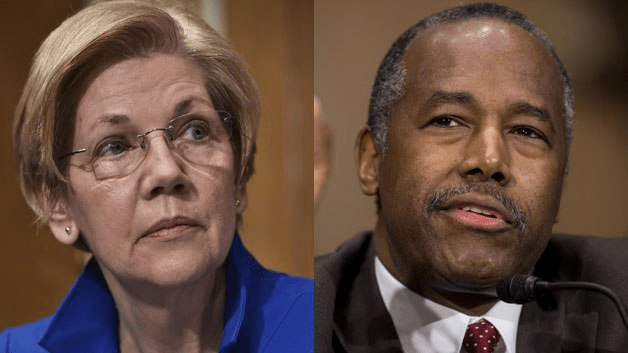
SENATOR WARREN BETRAYS HER BRAND

warren

Yesterday the full Senate took up the nomination of Ben Carson to be Secretary of Housing and Urban Development. Elizabeth Warren, our state’s senior Senator, voted No.

In doing so, she betrayed her identity — her hard-fought stance — as a voice of principle.

When the Carson nomination came before the Senate committee of which she is a member, Warren voted Yes. Here is what she posted on facebook, according to Masslive on January 26, 2017, about that vote :

“Dr. Carson’s answers weren’t perfect. But at his hearing, he committed to track and report on conflicts of interest at the agency. In his written responses to me, he made good, detailed promises on everything from protecting anti-homelessness programs to enforcing fair housing laws. Promises that – if they’re honored – would help a lot of working families,” she wrote in a Wednesday Facebook post. (emphasis added)

“Can we count on Dr. Carson to keep those promises? I don’t know,” the senator continued. “People are right to be skeptical; I am. But a man who makes written promises gives us a toehold on accountability … If Dr. Carson doesn’t follow through on his commitments, I will be the very first person he hears from – loudly and clearly and frequently.”

So ; what happened between January 26 and yesterday ? Did Carson not :follow through on his commitments” ? Hardly, as he was not yet in office. Did he break those written promises Warren cited ? No, not those either. So, again i ask, what happened, to justify Warren voting to confirm one day and to not confirm a month later ?

It is bad whenever a politician turns his or her support on and off. Loyalty — dependability — is the life blood of governmental good faith. Those who exhibit it can sway much; those who don’t, find themselves avoided.

It’s much, much worse for a politician whose entire persona is principle. An elected official whose signature is to stand unshakably on principle, hasn’t much left when that refusal to be shaken becomes shaken by her own shaking.

It is said, in Warren’s defence, that Carson is not qualified. Well ? Was he less unqualified on January 26th, a day when his measure of qualification did not cost him Warren’s vote ?

Senator Warren made a national name for herself as a fearless voice of principle. Today that name is spoiled. Who will ever trust her again to ride through the entire battle by their side ? Not many. It seems that Warren is all hot for principle when standing tall is easy to do, but when the going gets tough, she is as cold to the call of principle as a cruel New England north wind.

We like politicians who, when they make standing up for principle their calling card, stand strong no matter how hard the wind is blowing, or in what direction. Bem Carson may or may not turn out to be a fine Secretary of “HUD.” That is up to him. But he now knows that Senator Warren is someone to be leery of. Nothing good came come of that.

—- Mike Freedberg / Here and Sphere


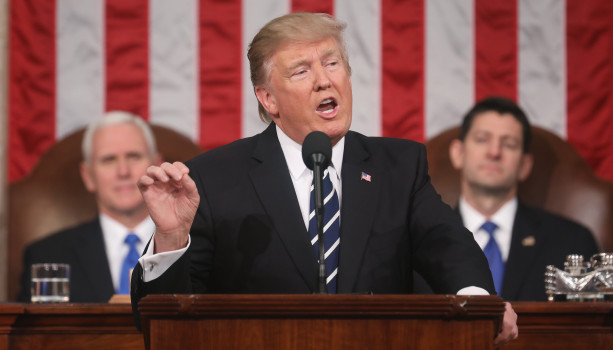
WHAT WAS THAT SPEECH ABOUT ?

Donald Trump Delivers Address To Joint Session Of Congress

^ last night Mr. Trump did the duty required of him by Article 2, Section 3 of the Constitution. Did it work ? We will see.

—- —- —-

Last night the man who holds the office of President spoke to a joint session of Congress in accordance with Article 2, Section 3 of the Constitution : “He shall from time to time give to the Congress Information of the State of the Union, and recommend to their Consideration such Measures as he shall judge necessary and expedient…”

This was a setting that augured much discomfort to a man who during the entirety of his campaign, as well as throughout the first six weeks of his occupying the Presidency, has spoken only to his adoring fans. But the Constitution left him no escape. To “give to Congress…” was a duty he took an oath to defend, and so it was : he had to speak to people at least half of whom despise him and all his works and to endure whatever less than enthusiastic response they threw his way. He is not a man who easily suffers opposition, and thus his speech did its best to not arouse it.

That was the first thing his speech was about. He had at all costs to earn applause lines, to look the hero he has boasted of being, to reassure his fans — who are not all fools and can read the “fake media” as well as anyone — that he is still their savior.

Doubtless he was so advised : speak as embracingly as you can, Sir. Whence said advice ? One wants to say his son in law Jared Kushner and Kushner’s wife, Ivanka. Reince Priebus, chief of staff, must also have played a major role. The advice was sound. Mr. Trump was often applauded — if only by half the room — and so reassured his fans that he can actually say nice things as well as harsh ones.

His nice things were the cliches of Presidential exhortation : unity, peace, our allies, prosperity, and the pursuit of big dreams — but as he had never said them, it had to be refreshing for his fans to hear him say them to the entire Congress.

Still, the ultimate purpose of his message was to reach the uncommitted independent voters who will decide his Presidential fate. Right now he has — to judge from a variety of polls published so far —  little support other than 80 to 85 percent of Republicans. Democrats oppose him and his policies by about eight to one; independents by 60 to 40. Losing independents, Mr. Trump finds himself opposed by about 56 to 40. In a recent Delaware state senate special election, a District that had elected a Democrat by two points elected one by 16 — a 14 point swing. A similar swing showed up in Saturday’s special elections in Connecticut and Minnesota. Mr. Trump won his own election by the slimmest of margins; nationally he lost the popular vote by two points. A 14 point swing, from his 48.5 to 46.2 percentage loss would have him losing by 56.5 to 38.2 — numbers which would cause his party to lose easily 50 to 80 seats in the House and several in thew Senate. Little wonder that he was likely advised to get real in a hurry.

Thus his objective was to win back independent voters, to move from from 60 to 40 opposition to 60-40 support. Did he accomplish it ? That depends on whether he maintains the tone of compromise in which he spoke and supports tone with deeds.

On that score, the jury is out. While he suggested a compromise immigration reform, he also asked to establish support for victims of crimes by “illegal immigrants” — but no such support for victims of home grown terrorists. He condemned — finally — the desecration of Jewish cemeteries and the horrific recent shooting of two Indian-Americans in Kansas, but he offered no support group for the victims of these actions. He spoke of support for NATO, but meanwhile his Secretary of State, Rex Tillerson, is almost nowhere to be found and never included in high level foreign policy discussions. He spoke of peace and unity, but his Department of Homeland Security and its agents continue to intimidate, disrespect, and violate the rights of travelers foreign and domestic. He honored Black History Month, but his Attorney General only two days ago dropped  opposition to a Texas vote suppression law. He claims to have done more in five weeks than any prior President, but most of what he has done has damaged the nation and coarsened our society. Tourists from abroad are cancelling vacations here;  university graduates from overseas no longer dare to work here. Has acted with pen strokes, not by legislation; such legislation as he has proposed has gone nowhere, and much of what he proposed last night has been proclaimed “dead on arrival” by key GOP Senators. He has neutered many Federal agencies whose purposes he opposes, but which are charged by law with overseeing those laws, thus shirking his Article 2, Section 8 Constitutional duty to “take care that the laws be faithfully executed.”

His task was complicated by the Democratic response. Many observers found former Kentucky Governor Steve Beshear’s speech bloodless, listless; but Beshear wasn’t speaking to the f9ire gods. He was speaking to a very specific target, white working class, mostly rural voters, most of ,them not college educated, who had until 2016 almost always voted Democratic for President. As every 2016 poll made clear, large numbers of these voters shifted to the Trump column — some such counties in Pennsylvania, Michigan, Wisconsin, and Ohio saw a 30 to 40 point swing ! Even a minor swing back to the Democratic column would change the 2016 result in those states, and Beshear spoke that kind of talk to that sort of voter.

Look and see what he’s doing, not what he is saying, said Beshear, who addressed health care, jobs, and wages. Will the voters he was talking to see it his way, or Trump’s ? We will find out.

Will any of the long list of policy facts that Trump might have to choice but to act upon matter to those who he hopes to seduce with words ? We shall see. He has always been a word winner. That’s how he became a reality TV star. Shouting and yelling draws attention away from what he is actually doing. It’;s a kind of con game, as many have noted. We will see if the con works when wrapped in words required by Article 2, Section 3 of our nation’s “Book of Rules.”

—- Mike Freedberg / Hedre and Sphere


AFTER 2018 : A TO-DO LIST FOR THE NEXT CONGRESS — IF

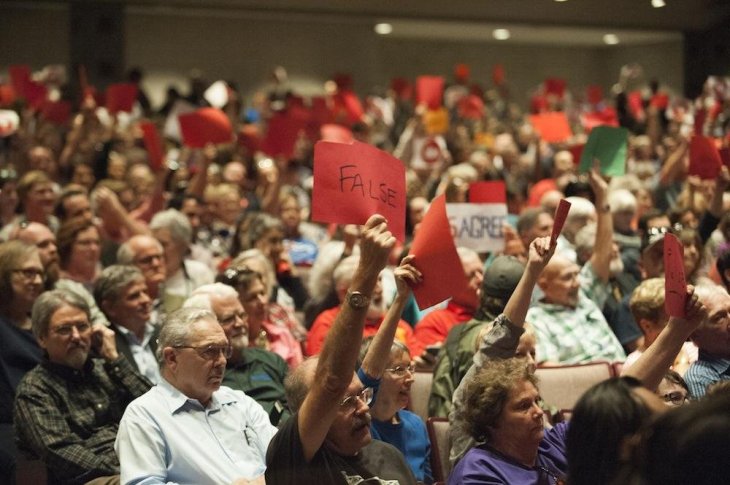
arkansas-town-hall

^ overflow crowd of local, Arkansas voters confront Senator Tom Cotton, one of the present Congress’s true villains

—- —-

IF.

Yes, IF. IF the Democrats take back the House in the 2018 election — and the result in Saturday’s Delaware special State Senate election augurs well for such a wave — there is a long list of reforms that should be enacted. Senator Cotton felt the heat of it, as did many Republican members of Congress, who now have decided to hide from the wrath to come.

It won’t work.

I propose now to set forth that wrath, to list what we the 2019 Congress’s likely new majority ought to prioritize:

1.immigration reform. the next Congress must enact a new immigration bill which will (a) offer a path to citizenship for all those who reside in the nation as of election day, November 2018 (b) welcome back those who have been deported since January 20, 2017 despite not having any criminal record other than traffic violations (3) offer citizenship to all undocumented immigrants on active duty in the Armed Forces for at least two months, on dates prior to the new law’s enactment (4) order a due process legal procedure for immigrants detained by the ICE, and require regulations to be issued thereunder and that all said law and regulations shall be published in every large-city newspaper of general circulation and on-line (5) said procedure shall include the right to obtain legal representation. (6) detention shall only be to holding centers operated by the Federal government, and never to private detention.

2.immigration and visas. (1) no agent of the ICE or Customs and Border patrol (CBP) shall have authority to stop or question any individual except at the border (or within proximity to it where such authority is adjudged necessarily incident to border authority). (2) the law must make clear that the Fourth Amendment’s protections, and those expanded by the Fourteenth Amendment, apply to natural person present within the nation, and that acts which would be deemed to violate of said Amendments shall be subject to Title 38 of the United Stares Code and its specified penalties and remedies for aggrieved persons. (3) the law must make clear that any Federal agent found to have repeatedly violated said protections and laws shall be  of this sort shall be subject to dismissal from Federal service. (4) visas granted by the State Department to any person shall not be revoked or suspended without reasonable prior written notice, which notice shall include the grounds for such revocation or suspension, as well as a statement of the visa holder’s right to appeal said action, including procedures for bringing an appeal. (5) visas shall be liberally granted to persons who have family residing within the nation, or who produce proof of admission to an educational institution, or acceptance to employment; but all such visa applicants shall be required to submit to an extensive written examination of his or her biography, social connections, and fitness for said employment, or education, or residence with family (6) (ADDED AS A RESULT OF NEWS REPORTS PUBLISHED TODAY):  no agent of the ICE or CBP shall behave toward any detainee in an intimidating or disrespectful manner, they shall always understand that they are representatives of the nation they serve. Upon being hired, and again upon deployment to duty  they shall take an oath to this effect and shall subscribe in writing to a code of conduct that shall expressly include language incorporating the duty set forth above.

3.immigration, visas, and investigation. No person subject to the above laws shall ever be required to tender his or her phone contents, computer, laptop, or internet records, or other personal information, without the agent requesting same having a warrant, specific to the person, in full compliance with Fourth Amendment sanctions. (2) No agent of the ICE, CBP, or other enforcement organization, shall go on “fishing expeditions” of random people in random places; all enforcement actions shall comply with applicable Fourth, Fifth, Fourteenth, and Eighth Amendment protections.

4.Federal agencies and nominations to judicial office. (1) no Federal judicial office which shall become vacant shall remain vacant for longer than six months after vacancy. (2) No Federal judiciary shall be reduced in number by any law without said law being favorably acted upon by both branches of two successful Congresses. (3) No office of any Federal Agency requiring Senate confirmation shall go unfilled for more than six months. If aa Presidential nomination is not f9orgyhc0omoing within two months of any vacancy therein, the Congress shall nominate and act upon said nomination within four months of said deadline.

5.Funding and De-funding of Federal agencies. No Federal Agency may have its budget reduced by more than two percent during any Congress, and no such reduction shall take effect unless enacted by two successive Congresses.

6.National debt. The Fourteenth Amendment means what it says. No Treasury Secretary or agent thereof, and no Congress, shall take any act which shall call the full faith and credit of the United Stares into question. If the Congress refuses to raise the upper limit of allowable Treasury borrowing, the Secretary shall have plenary authority to borrow such sums as he or she deems necessary to maintain the full faith and credit of the United States.

7.Citizens United. The Congress shall enact an Amendment to the Constitution specifying that only natural persons may donate money to election campaigns, except that unions, as aggregations of natural persons, may donate up to the Federal law’s donation limit multiplied by the number of members in said union.

9.voting rights. Congress shall enact a law providing for (1) same day registration and (2) mail in balloting for all elections to Federal office. Congress shall update the 1965 voting rights act to assure Department of Justice monitoring of states in which state action to suppress or otherwise burden voting has taken place within the prior decade.

10.minimum wage. The Federal minimum wage shall be raised to $ 10/hour effective as of March 1, 2019.

11.interference by foreign powers in American elections. Congress shall charge the Department of Homeland Security with monitoring and, where applicable, countering, acts of cyber espionage, or other broadcasts, by any agent of any foreign state or entity, tending to influence or impede an American election. The CIA shall co-operate in any such monitoring or countering, and the Department of Defense and the NSA shall be consulted on any action to be taken.

12.National Security Agency. the NSA shall always include in its membership the following persons : Secretaries of  State and Defense; NSA chief; Joint Chiefs of Staff; CEO of the CIA and FBI. No civilian not of one of the prior , or the President or Vice President, shall ever be  a member of the NSA Principals committee.

13.Attorney General. The oath of office shall make clear that the nominee to be Attrorney General is the nation’s lawyer, not the President’s, the oath being to the Constitution. In furtherance whereof, the President shall be advised that he must obtain his own counsel, who sahll not be the Attorney General, nor of his staff, nor recommended by him.

14.Executive Orders. No executive order shall take effect until the completion of due review by the agencies charged with executing it, or by the Congressional committee overseeing its provenance, and until such Order, after review, shall be published generally, and online, for a public comment period of one calendar month prior to proposed effective date. “Emergency: Orders shall specify the nature of the emergency, in detail, and shall be reviewed by appropriate Federal Court and Congressional oversight committee for a 48-hour period befire3 taking effect.

The above 14 points probably do not exhaust the number of urgent legislations that the next Congress must act upon, but they are a strong beginning of assuring that the abuses that have grown up since 9/11, and which became lethal during the 2016 election, shall be turned back once and for all.

Can the next Congress be Democratic and thus able to enact ? I think so. Saturday’s special election in Delaware saw a 14 points wing, from a two point Democratic victory in 2014 to a 16 point win this time. A swing of anything even close to 14 points would, in  the 2018 elections, easily cost the Republicans 50 to 70 seats in Congress as well as many state legislative majorities. All the signs are there for such a swing happening : enormous activism everywhere and a President who seems to relish stirring up an ever increasing host of opponents. He retains the support of his party — about 80 percent — but his support among independents has reversed,m from a ten point plus to about a 12 point minus., It is non-aligned voters whom the President has alienated. they are the deciders, as always.

—- Mike Freedberg / Here and Sphere
WHAT MIGHT A BILL OF IMPEACHMENT SAY ?

constitution

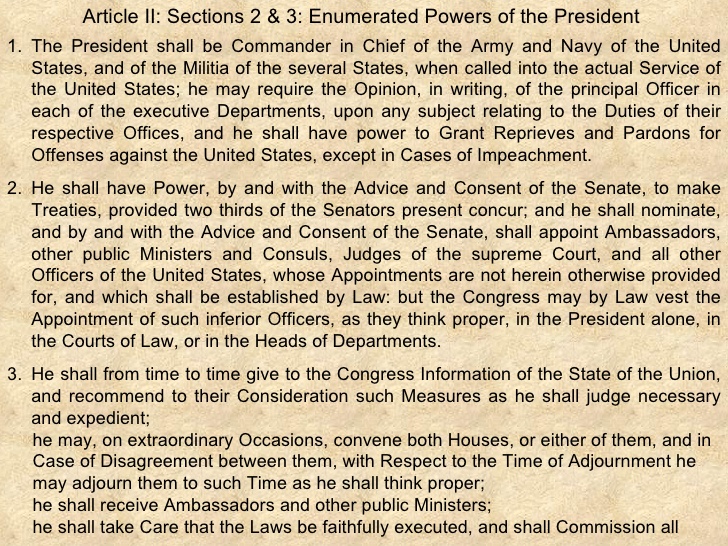
^ please read the bottom line of this excerpt from Article 2 of the Constitution

—- —- —-

As we see it, Donald Trump, in the office of President for only five weeks, has already done things that merit impeachment. Many observers have cited several particulars, and we agree with many of these, yet the most obvious ground has yet to be cited: he has not carried out — indeed has acted to negate — “take care that the Laws be faithfully executed.”

Let me set forth the argument, because it goes to the heart of his performance, indeed, to his entire approach to the duties of his office as set forth in the Constitution that he took an oath to uphold:

First, please read what Wikipedia says about the “take care that the laws be faithfully executed” clause of the Constitution :

Article Two of the United States Constitution, Section 3, Clause 5: Caring for the faithful execution of the law

The President must “take care that the laws be faithfully executed.” This clause in the Constitution imposes a duty on the President to enforce the laws of the United States and is called the Take Care Clause, also known as the Faithful Execution Clause or Faithfully Executed Clause. This clause is meant to ensure that a law is faithfully executed by the President even if he disagrees with the purpose of that law.] By virtue of his executive power, the President may execute the law and control the law execution of others. Under the Take Care Clause, however, the President must exercise his law-execution power to “take Care that the Laws be faithfully executed.”

Note no. 1. the “laws” that the President musty take care about include the entire United states Code, mostly administrative regulations issued pursuant to legislation and incorporated by reference therein. Yet the President, evidently acting in accord with the views of his top advisor, Steve Bannon, has appointed heads of departments whose mission is to “deconstruct” them (the verb is Bannon’s) and whosece3ntire lack of experience in the departments they have been nominated to head almost assures their inability to “take care” for the laws their department executes.

Note no. 2. in particular, yesterday the Attorney General, acting on the express orders of the President, suspended the enforcement of Title IX of the United stares Code with respect to protection of transgender students in schools. As the President must “take care” for laws even if he disagrees with them, his act contravenes his express duty.

Note No. 3. The President must FAITHFULLY execute the laws. What can “faithfully;’ mean but “in good faith” ? Executing the laws by means that intentionally violate Constitutional; protections is not “in good faith.” Yet the President has empowered, or allowed, agents of the Customs and Border Patrol (CBP) to violate the Fourth and 14th Amendment rights of people at random. Yesterday we learned that CBP agents are randomly, and without a warrant, demanding that passengers on domestic air flights “:show their papers.” CBP agents have no authority to do anything except at the nation’s borders; if the Fourth Amendment was enacted to do anything, it is to prevent this sort of abuse.

Note No. 4. the President has issued executive orders hastily, carelessly drafted, un-vetted by his legal teams, and in some cases without the slightest consultation with his executive agencies, or with Congress, that have violated the legal status of thousands of persons. His adviser Mr. Bannon applauds the “chaos” thus caused. Chaos is the opposite of “faithful” execution of the laws.


Does the President’s intentional violations of the “faithful” exercise amount to the “high crimes and misdemeanors” which the Constitution requires as grounds for a conviction to articles of impeachment ? I can’t think of any case in which this accusation has arisen. We have had incompetent Presidents for sure, but I cannot think of one whose intention was to override the laws and ignore the Constitution. An argument against impeaching on this basis is that there’s an alternative remedy : suits in Federal Court, one of which has already blocked the most notorious of the President’s violations of “faithful” execution.

Perhaps the Federal Courts can do the work more efficiently than impeachment. I hope so. But now to the rest of the arguments of impeachment:

The most grave is his potential involvement in Russian obstructions of the 2016 election, his numerous business dealings with Russian bankers, oligarchs, and maybe even mobsters, and his readiness to use the power of his office to advance his and his family’s business interests. Is his identification of his personal and family financial gain with the nation;s interests impeachable ? At some point it would be. Let us look at the very earliest impeachment case I could find, one from the late 1300’s :

William Latimer, 4th Baron Latimer – Wikipedia

When Parliament was called in April 1376, known as the Good Parliament and led by Peter de la Mare, the members wanted to remove corrupt advisers from court. Latimer, Neville, London merchant Richard Lyons and Alice Perrers were accused, and the charges against Latimer were that he had been guilty of oppression in Brittany; had sold the castle of Saint-Sauveur to the enemy, and impeded the relief of Bécherel in 1375; that he had taken bribes for the release of captured ships, and retained fines paid to the king, notably by Sir Robert Knolles, and the city of Bristol; and finally, that in association with Robert Lyons he had obtained money from the crown by the repayment of fictitious loans. Seconded by William of Wykeham, de la Mare sought to have Latimer immediately convicted, with the Commons acting on behalf of the king. They were unsuccessful and a trial took place.[3] The charges were proven and he was removed from his positions in the royal household and on the council, fined and imprisoned. He was pardoned in October 1376 and with Lancaster’s recovered influence he returned to favour.

Mr. Trump seems not to have done anything as crude as this, nor — so far — have any of his agents attempted anything so palpably criminal. Yet investigations are well under way now into his Russian dealings that, if any of it is true, do similar things, albeit with suavity and shell game cleverness.

Two outrages that Mr. Trump has unleashed do not seem to me impeachable : his venomous attacks on the press and his habitual lying. Even a President has a right to insult people, and even a President has room to lie every day. The remedy for these failings is political : vote him out.

Lastly, there’s his attempts to suborn Federal agencies investigating his ties to Russia and his intentionally persecutive travel ban executive order.

But back to the impeachment situation. Will articles of impeachment be brought against him at all ? I wonder. It suits the Democrats’ electoral purposes to maintain in office a man so disliked, so offensive, so damaging, because he will eb far easier to defeat in the 2018 mid-term elections and in 2020, than a restorative, healing President Pence. There is no honor in such calculation, but only a naive would doubt that calculation is the engine of political strategy. Impeachment articles will only be brought when and if the Republicans in Congress decided to do it; and with Mr. Trump enjoying about 80 percent support among Republicans voters — even as Independents and Democrats oppose him by almost three to one, aggregate — the prospect of Republicans bringing impeachment articles seems very, very remote.

This is the  depressing state of un-Constitutional federal governance as we head into the second month of  Mr. Trump’s deplorable presidency.


—- Mike Freedberg / Here and Sphere

GUEST COLUMN : THE DOWNFALL OF MILO

chris

^ guest columnist Christopher Mugglebee, whose facebook post analysis of the downfall of Milo Yiannopoulos we are honored to reprint.

—- —- —-

We are proud to present this analysis of the downfall of Milo Yiannopoulos by Christopher Mugglebee, who is — full disclosure — our editor’s cousin. Christopher lives in the Los Angeles area with his wife Ann and kids. He is a movie actor and script writer.

I’ve long been very vocal about the danger and sickness of this guy’s views, and very observant of what his make-up conceals. In America, it isn’t about free speech, it’s about opportunity to make money extolling the lesser virtues of an internet-based, ego-unchecked society. He hides in plain sight. He thought he could hide behind his inexhaustible intellectual bullying and no one would ever catch on he was a complete fraud and the victim of his own hate, which is circular. He can not. We can see him. We waited. And he finally got hit.

In the boxing world this analogy is age-old. One can think what they’re doing is good cuz it’s working. But others who’ve been around perhaps longer know that it isn’t, and it’s a matter of time where he will move the wrong way…and bam. Out. It’s always there, it’s just a matter of how long can they keep up this game hiding their defect. Eventually they get lazy, maybe cocky…and it comes out. And when it does, it usually does them in. They can’t continue because they weren’t true in the first place.

This is the case with Milo. He’s a fraud. A psychological mess that saw an opening, a time when America was vulnerable to this sort of mess tapping us and letting our id run wild.

I’m saddened that it takes this much for people to see him as destructive when he’s always been this wrong all along. It’s just what does it take for people to wake up?

Good night, Milo.

As for the now cancelled book deal, Chris Mugglebee says this :

““There are some who will spin the cancellation of this book contract as a failure of the freedom of speech but such is not the case,” Gay ended her statement, “This is yet another example of how we are afforded the freedom of speech but there is no freedom from the consequences of what we say.””

This is true. She makes an interesting observation that S&S realized he was costing them more money than they could make off his hate-driven views, that it was simply a biz decision. This, I feel, is at the crux of the problem- people like him only exist as long as they make money for someone. A lot is tolerated in America if it makes money. If not, it’s not. What’s interesting here is money is moving, literally, and we’re seeing a war not of free-speech but of its opposite…

Non-free speech. As in speech that’s goal is purely to make money. Nothing free about it. You gotta PAY to hear it.”

And in this case, Milo is paying. He’s paying the price of hate-profiteering.


—- Chris Mugglebee / Guest Columnist/ Here and Sphere

FREE SPEECH AND A FREE PRESS

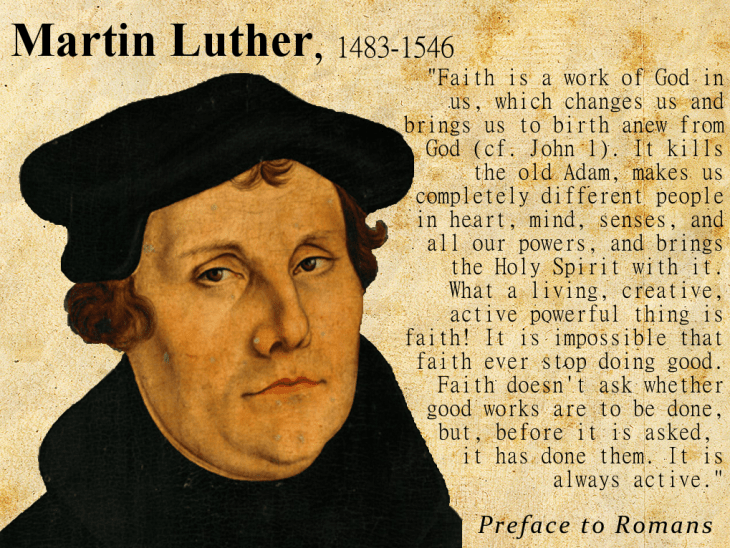
martin-luther

^ Martin Luther. Modern notions of free speech and a free press — and of how they speak and press — begin with him

—- —- —-

We cherish these two principles, and we should. The Constitution guarantees the first, and the history of our civilization since Martin Luther’s time teaches us the second’s importance. Yet neither axiom is absolute. Allow me to assert and to explain; the assertions first.

Free speech sets forth the principle that people may voice their opinions, publicly, on all manner of topics, without risking reprisal by any government.People acting on their own, however, are perfectly free to express disapproval, even to shame the speaker. In other words, one has a right to speak but not to force anyone to listen.

Something similar is true for a free press. Our Constitution’s free speech clause protects the written or broadcast word just as it protects the spoken. Again : every medium may broadcast, or write, but no one is required to read or hear; and disapproval of what is pressed has just as much protection as that to which it responds.

There are limits. The common law recognized libel — defamation in writing — as an actionable tort, and equally it recognized slander : defamation by spoken words. One may not — as in a famous Supreme Court case — gratuitously yell “fire !” in a crowded theater, nor may one with impunity hurl so-called “fighting words” — racial or ethnic epithets the classic example — at people: you are protected to some degree when you fight back.

I think we all recognize the examples and principles enumerated above. Let me add a few other details to them :

Invention of the printing press enabled martin Luther and his opponents to wage a religious debate as universal as it was intense. We all stand in that debate’s wake. It made the printed word a staple of public discourse, indeed it created what we call “public opinion.” The printing press enabled the first English efforts to lobby Parliament — late in the reign of Queen Elizabeth, and it enabled the catholic counter-Reformation. Printed “broadsides” marshalled the two sides, monarchist and Parliamentary, that fought the 1688 Revolution (from whose anti-monarchist Declaration of Rights we took much of our own founding documents, including the original of our Second Amendment); not long after, such printed “broadsides” became regularly issued “news” papers — ancestors of the large-sheet newspapers that we know today.

It followed from the ubiquity of printed opinions — and from the sanction given them — that speech, too, had to be protected, supported, defended. : if a man could publish a “news” paper, he could speak his “news” in a public place. In the early 1500s, publicly speaking against the King was everywhere as dangerous as to write against him; one risked prosecution and mutilation, imprisonment, even death.By 1700, England was free of it; on the Continent, not for another 100 years — or more; but eventually, everywhere. The printing press made freedom to speak or write unstoppable.

People of the 20th Century took it as given that not to enjoy freedom to speak or to publish (subject to the few important exceptions mentioned) was an intolerable grievance. We too take it as given. This in spite of recent developments that call the two basic freedom principles to defend themselves : by which I mean ( 1 ) the rise of “fake news” and its publication, unregulated, on the internet and ( 2 ) the persecution, even the murder, of journalists by many governments using latent executive powers because they can.

The first, we abhor but have difficulty responding. The second, we seem to take as normal.

Persecution of journalists takes us back to the days of Martin Luther, when the two sides in that religious struggle refused to accept their opponents’ right to publish, or to hold, opinions they considered heretical. So opposed are today’s two sides — liberal and tolerant versus nationalist and exclusionary — that neither can grant the other space to publish or argue.How can they ? Each side views the other as a mortal enemy. Unfortunately, we find that freedom of the press and of speech have an additional limitation that we seldom think of : implied in these two guarantees is that he who publishes, or speaks, does so with good will and that what he (or sh0 says or publishes may have some validation.

It is hard to grant good will to an opponent when that opponent doesn’t grant it to you, when he or she in fact goes out of his or her way to vilify you and demonize you and to damn you. It was well and good for Voltaire — exemplar of the age called “Enlightenment” — to famously say “i may not agree with what you say, but i will defend to the death your right to say it”; but when your opponent goes out of his or her way to find those ideas that you cannot tolerate — including bigotry in all its ugly, fighting word heads —  and to extol them, what option do you have but to fight back ? Tolerance does have its limits, as do most moral axioms.

“Fake news” poses a different problem : is there freedom to lie ? A legally guaranteed freedom ? Libel and slander principles say “no,” there is no such freedom. But what if a significant number of people who hear a fake new item believe it : do they have a right to believe it ? Here we enter a different doorway. To me, religions are not attributively different from fake news. Is there a God ? Does a God make rules that people must worship or obey ? Many many people believe these things, despite that proof there is none (and the great theologians have never argued that there was any empirical proof); and our Constitution protects the freedom to worship a God as strongly a sit protects freedom to speak or publish opinions or news. So : how are we to craft a principle that will condemn fake news but not compromise freedom to worship a God ?

You may want to say, fake news claims veracity for events capable of empirical evaluation; religions make no such claim and so are easy to exempt from condemnation of fakery. If only it were that simple. Who of us has the time or knowledge to judge the veracity or not of a news item ? At some point we have to accord news reports belief, or disbelief, without having “all the evidence.”

Or, you may say, most of what we call “fake news” is so clearly fake, so absurd, that no one with any brains in her head would believe it. Example : the election story that Hillary Clinton was running a  child sex ring out of a Washington, D.C. pizza restaurant. Who would believe such cockamamie stuff ? Fact is, many many people did believe it. In that case, the story became such big news that actual journalists investigated and proved it untrue., How many less lurid but equally fake, less visible stories sucker the credulous ? Probably a lot. Fakery is the stock in trade of talk show hosts, who say outrageous — ridiculous even — things to attract attention and thus reap big ratings and pay checks. Are talk show hosts not protected by the First Amendment ?

Because there is no practical way for our society to make good its fully justified condemnation of lying — because it is impossible to enunciate a Constitutional principle which will outlaw falsehood, people are left to their own devices trying to gauge what to believe or not. Here, evidence competes with the will to believe.

Thus the stage is set for a President to condemn our mainstream journalists as liars and to have a significant number of people believe him. After all, if reports assert events that contradict what people want to believe, belief inside one’s mind bests events from outside it. How not ? Think of the many times that you have learned things that at first hearing you found incredible.

Into this battle of mutually exclusive skepticisms comes the journalist. I am a journalist. I, like my fellows, insist that it is my duty to report what I observe, what I know at first hand, and to assert my witness of it. It is equally my duty to criticize actions taken, or opinions voiced, by powerful people that I find abhorrent, or dangerous, or mistaken, or all three. It is my duty to you my reader and to my society at large. For bearing witness to truths is as ancient a social commitment as nay of the freedoms mentioned in this column — more ancient, even. More books of the Bible that my ancestors wrote are books of witness — of prophecy, because witness is what prophets did — than of any other type, and how not ? A society needs its critics, to set it right after going a stray (in whole or in part), and journalists do for our society what the prophets (including Jesus of Nazareth) did for my ancestors 2000 years ago and more. We stand in their shoes. And we will do our duty to our society no matter who of the powerful does not like to hear or read it.

—- Mike Freedberg / Here and Sphere


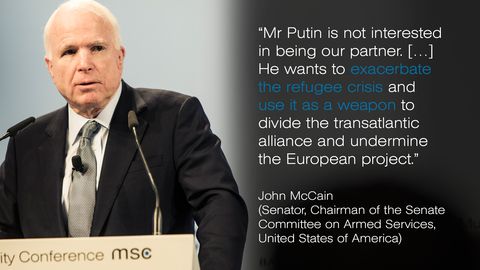
JOHN McCAIN ADDRESSES THE MUNICH SECURITY CONFERENCE

mccain

We reprint below, verbatim, the urgent speech made at the Munich Security Conference by Senator John McCain. It speaks for itself, and fo0r uis, about what America means, what Western civilization lives for, and why we should defend and promote our values and the commitments that guarantee them to all people of good will.

Washington, D.C. ­– U.S. Senator John McCain (R-AZ), Chairman of the Senate Armed Services Committee, delivered the following remarks today at the 2017 Munich Security Conference:

“Thank you, Ian, for that kind introduction. Let me also thank the German government and people, as always, for their warm and gracious welcome.

“Not every American understands the absolutely vital role that Germany and its honorable Chancellor, Chancellor Merkel, are playing in defense of the idea and the conscience of the West. But for all of us who do, let me say thank you.

“My friends: In the four decades I have attended this conference, I cannot recall a year where its purpose was more necessary or more important.

“The next panel asks us to consider whether the West will survive. In recent years, this question would invite accusations of hyperbole and alarmism. Not this year. If ever there were a time to treat this question with a deadly seriousness, it is now.

“This question was real, half a century ago, for Ewald von Kleist and the founders of this conference. Indeed, it is why they first started coming to Munich. They did not assume the West would survive, because they had seen its near annihilation. They saw open markets give way to beggar-thy-neighbor protectionism, and the poverty that imposed. They saw a world order fracture into clashing ethnic and nationalist passions, and the misery that wrought. They saw the rise of hostile great powers, and the failure of deterrence, and the wars that followed.

“From the ashes of the most awful calamity in human history was born what we call the West—a new, and different, and better kind of world order … one based not on blood-and-soil nationalism, or spheres of influence, or conquest of the weak by the strong, but rather on universal values, rule of law, open commerce, and respect for national sovereignty and independence. Indeed, the entire idea of the West is that it open to any person or any nation that honors and upholds these values.

“The unprecedented period of security and prosperity that we have enjoyed for the past seven decades did not happen by accident. It happened not only because of the appeal of our values, but because we backed them with our power and persevered in their defense. Our predecessors did not believe in the end of history—or that it bends, inevitably, toward justice. That is up to us. That requires our persistent, painstaking effort. And that is why we come to Munich, year after year after year.

“What would von Kleist’s generation say if they saw our world today? I fear that much about it would be all-too-familiar to them, and they would be alarmed by it.

“They would be alarmed by an increasing turn away from universal values and toward old ties of blood, and race, and sectarianism.

“They would be alarmed by the hardening resentment we see toward immigrants, and refugees, and minority groups, especially Muslims.

“They would be alarmed by the growing inability, and even unwillingness, to separate truth from lies.

“They would be alarmed that more and more of our fellow citizens seem to be flirting with authoritarianism and romanticizing it as our moral equivalent.

“But what would alarm them most, I think, is a sense that many of our peoples, including in my own country, are giving up on the West … that they see it as a bad deal that we may be better off without … and that while Western nations still have the power to maintain our world order, it is unclear whether we have the will.

“All of us must accept our share of the blame for this turn of events. We grew complacent. We made mistakes. At times we tried to do too much, and at others we failed to do enough. We lost touch with many of our people. We have been too slow to recognize and respond to their hardships. We need to face up to these realities, but this does not mean losing hope and retreating. That we must not do.

“I know there is profound concern across Europe and the world that America is laying down the mantle of global leadership. I can only speak for myself, but I do not believe that is the message you will hear from all of the American leaders who cared enough to travel here to Munich this weekend. That is not the message you heard today from Secretary of Defense Jim Mattis. That is not the message you will hear from Vice President Mike Pence. That is not the message you will hear from Secretary of Homeland Security John Kelly. And that is certainly not the message you will hear tomorrow from our bipartisan congressional delegation.

“Make no mistake, my friends: These are dangerous times, but you should not count America out, and we should not count each other out. We must be prudent, but we cannot wring our hands and wallow in self-doubt. We must appreciate the limits of our power, but we cannot allow ourselves to question the rightness and goodness of the West. We must understand and learn from our mistakes, but we cannot be paralyzed by fear. We cannot give up on ourselves and on each other. That is the definition of decadence. And that is how world orders really do decline and fall.

“This is exactly what our adversaries want. This is their goal. They have no meaningful allies, so they seek to sow dissent among us and divide us from each other. They know that their power and influence are inferior to ours, so they seek to subvert us, and erode our resolve to resist, and terrorize us into passivity. They know they have little to offer the world beyond selfishness and fear, so they seek to undermine our confidence in ourselves and our belief in our own values.

“We must take our own side in this fight. We must be vigilant. We must persevere. And through it all, we must never, never cease to believe in the moral superiority of our own values—that we stand for truth against falsehood, freedom against tyranny, right against injustice, hope against despair … and that even though we will inevitably take losses and suffer setbacks, through it all, so long as people of goodwill and courage refuse to lose faith in the West, it will endure.

“That is why we come to Munich, year in and year out—to revitalize our common moral purpose, our belief that our values are worth the fighting for. Because in the final analysis, the survival of the West is not just a material struggle; it is now, and has always been, a moral struggle. Now more than ever, we must not forget this.

“During one of the darkest years of the early Cold War, William Faulkner delivered a short speech in Stockholm upon receiving the Nobel Prize for Literature. ‘I decline to accept the end of man,’ Faulkner said. ‘I believe that man will not merely endure: he will prevail. He is immortal, not because he alone among creatures has an inexhaustible voice, but because he has a soul, a spirit capable of compassion and sacrifice and endurance.’

“Even now, when the temptation to despair is greatest, I refuse to accept the end of the West. I refuse to accept the demise of our world order. I refuse to accept that our greatest triumphs cannot once again spring from our moments of greatest peril, as they have so many times before. I refuse to accept that our values are morally equivalent to those of our adversaries. I am a proud, unapologetic believer in the West, and I believe we must always, always stand up for it—for if we do not, who will?”


CHARLIE BAKER’S WISE COURSE

baker

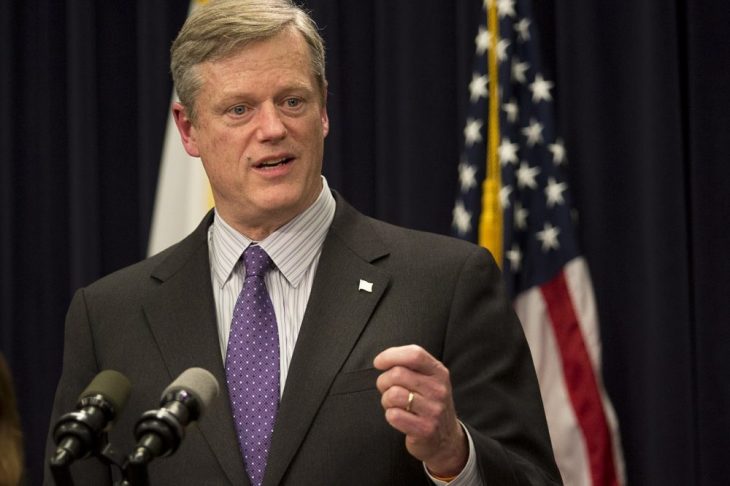
^ using the authority of his office, masterfully, to steer a course reformist at home and strong against the radicalism that threatens us from Washington

—- —- —-

NOTE : story has been updated as of 02/18/17 at 10.30 AM

The ship of state can be steered carelessly onto the rocks, or it can find the clear, deep channel.

What I just wrote is something of a cliche, but the wise-helmsman image well characterizes Charlie Baker’s course during the two years he has been Governor. He has found a deep channel that suits his weather, and he has followed it no matter what storms threatened his steering.

By now, we know his course : have nothing whatsoever to do the national Republican drama; commit to consensus governance of our state (allied with Speaker DeLeo whenever possible, and usually it is not just possible but probable); be “Mr. Fix It” for a state whose many agencies badly needed restructuring, and still do.

This was the obvious course, but it’s one thing to choose it, quite another to practice it successfully. This, Governor Baker has done.

Never has his rigor looked more impressive than since the Trump candidacy became serious. The more agitated that Massachusetts voters have become in response to the radicalism of Mr Trump, the clearer Governor Baker’s opposition to it. Shirley Leung of the Boston Globe wrote recently that Mr. Trump’s assaults upon communities dear to Massachusetts activists have narrowed Governor Baker’s “middle ground” to the vanishing point. I disagree with her assessment. I think Governor Baker’s authority has grown in scope and certainty.

No, he has not led marches, nor has he vented his voice in the oratorical flourish Senator Warren loves (and which has become her signature). He doesn’t have to. He is the Governor of one of the 50 states; he can act as well as speak. And he does speak too. His “state of the state speech”: concluded with a thorough-going repudiation of the demagogic, dilettantish methods of Mr. Trump; he has offered Senator Warren support in her efforts; has denounced Mr. Trump’s travel ban order; and has called for a full investigation of Mr. Trump’s Russian ties.

He has made his stand via the same kind of “Governor’s statement:” that he uses to announce a state policy, announce a nomination, argue a budget, unveil an environmental or municipal services grant. There isn’t much drama in Baker’s statements in opposition to a Trump policy, but there is all the authority that issuing them in the form of a normal, executive office announcement can give them.

It is as Governor of the state that Baker opposes a Trump policy.

The activists want baker to voice his opposition loudly, in the manner of Warren; but he is NOT Senator Warren, and any attempt by him to imitate her would weaken his impact, not strengthen it.

I was not sure at all that activists would grasp this point, or accord Baker the respect of delivering his oppositions to Mr. trump in his own way. During the anti-travel ban protests the protesters calling for Baker to speak out were in no mood to listen to a Governor’s statement. I think now that that impatience has given way to appreciation that Baker’s tactics fit the occasion.

During a time in which the radicalism of Mr. Trump, and the even more reckless radicalism of his noisiest supporters,m has inflamed almost everybody alike — voters and non voters, citizens and immigrants —  Governor Baker has succeeded in exemplifying the exact opposite approach to governing; and that he has done so as a Republican only strengthens the integrity of his course.

Baker’s course seems all the smarter as we watch Mr. Trump’s job approval numbers decline to the mid-30s. Whatever the inclination of Trump’s small number of Massachusetts supporters — he received barely 33 percent of our vote — may have been, hardly any of them are voicing it now, or are opposing Governor Baker for his stand. Baker recently saw his choice for Massachusetts GOP chair win re-election by 47 to 30, a much wider margin than was accorded his choice for Republican national Committeewoman last April.

The Governor is stronger today, among Republicans, than at any time since his election.

Not many of us in Massachusetts are Republicans, but almost all of us appreciate, at some level, that our democracy requires two responsible political parties. We also understand, I think, that there is no one else but Baker who is, in Massachusetts, in a position to set a responsible example for the Republican party; and that he has done so, and is entitled to reap the rewards of what he has done and is still doing on this course, every day, as he plays “Mr. Fix It” in the State House and Mr. Integrity in the national debate. In no way is this  a narrowed ground, as Shirley Leung seems to think. Just the opposite. It’s the view of an overwhelming majority.

—- Mike Freedberg / Here and Sphere

WHAT A CHALLENGE TO ELIZABETH WARREN MIGHT LOOK LIKE

liz

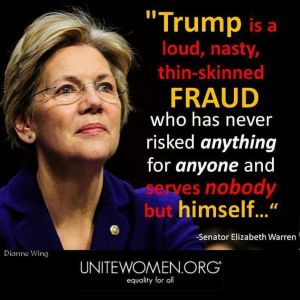
^ Senator Liz Warren, a protest icon — this is what a 2018 challenger faces

—- —- —-

Can a Republican challenger in 2018 mount any kind of respectable campaign against Senator Liz Warren ? Right now, it looks daunting, maybe impossible. Still, if I have learned one thing in over 40 years of working campaigns, it’s that no office holder is unbeatable. The voters do, indeed, hold the fate of electeds in their hands.

So what might a serious Republican challenge to Warren look like ? It’s easier, I think, to say what it can NOT look like :

1. It CANNOT be a pro-President Trump effort. Mr. Trump barely cracks 30 percent favorable in our state; last November, he won only 33 percent, the worst Massachusetts showing by a GOP candidate for President since 1964. Any candidate who can be credibly linked to Mr. Trump, at whatever level or point, is toast.

2.The candidate must be willing, and able financially, to refuse any donation from any PAC or interest group associated with Mr. Trump and to return them if they come to him or her. Somehow, the candidate must be able to raise $ 20 to $ 30 million. From whom ? Why would they give it ? In support of what interests ?

3.The candidate will probably have to do more than just spurn Mr. Trump. He or she will probably have to voice a “resist” role, similar — if not at the same level of fury — to what Massachusetts’ huge number of anti-Trump activists are venting every day now.

The GOP challenger must advocate for what the overwhelming majority of our voters demand of Congress people and Senators : progressive on all the social issues, without reserve; strong for environmental reforms, for alternative energy, for universal health care; standing up to Russia; fairness for wage earners; organized consumerism; and immigration reform, including a path to legalization for the undocumented. I can’t see any candidate doing well, much less winning, who cannot take all these positions and hold fast to them without any and’s or but’s.

Can such a candidate win a Republican primary in which about half the voters oppose what the overwhelming Massachusetts majority stands for ? Can he or she win said primary without embracing President Trump, who remains broadly favored by Republican voters ? The only answer I can possibly give is that he or she will have to take that chance, or his or her campaign will end on primary night, win or no win.

And that is the easy part. Winning a primary in which only about 15 percent of the total November vote participates leaves our would be Warren challenger at the mercy of the other 85 percent. Many of these voters will show our candidate no mercy at all; yet some will be persuadable. Here’s what our candidate must be able to do :

1.he or she must be believed when advocating positions completely at odds with what most national Republicans stand for.

2.”control of the Senate’ will be a major issue. With the Senate split 52 Republicans to 48 Democrats, the last thing most Massachusetts voters want is to increase the Republican majority supporting Mr. Trump; indeed, most Massachusetts voters want the Senate to shift to Democratic control — this, the decisive factor in Warren’s 2012 defeat of Scott Brown. Today, given the radicalism of Mr. Trump, Democratic control of the Senate is more urgent than ever. So : how does our candidate overcome ? Only by making very clear — and being believed in saying it — that he or she will NOT under any circumstances vote for a Republican majority leader if the 2018 election result makes Massachusetts the deciding vote. In which case, our candidate will pledge to vote “present.”

4.Republican voters will not like this, but in Massachusetts only 11 percent of voters are GOP. A winning candidate has to get at least 80 percent of his or her winning (50 percent plus one) from people who are NOT Republican. Our candidate will have, somehow, to win his or her Republicans — only 20 percent of his or her total, but crucial — on the purely negative basis that he or she is not Liz Warren. And that entails risk. If anti-Warren voters see our candidate as anti-Warren, so will her supporters see it.

5.Warren does have some liabilities. many voters see her as a “talk horse,” not a “work horse.” She has certainly embraced that role. There is Massachusetts precedent : Charles Sumner has never been forgotten here for his tireless, and courageous, extremist advocacy of Abolition, for which he was beaten so badly it left him permanently injured. But where Sumner focused his outspeak on one subject, slavery, Warren has vented against all manner of opponents. Her voice has gained her enemies, enough that Senate majority leader McConnell found it advantageous to make her the icon of the Trump opposition, seeing Warren as a weaker Trump opponent than more mainstream Democrats.

Still, McConnell’s silencing cemented Warren’s iconic status here in Massachusetts. Any opponent needs to figure out how to respond to that. One effective way is to congratulate Warren for her speaking out while asking whether it has gained our state clout in Washington, or not ?

6.Organization and personality will be crucial. Our candidate must have a following of his or her own, preferably ethnic and thereby outside the ideological divide, and he or she must be willing, and able, to organize a personal (and ethnic, but more than ethnic) following, precinct by precinct, as did Bernie Sanders. Because the state’s Republican vote is so small, it will not be a factor in the organizing effort, which can proceed as if the candidate’s party registration didn’t even exist : Boston City Council elections provide a model.

Can such a candidacy be mounted ? Does a candidate exist who is capable of it ? If so, can that candidate speak with credibility and authority about the major substantive issues ? One friend has suggested that the right theme will be “I’m a workhorse, she’s a show horse” and “I’ll support Trump when he is right,  oppose him when he is wrong.” This sort of Mr. Smith Goes to Washington campaign message would be powerful in ordinary political times; but these are not ordinary times. Not with a radical incompetent like Mr. Trump wreaking chaos on a system despised by a systemically favored, albeit minority, group of voters at least as radical as Trump.

Lastly : all of the above changes if Mr. Trump is impeached and Mike Pence becomes President. Then we’re back to normal political times, and Mr. or Ms. Smith might just, possibly — if the luck is there, and Republican patience, and lots and lots of targeted effort — be able to go to Washington instead of Senator Warren. We’ll see.

—- Mike Freedberg / Here and Sphere