MEEK AT THE MOVIES : THE WAY, WAY BACK ( 2.5 stars)

Image

“The Way, Way Back” is the kind of summer comedy that throws enough curve balls at you to make what’s old, new again. A tad dark around the edges and sophomoric in the middle, it’s a sweetly affecting coming of age drama with flourishes of Wes Anderson and even the Farrelly brothers: which should be as no surprise, as it’s co-written and co-directed by Nat Faxon and Jim Rash, the pair, who along with (director) Alexander Payne, received an Oscar for penning the effectively droll George Clooney comedy, “The Descendants.”

The surprise here is Steve Carell who plays against his usual big screen persona as a feckless nice guy and is more like his irritable jerkwater boss on the NBC’s hit series “The Office.” His Trent, a middle-aged divorcee, decides to bring his new girlfriend Pam (Toni Collette) down to his summer house on the shore of some idyllic and fictional Massachusetts beach town. In tow are Trent’s diva daughter (Zoe Levin) and Pam’s introverted son, Duncan (Liam James).  “The Brady Bunch” this is not.

From the onset, Pam feels out of place among all of Trent’s boozing beach buddies, and Duncan wanders about an eternal outcast, though he harbors an adoring eye for the slightly sassy girl next door (AnnaSophia Robb) who he feels is out of his league because she pals around with his prospective stepsister. As the pat vacation has it, Pam cooks, Trent invites his gang over and they all drink until they pass out. On top of all that Trent has a wandering eye and a penchant for belittling Duncan. In short, the adults are the ones behaving badly while away.

Sick of the indulgent malaise, Duncan covertly takes up a job at the Water Wizz amusement park, where the other half (townies and the cheap seat vacationers) roll in to find their slice of summer Eden. The whacky park manger (Sam Rockwell) fills in as an unconventional but effective older brother figure and instills Duncan with the necessary self-esteem to approach Susanna (Robb).

The awkward intermingling of Susanna and Duncan is palpable, and moving enough, as they try to find a connection and navigate their youthful angst — which is continually exacerbated by their parents’ dysfunctions and need for alcohol. Pam’s dilemma too, as a lonely single mother looking for her chapter two, also affects. Collette, always on her mark,  gives a subtle but nuanced performance in the fairly thankless role and her two younger stars, Robb and James, also shine (and their work here should bear greater fruit down the line, especially for Robb, who’s a gifted young actress imbued with a splash of Lolita).

If there’s any shortcoming to the film, it’s that the two first-time directors try to do too much. You can almost imagine their excited ardor during their bull sessions while penning the script; but, when it came time to shoot they just didn’t have the discerning eye of an impartial third party to help shape, hone and cut. Ultimately the film settles on Duncan and his quest to find himself and some solace during the summer from Hell, yet it is also about Pam and her desires, and the arrogant Trent and his freewheeling beach crowd and their antithesis over at the Water Wizz — which has its own set of zany characters (Maya Rudolp, Faxon and Rash in bit parts). And that’s not even mentioning Trent’s perennial partners in crime Kip (Rob Corddry) and Joan (Amanda Peet) who have truckloads of baggage and closets full of skeletons and Betty next door (Alison Janney, who pretty much walks off with every scene she’s in), Susana’s mom and a widow, who wakes up making margaritas before breakfast and ridicules the heinousness of her son’s lazy eye openly in public. It’s just too busy, and the rompish silliness over at the Water Wizz sometimes feels like a stilted vignette from the woeful “Grown Ups,” which also was shot in Massachusetts and has a sequel coming out later this summer.

“The Way, Way Back,” which refers to the rear facing seat of Trent’s classic station wagon, has big ambition, lots of heart and a tricky knee.

—- Tom Meek / Meek at the Movies

COMEBACK CITY : THE DEEP FALL AND HIGH RISE OF DETROIT

Image
(photo : courtesy : edgoodfellow.com)

If you want to know the future of America, look to Detroit. That’s how the city feels about itself, and the feeling may just have a point. There’s hardly anyone to whom “Detroit” does not mean “automobiles.”

Detroit is well aware of its significance, its status as automobile icon. “The world has a fascination with Detroit, in general,” says Rick Ruiner, of Detroit’s own “The Ruiners,” now celebrating their 16th anniversary as a band. “It’s a bit like watching a boxer bloodied and beaten down in a fight. Some (people/spectators) are rooting for them as they struggle to get back up during the ten count, others are not. People in Detroit are very persistent and proud- – they tend to get back up.”

To understand how Detroit is now getting back up, it’s vital to grasp how huge was its fall. Remember : the American middle class was birthed in Detroit. As the auto industry’s hub, from the 1920’s, the city’s businesses created manufacturing jobs on a large scale, with good pay — for hundreds of thousands who came to Detroit from everywhere to seek them.  — and kept on creating and maintaining them. But then the American auto industry hit a wall, and Detroit jobs all but disappeared. With them almost went the entire city.
Detroit’s decline was that of  the most important industry in the entire US economy.  As the auto business encountered foreign competition, huge capital costs, enormous unfunded pension liabilities, its own grievous design misreads, and, finally, an unsustainable surge of in-house financing defaults, its problems compounded — and mirrored — difficulties that all of American industry was falling into. The decline began well before 2008, but that was the year it hit home to everyone. As President Obama recalled it, in his 2012 State of the Union Address, “Let’s remember how we got here. Long before the recession, jobs and manufacturing began leaving our shores. Technology made businesses more efficient, but also made some jobs obsolete. Folks at the top saw their incomes rise like never before, but most hardworking Americans struggled with costs that were growing, paychecks that weren’t, and personal debt that kept piling up.”

He continued: “In 2008, the house of cards collapsed. We learned that mortgages had been sold to people who couldn’t afford or understand them. Banks had made huge bets and bonuses with other people’s money. Regulators had looked the other way or didn’t have the authority to stop the bad behavior. It was wrong. It was irresponsible. And it plunged our economy into a crisis that put millions out of work, saddled us with more debt, and left innocent, hardworking Americans holding the bag. In the six months before I took office, we lost nearly four million jobs. And we lost another four million before our policies were in full effect.”

Detroit was hit harder than any other major city. As two of its three  auto companies stood on the verge of bankruptcy — and the other, Ford, was hard pressed too — Detroit found fully one-half of all its workers out of work — a 50% unemployment rate. Not even in the Depression did cities fall so far. Making the situation worse still, Detroit became the second most violent city in America — with nearby Flint, MI, according to FBI statistics for 2012, occupying the number one spot. And the 50% unemployment rate pertained only to those who remained; many did not. Detroit from 1950 to 2010 lost fully 50 percent of its population.

The consequences of this abandonment have been huge. One third of the city’s buildings have been burned or abandoned. Seven out of ten murders remain unsolved. Only one quarter of students in the Detroit Public Schools graduate. Statistically, Detroit students have a better chance of going to prison than graduating from high school. (numbers supplied by the documentary “Autopia.” More about Autopia below.)

Image
Yet despite these frightful numbers, Detroit today has moved past them. Turn around is in the air. For many years, mainly local artists drove this a change of gears. In addition to Rick Ruiner and his wife, Nancy Friday, big stars locally born,  like Kid Rock, Eminem, Jack White, Aretha Franklin, Jeff Daniels — and many others — put their craft and positivity to work on many Detroit causes. A major example of the city’s artist-driven innovation is the Detroit Electronic Music Festival. The DEMF (2000-2002), Movement (2003-2004), Fuse-In (2005), and under its current name, Movement Electronic Music Festival – each name reflecting shifts and changes in festival management – is held every Memorial Day weekend in the city’s Hart Plaza. “It is a landmark event that brings visitors from all over the world to celebrate techno music in the city of its birth” (www.movement.us). As the Movement website says, “Detroit’s Movement Electronic Music Festival has evolved into one of the world’s largest electronic music festivals.”

Image

The Movement Festival at night

Significantly, the DEMF has built a Detroit reputation the opposite of crime city. as its website puts it, “the first DEMF occurred in May 2000 and concluded with few hitches and no reported crime. It was applauded by city leaders and tourism officials as an injection of youthful energy into the city” (www.movement.us).

According to Autopia, a wave of young artists and entrepreneurs is moving to Detroit from all over the world. Nina Friday, for example, hails from Russia. Why this move ? Economics, for one thing. Unlike New York and Los Angeles, Detroit is an extremely affordable city and thus very attractive to up and coming artists. “You can buy a loft for around $25,000 and live on $700 a month,” notes Autopia. Houses go for as little a $ 5,000. Prices like these leave a not-yet-rich artist with plenty of cash left over to bask in Detroit’s many amenities: the Detroit Institute of Art, the Detroit Medical Center, Henry Ford Hospital, The Riverwalk, shops, specialty stores, restaurants, bars, festivals, concerts, sports, casinos, shopping, park activities, shows and walk-ability — and all of it, on hand throughout the city.
Little Caesar’s Pizza Founder and CEO, Mike Illitch, has also been a key figure in Detroit’s revitalization. As his Illitch Holdings, Inc. webpage puts it, “An avid sports fan, he and his wife Marian in 1982 purchased the struggling Detroit Red Wings professional hockey franchise and turned the team into a Stanley Cup champion (team). Also in 1982, Illitch purchased Olympia Entertainment which manages several restaurants, sports, and entertainment venues and properties. Hockeytown Café, which opened in 1999 and is managed by Olympia Entertainment, is recognized as one of the top sports bars in the country. Five years later, in 1987, Illitch purchased the neglected Fox Theatre and restored it to its original 1928 splendor. Many thought it was impossible to revive a business in downtown Detroit but since the reopening in 1988, it is consistently rated as one of the top grossing theatres of its size by Pollstar.”

Image

Mike Illitch of Little Caesar’s

The Illitch family continued its commitment to the city with the “purchase and subsequent renovation of the adjacent Fox Office Centre,” making way for a new headquarters for Little Caesar’s in Detroit. “Illitch fulfilled a lifelong dream when he purchased the Detroit Tigers in 1992. Along with the purchase of the Tigers, Illitch needed to address the issue of building a new stadium to replace the outdated ballpark where the team had played since 1912. The new Comerica Park opened in 2000 with the majority of funding supplied by Illitch.” (Illitch Holdings.) The success of the Illitch companies have inspired other investors and brought them to the city.

Most recently, a $650 million plan was proposed to the Downtown Development Authority for a new hockey arena. Leading this project are Olympia Entertainment and Mike Illitch. Plans call for a 650,000-square foot arena along with office and retail development, which by the time of completion will span 45 blocks downtown. Illitch states to the Detroit Free Press, “It’s always been my dream to once again see a vibrant downtown Detroit. From the time we bought the Fox Theatre, I could envision a downtown where the streets are bustling and people were energized. It’s been a slow process at times, but we’re getting there now, and a lot of great people are coming together to make it happen. It’s going to happen and I want to keep us moving toward that vision.”

Moving forward has faced obstacles by the plenty. In addition to financial crisis — as the city’s real estate tax base shrank and all but crumbled — and possible bankruptcy, there have been political scandals and corruption all too well publicized. Detroit has become used to dysfunctional civic government, with one former mayor going to jail and many other officials nicked by scandals and misfeasances. All of it is well known to those who watch cable news; yet Detroit itself seems to have simply shrugged off its dirty laundry moments. The economics of dirt-cheap real estate and a strong base of skilled labor has, for many entrepreneurs, made a Detroit investment too good to pass up. And Detroit firms are beginning aggressively to tout the city’s prospects. For example, five companies headquartered in Detroit are offering incentives to their employees to reside in the greater downtown area. By this initiative, Blue Cross/Blue Shield of Michigan, Compuware, DTE Energy, Quicken Loans and Strategic Staffing Solutions, collectively known as the “Detroit Five Downtown” are currently offering up to $20,000 in forgivable loans towards an employee’s purchase of a Detroit home as a primary residence. As for renters, the firms offer $2,500 towards the cost of an apartment for a first year, and an additional $1,000 to the second year of a lease extended. (Current renters can also receive this $ 1,000 lease extension payment.) By the same program, existing homeowners residing in the city now are eligible for up to $5,000 in matching funds to pay for exterior improvement projects costing $10,000 or more.

It’s not just the “Downtown Five’ who are kicking it up. Other downtown businesses are now offering these incentives. The momentum continues.

Private security businesses are thriving as Detroit Police officers became scarce. The wealthier neighborhoods in the city pay for their protective services, and, as unpaid volunteers, they even patrol the streets in the poorest neighborhoods.

Architectural Salvage Warehouse gathers in and stores up household fixtures, sinks, cabinets, and floors from abandoned and vacant homes and makes them available to home owners. Residents are able to stop by and pick up such materials as they may need for remodeling — even reconstruction — of their Detroit homes. Former prison inmates, who were disadvantaged or early released, are hired and given a second chance at life while they specialize in the art of deconstruction.

THE “DETROIT URBAN GARDEN” MOVEMENT

Image

(photo courtesy : blog.thedetroithub.com)
Other citizens have focused on building a green infrastructure. With plenty of open land now available in the city, thanks to so many structures having been demolished during the down and dirty decades, Detroit is home to over 1500 separate “urban gardens.” This “Greening of Detroit” uses plots of land to plant produce that provides free, healthy food to the community. One of current Detroit Mayor Dave Bing’s most forward visions is to build a city with a healthy ecosystem.

Image

Mayor Dave Bing (photo courtesy bet.com/news)

Still, a word of caution sounds. Although the auto industry is recovering some of its profitability, and despite the 2008, Treasury bailout of GM and Chrysler has saved tens of thousands of jobs, Detroit will never be the same one-industry city that it was 40 or 50 years ago. It will be home to an automobile industry much altered and to diverse enterprises aplenty. it has no choice. As former Michigan governor Jennifer Granholm notes in Autopia, “Where there is crisis, there is opportunity. We don’t want people to say this is the end of Detroit – it is certainly not – but we do want people to learn from our experience, which has not been very pretty. We also want to serve as a wake-up call to the country.”

Detroit now knows what the rest of America has learned at the same time: that change is difficult and it’s a lot of hard work. that you have to keep up with the times, that you have to innovate. that if you don’t,  the world will move forward without you, and you will be left behind – without job or future. Given our global economy, competition strikes from all sides. Detroit now admits that education and diversification key the city’s economic strength going forward. No longer can its economy embed itself safely in one industry.

To predict how the future of America will work out, look to Detroit.

—- by Susan Domitrz-Sapienza / Here and Sphere Correspondent

PAYROLL CARDS : WITH FEES ATTACHED, NOT A GOOD IDEA

Image

Let’s talk about “payroll cards.” If you’re low-income, you already know what they are. They are proof that you’re not in charge of your own life.

To be low-income in today’s America is to do without. It’s your fault if you can’t make ends meet, say the Tea party folks. 

You drove uninsured because you couldn’t afford car insurance and you need your car to get to work ? Too bad; pay the fine, pay to reinstate your driver’s license. Pay, pay, pay. That’s just about all that the low-income person hears in America today. Pay.

Such is the context in which “payroll cards” now enter your life.

What are payroll cards ? They’re a kind of prepaid debit card onto which some employers deposit their workers’ weekly wage. The gimmick is that almost all payroll cards have fees attached. You can’t take money off a payroll card without paying a withdrawal fee. Want to use your payroll card as a savings vehicle instead of withdrawing the money ? Some cards charge an “inactivity fee.”

That’s fine, if workers CHOOSE to use a payroll card. If they make that choice, they agree to the fees attached.

What isn’t fine is that some employers make it mandatory for their workers to receive wages on a payroll card; or, they offer direct deposit or check but either don’t tell their employees or make clear that they frown on an employee making that choice.  The payroll card is a favorite especially of firms that pay its workers minimum wage or just above minimum. For their workers, it’s payroll card or nothing — or a displeased boss.

It is unlawful for an employer to require workers to pay fees to access their wages. It matters economically, too: because to a $ 7.50 an hour worker taking home $ 265 a week, a $ 2.00 withdrawal fee cuts into vital cash. The only way to do it is to withdraw one’s entire pay check at one time and keep the cash at home, just like in the 18th Century before banks existed. Some payroll card employers are doing just that. And if that cash gets stolen — by a family member; it happens often — well, that’s just the way it is when you are low-income in today’s America.

The firms that insist on paying by payroll card, with all the fees that come with them, argue that many of their workers don’t have bank accounts and that the fees attached to payroll cards cost far less than those charged by check cashers. This is true; but the argument is a fake one, because the reason that employers use payroll cards has nothing to do with saving their workers some money. It’s about saving the EMPLOYER money.

It is much cheaper for a large firm to pay its thousands of low-wage employees by payroll card than by electronic deposit or by check.That, and not the convenience of workers, is why the payroll card is this season’s hot employer item. Payroll cards are yet another example of how many of  today’s large employers view their employees not as an asset but as a “cost item.”

Payroll cards do work for social security recipients, because Federal law prohibits card issuers and ATM companies from charging any fees to social security recipients paid by card. If this Federal law cannot be extended to cover cards used by private employers, then payroll cards simply should never be mandatory or pretended to be so. The Attorney General of New York is suing to force companies headquartered in his state to offer payment by direct deposit or check. Good for him.

No-fee payroll cards should be required everywhere in today’s America. It is hard enough to be low-income without having fees unavoidably attached to one’s (mostly) minimum wage paycheck.

—– The Editors / Here and Sphere

Stripping, fact and fiction revealed through the memoir’s of a Sin-dustry newbie…..

Stripping, Is it an art-form, or just a

        skanky way to make money?

stripper

I met Jazmina and Chloe back in 2007, Jazmina a.k.a Jazzy was a tall slender girl about 25 years old, long dark pin straight hair, olive complected and beautiful by all accounts. Chloe was a larger, much curvier gal, with fiery red hair, blue eyes, pale complexion, and a bra size to match her unbelievably bold and outrageous personality.

Jazmina mother of three beautiful little Jazzy look alike’s, had a long heart to heart with me about her life. Minus an alcoholic mom, and a few boyfriends from the wrong side she was from a fairly normal up-bringing.

Chloe was just a rebel from what I could tell, older than Jazzy by about 3 years, yet Jazzy had her in maturity by about 6. Chloe was adventurous, wild and intoxicatingly fun. Her curvy bodied “OH HELL NO” to some — was her — “$500.00” pay day to others….. Literally half a grand for a days worth of “work”.

Raising the question is it really work? How hard could it be to take your clothes off? Literally one piece at a time slowly walking around a pole while gyrating to the music picked and played for you? Where do boundaries exist? when are they crossed? Is it worth it? Why do it at all?

Questions that could only be answered years later, when I found myself in a predicament, similar to the one Jazzy had confided in me just 3 years prior. So to the phone I went. Dialing her number seemed not at all strange, almost welcoming……Like the answer to my problems — salvation even — could be just a “Hello- what’s up?” away. And just like that a stripper was born.

Arriving at the club that night knowing not what to expect but instead scared to death, I popped a little something for anxiety and thought to myself “am I really about to do this?” and truth be told I WAS……I had no choice….

The flashing neon sign of the club was actually more tasteful than I had remembered — not so cliche — or Amsterdam red light district-ish — “somewhat classy for a strip club” I thought to myself. After an hour of self-pep talks, and driving in and out of the lot, I finally parked, and got out. “You have had children in teaching hospitals — where it felt as though the entire maternity ward had seen, examined, and could on all probability thoroughly describe your nether regions in great detail if asked to”  I said out loud — to myself — this should be 1000 times easier than that.

This club was a step- up from the usual ones I had been to. I had spent many a night paying some half witted, over salined, bitchy broad to give a friend or friends newly 18 or 21 year old brother his first real taste of the XXX world. This particular place was no dive pig pen, or not-so-foxy- or lady at all. THERE WERE RULES……Strictly enforced rules….

A) No removal of bottoms.

B) Pasties — use them –or lose money

C) Lap-dances Definition: Not so much in the lap as much as a dance near , or around the lap area. Dancers hands may only be placed on recipiant’s shoulder’s or knees. There is to be no butt to crotch contact, dancer may not “grind” … Recipient may not touch — AT ALL — PERIOD.

D) When the shift is done the dancer MUST tip out the –

  • DJ — For playing the shit she wanted to dance to.
  • Bouncer’s — For protecting her ass.
  • Other Dancer’s — If they participated in any champagne room, or dual dances with one or more dancer’s
  • Floor manager — For running a tight ship
  • House — For being allowed the opportunity to shake your covered parts on one or even all three of their stages, then working their room in an attempt to gain more money, and also attracting the clientele to the club — to purchase overpriced drinks, and go home alone.

After the sign up card, which was very minimal to say the least — identification shown — and a quick “By the way your responsible for your own taxes” paper to sign, I was escorted to the changing room — before receiving the “grand tour”.

The dressing room was so overwhelming to me, a first timer / newbie. There were fake hair pieces on model heads strewn about the make-up clad counter tops. Mirrors galore, posing the question; Fun house, or nut house? The amount of glitter containing products also taking up residence on the counters was astonishing — sure fire way to get that  “night prowling ” husband in deep shit, as that is NOT easily washed off. Self tanning spray a.k.a oompa loompa spray was a staple — along with; hairspray /hair glue, fake nails, and pastie heaven — felt more like Barbie hell to me, but hey I was the newbie right?

One girl took me under her wing and “taught me the ropes” so to speak.

“What are your outfit choices?” she asked to which I replied a muffled: UMMMM!

“Outfits??? shit —  how could I forget something so vital?” “Oh yeah perhaps the freaking out over the getting naked thing, threw me off.”

Well now what? Sweetly and to my rescue she came with a strange looking bag of random, well I guess you could call them “parts” of clothing.

When I was done “getting ready”, I was at best a mish-mash of a patriotic hula-cowgirl-teachers assistant….Hmmm. well “here goes nothing” I thought. Standing behind the DJ booth I waited for my “name” to be called in rotation, I would dance one song on the main stage, one song on the satellite stage, and one more on the second satellite stage. “Wait what 3 songs, 3 stages?” If I was going to puke that would have been the time. But before vomit could enter my esophagus, the DJ announced loudly “And for the first time here at (insert club name here) please help us welcome (insert ridiculously cheesy any porn star-ish name possible here)……

Pole tricks

I had watched the 3 or 4 girls that had gone previously, and the pole seemed to be an acrobatic tool. “I’m flexible and acrobatic” I thought…..NOT SO….That pole is deviously challenging — and not at all a good idea to debut your lack of stage skill, or learning curve sexy skill components. As the first song played I gripped it, white knuckling the hell out of it , and praying those 6′ heels would not do me in. I swayed “not so sexily” to the rock song playing.  “Floor work….yes floor work” I thought to myself, ” how hard can it be to roll around and do acrobatic things in a seductive manner?” NOPE WRONG AGAIN……..knocking off peoples drinks, almost spiking “the ball” literally, and trying to gauge the amount of space in which to roll around…….HA!!!! — a fools errand at best –but I tried. Other than Mr. whiny-wet pants everyone seemed pretty nice, even throwing “pity bills” or at least that’s how it felt. After stage 2 and 3, my legs felt immobile, What the hell were these muscles, where did they come from, and why do they hate me? All relevant questions a newbie asks once they are un-able to move.

After realizing the catty nature of my next step in stripper-dom,, I really wanted to run and never come back…..These girls literally would have cut your grandma’s throat if it meant that they had a chance of scoring a lap-dance or two, from a mindless patron. It was absolute mayhem on the floor. But the newbie gets the attention or so I learned:

  • The regular clients want to see how far you will go.
  • Will you push boundaries or break rules?
  • Will you know what is and is not acceptable?
  • Will you play by the rules and rat them out if they slip you an extra $50.00 and an apology.
  • Are you willing to leave with them?
  • How desperate are you for cash?

It’s pretty stomach turning when you start to realize the mentality of some of these men, and women.

By night’s end I just wanted to go home, shower, and be done with a world I never thought — would actually take and blacken a piece of my soul — but it did. Question is will I come back tomorrow?  I guess you’ll have to come back to find out, and so will I……..    Your’s Truly: Sin-dustry

Written By: Heather Cornell

hereandsphereprofileshot

MEEK AT THE MOVIES : THE HEAT ( 2 1/2 **)

Image

“The Heat” is funnier than it should be. Part of that’s because director Paul Feig has a way of taking flimsy ideas and strong comedic actors and creating lightning in a bottle. He did it with Melissa McCarthy and Kristen Wiig in “Bridesmaids” and does so again here. If there’s any doubt that it’s more the actors than Feig, I’ll simply point to McCarthy’s recent woeful outing in “Identity Theft.” It’s not so much what he does with the material but the chemistry he educes between his stars and how they build something infectious from thin setups.
The premise behind “The Heat,” which was shot in in our glorious city of Boston — though it doesn’t look so much like the Boston that you and I know — is pretty much the same old comedic cop-buddy story that was popularized by Eddie Murphy and Nick Nolte in “48hrs,” and, later, by Mel Gibson and Danny Glover in the “Lethal Weapon” series. Except that here, the oddball pairing is women, and the focus is more on the funny than the dark and grim — hough people do get shot in the head aplenty, and blood does spurt.

Sandra Bullock puts in a willing and able effort as FBI Special Agent Ashburn, bouncing from nerd to sex pot and even to drunkard. Ashburn’s a by-the-book agent seeking a promotion, but ego, arrogance and lack of people-skills stand in her way. To get ahead she’s got to nab a faceless drug king in Boston and to do so, she must accomplish it with the aid of a portly and potty-mouthed detective (McCarthy) with less people skills than herself. McCarthy’s Mullins takes a longtime to warm up to, because like her hacker role in “Identity Theft,” she’s insensitive, over-bearing and uses the F-word to qualify everything. It almost tanks the movie early on, but the friction with Bullock’s straight lace heats up fast.
Mullins is one mean dog, there are few perps on the street or colleagues in her precinct that are willing or able to tangle with her. It’s her brother (Michael Rappaport), who’s a small fish in the local drug trade that is her Achilles-heel wound of sensitivity.

The silly hi-jinks mostly come when Mullins and Ashburn wind up in some nightspot. One scene has the pair at an upscale club where they are trying to bug an underling of the drug lord. They have to sex-it-up to get close (“You’re the hottest woman over forty,” a slick-haired baddie notes of Bullock), and later the duo bond in an Irish dive bar where Bullock and McCarthy dance poorly to lost 90s classics, down gallons of shots and form a conga line of septuagenarians.

The funniest kicks however come from Mullins’s family. The “Bahston” accent is right on, the house is decorated with velour dunking/homerun/touchdown Jesus paintings, and SNL legend Jane Curtin plays the tough-as-nails matriarch. The whole drug lord angle is just an excuse for Mullins to make jokes about Ashburn’s un-used loins and Ashburn to respond with lines like “that is a gross misrepresentation of my vagina.” What’s not to like about Felix and Oscar toting guns and fueled by estrogen? It ain’t heavy, and it ain’t sharp, but it is funny and Feig does it all on a half a tank of gas.

— Tom Meek / Meek at the Movies

THE TRIAL OF GEORGE ZIMMERMAN : OUR VIEW

Image

In Florida the trial is well under way now of Gerorge Zimmerman, who is charged with second degree murder for shooting dead a 17-year old named Trayvon Martin.

You may recall the case. Martin was visiting family in the town of Sanford. He had gone to he store at night to buy a soft drink and sone Skittles and was on his way back when unexpectedly he found himself being followed by a man who was armed — not clear if Martin knew this — and who at no time identified himself to Martin other than to ask “what are you doing here ?” And that only after Martin had asked, “why are you following me ?” Martin, thinking that this unidentified man meant him harm, defended himself. Zimmerman, thinking that Martin was up to no good, kept pressing. A fight ensued, ended only when Zimmerman, having gotten much the worse of the fight and being afraid for his life — his testimony — he took out his gun and shot Martin dead.

It transpired that Zimmerman was a volunteer for the gated community’s security watch patrol. It also was learned that Zimmerman had noted Martin walking across the gated grounds and called the Sanford police, telling them he intended to follow the Martin. The police advised him not to do so; but he did it anyway.

These are all the relevant facts in the case.

A huge outcry went up when the American public learned that the Sanford police decided not to arrest Zimmerman, who claimed that he shot Martin in self-defense; as a result of that outcry, the police did arrest him, and the state of Florida set in motion the prosecution that has now reached trial.

The outcry and its consequences — lots of public accusation and recrimination — has led to a focus on the fight that took place and not on the events that led up to it. This is a mistake and quickly distracts the mind from a proper consideration of criminal culpability on the part of Zimmerman. As it happens, Zimmerman is unmistakably culpable. Let us see why :

1. He is armed with a loaded gun. A loaded gun is something that the law terms a “dangerous instrumentality.” Our tort law imposes a strict liability upon those who use dangerous instrumentalities, be these explosives, lethal chemicals, waters in a private reservoir, or loaded weapons. And for very good public policy reasons. Our criminal law similarly imposes a like duty upon those who use dangerous instrumentalities; except that criminal liability for their use is not strict; it only arises if the dangerous instrumentality is misused recklessly or, obviously, intentionally). For example, if I drive my car at 60 mph in a 30 mph zone and doing so kill a pedestrian, I am guilty of reckless conduct resulting in a death and am criminally responsible.

2.  He disregards police advice and initiates a train of events that leads to a fight and a killing. Being armed, and following young Martin, in the mistaken belief that Martin is up to no good, persists in following without identifying himself. He allows — induces — Martin reasonably to conclude that he, Zimmerman, means him harm. What actually followed was almost forseeable, just as forseeable as that if I drive 60 in a 30 zone, in disregard of posted speed limit signs, an injury and even death will occur.

3.  His belief that Martin is up to no good is entirely mistaken. The likelihood of mistake — while being armed — is why he owed Martin a legal duty to identify himself. He has no idea who Martin is other than that Martin is walking across the gated community’s grounds.He has no evidence at all to the contrary. If he was going to follow Martin — despite being advised not to — while being armed, he owed Martin a duty to identify himself. Had he done so, none of what ensued would likely have happened.

Zimmerman’s defense is that he shot Martin in self-defense while being beaten pretty badly. However, the self-defense assertion  cannot stand. You cannot initiate a train of criminally reckless train of events and then, when events go against you, claim the rightful man’s defense.

There really is nothing further to this case. The death that took place was the direct result of a train of events set in motion entirely by Zimmerman. His conduct from the beginning was reckless — the mistaken assumption, the disregard of police advice, the failure to identify himself — and, as he was armed, his recklessness was criminal. The only difficulty is in deciding whether Zimmerman is guilty of second degree murder, as the State of Florida charges, or of manslaughter.

As manslaughter is a death caused by criminally reckless conduct, without regard to who is killed, the facts here readily meet that standard.

Second degree murder, however, requires an animus specifically against the person killed. As Zimmerman did not know Martin, the only way to reach the second degree murder standard is to prove that Martin had a generalized animus against people unidentified walking at night across the gated grounds. His original statements to police after the killing make clear that he plenty of such animus. But are these pre-arrest statements admissible evidence ? Probably not. The state is going to have to prove animus from the bare facts of the events of the case. As Zimmerman is unlikely to testify, it will be difficult, we think, to establish the extent of his animus.

Manslaughter it likely is.

—- Michael Freedberg / Here and Sphere

THE AARON HERNANDEZ RIDDLE

Image

We at Here and Sphere aren’t fixated on crime, and we don’t find the doings of sports stars red-letter news. Still, the saga of Aaron Hernandez, until recently one of the New England Patriots‘ major players, commands our attention. Last August he signed a $ 40,000,000 contract with the Patriots — $ 26 million of it guaranteed. Yet now, accused not just of one murder but of three, in two incidents separated by almost a year, Hernandez looks, from the evidence so far released by the police and District attorney in Bristol County, in a huge peck of trouble. If anybody gets that $ 26 million, it’ll be his lawyers.

His eventual prosecution and trial is a matter for the law and courts; and when the trial begins, Here and Sphere will definitely report from it. For now, all we want to do is ask some questions. Questions that arise from the various police narratives already put into the news. These questions do not convict him; they only ask.

These are puzzling questions that defy glib answers :

1. How does a man who plays a violent, utterly demanding sport for a coach who brooks no insubordination of any kind become someone who kills people if they make him “unhappy’ with them ?

2. If he decided to kill Odin Lloyd — his likely future brother in law — because he was “unhappy’ that Lloyd had spoken to people that he, Hernandez, “had troubles with,” what was it that Lloyd and the other men talked about that called for a killing ?

3. They were at a noisy club that we know well : Rumor, in downtown Boston. How did Hernandez hear what Lloyd was supposed to have said ?

4. If Hernandez felt, about Lloyd talking to those men, that now “he couldn’t trust anyone any more,” how come he asked two men to come up to Massachusetts, to accompany him when he went to pick up Lloyd for a talk ? Evidently he DID trust at least SOMEONE still…

5. If, as is now asserted, he is the main suspect in a shooting of two men last July — while they were stopped at a stop light after leaving a bar (Cure, another that we know well) where they had gotten into a fight with a group that included Hernandez — why did the silver SUV with Rhode Island license plates, that was seen pulling alongside the two men who got shot, not get dumped somewhere, instead of being found yesterday, in Hernandez’s home city of Bristol, CT, no less ?

6. Why, with Odin Lloyd in the car with three other men, was Lloyd able to text to his sister that he was “with NFL” and, shortly after, “Just so you know” ? According to the timeline, those texts went out a bare seven minutes before Hernandez was seen, on his home’s surveillance camera, returning with a gun in plain view. No one thought to not let Lloyd use his cell phone during that obviously not a fun drive ?

7. The above suggests that the shooting of Lloyd was an unexpected, impulse act; that the drive was intended only to be a frank talk. But if that was so, why did Hernandez need to have two guys along with him ? Were they to be just talkers ?

8. He rents the drive-car in his own name, gets seen on surveillance cameras everywhere, is accompanied on the drive by two guys who will surely rush to testify against him to save themselves; buys bubble gum and, next morning, upon returning the rental car, hands some of it to the rental agency gal – gum that is also found in the rental car along with a shell casing from a .45; shoots two guys from a car that can be traced and now has been : did he think that being the Great Aaron Hernandez, $ 40 million sports star, that no one would ever suspect him of being a  stone killer easy to anger ? To this question, the answer must be “yes.” It had worked until the killing of Lloyd.

9. Lastly : how could he do all this, putting his fiancee and child at total risk ? Ms Jenkins was photographed at Court totally crying. Her life will never be the same (though at least she is alive). And what of her sister, who was dating Odin Lloyd ? What does she do ? Are women, in that world, just collateral damage ?

—- Michael Freedberg / Here and Sphere


MEEK AT THE MOVIES : MAN OF STEEL ( Rating 2 ** )

Image

Zach Snyder’s always been big on bluster and pizazz but a bit lacking when it comes to the essentials of storytelling. Take “300” or “Sucker Punch,” which made for titillating trailers set to edgy, esoteric rock (Nine Inch Nails’ “Just as you Imagined” layered on clips of the Spartans battling Xerxes in “300” may be the greatest music video/movie trailer of all time); but when it came to holding an audience’s attention for 90 minutes, only fanboys and cultists who dug Gerard Butler’s CGI-enhanced abs and righteous barking, or Babydoll and her bustier-wearing ilk beating down misogynistic ogres, could go the distance – because that was all there was: alluring visuals and sound bites, sans the bite.

One major early steppingstone was his 2004 remake of George Romero’s “Dawn of the Dead,” which featured an eclectic cast (Ving Rhames and Sarah Polley) and zombies that could run at full tilt. Danny Boyle had done that bit before and better with “28 Days Later …” and there’s really no one who can out-shamble Romero  in the walking dead genre — which he pretty much invented. Yet sure enough, in the maddening, flesh-ripping mayhem, Snyder carved out his niche as a hyperactive visual stylist.

Anyone who saw “Legend of the Guardians: The Owls of Ga’Hoole,” an animated adaptation of a children’s serial, would have to admit it was a surprising and pleasing departure from what one might expect of Snyder. And then there was “The Watchmen,” which certainly ranks as the most well done but widely disregarded superhero flick of the new century. It was Snyder’s moment to find that delicate and articulate balance between character development and special FX razzle-dazzle.

But on to “Man of Steel.” Snyder inherited script by Christopher Nolan (director of “Memento” and “The Dark Knight”) and David S. Goyer (writer of the “Dark Knight” series), and the special FX (which you can experience in 3-D to boot) are top shelf. Sometimes too much of a good thing can overwhelm the senses – imagine being trapped in an elevator that a bottle of richly redolent perfume had recently spilled in.

The narrative cuts neatly into three chapters spanning time and universes. We begin on the planet Krypton, where Jor-El (Russell Crowe, doing better than Marlon Brando in the 1978 version) is father to the first naturally conceived child in decades – a taboo, because newborns are harvested from a “Matrix”-like aquarium and their destiny (warrior, scientist, bureaucrat, laborer, etc.) is genetically predefined. The science and reasoning on that don’t make much sense, nor that Krypton, for all its future-tech machinery and spaceships, is about to implode because Kryptonians have exhausted the planet. (No forecasting, no way off ?) In such final moments, General Zod (Michael Shannon), a character you might remember happily from “Superman II,” launches a coup to save the race. Even though the planet is crumbling, when he is thwarted, the Kryptonian government follows its bureaucratic habits and gives Zod his due process : which is to send him off to a deep-space prison.

I’m not sure why they’re not headed for the distant stars themselves, but at least Jor-El encapsulates his natural-born son and sends him off to Earth.

The second act does not take up with the baby being found in the cornfield by the Kents; that’s all told smartly in flashback vignettes, Diane Lane and Kevin Costner giving wonderful, full-bodied performances as the adopted parents. Instead, we catch up with Clark (a buff and apt Henry Cavill) as a young man working McJobs on a fishing boat, as a bar back and so on. Occasionally he’ll save someone and mysteriously disappear. One of these side jobs lands him on an icecap as a civilian aiding a military operation to find out what’s trapped under the ice. Perky  (and somewhat annoyingly snoopy) Lois Lane (Amy Adams) is there too, and, as it turns out, what’s under the ice is the ship Jor-El sent to Earth long ago (again that forecasting thing). Most importantly, a father-to-son message in hologram — and that essential blue lycra suit and red cape.

Now we’re cooking, and you’d half expect Gene Hackman or Kevin Spacey to drop in as Lex Luthor, but Nolan and Goyer’s script is darker than that. Before Superman can do too many good deeds, Zod shows up (it seems that prison was a safe haven) on a colonial mission of sort. He wants to rekindle the race of Kryptonians and to do so has brought along a “world forming” machine that will basically rebuild Earth to suit the new race and wipe out humans in the process. It’s here we learn that the Kryptonians had an imperialistic yen and a history of re-forming other planets for their own (which all somehow perished when Krypton did). The implication is that they’ve been practitioners of genocide and genetic engineering, but let’s not digress into politics, morality or a self-ward reflecting mirror.

The end game is a ballistic spectacle with Zod and his underlings and Superman beating each other through buildings and gas stations. Skyscrapers fall, F-15s get punched out of the sky and things blow up in grand fashion. But it goes on too long.

What’s missing in Snyder’s Superman is a dash of the hokey goodness that Christopher Reeve contributed to the role and the comic cold cheesiness that Gene Hackman and Terrence Stamp brought as Luthor and Zod in the ’70s and ’80s.

In all this, the mention of Bryan Singer’s 2006 “Superman Returns” feels lost, so much so in that it feels redundant with Snyder’s vision. Will this one catch fire, where the other one didn’t? Time is the judge, but I think people no longer care – or the newer versions know how to wow, but not woo.

The Reeves series set up Clark Kent as a man with flaws; Cavill looks and feels the part, but he’s so brooding, impregnable and dark there’s not much joy in the affair. A dark hero, yes, but into all darkness must shine some lightness. And logic.

—- Tom Meek / Meek at the Movies

MASSACHUSETTS : ED MARKEY WINS — OUR ANALYSIS

Image
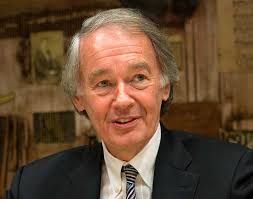
Ed Markey (D), Congressman from the 7th District, was elected our state’s new Senator yesterday, defeating Gabriel Gomez (R). The final totals show the race wasn’t even close. The percentage margin was exactly 10 : 54.8 to 44.8.

642,988 people voted for Markey, 525,080 for Gomez. Add in the small vote won by a third candidate and you find that about 1,200,000 of us voted — more or less 35 % of all our registered voters. This was much less than the nearly 60 % of us that voted in January 2010, when Scott Brown (R) won his now legendary, 5 point victory over Martha Coakley.

The low turnout was no surprise. Both candidates seemed to want it that way. Markey, so that he could tiptoe to victory on Democratic enrollment numbers while keeping Republicans unaroused; Gomez, so that he might lull Democratic “low information” voters (as GOP bloggers call them) asleep while whispering “pssst, I’m a Republican” in GOP voters’ ears.

Gomez’s strategy didn’t work. Markey’s did.

The State’s Democratic party is happy to tout its estimable GOTV operation for the result. It had, so is claims, from 7500 to 15,000 volunteers — depending on who is doing the claiming — working the Markey campaign during the final week. And the state’s GOP is happy to congratulate itself on producing a mere 10 point defeat “in this deep blue state,” as it calls Massachusetts, for the party’s first-time candidate who never ran for office before. (Actually, he did — for selectman in his town of Cohasset, a race that he lost.) Of course the GOP assertion is wrong. Ten points is a big loss in any open-seat race. Major GOP statewide candidates in our state have done quite a bit better these past six years. As for the Democratic party’s claim, it too over-reaches. Volunteers cannot make votes; they can only bring voters to the polls. The voters do the deciding; and in this election, having seen and heard both Markey and Gomez in three debates, they did decide. They chose Markey.

Why did 55 % of us choose Markey ? Two reasons stand out. First, Markey touted his long experience in Washington; Gomez decried it. But Massachusetts voters value long experience in Washington. it’s how we get Federal dollars delivered to our defense and technology industries and to our educational institutions, which employee huge numbers of us. Long experience in Washington is also how the policy priorities of Massachusetts voters get enacted into law. Gomez was never able to make a case why Markey’s long experience was a detriment.

Second, Markey made clear to the voters that he fully supports (1) the rights of women to make their own reproduction decisions and (2) solid gun control legislation, including an assault weapons ban. Gomez offered half a loaf : the abortion decision, but with limitations and qualifications; on gun control, background checks but no assault weapons ban. On these two issues, our voters chose the full deal, not the half-price.

Can there be any doubt, after Scott Brown’s defeat last year, much because of his half-way on women’s issues, that Massachusetts voters will not vote for a half slice of these two issues ? And there was a deeper weakness in his campaign : as a Republican running in Massachusetts for national office, he had to bear the totally toxic blot that the national GOP means to our state’s voters today. Only by running a campaign of full insurgency, AGAINST the national GOP — including against Mitch McConnell as Senate leader — could he have made a case to Massachusetts voters. It might not have worked. Maybe it COULD not have worked. but the attempt needed to be made. It wasn’t.

The vote shows just what Gomez gave up by running a campaign of “pssst…” and issue dilution. Solid Republican towns like Douglas, Sutton, Tolland, Granville, and Charlton heard his “psst…” He carried them by 50 points — just as well as Scott Brown did in 2010. He carried some almost as Republican Merrimack valley border towns — Methuen, Dracut, Tyngsboro — by 30 points; again, very like the margins won by Brown in 2010.

Everywhere else, however — in the swing suburbs between Route 495 and 128 and in the Boston core — Gomez did worse, much worse than Brown. Brown won Peabody by 20 points; Gomez by 2. Brown won Haverhill by 30 points, Gomez by 11. Brown won Marblehead and Quincy; Gomez lost both. Brown lost Boston two to one; Gomez lost it 7 to 2. Brown lost Cambridge 4 to 1; Gomez by 8 to 1. Brown lost western Massachusetts 2 to 1; Gomez, 3 to 1 and in some towns, much worse. Gomez came nowhere near Brown’s percentages in most of our outlying, old mill cities. Brown lost Salem by 8, Gomez by 25; Lynn by 2 tlo 1 instead of 5 to 3. Brown did respectably in Springfield; Gomez lost it by 30 points. Brown almost carried Worcester; Gomez lost it by 18 points. Gomez was trounced in New Bedford and Fall River.

One formerly Democratic old mill city does seem to have moved itself to the GOP. Brown carried Chicopee by 8 points; Gomez won it b y 6. For political campaign planners, is matters. For the rest of us, looking statewide, not much considering the state’s stand on the issues that concern our voters most.

Markey’s victory speech and Gomez’s concession summed up the two campaigns. Markey talked issues; Gomez talked SEAL and veterans. Markey spoke like a Senator, Gomez like a Navy pilot returning from a deployment overseas. His heroism we applaud. But politics it isn’t and wasn’t — and won’t be, if Gomez makes another run for major office in Massachusetts.

—- Michael Freedberg / Here and Sphere

ROAD NOISE : 2ND EDITION (June 23, 2013)

Image

WELCOME TO THE 2ND EDITION OF ROAD NOISE —- WHERE YOUR ROAD/MOTORING INTEREST AND THE AUTO WORLD MEET  !

ROAD EVENTS & MUSEUMS :  AS WE ENTER INTO THE SUMMER SUN, THE LONGEST DAYS, IT’S TIME TO HAVE YOUR FRIENDS AND FAMILY ENGAGE IN SOME OUTDOOR AUTO EVENTS.

HERE IS ONE EVENT THAT WE HAVE ENJOYED, ONE THAT BRINGS BACK A FEEL OF THE 50’S & 60’S :

TRY SKIP’S HAMBURGERS — LOCATED ON ROUTE 110  IN MERRIMAC, MA. THEIR ACRES OF GREEN GRASS ACCOMMODATE A MONTHLY CAR SHOW SCHEDULE. THE BIG EVENT THIS TIME TAKES PLACE ON JULY 13TH — A CAR SHOW AND CRUISE NIGHT, IN NEWBURYPORT MA.

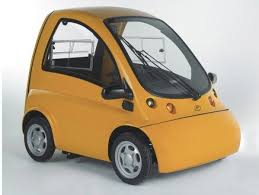
ROAD FEATURE VEHICLE : HERE IS THE PHOTO OF MY LAST POST’S SPECIAL INTEREST VEHICLE : A SMALL ELECTRIC- POWERED MINI SPECIFICALLY DESIGNED FOR WHEELCHAIR USERS. ASSOCIATES OF MINE IN ATLANTA ARE DEVELOPING THIS VERSION. THIS VEHICLE TRANSFORMS A STANDARD MANOEUVERABLE AND EFFICIENT LOCAL CAR INTO AN OPEN INTERIOR SPACE LSV, BUILT TO HOUSE THE DRIVER’S OWN WHEELCHAIR. WITH THE ELECTRIC REMOTE, REAR DOOR HATCH OPENS ALLOWING THE WHEEL CHAIR TO ROLL UP TO THE STEERING WHEEL AND DRIVE AWAY.

Image

(PHOTO COURTESY OF CARS AND CARTS ATLANTA GEORGIA)

ROAD NOISE AUTO RACING NEWS

AT THIS TIME WE REPORT ACROSS THE POND : NAMELY, THE 90TH ANNIVERSARY OF THE 24 HOURS OF LEMANS, WHICH FINISHED AN HOUR AGO AS OF THIS WRITING.

HERE ARE THE CLASS WINNERS, FOLLOWED BY OUR NOTE ON THE UNFORTUNATE ACCIDENT OCCURRING IN THE FIRST HOUR OF THE RACE.
MP1
1. #.2 Kristensen/Duval/McNish Audi Sport Team Joest Audi R18 e-tron Quattro.
2..#8 Davidson/Buemi/Sarrazin Toyota Racing Toyota TS030 hybrid.

3. #3 Gene/Di Grassi/Jarvis Audi Sport Team Joest Audi R18 e-tron Quattro.

LMP2
1. #35 Baguette/Gonzalez/Plowman OAK Racing Morgan-Nissan.
2. #24 Pla/Heinemeier Hansson/Brundle OAK Racing Morgan-Nissan.
3. #26 Rusinov/Martin/Conway G-Drive Racing Oreca 03-Nissan.
GTE-PRO
1. #92 Lieb/Lietz/Dumas Porsche AG Team Manthey Porsche 911 RSR.
2. #91 Bernhard/Pilet/Bergmeister Porsche AG Team Manthey Porsche 911 RSR.
3. #97 Turner/Mucke/Dumbreck Aston Martin Racing Aston Martin Vantage V8.
GTE-AM
1. #76 Narac/Bourret/Vernay IMSA Performance MATMUT Porsche 911 GT3 RSR.
2. #55 Perazzini/Case/O’Young AF Corse Ferrari 458 Italia 305 laps.
3. #61 Gerber/Griffin/Cioci AF Corse Ferrari 458 Italia * 305 laps.

Ret. #95 Simonsen/Poulsen/Nygaard Aston Martin Racing Aston Martin Vantage V8 –2 laps accident.

TRAGIC : DANISH DRIVER ALLAN SIMONSEN IS REPORTED TO HAVE DIED AAS A RESULT OF A MAJOR CRASH DURNG THE FIRST HOUR OF THE RACE. WHILE COMPETING IN THE GTE CLASS, DRIVING THE NO. 95 ASTON MARTIN VANTAGE, HE EXPERIENCED A LOSS OF CONTROL. COMING AT HIGH SPEED INTO THE TERTRE ROUGE CORNER OF THE TRACK HIS  CAR FINALLY STRUCK A BARRIER.

WHILE THE RACE WAS STOPPED AS REPAIRS MADE TO THE TRACK, SIMONSEN’S FAMILY  REQUESTED THAT THE RACE BE RESUMED. AN OFFICIAL STATEMENT FROM ASTON MARTIN RACING MANAGER JOHN GAW WAS MADE AT THE SCENE:

“On behalf of all of us at Aston Martin, I  would like to extend our deepest sympathies and condolences to the individuals and families whose friends or loved ones were involved in today’s terrible tragedy.”

… AND OF COURSE WE ALL FEEL THE SAME.

CERTAINLY THE RACE CIRCUITS ,AS WELL AS THE COMMON ROADS WE ALL TRAVEL, SHOULD BE RECOGNIZED BY ALL US AS FOR THE RISKS WE TAKE AS DRIVERS. (AND THE BENEFITS BESIDES, OF RACING AND THE ROAD.) MAY WE ALL DRIVE AS SAFELY AS WE CAN IN THE CIRCUMSTANCE WE ARE IN.

Image

^ THE NUMBER 95 ASTON MARTIN AS DRIVEN BY ALLAN SIMONSEN.

ROAD ECONOMICS:   ROAD NOISE’S QUESTION LAST WEEK WAS “WHEN IS THE CHINESE CAR OFFICIALLY COMING TO THE US ?

IF THERE’S  INDICATION THAT  CHINESE CARS ARE APING THE KOREAN CAR EXPERIMENT IN THE CARRIBEAN, BY BEING USED IN RENTAL FLEETS, LET’S RECALL THAT THIS TEST MARKET STRATEGY LAUNCHED KOREA’S HYUNDAI “‘HYUNDA,” AS THE BRAND WAS CALLED WHEN FIRST BROIUGHT TO ST. MARTIN.

A HERTZ RENTAL CAR AGENCY MEMBER HAS NOTED THAT THE CHINESE CARS ARE COMING TO THE U.S. BUT NOT FOR AT LEAST THREE MORE YEARS. OF COURSE IF YOU WANT TO TRY ONE FOR SIZE THERE’S THE RENTALS AVAILABLE DURING YOUR WINTER ST. MARTIN VACATION…

ROAD LAW & SAFETY  ITS WAS A BAD WEEK FOR THE CHRYSLER CORP. JEEP BRAND. IT’S BEEN UNDER PRESSURE TO ROLL OUT A RECALL OF OVER 1.2 MILLION GRAND CHEROKEE AND LIBERTY JEEPS. THE COMPANY HAS BEEN PUSHED HARD BY THE NATIONAL HIGHWAY TRAFFIC SAFETY ADMINISTRATION TO DO SO. AND IF THAT WAS NOT ENOUGH, DID YOU HEAR ABOUT THE 96,000 JEEP BABY STROLLERS THAT WERE RECALLED ? YES, BABY STROLLERS WITH THE JEEP NAME. APPARENTLY THE TUBE TIRES WOULD BLOW OUT

The recall Stroller made in China and has model numbers starting with JL031, JL032, JL034, JL035 or JL036. And has “Jeep” printed on the side of the stroller

WE HAVEN’T HEARD OF ANY PROBLEM WITH JEEP’S ELECTRIC-BATTERY KID’S CARS. SAW A BABY BLUE ONE RUNNING THE SIDE WALK DRIVEN BY A LITTLE MISS WEARING HER OVER-SIZE SUNGLASSES AS HER MOM ON THE CELL PHONE FOLLOWED CLOSE BEHIND.

WELCOME TO SUMMER….

Till the next edition …. Enjoy your summer drive … —  Charles Barris / “Road Noise”