BOSTON PUBLIC SCHOOLS : WHAT NEXT FOR REFORM ?

Image

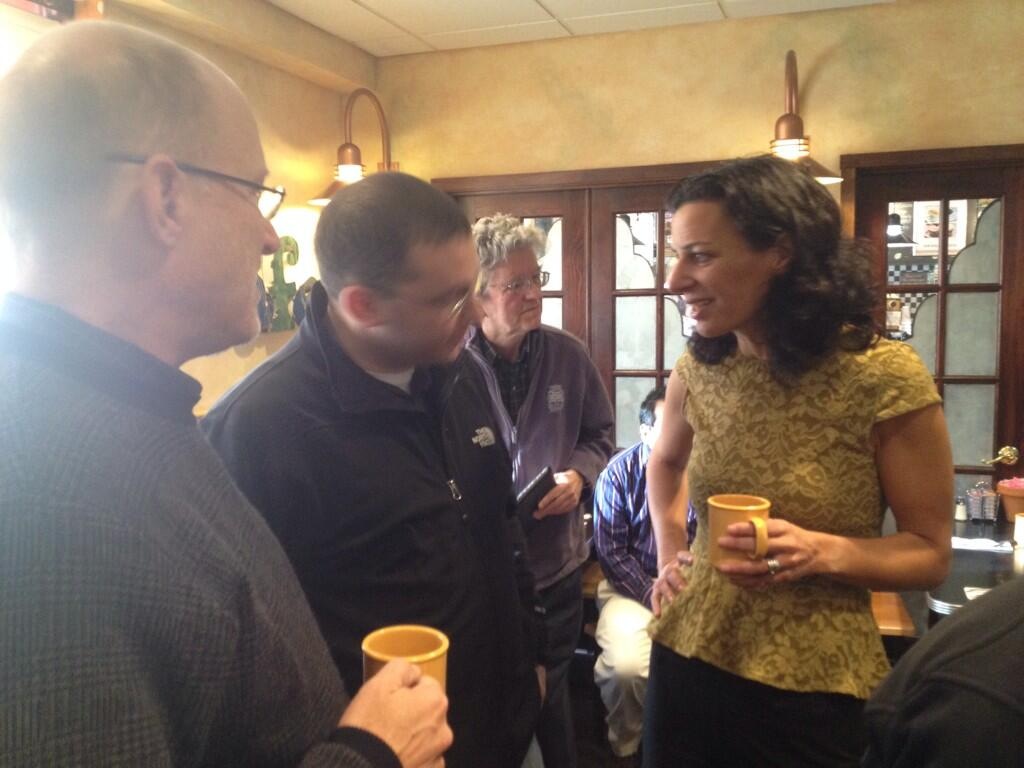
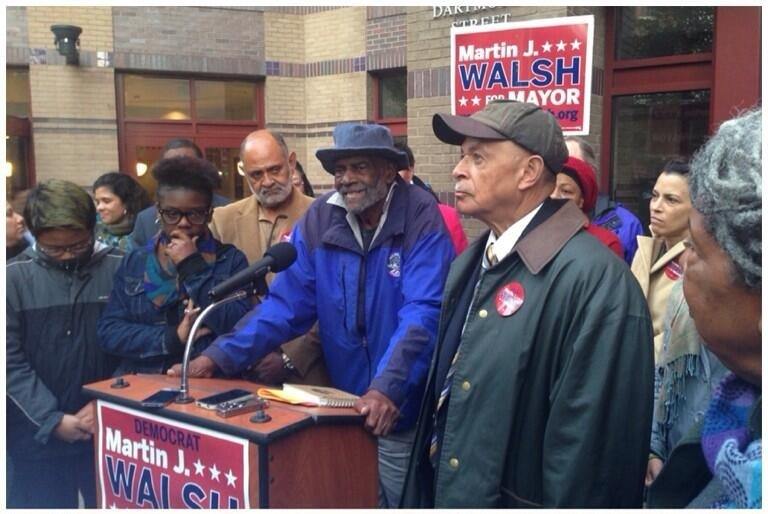
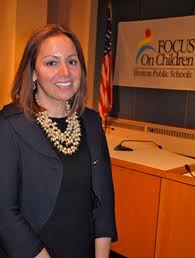
^ Boston school reformer Mary Tamer : Marty Walsh needs to reappoint her

—- —- —

Lawrence Harmon’s column in today’s Globe tweaked me to write once more about the prospects for school upgrade in Boston. My last column on this topic appeared well before the Mayor election. Much has happened since, and not just the selection of a new Mayor. School reform occupies center stage nationwide, as parents, students, and the job market push for — insist upon — huge changes in how we educate children, how rigorously, and to what purpose.

Harmon focuses on the City’s teacher evaluations, which he finds very suspiciously upbeat. 93 percent of teachers, he writes, land “in the exemplary and proficient categories on a new teacher-evaluation system.” He also notes that almost every BPS principal rated high. “Yet,” he goes on, “about two thirds of the city’s schools rank in the bottom 20 percent statewide based on student test data.”

He asks, “what is going on here ?” A few sentences later comes an answer : “It suggests that good teachers are unable to compensate for poverty, social ills, non-native English status, and other difficulties associated with urban schools.”

The suggestion rings true. Harmon says that it should not matter, that just as the Boston Police do not settle for the high rate of crime in certain neighborhoods but attack it head-on, so should the schools. No doubt that Harmon is right. But teachers aren’t a police force. Boston’s police patrol 24/7 ; teachers teach only seven hours a day, five days a week. Boston school children live by far the most of their day with someone other than their teachers.

I agree that the new teacher evaluations disservice everyone, the teachers included. No one working on any job does it perfectly. All of us can improve; all should try to do so. To have value, an evaluation system should do what my Phillips Andover American History teacher did ; “no one in this course will get an A,” he said, “because none of you can master the subject that well.” The best that anyone could do, he told us, was a B. My American history teacher was pressing the point that what he would be teaching us really, really mattered. Being the best teacher that one can be matters even more.

Harmon also quotes school committee member Mary Tamer at length, on the evaluation issue — especially of Boston Public school administrators. Her rigor and critique should be cherished by a system dedicated to improving itself.

That said, as I see it the big problem in urban public schools is not the competence of teachers or principals. The problem lies elsewhere, most often at home. If children are sent to school without a healthy breakfast; if they come from homes in dysfunction or commotion; if they cannot negotiate the English language; if they are prey to peer pressures, from bad decisions to worse; if at home no one ever reads to them, challenges them intellectually, engages their curiosity — if any or all of these home situations devils every part of a child’s life outside school, what is his life IN school likely to be ? Peer pressure becomes even more intense at school.

The home lives that I listed in the previous sentence come to school on the backs of all too many kids. Your kid may have the solidest home life in the neighborhood ,and it is not going to be enough, confronted as it will be in school itself by kids from problemed homes. A very few, remarkable kids can work through such peer pressure. A few can triumph even over their own home badness. But how many ? And there isn’t much that a teacher can do about it. Most Boston public school teachers I have known can rescue many kids from the badness; what about the others ? It cannot be all on the teachers.

School reform begins at home. If the parents or guardians aren’t fully committed to see that their kids triumph intellectually, morally, physically, and emotionally, and if they cannot rely on their neighbors to do the same with their own kids, urban public schools are going to continue to under-perform even with miracle men as teachers.

It is this time that we evaluate the parents and guardians. And time too that we expect no better of Boston public school kids than public school parents put into it.

Frankly if I were a Boston public school parent, I would grow grim about the certainty that my kid(s) will find it almost impossible to get that cutting-edge technology job — or even an entry level tech-competent position — because I am failing, my neighbor is failing, and thus the public schools are failing, too, because my neighbors and I aren’t demanding that school concentrate on testing, teaching, cajoling, piquing every child in class to work to the next level, to experiment, to imagine, and to really, really THINK. None of which my school can succeed at because too much class time is spent getting hepped-up kids to calm down, into some sort of order, into concentration.

No wonder that diligent parents choose charter schools if they can make the cut. But that too is not the answer. The only answer is the community-wide, full-metal jacket — much more than the competence of teachers and principals evaluated without compromise — that I have outlined. Anything less well work only partly, leaving some parents unsatisfied and some children unready for tomorrow’s mercilessly experimental jobs.

One final question : do you have any evidence that the new Mayor will spur a school reform as vast as the effort i have outlined ? I sure don’t. The voters of Boston already passed judgment on how much school reform they wanted. Mary Tamer supported John Connolly, as did I, for much the same reason: school reform cannot be piecemeal. Yet piecemeal it looks now to be. There will be some changes. More teachers and principals will be people of color. The school day will lengthen. Trade and technology curricula will expand, in partnership with universities, labor unions, and businesses. Some children will definitely benefit, somewhat. I doubt it will be anything like enough; yet I am willing to be proved wrong.

Harmon suggests in his column that Mayor Walsh should reappoint Tamer, whose term is at end. “Walsh…needs to hear strong, independent voices,” writes Harmon, “as he tackles the job of improving schools.” I agree.

—- Michael Freedberg / Here and Sphere

2016 PRESIDENT : NOT A SENATOR AGAIN, PLEASE

Image

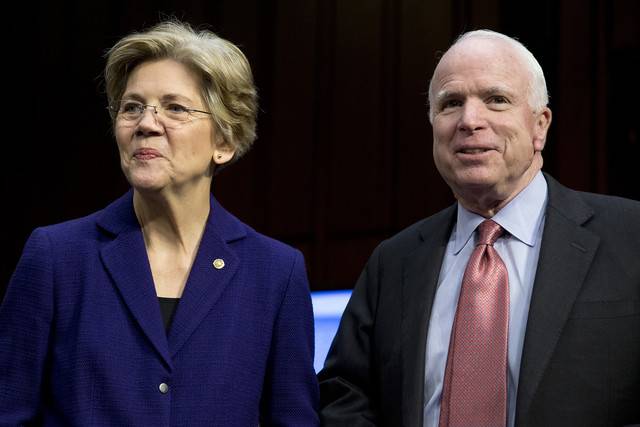
^ Lions of the senate ; the Presidency, not so much. At least not now.

—- —- —

UPDATE : last night Senator Warren announced as follows : “I pledge to serve my full Senate term.” Her term ends in 2018. And so ends speculation about her plans to seek the Presidency. I applaud her decision.

— MF

—- —-

Three letters appear in today’s Boston Globe, all of them telling those who would Pres-boom our state’s Senator Elizabeth Warren, to cool out. I agree with the letters and their reasons. as the letters point out : (1 ) Warren in 2016 will still be working her first term and ( 2 ) her uncompromising stance makes her a kind of reverse-coin Ted Cruz. Advocacy for advocacy’s sake  becomes anti-advocacy; and in any case, while a Charles Sumner can advance a cause, the actual Charles Sumner would have made a horrible President.

This is not to say that I don’t applaud much of what Senator Warren advocates. I do applaud it. The financial regulation bill she has co-sponsored with John McCain is needed, and her call for he expansion of social security voices the needs and hopes of many, many Americans for whom Social Security is the difference between making it and not. Yet the progress that she calls for is going to be hard enough to enact into law, and as Ted Kennedy’s decades of work make clear, the Senate is the Forum in which to do it, and that only by long service. The Presidency is not the place to vanguard things.

That Warren is being touted for President seems a reaction, on the Left, to the radicalization on the right that has all but swallowed the GOP. As I wrote during the Mayor’s race, watching the Connolly versus Walsh battle come close to splitting the Massachusetts Democratic party, “you can’t radicalize an electorate in one direction only.” Radicalization on the Left is growing, fueled by an inflammatory Right. This we understand — and decry. It must stop short of engulfing the Presidency, the one office that all of us choose.

The greatest presidents are principled, dogged centrists : Abraham Lincoln, Franklin D Roosevelt, Harry Truman, George Washington, Ronald Reagan all held firm to their chosen course but refused to be hurried, bullied, or pushed over an edge. Confronters like Thomas Jefferson, Teddy Roosevelt and Woodrow Wilson have done less well. Roosevelt and Wilson both achieved much, in a hurry, but they did not when or how to stop. Flame out was the result for Roosevelt, humiliation for Wilson. Jefferson’s terms, brilliantly begun, ended in disaster. Elizabeth warren is a confronter. (So is John McCain, but that’s another story.) There is a lot of Teddy in Warren — on much the same issues, too — and much Wilson. That alone should give us pause.

Frankly, I think we’ve had enough Senators in the Presidency for a while. The worst failing of President Obama, a Lincolnesque figure for sure, is his demonstrated inability to manage the Federal bureaucracy. We’ve seen it time and again, vividly in the stumbled roll-out of his signature legislation, the ACA. It is time to elect a Governor. Men and women who govern have to administer. it’s what a Governor is all about. those who succeed as a governor pass the first test — the most basic test — of a President. Managing the bureaucracy may not look sexy, sound dramatic, or feel like a crusade; but a President who cannot do it can’t succeed at much of the high drama and loud crusades that define the office for most voters.

The only reason that Obama’s failings as an administrator haven’t decimated the domestic agenda of his Presidency is that he knows his policy goals bottom to top, they’re modest enough, and he pursues them relentlessly, opposition be damned. He simply refuses to lose. That’s a good thing; but capable administration of his policy in action would be even better.  Conversely, the numerous triumphs of Obama’s foreign policy, an arena in which administration defers to manoeuver and decision, Here, Obama has had no equal since Reagan ; no Democratic equal since Truman.

2016 should be a Governor’s time for another reason : the office is chosen by all the people of a state and, in the hands of the most responsible governors, unites people rather than divides them. Cases on point : Andrew Cuomo (NY), Jeb Bush (FL) , Chris Christie (NJ), and Martin O”Malley (MD). In this time of radicalization, that has cleaved the GOP, paralyzing it, even rendering it a danger to the nation, and that threatens now to set Democrats at each other’s throats, the last thing we need is an inflamer of passions, a Senator Microphone, an advocate in a hurry.

Of course even a great governor can’t be an effective president without a responsible political party to lead, or tame. Mitt Romney had administrative ability to spare; but the party he led in 2012 had rendered him unthinkable, to a majority, by its virulence and its contempt for all but the successful, viewpoints that he unfortunately seemed to share.

To sum up : 2016 should be a Governor’s time. Let’s elect Andrew Cuomo, Chris Christie, Jeb Bush or Martin O’Malley — and leave Elizabeth Warren in the Senate, to advocate, advocate, advocate all she needs to, a Charles Sumner but no, NOT a president.

—- Michael Freedberg / Here and Sphere
THE MAYORALTY OF MARTY WALSH : THE WEAKNESS COMES HOME TO ROOST

Michael Curry NAACP

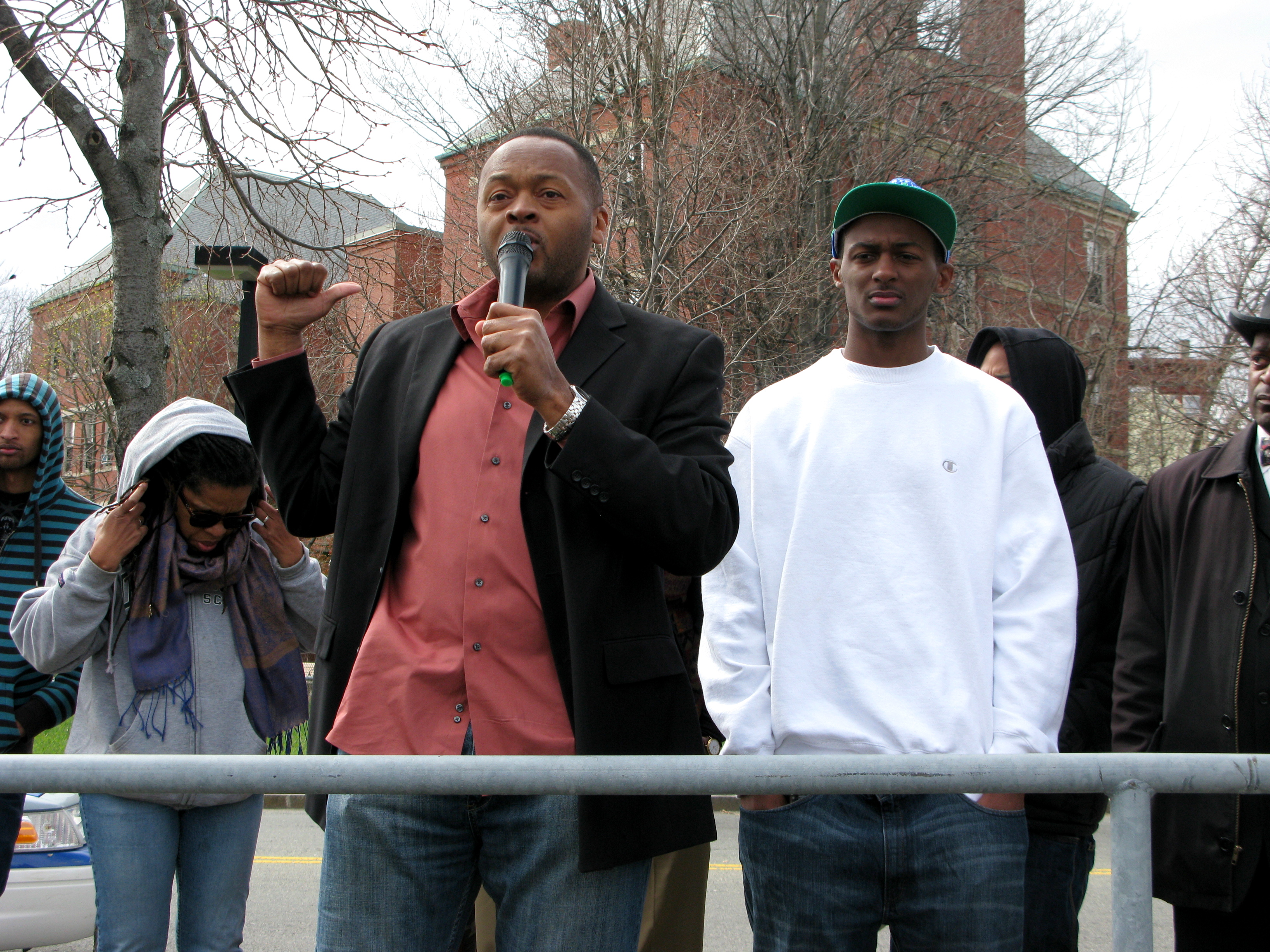
^ “access, opportunity and results” : Michael Curry of the Boston NAACP and son at a rally recently

—- —- —-

In Friday’s Boston Globe appeared an article by Akilah Johnson in which was made clear that incoming mayor Marty Walsh will be monitored on his response to diversity issues and held accountable for his actions. Wrote Johnson in the article :

The group, calling itself The Inclusive Boston Alliance, is developing a score card to scrutinize the creation and implementation of education, public safety, employment, and economic development policies. The group plans to conduct status checks after the first 100 days of Walsh’s administration and again at the six-month, one-year, two-year, and four-year marks.

Access, opportunity, and results have to be the building blocks of the Walsh administration,” said Michael Curry, president of the Boston Branch NAACP, one of the organizations involved in the alliance. “That’s what communities of color voted for.”

The alliance, which plans to formally announce its intentions Friday, includes the Urban League of Eastern Massachusetts, the Commonwealth Compact at the University of Massachusetts Boston, and MassVOTE. These and several other community and civil rights groups came together during the campaign and held two debates focused on issues affecting communities of color.

In no way can any of this be a surprise to Walsh. He actively sought votes from Boston’s communities of color. The vote that they provided him tallied more than his own Primary vote. As I wrote immediately after the Primary and before it : one of the odd features of this election was that whoever won, a big majority of his vote would come from people who didn’t want him. It proved so. Now we see what the consequences are. The new Mayor either adopts as a priority the demands of those who voted for him as skeptics rather than supporters, or he is in trouble right away.

It would have been no different had John Connolly won. Except for one thing : Connolly was a much stronger candidate, politically, than Walsh. As Paul McMorrow has astutely pointed out, Connolly defeated Walsh in 95 of Boston’s 137 Caucasian-majority precincts. Connolly didn’t need to win any of the 118 COC-majority precincts; he only needed to break even, or to lose them slightly. Walsh needed to win these 118 precincts by 15 points. (He won all but 11, most of them by 20 to 25 points).

The numbers prove it. In the Final, Walsh carried 49 selected precincts (in Wards 8, 9, 11, 12, 13, 14, m15, 17, and 18) by 5687 votes : almost 800 more votes than his city-wide win margin. In the Primary, Walsh won those same 49 precincts by a mere 110 votes. Between September 24 and November 5, Walsh’s Black community endorsers alone (I leave out precincts where Felix G. Arroyo was strong; his situation is different; see my Note below) brought Walsh an additional 5577 votes : again, about 700 more than his Final election win margin. Walsh has been called a “bridge Mayor” — bridge between the Menino years and a Mayor of color. The numbers and the politics of Connolly voters make a strong case for that assessment.

Connolly would have had much more liberty to negotiate the monitoring groups agenda than has Walsh. It is not clear to me that this calculation played a role in the endorsements that John Barros, Charlotte Golar-Richie, Gloria Fox, Russell Holmes, and most other politicians of color accorded Marty Walsh. But it would surprise me if (1) the political advantage offered them by Walsh’s vote weakness didn’t occur pretty soon after the endorsements were given and (2) the advantage didn’t occur right away to many of these endorsers’ advisors.

And another thing : make no mistake. Boston’s communities of color want a Mayor who “looks like them,’ as the campaign’s mantra often put it,  as soon as they can elect one. A Mayor Connolly would have been very hard to beat: because it is not at all clear that Marty Walsh’s Caucasian vote base would vote by 15 to 20 points for a candidate of color as readily as the precincts of color voted for Walsh. Whereas John Connolly’s voters are much more open to such a candidate and have always been. Can anyone doubt that had Walsh faced Charlotte Golar-Richie, she would have beaten Marty in almost every Ward carried by Connolly ?

Mayor Walsh will be much easier to defeat, than would have Connolly, if not in 2017 then definitely in 2021. I think that both parts of his coalition know this very well indeed. I think he knows it, too. He is moving all the chess pieces right now to make himself trusted as well as accepted, and nobody in Boston politics is better able to get there. But can he ? It will be interesting to see how Walsh’s political vulnerability plays out at the tables of power where Boston’s — and his — political future is decided.

—- Michael Freedberg / Here and Sphere

NOTE : I have left out Felix G. Arroyo frrom my analysis for three reasons : ( 1 ) he is Hispanic, not Black, and has a significantly smaller vote base than Charlotte Golar-Richie had ( 2 ) his endorsement was, I feel, given entirely sincerely on the issues and not in any way out of real-politik calculation and ( 3 ) if he is to win a fight to be Mayor he will have to break free of the coalition that he whole-heartedly embraced this time around. It won’t be easy, but Arroyo has tgime on his side. He’s only 34 years old !

“WE HAVE REACHED AN AGREEMENT”

Image

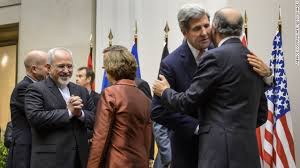
^ Javad Zarif looks happy, John Kerry looks exhausted. Last night in Geneva, signing agreement.

—- —- —-

“We have reached an agreement.”

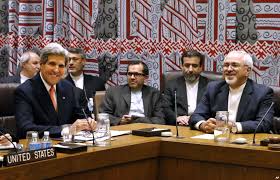
With those five words, tweeted at about 9:30 EST last night, Iran’s Foreign Minister Javad Zarif made history. He did not make it alone. Our Secretary of State, John Kerry, also made it. As did the foreign ministers of France, Germany, Russia, and China.

At 10:15 PM a proud President Obama addressed the nation. He outlined the specifics of the agreement.

And so it was ; Iran and the world have agreed — to the following :

1.Iran will cease enriching uranium beyond five percent grade. As verification, Iran will dismantle links between networks of centrifuges.

2.All of Iran’s existing stockpile of uranium already enriched to 20 percent, would be diluted or converted to oxide, thus making it not readily available for military use.

3.No new centrifuges, neither old models nor newer, can be installed. Centrifuges already installed, but not currently operating, can not be started up.

4.Iran can still enrich uranium to a level of 3.5 percent grade and need not dismantle its existing centrifuges.

5.In return for this interim agreement, the United States agrees to provide $ 6 billion to $ 7 billion of sanctions relief, of which about $ 4.2 billion represents Iran oil revenue presently frozen in coreign banks. It is noted that this sanctions relief requires only Executive Order, not approval by Congress.

The interim deal has a six-month time frame. This, to allow time for negotiators to agree upon the terms of a permanent agreement.

And there you have it. A deal with Iran. A year ago such a thing looked impossible. But where human beings are involved, things change. People change their minds, even people of different nations. In this case, everyone changed. Iran elected a new government with a clearly stated, change message that could not have won election without the OK of Iran’s Supreme Leader. And the Western powers — with Russia and China joining in at last — decided that they would settle for less than a permanent agreement.

And what an agreement ! It bears repeating : Iran has agreed to do what it insisted it would not do : stop enrichment of uranium and, indeed, to dilute uranium already enriched. Centrifuges turned off and no new start-ups. Centrifuge linkages dismantled.

The Boston Globe quotes as Zbigniew Brzeznski and Brent Scowcroft, former American national security advisers talking of “the apparent commitment of the new government of Iran to reverse course on its nuclear activities…” That is exactly what Iran’s new government has now done.

Of course an interim agreement leaves the future sort of open. But not completely. Agreements between nations that have barely spoken to one another, and then often vituperatively, do not congeal overnight. This first dip into the waters of concord may, however, prove addictive. Once even enemies begin to find that they have some interests in common, they often find that they have more. And thus larger agreements become doable, even desirable. It happened thus with the conflict in Northern Ireland. Why not between Iran and the West ? Iran is not a medieval tyranny. Its leaders are not desert illiterates. Iranians rank second to no one in science or in technological ingenuity. Iranians are educated, modern, entirely au courant with the cutting edge, modern world. Same for their leaders. Do not be fooled by the turbans and beards, so caliphate in appearance. These turbans tweet.

Israel’s prime minister professes to distrust this agreement. I find his distrust misplaced. I have no doubt that the new Iranian leadership is no friend of Israel ; that it will continue to fund and promote Hezbollah in Lebanon ; and that it would not mourn much were Israel to disappear. But I think it quite certain that Iran is not about to rain missiles or atomic bombs on Israel. Iran knows that that would be its end as well as Israel’s. Which means that Israel will simply have to accept that it has an undefeatable enemy nearby, and to live with it — as it has been doing quite successfully with other, nearer enemies for many decades. I think it will find a way to manage.

Meanwhile, kudos to John Kerry, our state’s former Senator, who has now brokered two heroic deals : this one, and the elimination of Bashir Assad’s chemical weapons. You haven’t forgotten that one, have you ?

—- Michael Freedberg / Here and Sphere
Image

#MAGOV : FRAMING THE ISSUES FOR CAUCUS DAY

photo (2)

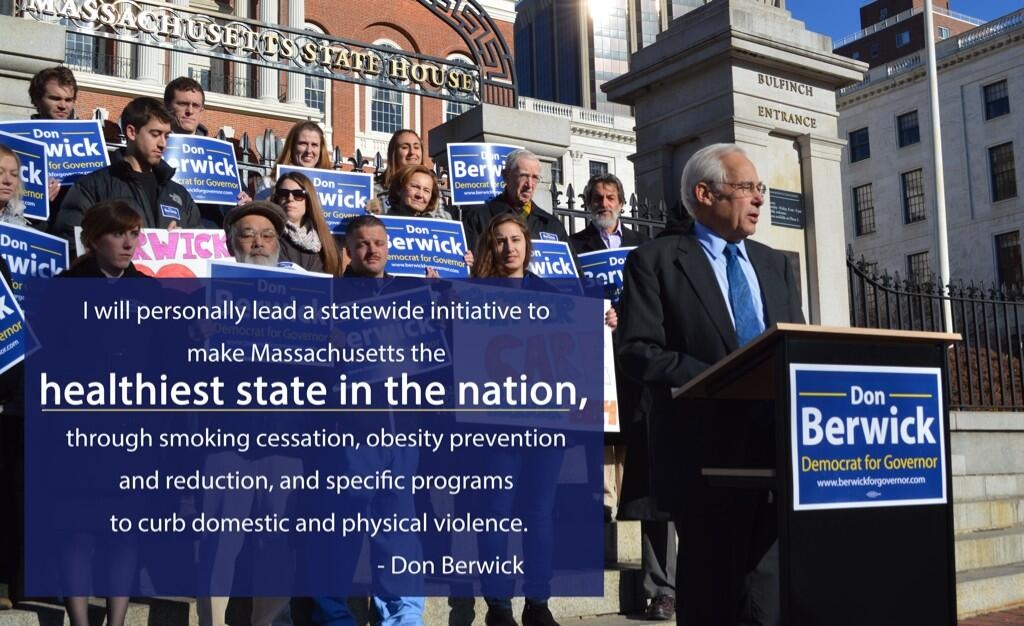
^ Don Berwick : the “governor” as issues referendum

—- —- —-

The race for Governor of Massachusetts continues to feel less than grave. We all know that the REAL Governor is Robert DeLeo, Speaker of the General Court (as our legislature is called). Yet the office which we call “Governor” is filled by a vote of all the people, as that of Speaker is not; and so even if all the people’s Governor isn’t in fact a governor, he or she still embodies what we the people want leadership on. Thus choosing a “governor” is a kind of referendum, not much different from the several referenda that look likely to be put on our state’s 2014 ballot, except that the “governor referendum” is not one-issue specific but an entire menu of issues.

So, what are the issues menus on offer from each of the six servitors ?

1. Martha Coakley has yet to tell us what she will do as “governor” that she isn’t now doing as our — admittedly very effective — Attorney General. Perhaps her issues menu is “consumer protection” ?

2. Steve Grossman is just beginning to talk issues. His menu appears — so far — to be “business recruitment, lots of fund raising, and a higher minimum wage.” All good, but much more is likely coming.

photo (3)

^ charisma to spare : Juliette Kayyem

3. Juliette Kayyem has drawn enthusiastic crowds of Democratic activists and certainly is the charisma champion of the field. It’s a little less clear what her issues menu is. Everybody knows that she was an NSA bureaucrat and wrote expertly — albeit in prose as dry as a month old egg sandwich — about national security issues for the Boston Globe. Who would have guessed that such a sere pen would, in person, exude such fire and warmth ? Perhaps that’s her menu : passion and charm.

4. Donald M. Berwick (see photo above) has, so far, put forth the most inspiring menu : health care as a human right, complete with a cost-control and care delivery plan; business recruitment and a higher minimum wage; and bold leadership on all civil rights issues. He seems to grasp, better than any of his rivals, that the office of “governor” is the issues referendum that I see in it. The activists seem to be responding; of late, Berwick’s twitter follower numbers have surged.

5. Joe Avellone says all the right things. his issues menu parallels Berwick’s although with less talk about health care (which is strange : Berwick is an MD, but so is Avellone). Still, Avellone draws smaller crowds and is — and seen as — a huge underdog. Running state-wide for “governor” is a difficult course for anyone as little known as Avellone, whose gentlemanly demeanor only adds to his difficulties arousing serious attention.

photo (4)

^ meeting & greeting : the new, charimatic Charlie baker ; still the man to beat

6. Charlie Baker : his menu we already know from 2010 — or do we ? Unlike then, Baker is taking himself out to the people, doing meet and greets, just as Scott Brown did (and so doing, changed everything about Massachusetts GOP campaigns, which had tended to be press release and stand-out affairs merely, a soft touch of couch potato and hardly serious). Out and about — in Worcester County often — Baker stresses business recruitment (who isn’t ? But how about some innovation district initiatives as well ?), business confidence, and just a hint of education reform (surely we’ll see more of this from him). He’s also being Mr. Good Buddy, unlike the pissed-off persona he shopped in 2010. The change in demeanor is most welcome and seems to be catching fire. His twitter follower gains trail only Berwick’s and Kayyem’s.

The Democratic candidates are amassing issues rapidly; caucus day approaches. Hard to believe that caucuses will convene scarcely 120 days from now ! (According to the State’s Democratic party, they cannot take place later than March 2, 2014. For the Party Rule governing caucuses, follow this link : http://www.massdems.org/wp-content/uploads/2013/08/METHOD-2014_Proposed1.pdf ) Soon the issues roll-outs will give way to caucus commitments as candidates fight each other to secure the 15% of delegates needed in order to earn a spot on the printed Primary Day ballot at which the actual Democratic nominee will be chosen.

I will be covering this fight as it intensifies.

As with all Republican candidates, so outnumbered in Massachusetts by a host of Democratic hopefuls, Baker is running as if he and all of his Democratic rivals were part of the same selection slot. And they are. If the Republican candidate cannot outpoll all the Democratic hopefuls mano a mano, he won’t likely do so at the November election. Thus I am rating Baker on the same stage that I evaluate the five Democrats.

One big difference in quality between Baker and the rest : he has run for “governor’ already; they haven’t. He has tested the waters, against an incumbent no less. All the others have yet to prove anything. Most definitely do I include Martha Coakley in that assertion.

The way I see it right now, Baker is the favorite to take the people’s “issues referendum” into the State House and get the REAL Governor, Robert DeLeo, to listen to — us. I am not at all convinced that any of the five Democrats can capture DeLeo’s attention, interest, or concern.

—- Michael Freedberg / Here and Sphere

ANNALS OF THE ECONOMY : MY FRIEND WALTER MICHALIK ASKED ME A QUESTION …

Image

^ Walt Michalik of Roslindale : a question that went right to the heart of economic matters

—- —- —

Last night, at Hyde Park Main Streets’s tribute to City Councillor Rob Consalvo — retiring after 12 years service — I ran into an old friend, Walt Michalik, who lives in Roslindale and supported me the one time that I put aside political work for others to become a candidate myself. That was 1986. I had known Walt, and, very early on, as I visited “people of influence” in my “Rozzie” neighborhood seeking support, before I actually made a decision to run, I knocked on his door. (He was, in fact, my first such visit.) Walt was a Democratic activist. He knew that I was a Republican. So he asked me : “what is your opinion of the prevailing wage law ?”

For those who don’t know, the Prevailing Wage law, also known as the Pacheco Law, requires that on all State-funded contracts, the contractor pay his workers, whether they are union members or not, the same hourly amount that prevails in union-labor contracts. It wasn’t a law that I had thought much about and wasn’t something that I had planned to base my candidacy upon. So I didn’t answer Walter right away. But I knew a lot of ironworkers well, and I knew that they spent their big paychecks and thus brought a lot of prosperity to a lot of businesses. So an answer came to me :

“You know what, Walter ? I don’t see how taking money out of the pockets of workers helps the economy.”

Walter shook my hand, a handshake of solidarity.

Well, that was then. A generation has passed; and the answer that I came up with that afternoon opened the door for me to understanding how a democratic economy works — and should work ; it begins with the customer.

1.The less customers a business has, the less it prospers.

2.The less that a person earns (or receives by way of public assistance if that he needs), the less of a customer he can be.

3.An economic policy that impedes worthwhile money from accruing to most people defeats itself.  This axiom is one big reason why I support the welcoming immigration policy that until the past 90 years or so was America’s boon. Every immigrant is a potential customer and this grows the economy. This same axiom is why I support Massachusetts’s impending minimum wage hike. The more that workers earn, the more they can spend.

Quite frankly, the above is my ENTIRE economic policy. All else is commentary and implementation.

One hears the political Right talk about businesses being “job creators.” But businesses CANNOT create ANY jobs unless there are customers for its products or services. The more customers, the more jobs. Angel investors for start-up businesses want to know, first of all, who and how large will be the “market” — i.e., the customers — for that start-up’s offerings. No “angel investor” I have ever presented to requires the business plan to pay workers so little that they need public assistance to make ends met. Just the opposite ; angel investors want the start-up’s workers paid enough that they will stay, not leave, and thus (1) see the venture through to success and (2) avoid the huge costs, in money and time, of hiring and training replacements. I also know no “angel” investor who doesn’t want a start-up’s workers to not have paid sick time. Angel investors know that life is hard enough; a start-up shouldn’t make things harder for its workers than they already are.

Just who, then, does the political right speak for as it pursues “job creator” corporate tax breaks and opposes both workers’ wage hikes and the social safety net ? It doesn’t speak for workers, obviously, and it doesn’t speak for venture capitalists or the management of smart businesses. So who then ?

Speculators figure prominently among those who push this destructive agenda. Stock market funds often push publicly owned companies to cut back everything and anything in search of maximum immediate buy and sell gains. For the sake of purely paper windfalls these money poolers would trouble every other interest in our society. Unhappily, these money pools have drawn to them more and more money that, instead of investing in economic innovation, which bears vast risk and takes long time to accrue, seek sharp-fingered quickie hits; arbitrage — the most economically useless item in the entire money picture.

Even the money-lender has his place in an economy. Yes, he seeks interest on his money and does no work to earn it other than to have it to lend. But the money lender knows that if the borrower doesn’t prosper, he won’t get paid back. Yes, the lender may, if not paid back, claim the borrower’s assets as security; but no money lender wants those assets; he wants his interest and he wants his principal repaid.

For the stock trader, however — the arbitrageur — it;s just the opposoite,. He DOEs wnat that asset. He buys it at current value and dumps it at whatever higher value he can squeeze out of it by whatever means and as soon as possible, even if it means destroying the business and laying off its workers. This is what Bain Capital did, famously, during Mitt Romney’s partnership there and was a major reason why his candidacy for senator in 1994 earned the enmity of a majority of voters.

Not all stock buyers and hedge funders pursue a strategy of profit by desruction. Many investors buy in or the long term — and the huge success of a long term investment, wisely chosen, says all that needs be said : look at Warren Buffett, who has become a multi- billionaire by buying and holding, forever it seems, well chosen businesses whose management he supports and whose growth — in the classic economic manner I have outlined — he encourages. But for every dollar invested with the Warren Buffett sort of investor, 1000 dollars are invested these days with swift destroyers.

It is difficult to conceive legislation that will curb the economics of profit through destruction, that will not also limit the free movement of capital to positive purposes. But we are not helpless as a society to limit the impact of arbitrage money. We can impose a strong societal disapproval upon those who would profit by hurting all who stand in profit’s way. We can continue to angel-fund innovation businesses and support their entrepreneurs — and approve them socially too, social approval being one of a society’s strongest ways of policing good works and bads. At the same time, we can make it quite clear that he who would take money out of the pockets of workers lies beyond the pale of approval.

You don’t have to be a Wal-mart. You can be a Costco. It is an outrage that we allow low-wage employers to leave their staff no choice but to need taxpayer dollars in order to make ends meet. It’s also a no-growth policy, maybe even a recession policy. It is stupid. And immoral.

So how do we fight this stupidity ? Simple. It really does start with the question that Walt Michalik asked of me on a February afternoon 27 years ago.

—- Michael Freedberg / Here and Sphere
 

ANNALS OF 2016 : CHRIS CHRISTIE RISING

Image

Image

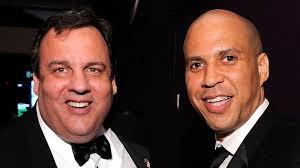
^ working with Democrats when that’s what gets the job done : Chris Christie with New Jersey’s new senator, Cory Booker

—- —- —-

Right now, watching Governor Chris Christie rise to the top in New Jersey, winning re-election with 60 % of the vote, I have to pinch myself to remember that he is a Republican. By which I mean, a Republican of now. 30, 50, 60 years ago there were many Republicans with an agenda like Christie’s. His entire stance is that of an insurgent; an optimist; “getting the job done for people.” Yes, his rhetoric sometimes sounds like recent GOP talk, and he’s a bit of a social conservative — but so are many ethnic city Democrats — yet on the ground he is a man who works with whoever he needs to work with to get progress done.

Christie’s talk, stance, and method are those of Fiorello LaGuardia — a fellow Sicilian and northeastern Republican — who, coincidentally, looked a lot like Christie. Stubby, chubby, full-faced. The GOP hasn’t seen someone who looks and talks like Christie in maybe that many decades.

Like LaGuardia and his fellow Progressives, Christie doesn’t suffer fools. He calls out the House GOP and Ted Cruz nonsense in Washington — as it needs to be called out. At times he sounds as though he were running AGAINST the Republican party rather than with it. Of course the Tea folks are running against the Republican party as well; but they are running against it for trying to govern; Christie runs against the party for REFUSING to govern. A huge difference.

You might expect that a man so out of phase with what we have come to think of as the modern GOP would be a fringe character in its 2016 Presidential nomination, but you would be wrong. Christie currently leads the field in almost every poll, and he polls significantly better against potential Democratic nominees than any of his rivals. No, he is not the candidate of GOP think tanks, of planners of principle, of testers of litmus. He does not think the Democratic party treasonous, socialist, or contemptible. The right wing charlatans of entertainment demagoguery hate him — a hate which he sees, rightly, as an asset for him. He’s about as unlike a pastor of bigotry as it’s possible to be. He has no patience for those who would tell people how to live their lives. He doesn’t think poor people are lazy, homeless people useless, gay people damned. He doesn’t think that you need an ID to vote and if you don’t have one, you’re committing vote fraud. He doesn’t sling the word “patriot” around like a vomit grenade, doesn’t fart about 1776, doesn’t throw shoes at undocumented immigrants.

Yet he is a Republican. Of now. And not JUST a Republican; maybe, just maybe, he is THE Republican. His surge to the top of most polls tells me that the Republican electorate, if not yet its crowd-fund queen bees, has moved on from bitterness, contempt, ignorance; from vileness of all sorts; that the Republican electorate actually wants its leader to be ABOUT something; to want to “get the job done for people.”

There are signs aplenty that such is the case. Tea folk are losing primaries : in Alabama and in Louisiana, no less. Anti-Tea money is coming into the picture big-time. The GOP national committee is moving to make primaries the method of choosing an ominee, not caucuses. So far the change hasn’t nicked the House GOP much at all; but in the Senate the push back to normality has been huge, and lasting. Today the Senate’s Republiacn caucus can often be counted on to “get things done for the people.” (And let us give credit here to John McCain, who has had maybe his best and certainly most influential Senate year in his long career there.)

In New Jersey, Christie has formed alliances with whichever Democratic legislators and interests he needed to ally with in order to move his State’s agendas forward. He has done so even in preference, at times, to members of his own party Famously, this week he decided not to support Tom Kean, Jr., an influential Republican state senator and son of New Jersey’s revered former Governor Thomas Kean, Sr., as Senate President: because that was what the state senate’s Democratic leader, Steve Sweeney, insisted upon. Sweeney and Christie have frequently worked together on New Jersey legislation. the combination continues.

It would surprise me if this “get the job done for people” mantra did not pretty soon become the top theme for a party that has all but abased itself to the point of no return. In politics, the great thing about points of no return is that, return is then the ONLY option. Thus the move to Chris Christie, the man who embraced President Obama when it made a huge point and who still embraces him, with respect to the rocky rollout of Obamacare. Why ? Because he sees a President who is trying to “get the job done for the American people.”

Just as he, chris Christie, promises to do. Not a bad promise at all for ANY serious politician to make to the American people.

—- Michael Freedberg / Here and Sphere
WE SAY YES : RAISE THE MINIMUM WAGE

Image

^ collecting signatures : in huge amounts, too, to do the right thing

—- —- — — — —

Yesterday, a group of activists known as RaiseUpMass announced that they had gathered 275,828 (!) signatures on petitions to place on Massachusetts’s 2014 ballot a referendum hiking our state’s minimum wage to $ 11.00 an hour. The pay rise would take place in stages, achieving the $ 11.00 level by 2016.

We strongly support the proposal. We will advocate a Yes vote all the way until election day. RaiseUpMass says that more voter signatures than the already awesome total are arriving at its headquarters. We like this.

For far too long, workers in low-skill and service jobs have seen their take home pay stand pat, or increase by measly amounts and then only after years of service. So low is the pay of many thousands of workers that they and their families need EBT, section 8 housing certificates, food stamps and the like in order simply to survive. These aids paid for by taxpayers — who thus find their tax dollars subsidizing the low-wage policies of low-pay businesses. Why should taxpayers have to do this ? And, given the current climate in which some Massachusetts legislators seek votes by demonizing the poor, why should low-wage workers have to beg taxpayers for survival money ? Life is hard enough for low-wage workers without having to worry which vital assistance program upon which they depend will be cut next week.

Let us say it clearly : no full-time worker should ever have to need public assistance just to make basic ends meet.

The rise to $ 11.00 is not enough. That it will take three years to reach that figure is not good. Still, passage of this pay hike law gives low-wage workers assurance that their continued hard work will we rewarded somewhat. We can hope that the Legislature enact legislation filed by State Rep. Denise Provost of Somerville : it calls for a rise to $12.50 an hour by 2016. At that figure, a full-time low-wage worker would earn $ 500 a week, $ 26,000.00 a year. A family with two such workers would then earn enough to enter the discretionary spending market. Consumers’ discretionary spending is what really boosts the economy. Survival spending — for food, rent, utilities, and clothes — matters, but discretionary spending — for cell phones, cable television, a car, summer camp for the kids, day care, maybe even a movie or a restaurant — pumps the economy much more. Getting as many people as possible into the growth economy should be a vital policy goal. Enacting a $ 12.50 wage will get us there.

The American economy faces no threat graver than huge income inequality. How can an economy grow best if less and less people can participate in it except on the margins ? The top one percent of earners have taken lots of lumps lately for the gross hugeness of their pay checks, but they seldom get nailed for the worst consequence thereof : that multi-million-dollar incomes simply CANNOT be spent. Even the most expensive food, homes, cars, and vacations only cost so much. All the rest of these multi-million pay checks gets shoveled into hedge and private equity funds, where the money simply rolls over from one paper investment vehicle to the next in search of arbitrage. It is money TAKEN OUT OF the real economy. It stunts economic growth.

Investment money that invests only in paper self-defeats. Investment money should invest in businesses; innovation; real people doing real things. A lot of investment money does do that, but nowhere near enough.

Because investment multi-millions, left to themselves, simply attract to them more and more of the money that should be funding the economy, legislation must set at least a bottom limit on how much of the economy’s money excess earnings can take. A reasonably capitalist economy cannot, and should not, legislate pay equality. But we can, and should, legislate a minimum pay sufficient to free full-time workers from needing taxpayer dollars.

So be it.

Lastly, we reject the arguments of those who oppose minimum wage legislation. They adduce that raising the minimum wage will stifle employment of teens. Well ? We like teenagers as much as anyone. we approve of their wanting to work. but the first obligation of our society’s economy is to families — to adult, full-time wage earners. Scant wages earned by teenagers won’t do anybody any good if they come at the expense of mothers, fathers, uncles and aunts who can’t make ends meet without public assistance that can be cut any time “welfare reform” politicians decide to throw poison darts at it.

As for businesses that complain that higher work pay will force them to close or lay off workers, we repeat what Boston mayor candidate John Barros said at a Forum : “If you can’t afford to pay your workers fairly you can’t afford to open a business.” Another way of saying this is, “you don’t like unions ? You don’t fancy the intimidation and violence that often accompany job actions ? Then don’t force workers to go that route in order to get decently paid !”

We’ll say it again: vote “yes” on this referendum !

— Michael Freedberg / Here and Sphere

PS : while we’re at it, yes : we also support paid sick leave.

THE MAYORALTY OF MARTY WALSH : A LETTER FROM MEL KING

photo (7)

^ Mel King : says that his endorsement was prompted by the “young adults” of Right to the City,” whom he “encouraged to do this analysis” of “its questionnaire to both candidates.”

—- —- —-

A letter from Mel King in today’s Boston Globe prompts me to write a column about Marty Walsh’s impending Mayoralty that I was already thinking about. In his letter, King — the Grand Old man of street-theater activism, decades before Occupy — says :

“A group called Right To the City, composed of various organizations working on access to affordable housing, good jobs, quality education, and sustainable community development, seeks to enable a cross section of racial, ethic, and income groups to remain and participate in all aspects of Boston.’

The letter continues : “The group’s members, a new rainbow coalition, are in the forefront of such issues as foreclosure blockades to protect people’s homes, stopping no-fault tenant evictions, and fighting alongside unions for construction jobs.”

This letter fascinates me. It raises all sorts of questions :

1.The second quote sums up the organization City Life/Vida Urbana, of which Steve Meacham, a man very close to both Felix Arroyo’s, is the justly respected spokesperson. Vida Urbana does all but one (that, see below) of the things cited in that quote. Yet in the Primary, when it most mattered, King did not back Felix G. Arroyo. He was closest to Charles Clemons, a man of almost Republican economic views, and to Clemons’s major supporters — all of whom ended up supporting John Connolly.

2.The first quote mentions affordable housing initiatives as one of Right To the City’s priorities. Did King not know — does he not YET know ? — that one of John Connolly’s primary endorsers, State Representative Jay Livingstone, filed and shepherded a $ 1.4 billion affordable housing bond bill that Governor Patrick signed into law just last week ? Later in his letter King says that “the group felt that Walsh was more responsive to its concerns.” Not true of the affordable housing issue.

3.King then says, “Having encouraged these young adults to do this analysis, I joined with them.” King then talks about watching Walsh, at several rallies : “I saw evidence of ways Walsh’s campaign included people.” True enough; but did King not manage to see a few of John Connolly’s rallies ? If not, why not ? It would be fascinating to know what inclusion King did NOT see at the Connolly rallies.

These questions merit answering. Can I start with the one thing, in King’s quote, that City Life does NOT do :  “…fighting alongside unions for construction jobs” ?

These seven words express the reason why King finally joined a group comprised chiefly of Felix G. Arroyo people, to endorse a man about whom this most original of Boston citizens had nothing original to say…

Construction jobs and unions were Walsh’s cliche. The Construction Chief’s campaign piled forty stories of Mayor-initiative atop that cliche, space well built and beautifully appointed by 600 architects of policy hired for the job. The cliche is what King clings to.

Time is coming soon now when that policy building will have to be built. Will it be ? CAN it be ?

Walsh is hemmed in by his union support even more than he is empowered by it. If he favors his unions supporters too obviously, he will hand a perfect “See ? we told you so” issue to a 2017 opponent. If he cracks at the next City union contract crunch time… or, if he pushes back against the City unions, as he did against the school bus drivers… If he proceeds with the infamous House Bill 2467…or if that bill is never heard from again : whichever way Walsh chooses, either the opposition will gain or his supporters will complain. Which is it to be ?

Implementing even a fraction of the 40 policy initiatives that his campaign crafted and published will require intricate management. Compromise and collaboration won’t suffice. Every one of Walsh’s policy proposals shifts the job descriptions of those who will have to carry them out. City employees, like union workers, resist work rule changes. gho will assure that the city employees tasked to carry out Walsh’s initiatives will comply ? Will feel enthusiastic about it ?

Enter, perhaps, some of those business, university, and Union partnerships that Walsh talked of during the campaign.

And then comes the Boston Public Schools, which, according to State evaluation, appear able to educate properly barely half their students.

Easier for Walsh will be what he is already masterful at, with long partnerships in place : continuing the Boston building boom. And ramping it up. The Building trades people and the developers who accord them a living can expect to work the BRA a lot more invitingly than they did under Mayor Menino. City hall plaza — a good idea, if rather impracticable — and hotels galore, new school buildings, Downtown Crossing, Dudley Square, Jackson Square — and more. The next few years will surely be a field day for Boston construction. Probably, also, for workers from the City’s communities of color, whose entry into the Building trades Walsh has long sought, with less success than he would like.

This is one deal that Walsh can definitely close.

It seems, however, that Walsh and his team want to say and do everything they can to distract the voters’ attention from this deal. The Walsh Mayoralty, in their talk and print, puts on an ear-ful of masquerade. Is there a reason why the Walsh team so gilds their developer-deal lily ? Certainly it’s not that building trades jobs are a bad thing. They’re very much a good thing. Then what IS it that they are cos-playing about ? Do I sense a price tag dressed in domino in the background ? (Yes, I am thinking Venice here — an echo only, since we won’t be getting a Venetian casino, sigh.) Perhaps when we find out who the “One Boston PAC” is — the half-million bucks that Joce Hutt is harlequin-ing for — we’ll find out who is carnivalling in Walsh’s political pasquinade.

—- Michael Freedberg / Here and Sphere
MELEE IN MASSACHUSETTS : TIME FOR “THE MANAGER”

Image

^ Pressing the flesh and speaking : Charlie Baker at the Greater Gardner Chamber of Commerce’s breakfast this morning

—- —- —

How quickly things change in politics ! Two weeks ago, as the GOP-induced government shut down ended, Charlie Baker, as the Republican candidate for Governor, looked poisoned. Today, as the President finds that his managerial failings have tanked the people’s trust and imperiled his signature legislation, the ACA, Baker as the Republican looks almost anointed. It’s Baker’s hour. All that he has to do now is not flub the moment.

So what do I, Coach Michael, suggest of his star receiver ? Just this :

1.Baker made his all-pro status as an excellent manager. precisely what President Obama is not.. Almost as exactly what Governor Patrick also has not been. The contrast shouts itself.

2.In a state like Massachusetts, heavy with institutions and even weightier with institutional government collaboration, being an excellent manager matters tremendously.

3.None of the Democratic candidates for Governor except Steve Grossman comes even close to Baker’s mastery of institutional management.

4.Managerial competence may be a dry theme, a calorie-free kind of Diet Coke, but with managerial failing so luridly splayed across the Washington wide screen, the story achieves epic dimensions. Being competent, we see, does matter — Odysseus, not Achilles.

Charlie Baker must run as the Manager in Chief.

It makes sense within the Republican context too. The GOP even in “forward” Massachusetts has been flayed by theorists, whipped by negativity, bent to the purposes of anti-tax mind block, extorted by gun zealots, roasted by social-issue regressives. to the point that we have almost forgotten that in Massachusetts for the past 60 years at least, “Republican” meant civil rights, social justice, big projects, and benefits for all. The record, in that context, from John Volpe and Frank Sargent to Bill Weld, Paul Cellucci and, yes, even Mitt Romney stands ; but has been obscured, if not overwritten, by recent GOP “party of no.” But the GOP is a palimpsest, not an eraser board; and the Republican past is there, in full cry, once we scrape away the negative overlay. As the Master Manager, Baker scrapes away the “no” and substitutes a “yes.”

And there is, in Massachusetts state governance, much to be managed. i cite the following challenges :

1.the vast transportation improvements for which money was approved, contentiously, this year.

2.the 1.4 billion affordable housing bond that St. Rep. Jay Livingstone shepherded through to passage this week.

3.public school transformation, which became almost a defining issue in the Boston Mayor election

4.establishing innovation Districts, in Roxbury, Hyde Park, and probably Central Massachusetts, similar to Boston’ Innovation District already working.

5.assuring immigrants in Massachusetts that they’ll be welcomed into the community — and thus the economy — rather than harrassed out of it.

So the question is, “will Charlie Baker run as the Master Manager ?” Or, “Has Baker sufficient rigor to steer clear of recent Republican apoplexies ? The discipline to not get deflected, even once, throughout an entire campaign ?” The personality to stray positive, to be Mr. good Guy always ? If so, he will very likely be Massachusetts’s next Governor.

That said, Baker’s potential Democratic opponents are not sitting on their duffs. Juliette Kayyem is barnstorming the entire state, talking to Democratic activists — and drawing significant numbers of them to hear her pitch. Donald Berwick is doing the same : drawing less numbers, but making a distinctive, and very moving case, for the Governor as moral leader, the voice of “do the right thing.” In contrast Steve Grossman is proceeding more matter-of-factly, but raising the most money; and Martha Coakley — the common wisdom’s front runner — is presenting herself on big stages, the candidate of institutional presence. (This seems to me not at all a wise strategy. Voters even in institutional Massachusetts don’t readily cozy up to candidates garbed luxuriously in ceremony.) Then there’s Joseph Avellone, an affable and intelligent guy, successful in medicine and business, but very underfunded and quite — so far — the underdog even among underdogs.

The Democrats will choose their candidate at a party convention, whence a candidate must draw 15 % of the delegates’ votes in order to have his or her name appear on the Primary ballot. (A candidate can also get to that ballot by submitting 10,000 valid voter signatures.) My guess is that none of the five has anything close to a majority, and that at least three and possibly four, will make it to that ballot. All the more reason for Baker to run as the master manager and not get squeezed into this or that policy crevasse.

Baker’s easiest opponent to beat ? Martha Coakley.
His toughest to beat ? Probably Juliette Kayyem
His most down-to-the-wire closest fight ? Steve Grossman.

But wouldn’t be fun were the voters of Massachusetts to have the choice of Charlie Baker and Don Berwick ? So far, as I see it, that’s the best outcome for voters who put high-minded state reform first on their civic agenda.

—- Michael Freedberg / Here and Sphere