BOSTON MAYOR RACE : THE SPRINT TO PRIMARY DAY HAS ALREADY BEGUN

Image

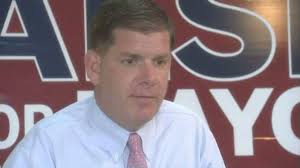
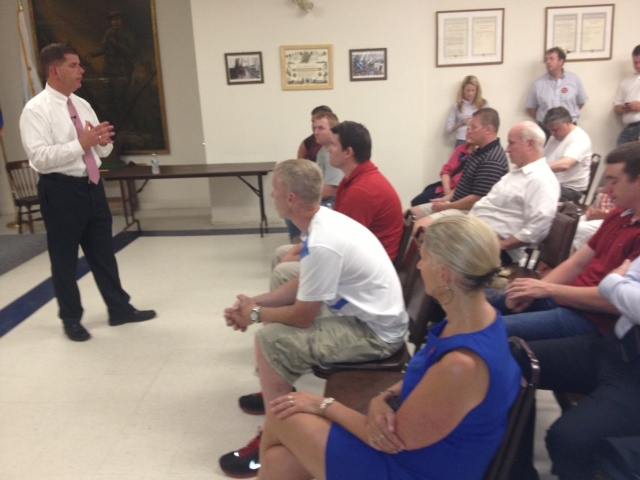
^ Marty Walsh at “Mondays for Marty” in Charlestown

—- —- —-

Six candidates, at least, of the twelve people vying to be be Boston’s next Mayor, have ramped up their campaigns big-time. Truly the sprint to Primary Day has begun.

Every Monday, Marty Walsh holds a town hall with neighbors in those parts of the City he feels he most needs to win a spot in the final. we attended his Charlestown “Monday” last night and found it packed with neighbors with important questions — pointed questions,well informed — to ask of him. Other than Mondays, Walsh can be found shaking hands across the city, sending teams of volunteers to knock on doors, winning endorsements.
Image

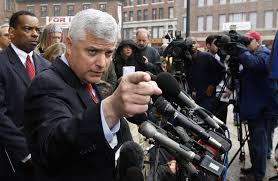
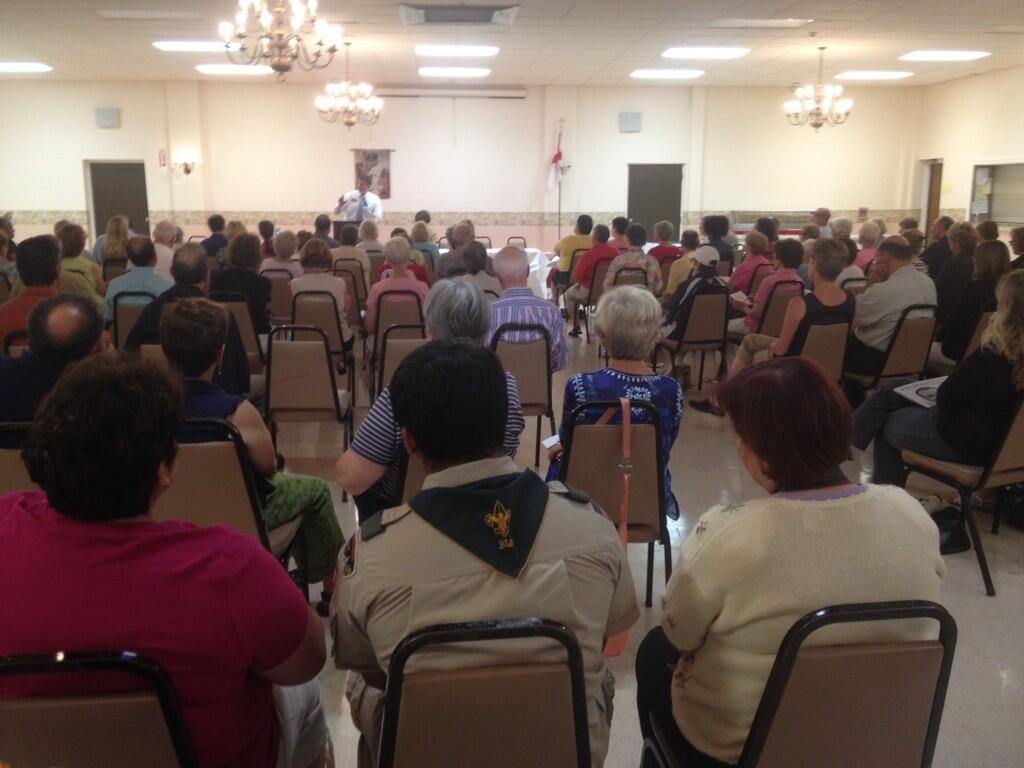
^ John Connolly speaking to the West Roxbury improvement Association. Who says Boston voters aren’t focusing on this race ?

John Connolly is dashing across the city from event to event. Yesterday saw him in West Roxbury — addressing a crowd of 200 at the west Roxbury Improvement association forum — Roslindale, Brighton,. and “Eastie,” where State rep. Carlo Basile has endorsed him.

Image

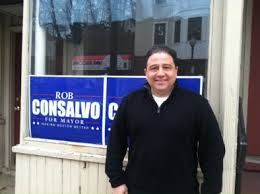
^ Rob Consalvo has probably visited more and diverse community groups than any rival candidate.

Rob Consalvo sends out teams of door-knockers, attends forums, and does meet-and-greets everywhere along the long “spine” of Boston from Readville and Mattapan to the South End, North end, and East Boston .

Dan Conley’s campaign looks a lot like Consalvo’s, except that he has concentrated not on the ‘spine’ but on the extensions : South Boston, West Roxbury, Roslindale, Brighton.
Image

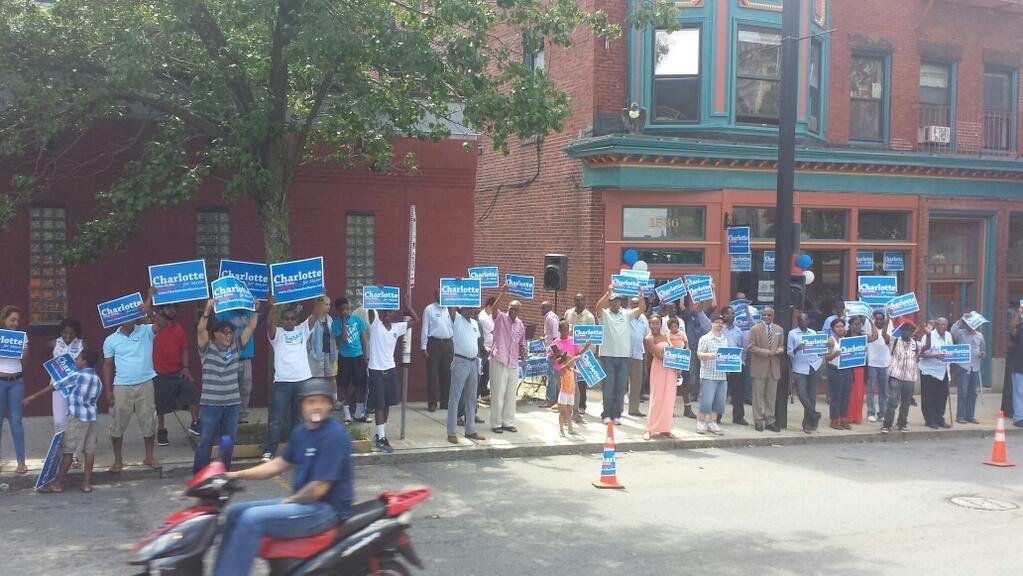
^ Charlotte Golar-Richie : ramping up big-time, finally. (HQ in Mission Hill)

Charlotte Golar-Richie, whose Dad, a retired New York judge, just died, has opened up five neighborhood headquarters, from Mission hill to Roxbury to Upham’s Corner, and though very slow to ramp up, is now fully engaged in the fight.
Image

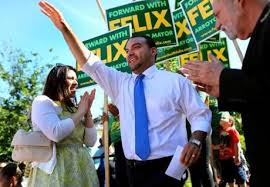
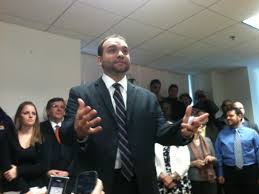
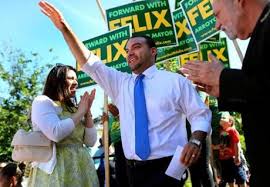
^ Felix G. Arroyo :  lots of shoe leather and enthusiasm — and union endorsements

Felix G. Arroyo has sent out more door-knocking teams than any of his rivals, and he often joins them. He has some strong labor endorsements and is earnestly pursuing others.

Three other campaigns, those of Mike Ross, Bill Walczak, and John Barros, have made a mark — Barros for his knowledge of the issues, Walczak for his opposition to casinos, Ross for his visibility in social media — but it seems very unlikely that they can catch up to the six top sprinters.

As for those six top sprinters, they are not all running equally. Arroyo and Golar-Richie still suffer from looking to constituencies internally divided, with many of their leaders undecided which way to go, unhappy about what looks likely to be the Final. Arroyo and Golar-Richie also have yet to convince many of the voters whom they will need that they have what it takes to address the issues forcefully and consistently. This was demonstrated at a Black Agenda discussion meeting last night, at the Dudley Branch library, where the participants spoke disparagingly of some, angrily about Dan Conley, unsure of the candidate they most would like to back, impressed chiefly with John Barros, whom they concede isn’t likely to win, and, interestingly, with Marty Walsh, whose labor support they appreciate.

While some vital components of an Arroyo or Golar-Richie candidacy struggle toward a decision, and as Dan Conley attempts to recover from a blow-up — and bad publicity — at a recent candidate forum, there is no hesitancy at all in the camps of the race’s obvious two leaders, John Connolly and Marty Walsh, or on the part of Rob Consalvo. They are running and running fast, hard, focused, backed by strong money and an army of supporters. Even though 70 %, probably, of all Boston voters are not part of these three men’s core vote, their 30 % of the total available vote are active and, thus, making inroads for their chosen candidate into the 70 %; so that by Primary Day — September 24 — if nothing changes big-time, a significant part of the potential Arroyo and Golar-Richie vote will go, not to them, but to the three “traditional Boston” leaders.

After all, no one, whatever kind of voter he or she is, wants to vote for someone who can’t win or who doesn’t look ready. We would have thought, when this race began, that “new Boston ,” with its 70 % of the likely vote, would carry the day and elect a Mayor. Some leaders of the “new Boston” are frustrated that that doesn’t look ready to happen; and they are expressing their frustration.

It looks as though their frustration will indeed be the case. We say it again : the Final looks to be a John Connolly versus Marty Walsh race — with Rob Consalvo the only alternative probability. Every day, this result looks more and more likely.

—- Michael Freedberg

RETHINKING INCARCERATION : THE DEPARTMENT OF JUSTICE ACTS

Image

The United States Attorney General, Eric Holder, announced this weekend that he is taking action to change the incarceration results of Federal prosecutions.

Specifically, he has memo’d all United Stated Attorneys to no longer specify the amount of drugs seized in criminal indictments, thereby avoiding mandatory sentencing laws that have led to a huge expansion, these past 30 years or so, in numbers of people incarcerated.

Holder’s action is a positive step indeed. Incarceration has for far too long ruled the justice system in our nation. As many have noted, America totals five percent of the world’s people but a full 25 percent of the world’s prisoners. This would be an intolerable condition, morally and otherwise, in any modern nation. How can it possibly be true of the country that we who live in it call “the land of the free” ?

Again, as many have noted, almost half of those incarcerated have committed non-violent, usually drug crimes. Others are elderly or have served the major portion of their sentences — terms handed to them by overly harsh, mandatory sentencing laws enacted thirty years ago and more. Trial judges used to have discretion in sentencing, as well they should, given that they see the entire trial process as it plays out before their eyes. Every case is different; discretion to the judge allowed him or her to include these differences into the record as it applied to sentencing. Mandatory sentence laws did both defendants and judges a great disservice, not to mention the harsh edge that it imposed on the entire system.

The 1980s were a time of obsession about crime brought about the advent, on the street, of “crack,” a smoked form of cocaine that drove its users to crazy acts. The same decade saw the rise of an hysteria that child-abuse was going on at day care centers. Many day care center people were prosecuted and hounded– lives ruined — as in the 1692 Salem witch trials (an d those of us who call Salem our native city know the horrors of that hysteria only too well.) As it turned out, every single one of these day care hysteria cases was overturned and the lives of those impacted restored to them as best could be. Incarcerations for non-violent offenses, however, have taken far longer to reform.

Holder supports his move by making it a cost issue. This is not mere eyewash. Incarceration costs states and the Federal government almost $ 100 billion a year. As almost two million of us are incarcerated, the dollar amount equals about $ 50,000 per prisoner — most of it being paid as wages to prison guards, wardens, medical people, and the maintenance of prison buildings and systems. Because there is huge money involved, the movement to reduce incarceration actually began, not with Holder’s recent move, but with conservative “red” states such as Texas. Obsessed by huge costs that must be paid for by taxes, these states have been first to remove non-violent offenders from the incarceration system wherever feasible. Little wonder, then, that the numbers of Americans incarcerated has fallen in each of the past three years — and the rate of decrease is accelerating.

Here and Sphere has no objection to using money issues as a reason to reduce incarceration. Nonetheless, we cannot avoid the moral and common sense concerns. In what way does incarceration of non-violent, mostly drug, offenders, supersede rehabilitation, community service, and detox centers ? Nor is it morally right that mandatory incarceration has fallen overwhelmingly on men of color. Almost one-third of all American men of color have been incarcerated at least once during their lives ! Indeed, more American men of color have experienced incarceration than were held in slavery at the timer of the Civil War. Men of color comprise five percent of the population but 40 percent of those in prison on death row.

Holder’s action will not alter the death row statistic; but his move will certainly and justifiably ease the disproportion that has put so many men of color on a path to long incarceration. For this, we applaud Holder’s action more loudly than because of its money saving.

Image

^ Judge Shira Schendlin of Federal Court for the New York District

Note : today, as we write this editorial, the news has come of a New York Federal Judge’s finding that New York City’s notorious “stop and frisk” police practice is unconstitutional. Specifically, District Judge Shira Scheindlin found that “stop and frisk” policy has profiled people of color, violating their civil rights protected by both the 4th and 14th Amendments to the Constitution. As Scheindlin said, “many police practices may be useful for fighting crime — preventive detention or coerced confessions, for example — but because they are unconstitutional, they cannot be used no matter how effective.”

One could add to the list of unconstitutional police practices the taser-ing of citizens, not to mention the shooting of unarmed suspects. Nonetheless, Scheindlin’s decision is most welcome and a timely companion to Attorney General Holder’s move. Perhaps the word ” justice ” will now begin to mean something just as well as something punitive.

—- Michael Freedberg / Here and Sphere
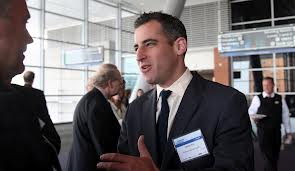
BOSTON MAYOR RACE : WHAT THE MONEY & VISIBILITY STORY TELLS US

Image

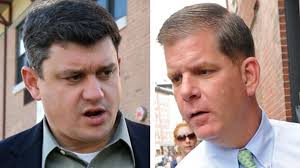
^ John R Connolly and Marty J. Walsh ; the top two by any measure

—- —- —-

A look at the OCPF (Office of Campaign finance) reports ending July 31, 2013 tells us that what we can assess on our own already is true: there are four tiers of candidacy among the twelve whose names will appear on the September 24, 2013 ballot.

At the bottom are Charles Clemons and David Wyatt, who have raised almost no money and spent hardly any.

The next tier, of candidates who have raised low six-figure money, or a bit less, includes names both expected and a surprise. It was always likely that Charles Yancey would fall far short. John Barros too. But who knew that Charlotte Golar-Richie, the only woman in the race, a former State Representative and a widely esteemed administrator, would barely make this tier’s cut ? Or that Felix Arroyo, whom many expected to see in the top tiers, would fall into this one ? Both Golar-Richie and Arroyo have raised less money than Bill Walczak, a community organizer and hospital administrator — highly regarded, and for many decades — but who has never run for any elected office.

The Walczak presence intrigues us. As the only candidate openly opposing locating a casino in Boston, has won to his side all those who  reject a development which would add many jobs and lots of tax revenue for the city. Whatever we may think of such opposition — and we decry it — it is the opinion of a vocal minority,and Walczak has it. His tactic is a common one for an underdog candidate to adopt. At this stage of the mayoral campaign, it makes sense for a candidate who at first glance looks overmatched to gain traction by bringing into camp at least one identifiable and committed constituency. This, Walczak has done.

Image

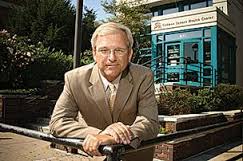
^ Bill Walczak the anti-casino candidate : raised 4 234,919.95. More than either Arroyo or Golar-Richie.

The downside of Walczak’s move is that almost everybody in the City wants to see a casino complex built here. Still, his move blocks rival candidates from poaching a following that probably totals six to eight percent of the Primary vote.

Next we have the tier of strong runner-ups. Here are three names, all important in the race ; Mike Ross, a District City Councillor, who has raised $ 625,579.88, much of it from real estate interests; District City Councillor Rob Consalvo, who reports $ 445,783.29; and District Attorney Dan Conley, who has amassed $ 698,307.64, reportedly mainly from lawyers.

The top tier belongs to just two names. Neither is a surprise. At-large City Councillor John R. Connolly has raised $ 834,242.96; State Representative Marty Walsh, $ 857,526.96. If money were the only fact in this race, the Final would contest these two, likely as close a vote as their money figures.

But money isn’t everything in politics. Visibility matters just as much. By “visibility” we mean not just what you can see but what you hear and feel: the grip of a hand on your wrist, as we like to say it. Visibility on the street used to be all; today, one has to add visibility on the internet. This changes the Boston Mayor outlook significantly. The “traditional” Boston voter has given Walsh, Connolly, Conley, and Consalvo their strong money and, so far, polling advantages. The other candidates with any chance of winning, however, must work on a different route. As they must look to young voters and to technology-driven Downtowners — who are almost impossible to reach with a door-to-door campaign — social media is their means. This is how life is lived today and not just in Boston. But can social media elect a Boston Mayor ?

On the street, the visibility victory goes to Consalvo, Walsh, Connolly, and Conley, in that order; and then to Arroyo. On social media, Arroyo does much better; and Ross, especially, has made himself a social site force. Presence on social media allow Arroyo and Ross to rank, at “omgreports.com,” fourth and fifth — higher than Rob Consalvo. Indeed, the site’s online voting function ranks Arroyo first. Still, even online, Walsh and Connolly place no lower than second and third; indeed “omgreports.com” ranks Walsh and Connolly the top two in overall presence, with Dan Conley third. And why not ? The “traditional” candidates have boldly put their issues agendas to voters both “traditional” and on-line — bolder by far than any of the “new Boston’ candidates has done. Connolly put his forth just yesterday, in seven languages, no less, on-line and on the street. The “traditional” candidates are not living in 1983. They all have significant, even commanding, presences in social media, on Facebook and Twitter. And so do their voters. It’s a new generation even in West Roxbury, Dorchester, and Southie.

Image

^ John Connolly : bold platform, presented in seven languages (including Viet-Namese, Albanian, and Caoe Verde Kriolu)

Money and visibility thus agree. The Final two will likely be John R. Connolly and Marty Walsh. It’s not impossible for Conley, Consalvo, or even Arroyo to edge ahead of either man, but it would definitely be news. Significant upward movement had better start to show really soon for the three candidates now trailing, but with a chance. Will there be such ? We await the August finance reports — and some well-researched polling results.

Image

^ Felix G. Arroyo : big street presence in many parts of the city. Is it enough ?

—- Michael Freedberg / Here and Sphere
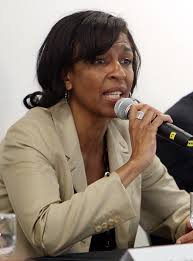
BOOTSY FUN AND SOME BLUES : GREEN VELVET @ BIJOU 08.09.13

Image

Green Velvet, whose given name is Curtis Jones — who also makes house music as Cajmere — dropped an almost two hour set at Bijou in Boston last night. For this writer it was first time seeing him here, and, as far as I could learn, it was his first Boston gig. Why that is, for a DJ and track maker as original as any in the genre — and for more than 20 years– is hard to say. Velvet has made more recognizable house music hits than almost anyone.The list begins with “Flash,’ as ubiquitous a DJ drop as any, and continues : “La La land,” “Preacherman,” “Shake and Pop,” “Answering Machine,”and “Harmageddon.” All of which Velvet included in his set — though, curiously, not his new one, “Bigger than Prince,” a side just as popular, and edgy,, and as his venerables.

Still, here he was, lime green hair and shades, a jazz cat gone punk, in current Boston’s top house music club, using an old-school two CD players and mix board only. No PC program, and only two channels did Velvet need to show his grin. Listened to as recorded, his tracks rest palpably in the Bootsy Collins, “Ah the name is Bootsy, Baby” zone, a joke-funk sound now 30 years old and older, and in the even more clownish, Newcleus “Jam On It” vein — a track also 30 years gone. At Bijou, Velvet’s funk talk and joke beat of thirty years ago were enjoyably on offer, but so was something much older: a growly, gravelly groove as blues-true as the bottoms Robert Nighthawk, Jack johnson, or T-Model Ford could have made, had these bluesmen worked in house music shape. Velvet’s stride and slide felt like late 1950s Nola stuff, his grumpy rattle and hum like a Jay Miller Shreveport session — all of it encased in house music progressions, of course.

Though just barely. Velvet pushed the house music envelope as far toward old funk and older blues as any house music this writer has ever heard live. Much of his set was vocal, story-telling stuff — think Bo Diddley. When he wasn’t tooling in his joke talk (“Answering Machine”), or offering advisory no-no’s (“La La land,” “Flash”), he featured giddy girls cooing over twangy guitar (as in Bo Diddley’s “Gunslinger” !) and show-off guys wise-cracking. There was a long line of goofy conversation, such as jazzmen of the bebop era used to spit out on stage : “Mozzarella…I need ketchup…beanstalk a beanstalk…thanks for fuckin’; it….my house, you won’t get in.’ And such like, all in bawdy absurdist fun. Below it all there was plenty of rumble and jump, marching music strut, shaggy shuffle, and much more for Velvet’s fans to dance on and cheer about. They did both.

House music DJ-ing is all about getting the fans to give it up, to lose control. there was no way that Velvet’s Bijou crowd could stand up long against his attack of absurdism, shaggies, growl, grumble, and stride and slide, rhythms and effects that pushed the dancers every which way from head to shoulders and knees to toes. His quick cuts gave no quarter, his drop-ins no out, his twisted noise bridges no break. From start to close Velvet dominated his sound, aimed it, hit the bullseye of both funny bone and step reflex. At night’s end the dancers were chanting and Velvet was sweet talking. A fitting summation of as strong a roots set as any that this writer has seen an acknowledged house master drop.

Tamer Malki, a Boston DJ master of deep house, set an extremely tasty and sympatico carpet for Velvet to ride. Malki even played the groove track of “Answering Machine,” an applaudable tribute and preface to the book of beats that Velvet’s set recited.

—– Deedee Freedberg / Feelin the Music

Karen Black: Dark Lady of American Independent Cinema

Image

^ Dark Lady : Karen Black in “Burnt Offerings” 

In her acting career spanning some fifty years, Karen Black created some memorable characters and won some prestigious awards (an Oscar for FIVE EASY PIECES, for one thing). Born in Illinois, Karen Ziegler changed her name and made a name for herself as a quirkily-beautiful icon. She studied with Lee Strasberg, won acclaim on Broadway for her 1965 stage debut, and worked as a character actress in television (on shows like MANNIX, THE BIG VALLEY and ADAM-12) before a juicy part in Dennis Hopper’s EASY RIDER established her as a demi-goddess of American independent cinema (which, in 1969, didn’t have such a high-falutin’ name—people simply made movies). Then came Bob Rafelson’s brilliant film FIVE EASY PIECES, also starring Jack Nicholson, which won Oscar nominations for Nicholson, Black and Rafelson (and which won Black the Golden Globe), and the intense beauty with the strange eyes was now a hot commodity.

If you’re of a certain generation, you may recall a made-for-TV movie from 1975 called TRILOGY OF TERROR, comprising three shorts, all with a horror plotline, all starring Ms. Black. The one in which she played a woman who received a Zuni fetish doll that came to life and chased her around the house was the stuff of many a teenage nightmare (at least, according to my schoolmates; I didn’t actually see the film myself for many years but I recall my friends going on about it constantly).  The year before, in 1974, Black played an unlikely heroine in AIRPORT 1975, one of a series of disaster films that took place in the air. There’s a great moment when a passenger screams “The stewardess is flying the plane!” and his fellow passengers scream in horror.

The mid-1970s were a rich time in Black’s career: roles in THE GREAT GATSBY, NASHVILLE, DAY OF THE LOCUST, and a horror film, based on a novel that gained a cult following, called BURNT OFFERINGS all cemented Black’s growing reputation as a sultry and sometimes crazy character actress. A few more forgettable roles followed in the later 1970s, but it wasn’t until 1982 with COME BACK TO THE FIVE AND DIME, JIMMY DEAN, JIMMY DEAN, in which she played a transsexual with a painful past opposite fellow thespians Sandy Dennis and Cher that she seemed to have regained some of her mid-70s mojo.

Black continued to appear in multiple roles throughout the 1980s and 1990s, often in horror films — some of them deplorable went straight to video. But leave it to Rob Zombie to cast her as the deranged, hyper-sexual Mother Firefly in his arty gore-fest HOUSE OF 1000 CORPSES in 2003. Black continued acting up until her death, despite having been diagnosed with cancer in 2010; two films are to be released posthumously. The trajectory of Ms. Black’s career, which some may call tragic or disappointing, after her relative success early on, show a consummate professional who never stopped plying her unsettling charms, in an industry where women of a certain age are often utterly disregarded. The breadth of her film and television roles make an admirable achievement, and her status as an icon of cult films  (even the many B-grade horror flicks she made ) should not be forgotten soon.

— Peg Aloi / Here and Sphere correspondent

BOSTON MAYOR RACE : SIX WEEKS TO GO

Image

^ Rob Consalvo outside one of his local headquarters

—- —- —-

It’s getting nitty now, and gritty, the 12-candidate race to elect a new Boston Mayor. Candidates and their armies are knocking on doors, talking to voters one on one — which is the ONLY way to do it. The lawn signs wars are crowding fast. The money is in, and many key endorsements, ones that actually can deliver votes. Nor, fascinatingly, is anyone dropping out. It’s too late to do so, as the Primary ballots have already been printed. The rumors of Dan Conley moving away to run for Attorney General did not pan out. (This is good news for Rob Consalvo.)

Image

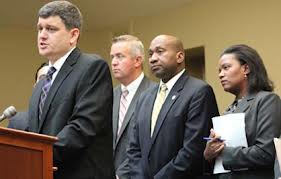
^ Dan Conley : staying in mayor race

Indeed, Conley, like Rob Consalvo, Marty Walsh, Felix Arroyo, and, probably, the other “major” candidates, have already begun to open local headquarters in the neighborhoods they are counting on; and to staff them. (Haven’t seen a John Connolly local HQ yet, but very likely soon.) With local headquarters open, the candidates who have them can ramp up their reach out to voters as yet uncontacted, or contacted but uncommitted. From local headquarters phone banks can be more precisely targeted than from a central office.

Image

^ Felix Arroyo : “forward with Felix” showing up at last in the neighborhoods that count

The ‘majors’ are also scheduling regular weekly ‘events,’ such as Marty Walsh’s “Mondays With Marty” and Felix Arroyo’s regular meet-and-greets at locations key to his campaign. Rob Consalvo is making his headquarters openings an “event.” Surely John Connolly and Dan Conley are doing the same. For these candidates, “events” are occasions to raise the enthusiasm level of their already committed voters — and campaign volunteers — and to bring to the committed-vote level voters who have shown interest. In other words, the fun and games times in this campaign are over. From here on it’s all about commit, commit, commit and identify a vote and keep it identified all the way to Primary day.

Image

^ Marty Walsh : “Mondays With Marty” in every neighborhood ?

So much for the “major’ candidates. What we do not understand, frankly, is the stance of the other candidates. Why are Charles Clemons, John Barros, and Bill Walczak still in this race ? And what of District Councillor Mike Ross, who has raised much money from real estate interests but doesn’t seem so far to have gathered an observable following ? Unfortunately, neither question has a ready answer. Clemons, Barros, Walczak, and even Ross surely knew that they were almost certain not to get to the November Final, yet they ran anyway. Is it about introducing oneself to voters ? Hard to see the advantage in making a first impression as an election loser. More likely they see that for the Final, the votes they do manage to win on Primary day will give them influence as the two finalists compete to win their support. Sometimes that campaign purpose succeeds.

Image

^ Mike Ross : lots of money, so far not many visible votes

The above discussion did not mention candidate Charlotte Golar-Richie. Her campaign remains the most puzzling of all. As the only woman in the race, as a person of color, and as a widely accomplished city and state administrator, she has all the credentials a next Mayor would want to possess and an identifiable, sizeable constituency. Yet her campaign hasn’t made itself felt much. She lacks money. She is only now beginning to be visible in the lawn sign wars. She has key endorsements, but they were won early and do not so far seem to have brought her many votes. Nor has she dominated the news. How could she, when, as reporter David S. Bernstein has pointed out, she has only the vaguest of messages and no platform ? The other “majors’ have both message and platform. It matters.

Image

^ Charlotte Golar-Richie : disappointing campaign so far

In a campaign like this one, which will reach almost every voter, most of them at the door, a candidate has to make himself or herself FELT as well as seen and heard. We used to say, “make them feel your grip, just as if you were grabbing them by the wrists.” Walsh, Consalvo, Connolly. Arroyo, and Conley are doing that; so far, Charlotte Golar-Richie hasn’t. Time for her to get tough. A Mayor of Boston HAS to be that.

Prediction : right now we see Rob Consalvo looking stronger, possibly moving to second place; Connolly weaker. Walsh still a good bet for second, even first place. Dan Conley fourth. None of the eight “new Boston” candidates has a chance if all stay in the race — and with the September ballots already printed, all remain in it.

—- Michael Freedberg / Here and Sphere

DJ MUSIC AND THE “SELFIE” SOCIETY

Image

^ selfie music

—- —- —-

We have watched house music and techno develop, as pop music genres must, over the past 27 years or so since these genres first grew a name. Of everything that house and techno first came to me, however, nothing remains except for one aspect : it’s solo stuff. Yes, there are DJ duets, a few of them superb. They are exceptions. To probably everyone who imagines a DJ, the image is of one person, earphones on, commanding equipment that sends out good vibrations, good rhythms.

It was not that way in rock and roll, nor, for the most part, in jazz. Rock and roll was played by bands — mostly three or four musicians, sometimes five or more. If a rock band featured a soloist — and many did — he or she was always, always of that band, never by him or herself. In jazz, the small combo and the big band were the rules. Solo performance arose from ensemble performance and took place within it.

As ensemble genres, rock and roll and jazz signified community, demonstrated common interests, rose above the glitter of self, its smell, its gimme’s. Yet of course the urge to spotlight rumbled within the music and often burst through it. Stars arose aplenty and took over, nailed the fans, made their names immortal — backing band or no backing band. Yet even then, even with Elvis or James Brown, as elephantine as any egos that have ever walloped an audience, the music needed several players to build its arc, give context, outline the star’s temper and contours.

With DJ music there’s none of that. the audience is the context the setting the temper. There is one music maker and one only; he or she does it all. No previous pop music, except maybe the blues, has ever presented so singly. Yet the blues is best played within four walls, or on a front porch. It is also music of pain — maybe joy and pain (in the immortal phrase of a great song by Maze) — and of one person and nobody else. Blues is as personal as a toothbrush. DJ music, on the other hand, though almost always solo, is hardly ever singular, and though much house music cries pain as often as not, the pain it cries is the fans’ pain. (It may also be the the DJ’s pain, but only as he or she is of the audience as much as at the mix-board.

The art forms closest to what DJ music does are painting and photography. Here the presentation is exclusively the artist’s — hermetically so. If it speaks to those who look, it speaks to them all, equally; or to none. Paintings and photographs do not — cannot — send a message only to one fan, or a few. For how can the photographer or painter know who will look ? The most popular DJ music does the same. It sends the DJ’s message — and his or hers only — to everyone everywhere. There is no locality in big-arena DJ music, no observable bounds, no contour or temper. It contains no private messages, no communal come-ye’s.

If the most popular DJ music has no definitions, why does anyone like it ? Yet a lot do. All over the world millions love big, beachy, smiley DJ music. Why ? There is, of course,. never a simple answer to why anyone likes a work of art, expression, entertainment. Some like them because their friends do. Some are snagged by the rhythm, the squiggles, the giddy glee. This writer is tempted, however, to conclude that people who like big-name DJ music do so because the music is its own mirror, its own photograph; a “selfie” sound track.

Image

^ selfie at work

The “selfie” — a smartphone snapshot, usually, of the person taking the snapshot, usually holding the smartphone up to her or his face — is as much the watermark of DJ society as the hot rod was of rock and roll, the two dancer twirl and leaps of jazz, the packed-tight dance floor of disco. At the disco, no one thought of being just a self; one melded into a crowd, sweat to sweat, thigh on thigh. People went to jazz dances in pairs, foursomes, whole busloads. Rock and roll was rebel music, but a soften as not, the rebel of it was an entire generation of young people. At huge DJ gigs, however, the fans exult the music by taking “selfie” of themselves — all of them the same “selfie,” but who’s counting ? The only number that matters in DJ music is ONE. Sound familiar ? it’s the politics we live in, the music we live by.

Image

^ the selfie icon ?

This is not to say that there are no DJs who play to contours and communities. What today is called the “underground” features plenty of masterful DJs who play joy and pain, message and aspiration, struggle and stride, and a vast dome of images frightful, mechanistic, bellowed and screeched. It’s solo music, but solo is not the message. Friends, competitors, alliances, imagination — these are the messages often carved by “underground’ DJs. Still, the “underground” gathers a fan base maybe one-fiftieth as big as the solos who populate big DJ gigs by the tens of thousands. Is it surprising that one encounters hardly any “selfie” snap-shooters at “underground” DJ sets ? When you are one of 20,000, it is you and only you swimming in a sea of bodies. You’re very, VERY much alone, and you know it; and the “selfie” is an icon of aloneness as lonesome as any such this writer has ever seen.

Image

^ a selfie = alone = lonely

On the other hand, when you’re on a dance floor with less than 200, every shoulder next to you and leg on the other side of you become real people who matter. There the self has allies warmer than a selfie pic.

—– Michael Freedberg / Here and Sphere

DETROIT MAYOR : NAPOLEON v. DUGGAN

Image

^ Former Med Center CEO Mike Duggan / Wayne County Sheriff Ben Napoleon

—- —- —-

Yesterday, Detroit voters chose the two finalists who will compete to be the City’s next Mayor : Wayne County Sheriff Benny Napoleon and former Detroit Medical Center CEO Mike Duggan. Napoleon led the printed ballot overwhelmingly. Duggan, however, who had to run as a write-in because he turned in his nomination papers two weeks before he qualified as a city resident.

Still, the results were quite clear. As published by the Free Press, “with 100% of the precincts reporting, (Benny) Napoleon had 28,352 votes or 30% of the total votes cast, to 50,328 votes or 53% for write-in candidates, with (Mike) Duggan presumably garnering the vast majority of those. Duggan said about 97% of write-ins were (for him).”

Total turn-out was low — about 18 % of Detroit’s registered — but higher than prerdicted.

Duggan’s 52 % of the vote, as a write-in, shows that committed voters know very well what they are about. Pundits, especially many who presume to represent today’s version of the GOP, incline to doubt that inner-city people of color, many of them living in poverty, can vote intelligently and negotiate such intricacies as a write-in vote. Anyone who has ever worked a campaign in a large American city knows this put-down to be utterly untrue; yesterday’s 50,328 write-in votes — 97 % for Duggan — disproves these pundits’ nonsense beyond all doubt. Indeed, the city’s write-in voters had to spell Duggan’s name correctly, as there was also another write-in candidacy for a man of the last name “Dugeon.” 97 % of Detroit’s write-in voters knew the difference and knew which difference they wanted. That, dear Here and Sphere readers, is informed voting.

That Mike Duggan happens to be White, in a city in which four of every five voters is of color,l also says something about informed voting and the readiness of voters disparaged by “conservative” pundits to select precisely. Obviously, many Detroit voters have had enough of Mayors who have coasted to office on assumption that voters of color will always vote for mayors of color. Detroit looks to be rising from its ashes, and a substantial portion of its voters are ready to endorse whomever seems likelier to extend that rise. As a successful executive, Mike Duggan clearly made sense to such voters. Thanks to Duggan and his Primary voters, even if, in November, Detroit chooses Benny Napoleon, a man of color and a successful county official, skin color will likely not be the determinant that it has long been presumed.

Indeed, the issue between Duggan and Napoleon is one familiar across most of today’s political America : should local control be led by neighborhood activists or by businessmen ? Duggan says that as a business CEO, he can better convince Michigan’s Governor Snyder to return management of the city to the Mayor’s office — today the city is run by Kevyn Orr, an administrator appointed by Snyder. Napoleon, on the other hand, stresses that citizen involvement, in the neighborhoods — led by him — will free the city from State management sooner.

Either course begins as soon as the next mayor is chosen and well before power to run Detroit is returned to its Mayor pursuant to the city successfully presenting a bankruptcy reorganization plan. Yesterday’s vote starts a saga of a city rising from past miscarriages — the primary of skin color among them.

—- Michael Freedberg / Here and Sphere

JIM FOURATT ON THE NEW YORK CITY MAYOR RACE

Here and Sphere has watched, from its onset, the loopy-palooza of a five-way Primary contest to determine who will likely succeed three-term Mike Bloomberg as New York City’s Mayor. It’s been a campaign just like the City it’s taking place in : big, loud, full of tricks and trick bags, shady-ness, a cheeky openly lesbian City Council President, a re-run candidate, new names, and — as we all know so well — the joys of sex-texting as presented by one “Carlos Danger,” who day-lights as candidate Anthony Weiner.

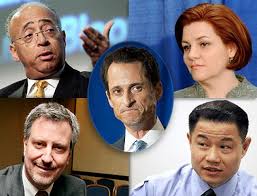
In addition Weiner, the Democratic Primary candidates are City Council President Christine Quinn, from Manhattan;  Bill DeBlasio, New York City Public Advocate (an elected position);  John Liu, City Comptroller (also an elected position);  and Bill Thompson, past Comptroller and candidate for mayor in 2009. (there is also a Republican Primary, in which former MTA chairman Joseph Lhota faces John Castimatidis, who owns the Red apple Group and also is CEO of the Gristede’s Supermarket chain.)

Who heads the list in polls changes from day to day, maybe from hour to hour, as this city of multi-millions living in every sort of different surrounding, on every sort of income level, by every manner of lifestyle, language — oddity, pushcart, sandwich board, rollerina, shell game, shopping binge, hard hat,  limo and taxi — moves through its demolition derby of a campaign toward choosing a next “how’m I doing” kind of Mayor.

One with power over a budget huger than that of almost every State and many nations, a budget encompassing hundreds of parks, schools and shelters, courts and police precincts, as well as hundreds of thousands of city employees, and tons of targets for the world’s terroristas.

What a job. And what a riot circus it all is.

NYC Mayor ... 5

^ The Big Five : Bill Thompson, Christine Quinn, Joseph Liu, Bill DeBlasio and in the center ring — Anthony Weiner

We are lucky to have an ongoing report by Jim Fouratt, progressive activist, articulate and earnestly opinionated, a New York City resident in the Big Apple’s grand tradition of citizen advocates. In fact we are reprinting his posted status reports from his Facebook page — as near to an on the street / intelligent view of the election as any we have read or expect to read.

August 6th : SHOULD CANDIDATE JOHN LIU GET MATCHING FUNDS ? YES

This morning I attended the hearing at the New York City Campaign Finance Board where they were to announce the granting of matching funds ($6 for every dollar under $175) for the Democratic Primary on Sept 10, Only John Liu, the City Controller and Mayoral was denied funds (over 3 million dollars) , The Board has 5 members, 2 appointed by Mayor Bloomberg (whose administration Liu exposed in a millions of dollars scam ) and two by the Speaker of the City Council Christine Quinn who also is running for Mayor and who will do anything to knock out her opposition for the nomination and the Mayor after consultation with the Speaker appoints the Chair. Liu’s lawyer argued for the granting of the matching funds They did mot. I thought each should have recused themselves . They did not. Listen to the Liu’s lawyer’s presentation…you will learn much more than from the mainstream media. Shocking.. or how Billionsberg and Boss Quinn get their revenge . Judge for your self :

August 2nd  AN INFORMED VOTE, NOT JUST AN EMOTIONAL VOTE : ANTHONY WEINER :

Maybe some NYers will get their noise out of his crotch and smell the fresh ideas Weiner is putting forward… i think the way he has handled the media drubbing is a good sign how he will handle actual matters that matter to most New Yorkers. Have you read his platform and his ideas? As to the people dredging up his positions from 25 years ago as the deBlasio folk seem stuck on ..how about finding out how he stands on rent regulation issues now? I did and found his answer for what happened in 1992 convincing Or the fact that he rides his bike to campaign stops should , one would think , answer were he is on bike lanes today. Remember we are electing a Mayor not a Pope… and yes i think he is wrong on the West Bank .. and will continue to challenge him on it … Please if you don’t want to support him for any reason .. than I suggest you stop targeting him and take on Quinn and her deceits and Thompson’s business and friendship alliances and look at Lui and how he stood up to the Mayor and had both the Times and the Post attacking him … just like Weiner. in the end what is important is an informed vote …not just an emotional vote … and yes i love you all.

Weiner defends his campaign here : 

July 29th : READ THE LETTER THAT  ANTHONY WEINER SENT TO VOTERS TODAY

I wonder how many of you so outraged about Wiener’s personal life would speak truthfully about your own sex life if a phalanx of cameras and mics were thrust in your face . Both your actual sex life and your fantasy sex life? Not that i personally care unless you are sleeping with me!

Anthony Wiener talks about a single payer for New York City, supports home rule (city) on rent regulation legislature and ride a bike to rallies… and that is just the beginning of why I think we should be talking politics and not tabloid gossip. He broke no law. All participants were consenting adults and how he and the woman he loves deals with it is their, NOT my, business,

here is what he sent to voters today”

“Dear Jim:

So here is what I learned this weekend – a lot of people who don’t have a vote, want to decide who our next Mayor will be.

TV pundits, newspaper publishers and, of course, my opponents – they’ve all made up their minds that they want to stop our campaign right now.

Well, at least they are consistent. These same folks have been howling about me running from the moment I first got in.

But this race isn’t about them. It’s about you. You should decide

I knew that revelations about my past private life might come back to embarrass me. I never hid from that possibility. But, I waged this campaign on a bet that the citizens of my city would be more interested in a vision for improving their lives rather than in old stories about mine.I am going to continue to lead the debate about ideas for the middle class and those struggling to make it. Soon, I will publish yet another book of ideas for New York. I will be giving more policy speeches and revamping our website to include even more ways that New Yorkers can become involved with our campaign. I’ll be showing up at community forums, televised debates, street fairs, worship services and just about everywhere that New Yorkers gather. In short, I’m going to keep doing what I’ve always done. I’m going to keep on fighting for my city. And then you get to decide who will be our next Mayor, not them.I hope to see you soon,Anthony”
JULY 23rd : RANT AGAINST COUNCIL PRESIDENT CHRISTINE QUINN
To all New York City voters and out-of staters who think it quite wonderful that the next Mayor of New York may be a woman and a lesbian. And i am talking to people like those in Emily’s list. Here is an entry into why most progressive people of ALL sexual orientations are united in their opposition to Speaker Quinn, Her old-time political machine tactics of control and punishment are seeded throughout this piece. I personally have seen her make members of the City Council cry when she whips them for not bending to her will. Get rid of her and her terrible political machine, A predator on the quality of life in this city.
July 10th : RANT ON THE CONTINUING FOCUS ON ANTHONY WEINER – ELIOT SPITZER SEX DOINGS
 am sick and tired of sleazy media jokes about sextexing .. (what is wrong with consenting adults doing it anyway … its safe sex and no one gets preggers) so please can we get back to what is important ? Or are we going to get stuck in ny post gossip inspired exchanged. What does the private, consensual sex activities of a politician have to do with how effective they can be as elected officials. Both Wiener and Spitzer stood up to wall street ..and they were right .. and they were brought down by wall street agents (see excellent documentary client 9 re spitzer) . So lets talk issues : Stringer vs Spitzer, Weiner vs Quinn or Liu …. and Weiner has put single payer health insurance for NYC on the table… and that is a huge reason to look at him…. and yes today he came out in favor of bike lanes .. and that flipped my helmet…. only Lui also remains in focus .. (uh as of today that is!)
<
— Jim Fouratt on Facebook
<
NOTE from Here and Sphere ; as long as Jim Fouratt permits us we will continue to post his reports on the New York City Mayor campaign. We also expect to supplement Jim’s observations with reports from our own newsies as the first voting day — the Primary — approaches — MF

…..AND NOW THE WASHINGON POST : OUR VIEW

Image

^ The Washington Post ; The Graham Family sells

You already know the fact in the field : Amazon’s CEO and founder, Jeff Bezos, has purchased the Washington Post for $ 250,000,000. It is big news, coming, as it does, less than a week after Red Sox owner John Henry bought the Boston Globe. Big news, too, because if Henry paid $ 70,000,000, Bezos is paying almost four times as much. It’s an elephant price for an item — print news — that the hired mouths say is headed for extinction. Is Bezos simply an ego with a large wallet ? (He is said to be worth $ 25 billion, a long suitcase even in today’s world of mega-purses.) Or has he a plan in mind that hasn’t occurred to the less visionary among us ? Maybe so. Maybe all the recent buyers of print-media marquee names have plans in mind. What can they be ? What MIGHT they be ?

One thought already piques us at Here and Sphere : look to the archives. The Washington Post, like the Boston Globe, has over a century of archives, a trove of history. As it publishes in America’s capitol city — DC — its archives record more than mere local knowledge. Yet even local knowledge has value untapped. We recall a neighbor who made a fortune acquiring the histories of just about every county in the USA that ever published one. Ancient all, their copyrights had expired; he revived them at scant cost and then published every one anew. Who, you ask, could possibly be a buyer of a county history ? Every public library in the county ponied up to buy a copy, at a hefty book price.

Why should something similar not be in Bezos’s mind for the post ? No, he won;t publish the post archives in book form; but he can surely image them and market subscriptions to them — because the Post archives continue to accumulate, every day — to every library, and to all education institutions, too; for this is America’s history we’re talking about. Maybe even overseas libraries and education institutions will subscribe.

Second, the Post continues to be the paper of record for America’s capitol city. It has fewer readers than formerly and less paid advertising, but it has seen of both, and surely a hard core of each that will not be diminished much, if at all. The Post broke the Watergate story in 1974 and published the Pentagon Papers in 1971. It was the first paper that Ed Snowden offered his revelations to. The post will continue to be the go-to medium for bombshell stories from our Federal government, the world’s most important. With importance comes continuity. Example : the Pope in Rome. Just as the Pope’s bibliothecarius has maintained a journal of Papal letters, bulls, and orders almost without break since Gregory the Great’s time (the 590s) at least, so the Post’s reports from Federal offices in Washington will likely continue to publish for many decades, or longer, no matter how digital the outside world becomes.

Image

^ Jeff Bezos : master retailer and money visionary

Lastly, the Post and Globe are hardly the only papers being sold to private buyers with pendulous purses. Private buyers need not fear impatient trader-investors the way public traded firms do. They can wait. They can endure losses. They can re-position the enterprise and explain nothing of it to you or me. Perhaps the Post and Globe will become platforms for other businesses : advertorials, monthly magazines, subway giveaways, even digital technology research. No one has yet mentioned the digital research potential of print media power-house, with their expertise in information gathering and dissemination; yet that potential abounds, and it would be more surprising for entrepreneurs like Bezos to NOT pursue it than to go for it.

The Post will become something new. that you can count on. New and yet quite basic too. Expect it, and take note as it happens.

—– Michael Freedberg / Here and Sphere