SOUND GAMES : DJ MES @ RISE CLUB 08.23.13

photo (39)

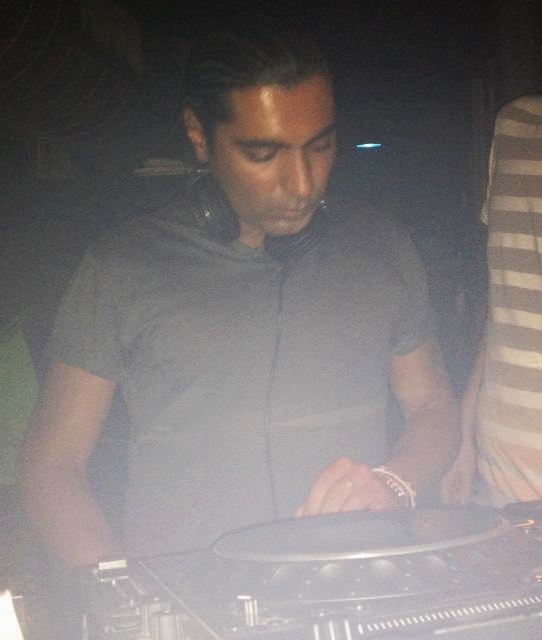
RISE Club, of late, has booked many long-time DJs who, to our knowledge, had not dropped even one set on a Boston house music crowd. Among these was DJ MES, from Oakland, California, who, after almost two decades as a mixologist and nearly that long as a track maker, bestowed upon RISE about two hours of his more or less uniquely gamey sound.

I say “more or less uniquely” bscause there was, in his catchy, somewhat absurdist mixes and mismatches more than touch of the goofery that has made DJ Donald Glaude famous — or infamous. The difference is that Glaude’s goofing comes across consciously stupid, even cynicval, a kind of nasty Fred Flinstone of dance music. Whereas DJ MES’ sound games had wit and subtlety, surprise and, at times, progression. Though his set conveyed no deeper message, it did commit to the dependency of each sound upon its follow-ups; teamwork was thius the set’s theme, one that his quick-cuts and sound blends did not embarrass.

When I arrived at RISE, at about 3 AM, MES was already playing. He may well have played “No Jet Lag” before — it’s his signature track — before then, because it did not turn up in the two hours that I heard of him. Surely nhe would not have neglected to drop a track in which he strings “Back Back Train,” an acoustic guitar blues by Fred McDowell, onto a marching beat percussion bottom ?

That MES even knows of McDowell’s 1950-1968 era, bottleneck guitar work is impressive by itself; that he would pair it with a strut of house music shows how far he is willing to go to pair sounds unpredicted. On the other hand, that Mcdowell’s “Back Back Train’ is a dirge song, and its train a hearse, rather upends the joy in dance music; MES sure does test a fan’s tolerance. House music almost immediately, after its inception, became a dark sound in the wake of AIDS (as writer Barry Walters has pointed out); but that was long ago. It’s unlikely that fans hear “No Jet Lag” as MES’s song of joy and pain.

That said, in the two hours that I heard, “No Jet Lag” did not turn up. In fact, the sound games that MES played never wafted dark or mouthed mournful. Lots of talk he did tool in, hut standard club cant — “beats knockin.” “fuck it fuckin’ hip hop,” “go like this,” and such like. MES shifted his texture from grumble and glitch to stride and glide. He played “nu-disco,” as fans call it : the bossa nova bass line that disco overwoo’ed to death but which, in complex new contexts, is having a second club life. There were passages of Michael Jackson-ism — pop dance and melodic harmony — and a segment of sampled Diana Ross,” the “ooo ooo ooo’s” of Prelude-label, 1978 disco (Musique, anyone ?), and, constantly, he rewound some first of house music’s principles: plaintive reverbs, jazzy sentiment (“The Look of Love”), and tipsy sonic whirlpools (his own track “Hangover”).

Body pumping, head bobbing, the stocky veteran MES put sonic somersaults onto the menu of a club not quiter two-thirds full until, a few minutes after five A.M., he tooled in a vocal “you’re time’s up” and — was done for the night.

—- Deedee Freedberg / Feelin’ the Music

> the house of blue lights at  A,.M.     >

photo (28)

CREATING STREAK-IES : OMID NOURIZADEH @ RISE CLUB 08.17.13

Image

It has been a commonplace, since the late 1990s at least, for house music and techno DJs to create, as a bridge between rhythm runs, jet streak effects. There were jet streak effects even in late 1970s Eurodisco and beyond; their appearance as a kind of intermission in techno, especially, simply honored dance music tradition and moved it upward. At RISE Club last night, however, Omid Nourizadeh, also known as “Omid 16 B” — Tehran born, but for a long time living in England, didn’t just employ streak effects; his set centered on them. His streakies soloed; they acted like soprano diva vocals, lifting the music, screaming it, a throat of ecstasy.

Placing the spotlight on streak effect breaks has portended in techno for quite some time. All that Norizadeh did wass to give in to the movement and make it his mark. this he achieved. Again and again his streak effects displayed complexities all his own : notes soprano and higher than soprano, metallic clinks and twinkles, breezes, wind rush, pants and gasps, twists and rope knots of scream, screech, and cheering. Usually, a DJ’s streak effect breaks stop the dancing; not so for Nourizadeh. RISE’s crowd dacned across his streak breaks.

Using only Rise’s mix board and two CD players, programming many of his own tracks — including the luscious “Slide To Unlock,” a graceful and echo-laden “Double You,” the chanted “Yeah Yeah,” and “Blue Jeans,’ his and Lana Del Ray’s much updated equivalent of the reverb, undulating rumble and girl in heat duet that Giorgio Moroder and Donna Summer, in “I Feel Love,” rode to dance music glory so long ago — Nourizadeh made forty years of disco, house, and techno very much his own.

That music is not something that he has learned after the fact Nourizadeh has been active in DJ-ing for 20 years. his first album, Sounds From Another Room, appeared in 1998. though less known in the Us than fellow Iranians Dubfire, Sharam, and Behrouz, he is their contemporary. And, as he made fair to prove at RISE, of a dance music imagination as dominant as theirs.

Though his reverb bass lines, Brazilian rhythms, and girly chant drop-ins all recalled the shape and frills of disco, Nourizadeh used none of that era’s instrumental cliches. This was not a set of recaptured memory but of recreation, in entirely different sonic context of disco’s feeling and character. Daft Punk, eat your heart out.

Almost all of his set felt trippy, spacey, gently psychedelic. Deep beats rolled and rumbled, then strolled coolly, then morphed to samba, as soundscapes of innumerable siren provenance glittered in the upper frequencies. Much of Nourizadceh’s high note evocations sounded like Iranian or Kurdish pop — a soulful wail, falsetto notes, a mountain top flute yodel. In which mode he reminded this writer of Dubfire’s sound; but he did not linger in Persian mode. Into his soup of seduction he dropped street talk, reggae toasts, John Ciafone’s classic “Club Therapy,” cries of “you can’t stop,” and even a chant that went “you’re crazy, Limbaugh !” No one on the RISE dance floor cared to disagree with that !

Having dropped his Limbaugh message, however, he rapidly quick-cut the music to puckering glam-rock — think Erasure and Depeche Mode — whence he jumped to heavy, boot stomp techno leading back to Brazilian beat and a concerto’s worth of streak effects long and tortuous, delightful and pained, embroidered and spangled, a luxury of tactile sounds — especially the strong swirls and twisted spurts and hushes that climaxed his live take on “Blue Jeans.” With an economy of mix moves he made his effect breaks act out the stroke and desire of his rhythms. Dance music has rarely exulted so blatantly, yet melodic, in its orgasmic core as in Nourizadeh’s long strong bursts of liquid sound.

—- Deedee Freedberg / Feelin’ the Music

STOMP OF BOOT AND SMOOVE IT OVER : RAMON TAPIA AND ANTHONY ATTALLA @ BIJOU 07.26.13

Image

Two track-making DJs of very dissimilar voice, Ramon Tapia and Anthony Attalla, dropped 75 minute sets each at Boston’s Bijou NightClub on Friday night. It was Tapia’s first local performance since 2010, when he rocked the now-shuttered Therapy in Providence; many scenesters and house music connoisseurs came to see Tapia reshape his well-regarded hits — “Intense Idea,” “Y Not,” “Wonderland,” and “Freedom,” his number one download at Beatport.com. As for Attalla, he has played frequently in various Boston dance-music clubs; and though he too has a large repertoire of produced tracks, it is his live mix work, not the tracks, that people come to see.

It played out exactly thus at Bijou. Attalla played many of his tracks — rough, racy, abrasive and energetic things — in loud big, boot stomp mode. He shoved his entire body into his mixes, almost as if he were doing push-ups. He leaned into the board’s knobs, bobbed his head, clenched fists at them, like a boxer in the ring. Using no PC — nor did Tapia — Attalla spliced two CDs into Bijou’s fully-arrayed mixer, set the boom, clang, and bamm going, let it ride; pushed the pitch now and then. At first that was all that he did, but before long he cranked the soundboard hard, and from that point on dropped big, scary truck beats onto the dance floor, one upon another with voice grins tooled atop — and in and out, like dancers stepping and jumping from spotlight to dark mists.

Image

Attalla put his stomp noise into full locomotive shape and kept it there with some of dance music’s current talk drops — “there’s whores in this house” made its second appearance in as many Fridays — normalizing what was a very loud sound, an almost solid brick of it. Waving his arms in the air, punching at the music, Attalla was his own go-go dancer. But one with enough grace to feature, toward the end of his set, a Ramon Tapia track, “Intense Idea,’ which might well have been written with Attalla in mind.

Then it was Tapia’s turn. In no time at all his soft, smoove sound put melody into service, and an interplay of beat and percussion that changed Attalla’s single-minded music of rant into a music of conversation, of two people or more than two. Tapia stood supple at the mix board, fingering the knobs but not attacking them. Into the mix he ran “Wonderland” and tracks similar, and then his own version of “Intense Idea,” more complicated than Attalla’s single-minded streak. This was followed by a soulful, uprising, melodic track onto which came a vocal climax. It was the entire evening’s sublimest song.

Attalla’s set featured very few pauses or bridges made of mix twists. Tapia, however, filtered many such twist bridges into his set, and all felt just right as he sculpted them. For the first two-thirds of his 75 minutes, Tapia had Bijou’s dancers swaying and swooning.

Curiously, though, Tapia had not played “Y Not,” perhaps his most soulful track, and, as he began the last third of his set, he missed a beat cue, flubbed a segue, and lost the handle of his tuneful smoothing. Inexplicable were the next ten minutes of his performance; but, as the end point of his time grew near, he recovered himself. The sound now was purely house music, and blues that seemed to apologize to itself. Tapia ended strongly, playing his top hit “Freedom” almost as a sigh of relief that he had escaped his own misstep. The Bijou dancers cheered, and many ran to get their pictures taken embracing a sweat-browed Tapia.

Wil Trahan opened in his usually commanding manner. Like the DJs of old, Trahan chases down tracks that no one knows but which, once heard, everybody wants to have. With tracks like that in hand — best was FCL’s “It’s You” — it’s easy to dominate a statement. Trahan stated; and dominated.

—- Deedee Freedberg / Feelin’ the Music

GIRL TALK : DAVE AUDE’ at CLUB CAFE 06.07.13

photo (28)

GIRL TALK DANCE : DAVE AUDE’ @ CLUB CAFE 06.07.13

Master re-mixer Dave Aude’ made a rare Boston DJ appearance last night at Club Cafe. The more than two-hour set by Aude’ was a highlight of Boston’s Pride Week. On the same night that Roger Sanchez, equally masterful as Aude’ and for just as many years, was dropping a two-hour set at a club not three blocks away, Aude’ rocked a dance floor full and excited.

There’s no mistaking what Aude’ does. He remixes pop bop dance tracks almost always featuring girly girl singers. In the studio, no one does it better, not many as well. His sound is creamy smooth most of the time but occasionally slap-nasty. Beats race along, synthesizers chirp and whoop, and the girl singer puckers her message of love-me, of go-away, of have fun and dance with me.

And so it was at Club Cafe. Aude’ played spiffy girl dances and nasty ones, hits new and old (Cazzette and Afrojack, but also early 1990s stuff such as Inner City’s “Good Life” and parts of tracks that echoed Snap, Ya Kid K, and Haddaway), and a long chain of racy giddy girls’ nights out — all of it segued with a smooth hand. He sound nudges the entire body. There’s roll and rumble, step and tiptoe for the legs and feet; shimmy shake sound effects for the hips and chest; and voices cute, chirpy, teasing, grungy — these and more; Aude’ has remixed an almost who’s who of star and wanna-be star girl pop voices — for the head and neck. In Aude’s sound each gets center stage only to give way — effortlessly in a dissolve mix, teetering on a quick cut — to its sonic companions.

Using the scantiest of equipment, two CD players and Club cafe’s stripped-down mix-board, Aude’ still managed to juggle his three-part sound without one flat moment, missed cue, or off-base segue. There were jet streak effects, twisty riffs, moody breaks, melodic serenades; sometimes he shaped his sound as a sharp slash, a kind of sword dance. But mostly he delivered his signature : girl going giddy, soprano soaring, heart a flutter. It was a night of girl talk and girlie action delivered mostly to boys for whom girl things are a necessary freedom to love and be loved in.

There is nothing simple about girl feelings. That’s why dancers — boy or girl — who embrace girl moves adore them. Aude’ focuses his sound and subject matter as narrowly as any DJ this writer has seen; yet at Club Cafe he made it serve an almost horizon-less expanse of tones, moves, talk, and beats. The many young DJs who play girl-voiced pop bop to party people often settle for sameness and surface. Not Aude’. His mixes at Club Cafe went inside a melody and turned it around and out, this way and that, changing on the fly and doubling back. Challenging, Aude’s rhythm action sure is, to a girl playing vixen, vamp, or Betty Boop. At Club Cafe Aude made sure that all of his chosen singers commanded her chosen role — and his chosen music.

— Deedee Freedberg / Feelin’ the Music

TWO-THEMED DANCE MUSIC : GUTI @ BIJOU 05.26.13

Image

On Sunday night, Boston dance music fans had an opportunity to see Argentina’s Guti drop a set in prime time. At Bijou, the rapidly rising DJ — whose full name is Jose Maria Gutierrez Hernandez — delivered a set unlike any other that this writer has seen, one with bottom beats and overriding detail so separated — and so individually spotlighted — that his two hours amounted to two entirely separate sets sharing the same time slot and space. There was realism in that: after all, two people dancing on the same dance floor are, in fact, two separate lives confronting in the same space and time. Guti’s Argentina has, for over 100 years, owned a dance, the tango, in which hot drama arises from the friction of two separate lives acting in the same space and time. Only fitting, was it, that Guti gave his Bijou fans a 21st century version of tango drama, a dance very different in its passions but much the same in its two wills willfully dancing.

In tango, the clash is of anger, of dislike, of sexual heat that forces itself through mutual rejection, power plays, sex as pain, humiliation, surrender. Nothing this dark happened in Guti’s Bijou set, but much the same plunge was implied — risked, even — yet gently avoided in his very dissimilar two waves. First came a big, alpha-male’s boot stomp, next an interlude of high-note bird’s calls followed by the boot stomp returning. This was the set’s pattern; the boot stomp had its minutes, only to give way to equal minutes of flutter, lullaby, whistling, twisty noises: seduction in a soprano octave.

His music amounted to two themes having an extened conversation, a give and take that, late in set, moved toward resolution as Guti mixed the two themes together in complicated angles — in each of which the two conversators worked their way around each other, as if to gain advantage. Yet no advantage was to be had; each theme in his \music maintained its tone, its movement, its initiative, and if, in his mix, the focal point between them tilted in one direction. Guti brought it back again to the other direction only to end up in the middle as stomp and flutter circled one another like side by side whirl-a-gigs of sound. Such too, was the tango.

Guti has, in the past four years especially — he has DJ’d for far longer than this — produced tracks, or re-mixed the work of other producers. His prolific body of work has attracted devotees almost everywhere that dance music is enjoyed. Many sound dream-like in their delicacy and whimsy : “Hope,” Ray Foxx’s “The Trumpeter,” “I’m feeling Interglactic,” Wols’s “Bushmans Oversized Vibe,” for example, and his remix of Livio & Roby’s “We Are.” Eqully many do a bounce, from squeaky squiggly to boot stomp: his remix of Davide Squillace’s “The Other Side of hiustler,” “option One,’ and “Bususki,” and “Non Adepto.’

This list by no means exhausted the sequence of excerpts from tracks, both his own and remixes, that he input to his Bijou workout. Using a PC program this writer hasn’t seen before, one that enabled him to pick and hunt from one track to another and punch it all into a scant two channels of mix, Guti squashed and jiggled the knobs on the PC mixboard. He cranked more two, three,m even four at once, pushing and pricking the sound into conversational cant. There was buffoonery in his mix and boasting too; zig zags and finger pointing. All of it pressured the dancers to move not just legs and hips but also hands, head, elbows, knees. Body talk took on advanced meaning — but not so advanced that a pair of classic tango dancers wouldn’t have understood every surge, sag, lean, pucker, wink, and prance in Guti’s battle of two wills willing upon each other.

It was aset not to be missed, as sublime and imaginative as any that this writer has seen in many, many years.

Opening for Guti was DJ D-Lux, whose reidency at Re:Set Wednesdays (in Cambridge) has made her a local, Boston star of deep house grooving. In front of Guti she played exactly what she is best at : two hours of rolling rhythm in murmur tones, a succulent flavor evoking the sweaty sentiments that deep house lives by. D-Lux’s set could easily have headlined almost any dance music club in the Boston area — at least at those few clubs hereabouts that are willing to embrace the deep house sound in its fullest evocation.

—- Deedee Freedberg / Feelin’ the Music