BOSTON MAYOR : TRIUMPH OF THE OLD OLD

Image

^ the old ways first, then the new, maybe : Trin Nuguyen, Alejandra St. Guillen, Joyce Linehan, Joe Rull, Keith Williams, Eugene O’Flaherty

—- —- —-

Mayor Walsh’s first list of appointments has already generated much controversy. I find a lot of the talk otiose. A new Mayor will make new appointments. Who knows if all will last ? Abraham Lincoln, newly at war, made many appointments of generals, but not for two to three years did he identify a team who would and could do the job. It would not surprise if Walsh’s appointments follow a like course.

That said, the current appointments do accord us a look at how Walsh thinks. In the campaign he promised to create a cabinet of adminstratiors that would reflect the cultural diversity of today’s Boston. This he appears to be doing. The appointment of William Gross as deputy Police Commissioner fulfills a commitment in particular to apppoint a person of color to a Police leadership position. His cabinet also now includes Alejandra St. Guillen of Oiste, Felix G. Arroyo (as Chief of Health and human Services), Keith Williams, and Trinh T. Nguyen. St. Guillen will interim direct the Office of New Bostonians; Nguyen, the Office of Jobs and Community Service. Williams, who served Mayor Menino as deputy director of Neighborhood Services, will interim manage the Office of Small Business. These appointments stand; yet all, except Arroyo, are positions of deputy level. The top positions in the new Mayor’s adminstration have gone almost all to people who to Walsh are long-established, close associates and friends. The only exception so far is new police Commissioner William Evans; and even he is a man of tradition.

Image

^ campaign commitment honored : new Deputy Police Commissioner Bill Gross

The two-level division of Walsh appointments mirrors how the Mayor campaign played out. First aboard were Walsh’s core supporters, those who were wth him before the 12-candidate primary. From them has Walsh called upon Joyce Linehan, his new director of policy; Joe Rull, his chief of Operations; Chelsea-Charlestown State Represenative Eugene O’Flaherty, who will be his Corporations Counsel; and — reportedly — former State Representative Brian Golden, of Brighton, as interim director of the BRA. At second remove come those who Walsh added to his support vote after the primary — including Felix G. Arroyo, who alone among second-wavers has earned a first level position in the Walsh administration. One is led to believe that Walsh has said, “First group, I trust. Second group, I will see if I can trust.”

That Walsh seems to value long time relationship so highly isn’t unusual at all in local politics. It’s the norm. It’s how Boston voters vote, and it’s why Boston politics changes hardly at all, especially compared to Boston commerce, Boston residence, Boston fashion and social life. Being a “new” Bostonian is a disadvantage in city governance. It was both the great strength of John Connolly’s campaign — because “new” Boston is so dynamic a presence now, and quite numerous — but it was also that campaign’s big weakness. The old knew its opponent very well, identified it very specifically both geographically and in lifestyle. Walsh has made the very practical decision to emphasize the old and the long-time — shrewdly, if ruthlessly — and to accord the new and the briefly recognized an entry, yes : but not the big prizes. Incremental change it is. We know the drill.

Brian Golden

^ George W. Bush favorited : former St. Rep Brian Golden of Brighton may be directing Mayor Walsh’s BRA

It’s also fascinating to see how many of Walsh’s long-timers now live outside the city and will have to move back into it in order to take positions in his administration. Can I also note that many of these long-timers are politicians of very conservative views ? Brian Golden endorsed George W. Bush in 2004. Eugene O’Flaherty is one of the most socially conservative Democrats in the Legislature. I don’t know Joe Rull’s political opinions, but he is a South Boston native — and Southie is right now by far the most Republican-voting neighborhood in the City. Doubtless all three men will accomodate their views to Walsh’s Left-tinged labor traditionalism — because when you take a job with the boss, you do so knowing what he wants of you. But the appointment to high City office of political people much, much more conservative “at heart” (as most will tell you privately) than the brief they are given has been a fact of Boston city governance as long as I can remember. There hasn’t been a Mayor administered by operatives of reformist mind since Kevin White’s first two terms.

No wonder that Michelle Wu voted for Bill Linehan for Council President. She gets the message coming from the corner office — and from 40 years before it, of governance by very conservative folks. The theme is clear.

—- Mke Freedberg / Here and Sphere

“A KID FROM TAFT STREET IS NOW MAYOR OF BOSTON !”

Image

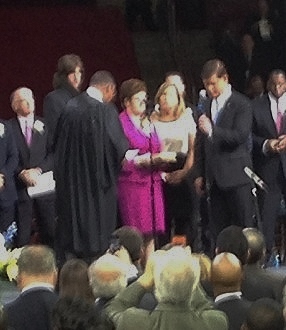
^ taking the three-part oath as Boston’s 48th Mayor :Martin Joseph Walsh of District 3

—- —- —-

So said Marty Walsh after being sworn in as Boston’s 48th Mayor. Chief Justice Roderick Ireland swore Walsh in. Walsh’s Mom and brother and his gal-pal Lorrie Higgins stood by to watch the “kid from Taft Street” official become His Honor. It was a moving moment no matter which of the 12 Mayoral candidates you wanted. Walsh grew up without a big name, on a three-decker street, surrounded by temptations, some of which befell him. And now here he was, the City’s leader, holder of perhaps the most powerful elected office in Massachusetts.

Other men have traced the same kind of path from bottom to top. One thinks of Diocletian, Roman Emperor, yet born a slave, who rose, who educated himself. Or of Abraham Lincoln. Or Fiorello LaGuardia and Al Smith. It is, in fact, a commonplace of politics, that those on the bottom often believe in the system more truly than many on the top and who, aspiring, steel themselves to rise within it, no matter how long or painful the climb, and to become the steward of it and of all it represents. There have been innumerable Marty Walshes in history. And yet…it is still moving to see an actual Marty Walsh actually become Boston’s Mayor and to see the gathered thousands of Boston’s elite and non-elite actually there, in Conte Forum, to witness his becoming Mayor and to cheer it.

Image

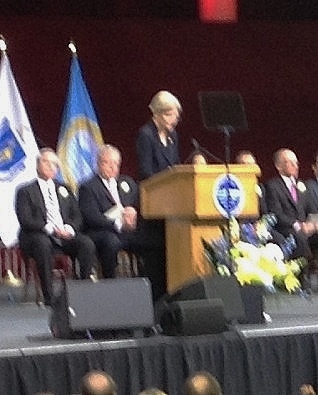
^ Senator Elizabeth Warren delivering her remarks to “my friend Marty”

The powerful did not hang back. Senator Elizabeth Warren spoke eloquently about the passion that she and Walsh, so she said, share for alleviating inequality and the achievement gap. Governor Deval Patrick, choosing a light comic note, told Walsh that he would wake up from “a day of blur” but to savor the moment anyway. Cardinal Sean O’Malley of Boston also sat on stage. Yo Yo Ma performed the “Danny Boy Serenade” with dominant intensity and equally masterful delicacy. The entire City Council, all 13 members, sat on the other side of the podium and took its own oath. The front rows of the Forum found a seated multitude of descendants of former Mayors : Flynns, Whites, Fitzgeralds, Hyneses, Collinses — lending depth to the occasion’s topside.

Image

^ the gathered thousands included a huge segment from Dorchester, all of whom cheered loudly when their Councillor, Frank Baker, was sworn in.

Walsh then delivered an inaugural address sturdy and point by point clear. All the themes of his campaign took a turn : collaboration, diversity in staffing, improving education, ending the achievement gap, attacking violent crime, and assuring full equality to all Bostonians no matter what their sexual orientation, lifestyle or origin. He thanked “,my sisters and brothers in labor” — was roundly cheered — and almost in the next sentence said “let it be known that Boston is open for business.” Here he spoke of “innovation in every neighborhood, not just downtown” and of small business, start-ups, and businesses big.

It was a firm speech, confidently delivered, steady as she goes. Which may well be the defining tenor of Walsh’s administration.

And so you have it. Marty Walsh is your Mayor. Yep.

Image

Image

^ from Chelsea, with what mission ? new corporations counsel Eugene O’Flaherty, currently chairman of the State’s House Judiciary Committee

Hardly two hours had elapsed after that “yep” when an announcement was made at least as portentous as the inauguration itself : State Representative Eugene O’Flaherty, of Chelsea, is giving up his House seat and his House Judiciary Committee chairmanship, moving from Chelsea to Boston, and becoming Walsh’s chief corporations counsel : the city;s top lawyer. I admit that this choice surprised me completely. It was easy enough to believe that Walsh wanted O’Flaherty, who was first elected to the House in the same year as he (1996). The two men share much heritage. The difficult part for me was, why would O’Flaherty take the job ? He isn’t just a State Representative, he is one of the chamber’s key leaders. And also have to move house. There has to be a big story going on, and what it is, I can only speculate. It may involve the Steve Wynn casino project : O’Flaherty represents Charlestown, which Walsh did not come close to winning on election day and which will; be heavily impacted. Is O’Flaherty being asked to use his particular knowledge of the area to win the best mitigation package possible from Wynn, including — a top Walsh priority — construction jobs ? or perhaps to sue the Wynn project, or the Suffolk Downs Revere-only casino project if needed ?

We will soon find out.

We will also find out who Walsh chooses to head the other City departments. Of only one such did he say there would be a “nationwide search” : schools superintendent. Of course so. No Bostonian would want the thankless, frustrating job. (One of his two school committee appointments has already caused comment : replacing charter school principal Mary Tamer with labor lawyer Michael Loconto.) As the school committee appointment shows, not many Bostonians Walsh might name as superintendent would avoid raising an outcry from one interest group or another. Compared to schools superintendent, it’ll be easy to pick a Police Commissioner and one for the Fire Department. No nationwide search needed there.

—- Mike Freedberg / Here and Sphere

BOSTON MAYOR : MANAGEMENT IS THE MESSAGE

Image

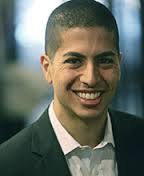
^ probably the most-viewed face in Boston today : 29-year old Daniel Koh, who will be Mayor-elect Marty Walsh’s Chief of staff

—- —- —-

“Management” is the message that Mayor-elect Walsh is sending so far. Changes in polkicy may be coming; certainly his core supporters insist on it; but for now, the prioority is to manage better what already is.

We saw the message previewed at the Transition Team Hearings, in which each Task Force found its suggestions divided into “keep,” “implenent,” and “dream” components. Categorization helped task force participants to appraise the impact of their ideas — and to traffic-cop the discussion toward flow, not tie-ups. Still, it wasn’t clear then that traffic-copping would become a policy in itself; but it looks that that is what has happened.

The selction of Huffington Post chief staff manager Daniel Koh to be Walsh’s chief of staff confirms it. Koh is a manager, not a politician. He holds an advanced degree in management; method is his milieu, application his brief. Havard; Phillips Andover (disclosure : my school too). He worked in Mayor Menino’s administration prior to joining Huff post. His selection assures that the policies will be Walsh’s, the implementation, Koh’s. Sometimes chiefs of politicians’ staffs inject policy ideas of their own. It’s all too easy for an office holder’s office manager to control the action. Koh will not — probably can not — do that to Walsh : or maybe I should say, he and Walsh agree completely, that management will be the policy and thus Koh will have free rein to make it happen as he deems best.

(to learn more about Daniel Koh, follow this link to his Huff post bio : http://www.huffingtonpost.com/daniel-koh/ )

The selection has won almost universal applause. Nearly everyone understands that, despite Tom Menino’s remarkable popularity with voters, his City Hall abounds in seat of the pants. “Temperamental” is its key. Who knows what, or who, will be the priority tomorrow, or the next day, of Menino’s impromptu, grudge-freckled mind ? As for the BRA, the less said the better. Developers either got aboard Mayor Menino’s Indiana Jones-like chase horse or they risked getting poofed, or cornered. Communities into which developments were to be deposited found themselves labyrinthed, door-locked, sweet-and-sour talked. One heard it at all the Mayoral Forums during the campaign, in every part of the city. Heard also was an almost universal demand to simplify the City’s permitting process — or should I call it “permitting adventure” ? Permitting should eanble enterprise,l not discourage it, much less laugh at it.

Nobody much mentioned the taxi scandal during the campaign; it wasn’t laid at Menino’s door; but nowhere in City governance was Menino’s managerial unavilability more on view. For how many years had the City’s taxi drivers been allowed to be cheated, gouged, disrespected by taxi medallion owners, with not a whisper of investigation undertaken, much less corrective action ? It happend on Menino’s watch, and he knows it did. So do we.

Walsh appears determined to not let that sort of sinkhole exist on his watch. This is a good thing, and a wise one. Walsh knows that the City is divided on most of the major policy areas he will eventually have to face. School reform, City unions, staffing diversity, traffic and bikes, poverty and achidvement, public safety — all portend division that Walsh, elected by a coalition internally mjuch at odds, cannot afford to take hold. On management of what the City does already do, however, there is almost no disagreement : it needs dramatic improvement. Order out of anarchy, simplicity from confusion.

Improving City management was the message of two Mayoral campaigns that did not win : Rob Consalvo and Dan Conley. Walsh won almost all the Consalvo votes : voters who don’t like Walsh’s charter schools record and don’t readily comport with his trade union style but who chose him nonetheless. These voters must be happy to see Walsh adopt Consalvo’s signature theme. As for Dan Conley voters, Walsh won hardly any. His emphasis on City administration first can only be a pleasant surprise to voters who did not envision Walsh as an administrator of anything.

You all know that we at Here and Sphere favored John Connolly. But I saw in Dan Conley a very capable second choice. Thus I too find Walsh’s “management first” message a wise one. The policy decisions can wait while he — and we — fix the process by which those policy decisions will be implemented.

Meanwhile, Councillor Ayanna Pressley has announced that she will seek the Council Presidency. She is said to have Matt O’Malley’s vote and Tito Jackson’s. The wheels are turning. Oh yes they are.

—- Mike Freedberg / Here and Sphere

UPDATE : Now I am getting reports that Bill Linehan will have no less than 8 votes out of 13.  Even so, Ayanna Pressley has made her move. And a statement.

SNOW AND COLD, COLD AND SNOW

photo (46)

Outside my front door almost eighteen inches of white chilly dust quilts everything. Car, bushes, porch roof, trash barrels, sidewalk all wear a parka-coated white through which humps and twigs loom or stab, grasping toward the sun. Good luck with that ; the sun wears a shawl of haze, a lace of cloud ice. Tomorrow, maybe, it will shine; today it sports a drowsy eyelid. A half-asleep sun can’t do its job. The temperature as I write sits at 8 degrees of F. At wake-up time it was 4. But that means there’s no melt, none at all. The snow is dry, as sere as a corpse’s spit. I broomed it off, whisk — whoosh — see-ya !

Then the car. That wasn’t as 1-2-3. Last night’s defroster ice bonded to the windshield epoxy-like; it clung to the driver’s side door like a tic. I had to enter from the passenger side — that door not having opened during last night’s drive, no ice crept into its lock — slide across to the driver seat and with shoulder, shove the door open — wham ! It opened, all right — with a crack. Had my shove ripped the door frame from its seams ? With fingers frozen stiff I stumbled the key into the ignition, wanked it with my knuckles, pumped the pedal — the engine turned over, faithful horse that it is. Was there enough antifreeze, or would the block crack ? On mornings like this I ask that question. They don’t happen every year even here on the coast just northeast of Boston, but at 7 AM it’s too late to wish that I had checked the coolant yester-eve. I am in luck. The engine warms up smoothly. Eight minutes and the defroster is melting the windscreen ice. My hands, too.

Five more minutes of melt, and I can see the driveway and the street. Off I go. Easy on the pedal, steady, out the driveway, onto the street — nobody’s coming, nobody at all, there’s not a car anywhere but mine. It’s the kind of selfie that I like. An honest street on an honest day.

Out onto the expanse of road my horse purrs. Piles of snow dust flank the wide street. The plows guys have earned their overtime pay, the main roads are clear as a gallop. To the nearest Starbucks I go, here to assuage my latte addiction, eat a walnut muffin, and write the story that you are reading now.

It’s one helluva winter morning in coastal Massachusetts. Cold and snow, snow and cold. There isn’t even one boat on the harbor, only unused mooring sticks. But the sun is riffling the bay surface into chips of foam, the nor’west wind catches them and rolls the foam up like an ice quiche. Somebody ought to run a trawl right now. When i was a young’un, we’d do just that : run a few traps for lobster — January lobsters are hard-shell like you wouldn’t believe, full of meat and chewy. And fish ? Under surface water this cold entire flocks of fish come out and party like ravers. But I see no trawler, no tuna boat, no lobster dory. Just water wind and haze of sun. It’s a quiet thing, is cold. Not a sound. Dust of snow too has no voice.

But I do.

—- Mike Freedberg / Here and Sphere

photo (45)

LABOR ISSUES AND THE ECONOMY : UNITY IN NEW YORK

Image
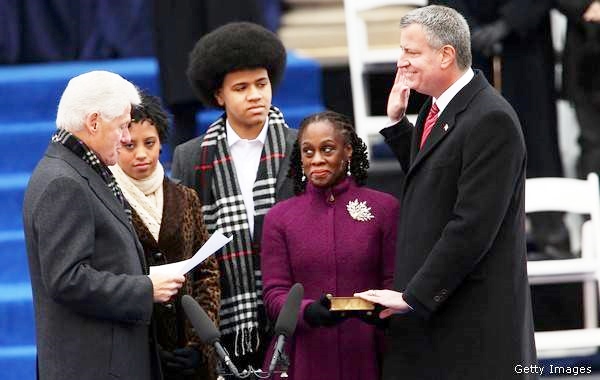
^ center left pact ? unity in New York as Bill Clinton swears in mayor Bill deBlasio

—- —- —-

By asking Bill Clinton to swear him in as New York City’s new Mayor, Bill deBlasio has already made history. On this one move, deBlasio has assured that the Democratic Party will not split between wings “Labor’ and “Centrist.”

This is good news for all Americans who want to see economic progress come to their lives, not just the very favored top earners. Many Americans — myself included — are pushing legislation and referenda to relieve the huge rush of money to the top, money away from everybody else. These moves cannot take the field as an opposition movement within the only political party placed to bring them about. Bill deBlasio and Bill Clinton have signalled that they understand this and will move forward as Democrats together. The initiatives the two men agree on could not be more vital :

1.raise the Federal minimum wage to $ 10.10 n hour and index it to inflation.
2.protect unemployment benefits for long-term unemployed, many of whom have been without work so long that they already require job retraining in order to maintain skills currency
3.commit all the Federal spending needed to repair and improve America’s infrastructure
4.maintain the Federal food stamp program, do not cut funding for it

To which I could add the following :

1.fully staff the National labor relations baord (NLRB) to monitor and protect the organizing and bargaining rights of workers in organizable industries
2.make it an unfair labor practice to (a) reduce workers’ hours to part-time levels so as to avoid paying benefits or providing health insurance (b) make such workers “independent contractors” rather than W-2 employees
3.extend the “earned income” credit to incomes up to 150 % of Federally defined “poverty” level.
4.pass a comprehensive immigration bill that provides all undocumented immigrants other than those with a felony criminal record a pathway to citizenship, and immediately grant social security numbers, access to drivers’ licenses, and access to health care to all such immigrants.

The initiatives that deBlasio and Bill Clinton jointly advocate, and those that I have added to the list, purpose to do the right thing by many millions of our neighbors; they will grow the economy strongly. Did we need Jeb Bush –a Republican — to point out, as he did at last year’s CPAC Conference, that undocumented immigrants are a boon to the economy, in the work that they do and, yes, the taxes that they pay ? That by their young demographic, they help rescue the Social Security fund ? Jeb Bush said that. Why it needed saying, I’ll never understand. It’s common sense ! The economy is ALL of us. If millions cannot participate in it except at the margins, the economy suffers. Time and again I have editorialized that consumer spending = two thirds of our ENTIRE economy. You want jobs created ? Consumer spending creates them. businesses do not hire people because taxes drop. They hire people because demand increases for their products and services.

Why can’t the funders of today’s Republican party get this ? The businesses that have pushed most current Republicans to fight every move that puts more money into more people’s budgets are blind to their own interests. Any business exec with half a brain knows that his or her employees are the strongest asset, that employee turnover is a huge and largely unnecessary expense; that prosperous and loyal employees buy what they make or the services they provide; that they spread the company’s good reputation by word of mouth to everyone they talk to.

May I add, as I’ve said before, that if the Republican-funding business execs don’t like unions, don’t make your workers organize one in order to get paid what they deserve ? Otherwise, expect a union and all the hassle, drama, and — unhappily — oppression and even intimidation that comes with union organizing and job actions.

Granted that almost all of the new job descriptions being formed in the technology world are not union work. They’re as individualistic as innovation in the raw always is. New economy jobs also pay well. There’s no lack of venture funding for innovation work. I also note that many, maybe most, innovation venturists work with the Democratic party now. They’re not the breed of CEO that funds self-defeating money PACs.

In Boston, in our Mayor election, these innovation capitalists and the start-up world that they fund split with union and union-organizing interest groups about which man to support. Nor do we have available a Bill Clinton to swear in Marty Walsh and reunify our state’s Democratic party. But the issue that divided Boston’s Democrats in the mayoral election wasn’t part of the economic progress agenda that Bill Clinton and Mayor deBlasio have shaken hands on. Here the issue was the part that public worker unions should play in the City’s budget and what level of influence they should have on City policy governance. On the economic progress agenda, Walsh and John Connolly fully agreed.

—- Mike Freedberg / Here and Sphere

PS : many of the innovation venturists and execs who supported John Connolly were and are of a mind to support some Republican candidates, at least locally in Massachusetts; possibly even nationally. Why the current Republican consensus cannot connect to these innovation capitalists, I’ll never understand. It would help, of course, if the party could ditch the lifestyle bigotry and lose the opposition to women’s reproductive rights. Fortunately, those obstacles mine no ground in Massachusetts. Charlie Baker, if he hopes to be our Governor, is free to embrace innovation capitalism, discard Scrooge agendas, wave off the anti-immigrant talk, and embrace diversity, economic dispersion, and the future. He might just do that. His excellent plan to end homelessness in Massachusetts is a promising first step.

BOSTON SCHOOLS REFORM : THE ROLE OF PEDAGOGY

Image

^ the teacher overseeing “learning in community”

—- —- —–

In Part I of my look at how Boston should reform its Public Schools mission I focused on curriculum. I asserted that employers and citizenship must be accorded primary status in curriculum, and also must be the decider about competition among teachers and between schools.

Now for Part II, in which I discuss pedagogy — the means and methods by which teaching is done — because pedagogy is the province of teachers and only teachers. It is they who must use them. It is teachers who innovate teaching method. Teachers lead by example. They are the souls in which passion for knowledge lives.

Image

mathematics pedagogy : Building the Habits (Love) of Learning

As in so much of the world of thought and in the practice and theory education, Augustine (354-430 AD) was the first to write comprehensively about pedagogy. I cannot think of any writer then or since who has contributed more — even as much — to our understanding of what a teacher does, how, and why. It is well worth your time to read the following long passage from Wikipedia’s extensive biography of Augustine, who was a teacher all his adult life, a brilliant thinker, and (if anything) an even more brilliant writer :

“Historian Gary N. McCloskey ( says a passage in Augustine’s Wikipedia biography) finds four “encounters of learning” in Augustine’s approach to education:

1.Through Transforming Experiences;
2.as a Journey in Search of Understanding/Meaning/Truth;
3.Learning with Others in Community; and
4.Building the Habits (Love) of Learning.

“His emphasis on the importance of community as a means of learning distinguishes his pedagogy from some others. Augustine believed that dialogue/dialectic/discussion is the best means for learning, and this method should serve as a model for learning encounters between teachers and students. Saint Augustine’s dialogue writings model the need for lively interactive dialogue among learners.

“He introduced the theory of three different categories of students, and instructed teachers to adapt their teaching styles to each student’s individual learning style.

“The three different kinds of students are:
1. the student who has been well-educated by knowledgeable teachers
2.the student who has had no education; and
3.the student who has had a poor education, but believes himself to be well-educated.

“If a student has been well educated in a wide variety of subjects, the teacher must be careful not to repeat what they have already learned, but to challenge the student with material which they do not yet know thoroughly. With the student who has had no education, the teacher must be patient, willing to repeat things until the student understands, and sympathetic. Perhaps the most difficult student, however, is the one with an inferior education who believes he understands something when he does not. Augustine stressed the importance of showing this type of student the difference between “having words and having understanding,” and of helping the student to remain humble with his acquisition of knowledge.

“Augustine introduced the idea of teachers responding positively to the questions they may receive from their students, no matter if the student interrupted his teacher.

“Augustine also founded the restrained style of teaching. This teaching style ensures the students’ full understanding of a concept because the teacher does not bombard the student with too much material; focuses on one topic at a time; helps them discover what they don’t understand, rather than moving on too quickly; anticipates questions; and helps them learn to solve difficulties and find solutions to problems.

“Yet another of Augustine’s major contributions to education is his study on the styles of teaching. He claimed there are two basic styles a teacher uses when speaking to the students. The mixed style includes complex and sometimes showy language to help students see the beautiful artistry of the subject they are studying. The grand style is not quite as elegant as the mixed style, but is exciting and heartfelt, with the purpose of igniting the same passion in the students’ hearts.”

Augustine knew well what teachers today know and apply every day in the classroom : that different students require different means and methods. Augustine’s insight can thus be extended to Special Education as well. There are only two ways to apply Augustine’s individualized teaching. either you can separate the three categories of students and teach them apart, or you can bring them into the same classroom and work each group as they are. As Augustine counted highly the community setting, he would seem to favor the integrated classroom.

Can this work ? Augustine was the first education theorist to suggest a variety of teaching styles, each geared to a category of student. It must have been an exciting classroom, with Augustine teaching one way to one group of students and another way to another group, and all the students observing — even participating — in the diverse program. But Augustine did not confine his teaching to classrooms. He loved company at meals, and it is not unlikely that he had many of his students to dinner, thereat to instruct them, probably by improvisation upon the various pedagogic styles he wrote about (and certainly used).

I make the following additional observations to this examination of the greatest educational theorist’s pedagogy ;

1.None but a teacher could have conceived the pedagogic challenge as creatively as Augustine did, or as insightfully
2.certainly the employer of that time, the Roman imperial bureaucracy, could not have done it. Nor did it care to try. That was why it hired teachers. It was the teachers’ job to figure out how to educate students to the needs of Imperial administration.
3.assumed in all of Augustine’s education manual is that all teaching must met a standard of effectiveness. In his time, that was determined by the employer. The ineffective teacher lost Imperial favor, or students, or both. It was a self-evaluating system.

What we teach today has changed — though not as hugely as we sometimes assume — and schools now answer to a million employers, not only one. But Augustine’s pedagogic rule remains : that it is teachers, and only teachers, who must devise the means and methods by which will be taught the curriculum that the society and employers pay to have taught.

Teachers in Augustine’s day had no choice but to excel. They were not paid by the state. Their pay came from students’ fees. If a teacher had imperial favor, the fact was known, and he drew students; and these students paid. If he lost favor, the students’ parents saw that and sent their children elsewhere. Tenure ? There was no such thing. Every day, a teacher risked all. While it worked, it was the finest education system our civilization knew until modern times. Of course I do not suggest that we abolish tenure. far from it. That’s too much to ask of teachers who practice under the current system and have career time invested in it. But I do want to assert that tenure comes at a cost. A non-tenure system such as Roman education is self-evaluating. Evaluations in our tenure system depend upon who is doing the evaluating and answering for them to whom. Most of the evaluators are middlemen, not the society — and not the employers. But I suppose that, as in so much, inefficiency is the precious price that democratic government pays to a complex society of human fallibility.

Today we educate every child, not just the next generation of imperial administrators. We teach for a hundred different careers; we teach dozens of subjects. Scientific method was unknown. All students, of whatever  origin, learned in Latin. A unified administration was the rule then; diversity is ours now. Then, the stylus and tablet ruled; today, the digital device. Yet for all the differences between Augustine’s late imperial state and our always changing polity, teaching remains what Augustine knew it to be : teacher and student, teacher and students, learning for a purpose, a career, a better life and — perhaps — the love of learning for its own sake.

For Augustine, teachers ruled. So too for most of the educational theorists whose impact has been paramount since. Some theorists emphasize the school administrator — the principal. Some, the grading system and promotion from grade to grades. All these Augustine’s school took into account as well. The teacher yet ruled.

If the members of teachers unions could only accept their mission, embrace it as their unique contribution, risk all, and apply it within the larger context of society, competition, and employer curriculum, we would move a long way toward deploying education’s variety of means, methods, subjects, and standards in a context of challenge, innovation, and struggle as opposed to job security, curriculum debates, and one size fits all. It doesn’t. If Augustine knew that, why not us ?

—- Michael Freedberg / Here and Sphere

NOTE : You should read Augustine’s Retractiones as well as Peter Brown’s almost on-the-scene biography of Western Civilization’s most insightful social and psychological thinker — not to mention brilliant punster, superb speaker, and dramatic lecturer.

BOSTON : SCHOOL REFORM SLICED DICED AND…BLAND ?

Image

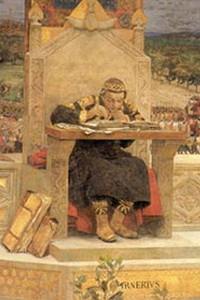
^ curriculum revolutionary : Irnerius of Bologna (1050-1125), who introduced new studies of law and so won the competition to draw students to his lectures

—- —- —-

“Today’s lesson, boys and girls, is ‘school reform : its history, its heroes, and its opponents.”

Thus sayeth the teacher. This shall be Part One of a Two-part course. Let the lecture begin :

No societal institution is harder to reform than schools. it has always been so. To take one huge example, when Greek began to be studied by European scholars in the 13th Century, its introduction, as a taught course, into the universities of that day — which taught all in Latin only — occasioned actual riots. Another example : teachers in medieval Europe were independent contractors, competing with each other (often viciously) for students (and student fees) — not collegial at all. Witness the revolutionary curriculum innovations — and career — of Irnerius of Bologna. Only when the advantages of coming together as a faculty showed themselves fatal to independent teachers seeking students did the faculty, collegial system become the standard. It took almost 300 years to make the point. One thing did NOT change : teachers worked on the margins, never far from wipe-out. If students did not sign up for their lectures, their teaching career ended. Something like that is still the case. Courses that attract too few students to pay the teacher’s salary get dropped from the curriculum.

You will of course notice that I am talking about “higher’ education. The situation with primary education was different and still is. Students in primary school learn the basics. These have hardly changed at all since Roman days — because the basics of civilization scarcely change. What does cahnge is the WAY in which the basics are taught, and, again, changes in method have come about only with much controversy and almost always far too late. Thus it is no great surprise to see that, today, in Boston, school reform movements meet big resistance, even counter-reformation.
Image

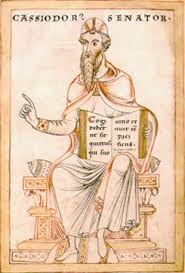
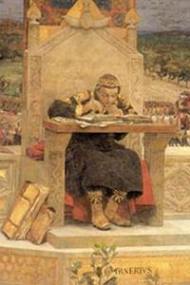
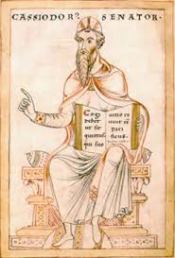
^ Cassiodorus (ca 485-585), the Arne Duncan of his day, as chief aide to Theodoric the Great and later, educational reformer. When he retired, his library of over 2200 books stocked a monastic school that he founded on his estate at Vivarium, near Catanzaro in the “boot” of Italy.

There have always been four major constituencies on the battlefield of school reform : parents; students; teachers; employers. it was so in Roman times — but the Roman system was a ducal, bureaucratic one in which schools prepared for only one career : oratory in the senate, oratory as a proctor (litigating lawyer), oratory in imperial administration. Parents fought to get their brightest children into a school well connected to imperial circles; teachers fought to get the imperial approval without which they could not teach in an imperially sanctioned school; students were force-fed and even beaten, learning by rote, marine-drill-sergeanted into a mindset sufficiently bureaucratic to win them a coveted post in the imperial or Senatorial circle. (if you want to taste something of the flavor of late Roman schools, read chapters 3 through 6 of Augustine’s CONFESSIONS.) To sum up ; in the Roman world, the employer entirely dictated what the school would teach, to whom, and how.

Is it thus so odd that today, in Boston, employers want a major say in how the City’s schools teach future employees ? Is it not a huge concern of theirs, that graduating students be able to meet the entry-level prerequisites, at least, of their hiring ? Kids do not graduate from twelve years of primary and secondary schooling just for graduating’s sake. They graduate to employment. Some may, it is true, go into the military — where they will be trained as forcefully as the Roman world trained its legions. A few may move directly to entrepreneurship. but for 80 to 90 percent of graduating students, employment awaits, just as it awaited the graduates of Roman academies.
Image

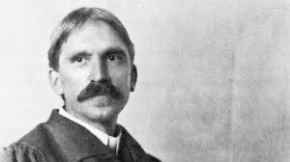
^ John Dewey : “learn by doing” — implanting the culture of apprenticeship learning into school methodology

As for employers dominating, even owning our schools, keep in mind that imperial or Senatorial patronage funded and staffed all the Roman world’s schools. Today we would not accord employers such dominance of our schools, partly because we have thousands of varying employers where Rome had only one. But we cannot, and should not, decry substantial employer involvement in the content and method of what our schools teach. We should invite it.

Our schools also teach one other major ethical learning : citizenship. In Rome, citizenship belonged to all, and it bestowed important rights. But citizenship imposes duties as well, and so long as the Roman world held together its schools taught what they taught not just as skills necessary to imperial employment but also as a responsibility of citizenship. The two obligations were not separate. In our world and our schools, citizenship is not so obviously an integral part of employment knowledge. It involves knowing history, the law, cultural diversity, tolerance, inquiry, participation in politics. Yet are employers not concerned that their employees be good citizens ? Young people who cannot accept diversity, or display good manners, or lack social graces, often make poor employees.
Image

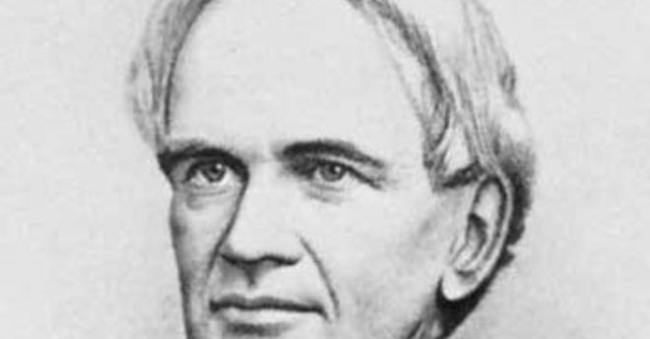
^ Horace Mann : Massachusetts Congressman and education reformer — citizenship / civics as part of a core curriculum

I present this lengthy background as a platform upon which I now offer the education reform plan posted by incoming mayor Marty Walsh. Here it is as posted on his website :

“Marty’s plan is to immediately build on current strengths within Boston Public Schools, and simultaneously develop and implement a long-term strategy based on equity, access, accountability, transparency and collaboration to provide a top-notch education for all of Boston’s children. Success will require taking a hard look at current practice, the political will to make tough, necessary changes, and the collaboration of families, educators, and partners across the city to realize a shared vision.”

“In addition, Marty recognizes the achievement of students with disabilities can be accelerated by participation in inclusion classes with their differently abled peers. The Walsh Administration will continue support for current plans to expand the number of inclusion schools, and will increase support for principals and teachers to learn about co-teaching models, Common Core Standards and differentiating instruction.

“Embrace and Support the Implementation of the Common Core State Standards – The Walsh Administration will ensure each and every school has a plan to integrate the Common Core State Standards into daily instruction, prepare teachers to teach the standards, and help students demonstrate their knowledge and skills.

“Selecting the next superintendent is one of the most important decisions facing the new administration. It is critical that the superintendent fully embraces the Mayor’s vision and is committed to its success.

“Maintain a Mayoral-Appointed School Committee – Marty supports an appointed school committee. This is the best way to ensure a body that fully reflects all the stakeholders in quality public education, including those with direct experience providing education, and those who understand the importance of prioritizing the needs of the whole child in an urban school setting.

“Central office departments will be redesigned into streamlined cross-functional units and held accountable for how well they provide support and service to schools. School supervisors will closely monitor schools in order to know which school leaders to support, which to push, and which to grant autonomy so that each and every Boston Public School is among the very best schools in Massachusetts.

“The Walsh Administration will focus on “deepening the bench” of potential school leaders who know how to work with teachers to improve instructional practices tied to the Common Core State Standards.

“Strong partnerships with local colleges and universities, and support for accelerated programs that prepare teachers for urban schools, such as those offered at the University of Massachusetts Boston, will be developed to supply qualified candidates. Systems and incentive will be implemented to retain strong principal and teacher leaders with appropriate compensation.

“The Walsh Administration will be aggressive in working with federal elected officials and agencies, the Massachusetts State House, and corporate and non-profit partners to increase revenues for targeted programs.”

— so sasys Marty Walsh, officially.
photo (21)

^B George Perry, Jeri Robinson, and John Barros — Walsh’s Schools team. Is there a Cassiodorus in this triad ? Or just smiling faces ?

The Walsh plan has aroused plenty of opposition from anti-Common Core advocates. (Even though Massachusetts school standards are stronger than Common Core, which is thus irrelevant to Boston schools.) it also disappoints many who want a much more comprehensive overhaul of Boston Public School methods, curriculum, student assignment, and partnering. For me, the plan’s face is its blandness. It is cardboard. It avoids all of the difficult issues. It hardly mentions the most controversial or necessary. you won’t find in it the terms ’employer,’ “charter school,” “teacher evaluation,” “teacher selection,” “school competition.” It really is not a plan for reform at all. What I take from it is a message that we should TALK about reform. This, the City is doing. But then what ?

I find especially unfortunate the plan’s entire avoidance of competition. I know of no dynamic school system in which competition between schools — between teachers within those schools — was not an integral condition. Uncompetitive schools teach uncontroversial knowledge. Competition can be imposed upon schools and teachers only by employers — in the Roman world, the Emperor demanded, and that WAS the competition — or by the students and their parents, who, as in Abelard’s Paris and in the teaching city that was contemporary Bologna — pay their teaching fees to the best teachers. The competition then — years 1080 to about 1270 — was brutal, but knowledge advanced daringly and hugely. (we don’t call it “the Renaissance of the 12th Century” for nothing.) Much of the advance in knowledge was brought into those schools by independent researchers, often working in Muslim lands. The same is true today. Innovation Districts and their collaborative competitors are our era’s version of 12th Century’s wandering researchers. They and their knowledge, gathered from everywhere, should inform, revive, reconstitute our City’s public schools — curriculum, evaluation and pay, responsiveness to a rapidly evolving world of employers.

Or we can choose stagnation, blandness, and loss of the innovative daring that made Boston so different a city for so long.

—- Michael Freedberg / Here and Sphere

Tomorrow : the teacher and his or her career in a system committed tyo innovation, citizenship, and employment.

#BOSMAYOR : SOMETHING TO HIDE

Image

^ all but one of these folks didn’t hide. Why the AFT ? “OneBoston” ? Ya right.

—- —- —-

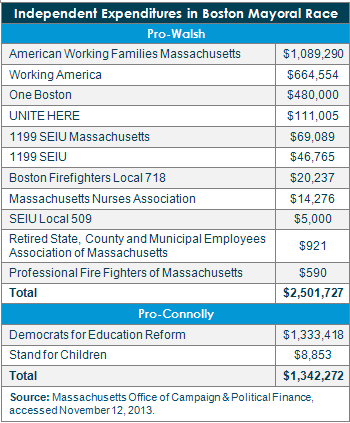
Thanks to the Boston Globe’s Wesley Lowery, who scooped the story, we now know who “OneBoston” was and where its mysterious, last-week-of-the-race $ 480,000 ad buy came from. The AFT did it. As in American Federation of Teachers.”

My purpose is not to retell Lowery’s story, which you can read in the link below this paragraph. My intention, rather, is to confront the secrecy of it. By steering their $ 480,000 into the Boston Mayor race via a New Jersey PAC, in which state disclosure of donors is not required, the AFT kept hidden what it felt it needed to hide. The same was true of the Boston Teachers’ Union, which didn’t issue an endorsement of Marty Walsh until the morning of election day, too late for news media to make the voting public aware.

Link to Wesley Lowery’s story : http://www.boston.com/news/local/massachusetts/2013/12/27/american-federation-teachers-revealed-funder-behind-mysterious-pro-walsh-pac-during-mayoral-campaign/ioVOZ2wdjfhxNVPF8hasMN/story.html

Why the hiding ? Clearly these teachers’ unions felt that if their active involvement in a Boston Mayor’s race were known , Boston’s 57,000 public school parents — and surely others — would not like it. These unions know that there’s scant public support for their agenda. Yet they were willing to hide behind the blinds for the sake of electing as Mayor a man who sits on a charter school board — which teachers’ unions profess to hate — but who is known to be a friend of unions and a go-slow collaborator who would likely not shake too many peaches off the peachtrees, in preference to a committed “school transformer” who actually sends his kids to a public school and who wanted much better than the status quo.

All year long the teachers unions have demonstrated their unwillingness to accord any school reform measures but their own. For them it has been “our way or the highway.” Thus the hiding; because school parents, curriculum developers, and Massachusetts’s state government have other ideas about how to improve schools than the teachers unions do and have more than sufficient public support to override the inflexibility of the teachers’ unions; and these unions know it, and thus took to subterfuge to evade the spotlight.

It was a pitiable example to set for the students whose citizenship learning we entrust to teachers. Don’t discuss, insist. Don’t make your moves known, deceive. Don’t confront unpleasant truths, send anonymous poison letters. (Privatization of schools, corporate intruders, child of privilege, etc.)

Bad enough when political campaigns do it. Despicable when done by people to whom we entrust the education of our children.

To circle the wagons around their own agenda, teachers’ organizations were ready to see a Mayor elected whose prospects are incremental at best, a mayor who is too decent a guy and too collaborative to force the hard decsions, instead of pursuing real reform by a Mayor candidate who understood that the future will not be like the past and who had solid ideas — and the intelligent fortitude and talented support group — on how to get his city there. To circle the wagons and do it under the table, like a worker trying to avoid paying taxes. I call it dishonorable.

John Connolly, the loser in this ambush, told Lowery “as a candidate I’m moving past the race. As a BPS parent, I am really angry.”

There was a time when teachers were reformers; embraced experiment; proposed new curricula and new school arrangements. Most teachers still understand very clearly that it is NOT about THEM, it’s about educating children. Unfortunately, the teachers’ organization that invaded the Mayor’s race unannounced “because they are fighting for working families,” no less, failed to get that message. For these groups, it was indeed all about them.

The Boston Teachers Union (BTU) had an opportunity, early in the race, to embrace the candidacy of John Connolly, which had made education the number one issue, and to discuss with him how to best reshape the public schools to be beneficial to the future economy and society. That would have been a superb exercise in reform that the voting public would surely have welcomed. Instead, the BTU chose to retrench, to demonize Connolly, to support a man they didn’t want to support, and to do so by last-minute ambush. But I do not blame the BTU as profoundly as I do the AFT. The BTU’s resistance to reforms not advocated by it was well publicized even if their election-morning endorsement wasn’t. The AFT chose to hide behind the curtain, like Polonius, and to lob a $ 480,000 bomb into the arena. It shouldn’t be surprised if it now finds itself poignarded by a host of Boston School Parents who have other ideas about school reform and who resent being ambushed by refuseniks.

—- Michael Freedberg / Here and Sphere

Reporter’s note — All of this confirms my appraisal that it was Walsh’s weakness, electorally, that allowed him to accrue so many allies and thus to win. The politicians and interest groups that lent Marty their support applied the “City Council Presidency” rule : always vote for the weakest. That’s fine when electing a mostly powerless Council Presidency. It’s not so fine when misapplied to an office truly potent, as Boston’s mayor sure is. By applying the “vote the weakest” principle to Walsh, the groups and politicians who backed him basically retained power in their own hands — a kind of back-door Recall. The last thing these groups and office holders wanted was a strong Mayor who didn’t need them at every flex point. Walsh can still break free and grab the power of office; but to do so, he will have to betray and/or push aside many of his supporters. (It can be done. See the papacy of Pope Stephen III, mid- 8th Century, for an example of how to do it.) However, I see nothing in Walsh’s career or temperament that suggests such an outcome. I’m not sure he even wants it.   —- MF

BOSTON : ON THE DEATH OF HERB GLEASON

Herb Gleason

^ aristocrat in Boston City hall : corporation counsel Herb Gleason, 1928-2013

—- —- —-

Herb Gleason of Beacon Hill died on December 9th. He was 85 years old and was, as Barney Frank recalls, “a man from the Boston aristocracy who deeply immersed himself in Boston politics in a wholly constructive way.” You should read the obituary that Bryan Marquard wrote for today’s Boston Globe and which features Frank’s quote. It tells Gleason ‘s life story and why — as Mayor Kevin White’s Corporations Counsel, most of all — he was important to the civic minded people of my generation.

My intention in this column is not to repeat that obit but to ruminate on Frank’s words and also on something that Gleason’s son David is quoted as saying of him : “He was very progressive in the real meaning of the word, the sense that government should benefit citizens.”

Today that “old Boston aristocracy” has almost disappeared. Those not yet born in its last glory days — the 1970s — probably have no idea what I’m talking about. No one uses the term “aristocracy” any more. “Child of privilege” — the term pinned on Jonn Connolly by Marty Walsh’s notorious AFL-CIO fliers — comes closest; yet A “child of privilege” can have parents who were themselves born into no privilege at all. The “Boston aristocracy” propagated its values (and its privilege) for many, many generations, one after another committed to the idea that wealth and privilege can never be their own justification; that being an aristocrat requires a man or woman to dedicate to the common good. The best-known Boston example of that aristocratic commitment is Robert Gould Shaw, son of Beacon Hill Brahmins, who coloneled the 54th Massachusetts Regiment of African-Americans and gave his life leading them into battle. Shaw’s life and death, thanks to the movie “Glory,’ now belong to the ages; but he was hardly the only exemplar, even in his own family : Barney Frank himself won his first elective office, State Representative from aristocratic Ward 5, with sponsorship by such as Shaw’s collateral descendant (by marriage) Susan Shaw Lyman.

There was much to criticize in the ways of the Boston aristocracy as it became defiantly snobby during the 1870s-90s. It was often anti-Semitic and hostile to Boston’s Irish. It was cruel to its own. Boys who could not shape up became “black sheep,” rarely forgiven. Its women had to suffer the unfaithfulness of husbands; many turned to hard liquor and spent days in a drunk. There was much ceremony — tuxedos and ball gowns to be worn — for the invited few, balls to be staged. Just as staged was the aristocracy’s speech. You knew immediately a Boston aristocrat by his or her pronunciations — consciously imitative of titled Britons. There was a list, too, of the accepted. Boston aristocrats proudly kept a copy of the “blue book” — the Social Register — on their desks or coffee tables; in it were the names, addresses, and current life status of those who “belonged.” And there was boarding school for every child — the most aristocratic of these quite consciously toff — a tumble into discipline for discipline’s sake which propagated itself all the way to the 1960, by which date  men like Herb Gleason (and women too) had reached adulthood.

For the majority of us, who were not Social Register, “that government should benefit citizens” was okay enough. It moved men and women to fight for child labor laws, women’s rights, slum clearance, hospital care open to all (there would be precious few Boston hospitals had not its aristocracy donated millions to their founding and expansion), pro bono legal work, libraries and books, the ACLU, racial integration, a city-girding parks system, bequests to the City for public purposes (think the George Robert White Fund), and service on all manner of City Boards. Taking a paid job in Kevin White’s administration, Herb Gleason went further. But so did John Sears — an aristocrat of aristocrats who also ran for mayor in the year that Kevin White won — when he accepted the job of MDC Commissioner. Yet the jobs taken by Gleason and Sears were a kind of civic-minded donation; each could have earned far more money in private law practice than they did as civic administrators.

All of this civic dedication by people born to great wealth or position seems so foreign to how we view the world today. We see people of great wealth now mostly as greedy self-seekers, or as celebrities fronting selfies. We cannot imagine today’s wealthy or famous sitting on library trustee boards, for example, or cleaning up Boston Harbor, or gathering signatures to raise the minimum wage, or protesting vote suppression — as so many did in the 1960s, even. And when we do encounter a “child of privilege” such as John Connolly was dubbed actually taking an interest in reform — in his case, school transformation — we’re not sure what to think.

Today when we hear of “children of privilege” in politics or civic affairs we’re as likley as not to think them out to serve themselves; to “skew the system” in their favor; to disenable, not enable, those in need. Perhaps that is one reason why John Connolly fell short of victory on November 5th. As said the AFL-CIo flier that i have already mentioned : “He’s trying to fool us.” There were plenty of successful people like that back in the day : but in those days they fooled no one — and didn’t try to. Yet always, from the decades of America’s founding right through the 1970s, critical numbers of civic-minded reformers of wealth and standing confronted the self-seekers at all levels. Today, when such a person appears on the urban horizon, he or she should be welcomed.

Civic-minded, progressive reform was never easy even in its aristocratic salad days. Machine politicians and those who kept them going — saloon keepers, contractors, industrialists, stock manipulators, work padrones, even criminal gangs — always pushed back. Only occasionally was urban reform successful. It was spectacularly successful, often, in New York, Chicago, and Los Angeles, and it was, finally, successful, after many failed attempts, in Kevin White’s Boston. Herb Gleason was a large part of that triumph, as were so many people from aristocratic Ward 5 — think Micho Spring,. Kathy Kane, Susan Lyman, Barney Frank, Stella Trafford, John Sears, David Morse, Joseph Lee, Parkman Shaw, Chris Lydon, Oliver Ames, and many many more. Is that spirit having a revival, with John Connolly as its vanguard ? I am hopeful that it will, and that Boston will advance once more, by the commitment to the City’s civic life of many more men and women like Herb Gleason. RIP, Sir.

—- Michael Freedberg / Here and Sphere

BOSTON MAYOR : YEAR OF 1000 LEMONS

Image

^ A 1000 lemons are zooming toward the man who will have to tend the Boston lemon grove….

—- —- —-

Those of us who preferred John Connolly as Mayor may wonder whether our preference was a blessing or a curse. Because the mayor we did get, Marty Walsh, faces an avalanche of problems verging on intractable. Well might John Connolly be grateful to have dodged the 1000 lemons descending upon Walsh’s first year in office, any one of which could derail his agenda and all of which might leave him muttering “why me ?”

Consider : ( 1 ) Boston Public Schools face change in every aspect, from teacher evaluation to curriculum development; from facilities upgrades to a new union contract; from competition for school funds to a revised school assignment plan that, hopefully, prioritizes close-to-home; and the bugaboo of charter schools, loved by supporters (and Walsh has been one), demonized by the Ravitch-ians ( 2 ) a Police Department that miserably failed to administer the City’s taxis, which entirely lacks diversity at the captain level, that has in many cases lost the trust of neighbors in the most violent zip codes, that just won a budget-busting pay raise heavy with money from public works details ( 3 ) a Fire department ready to rumble its own forthcoming contract negotiation; which now lacks both top administrators; is utterly resistant to firehouse and work rule reform even from a Mayor independent — which Walsh is totally not ( 4 ) city finances standing $ 50 million in the red even before the Police pay raise award and which can only redden more deeply as the funding needs of school reform, future union contracts, and public works present their bills — not to mention tax breaks that project developers will demand, and likely be granted, as the price of moving Boston’s Building boom forward (and thus providing continued work to Walsh’s core support, the building trades workers).

Consider also these : ( 1 ) major school reform that will be demanded — not requested — by employers who will either get job applicants who can meet entry-level requirements, at least, or will move to cities whose graduates do meet those requirements ( 2 ) expanding the City’s hubway bike system without aggravating car traffic flow ( 3 ) figuring a plan for Sullivan Square / Charlestown Neck that makes useful space of it, rather than a traffic-clogged jumble of trash, old brick, and rusty rails; and that takes into account the likelihood of a Steve Wynn casino in Everett, directly across the Mystic River ( 4 ) making the city’s parks safer to use, grounds-keeping them, and opening them — Franklin Park in particular — to tournament sport ( 5 ) devising a platform that makes middle-class housing profitable to build and affordable to buy — and deciding where to base it, in the face of neighborhood NIMBY-ism ( 6 ) configuring the BRA to increase neighborhood input (as most voters want) without enabling NIMBY-ism ( 7 ) choosing new hires without succumbing entirely to favoritism (although at a lower level, favors have value to the collaborator that Walsh has built his following by being; and, lastly ( 8 ) hiring a substantial presence of people from Boston’s Communities of Color (“COC”), and seeing many into the building trades : because without strong COC support Walsh wouldn’t have come close to winning and without which he won’t be re-elected.

Then comes the City Council Presidency flap now roiling some commentators and overly mind-busy “progressives.” The last thing that Marty Walsh needs, given the lemon grove of problems zooming at his head, is a Council President who can credibly run against him in 2017. Walsh will almost certainly face a strong opponent anyway. How can it help city governance to box Walsh further than he is already boxed ?

I wrote two days ago that Walsh may have made a big mistake by holding so many public hearings on the eleven issues that his transition team prioritized; that he might have been better served to put a lid on it all until a few months into his actual term of office. But perhaps his public hearings have more value than not. They give issues constituencies opportunity to speak, insist, petition; to feel that this new Mayor sincerely wants to listen. I think he does.

Listening — which he does well — is true to who Walsh has been, as union leader and legislator : a collaborator who works by bringing various interests together for a common purpose. The weakness in his method is that it depends on the willingness of those interests to collaborate with the collaborator. We will find out soon enough if that happens, and with how many lemons.

One asset that Walsh does possess is a wide circle of “wise old heads’ who trust and respect him and whose reputations in the City;s various communities Walsh now commands. He will not lack for good advice or for spokesmen and spokeswomen to argue bis case to the various interests arguing their cases to him. Other than these folks, however, his team looks young and quite all of a kind. He need to diversify his core staff, and soon.

Most of all, he badly need to hire top people now working for the various entrenched interests that now confront him AWAY from those jobs and INTO his administration.

The success of his lemon grove lemonade depends on it.

—- Michael Freedberg / Here and Sphere