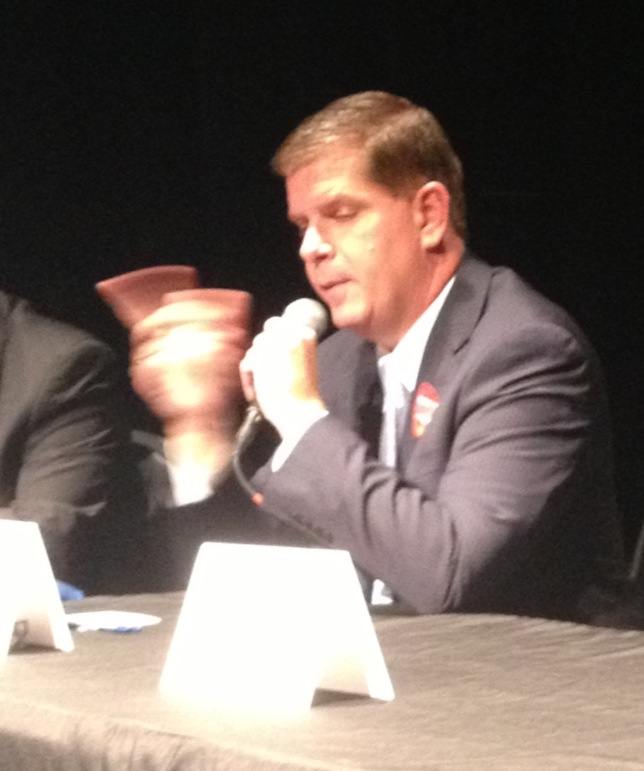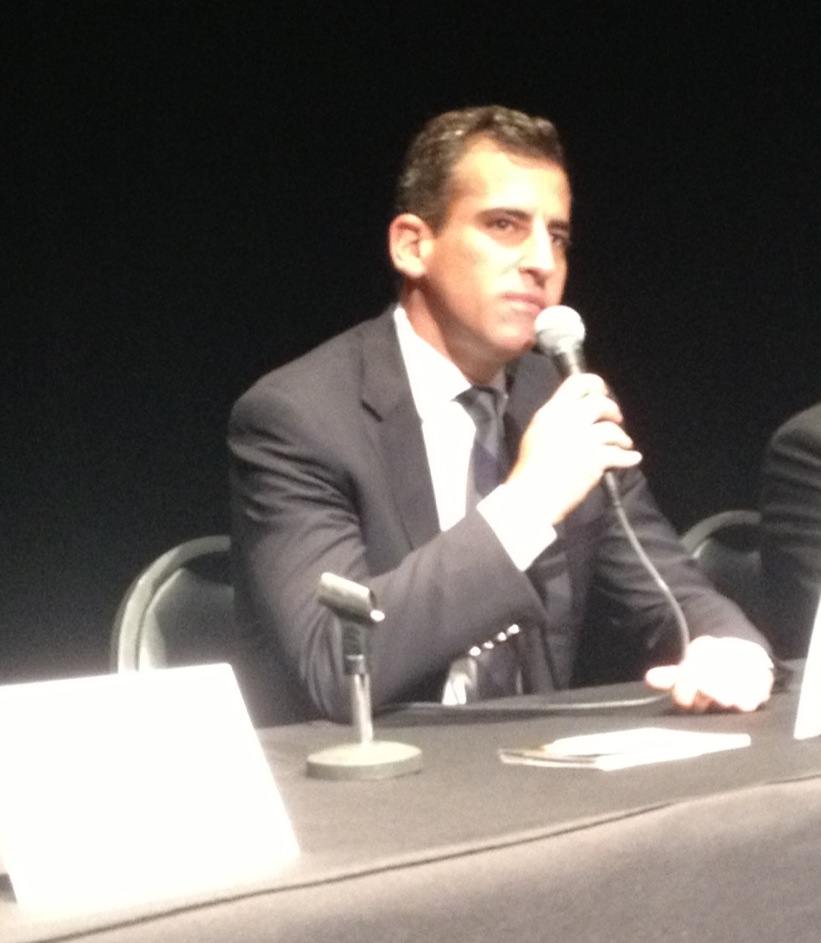
BOSTON MAYOR RACE : PRESSURE POLITICS TAKE OVER

Image

^ crunch time numbers cruncher : Charlotte Golar-Richie

—- —- —-

The City’s Black political leaders are gathering, it is reported, to try pushing some of the candidates of color out of the race for Mayor. This comes as no surprise. The surprise is that it didn’t happen sooner. Or even that it was needed at all. it should have been obvious to every one of Boston’s six candidates of color that if there were more than two, none would make it to November. Even with only two, it’s no guarantee. But with six ? And so the pressure begins to get to the obvious : have the “extras” drop out and endorse Charlotte Golar-Richie.

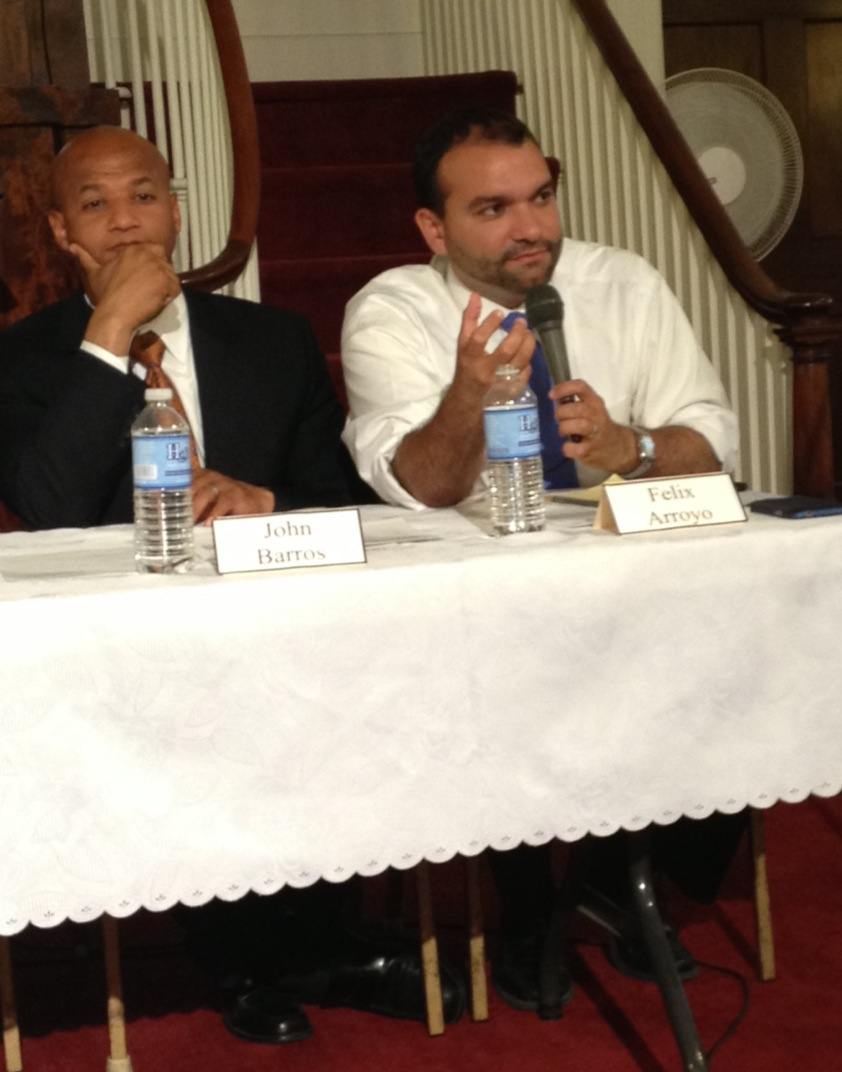
Good luck with that. Why should John Barros, her chief competitor within the Black community, drop out and endorse her ? His vision is very different from hers, his connections more like Connolly”s or Mike Ross’s. As for Charles Yancey and Charles Clemons, each has his own agendas that will seem better served by remaining in the race.
Image

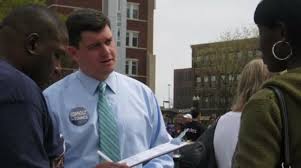
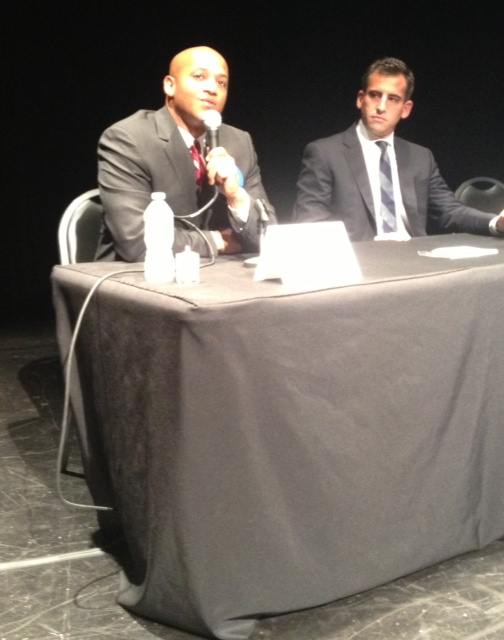
^  John barros (on left) : crunched out ? probably not

The intended recipient of said endorsements claims no part in this effort. That’s wise. No voter likes having a candidate trying to limit a voter’s range of choices. Yet Golar-Richie has been making a dedicated effort of late to bring Boston’s Black political “heavies” into her campaign and has had notable success doing so. She knows better than anyone that if six candidates of color remain in contention on September 24, it will be next to impossible for her to get the 22 % of the vote that some wise heads say will be the November entry point. And so the pressure, by her key supporters, if not by her, cannot be avoided.

Golar-Richie is hardly the only contender using pressure right now. Marty Walsh used the Greater Boston AFL-CIO’s annual Labor day breakfast to make his Labor banner a must for as many union activists as possible. Walsh’s chief rival, John Connolly, has brought forth several endorsements of note, the latest being State Representative Nick Collins of South Boston, who just this morning announced his formal support for Connolly at a press conference in front of the Perry K to 8 school on east Seventh Street in South Boston. At that conference Collins and Connolly emphasized the pair’s long collaboration on Boston Public School reform. Both also emphasized the needed for much more transparent city administration and a dedication to safe neighborhoods — a topic gruseomely dumped into South Boston affairs this past year.
Image

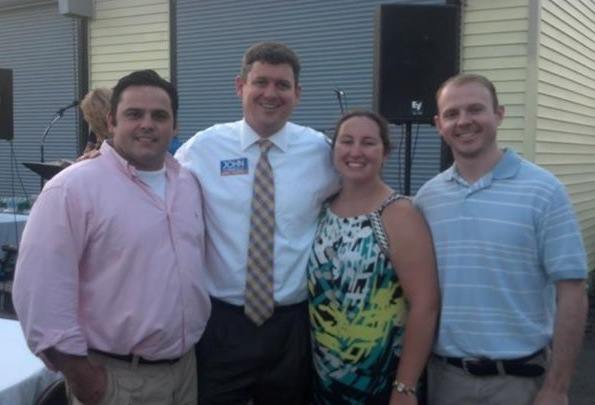
^ John Connolly with Rep. Nick Collins’s brother and Charles Levin at a recent South Booston Leadership conference. His endorsement by Nick Collins seemed likely, soon after this.

Connolly has made much, too, of endorsement by State Representatives Jay Livingstone (Back Bay, Beacon Hill), Carlo Basile (east Boston), and Ed Coppinger (West Roxbury). As his main competitor, Marty Walsh, is a State Representative too, these endorsements hurt Walsh as much as they aid Connolly. (Walsh, meanwhile, has the open support of State Rep Liz Malia and former State Senator Jack Hart.) But the main effect of these endorsements — none of which have yet gone to Dan Conley, who polls a strong third on most lists; will he get any ? — is to pressure the voters. If the pollsters are right, that fully one-third of all who are likely to vote remain undecided about who to choose, endorsements by elected Representatives are intended to push those undecideds to make up their minds. It will surely do that, at least for some.

There will be much more of this pressure coming. Boston’s State Senators ( Chang-Diaz, Dorcena-Forry, Brian Joyce, Mike Rush, Petrucelli ) have yet to choose. Congressmen Lynch and Capuano may weigh in. So might past legislators and major Boston civic associations. As long as the undecided vote remains sizeable, endorsements will be asked for- and probably given. The pressure is on now — on the voters, to decide, once and for all, who to send to the November final.
Image

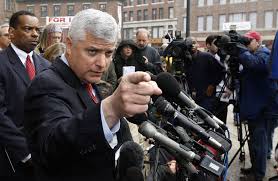
^ Dan Conley : strong third in polls, but no big endorsements yet

The pressure is also on the twelve contenders. Surely all of them know that they either have a good chance of making “the cut,” are losing ground, or are as out of the running as can be. The candidates out of the running can shrug it off and enjoy two and a half weeks more of forums and speaking on the issues. The candidates one feels for are those who are losing ground. Mike Ross, Felix Arroyo, and Rob Consalvo all, at one time, looked strongly in contention. All have found themselves blocked, however — Arroyo by not receiving union endorsements he might have won, Consalvo by too small a base, Ross by not having command of his own, zipcar-bicycle-restaurants base — and, in Arroyo’s case, passed over by leaders and political activists who made his father a political success and did the same, at the Council level, for the son. Arroyo, Consalvo, and Ross have had to learn, perhaps painfully, that when one is running to be Boston’s all-the-marbles Mayor, people make an all-the-marbles choice of whom to be with.
Image

^ Mel King : should, by all philosophical coincidence, be with Felix Arroyo, but it appears that he isn’t.

And so, as we head into the typhoon of pressure, four boats remain afloat : Connolly, Walsh, Golar-Richie, and Dan Conley. Boston’s next Mayor will be one of these. The voters are beginning to realize it and to decide just who it is that they like.

—- Michael Freedberg / Here and Sphere

BOSTON MAYOR RACE : THE FIGHT FOR VOTES

Connolly Walsh 1

^ The top two continue to be the top two.

—- —- —

Yesterday was a holiday, Labor Day.

Oh really ? Not for the serious candidates for Mayor, it wasn’t. They knocked on doors, stood out at supermakets meeting and greeting, held fund-raiders, made speeches. Still, it wasn’t as simple as that. There was method in their movements. they “worked their base.”

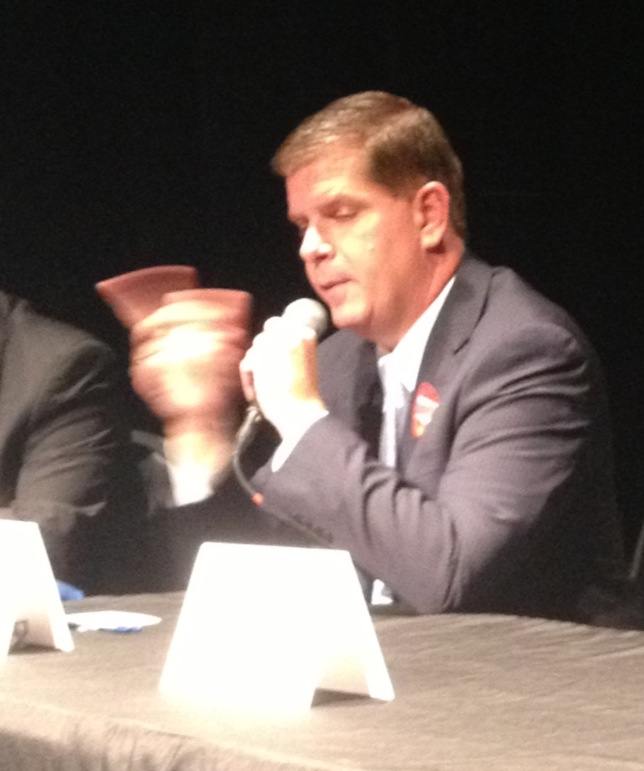
Marty Walsh, who has made every effort in this campaign to live up to his being a “son of labor,” gave a declaration-of-agenda speech at the Greater Boston Labor Council’s annual labor day breakfast.

Felix Arroyo, who has campaigned as tribune of the city’s needy, outlined his “pathways out of poverty” in a speech to public housing residents in South Boston.

John Connolly, of West Roxbury, greeted shoppers for ten hours at Roche Brothers on Centre street.

Charlotte Golar-Richie firmed up her support among the City’s old-line Black leadership.

Dan Conley schmoozed with a fellow District Attorney.

Rob Consalvo, of Hyde Park, held a huge bash in…Hyde Park.

photo (20)

^ Felix Arroyo : is his “base” big enough ? Will it turn out in big enough numbers ?

That these folks campaigned to their “base” is no mistake. With three weeks left until Primary Day, and at least sevEn potential winners running, the time for Mayor hopefuls to campaign all across Boston has ended. They’d be kidding themselves if not. By now, the voters who are going to actually vote on September 24th have gotten to know many of the serious candidates fairly well. they probably like several. But a candidate can’t settle for being liked along with others. It is time now to assure the votes of those who know the candidate best — to “bank” them (as we used to say; and to keep those votes away from all rivals. That means visiting the “base” a lot now — again and again.

Still, no candidate with a serious chance of making it to the November final can afford to forget voters not in his or her “base.” Second-choice votes may well make the difference between making it to November and not. Consider, too, that even the two finalists will likely not get more than 20% of the Primary vote. Which means that the ultimate winner in November will owe a majority of his November vote to people who did NOT vote for him or her in the Primary. A serious candidate must work to become many voters’ second choice even now, before they will actually vote for that candidate. Fascinating !

Working for second-choice votes requires a candidate to not get too narrow with his or her theme. Narrow themes, like Bill Walczak’s “no casino” mantra, may win some first-choice votes, but they don;t sow many second-choice seeds. (Example : Mel King in 1983. He voiced the far left’a agenda as stridently as today’s Tea voices the far right.. Far left purism got King to the final but guaranteed his November defeat.) Several of the candidates in this Primary have voiced narrow themes, though none so stridently as King in 1983.

We have talked of a candidate’s “base.” What of their count ? At this point, the candidates’ bases can be counted with some confidence :

Marty Walsh has the largest base : organized Labor — to the extent that its members live in the City ; many don’t — and much of Dorchester, a strong showing in South Boston, and no less than second in Charlestown.

John Connolly has the next largest base : school reform-minded parents — and West Roxbury-Roslindale, which by itself will likely total 10 % of the city’s primary vote.

Consalvo Mayor

Rob Consalvo : loss of vision or clarity ?

All of the other candidates all have problems gathering a base big enough to measure up to Connolly or Walsh. There is, actually no way that Conley, Arroyo, Golar-Richie, Ross, or Consalvo can win the Primary on base votes only. Each draws significantly from the others — less so from Walsh and Connolly, because Walsh and Connolly are now perceived by many voters as likely to win the Primary; and voters who like one or both of Walsh and Connolly, as well as some of the other contenders, would defy voting behavior were they to vote for someone they perceive as not likely to win.

Of all the candidates trying to catch Connolly or Walsh, the one who has the strongest chance is Golar-Richie. As the only woman in the race, she has unique appeal to Boston voters, most of whom are female. Arroyo must win to nhis side many voters who do not often vote in City Primaries. Consalvo needs to find a campaign rationale. Dan Conley suffers from simply being too much like Connolly or Walsh in outlook and image. As for Mike Ross, he doesn’t have a message that resonates much beyond Downtown life.

photo (47)

^ Charlotte Golar-Richie : do not count her out. And if she makes it to November…..

For Walsh and Connolly, the task now is to speak broad themes, inclusive themes, and look as well as talk as Boston’s visionary and also ambassador to the entire economic world. They must talk big in magnet words and make voters look to a brighter day.

The chasers need to attack the leaders, question their themes, dispute their ability to do what they say they will do — and to show how they, the chasers, can do the big stuff better.

Soon we will see if they can do that.

—- Michael Freedberg / Here and Sphere
BOSTON MAYOR RACE : THE END OF AUGUST MONEY MESSAGE

Image

^ Marty Walsh ; big money raised, big voter support

—- —- —-

A candidate can begin his fund-raising by asking friends and colleagues. But in the Boston Mayor campaign, once the August 15th to August 30th reporting period arrives, that go-to reserve has long been tapped, and the money raised comes almost all from people and entities making a hard assessment of the candidate’s chances of winning.

Donors’ assessments of a candidate’s chances aren’t votes, but they’re a pretty good indication of what people who know a thing or two about the campaign think is happening. So let’s look at the money as reported to the State’s Office of campaign Finance  (not including David Wyatt, who has raised less than 100.00.) :

From the beginning of 2013 through August 15th —

Arroyo — raised 219,578.09

Barros — raised 137,977.48

Clemons — raised 8,673.65

Conley —- raised 736,057.35

Connolly —- raised 925,985.96

Consalvo — raised 496,340.72

Golar-Richie —- raised 217,625.14

Ross —- raised 649,014.94

Walczak — raised 260,122.95

Walsh — raised 961,748.51

Yancey — raised 28,092.16

From August 16th through August 30th, this is what has been so far reported (caution : there may be more reports filed next week) —-

Arroyo — raised 13,962.63

Barros — raised 19,523.28

Conley — raised 71,425.80

Connolly — raided 65,674.00

Consalvo — raised  31,089.59

Golar-Richie — raised 32,979.54

Ross —- raised 79,533.12

Walczak — raised 17,053.00

Walsh — raised 213,287.04

(Yancey and Clemons filed no reports for this period that we could find.)

The message in the money is fairly clear:

First, Marty Walsh has dramatically increased his money intake, while Felix Arroyo’s fundraising shows a significant fall-off.

These two seem connected and no coincidence. The endorsement of Marty Walsh by the Hotel and hospitality Workers’ Union was given during this two-week period. It was an endorsement that Arroyo was counting on; a Union most of whose members are people of color, many of these Hispanic.

Image

^ Felix Arroyo ; an inspiring message, delivered with empathy and command; but a Union endorsement lost has taken its toll.

Second, as Arroyo’s money tree has shed leaves, that of Golar-Richie has blossomed quite a bit. Only Walsh, Connolly, Conley, and Ross raised more than her 32,979.94 intake. Perhaps this is why her headquarters are always open, people actively working in them, and why at Forums her discussion of the issues has become much more authoritative and convincing.

Image

^ Charlotte Golar-Richie : benefitting big-time from fall-offs by several rival candidates and by her own stronger performance on the stump

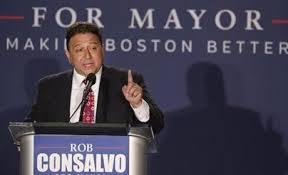
Third, Rob Consalvo, who during the first summer months of the campaign looked strong both in his Hyde park base and across much of the city, has lost both his money mojo and his persuasiveness at Forums.

Image

^ Rob Consalvo ; what has gone wrong here ? And why ?

Fourth, Dan Conley, despite rumors of being difficult to get along with or work for, remains a strong contender who understands the details of City administration and how to correct its deficiencies. he polls a strong third place, and his 71,425.80 raised says that his supporters feel that he can make up the gap between where he polls and the top two. He might indeed do that.

Fifth, Mike Ross continues to draw big money, much bigger than his standing — tied for 4th place — would seem to justify. His performance at Forums is almost always dominant; but his range of interests seems limited to the lifestyle of Downtown. Perhaps his donations increased because of the impact — however brief — of the Stand Up For Children (SFC) “outside money” flap upon John Connolly’s campaign; because Ross, although no friend of the SFC agenda, stands even more pointedly for the apple-store, zipcar, bicycles world envisioned by Connolly than Connolly does. Indeed, Ross personifies it. Interesting to note that Connolly reported only 65,674.00 in donations for this period. Could it have been that some Connolly supporters were looking for a fall-back candidate just in case ?

Image

^ Mike Ross : big money and a chance now to be taken very seriously

Image

^ John Connolly : none of the other candidates has been as buffeted as he. that’s what happens when you poll in first place.

Meanwhile, Marty Walsh, with the Hotel and Hospitality Workers endorsement in hand, and no missteps on the issues, and with strong performances at his “Mondays With Marty” rallies, saw his fundraising increase beyond all expectations.

Walsh and Golar-Richie look well positioned to gain the votes of the one-third of likely voters who, in recent polls, remain undecided whom to back. But Connolly has recovered strongly from the SFC affair, and Felix Arroyo has a message of hope and friendship that he is delivering in person — and at Forums — to the City’s citizens stuck in low income lives.

Our conclusion ? Walsh first; Connolly second, but perhaps shaky. Conley third, but with the chance that Golar-Richie will overtake him and maybe Connolly too. then Arroyo and Ross, with Consalvo fading to 5th and maybe farther down than that.

There’s not much time left to alter these trajectories once the voters — and most of the candidates — return from a well-deserved weekend on the Cape.

—- Michael Freedberg / Here and Sphere
UPDATE 09.01.13 at 10.30 AM : this morning’s Boston Globe reports that Felix G. Arroyo raised 101,324.00 in August. (The report appears on a back page, easy to miss.) The impression the brief article wants to create is that Arroyo increased his fundraising. Indeed, for all of August, that is true, OUR article, however, focuses on what was raised in the period August 15 to 30. It tells a much different story — and not only for Arroyo.

In the first weeks of August, Arroyo looked like the rising star of the campaign; union endorsements from unions heavy with people of color looked likely. Then came the Hotel and hospitality Workers’ decision to go with Marty Walsh despite, a Union spokesman Brian Lang put it, the union’s admiration for Arroyo.

THIS is the sort of movement that our focus on August’s last two weeks was meant to catch. Using the total August figures would, we thought, miss “the action.” — MF / HnS

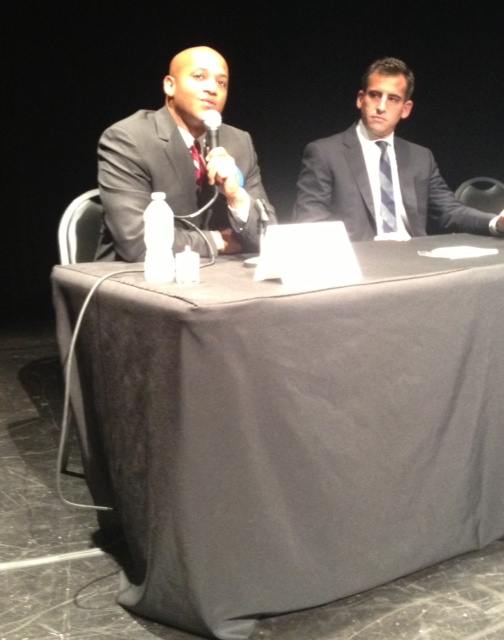
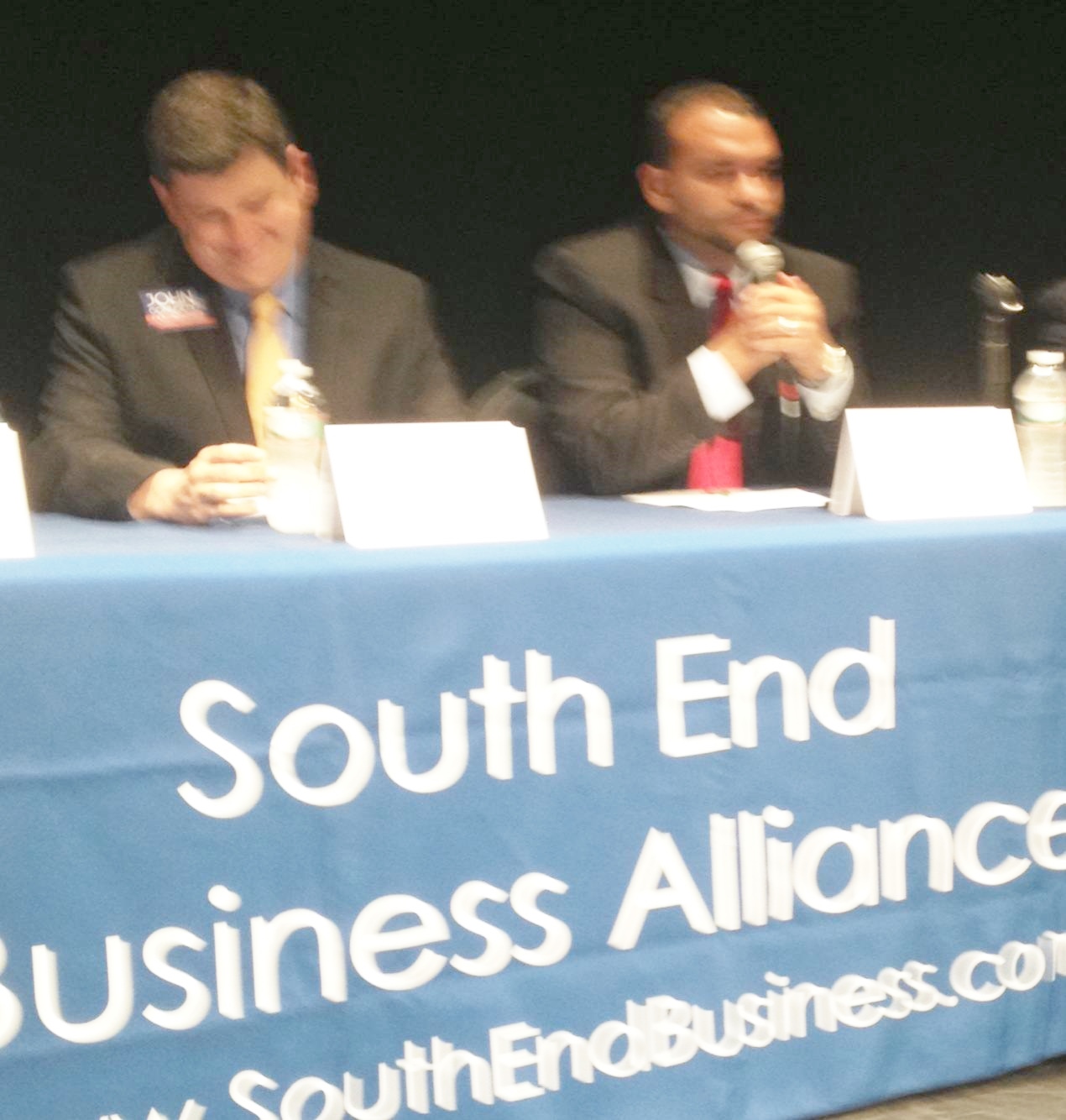
BOSTON MAYOR RACE : CONNOLLY, WALSH, and ARROYO IN COMMAND at SOUTH END BUSINESS ALLIANCE FORUM

Image

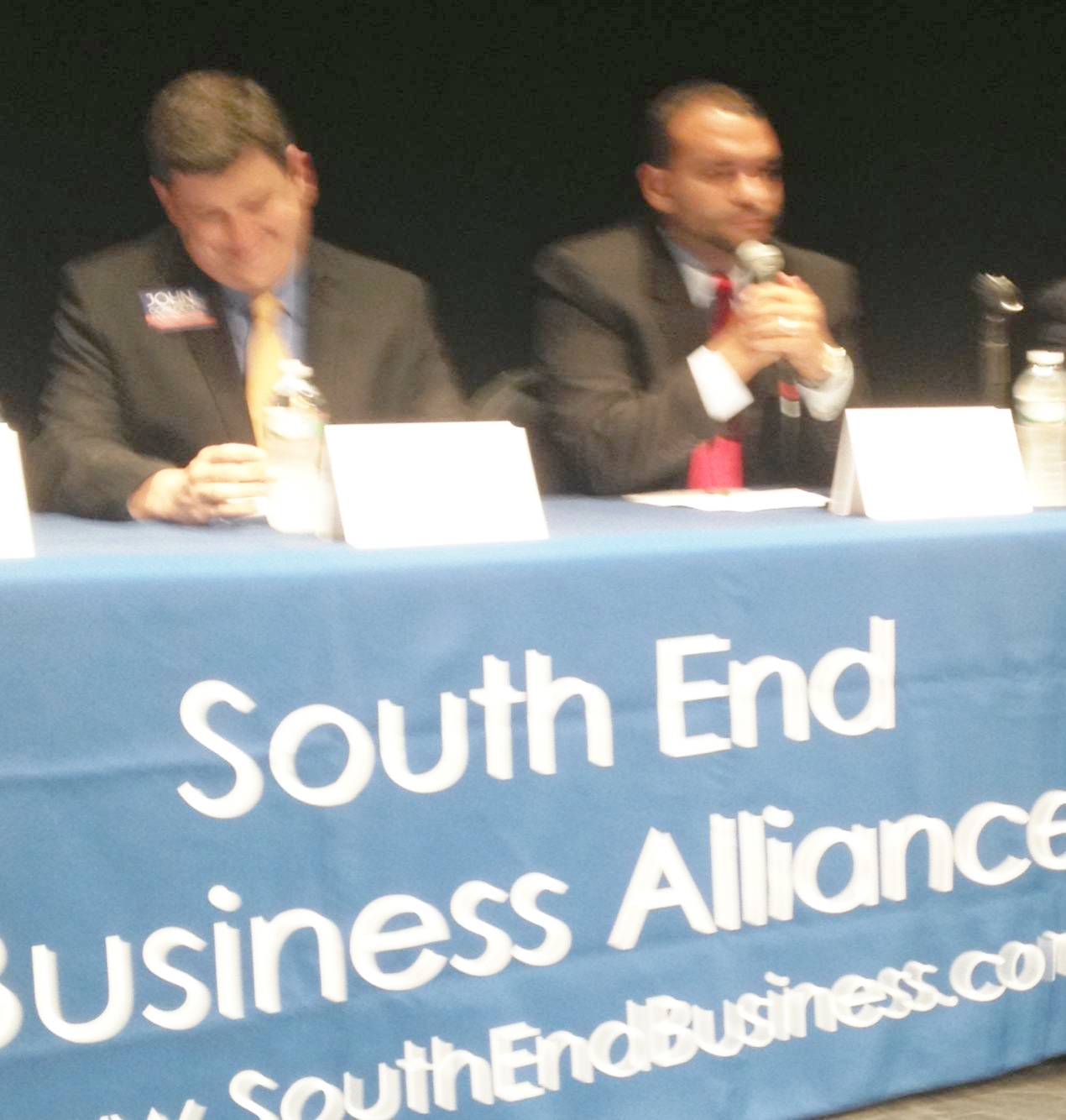
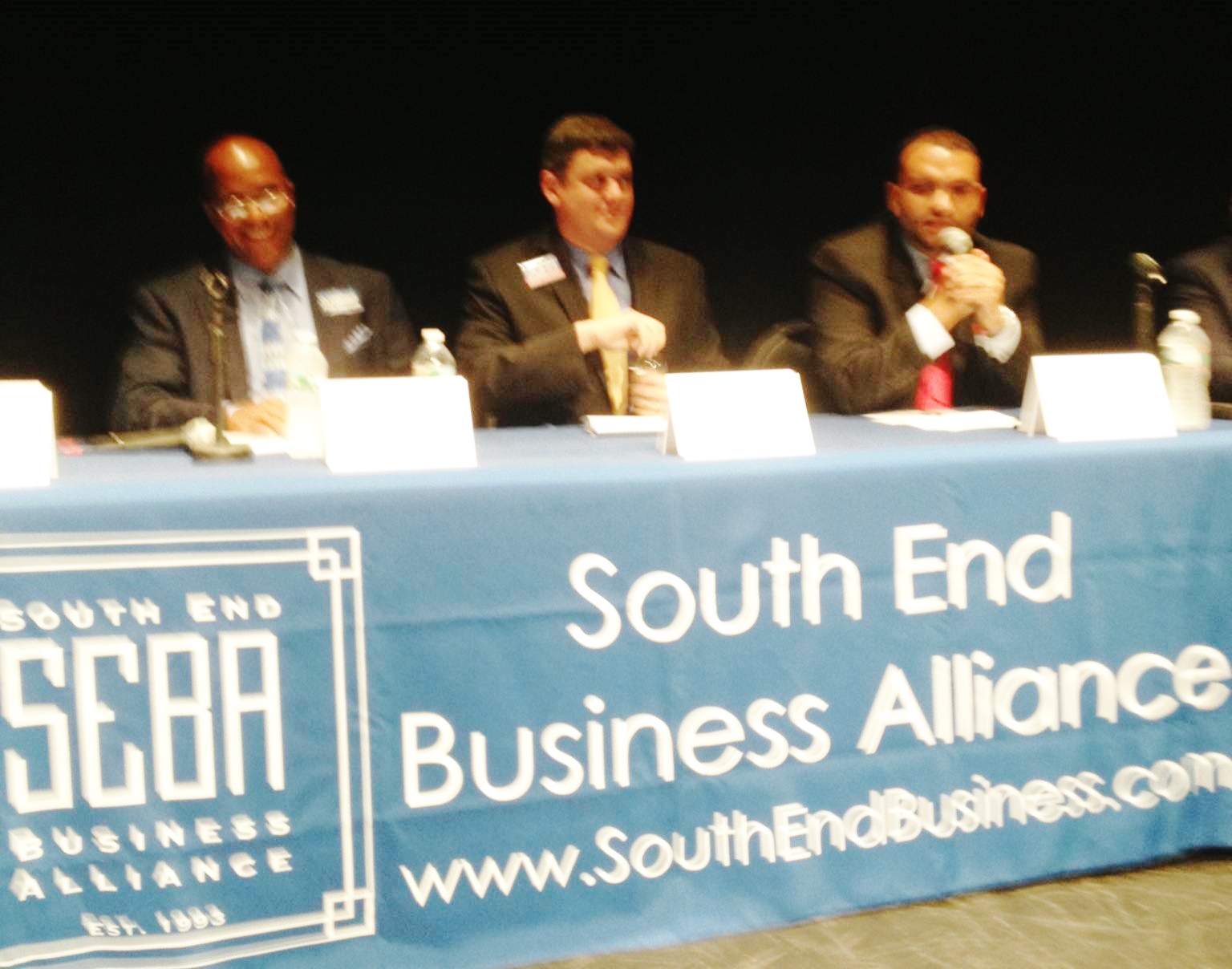
^ Charles Clemons, John Connolly, and felix Arroyo at SEBA Forum

—- —- —

Last night’s Mayoral Forum at the Calderwood Center on Tremont Street asked the most pointed questions and addressed more topics than at any Forum we’ve observed so far. It being the South End, heart and stomach — excellent hors d’oeuvres were served in the foyer — of the “new Boston,” comprehensiveness was to be expected. Basic just won’t do for a locus of million-dollar condos.

Hosted by the South End Business Alliance — SEBA — the Forum gathered an audience of about 200. it was a well informed group, with definite preferences: favorable answers from the candidates drew approving cheers and applause; unfavorable ones were given the silent treatment. There was plenty of each.

That said, this Forum made clear what has portended for some time now : that the leading candidates, according to polls, are leading for good reason. They have greatest command of the issues — big and not so big — and of how to address them. Connolly, Walsh, and Arroyo made their points with specificity, each man inputting his own expertise and vision, each speaking his own language — and doing so with persuasive conviction. For Connolly, that meant the most modern of cities : zipcar, apple store, user-friendly, bicycles, lifestyle diversity — and biolab 4. For Arroyo, it meant a city in which pathways out of poverty are a priority. Marty Walsh saw a partnership city, between business and labor, the Mayor working in team with the City Council and with the Boston delegation to the state Legislature.

Image

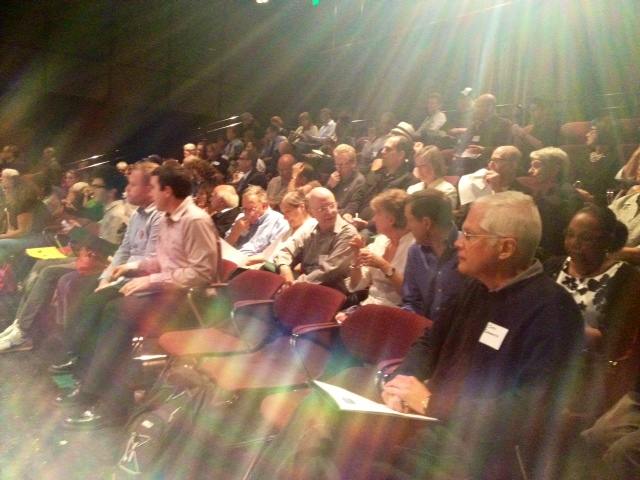
^ an audience informed and knowing what they want

The other candidates on stage — Charlotte Golar-Richie worked the foyer but did not sit in; Consalvo and Wyatt made no appearance at all — answered less strongly. Mike Ross, who has spoken eloquently at earlier Forums, seemed less in command here — perhaps it was the questions, which did not fit his vision of fun city — restaurants, liquor licenses, and neighborhood nightlife. His best answer fitted that slot : “Yes I am a supporter of food trucks (which SEBA’s restaurant members don’t like), but keep in mind that some good food trucks have stepped up to be bricks-and-mortar restaurants.”

Image

^ Mike Ross : food trucks to restaurants

Image

^ John Barros : seeing City hall from his neighborhood (Mike Ross to his right)

John Barros and Bill Walczak spoke from the viewpoint of their particular experience ; schools for Barros, the Codman square Health Center for Walczak. The tactic made their answers sound provincial. a Mayor should see the neighborhoods from City hall. Barros and Walczak did the reverse : looked at City hall from a neighborhood. And Walczak, as always, offered his “no casino” mantra.

Dan Conley stayed at the Forum only long enough to respond to a twenty-question round robin of “yes, no, or thinking about it” quickie answers to this or that one-word issue : casinos, liquor licenses, South Boston parade, audit the city, change the BRA, and such like. As for Charles Yancey and Charles Clemons, each made a couple of notable points — specific to their personal resumes — but both lacked preparation, and it showed.

Each candidate was asked what was his proudest moments, in public life and in his work. Marty Walsh answered thus : “protecting jobs. We passed legislation which has allowed technology companies to bring in new jobs that for he most part were in California. But hey, it wasn’t just about me. (It’s) working with a team. It’s not just you, it’s going to be working collaboratively.”

Then Felix Arroyo : “my proudest moment on the Council ? There was an attempt to close our city’s libraries. I was instrumental in stopping that. Before that, the work that I did in organizing janitors. They were making eight dollars an hour,. now they’re making fifteen.”

Connolly : “most important council work ? getting a strict energy efficient city code passed. as an attorney, my proudest moment wa represennting a client, pro bono, two guys here in the South End (who were victims) in a gay-bashing case.”

Another not so typical Forum question was then posed ; ‘have you started thinking about who you would include in your administration — in your cabinet — as Mayor ?” The strongest candidates gave the most intriguing and thoughtful answers.

Walsh : “a new superintendent of schools first…the hierarchy of the Police department should be revamped. Look at the Fire department too. Include all the city in my discussions and decisions.”

Image

^ Marty Walsh : vows big changes at the Police department

Connolly : “new generation, new leadership. Superintendant of schools — how about one who is non-traditional ? A city-wide summit on public health. Begin overhauling city hall to be user-friendly.”

Arroyo : “A diverse cabinet that shares my values. A superintendant of schools who knows that you have to work with everyone.”

Image

^ john Connolly and Felix Arroyo : will they work with the Council ? So they say…

Next came a question guaranteed to elicit an unreal answer: “how will you as Mayor work with the City Council ?”

Connolly : “We are better when we disagree. I want a council that is bold and independent. Disagreement makes us better.” (to which I comment : “sounds good, but that’s not how it plays out. The Mayor may let the council gripe, but he has the power and the Council doesn’t.”)

Arroyo — “The Council is there because the voters put them there. But more importantly” — and here he pointed to the Forum audience — “I want to work with YOU !” (to which I comment : “a slick way of ducking the question !”)

Walsh : “The city council is a partner. I would also include the Boston legislative delegation and also legislators from around the state. The mayor can’t do it alone, he’s not a dictator.” (to which I comment “no, but the Mayor often thinks he is.”)

By this time the Forum had shredded badly. Conley first, but then Ross, Barros, Clemons, even Connolly, one after the other, had to leave to attend other events. Only Arroyo and Walsh said they were here for the duration.

They all apologized, of course. But as the race is now well into crunch time, every candidate with any chance at all has more events on his or her daily schedule than could be attended in three days. And so it goes. rush, greet, rush, talk, rush, talk, greet, talk, rush. You want to keep up ? You will have to rush, rush too.

—- Michael Freedberg / Here and Sphere
“SECRET LETTERS To Home One Stop-Loss Soldiers story Letter#3

STOP-LOSS3

“SECRET LETTERS” to home one stop-loss soldiers story LETTER # 3

According to Wikipedia, the Stop-loss definition is:

“Stop-loss is a term primarily used in the United States military. In the U.S. military, it is the involuntary extension of a service member’s active duty service under the enlistment contract in order to retain them beyond their initial end of term of service (ETS) date and up to their contractually agreed end of obligated service (EOS). It also applies to the cessation of a permanent change of station (PCS) move for a member still in military service. Stop-loss was used immediately before and during the first Persian Gulf War. Since then, it has been used during deployments to SomaliaHaitiBosniaKosovo and after the September 11 attacks and the subsequent War on Terror.”

The policy has been legally challenged several times. However, Federal courts have consistently found that military service members contractually agree that their term of service may be involuntarily extended until the end of their obligated service.

However, in real life it is much more than that. The term and its definition are minimal at best. Truth be told, even a cynic can not sit back and agree that such an act by OUR government is that of a free country — let alone a “free-man / soldier, who has served his country — and his term.

Through the years stop-loss has become much more “in our faces”, as undeclared “wars” have called many a soldier back to a place to which they barely survived — once, never-mind a forceful twice-go-round. In a 2004 Campaign speech by the then presidential candidate John Kerry — stop-loss was described accurately as a “back-door draft”. At that time, both politicians and war activists insisted and proclaimed its use an abuse of the law. Since Congress had not officially declared a war — the basis for using stop-loss was to them as well as those affected just that : “abuse”……

Much controversy, political agenda, hype, and inaccurate depictions of this “injustice” surround the topic whenever it is brought to our attention in any form. So how do we as Americans differentiate between fact and fiction — media agenda, propaganda, misguided citizens, and hoaxes — and how do we get the real stories, the guts and grit of the truth without literally being in that situation ourselves ?

In a weekly editorial, Here and Sphere will cautiously report one brave, wounded, forgotten, scared for his life, stop-loss soldier’s story. Though we can not completely vouch for it’s full accuracy — we will deliver this soldier’s encrypted letters, each with all its content — and let you, our readers, decide for yourselves. Our job is to report the news, and bring you the stories that matter to you. In “TOP SECRET” Letter to Home — One stop-loss soldier’s story — we will do just that.

Letter #3

Today was a good day all things considered. Normally that would bring about a smile or sigh of relief — but a good day here is a nightmare at best, back on American soil.

Today my team lead by a “new guy”. The sapling of a superior was freshly dropped here in the middle of yet another cold sand-swept night. Meeting him first thing this morning — all gung-ho, and clueless as to what he would soon become a part of — was almost stomach turning. Much like a doe eyed child full of innocence about to learn something horrific and life-altering. Today our mission was “simple” — cut off water supplies and all aid to the “local threats” one town over.

When I say the word simple, I mean only that it should if carried out correctly be a mission easily achieved — without casualties, and senseless violence. Though we were lucky enough to not lose one of our own — the casualty-less mission I hoped and prayed for — did not play out as I had wished.

Before the desert sun even peaked at us,we geared up and were on our way. All orders had been given — subject to change upon arrival, if our calculations were off even the slightest — and of course they were. I took my post at the highest point of the village, finding my spot was easy — I gained access without harm to myself or anyone else. Once our team was fully in place, orders previously given — went into effect. For the sake of those that watch movies and T.V. I will use familiar lingo — as to paint a picture that may be relatable — but here it is somewhat, okay very different.

Alpha team we will call that me and my 4 watchman — steady handed and sighted on targets pre-assigned we sit and wait. Bravo team began their slow and careful descent into the village as not to awaken the chaos. Delta team came from their angles to help surround the main water source and medical tent — therein began our problem.

Previous recon missions of the medical tent had shown no guard during this particular time — on 4 separate missions, not once had one been spotted. With the main valves off — and “our equipment” that once supplied this village back in our possession — they would have no way once sealed to re-establish a water supply. Bravo team had done their job and were regrouping back at the predetermined zone before hitting target 2. Delta stayed positioned waiting patiently to assist in retrieving, or destroying the medic tent — once Bravo gave the order.

As I looked at the tent I realized that this time WE WERE WRONG… A heavily armed guard paced by the hindquarters of the medic tent — searching for any sign of attack, or threat. Intently I watched as he paced in an almost eerie nazi reminiscent fashion — 4-5 steps one way — full turn — 4-5 steps back in the previous direction. Then it happened — SPOTTED –the last of our Bravo members to get close enough was seen. The foot soldier raised his weapon and aimed as steady as he could, getting ready to summons help…………..THEN ( shot fired ) one single perfectly aimed silent bullet — a few more minutes, enough time to be ghosts, and a fire that took down a whole tent and all its supplies erupted in seconds. MISSION ACCOMPLISHED!!!! (Disgusting)

Back on base Alpha team leader newbie sat crying like a baby — AND JUSTLY SO. I felt connected to him, I knew his disbelief and pain, anger and more. But just like he came to us — HE WAS GONE…

Why him? I am broken too, why can’t I disappear into the night and sand and cold? Why can’t I come home? — Perhaps I’ll never know, PLEASE PRAY THAT I WILL.

Signed: One stop-loss missing home soldier.

As told by:Heather Cornell

50 YEARS AGO TODAY ……

Image

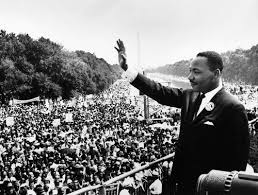
On August 28, 1963, speaking to half a million of his fellow Americans and more, Martin Luther King Jr. spoke words that every American since that day has known by heart. “I have a dream,” King said, “that my children one day will be judged not by the color of their skin but by the content of their character.”

Every phrase in it counts; but today, perhaps, the phrase most poignant is that first part : “I have a dream.” A dream : in other words, a vision, a hope, not yet present but still to come.

America’s very existence arises from the dreams of men and women, for a life better than the one handed to them. America never gets to the finish line. we always have more work to do, progress to bring, as we move always forward toward social justice and civil rights and dignity for all. We may never get all the way there ? Perhaps; but every generation of Americans must keep on keeping on. We live in the future, and it is ours to make.

That is what America is. And we are all in it, all of us.

And yet ….. the progress forward is not unbroken. Often we as a nation stop moving forward; sometimes we even step backwards. Because there are some of us who do NOT believe in the dream. Oh the fine words, yes; the reality, not so much.

And so we struggle. Today we struggle. 50 years after Dr. king spoke calling us to move forward boldly, many parts of America are moving resolutely backward.

If there was any civil right that Dr. King cared for most of all, first of all, it was the right to vote. The Voting Rights Act of 1965 was as much his doing as it was President Johnson’s. Yet today, 48 years after the VRA was enacted, there are several states that have legislated — or are trying to legislate — making it much more difficult for many of us to vote. Especially the poor and the isolated among us. Those who need the right to vote most of all — because it is the one thing that people disadvantaged can do as well as people with all advantages — are to have a “voted ID” — often next to impossible to get, and costly, or they will not be registered to vote. Those who live far from a polling place, or who work two or three jobs all day long and so cannot vote on polling day, will have early voting hours cut down. Anything to keep those who most need the vote from voting.

Nothing legislative could be more immoral, not to mention un-American, than efforts to impede any American from voting. Yet that is what we see going on in NC, in TX, in KS and, to a less rigorous extent, in several other states. We abhor the “vote suppression” movement.

The Department of justice is moving to block Texas’s vote-suppression laws. It has signaled that it will soon sue to block North Carolina’s even more onerous vote-suppression laws. his we thoroughly applaud. Nonetheless, it is a shame that it has come to this, 50 years after Dr. King spoke his dream, 48 years after our Congress and President enacted the most all-encompassing Voting Rights act ever adopted by our nation.

We cannot turn back. We dare not allow the nation to turn back. We must not stand by and watch any state turn us back. Our destiny as a nation demands we move forward, always forward, until every one of us has the civil rights, the respect, and the protection that our nation has always, on its truest days, promised to all.

—- The Editors / Here and Sphere

Image

BOSTON MAYOR RACE : CONNOLLY, GOLAR-RICHIE TAKE COMMAND AT “STAND UP FOR SENIORS” FORUM; BARROS EFFECTIVE TOO

Image

^ John Connolly : the day was his

—- —- —-

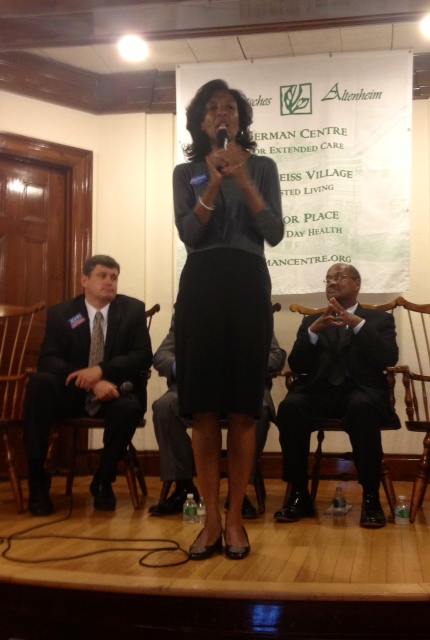
The Deutsches Altenheim, on Centre Street in West Roxbury, put itself center-stage in Boston’s mayor race by hosting a “stand Up for seniors’ forum. Because there are 12 candidates in the action, the sponsors divided the field into two parts. On Saturday over 100 seniors at the “old ones’ home” — which is what “Altenheim” means in German — the home was founded by Boston’s then German immigrant community — heard from Dan Conley, Felix Arroyo, Marty Walsh, Bill Walczak, David Wyatt, and Rob Consalvo. Yesterday, an even larger crowd, maybe 150, listened to — and questioned — the other six Mayor hopefuls. Between them there was much difference, both in positions advocated and in command of city governance.

The day belonged to John Connolly, who lives in West Roxbury and grew up in Roslindale, and to Charlotte Golar-Richie, who delivered her most authoritative Forum argument to date. In response to a question about quality of life in the neighborhood, she emphasized her focus on the safety of women, which also is, as she noted, an issue for seniors, most of whom are female.

She spoke with unforgettable detail about seniors who find themselves plagued with scams, because older people often save their money and credit rather than spend it : “late at night they may answer the phone and respond to a voice and give their credit card number. then  the credit card bill arrives with unwarranted charges. There should be a way to get those charges removed !”

Golar-Richie also put forth suggestions for improving women’s safety on public transportation.

Image

^ Charlotte Golar-Richie : her most authorotative Forum performance yet

Still, as effective and on point as Golar-Richie spoke, John Connolly assumed command of the Forum. Confident in speaking on home ground, to voters who know him a well as he knows them, he first addressed a question about scams that plague elderly people more than most, that “it’s hard to block phone numbers because they can always switch to another and then another. This is a problem of outreach and awareness. Seniors are often unaware, living often in isolation. we should use the city’s elderly commission to increase outreach.” Given a question about broken sidewalks being a serious hazard for older people, he responded with impressive command of detail : “this sis partly a public utilities issue. The phone company and electric dig up the streets, their contractors do, and then they don;t pout it back the way it it was. we need to set city standards, a check list, for such digs and see that the contractors adhere to them.

Connolly had more to say on the streets and sidewalks issue (which though hardly epic, are matters that every city resident is plagued by all the time). Given a question about the difficulty that seniors have in crossing a main street before the stoplights change, Connolly said, “we need to do a thorough streets and intersections assessment, so that when we design an intersection, we take into account pedestrians as well as motorists.”

And then came a moment that candidates hope they will have. A question was asked about money to keep the West Roxbury library open on weekends : is there the money to do so, or not ? Connolly said that funding for the library was tenuous at best; that it’s always low on the list of funding priorities. Candidate Charles Clemons — often given to blanket assertions that sound good — smiled widely. “Of course the money is there.” he roared, in the loud voice of an ex-policeman (which he is) “The city just paid 13 million dollars to buy a particular building in downtown that was assessed for six million !”

Image

^ Charles Clemons : one blanket assertion too many

It was Connolly’s chance. “It’s two different things, Charles. Libraries and the staff salaries are paid out of the city’s spending budget. Capital purchases are made from a different budget, the capital budget. You can’t use the capital budget to pay salaries or open libraries, it’s against the law.”

This is what winning candidates show that they can do. And though there was much well-informed discussion thereafter, by John Barros especially — Golar-Richie had had to leave the Forum to get to another event, and her comments were missed — of streets, snow removal, and phone call blocking, the big moment was Connolly’s, and the Altenheim voters knew it.

There was one other dramatic moment. Someone asked candidate Chares Yancey why he is running both for Mayor and for re-election to his city council seat, when all the other councillor candidates in the Mayor’s race were giving up their council seats ? It was a question many voters have wanted to ask. Why, indeed ?

Yancey — who ceaselessly repeated his mantra “My name is Charles Yancey, and i’m running for Mayor” — said, “i’m glad you asked that question.”

No one laughed, but…

He had an explanation, too ; “I am providing the voters of my district a choice. If I am re-elected councillor and am elected mayor, i will make my choice then, at that time.”

This, from the candidate who over and over again touted that “I have 30 years of experience in city budgets, more than any other candidate in the race.” Maybe experience isn’t an unmixed blessing.

—- Michael Freedberg / Here and Sphere
BOSTON CITY COUNCIL RACE : Jack Kelly Makes Name for Himself, One Barbecue at a Time

Image

^ Having Their Cake and eating It Too ; Allston-Brighton liaison Angela Holm enjoying cake with City Council at-large candidate Jack Kelly — outside a barbecue in North Allston this past Sunday.

—- —- —

Because the highly contested Boston Mayoral Race commands most attention, the race for Boston City Council has, for the most part, been pushed to the side stage.

Jack Kelly hopes to change that.

He graduated  from the University of Massachusetts at Boston with a degree in Political Science. Most recently, he’s been working as a Community Liaison for Massachusetts General Hospital, helping to bring awareness to the plight of Substance Abuse and HIV in various high-risk sections of the City.

In our profile of Kelly, we noted his interesting bio. As his campaign has gained serious momentum, we decided to follow up. How is he gathering the strength that has become so evident in his run ?

Thus Here and Sphere caught up with Kelly at a neighborhood barbecue in Allston. We asked him especially about the response he has received so far, from Boston voters.

HnS: How is the Campaign going so far?

Kelly: The Campaign is going very, very well. We just picked up another endorsement today from State Rep. Carlo Basile (D-East Boston) amongst many. We’re here in Allston today. It’s not only diverse economically, but culturally as well as with history.

HnS: What has been the most important thing that you have learned so far on the campaign?

Kelly: Lots of things. I go to a lot of barbeques, and I want to eat, but I don’t (laughs). In fact, I think that I’ve lost about fifteen pounds, walking around, going from barbecue-to-barbecue.

HnS: Well, you do look great.

Kelly: Thanks (Laughs). I think that the issues for most Bostonians are universal. I think that sometimes people here see these issues differently because they are segregated in a sense. But if you do go into those neighborhoods, the issues are very, very similar.

HnS: Say you’re elected to the City Council, and regardless of who is elected Mayor, in four years from now, where do you see Boston?

Kelly: I think that there are several good Mayoral candidates, and whoever is elected Mayor, if I am elected to the City Council, my hope is that I can help steer the City in the right direction. I want to continue the good work that Mayor Menino has done. Boston is going to be very good. Not just because of its leadership, but because of its people.

HnS: What has been the most pressing issue in this campaign that you have heard from voters?

Kelly: I think it’s a combination of schools, public safety, and sometimes they sort of migrate into one big conglomerated issue. A lot of people are also concerned about public parking and development. It also depends on what neighborhood you’re in, as far as issues are concerned. If you wanted to pick one issue that is universally applied to all people, it would be the schools.”

The campaign continues. We expect to see Kelly often in the four weeks that remain till Primary day.

— Dave Morrison / Here and Sphere

WE PROFILE BOSTON’S CITY COUNCIL CANDIDATES : RAMON SOTO

Image

^ Ramon Soto : from co-ordinator to candidate.

—- —- —-

We met RAMON SOTO yesterday, in the North End, as the celebration of St. Anthony’s day was winding down. Even at 5 P.M. the day was hot and sunny and the crowds lively as Soto talked to us in one of the many new bar-terrasses that offer a touch of Europe to those who live or visit Boston’s oldest residential neighborhood. Soto is making his first run for elective office, seeking one of Boston’s four city-wide Council seats. He’s had events in Jamaica Plain, South Boston, and among the city’s Latino communities, and he is pumped.

No sooner has our talk begun than he makes a headline.

“I live in Mission Hill,’ he says. “at 16 Parker Hill Avenue.”

“But that is the street that Donna Summer grew up on!” we exclaim.

To which Soto responds, “Yes ! She lived in the exact same house that I live in now ! The owner often talks to me of her. On the anniversary of her death he had the house all decked out in pink.”

“So tragic, her death vat age 63,” we say.

“Yes, and I can never forget her, can I ?”

Immediately we like Ramon Soto a lot.

Beyond being a Donna Summer fan, Soto enjoys a long resume of Boston-area political work at the center of power. “My first time (in politics), I worked for Michael Morrissey, who was running for state senator in Quincy – Braintree. In Braintree, he finished third, but in the part that I was in charge of, he was first. (He won the race and) brought me aboard.

“From there, i joined the communications staff of Mayor Menino. Job title ; “constituent service co-ordinator.” Which meant that I worked on his e-mails. There were hundreds of e-mails on every issue, so he said to me, ‘if i have to sign them, I want the answers to be what I am saying.’ And together we worked out the right answer for him, for each issue. These weren’t boiler plate answers. I rewrote them all. it taught me all about the broader issues and gave me a knowledge of the people to go to if the Mayor wanted an issue dealt with.

“That was only my day job, though,’ Soto notes. “I wasn’t making much just doing his e-mails, so at night I bartended. I learned a lot about (city) life doing that.”

Soto rose even higher in the political backstage. He took a leave to work on the 2008 Hillary Clinton campaign. As a Clinton delegate, he attended the Democratic national convention and, after Clinton released her delegates, he became known to the Obama people and was hired to work much of Eastern Massachusetts — “in reality, New Hampshire,” Soto notes — in the Fall campaign.

After Obama’s victory, Soto was back in City Hall, now as co-ordinator for resources going to the Boston School system. “Our goal was to gather all these resources into one arena, so that parents can do one-stop help at their kids’ schools.”

Yet for this tireless man being a schools co-ordinator was not enough. “I also was the City;s co-ordinator to the 2010 census process,” he says. “(My mission was) to go into the nail salons, bodegas, barber shops, and churches an d make sure the people knew that 400 million in federal dollars would come to the City if we counted everybody; those were the stakes. They got the message. We had the highest city census participation in thirty years.”

Such is the life of Ramon Soto, who can justly claim a nuts-and-bolts, working connection to every corner of Boston.

Because this bio fully answers our usual first question to candidates, “what qualities single you out as a potential Councillor,’ our interview moved directly to the other six questions. The questions and Soto’s answers follow.

Here and Sphere (HnS) : What are your two top priorities to work on if you’re elected ?

Soto : First, continue and expand the ‘circle of promise’ program. Second, youth violence. If we can get the guns off our streets — advocacy groups need to come together on this — maybe a gun buy back — we can end this scourge. Background checks for all gun sales, including between family members, which is how many youths obtain their guns.”

HnS : Casino vote — citywide or East Boston only ?

Soto : “East Boston only. It’s their neighborhood, it’s their autonomy.”

HnS : School reform — longer school day, yes or no ? Do you favor any of the other reforms in Connolly’s agenda ?

Soto : “Stronger Court Street structure. Everybody there is doing a great job, but it’s too centralized. more voices need to be heard. Bi-lingual education is a mistake — it delays a kid’s mastering English. Dual-language schools, that’s more like it, indeed vitally important.

“We need at least a five year plan to assess the state of our schools. A full scale, flexible but comprehensive analysis of where we are now. Today the assignment process puts school quality against assignment rules. We need to assure that kids have better options, closer to home. And (when we do this analysis) we need to engage the parents !

“Longer school day make sense. Bring the school day in line with the work day. But until we totally assess the schools we can’t decide what to do with the longer school day. (Also,) I’m a realist about the funds available. (Perhaps) we can get after-school programs (from outside the teachers’ time constraints.”

5. HnS : Charter schools — lift cap ? {Partial lift ?

Soto : “(I’m) against lifting the charter cap. If we want to get the public schools right, then we have to focus on the schools we already have.”

6. HnS : BRA — re[place reform (and, if so, in what ways) ? Should there be a separate board for planning ?

Soto : “the Council does not have the final word (here). The mayor has to sign off. But as far a i am involved, I do not want to increase the red tape. Developers fund the BRA. Just let’s have more transparency and a more comprehensive process that involves the neighborhood.

“Economic development plan ? (Maybe just) more red tape. Better to just open up more communication with the community.”

7. Hns : Marty Walsh says ‘There’s a heroin epidemic in the city now.’ Do you agree ?

Soto : “Yes there is a heroin epidemic. I had my wallet stolen the other day !

“Yes we can do something about it. talk to the kids out there — but it’s really about the family. Families in trouble tend to make bad decisions.

“Government has ways of encouraging families; there’s a billion dollars in the cit available to help families. (Much of it is) plugged into the schools. And it’s about treatment and therapy. You can’t (simply arrest your way out of it. The drug unit at the BPD does a great job, but it’s really about stopping (the drugs). (And) it’s not just Boston. it’;s everywhere.”

You can find out more about Ramon Soto and his agenda by visiting his website at http://www.Ramon4Boston.com

—- Michael Freedberg / Here and Sphere

WE PROFILE THE BOSTON CITY COUNCIL CANDIDATES : MARTY KEOGH

Image

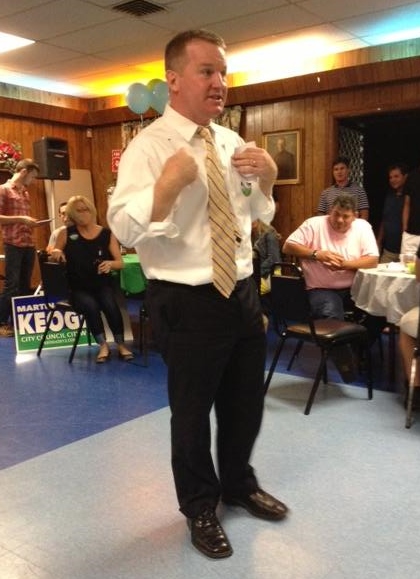
^ at his recent fundraiser in Hyde Park

Marty Keogh is no stranger to those who follow Boston city politics. We remember him from when he served Peggy Davis-Mullen as her City Council aide back in the 1990s. He stayed with her through 2001.

Today, the Mission Hill native — “a projects kid,” as he puts it — whose family later moved to Hyde Park — lives in West Roxbury. He’s a practicing attorney — since 1999 — and married to Pamela Corey Keogh (from Lower Mills/Dorchester), has a young son, Nolan, (and an addition on the way), and is running for one of the four city-wide council seats that Bostonians will elect when they go to the polls to choose a new Mayor.

Keogh, like all his City Council rivals, is under no illusions about Council candidates’ struggle to get some voter attention. he knows that voters will focus almost entirely on the mayor campaign — as they must. He has no choice, then, but to campaign a good seventeen hours a day, everywhere in the city that he can find a spot to meet and greet, and anywhere that he can talk to a gathering. Indeed, as we do a question and answer with him in his profile, he is on the move, driving from shaking hands in East Boston to doing the same in South Boston — and points in between.

We asked Marty to answer the seven questions that we pose to all the at-large City Council candidates. What follows is, in effect, a conversation.

Here ad Sphere (HnS) : What in your loife makes you iunqiuely or especia;y qualified to be an effective councillor ?

Keogh : “Public service has been a part of my family’s history for well over fifty years, and I was taught that helping even one person in need was for the greater good of all… I got my first taste of helping people while working for the Boston City Council, serving as the Chief of Staff to (Peggy Davis-Mullen).

“I was in charge of constituent services, researching, writing and filing legislation that originated out of the concerns of these constituents, and implementing, delegating and overseeing the everyday duties that are required to run an effective city council office… actively coordinated and participated in neighborhood meetings throughout the city and served as the direct liaison between (her) and the community on many important quality of life issues.

“I then went to law school and for the last 14 years I have fought to help hundreds of juveniles and kids who had legal problems, elderly residents who have been victimized by scam artists and homeowners who were in danger of losing their homes. I often made little or nothing for my services, but the public servant in me found it difficult to turn a person in need away.

“I will always have the experience, energy and compassion to help people in need, and I hope to carry on this passion if elected…”

2. HnS : What are your two top priorities to work on if you’re elected ?

Keogh : “…I want safer neighborhoods and excellent schools in every neighborhood.
“Part of the reason people settle in a particular neighborhood is because it is safe, and it has excellent schools for their children that they can walk to.

“To the contrary, without safe neighborhoods or neighborhood schools, parents will leave that neighborhood just as quickly. It really is all about our kids, their education and their safety.

“As part my safer neighborhoods effort, I would like to see the Boston Police add 300 more “walking” police officers on the streets, fund the police budget to bring modern crime fighting technology to every officer, and place surveillance cameras in high crime areas in an effort to deter or catch criminals.

“I also want to start the process of building new schools in every neighborhood of the city where they are needed. Right now, there are still kids who don’t have books and cannot get the school in their neighborhood. I want to make sure that we have enough funding to buy new books and supplies, and to put arts, music, sports and special-ed programs back into every school.

“…also want to create a trade shop in every high school, because I know that not every kid wants to go to college, and that some kids want to enter the work force. My goal is to keep kids in school, and keep families in the city. Safe neighborhoods and neighborhood schools will help to accomplish this vision.”

3. HnS : casino vote : citywide or East Boston only ?

Keogh : “I am in favor of a Casino in East Boston, and an “East Boston only” Casino vote, because I recognize that this proposal will create jobs, revenue and capture Massachusetts money that will otherwise be lost to Connecticut. My decision shall rest upon the vote, intent and wishes of the East Boston residents.”

4. HnS : school reform : longer school day — yes or no ? Do you favor any of the other reforms in (John) Connolly’s agenda ?

Keogh : “I am in favor of longer school days, but only if teachers are fairly compensated for their time.

“It would be unfair to force teachers to work a longer school day without being properly compensated. As it stands now, a teacher’s job doesn’t end when the final bell rings. Teachers often work late and/or at home to prepare curriculum, tests and correct papers long after the school day ends, so as to be ready for the children the following day.”

“While I think that all of the Mayoral candidates have excellent ideas for the schools, the bottom line is that I believe in the Boston Public schools, and I believe in neighborhood schools.

“If the next Mayor wants to build more neighborhood schools, help decrease the dropout rate, make students proficient in all areas of education and bring sports, arts, music, trade schools and special-ed programs into every school, then you can be certain that they will have (in me) at least one friend on the city council.”

5. HnS : Charter schools : lift (the) cap ? partial cap (lift) ?

Keogh : “I am not in favor of lifting the cap on Charter Schools… I share the concern of most Boston parents that some Charter Schools are not inclusive enough because they do not accept special-ed kids or kids that can’t meet their educational criteria.

“I think that the Charter Schools we have now are doing well and that parents are satisfied with the education that Charter Schools provide their children, but I am also cognizant…that the Charter Schools are depleting much needed funds and resources from the Boston Public schools budget.

“I am one of only two city council candidates who actually attended the Boston Public schools and I believe we can make our public schools better.”

6. HnS : BRA : replace (it) ? Reform (and if so, in what ways) ? Should there be a separate board for planning (as some Mayor candidates have proposed) ?

Keogh : “The BRA has done a tremendous job transforming our economy, neighborhoods and skyline since the 1960’s, but the BRA needs to be more accountable and more transparent to the public it serves.

“Does that mean the BRA should be abolished? The answer is no.

“But the BRA needs to involve the public, and conduct all meetings, even if on the internet, that are open to the public.

“I don’t buy the baloney that we can’t get rid of the BRA because it is an agency mandated through the state legislature. We can, but when has the City Council actually ever tried to get rid of the BRA?

“The new City Council, if we work together, can make changes or recommendations which would, at a minimum, expose any conflict even if we have no power to stop the conflict. Through Home Rule Petition, the City Council could also recommend changes that would abolish the BRA or create a planning board separate from the BRA, as was the case prior to 1960.

“Or we could draft legislation that requires approval of any BRA project be brought before the City Council for complete review or ratification.

“But before we condemn or condone the actions of the BRA, we need to compare the pros and cons of having an independent redevelopment agency versus not having one at all. The entire reason the BRA was created was to end stagnant growth, urban blight and decay, which, for decades, was caused by the politics and inaction of the city’s leaders of the 30’, 40’s and 50’s.

“One area I would like to see the BRA focus on would be on inner city development as opposed to development among our city’s waterfronts. I love the way the city’s skyline looks, but I would love to see our inner city neighborhoods given as much attention as the Seaport District.”

7. HnS : Marty walsh says ‘there’s a heroin epidemic in the city now.”
Do you agree ?

Keogh : “I agree that there is a heroin, oxycontin and overall drug epidemic in the city of Boston and beyond.

“It is pretty clear that we have to offer help to drug users to get them off of drugs, but a much stronger emphasis has to be put on incarcerating the people who actually deal those drugs. I was impressed with the recent coordination of the many police agencies who tracked, found and arrested everyone connected with the Marathon bombings. It was through the concerted effort and sharing of information of all of our police that this happened in such a short period of time. It proves that good police work can yield great results and it helped put the public’s mind at ease.”

“If posible, I would like to see this effort re-created to reduce the amount of drugs, guns and violence, particularly in our inner city neighborhoods.”

HnS : thank you, Marty, for your thorough and detailed responses.

Image

^ answering a supporter’s question, at his Hyde Park “time.”

We summarize : Keogh’s responses make clear that he is as serious as a serious candidate can be. And that he will not be easily rolled in a candidate debate, or in Council meetings if elected. Fun is fun, and nobody we have met in this campaign is more fun to be with than Marty. And when there is business to attend to, Keogh is all business. It will be interesting to watch him bring his thorough preparation and fighting intensity to a Council debate this Fall.

—- Michael Freedberg / Here and Sphere